Costs and benefits of a carbon economy for conservation

12 06 2012

I’ve had the good fortune of being involved now in a several endeavours funded by the Australian Centre for Ecological Analysis and Synthesis (ACEAS); two of those were workshops targeting specific questions regarding estimating modern extinction rates and examining the effects of genetic bottlenecks on Australian biota. The third was a bit different, to say the least – it was a little along the lines of ‘build it, and they will come‘. In other words, what happens when you bung 40 loosely associated researchers in a room for two days? Does anything of substance result, or does it degenerate into a mere talk-fest. I’m happy to say the former. The details of the ACEAS ‘Grand Workshop‘ are now being finalised in a paper that should be submitted by the end of the month. The ACEAS report is reproduced below.

The Grand ACEAS Workshop was something of an experiment: what will happen when we bring 30 of Australia’s top scientists working on land management issues into the same room?

The Grand Workshop participants came from academia, research institutions and the government, and had all received ACEAS funding for working groups. David Keith, Ted Lefroy, Jasmyn Lynch, Wayne Meyer and Dick Williams were amongst the attendees of the two-day workshop.

And when this group of people came together wanting to analyse and synthesise ecological data, great things happened.

“We decided to focus on how carbon pricing legislation will affect land use change and how will that spill over into biodiversity persistence”, said Professor Corey Bradshaw, Director of Ecological Modelling at The University of Adelaide, who led the synthesis activity at the Grand ACEAS Workshop.

“Will carbon pricing lead to good outcomes for biodiversity, or negative ones, or will it have no bearing whatsoever?”

The workshop participants broke into five groups to discuss how the carbon tax legislation will change land use when it is introduced in July 2012, and the potential impact on biodiversity.

Some of the questions asked included:

  • Is it enough simply to allow plants to re-grow to be eligible for carbon credits?
  • How will an increase in forestry plantations impact biodiversity, water catchments and fire regimes?
  • Will there be more kangaroo grazing to reduce methane emissions and erosion, replacing hard-hoofed livestock?
  • Can you receive carbon credits for shooting large feral animals like goats, camels, deer and boars?

The groups found many opportunities for positive biodiversity outcomes with the carbon sequestration activities encouraged by carbon pricing, but there are also many potential ‘bio-perversities’. Read the rest of this entry »
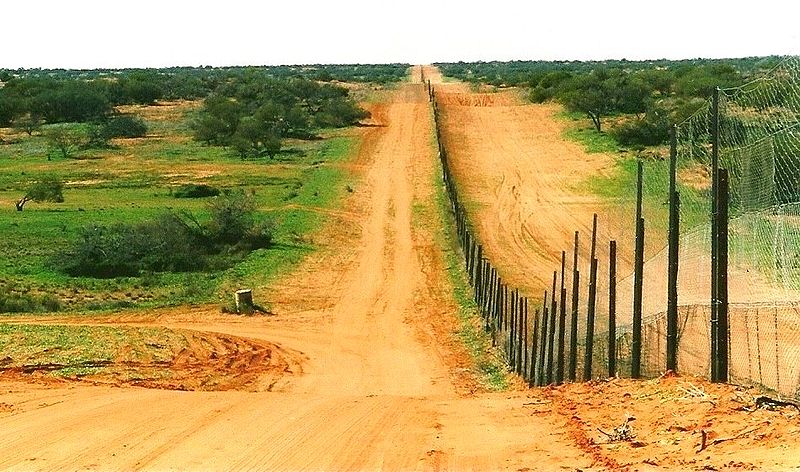



Can Australia afford the dingo fence?

18 05 2012

I wrote this last night with Euan Ritchie of Deakin University in response to some pretty shoddy journalism that misrepresented my comments (and Euan’s work). Our article appeared first in The Conversation this morning (see original article).

We feel we have to set the record straight after some of our (Bradshaw’s) comments were taken grossly out of context, or not considered at all (Ritchie’s). A bubbling kerfuffle in the media over the last week compels us to establish some facts about dingoes in Australia, and more importantly, about how we as a nation choose to manage them.

A small article in the News Ltd. Adelaide Advertiser appeared on 11 May in which one of us (Bradshaw) was quoted as advocating the removal of the dingo fence because it was not “cost effective” (sic). Despite nearly 20 minutes on the telephone explaining to the paper the complexities of feral animal management, the role of dingoes in suppressing feral predators, and the “costs” associated with biodiversity enhancement and feral control, there wasn’t a single mention of any of this background or justification.

Another News Ltd. article denouncing Ritchie’s work on the role of predators in Australian ecosystems appeared in The Weekly Times the day before, to which Ritchie responded in full.

So it’s damage control, and mainly because we want to state categorically that our opinion is ours alone, and not that of our respective universities, schools, institutes or even Biosecurity SA (which some have claimed or insinuated, falsely, that we represent). Biosecurity SA is responsible for, inter alia, the dingo fence in South Australia. Although our opinions differ on its role, we are deeply impressed, grateful and supportive of their work in defending us from biological problems. Read the rest of this entry »


No more ecology

9 05 2012

To all ecology people who read this blog (students, post-docs, academics), this is an intriguing, provocative and slightly worrying title. As ecology has matured into a full-fledged, hard-core, mathematical science on par with physics, chemistry and genetics (and is arguably today one of the most important sciences given how badly we’ve trashed our own home), its sophistication now threatens to render many of the traditional aspects of ecology redundant.

Let me explain.

As a person who cut his teeth in field ecology (with all the associated dirt, dangers, bites, stings, discomfort, thrills, headaches and disasters), I’ve had my fair share of fun and excitement collecting ecological data. There’s something quaintly Victorian (no, I am not referring to the state next door) about the romantic and obsessive naturalist collecting data to the exclusion of nearly all other aspects of civilised life; the intrepid adventurer in some of us takes over (likely influenced by the likes of David Attenborough) and we convince ourselves that our quest for the lonely datum will heal all of the Earth’s ailments.

Bollocks.

As I’ve matured in ecology and embraced its mathematical complexity and beauty, the recurring dilemma is that there are never enough data to answer the really big questions. We have sampled only a fraction of extant species, we know embarrassingly little about how ecosystems respond to disturbance, and we know next to nothing about the complexities of ecosystem services. And let’s not forget our infancy in understanding the synergies of extinctions in the past and projections into the future. Multiply this uncertainty by several orders of magnitude for ocean ecosystems.

Read the rest of this entry »


Sharks: the world’s custodians of fisheries

5 05 2012

Today’s post comes from Salvador Herrando-Pérez (who, incidentally, recently submitted his excellent PhD thesis).

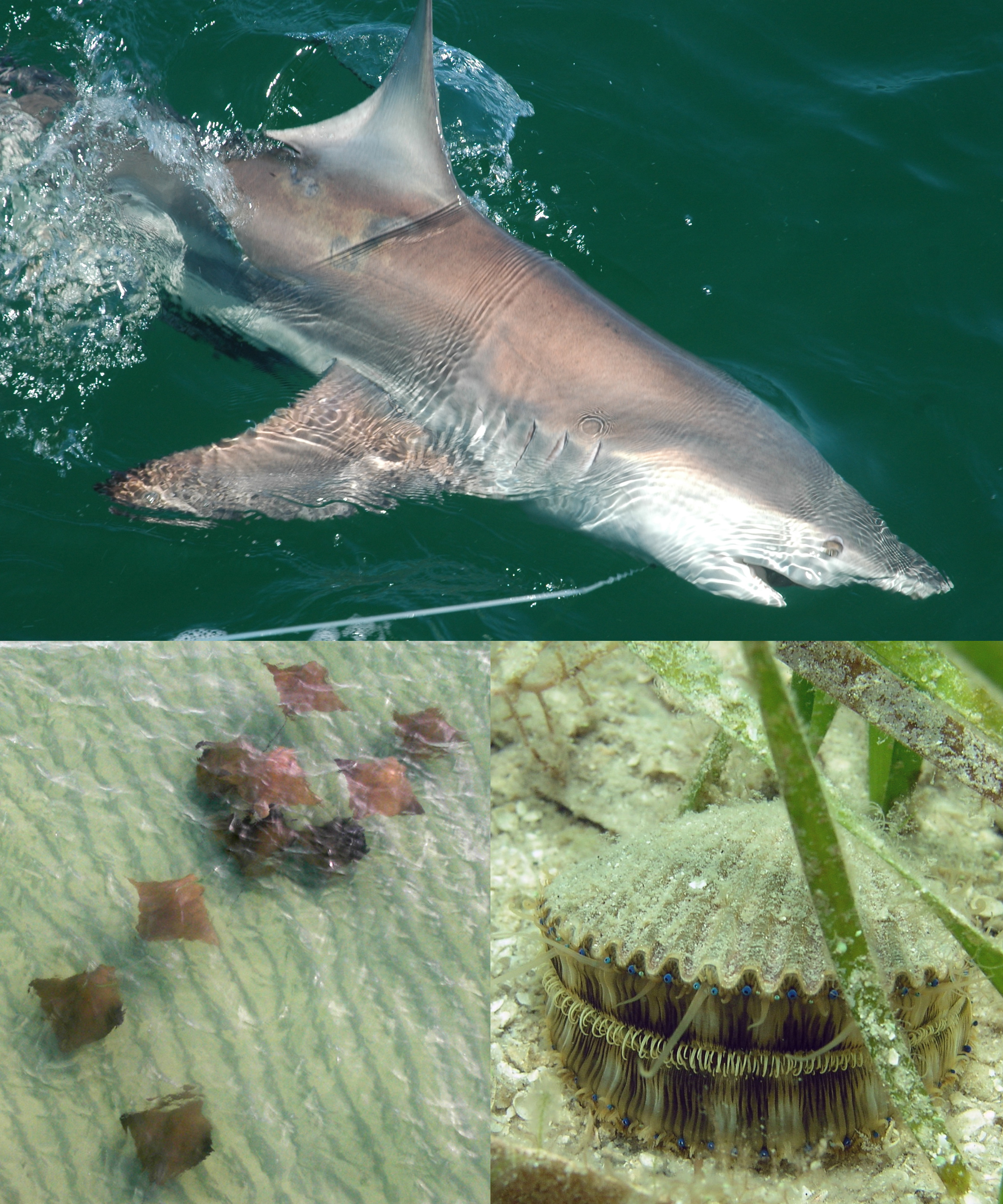
Three species co-occurring in the Gulf of Mexico and involved in the trophic cascade examined by Myers et al. (8). [1] Black-tips (Carcharhinus limbatus) are pelagic sharks in warm and tropical waters worldwide; they reach < 3 m in length, 125 kg in weight, with a maximum longevity in the wild of ~ 12 years; a viviparous species, with females delivering up to 10 offspring per parturition. [2] The cownose ray (Rhinoptera bonasus) is a tropical species from the western Atlantic (USA to Brazil); up to 2 m wide, 50 kg in weight, and 18 years of age; gregarious, migratory and viviparous, with one single offspring per litter. [3] The bay scallop (Agropecten irradians) is a protandric (hermaphrodite) mollusc, with sperm being released a few days before the (> 1 million) eggs; commonly associated with seagrasses in the north-western Atlantic; shells can reach up to 10 cm and individuals live for < 2 years. In the photos, a black-tip angled in a bottom long-line off Alabama (USA), a school of cownose rays swimming along Fort Walton Beach (Florida, USA), and a bay scallop among fronds of turtle grass (Thalassia testudinum) off Hernando County (Florida, USA). Photos by Marcus Drymon, Dorothy Birch and Janessa Cobb, respectively.

The hips of John Travolta, the sword of Luke Skywalker, and the teeth of Jaws marked an era. I still get goose pimples with the movie soundtrack (bass, tuba, orchestra… silence) solemnizing each of the big shark’s attacks. The media and cinema have created the myth of man’s worst friend. This partly explains why shark fishing does not trigger the same societal rejection as the hunting of other colossuses such as whales or elephants. Some authors contend that we currently live in the sixth massive extinction event of planet Earth (1) 75 % of which is strongly driven by one species, humans, and characterized by the systematic disappearance of mega-animals in general (e.g., mammoths, Steller’s seacow), and predators in particular, e.g., sharks (2, 3).

The selective extirpation of apex predators, recently coined as ‘trophic downgrading’, is transforming habitat structure and species composition of many ecosystems worldwide (4). In the marine realm, over the last half a century, the main target of the world’s fisheries has turned from (oft-large body-sized) piscivorous to planctivorous fish and invertebrates, indicating that fishery fleets are exploiting a trophic level down to collapse, then harvesting the next lower trophic level (5-7).

Myers et al. (8) illustrate the problem with the fisheries of apex-predator sharks in the northeastern coast of the USA. Those Atlantic waters are rife with many species of shark (> 2 m), whose main prey are smaller chondrichthyans (skates, rays, catsharks, sharks), which in turn prey on bottom fishes and bivalves. Myers et al. (8) found that, over the last three decades, the abundance of seven species of large sharks declined by ~ 90 %, coinciding with the crash of a centenary fishery of bay scallops (Agropecten irradians). Conversely, the abundance of 12 smaller chondrichthyes increased dramatically over the same period of time. In particular, the cownose ray (Rhinoptera bonasus), the principal predator of bay scallops, might today exceed > 40 million individuals in some bays, and consume up to ~ 840,000 tonnes of scallops annually. The obvious hypothesis is that the reduction of apex sharks triggers the boom of small chondrichthyans, hence leading to the break-down of scallop stocks. Read the rest of this entry »


We only have decades…

26 04 2012

… not centuries.

Here’s a little video production The Environment Institute put together that explains some of our lab‘s work and future directions.


CJA Bradshaw


The wounded soldiers of biodiversity

10 04 2012

Here’s another great post from Salvador Herrando-Pérez. It is interesting that he’s chosen an example species that was once (a long, long time ago in a galaxy far, far away) of great interest to me (caribou – see ancient papers a, b, c, d). But that is another story. Take it away, Salva.


Figure 1. Caribou (reindeer) are ungulates weighing up to ~ 100 kg. They live in tundra and taiga in Finland, Greenland, Finland, Norway, Mongolia, Russia, Canada and USA (extinct in Sweden). The species is globally stable (‘Least Concern’, IUCN Red List), but the subspecies of woodland caribou (Rangifer tarandus caribou) is threatened in North America. Schneider and colleagues’ 7 study encompasses ~ 3,000 individuals in 12 herds (75 to 450 individuals per herd), occupying ~ 100.000 km2 of conifer forest and peatland (3,000 to 19,000 km2 per herd). Two ecotypes are recognized regionally22, namely migratory mountain herds (mostly from mountains and foothills in west-central Alberta), and non-migratory boreal herds (mostly from peatlands in central and northern Alberta). The photo shows a group of caribous grazing on subalpine vegetation from Tonquin Valley, Jasper National Park (Alberta, Canada). Photo courtesy of Saakje Hazenberg.

As conservation biology keeps incorporating management and economical principles from other disciplines, it stumbles with paradoxes such that investing on the most threatened components of biodiversity might in turn jeopardize the entire assets of biodiversity.

At the end of 2011, newspapers and TVs echoed an IUCN report cataloguing as ‘extinct’ or ‘near extinct’ several subspecies of rhinos in Asia and Africa. To many, such news might have invoked the topic: “how badly governments do to protect the environment”. However if, to avoid those extinctions, politicians had to deviate funds from other activities, what thoughts would come to the mind of workers whose salaries had to be frozen, school directors whose classroom-roof leakages could not be repaired (e.g., last winter at my niece’s school in Spain), colonels whose last acquisition of ultramodern tanks had to be delayed, or our city council’s department who had to cancel Sting’s next performance.

Thus, there are three unquestionable facts regarding species conservation:

  1. the protection of species costs money;
  2. governments and environmental organisations have limited budgets for a range of activities they deem necessary; and
  3. our way of conserving nature is failing because, despite increasing public/private support and awareness, the rate of destruction of biodiversity is not decelerating1,2.

One of the modern debates among conservationists pivots around how to use resources efficiently3-6. Schneider and colleagues7 have dealt with this question for woodland caribou (Rangifer tarandus) in Canada. A total of 18 populations of this ungulate persist in the Canadian province of Alberta, all undergoing demographic declines due to mining extractions (oil, gas and bitumen), logging and wolf predation. The species is listed as ‘threatened’ regionally and nationally. The Alberta Caribou Recovery Plan (2004-2014) is attempting to protect all herds. Under such a framework, Schneider et al.7 predicted that woodland caribou would be regionally extirpated in less than a century.

Furthermore, they estimated the costs of making each herd viable (Fig. 1), with a triple revelation. To save all herds from extinction would need ~ CA$150,000 million (beyond the available budget). The most threatened herds are among the most expensive to protect (within present management approach). Some herds would be secured through modest investment for two decades. Overall, their study suggests that Alberta’s woodland caribou would be eligible for triage, i.e., at the subpopulation level8. Read the rest of this entry »


Tentacles of destruction

5 04 2012

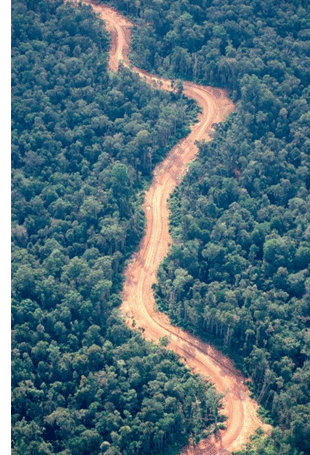
This last post before Easter is something I’ve thought more and more about over the last few years. I wouldn’t have given it much time in the past, but I’m now convinced roads are one of the humanity’s most destructive devices. Let me explain.

Before I had a good grasp of extinction dynamics, I wouldn’t have attributed much import to the role of roads in conservation. I mean, really, a little road here and there (ok, even a major motorway) couldn’t possibly be a problem? It’s mostly habitat destruction itself, right?

Not exactly. With our work on extinction synergies, I eventually came to realise that roads are some of the first portals to the devastation to come. Read the rest of this entry »



Bill Laurance wins Heineken Prize

16 03 2012

I’ve just learnt some fantastic news about my good friend and colleague, Professor Bill Laurance of James Cook University.

Bill has the distinction of being named this year’s recipient of the most-prestigious Heineken Prize for Environmental Sciences. Probably only second in prestige to the Crafoord Prize, the Heineken Prize has sent many recipients in the fields of medicine, biochemistry and biophysics on to win Nobel Prizes.

While there is still no Nobel category in ecology, conservation or the environment (there bloody well should be, in my not-so-humble opinion), this is a huge recognition of Bill’s amazing scientific track record, environmental portfolio, advocacy and expertise.

Read the rest of this entry »


Worlds collide: greenwashed development to kill biodiversity

15 03 2012

Another development fiasco that, if it goes ahead, will devastate a Biodiversity Hotspot and ultimately, reduce the livelihood prospects of millions of West Africans.

In yet another move to expose and shame the greedy developers behind another massive (and superlatively greenwashed) oil palm development in the tropics (see our previous Open Letter), Bill Laurance and Josh Linder have organised another Open Letter from some of the world’s top conservation scientists (again, I count myself fortunate to be included in that group) denouncing the project. The press release is below, followed by the letter itself:

Eleven of the world’s top scientists have produced an open letter to the public urging the Cameroon government to stop a giant oil palm plantation that they say will threaten some of Africa’s most important protected areas.

The project, sponsored by a subsidiary of U.S. agribusiness giant Herakles Farms in collaboration with a U.S. nonprofit organization, All for Africa, would span 70,000 hectares (154,000 acres), an area nearly the size of New York City.

“It’s simply frightening in scope,” said Thomas Struhsaker, a leading expert on African primates and rainforest ecology at Duke University in North Carolina, USA, who has worked in the region for nearly a half-century.

The project would destroy a critical forested area that currently links five national parks or protected areas in Cameroon, say the scientists.

“These forests are vital for wildlife, including the African elephant, chimpanzee and drill, all threatened or endangered species,” said anthropologist Joshua Linder of James Madison University in Virginia, USA, who has helped coordinate the protest. “These animals rely on the forests that would be destroyed to survive and move among the parks.”

“This area is a biodiversity hotspot, some of the world’s most biologically important real estate,” said tropical ecologist William Laurance of James Cook University in Australia, who studies threats to wildlife in the Congo Basin.

“There’s no way a project like this would be allowed in most countries, because the price for biodiversity is just too high,” said Laurance.

The project has been promoted in Cameroon as environmentally sustainable, but the scientists heatedly disagree. “Those promoting this project are misleading everyone—especially the people and government of Cameroon,” said Linder. “They claim the forests they want to clear are mostly logged and degraded, but we’ve shown clearly that they include lots of tall, dense forest that’s vital for wildlife and nature conservation.” Read the rest of this entry »



Unholy trinity of leakage, permanence and additionality

13 03 2012

I begin with the proverbial WTF? The title of this post sounds a little like the legalese accompanying a witchcraft trial, but it’s jargon that’s all the rage in the ‘trading-carbon-for-biodiversity’ circles.

I’m sure that most of my readers will have come across the term ‘REDD‘ (Reduced Emissions from Deforestation and forest Degradation), which is the clever idea of trading carbon credits to keep forests intact. As we know, living forests can suck up a lot of carbon from the atmosphere (remember your high school biology lesson on photosynthesis? Carbon dioxide in. Oxygen out), even though climate change is threatening this invaluable ecosystem service. So the idea of paying a nation (usual a developing country) to protect its forests in exchange for carbon pollution offsets can potentially save two birds with one feeder – reducing overall emissions by keeping the trees alive, and ensuring a lot of associated biodiversity gets caught up in the conservation process.

The problem with REDD though is that it’s a helluva thing to bank on given a few niggly problems essentially revolving around trust. Ah yes, the bugbear of any business transaction. As the carbon credit ‘buyer’ (the company/nation/individual who wishes to offset its carbon output by ‘buying’ the carbon uptake services provided by the intact forest), you’d want to make damn sure that all the money you spend to offset your carbon actually does just that, and that it doesn’t just end up in the hands of some corrupt official, or even worse, used to generate industry that results in even higher emissions! As the buyer, of course you want to entice investors to give you lots of money, and if you bugger up the transaction (by losing the resource you are providing), you’re not likely to have any more investors coming knocking on your door.

Enter the unholy trinity of leakage, permanence and additionality.

This horrible jargon essentially describes the REDD investment problem:

Read the rest of this entry »



Cartoon guide to biodiversity loss XV

13 02 2012

I’m in the field at the moment, so here are the latest six cartoons to pass the time (see full stock of previous ‘Cartoon guide to biodiversity loss’ compendia here). Enjoy.

Read the rest of this entry »



When the cure becomes the disease

6 02 2012

I’ve always barracked for Peter Kareiva‘s views and work; I particularly enjoy his no-bullshit, take-no-prisoners approach to conservation. Sure, he’s said some fairly radical things over the years, and has pissed off more than one conservationist in the process. But I think this is a good thing.

His main point (as is mine, and that of a growing number of conservation scientists) is that we’ve already failed biodiversity, so it’s time to move into the next phase of disaster mitigation. By ‘failing’ I mean that, love it or loathe it, extinction rates are higher now than they have been for millennia, and we have very little to blame but ourselves. Apart from killing 9 out of 10 people on the planet (something no war or disease will ever be able to do), we’re stuck with the rude realism that it’s going to get a lot worse before it gets better.

This post acts mostly an introduction to Peter Kareiva & collaborators’ latest essay on the future of conservation science published in the Breakthrough Institute‘s new journal. While I cannot say I agree with all components (especially the cherry-picked resilience examples), I fundamentally support the central tenet that we have to move on with a new state of play.

In other words, humans aren’t going to go away, ‘pristine’ is as unattainable as ‘infinity’, and reserves alone just aren’t going to cut it. Read the rest of this entry »


Give way to the invader

25 01 2012

By weird coincidence, Salvador Herrando-Pérez (student blogger extra-ordinaire – see his previous posts on evolution, pollination, bird losses, taxonomic inflation, niche conservatism, historical biogeography, ecological traps and ocean giants) has produced a post this week expanding on the problem of roads. Also weirdly coincidental is that both Salva and I are in his home country of Spain this week.

Australia’s > 800,000-km road network would go 60 times around the equator of our planet. Confined to the boundaries of any one country, roads are a conspicuous component of the landscape, and shape the dispersion, survival and reproduction of many plants and animals in urban and remote areas.

Those who drive (or are driven by) will be familiar with the image of a crushed kangaroo on the roadside (a hedgehog in Europe), or the sticky mosaic of insects smashed against the windscreen after a high-speed run. Mortality by collision is one of the many effects that roads can have on the demography of organisms – including humans. Those effects encompass

  • physical alteration of terrestrial and aquatic habitats,
  • chemical pollution leakage during road construction and maintenance, and from asphalt compounds during storms,
  • alteration of animal behaviour (e.g., change in home range, or in patterns of flight or vocalisation),
  • access to remote areas by hunters, fishermen and gatherers in general, and
  • intense habitat fragmentation1-3.

However, some species get around those negative impacts by using the roads as pathways to new territories, thereby eluding barriers like seas, mountains, rivers, dense vegetation, or competition for vital resources with other species. Read the rest of this entry »


The seeds of tropical forest destruction

22 01 2012

Bill Laurance asked me to reproduce his latest piece originally published at Yale University‘s Environment 360 website.

We live in an era of unprecedented road and highway expansion — an era in which many of the world’s last tropical wildernesses, from the Amazon to Borneo to the Congo Basin, have been penetrated by roads. This surge in road building is being driven not only by national plans for infrastructure expansion, but by industrial timber, oil, gas, and mineral projects in the tropics.

Few areas are unaffected. Brazil is currently building 7,500 km of new paved highways that crisscross the Amazon basin. Three major new highways are cutting across the towering Andes mountains, providing a direct link for timber and agricultural exports from the Amazon to resource-hungry Pacific Rim nations, such as China. And in the Congo basin, a recent satellite study found a burgeoning network of more than 50,000 km of new logging roads. These are but a small sample of the vast number of new tropical roads, which inevitably open up previously intact tropical forests to a host of extractive and economic activities.

“Roads,” said the eminent ecologist Thomas Lovejoy, “are the seeds of tropical forest destruction.”

Despite their environmental costs, the economic incentives to drive roads into tropical wilderness are strong. Governments view roads as a cost-effective means to promote economic development and access natural No other region can match the tropics for the sheer scale and pace of road expansion. resources. Local communities in remote areas often demand new roads to improve access to markets and medical services. And geopolitically, new roads can be used to help secure resource-rich frontier regions. India, for instance, is currently constructing and upgrading roads to tighten its hold on Arunachal Pradesh state, over which it and China formerly fought a war.

Read the rest of this entry »


More is better

18 01 2012

In one of those rare moments of perusing the latest ecological literature, I stumbled across an absolute gem, and one that has huge conservation implications. Now, I’m really no expert in this particular area of ecology, but I dare say the paper I’m about to introduce should have been published in Nature or Science (I suspect it was submitted to at least one of these journals first). It was still published in an extremely high-impact journal in ecology though – the Journal of Ecology produced by the British Ecological Society (and one in which I too have had the honour of publishing an article).

Before I get into specifics, I have to say that one thing we conservation biologists tend to bang on about is that MORE SPECIES = BETTER, regardless of the ecosystem in question. We tend to value species richness as the gold standard of ecosystem ‘health’ and ‘resilience’, whether or not there is strong empirical evidence in support. It’s as if the more-is-better mantra strikes an intuitive chord and must, by all that’s ecologically right in the world, be true.

Of course, measuring what is ‘better’ is a difficult task, especially when we are talking about complex ecosystems comprising thousands, if not millions, of species. Does ‘better’ refer to the most temporally stable, the most genetically diverse, the most resilient to perturbation, or the provider of the greatest number of functions and hence, ecosystem services?

It’s up to you, but all these things tend to be difficult to measure for a large number of species and over time scales of sufficient duration to measure change. So the default for plants (i.e., the structural framework of almost all ecosystems) I guess has come down to a simpler measure of success – ‘productivity’. This essentially means how much biomass is produced per unit area/volume per time step. It’s not a great metric, but it’s probably one of the more readily quantifiable indices.

Enter the so-called ‘diversity-productivity relationship’, or ‘DPR’, which predicts that higher plant species diversity should engender higher net productivity (otherwise known as the ‘net biodiversity effect’). Read the rest of this entry »


Cartoon guide to biodiversity loss XIV

30 12 2011

The last post of 2011, I thought I’d focus on the lighter side (that is to say, my brain is muddled by the lovely break from academia, so I don’t really feel like investing too much cerebral energy). Here, therefore, are the latest six cartoons… (see full stock of previous ‘Cartoon guide to biodiversity loss’ compendia here). May fewer species go extinct in 2012 than 2011…

Read the rest of this entry »


Better SAFE than sorry

30 11 2011

Last day of November already – I am now convinced that my suspicions are correct: time is not constant and in fact accelerates as you age (in mathematical terms, a unit of time becomes a progressively smaller proportion of the time elapsed since your birth, so this makes sense). But, I digress…

This short post will act mostly as a spruik for my upcoming talk at the International Congress for Conservation Biology next week in Auckland (10.30 in New Zealand Room 2 on Friday, 9 December) entitled: Species Ability to Forestall Extinction (SAFE) index for IUCN Red Listed species. The post also sets a bit of the backdrop to this paper and why I think people might be interested in attending.

As regular readers of CB will know, we published a paper this year in Frontiers in Ecology and the Environment describing a relatively simple metric we called SAFE (Species Ability to Forestall Extinction) that could enhance the information provided by the IUCN Red List of Threatened Species for assessing relative extinction threat. I won’t go into all the detail here (you can read more about it in this previous post), but I do want to point out that it ended up being rather controversial.

The journal ended up delaying final publication because there were 3 groups who opposed the metric rather vehemently, including people who are very much in the conservation decision-making space and/or involved directly with the IUCN Red List. The journal ended up publishing our original paper, the 3 critiques, and our collective response in the same issue (you can read these here if you’re subscribed, or email me for a PDF reprint). Again, I won’t go into an detail here because our arguments are clearly outlined in the response.

What I do want to highlight is that even beyond the normal in-print tête-à-tête the original paper elicited, we were emailed by several people behind the critiques who were apparently unsatisfied with our response. We found this slightly odd, because many of the objections just kept getting re-raised. Of particular note were the accusations that: Read the rest of this entry »


Mucking around the edges

8 11 2011

Barry Brook over at BraveNewClimate.com beat me to the punch regarding our latest paper, so I better get off my arse and write my take on things.

This post is about a paper we’ve just had accepted and has come out online in Biological Conservation called Strange bedfellows? Techno-fixes to solve the big conservation issues in southern Asia – and it’s likely to piss off a few people, and hopefully motivate others.

We wrote the paper for a special issue of essays dedicated to the memory of our mate and colleague, Navjot Sodhi, who died earlier this year. The issue hasn’t been released yet, but we have managed to get our paper out well before.

Like Navjot, the paper is controversial. Also like Navjot, we hope it challenges a few minds and pushes a few boundaries. We, as conservation biologists, must accept the fact that we have largely failed – biodiversity is still being lost at an alarming rate despite decades and decades of good science, sound evidence-based policy recommendations and even some rescues of species on the ‘brink’. Huge consumption rates, a population of 7 billion humans and counting, carbon emissions exceeding all worst-case scenarios, and greater disparity of wealth distribution have all contributed to this poor performance.

So what else can we do? Read the rest of this entry »


Follow the TREND

24 10 2011

A little clichéd, I know, but that’s what it says on the T-shirt.

It’s been an interesting week. Not only did I return to some much-needed field work (even if it was diving in the muck of Adelaide’s Outer Harbour with 40-cm visability), but it was also the week when the TREND project became ‘official’ with the launching of its website and its public début at the Earth Station festival in Belair National Park over the weekend.

I can see the thought bubbles already – what the hell is ‘TREND‘ (apart from the obvious)?

Admittedly a somewhat contrived acronym, TREND stands for TRends in ENvironmental monitoring and Decision making – a multi-million dollar project financed mainly by the state government of South Australia and the Terrestrial Ecosystem Research Network (TERN – I know, another bloody acronym that is weirdly similar to TREND; oh how we Aussies love our acronyms and initialisms!). Here’s the official summary:

“TREND provides a system of data collection across native ecosystems, primary production regions and marine environments. By assessing the impacts of various potential climatic and environmental shifts, TREND will provide an early warning system for changes in South Australia’s diverse environments and a lasting legacy of long-term monitoring, informed policy and proactive response to environmental change. Read the rest of this entry »


Not magic, but necessary

18 10 2011

In April this year, some American colleagues of ours wrote a rather detailed, 10-page article in Trends in Ecology and Evolution that attacked our concept of generalizing minimum viable population (MVP) size estimates among species. Steve Beissinger of the University of California at Berkeley, one of the paper’s co-authors, has been a particularly vocal adversary of some of the applications of population viability analysis and its child, MVP size, for many years. While there was some interesting points raised in their review, their arguments largely lacked any real punch, and they essentially ended up agreeing with us.

Let me explain. Today, our response to that critique was published online in the same journal: Minimum viable population size: not magic, but necessary. I want to take some time here to summarise the main points of contention and our rebuttal.

But first, let’s recap what we have been arguing all along in several papers over the last few years (i.e., Brook et al. 2006; Traill et al. 2007, 2010; Clements et al. 2011) – a minimum viable population size is the point at which a declining population becomes a small population (sensu Caughley 1994). In other words, it’s the point at which a population becomes susceptible to random (stochastic) events that wouldn’t otherwise matter for a small population.

Consider the great auk (Pinguinus impennis), a formerly widespread and abundant North Atlantic species that was reduced by intensive hunting throughout its range. How did it eventually go extinct? The last remaining population blew up in a volcanic explosion off the coast of Iceland (Halliday 1978). Had the population been large, the small dent in the population due to the loss of those individuals would have been irrelevant.

But what is ‘large’? The empirical evidence, as we’ve pointed out time and time again, is that large = thousands, not hundreds, of individuals.

So this is why we advocate that conservation targets should aim to keep at or recover to the thousands mark. Less than that, and you’re playing Russian roulette with a species’ existence. Read the rest of this entry »