The (new) birds and the bees

20 01 2025

‘Nuff said


Small populations of Stone Age people drove dwarf hippos and elephants to extinction on Cyprus

18 09 2024

Corey J. A. Bradshaw, Flinders University; Christian Reepmeyer, Deutsches Archäologisches Institut – German Archaeological Institute, and Theodora Moutsiou, University of Cyprus


Imagine growing up beside the eastern Mediterranean Sea 14,000 years ago. You’re an accomplished sailor of the small watercraft you and your fellow villagers make, and you live off both the sea and the land.

But times have been difficult — there just isn’t the same amount of game or fish around as when you were a child. Maybe it’s time to look elsewhere for food.

Now imagine going farther than ever before in your little boat, accompanied maybe by a few others, when suddenly you spot something on the horizon. Is that an island?

The western coast of Cyprus. CJA Bradshaw / Flinders University

An island of tiny elephants and hippos

Welcome to Cyprus as the world emerges from the last ice age. You are the first human to set your eyes on this huge, heavily forested island teeming with food.

When you beach your boat to have a look around, you can’t believe what you’re seeing — tiny boar-sized hippos and horse-sized elephants that look like babies to your eyes. There are so many of them, and you’re hungry after the long journey.

The diminutive beasts don’t seem to show any fear. You easily kill a few and preserve the meat as best you can for the long journey back.

When you get home, you are excited to let everyone in the village know what you’ve found. Soon enough, you organise a major expedition back to the island.

Of course, we’ll never know if this kind of scenario took place, but it’s a plausible story of how and when the first humans managed to get to Cyprus. It also illustrates how they might have quickly brought about the demise of the tiny hippopotamus Phanourios minor, as well as the dwarf elephant Palaeoloxodon cypriotes.

Read the rest of this entry »


Human impact, extinctions, and the biodiversity crisis

22 08 2024

Human overpopulation is often depicted in the media in one of two ways: as either a catastrophic disaster or an overly-exaggerated concern. Yet the data understood by scientists and researchers is clear. So what is the actual state of our overshoot, and, despite our growing numbers, are we already seeing the signs that the sixth mass extinction is underway?

In a recent episode of The Great Simplification podcast, Nate Hagens was joined by global ecologist Corey Bradshaw to discuss his recent research on the rapid decline in biodiversity, how population and demographics will change in the coming decades, and what both of these will mean for complex global economies currently reliant on a stable environment.

Read the rest of this entry »


New ecosystems, unprecedented climates: more Australian species than ever are struggling to survive

21 02 2024

Australia is home to about one in 12 of the world’s species of animals, birds, plants and insects – between 600,000 and 700,000 species. More than 80% of Australian plants and mammals and just under 50% of our birds are found nowhere else.

But habitat destruction, climate change, and invasive species are wreaking havoc on Earth’s rich biodiversity, and Australia is no exception.

In 2023, the federal government added another 144 plants, animals and ecological communities to the threatened species list – including iconic species such as the pink cockatoo, spiny crayfish and earless dragons.

More and more species stand on the edge of oblivion. That’s just the ones we know enough about to list formally as threatened. Many more are in trouble, especially in the oceans. Change is the new constant. As the world heats up and ecosystems warp, new combinations of species can emerge without an evolutionary connection, creating novel communities.

It is still possible to stop species from dying out. But it will take an unprecedented effort.

The vulnerable southern bell (growling grass) frog (Litoria raniformis). Rupert Mathwin/Flinders University
Read the rest of this entry »


Children born today will see literally thousands of animals disappear in their lifetime, as global food webs collapse

17 12 2022
Frida Lannerstrom/Unsplash, CC BY

Corey J. A. Bradshaw, Flinders University and Giovanni Strona, University of Helsinki

Climate change is one of the main drivers of species loss globally. We know more plants and animals will die as heatwaves, bushfires, droughts and other natural disasters worsen.

But to date, science has vastly underestimated the true toll climate change and habitat destruction will have on biodiversity. That’s because it has largely neglected to consider the extent of “co-extinctions”: when species go extinct because other species on which they depend die out.

Our new research shows 10% of land animals could disappear from particular geographic areas by 2050, and almost 30% by 2100. This is more than double previous predictions. It means children born today who live to their 70s will witness literally thousands of animals disappear in their lifetime, from lizards and frogs to iconic mammals such as elephants and koalas.

But if we manage to dramatically reduce carbon emissions globally, we could save thousands of species from local extinction this century alone.

Ravages of drought will only worsen in coming decades.
CJA Bradshaw

An extinction crisis unfolding

Every species depends on others in some way. So when a species dies out, the repercussions can ripple through an ecosystem.

For example, consider what happens when a species goes extinct due to a disturbance such as habitat loss. This is known as a “primary” extinction. It can then mean a predator loses its prey, a parasite loses its host or a flowering plant loses its pollinators.

A real-life example of a co-extinction that could occur soon is the potential loss of the critically endangered mountain pygmy possum (Burramys parvus) in Australia. Drought, habitat loss, and other pressures have caused the rapid decline of its primary prey, the bogong moth (Agrotis infusa).

Read the rest of this entry »


What does ‘collapse’ mean, and should we continue using the term?

30 08 2022

The conservation, environment, and sustainability literature is rife with the term ‘collapse’, applied to concepts as diverse as species extinction to the complete breakdown of civilisation. I have also struggled with its various meanings and implications, so I’m going to attempt to provide some clarity on collapse for my own and hopefully some others’ benefit.

State transitions (Fig. 2 from Keith et al. (2015))

From a strictly ecological perspective, ‘collapse’ could be described in the following (paraphrased) ways:

But there is still nor formal definition of ‘collapse’ in ecology, as identified by several researchers (Keith et al. 2013; Boitani et al. 2015; Keith et al. 2015; Sato and Lindenmayer 2017; Bland et al. 2018). While this oversight has been discussed extensively with respect to quantifying changes, I can find nothing in the literature that attempts a generalisable definition of what collapse should mean. Perhaps this is because it is not possible to identify a definition that is sufficiently generalisable, something that Boitani et al. (2015) described with this statement:

“The definition of collapse is so vague that in practice it will be possible (and often necessary) to define collapse separately for each ecosystem, using a variety of attributes and threshold values

Boitani et al. 2015

Despite all the work that has occurred since then, I fear we haven’t moved much beyond that conclusion.

Hell, cutting down the trees in the bush block next to my property constitutes a wholesale ‘collapse’ of the microcommunity of species using that patch of bush. An asteroid hitting the Earth and causing a mass extinction is also collapse. And everything in-between.

But at least ecologists have made some attempts to define and quantify collapse, even if an acceptable definition has not been forthcoming. The sustainability and broader environment literature has not even done that.

Read the rest of this entry »


The sixth mass extinction is happening now, and it doesn’t look good for us

2 03 2022

Mounting evidence is pointing to the world having entered a sixth mass extinction. If the current rate of extinction continues we could lose most species by 2200. The implication for human health and wellbeing is dire, but not inevitable.

In the timeline of fossil evidence going right back to the first inkling of any life on Earth — over 3.5 billion years ago — almost 99 percent of all species that have ever existed are now extinct. That means that as species evolve over time — a process known as ‘speciation’ — they replace other species that go extinct.

Extinctions and speciations do not happen at uniform rates through time; instead, they tend to occur in large pulses interspersed by long periods of relative stability. These extinction pulses are what scientists refer to as mass extinction events.

The Cambrian explosion was a burst of speciation some 540 million years ago. Since then, at least five mass extinction events have been identified in the fossil record (and probably scores of smaller ones). Arguably the most infamous of these was when a giant asteroid smashed into Earth about 66 million years ago in what is now the Gulf of Mexico. The collision vapourised species immediately within the blast zone. Later, species were killed off by climate change arising from pulverised particulates suspended in the atmosphere, as well as intense volcano activity stimulated by the buckling of the Earth’s crust from the asteroid’s impact. Together, about 76 percent of all species around at the time went extinct, of which the disappearance of the dinosaurs is most well-known. But dinosaurs didn’t disappear altogether — the survivors just evolved into birds.

Read the rest of this entry »


Need human census data for any of your analyses? Follow these simple steps

25 02 2022

As someone who regularly delves into human demography — often from a conservation perspective — I’m always on the lookout for quick and easy ways to get the latest and greatest datasets. Whether it’s for projection human populations, or just getting country-specific population densities, I’ve found a really nice way to interface great human data with R.

In this particular example, I’m using a api (application programming interface) key to access live data on the US Census Bureau server (don’t worry — they have global data, not just those specific to the US). What’s an ‘api key’? It’s just a code that gives you permission to access the server directly from an application via an internet link.

Step 1. Apply for an api key

This is a straightforward process and just needs to be done via this URL. The approval process doesn’t take long.

Step 2: Install the idbr package in R

This stands for the ‘(US Census Bureau) International Data Base (R)’, and grants access to and queries demographic data, including contemporary, historical, and future projections to 2100 for countries with ≥ 5000 people.

install.packages(“idbr”)

Step 3: Set api key

You need to set your user api using the following commands:

apikey <- “XXXXXXXXXXXXXXXXXXXXXXXXXXXXXXXXXXXXXXXX”
idbr::idb_api_key(apikey)

Step 4. Get data

Using the get_idb() command, you can specify all sorts of queries to get various levels of data complexity. All the variable combinations for the international database are described well here.

Example 1. Life expectancy

Let’s say you wanted to plot a map of the world with the shading of a country related to its average life expectancy at birth. First we get the necessary data:

lex.dat <- idbr::get_idb(
country = “all”,
year = 2022,
variables = c(“name”, “e0”),
geometry = T)

The ensuing lex.dat object looks like this:

Simple feature collection with 6 features and 4 fields
Geometry type: MULTIPOLYGON
Dimension: XY
Bounding box: xmin: -73.41544 ymin: -55.25 xmax: 75.15803 ymax: 42.68825
Geodetic CRS: SOURCECRS
code year name e0 geometry
1 AF 2022 Afghanistan 53.65 MULTIPOLYGON (((61.21082 35…
2 AO 2022 Angola 62.11 MULTIPOLYGON (((16.32653 -5…
3 AL 2022 Albania 79.47 MULTIPOLYGON (((20.59025 41…
4 AE 2022 United Arab Emirates 79.56 MULTIPOLYGON (((51.57952 24…
5 AR 2022 Argentina 78.31 MULTIPOLYGON (((-65.5 -55.2…
6 AM 2022 Armenia 76.13 MULTIPOLYGON (((43.58275 41

Read the rest of this entry »


Extinct megafauna prone to ancient hunger games

14 12 2021

I’m very chuffed today to signal the publication of what I think is one of the most important contributions to the persistent conundrum surrounding the downfall of Australia’s megafauna many tens of millennia ago.

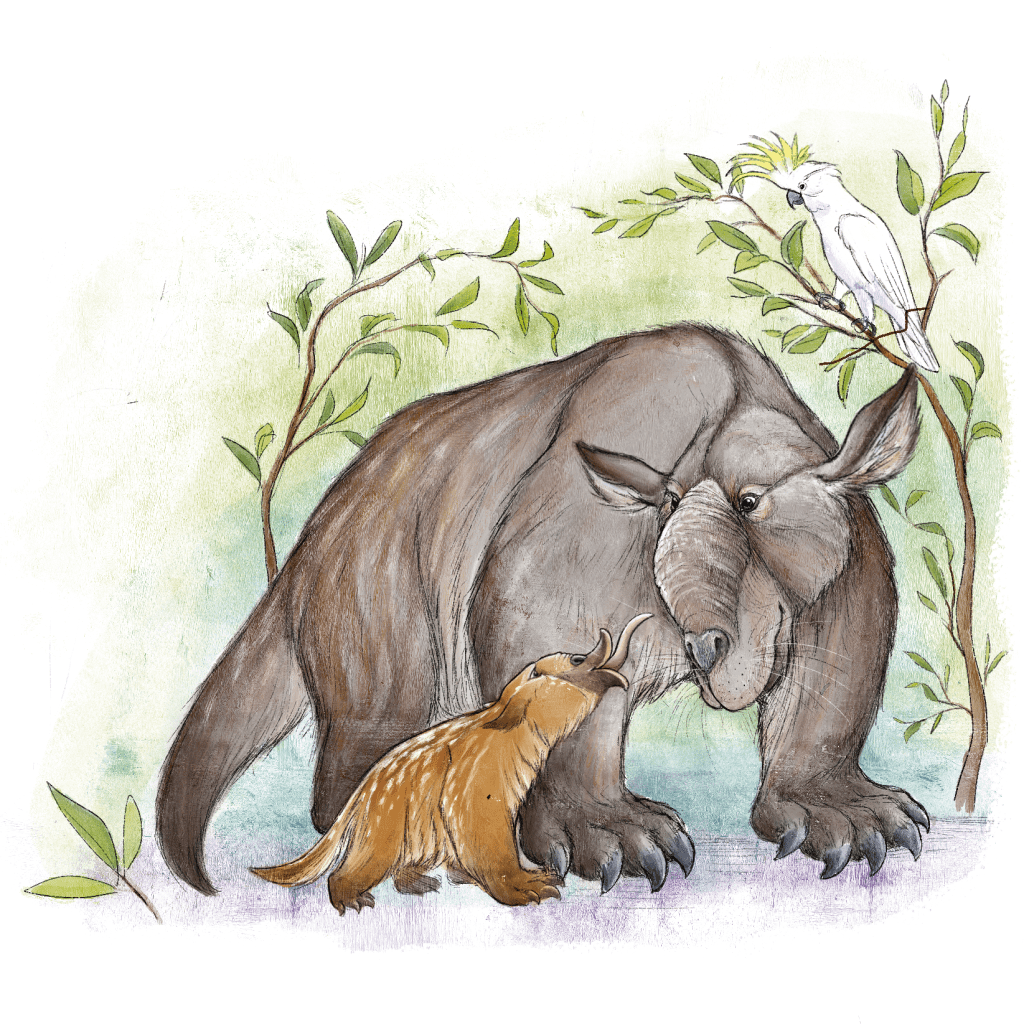
Diprotodon optimum. Artwork by palaeontologist and artist Eleanor (Nellie) Pease (commissioned by the ARC Centre of Excellence for Australian Biodiversity and Heritage)

Sure, I’m obviously biased in that assessment because it’s a paper from our lab and I’m a co-author, but if readers had any inkling of the work that went into this paper, I think they might consider adopting my position. In addition, the injection of some actual ecology into the polemic should be viewed as fresh and exciting.

Having waded into the murky waters of the ‘megafauna debate’ for about a decade now, I’ve become a little sensitive to even a whiff of binary polemic surrounding their disappearance in Australia. Acolytes of the climate-change prophet still beat their drums, screaming for the smoking gun of a spear sticking out of a Diprotodon‘s skull before they even entertain the notion that people might have had something to do with it — but we’ll probably never find one given the antiquity of the event (> 40,000 years ago). On the other side are the blitzkriegers who declaim that human hunting single-handedly wiped out the lot.

Well, as it is for nearly all extinctions, it’s actually much more complicated than that. In the case of Sahul’s megafauna disappearances, both drivers likely contributed, but the degree to which both components played a part depends on where and when you look — Fred Saltré demonstrated that elegantly a few years ago.

Palorchestes. Artwork by palaeontologist and artist Eleanor (Nellie) Pease (commissioned by the ARC Centre of Excellence for Australian Biodiversity and Heritage)

So, why does the polemic persist? In my view, it’s because we have largely depended on the crude comparison of relative dates to draw our conclusions. That is, we look to see if some climate-change proxy shifted in any notable way either before or after an inferred extinction date. If a particular study claims evidence that a shift happened before, then it concludes climate change was the sole driver. If a study presents evidence that a shift happened after, then humans did it. Biases in geochronological inference (e.g., spatial, contamination), incorrect application of climate proxies, poor taxonomic resolution, and not accounting for the Signor-Lipps effect all contribute unnecessarily to the debate because small errors or biases can flip relative chronologies on their head and push conclusions toward uncritical binary outcomes. The ‘debate’ has been almost entirely grounded on this simplistically silly notion.

This all means that the actual ecology has been either ignored or merely made up based on whichever pet notion of the day is being proffered. Sure, there are a few good ecological inferences out there from some damn good modellers and ecologists, but these have all been greatly simplified themselves. This is where our new paper finally takes the ecology part of the problem to the next level.

Led by Global Ecology and CABAH postdoctoral fellow, John Llewelyn, and guided by modelling guru Giovanni Strona at University of Helsinki, the paper Sahul’s megafauna were vulnerable to plant-community changes due to their position in the trophic network has just been published online in Ecography. Co-authors include Kathi Peters, Fred Saltré, and me from Flinders Global Ecology, Matt McDowell and Chris Johnson from UTAS, Daniel Stouffer from University of Canterbury (NZ), and Sara de Visser from University of Groningen (Netherlands).

Read the rest of this entry »


An eye on the past: a view to the future

29 11 2021

originally published in Brave Minds, Flinders University’s research-news publication (text by David Sly)

Clues to understanding human interactions with global ecosystems already exist. The challenge is to read them more accurately so we can design the best path forward for a world beset by species extinctions and the repercussions of global warming.


This is the puzzle being solved by Professor Corey Bradshaw, head of the Global Ecology Lab at Flinders University. By developing complex computer modelling and steering a vast international cohort of collaborators, he is developing research that can influence environmental policy — from reconstructing the past to revealing insights of the future.

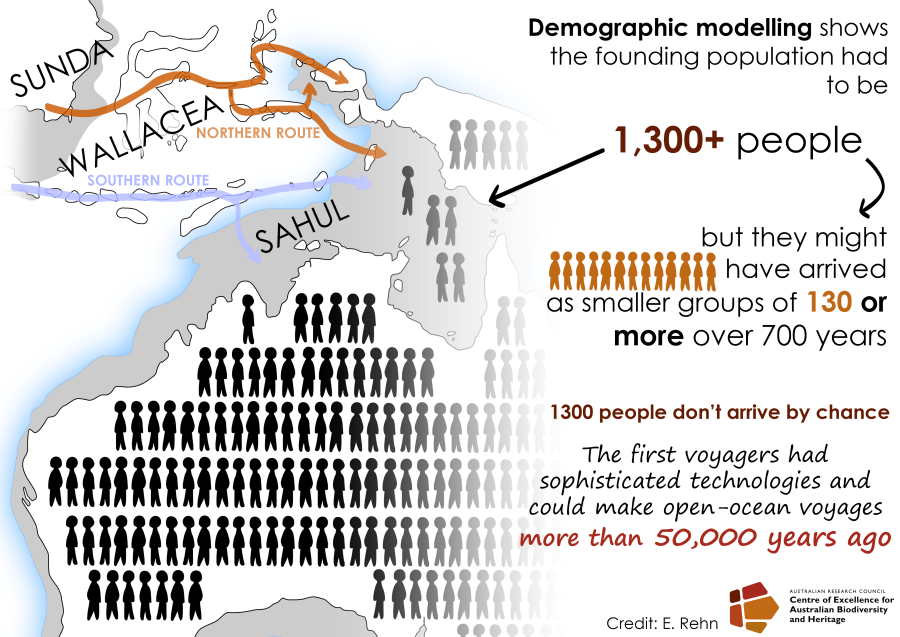
As an ecologist, he aims both to reconstruct and project how ecosystems adapt, how they are maintained, and how they change. Human intervention is pivotal to this understanding, so Professor Bradshaw casts his gaze back to when humans first entered a landscape – and this has helped construct an entirely fresh view of how Aboriginal people first came to Australia, up to 75,000 years ago.

Two recent papers he co-authored — ‘Stochastic models support rapid peopling of Late Pleistocene Sahul‘, published in Nature Communications, and ‘Landscape rules predict optimal super-highways for the first peopling of Sahul‘ published in Nature Human Behaviour — showed where, how and when Indigenous Australians first settled in Sahul, which is the combined mega-continent that joined Australia with New Guinea in the Pleistocene era, when sea levels were lower than today.

Professor Bradshaw and colleagues identified and tested more than 125 billion possible pathways using rigorous computational analysis in the largest movement-simulation project ever attempted, with the pathways compared to the oldest known archaeological sites as a means of distinguishing the most likely routes.

The study revealed that the first Indigenous people not only survived but thrived in harsh environments, providing further evidence of the capacity and resilience of the ancestors of Indigenous people, and suggests large, well-organised groups were able to navigate tough terrain.

Read the rest of this entry »


The very worn slur of “neo-Malthusian”

7 09 2021

After the rather astounding response to our Ghastly Future paper published in January this year (> 443,000 views and counting; 61 citations and counting), we received a Commentary that was rather critical of our article.

A Malthusian slur

We have finally published a Response to the Commentary, which is now available online (accepted version) in Frontiers in Conservation Science. Given that it is published under a Creative Commons Attribution License (CC BY), I can repost the Response here:


In their comment on our paper Underestimating the challenges of avoiding a ghastly future, Bluwstein et al.2 attempt to contravene our exposé of the enormous challenges facing the entire human population from a rapidly degrading global environment. While we broadly agree with the need for multi-disciplinary solutions, and we worry deeply about the inequality of those who pay the costs of biodiversity loss and ecological collapse, we feel obligated to correct misconceptions and incorrect statements that Bluwstein et al.2 made about our original article.

After incorrectly assuming that our message implied the existence of “one science” and a “united scientific community”, the final paragraph of their comment contradicts their own charge by calling for the scientific community to “… stand in solidarity”. Of course, there is no “one science” — we never made such a claim. Science is by its nature necessarily untidy because it is a bottom-up process driven by different individuals, cultures, perspectives, and goals. But it is solid at the core. Scientific confluence is reached by curiosity, rigorous testing of assumptions, and search for contradictions, leading to many — sometimes counter-intuitive or even conflicting — insights about how the world works. There is no one body of scientific knowledge, even though there is good chance that disagreements are eventually resolved by updated, better evidence, although perhaps too slowly. That was, in fact, a main message of our original article — that obligatory specialisation of disparate scientific fields, embedded within a highly unequal and complex socio-cultural-economic framework, reduces the capacity of society to appreciate, measure, and potentially counter the complexity of its interacting existential challenges. We agree that scientists play a role in political struggles, but we never claimed, as Bluwstein et al.2 contended, that such struggles can be “… reduced to science-led processes of positive change”. Indeed, this is exactly the reason our paper emphasized the political impotence surrounding the required responses. We obviously recognize the essential role social scientists play in creating solutions to avoid a ghastly future. Science can only provide the best available evidence that individuals and policymakers can elect to use to inform their decisions. 

We certainly recognise that there is no single policy or polity capable of addressing compounding and mounting problems, and we agree that that there is no “universal understanding of the intertwined socio-ecological challenges we face”. Bluwstein et al.2 claimed that we had suggested scientific messaging alone can “… adequately communicate to the public how socio-ecological crises should be addressed”. We did not state or imply such ideas of unilateral scientific power anywhere in our article. Indeed, the point of framing our message as pertaining to a complex adaptive system means that we cannot, and should not, work towards a single goal. Instead, humanity will be more successful tackling challenges simultaneously and from multiple perspectives, by exploiting manifold institutions, technologies, approaches, and governances to match the complexity of the predicament we are attempting to resolve.

Read the rest of this entry »


Climate change will also make us more stupid

31 08 2021

Most people are at least vaguely aware that climate change isn’t good for us.

Let’s consider the obvious direct health effects, like heat exhaustion and stroke, dehydration, increased inhalation of particulate matter from bushfires and other pollutant sources, greater expression of allergies, higher incidence of cardiovascular and respiratory diseases, greater injury rates, and higher probability of disease transmission from flooding events (see review here).

Let’s not forget the rising incidence of mental illness either.

Then there are the climatic events that increase the probability of dying violently like in a bushfire or a flood, getting caned in a major storm by debris, personal injury from storm surges exacerbated by rising sea levels, or dying slowly due to undernutrition from crop failures.

Some of the more indirect, yet just-as-insidious repercussions are those climate-driven events that worsen all of the above, such as increasing poverty, rising violent interactions (both individual-level and full-on warfare), loss of healthcare capability (less infrastructure, fewer doctors), and increased likelihood of becoming a refugee.


So, when someone says increased warming at the pace we’re witnessing now isn’t a problem, tell them they’re full of shit.

But wait! There’s more!

Yes, climate change will also make us more stupid. Perhaps one of the lesser-appreciated byproducts of an increasingly warmer world driven by rising greenhouse-gas concentrations is the direct effects of carbon dioxide on a variety of physiological functions.

Read the rest of this entry »


Is the IPCC finally catching up with the true severity of climate change?

24 06 2021

I’m not in any way formally involved in either the IPCC or IPBES, although I’ve been involved indirectly in analysing many elements of both the language of the reports and the science underlying their predictions.


Today, The Guardian reported that a leaked copy of an IPCC report scheduled for release soon indicated that, well, the climate-change situation is in fact worse than has been previously reported in IPCC documents.

If you’re a biologist, climatologist, or otherwise-informed person, this won’t come as much of a surprise. Why? Well, the latest report finally recognises that the biosphere is not just some big balloon that slowly inflates or deflates with the whims of long-term climate variation. Instead, climate records over millions of years show that the global climate can and often does shift rapidly between different states.

This is the concept of ‘tipping points’.

Read the rest of this entry »


No, you can’t argue the Medieval warm period is evidence that today’s climate change isn’t all that bad

23 04 2021
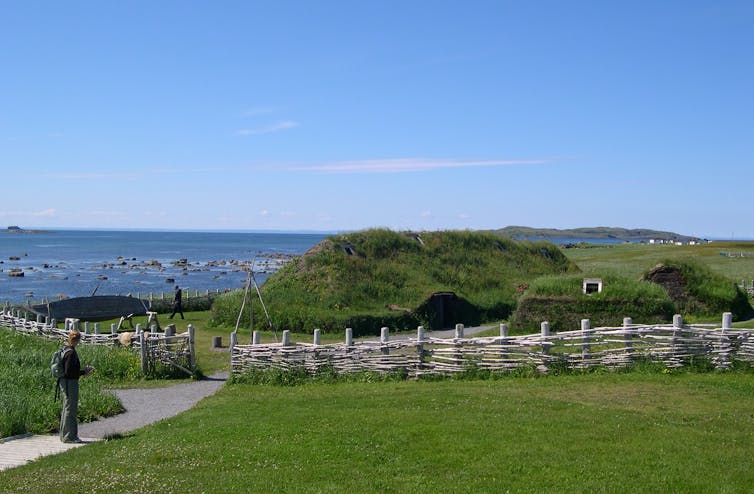
As this reconstructed village shows, Vikings made it as far as Newfoundland during the Medieval warm period. Wikimedia/Dylan Kereluk, CC BY-SA


Frédérik Saltré, Flinders University and Corey J. A. Bradshaw, Flinders University


What was the Medieval warm period? What caused it, and did carbon dioxide play a role?

We are living in a world that is getting warmer year by year, threatening our environment and way of life.

But what if these climate conditions were not exceptional? What if it had already happened in the past when human influences were not part of the picture?

The often mentioned Medieval warm period seems to fit the bill. This evokes the idea that if natural global warming and all its effects occurred in the past without humans causing them, then perhaps we are not responsible for this one. And it does not really matter because if we survived one in the past, then we can surely survive one now.

But it’s just not that simple.


Read more: 2,000 years of records show it’s getting hotter, faster


The Medieval climate anomaly

This Medieval period of warming, also known as the Medieval climate anomaly, was associated with an unusual temperature rise roughly between 750 and 1350 AD (the European Middle Ages). The available evidence suggests that at times, some regions experienced temperatures exceeding those recorded during the period between 1960 and 1990. Read the rest of this entry »


A perfect storm of global ineptitude

18 03 2021

Given the ‘success’ (i.e., a lot of people seem to be reading it) of our recent Ghastly Future paper, I thought it would be interesting to go back and have a look at what we wrote in our 2015 book Killing the Koala on the subject. I think you’ll find that if anything we were probably overly optimistic.

An updated digest of that material follows.


When your accountant tells you to reduce expenditure, you do it or risk bankruptcy; when your electrician tells you the wiring in your house is dodgy, you replace it or risk your family dying in an avoidable fire; when your doctor tells you your cholesterol is too high, you cut back fat intake (and/or take cholesterol-reducing drugs) or risk a heart attack.

Yet few with any real political or financial power heed the warnings of environmental scientists. It is not just a few of us either — globally, ecologists, conservation biologists and environmental scientists are united in telling the world (for decades now) that growth in population and consumption cannot go on forever. They have been united in telling us if we do not clean up our planet, our life-support systems could ultimately fail.

There are now nearly eight billion people on Earth, and median projections suggest that the population will grow to ten billion or more by the end of the century. Some analyses indicate that with present technologies, Earth could only sustainably support indefinitely some 5 billion people under best-case scenarios, but assuming similar proportions of poverty and suffering as we have today. Others imply that 5 billion could be many too many.

As a result, humanity is entering that near-perfect storm of problems driven by overpopulation, overconsumption, gross inequalities, and the use of needlessly environmentally damaging technologies. The problems include the intertwined dilemmas of loss of the biodiversity that runs human life-support systems, climate disruption, energy shortages, global toxification, alteration of critical biogeochemical cycles, shortages of water, soil, mineral resources and farmland, and increasing probability of vast epidemics (as COVID-19 poignantly exemplifies).

Read the rest of this entry »


Cartoon guide to biodiversity loss LXV

10 03 2021

Here is the second set of biodiversity cartoons for 2021. See full stock of previous ‘Cartoon guide to biodiversity loss’ compendia here.


Read the rest of this entry »


Citizens ask the experts in climate-change communication

7 02 2021

In the second of two consecutive interviews with climate-change experts (see the first one here), readers of the Spanish magazine Quercus have a chat with Katharine Hayhoe. Her words blend hope with the most putrid reality of economics and politics. May this interview inspire some environment-friendly changes in our daily routines and in how we see the beautiful life that surrounds us.


PhD in climate science, professor in political science and co-director of the Climate Centre at Texas Tech University (USA), Katharine Hayhoe works on climate projections and mitigation (1-3). Her prominent profile as communicator (4-6) made her one of the 100th most influential people in the world. To the left, Katharine has “A conversation on climate change” with citizens at the Lyndon Baines Johnson Presidential Library and Museum (Austin). Photo credits: Artie Limmer (portrait) & Jay Godwin (talk).


Interview done 20 October 2020

Below we italicise each question and the name of the person asking the question and cite a range of publications we deem relevant per question. For expanding on Katharyne Hayhoe’s views on climate change, see a sample of her public talks here and here, interviews here and here, and newspaper articles here and here. We love one of the titles of her newspaper articles “A thermometer is not liberal or conservative”. A spanish version of this article and interview has been published in the February 2021 issue of the magazine Quercus.


Question 1 of 4: There are extraordinarily influential people on a global scale who have a utilitarian perspective of nature, and think that climate change (be it of anthropogenic origin or not) entails advantages and opportunities to Western economies, and that we will be able to adapt whether changes are reversible or irreversible. Can we engage or use those influential people in any possible way to abate climate change? (7, 8) Iñaki García Pascual (Environmental geologist)

Hayhoe:

Climate change has some localised, short-term, specific benefits (9). One example is increased access to oil and gas resources in a melting Arctic (10). This temporarily profits oil and gas industries, provides some financial benefit to local communities in Greenland and Alaska short-term, and harms both them and everyone else in the long term. A book called Windfall by Mackenzie Funk describes who is “profiteering” from climate change, and how. 

Overall, however, climate change already harms the majority of people today. The poor, the vulnerable, and the marginalized are affected first and foremost. Since the 1960s, for example, climate change has increased the gap between the richest and poorest countries in the world by as much as 25 per cent. In 2019, UN Special Rapporteur on extreme poverty and human rights, Philip Alston, warned that climate change “threatens to undo the last 50 years” of development, global health and poverty reduction.” (11)

And while the rich may be able to temporarily “buy their way out of rising heat and hunger”, as Alston put it, the truth is that we all live on this planet, no matter how wealthy and influential we are. The air we breathe, the water we drink, the food we eat and all the resources we use come from our shared home. 

Climate change threatens the ability of our planet to support human civilisation as we know it. It is a threat multiplier, attacking our health, our economy, our resources and even our security. As climate change intensifies and economic markets crumble and refugee crises surge, even those who may temporarily benefit from a warmer world will be negatively impacted by these changes long-term.

That’s why it makes so much sense to take practical steps to limit carbon pollution now. Many of these actions also provide us with short-term benefits that can be quantified in economic terms: like energy savings through efficiency, cheaper electricity from renewables, more jobs, better public transportation, and even faster cars (like Tesla). Climate action also provides less tangible but arguably even more important benefits: cleaner air and water, better health, poverty reduction, and a host of other co-benefits that substantively move us towards meeting key UN Sustainable Development Goals.

To care about climate change, we don’t have to be a certain type of person or live in a certain place or vote a certain way: all we have to be is a human living on this planet, and we’re all that.

Read the rest of this entry »


Worried about Earth’s future? Well, the outlook is worse than even scientists can grasp

14 01 2021

Daniel Mariuz/AAP

Corey J. A. Bradshaw, Flinders University; Daniel T. Blumstein, University of California, Los Angeles, and Paul Ehrlich, Stanford University

Anyone with even a passing interest in the global environment knows all is not well. But just how bad is the situation? Our new paper shows the outlook for life on Earth is more dire than is generally understood.

The research published today reviews more than 150 studies to produce a stark summary of the state of the natural world. We outline the likely future trends in biodiversity decline, mass extinction, climate disruption and planetary toxification. We clarify the gravity of the human predicament and provide a timely snapshot of the crises that must be addressed now.

The problems, all tied to human consumption and population growth, will almost certainly worsen over coming decades. The damage will be felt for centuries and threatens the survival of all species, including our own.

Our paper was authored by 17 leading scientists, including those from Flinders University, Stanford University and the University of California, Los Angeles. Our message might not be popular, and indeed is frightening. But scientists must be candid and accurate if humanity is to understand the enormity of the challenges we face.

Girl in breathing mask attached ot plant in container

Humanity must come to terms with the future we and future generations face. Shutterstock

Getting to grips with the problem

First, we reviewed the extent to which experts grasp the scale of the threats to the biosphere and its lifeforms, including humanity. Alarmingly, the research shows future environmental conditions will be far more dangerous than experts currently believe. Read the rest of this entry »


Time for a ‘cold shower’ about our ability to avoid a ghastly future

13 01 2021

I wish it need not have happened in my time,” said Frodo. “So do I,’ said Gandalf, “and so do all who live to see such times. But that is not for them to decide. All we have to decide is what to do with the time that is given us.”

Frodo Baggins and Gandalf, The Fellowship of the Ring

Today, 16 high-profile scientists and I published what I describe as a ‘cold shower’ about society’s capacity to avoid a ghastly future of warfare, disease, inequality, persecution, extinction, and suffering.

And it goes way beyond just the plight of biodiversity.

No one who knows me well would mistake me for an optimist, try as I might to use my colleagues’ and my research for good. Instead, I like to describe myself as a ‘realist’. However, this latest paper has made even my gloomier past outputs look downright hopeful.

And before being accused of sensationalism, let me make one thing abundantly clear — I sincerely hope that what we describe in this paper does not come to pass. Not even I am that masochistic.

I am also supportive of every attempt to make the world a better place, to sing about our successes, regroup effectively from our failures, and maintain hope in spite of evidence to the contrary.

But failing to acknowledge the magnitude and the gravity of the problems facing us is not just naïve, it is positively dangerous and potentially fatal.

It is this reason alone that prompted us to write our new paper “Underestimating the challenges of
avoiding a ghastly future
” just published in the new journal, Frontiers in Conservation Science.

Read the rest of this entry »


Cartoon guide to biodiversity loss LXIV

7 01 2021

As the pandemic rages globally, and the fragility of the American political system goes on full display, I give you the first set of biodiversity cartoons for 2021. See full stock of previous ‘Cartoon guide to biodiversity loss’ compendia here.


Read the rest of this entry »