Influential conservation ecology papers of 2016

16 12 2016

cheetah_shutterstock_37268149As I have done for the last three years (2015, 2014, 2013), here’s another retrospective list of the top 20 influential conservation papers of 2016 as assessed by experts in F1000 Prime.

Read the rest of this entry »


ConservationBytes.com Leaving the University of Adelaide

12 12 2016

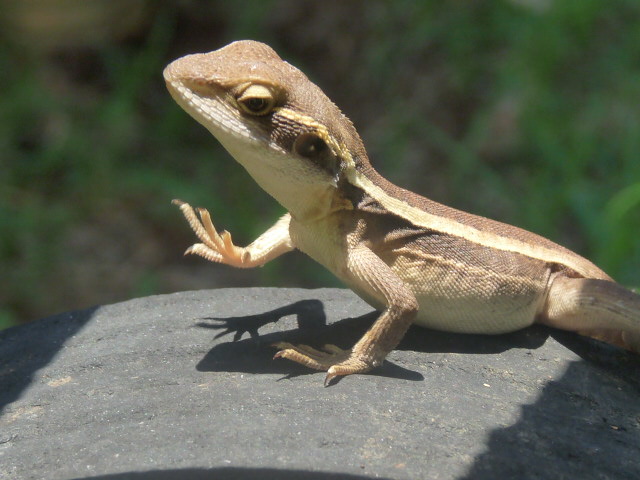
waving-lizard-024In reality, ConservationBytes.com isn’t going anywhere. But Corey Bradshaw is.

You’ll still be able to read the regular posts on ConservationBytes.com without having to change a thing; I’ll just be writing them from a different office across the city.

Yes, I’m staying in beautiful Adelaide in South Australia, but my time at the University of Adelaide has come to an end. I’m excited to report that as of 16 January 2017 I’ll be occupying the new position of Matthew Flinders Fellow in Global Ecology at Flinders University in the School of Biological Sciences.

I thank my colleagues at the University of Adelaide for the productive time I’ve had here.

On to bigger and better things.

CJA Bradshaw


Genetic Management of Fragmented Animal and Plant Populations

10 12 2016

logoThat is the title of a new textbook that will be available mid-2017.

After almost 6 years work, authors Dick Frankham, Jonathan Ballou, Katherine Ralls, Mark Eldridge, Michele Dudash, Charles Fenster, Bob Lacy & Paul Sunnucks have produced an advanced textbook/research monograph that aims to provoke a paradigm shift in the management of small, isolated population fragments of animals and plants.

One of the greatest unmet challenges in conservation biology is the genetic management of fragmented populations of threatened animal and plant species. More than a million small, isolated, population fragments of threatened species are likely suffering inbreeding depression, loss of evolutionary potential, and elevated extinction risks (genetic erosion). Re-establishing gene flow between populations is required to reverse these effects, but managers very rarely do this. On the contrary, molecular genetic methods are mainly being used to document genetic differentiation among populations, with most studies concluding that genetically differentiated populations should be managed separately (i.e., kept isolated), thereby dooming many populations to eventual extinction.

The need for a paradigm shift in genetic management of fragmented populations has been highlighted as a major issue in conservation. The rapidly advancing field of molecular genetics is continually providing new tools to measure the extent of population fragmentation and its genetic consequences. However, adequate guidance on how to use these data for effective conservation is still lacking, and many populations are going extinct principally for genetic reasons. Consequently, there is now urgent need for an authoritative textbook on the subject.

Read the rest of this entry »


Cartoon guide to biodiversity loss XL

7 12 2016

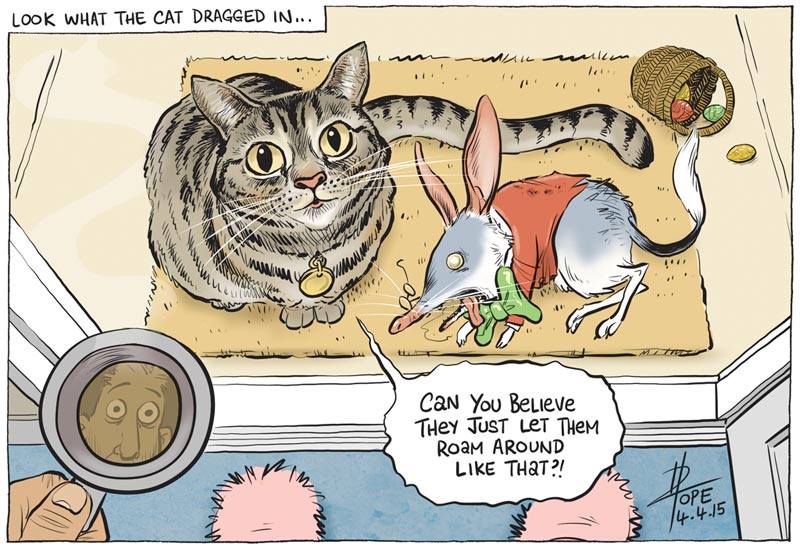
That’s ’40’, of course. Six more biodiversity cartoons, and the last for 2016. See full stock of previous ‘Cartoon guide to biodiversity loss’ compendia here.

Read the rest of this entry »


In conversation with Current Conservation

30 11 2016

bradshaw-tinkering-with-warIn August I had the pleasure of visiting the National Centre for Biological Sciences in Bengaluru, India, and while there I was interviewed by Hari Sridhar of Current Conservation. I admit that I haven’t always fully appreciated the excellent conservation reporting done by Current Conservation, and now after having been interviewed by them, I’m becoming more aware of their value (and not just because I appear in their latest issue). I really encourage CB.com readers to check it out.

In a paper published in the Proceedings of the National Academy of Sciences USA in 2014, Corey Bradshaw and Barry Brook argued that, given the current momentum of human population growth, no demographic “quick fixes” will be enough to change its trajectory in the near future. Therefore, environmental policy will be served better by prioritising measures such as technological and social innovation and reductions in consumption, while treating population reduction as a long-term goal. On his recent visit to Bengaluru, I spoke to Corey Bradshaw about the genesis of this study and its implications.

Hari Sridhar: You say “our models clearly demonstrate that the current momentum of the global human population precludes any demographic “quick fixes.” If that is the case, what do you suggest should be done instead?

Corey Bradshaw: I’ll back up a little bit and give you some of the context for writing the paper, which will sort of explain the title and that particular conclusion. Often when I gave public seminars, where I would talk about some environmental problem and future predictions of its worsening, some member of the audience would stand up at the end and say: “Well, the problem is humans. There are just too many of us. So all we need to do is focus on reducing the human population and we will fix all of these other problems.” That came up so often that I began to think: “Well, how quickly could we fix the overpopulation problem?”

Being, among other things, a population dynamics modeller, I decided I could model the human population just as well to look at that question. What would it take and how long for human population to start to decline, either from interventions or catastrophes? Human demographers don’t typically consider catastrophe scenarios when they project human populations. It’s instead done under very strict policy criteria, typically under the expected status quo, with some slight variation in things like family planning and structural change, you know, things like age structure. But we decided to try out more extreme scenarios as well to address that question. So first we said “let’s just see what happens when we only adjust fertility”. We did that and the population trajectory was more or less insensitive.

Then we said “let’s see what happens if we impose mass mortality events of various types — a third world war, pandemics, nuclear warfare” — and still the population was fairly resistant, even to these big changes. What we took away from these results was this: yes, population size must be addressed and we should have started looking into this seriously, probably post World War 2 when we were just under two billion people. We need to address overpopulation, but it’s not going to be something that can be fixed suddenly or be reduced anytime in the next few decades. It’s a century-scale issue. Should we be aiming to reduce the total human population? Yes. Should we be encouraging fertility reduction and family planning? Yes. It’s just that these will have positive outcomes at the century scale. Now most of our environmental problems are not things that we can ignore for a century. They have to be dealt with now. So our argument basically was that if we can’t address the human population problem, in the sense of reducing its size quickly, then we need to turn our attention to more immediate fixes, such as addressing consumption and various environmental mitigation policies. That was our main message. But in so doing we managed to anger both sides of the ideological position on the human population debate. In saying that something must be done but it can’t be done quickly, we upset the low-growth proponents. And by saying that we should nevertheless aim for long-term population reduction, we upset the people who are utterly opposed to any sort of fertility reduction or any action on human population growth.

HS: That’s something I want to ask you about — tell us about the attention this paper got within academia and in the media.

CB: Yeah, in the academic setting it was interesting. There were only a few critiques written about the paper and they were fairly weak. As the saying goes “All models are wrong but some are useful”, but what our model said was defensible. I suppose some of the terminology and the interpretation were points of contention with some people, but by and large the scientific community was satisfied with the result. But in the media it was completely different. Almost every single journalist I talked to put a particular slant on the results. Because of those two diametrically opposite opinions, people appeared to read anything they wanted to into it. Most people in the media didn’t of course read the paper. They read the title and maybe the abstract and the odd sentence here and there, and took from that whatever their ideological position dictated. There was right-wing media, there was left-wing media, and each had its own bias. I think only a handful of interviewers seemed to grasp the concept, which I didn’t think was that difficult. It also got a lot of responses on these comment streams. I don’t read those most of the time, but there are a lot of crazy people on the internet now. I got all sorts of hate mail, and even indirect death threats. Not serious ones. Just some random person telling me I should be removed from the face of the planet, and things like that. That happens from time to time when you deal with controversial topics.

HS: In the paper, you come up with some figures for what the population will be in 2100, under different scenarios. Could you tell us how much uncertainty there was around these figures?

CB: There was probably much less uncertainty than for most other species that are modelled. Humans tend to census themselves fairly well and we have a reasonable understanding of how many of us there are right now. While demographic data like age-specific survival rates are missing from some parts of the world, generally speaking at the scale of regions it’s well-known. So in terms of measurement error, the current and even the trends in those demographic rates are robust. Some of the assumptions, such as how much longer we’ll live given future medical innovations, are somewhat uncertain. But as it turns out, we are living so long now that even slight adjustments to longevity don’t make much difference in the long-term to total population size. And even large assumptions about, say, juvenile mortality, don’t make a huge difference because for a long-lived mammal the most important parameter that modifies population growth generally is the survival of breeding females. And breeding-age woman around the world tend to have the highest survival rates, so all the other parameters have smaller effects on population size. So while environmental variability has a large effect on small populations, it has a comparatively small effect on large populations. And we are a very large population. Incorporating a lot of uncertainty didn’t really make much of a difference. But the future scenarios were uncertain – will there be a war, will there be climate change reductions in food availability that will lead to higher juvenile mortality, etc.? We know little about the probability these things will occur and how important they’ll be. Read the rest of this entry »


Tips for scientists to deal with the media

21 11 2016

rita-skeeter2

I regularly give science communication workshops that include tips for dealing with reporters and journalists in the mass media. Most of these tips come from my own experience, or from stories I’ve heard from close colleagues. Instead of just teaching these important lessons to a select few who get to hear about them in person, I’ve decided to write a little post listing the most important points. Most of the following has little to do with maximising the likelihood of getting an interview, but these tips should help you avoid problems should a reporter notice your important work.

Welcome to the jungle.

1. The best way to get noticed by the media is to write a press release, although this is no guarantee in itself that anyone will pay attention. A good rule of thumb is to write a release for nearly every peer-reviewed article you publish, even if you think no one will be that interested. You’d be surprised how seemingly innocuous and run-of-the-mill papers can go viral if the press release is well-written. On that latter point, engage closely with your institution’s media office, and help them write the release by, for example, sending them a link to the lucid blog post you wrote about your own paper.

2. You can maximise the probability of uptake of your press release if you foster good working relationships with journalists. If you’ve ever had positive interactions with some before, keep the names on record and send a pre-release version of the article and the press release itself before the main event. Every journalist loves a scoop.

3. Register on expert media sites so that journalists can find you (e.g., like Scimex, Expert Guide, Ocean Expert, etc.). Most countries have such things.

4. If a journalist contacts you, make sure you respond immediately. Often even 30 minutes is too long before they seek opinions from some other scientist. If you are travelling, make sure you have an emergency contact auto-responder designed specifically for deadline-enslaved journalists.

Remember, you're smarter than they are (© Monty Python)

Remember, you’re smarter than they are (© Monty Python)

5. Once you do manage to gain an interview, whether it is live radio, recorded television or just as a chat for a newspaper article, avoid jargon like the plague. And make sure you test your language on a non-expert — what’s jargon to a non-specialist might not appear to be jargon at all to you. This often comes with experience, but at the very least try to avoid big, technical-sounding words (they do not make you sound more intelligent; rather, they make you sound boring and up-yourself).

6. Still on the issue of language, use short, punchy answers, analogies and a little humour. Try to relax (again, this comes with experience) by remembering that you know your shit more than 99.99% of the people that will be listening to you.

Read the rest of this entry »


Battling the seven-headed hydra: Crassula control in Europe

8 11 2016
Hydra. Seba Albertus (1734-1765). Image from Wellsome Trust

Hydra. Seba Albertus (1734-1765). Image from Wellsome Trust

A contribution by Claire Wordley of Conservation Evidence.

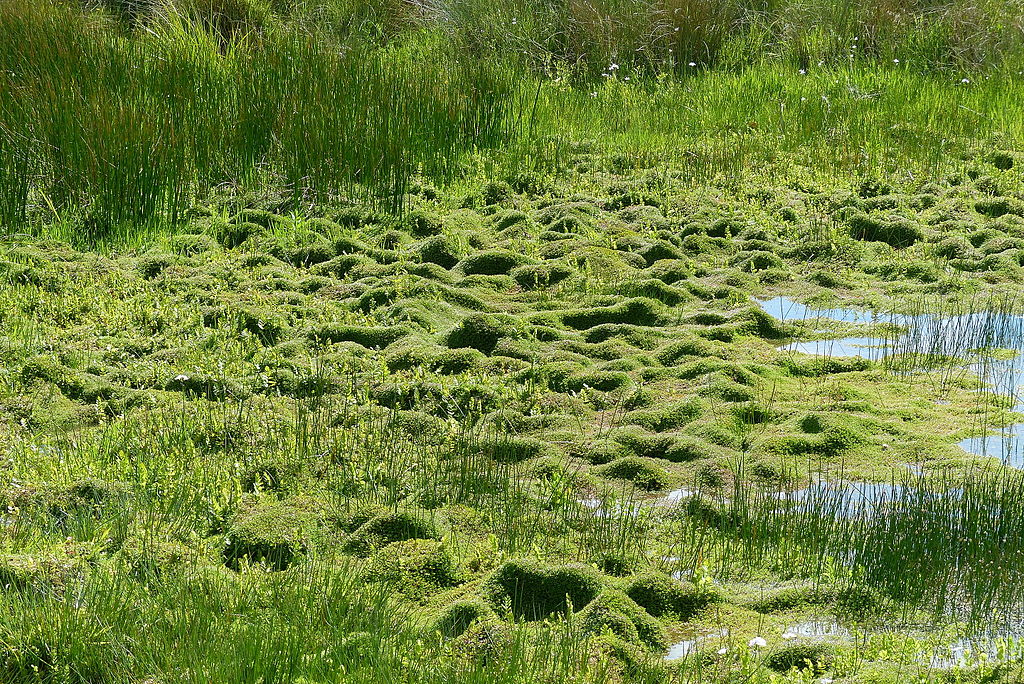
The Australian swamp stonecrop (Crassula helmsii) is a small, unassuming looking plant with incredible resilience. It can survive both baking heat and freezing cold; it can live underwater, on the water’s surface and on land; it can survive being dried out, bleached and sprayed with hot foam; and it can regenerate from tiny fragments. Unfortunately, in the UK and elsewhere in Europe it is an invasive species, choking the oxygen from ponds and shading out other plants with knock-on effects for entire freshwater ecosystems.

Swamp stonecrop, also known as New Zealand pigmyweed, was first introduced to the UK from Tasmania in 1911 and sold in garden centres from 1927 as an ornamental pond oxygenator. Shockingly, despite being documented as an invasive plant in New Forest ponds as early as 1976, its sale in the UK was only banned in 2014. Crassula appears to be spread mostly by people, whether deliberately or accidentally; it appears to be concentrated around car parks, residential areas and areas where equipment such as fishing gear is likely to have come from an infected site. Nearly 20% of 700 UK waterbodies surveyed contained the weed. Since every 10% increase in Crassula corresponds to a 5% decrease in native vegetation, and negative effects of Crassula invasion have been documented for zooplankton, macro-invertebrates and fish, with possible negative impacts on amphibians as well, control and ideally eradication is clearly needed. But what works to destroy this superweed?

Killing the hydra

Crassula helmsii (photo by Benjamin Blondel)

Crassula helmsii (photo by Benjamin Blondel)

Like the seven-headed hydra of legend, Crassula helmsii seems able to regenerate after even harsh treatment and being shattered into tiny pieces. Documenting clearly what works to control this beast – and what does not – is critical. This work has recently been completed by Conservation Evidence at the University of Cambridge, as part of an ongoing series on controlling freshwater invasives. The team has worked to collect all the evidence on different ways of killing Crassula, and experts have scored these for their effectiveness (or otherwise).

One of the most effective ways to knock back Crassula appears to be applying herbicides, particularly glyphosate and diquat or diquat alginate. While each of these performed well to reduce Crassula in many trials – and the use of glyphosate and diquat together led to a 98% reduction in one trial – there are concerns that while the medicine could cure the disease, it could kill the patient. One study in the New Forest noted that native plant cover fell in the treatment sites at a greater rate than in the control sites, and glyphosate appears to be toxic to amphibians. There might also be adverse effects on some bird species, although this could be due more to habitat-level changes than direct toxicity, because other birds appeared to benefit from wetlands being sprayed with glyphosate. Read the rest of this entry »


Potential conservation nightmare unfolding in South Africa

31 10 2016

fees-must-fallLike most local tragedies, it seems to take some time before the news really grabs the overseas audience by the proverbial goolies. That said, I’m gobsmacked that the education tragedy unfolding in South Africa since late 2015 is only now starting to be appreciated by the rest of the academic world.

You might have seen the recent Nature post on the issue, and I do invite you to read that if all this comes as news to you. I suppose I had the ‘advantage’ of getting to know a little bit more about what is happening after talking to many South African academics in the Kruger in September. In a word, the situation is dire.

We’re probably witnessing a second Zimbabwe in action, with the near-complete meltdown of science capacity in South Africa as a now very real possibility. Whatever your take on the causes, justification, politics, racism, or other motivation underlying it all, the world’s conservation biologists should be very, very worried indeed.

Read the rest of this entry »


Cartoon guide to biodiversity loss XXXIX

20 10 2016

Six more biodiversity cartoons coming to you all the way from Sweden (where I’ve been all week). See full stock of previous ‘Cartoon guide to biodiversity loss’ compendia here.

Read the rest of this entry »


World’s greatest conservation tragedy you’ve probably never heard of

13 10 2016

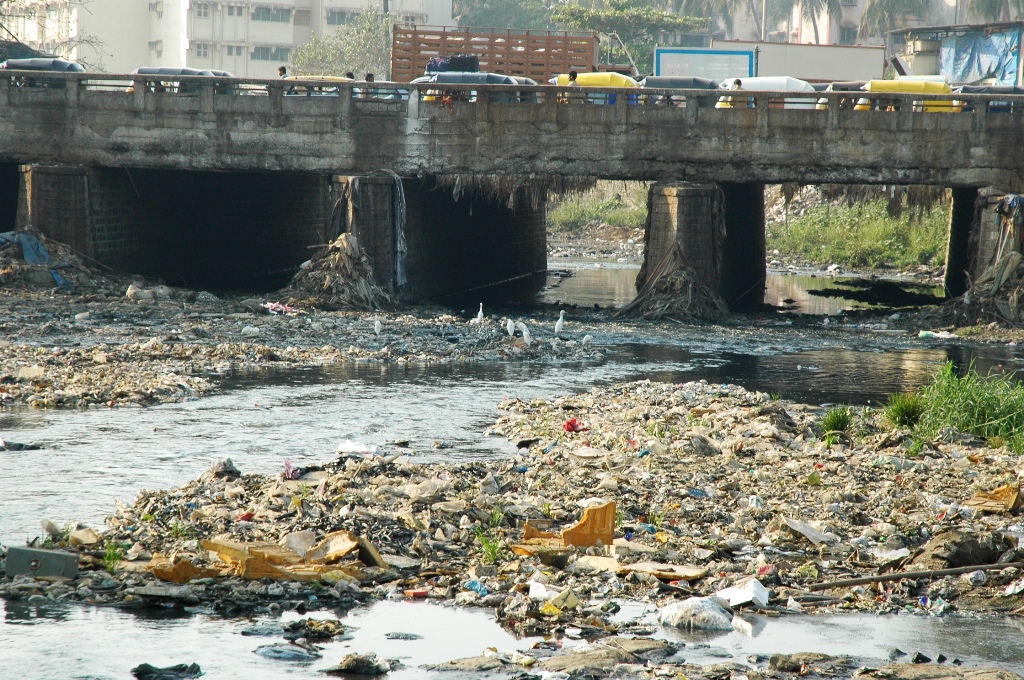
oshiwara_riverI admit that I might be stepping out on a bit of a dodgy limb by claiming ‘greatest’ in the title. That’s a big call, and possibly a rather subjective one at that. Regardless, I think it is one of the great conservation tragedies of the Anthropocene, and few people outside of a very specific discipline of conservation ecology seem to be talking about it.

I’m referring to freshwater biodiversity.

I’m no freshwater biodiversity specialist, but I have dabbled from time to time, and my recent readings all suggest that a major crisis is unfolding just beneath our noses. Unfortunately, most people don’t seem to give a rat’s shit about it.

Sure, we can get people riled by rhino and elephant poaching, trophy hunting, coral reefs dying and tropical deforestation, but few really seem to appreciate that the stakes are arguably higher in most freshwater systems. Read the rest of this entry »


Massive yet grossly underestimated global costs of invasive insects

4 10 2016
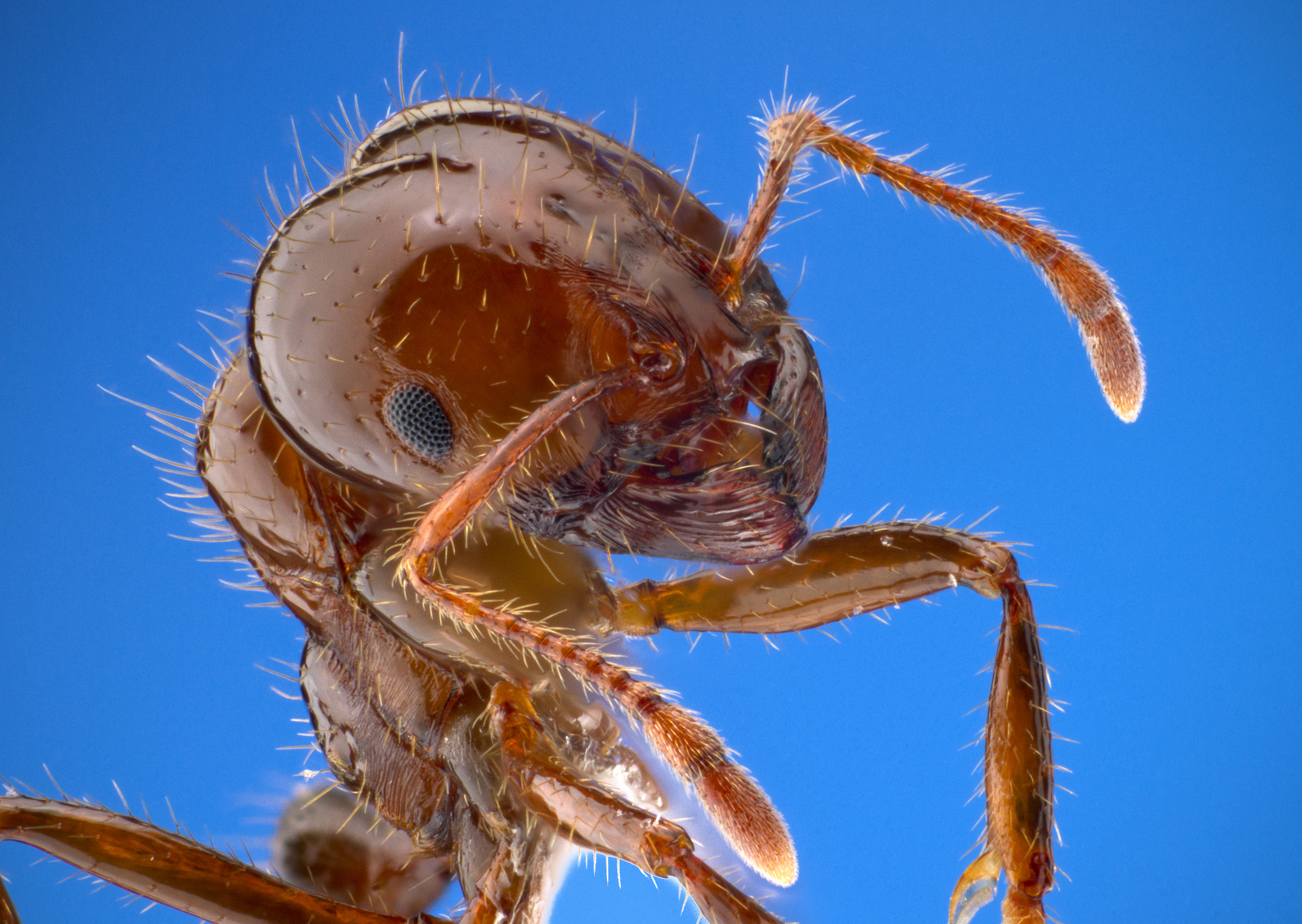
Portrait of a red imported fire ant, Solenopsis invicta. This species arrived to the southeastern United States from South America in the 1930s. Specimen from Brackenridge Field Laboratory, Austin, Texas, USA. Public domain image by Alex Wild, produced by the University of Texas "Insects Unlocked" program.

Portrait of a red imported fire ant Solenopsis invicta. This species arrived to the southeastern USA from South America in the 1930s. Specimen from Brackenridge Field Laboratory, Austin, Texas, USA. Public domain image by Alex Wild, produced by the University of Texas “Insects Unlocked” program.

As many of you already know, I spent a good deal of time in France last year basking in the hospitality of Franck Courchamp and his vibrant Systematic Ecology & Evolution lab at Université Paris-Sud. Of course, I had a wonderful time and was sad to leave in the end, but now I have some hard evidence that I wasn’t just eating cheese and visiting castles. I was actually doing some pretty cool science too.

Financed by BNP-Paribas and Agence Nationale de Recherche, the project InvaCost was designed to look at the global impact of invasive insects, including projections of range dynamics under climate change and shifting trade patterns. The first of hopefully many papers is now out.

Just published in Nature Communications, I am proud that many months of hard work by a brilliant team of ecologists, epidemiologists and economists has culminated in this article entitled Massive yet grossly underestimated costs of invasive insects, which in my opinion is  the first robust analysis of its kind. Despite some previous attempts at estimating the global costs of invasive species1-4 (which have been largely exposed as guesswork and fantasy5-10), our paper rigorously treats the economic cost estimates and categorises them into ‘reproducible’ and ‘irreproducible’ categories.

Lymantria

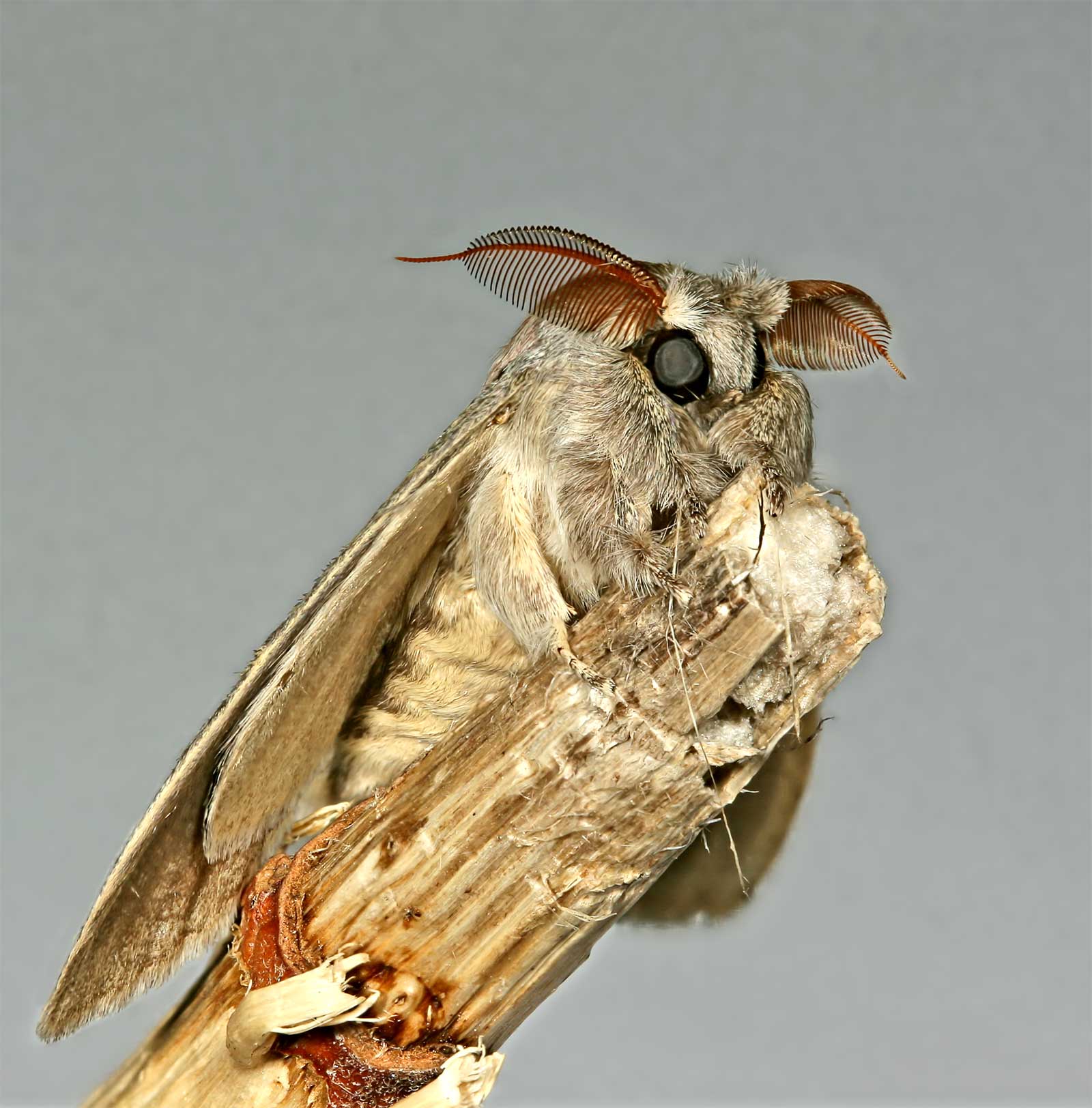
Gypsy moth (Lymantria dispar) adult. Dimitri Geystor (France)

What we found was sobering. If we look at just ‘goods and services’ affected by invasive insects, the annual global costs run at about US$70 billion. These include agricultural, forestry and infrastructure damages, as well as many of the direct costs of clean-up and eradication, and the indirect costs of prevention. When you examine that number a little more closely and only include the ‘reproducible’ studies, the total annual costs dip to about US$25 billion, meaning that almost 65% of the costs recorded are without any real empirical support. Scary, especially considering how much credence people put on previously published global ‘estimates’ (for example, see some citation statistics here).

Coptotermes_formosanus

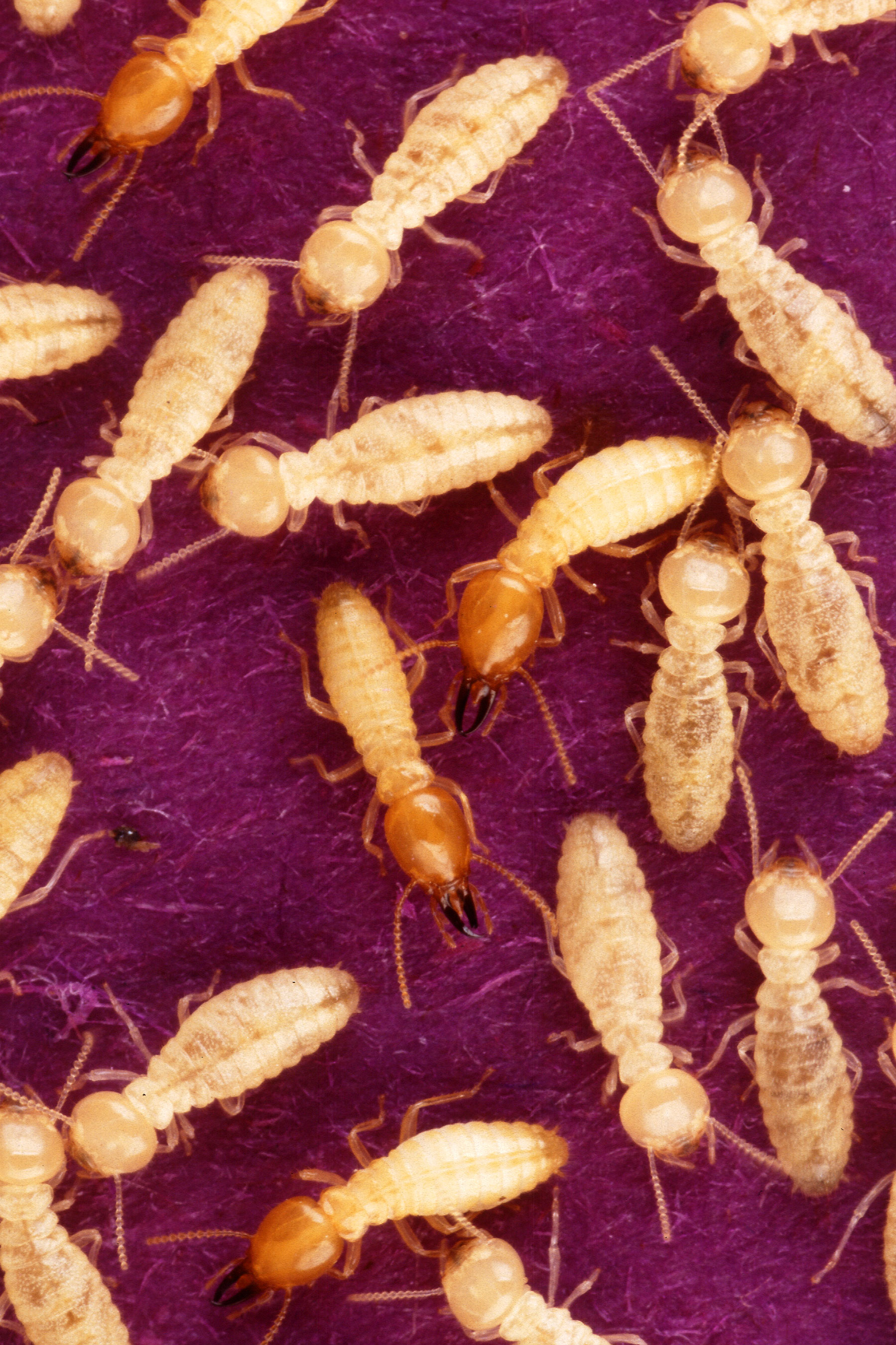
Formosan subterranean termite Coptotermes formosanus by Scott Bauer, US Department of Agriculture, Agricultural Research Service

There’s a great example to illustrate this. If you take it at face value, the most expensive invasive insect in the world is the Formosan subterranean termite Coptotermes formosanus estimated at US$30.2 billion/yr globally. However, that irreproducible estimate is based on a single non-sourced value of US$2.2 billion per year for the USA, a personal communication supporting a ratio of 1:4 of control:repair costs in a single US city (New Orleans), and an unvalidated assumption that the US costs represent 50% of the global total.

Read the rest of this entry »


Valuing what we have to prevent it from disappearing

30 09 2016
29 year-old 'Tembo' shows us his grinders © CJA Bradshaw

29 year-old ‘Tembo’ shows us his grinders. Groom Anton is making sure Tembo remains well-rewarded for his good behaviour © CJA Bradshaw

I acknowledge that I’ve been banging on a bit about southern Africa over the last few weeks, but I defend my enthusiasm on the grounds that my first trip to the Kruger National Park profoundly changed the way I view extinction theory and conservation biology.

Today’s post rounds off this mini-series with something I only alluded to in my last: interacting with tame elephants.

I have always been in two minds about the role of animals in captivity, with my opinion that most zoos edge toward the negative because most people who attend them appear to view the animals as a freak-show rather than appreciate their beauty or be fascinated by their behaviour and ecology; add the near-impossible-to-avoid psychological distress to which most captive animals succumb, many zoos in particular are probably better off not existing at all.

That being the case, I won’t simply write off all captive situations as ‘negative’, because if done well, they can have a wonderful educational role to play. Read the rest of this entry »


Transition from the Anthropocene to the Minicene

24 09 2016
Going, going ...

Going, going … © CJA Bradshaw

I’ve just returned from a life-changing trip to South Africa, not just because it was my first time to the continent, but also because it has redefined my perspective on the megafauna extinctions of the late Quaternary. I was there primarily to attend the University of Pretoria’s Mammal Research Institute 50thAnniversary Celebration conference.

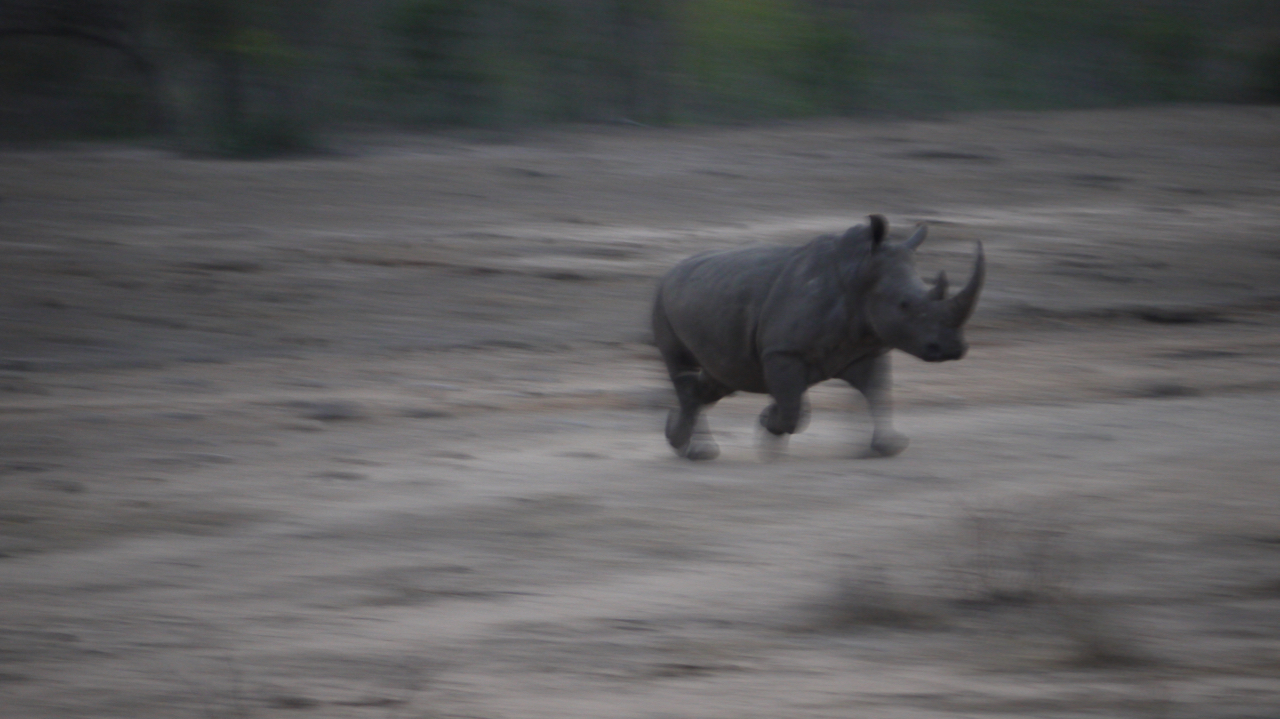
As I reported in my last post, the poaching rates in one of the larger, best-funded national parks in southern Africa (the Kruger) are inconceivably high, such that for at least the two species of rhino there (black and white), their future persistence probability is dwindling with each passing week. African elephants are probably not far behind.

As one who has studied the megafauna extinctions in the Holarctic, Australia and South America over the last 50,000 years, the trip to Kruger was like stepping back into the Pleistocene. I’ve always dreamed of walking up to a grazing herd of mammoths, woolly rhinos or Diprotodon, but of course, that’s impossible. What is entirely possible though is driving up to a herd of 6-tonne elephants and watching them behave naturally. In the Kruger anyway, you become almost blasé about seeing yet another group of these impressive beasts as you try to get that rare glimpse of a leopard, wild dogs or sable antelope (missed the two former, but saw the latter). Read the rest of this entry »


Staggering rhino poaching in the Kruger

14 09 2016

rhino-poachingI have the immense honour and pleasure of attending the University of Pretoria’s Mammal Research Institute 50th Anniversary Celebration conference currently being held in the Kruger National Park. To be rubbing shoulders with some of the greats of African ecology is humbling to say the least, but it’s also a huge opportunity to learn about the wonderful wildlife Africa still has.

Stepping back into what the Pleistocene must have been like in Australia, Europe, and North and South America, I’m moved to near tears by the truly awesome1 megafauna that still exists here. This is my first time to Africa, and I cannot begin to capture how I feel by seeing these amazing species in the flesh.

But as you probably already know, this last megafauna is under huge threat, and we seriously risk repeating the extinctions of the other continents within less than a century. While the topics associated with the threats are diverse, complex and challenging, one talk here stood out for me among all others: that by Ken Maggs of SANParks.

Kruger holds about 70% of the white (Ceratotherium simum) and black (Diceros bicornis) rhino in South Africa, and about 30% all rhino in the world (98.8% of all white rhino are found in just four countries: South Africa, Namibia, Zimbabwe and Kenya).

So for the ~ 10,000 rhino in Kruger, the following numbers should shock you; Ken showed a slide with the following information: Read the rest of this entry »


Conservation is many things to many people

6 09 2016

635927434268884923-480894926_Odyssey5I’ve never really entered the so-called (i.e., contrived) ‘debate’ regarding New Conservation, because I’ve always felt in my gut that it was a false dichotomy (turns out, I’m not the only one to think this). For this reason principally, I haven’t really examined the associated to and fro with any great interest or depth.

I will say this though — I was horrified last year in August while attending the International Congress for Conservation Biology (ICCB) in Montpellier during and after the now-infamous plenary debate between Kareiva and Spash on this ‘New Conservation’. Horrified. Yes.

Peter Kareiva, in his characteristic style, attempted to explain his position in what could be called a deliberately provocative and perhaps sensationalist manner. Clive Spash, on the other hand, took an almost quasi-religious idealogy and used it to smack Peter in the proverbial gob. It was a circus from the start, and unfortunately so badly moderated that neither side came off looking very good at all. The final, and dare I say, sycophantic standing ovation after Spash’s spittle-flecked sermon made me just a little sick to my stomach.

Really? Was all this swaggering, Shakespearean posturing justified? Is the discipline of conservation biology at a philosophical and ideological crossroads requiring its respective disciples to choose their favourite messiah from a binomial distribution? I didn’t think so then, and I’m even less inclined to think so now.

It was something of a vindication of that now year-old feeling when a paper came across my desk last week that was just published online in Conservation Biology, entitled Understanding conservationists’ perspectives on the new conservation debate by George Holmes, Chris Sandbrook and Janet Fisher. Read the rest of this entry »


Inexorable rise of human population pressures in Africa

31 08 2016
© Nick Brandt

© Nick Brandt

I’ve been a bit mad preparing for an upcoming conference, so I haven’t had a lot of time lately to blog about interesting developments in the conservation world. However, it struck me today that my preparations provide ideal material for a post about the future of Africa’s biodiversity.

I’ve been lucky enough to be invited to the University of Pretoria Mammal Research Unit‘s 50th Anniversary Celebration conference to be held from 12-16 September this year in Kruger National Park. Not only will this be my first time to Africa (I know — it has taken me far too long), the conference will itself be in one of the world’s best-known protected areas.

While decidedly fortunate to be invited, I am a bit intimidated by the line-up of big brains that will be attending, and of the fact that I know next to bugger all about African mammals (in a conservation science sense, of course). Still, apparently my insight as an outsider and ‘global’ thinker might be useful, so I’ve been hard at it the last few weeks planning my talk and doing some rather interesting analyses. I want to share some of these with you now beforehand, although I won’t likely give away the big prize until after I return to Australia.

I’ve been asked to talk about human population pressures on (southern) African mammal species, which might seem simple enough until you start to delve into the complexities of just how human populations affect wildlife. It’s simply from the perspective that human changes to the environment (e.g., deforestation, agricultural expansion, hunting, climate change, etc.) do cause species to dwindle and become extinct faster than they otherwise would (hence the entire field of conservation science). However, it’s another thing entirely to attempt to predict what might happen decades or centuries down the track. Read the rest of this entry »


Cartoon guide to biodiversity loss XXXVIII

25 08 2016

Another six biodiversity cartoons for your midday chuckle & groan. There’s even one in there that takes the mickey out of some of my own research (see if you can figure out which one). See full stock of previous ‘Cartoon guide to biodiversity loss’ compendia here.

Read the rest of this entry »


Rich and stable communities most vulnerable to change

16 08 2016

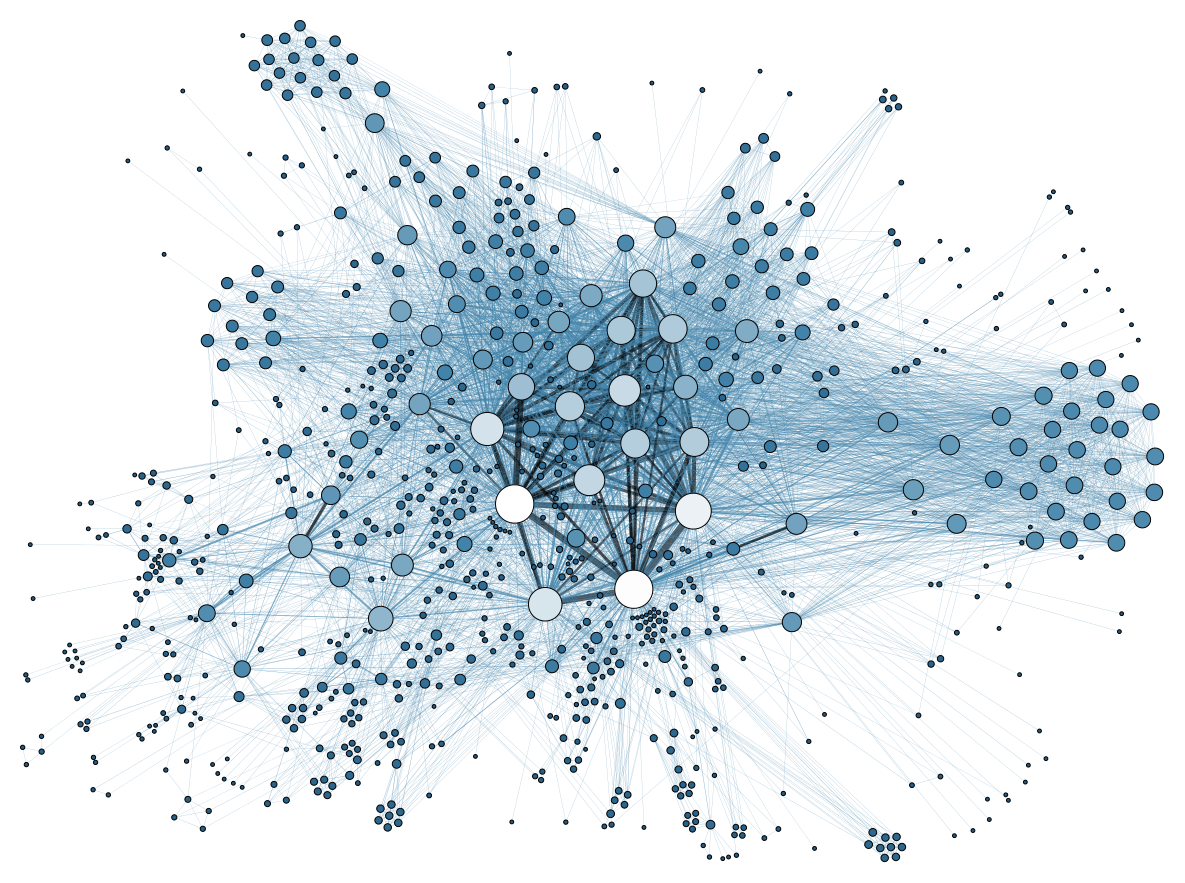
networkI’ve just read an interesting new study that was sent to me by the lead author, Giovanni Strona. Published the other day in Nature Communications, Strona & Lafferty’s article entitled Environmental change makes robust ecological networks fragile describes how ecological communities (≈ networks) become more susceptible to rapid environmental changes depending on how long they’ve had to evolve and develop under stable conditions.

Using the Avida Digital Evolution Platform (a free, open-source scientific software platform for doing virtual experiments with self-replicating and evolving computer programs), they programmed evolving host-parasite pairs in a virtual community to examine how co-extinction rate (i.e., extinctions arising in dependent species — in this case, parasites living off of hosts) varied as a function of the complexity of the interactions between species.

Starting from a single ancestor digital organism, the authors let evolve several artificial life communities for hundred thousands generation under different, stable environmental settings. Such communities included both free-living digital organisms and ‘parasite’ programs capable of stealing their hosts’ memory. Throughout generations, both hosts and parasites diversified, and their interactions became more complex. Read the rest of this entry »


Keeping India’s forests

9 08 2016

I’ve just returned from a short trip to the National Centre for Biological Sciences (NCBS) in Bangalore, Karnataka, one of India’s elite biological research institutes.

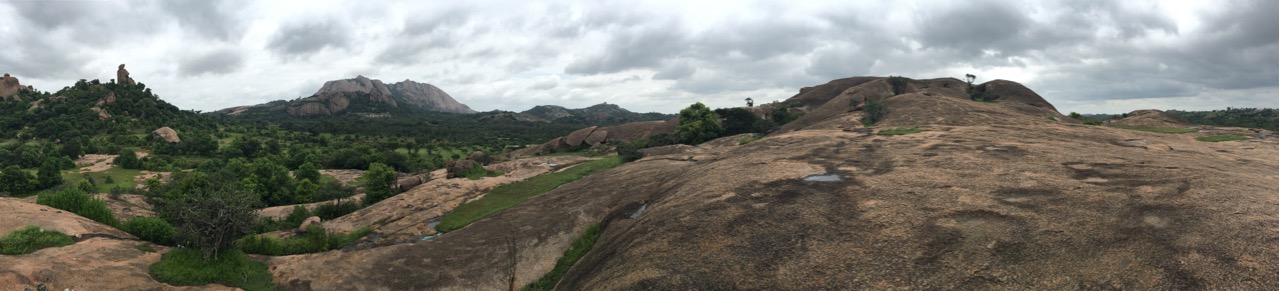
Panorama of a forested landscape (Savandurga monolith in the background) just south of Bangalore, Karnataka (photo: CJA Bradshaw)

Panorama of a forested landscape (Savandurga monolith in the background) just south of Bangalore, Karnataka (photo: CJA Bradshaw)

I was invited to give a series of seminars (you can see the titles here), and hopefully establish some new collaborations. My wonderful hosts, Deepa Agashe & Jayashree Ratnam, made sure I was busy meeting nearly everyone I could in ecology and evolution, and I’m happy to say that collaborations have begun. I also think NCBS will be a wonderful conduit for future students coming to Australia.

It was my first time visiting India1, and I admit that I had many preconceptions about the country that were probably unfounded. Don’t get me wrong — many of them were spot on, such as the glorious food (I particularly liked the southern India cuisine of dhosa, iddly & the various fruit-flavoured semolina concoctions), the insanity of urban traffic, the juxtaposition of extreme wealth and extreme poverty, and the politeness of Indian society (Indians have to be some of the politest people on the planet).

But where I probably was most at fault of making incorrect assumptions was regarding the state of India’s natural ecosystems, and in particular its native forests and grasslands. Read the rest of this entry »


Journal ranks 2015

26 07 2016

graduate_barsBack in February I wrote about our new bibliometric paper describing a new way to rank journals, which I still contend is a fairer representation of relative citation-based rankings. Given that the technique requires ISI, Google Scholar and Scopus data to calculate the composite ranks, I had to wait for the last straggler (Google) to publish the 2015 values before I could present this year’s rankings to you. Google has finally done that.

So in what has become a bit of an annual tradition, I’m publishing the ranks of a mixed list of ecology, conservation and multidisciplinary disciplines that probably cover most of the journals you might be interested in comparing. Like for last year, I make no claims that this list is comprehensive or representative. For previous lists based on ISI Impact Factors (except 2014), see the following links (2008, 2009, 2010, 2011, 2012, 2013).

So here are the following rankings of (i) 84 ecology, conservation and multidisciplinary journals, and a subset of (ii) 42 ecology journals, (iii) 21 conservation journals, and (iv) 12 marine and freshwater journals. Read the rest of this entry »