It’s not all about temperature for corals

31 05 2017

CB_ClimateChange6_Photo

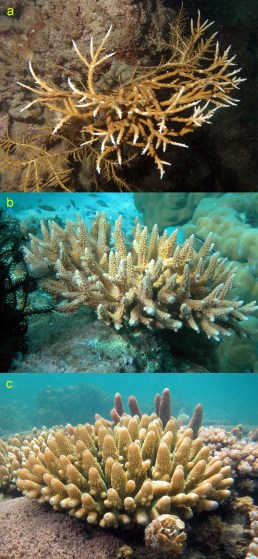
Three of the coral species studied by Muir (2): (a) Acropora pichoni: Pohnpei Island, Pacific Ocean — deep-water species/IUCN ‘Near threatened’; (b) Acropora divaricate: Maldives, Indian ocean — mid-water species/IUCN ‘Near threatened’; and (c) Acropora gemmifera: Orpheus Island, Australia — shallow-water species/IUCN ‘Least Concern’. The IUCN states that the 3 species are vulnerable to climate change (acidification, temperature extremes) and demographic booms of the invading predator, the crown-of-thorns starfish Acanthaster planci. Photos courtesy of Paul Muir.

Global warming of the atmosphere and the oceans is modifying the distribution of many plants and animals. However, marine species are bound to face non-thermal barriers that might preclude their dispersal over wide stretches of the sea. Sunlight is one of those invisible obstacles for corals from the Indian and Pacific Oceans.

If we were offered a sumptuous job overseas, our professional success in an unknown place could be limited by factors like cultural or linguistic differences that have nothing to do with our work experience or expertise. If we translate this situation into biodiversity terms, one of the best-documented effects of global warming is the gradual dispersal of species tracking their native temperatures from the tropics to the poles (1). However, as dispersal progresses, many species encounter environmental barriers that are not physical (e.g., a high mountain or a wide river), and whose magnitude could be unrelated to ambient temperatures. Such invisible obstacles can prevent the establishment of pioneer populations away from the source.

Corals are ideal organisms to study this phenomenon because their life cycle is tightly geared to multiple environmental drivers (see ReefBase: Global Information System for Coral Reefs). Indeed, the growth of a coral’s exoskeleton relies on symbiotic zooxanthellae (see video and presentation), a kind of microscopic algae (Dinoflagellata) whose photosynthetic activity is regulated by sea temperature, photoperiod and dissolved calcium in the form of aragonite, among other factors.

Read the rest of this entry »


Cartoon guide to biodiversity loss XLII

25 05 2017

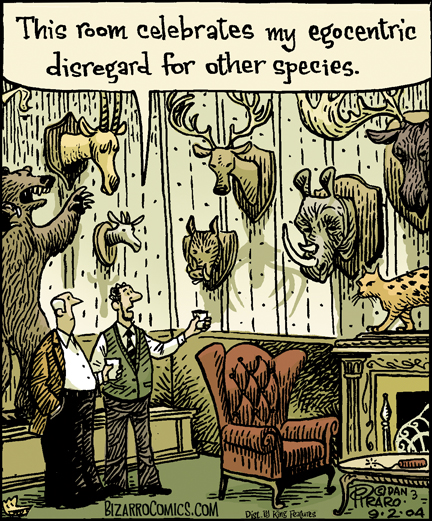
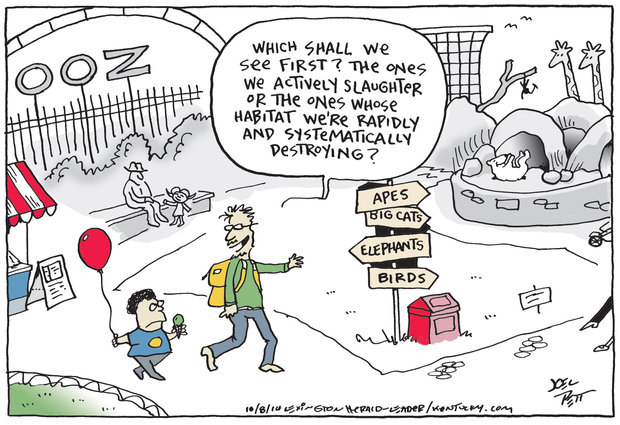
My travel is finishing for now, but while in transit I’m obliged to do another instalment of biodiversity cartoons (and the second for 2017). See full stock of previous ‘Cartoon guide to biodiversity loss’ compendia here.

Read the rest of this entry »


Spring asynchrony in migratory birds

15 05 2017
CB_ClimateChange5_BirdLateMigratoryArrival_Photo

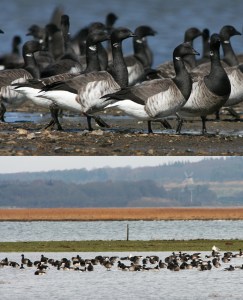
Brent geese flock in the Limfjorden (Denmark)courtesy of Kevin Clausen. The Brent goose (Branta bernicla) is a migratory goose that breeds in Arctic coasts, as well as in northern Eurasia and the Americas, starting from late May to early June. Adults are about 0.5 m long, weigh some 2 kg and live up to 30 years. Their nests are placed in the ground, where reproductive pairs incubate a single clutch (≤ 5 eggs) for a couple of months. They are herbivores, feeding on algae (mainly Zostera marina in Limfjord) and seagrass in estuaries, fjords, intertidal areas and rocky beaches during fall and winter. During summer they feed on tundra herbs, moss, lichens, as well as aquatic plants in rivers and lakes. The species is ‘Least Concern’ for the IUCN, with a global population at some 600,000 individuals.

Migratory birds synchronise their travel from non-breeding to breeding quarters with the seasonal conditions optimal for reproduction. Above all, they decide when to migrate on the basis of the climate of their wintering areas while they are there. As climate change involves earlier springs in the Arctic but not in the wintering areas, there is a lack of synchronisation that leads to a demographic decline of these birds in the polar regions where they breed.

When I think about how species respond to climate change, the song from the ClashShould I stay or should I go” comes to mind. As climate changes, species eventually have to face an ultimate choice: (i) stay and adapt to novel conditions or become locally extinct if adaptation fails, (ii) or move to other regions where climatic conditions should be more suitable. Migratory species have to face this decision every time they have to move back and forth from non-breeding to breeding grounds.

Migration is a behavioural strategy shared by different animal groups like sea turtles, mammals, amphibians, insects or birds. Species move from one area to another usually to feed and reproduce in the best climatic conditions possible. For birds, migration is a common phenomenon that typically entails large movements between breeding and wintering grounds. These vertebrates boast some of the longest migratory distances known in the animal kingdom, particularly seabirds like Artic terns, which can complete up to a round-world trip in a single migratory event between the UK and the Antarctic (1). There are several theories about the mechanisms triggering bird migration, including improving body condition and fitness through unexploited resources (2), reducing parasite load (3), minimizing predation risk (4), maximizing day-light (5), or reducing competition (6, 7). Whatever the cause, birds have to decide when the best moment to migrate is, counting only with the (usually climatic) clues they have at the departure site. Read the rest of this entry »
Cartoon guide to biodiversity loss XLI

26 04 2017

Number 41 of my semi-regular instalment of biodiversity cartoons, and the first for 2017. See full stock of previous ‘Cartoon guide to biodiversity loss’ compendia here.

Read the rest of this entry »


Job: Research Fellow in Palaeo-Ecological Modelling

13 04 2017

© seppo.net

I have another postdoctoral fellowship to advertise! All the details you need for applying are below.

KEY PURPOSE 

Scientific data such as fossil and archaeological records used as proxy to reconstruct past environments and biological communities (including humans) are sparse, often ambiguous or contradictory when establishing any consensus on timing or routes of initial human arrival and subsequent spread, the timing or extent of major changes in climate and other environmental perturbations, or the timing or regional pattern of biological extinctions.

The Research Fellow (Palaeo-Ecological Modelling) will assist in addressing these problems by developing state-of-the-art analytical and simulation tools to infer regional pattern of both the timing of human colonisation and megafauna extinction based on incomplete and sparse dataset, and investigating past environmental changes and human responses to identify their underlying causes and consequences on Australia’s landscapes, biodiversity and cultural history.

ORGANISATIONAL ENVIRONMENT 

The position will be based in the School of Biological Sciences in the Faculty of Science & Engineering at Flinders University. Flinders University boasts a world-class Palaeontology Research Group (PRG) and the new Global Ecology Research Laboratory that have close association with the research-intensive South Australian Museum. These research groups contribute to building a dynamic research environment that explores the continuum of environmental and evolutionary research from the ancient to modern molecular ecology and phylogeography. The School of Biological Sciences is an integrated community researching and teaching biology, and has a long history of science innovation. The appointee will join an interdisciplinary school of approximately 45 academic staff. The teaching and research activities of the School are supported by a range of technical and administrative infrastructure services.

KEY RESPONSIBILITIES

The key responsibilities and selection criteria identified for this position should be read in conjunction with the Flinders University Academic Profiles for the relevant academic classification (scroll down to Academic Profiles).

The Research Fellow (Palaeo-Ecological Modelling) will work under the direction of the Project Chief Investigator, and will be required to: Read the rest of this entry »


Not 100% renewable, but 0% carbon

5 04 2017

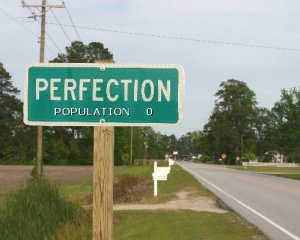
635906686103388841-366754148_perfection1Anyone familiar with this blog and our work on energy issues will not be surprised by my sincere support of nuclear power as the only realistic solution to climate change in the electricity (and possibly transport and industrial heat) arena. I’ve laid my cards on the table in the peer-reviewed literature (e.g., see here, here, here, here, here & here) and the standard media, and I’ve even joined the board of a new environmental NGO that supports nuclear.
And there is hope, despite the ever-increasing human population, rising consumerism, dwindling resources, and the ubiquity of ideologically driven and ethically compromised politicians. I am hopeful for several reasons, including rising safety and reliability standards of modern nuclear technology, the continued momentum of building new fission reactors in many countries, and even the beginnings of real conversations about nuclear power (or at least, the first steps toward this) in countries where nuclear energy is currently banned (e.g., Australia). I’m also heartened by the fact that nearly every conservation scientists with whom I speak is generally supportive, or at least non-resistant, to the idea of nuclear power as part of the climate change solution. An open letter by our colleagues attests to this. In fact, every day that passes brings new evidence that we cannot ignore this solution any longer.

Even despite the evidence in support of implementing a strong nuclear component into climate change-mitigation strategies, one of the most frequent arguments for not doing so is that society can achieve all of its energy needs and simultaneously combat climate change by constructing 100% renewable-energy pathways. While it is an easy mantra to repeat because it feels right intrinsically to nearly everyone with an environmental conscience, as a scientist I also had to ask if such a monumental task is even technically feasible. Read the rest of this entry »


Limited nursery replenishment in coral reefs

27 03 2017
Haemulon sciurus

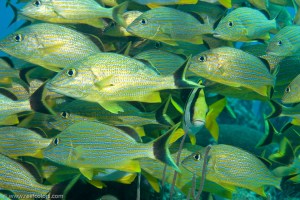
blue-striped grunt (Haemulon sciurus)

Coral reef fishes are wonderfully diverse in size, form, and function, as well as their need for different habitats throughout the life cycle. Some species spend all of their life in the same kind of coral habitat, while others need different places to breed and feed.

Fishes requiring different habitats as they progress through life often have what we call ‘nurseries’ in which adults lay eggs and the subsequent juveniles remain, and these places are often dominated by mangroves or seagrasses (i.e., they are not part of the coral reef).

While we’ve known for quite some time that when these nursery habitats are not around, adjacent coral reefs have few, if any, of these nursery-dependent species. What we haven’t known until now is just how far the influence of nurseries extends along a coral reef.

In other words, if a nursery is present, just how many new recruits do different areas of a reef receive from it? Read the rest of this entry »


Job: Koala Data Research Technician

6 03 2017

koalaIf you live in South Australia, and in Adelaide especially, you would have had to be living under a rock not to have heard of the Great Koala Counts 1 and 2. So I’m not really writing this for those sotto pietra types. If you are a regular reader of CB.com, you’ll also know that I’ve been involved in helping analyse the data from GKC1, as well as improving the design of the GKC2.

8037320-3x2-940x627Well, the data are in for GKC2 and we need help to analyse them. Just as a little reminder, the GKCs are designed to provide better data to estimate the distribution and density of koalas in South Australia (especially in the Mount Lofty Ranges). We’ve already written one scientific article from GKC1, but we now have a more expansive and quality-controlled dataset, so it’s now time to write the second. Read the rest of this entry »


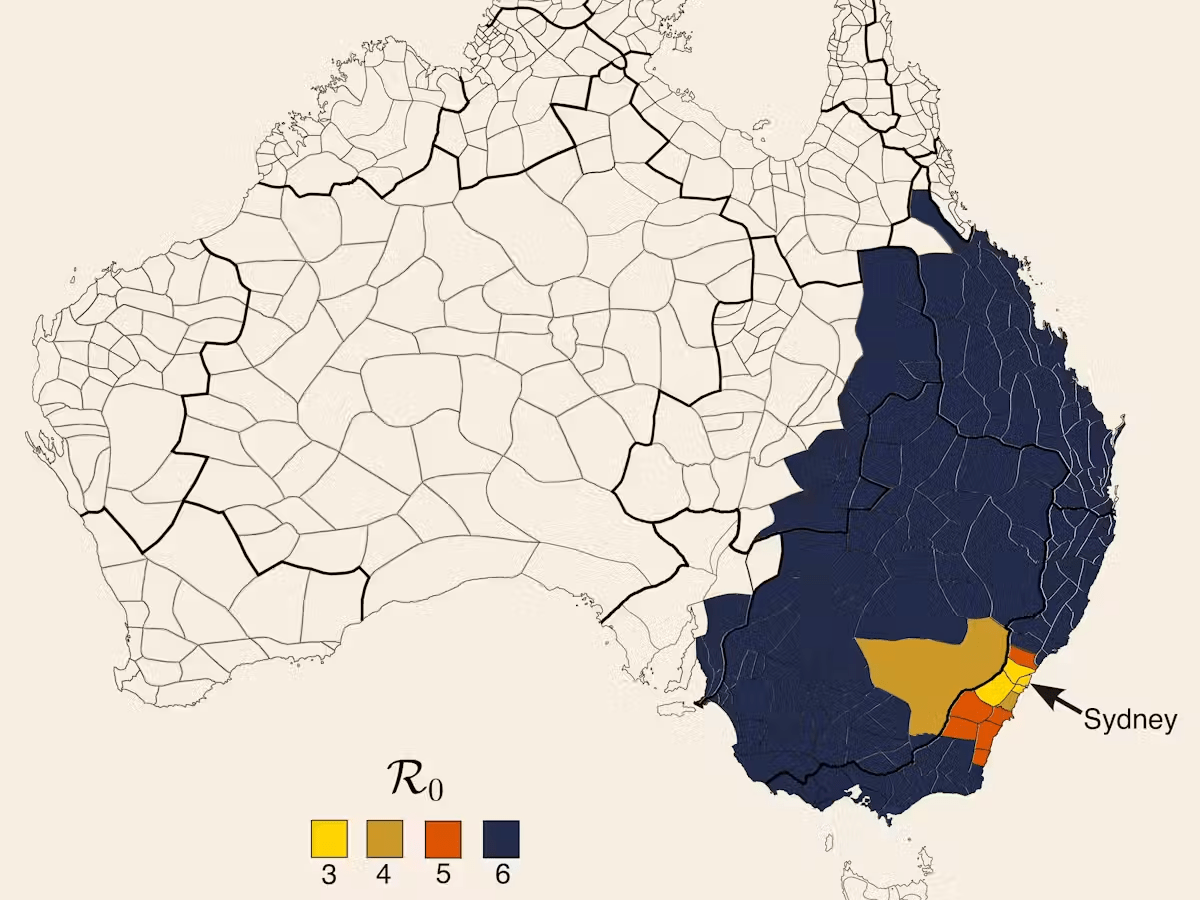
Job: Research Associate in Eco-epidemiological modelling

3 03 2017
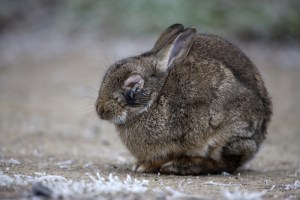
myxo-rabbit

European rabbit infected with myxomatosis

Earlier this week I advertised two new PhD scholarships in palaeo-ecological modelling. Now we are pleased to advertise a six-month Research Associate position in eco-epidemiological modelling.

The position will be based in the School of Biological Sciences at Flinders University. Flinders University offers a dynamic research environment that explores the continuum of environmental and evolutionary research from the ancient to modern ecology. The School of Biological Sciences is an integrated community researching and teaching biology, and has a long history of science innovation.

Project background

Since 1996, Biosecurity South Australia has been running a capture-mark-recapture study on a European rabbit (Oryctolagus cuniculus) population located at Turretfield (~ 50 km north of Adelaide). Now into the 21st year, this is one of the world’s longest studies of its kind. Approximately every 8 weeks cage traps are reset and the population trapped over five days, with the captured rabbits weighed, sexed, tagged and blood-sampled. The study was established to investigate the epidemiology and efficacy of the two imported rabbit biocontrol agents, rabbit haemorrhagic disease virus (RHDV) and myxomatosis. To date, from 119 formal trapping events and RHDV-outbreak carcass-sampling trips, > 4500 rabbits have been monitored with > 8700 cELISA RHDV antibody tests and 7500 IgG, IgM and IgA RHDV antibody tests on sera (similarly for myxomatosis), and 111 RHDV-specific polymerase chain reaction (PCR) analyses run on tissue samples of the sampled rabbits. This represents an unparalleled dataset on rabbit survival, population fluctuations and disease dynamics. Read the rest of this entry »


Palaeo-ecology PhD scholarships

1 03 2017

scholarshipWith my new position as Matthew Flinders Fellow in Global Ecology at Flinders University, I am in the agreeable position to be able to offer two PhD scholarships to the best candidates from around the world. If you feel that you’re up to the challenge, I look forward to hearing from you.

These projects will be in the following palaeo-ecology topics:

PhD Project #1. Ecological networks to examine community cascades of Late Quaternary megafauna extinctions Read the rest of this entry »


Not all wetlands are created equal

13 02 2017

little-guyLast year I wrote what has become a highly viewed post here at ConservationBytes.com about the plight of the world’s freshwater biodiversity. In a word, it’s ‘buggered’.

But there are steps we can take to avoid losing even more of that precious freshwater biodiversity. The first, of course, is to stop sucking all the water out of our streams and wetlands. With a global population of 7.5 billion people and climbing, the competition for freshwater will usually mean that non-human life forms lose that race. However, the more people (and those making the decisions, in particular) realise that intact wetlands do us more good as wetlands rather than carparks, housing developments, or farmland (via freshwater filtering, species protection, carbon storage, etc.), the more we have a chance to save them.

My former MSc student, the very clever David Deane1, has been working tirelessly to examine different scenarios of wetland plant biodiversity change in South Australia, and is now the proud lead author of a corker of a new paper in Biological Conservation. Having already published one paper about how wetland plant biodiversity patterns are driven by rare terrestrial plants, his latest is a very important contribution about how to manage our precious wetlands. Read the rest of this entry »


Venting your author frustrations

27 01 2017

frustrationEvery scientist worth her salt has had her share of annoying interactions with journal editors — both verbally and via e-mail. My friend and colleague Bill Laurance, Distinguished Research Professor at James Cook University, is no exception, and penned this hypothetical exchange between an author and editor as a way of venting his frustrations. Enjoy!
Author to Journal Editor, at a conference

Author: “You know, if I could sniff my own butt like you do, I would.”

Editor: Wags butt like he’s wagging his tail

Author: “Then again, maybe I wouldn’t …”

Editor: “You’re taking this kind of personally.”

Author:  “You think howling after getting kicked in the nuts by three referees is ‘taking it personally’? How about if I kick you in the nuts and we see how you go?”

Editor: “Sorry, I have to maintain editorial impartiality.”

Author: “I wonder if you’ll stay impartial after I stick this in your ear?” Read the rest of this entry »


Fertilisers can make plants sicker

25 01 2017

sick-plantLast year we reported experimental evidence that the dilution effect was the phenomenon by which greater biodiversity imparts disease resistance in plant communities. Our latest paper shows the mechanism underlying this.

In my ongoing collaboration with the crack team of plant community ecologists led by Shurong Zhou at Fudan University in Shanghai, we have now shown that nitrogen-based fertilisers — in addition to causing soil damage and environmental problems from run-off — reduce a plant community’s resistance to fungal diseases.

This means that prolonged use of artificial fertilisers can lead to the extinction of the most resistant plant species in a community, meaning that the remaining species are in fact more susceptible to diseases.

Continuing the experimental field trials in alpine meadows of the Tibetan Plateau, we tested the biodiversity resilience of an isolated  plant community to increasing concentrations of nitrogenous fertilisers. In this diverse and pristine ecosystem, we have finally established that extended fertilisation of soils not only alters the structure of natural plant communities, it also exacerbates pathogen emergence and transmission. Read the rest of this entry »


The Evidence Strikes Back — What Works 2017

16 01 2017
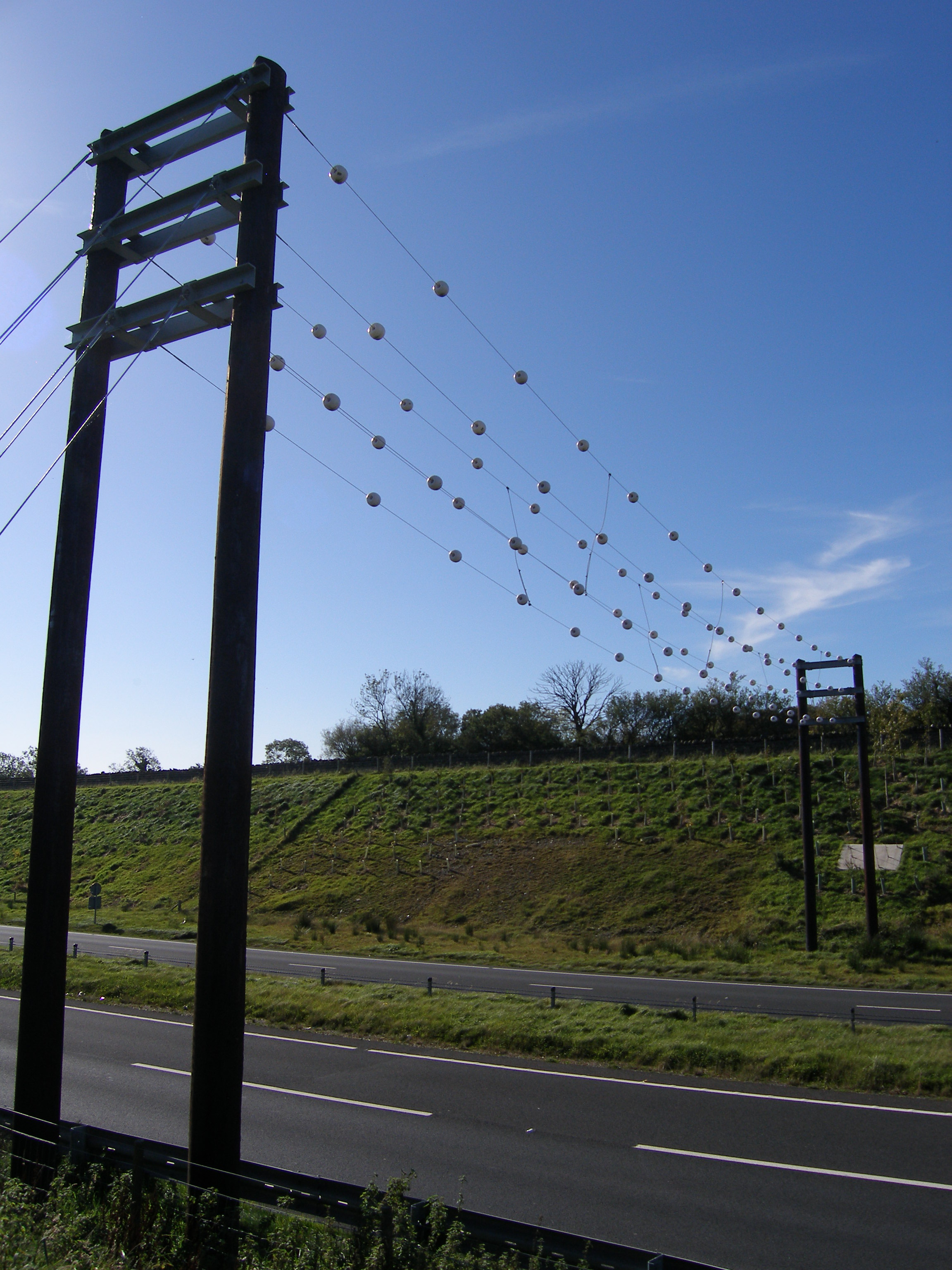
Bat gantry on the A590, Cumbria, UK. Photo credit: Anna Berthinussen

Bat gantry on the A590, Cumbria, UK. Photo credit: Anna Berthinussen

Tired of living in a world where you’re constrained by inconvenient truths, irritating evidence and incommodious facts? 2016 must have been great for you. But in conservation, the fight against the ‘post-truth’ world is getting a little extra ammunition this year, as the Conservation Evidence project launches its updated book ‘What Works in Conservation 2017’.

Conservation Evidence, as many readers of this blog will know, is the brainchild of conservation heavyweight Professor Bill Sutherland, based at Cambridge University in the UK. Like all the best ideas, the Conservation Evidence project is at once staggeringly simple and breathtakingly ambitious — to list every conservation intervention ever cooked up around the world, and see how well, in the cold light of evidence, they actually worked. The project is ongoing, with new chapters of evidence added every year grouped by taxa, habitat or topic — all available for free on www.conservationevidence.com.

What Works in Conservation’ is a book that summarises the key findings from the Conservation Evidence website, and presents them in a simple, clear format, with links to where more information can be found on each topic. Experts (some of us still listen to them, Michael) review the evidence and score every intervention for its effectiveness, the certainty of the evidence and any harmful side effects, placing each intervention into a colour coded category from ‘beneficial’ to ‘likely to be ineffective or harmful.’ The last ‘What Works’ book included chapters on birds, bats, amphibians, soil fertility, natural pest control, some aspects of freshwater invasives and farmland conservation in Europe; new for 2017 is a chapter on forests and more species added to freshwater invasives. Read the rest of this entry »


Inaugural Environmental Arsehat of the Year

9 01 2017

2016-environmental-arsehat-of-the-yearAs you recall, I asked both for your nominations and your votes for the inaugural Environmental Arsehat of the Year. Nominees could be a person or an entity who stood out in 2016 for his/her/their egregious attacks on environmental integrity. There were many fine nominations, and so now I’m elated to announce the results of the voting. Drumroll …

In 4th place with 13.7% of the votes, Matt Ridley. He is Conservative hereditary peer in the British House of Lords, and a flack for the coal industry who has championed global-warming denialism.

In 3rd place with 14.9% of the votes, Gautam Adani. The multibillionaire is a major coal baron in India and elswhere who has made a lot of splash recently in Australia for trying to build the biggest coal mine in the world that will likely finish off the Great Barrier Reef once and for all. Nice one, Gautam.

In 2nd place with 17.7% of the votes, The Liberal-National Party of Queensland. The (former) State Government ushered Queensland into 2016 by making the state one of the world’s deforestation hotspots, yet again!

And now, for the winner with a whopping 30.3% of the popular vote; please put your virtual hands together for the 2016 Environmental Arsehat of the YearRead the rest of this entry »


Where do citizens stand on climate change?

2 01 2017
Talk to the hand

Talk to the hand

Climate change caused by industrialisation is modifying the structure and function of the Biosphere. As we uncork 2017, our team launches a monthly section on plant and animal responses to modern climate change in the Spanish magazine Quercus – with an English version in Conservation Bytes. The initiative is the outreach component of a research project on the expression and evolution of heat-shock proteins at the thermal limits of Iberian lizards (papers in progress), supported by the British Ecological Society and the Spanish Ministry of Economy, Industry and Competitiveness. The series will feature key papers (linking climate change and biodiversity) that have been published in the primary literature throughout the last decade. To set the scene, we start off putting the emphasis on how people perceive climate change.

Salvador Herrando-Pérez, David R. Vieites & Miguel B. Araújo

“I would like to mention a cousin of mine, who is a Professor in Physics at the University of Seville – and asked about this matter [climate change], he stated: listen, I have gathered ten of the top scientists worldwide, and none has guaranteed what the weather will be like tomorrow in Seville, so how could anyone predict what is going to occur in the world 300 years ahead?”

Mariano Rajoy (Spanish President from 2011 to date) in a public speech on 22 October 2007

Weather (studied by meteorology) behaves like a chaotic system, so a little variation in the atmosphere can trigger large meteorological changes in the short term that are hard to predict. On the contrary, climate (studied by climatology) is a measure of average conditions in the long term and thus far more predictable than weather. There is less uncertainty in a climate prediction for the next century than in a weather prediction for the next month. The incorrect statement made by the Spanish President reflects harsh misinformation and/or lack of environment-related knowledge among our politicians.

Climate has changed consistently from the onset of the Industrial Revolution. The IPCC’s latest report stablishes with 95 to 100% certainty (solid evidence and high consensus given published research) that greenhouse gases from human activities are the main drivers of global warming since the second half of the 20th Century (1,2). The IPCC also flags that current concentrations of those gases have no parallel in the last 800,000 years, and that climate predictions for the 21st Century vary mostly according to how we manage our greenhouse emissions (1,3). Read the rest of this entry »


Vote for the 2016 Environmental Arsehat of the Year

20 12 2016

arsehat_greenIn March 2016 I requested nominations for the Environmental Arsehat of the Year, and you happily complied by providing many excellent suggestions.

I now request that you vote on these nominations using the polling widget that follows a brief description of each nominee and why they’ve been suggested by the CB.com community. Once the votes are tallied, I’ll post the ‘winner’ (loser) in a new post in early 2017. Happy voting!

The nominations (in no particular order)

Read the rest of this entry »


Influential conservation ecology papers of 2016

16 12 2016

cheetah_shutterstock_37268149As I have done for the last three years (2015, 2014, 2013), here’s another retrospective list of the top 20 influential conservation papers of 2016 as assessed by experts in F1000 Prime.

Read the rest of this entry »


ConservationBytes.com Leaving the University of Adelaide

12 12 2016

waving-lizard-024In reality, ConservationBytes.com isn’t going anywhere. But Corey Bradshaw is.

You’ll still be able to read the regular posts on ConservationBytes.com without having to change a thing; I’ll just be writing them from a different office across the city.

Yes, I’m staying in beautiful Adelaide in South Australia, but my time at the University of Adelaide has come to an end. I’m excited to report that as of 16 January 2017 I’ll be occupying the new position of Matthew Flinders Fellow in Global Ecology at Flinders University in the School of Biological Sciences.

I thank my colleagues at the University of Adelaide for the productive time I’ve had here.

On to bigger and better things.

CJA Bradshaw