Alliance of Leading Environmental Researchers and Thinkers

11 03 2014

ALERTIf you’ve been following this blog or my Twitter feed over the last few weeks, you’ve surely noticed a few references to A.L.E.R.T. – the Alliance of Leading Environmental Researchers and Thinkers. You might also have asked yourself, what exactly is ALERT, and is it something I should pay attention to?

Today’s post attempts to explain this new organisation, and hopefully convince you that the answer to the second question is ‘yes’.

Several months ago, a slightly cryptic e-mail from eminent conservation biologist, Bill Laurance, arrived in my inbox. It asked – what do you think of this logo (see associated image)? A few e-mails later and a couple of minor tweaks, and we ended up with what I thought was a pretty cool logo for this new ‘ALERT’ thing. It wasn’t until quite some time later that I finally understood what Bill was attempting to create.

Is ALERT a news aggregator, a blog, an advocacy group, a science-communication resource or a science-policy interface? Why, yes it is!

Read the rest of this entry »


Upcoming conservation, ecology and modelling conferences

7 03 2014

IMG_34271Our lab just put together a handy list of upcoming ecology, conservation and modelling conferences around the world in 2014. Others might also find it useful. Some of the abstract submission deadlines have already passed, but it still might be useful to know what’s on the immediate horizon if attendance only is an option.

Conference Dates Venue Call for Abstracts Deadline
Queensland Ornithological Conference 31 May Brisbane, Australia Open 10 Mar
Spatial Ecology and Conservation 17 Jun Birmingham, UK Closed 21 Feb
Asia-Pacific Coral Reef Symposium 23 Jun Taiwan Closed 5 Feb
International Statistical Ecology Conference 1 Jul Montpellier, France Closed 13 Jan
International Institute of Fisheries Economics & Trade 2014 7 Jul Brisbane Closed 31 Jan
World Conference on Natural Resource Modeling 8 Jul Vilnius, Lithuania Open 31 Mar
Society for Conservation Biology Oceania Section 9 Jul Suva, Fiji Open 7 Mar Read the rest of this entry »


Abbott’s ‘No more parks’ vow a bad move

6 03 2014

environmentPublished simultaneously on ALERT:

An international scientific group has decried Australian Prime Minister Tony Abbott’s recent ‘no more parks’ pledge, saying it is badly out of step with environmental reality.

“Tony Abbott has blown it with that call,” said William Laurance, a professor at James Cook University and director of ALERT, the Alliance of Leading Environmental Researchers and Thinkers.

“Australia has some of the world’s most desperately endangered ecosystems and species, which direly need better protection,” said Laurance. “Just 7.7 percent of the continent is in national parks—that’s low by international standards.”

“It really is worrying,” said Thomas Lovejoy, a renowned ecologist and former environmental advisor to three U.S. presidents. “I hope the Prime Minister gets better advice in the future because the world really needs Australia’s leadership on the environment.”

As an example, the scientists cite the mountain ash forests of Victoria, which have been devastated by over-logging and fires, with just 1.2% of the old-growth forest remaining.

“The Leadbeater’s possum relies entirely on these old-growth forests and is endangered,” said Corey Bradshaw, a professor at the University of Adelaide. “There’s a dire need to create a new national park for this iconic species and ecosystem.” Read the rest of this entry »


Australia’s (latest) war on the environment

3 03 2014

monkYes, the signs were there, but they weren’t clandestine messages written in the stars or in the chaos of tea-leaf dregs. We saw this one coming, but Australians chose to ignore the warning signs and opt for the American political model of extremism, religiosity, plutocracy and science denial.

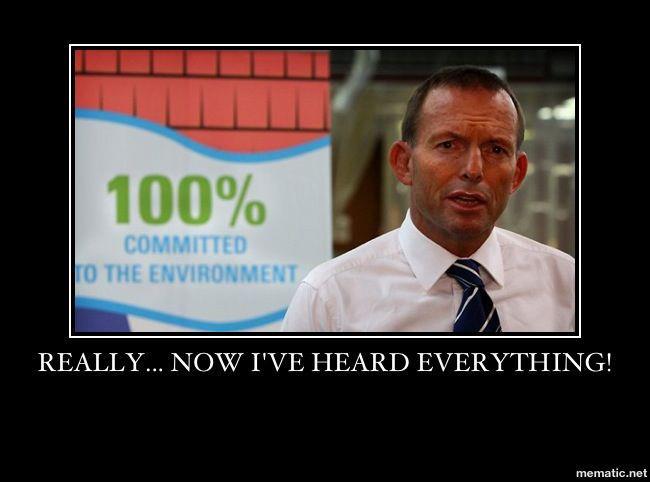
Enter the ‘Tea Party’ of Australia – the ‘new’ Coalition where reigning Rex perditor Prime Minister Tony The Monk Abbott1 has, in just a few short months, turned back the clock on Australian environmental protection some 40 years.

Yes, we saw it coming, but it wasn’t a tautological fait accompli just because it concerned a ‘conservative’ government. It’s difficult to remember, I know, that conservative governments of yesteryear implemented some strikingly powerful and effective environmental legislation. Indeed, it was the former incarnation of the Coalition government that implemented the once-formidable Environmental Protection and Biodiversity Conservation (EPBC) Act under the direction of then Environment Minister, Robert Hill. A colossus of sorts, the EPBC suffers from many ailments. While it’s the only really bitey environmental legislation we’ve got, that colossus is a lumbering, limping giant missing more than a few teeth – it needs a complete overhaul.

As most Australians are unfortunately aware, The Monk repeatedly and defiantly promised to repeal the Labor-government carbon price implemented in July 2012, despite the absolute necessity to tax the heaviest pollutersWhile somewhat sheepish about his recent climate disruption denialism following his election in 2013, a denialist he remains:

Let us re-familiarise ourselves with some of his historical pearlers: Read the rest of this entry »


Biodiversity needs more than just unwanted leftovers

28 02 2014

calm oceanThe real measure of conservation progress, on land or in the sea, is how much biodiversity we save from threatening processes.

A new paper co-authored by Memorial University’s Dr Rodolphe Devillers and an international group of researchers argues that established global marine protected areas are too often a case of all show with no substance and do not adequately protect the most vulnerable areas of the world’s oceans.

“There is a big pressure internationally to expand global MPA coverage from around 3 % of the oceans to 10 %, resulting in a race from countries to protect large and often unused portions of their territorial waters for a minimal political cost,” said Mr. Devillers. “Marine protected areas are the cornerstone of marine conservation, but we are asking whether picking low-hanging fruit really makes a difference in the long-term, or if smaller areas currently under threat should be protected before, or at the same time as, those larger areas that are relatively inaccessible and therefore less used by people.

“We need to stop measuring conservation success in terms of square kilometres,” he added. “The real measure of conservation progress, on land or in the sea, is how much biodiversity we save from threatening processes. Metrics such as square kilometres or percentages of jurisdictions are notoriously unreliable in telling us about the true purpose of protected areas.” Read the rest of this entry »


Are we speaking the same ecological language?

24 02 2014

group communicationThe simple answer to that question is ‘no bloody way’.

In the last few days a paper we’ve been working on for years has just appeared online, and lead author Salvador Herrando-Pérez (no stranger to CB.com) has put together a beautiful little post about why we think it’s so important. If heeded, our suggestions could transform ecology and place it on the scientific pedestal it deserves to occupy.

— 

The ecological literature can sound like a multilingual chorus when authors ignore the genesis of ecological concepts and terms in their publications under the terminologically lenient editorial policy of ecological journals. As a first step towards regulating this situation, we have just proposed the bases of a convention of ecological nomenclature (1) as a substantial element of ecological synthesis. Below we expose the rationale of this proposal, and summarise the elements of the convention.

In the 2000s, I spent quite a bit of time writing stories and doing storytelling performance. I have always had a passion for words, and was able to entertain this passion in the confines of science when in 2007 I embarked on a PhD with the goal of doing a conceptual and macro ecological revision of the once-upon-a-time controversial concept of density dependence (DD). It took me several months of reading to realise that many of the problems I then experienced to understand the literature were caused by a formidable jargon comprising > 50 terms for naming only 4 DD types, and many associated concepts in population dynamics (like boundedness, determination, limitation, persistence, regulation, spreading the risk, stabilisation, vagueness). After four years of further readings (and four manuscript rejections along the way), that realisation turned into a paper (2) in which we (including Corey, Barry Brook and Steven Delean as partners in crime) showed that DD jargon has thrived not only because terminology tracks and genuinely expands in response to conceptual development and refinement (e.g., 3 for Allee effects), but many population ecologists work/ed isolated within their areas of expertise, and use/d words to express opinion more often than facts – for example see references 4 and 5, or the (classic and sometimes indigestible) exchanges between Alexander Nicholson and Herbert Andrewartha (6-9).

The use of terminology in the ecological literature is governed by a silent rule (silent because it is written no where, and rule because everyone appears to follow it) in that you write a paper and enjoy the freedom to re-define a concept, to coin a new term, or to use a term without defining it. This rule favours individualistic writing styles and propels the proliferation of synonymy and polysemy, albeit coming at the expense of general understanding. Read the rest of this entry »


Incentivise to keep primary forests intact

7 02 2014

The Amazon rainforest. Photo by Rhett A. Butler

I know – ‘incentivise’ is one of those terrible wank words of business speak. But to be heard by the economically driven, one must learn their guttural and insensitive language. I digress …

Today’s post is merely a repost of an interview I did for the new Mongabay.com series ‘Next Big Idea in Forest Conservation‘. I’m honoured to have been selected for an interview along with the likes of Bill Laurance and Stuart Pimm.

Consider this my conservation selfie.

An Interview with Corey Bradshaw

Mongabay.com: What is your background?

Corey Bradshaw: I have a rather eclectic background in conservation ecology. I grew up in the wilds of western Canada, the son of a trapper. My childhood experiences initially gave me a primarily consumptive view of the environment from trapping, fishing and hunting, but I learned that without intact environmental functions, these precious resources quickly degrade or disappear. This ironic appreciation of natural processes would later lead me into academia and the pursuit of reducing the rate of the extinction crisis.

I completed my first degrees in ecology in Montréal and the University of Alberta, followed by a PhD in New Zealand at the University of Otago. After deciding to pursue the rest of my career in the Southern Hemisphere, I completed my postdoctoral fellowship at the University of Tasmania. Multiple field seasons in the subantarctic and Antarctica probably assisted in a giving me a burgeoning desire to change gears, so I left for the tropics of northern Australia to begin a position at Charles Darwin University. Being introduced there to conservation greats like Navjot Sodhi (sadly, now deceased), Barry Brook and David Bowman turned my research interests on their ear. I quickly became enamoured with quantitative conservation ecology, applying my skills in mathematics to the plight of the world’s ecosystems. Nowhere did the problems seem more intractable than in the tropics.

I am now based at the University of Adelaide (since 2008) and have a vibrant research lab where we apply our quantitative skills to everything from conservation ecology, climate change, energy provision, human population trends, ecosystem services, sustainable agriculture, human health, palaeoecology, carbon-based conservation initiatives and restoration techniques.

Mongabay.com: How long have you worked in tropical forest conservation and in what geographies? What is the focus of your work? Read the rest of this entry »


Cartoon guide to biodiversity loss XXII

3 02 2014

Here are another 6 biodiversity cartoons while I prepare for yet another trip overseas (see full stock of previous ‘Cartoon guide to biodiversity loss’ compendia here).

Read the rest of this entry »


We’re sorry, but 50/500 is still too few

28 01 2014

too fewSome of you who are familiar with my colleagues’ and my work will know that we have been investigating the minimum viable population size concept for years (see references at the end of this post). Little did I know when I started this line of scientific inquiry that it would end up creating more than a few adversaries.

It might be a philosophical perspective that people adopt when refusing to believe that there is any such thing as a ‘minimum’ number of individuals in a population required to guarantee a high (i.e., almost assured) probability of persistence. I’m not sure. For whatever reason though, there have been some fierce opponents to the concept, or any application of it.

Yet a sizeable chunk of quantitative conservation ecology develops – in various forms – population viability analyses to estimate the probability that a population (or entire species) will go extinct. When the probability is unacceptably high, then various management approaches can be employed (and modelled) to improve the population’s fate. The flip side of such an analysis is, of course, seeing at what population size the probability of extinction becomes negligible.

‘Negligible’ is a subjective term in itself, just like the word ‘very‘ can mean different things to different people. This is why we looked into standardising the criteria for ‘negligible’ for minimum viable population sizes, almost exactly what the near universally accepted IUCN Red List attempts to do with its various (categorical) extinction risk categories.

But most reasonable people are likely to agree that < 1 % chance of going extinct over many generations (40, in the case of our suggestion) is an acceptable target. I’d feel pretty safe personally if my own family’s probability of surviving was > 99 % over the next 40 generations.

Some people, however, baulk at the notion of making generalisations in ecology (funny – I was always under the impression that was exactly what we were supposed to be doing as scientists – finding how things worked in most situations, such that the mechanisms become clearer and clearer – call me a dreamer).

So when we were attacked in several high-profile journals, it came as something of a surprise. The latest lashing came in the form of a Trends in Ecology and Evolution article. We wrote a (necessarily short) response to that article, identifying its inaccuracies and contradictions, but we were unable to expand completely on the inadequacies of that article. However, I’m happy to say that now we have, and we have expanded our commentary on that paper into a broader review. Read the rest of this entry »


Terrestrial biodiversity’s only chance is avoided deforestation

24 01 2014

farming forestsToday I was shocked, stunned and pleasantly (for a change) surprised. Australia has its first ‘avoided deforestation’ carbon farming project.

It is understandable that this sort of news doesn’t make the Jane & Joe Bloggs of the world stand up and cheer, but it should make conservation biologists jump for bloody joy.

So why exactly am I so excited about the setting aside of a mere 9000 ha (90 km2, or 10 × 9 km) of semi-arid scrub in western New South Wales? It’s simple – nothing can replace the biodiversity or carbon value of primary forest. In other words, forest restoration – while laudable and needed – can never achieve what existing forest already does. We know now from various parts of the world that biodiversity is nearly always much higher in primary forest, and that the carbon structure of the forest (especially below-ground carbon) can take centuries to recover.

Another problem with restoration – and if you’ve ever been involved in any tree planting yourself, you’ll know what I mean – is that it’s incredibly expensive, time-consuming and slow. Wouldn’t it make more financial sense just to save forests instead of trying to rebuild them?

Of course it is, so the logical conclusion from a conservation perspective is to save primary forest first, then worry about restoration next. The problem is, there are few, if any, financial incentives for keeping forests standing in the private sector. The stumbling rise of the carbon economy is a potential resolution to this problem, although neither the Kyoto Protocol nor most national carbon-trading schemes adequately account for the carbon value of existing forests.

Up until today, even Australia didn’t have any examples.

Read the rest of this entry »


Noisy oceans

20 01 2014
killers & boats
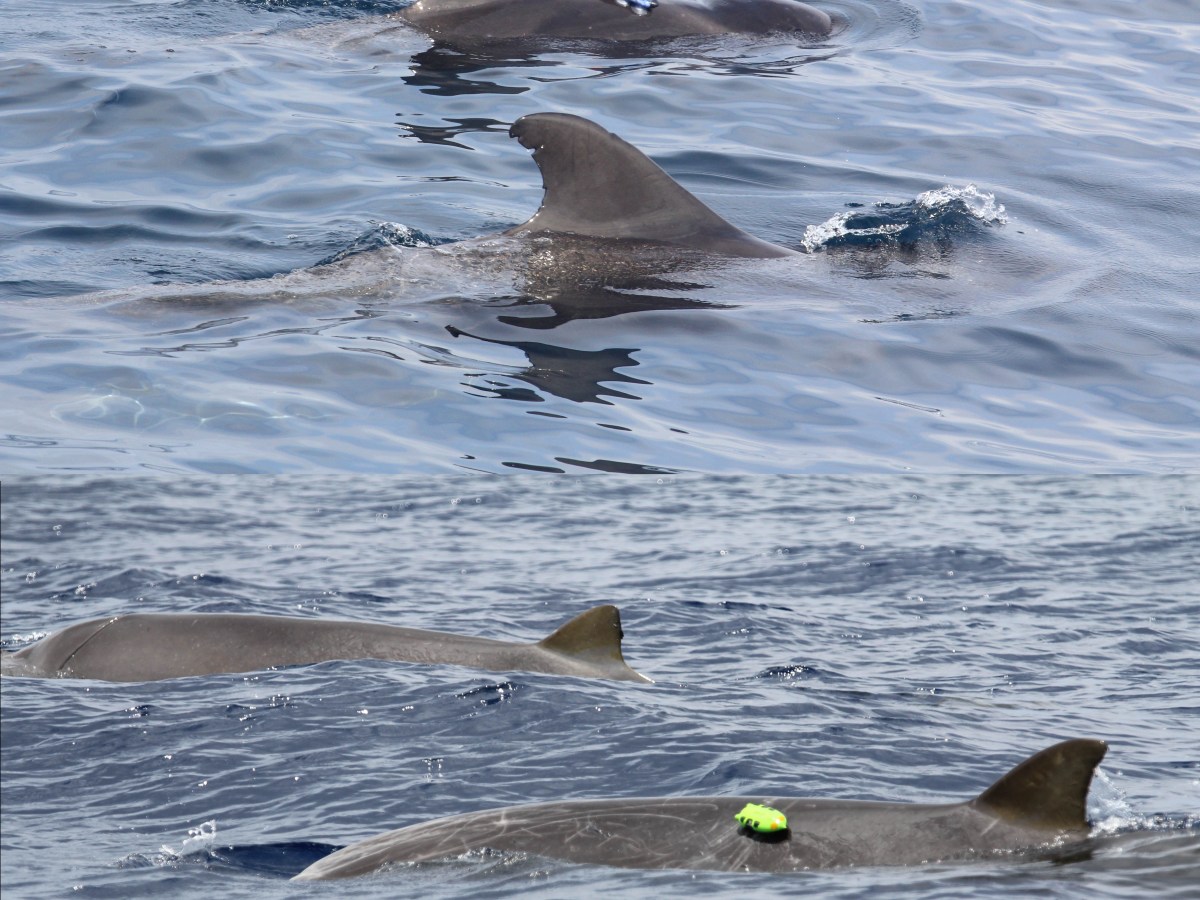
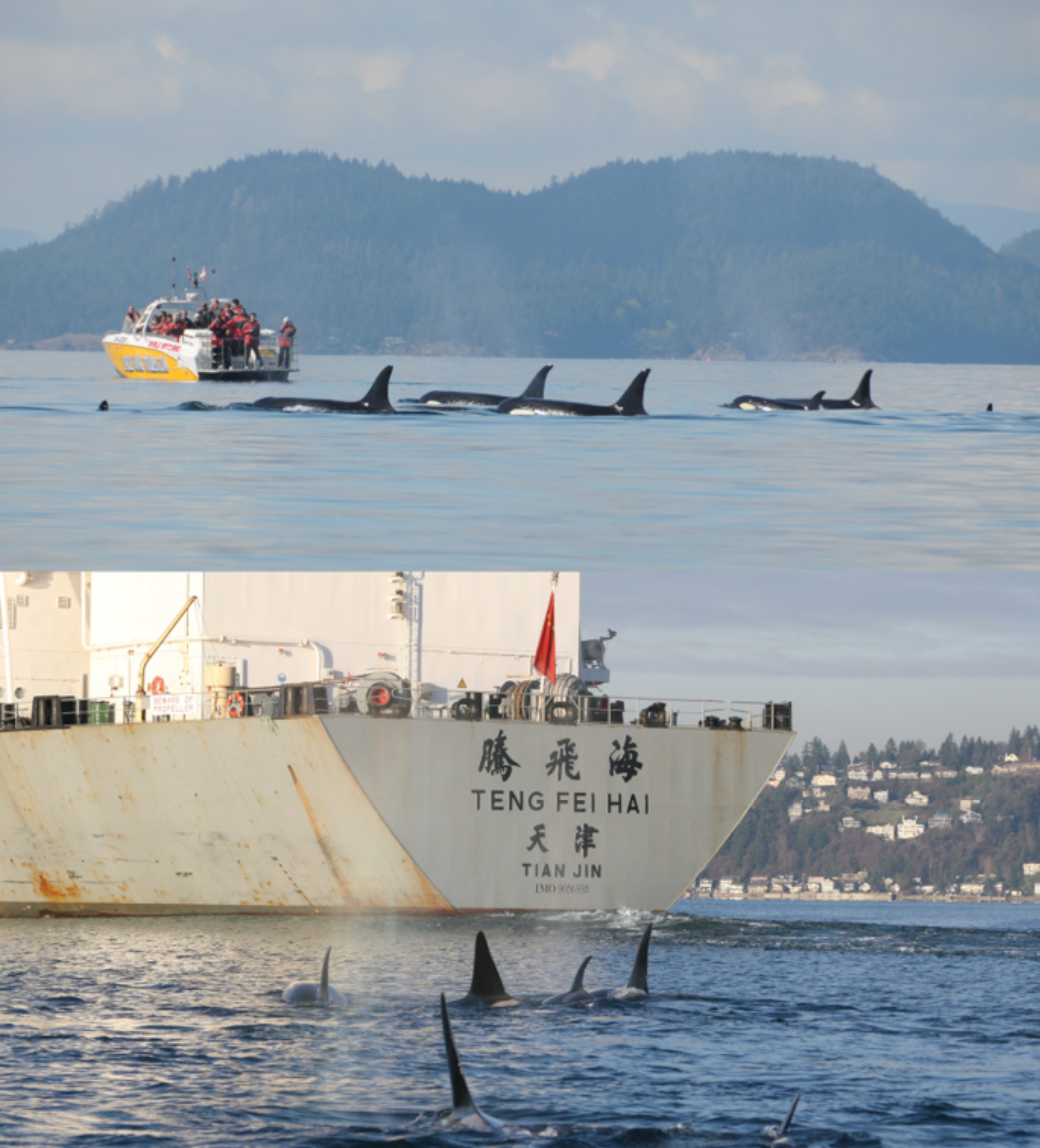
Killer whales are social animals that navigate all oceans and seas between the Arctic and Antarctica – they can be regarded eusocial since reproduction ceases around 40 years of age and menopausal females help care for offspring: like humans [13, 14]. Group cohesion in killer whales relies on a complex repertoire of vocalisations including clicks, whistles and calls. Sounds are instrumental for prey searching, orientation and communication. Foote [5] focused on calls, which are made up of series of discrete sounds that resemble squeaks, screams, and squawks to the human ear. It has been postulated that individuals learn to vocalise by imitation of peers of the same pod, and that only the base structure has a genetic, hence heritable, component [15]. Regardless, pods develop regional dialects. Those dialects, along with aspects of diet, genetics, morphology and behaviour, differentiate the three main lineages of killer whales (resident, transient and open sea) that might have been genetically isolated for ~ 150 to 700 thousand years and, potentially represent different taxa [16, 17]. The species might abandon the IUCN conservation category of ‘Data Deficient’ as soon its taxonomic uncertainty is resolved.Resident killer whales form matrilineal groups of 2 to 15 individuals  (the matriarch and her offspring) – known as pods, in turn subdivided into subpods centred around grandmothers and great-grandmothers. The Southern Resident population is regarded as an acoustic clan comprising 3 pods currently numbering 81 individuals = 26 (J pod) + 19 (K pod) + 36 (L pod) (2013 survey), among whom the matriarch Granny is the oldest at 103 years! This clan feeds mainly on fish, and dwells in the coastal waters between British Columbia (Canada) and Washington State (USA), particularly south of Vancouver Island – nothing is known about where they spend the winter. The clan lost 20 % of its members between 1995 & 2001, and 13 more by 2013, and now faces the decline of its main prey: Chinook salmon (Oncorhynchus tshawytscha) [18]. The two pics show two sub pods of this clan swimming close to a whale-watching boat near Friday Harbour (San Juan Island) and a Chinese ship at Puget Sound (Seatle, USA). Photo credits: Marla Holt, NOAA/NMFS Northwest Fisheries Sciences Center.

Acoustic pollution has become a transnational issue, particularly in marine ecosystems [1] by virtue of the physical fact that sounds travel in water farther and faster than in air. In our noisy, modern world, many species are now forced to modify their vocal repertoire in response to noise. The pivotal social role that vocalisations play in all cetacean species makes these predators and filter feeders particularly vulnerable to this environmental problem.

Last night, an ambulance siren woke me, only seconds before the neighbour’s washing machine started spinning, and a good friend of mine rang from overseas. Gradually more and more people are living in societies plugged in to noisy mechanical and electronic devices 24 hours a day, 356 days a year.

Engine-powered vehicles are the main source of anthropogenic noise, and their numbers can grow even at a higher rate than the human population – so spreading not only diseases [2] but also decibels over a global network of travelling routes. In an ecological context, we refer to noise as a kind of sound (= energy wave detected by an auditory system) that is not considered a biologically meaningful cue by wildlife (including us) and might also cause physiological stress. Experts refer to ‘masking’ as those situations in which noise interferes the perception or emission of sounds that matter to the life history of species – a global concern in both terrestrial [3] and aquatic [4] ecosystems.

Andy Foote [5] has assessed the effect of vessel traffic on the vocal behaviour of the three pods forming the Southern Resident population of killer whales (Orcinus orca¸ see video). He recorded calls from these cetaceans from a ship, and through an array of submarine microphones in Haro Straight, between San Juan Island (Washington State, USA) and Vancouver Island (British Columbia, Canada). Between the 1990s and the 2000s, local traffic density had multiplied by a factor of 5 and currently, > 20 whale-watching vessels follow these killer whales daily among an active fleet of > 70 commercial vessels. Foote compared call length through 35 hours of underwater killer whale recordings over three periods (1977-1981, 1989-1992, 2001-2003), each comprising situations in which the pods were exposed to both noisy and quiet environments. Over the study, call length varied between 0.3 and 2.0 seconds; while on average, L-pod calls were the shortest (0.6-0.8 seconds), and J-pod calls the longest (0.9-1.0 seconds). Read the rest of this entry »
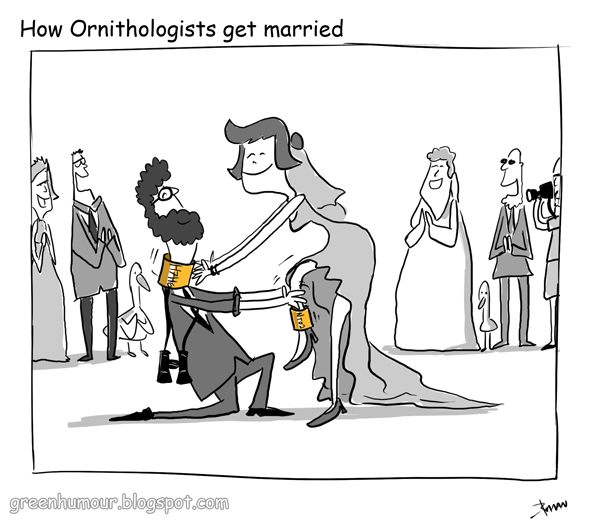


You know it’s hot when it’s too hot to ….

16 01 2014
© T. Brandon

© T. Brandon

My post’s title might be a good candidate title for a punk song in the 2030s (maybe by a re-incarnation of the Dead Kennedys).

I am currently sitting under my solar-powered ceiling fan as Adelaide is declared the world’s hottest city (and not in the funky, cultural, fun way), and I can’t help but contemplate climate change models predicting the fate of biodiversity over the coming decades. Because it’s far, far too hot to work outside, I’m perusing the latest interesting articles on the subject and I came across this recent little gem.

Also recommended on F1000Prime by Ary Hoffman, the paper, Using physiology to predict the responses of ants to climatic warming, by Sarah Diamond and colleagues touches on many aspects of climate predictions that need to be considered. I summarise these briefly here.

While no physiologist, I have dabbled in the past, although up until quite recently I didn’t see that physiology per se had much to do with conservation. It turns out that climate change has spawned an entire sub-discipline called ‘conservation physiology‘, which focuses inter alia on how species can/will/might respond and adapt to a warmer, climatically disrupted world.

What struck me about Diamond & colleagues’ paper was that yet again, it’s not as simple as heat-stressing a species experimentally and making a prediction on its future distribution (ecology is complex). No, the complexity comes in various forms that makes each species a little different from each other. Using North American ant species subjected to various warming scenarios in large (5 m) enclosures, they found the following: Read the rest of this entry »



Essential role of carnivores on the wane

10 01 2014
© Luca Galuzzi www.galuzzi.it

© Luca Galuzzi http://www.galuzzi.it

This interesting review has just come out in Science, and because I was given a heads-up about it, I decided to do a F1000 recommendation. That’s more or less what follows, with some additional thoughts.

Ripple and colleagues can perhaps be excused for stating what might appear to many ‘in the biz’ to be blatantly obvious, but their in-depth review of the status of the world’s carnivores is a comprehensive overview of this essential guild’s worldwide plight. It not only represents an excellent teaching tool, the review elegantly summarises the current status of these essential ecosystem engineers.

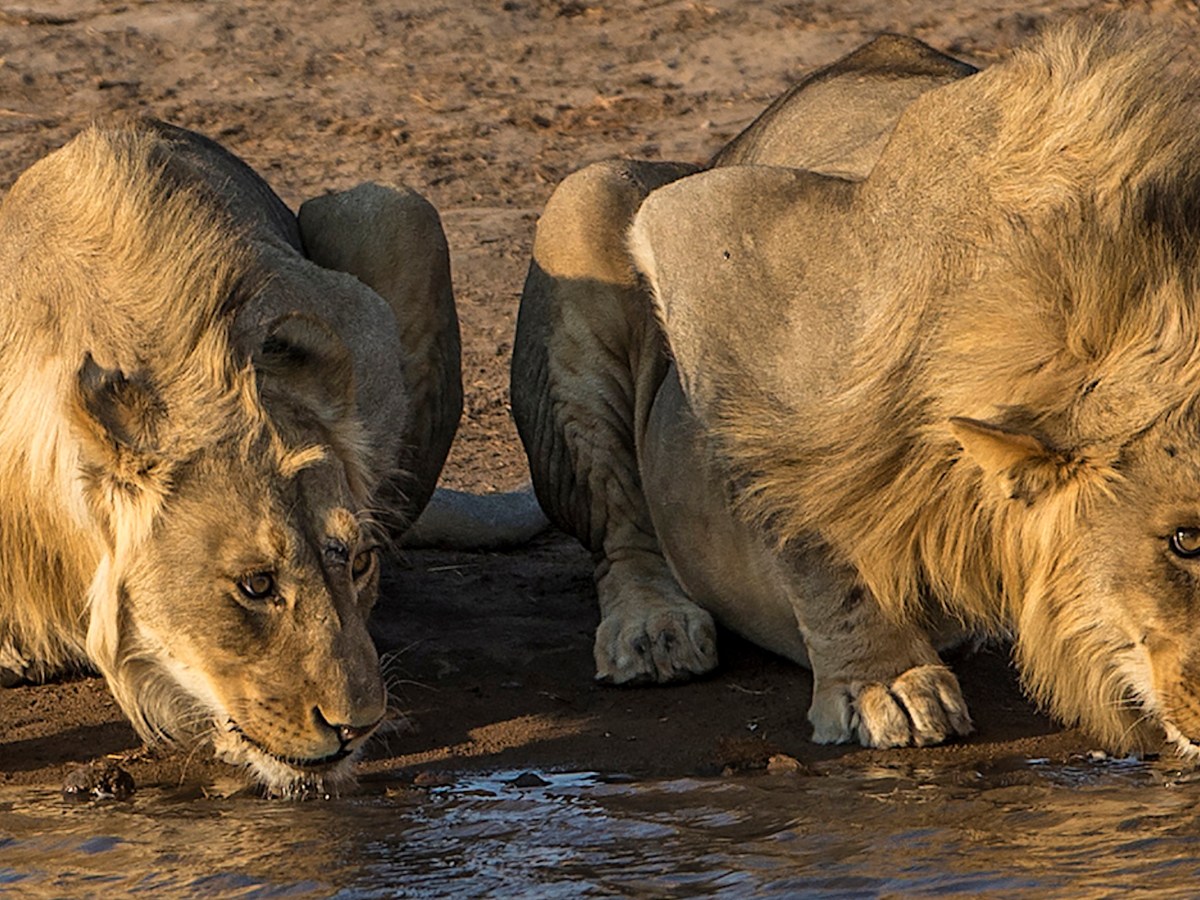
The world’s 245 terrestrial carnivores might seem to be ecologically redundant to the informed given their natural rarity, low densities and cryptic behaviour, but nothing could be farther from the truth. Ecologists have only within the last decade or so revealed the essential ecosystem functions of these species (see former posts on CB.com here, here and here). The review focuses on the largest and most well-studied species, but the trends likely apply across most of the order. Read the rest of this entry »


More species = more resilience

8 01 2014

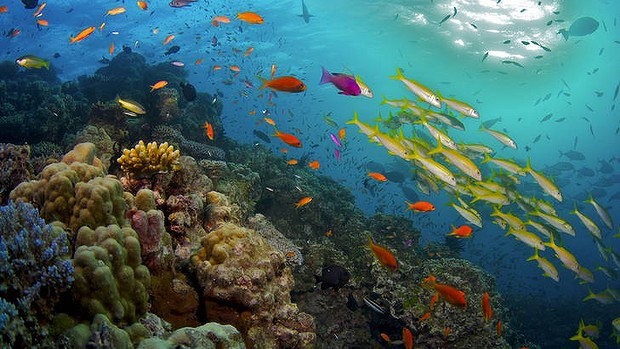
reef fishWhile still ostensibly ‘on leave’ (side note: Does any scientist really ever take a proper holiday? Perhaps a subject for a future blog post), I cannot resist the temptation to blog about our lab’s latest paper that just came online today. In particular, I am particularly proud of Dr Camille Mellin, lead author of the study and all-round kick-arse quantitative ecologist, who has outdone herself on this one.

Today’s subject is one I’ve touched on before, but to my knowledge, the relationship between ‘diversity’ (simply put, ‘more species’) and ecosystem resilience (i.e., resisting extinction) has never been demonstrated so elegantly. Not only is the study elegant (admission: I am a co-author and therefore my opinion is likely to be biased toward the positive), it demonstrates the biodiversity-stability hypothesis in a natural setting (not experimental) over a range of thousands of kilometres. Finally, there’s an interesting little twist at the end demonstrating yet again that ecology is more complex than rocket science.

Despite a legacy of debate, the so-called diversity-stability hypothesis is now a widely used rule of thumb, and its even implicit in most conservation planning tools (i.e., set aside areas with more species because we assume more is better). Why should ‘more’ be ‘better’? Well, when a lot of species are interacting and competing in an ecosystem, the ‘average’ interactions that any one species experiences are likely to be weaker than in a simpler, less diverse system. When there are a lot of different niches occupied by different species, we also expect different responses to environmental fluctuations among the community, meaning that some species inherently do better than others depending on the specific disturbance. Species-rich systems also tend to have more of what we call ‘functional redundancy‘, meaning that if one species providing an essential ecosystem function (e.g., like predation) goes extinct, there’s another, similar species ready to take its place. Read the rest of this entry »


Influential conservation papers of 2013

31 12 2013

big-splash1This is a little bit of a bandwagon – the ‘retrospective’ post at the end of the year – but this one is not merely a rehash I’ve stuff I’ve already covered.

I decided that it would be worthwhile to cover some of the ‘big’ conservation papers of 2013 as ranked by F1000 Prime. For copyright reasons, I can’t divulge the entire synopsis of each paper, but I can give you a brief run-down of the papers that caught the eye of fellow F1000 faculty members and me. If you don’t subscribe to F1000, then you’ll have to settle with my briefest of abstracts.

In no particular order then, here are some of the conservation papers that made a splash (positively, negatively or controversially) in 2013:

Read the rest of this entry »



Work-life ‘balance’ – can academics achieve it?

16 12 2013

WorkLifeBalanceA little over a week ago I was asked by the Royal Institution of Australia (RiAus) to sit on a panel with Professor Tanya Munro to speak about achieving that elusive ‘life-work balance’. The event was part of the ECRchat network.

The evening was well-attended, and even more so online; now the video is available and I reproduce it here for your viewing pleasure.

I hope you have some interesting insights that we didn’t have – essentially the conclusion is that there really isn’t one; you’ve got to find your own system that works, and nothing works perfectly. Read the rest of this entry »


Biowealth: all creatures great and small

4 12 2013

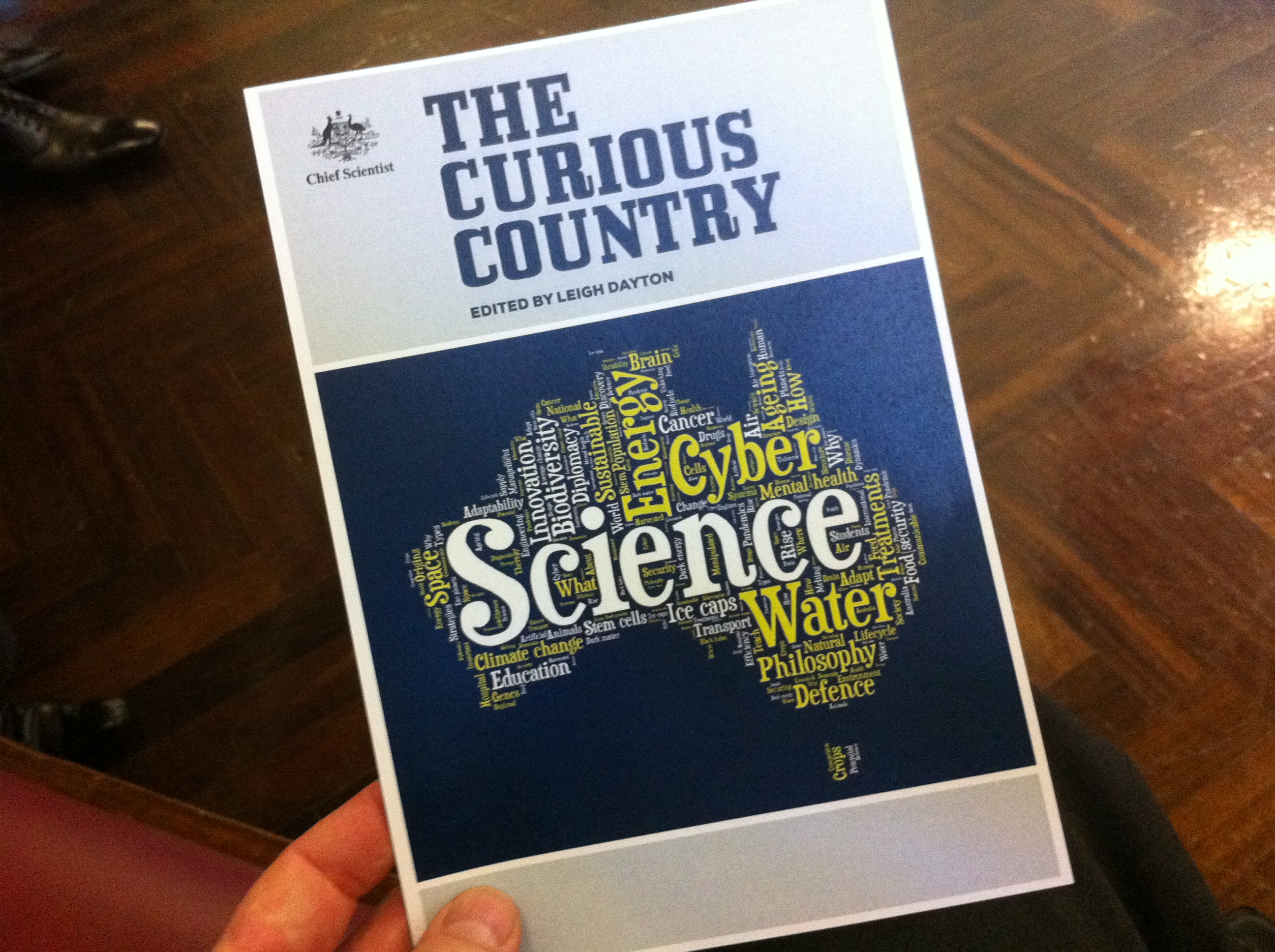
Curious Country flyer“So consider the crocodiles, sharks and snakes, the small and the squirmy, the smelly, slimy and scaly. Consider the fanged and the hairy, the ugly and the cute alike. The more we degrade this astonishing diversity of evolved life and all its interactions on our only home, the more we expose ourselves to the ravages of a universe that is inherently hostile to life.”

excerpt from ‘Biowealth: all creatures great and small’ The Curious Country (C.J.A. Bradshaw 2013).

I’ve spent the last few days on the east coast with my science partner-in-crime, Barry Brook, and one of our newest research associates (Marta Rodrigues-Rey Gomez). We first flew into Sydney at sparrow’s on Monday, then drove a hire car down to The ‘Gong to follow up on some Australian megafauna databasing & writing with Bert Roberts & Zenobia Jacobs. On Tuesday morning we then flitted over to Canberra where we had the opportunity to attend the official launch of a new book that Barry and I had co-authored.

The book, The Curious Country, is an interesting experiment in science communication and teaching dreamed up by Australia’s Chief Scientist, Professor Ian Chubb. Realising that the average Aussie has quite a few questions about ‘how stuff works’, but has little idea how to answer those questions, Ian engaged former Quantum star and science editor, Leigh Dayton, to put together a short, punchy, topical and easily understood book about why science is good for the country.

Yes, intuitive for most of you out there reading this, but science appreciation isn’t always as high as it should be amongst the so-called ‘general public’. Ian thought this might be one way to get more people engaged.

When honoured with the request to write an interesting chapter on biodiversity for the book, I naturally accepted. It turns out Barry was asked to do one on energy provision at the same time (but we didn’t know we had both been asked at the time). Our former lab head, Professor David Bowman, was also asked to write a chapter about fire risk, so it was like a mini-reunion yesterday for the three of us.

Read the rest of this entry »


King for a day – what conservation policies would you make?

29 11 2013

CrownI have been thinking a lot lately about poor governance and bad choices when it comes to biodiversity conservation policy. Perhaps its all that latent anger arising from blinkered, backward policies recently implemented by conservative state and national governments in Australia and elsewhere that leads me to contemplate: What would I do if I had the power to change policy?

While I am certain I have neither the experience or complete knowledge to balance national budgets, ensure prosperity and maintain the health of an entire country, I do have some ideas about what we’re doing wrong conservation-wise, and how we could potentially fix things. This is not meant to be an exhaustive list – it is more a discussion point where people can suggest their own ideas.

So here are 16 things I’d change or implement (mainly in Australia) if I were king for a day:

Read the rest of this entry »



Medieval Canada threatens global biodiversity

25 11 2013

harper_scienceArtists, poets and musicians make us feel, viscerally, how people destroy what they do not understand. Logic and observation led E. O. Wilson to conclude: ‘If people don’t know, they don’t care. If they don’t care, they don’t act.’

Whether you feel it in one of Drew Dillinger’s poems1 or visualise it from the sinuous beauty of mathematical equations, the song remains the same. Scientists are critical to the present and future of the biosphere and humanity, but if — and only if — we are free to communicate our findings to the voting public.

Galileo did not have that right. Scientists in totalitarian regimes of today still lack it. And now, incredibly, some of Canada’s top scientists have lost that right2,3,4.

That is not the Canada I immigrated into. Rewind the tape to 1983. I am a young immigrant, ecstatic that my family has gained entry into the country. We all have mixed feelings; we love our home country of Mexico and are sad to leave it, yet we look forward to being part of Canada’s open-minded and science-loving spirit. The tape runs forward and not all turns out to be as advertised. Still, for the next 23 years Canada remains a damn good place, ruled by governments that, imperfect as they might have been, were not obsessed with burying science.

Fast forward the tape to 2006. Stephen Harper’s newly elected and still ruling Conservative Government hits the ground pounding punches in all directions. Almost immediately, the Conservatives begin to implement one of their many Machiavellian tactics that aim to turn Canada into a petro-state6,7: downgrade science as irrelevant to evidence-based decision making. Ever since, Canadian federal scientists have seen their programs slashed or buried. Those who manage to hang on to their jobs are strictly forbidden to speak about their findings to the media or the public8,9,10,11.

Read the rest of this entry »



Hate journal impact factors? Try Google rankings instead

18 11 2013

pecking orderA lot of people hate journal impact factors (IF). The hatred arises for many reasons, some of which are logical. For example, Thomson Reuters ISI Web of Knowledge® keeps the process fairly opaque, so it’s sometimes difficult to tell if journals are fairly ranked. Others hate IF because it does not adequately rank papers within or among sub disciplines. Still others hate the idea that citations should have anything to do with science quality (debatable, in my view). Whatever your reason though, IF are more or less here to stay.

Yes, individual scientists shouldn’t be ranked based only on the IF of the journals in which they publish; there are decent alternatives such as the h-index (which can grow even after you die), or even better, the m-index (or m-quotient; think of the latter as a rate of citation accumulation). Others would rather ditch the whole citation thing altogether and measure some element of ‘impact’, although that elusive little beast has yet to be captured and applied objectively.

So just in case you haven’t already seen it, Google has recently put its journal-ranking hat in the ring with its journal metrics. Having firmly wrested the cumbersome (and expensive) personal citation accumulators from ISI and Scopus (for example) with their very popular (and free!) Google Scholar (which, as I’ve said before, all researchers should set-up and make available), they now seem poised to do the same for journal rankings.

So for your viewing and arguing pleasure, here are the ‘top’ 20 journals in Biodiversity and Conservation Biology according to Google’s h5-index (the h-index for articles published in that journal in the last 5 complete years; it is the largest number h such that h articles published in 2008-2012 have at least h citations each):

Read the rest of this entry »