Protected areas work, but only when you put in the effort

15 11 2012

Apologies for the delay in getting this latest post out. If you read my last one, you’ll know that I’ve been in the United Kingdom for the last week. I’m writing this entry in the train down from York to Heathrow, from which I’ll shortly begin the gruelling 30-hour trip home to Adelaide.

Eight days on the other side of the planet is a bit of a cyclonic trip, but I can honestly say that it was entirely worth it. My first port of call was London where I attended the Zoological Society of London’s Protected Areas Symposium, which is the main topic on which I’ll elaborate shortly.

But I also visited my friend and colleague, Dr. Kate Parr at the University of Liverpool, where I also had the pleasure of talking with Rob Marrs and Mike Begon. Liverpool was also where I first observed the habits of a peculiar, yet extremely common species – the greater flabby, orange-skinned, mini-skirted, black-eyed scouser. Fascinating.

I then had the privilege and serendipitous indulgence of visiting the beautiful and quaint city of York where I gave another talk to the Environment Department at the University of York. My host, Dr. Kate Arnold was simply lovely, and I got to speak with a host of other very clever people including Callum Roberts, Phil Platts, Andy Marshall and Murray Rudd. Between the chats and real ales, mushy peas, pork pies and visits to the Minster, I was in north English heaven.

Enough of the cultural compliments – the title of this post was the take-home message of the ZSL symposium. There I gave a 25-minute talk summarising our recent paper on the performance of tropical protected areas around the globe, and added a few extra analyses in the process. One interesting result that was missing from the original paper was the country-level characteristics that explain variation in protected area ‘health’ (as we defined it in the Nature paper). After looking at a number of potential drives, including per-capita wealth, governance quality, environmental performance, human population density and the proportion of high conservation-value protected areas (IUCN Ia, Ib, II and IV categories), it came out that at least at that coarse country scale that only the proportion of high conservation-value protected areas explained any additional variation in health. In other words, the more category Ia, Ib, II and IV protected areas a country has (relative to the total), the better their protected areas do on average (and remember, we’re talking largely about developing and tropical nations here). Read the rest of this entry »


A posthumous citation tribute for Sodhi

6 11 2012

I’m sitting at a friend’s house in Sydney writing this quick entry before jumping on a plane to London. It’s been a busy few days, and will be an even busier next few weeks.

I met with Paul and Anne Ehrlich yesterday (who are visiting Australia) and we finalised the first complete draft of our book – I will keep you posted on that. In London, I will be meeting with the Journal of Animal Ecology crew on Wednesday night (I’m on the editorial board), followed by two very interesting days at the Zoological Society of London‘s Protected Areas Symposium at Regent’s Park. Then I’ll be off to the Universities of Liverpool and York for a quick lecture tour, followed by a very long trip back home. I’m already tired.

In the meantime, I thought I’d share a little bit of news about our dear and recently deceased friend and colleague, Navjot Sodhi. We’ve already written several times our personal tributes (see here, here and here) to this great mind of conservation thinking who disappeared from us far too soon, but this is a little different. Barry Brook, as is his wont to do, came up with a great idea to get Navjot up posthumously on Google Scholar.
Read the rest of this entry »


Toothed conflict

1 11 2012

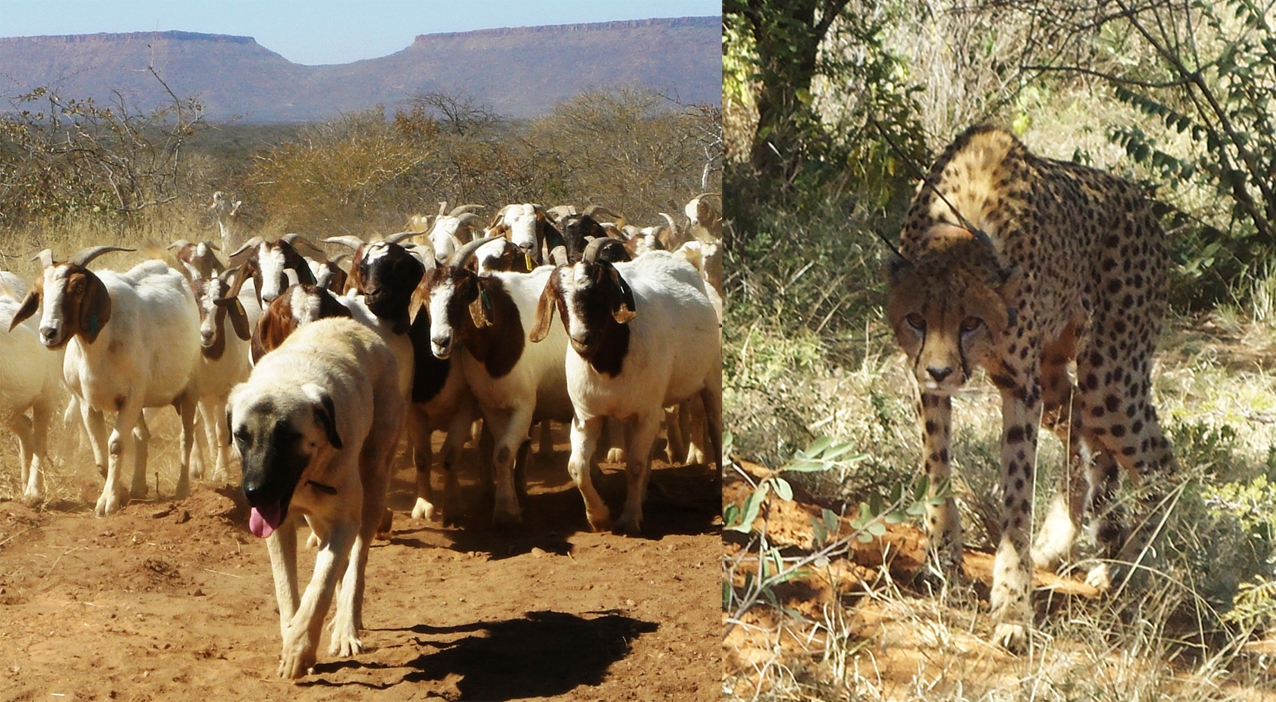
Left: An Anatolian shepherd (a Turkish breed improved in the USA) guiding a herd of boer goats whose flesh is much appreciated by people in Namibia and South Africa. Right: A cheetah carrying a radio-transmitter, within a project assessing range movements of this feline for the Cheetah Conservation Fund. Cheetahs refrain from moving close to the herds when the latter are looked after by the guardian dogs. Photos courtesy of Laurie Marker.

Another corker from Salva. He’s chosen a topic this week that’s near and dear to my brain – the conservation of higher-order predators. As ConBytes readers will know, we’ve talked a lot about human-predator conflict and the inevitable losers in that battle – the (non-human) predators. From dingos to sharks, predator xenophobia is just another way we weaken ecosystems and ultimately harm ourselves.

Rural areas devoted to livestock are part of the natural landscape, so it is inevitable (as well as natural) that predators, livestock and humans interact in such a mosaic of bordering habitats. However, their coexistence remains an unresolved conservation problem. 

When two species, people, political parties, enterprises… want the same thing, they either share it (if possible) or one side eliminates the competitor. The fact that proteins are part of the diet of humans and other carnivore species has resulted in a trophic drama that goes back millennia. Nowadays, predators like eagles, coyotes, lions, wolves and raccoons are credited for attacks on cattle and poultry (and people!) in all continents. This global problem is not only economic, but interlaces culture, emotion, policy and sanitation (1-4). For instance, some carnivores are reservoirs of cattle diseases and contribute to pathogen dispersal (5, 6).

Management options

Managers of natural resources have implemented three strategies to handle these sorts of issues for livestock breeders in general (7). Those strategies can be complementary or exclusive on a case-by-case basis, and are chosen following cost-benefit assessments and depending on the conservation status of the predator species involved. (i) ‘Eradication’ aims to eliminate the predator, which is regarded as noxious and worthless. (ii) ‘Regulation’ allows controlled takes under quota schemes, normally for pre-defined locations, dates and killing methods. ‘Preservation’ is applied in protected areas and/or for rare or endangered species, and often requires monitoring and measures set to prevent illegal harvest or trade. Additionally, many livestock breeders receive money to compensate losses to predators (8).

Many experts now advocate non-lethal (preventive) measures that modify the behaviour of people, livestock or predators (2, 7). The use of livestock-guarding dogs is one of those preventive measures (9). As an example, Laurie Marker (director of the Cheetah Conservation Fund) et al. (10) studied the use of 117 Anatolian shepherds adopted by Namibian rangers between 1995 and 2002 (Fig. 1). In this African country, cheetahs (Acinonyx jubatus) selectively forage on small-sized cattle and juveniles. Despite this feline being protected nationally, Namibian laws authorise rangers to shoot cheetahs in situations of risk to people and their properties, with more than 6,000 cheetahs having been killed in the 1980s alone (11). Through face-to-face interviews, Marker found that since the arrival of the Anatolian shepherds, > 70 % of the rangers perceived a pronounced reduction in cattle mortality (10). Although, the use of livestock-guarding dogs has worked out fine in many places worldwide, it is no panacea. In many other instances, the dogs dissuade some predator species and not others from harassing the livestock, or are only effective in combination with other measures (7, 9). Read the rest of this entry »


Damned by nature; damned by man

26 10 2012

I am a forest officer from India. I want to narrate a story. No, my story is not about elephants or tigers or snakes. Those stories about India are commonplace. I wish to narrate a simple story about people, the least-known part of the marathon Indian fable.

Humans are said to have arrived in India very early in world civilisation. Some were raised here from the seed of their ancestors; others migrated here from all over the world. Over the centuries these people occupied every inch of soil that could support life. The population of India today is 1.2 billion. Each year, India’s population increases by a number nearly equal to the complete population of Australia. Such a prolific growth of numbers is easy to explain; the fertile soil, ample water and tropical warmth of India support the growth of all life forms.

Not all numbers are great, however, and big numbers sometimes exact the price from the wrong persons.

This is my story.

I went to work in the state of Meghalaya in north-eastern India. Pestilence, floods and dense vegetation have made north-eastern India a most inhospitable place. Population is scanty by Indian standards. Life does not extend much beyond the basic chores of finding food and hearth. In the hills, far away from the bustle of modern civilisation, primitive tribal families practice agriculture in its most basic form. Fertilisers are unknown to them, so they cultivate a parcel of land until it loses its fertility, ultimately abandoning it to find other arable land. When the original parcel has finally recovered its fertility after a few years, they move back. It is a ceaseless cycle of migrating back and forth – the so-called practice known as ‘shifting cultivation’.  Ginger, peas, pumpkin, brinjal and sweet potato can be seen growing on numerous slopes in the Garo Hills of Meghalaya beside the huts of the farmers built on stilts, with chickens roosting below.

When I reached Meghalaya and looked about at the kind of world I had never seen before, I admit that I found the tribal folk a little strange. They lived in a way that would have appeared bizarre to a modern community. The people did not seem to know how many centuries had passed them by. For me as a forest officer, what looked worst was that that these people appeared to have no comprehension of the value of forests for the planet. They built their huts with wood. They cooked on firewood. Most of their implements were made of wood. A whole tree would be cut and thrown across the banks to make a bridge over a stream. Above all, their crazy practice of shifting cultivation would ultimately remove all the remaining forest.

I decided my main job in this place was to save the forest from its own people, and we enforced Indian laws to preserve the forests.

On one occasion my staff saw a young local man running with an illegally obtained log of wood and started to chase him, waving their guns in the air to scare him. He ran barefoot amid dense bushes a long distance before we managed to apprehend him. I had bruises on my arms and a leech hanging from my armpit drinking my blood by the time the race was over. I admit that in my anger at the time, I wanted to impale the man to the earth at the spot where he had cut down the tree. It was not the leeches and the bruises that angered me. The tree he was carrying was (until quite recently) in perfect condition.

But Meghalaya isn’t populated solely by subsistence-farming villagers – there are also a few successful traders originally from big cities who have settled in this economically depressed region. They dress smartly and speak impeccable English. At the time, I remembered wondering how these more sophisticated types could be maintaining their relatively lavish lifestyles among the poor villagers who walked barefoot in the dense forests. On a couple of occasions I dropped in at the home of a prominent trader.  He hosted me graciously in his beautiful home. I admit that I enjoyed these visits because they were my only link to the civilisation I had become used to prior to moving to Meghalaya. But I never visited the home of any tribal villager, for what could I talk to them about anyway?

Read the rest of this entry »


How to write a scientific paper

22 10 2012

Several years ago, my long-time mate, colleague and co-director, Barry Brook, and I were lamenting how most of our neophyte PhD students were having a hard time putting together their first paper drafts. It’s a common problem, and most supervisors probably get their collective paper-writing wisdom across in dribs and drabs over the course of their students’ torment… errhm, PhD. And I know that every supervisor has a different style, emphasis, short-cut (or two) and focus when writing a paper, and students invariably pick at least some of these up.

But the fact that this knowledge isn’t innate, nor is it in any way taught in probably most undergraduate programmes (I include Honours in that list), means that most supervisors must bleed heavily on those first drafts presented to them by their students. Bleeding is painful for both the supervisor and student who has to clean up the mess – there has to be a better way.

Yes, there are books on the issue (see, for example, Day & Castel 2011, Hofmann 2009, Schimel 2011), but how many starting PhDs sit down and read such books cover to cover? Hell, I can barely get them to read the basic statistics texts.

So as is classic for Barry, he came up with his own approach that I like to call ‘La Méthode Brookoise’ (a tribute to another clever jeu de mots). This short-cut guide to setting up a scientific paper is simple, effective and intuitive. Sure, it was designed with ecology in mind, but it should apply to most scientific disciplines. It appeals to most of our students, and we have both been asked for copies by other supervisors over the years. Our original intention was to write a paper about writing papers to flesh out the full Méthode, but that has yet to happen.

Therefore, for the benefit of the up-and-comings (and perhaps to a few of those longer in tooth), behold La Méthode Brookoise for writing papers: Read the rest of this entry »


Wise guys of deforestation

17 10 2012

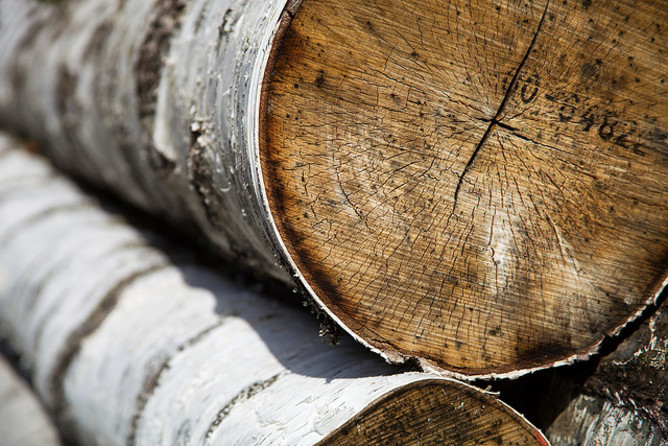
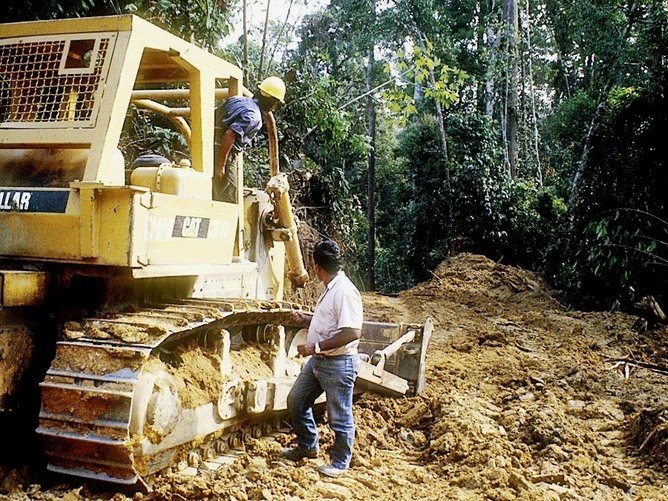
Through fraudulent permits and similar tactics, organized crime profits significantly from illegal logging. jcoterhals

By Bill Laurance, James Cook University

Illegal logging is booming, as criminal organisations tighten their grip on this profitable global industry. Hence, it comes just in the nick of time that Australia, after years of debate, is on the verge of passing an anti-logging bill.

Illegal logging is an international scourge, and increasingly an organised criminal activity. It robs developing nations of vital revenues while promoting corruption and murder. It takes a terrible toll on the environment, promoting deforestation, loss of biodiversity and harmful carbon emissions at alarming rates.

Moreover, the flood of illegal timber makes it much harder for legitimate timber producers. The vast majority of those in Australia and New Zealand have difficulty competing in domestic and international markets. That’s one reason that many major Aussie retail chains and brands, such as Bunnings, Ikea-Australia, Timber Queensland, and Kimberly-Clark, are supporting the anti-illegal logging bill.

Illegal logging denies governments of developing nations revenue worldwide. Bill Laurance.

Illegal logging thrives because it’s lucrative. A new report by Interpol and the United Nations Environment Programme, “Green Carbon, Black Trade”, estimates the economic value of illegal logging and wood processing to range from $30 billion to $100 billion annually. That’s a whopping figure — constituting some 10-30% of the global trade in wood products.

Illegal logging plagues some of the world’s poorest peoples, many of whom live in tropical timber-producing countries. According to a 2011 study by the World Bank, two-thirds of the world’s top tropical timber-producing nations are losing at least half of their timber to illegal loggers. In some developing countries the figure approaches 90%.

Many nations export large quantities of timber or wood products into Australia. These include Indonesia, Papua New Guinea and the Solomon Islands, all of which are suffering heavily from illegal logging. Many Chinese-made wood and paper imports also come from illegal timber. Indonesian President Susilo Bambang Yudhoyono has been pleading with timber-importing nations like Australia to help it combat illegal logging, which costs the nation billions of dollars annually in lost revenues.

The new Interpol report shows just how devious illegal loggers are becoming. It details more than 30 different ways in which organised criminal gangs stiff governments of revenues and launder their ill-gotten gains.

The variety of tactics used is dizzying. These tactics include falsifying logging permits and using bribery to obtain illegal logging permits, logging outside of timber concessions, hacking government websites to forge transportation permits, and laundering illegal timber by mixing it in with legal timber supplies.

The good news however, is that improving enforcement is slowly making things tougher for illegal loggers.

Accustomed to dealing with criminal enterprises that transcend international borders, Interpol is bringing a new level of sophistication to the war on illegal logging. This is timely because most current efforts to fight illegal logging – such as the European Union’s Forest Law and various timber eco-certification schemes – just aren’t designed to combat organised crime, corruption and money laundering.

The Interpol report urges a multi-pronged approach to fight illegal loggers. A key element of this is anti-logging legislation that makes it harder for timber-consuming nations and their companies to import ill-gotten timber and wood products. Read the rest of this entry »


The Biodiversity Club

11 10 2012

The International Union for Conservation of Nature (IUCN) Red List of Threatened Species uses 5 quantitative criteria to allocate species to 9 categories of extinction risk. The criteria are based on ecological theory (1, 2), and are therefore subject to modification and critique. With pros and cons (3-6), and intrigues (7, 8), the list has established itself as an important tool for assessing the state of biodiversity globally and, more recently, regionally.

We all carry codes of some sort; that is, unique alphanumeric labels identifying our membership in a collectivity. Some of those codes (e.g., a videoclub customer number) make sense only locally, some do internationally (e.g., passport number). Species are also members of the club of biodiversity and, by virtue of our modern concern for their conservation, the status of many taxa has been allocated to alphanumeric categories under different rationales such as extinction risk or trading schemes (5, 9-13). Contradiction emerges when taxa might be threatened locally but not internationally, or vice versa.

In the journal Biological Conservation, a recent paper (14) has echoed the problem for the seagrass Zostera muelleri. This marine phanerogam occurs in Australia, New Zealand and Papua New Guinea, and is listed as “Least Concern” (LC) with “Stable” population trend by the IUCN. Matheson et al. (14) stated that such status neglects the “substantial loss” of seagrass habitats in New Zealand, and that the attribution of “prolific seed production” to the species reflects the IUCN assessment bias towards Australian populations. The IUCN Seagrass Red List Authority, Fred Short, responded (15) that IUCN species ratings indicate global status (i.e., not representative for individual countries) and that, based on available quantitative data and expert opinion, the declines of Z. muelleri are localised and offset by stable or expanding populations throughout its range. Read the rest of this entry »


Tropical protected areas still in trouble

8 10 2012

© P. Harris

There’s nothing like a bit of good, intelligent and respectful debate in science.

After the publication in Nature of our paper on tropical protected areas (Averting biodiversity collapse in tropical forest protected areas), some interesting discussion has ensued regarding some of our assumptions and validations.

As is their wont, Nature declined to publish these comments (and our responses) in the journal itself, but the new commenting feature at Nature.com allowed the exchange to be published online with the paper. Cognisant that probably few people will read this exchange, Bill Laurance and I decided to reproduce them here in full for your intellectual pleasure. Any further comments? We’d be keen to hear them.

COMMENT #1 (by Hari Sridhar of the Centre for Ecological Sciences at the Indian Institute of Science in Bangalore)

In this paper, Laurance and co-authors have tapped the expert opinions of ‘veteran field biologists and environmental scientists’ to understand the health of protected areas in the tropics worldwide. This is a novel and interesting approach and the dataset they have gathered is very impressive. Given that expert opinion can be subject to all kinds of biases and errors, it is crucial to demonstrate that expert opinion matches empirical reality. While the authors have tried to do this by comparing their results with empirical time-series datasets, I argue that their comparison does not serve the purpose of an independent validation.

Using 59 available time-series datasets from 37 sources (journal papers, books, reports etc.), the authors find a fairly good match between expert opinion and empirical data (in 51/59 cases, expert opinion matched empirically-derived trend). For this comparison to serve as an independent validation, it is crucial that the experts were unaware of the empirical trends at the time of the interviews. However, this is unlikely to be true because, in most cases, the experts themselves were involved in the collection of the time-series datasets (at least 43/59 to my knowledge, from a scan of references in Supplementary Table 1). In other words, the same experts whose opinions were being validated were involved in collection of the data used for validation.

OUR RESPONSE (William F. Laurance, Corey J. A. Bradshaw, Susan G. Laurance)

Sridhar raises a relevant point but one that, on careful examination, does not weaken our validation analysis. Read the rest of this entry »


Why do conservation scientists get out of bed?

1 10 2012

1*Zd2mpLgOIbJuLg3CqH8BQwI have, on many occasions, been faced with a difficult question after giving a public lecture. The question is philosophical in nature (and I was never very good at philosophy – just ask my IB philosophy teacher), hence its unusually complicated implications. The question goes something like this:

Given what you know about the state of the world – the decline in biodiversity, ecosystem services and our own health and welfare – how do you manage to get out of bed in the morning and go to work?

Yes, I can be a little, shall we say, ‘gloomy’ when I give a public lecture; I don’t tend to hold back much when it comes to just how much we’ve f%$ked over our only home, or why we continue to shit in our own (or in many cases, someone else’s) kitchen. It’s not that I get some sick-and-twisted pleasure out of seeing people in the front row shake their heads and ‘tsk-tsk’ their way through my presentation, but I do feel that as an ‘expert’ (ascribe whatever meaning to that descriptor you choose), I have a certain duty to inform non-experts about what the data say.

And if you’ve read even a handful of the posts on this site, you’ll understand that picture I paint isn’t full of roses and children’s smiling faces. A quick list of recent posts might remind you:

And so on. I agree – pretty depressing. Read the rest of this entry »


No-extinction targets are destined to fail

21 09 2012

I’ve been meaning to write about this for a while, and now finally I have been given the opportunity to put my ideas ‘down on paper’ (seems like a bit of an old-fashioned expression these days). Now this post might strike some as overly parochial because it concerns the state in which I live, but the concept applies to every jurisdiction that passes laws designed to protect biodiversity. So please look beyond my navel and place the example within your own specific context.

As CB readers will appreciate, I am firmly in support of the application of conservation triage – that is, the intelligent, objective and realistic way of attributing finite resources to minimise extinctions for the greatest number of (‘important’) species. Note that deciding which species are ‘important’ is the only fly in the unguent here, with ‘importance’ being defined inter alia as having a large range (to encompass many other species simultaneously), having an important ecological function or ecosystem service, representing rare genotypes, or being iconic (such that people become interested in investing to offset extinction.

But without getting into the specifics of triage per se, a related issue is how we set environmental policy targets. While it’s a lovely, utopian pipe dream that somehow our consumptive 7-billion-and-growing human population will somehow retract its massive ecological footprint and be able to save all species from extinction, we all know that this is irrevocably  fantastical.

So when legislation is passed that is clearly unattainable, why do we accept it as realistic? My case in point is South Australia’s ‘No Species Loss Strategy‘ (you can download the entire 7.3 Mb document here) that aims to

“…lose no more species in South Australia, whether they be on land, in rivers, creeks, lakes and estuaries or in the sea.”

When I first learned of the Strategy, I instantly thought to myself that while the aims are laudable, and many of the actions proposed are good ones, the entire policy is rendered toothless by the small issue of being impossible. Read the rest of this entry »


Ecology is a Tower of Babel

17 09 2012

The term ‘ecology’ in 16 different languages overlaid on the oil on board ‘The Tower of Babel’ by Flemish Renaissance painter Pieter Bruegel the Elder (1563).

In his song ‘Balada de Babel’, the Spanish artist Luis Eduardo Aute sings several lyrics in unison with the same melody. The effect is a wonderful mess. This is what the scientific literature sounds like when authors generate synonymies (equivalent meaning) and polysemies (multiple meanings), or coin terms to show a point of view. In our recent paper published in Oecologia, we illustrate this problem with regard to ‘density dependence’: a key ecological concept. While the biblical reference is somewhat galling to our atheist dispositions, the analogy is certainly appropriate.

A giant shoal of herring zigzagging in response to a predator; a swarm of social bees tending the multitudinous offspring of their queen; a dense pine forest depriving its own seedlings from light; an over-harvested population of lobsters where individuals can hardly find reproductive mates; pioneering strands of a seaweed colonising a foreign sea after a transoceanic trip attached to the hulk of boat; respiratory parasites spreading in a herd of caribou; or malaria protozoans making their way between mosquitoes and humans – these are all examples of population processes that operate under a density check. The number of individuals within those groups of organisms determines their chances for reproduction, survival or dispersal, which we (ecologists) measure as ‘demographic rates’ (e.g., number of births per mother, number of deaths between consecutive years, or number of immigrants per hectare).

In ecology, the causal relationship between the size of a population and a demographic rate is known as ‘density dependence’ (DD hereafter). This relationship captures the pace at which a demographic rate changes as population size varies in time and/or space. We use DD measurements to infer the operation of social and trophic interactions (cannibalism, competition, cooperation, disease, herbivory, mutualism, parasitism, parasitoidism, predation, reproductive behaviour and the like) between individuals within a population1,2, because the intensity of these interactions varies with population size. Thus, as a population of caribou expands, respiratory parasites will have an easier job to disperse from one animal to another. As the booming parasites breed, increased infestations will kill the weakest caribou or reduce the fertility of females investing too much energy to counteract the infection (yes, immunity is energetically costly, which is why you get sick when you are run down). In turn, as the caribou population decreases, so does the population of parasites3. In cybernetics, such a toing-and-froing is known as ‘feedback’ (a system that controls itself, like a thermostat controls the temperature of a room) – a ‘density feedback’ (Figure 1) is the kind we are highlighting here. Read the rest of this entry »


Cartoon guide to biodiversity loss XVI

12 09 2012

While in transit between tropical and temperate Australia, here’s the latest batch of 6 biodiversity cartoons (see full stock of previous ‘Cartoon guide to biodiversity loss’ compendia here).

Read the rest of this entry »


Native invaders divide loyalties

7 09 2012

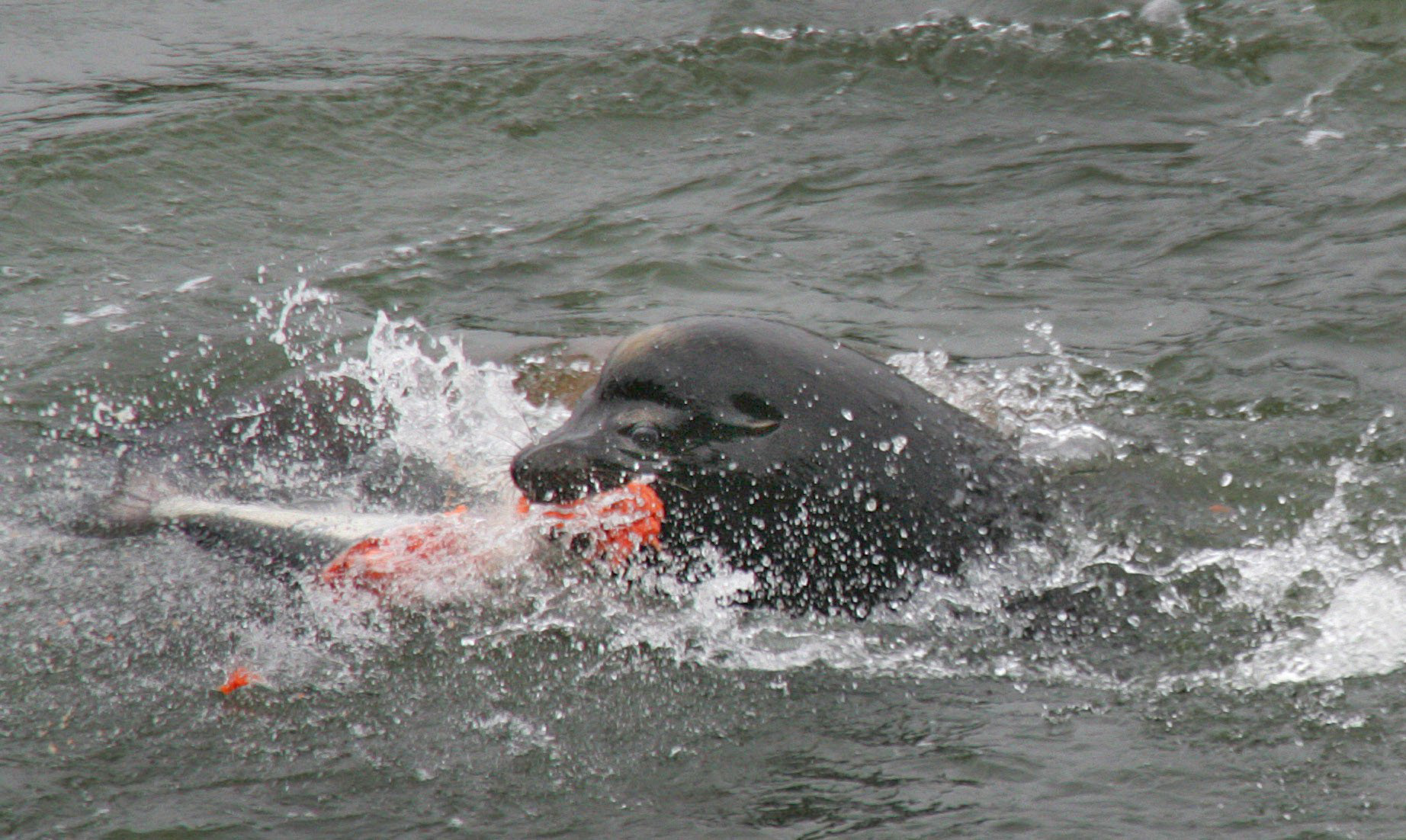
California sea lion at Bonneville fish ladder. Credit: U.S. National Oceanic and Atmospheric Administration

As if to mimic the weirder and weirder weather human-caused climate disruption is cooking up for us, related science stories seem to come in floods and droughts. Yes, research trends become fashionable too (imagine a science fashion show? – but I digress…).

Only yesterday, the ABC published an opinion piece on the controversies surrounding which species we call ‘native’ and ‘invasive’ (based on a recent paper published in Global Ecology and Biogeography), and in June this year, Salvador Herrando-Pérez wrote a great little article on the topic entitled “The invader’s double edge“.

Then today, I received a request to publish a guest post here on ConservationBytes.com from Lauren Kuehne, a research scientist in Julian Olden‘s lab at the University of Washington in Seattle. The topic? Why, the controversies surrounding invasive species, of course! Lauren’s following article demonstrates yet again that it’s not that simple.

A drawback to the attention garnered by high-profile invasive species is the tendency to infer that every non-native species is bad news, the inverse assumption being that all native species must be ‘good’. While this storyline works well for Hollywood films and faerie tales, in ecology the truth is rarely that simple. A new review article in the September issue of Frontiers in Ecology and the Environment, describes the challenges and heartbreaks when native species run amok in the sense of having negative ecological impacts we typically associate with non-native species. Examples in the paper range from unchecked expansions of juniper trees in sagebrush ecosystems with wildfire suppression, to overgrazing by elk (wapiti) released from predation following the removal of wolves and mountain lions. Read the rest of this entry »


The climate of climate change

4 09 2012

The primary scientific literature on climate change spawns hundreds of debates on an array of topics. When the technical debate among experts, and the obvious uncertainties, are taken up by the media, they are typically treated as any other topic, which ends up in some people not trusting science and others exploiting the ‘debate’ for their own interests.

Many media debates consist of one moderator and several speakers with two confronting views. When the topic under discussion affects our daily life (e.g., unemployment), the average spectator will often agree with one of the views. When the topic affects people (apparently) in a general fashion (e.g., climate change), the spectator might distrust or simply ignore both views. Thus, the media shapes public opinion such that people’s perception of the news becomes black, white, “I don’t believe it” or “it doesn’t exist”. Public debates on climate change are like a ‘contact sport’ (1), a team has to win in a contest where both parties alternate attack and defence. The participation of speakers without specialised expertise on climate change, especially if they represent short-term political and economic interests, instigates public mistrust and inhibition (2). This situation erodes the informative role that science and scientists must play in the creation of novel environmental policies aiming to improve the present and future wellbeing of our society (3, a Science paper unsurprisingly challenged by US administration’ bastion Fred Singer: 4). Read the rest of this entry »


You’re not even remotely concerned enough

31 08 2012

I’ve just returned from a 6-week trip to the United States and I am now dealing with the intensity of things left undone for so long [sigh]. But that trip was interesting for many reasons. First, and as I’ve already posted, I finished a book with Paul Ehrlich that will be out sometime early in 2013 (but I won’t deal with that here). I also attended an interesting, if slightly confusing, conference on ecosystem services. And finally, I had the pleasure of meeting Tony Barnosky in person, and we decided that we should definitely collaborate on a few things.

Another thing that struck me – and this happens no matter how often I visit the U.S., is just how completely insane that country’s politics are. The extremist, libertarian, plutotheocratic bullshit spewed by the far right to the detriment of the very people who support them is enough to make you vomit. And this startling and thoroughly backward world-view is now starting to penetrate more and more into Australian society and politics. From an environmental perspective, it’s a continuation of a downhill slide that started with Reagan’s destruction of environmentalism in the U.S., and Joh Bjelke-Petersen‘s war on the environment in Australia, and will only continue to get worse.

Of course, the main victim of reason in all these polemic politics is that we are doing next to nothing to mitigate horrendous climate disruption. Only yesterday, George Monbiot was lamenting (nay, pleading) that our governments are doing practically nil to avoid what can only be described as the greatest threat to our way of life since the World War II – in fact, the War and its associated holocaust is small bikkies compared to what awaits us.

And this is the most stressing part – even people who choose to use their brains and accept that we have an immense, global problem on our hands generally are not even remotely concerned enough. Read the rest of this entry »


Restoring doomed fish

24 08 2012

I get called a doomsday merchant a lot, mainly because there’s not a lot of good news out there when it comes to biodiversity these days. However, now and again there is a success story worth shouting from the rooftops. This latest post comes from my PhD student, Jarod Lyon (also of the Arthur Rylah Institute in Victoria), who is working on restoring native freshwater fish in Australia’s largest river system – the Murray-Darling. The M-D also happens to be in a lot of trouble because of poor water management and years of neglect. However, some clever research and restoration proves that we can bring biodiversity back from the brink if done right. Jarod has posted here on Conservation Bytes before describing his work, and this latest post provides some detail on one species in particular.

Trout cod Maccullochella macquariensis were once considered to be widespread in the southern tributaries of the Murray-Darling Basin. However over the past fifty years, their distribution and abundance have declined dramatically, due to a number of disturbances including habitat loss, altered flow and temperature patterns, in-stream sedimentation, population fragmentation due to in-stream barriers and over fishing. Trout cod are listed nationally as endangered under the Environment Protection and Biodiversity Conservation Act (EPBC Act 1999) and listed under the Victorian Flora and Fauna Guarantee Act (FFG Act 1988). Trout cod are often accidentally caught when fishing for Murray cod. However, it is illegal to take a trout cod while angling.

Trout cod were historically abundant in the lower Ovens River system in South-Eastern Australia, however were locally extinct by the 1980s. In an attempt to re-introduce a viable population in the Ovens River, hatchery-reared juvenile trout cod were stocked in the Ovens River system for ten years starting in 1997. Our recent manuscript published in Marine and Freshwater Research assesses the success of this stocking regime (particularly in relation to recovery plan objectives) through a variety of techniques, including fish surveys and analysis of gonads, otoliths and genetic structure of the population.

We found that the Ovens River now holds a naturally self-sustaining population of trout cod – that is, the progeny of stocked fishes are now breeding.  Given that most threatened species re-introduction programs worldwide fail, this is somewhat of a good-news story for management of rare animals. In particular, we found that the length of the stocking program was a major factor in its success, as the long time period overcame the years where the survival of the stocked fingerlings was low. Interestingly, most fish to recruit to an adult size were stocked in 2003 or 2004 – meaning if this had been a five-year program, it would most likely have failed. Read the rest of this entry »


Degraded States of Ausmerica

20 08 2012

You might remember that I’ve been in California for several weeks now. The principal reason for my visit was to finish a book that Paul Ehrlich and I started last year. So, without the major distractions of everyday university life, I’ve spent much of my time lately at Stanford University in a little office next to Paul’s trying to finish (I also attended a conference in Portland, Oregon).

Yesterday, we wrote the last few paragraphs. A giant gorilla has now lumbered its way off my back.

So. What is the book about, you might ask? I can’t give away too many details, but I will give a few teasers. The book is called, at least for now, ‘Oz & US’, which is a bit of a play of words. In the book we contrast the environmental histories, current state of affairs, and likely futures of our respective nations. It’s written in a popular style so that non-specialists can learn a little something about how bad the environment has become in our two countries.

At first glance, one might wonder why we chose to contrast the U.S. and Australia – they are quite different beasts, indeed. Their histories are immensely different, from the aboriginal populations, through to European colonisation (timing and drivers), biological (including agricultural) productivities, carrying capacities, population sizes and politics. But these differences belie too many convergences in the environmental states of each nation – we now both have increasingly degraded environments, we have both pushed the boundaries of our carrying capacities, and our environmental politics are in a shambles. In other words, despite having started with completely different conditions, our toll on nature’s life-support systems is now remarkably similar.

And anyone who knows Paul and me will appreciate that the book is completely irreverent. We have taken off the gloves in preparation for a bare-knuckle fight with the plutocrats and theocrats now threatening the lives of our grandchildren. We pull no punches here. Read the rest of this entry »


Global Ecology postgraduate opportunities

12 08 2012

I should have published these ages ago, but like many things I have should have done earlier, I didn’t.

I also apologise for a bit of silence over the past week. After coming back from the ESP Conference in Portland, I’m now back at Stanford University working with Paul Ehrlich trying to finish our book (no sneak peaks yet, I’m afraid). I have to report that we’ve completed about about 75 % it, and I’m starting to feel like the end is in sight. We hope to have it published early in 2013.

So here they are – the latest 9 PhD offerings from us at the Global Ecology Laboratory. If you want to get more information, contact the first person listed as the first supervisor at the end of each project’s description.

1. Optimal survey and harvest models for South Australian macropods (I’ve advertised this before, but so far, no takers):

The South Australia Department of Environment, Water and Natural Resources (DEWNR) is custodian of a long-term macropod database derived from the State’s management of the commercial kangaroo harvest industry. The dataset entails aerial survey data for most of the State from 1978 to present, annual population estimates, quotas and harvests for three species: red kangaroo (Macropus rufus), western grey kangaroo (Macropus fuliginosus), and the euro (Macropus robustus erubescens).

DEWNR wishes to improve the efficiency of surveys and increase the precision of population estimates, as well as provide a more quantitative basis for setting harvest quotas.

We envisage that the PhD candidate will design and construct population models:

  • to predict population size/densities with associated uncertainty, linking fluctuations to environmental variability (including future climate change projections)
  • to evaluate the efficiency of spatially explicit aerial surveys
  • to estimate demographic parameters (e.g., survival rate) from life tables and
  • to estimate spatially explicit sustainable harvest quotas

 Supervisors: me, A/Prof. Phill Cassey, Dr Damien Fordham, Dr Brad Page (DEWNR), Professor Michelle Waycott (DEWNR).

2. Correcting for the Signor-Lipps effect

The ‘Signor-Lipps effect’ in palaeontology is the notion that the last organism of a given species will never be recorded as a fossil given the incomplete nature of the fossil record (the mirror problem is the ‘Jaanusson effect’, where the first occurrence is delayed past the true time of origination). This problem makes inference about the timing and speed of mass extinctions (and evolutionary diversification events) elusive. The problem is further complicated by the concept known as the ‘pull of the recent’, which states that the more time since an event occurred, the greater the probability that evidence of that event will have disappeared (e.g., erased by erosion, hidden by deep burial, etc.).

In a deep-time context, these problems confound the patterns of mass extinctions – i.e., the abruptness of extinction and the dynamics of recovery and speciation. This PhD project will apply a simulation approach to marine fossil time series (for genera and families, and some individual species) covering the Phanerozoic Aeon, as well as other taxa straddling the K-T boundary (Cretaceous mass extinction). The project will seek to correct for taphonomic biases and assess the degree to which extinction events for different major taxa were synchronous.

The results will also have implications for the famous Sepkoski curve, which describes the apparent logistic increase in marine species diversity over geological time with an approximate ‘carrying capacity’ reached during the Cenozoic. Despite recent demonstration that this increase is partially a taphonomic artefact, a far greater development and validation/sensitivity analysis of underlying statistical models is needed to resolve the true patterns of extinction and speciation over this period.

The approach will be to develop a series of models describing the interaction of the processes of speciation, local extinction and taphonomic ‘erasure’ (pull of the recent) to simulate how these processes interact to create the appearance of growth in numbers of taxa over time (Sepkoski curve) and the abruptness of mass extinction events. The candidate will estimate key parameters in the model to test whether the taphonomic effect is strong enough to be the sole explanation of the apparent temporal increase in species diversity, or whether true diversification accounts for this.

Supervisors: me, Prof. Barry Brook

3. Genotypic relationships of Australian rabbit populations and consequences for disease dynamics

Historical evidence suggests that there were multiple introduction events of European rabbits into Australia. In non-animal model weed systems it is clear that biocontrol efficacy is strongly influenced by the degree of genetic diversity and number of breed variants in the population.

The PhD candidate will build phylogenetic relationships for Australian rabbit populations and develop landscape genetic models for exploring the influence of myxomatosis and rabbit haemorrhagic disease virus (RHDV) on rabbit vital rates (survival, reproduction and dispersal) at regional and local scales. Multi-model synthesis will be used to quantify the relative roles of environment (including climate) and genotype on disease prevalence and virulence in rabbit populations.

Supervisors: A/Prof Phill Cassey, Dr Damien Fordham, Prof Barry Brook Read the rest of this entry »


The invisible hand of ecosystem services

4 08 2012

I’ve just spent nearly an entire week trying to get my head around ecosystem services (ES).

You’d think that would have been a given based on my experience, my research, my writings and the fact that I’ve just spent the last week with 400 ES specialists from around the world at the 5th international Ecosystem Services Partnership (ESP) Conference in Portland, Oregon, USA.

Well, prior to this week I thought I knew what ES were, but now I think I’m just a little more confused.

Of course, I’m not talking about the concept of ES or what they are (hell, I’ve written enough about them on this blog and in my papers); my problem is understanding how we as society end up valuing them in a practical, sensible and feasible way.

So I’m going to describe the ESP Conference as I saw it, and not necessarily in chronological order.

First up is the term ‘ecosystem services’ itself – horrible name, and something rammed home again after attending the conference. Most people on the planet that are not scientists (that would be nearly everyone) just might have the most tenuous and ethereal of grasps of ‘ecosystem’ in the first place, and I’d bet that 99 % of most undergraduate students couldn’t provide a comprehensive description. This is because ecosystems are mind-bogglingly, chaotically and awesomely complex. Just ask any ecosystem ecologist.

The second part of the term – services – is particularly offensive in its presumption and arrogance. It’s not like you ring up an ecosystem and get it to clean your carpets, or fill your water tank or gas cylinder. No, the natural world did not evolve to pamper humanity; we are merely part of it (and bloody efficient at modifying it, I might add).

So try to sell this ‘incredibly complex thingy’ that is ‘there to do some (intangible) shit for us’ to the public, policy makers and politicians, and you mostly get a dog’s regurgitated breakfast and some blank, slack-jawed stares. Read the rest of this entry »


Malady of numbers

30 07 2012

Organism abundance is the parameter most often requiring statistical treatment. Statistics turn our field/lab notes into estimates of population density after considering the individuals we can see and those we can’t. Later, statistical analyses will relate our density estimates to other factors (climate, demography, genetics, human impacts), allowing the examination of key issues such as extinction risk, biomonitoring or ecosystem services (humus formation, photosynthesis, pollination, fishing, etc.). Photos – top: a patch of fungi (Lacandon Jungle, Mexico), next down: a palm forest (Belize river, Belize), next down: an aggregation of butterflies (Amazon, Peru), and bottom: a group of river dolphins (Amazon, Colombia). Photos by Salvador Herrando-Pérez.

Another interesting and provocative post from my (now ex-) PhD student, Dr. Salvador Herrando-Pérez. After reading this post, you might be surprised to know that Salva was one of my more quantitative students, and although he struggled to keep up with the maths at times, he eventually become quite an efficient ecological modeller (see for yourself in his recent publications here and here).

When an undergraduate faces the prospect of a postgraduate degree (MSc/PhD), he or she is often presented with an overwhelming contradiction: the host university expects the student to have statistical skills for which he/she might never have received instruction. This void in the education system forges professionals lacking statistical expertise, skills that are mandatory for cutting-edge research!

Universities could provide the best of their societal services if, instead of operating in isolation, they integrated the different phases of academic training students go through until they enter the professional world. Far from such integration in the last 20 years, universities have become a genuine form of business and therefore operate competitively. Thus, they seek public and private funding by means of student fees (lecturing), as well as publications and projects developed by their staff (research). In this kind of market-driven academia, we need indicators of education quality that quantify the degree by which early-career training methods make researchers useful, innovative and cost-effective for our societies, particularly in the long term.

More than a century ago, the geologist and educator Thomas Chamberlin (1) distinguished acquisitive from creative learning methods. The former are “an attempt to follow by close imitation the processes of other thinkers and to acquire the results of their investigation by memorising”. The latter represent “the endeavour… to discover new truth or to make a new combination of truth or at least to develop by one’s own effort an individualised assemblage of truth… to think for one’s self”. From the onset of their academic training, students of many countries are instructed in acquisitive methods of learning that reward the retention of information, much of which falls into oblivion after being regurgitated during an exam. Apart from being a colossal waste of resources (because it yields near null individual or societal benefits), this vicious machinery is reinforced by reward and punishment in convoluted manners. For instance, one of my primary-school teachers had boys seated in class by a ‘ranking of intelligence’; so one could lose the first seat if the classmate in the second seat answered a question correctly, which the up-to-then ‘most intelligent’ had failed to hit. Read the rest of this entry »