Better SAFE than sorry

30 11 2011

Last day of November already – I am now convinced that my suspicions are correct: time is not constant and in fact accelerates as you age (in mathematical terms, a unit of time becomes a progressively smaller proportion of the time elapsed since your birth, so this makes sense). But, I digress…

This short post will act mostly as a spruik for my upcoming talk at the International Congress for Conservation Biology next week in Auckland (10.30 in New Zealand Room 2 on Friday, 9 December) entitled: Species Ability to Forestall Extinction (SAFE) index for IUCN Red Listed species. The post also sets a bit of the backdrop to this paper and why I think people might be interested in attending.

As regular readers of CB will know, we published a paper this year in Frontiers in Ecology and the Environment describing a relatively simple metric we called SAFE (Species Ability to Forestall Extinction) that could enhance the information provided by the IUCN Red List of Threatened Species for assessing relative extinction threat. I won’t go into all the detail here (you can read more about it in this previous post), but I do want to point out that it ended up being rather controversial.

The journal ended up delaying final publication because there were 3 groups who opposed the metric rather vehemently, including people who are very much in the conservation decision-making space and/or involved directly with the IUCN Red List. The journal ended up publishing our original paper, the 3 critiques, and our collective response in the same issue (you can read these here if you’re subscribed, or email me for a PDF reprint). Again, I won’t go into an detail here because our arguments are clearly outlined in the response.

What I do want to highlight is that even beyond the normal in-print tête-à-tête the original paper elicited, we were emailed by several people behind the critiques who were apparently unsatisfied with our response. We found this slightly odd, because many of the objections just kept getting re-raised. Of particular note were the accusations that: Read the rest of this entry »


Supercharge Your Science V.2

24 11 2011

I suspect a lot of ConservationBytes.com readers will be attending the imminent 25th International Congress for Conservation Biology to be held in Auckland from 5-9 December 2011 (it was to be held in Christchurch, but the venue was changed after that city fell down). I’ve now been to 3 previous ICCBs myself, and it should prove to be a good, informative (and fun) meeting.

I’ll be giving a talk or two, as will some of my students and postdocs, but I’m not spruiking those here (but you’re all invited, of course).

The main reason for this short post today is to advertise for Version 2 of our (i.e., Bill Laurance and me) popular ‘Supercharge Your Science‘ workshop. Yes, the organising committee of the ICCB decided it was a good idea to accept our application to repeat our previously successful series of presentations extolling the virtues of positive and controlled media interactions, social media and good writing techniques for ‘supercharging’ the impact of one’s science. You can read more about the content of this workshop here and here.

The description of the workshop (to be held from 19.00 – 21.00 on 6 December in the SkyCity venue) on the ICCB website is: Read the rest of this entry »


Marine forests dropping off the edge

21 11 2011

This is probably a little late in terms of breaking news, but it’s good fodder for a blog post nonetheless.

I’ve done several posts now on the value (and threats) of marine macroalgae (seaweeds) – the last one hinted that a major paper was imminent regarding the fate of one of the world’s most important centres of macroalgae diversity in response to our rapidly changing climate: southern Australia.

Well, that paper has now come out in the eminent journal Current Biology headed by that crazy Aussie-Viking phycologist, Dr. Thomas Wernberg (byline here: Thomas was just awarded an Australian Research Council Future Fellowship and deserves many congratulations – not least for which the audacity to wear yellow budgie smugglers in public).

Entitled simply “Seaweed communities in retreat from ocean warming“, the short paper belies a hell of a lot of work examining over 60 years of herbarium records indicating MASSIVE shifts in the macroalgae community southwards on both the east and west coasts of Australia (see some media spots here). What do I mean by ‘massive’? Well, about 300 species on average (52 examined in most detail) shifted about 200 km south on the east coast (where warming has been most pronounced), and about 50 km south on the west coast. Read the rest of this entry »


Where are they? Finding (and conserving) the biggest fish in the sea

16 11 2011

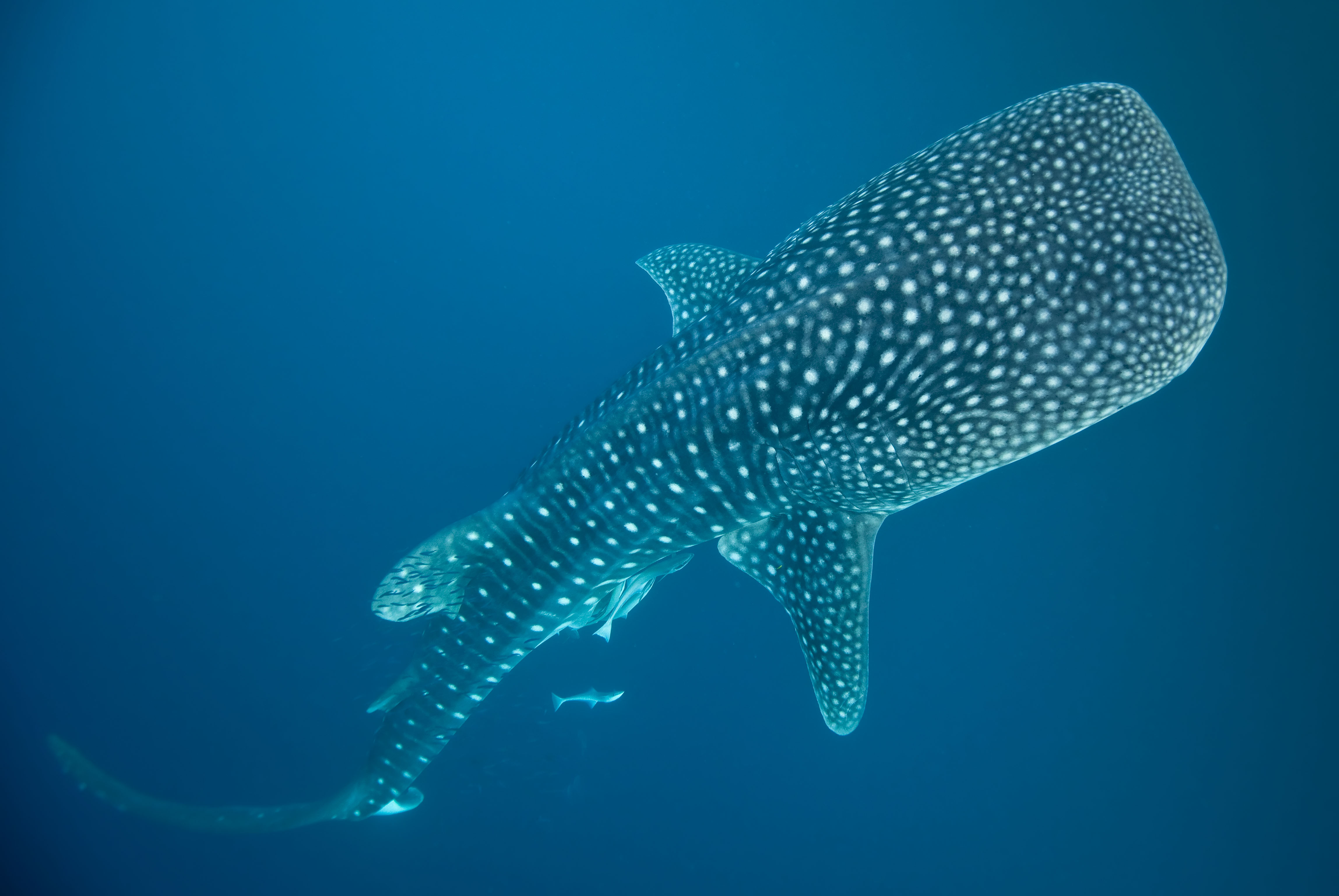
A post from my PhD student, Ana Sequeira, on her latest paper just out in Diversity and DistributionsOcean-scale prediction of whale shark distribution.

© W Osborn (AIMS)

The ocean is our major source of water, it stabilises our breathable atmosphere and provides many supplies such as medicines (e.g., anti-cancer therapy drugs1) and food. Despite its the importance for human life, many marine species are now at a high risk of extinction owing to human changes to the oceans.

The whale shark (Rhincodon typus, Smith 1828) – an icon of the oceans of a spectacularly huge size and docile character – is just one of those species.

Despite being a fish that many people (mainly in Southeast Asia) are happy to have on their plate, whale sharks are worth millions of dollars every year in the ecotourism industry worldwide. One would then expect that being such a profitable species, their ecology would be well known and thoroughly studied.

The reality is quite different.

Basic information on whale sharks such as the whereabouts of their breeding areas, the average number of offspring per female, or even how many individuals still exist, is not currently known. Moreover, despite the genetic evidence that whale sharks worldwide are connected among different oceans, it is unclear if they move from places where they are protected to places where they are still illegally fished.

Information on distribution and patterns of occurrence in space and time is essential for conservation, and can help to save entire ecosystems if used correctly, for example: to isolate important mating and breeding areas.

To identify the whale shark’s seasonal distribution patterns in the Indian Ocean, to test if records follow a decreasing trend over time, and if occurrence is related to variation in climatic signals, we used multivariate distribution models of seasonal and inter-annual whale shark sightings opportunistically collected over 17 years by the tuna purse-seine fishery. Read the rest of this entry »


Sustainable kangaroo harvests

10 11 2011

When I first started this blog back in 2008, I extolled the conservation virtues of eating kangaroos over cattle and sheep. Now I want to put my academic money where my mouth is, and do some kangaroo harvest research.

Thanks to the South Australia Department of Environment and Natural Resources  (DENR) and the commercial kangaroo harvest industry, in conjunction with the University of Adelaide, I’m pleased to announce a new scholarship for a PhD candidate to work on a project entitled Optimal survey and harvest models for South Australian macropods based at the University of Adelaide’s School of Earth and Environmental Sciences.

DENR is custodian of a long-term macropod database derived from the State’s management of the commercial kangaroo harvest industry. The dataset entails aerial survey data for most of the State from 1978 to present, annual population estimates, quotas and harvests for three species: red kangaroo (Macropus rufus), western grey kangaroo (Macropus fuliginosus), and the euro (Macropus robustus erubescens). Read the rest of this entry »


Mucking around the edges

8 11 2011

Barry Brook over at BraveNewClimate.com beat me to the punch regarding our latest paper, so I better get off my arse and write my take on things.

This post is about a paper we’ve just had accepted and has come out online in Biological Conservation called Strange bedfellows? Techno-fixes to solve the big conservation issues in southern Asia – and it’s likely to piss off a few people, and hopefully motivate others.

We wrote the paper for a special issue of essays dedicated to the memory of our mate and colleague, Navjot Sodhi, who died earlier this year. The issue hasn’t been released yet, but we have managed to get our paper out well before.

Like Navjot, the paper is controversial. Also like Navjot, we hope it challenges a few minds and pushes a few boundaries. We, as conservation biologists, must accept the fact that we have largely failed – biodiversity is still being lost at an alarming rate despite decades and decades of good science, sound evidence-based policy recommendations and even some rescues of species on the ‘brink’. Huge consumption rates, a population of 7 billion humans and counting, carbon emissions exceeding all worst-case scenarios, and greater disparity of wealth distribution have all contributed to this poor performance.

So what else can we do? Read the rest of this entry »


Oceans need their giants

2 11 2011

Another great post from Salvador Herrando Pérez.

from adsown.blogspot.com

Commercial and sport fishing establish minimum body sizes for catches of many species to preserve fish stocks. Recent work reveals that sustainable fisheries also depend on the regulation of the harvest of the biggest fish, at least in long-lived species.

Growing up in Spain in the 1980s, I was taken by a Spanish television spot featuring a shoal of little fish sucking colourful dummies, and at the same time (how they managed, I never questioned) singing the motto Little fish? No, thanks. The then Ministry of Agriculture, Fishery and Food created this media campaign to create awareness among consumers not to buy immature fish at local markets – “…a 60-gram hake will only weigh 2 kg after two years” the add stated.

Indeed, the regulation of fish harvest by age classes is substantial to any fishery. In particular, the protection of younger fish has been a beacon of fishery policy and management that dates back to the 19th century when, among others, the British ichthyologist Ernst Holt concluded that: “…it is desirable that fish should have a chance of reproducing their species at least once before they are destroyed” 1. Very much in line with such principles, conventional fish stock management has in practice neglected the mature age classes2, other than for the fact that they are the end point of extraction and what we consumers eat on the table. Read the rest of this entry »


Where the sick buffalo roam

28 10 2011

It’s been some time coming, but today I’m proud to announce a new paper of ours that has just come out in Journal of Applied Ecology. While not strictly a conservation paper, it does provide some novel tools for modelling populations of threatened species in ways not available before.

The Genesis

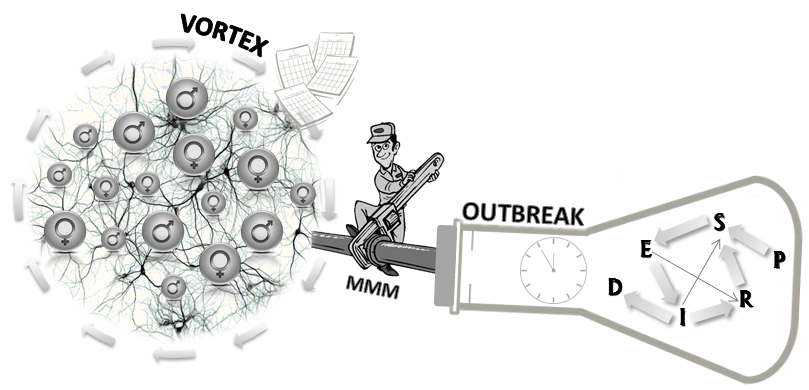
A few years ago, a few of us (Bob LacyPhil Miller and JP Pollak of Vortex fame, Barry Brook, and a few others) got together in a little room at the Brookfield Zoo in the suburban sprawl of Chicago to have a crack at some new modelling approaches the Vortex crew had recently designed. The original results were pleasing, so we had a follow-up meeting last year (thanks to a few generous Zoo benefactors) and added a few post-docs and students to the mix (Damien FordhamClive McMahon, Tom Prowse, Mike Watts, Michelle Verant). The great population modeller Resit Akçakaya also came along to assist and talk about linkages with RAMAS.

Out of that particular meeting a series of projects was spawned, and one of those has now been published online: Novel coupling of individual-based epidemiological and demographic models predicts realistic dynamics of tuberculosis in alien buffalo.

The Coupling

So what’s so novel about modelling disease in buffalo, and why would one care? Well, here’s the interesting part. The buffalo-tuberculosis example was a great way to examine just how well a new suite of models – and their command-centre module – predicted disease dynamics in a wild population. The individual-based population modelling software Vortex has been around for some time, and is now particularly powerful for predicting the extinction risk of small populations; the newest addition to the Vortex family, called Outbreak, is also an individual-based epidemiological model that allows a population of individuals exposed to a pathogen to progress over time (e.g., from susceptible, exposed, infectious, recovered/dead). Read the rest of this entry »


Follow the TREND

24 10 2011

A little clichéd, I know, but that’s what it says on the T-shirt.

It’s been an interesting week. Not only did I return to some much-needed field work (even if it was diving in the muck of Adelaide’s Outer Harbour with 40-cm visability), but it was also the week when the TREND project became ‘official’ with the launching of its website and its public début at the Earth Station festival in Belair National Park over the weekend.

I can see the thought bubbles already – what the hell is ‘TREND‘ (apart from the obvious)?

Admittedly a somewhat contrived acronym, TREND stands for TRends in ENvironmental monitoring and Decision making – a multi-million dollar project financed mainly by the state government of South Australia and the Terrestrial Ecosystem Research Network (TERN – I know, another bloody acronym that is weirdly similar to TREND; oh how we Aussies love our acronyms and initialisms!). Here’s the official summary:

“TREND provides a system of data collection across native ecosystems, primary production regions and marine environments. By assessing the impacts of various potential climatic and environmental shifts, TREND will provide an early warning system for changes in South Australia’s diverse environments and a lasting legacy of long-term monitoring, informed policy and proactive response to environmental change. Read the rest of this entry »


Not magic, but necessary

18 10 2011

In April this year, some American colleagues of ours wrote a rather detailed, 10-page article in Trends in Ecology and Evolution that attacked our concept of generalizing minimum viable population (MVP) size estimates among species. Steve Beissinger of the University of California at Berkeley, one of the paper’s co-authors, has been a particularly vocal adversary of some of the applications of population viability analysis and its child, MVP size, for many years. While there was some interesting points raised in their review, their arguments largely lacked any real punch, and they essentially ended up agreeing with us.

Let me explain. Today, our response to that critique was published online in the same journal: Minimum viable population size: not magic, but necessary. I want to take some time here to summarise the main points of contention and our rebuttal.

But first, let’s recap what we have been arguing all along in several papers over the last few years (i.e., Brook et al. 2006; Traill et al. 2007, 2010; Clements et al. 2011) – a minimum viable population size is the point at which a declining population becomes a small population (sensu Caughley 1994). In other words, it’s the point at which a population becomes susceptible to random (stochastic) events that wouldn’t otherwise matter for a small population.

Consider the great auk (Pinguinus impennis), a formerly widespread and abundant North Atlantic species that was reduced by intensive hunting throughout its range. How did it eventually go extinct? The last remaining population blew up in a volcanic explosion off the coast of Iceland (Halliday 1978). Had the population been large, the small dent in the population due to the loss of those individuals would have been irrelevant.

But what is ‘large’? The empirical evidence, as we’ve pointed out time and time again, is that large = thousands, not hundreds, of individuals.

So this is why we advocate that conservation targets should aim to keep at or recover to the thousands mark. Less than that, and you’re playing Russian roulette with a species’ existence. Read the rest of this entry »


Twenty landmark papers in biodiversity conservation

13 10 2011

While I can’t claim that this is the first time one of my peer-reviewed papers has been inspired by ConservationBytes.com, I can claim that this is the first time a peer-reviewed paper is derived from the blog.

After a bit of a sordid history of review (isn’t it more and more like that these days?), I have the pleasure of announcing that our paper ‘Twenty landmark papers in biodiversity conservation‘ has now been published as an open-access chapter in the new book ‘Research in Biodiversity – Models and Applications‘ (InTech).

Perhaps not the most conventional of venues (at least, not for me), but it is at the very least ‘out there’ now and freely available.

The paper itself was taken, modified, elaborated and over-hauled from text written in this very blog – the ‘Classics‘ section of ConservationBytes.com. Now, if you’re an avid follower of CB, then the chapter won’t probably represent anything terribly new; however, I encourage you to read it anyway given that it is a vetted overview of possibly some of the most important papers written in conservation biology.

If you are new to the field, an active student or merely need a ‘refresher’ regarding the big leaps forward in this discipline, then this chapter is for you.

The paper’s outline is as follows: Read the rest of this entry »


Little left to lose: deforestation history of Australia

6 10 2011

© donkeycart http://ow.ly/6OSeX

I don’t usually do this, but I’m going to blog about a paper I’ve just had accepted in the Journal of Plant Ecology that isn’t yet out online. The reason for the early post is that the paper itself won’t appear until 2012 in a special issue of the journal, and I think the information needs to get out there.

First, a little history – In May this year I blogged about a workshop that I attended at Sun Yat-Sen University in Guangzhou, China at the behest of Fangliang He. The workshop (International Symposium for Biodiversity and Theoretical Ecology) was attended by big-wig overseas ecologists and local talent, and was not only informative, but a lot of fun (apart from the slight headache on the way home from a little too much báijiǔ the night before). More importantly, we  lǎo wài (老外) were paired with various students to assist with publications in progress, and I’m happy to say that for me, two of those have already produced fruit (one paper in review, another about to be submitted).

But the real reason for this post was the special issue of papers written by the invitees – I haven’t published in the journal before, and understand that it is a Chinese journal that has gone mainstream internationally now. I’m only happy to contribute to lifting its profile.

Given that I’m not a plant ecologist per se (although I’ve dabbled), I decided to write a review-like paper that I’ve been meaning to put together for some time now examining the state of Australia’s forests and the history of her deforestation and forest degradation. The reason I thought this was needed is that there is no single peer-reviewed resource one can turn to for a concise synopsis of the history of our country’s forest destruction. The stats are out there, but they’re buried in books, government reports and local-scale scientific papers. My hope is that my paper will be used as a general reference point for people wishing to get up to speed with Australia’s deforestation history.

The paper is entitled Little left to lose: deforestation and forest degradation in Australia since European colonisation, and it describes the general trends in forest loss and degradation Australia-wide, followed by state- and territory-level assessments. I’ve also included sections on plantations, biodiversity loss from deforestation and fragmentation, the feedback loop between climate change and deforestation, the history of forest protection legislation, and finally, a discussion of the necessary general policy directions needed for the country’s forests.

I’ve given a few titbits of the stats in a previous post, but let me just summarise some of the salient features here: Read the rest of this entry »


1 million hectares annually – the forest destruction of Indonesia

30 09 2011

© A. Kenyon http://goo.gl/UpG3m

Bill Laurance wrote a compelling and very dour piece in The Conversation this week. He asked for some ‘link love’, so I decided to reproduce the article here for ConservationBytes.com readers. Full credit to Bill and The Conversation, of course.

What comes to mind when you think of Indonesia?

For biologists like myself, Australia’s northern neighbour provokes visions of ancient rainforests being razed by slash-and-burn farmers, and endangered tigers and orangutans fleeing from growling bulldozers.

This reality is true, but there is also hope on the horizon.

Indonesia is a vast, sprawling nation, spanning some 17,000 islands. Among these are Java, Sumatra, half of New Guinea and much of Borneo.

Some of the planet’s most biologically rich and most endangered real estate is found on this archipelago.

Today, Indonesia is losing around 1.1 million hectares of forest annually. That’s an area a third the size of Belgium, bigger than Australia’s Wet Tropics World Heritage Area.

With forest loss now slowing in Brazil, Indonesia has the dubious distinction of being the world’s deforestation “leader”. No nation is destroying its forests faster.

In Sumatra, where I visited recently, the world’s biggest paper-pulp corporations are chopping down hundreds of thousands of hectares of native rainforest to make paper and cardboard.

Some of these corporations also fund aggressive lobbyists, such as World Growth in Washington DC [CJA Bradshaw’s note: see our piece on one particular patron of WG – Alan Oxley], to combat their critics and dissuade major retail chains from dropping their products. Read the rest of this entry »


All that glitters is not gold – ecological traps

27 09 2011

Another corker from Salvador Herrando-Pérez:

Cinema fans know that choosing a movie by the newspaper’s commentary or the promotional poster might be a lottery. In the movie of nature, to confuse ‘the attractive’ with ‘the appropriate’ can compromise the life of an individual and its offspring, even to the extent of anticipating the extinction of an entire population or species.

Animals make daily choices about when, where or with whom to engage in basic activities like eating, hibernating, mating, migrating or resting. Those choices are often strongly tied to highly specific cues – e.g., air temperature, tree density, location of water, or smell of other individuals. And it happens to hair lice jumping from head to head among school kids, or to caribou forming their winter herds prior to the seasonal migration. All species, without exception, persist in nature because those ‘choices’ translate into survival or successful reproduction more often than do not. They are a kind of evolutionary memory imprinted in an organism’s genes and behaviour. However, sometimes the right choice (‘right’ meaning perceiving a cue for the role it actually has in the life cycle) places an individual in the worst of all possible situations. The environment cheats, ‘the attractive’ merely mimics ‘the appropriate’, and the individual fails to reproduce, starves, sickens, or even dies.

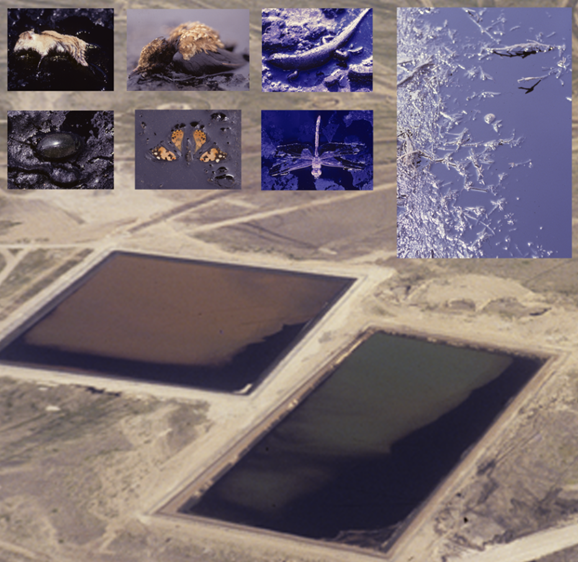
Figure 1. Water reservoirs tainted with fuel (see dark contours) in Kuwait following the Gulf War in the early 1990s. Overlaid pictures show the silhouettes of trapped odonates (right), vertebrates (top left) and invertebrates (bottom left) (Photos courtesy of Jochen Zeil).

At the mercy of mirages

During the Gulf War, the destruction of infrastructure for crude exploitation spilled large amounts of fuel in many water reservoirs over the desert landscape of Kuwait. A little later, Horváth and Zeil1 found agglomerations of dead insects (and a range of vertebrates) along the shores of these polluted reservoirs, and observed dragonflies drowning in their kamikaze attempt to spawn on the oily surface (Figure 1). This work stimulated further research whereby Horváth and his team in Budapest showed that odonates are attracted by light polarization at the surface of oiled water2 – hence ‘polarized light pollution’3. Not only that, they recorded insects struggling to spawn on or mate with riveting surfaces such as solar panels, asphalted roads, plastic bags or (creepy enough!) cemetery crypts4. It goes without saying: these insects are victims of a mirage.

Those habitats or features of the habitat that mislead an animal’s choice, often hampering the completion of its life cycle, are known as ‘ecological traps’ – in other words, the environmental cue is decoupled from the quality of the habitat it is meant to signal. Ecological traps were first described in the 1970s by Dwernychuk and Boag5. They found that ducks on the islands of Miquelon lake located their nests among those of seagulls despite the latter happily devoured their ducklings and eggs. When these islands emerged in the middle of last century, they were first colonized by common terns (Sterna hirundo). By defending their own nests ferociously from predators (mainly crows and magpies), the terns inadvertently shielded the nests of their ducky comrades. The Canadians hypothesized that when seagulls subsequently replace terns, the ducks continued to sense their new neighbours as a (now misleading) sign of protection. Read the rest of this entry »


Rise of the phycologists

22 09 2011

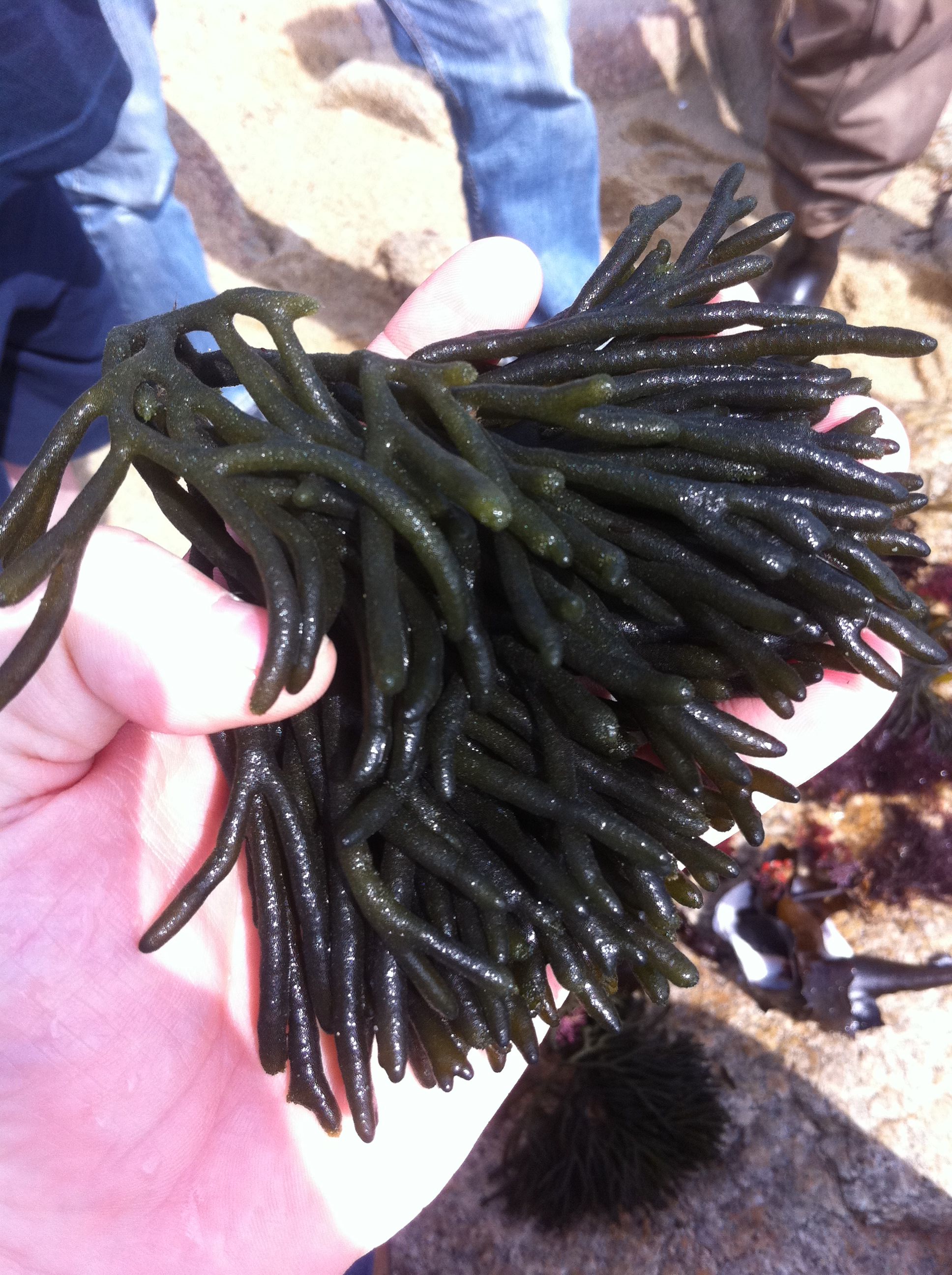
Dead man's fingers (Codium fragile) - © CJA Bradshaw

I’ve had an interesting week. First, it’s been about 6 years since I was last in Japan, and I love coming here; the food is exquisite, the people are fantastic (polite, happy, accommodating), everything works (trains, buses, etc.) and most importantly, it has an almost incredible proportion of its native forests intact.

But it wasn’t for forests that I travelled to Japan (nor the sumo currently showing on the guest-room telly where I’m staying – love the sumo): I was here for a calcareous macroalgae workshop.

What?

First, what are ‘macroalgae’, and why are some ‘calcareous’? And why should anyone in their right mind care?

Good questions. Answers: 1. Seaweeds; 2. Many incorporate calcium carbonate into their structures as added structural support; 3. Read on.

Now, I’m no phycologist (seaweed scientist), but I’m fascinated by this particular taxon. I’ve written a few posts about their vital ecological roles (see here and here), but let me regale you with some other important facts about these amazing species.

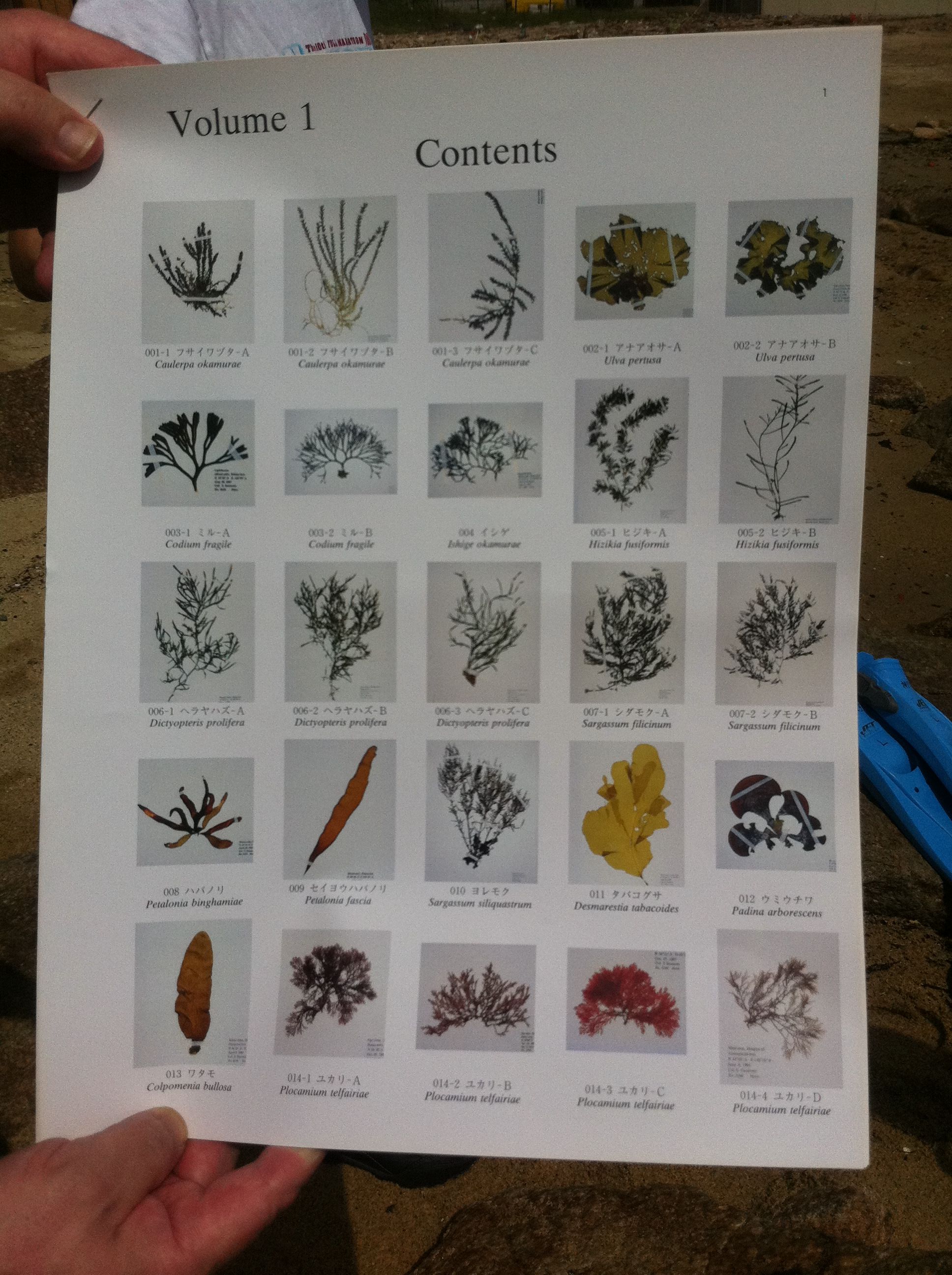
Some Japanese macroalgae - © CJA Bradshaw

There are about 12,000 known species of macroalgae described by phycologists, but as I’ve learnt this week, this is obviously a vast underestimate. For most taxa that people are investigating now using molecular techniques, the genetic diversity is so high and so geographically structured that there are obviously a huge number of ‘cryptic’ species within our current taxonomic divisions. This could mean that we’re out by up to a factor of 2 in the number of species in the world.

Another amazing fact – about 50 % of all known seaweed species are found in just two countries – Japan and Australia (hence the workshop between Japanese and Australian phycologists). Southern Australia in particular is an endemism hotspot.

Ok. Cool. So far so good. But so what? Read the rest of this entry »


No substitute for primary forest

15 09 2011

© Romulo Fotos http://goo.gl/CrAsE

A little over five years ago, a controversial and spectacularly erroneous paper appeared in the tropical ecology journal Biotropica, the flagship journal of the Association for Tropical Biology and Conservation. Now, I’m normally a fan of Biotropica (I have both published there several times and acted as a Subject Editor for several years), but we couldn’t let that paper’s conclusions go unchallenged.

That paper was ‘The future of tropical forest species‘ by Joseph Wright and Helene Muller-Landau, which essentially concluded that the severe deforestation and degradation of tropical forests was not as big a deal as nearly all the rest of the conservation biology community had concluded (remind you of climate change at all?), and that regenerating, degraded and secondary forests would suffice to preserve the enormity and majority of dependent tropical biodiversity.

What rubbish.

Our response, and those of many others (including from Toby Gardner and colleagues and William Laurance), were fast and furious, essentially destroying the argument so utterly that I think most people merely moved on. We know for a fact that tropical biodiversity is waning rapidly, and in many parts of the world, it is absolutely [insert expletive here]. However, the argument has reared its ugly head again and again over the intervening years, so it’s high time we bury this particular nonsense once and for all.

In fact, a few anecdotes are worthy of mention here. Navjot once told me one story about the time when both he and Wright were invited to the same symposium around the time of the initial dust-up in Biotropica. Being Navjot, he tore off strips from Wright in public for his outrageous and unsubstantiated claims – something to which Wright didn’t take too kindly.  On the way home, the two shared the same flight, and apparently Wright refused to acknowledge Navjot’s existence and only glared looks that could kill (hang on – maybe that had something to do with Navjot’s recent and untimely death? Who knows?). Similar public stoushes have been chronicled between Wright and Bill Laurance.

Back to the story. I recall a particular coffee discussion at the National University of Singapore between Navjot Sodhi (may his legacy endure), Barry Brook and me some time later where we planned the idea of a large meta-analysis to compare degraded and ‘primary’ (not overly disturbed) forests. The ideas were fairly fuzzy back then, but Navjot didn’t drop the ball for a moment. He immediately went out and got Tien Ming Lee and his new PhD student, Luke Gibson, to start compiling the necessary studies. It was a thankless job that took several years.

However, the fruits of that labour have now just been published in Nature: ‘Primary forests are irreplaceable for sustaining tropical biodiversity‘, led by Luke and Tien Ming, along with Lian Pin Koh, Barry Brook, Toby Gardner, Jos Barlow, Carlos Peres, me, Bill Laurance, Tom Lovejoy and of course, Navjot Sodhi [side note: Navjot died during the review and didn’t survive to hear the good news that the paper was finally accepted].

Using data from 138 studies from Asia, South America and Africa comprising 2220 pair-wise comparisons of biodiversity ‘values’ between forests that had undergone some sort of disturbance (everything from selective logging through to regenerating pasture) and adjacent primary forests, we can now hammer the final nails into the coffin containing the putrid remains of Wright and Muller-Landau’s assertion – there is no substitute for primary forest. Read the rest of this entry »


When you have no idea, you should shut up

12 09 2011

© Taren McCallan-Moore

Last week, The Conversation published a particularly wonderful example of uninformed drivel that requires a little bit of a reality injection.

Like our good friend, the Destroyer of Forests (a.k.a. Alan Oxley), a new pro-deforestation, pro-development cheerleader on the scene, a certain Phillip Lawrence apparently undertaking a PhD entitled ‘Ecological Modernization of the Indonesian Economy: A Political, Cultural and Historical Economic Study‘ at Macquarie University in Sydney (The Conversation mistakenly attributes him to the University of Sydney, unless of course, he’s moved recently), has royally stuck his foot in it with respect to the dangers of oil palm in South-East Asia.

Mr. Lawrence runs an interestingly titled blog ‘Eco Logical Strategies‘, especially considering there is nothing whatsoever regarding ‘ecology’ on the site, and this ignorance comes forth in a wonderful array of verbal spew in his latest Conversation piece. He’s also a consultant for one of the most destructive forces in Indonesia – Asia Pulp and Paper – a company with a more depressive environmental track record than the likes of Monsanto, General Electric and BP combined. That preface of conflict of interest now explained, I will now expose Mr. Lawrence for the wolf in sheep’s clothing he really is.

Banging the development and anti-poverty drum like Oxley, albeit with much less panache and linguistic flourish, Mr. Lawrence boldly claims, without a shred of evidence, that “There is ample peer-reviewed research that is supportive of the palm oil industry in Indonesia.”

Excuse me? Supportive of just what component of the palm oil industry, Mr. Lawrence? Would that be that it makes a shit-load of cash for a preciously small component of Indonesian (and foreign) society? Let’s just look at the peer-reviewed literature, shall we? Read the rest of this entry »


A supervisor’s lament

5 09 2011

© hradcanska http://ow.ly/6lCAO

Time for a little supervisory whinge. I’ve lamented these very issues over many a beer at many a conference, so I thought I’d solidify those hazy arguments into a blog post.

I’m by no means the most burdened academic when it comes to student load. We tend to be very picky in our lab when engaging post-graduate student prospects, and even pickier when hiring post-doctoral fellows (because the latter require little things like salaries that unfortunately, do not grow on trees). We also endeavour to share the load – most of our post-docs have at least one primary PhD student responsibility which reduces some of my burden and gives the post-doc in question the requisite experience in supervising. In my opinion, it’s a good way to run a lab, and allows for a high number of productive students, yet is not overly onerous for any one person.

That said, I make sure I read EVERYTHING my students produce, and I take a certain amount of pride in providing as much of my intellectual input as possible: from study design right through to proof correction. If my name is going to be on a paper, I had better bloody well earn my co-authorship. Read the rest of this entry »


Gone with the birds

1 09 2011

ebaumsworld.com

Another great post by Salvador Herrando-Pérez.

Through each new species, evolution assembles a unique combination of genes. Ever since living forms have populated our planet (> 3 billion years), the number of combinations is incalculable. That is why evolution resembles a cocktail shaker. Contemporaneous biogeographers look for order in that shaker to explain the history of life, as much as historians look for monarchs and revolutions in a library to explain the history of humanity.

The ethnic diversity of our suburb, village or city obeys factors of different temporal extent. Recent factors such as wealth, politics (war, segregation), culture (tradition, religion), and technology (airplanes, bridges, tunnels) determine racial migration, mixing and extinction. On the other hand, pre-historical factors express the expansion of the earliest hominids from Africa to the other continents – what makes a bantu ‘bantu’, or an inuit ‘inuit’.

Present ecological conditions and the macro-evolutionary past stock the elements by which biogeography attempts to understand the mechanisms shaping the spatial distribution of species, e.g., why kangaroos are restricted to Oceania, or why you could believe you were in Spain while strolling through a Greek forest. Read the rest of this entry »


How buggered are our hairy red cousins?

23 08 2011

Here’s a post from one of our lab’s post-doctoral fellows, Dr. Stephen Gregory. Stephen just got back from Borneo (jammy bastard), and will now regale you with his exploits.

© Danau Girang Field Centre

When asked to name a Bornean animal, I’ll bet the Bornean orangutan (Pongo pygmaeus) would top a public survey. This charismatic animal shares over 95 % of its genome with Homo sapiens, and so it’s little wonder that we find their infants so adorable and their popularity in the pet trade so deplorable.

Yet, I wonder how many people know that the biggest threat to our hairy red cousin is actually human eating and hygiene habits? Palm oil (oil extracted from the kernel of Elaeis spp.) is used in many foods – particularly snack foods – and hygiene products. It is our addiction to these convenient products that is destroying the orangutan’s habitat.

I’ve just returned from a trip to Sabah, the northernmost Malaysian state on Borneo, where I witnessed this distressing truth firsthand. I was meeting with the Sabah Wildlife Department, French NGO Hutan and staff at the Danau Girang Field Centre  to discuss early results from my Sabah orangutan project and seek their expert opinions. Read the rest of this entry »