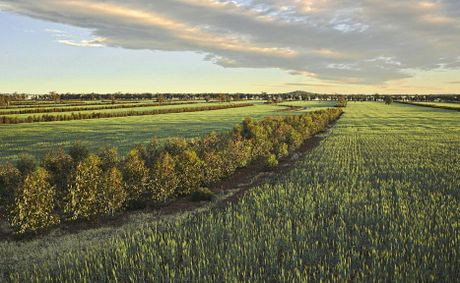
Brave new green world: biodiversity’s response to Australia’s carbon economy

12 03 2013

carbon farming 2I’ve had a busy weekend entertaining visiting colleagues and participating in WOMADelaide‘s first-ever ‘The Planet Talks‘. If you haven’t heard of WOMADelaide, you’re truly missing out in one of the best music festivals going (and this is from a decidedly non-festival-going sort). Planet Talks this year was a bit of an experiment after the only partially successful Earth Station festival held last year (it was well-attended, but apparently wasn’t as financially successful as they had hoped). So this year they mixed a bit of science with a bit of music – hence ‘Planet Talks’. Paul Ehrlich was one of the star attractions, and I had the honour of going onstage with him yesterday to discuss a little bit about human population growth and sustainability. It was also great to see Robyn Williams again. All the Talks were packed out – indeed, I was surprised they were so popular, especially in the 39-degree heat. Rob Brookman, WOMADelaide’s founder and principal organiser, told me afterward that they’d definitely be doing it again.

But my post really isn’t about WOMADelaide or The Planet Talks (even though I got the bonus of meeting one of my favourite latin bands, Novalima, creators of one of my favourite songs). It’s instead about a paper I heralded last year that’s finally been accepted.

In early 2012 at the Terrestrial Ecosystem Research Network (TERN) symposium in Adelaide, the Australian Centre for Ecological Analysis and Synthesis (ACEAS) put on what they called the ‘Grand Challenges’ workshop. I really didn’t get the joke at the time, but apparently the ‘grand challenge’ was locking 30 scientists with completely different backgrounds in a room for two days to see if they could do anything other than argue and bullshit. Well, we rose to that challenge and produced something that I think is rather useful.

I therefore proudly introduce the paper entitled Brave new green world: consequences of a carbon economy for the conservation of Australian biodiversity just accepted in Biological Conservation. The online version isn’t quite ready yet (should be in the next few weeks), but you are welcome to request a preprint from me now. If you attended (the surprisingly excellent) TERN symposium in Canberra last month, you might have seen me give a brief synopsis of our results.

The paper is a rather  in-depth review of how we, 30 fire, animal, plant, soil, landscape, agricultural and freshwater biologists, believe Australia’s new carbon-influenced economy (i.e., carbon price) will impact the country’s biodiversity. Read the rest of this entry »



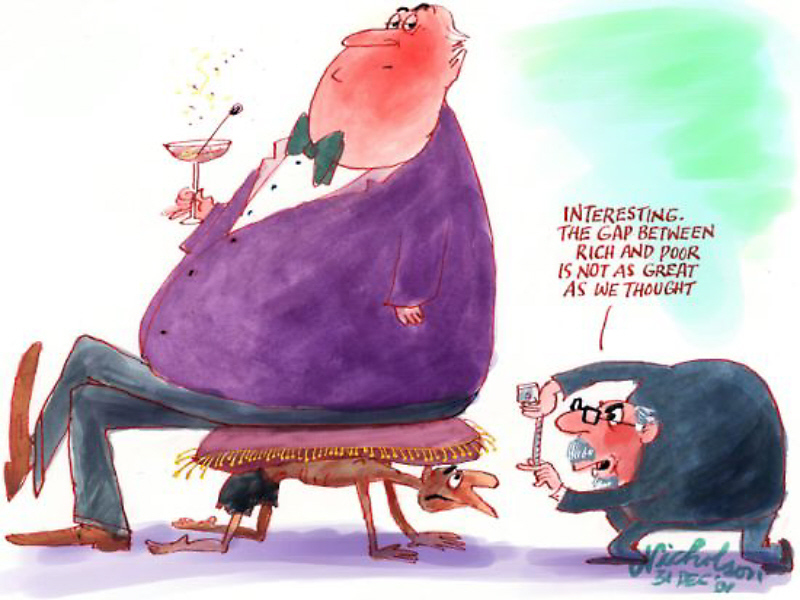
Science immortalised in cartoon

1 02 2013

Well, this is a first for me (us).

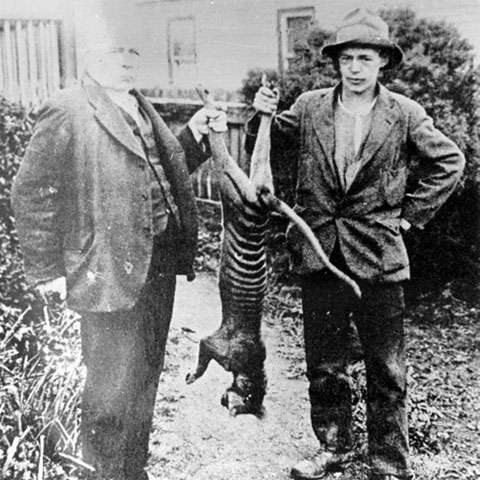
I’ve never had a paper of ours turned into a cartoon. The illustrious and brilliant ‘First Dog on the Moon‘ (a.k.a. Andrew Marlton) who is chief cartoonist for Australia’s irreverent ‘Crikey‘ online news magazine just parodied our Journal of Animal Ecology paper No need for disease: testing extinction hypotheses for the thylacine using multispecies metamodels that I wrote about a last month here on ConservationBytes.com.

Needless to say, I’m chuffed as a chuffed thing.

Enjoy!

Stripey


Having more tree species makes us wealthier

28 01 2013

money treeAs more and more empirical evidence pours in from all corners of the globe, we can only draw one conclusion about the crude measure of species richness (i.e., number of species) – having more species around makes us richer.

And I’m not talking about the esoteric or ‘spiritual’ richness that the hippies dribble about around the campfire after a few dozen cones pulled off the bong (I’ll let the confused among you try to work the meaning of that one out by yourselves), I’m talking about real money (incorporated into my concept of ‘biowealth‘).

The idea that ‘more is better’ in terms of the number of species has traditionally found some (at times, conflicting) empirical support in the plant ecology literature, the latest evidence about which I wrote last year. This, the so-called ‘diversity-productivity’ relationship (DPR), demonstrates that as a forest or grass ecosystem gains more species, its average or total biomass production increases.

Read the rest of this entry »


No need for disease

7 01 2013

dead or alive thylacineIt’s human nature to abhor admitting an error, and I’d wager that it’s even harder for the average person (psycho- and sociopaths perhaps excepted) to admit being a bastard responsible for the demise of someone, or something else. Examples abound. Think of much of society’s unwillingness to accept responsibility for global climate disruption (how could my trips to work and occasional holiday flight be killing people on the other side of the planet?). Or, how about fishers refusing to believe that they could be responsible for reductions in fish stocks? After all, killing fish couldn’t possibly …er, kill fish? Another one is that bastion of reverse racism maintaining that ancient or traditionally living peoples (‘noble savages’) could never have wiped out other species.

If you’re a rational person driven by evidence rather than hearsay, vested interest or faith, then the above examples probably sound ridiculous. But rest assured, millions of people adhere to these points of view because of the phenomenon mentioned in the first sentence above. With this background then, I introduce a paper that’s almost available online (i.e., we have the DOI, but the online version is yet to appear). Produced by our extremely clever post-doc, Tom Prowse, the paper is entitled: No need for disease: testing extinction hypotheses for the thylacine using multispecies metamodels, and will soon appear in Journal of Animal Ecology.

Of course, I am biased being a co-author, but I think this paper really demonstrates the amazing power of retrospective multi-species systems modelling to provide insight into phenomena that are impossible to test empirically – i.e., questions of prehistoric (and in some cases, even data-poor historic) ecological change. The megafauna die-off controversy is one we’ve covered before here on ConservationBytes.com, and this is a related issue with respect to a charismatic extinction in Australia’s recent history – the loss of the Tasmanian thylacine (‘tiger’, ‘wolf’ or whatever inappropriate eutherian epithet one unfortunately chooses to apply). Read the rest of this entry »


The biggest go first

11 12 2012
© James Cameron

© James Cameron

The saying “it isn’t rocket science” is a common cliché in English to state, rather sarcastically, that something isn’t that difficult (with the implication that the person complaining about it, well, shouldn’t). But I really think we should change the saying to “it isn’t ecology”, for ecology is perhaps one of the most complex disciplines in science (whereas rocket science is just ‘complicated’). One of our main goals is to predict how ecosystems will respond to change, yet what we’re trying to simplify when predicting is the interactions of millions of species and individuals, all responding to each other and to their outside environment. It becomes quickly evident that we’re dealing with a system of chaos. Rocket science is following recipes in comparison.

Because of this complexity, ecology is a discipline plagued by a lack of generalities. Few, if any, ecological laws exist. However, we do have an abundance of rules of thumb that mostly apply in most systems. I’ve written about a few of them here on ConservationBytes.com, such as the effect of habitat patch size on species diversity, the importance of predators for maintaining ecosystem stability, and that low genetic diversity doesn’t exactly help your chances of persisting. Another big one is, of course, that in an era of rapid change, big things tend to (but not always – there’s that lovely complexity again) drop off the perch before smaller things do.

The prevailing wisdom is that big species have slower life history rates (reproduction, age at first breeding, growth, etc.), and so cannot replace themselves fast enough when the pace of their environment’s change is too high. Small, rapidly reproducing species, on the other hand, can compensate for higher mortality rates and hold on (better) through the disturbance. Read the rest of this entry »



Protected areas work, but only when you put in the effort

15 11 2012

Apologies for the delay in getting this latest post out. If you read my last one, you’ll know that I’ve been in the United Kingdom for the last week. I’m writing this entry in the train down from York to Heathrow, from which I’ll shortly begin the gruelling 30-hour trip home to Adelaide.

Eight days on the other side of the planet is a bit of a cyclonic trip, but I can honestly say that it was entirely worth it. My first port of call was London where I attended the Zoological Society of London’s Protected Areas Symposium, which is the main topic on which I’ll elaborate shortly.

But I also visited my friend and colleague, Dr. Kate Parr at the University of Liverpool, where I also had the pleasure of talking with Rob Marrs and Mike Begon. Liverpool was also where I first observed the habits of a peculiar, yet extremely common species – the greater flabby, orange-skinned, mini-skirted, black-eyed scouser. Fascinating.

I then had the privilege and serendipitous indulgence of visiting the beautiful and quaint city of York where I gave another talk to the Environment Department at the University of York. My host, Dr. Kate Arnold was simply lovely, and I got to speak with a host of other very clever people including Callum Roberts, Phil Platts, Andy Marshall and Murray Rudd. Between the chats and real ales, mushy peas, pork pies and visits to the Minster, I was in north English heaven.

Enough of the cultural compliments – the title of this post was the take-home message of the ZSL symposium. There I gave a 25-minute talk summarising our recent paper on the performance of tropical protected areas around the globe, and added a few extra analyses in the process. One interesting result that was missing from the original paper was the country-level characteristics that explain variation in protected area ‘health’ (as we defined it in the Nature paper). After looking at a number of potential drives, including per-capita wealth, governance quality, environmental performance, human population density and the proportion of high conservation-value protected areas (IUCN Ia, Ib, II and IV categories), it came out that at least at that coarse country scale that only the proportion of high conservation-value protected areas explained any additional variation in health. In other words, the more category Ia, Ib, II and IV protected areas a country has (relative to the total), the better their protected areas do on average (and remember, we’re talking largely about developing and tropical nations here). Read the rest of this entry »


Toothed conflict

1 11 2012

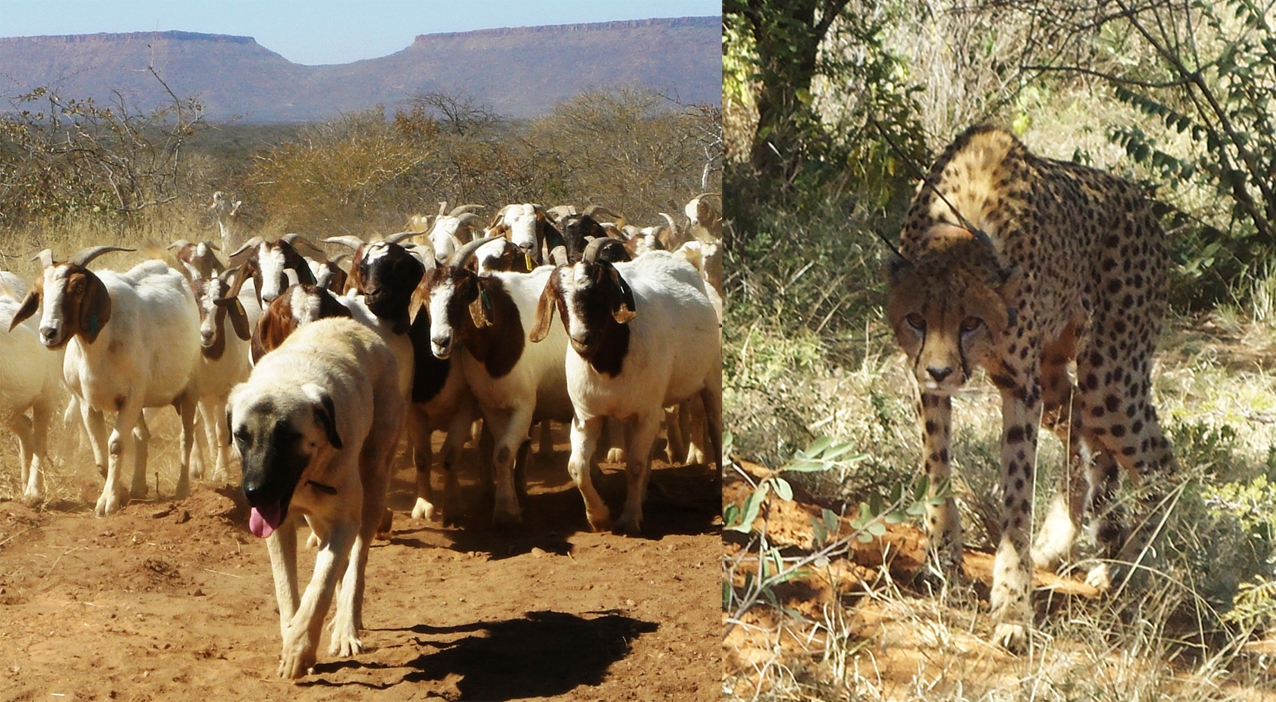
Left: An Anatolian shepherd (a Turkish breed improved in the USA) guiding a herd of boer goats whose flesh is much appreciated by people in Namibia and South Africa. Right: A cheetah carrying a radio-transmitter, within a project assessing range movements of this feline for the Cheetah Conservation Fund. Cheetahs refrain from moving close to the herds when the latter are looked after by the guardian dogs. Photos courtesy of Laurie Marker.

Another corker from Salva. He’s chosen a topic this week that’s near and dear to my brain – the conservation of higher-order predators. As ConBytes readers will know, we’ve talked a lot about human-predator conflict and the inevitable losers in that battle – the (non-human) predators. From dingos to sharks, predator xenophobia is just another way we weaken ecosystems and ultimately harm ourselves.

Rural areas devoted to livestock are part of the natural landscape, so it is inevitable (as well as natural) that predators, livestock and humans interact in such a mosaic of bordering habitats. However, their coexistence remains an unresolved conservation problem. 

When two species, people, political parties, enterprises… want the same thing, they either share it (if possible) or one side eliminates the competitor. The fact that proteins are part of the diet of humans and other carnivore species has resulted in a trophic drama that goes back millennia. Nowadays, predators like eagles, coyotes, lions, wolves and raccoons are credited for attacks on cattle and poultry (and people!) in all continents. This global problem is not only economic, but interlaces culture, emotion, policy and sanitation (1-4). For instance, some carnivores are reservoirs of cattle diseases and contribute to pathogen dispersal (5, 6).

Management options

Managers of natural resources have implemented three strategies to handle these sorts of issues for livestock breeders in general (7). Those strategies can be complementary or exclusive on a case-by-case basis, and are chosen following cost-benefit assessments and depending on the conservation status of the predator species involved. (i) ‘Eradication’ aims to eliminate the predator, which is regarded as noxious and worthless. (ii) ‘Regulation’ allows controlled takes under quota schemes, normally for pre-defined locations, dates and killing methods. ‘Preservation’ is applied in protected areas and/or for rare or endangered species, and often requires monitoring and measures set to prevent illegal harvest or trade. Additionally, many livestock breeders receive money to compensate losses to predators (8).

Many experts now advocate non-lethal (preventive) measures that modify the behaviour of people, livestock or predators (2, 7). The use of livestock-guarding dogs is one of those preventive measures (9). As an example, Laurie Marker (director of the Cheetah Conservation Fund) et al. (10) studied the use of 117 Anatolian shepherds adopted by Namibian rangers between 1995 and 2002 (Fig. 1). In this African country, cheetahs (Acinonyx jubatus) selectively forage on small-sized cattle and juveniles. Despite this feline being protected nationally, Namibian laws authorise rangers to shoot cheetahs in situations of risk to people and their properties, with more than 6,000 cheetahs having been killed in the 1980s alone (11). Through face-to-face interviews, Marker found that since the arrival of the Anatolian shepherds, > 70 % of the rangers perceived a pronounced reduction in cattle mortality (10). Although, the use of livestock-guarding dogs has worked out fine in many places worldwide, it is no panacea. In many other instances, the dogs dissuade some predator species and not others from harassing the livestock, or are only effective in combination with other measures (7, 9). Read the rest of this entry »


Damned by nature; damned by man

26 10 2012

I am a forest officer from India. I want to narrate a story. No, my story is not about elephants or tigers or snakes. Those stories about India are commonplace. I wish to narrate a simple story about people, the least-known part of the marathon Indian fable.

Humans are said to have arrived in India very early in world civilisation. Some were raised here from the seed of their ancestors; others migrated here from all over the world. Over the centuries these people occupied every inch of soil that could support life. The population of India today is 1.2 billion. Each year, India’s population increases by a number nearly equal to the complete population of Australia. Such a prolific growth of numbers is easy to explain; the fertile soil, ample water and tropical warmth of India support the growth of all life forms.

Not all numbers are great, however, and big numbers sometimes exact the price from the wrong persons.

This is my story.

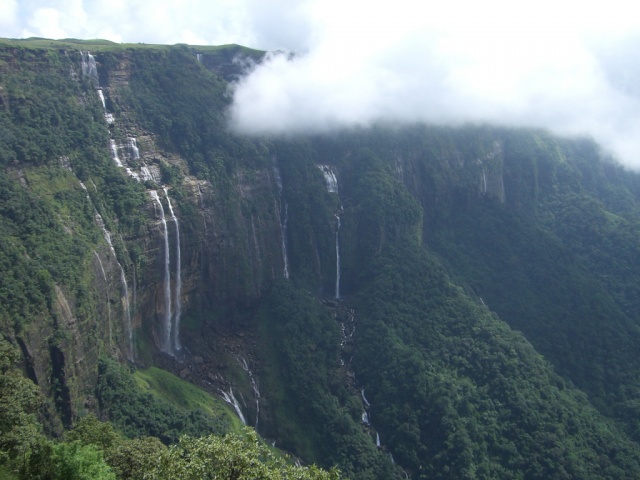
I went to work in the state of Meghalaya in north-eastern India. Pestilence, floods and dense vegetation have made north-eastern India a most inhospitable place. Population is scanty by Indian standards. Life does not extend much beyond the basic chores of finding food and hearth. In the hills, far away from the bustle of modern civilisation, primitive tribal families practice agriculture in its most basic form. Fertilisers are unknown to them, so they cultivate a parcel of land until it loses its fertility, ultimately abandoning it to find other arable land. When the original parcel has finally recovered its fertility after a few years, they move back. It is a ceaseless cycle of migrating back and forth – the so-called practice known as ‘shifting cultivation’.  Ginger, peas, pumpkin, brinjal and sweet potato can be seen growing on numerous slopes in the Garo Hills of Meghalaya beside the huts of the farmers built on stilts, with chickens roosting below.

When I reached Meghalaya and looked about at the kind of world I had never seen before, I admit that I found the tribal folk a little strange. They lived in a way that would have appeared bizarre to a modern community. The people did not seem to know how many centuries had passed them by. For me as a forest officer, what looked worst was that that these people appeared to have no comprehension of the value of forests for the planet. They built their huts with wood. They cooked on firewood. Most of their implements were made of wood. A whole tree would be cut and thrown across the banks to make a bridge over a stream. Above all, their crazy practice of shifting cultivation would ultimately remove all the remaining forest.

I decided my main job in this place was to save the forest from its own people, and we enforced Indian laws to preserve the forests.

On one occasion my staff saw a young local man running with an illegally obtained log of wood and started to chase him, waving their guns in the air to scare him. He ran barefoot amid dense bushes a long distance before we managed to apprehend him. I had bruises on my arms and a leech hanging from my armpit drinking my blood by the time the race was over. I admit that in my anger at the time, I wanted to impale the man to the earth at the spot where he had cut down the tree. It was not the leeches and the bruises that angered me. The tree he was carrying was (until quite recently) in perfect condition.

But Meghalaya isn’t populated solely by subsistence-farming villagers – there are also a few successful traders originally from big cities who have settled in this economically depressed region. They dress smartly and speak impeccable English. At the time, I remembered wondering how these more sophisticated types could be maintaining their relatively lavish lifestyles among the poor villagers who walked barefoot in the dense forests. On a couple of occasions I dropped in at the home of a prominent trader.  He hosted me graciously in his beautiful home. I admit that I enjoyed these visits because they were my only link to the civilisation I had become used to prior to moving to Meghalaya. But I never visited the home of any tribal villager, for what could I talk to them about anyway?

Read the rest of this entry »


Tropical protected areas still in trouble

8 10 2012

© P. Harris

There’s nothing like a bit of good, intelligent and respectful debate in science.

After the publication in Nature of our paper on tropical protected areas (Averting biodiversity collapse in tropical forest protected areas), some interesting discussion has ensued regarding some of our assumptions and validations.

As is their wont, Nature declined to publish these comments (and our responses) in the journal itself, but the new commenting feature at Nature.com allowed the exchange to be published online with the paper. Cognisant that probably few people will read this exchange, Bill Laurance and I decided to reproduce them here in full for your intellectual pleasure. Any further comments? We’d be keen to hear them.

COMMENT #1 (by Hari Sridhar of the Centre for Ecological Sciences at the Indian Institute of Science in Bangalore)

In this paper, Laurance and co-authors have tapped the expert opinions of ‘veteran field biologists and environmental scientists’ to understand the health of protected areas in the tropics worldwide. This is a novel and interesting approach and the dataset they have gathered is very impressive. Given that expert opinion can be subject to all kinds of biases and errors, it is crucial to demonstrate that expert opinion matches empirical reality. While the authors have tried to do this by comparing their results with empirical time-series datasets, I argue that their comparison does not serve the purpose of an independent validation.

Using 59 available time-series datasets from 37 sources (journal papers, books, reports etc.), the authors find a fairly good match between expert opinion and empirical data (in 51/59 cases, expert opinion matched empirically-derived trend). For this comparison to serve as an independent validation, it is crucial that the experts were unaware of the empirical trends at the time of the interviews. However, this is unlikely to be true because, in most cases, the experts themselves were involved in the collection of the time-series datasets (at least 43/59 to my knowledge, from a scan of references in Supplementary Table 1). In other words, the same experts whose opinions were being validated were involved in collection of the data used for validation.

OUR RESPONSE (William F. Laurance, Corey J. A. Bradshaw, Susan G. Laurance)

Sridhar raises a relevant point but one that, on careful examination, does not weaken our validation analysis. Read the rest of this entry »


Ecology is a Tower of Babel

17 09 2012

The term ‘ecology’ in 16 different languages overlaid on the oil on board ‘The Tower of Babel’ by Flemish Renaissance painter Pieter Bruegel the Elder (1563).

In his song ‘Balada de Babel’, the Spanish artist Luis Eduardo Aute sings several lyrics in unison with the same melody. The effect is a wonderful mess. This is what the scientific literature sounds like when authors generate synonymies (equivalent meaning) and polysemies (multiple meanings), or coin terms to show a point of view. In our recent paper published in Oecologia, we illustrate this problem with regard to ‘density dependence’: a key ecological concept. While the biblical reference is somewhat galling to our atheist dispositions, the analogy is certainly appropriate.

A giant shoal of herring zigzagging in response to a predator; a swarm of social bees tending the multitudinous offspring of their queen; a dense pine forest depriving its own seedlings from light; an over-harvested population of lobsters where individuals can hardly find reproductive mates; pioneering strands of a seaweed colonising a foreign sea after a transoceanic trip attached to the hulk of boat; respiratory parasites spreading in a herd of caribou; or malaria protozoans making their way between mosquitoes and humans – these are all examples of population processes that operate under a density check. The number of individuals within those groups of organisms determines their chances for reproduction, survival or dispersal, which we (ecologists) measure as ‘demographic rates’ (e.g., number of births per mother, number of deaths between consecutive years, or number of immigrants per hectare).

In ecology, the causal relationship between the size of a population and a demographic rate is known as ‘density dependence’ (DD hereafter). This relationship captures the pace at which a demographic rate changes as population size varies in time and/or space. We use DD measurements to infer the operation of social and trophic interactions (cannibalism, competition, cooperation, disease, herbivory, mutualism, parasitism, parasitoidism, predation, reproductive behaviour and the like) between individuals within a population1,2, because the intensity of these interactions varies with population size. Thus, as a population of caribou expands, respiratory parasites will have an easier job to disperse from one animal to another. As the booming parasites breed, increased infestations will kill the weakest caribou or reduce the fertility of females investing too much energy to counteract the infection (yes, immunity is energetically costly, which is why you get sick when you are run down). In turn, as the caribou population decreases, so does the population of parasites3. In cybernetics, such a toing-and-froing is known as ‘feedback’ (a system that controls itself, like a thermostat controls the temperature of a room) – a ‘density feedback’ (Figure 1) is the kind we are highlighting here. Read the rest of this entry »


The invisible hand of ecosystem services

4 08 2012

I’ve just spent nearly an entire week trying to get my head around ecosystem services (ES).

You’d think that would have been a given based on my experience, my research, my writings and the fact that I’ve just spent the last week with 400 ES specialists from around the world at the 5th international Ecosystem Services Partnership (ESP) Conference in Portland, Oregon, USA.

Well, prior to this week I thought I knew what ES were, but now I think I’m just a little more confused.

Of course, I’m not talking about the concept of ES or what they are (hell, I’ve written enough about them on this blog and in my papers); my problem is understanding how we as society end up valuing them in a practical, sensible and feasible way.

So I’m going to describe the ESP Conference as I saw it, and not necessarily in chronological order.

First up is the term ‘ecosystem services’ itself – horrible name, and something rammed home again after attending the conference. Most people on the planet that are not scientists (that would be nearly everyone) just might have the most tenuous and ethereal of grasps of ‘ecosystem’ in the first place, and I’d bet that 99 % of most undergraduate students couldn’t provide a comprehensive description. This is because ecosystems are mind-bogglingly, chaotically and awesomely complex. Just ask any ecosystem ecologist.

The second part of the term – services – is particularly offensive in its presumption and arrogance. It’s not like you ring up an ecosystem and get it to clean your carpets, or fill your water tank or gas cylinder. No, the natural world did not evolve to pamper humanity; we are merely part of it (and bloody efficient at modifying it, I might add).

So try to sell this ‘incredibly complex thingy’ that is ‘there to do some (intangible) shit for us’ to the public, policy makers and politicians, and you mostly get a dog’s regurgitated breakfast and some blank, slack-jawed stares. Read the rest of this entry »


Threats to biodiversity insurance from protected areas

26 07 2012

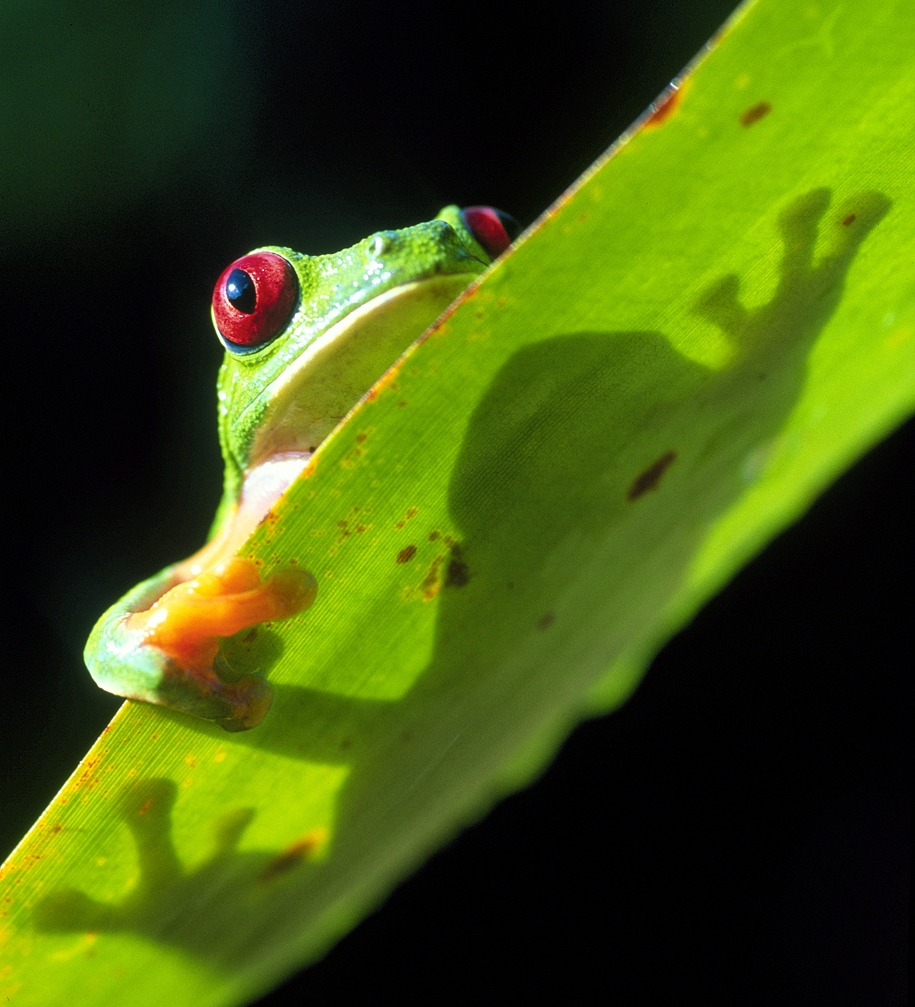
A red-eyed tree frog (Agalychnis callidryas) from Barro Colorado Island in Panama. This small island, just 1500 ha (3700 acres) in area, is one of the tropical protected areas evaluated in this study (photo © Christian Ziegler <zieglerphoto@yahoo.co>, Smithsonian Tropical Research Institute). Note: It is prohibited for any third party or agency to use or license this image; any use other then described above shall be subject to usage fees as determined solely by the photographer.

Much of conservation science boils down to good decision making: when, where and how we ‘set aside’ terrestrial or marine areas for specific protection against the ravages of human endeavour. This is the basis for the entire sub-discipline of conservation planning and prioritisation, and features prominantly in most aspects of applied conservation and restoration.

In other words, we do all this science to determine where we should emplace protected areas, lobby for getting more land and sea set aside so that we have ‘representative’ amounts (i.e., to prevent extinctions), and argue over the best way to manage these areas once established.

But what if this pinnacle of conservation achievement is itself under threat? What if many of our protected areas are struggling to insure biodiversity against human consumption? Well, it’d be a scary prospect, to say the least.

Think of it this way. We buy insurance policies to buffer our investments against tragedy; this applies to everything from our houses, worldly possessions, cars, livestock, health, to forest carbon stores. We buy the policies to give us peace of mind that in the event of a disaster, we’ll be bailed out of the mess with a much-needed cash injection. But what if following the disaster we learn that the policy is no good? What if there isn’t enough pay-out to fix the mess?

In biodiversity conservation, our ‘insurance’ is largely provided by protected areas. We believe that come what may, at least in these (relatively) rare places, biodiversity will persist despite our relentless consumerism.

Unfortunately, what we believe isn’t necessarily true.

Today I’m both proud and alarmed to present our latest research on the performance of tropical protected areas around the world. Published online in Nature this morning (evening, for you Europeans) is the 216-author (yes, that is correct – 216 of us) paper entitled “Averting biodiversity collapse in tropical forest protected areas” led by Bill Laurance. Read the rest of this entry »


Empty seas coming to a shore near you

12 07 2012

Last week I had the pleasure of entertaining some old friends and colleagues for a writing workshop in Adelaide (don’t worry – they all came from southern Australia locations, so no massive carbon footprints for overseas travel). I’m happy to report it was a productive (and epicurean) week, but that’s not really the point of today’s post.

One of those participants was long-time colleague, Dr. Rik Buckworth. Rik and I first met in Darwin back in the early 2000s when he was lead fisheries scientist for Northern Territory Fisheries; this collaboration and friendship blossomed into an ARC Linkage Project (with Dr. Mark Meekan of AIMS) on shark fisheries (see some of the scientific outputs from that here, here, here and here). Rik has since moved to CSIRO in Brisbane, but keeps a hand in NT fisheries’ affairs. Incidentally, Rik trained under one of the most well-known fisheries modellers in the world – Carl Walters – when he did his PhD at the University of British Columbia back in the early 1990s.

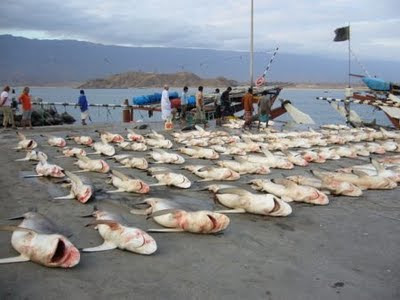
During our workshop, Rik pointed out a paper he had co-authored back in 2009 in Reviews in Fish Biology and Fisheries that had completely escaped my attention – it’s a frightening and apocalyptic view of the Australasian marine tropics that seems to confirm our predictions about northern Australia’s marine future. Just take a look at the following two figures from their paper (Elasmobranchs in southern Indonesian fisheries: the fisheries, the status of the stocks and management options): Read the rest of this entry »


Get boreal

7 06 2012

I’ve been a little quiet this last week because I’ve had to travel to the other side of the planet for what turned out to be a very interesting and scientifically lucrative workshop. After travelling 31 hours from Adelaide to Umeå in northern Sweden, I wondered to myself if it was going to be worth it for a 2.5-day workshop on a little island (Norrbyskär) in the Baltic Sea (which, as it turned out, didn’t have internet access).

The answer is a categorical ‘yes’!

Many of you know that I’ve dabbled in boreal forest conservation in the past, but I could never claim any real expertise in the area. Hence it came as something of a shock when Jon Moen of Umeå University asked me to attend a specialist workshop focused loosely on making the plight and importance of the boreal forest more widely acknowledged. I dragged my feet initially, but Jon convinced me that I could add something to the mix.

It was a small workshop, but well-represented by all boreal countries save Norway (i.e., we had Russians, Swedes, Finns, Canadians and Americans – this Australian was indeed the odd one out). We also had a wide array of expertise, from carbon accountants, political scientists, political economists, native cultures experts, ecologists to foresters. Our mandate – justify why we should pay more attention to this globally important region.

Just how important is the boreal forest? We managed to unearth some little-appreciated facts: Read the rest of this entry »


It couldn’t have been us!

29 05 2012

A few months ago I asked Chris Johnson of the University of Tasmania to put together a post on his recent Science paper regarding Australian megafaunal extinctions. It seems that it stirred, yet again, some controversy among those who refuse to accept (mainly archaeologists) that humans could have had anything to do with pre-European extinctions. Indeed, how could humans possibly have anything to do with extinctions?!

Like Corey, I am mainly interested in current environmental problems. But now and then I wade into the debate over the extinction of Australia’s Pleistocene megafauna [editor’s note: Chris literally wrote the book on Australian mammal extinctions over the last 50,000 years], those huge animals that wandered over the Australian landscape until about 40,000 years ago.

This is an endlessly fascinating topic. The creatures were wonderful and bizarre – it’s great fun doing work that lets you think about marsupial lions, giant kangaroos, geese bigger than emus, echidnas the size of wombats, and the rest. The cause of their extinction is perhaps the biggest mystery, and the most vexed controversy, in the environmental history of Australia. And for reasons that I will explain in a minute, solving this mystery is profoundly important for our understanding of contemporary Australian ecology.

The latest bit of work on this is a paper that a group of us (including Corey’s close colleague, Barry Brook) published in Science. You can see it here (if you don’t have access to Science, email me for a copy). So far, research on this problem has concentrated on dating fossils to find out when megafauna species went extinct. Several recent studies have found evidence for extinction between 40,000 and 50,000 years ago, which is about when people first came to Australia. But the conclusion that people caused a mass extinction of megafauna has been strenuously criticised, because so far it is based on only a few species with good collections of dates. The critics argue that other species disappeared before humans arrived, maybe in an extended series of extinctions caused by something else, like a deteriorating climate.

This argument over fossils will be with us for a long time. Because finding and dating fossils is such hard, slow work, the fossil record will inevitably give a seriously incomplete picture of what happened. One way around this problem would be to analyse the fossil record using mathematical approaches that take into account the problem of incomplete sampling. Corey is lead author of a recent paper that introduced a great new set of tools for this, and we are part of a group that is currently assembling a complete database of all recent dates on Australian fossils so that we can analyse them using these tools. Stay tuned for the result. Read the rest of this entry »


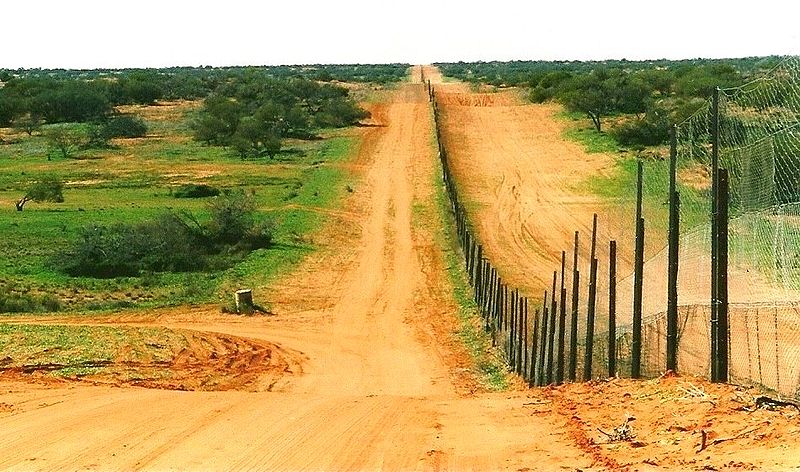
Can Australia afford the dingo fence?

18 05 2012

I wrote this last night with Euan Ritchie of Deakin University in response to some pretty shoddy journalism that misrepresented my comments (and Euan’s work). Our article appeared first in The Conversation this morning (see original article).

We feel we have to set the record straight after some of our (Bradshaw’s) comments were taken grossly out of context, or not considered at all (Ritchie’s). A bubbling kerfuffle in the media over the last week compels us to establish some facts about dingoes in Australia, and more importantly, about how we as a nation choose to manage them.

A small article in the News Ltd. Adelaide Advertiser appeared on 11 May in which one of us (Bradshaw) was quoted as advocating the removal of the dingo fence because it was not “cost effective” (sic). Despite nearly 20 minutes on the telephone explaining to the paper the complexities of feral animal management, the role of dingoes in suppressing feral predators, and the “costs” associated with biodiversity enhancement and feral control, there wasn’t a single mention of any of this background or justification.

Another News Ltd. article denouncing Ritchie’s work on the role of predators in Australian ecosystems appeared in The Weekly Times the day before, to which Ritchie responded in full.

So it’s damage control, and mainly because we want to state categorically that our opinion is ours alone, and not that of our respective universities, schools, institutes or even Biosecurity SA (which some have claimed or insinuated, falsely, that we represent). Biosecurity SA is responsible for, inter alia, the dingo fence in South Australia. Although our opinions differ on its role, we are deeply impressed, grateful and supportive of their work in defending us from biological problems. Read the rest of this entry »


Sharks: the world’s custodians of fisheries

5 05 2012

Today’s post comes from Salvador Herrando-Pérez (who, incidentally, recently submitted his excellent PhD thesis).

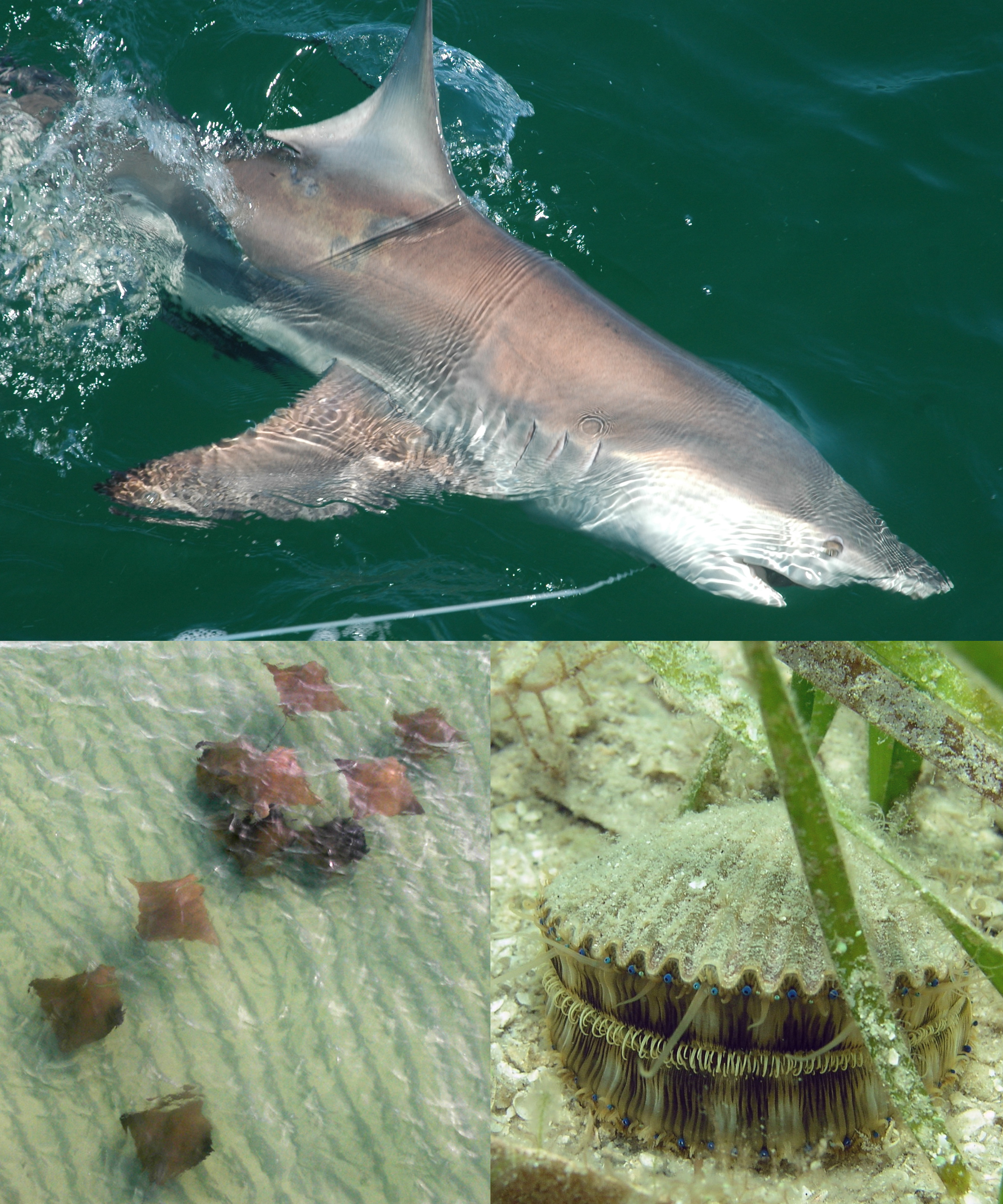
Three species co-occurring in the Gulf of Mexico and involved in the trophic cascade examined by Myers et al. (8). [1] Black-tips (Carcharhinus limbatus) are pelagic sharks in warm and tropical waters worldwide; they reach < 3 m in length, 125 kg in weight, with a maximum longevity in the wild of ~ 12 years; a viviparous species, with females delivering up to 10 offspring per parturition. [2] The cownose ray (Rhinoptera bonasus) is a tropical species from the western Atlantic (USA to Brazil); up to 2 m wide, 50 kg in weight, and 18 years of age; gregarious, migratory and viviparous, with one single offspring per litter. [3] The bay scallop (Agropecten irradians) is a protandric (hermaphrodite) mollusc, with sperm being released a few days before the (> 1 million) eggs; commonly associated with seagrasses in the north-western Atlantic; shells can reach up to 10 cm and individuals live for < 2 years. In the photos, a black-tip angled in a bottom long-line off Alabama (USA), a school of cownose rays swimming along Fort Walton Beach (Florida, USA), and a bay scallop among fronds of turtle grass (Thalassia testudinum) off Hernando County (Florida, USA). Photos by Marcus Drymon, Dorothy Birch and Janessa Cobb, respectively.

The hips of John Travolta, the sword of Luke Skywalker, and the teeth of Jaws marked an era. I still get goose pimples with the movie soundtrack (bass, tuba, orchestra… silence) solemnizing each of the big shark’s attacks. The media and cinema have created the myth of man’s worst friend. This partly explains why shark fishing does not trigger the same societal rejection as the hunting of other colossuses such as whales or elephants. Some authors contend that we currently live in the sixth massive extinction event of planet Earth (1) 75 % of which is strongly driven by one species, humans, and characterized by the systematic disappearance of mega-animals in general (e.g., mammoths, Steller’s seacow), and predators in particular, e.g., sharks (2, 3).

The selective extirpation of apex predators, recently coined as ‘trophic downgrading’, is transforming habitat structure and species composition of many ecosystems worldwide (4). In the marine realm, over the last half a century, the main target of the world’s fisheries has turned from (oft-large body-sized) piscivorous to planctivorous fish and invertebrates, indicating that fishery fleets are exploiting a trophic level down to collapse, then harvesting the next lower trophic level (5-7).

Myers et al. (8) illustrate the problem with the fisheries of apex-predator sharks in the northeastern coast of the USA. Those Atlantic waters are rife with many species of shark (> 2 m), whose main prey are smaller chondrichthyans (skates, rays, catsharks, sharks), which in turn prey on bottom fishes and bivalves. Myers et al. (8) found that, over the last three decades, the abundance of seven species of large sharks declined by ~ 90 %, coinciding with the crash of a centenary fishery of bay scallops (Agropecten irradians). Conversely, the abundance of 12 smaller chondrichthyes increased dramatically over the same period of time. In particular, the cownose ray (Rhinoptera bonasus), the principal predator of bay scallops, might today exceed > 40 million individuals in some bays, and consume up to ~ 840,000 tonnes of scallops annually. The obvious hypothesis is that the reduction of apex sharks triggers the boom of small chondrichthyans, hence leading to the break-down of scallop stocks. Read the rest of this entry »


The wounded soldiers of biodiversity

10 04 2012

Here’s another great post from Salvador Herrando-Pérez. It is interesting that he’s chosen an example species that was once (a long, long time ago in a galaxy far, far away) of great interest to me (caribou – see ancient papers a, b, c, d). But that is another story. Take it away, Salva.


Figure 1. Caribou (reindeer) are ungulates weighing up to ~ 100 kg. They live in tundra and taiga in Finland, Greenland, Finland, Norway, Mongolia, Russia, Canada and USA (extinct in Sweden). The species is globally stable (‘Least Concern’, IUCN Red List), but the subspecies of woodland caribou (Rangifer tarandus caribou) is threatened in North America. Schneider and colleagues’ 7 study encompasses ~ 3,000 individuals in 12 herds (75 to 450 individuals per herd), occupying ~ 100.000 km2 of conifer forest and peatland (3,000 to 19,000 km2 per herd). Two ecotypes are recognized regionally22, namely migratory mountain herds (mostly from mountains and foothills in west-central Alberta), and non-migratory boreal herds (mostly from peatlands in central and northern Alberta). The photo shows a group of caribous grazing on subalpine vegetation from Tonquin Valley, Jasper National Park (Alberta, Canada). Photo courtesy of Saakje Hazenberg.

As conservation biology keeps incorporating management and economical principles from other disciplines, it stumbles with paradoxes such that investing on the most threatened components of biodiversity might in turn jeopardize the entire assets of biodiversity.

At the end of 2011, newspapers and TVs echoed an IUCN report cataloguing as ‘extinct’ or ‘near extinct’ several subspecies of rhinos in Asia and Africa. To many, such news might have invoked the topic: “how badly governments do to protect the environment”. However if, to avoid those extinctions, politicians had to deviate funds from other activities, what thoughts would come to the mind of workers whose salaries had to be frozen, school directors whose classroom-roof leakages could not be repaired (e.g., last winter at my niece’s school in Spain), colonels whose last acquisition of ultramodern tanks had to be delayed, or our city council’s department who had to cancel Sting’s next performance.

Thus, there are three unquestionable facts regarding species conservation:

  1. the protection of species costs money;
  2. governments and environmental organisations have limited budgets for a range of activities they deem necessary; and
  3. our way of conserving nature is failing because, despite increasing public/private support and awareness, the rate of destruction of biodiversity is not decelerating1,2.

One of the modern debates among conservationists pivots around how to use resources efficiently3-6. Schneider and colleagues7 have dealt with this question for woodland caribou (Rangifer tarandus) in Canada. A total of 18 populations of this ungulate persist in the Canadian province of Alberta, all undergoing demographic declines due to mining extractions (oil, gas and bitumen), logging and wolf predation. The species is listed as ‘threatened’ regionally and nationally. The Alberta Caribou Recovery Plan (2004-2014) is attempting to protect all herds. Under such a framework, Schneider et al.7 predicted that woodland caribou would be regionally extirpated in less than a century.

Furthermore, they estimated the costs of making each herd viable (Fig. 1), with a triple revelation. To save all herds from extinction would need ~ CA$150,000 million (beyond the available budget). The most threatened herds are among the most expensive to protect (within present management approach). Some herds would be secured through modest investment for two decades. Overall, their study suggests that Alberta’s woodland caribou would be eligible for triage, i.e., at the subpopulation level8. Read the rest of this entry »


Eat a feral a week

22 03 2012

© Y. Sugiura

Just a quick post this week about something I’ve been contemplating for a while.

What if every Australian pledged to eat a feral animal a week?

Yes, I know that it’s a bit out of the pitch, and I’m sure not everyone would do it. Nor would it be physically possible for one person to eat an entire camel, buffalo or deer in a week – but hopefully you get the picture.

Why propose this? Australia is quite over-run with feral animals. Some quick stats:

Now we have, of course, many other ferals (cats, rats, foxes, mice), but I don’t think too many people would want to eat them. I have personally eaten feral pigs, camels, buffalo, goats, and red, fallow and sambar deer, mostly from my own research trips or from friends who hunt. Read the rest of this entry »


Worlds collide: greenwashed development to kill biodiversity

15 03 2012

Another development fiasco that, if it goes ahead, will devastate a Biodiversity Hotspot and ultimately, reduce the livelihood prospects of millions of West Africans.

In yet another move to expose and shame the greedy developers behind another massive (and superlatively greenwashed) oil palm development in the tropics (see our previous Open Letter), Bill Laurance and Josh Linder have organised another Open Letter from some of the world’s top conservation scientists (again, I count myself fortunate to be included in that group) denouncing the project. The press release is below, followed by the letter itself:

Eleven of the world’s top scientists have produced an open letter to the public urging the Cameroon government to stop a giant oil palm plantation that they say will threaten some of Africa’s most important protected areas.

The project, sponsored by a subsidiary of U.S. agribusiness giant Herakles Farms in collaboration with a U.S. nonprofit organization, All for Africa, would span 70,000 hectares (154,000 acres), an area nearly the size of New York City.

“It’s simply frightening in scope,” said Thomas Struhsaker, a leading expert on African primates and rainforest ecology at Duke University in North Carolina, USA, who has worked in the region for nearly a half-century.

The project would destroy a critical forested area that currently links five national parks or protected areas in Cameroon, say the scientists.

“These forests are vital for wildlife, including the African elephant, chimpanzee and drill, all threatened or endangered species,” said anthropologist Joshua Linder of James Madison University in Virginia, USA, who has helped coordinate the protest. “These animals rely on the forests that would be destroyed to survive and move among the parks.”

“This area is a biodiversity hotspot, some of the world’s most biologically important real estate,” said tropical ecologist William Laurance of James Cook University in Australia, who studies threats to wildlife in the Congo Basin.

“There’s no way a project like this would be allowed in most countries, because the price for biodiversity is just too high,” said Laurance.

The project has been promoted in Cameroon as environmentally sustainable, but the scientists heatedly disagree. “Those promoting this project are misleading everyone—especially the people and government of Cameroon,” said Linder. “They claim the forests they want to clear are mostly logged and degraded, but we’ve shown clearly that they include lots of tall, dense forest that’s vital for wildlife and nature conservation.” Read the rest of this entry »