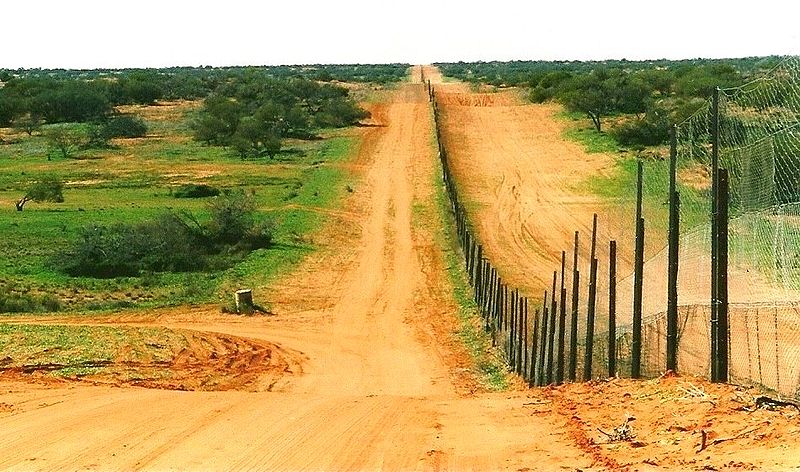
Can Australia afford the dingo fence?

18 05 2012

I wrote this last night with Euan Ritchie of Deakin University in response to some pretty shoddy journalism that misrepresented my comments (and Euan’s work). Our article appeared first in The Conversation this morning (see original article).

We feel we have to set the record straight after some of our (Bradshaw’s) comments were taken grossly out of context, or not considered at all (Ritchie’s). A bubbling kerfuffle in the media over the last week compels us to establish some facts about dingoes in Australia, and more importantly, about how we as a nation choose to manage them.

A small article in the News Ltd. Adelaide Advertiser appeared on 11 May in which one of us (Bradshaw) was quoted as advocating the removal of the dingo fence because it was not “cost effective” (sic). Despite nearly 20 minutes on the telephone explaining to the paper the complexities of feral animal management, the role of dingoes in suppressing feral predators, and the “costs” associated with biodiversity enhancement and feral control, there wasn’t a single mention of any of this background or justification.

Another News Ltd. article denouncing Ritchie’s work on the role of predators in Australian ecosystems appeared in The Weekly Times the day before, to which Ritchie responded in full.

So it’s damage control, and mainly because we want to state categorically that our opinion is ours alone, and not that of our respective universities, schools, institutes or even Biosecurity SA (which some have claimed or insinuated, falsely, that we represent). Biosecurity SA is responsible for, inter alia, the dingo fence in South Australia. Although our opinions differ on its role, we are deeply impressed, grateful and supportive of their work in defending us from biological problems. Read the rest of this entry »


The wounded soldiers of biodiversity

10 04 2012

Here’s another great post from Salvador Herrando-Pérez. It is interesting that he’s chosen an example species that was once (a long, long time ago in a galaxy far, far away) of great interest to me (caribou – see ancient papers a, b, c, d). But that is another story. Take it away, Salva.


Figure 1. Caribou (reindeer) are ungulates weighing up to ~ 100 kg. They live in tundra and taiga in Finland, Greenland, Finland, Norway, Mongolia, Russia, Canada and USA (extinct in Sweden). The species is globally stable (‘Least Concern’, IUCN Red List), but the subspecies of woodland caribou (Rangifer tarandus caribou) is threatened in North America. Schneider and colleagues’ 7 study encompasses ~ 3,000 individuals in 12 herds (75 to 450 individuals per herd), occupying ~ 100.000 km2 of conifer forest and peatland (3,000 to 19,000 km2 per herd). Two ecotypes are recognized regionally22, namely migratory mountain herds (mostly from mountains and foothills in west-central Alberta), and non-migratory boreal herds (mostly from peatlands in central and northern Alberta). The photo shows a group of caribous grazing on subalpine vegetation from Tonquin Valley, Jasper National Park (Alberta, Canada). Photo courtesy of Saakje Hazenberg.

As conservation biology keeps incorporating management and economical principles from other disciplines, it stumbles with paradoxes such that investing on the most threatened components of biodiversity might in turn jeopardize the entire assets of biodiversity.

At the end of 2011, newspapers and TVs echoed an IUCN report cataloguing as ‘extinct’ or ‘near extinct’ several subspecies of rhinos in Asia and Africa. To many, such news might have invoked the topic: “how badly governments do to protect the environment”. However if, to avoid those extinctions, politicians had to deviate funds from other activities, what thoughts would come to the mind of workers whose salaries had to be frozen, school directors whose classroom-roof leakages could not be repaired (e.g., last winter at my niece’s school in Spain), colonels whose last acquisition of ultramodern tanks had to be delayed, or our city council’s department who had to cancel Sting’s next performance.

Thus, there are three unquestionable facts regarding species conservation:

  1. the protection of species costs money;
  2. governments and environmental organisations have limited budgets for a range of activities they deem necessary; and
  3. our way of conserving nature is failing because, despite increasing public/private support and awareness, the rate of destruction of biodiversity is not decelerating1,2.

One of the modern debates among conservationists pivots around how to use resources efficiently3-6. Schneider and colleagues7 have dealt with this question for woodland caribou (Rangifer tarandus) in Canada. A total of 18 populations of this ungulate persist in the Canadian province of Alberta, all undergoing demographic declines due to mining extractions (oil, gas and bitumen), logging and wolf predation. The species is listed as ‘threatened’ regionally and nationally. The Alberta Caribou Recovery Plan (2004-2014) is attempting to protect all herds. Under such a framework, Schneider et al.7 predicted that woodland caribou would be regionally extirpated in less than a century.

Furthermore, they estimated the costs of making each herd viable (Fig. 1), with a triple revelation. To save all herds from extinction would need ~ CA$150,000 million (beyond the available budget). The most threatened herds are among the most expensive to protect (within present management approach). Some herds would be secured through modest investment for two decades. Overall, their study suggests that Alberta’s woodland caribou would be eligible for triage, i.e., at the subpopulation level8. Read the rest of this entry »


Give way to the invader

25 01 2012

By weird coincidence, Salvador Herrando-Pérez (student blogger extra-ordinaire – see his previous posts on evolution, pollination, bird losses, taxonomic inflation, niche conservatism, historical biogeography, ecological traps and ocean giants) has produced a post this week expanding on the problem of roads. Also weirdly coincidental is that both Salva and I are in his home country of Spain this week.

Australia’s > 800,000-km road network would go 60 times around the equator of our planet. Confined to the boundaries of any one country, roads are a conspicuous component of the landscape, and shape the dispersion, survival and reproduction of many plants and animals in urban and remote areas.

Those who drive (or are driven by) will be familiar with the image of a crushed kangaroo on the roadside (a hedgehog in Europe), or the sticky mosaic of insects smashed against the windscreen after a high-speed run. Mortality by collision is one of the many effects that roads can have on the demography of organisms – including humans. Those effects encompass

  • physical alteration of terrestrial and aquatic habitats,
  • chemical pollution leakage during road construction and maintenance, and from asphalt compounds during storms,
  • alteration of animal behaviour (e.g., change in home range, or in patterns of flight or vocalisation),
  • access to remote areas by hunters, fishermen and gatherers in general, and
  • intense habitat fragmentation1-3.

However, some species get around those negative impacts by using the roads as pathways to new territories, thereby eluding barriers like seas, mountains, rivers, dense vegetation, or competition for vital resources with other species. Read the rest of this entry »


Surgical conservation: gain requires some pain

21 12 2011

© 2008-2011 ~Hiuki http://fav.me/d1j3ns9

I apologise to CB readers for the unusually low frequency of posts this month. With the International Congress for Conservation Biology taking up a lot of my time earlier this month, and the standard palaver of xmas preparations (i.e., getting shit done before the end of the year), I’m afraid the blog has taken a back seat. Now officially ‘on leave’ (whatever that means for an academic), I have found a brief window during which I can put a few thoughts together.

For this post I must take you back to October 2011 when, if you were in Australia, you might have heard about the so-called ‘debacle‘ of the Macquarie Island rabbit/rate/mouse-eradication programme in which it was identified that a few thousand seabirds had become the collateral damage.

To recap, an intense poisoning programme was initiated on subantarctic Macquarie Island to eradicate these pests after years of massive environmental degradation had finally forced the government’s (of Tasmania and the Commonwealth) hand to do something. What caught my eye in all this was the sheer stupidity and politicking associated with the programme, in which hyper-conservative Eric Abetz (Liberal Senator for Tasmania) managed to turn this amazing success into a Labor-bashing political sledge-hammer.

Abetz is no stranger to anti-environmentalism and fights vehemently for Tasmania’s forest-raping industry; he considers political parties such as the Greens, environmental groups such as The Wilderness Society and pro-democracy groups such as Get Up! his mortal enemies. He’s even had a go at esteemed author Richard Flanagan for supporting the anti-deforestation movement in Tasmania! Read the rest of this entry »


Where are they? Finding (and conserving) the biggest fish in the sea

16 11 2011

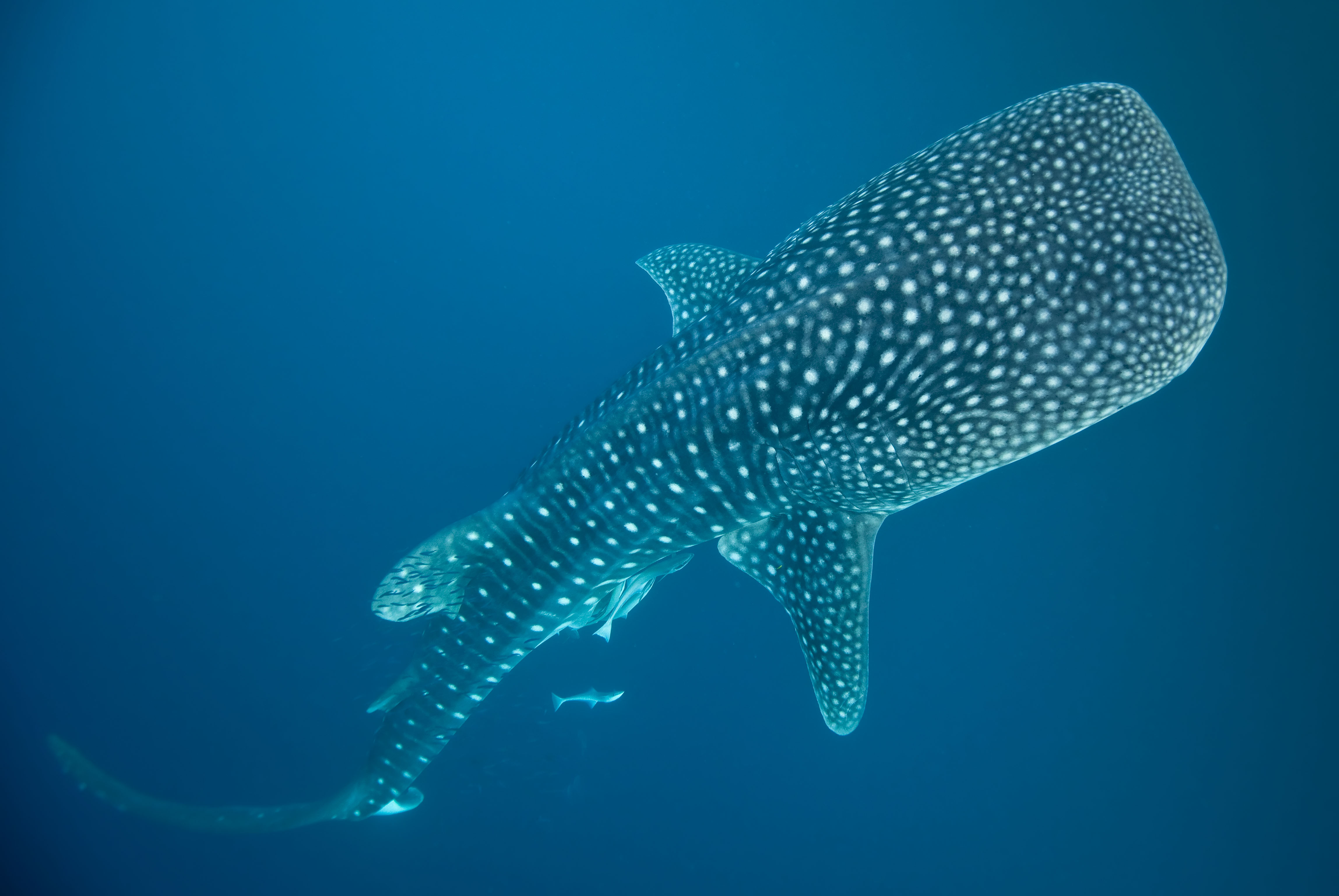
A post from my PhD student, Ana Sequeira, on her latest paper just out in Diversity and DistributionsOcean-scale prediction of whale shark distribution.

© W Osborn (AIMS)

The ocean is our major source of water, it stabilises our breathable atmosphere and provides many supplies such as medicines (e.g., anti-cancer therapy drugs1) and food. Despite its the importance for human life, many marine species are now at a high risk of extinction owing to human changes to the oceans.

The whale shark (Rhincodon typus, Smith 1828) – an icon of the oceans of a spectacularly huge size and docile character – is just one of those species.

Despite being a fish that many people (mainly in Southeast Asia) are happy to have on their plate, whale sharks are worth millions of dollars every year in the ecotourism industry worldwide. One would then expect that being such a profitable species, their ecology would be well known and thoroughly studied.

The reality is quite different.

Basic information on whale sharks such as the whereabouts of their breeding areas, the average number of offspring per female, or even how many individuals still exist, is not currently known. Moreover, despite the genetic evidence that whale sharks worldwide are connected among different oceans, it is unclear if they move from places where they are protected to places where they are still illegally fished.

Information on distribution and patterns of occurrence in space and time is essential for conservation, and can help to save entire ecosystems if used correctly, for example: to isolate important mating and breeding areas.

To identify the whale shark’s seasonal distribution patterns in the Indian Ocean, to test if records follow a decreasing trend over time, and if occurrence is related to variation in climatic signals, we used multivariate distribution models of seasonal and inter-annual whale shark sightings opportunistically collected over 17 years by the tuna purse-seine fishery. Read the rest of this entry »


Oceans need their giants

2 11 2011

Another great post from Salvador Herrando Pérez.

from adsown.blogspot.com

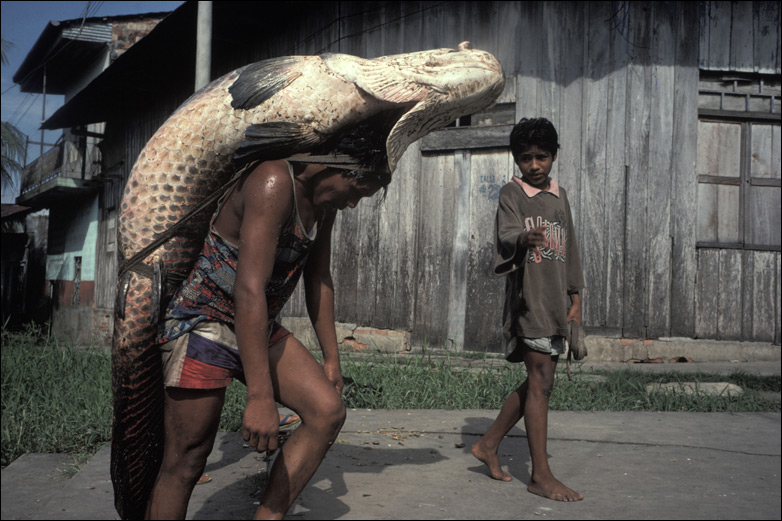
Commercial and sport fishing establish minimum body sizes for catches of many species to preserve fish stocks. Recent work reveals that sustainable fisheries also depend on the regulation of the harvest of the biggest fish, at least in long-lived species.

Growing up in Spain in the 1980s, I was taken by a Spanish television spot featuring a shoal of little fish sucking colourful dummies, and at the same time (how they managed, I never questioned) singing the motto Little fish? No, thanks. The then Ministry of Agriculture, Fishery and Food created this media campaign to create awareness among consumers not to buy immature fish at local markets – “…a 60-gram hake will only weigh 2 kg after two years” the add stated.

Indeed, the regulation of fish harvest by age classes is substantial to any fishery. In particular, the protection of younger fish has been a beacon of fishery policy and management that dates back to the 19th century when, among others, the British ichthyologist Ernst Holt concluded that: “…it is desirable that fish should have a chance of reproducing their species at least once before they are destroyed” 1. Very much in line with such principles, conventional fish stock management has in practice neglected the mature age classes2, other than for the fact that they are the end point of extraction and what we consumers eat on the table. Read the rest of this entry »


Crocodiles, spiders and leeches

11 04 2011

I just wrote a fun little piece for a new section in the journal Frontiers in Ecology and the Environment that they’re calling Trails and Tribulations. The basic idea is that the author recounts a particularly interesting field-related experience through which an ecological concept is woven.

Editor-in-Chief Sue Silver said that I could reproduce my article here as long as I acknowledged Frontiers and the Ecological Society of America. It was fun to write, and I hope you enjoy it too [the PDF of the article is available free of charge here].

“So does each team get a hand gun?”

“No, you get an oar”

“What good is an oar?”

“Listen, mate. When a 3-metre croc jumps out of the swamp at you, there is nothing more natural in the world than to thump him with a big stick. It’s an autonomous response. With a gun, IF you manage to keep it dry, and IF you manage to get it out in time before the croc bites off your head, chances are you’ll just shoot the bloke in front of you anyway. So you get an oar.”

“Fair enough”.

That is an approximate, paraphrased reproduction of the initial conversation I had with renowned Australian crocodile biologist, Grahame Webb, just prior to my first (and as it turns out, only) trip to collect crocodile eggs for his Darwin wildlife park and crocodile farm. I volunteered to take part in the collection because I had recently begun working with Grahame and his team tracking the world’s largest crocodile species – the saltwater or estuarine crocodile Crocodylus porosus – and modelling aspects of its populations (Bradshaw et al. 2006). Having already been out on several occasions to harpoon and satellite-tag animals (some measuring > 4 m) on the Mary River, and cage-trap others in Kakadu National Park, I thought a little egg collection would be a proverbial walk in the park. Little did I know that it would end up being one of my more memorable experiences.

Let me walk you through the process. First, you wait until the height of the wet season and drive out as far as you can toward the breeding swamp of interest (in this case, Melacca Swamp in the Adelaide River flood plain, about one hour’s drive from Darwin). Then you and two other loonies pile into a small helicopter equipped with landing pontoons which ferries you to one of many previously identified crocodile nests. Because there is usually too much vegetation around the nest itself, the helicopter must land about 100-300 m away. Clothed only in long pants, a long-sleeved shirt and cotton gloves to protect your skin from the slicing blade grass, you jump off the helicopter’s pontoons into impenetrably murky, chest-deep water. One of the team drags an esky (chiller box into which eggs will be placed) and another carries an oar. As the noise of the departing helicopter becomes a faint buzz, you suddenly realise via the rapid expansion of your terminal sphincter that you are in the middle of a crocodile-filled swamp – and you are holding an oar. Read the rest of this entry »


Build a bridge out of ‘er

12 03 2011

Apologies to Monty Python and my poor attempt to make the over-used expression ‘bridging the gap’ humorous.

Today’s guest post comes from across the Pacific Ocean. Dr. Sara Maxwell is a postdoctoral fellow with Marine Conservation Biology Institute and University of California Santa Cruz, Long Marine Laboratory. She was kind enough to contribute to ConservationBytes.com about an issue I’ve covered before in various forms – making conservation research relevant for conservation action.

© R. Arlettaz

In a catalyzing article titled “From publications to public actions: when conservation biologists bridge the gap between research and implementation” in the November 2010 issue of BioScience, Raphaël Arlettaz1 and his colleagues Michael Schaub2, Jérôme Fournier3, Thomas Reichlin2, Antoine Sierro4, James Watson5 and Veronika Braunisch2 explore reasons for our hard work as conservation biologists not reaching the implementation phase. This article strongly resonated with my colleague, Kiki Jenkins6 and I, Sara Maxwell. This resulted in a series of letters published in BioScience and now we join together, along with Jeffrey Camm7, Guillaume Chapron8, Liana Joseph9, and Rudi Suchant10 to synthesize our ideas and present them to the larger conservation community via ConservationBytes.

The article that sparked the discussion

In their article, Arlettaz and colleagues highlight some of the main roadblocks to implementing conservation research. The main reasons are that:

  1. The research made by conservation biologists’ does not lend itself well to implementation, i.e., as a community we often focus on the wrong questions or address them in ways that do not lead to practical applications for practitioners;
  2. The outcomes of conservation biologists’ research tends not to reach practitioners and so fails to be put into action;
  3. When we successfully align and collaborate with practitioners, there is a lack of economic or political support to make the changes that need to happen; or
  4. Conservation biologists do not commit to engaging themselves in the implementation of their recommendations due to a lack of reward structure for this behaviour and the conflicting roles of academia and conservation.

Arlettaz and colleagues illustrate how to overcome these roadblocks using a case study of their own work on the endangered hoopoe (Upupa epops) in Switzerland, showing how they followed through the recommendations of their work to implementation and had a direct impact on species recovery. They highlight means by which other conservation biologists can do the same.

Read the rest of this entry »


What the hell is a banteng?

21 02 2011

A few years ago (ok, 6 years), ABC‘s Catalyst did a piece on our banteng research programme in Garig Gunak Barlu National Park in the Northern Territory. The show basically talks about the conservation and management conundrum of having a successful feral species in Australia that is also highly endangered in its native range (South East Asia). Do we shoot them all, or legislate them as an endangered species? It’s for Australians to decide.

I finally got around to uploading it on Youtube. I hope I haven’t contravened some copyright law, but I figure after such a lag, no one will care. I await the imminent contradiction from the ABC’s lawyers…

I hope you enjoy.

For the scientific papers arising from the work, see: Read the rest of this entry »


Biodiversity begins at home

20 01 2011

A few months ago I was involved in a panel discussion entitled ‘Biodiversity begins at home’ held at the Royal Institution of Australia in Adelaide and sponsored by the Don Dunstan Foundation.

The main thrust of the evening was to have both academic (me & Andy Lowe) and on-the-ground, local conservationists (Sarah Lance, Craig Gillespie and Matt Turner) talk about what people can do to stem the tide of biodiversity loss. The video is now available, so I thought I’d reproduce it here. We talked about a lot of issues (from global to local scale), so if you have a spare hour, you might get something out of this. I did, but it certainly wasn’t long enough to discuss such big issues.

Warning – this was supposed to be more of a discussion and less of a talkfest; unfortunately, many of the panel members seemed to forget this and instead dominated the session. We really needed 4 hours to do this properly (but then, who would have watched the video?).

Read the rest of this entry »


Conservation is all about prioritisation

4 12 2010

Another great guest post from a previous contributor, Piero Visconti.

Biodiversity conservation is about prioritisation – making difficult choices.

With limited money and so many habitats and species in need of protection, deciding where not to expend resources is as important as deciding where to act. Saying ‘no’ will be crucial for ensuring the persistence of biodiversity and ecosystem services, simply because as individuals who value conservation, we will always be tempted to try and save everything.

In the words of Frederick the Great: “He who defends everything, defends nothing.”

As a result, much recent conservation planning research has focused on offering managers general and flexible tools for deciding which conservation features should be the highest priority. Intuitively, we should direct our resources towards areas that have high biodiversity values, and that are likely to be lost if the forces of conservation do not intervene (the most ‘vulnerable’ land parcels). This approach is known as the ‘minimize loss’ approach. Imagine we are worried about the loss of rare native vegetation in the face of ongoing urban expansion (e.g., Melbourne’s western grasslands). To minimize loss, managers would pre-emptively protect sites that are most likely to be developed. But is this decision to race the bulldozers always the best idea? How much does this choice depend on our assumptions about how land is protected, how land developers behave, and the accuracy of our future predictions? Read the rest of this entry »


Webinar: Modelling water and life

27 08 2010

Another quick one today just to show the webinar of my recent 10-minute ‘Four in 40’ talk sponsored by The Environment Institute and the Department for Water. This seminar series was entitled ‘Modelling as a Tool for Decision Support’ held at the Auditorium, Royal Institution Australia (RiAus).

“Four in 40″ is a collaboration between The University of Adelaide and the Department for Water, where 4 speakers each speak for 10 minutes on their research and its implications for policy. The purpose is to build understanding of how best to work with each other, build new business for both organisations and raise awareness of activity being undertaken in water/natural resource management policy and research.

CJA Bradshaw


Linking disease, demography and climate

1 08 2010

Last week I mentioned that a group of us from Australia were travelling to Chicago to work with Bob Lacy, Phil Miller, JP Pollak and Resit Akcakaya to make some pretty exciting developments in next-generation conservation ecology and management software. Also attending were Barry Brook, our postdocs: Damien Fordham, Thomas Prowse and Mike Watts, our colleague (and former postdoc) Clive McMahon, and a student of Phil’s, Michelle Verant. At the closing of the week-long workshop, I thought I’d share my thoughts on how it all went.

In a word, it was ‘productive’. It’s not often that you can spend 1 week locked in a tiny room with 10 other geeks and produce so many good and state-of-the-art models, but we certainly achieved more than we had anticipated.

Let me explain in brief why it’s so exciting. First, I must say that even the semi-quantitative among you should be ready for the appearance of ‘Meta-Model Manager (MMM)’ in the coming months. This clever piece of software was devised by JP, Bob and Phil to make disparate models ‘talk’ to each other during a population projection run. We had dabbled with MMM a little last year, but its value really came to light this week.

We used MMM to combine several different models that individually fail to capture the full behaviour of a population. Most of you will be familiar with the individual-based population viability (PVA) software Vortex that allows relatively easy PVA model building and is particular useful for predicting extinction risk of small populations. What you most likely don’t know exists is what Phil, Bob and JP call Outbreak – an epidemiological modelling software based on the classic susceptible-exposed-infectious-recovered framework. Outbreak is also an individual-based model that can talk directly to Vortex, but only through MMM. Read the rest of this entry »


Conservation research rarely equals conservation

21 07 2010

This post was chosen as an Editor's Selection for ResearchBlogging.org

I am currently attending the 2010 International Meeting of the Association for Tropical Biology and Conservation (ATBC) in Sanur, Bali (Indonesia). As I did a few weeks ago at the ICCB in Canada, I’m tweeting and blogging my way through.

Yesterday I attended a talk by my good friend Trish Shanley (formerly of CIFOR) where she highlighted the disconnect between conservation research and actual conservation. I’ve posted about this before (see Out of touch, impractical and irrelevantMake your conservation PhD relevant), but this was a sobering reminder of how conservation research can be a self-perpetuating phenomenon and often not touch the people who need it most.

Presenting the highlights of her paper published earlier this year in Biotropica entitled Out of the loop: why research rarely reaches policy makers and the public and what can be done, one comment she made during the talk that really caught my attention was the following (I’m paraphrasing, of course).

Most of the world’s poor living off the land are unconcerned about biodiversity per se. As conservationists we should not therefore adopt the typical preamble that biodiversity (e.g., forests) represent the “lungs of our planet” – what people (and especially women) need to know is how biodiversity loss affects “food for my children”.

The paper itself was an interview 268 researchers from 29 countries (of which I was one) about their views on the relevance of their work. Not surprisingly (but amazingly that we were so honest), most respondents stated that their principal target was other scientists, with policy makers and other marginalised groups/local people holding a distant second place. Corporate targets were also pretty rare – I guess we feel as a group that that’s generallly a lost cause.
Neither a surprise was that we generally view peer-reviewed scientific publications as the main vehicle for the dissemination of our results. What was a bit of a surprise though is that we fully admit papers aren’t the best way to trickle down the information (again, more of that brutal honesty); apparently we mainly believe ‘stakeholder meetings’
are more effective (I have my doubts).


Put the bite back into biodiversity conservation

2 07 2010

Today’s guest post is by Dr. Euan Ritchie, formerly of James Cook University, but who is now firmly entrenched at Deakin University in Victoria as a new Lecturer in ecology. Euan’s exciting research over the course of his memorable PhD (under the tutelage of renowned ecologist-guru, Professor Chris Johnson) has produced some whoppingly high-impact research. This latest instalment highlights a series of related papers he and his colleagues have just produced. We’re fortunate he agreed to give us his thoughts. Interestingly, the topic was just highlighted in the last issue of NatureDon’t damage dingos.

Corey has invited me to report on a recent paper published in Ecology Letters and another related study in PloS One, which together show how a better understanding of dingoes and their social structure and associated behaviour can help us to maintain or improve the health of our terrestrial ecosystems. This work, led by PhD student Arian Wallach (University of Adelaide), and involving collaborations with John Read (University of Adelaide), Adam O’Neill (C&A Environmental Services) and Christopher Johnson and me (James Cook University), offers some of the strongest evidence yet of the key roles top predators play in maintaining the balance.

Invasive species, along with habitat loss and the impacts of climate change, are among the greatest threats to the continued survival of many species. Because of this, millions of dollars and time is spent each year to control their populations. The impacts of invasive species in Australia are sadly all too obvious, with nearly half of the world’s mammal extinctions in the last 200 years occurring in Australia, with the prime suspects being the introduced domestic cat and red fox. However, despite massive, costly and ongoing attempts to control fox and cat populations successfully, we continue to witness the decline of many of our native species. Why? We would argue that the problem is that for too long much of our conservation and management efforts have been focused on treating symptoms and not the cause, which is the loss of ecosystem resilience (the natural ability of ecosystems to withstand change).

Read the rest of this entry »


Fanciful mathematics and ecological fantasy

3 05 2010

© flickr/themadlolscientist

Bear with me here, dear reader – this one’s a bit of a stretch for conservation relevance at first glance, but it is important. Also, it’s one of my own papers so I have the prerogative :-)

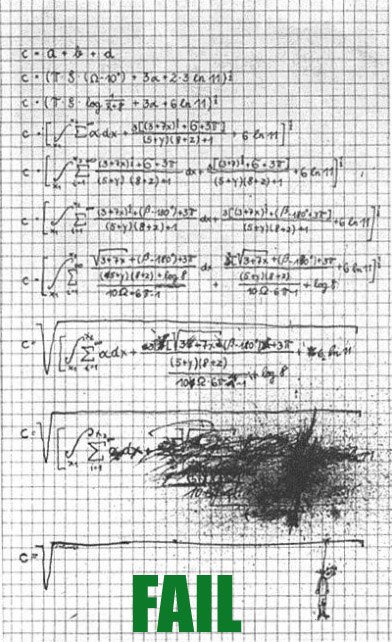
As some of you probably know, I dabble quite a bit in population dynamics theory, which basically means examining the mathematics people use to decipher ecological patterns. Why is this important? Well, most models predicting extinction risk, estimating optimal harvest rates, determining minimum viable population size and metapopulation dynamics for species’ persistence rely on good mathematical abstraction to be realistic. Get the maths wrong, and you could end up overharvesting a species (e.g., 99.99 % of fisheries management), underestimating extinction risk from habitat degradation, and getting your predictions wrong about the effects of invasive species. Expressed as an equation itself, (conservation) ecology = mathematics.

A long-standing family of models known as ‘phenomenological’ models (i.e., because they deal with the phenomenon of population size which is an emergent property of the mechanisms of birth, death and immigration) has been used to estimate everything from maximum sustainable yield targets, temporal abundance patterns, wildlife management interventions, extinction risk to epidemiological patterns. The basic form of the model describes the growth response, or the relationship between the population’s rate of change (growth) and its size. The simplest form (known as the Ricker), assumes a linear decline in population growth rate (r) as the number of individuals increases, which basically means that populations can’t grow indefinitely (i.e., they fluctuate around some carrying capacity if unperturbed). Read the rest of this entry »


Make your conservation PhD relevant

23 04 2010

The other day I was approached by two PhD candidates from James Cook University in the ARC Centre of Excellence for Coral Reef Studies who requested I publish a short article they put together on making conservation PhDs relevant while achieving academic excellence. I’m delighted to say that I found the article very well written and topical, so I am pleased to present it in full here.

© J. Cham

Make your conservation PhD relevant – bridging the research-implementation gap

Duan Biggs & Tom Brewer

ARC Centre of Excellence for Coral Reef Studies, James Cook University, Townsville, Queensland, Australia

A recent paper, in Biotropica’s special issue on bridging the research-implementation gap (Duchelle et al. 2009) included examples of postgraduate students in the University of Florida’s Tropical Conservation and Development Program contributing to knowledge exchange with local stakeholders. The authors argue that this experience, during training, enables postgraduate students to develop their skills to confront the elaborate set of management and policy issues that will be present through their careers. We agree with Duchelle and her co-authors’ arguments, but believe that further discussion is required on finding the balance between the requirements of academic training and knowledge sharing with conservation stakeholders at the PhD level specifically.

Earning a PhD requires a novel theoretical contribution to a specific field of knowledge, and the practical value or contribution of that knowledge is of secondary importance, or irrelevant. Therefore, finding synergies between the requirements of academia and knowledge sharing can be particularly challenging at the PhD level. Yet, we believe that in an applied science like conservation, the quality of research and training will be enhanced through being more explicit about how to synergise a scientific contribution worthy of a PhD degree with related practical skills like knowledge sharing. In support of our argument, we propose the following six questions that PhD candidates, together with their academic supervisors, can consider during research design to enhance their contribution to knowledge exchange whilst meeting the requirements of academic training: Read the rest of this entry »


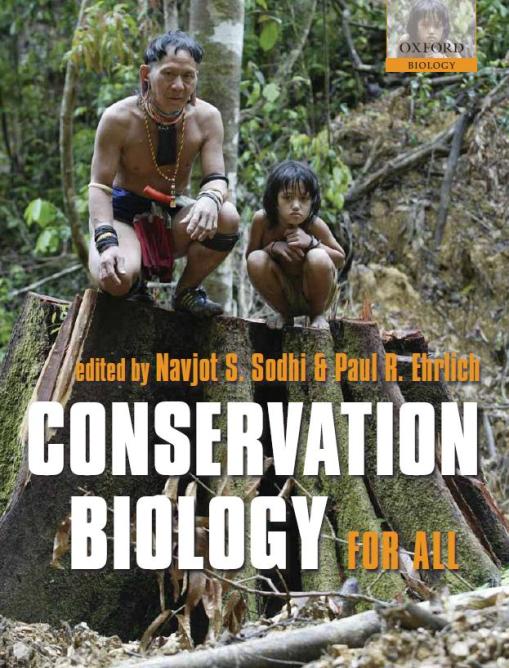
Conservation Biology for All

26 12 2009

A new book that I’m proud to have had a hand in writing is just about to come out with Oxford University Press called Conservation Biology for All. Edited by the venerable Conservation Scholars, Professors Navjot Sodhi (National University of Singapore) and Paul Ehrlich (Stanford University), it’s a powerhouse of some of the world’s leaders in conservation science and application.

The book strives to “…provide cutting-edge but basic conservation science to a global readership”. In short, it’s written to bring the forefront of conservation science to the general public, with OUP promising to make it freely available online within about a year from its release in early 2010 (or so the rumour goes). The main idea here is that those in most need of such a book – the conservationists in developing nations – can access the wealth of information therein without having to sacrifice the village cow to buy it.

I won’t go into any great detail about the book’s contents (mainly because I have yet to receive my own copy and read most of the chapters!), but I have perused early versions of Kevin Gaston‘s excellent chapter on biodiversity, and Tom Brook‘s overview of conservation planning and prioritisation. Our chapter (Chapter 16 by Barry Brook and me), is an overview of statistical and modelling philosophy and application with emphasis on conservation mathematics. It’s by no means a complete treatment, but it’s something we want to develop further down the track. I do hope many people find it useful.

I’ve reproduced the chapter title line-up below, with links to each of the authors websites.

  1. Conservation Biology: Past and Present (C. Meine)
  2. Biodiversity (K. Gaston)
  3. Ecosystem Functions and Services (C. Sekercioglu)
  4. Habitat Destruction: Death of a Thousand Cuts (W. Laurance)
  5. Habitat Fragmentation and Landscape Change (A. Bennett & D. Saunders)
  6. Overharvesting (C. Peres)
  7. Invasive Species (D. Simberloff)
  8. Climate Change (T. Lovejoy)
  9. Fire and Biodiversity (D. Bowman & B. Murphy)
  10. Extinctions and the Practice of Preventing Them (S. Pimm & C. Jenkins)
  11. Conservation Planning and Priorities (T. Brooks)
  12. Endangered Species Management: The US Experience (D. Wilcove)
  13. Conservation in Human-Modified Landscapes (L.P. Koh & T. Gardner)
  14. The Roles of People in Conservation (A. Claus, K. Chan & T. Satterfield)
  15. From Conservation Theory to Practice: Crossing the Divide (M. Rao & J. Ginsberg)
  16. The Conservation Biologist’s Toolbox – Principles for the Design and Analysis of Conservation Studies (C. Bradshaw & B. Brook)

As you can see, it’s a pretty impressive collection of conservation stars and hard-hitting topics. Can’t wait to get my own copy! I will probably blog individual chapters down the track, so stay tuned.

CJA Bradshaw

Add to FacebookAdd to NewsvineAdd to DiggAdd to Del.icio.usAdd to StumbleuponAdd to RedditAdd to BlinklistAdd to Ma.gnoliaAdd to TechnoratiAdd to Furl


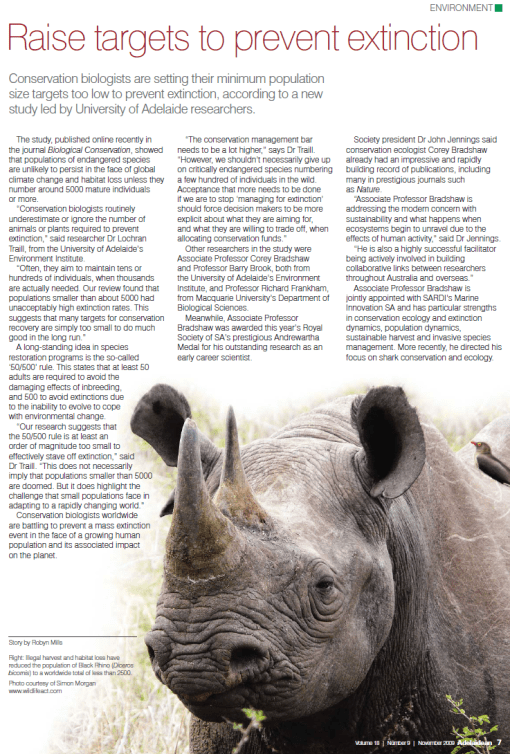
Raise targets to prevent extinction

12 11 2009

I know I’ve blogged recently about this, but The Adelaidean did a nice little article that I thought I’d reproduce here. The source can be found here.

Adelaidean story Nov 2009


Susceptibility of sharks, rays and chimaeras to global extinction

10 11 2009
tiger shark

© R. Harcourt

Quite some time ago my colleague and (now former) postdoctoral fellow, Iain Field, and I sat down to examine in gory detail the extent of the threat to global populations of sharks, rays and chimaeras (chondrichthyans). I don’t think we quite realised the mammoth task we had set ourselves. Several years and nearly a hundred pages later, we have finally achieved our goal.

Introducing the new paper in Advances in Marine Biology entitled Susceptibility of sharks, rays and chimaeras to global extinction by Iain Field, Mark Meekan, Rik Buckworth and Corey Bradshaw.

The paper covers the following topics:

  • Chondrichthyan Life Historyangel shark
  • Niche breadth
  • Age and growth
  • Reproduction and survival
  • Past and Present Threats
  • Fishing
  • Beach meshing
  • Habitat loss
  • Pollution and non-indigenous species
  • Chondrichthyan Extinction Risk
  • Drivers of threat risk in chondrichthyans and teleosts
  • Global distribution of threatened chondrichthyan taxa
  • Ecological, life history and human-relationship attributes
  • Threat risk analysis
  • Relative threat risk of chondrichthyans and teleosts
  • Implications of Chondrichthyan Species Loss on Ecosystem Structure, Function and Stability
  • Ecosystem roles of predators
  • Predator loss in the marine realm
  • Ecosystem roles of chondrichthyans
  • Synthesis and Knowledge Gaps
  • Role of fisheries in future chondrichthyan extinctions
  • Climate change
  • Extinction synergies
  • Research needs

common skateAs mentioned, quite a long analysis of the state of sharks worldwide. Bottom line? Well, as most of you might already know sharks aren’t doing too well worldwide, with around 52 % listed on the IUCN’s Red List of Threatened Species. This compares interestingly to bony fishes (teleosts) that, although having only 8 % of all species Red-Listed, are generally in higher-threat Red List categories. We found that body size (positively) and geographic range (negatively) correlated with threat risk in both groups, but Red-Listed bony fishes were still more likely to be categorised as threatened after controlling for these effects.

blue sharkIn some ways this sort of goes against the notion that sharks are inherently more extinction-prone than other fish – a common motherhood statement seen at the beginning of almost all papers dealing with shark threats. What it does say though is that because sharks are on average larger and less fecund than your average fish, they tend to bounce back from declines more slowly, so they are more susceptible to rapid environmental change than your average fish. Guess what? We’re changing the environment pretty rapidly.

We also determined the spatial distribution of threat, and found that Red-Listed species are clustered mainly in (1) south-eastern South America; (2) western Europe and the Mediterranean; (3) western Africa; (4) South China Sea and South East Asia and (5) south-eastern Australia.

shark market, Indonesia

© W. White

Now, what are the implications for the loss of these species? As I’ve blogged recently, the reduction in predators in general can be a bad thing for ecosystems, and sharks are probably some of the best examples of ecosystem structural engineers we know (i.e., eating herbivores; ‘controlling’ prey densities, etc.). So, we should be worried when sharks start to disappear. One thing we also discovered is that we still have a rudimentary understanding of how climate change will affect sharks, the ways in which they structure ecosystems, and how they respond to coastal development. Suffice it to say though that generally speaking, things are not rosy if you’re a shark.

We end off with a recommendation we’ve been promoting elsewhere – we should be managing populations using the minimum viable population (MVP) size concept. Making sure that there are a lot of large, well-connected populations around will be the best insurance against extinction.

CJA Bradshaw

Add to FacebookAdd to NewsvineAdd to DiggAdd to Del.icio.usAdd to StumbleuponAdd to RedditAdd to BlinklistAdd to Ma.gnoliaAdd to TechnoratiAdd to Furl

ResearchBlogging.orgI.C. Field, M.G. Meekan, R.C. Buckworth, & C.J.A. Bradshaw (2009). Susceptibility of Sharks, Rays and Chimaeras to Global Extinction Advances in Marine Biology, 56, 275-363 : 10.1016/S0065-2881(09)56004-X