Terrestrial biodiversity’s only chance is avoided deforestation

24 01 2014

farming forestsToday I was shocked, stunned and pleasantly (for a change) surprised. Australia has its first ‘avoided deforestation’ carbon farming project.
It is understandable that this sort of news doesn’t make the Jane & Joe Bloggs of the world stand up and cheer, but it should make conservation biologists jump for bloody joy.

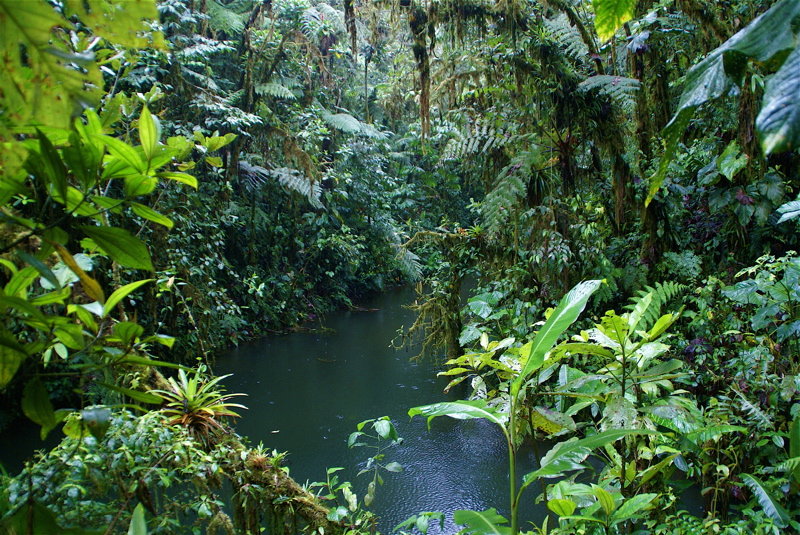
So why exactly am I so excited about the setting aside of a mere 9000 ha (90 km2, or 10 × 9 km) of semi-arid scrub in western New South Wales? It’s simple – nothing can replace the biodiversity or carbon value of primary forest. In other words, forest restoration – while laudable and needed – can never achieve what existing forest already does. We know now from various parts of the world that biodiversity is nearly always much higher in primary forest, and that the carbon structure of the forest (especially below-ground carbon) can take centuries to recover.

Another problem with restoration – and if you’ve ever been involved in any tree planting yourself, you’ll know what I mean – is that it’s incredibly expensive, time-consuming and slow. Wouldn’t it make more financial sense just to save forests instead of trying to rebuild them?

Of course it is, so the logical conclusion from a conservation perspective is to save primary forest first, then worry about restoration next. The problem is, there are few, if any, financial incentives for keeping forests standing in the private sector. The stumbling rise of the carbon economy is a potential resolution to this problem, although neither the Kyoto Protocol nor most national carbon-trading schemes adequately account for the carbon value of existing forests.

Up until today, even Australia didn’t have any examples.

Read the rest of this entry »


More species = more resilience

8 01 2014

reef fishWhile still ostensibly ‘on leave’ (side note: Does any scientist really ever take a proper holiday? Perhaps a subject for a future blog post), I cannot resist the temptation to blog about our lab’s latest paper that just came online today. In particular, I am particularly proud of Dr Camille Mellin, lead author of the study and all-round kick-arse quantitative ecologist, who has outdone herself on this one.

Today’s subject is one I’ve touched on before, but to my knowledge, the relationship between ‘diversity’ (simply put, ‘more species’) and ecosystem resilience (i.e., resisting extinction) has never been demonstrated so elegantly. Not only is the study elegant (admission: I am a co-author and therefore my opinion is likely to be biased toward the positive), it demonstrates the biodiversity-stability hypothesis in a natural setting (not experimental) over a range of thousands of kilometres. Finally, there’s an interesting little twist at the end demonstrating yet again that ecology is more complex than rocket science.

Despite a legacy of debate, the so-called diversity-stability hypothesis is now a widely used rule of thumb, and its even implicit in most conservation planning tools (i.e., set aside areas with more species because we assume more is better). Why should ‘more’ be ‘better’? Well, when a lot of species are interacting and competing in an ecosystem, the ‘average’ interactions that any one species experiences are likely to be weaker than in a simpler, less diverse system. When there are a lot of different niches occupied by different species, we also expect different responses to environmental fluctuations among the community, meaning that some species inherently do better than others depending on the specific disturbance. Species-rich systems also tend to have more of what we call ‘functional redundancy‘, meaning that if one species providing an essential ecosystem function (e.g., like predation) goes extinct, there’s another, similar species ready to take its place. Read the rest of this entry »


King for a day – what conservation policies would you make?

29 11 2013

CrownI have been thinking a lot lately about poor governance and bad choices when it comes to biodiversity conservation policy. Perhaps its all that latent anger arising from blinkered, backward policies recently implemented by conservative state and national governments in Australia and elsewhere that leads me to contemplate: What would I do if I had the power to change policy?

While I am certain I have neither the experience or complete knowledge to balance national budgets, ensure prosperity and maintain the health of an entire country, I do have some ideas about what we’re doing wrong conservation-wise, and how we could potentially fix things. This is not meant to be an exhaustive list – it is more a discussion point where people can suggest their own ideas.

So here are 16 things I’d change or implement (mainly in Australia) if I were king for a day:

Read the rest of this entry »


Conservation: So easy a child could do it

13 09 2013

child's playI don’t like to talk about my family online. Call me paranoid, but there are a lot of crazy people out there who don’t like what scientists like me are saying (bugger the evidence). Yes, like many climate scientists, I’ve also been threatened. That’s why my personal life remains anonymous except for a select group of people.

But I’ve mentioned my daughter before on this blog, and despite a few people insinuating that I am a bad parent because of what I said, I am happy that I made the point that climate change is a scary concept of which our children must at least be cognisant.

My daughter’s story today is a little less confronting, but equally enlightening. It’s also a little embarrassing as a scientist who has dedicated my entire research career to the discipline of conservation biology.

As a normal six year-old without the ability to refrain from talking – even for a moment – I hear a lot of stories. Many of them are of course fantastical and ridiculous, but those are just part of a healthy, imaginative childhood (I am proud to say though that she is quite clear about the non-existence of fictitious entities like faeries, easter bunnies and gods).

Every once in a while, however, there are snippets of wisdom that ooze out from the cracks in the dross. In the last few months, my daughter has independently and with no prompting from me come up with two pillars of conservation science: (i) protected areas and (ii) biodiversity corridors. Read the rest of this entry »


Guilty until proven innocent

18 07 2013

precautionary principleThe precautionary principle – the idea that one should adopt an approach that minimises risk – is so ingrained in the mind of the conservation scientist that we often forget what it really means, or the reality of its implementation in management and policy. Indeed, it has been written about extensively in the peer-reviewed conservation literature for over 20 years at least (some examples here, here, here and here).

From a purely probabilistic viewpoint, the concept is flawlessly logical in most conservation questions. For example, if a particular by-catch of a threatened species is predicted [from a model] to result in a long-term rate of instantaneous population change (r) of -0.02 to 0.01 [uniform distribution], then even though that interval envelops r = 0, one can see that reducing the harvest rate a little more until the lower bound is greater than zero is a good idea to avoid potentially pushing down the population even more. In this way, our modelling results would recommend a policy that formally incorporates the uncertainty of our predictions without actually trying to make our classically black-and-white laws try to legislate uncertainty directly. Read the rest of this entry »


Relaxed laws imperil Australian wildlife

28 06 2013
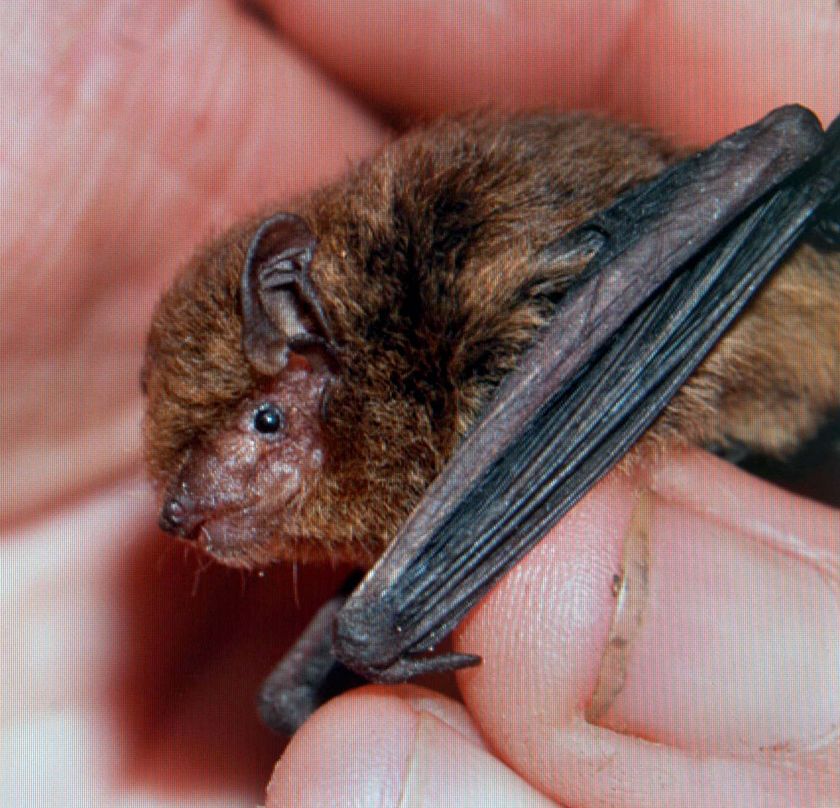
Christmas Island pipistrelle bat (Pipistrellus murrayi). © M. Schultz

Christmas Island pipistrelle bat (Pipistrellus murrayi). © M. Schultz

On the continuing theme of the demise of laws designed to protect Australian biodiversity (see here, here and here), I’m reproducing our latest Nature Correspondence on the issue. I know this might be slightly dodgy to do so, but given that it’s only a Correspondence, I don’t think I’ll get in too much trouble. Besides, it’s too important an issue to hide away behind paywalls.

Policy and legislative changes by Australia’s state governments are eroding the vital protection of the country’s unique biodiversity.

Reserves are being opened up to ecologically disruptive activities, such as grazing by domestic livestock, logging, mining, recreational hunting and fishing, and commercial development. Protected habitats on private and leasehold land are imperilled too. Queensland and Victoria, for example, are relaxing hard-won laws that limit vegetation clearance on private land, further accelerating the loss of regional biodiversity.

Collectively, these actions increase the pressure on biodiversity conservation in protected areas, many of which are already showing biodiversity loss (for example, the Kakadu National Park in northern Australia). Ecological connectivity is being lost, which will hamper the dispersal of species and their ability to respond to climate-change effects. Read the rest of this entry »


Australia’s national parks aren’t ‘national’ at all

14 06 2013

Yarra-Ranges-National-Park-AustraliaFollowing our The Conversation article a few weeks ago about the rapid demise of national parks in Australia, a few of us (me, Euan Ritchie & Emma Johnston) wrote a follow-up piece on the Australia’s national park misnomer (published simultaneously on The Conversation).

Australia boasts over 500 national parks covering 28 million hectares of land, or about 3.6% of Australia. You could be forgiven for thinking we’re doing well in the biodiversity-conservation game.

But did you know that of those more than 500 national parks, only six are managed by the Commonwealth Government? For marine parks, it’s a little more: 61 of the 130-plus are managed primarily by the Commonwealth. This means that the majority of our important biodiversity refuges are managed exclusively by state and territory governments. In other words, our national parks aren’t “national” at all.

In a world of perfect governance, this wouldn’t matter. But we’re seeing the rapid “relaxation” of laws designed to protect our “national” and marine parks by many state governments. Would making all of them truly national do more to conserve biodiversity?

One silly decision resulting in a major ecosystem disturbance in a national park can take decades if not hundreds of years to heal. Ecosystems are complex interactions of millions of species that take a long time to evolve – they cannot be easily repaired once the damage is done.

Almost overnight, Queensland, New South Wales and Victoria have rolled back nearly two centuries of park protection. What’s surprising here is that many of our conservation gains in the last few decades (for example, the Natural Heritage Trust, the National Reserve System, the Environment Protection and Biodiversity Conservation Act and a national marine reserve network) originated from Coalition policies. Read the rest of this entry »


Our national parks must be more than playgrounds or paddocks

24 05 2013

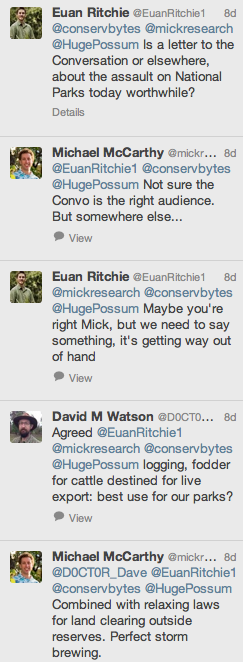
Convo TweetsIt’s interesting when a semi-random tweet by a colleague ends up mobilising a small army of scientists to get pissed off enough to co-write an article. Euan Ritchie of Deakin University started it off, and quickly recruited me, Mick McCarthy, David Watson, Ian Lunt, Hugh Possingham, Bill Laurance and Emma Johnston to put together the article. It’s a hugely important topic, so I hope it generates a lot of discussion and finally, some bloody action to stop the rapid destruction of this country’s national parks system.

Note: Published simultaneously on The Conversation.

It’s make or break time for Australia’s national parks.

National parks on land and in the ocean are dying a death of a thousand cuts, in the form of bullets, hooks, hotels, logging concessions and grazing licences. It’s been an extraordinary last few months, with various governments in eastern states proposing new uses for these critically important areas.

Australia’s first “National Park”, established in 1879, was akin to a glorified country club. Now called the “Royal National Park” on the outskirts of Sydney, it was created as a recreational escape for Sydney-siders, with ornamental plantations, a zoo, race courses, artillery ranges, livestock paddocks, deer farms, logging leases and mines.

Australians since realised that national parks should focus on protecting the species and natural landscapes they contain. However, we are now in danger of regressing to the misguided ideals of the 19th Century.

Parks under attack

In Victoria, new rules will allow developers to build hotels and other ventures in national parks. In New South Wales, legislation has been introduced to allow recreational shooting in national parks, and there is pressure to log these areas too. Read the rest of this entry »


Learning from danger

13 05 2013
Guanaco fleeing
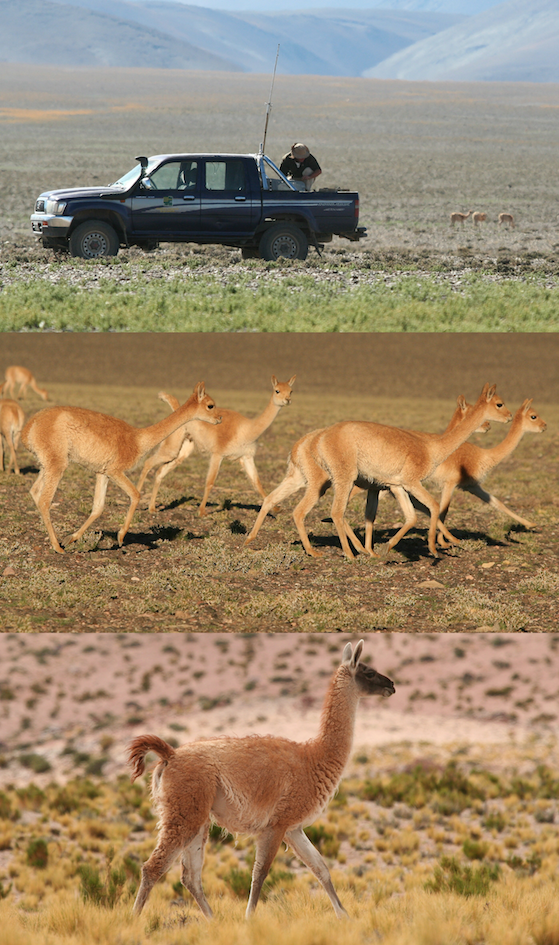
Study vehicle, a group of vicuñas and a guanaco in San Guillermo National Park (San Juan, Argentina) [courtesy of Marco Escudero]. Guanacos and vicuñas are native to South America, and are the ancestors of domesticated llamas and alpacas – which are exploited for their meat, milk and wool. Both species form monotypic genera. They have discontinuous distributions in Argentina, Bolivia, Chile and Peru, with introduced populations in Paraguay (guanaco) and Ecuador (vicuña). Population estimates are > 500,000 (guanaco) and > 300,000 (vicuña), the latter restricted to high-altitude ecosystems. They are ‘Least Concern’ for the IUCN but, given their low population growth rates (fertility = 1 offspring/female/yr), guanacos and vicuñas are targeted by conservation programs in all their native countries.

Many of us might have stumbled twice on the same stone, yet learnt to be wary of future situations of similar risk. Likewise, wild animals can be predisposed to flee when faced with already known predators (or threats in general). The type and magnitude of their evasive response depends on predator distance, speed and body size (1). Regardless, prey need to assess predation risk in a matter of seconds (or even shorter than that), i.e., balancing the benefits and costs of fleeing.

The benefits all boil down to survival, but the costs might include moving away from offspring, loss of access to fresh and abundant food, or spending precious metabolic energy (2). The methods ecologists use to study animal flight behaviour in the wild are rife with nuisances (3), yet they represent a tool for quantifying wildlife stress resulting from a variety of human activities.

Equipped with our modern technological kit (weapons, vehicles, GPS, etc.), humans behave like genuine predators and can trigger the range of flight behaviours displayed by their potential prey. In that context, Emiliano Donadio and Steve Burskirk (4) studied flight behaviour of guanacos (Lama guanicoe) and vicuñas (Vicugna vicugna) in the Argentinean open plains (‘llanos’). They monitored 2 protected areas under weak surveillance and subject to illegal hunting: the Laguna Brava Provincial Reserve and the San Guillermo Biosphere Reserve (treatment = H); and one area free of hunting and only exposed to guided visits with strict entry/exit times: the San Guillermo National Park (treatment = NH). The ecologists did 3 transects per study area. When they encountered a group of camelids, they classified three types of flight behaviour (alert without fleeing, walking away, galloping away), and measured flight time (between vehicle detection and initiation of flight behaviour) and flight distance (between the vehicle and the individuals when initiating flight behaviour). Read the rest of this entry »


Software tools for conservation biologists

8 04 2013

computer-programmingGiven the popularity of certain prescriptive posts on ConservationBytes.com, I thought it prudent to compile a list of software that my lab and I have found particularly useful over the years. This list is not meant to be comprehensive, but it will give you a taste for what’s out there. I don’t list the plethora of conservation genetics software that is available (generally given my lack of experience with it), but if this is your chosen area, I’d suggest starting with Dick Frankham‘s excellent book, An Introduction to Conservation Genetics.

1. R: If you haven’t yet loaded the open-source R programming language on your machine, do it now. It is the single-most-useful bit of statistical and programming software available to anyone anywhere in the sciences. Don’t worry if you’re not a fully fledged programmer – there are now enough people using and developing sophisticated ‘libraries’ (packages of functions) that there’s pretty much an application for everything these days. We tend to use R to the exclusion of almost any other statistical software because it makes you learn the technique rather than just blindly pressing the ‘go’ button. You could also stop right here – with R, you can do pretty much everything else that the software listed below does; however, you have to be an exceedingly clever programmer and have a lot of spare time. R can also sometimes get bogged down with too much filled RAM, in which case other, compiled languages such as PYTHON and C# are useful.

2. VORTEX/OUTBREAK/META-MODEL MANAGER, etc.: This suite of individual-based projection software was designed by Bob Lacy & Phil Miller initially to determine the viability of small (usually captive) populations. The original VORTEX has grown into a multi-purpose, powerful and sophisticated population viability analysis package that now links to its cousin applications like OUTBREAK (the only off-the-shelf epidemiological software in existence) via the ‘command centre’ META-MODEL MANAGER (see an examples here and here from our lab). There are other add-ons that make almost any population projection and hindcasting application possible. And it’s all free! (warning: currently unavailable for Mac, although I’ve been pestering Bob to do a Mac version).

3. RAMAS: RAMAS is the go-to application for spatial population modelling. Developed by the extremely clever Resit Akçakaya, this is one of the only tools that incorporates spatial meta-population aspects with formal, cohort-based demographic models. It’s also very useful in a climate-change context when you have projections of changing habitat suitability as the base layer onto which meta-population dynamics can be modelled. It’s not free, but it’s worth purchasing. Read the rest of this entry »


Protected areas work, but only when you put in the effort

15 11 2012

Apologies for the delay in getting this latest post out. If you read my last one, you’ll know that I’ve been in the United Kingdom for the last week. I’m writing this entry in the train down from York to Heathrow, from which I’ll shortly begin the gruelling 30-hour trip home to Adelaide.

Eight days on the other side of the planet is a bit of a cyclonic trip, but I can honestly say that it was entirely worth it. My first port of call was London where I attended the Zoological Society of London’s Protected Areas Symposium, which is the main topic on which I’ll elaborate shortly.

But I also visited my friend and colleague, Dr. Kate Parr at the University of Liverpool, where I also had the pleasure of talking with Rob Marrs and Mike Begon. Liverpool was also where I first observed the habits of a peculiar, yet extremely common species – the greater flabby, orange-skinned, mini-skirted, black-eyed scouser. Fascinating.

I then had the privilege and serendipitous indulgence of visiting the beautiful and quaint city of York where I gave another talk to the Environment Department at the University of York. My host, Dr. Kate Arnold was simply lovely, and I got to speak with a host of other very clever people including Callum Roberts, Phil Platts, Andy Marshall and Murray Rudd. Between the chats and real ales, mushy peas, pork pies and visits to the Minster, I was in north English heaven.

Enough of the cultural compliments – the title of this post was the take-home message of the ZSL symposium. There I gave a 25-minute talk summarising our recent paper on the performance of tropical protected areas around the globe, and added a few extra analyses in the process. One interesting result that was missing from the original paper was the country-level characteristics that explain variation in protected area ‘health’ (as we defined it in the Nature paper). After looking at a number of potential drives, including per-capita wealth, governance quality, environmental performance, human population density and the proportion of high conservation-value protected areas (IUCN Ia, Ib, II and IV categories), it came out that at least at that coarse country scale that only the proportion of high conservation-value protected areas explained any additional variation in health. In other words, the more category Ia, Ib, II and IV protected areas a country has (relative to the total), the better their protected areas do on average (and remember, we’re talking largely about developing and tropical nations here). Read the rest of this entry »


Tropical protected areas still in trouble

8 10 2012

© P. Harris

There’s nothing like a bit of good, intelligent and respectful debate in science.

After the publication in Nature of our paper on tropical protected areas (Averting biodiversity collapse in tropical forest protected areas), some interesting discussion has ensued regarding some of our assumptions and validations.

As is their wont, Nature declined to publish these comments (and our responses) in the journal itself, but the new commenting feature at Nature.com allowed the exchange to be published online with the paper. Cognisant that probably few people will read this exchange, Bill Laurance and I decided to reproduce them here in full for your intellectual pleasure. Any further comments? We’d be keen to hear them.

COMMENT #1 (by Hari Sridhar of the Centre for Ecological Sciences at the Indian Institute of Science in Bangalore)

In this paper, Laurance and co-authors have tapped the expert opinions of ‘veteran field biologists and environmental scientists’ to understand the health of protected areas in the tropics worldwide. This is a novel and interesting approach and the dataset they have gathered is very impressive. Given that expert opinion can be subject to all kinds of biases and errors, it is crucial to demonstrate that expert opinion matches empirical reality. While the authors have tried to do this by comparing their results with empirical time-series datasets, I argue that their comparison does not serve the purpose of an independent validation.

Using 59 available time-series datasets from 37 sources (journal papers, books, reports etc.), the authors find a fairly good match between expert opinion and empirical data (in 51/59 cases, expert opinion matched empirically-derived trend). For this comparison to serve as an independent validation, it is crucial that the experts were unaware of the empirical trends at the time of the interviews. However, this is unlikely to be true because, in most cases, the experts themselves were involved in the collection of the time-series datasets (at least 43/59 to my knowledge, from a scan of references in Supplementary Table 1). In other words, the same experts whose opinions were being validated were involved in collection of the data used for validation.

OUR RESPONSE (William F. Laurance, Corey J. A. Bradshaw, Susan G. Laurance)

Sridhar raises a relevant point but one that, on careful examination, does not weaken our validation analysis. Read the rest of this entry »


Threats to biodiversity insurance from protected areas

26 07 2012

A red-eyed tree frog (Agalychnis callidryas) from Barro Colorado Island in Panama. This small island, just 1500 ha (3700 acres) in area, is one of the tropical protected areas evaluated in this study (photo © Christian Ziegler <zieglerphoto@yahoo.co>, Smithsonian Tropical Research Institute). Note: It is prohibited for any third party or agency to use or license this image; any use other then described above shall be subject to usage fees as determined solely by the photographer.

Much of conservation science boils down to good decision making: when, where and how we ‘set aside’ terrestrial or marine areas for specific protection against the ravages of human endeavour. This is the basis for the entire sub-discipline of conservation planning and prioritisation, and features prominantly in most aspects of applied conservation and restoration.

In other words, we do all this science to determine where we should emplace protected areas, lobby for getting more land and sea set aside so that we have ‘representative’ amounts (i.e., to prevent extinctions), and argue over the best way to manage these areas once established.

But what if this pinnacle of conservation achievement is itself under threat? What if many of our protected areas are struggling to insure biodiversity against human consumption? Well, it’d be a scary prospect, to say the least.

Think of it this way. We buy insurance policies to buffer our investments against tragedy; this applies to everything from our houses, worldly possessions, cars, livestock, health, to forest carbon stores. We buy the policies to give us peace of mind that in the event of a disaster, we’ll be bailed out of the mess with a much-needed cash injection. But what if following the disaster we learn that the policy is no good? What if there isn’t enough pay-out to fix the mess?

In biodiversity conservation, our ‘insurance’ is largely provided by protected areas. We believe that come what may, at least in these (relatively) rare places, biodiversity will persist despite our relentless consumerism.

Unfortunately, what we believe isn’t necessarily true.

Today I’m both proud and alarmed to present our latest research on the performance of tropical protected areas around the world. Published online in Nature this morning (evening, for you Europeans) is the 216-author (yes, that is correct – 216 of us) paper entitled “Averting biodiversity collapse in tropical forest protected areas” led by Bill Laurance. Read the rest of this entry »


To corridor, or not to corridor: size is the question

24 04 2012

I’ve just read a really interesting post by David Pannell from the University of Western Australia discussing the benefits (or lack thereof) of wildlife ‘corridors’. I’d like to elaborate on a few key issues, and introduce the most important aspect that really hasn’t been mentioned.

Some of you might be aware that the Australian Commonwealth Government has just released its Draft National Wildlife Corridors Plan for public comment, but many of you might not really know what a ‘corridor’ constitutes.

Wildlife or biodiversity ‘corridors’ have been around for a long time, at least in terms of proposals. The idea is fairly simple to conceive, but very difficult to implement in practice.

At least for as long as I’ve been in the conservation biology biz, ‘corridors’ have been proffered as one really good way to make broad-scale landscape restoration plausible and effective for (mainly) forest-dwelling species which have copped the worst of deforestation trends around Australia and the world. The idea is that because of intense habitat fragmentation, isolated patches of primary (or at least, reasonably intact secondary) forest can be linked by planting some sort of long corridor of similar habitat between them. Then, all the little creatures can merrily make their way back and forth between the patches, thus rescuing each other from extinction via migration. Read the rest of this entry »


Take a leaf from insurance industry’s book

18 04 2012

Just a quick one rehashing today’s media release on the iREDD paper I blogged about a while back. The full, online version is available upon request. Stay tuned for media coverage.

A group of environmental scientists say a problem-ridden economic model designed to slow deforestation can be improved by applying key concepts from the insurance industry.

REDD (Reduced Emissions from Deforestation and forest Degradation) is a UN-promoted scheme that allows countries to trade in carbon credits to keep forests intact. It is mainly targeted at developing nations where deforestation and exploitation are a major threat.

In a paper published online in the journal Conservation Letters, ecology researchers from Australia and South Africa argue that REDD projects can suffer from three major problems. They have proposed strengthening the scheme by using insurance policies and premiums, creating a new scheme known as iREDD.

“The idea of paying a nation to protect its forests in exchange for carbon pollution offsets can potentially reduce overall emissions by keeping the trees alive, and ensure a lot of associated biodiversity gets caught up in the conservation process,” says Professor Corey Bradshaw,, Director of Ecological Modelling at the University of Adelaide’s Environment Institute and a senior author of the paper.

“However, there are three main problems with REDD: these are known as leakage, permanence and additionality.” Read the rest of this entry »


Unholy trinity of leakage, permanence and additionality

13 03 2012

I begin with the proverbial WTF? The title of this post sounds a little like the legalese accompanying a witchcraft trial, but it’s jargon that’s all the rage in the ‘trading-carbon-for-biodiversity’ circles.

I’m sure that most of my readers will have come across the term ‘REDD‘ (Reduced Emissions from Deforestation and forest Degradation), which is the clever idea of trading carbon credits to keep forests intact. As we know, living forests can suck up a lot of carbon from the atmosphere (remember your high school biology lesson on photosynthesis? Carbon dioxide in. Oxygen out), even though climate change is threatening this invaluable ecosystem service. So the idea of paying a nation (usual a developing country) to protect its forests in exchange for carbon pollution offsets can potentially save two birds with one feeder – reducing overall emissions by keeping the trees alive, and ensuring a lot of associated biodiversity gets caught up in the conservation process.

The problem with REDD though is that it’s a helluva thing to bank on given a few niggly problems essentially revolving around trust. Ah yes, the bugbear of any business transaction. As the carbon credit ‘buyer’ (the company/nation/individual who wishes to offset its carbon output by ‘buying’ the carbon uptake services provided by the intact forest), you’d want to make damn sure that all the money you spend to offset your carbon actually does just that, and that it doesn’t just end up in the hands of some corrupt official, or even worse, used to generate industry that results in even higher emissions! As the buyer, of course you want to entice investors to give you lots of money, and if you bugger up the transaction (by losing the resource you are providing), you’re not likely to have any more investors coming knocking on your door.

Enter the unholy trinity of leakage, permanence and additionality.

This horrible jargon essentially describes the REDD investment problem:

Read the rest of this entry »


Where are they? Finding (and conserving) the biggest fish in the sea

16 11 2011

A post from my PhD student, Ana Sequeira, on her latest paper just out in Diversity and DistributionsOcean-scale prediction of whale shark distribution.

© W Osborn (AIMS)

The ocean is our major source of water, it stabilises our breathable atmosphere and provides many supplies such as medicines (e.g., anti-cancer therapy drugs1) and food. Despite its the importance for human life, many marine species are now at a high risk of extinction owing to human changes to the oceans.

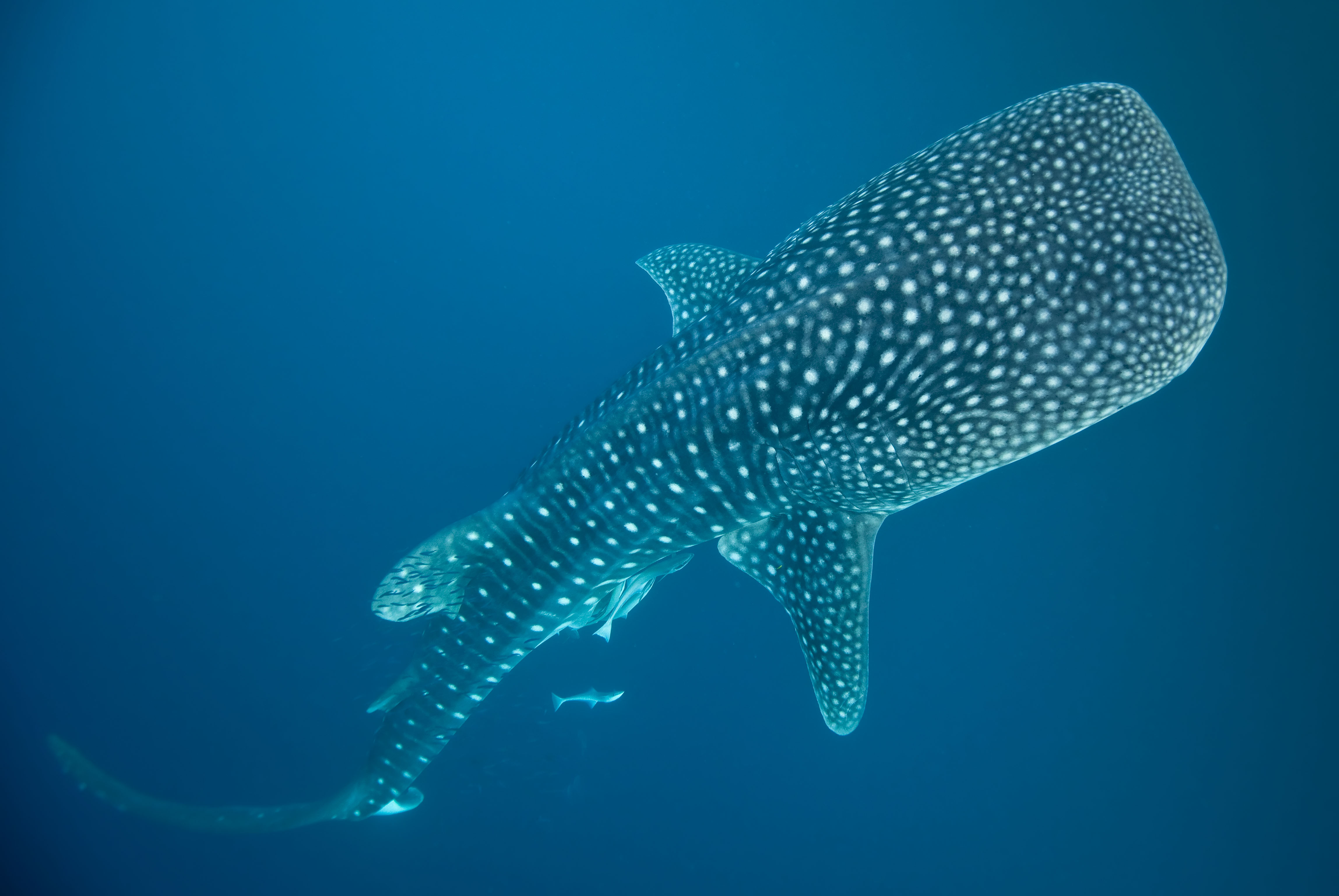
The whale shark (Rhincodon typus, Smith 1828) – an icon of the oceans of a spectacularly huge size and docile character – is just one of those species.

Despite being a fish that many people (mainly in Southeast Asia) are happy to have on their plate, whale sharks are worth millions of dollars every year in the ecotourism industry worldwide. One would then expect that being such a profitable species, their ecology would be well known and thoroughly studied.

The reality is quite different.

Basic information on whale sharks such as the whereabouts of their breeding areas, the average number of offspring per female, or even how many individuals still exist, is not currently known. Moreover, despite the genetic evidence that whale sharks worldwide are connected among different oceans, it is unclear if they move from places where they are protected to places where they are still illegally fished.

Information on distribution and patterns of occurrence in space and time is essential for conservation, and can help to save entire ecosystems if used correctly, for example: to isolate important mating and breeding areas.

To identify the whale shark’s seasonal distribution patterns in the Indian Ocean, to test if records follow a decreasing trend over time, and if occurrence is related to variation in climatic signals, we used multivariate distribution models of seasonal and inter-annual whale shark sightings opportunistically collected over 17 years by the tuna purse-seine fishery. Read the rest of this entry »


No substitute for primary forest

15 09 2011

© Romulo Fotos http://goo.gl/CrAsE

A little over five years ago, a controversial and spectacularly erroneous paper appeared in the tropical ecology journal Biotropica, the flagship journal of the Association for Tropical Biology and Conservation. Now, I’m normally a fan of Biotropica (I have both published there several times and acted as a Subject Editor for several years), but we couldn’t let that paper’s conclusions go unchallenged.

That paper was ‘The future of tropical forest species‘ by Joseph Wright and Helene Muller-Landau, which essentially concluded that the severe deforestation and degradation of tropical forests was not as big a deal as nearly all the rest of the conservation biology community had concluded (remind you of climate change at all?), and that regenerating, degraded and secondary forests would suffice to preserve the enormity and majority of dependent tropical biodiversity.

What rubbish.

Our response, and those of many others (including from Toby Gardner and colleagues and William Laurance), were fast and furious, essentially destroying the argument so utterly that I think most people merely moved on. We know for a fact that tropical biodiversity is waning rapidly, and in many parts of the world, it is absolutely [insert expletive here]. However, the argument has reared its ugly head again and again over the intervening years, so it’s high time we bury this particular nonsense once and for all.

In fact, a few anecdotes are worthy of mention here. Navjot once told me one story about the time when both he and Wright were invited to the same symposium around the time of the initial dust-up in Biotropica. Being Navjot, he tore off strips from Wright in public for his outrageous and unsubstantiated claims – something to which Wright didn’t take too kindly.  On the way home, the two shared the same flight, and apparently Wright refused to acknowledge Navjot’s existence and only glared looks that could kill (hang on – maybe that had something to do with Navjot’s recent and untimely death? Who knows?). Similar public stoushes have been chronicled between Wright and Bill Laurance.

Back to the story. I recall a particular coffee discussion at the National University of Singapore between Navjot Sodhi (may his legacy endure), Barry Brook and me some time later where we planned the idea of a large meta-analysis to compare degraded and ‘primary’ (not overly disturbed) forests. The ideas were fairly fuzzy back then, but Navjot didn’t drop the ball for a moment. He immediately went out and got Tien Ming Lee and his new PhD student, Luke Gibson, to start compiling the necessary studies. It was a thankless job that took several years.

However, the fruits of that labour have now just been published in Nature: ‘Primary forests are irreplaceable for sustaining tropical biodiversity‘, led by Luke and Tien Ming, along with Lian Pin Koh, Barry Brook, Toby Gardner, Jos Barlow, Carlos Peres, me, Bill Laurance, Tom Lovejoy and of course, Navjot Sodhi [side note: Navjot died during the review and didn’t survive to hear the good news that the paper was finally accepted].

Using data from 138 studies from Asia, South America and Africa comprising 2220 pair-wise comparisons of biodiversity ‘values’ between forests that had undergone some sort of disturbance (everything from selective logging through to regenerating pasture) and adjacent primary forests, we can now hammer the final nails into the coffin containing the putrid remains of Wright and Muller-Landau’s assertion – there is no substitute for primary forest. Read the rest of this entry »


Gagging scientists about marine parks

14 08 2011

© Louisa Gouliamaki AFP

Apologies to my readers for the lack of a post this past week – I’ve been attending the Ecological Society of America‘s 96th Annual Meeting in an extremely hot (42 °C) Austin, Texas. As usual, I’ll provide a synopsis of the conference in a little bit, but I have some rather worrisome reports about the marine park process in Australia with which to regale you first.

My last post was the reproduction of a letter cosigned by over 150 marine scientists (mostly from Australia, including me) who are concerned that the a proposed network of marine reserves in the Commonwealth waters of the South West bioregional marine planning region is not based on sound scientific principles, and is instead a mash-up of what amounts to leftovers that industry hasn’t yet found a way to exploit. Not the best way to plan for marine biodiversity conservation in the long run.

After the post went live, I had a few interesting (and frightening) e-mail exchanges with a few colleagues who work for various Australian marine science institutions who complained that they were forbidden to cosign the letter. What? What? What? What? What? Read the rest of this entry »


More than leftovers: getting marine parks right in Australia

7 08 2011
Taken by user Hossen27

Image via Wikipedia

A few weeks back I cosigned a ‘statement of concern’ about the proposal for Australia’s South West Marine Region organised by Hugh Possingham. The support has been overwhelming by Australia’s marine science community (see list of supporting scientists below). I’ve reproduced the letter addressed to the Australian government – distribute far and wide if you give more than a shit about the state of our marine environment (and the economies it supports). Basically, the proposed parks are merely a settlement between government and industry where nothing of importance is really being protected. The parks are just the leftovers industry doesn’t want. No way to ensure the long-term viability of our seas.

On 5 May 2011 the Australian Government released a draft proposal for a network of marine reserves in the Commonwealth waters of the South West bioregional marine planning region.

Australia’s South West is of global significance for marine life because it is a temperate region with an exceptionally high proportion of endemic species – species found nowhere else in the world.

Important industries, such as tourism and fisheries, depend on healthy marine ecosystems and the services they provide. Networks of protected areas, with large fully protected core zones, are essential to maintain healthy ecosystems over the long-term – complemented by responsible fisheries management1.

The selection and establishment of marine reserves should rest on a strong scientific foundation. We are greatly concerned that what is currently proposed in the Draft South West Plan is not based on the three core science principles of reserve network design: comprehensiveness, adequacy and representation. These principles have been adopted by Australia for establishing our National Reserve System and are recognized internationally2.

Specifically, the draft plan fails on the most basic test of protecting a representative selection of habitats within the bioregions of the south-west. There are no highly protected areas proposed at all in three of the seven marine bioregions lying on the continental shelf3. Overall less than 3.5% of the shelf, where resource use and biodiversity values are most intense, is highly protected. Further, six of the seven highly protected areas that are proposed on the shelf are small (< 20 km in width)4 and all are separated by large distances (> 200 km)5. The ability of such small isolated areas to maintain connectivity and fulfil the goal of protecting Australia’s marine biodiversity is limited. Read the rest of this entry »