Reforesting wealthy countries for the common good

29 06 2011

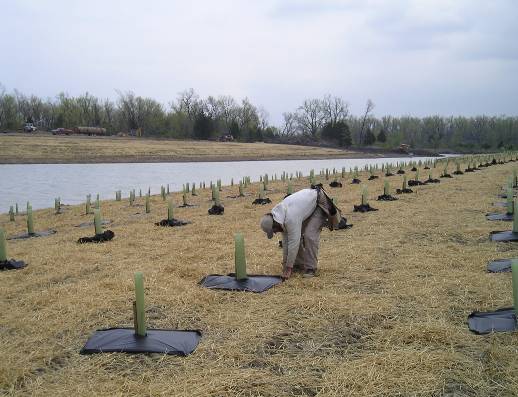
The Coalition of Financially Challenged Countries with Lots of Trees, known as ‘CoFCCLoT’, representing most of the world’s remaining tropical forests, is asking wealthy nations to share global responsibilities and reforest their land for the common good of stabilizing climate and protecting biodiversity.

“We are willing to play our part, but we require a level playing field in which we all commit to equal sacrifices,” a coalition spokeswoman says. “Returning forest cover in the G8 countries and the European Union back to historic coverage will benefit all of us in the long-term.”

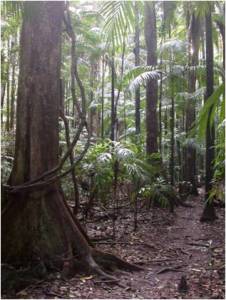
Seventy-five per cent of Europe was once forested. Now it is 45 per cent. Some countries such as Ireland saw forest cover reduced to near zero. Most forest cover in the developed world is now often planted with stands of alien trees, turning them into deserts for biodiversity. Remaining natural forests are often highly fragmented and have few native species. Read the rest of this entry »


Condoms instead of nature reserves

24 01 2011

Rob Dietz over at the Centre for the Advancement of the Steady State Economy thought ConservationBytes.com readers would be interested in the following post by Tim Murray (the original post was entitled What if we stopped fighting for preservation and fought economic growth instead?). There are some interesting ideas here, and I concur that because we have failed to curtail extinctions, and there’s really no evidence that conservation biology alone will be enough to save what remains (despite 50 + years of development), big ideas like these are needed. I’d be interested to read your comments.

Each time environmentalists rally to defend an endangered habitat, and finally win the battle to designate it as a park “forever,” as Nature Conservancy puts it, the economic growth machine turns to surrounding lands and exploits them ever more intensively, causing more species loss than ever before, putting even more lands under threat. For each acre of land that comes under protection, two acres are developed, and 40% of all species lie outside of parks. Nature Conservancy Canada may indeed have “saved” – at least for now – two million acres [my addendum: that’s 809371 hectares], but many more millions have been ruined. And the ruin continues, until, once more, on a dozen other fronts, development comes knocking at the door of a forest, or a marsh or a valley that many hold sacred. Once again, environmentalists, fresh from an earlier conflict, drop everything to rally its defence, and once again, if they are lucky, yet another section of land is declared off-limits to logging, mining and exploration. They are like a fire brigade that never rests, running about, exhausted, trying to extinguish one brush fire after another, year after year, decade after decade, winning battles but losing the war.

Despite occasional setbacks, the growth machine continues more furiously, and finally, even lands which had been set aside “forever” come under pressure. As development gets closer, the protected land becomes more valuable, and more costly to protect. Then government, under the duress of energy and resource shortages and the dire need for royalties and revenue, caves in to allow industry a foothold, then a chunk, then another. Yosemite Park, Hamber Provincial Park, Steve Irwin Park [my addendum – even the mention of this man is an insult to biodiversity conservation]… the list goes on. There is no durable sanctuary from economic growth. Any park that is made by legislation can be unmade by legislation. Governments change and so do circumstances. But growth continues and natural capital [my addendum: see my post on this term and others] shrinks. And things are not even desperate yet. Read the rest of this entry »


Biodiversity begins at home

20 01 2011

A few months ago I was involved in a panel discussion entitled ‘Biodiversity begins at home’ held at the Royal Institution of Australia in Adelaide and sponsored by the Don Dunstan Foundation.

The main thrust of the evening was to have both academic (me & Andy Lowe) and on-the-ground, local conservationists (Sarah Lance, Craig Gillespie and Matt Turner) talk about what people can do to stem the tide of biodiversity loss. The video is now available, so I thought I’d reproduce it here. We talked about a lot of issues (from global to local scale), so if you have a spare hour, you might get something out of this. I did, but it certainly wasn’t long enough to discuss such big issues.

Warning – this was supposed to be more of a discussion and less of a talkfest; unfortunately, many of the panel members seemed to forget this and instead dominated the session. We really needed 4 hours to do this properly (but then, who would have watched the video?).

Read the rest of this entry »


Want a cool conservation job in beautiful southern Australia?

14 12 2010

I was asked to post this cool-sounding job on ConservationBytes.com – relevant punters welcome to respond.

Australian Wildlife Conservancy (AWC) is a non‐profit organisation dedicated to the conservation of Australia’s threatened wildlife and their habitats. AWC now owns and manages more land than any other private conservation organisation in Australia ‐  21 properties, covering more than 2.6 million hectares ‐ protecting more than 1,200 fauna species through active land management informed by strategic scientific research.

AWC is seeking an experienced and committed ecologist who will be pivotal in the development and implementation of the conservation and science program throughout south‐eastern Australia. The position will be based at Scotia Wildlife Sanctuary (where on‐site accommodation will be provided), but will include work at other AWC sanctuaries, especially Kalamurina (Lake Eyre), Buckaringa (Flinders Ranges), Yookamurra (Riverlands), Dakalanta (Eyre Peninsula), Bowra (Mulga Lands) and North Head (Sydney) sanctuaries.

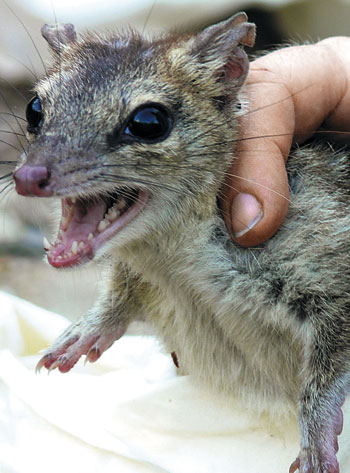
Scotia is a large property (65,000 ha) that lies on the NSW‐SA border between Wentworth and Broken Hill, and includes Australia’s largest area free of foxes, cats and rabbits (8,000 ha) and where seven regionally extinct species have been reintroduced (bilby, boodie, woylie, bridled nailtail wallaby, numbat, greater stick‐nest rat, mala and black‐eared miner). In addition, the property has outstanding conservation values because it protects habitats, in good condition, that have been extensively cleared in western NSW.

Read the rest of this entry »


Conservation is all about prioritisation

4 12 2010

Another great guest post from a previous contributor, Piero Visconti.

Biodiversity conservation is about prioritisation – making difficult choices.

With limited money and so many habitats and species in need of protection, deciding where not to expend resources is as important as deciding where to act. Saying ‘no’ will be crucial for ensuring the persistence of biodiversity and ecosystem services, simply because as individuals who value conservation, we will always be tempted to try and save everything.

In the words of Frederick the Great: “He who defends everything, defends nothing.”

As a result, much recent conservation planning research has focused on offering managers general and flexible tools for deciding which conservation features should be the highest priority. Intuitively, we should direct our resources towards areas that have high biodiversity values, and that are likely to be lost if the forces of conservation do not intervene (the most ‘vulnerable’ land parcels). This approach is known as the ‘minimize loss’ approach. Imagine we are worried about the loss of rare native vegetation in the face of ongoing urban expansion (e.g., Melbourne’s western grasslands). To minimize loss, managers would pre-emptively protect sites that are most likely to be developed. But is this decision to race the bulldozers always the best idea? How much does this choice depend on our assumptions about how land is protected, how land developers behave, and the accuracy of our future predictions? Read the rest of this entry »


Wolves masquerading as sheep: the fallout

29 10 2010


© New Zealand Films


Well, we’ve managed to stimulate quite a lively conversation after dropping the Open Letter about Scientific Credibility and the Conservation of Tropical Forests regarding the questionable tactics employed by Alan Oxley and his industrial lobbyist organisations.

Mr. Oxley has responded with vitriol, hand-waving, red herrings and straw men, and failed to address even a single one of our accusations. I am particularly amused by his insinuation that we, the proven scientists, don’t know what science is – but that he does.

Below I reproduce Mr. Oxley’s reaction to our original letter, followed by our response.

I’ll let you, the reader, decide who is most reasonable.

REACTION FROM ALAN OXLEY

There is too much pseudo-scientific hype today about environmentalism and forestry and not enough fact.

I put this double-barrelled question to the Group of 12 scientists who have rather laboriously wandered over the work of World Growth: What biodiversity is expressly protected by a global cessation of conversion of forest land to other purposes and how is that biodiversity scientifically measured? And let’s have some technical response, not political blather. Read the rest of this entry »


Global erosion of ecosystem services

14 09 2010

A few months ago I was asked to give a lecture about erosion of ecosystem services to students in the University of Adelaide‘s Issues in Sustainable Environments unit. I gave that lecture last week and just uploaded a slidecast of the presentation (with audio) today.

I’ve reproduced the lecture here for your viewing pleasure. I hope you find the 45-minute presentation useful. Note that the first few minutes cover me referring to the Biodiversity film short that I posted not too long ago.

CJA Bradshaw


Student opportunities with Australian Wildlife Conservancy

8 09 2010

A colleague of mine, Dr. Matt Hayward of the Australian Wildlife Conservancy (AWC), asked me to circulate some Honours, MSc and PhD student project opportunities. I thought this would be best done by publishing the call as a blog post.

The AWC is a non-government, non-profit organisation dedicated to the conservation of Australia’s wildlife and their habitats. AWC’s south-east region has a team of 7 ecologists who work closely with the land managers to carry out AWC’s Conservation and Science Program. The Science Program includes strategic research designed to help us manage threatened species more effectively. Several of these research projects are suitable for Honours, Masters or PhD projects.

This prospectus provides an outline of the student projects that are currently on offer in the south-east region. The majority of the projects are based on one sanctuary, although some aspects of the research may be done on other AWC sanctuaries and/or government conservation areas.

AWC will partially support these projects with equipment, staff time and expertise, and accommodation. In some cases, AWC may also provide some vehicle use and office facilities onsite at The Scotia Field Research Centre. We anticipate these projects will be collaborative efforts with input from students, academics and AWC staff, with appropriate acknowledgement for all involved. These projects are offered on a first in, first approved basis and have been offered to multiple universities.

More details on the sanctuaries and AWC are available here. If you are keen do one of these projects, please contact Matt Hayward and we will then formulate a research proposal and research agreement. Eight project descriptions follow. Read the rest of this entry »


Webinar: Modelling water and life

27 08 2010

Another quick one today just to show the webinar of my recent 10-minute ‘Four in 40’ talk sponsored by The Environment Institute and the Department for Water. This seminar series was entitled ‘Modelling as a Tool for Decision Support’ held at the Auditorium, Royal Institution Australia (RiAus).

“Four in 40″ is a collaboration between The University of Adelaide and the Department for Water, where 4 speakers each speak for 10 minutes on their research and its implications for policy. The purpose is to build understanding of how best to work with each other, build new business for both organisations and raise awareness of activity being undertaken in water/natural resource management policy and research.

CJA Bradshaw


100 actions to slow biodiversity loss

19 08 2010

I received an email a few days ago from Guillaume Chapron of the Swedish University of Agricultural Sciences (Sveriges lantbruksuniversitet) asking me to promote his ‘Biodiversity 100‘ campaign on ConservationBytes.com. I think it’s an interesting initiative, and so I’ll gladly spread the word.

Teaming up with George Monbiot of The Guardian, the Biodiversity 100 campaign seeks to encourage scientists and others to compile a list of 100 tasks that G20 governments should undertake to prove their commitment to tackling the biodiversity crisis.

Dr. Chapron writes: Read the rest of this entry »


Marine protected areas: do they work?

13 08 2010

One measure that often meets great resistance from fishermen, but is beloved by conservationists, is the establishment of marine protected or ‘no take’ areas.” Stephen J. Hall (1998)

I’m going to qualify this particular post with a few disclaimers; first, I am not involved in the planning of any marine protected areas (henceforth referred to as ‘marine parks’) in Australia or elsewhere; and second, despite blogging on the issue, I have never published in the discipline of protected area design (i.e, ‘conservation planning’ is not my area of expertise).

That said, it seems to becoming more imperative that I enter the fray and assess not only how marine parks should be designed, but how effective they really are (or can be). I’ve been asked by several conservation NGOs to provide some insight into this, so I thought I should ‘think aloud’ and blog a little mini-review about marine park effectiveness.

Clearly there is a trend to establish more marine parks around the world, and this is mainly because marine conservation lags so far behind terrestrial conservation. Indeed, Spalding et al. (2008) showed that only 4.1 % of continental shelf areas are incorporated within marine parks, and ~ 50 % of all marine ecoregions have less than 1 % marine park coverage across the shelf. Furthermore, marine protection is greatest in the tropical realms, while temperate realms are still poorly represented.

The question of whether marine parks ‘work’ is, however, more complicated than it might first appear. When one asks this question, it is essential to define how the criteria for success are to be measured. Whether it’s biodiversity protection, fisheries production, recreational revenue, community acceptance/involvement or some combination of the above, your conclusion is likely to vary from place to place.

Other complications are, of course, that if you cannot ensure a marine park is adequately enforced (i.e., people don’t respect the rules) or if you don’t actually place the park anywhere near things that need protecting, there will be no real net benefit (for any of the above-mentioned interest groups). Furthermore, most marine parks these days have many different types of uses allowed in different zones (e.g., no fishing, some fishing, recreational diving only, no boat transport, some shipping, etc., etc., etc.), so it gets difficult to test for specific effects (it’s a bit like a cap-and-trade legislation for carbon – too many rules and often no real net reduction in carbon emissions – but that’s another story).

All these conditions aside, I think it’s a good idea to present what the real experts have been telling us about marine park effectiveness from a biodiversity and fishing perspective over the last decade or so. I’ll summarise some of the major papers here and give an overall assessment at the end. I do not contend that this list is even remotely comprehensive, but it does give a good cross-section of the available evidence. Read the rest of this entry »


Failure of the CBD 2010 targets

5 07 2010

I’m currently attending the 2010 International Congress for Conservation Biology in Edmonton, Canada. I thought it would be good to tweet and blog my way through on topics that catch my attention.

Yesterday I attended one memorable presentation by Bastian Bomhard of the United Nations Environment Programme‘s (UNEP) World Conservation Monitoring Centre (WCMC). He provided some sobering statistics.

The opening statement in the background section of the Convention on Biological Diversity‘s (CBD) 2010 Biodiversity Target reads:

“In April 2002, the Parties to the Convention committed themselves to achieve by 2010 a significant [my emphasis] reduction of the current rate of biodiversity loss at the global, regional and national level as a contribution to poverty alleviation and to the benefit of all life on Earth.”

Suffice it to say that we have failed to meet the target.

I won’t dwell too long on the fact that ‘…a significant reduction…’ is utterly meaningless, subjective and a useless policy tool (in my opinion) because it cannot be quantified as stated, Bastian did tell us that we failed even to obtain a ‘reduction’.

More specifically, parties to the CBD 2010 target agreed in 2010 to protect at least 10 % of the world’s ecological regions (ecoregions) by 2010 — almost half of the world’s terrestrial ecoregions do not meet even this modest proportional protection.

Read the rest of this entry »


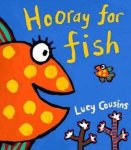
Faraway fettered fish fluctuate frequently

27 06 2010

Hello! I am Little Fish

Swimming in the Sea.

I have lots of fishy friends.

Come along with me.

(apologies to Lucy Cousins and Walker Books)

I have to thank my 3-year old daughter and one of her favourite books for that intro. Now to the serious stuff.

I am very proud to announce a new Report in Ecology we’ve just had published online early about a new way of looking at the stability of coral reef fish populations. Driven by one of the hottest young up-and-coming researchers in coral reef ecology, Dr. Camille Mellin (employed through the CERF Marine Biodiversity Hub and co-supervised by me at the University of Adelaide and Julian Caley and Mark Meekan of the Australian Institute of Marine Science), this paper adds a new tool in the design of marine protected areas.

Entitled Reef size and isolation determine the temporal stability of coral reef fish populations, the paper applies a well-known, but little-used mathematical relationship between the logarithms of population abundance and its variance (spatial or temporal) – Taylor’s power law.

Taylor’s power law is pretty straightforward itself – as you raise the abundance of a population by 1 unit on the logarithmic scale, you can expect its associated variance (think variance over time in a fluctuating population to make it easier) to rise by 2 logarithmic units (thus, the slope = 2). Why does this happen? Because a log-log (power) relationship between a vector and its square (remember: variance = standard deviation2) will give a multiplier of 2 (i.e., if xy2, then log10x ~ 2log10y).

Well, thanks for the maths lesson, but what’s the application? It turns out that deviations from the mathematical expectation of a power-law slope = 2 reveal some very interesting ecological dynamics. Famously, Kilpatrick & Ives published a Letter in Nature in 2003 (Species interactions can explain Taylor’s power law for ecological time series) trying to explain why so many real populations have Taylor’s power law slopes < 2. As it turns out, the amount of competition occurring between species reduces the expected fluctuations for a given population size because of a kind of suppression by predators and competitors. Cool.

But that application was more a community-based examination and still largely theoretical. We decided to turn the power law a little on its ear and apply it to a different question – conservation biogeography. Read the rest of this entry »


Interview with a social (conservation) scientist

22 06 2010

I was contacted recently by Josh Cinner, a self-titled ‘social’ scientist (now working at the Centre of Excellence for Coral Reef Studies) who has published rather a lot in the conservation literature. He was recently highlighted in the journal Science for his work, and he thought CB readers would enjoy the coverage. He stated to me:

“…as a social scientist, I have spent the past decade or so working with ecologists and managers trying to integrate social science better in conservation. There are often calls for the importance of integrating social science in conservation and I thought your blog readers might appreciate some high-level recognition of the importance of this. Additionally, as far as I can tell, this is the first of these profiles that has focused on someone working in conservation.”

So, while fully crediting the source of this article and its author, Helen Fields, here is the entire text reproduced for your reading pleasure.

In the late 1980s, things were not going well for the coral reefs at Jamaica’s Montego Bay Marine Park. Overfishing had taken out a lot of the fish that eat algae, and algae were taking over the reef. “It was a classic case of ecosystem decline,” human geographer Joshua Cinner says. He arrived in Jamaica in 1996 as a Peace Corps volunteer after graduating from the University of Colorado, Boulder, with a double major in environmental conservation and geography. He was particularly interested in parks and preserves.

He’d landed in the middle of a war. Lobbying by tour operators and others got spearfishing, one of the main culprits in overfishing, banned in the park. The ban did not go over well with local people. “All the park equipment got vandalized. We had park rangers get threatened; their families got threatened at spear point,” Cinner says. Spearfishing equipment is cheap and you don’t need a boat; men who do it are generally poor and are fishing as a last resort. “The cultural lens through which the fishermen viewed this issue was of struggle in a post-slavery society, of the rich, predominantly white expatriates making a law that oppressed the poorest of the poor locals to benefit the wealthy.”

The conflict got Cinner thinking about how conservation really works. “It wasn’t really about the ecology,” he says. “Making conservation work in Jamaica had a lot to do with understanding the local culture and people.” It also opened his eyes to the role oceans play. “The ocean is often viewed as an open-access resource. That extra layer of complexity interested me,” he says. “Land can often be private property,” but “the ocean is typically viewed as free for anyone to fish in, for anyone to swim in and use.” Read the rest of this entry »


Biodiversity SNAFU in Australia’s Jewel

16 06 2010

I’ve covered this sad state of affairs and one of Australia’s more notable biodiversity embarrassments over the last year (see Shocking continued loss of Australian mammals and Can we solve Australia’s mammal extinction crisis?), and now the most empirical demonstration of this is now published.

The biodiversity guru of Australia’s tropical north, John Woinarksi, has just published the definitive demonstration of the magnitude of mammal declines in Kakadu National Park (Australia’s largest national park, World Heritage Area, emblem of ‘co-management’ and supposed biodiversity and cultural jewel in Australia’s conservation crown). According to Woinarski and colleagues, most of those qualifiers are rubbish.

The paper published in Wildlife Research is entitled Monitoring indicates rapid and severe decline of native small mammals in Kakadu National Park, northern Australia and it concludes:

The native mammal fauna of Kakadu National Park is in rapid and severe decline. The cause(s) of this decline are not entirely clear, and may vary among species. The most plausible causes are too frequent fire, predation by feral cats and invasion by cane toads (affecting particularly one native mammal species).

I’ve done quite a bit of work in Kakadu myself, and the one thing that hits you every time you travel through it is the lack of visible wildlife. Sure, you’ll see horses, pigs and buffalo, as well as cane toads and cats, but getting a glimpse of anything native, from Conilurus to Varanus, and you’d consider yourself extremely lucky.

We’ve written a lot about the feral animal problem in Kakadu and even developed software tools to assist in density-reduction programmes. It doesn’t appear that anyone is listening.

Another gob-smacking vista you’ll get when travelling through Kakadu any time from April to December is that it’s either been burnt, actively burning or targeted for burning. They burn the shit out of the place every year. No wonder the native mammals are having such a hard time.

Combine all this with the dysfunctional management arrangement, and you cease to have a National Park. Kakadu is now a lifeless shell that does precious little for conservation of biodiversity (and 3 of the 5 criteria it had to satisfy to become a World Heritage Area are specifically related to natural resource ‘values’). I say, delist Kakadu now and let’s stop fooling ourselves.

Ok, back from the rant. Woinarski and others superimposed a mammal monitoring programme over top a fire-regime experiment for vegetation. Although they couldn’t sample every plot every season, they staggered the sampling to cover the area as best they could over the 13 years of monitoring (1996-2009). What they observed was staggering. Read the rest of this entry »


February Issue of Conservation Letters

13 02 2010

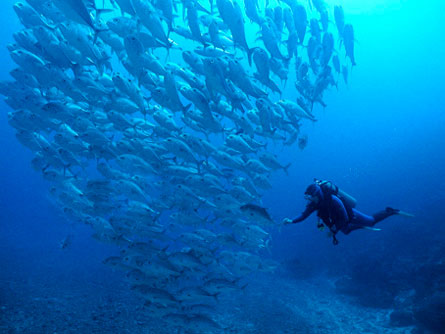
Diver at Great Barrier Reef, Australia

Hard to believe we’re already at Volume 3 – introducing the latest issue of Conservation Letters (Volume 3, Issue 1, February 2010). For full access, click here.

Note too we’ve jumped from 5 to 6 papers per issue. Congratulations to all our authors. Keep those submissions coming!

CJA Bradshaw

Add to FacebookAdd to DiggAdd to Del.icio.usAdd to StumbleuponAdd to RedditAdd to BlinklistAdd to TwitterAdd to TechnoratiAdd to Yahoo BuzzAdd to Newsvine


Parochial conservation

30 01 2010
© cagiecartoons.com

A little bit of conservation wisdom for you this weekend.

In last week’s issue of Nature, well-known conservation planner and all-round smart bloke, Reed Noss (who just happens to be an editor for Conservation Letters and Conservation Biology), provided some words of extreme wisdom. Not pulling any punches in his Correspondence piece entitled Local priorities can be too parochial for biodiversity, Noss essentially says ‘don’t leave the important biodiversity decisions to the locals’.

He argues rather strongly in his response to Smith and colleagues’ opinion piece (Let the locals lead) that local administrators just can’t be trusted to make good conservation decisions given their focus on local economic development and other political imperatives. He basically says that the big planning decisions should be made at grander scales that over-ride local concerns because, well, the big fish in their little ponds can’t be trusted (nor do they have the training) to do what’s best for regional biodiversity conservation.

I couldn’t agree more – he states:

“Academic researchers, conservation non-governmental organizations and other ‘foreign’ interests tend to be better informed, less subject to local political influence and more experienced in conservation planning than local agencies.”

Of course, being part of the first group, I’m probably a little biased, but I dare say that we’ve got a lot better handle on the science beyond saving biodiversity, as well as a better understanding of why that’s important, than your average regional representative, village council, chief, Lord Mayor or state member. Sure, ‘engage your stakeholders’ (I have images of shooting missiles at people holding star pickets with this gem of business jargon wankery, but there you go), but please base the decision on science first. I think Smith and colleagues have some good points, but I am more in favour of a broad-scale benevolent dictatorship in conservation planning than fine-scale democracy. Granted, the best formula is likely to be very context-specific, and of course, you need some people with local implementation power to make it happen.

Dear Honourable Minister, you may sign on the dotted line to make policy real, but please, please listen to us before you do. Your very life and those of your children depend on it.

CJA Bradshaw

ResearchBlogging.orgNoss, R. (2010). Local priorities can be too parochial for biodiversity Nature, 463 (7280), 424-424 DOI: 10.1038/463424a

Smith, R., Veríssimo, D., Leader-Williams, N., Cowling, R., & Knight, A. (2009). Let the locals lead Nature, 462 (7271), 280-281 DOI: 10.1038/462280a

Add to FacebookAdd to DiggAdd to Del.icio.usAdd to StumbleuponAdd to RedditAdd to BlinklistAdd to TwitterAdd to TechnoratiAdd to Yahoo BuzzAdd to Newsvine


Computer-assisted killing for conservation

12 01 2010

Many non-Australians might not know it, but Australia is overrun with feral vertebrates (not to mention weeds and invertebrates). We have millions of pigs, dogs, camels, goats, buffalo, deer, rabbits, cats, foxes and toads (to name a few). In a continent that separated from Gondwana about 80 million years ago, this allowed a fairly unique biota to evolve, such that when Aboriginals and later, Europeans, started introducing all these non-native species, it quickly became an ecological disaster. One of my first posts here on ConservationBytes.com was in fact about feral animals. Since then, I’ve written quite a bit on invasive species, especially with respect to mammal declines (see Few people, many threats – Australia’s biodiversity shame, Shocking continued loss of Australian mammals, Can we solve Australia’s mammal extinction crisis?).

So you can imagine that we do try to find the best ways to reduce the damage these species cause; unfortunately, we tend to waste a lot of money because density reduction culling programmes aren’t usually done with much forethought, organisation or associated research. A case in point – swamp buffalo were killed in vast numbers in northern Australia in the 1980s and 1990s, but now they’re back with a vengeance.

Enter S.T.A.R. – the clumsily named ‘Spatio-Temporal Animal Reduction’ [model] that we’ve just published in Methods in Ecology and Evolution (title: Spatially explicit spreadsheet modelling for optimising the efficiency of reducing invasive animal density by CR McMahon and colleagues).

This little Excel-based spreadsheet model is designed specifically to optimise the culling strategies for feral pigs, buffalo and horses in Kakadu National Park (northern Australia), but our aim was to make it easy enough to use and modify so that it could be applied to any invasive species anywhere (ok, admittedly it would work best for macro-vertebrates).

The application works on a grid of habitat types, each with their own carrying capacities for each species. We then assume some fairly basic density-feedback population models and allow animals to move among cells. We then hit them virtually with a proportional culling rate (which includes a hunting-efficiency feedback), and estimate the costs associated with each level of kill. The final outputs give density maps and graphs of the population trajectory.

We’ve added a lot of little features to maximise flexibility, including adjusting carrying capacities, movement rates, operating costs and overheads, and proportional harvest rates. The user can also get some basic sensitivity analyses done, or do district-specific culls. Finally, we’ve included three optimisation routines that estimate the best allocation of killing effort, for both maximising density reduction or working to a specific budget, and within a spatial or non-spatial context.

Our hope is that wildlife managers responsible for safeguarding the biodiversity of places like Kakadu National Park actually use this tool to maximise their efficiency. Kakadu has a particularly nasty set of invasive species, so it’s important those in charge get it right. So far, they haven’t been doing too well.

You can download the Excel program itself here (click here for the raw VBA code), and the User Manual is available here. Happy virtual killing!

CJA Bradshaw

P.S. If you’re concerned about animal welfare issues associated with all this, I invite you to read one of our recent papers on the subject: Convergence of culture, ecology and ethics: management of feral swamp buffalo in northern Australia.

Add to FacebookAdd to NewsvineAdd to DiggAdd to Del.icio.usAdd to StumbleuponAdd to RedditAdd to BlinklistAdd to Ma.gnoliaAdd to TechnoratiAdd to Furl

ResearchBlogging.orgC.R. McMahon, B.W. Brook,, N. Collier, & C.J.A. Bradshaw (2010). Spatially explicit spreadsheet modelling for optimising the efficiency of reducing invasive animal density Methods in Ecology and Evolution : 10.1111/j.2041-210X.2009.00002.x

Albrecht, G., McMahon, C., Bowman, D., & Bradshaw, C. (2009). Convergence of Culture, Ecology, and Ethics: Management of Feral Swamp Buffalo in Northern Australia Journal of Agricultural and Environmental Ethics, 22 (4), 361-378 DOI: 10.1007/s10806-009-9158-5

Bradshaw, C., Field, I., Bowman, D., Haynes, C., & Brook, B. (2007). Current and future threats from non-indigenous animal species in northern Australia: a spotlight on World Heritage Area Kakadu National Park Wildlife Research, 34 (6) DOI: 10.1071/WR06056


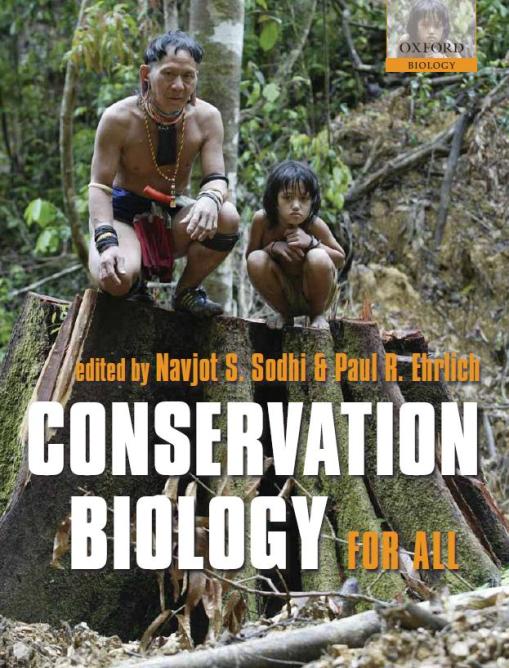
Conservation Biology for All

26 12 2009

A new book that I’m proud to have had a hand in writing is just about to come out with Oxford University Press called Conservation Biology for All. Edited by the venerable Conservation Scholars, Professors Navjot Sodhi (National University of Singapore) and Paul Ehrlich (Stanford University), it’s a powerhouse of some of the world’s leaders in conservation science and application.

The book strives to “…provide cutting-edge but basic conservation science to a global readership”. In short, it’s written to bring the forefront of conservation science to the general public, with OUP promising to make it freely available online within about a year from its release in early 2010 (or so the rumour goes). The main idea here is that those in most need of such a book – the conservationists in developing nations – can access the wealth of information therein without having to sacrifice the village cow to buy it.

I won’t go into any great detail about the book’s contents (mainly because I have yet to receive my own copy and read most of the chapters!), but I have perused early versions of Kevin Gaston‘s excellent chapter on biodiversity, and Tom Brook‘s overview of conservation planning and prioritisation. Our chapter (Chapter 16 by Barry Brook and me), is an overview of statistical and modelling philosophy and application with emphasis on conservation mathematics. It’s by no means a complete treatment, but it’s something we want to develop further down the track. I do hope many people find it useful.

I’ve reproduced the chapter title line-up below, with links to each of the authors websites.

  1. Conservation Biology: Past and Present (C. Meine)
  2. Biodiversity (K. Gaston)
  3. Ecosystem Functions and Services (C. Sekercioglu)
  4. Habitat Destruction: Death of a Thousand Cuts (W. Laurance)
  5. Habitat Fragmentation and Landscape Change (A. Bennett & D. Saunders)
  6. Overharvesting (C. Peres)
  7. Invasive Species (D. Simberloff)
  8. Climate Change (T. Lovejoy)
  9. Fire and Biodiversity (D. Bowman & B. Murphy)
  10. Extinctions and the Practice of Preventing Them (S. Pimm & C. Jenkins)
  11. Conservation Planning and Priorities (T. Brooks)
  12. Endangered Species Management: The US Experience (D. Wilcove)
  13. Conservation in Human-Modified Landscapes (L.P. Koh & T. Gardner)
  14. The Roles of People in Conservation (A. Claus, K. Chan & T. Satterfield)
  15. From Conservation Theory to Practice: Crossing the Divide (M. Rao & J. Ginsberg)
  16. The Conservation Biologist’s Toolbox – Principles for the Design and Analysis of Conservation Studies (C. Bradshaw & B. Brook)

As you can see, it’s a pretty impressive collection of conservation stars and hard-hitting topics. Can’t wait to get my own copy! I will probably blog individual chapters down the track, so stay tuned.

CJA Bradshaw

Add to FacebookAdd to NewsvineAdd to DiggAdd to Del.icio.usAdd to StumbleuponAdd to RedditAdd to BlinklistAdd to Ma.gnoliaAdd to TechnoratiAdd to Furl


Carbon = biodiversity

21 12 2009

I’ve decided to blog this a little earlier than I would usually simply because the COP15 is still fresh in everyone’s minds and the paper is now online as an ‘Accepted Article’, so it is fully citable.

The paper published in Conservation Letters by Strassburg and colleagues is entitled Global congruence of carbon storage and biodiversity in terrestrial ecosystems is noteworthy because it provides a very useful answer to a very basic question. If one were to protect natural habitats based on their carbon storage potential, would one also be protecting the most biodiversity (and of course, vice versa)?

Turns out, one would.

Using a global dataset of ~ 20,000 species of mammal, bird and amphibian, they compared three indices of biodiversity distribution (species richness, species threat & range-size rarity) to a new global above- and below-ground carbon biomass dataset. It turns out that at least for species richness, the correlations were fairly strong (0.8-ish, with some due to spatial autocorrelation); for threat and rarity indices, the correlations were rather weaker (~0.3-ish).

So what does this all mean for policy? Biodiversity hotspots – those areas around the globe with the highest biodiversity and greatest threats – have some of the greatest potential to store carbon as well as guard against massive extinctions if we prioritise them for conservation. Places such as the Amazon, Borneo Sumatra and New Guinea definitely fall within this category.

However, not all biodiversity hotspots are created equal; areas such as Brazil’s Cerrado or the savannas of the Rift Valley in East Africa have relatively lower carbon storage, and so carbon-trading schemes wouldn’t necessarily do much for biodiversity in these areas.

The overall upshot is that we should continue to pursue carbon-trading schemes such as REDD (Reduced Emissions from Deforestation and forest Degradation) because they will benefit biodiversity (contrary to what certain ‘green’ organisations say about it), but we can’t sit back and hope that REDD will solve all of biodiversity’s problems world wide.

CJAB

Add to FacebookAdd to NewsvineAdd to DiggAdd to Del.icio.usAdd to StumbleuponAdd to RedditAdd to BlinklistAdd to Ma.gnoliaAdd to TechnoratiAdd to Furl

ResearchBlogging.orgStrassburg, B., Kelly, A., Balmford, A., Davies, R., Gibbs, H., Lovett, A., Miles, L., Orme, C., Price, J., Turner, R., & Rodrigues, A. (2009). Global congruence of carbon storage and biodiversity in terrestrial ecosystems Conservation Letters DOI: 10.1111/j.1755-263X.2009.00092.x