Death of the question

17 12 2015
Zombie apocalypse

Zombie apocalypse

It’s something I’ve noticed over the years going to scientific conferences and seminars — the number of questions, and more importantly their quality, have declined.

Sure, it’s anecdotal and it might just be that my perspective has changed, but I’d bet my left testicle that it’s true.

But why? There are possibly many contributing factors, such as increasingly jam-packed conferences with multiple concurrent sessions, a massive and increasing number of participants and less time for each of us to present our work. However, I think the main reason is that we’re now all glued to our electronic devices.

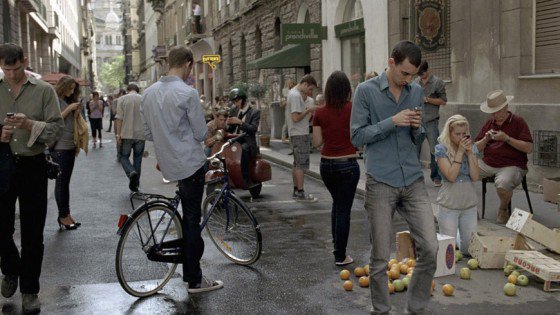
Yes, I’m talking about the Twitteratti, but also the tablet-tossers, laptop-layabouts and the iPhone-idiots. We have a saying in our family when we spot a smartphone zombie oblivious to oncoming traffic that she/he looks like a “… spastic fingering a sandwich” (not my quote, but I am particularly fond of using it).

Read the rest of this entry »


How to give a scientific presentation

15 08 2015

fearHaving just attended the joint 27th International Congress for Conservation Biology / 4th European Congress for Conservation Biology in Montpellier, France, I have a renewed vigour for proffering advice on the DOs and DO NOTs of giving a scientific presentation.

There are of course many different styles, formats, media and audiences for scientific presentations, so I’m going to outline only general issues of which you should be aware when preparing and delivering that often stress-inducing presentation. There are also many different durations of a scientific talk — including, but not limited to everything from a 5-minute speed talk to a full-on, dazzling, TEDx-like performance that can last for over an hour. Many of these principles apply to the full gamut of talk types, although various elements will have to be adjusted according to format. Only experience and plenty of advice can assist you in the tweaking.

Without further ado, here are the top 15 most important things to consider when preparing and giving a scientific presentation: Read the rest of this entry »


Twenty tips for writing a research proposal

4 05 2015

Proposal FormatThis post’s title might promise a lot, but it would be disingenuous of me to imply that I could cover all of the essential components of this massive topic in one blog post. Many people (my wife included) have made careers out of teaching people how to write successful grant proposals, so I won’t pretend to be comprehensive and insult their expertise. That said, I’ve been reasonably successful on the grants’ side of the science game, and I’ve assessed a fair few grant proposals in my day, so I think I can offer at least a few pointers. As usual, each person probably has her or his own way of doing things, so there’s unlikely to be a single, winning method. Approaches will also vary by funding agency and country of origin. I am therefore targeting the earlier-career people who have yet to get fully indoctrinated into the funding cycle, with generalities that should apply to most grant proposals.

1. A proposal is not an article, so don’t try to write it as one.

In the huge list of things ‘they never taught you as a student, but need to know to be a successful scientist’, this has got to be one of the biggies. Now I’m mainly talking about science here, but grant proposals cannot and should not follow the standard format of peer-reviewed articles. Articles tend to put an elaborate background up front, a complex description of hypotheses followed by an even more complex description of methods and results. Do not do this for a proposal. A proposal should be viewed more as a ‘pitch’ that hooks the assessor’s attention from the get-go. More on this aspect below.

2. Understand what the funder actually fundsRead the rest of this entry »


Write English well? Help get published someone who doesn’t

27 01 2015

imagesI’ve written before about how sometimes I can feel a little exasperated by what seems to be a constant barrage of bad English from some of my co-authors. No, I’m not focussing solely on students, or even native English speakers for that matter. In fact, one of the best (English) science writers with whom I’ve had the pleasure of working is a Spaniard (he also happens to write particularly well in Castellano). He was also fairly high up on the command-of-English ladder when he started out as my PhD student. So. There.

In other words, just because you grew up speaking the Queen’s doesn’t automatically guarantee that you’ll bust a phrase as easily as Shakespeare, Tolkien, Gould or Flannery; in fact, it might put you at a decided disadvantage compared to your English-as-a-second- (-third-, -fourth-, -fifth- …) language peers because they avoided learning all those terrible habits you picked up as you grunted your way through adolescence. Being forced to learn the grammar of another language often tends to make you grasp that of your mother tongue a little better.

So regardless of your background, if you’ve managed to beat the odds and know in your heart that you are in fact a good writer of science in English (you know who you are), I think you have a moral duty to help out those who still struggle with it. I’m not referring necessarily to the inevitable corrections you’ll make to your co-authors’ prose when drafting manuscripts1. I am instead talking about going out of your way to help someone who really, really needs it. Read the rest of this entry »


Get serious about divestment

21 11 2014

dh-logo1We are a sensitive and conflict-avoiding lot, aren’t we? Most scientists I know absolutely dread reprisals of any form, whether they are from a colleague commenting on their work, a sensationalism-seeking journalist posing nasty questions, or a half-wit troll commenting on a blog feed. For all our swagger and intellectual superiority complexes, most of us would rather lock ourselves in a room and do our work without anyone bothering us.

Fortunately for the taxpayer, we should not and cannot be this way. As I’ve stated before, we have at the very least a moral obligation to divulge our results to as many people as possible because for the most part, they pay us. If you work in any applied form of science (most of us do) – such as conservation, for example – then your moral obligation to make your work public extends to the entirety of humanity and the planet. That’s a staggering responsibility, and one of the reasons I’ve embraced many other forms of communication beyond the bog-standard scientific publication outlets.

There are many great examples of impressive science advocates out there – a few that come to mind are people like inter alia Lesley Hughes, James Hansen, Michael Mann, Paul Ehrlich, Bill Laurance, Barry BrookOve Hoegh-Guldberg, Tony Barnosky, Gretchen Daily, Emma Johnston, Stuart Pimm, and Hugh Possingham. There are even others willing to go to extraordinary lengths to make an evidence-based protest against society’s more inane actions. I’ve said it before, but it bears repeating – evidence-based advocacy can work.

To the topic at hand – I’ve been a little disappointed – to say the least – with the near-total silence emanating from my colleagues about the fossil-fuel divestment wave sweeping the world. While gaining traction worldwide, it wasn’t until The Australian National University took the bold move to divest (at least partially) from many of its fossil-fuel financial interests that it became a reality in Australia. Let’s face it – of all the types of institutions in our world, universities should be at the forefront of good, morally grounded and socially responsible investment strategies. They are, after all, meant to be filled with the most erudite, informed and cutting-edge people in the world, most of whom should have the best information at their fingertips regarding the precarious state of our environment. Read the rest of this entry »


Give some flair to your scientific presentation

18 11 2014

Smoko3

As the desert spring came to the great Centre Red,
Scores of sandalled folk from tin birds descend-ed.
Alice Town had been invaded,
Bearded alike and unshorn-legged.
 
They sat and stared at words and the odd trend.
Billies boiled to get them through to day’s end
They swapped bush stories that made good sense,
Trying to understand Aussie environments.
 
One bloke‘s tales caught the punters’ attention,
So this bush poet deserves special mention.
To standard rules he would not kowtow,
So his special science verse I present to you now.

If none of that made any sense, then let me help you out. At the last Ecological Society of Australia meeting in Alice Springs, I witnessed a rather unique way to give a scientific presentation – via bush poetry. Dr. Dale Nimmo of Deakin University was particularly engaging, and he agreed to have his presentation poem reproduced here. Who said scientists were boring? Honourable mention too to Simon Watson for another audience-engaging, bush-poetry seminar (but I don’t have that to reproduce here). There also might be a slidecast of Dale’s presentation coming soon. For now, please enjoy the poetic delivery of science in text.

The Old Grey Box of Heathcote Town

Dale Nimmo

Down around old Heathcote town, just east of Bendigo,
A big old grey box tree casts an eye.
The sallee fills the understory bright as sunlights glow,
As the silvereyes and thornbills flitter by.
 
This landscape, bruised and battered from 200 years of change,
Holds the secrets of a time lost somehow.
One of Jaara land, where lowan dug and dingoes howled,
The latter two, here, just distant memories now.
 
The gold rush came like bushfire, ring barked trees fell like boughs
Of the red gums scattered on the old flood plains,
That made way for sheep and cattle, while, fighting a losing battle,
rufous bettongs were never seen again.
 
When a man of English gentry, Professor Bennett was his name,
Found the woodlands to his aristocratic tastes.
Many days he’d venture in, binoculars under his chin,
He never let a single bird call go to waste.
 
While at the old St Arnaud Inn, over a couple pints of gin,
Bennet and a bloke called Radford got to talking.
Stealing horses was his game, but he’d give it all away,
To join Bennett in woodlands, bird walking

Read the rest of this entry »


InvaCost – estimating the economic damage of invasive insects

7 11 2014

insectinvasionThis is a blosh (rehash of someone else’s blog post) of Franck Courchamp‘s posts on an exciting new initiative of which I am excited to be a part. Incidentally, Franck’s spending the week here in Adelaide.

Don’t forgot to vote for the project to receive 50 000 € public-communication grant!

Climate change will make winters milder and habitats climatically more suitable year-round for cold-blooded animals like insects, but there are many questions remaining regarding whether such insects will be able to invade other regions as the climate shifts. There are many nasty bugs out there.

For example, the Asian predatory wasp is an invasive hornet in Europe that butchers pollinating insects, especially bees, thereby affecting the production of many wild and cultivated plants. I hope that we all remember what Einstein said about pollinators:

If bees were to disappear, humans will disappear within a few years.

(we all should remember that because it’s one of the few things he said that most of us understood). The highly invasive red fire ant is feared for its impacts on biodiversity, agriculture and cattle breeding, and the thousands of anaphylactic shocks inflicted to people by painful stings every year (with hundreds of deaths). Between the USA and Australia, over US$10 billion is spent yearly on the control of this insect alone. Tiger mosquitoes are vectors of pathogens that cause dengue fever, chikungunya virus and of about 30 other viruses. We could go on.

Most of these nasty creatures are now unable to colonise northern regions of Europe or America, or southern regions of Australia, for example, because they cannot survive cold temperatures. But how will this change? Where, when and which species will invade with rising temperatures? What will be the costs in terms of species loss? In terms of agricultural or forestry loss? In terms of diseases to cattle, domestic animals and humans? What will be the death toll if insects that are vectors of malaria can establish in new, highly populated areas?

We’ve proposed to study these and others from a list of 20 of the worst invasive insect species worldwide, and we got selected (i.e., financed!) by the Fondation BNP Paribas. In addition, the Fondation BNP Paribas has selected five scientific programmes on climate change and will give 50,000 € (that’s US$62,000) to the one selected by the public, for a communication project on their scientific programme. This is why we need you to vote for our project: InvaCost. Read the rest of this entry »


How to review a scientific paper

30 09 2014

F6a00d834521baf69e200e55471d80f8833-800wiollowing one of the most popular posts on ConservationBytes.com, as well as in response to several requests, I’ve decided to provide a few pointers for early-career scientists for reviewing manuscripts submitted to peer-reviewed journals.

Apart from publishing your first peer-reviewed paper – whether it’s in Nature or Corey’s Journal of Bullshit – receiving that first request to review a manuscript is one of the best indications that you’ve finally ‘made it’ as a recognised scientist. Finally, someone is acknowledging that you are an expert and that your opinions and critiques are important. You deserve to feel proud when this happens.

Of course, reviewing is the backbone of the scientific process, because it is the main component of science’s pursuit of objectivity (i.e., subjectivity reduction). No other human endeavour can claim likewise.

It is therefore essential to take the reviewing process seriously, even if you do so only from the entirely selfish perspective that if you do not, no one will seriously review your own work. It is therefore much more than an altruistic effort to advance human knowledge – it is at the very least a survival mechanism. Sooner or later if you get a reputation for providing bad reviews, or refuse to do them, your own publication track record will suffer as a result.

Just like there are probably as many different (successful) ways to write a scientific paper as there are journals, most people develop their own approaches for reviewing their colleagues’ work. But just as it’s my opinion that many journal editors do an awful job of editing, I know that many reviewers do rather a shit job at their assigned tasks. This perspective comes from many years as an author, a reviewer, an editor and a mentor.

So take my advice as you will – hopefully some of it will prove useful when you review manuscripts. Read the rest of this entry »


Great biodiversity cartoonists

1 07 2014

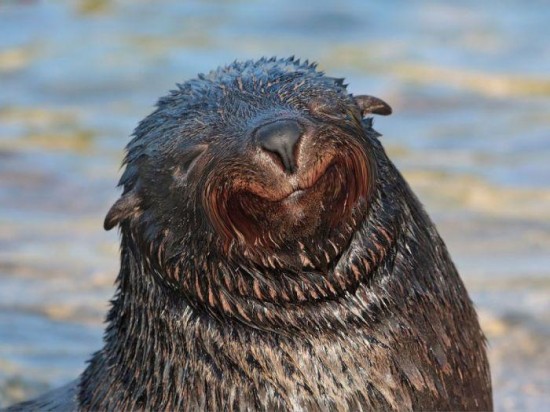
smiling fur sealAnyone who reads CB.com knows that I like to inject a bit of humour into my (often gloomy) messages. Sniggering, chortling, groaning and outright guffawing are useful ways to deal with the depressing topics conservation scientists examine every day. This is why I started the ‘Cartoon of the Week’ series, and now I have a compendium of quite a few biodiversity-related cartoons. Cartoons can also serve as wonderfully effective political tools if they manage to encapsulate the preposterousness of bad policies, navel-gazing politicians or Earth-buggering corporate tycoons. A good cartoon can be far more effective at transmitting a deep and complex message to a wide audience than most scientific articles.

Who are these gifted artists that bring together wit, humour and hard environmental truths into something that practically every scientist wants to include in conference presentations? I am inspired by some of these people, as I’m sure are many of you, so I decided to put together a little list of some of today’s better biodiversity cartoonists.

In no particular order of fame, relevance, focus on biodiversity, productivity or otherwise, I present to you my list of 10 great biodiversity cartoonists:

  • I suspect not many living outside of Australia would be familiar with the silly, yet extremely witty cartoons by First Dog on the Moon (also known as Andrew Marlton). I first came across this Melbournian when he was working for the newspaper Crikey, although he recently joined The Guardian Australia. He’s by no means what one would call an ‘environmental’ cartoonist, but there is a fair dose of (mainly Australian) biodiversity content in his cartoons. He is a self-entitled ‘marsupialist’, whatever that means (marsupial fetish, I think). I’ve even had the immense honour of having my own work immortalised in cartoon by this wonderful cartoonist.

© First Dog on the Moon

Read the rest of this entry »


I still fucking love biodiversity

2 06 2014
ifuckinglovebiodiversity © Bastien Laurent

© Bastien Laurent

One year ago, I launched the Facebook page “I fucking love biodiversity” (IFLB) with a post here on ConservationBytes. My goal was to get people talking about biodiversity in a positive and light-hearted way (absolutely no ‘doom and gloom’). Today, IFLB now has about 17500 fans/followers across three social media platforms. It has been an amazing experience.

I will start by admitting that I created IFLB under the assumption that “if you build it, they will come”. I thought a catchy name, goodwill and a few bells and whistles would land me a huge audience. I was wrong. It took some very serious work. And IFLB is still pretty small in the global social-media landscape.

Gladly, I don’t have to manage IFLB by myself. I have a crack team of admins that share the load. Kudos go to Laure Cugnière, Phoebe Maund, Lydia Tiller and Romina Henriques and our own in-house designer, Hannah Conduit, all of whom work on a totally volunteer basis. Thanks everyone – IFLB wouldn’t be possible without you.

During this last year, I estimate we have invested in IFLB the equivalent of nine working weeks to put out 2-3 posts every single day (yes, xmas and New Years included). That was the first lesson I learned: being part of an effort like this requires serious dedication. Not only because you need to find the most interesting content and the best photos to go with it, but because you also need to ensure all photos have copyright information, that what you are posting is not the result of Photoshop wizardry and of course, that your fans’ comments and messages don’t go unanswered. Read the rest of this entry »


Scientists should blog

27 05 2014
© Bill Porter

© Bill Porter

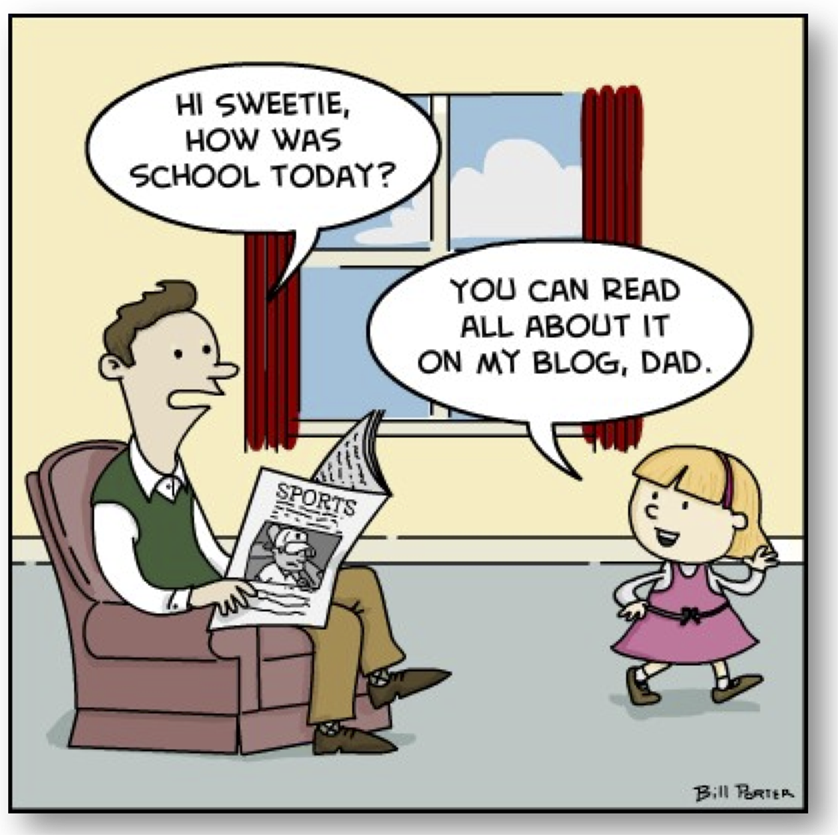
As ConservationBytes.com is about to tick over 1 million hits since its inception in mid-2008, I thought I’d share why I think more scientists should blog about their work and interests.

As many of you know, I regularly give talks and short courses on the value of social and other media for scientists; in fact, my next planned ‘workshop’ (Make Your Science Matter) on this and related subjects will be held at the Ecological Society of Australia‘s Annual Conference in Alice Springs later this year.

I’ve written before about the importance of having a vibrant, attractive and up-to-date online profile (along with plenty of other tips), but I don’t think I’ve ever put down my thoughts on blogging in particular. So here goes.

  1. The main reasons scientists should consider blogging is the hard, cold fact that not nearly enough people read scientific papers. Most scientists are lucky if a few of their papers ever top 100 citations, and I’d wager that most are read by only a handful of specialists (there are exceptions, of course, but these are rare). If you’re a scientist, I don’t have to tell you the disappointment of realising that the blood, sweat and tears shed over each and every paper is largely for nought considering just how few people will ever read our hard-won results. It’s simply too depressing to contemplate, especially considering that the sum of human knowledge is so vast and expanding that this trend will only ever get worse. For those reasons alone, blogging about your own work widens the readership by orders of magnitude. More people read my blog every day than will probably ever read the majority of my papers. Read the rest of this entry »


School finishers and undergraduates ill-prepared for research careers

22 05 2014

bad mathsHaving been for years now at the pointy end of the educational pathway training the next generation of scientists, I’d like to share some of my observations regarding how well we’re doing. At least in Australia, my realistic assessment of science education is: not well at all.

I’ve been thinking about this for some time, but only now decided to put my thoughts into words as the train wreck of our current government lurches toward a future guaranteeing an even stupider society. Charging postgraduate students to do PhDs for the first time, encouraging a US-style system of wealth-based educational privilege, slashing education budgets and de-investing in science while promoting the belief in invisible spaghetti monsters from space, are all the latest in the Fiberal future nightmare that will change our motto to “Australia – the stupid country”.

As you can appreciate, I’m not filled with a lot of hope that the worrying trends I’ve observed over the past 10 years or so are going to get any better any time soon. To be fair though, the problems go beyond the latest stupidities of the Fiberal government.

My realisation that there was a problem has crystallised only recently as I began to notice that most of my lab members were not Australian. In fact, the percentage of Australian PhD students and post-doctoral fellows in the lab usually hovers around 20%. Another sign of a problem was that even when we advertised for several well-paid postdoctoral positions, not a single Australian made the interview list (in fact, few Australians applied at all). I’ve also talked to many of my colleagues around Australia in the field of quantitative ecology, and many lament the same general trend.

Is it just poor mathematical training? Yes and no. Australian universities have generally lowered their entry-level requirements for basic maths, thereby perpetuating the already poor skill base of school leavers. Why? Bums (that pay) on seats. This means that people like me struggle to find Australian candidates that can do the quantitative research we need done. We are therefore forced to look overseas. Read the rest of this entry »


Alliance of Leading Environmental Researchers and Thinkers

11 03 2014

ALERTIf you’ve been following this blog or my Twitter feed over the last few weeks, you’ve surely noticed a few references to A.L.E.R.T. – the Alliance of Leading Environmental Researchers and Thinkers. You might also have asked yourself, what exactly is ALERT, and is it something I should pay attention to?

Today’s post attempts to explain this new organisation, and hopefully convince you that the answer to the second question is ‘yes’.

Several months ago, a slightly cryptic e-mail from eminent conservation biologist, Bill Laurance, arrived in my inbox. It asked – what do you think of this logo (see associated image)? A few e-mails later and a couple of minor tweaks, and we ended up with what I thought was a pretty cool logo for this new ‘ALERT’ thing. It wasn’t until quite some time later that I finally understood what Bill was attempting to create.

Is ALERT a news aggregator, a blog, an advocacy group, a science-communication resource or a science-policy interface? Why, yes it is!

Read the rest of this entry »


Work-life ‘balance’ – can academics achieve it?

16 12 2013

WorkLifeBalanceA little over a week ago I was asked by the Royal Institution of Australia (RiAus) to sit on a panel with Professor Tanya Munro to speak about achieving that elusive ‘life-work balance’. The event was part of the ECRchat network.

The evening was well-attended, and even more so online; now the video is available and I reproduce it here for your viewing pleasure.

I hope you have some interesting insights that we didn’t have – essentially the conclusion is that there really isn’t one; you’ve got to find your own system that works, and nothing works perfectly. Read the rest of this entry »


Biowealth: all creatures great and small

4 12 2013

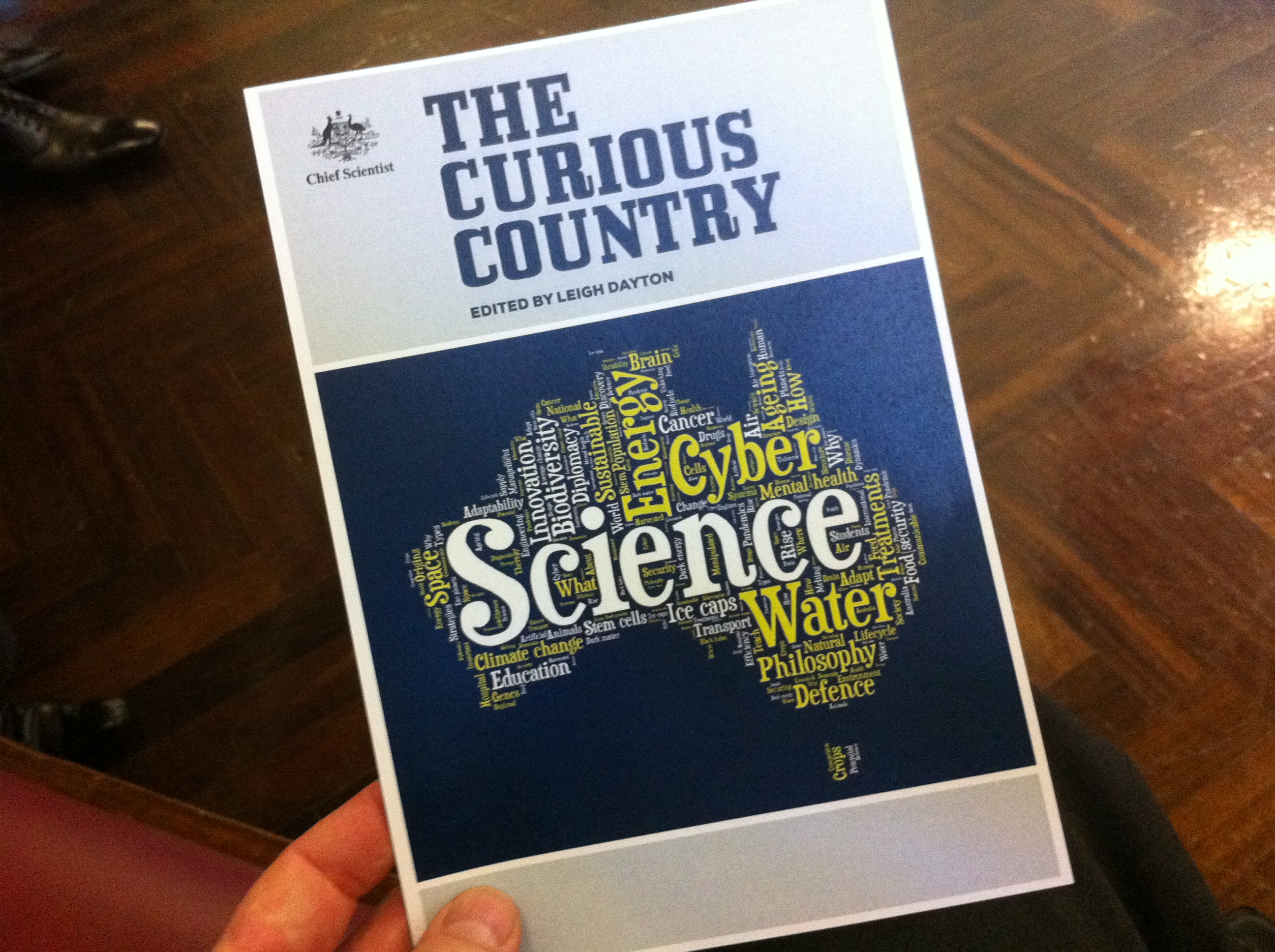
Curious Country flyer“So consider the crocodiles, sharks and snakes, the small and the squirmy, the smelly, slimy and scaly. Consider the fanged and the hairy, the ugly and the cute alike. The more we degrade this astonishing diversity of evolved life and all its interactions on our only home, the more we expose ourselves to the ravages of a universe that is inherently hostile to life.”

excerpt from ‘Biowealth: all creatures great and small’ The Curious Country (C.J.A. Bradshaw 2013).

I’ve spent the last few days on the east coast with my science partner-in-crime, Barry Brook, and one of our newest research associates (Marta Rodrigues-Rey Gomez). We first flew into Sydney at sparrow’s on Monday, then drove a hire car down to The ‘Gong to follow up on some Australian megafauna databasing & writing with Bert Roberts & Zenobia Jacobs. On Tuesday morning we then flitted over to Canberra where we had the opportunity to attend the official launch of a new book that Barry and I had co-authored.

The book, The Curious Country, is an interesting experiment in science communication and teaching dreamed up by Australia’s Chief Scientist, Professor Ian Chubb. Realising that the average Aussie has quite a few questions about ‘how stuff works’, but has little idea how to answer those questions, Ian engaged former Quantum star and science editor, Leigh Dayton, to put together a short, punchy, topical and easily understood book about why science is good for the country.

Yes, intuitive for most of you out there reading this, but science appreciation isn’t always as high as it should be amongst the so-called ‘general public’. Ian thought this might be one way to get more people engaged.

When honoured with the request to write an interesting chapter on biodiversity for the book, I naturally accepted. It turns out Barry was asked to do one on energy provision at the same time (but we didn’t know we had both been asked at the time). Our former lab head, Professor David Bowman, was also asked to write a chapter about fire risk, so it was like a mini-reunion yesterday for the three of us.

Read the rest of this entry »


Making science matter

14 10 2013
© XKCD

© XKCD

I’ve been home from my last overseas trip now for nearly two weeks, but despite not feeling caught up, it’s high time I report what I was up to.

Some of you who follow my Twitter feed or who saw a CB post about cartoonist Seppo Leinonen know that I was visiting the University of Helsinki to participate in a three-day short course for PhD students entitled ‘Making Science Matter‘. I was so impressed with how well Mar Cabeza and Tomas Roslin put together the course, that I thought I’d share the format with CB readers (just in case any of you out there can be convinced to design a similar course at your university).

I think it’s important first to discuss the philosophy of the course and what it hoped to provide those early-career researchers.

Most science PhD students will tell you once they’ve completed their degree that they feel completely unprepared to launch themselves into the extra-curricular world of communicating their science beyond the ‘traditional’ (peer-reviewed journals) outlets. Swamped with learning how to write concisely and clearly, getting up to speed with the entire body of theory on which their projects are based, mastering advanced modelling and statistical approaches and learning how to apply efficient computer code, it’s no wonder that many students find precious little time for anything else (including families, good food and proper hygiene).

Once they do land that precious post-doctoral fellowship though, they are immediately expected to interact professionally with the media, embrace social media and give fantastic public lectures to engage the uninformed. Right. Read the rest of this entry »


Science immortalised in cartoon Version 2.0

24 09 2013

© Seppo Leinonen

I’m in the middle of participating in a short-course on science communication based at the University of Helsinki‘s Lammi Biological Station (about 1.5 hours north of Helsinki by car). Organised by two fantastic people, Mar Cabeza and Tomas Roslin, it’s an eclectic mix of instruction for (mainly) PhD students on how to promote yourself and your science in print, in media, in illustration, in citizen science and for policy makers.

While we aren’t yet finished, I wanted to report that I had the immense pleasure of finally meeting the immeasurably talented environmental cartoonist, Seppo Leinonen. Not only is he an extremely talented artist and a dedicated environmentalist, he’s just a top bloke.

If you haven’t checked out Seppo.net and his cartoons yet, you should.

This is just a brief post to spruik his fine work, and show off his parting cartoon gift to me: Read the rest of this entry »


Early to press is best for success

19 09 2013

publishingThis paper is bound to piss off a few people. So be it. This is what we found, regardless of what you want to believe.

Led by the extremely prolific Bill Laurance, we have just published a paper (online early) that looks at the correlates of publication success for biologists.

I have to preface the main message with a little philosophical discussion of that loaded word – ‘success’. What do we mean by scientific ‘success’? There are several bucket loads of studies that have attempted to get at this question, and several more that have lamented the current system that emphasises publication, publication, publication. Some have even argued that the obsession of ever-more-frequent publication has harmed scientific advancement because of our preoccupation with superficial metrics at the expense of in-depth scientific enquiry.

Well, one can argue these points of view, and empirically support the position that publication frequency is a poor metric. I tend to agree. At the same time, I am not aware of a single scientist known for her or his important scientific contributions that doesn’t have a prolific publication output. No, publishing shitloads of papers won’t win you the Nobel Prize, but if you don’t publish, you won’t win either.

So, publication frequency is certainly correlated with success, even if it’s not the perfect indicator. But my post today isn’t really about that issue. If you accept that writing papers is part of a scientist’s job, then read on. If you don’t, well …

So today I report the result of our study published online in BioScience, Predicting publication success for biologists. We asked the question: what makes someone publish more than someone else? Read the rest of this entry »


I fucking love biodiversity

18 06 2013
© G. Gallice

© G. Gallice

A corker of an idea, and post, from Diogo Veríssimo.

I don’t like biodiversity. I like beef lasagna, I like the British museum and I like everything Jules Verne ever wrote. When it comes to biodiversity, it’s different. I think about it all the time, try to be close to it and suffer emotional distress when I think of it going irretrievably away. This is LOVE.

Understanding how to get this passion across effectively has always been one of my main goals. That is why my research has focused on the links between marketing and conservation. But recently I started feeling a bit more empowered to take this mission seriously, and all thanks to the Facebook page I fucking love Science. This page became an internet sensation amassing more than 5 million fans and engaging frequently over 4 million users in any given week. Forget the New York Times and National Geographic, this is the real deal.

So I wondered, why can’t I do the same for biodiversity? The idea lingered in my head until I read a recent paper by McCallum and Bury on Google search patterns, which shows how even during the United Nations Decade on Biodiversity we are failing to mainstream biodiversity and its associated issues. If fact, people seem to be less interested. Whatever we are doing is clearly not working. So why not give this concept a try? And so I fucking love Biodiversity (IFLB) was born.

Read the rest of this entry »


Learning how to fail

6 06 2013

On the way to work yesterday I was listening to ABC Radio National‘s Life Matters program hosted by Natasha Mitchell about how school children are now apparently being given so much positive praise and encouragement that they can no longer handle failure. Poor, wee dears. Maybe that’s why we have such a high attrition rate once they get up to postgraduate level, because that’s when they REALLY experience failure.

Jokes and whinges aside, there is a hard truth in that message that applies to all scientists, and especially the early-career ones. I’m talking about having your paper rejected from a journal.

Even the terms we use to describe the peer-review gauntlet appear designed to instil fear and inadequacy: reject or accept. I don’t know how many times I’ve seen a PhD student’s face figuratively melt off the skull as they shuffle into my office to show me the journal’s rejection letter (now just usually forwarded in an email accompanied by implied stooped shoulders – is there an emoticon for that?). As I’ve mentioned before, we scientists can be real bastards to each other, and it comes out in spades during peer review.

While neophytes tend to take these hits the hardest, I want to impart a little wisdom from some of my very well-established and successful colleagues. Rejection should be viewed as an asset, not a mark of failure. Let me explain. Read the rest of this entry »