Fear of humans

28 08 2025

Many animals avoid contact with people. In protected areas of the African savanna, mammals flee more intensely upon hearing human conversations than when they hear lions or sounds associated with hunting. This fear of humans affects how species use and move in their habitat.

Throughout our lives, we interact with hundreds of wildlife species without stopping to think about it. These interactions can be direct, such as encountering wild animals while hiking in the mountains or driving through rural areas — or more deliberate, as when we engage with wildlife for food, sport, or trade. As hunters, fishers, and collectors, we kill more than 15,000 species of vertebrates — one-third of known diversity — a range of prey 300 times greater than that of any other predator our size (1).

Now, let’s look at it from the other side. Anyone who has survived an attack or a fatal accident, they understand that the experience is remembered for a lifetime. Likewise, animals store information about threatening or harmful encounters with humans (2). For them, adjusting their behaviour in response to human presence has implications for their survival and reproduction (3, 4), which are passed down from generation to generation (5). This ability to adapt, for example, determines which individuals, populations and species coexist with us in urbanised environments (6).

Response to dangerous sounds

Liana Zanette and her team measured the flight responses of wild mammals in the Greater Kruger National Park (South Africa) when exposed to sounds that signal danger (7) [video-summary]. To do this, Zanette recorded videos of more than 4,000 visits to 21 waterholes by 18 mammal species. During each visit, a speaker attached to a tree randomly played one of five playback sounds: hunting dogs barking, gunshots, lion growls, human conversations in a calm tone and, as a control, the songs of harmless birds.
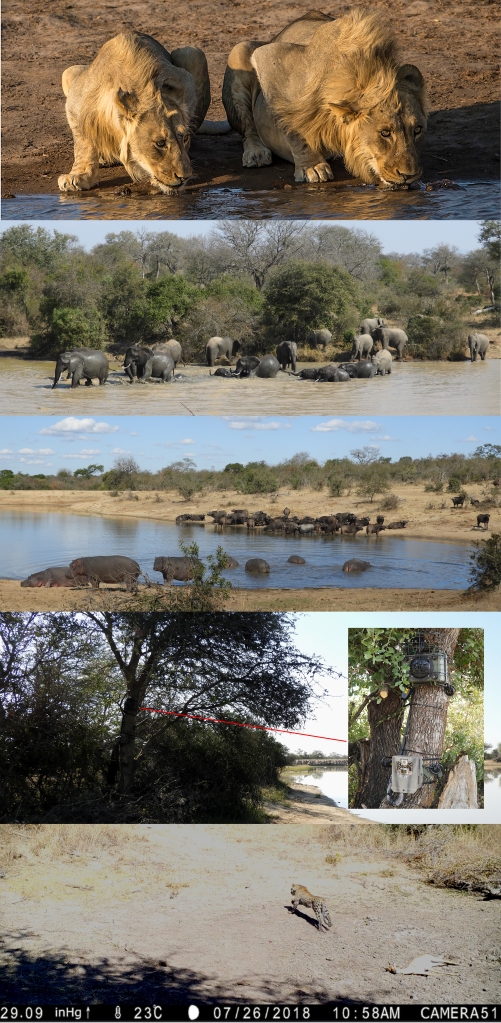
Large mammals at waterholes in the Greater Kruger National Park (GPNK, South Africa) (7). GPNK covers an area of 1,800 km² to the east of Kruger National Park (19,500 km²). While Kruger is state-owned, GPNK is managed by private and community landowners. It has no fences, allowing free movement of animals between the two parks. The top three photos show: two lions (Panthera leo), a herd of African elephants (Loxodonta africana), and groups of common hippos (Hippopotamus amphibius) and African buffalo (Syncerus caffer). To study the flight response of Kruger’s mammals to threatening sounds (7), the bottom two photos illustrate the distance from the water to the speaker-video [ABR] device, which was secured to a tree inside a steel bite- and impact-proof case, and a leopard (Panthera pardus) fleeing after hearing a recorded human conversation, leaving behind an impala (Aepyceros melampus) it had just captured at a waterhole. The playback dialogues used in the experiment were in local languages: Afrikaans, English, Northern Sotho, and Tsonga. See documentaries on Kruger: (i) Aerial Africa: Kruger National Park, (ii) A guide to Kruger Park 2023 Wildlife and (iii) Exploring Klaserie: untamed & wild in the Greater Kruger. Overall, waterholes (see Kruger video-examples here, here and here), both natural and artificial, play a crucial role in shaping the ecology of African savannahs by influencing wildlife distribution, vegetation dynamics and overall ecosystem health. Photo credits: Naas Rautenbach (lions) and Liana Zanette.

Read the rest of this entry »


The colour of survival

6 05 2025

In boreal forests, many hares adopt white winter coats before the snow arrives. In a snowless landscape, these white hares lack camouflage against predators. However, their early moult from brown into white fur can increase their survival and offers an advantage as the snow season becomes progressively shorter with climate change.


Throughout the year, we wear different clothing to protect ourselves from the cold or heat and for aesthetic reasons depending on the occasion. Likewise, many animals change the colour, thickness and structure of their fur and feathers in tune with the seasons.

Snowshoe hare (Lepus americanus) in a snowy (Kluane Lake/Yukon, Canada) and snowless habitat (Seely Lake/Montana, USA). This mammal moults its coat as colder temperatures, shorter days, and snowfall arrive. In the genetic populations of the temperate forests of the Rocky Mountains and the boreal forests spanning the North American continent, hares that moult from brown to white are abundant (20). However, in coastal areas, and in the third genetic population in the North Pacific, snowfall is brief and less intense, resulting in fewer white individuals. This is due to hybridisation with the black-tailed jackrabbit (Lepus californicus) over 3,000 years ago (17). The hare’s coat has an outer layer, where the longer fur gives each individual its colour, and an inner layer of short fur (19). In winter, the outer layer becomes thicker and denser, while the inner layer maintains a consistent thickness but increases in density. By biomass, the snowshoe hare is the primary herbivore in the North American boreal forest and distinguishes the trophic relationships between continents (21). In Europe, much of the boreal understory remains under snow, providing food for rodents with four-year abundance cycles controlled by small generalist predators (mustelids). In North America, the boreal understory grows above the snow and provides food for hares. In this region, snowshoe hare populations follow 10-year abundance cycles regulated by specialist predators (those that feed almost exclusively on hares), primarily the Canada lynx (Lynx canadensis) (6). Photos courtesy of Alice Kenney and Charles Krebs (Yukon) [see their ecological monitoring program here] and Marketa Zimova (Montana).

However, as the climate changes, springs arrive earlier, winters are delayed, and the frequency and intensity of precipitation have become highly variable. All of this makes it harder for species to adjust their wardrobe to temperature changes (1).

In this context, body colour is a critical factor for birds and mammals that undergo an annual moult (2). In 21 species from the cold latitudes of the Northern Hemisphere, some individuals are brown in summer, but turn white in winter, while others remain brown year round (3). This phenomenon includes weasels, rodents, ptarmigans, foxes, rabbits and hares.

Read the rest of this entry »


Human impact, extinctions, and the biodiversity crisis

22 08 2024

Human overpopulation is often depicted in the media in one of two ways: as either a catastrophic disaster or an overly-exaggerated concern. Yet the data understood by scientists and researchers is clear. So what is the actual state of our overshoot, and, despite our growing numbers, are we already seeing the signs that the sixth mass extinction is underway?

In a recent episode of The Great Simplification podcast, Nate Hagens was joined by global ecologist Corey Bradshaw to discuss his recent research on the rapid decline in biodiversity, how population and demographics will change in the coming decades, and what both of these will mean for complex global economies currently reliant on a stable environment.

Read the rest of this entry »


Influential conservation papers of 2022

3 01 2023

Following my annual tradition, I present the retrospective list of the ‘top’ 20 influential papers of 2022 as assessed by experts in Faculty Opinions (formerly known as F1000). These are in no particular order. See previous years’ lists here: 2021, 2020, 201920182017201620152014, and 2013.


Genetic variance in fitness indicates rapid contemporary adaptive evolution in wild animals — “… this paper adds a much-needed perspective to the status of genetic diversity and adaptive potential in contemporary populations.

Habitat, geophysical, and eco-social connectivity: benefits of resilient socio-ecological landscapes — “… distinguishes four distinct but interrelated types of connectivity: landscape, habitat, geophysical, and eco-social connectivity, of which the fourth type is new. The authors discuss how these different types of connectivity are related to ecosystem services and disservices, and how they interact with each other to influence landscape sustainability issues.

Glyphosate impairs collective thermoregulation in bumblebees — “… low-dose glyphosate, combined with global increases in temperature, converge to disrupt homeostatic regulation in bee colonies. This is a crucial revelation for understanding the loss of bees across the globe, as they serve as major pollinators in nature and agriculture.

Human disturbances affect the topology of food webs — “… provides great opportunities for the study of food web structures, their dynamics and stability under different human influences.

A comprehensive database of amphibian heat tolerance — “provides estimates of amphibian upper thermal limits – a relevant trait for assessing the vulnerability of this highly-threatened group of ectotherms to rising temperatures – derived from thousands of experimental studies.”

Read the rest of this entry »


Children born today will see literally thousands of animals disappear in their lifetime, as global food webs collapse

17 12 2022
Frida Lannerstrom/Unsplash, CC BY

Corey J. A. Bradshaw, Flinders University and Giovanni Strona, University of Helsinki

Climate change is one of the main drivers of species loss globally. We know more plants and animals will die as heatwaves, bushfires, droughts and other natural disasters worsen.

But to date, science has vastly underestimated the true toll climate change and habitat destruction will have on biodiversity. That’s because it has largely neglected to consider the extent of “co-extinctions”: when species go extinct because other species on which they depend die out.

Our new research shows 10% of land animals could disappear from particular geographic areas by 2050, and almost 30% by 2100. This is more than double previous predictions. It means children born today who live to their 70s will witness literally thousands of animals disappear in their lifetime, from lizards and frogs to iconic mammals such as elephants and koalas.

But if we manage to dramatically reduce carbon emissions globally, we could save thousands of species from local extinction this century alone.

Ravages of drought will only worsen in coming decades.
CJA Bradshaw

An extinction crisis unfolding

Every species depends on others in some way. So when a species dies out, the repercussions can ripple through an ecosystem.

For example, consider what happens when a species goes extinct due to a disturbance such as habitat loss. This is known as a “primary” extinction. It can then mean a predator loses its prey, a parasite loses its host or a flowering plant loses its pollinators.

A real-life example of a co-extinction that could occur soon is the potential loss of the critically endangered mountain pygmy possum (Burramys parvus) in Australia. Drought, habitat loss, and other pressures have caused the rapid decline of its primary prey, the bogong moth (Agrotis infusa).

Read the rest of this entry »


Fallacy of zero-extinction targets

20 05 2022

Nearly a decade ago (my how time flies*), I wrote a post about the guaranteed failure of government policies purporting no-extinction targets within their environmental plans. I was referring to the State of South Australia’s (then) official policy of no future extinctions.

In summary, zero- (or no-) extinction targets at best demonstrate a deep naïvety of how ecology works, and at worst, waste a lot of resources on interventions doomed to fail.

1. Extinctions happen all the time, irrespective of human activity;

2. Through past environmental degradation, we are guaranteed to see future extinctions because of extinction lags;

3. Few, if any, of the indicators of biodiversity change show improvement.

4. Climate change will also guarantee additional (perhaps even most) future extinctions irrespective of Australian policies.

I argued that no-extinction policies are therefore disingenuous to the public in the extreme because they sets false expectations, engender disillusionment after inevitable failure, and ignores the concept of triage — putting our environment-restoration resources toward the species/systems with the best chance of surviving (uniqueness notwithstanding).

Read the rest of this entry »


The sixth mass extinction is happening now, and it doesn’t look good for us

2 03 2022

Mounting evidence is pointing to the world having entered a sixth mass extinction. If the current rate of extinction continues we could lose most species by 2200. The implication for human health and wellbeing is dire, but not inevitable.

In the timeline of fossil evidence going right back to the first inkling of any life on Earth — over 3.5 billion years ago — almost 99 percent of all species that have ever existed are now extinct. That means that as species evolve over time — a process known as ‘speciation’ — they replace other species that go extinct.

Extinctions and speciations do not happen at uniform rates through time; instead, they tend to occur in large pulses interspersed by long periods of relative stability. These extinction pulses are what scientists refer to as mass extinction events.

The Cambrian explosion was a burst of speciation some 540 million years ago. Since then, at least five mass extinction events have been identified in the fossil record (and probably scores of smaller ones). Arguably the most infamous of these was when a giant asteroid smashed into Earth about 66 million years ago in what is now the Gulf of Mexico. The collision vapourised species immediately within the blast zone. Later, species were killed off by climate change arising from pulverised particulates suspended in the atmosphere, as well as intense volcano activity stimulated by the buckling of the Earth’s crust from the asteroid’s impact. Together, about 76 percent of all species around at the time went extinct, of which the disappearance of the dinosaurs is most well-known. But dinosaurs didn’t disappear altogether — the survivors just evolved into birds.

Read the rest of this entry »


Extinct megafauna prone to ancient hunger games

14 12 2021

I’m very chuffed today to signal the publication of what I think is one of the most important contributions to the persistent conundrum surrounding the downfall of Australia’s megafauna many tens of millennia ago.

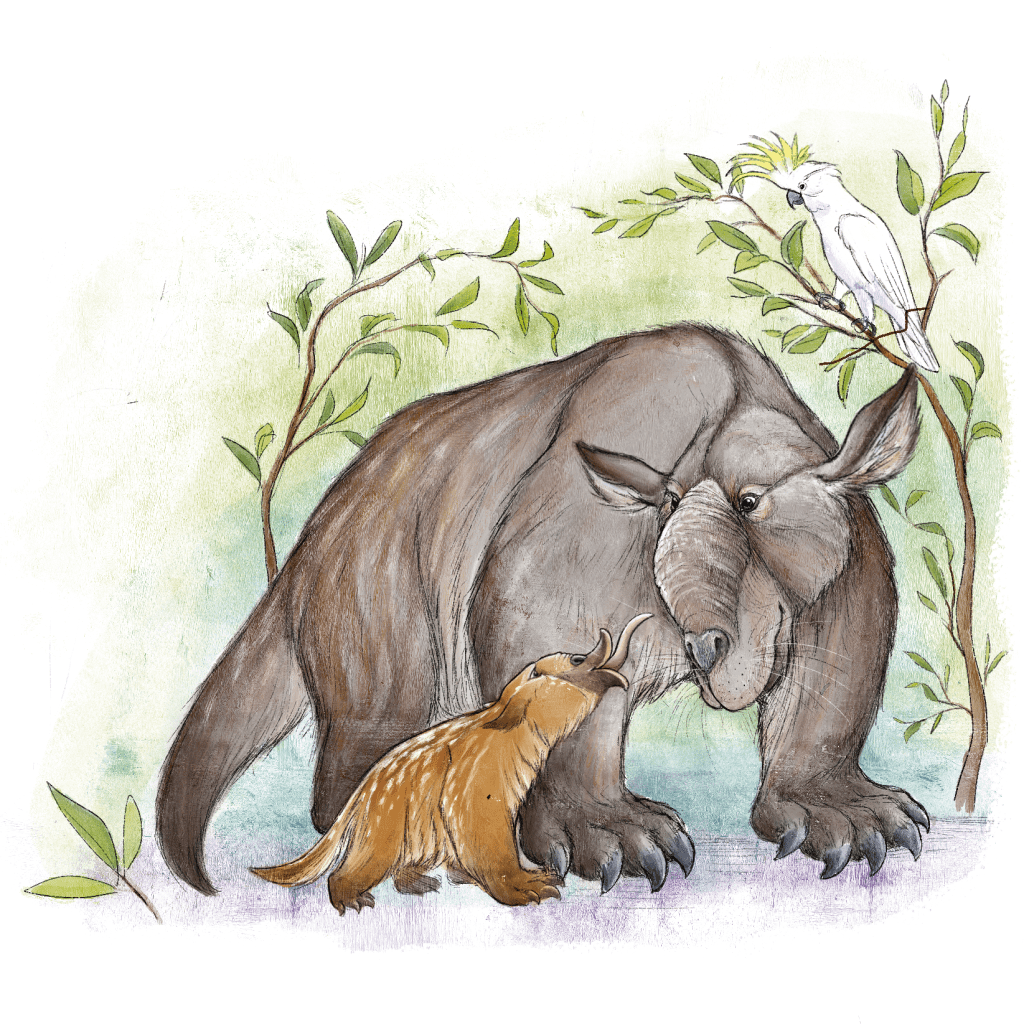
Diprotodon optimum. Artwork by palaeontologist and artist Eleanor (Nellie) Pease (commissioned by the ARC Centre of Excellence for Australian Biodiversity and Heritage)

Sure, I’m obviously biased in that assessment because it’s a paper from our lab and I’m a co-author, but if readers had any inkling of the work that went into this paper, I think they might consider adopting my position. In addition, the injection of some actual ecology into the polemic should be viewed as fresh and exciting.

Having waded into the murky waters of the ‘megafauna debate’ for about a decade now, I’ve become a little sensitive to even a whiff of binary polemic surrounding their disappearance in Australia. Acolytes of the climate-change prophet still beat their drums, screaming for the smoking gun of a spear sticking out of a Diprotodon‘s skull before they even entertain the notion that people might have had something to do with it — but we’ll probably never find one given the antiquity of the event (> 40,000 years ago). On the other side are the blitzkriegers who declaim that human hunting single-handedly wiped out the lot.

Well, as it is for nearly all extinctions, it’s actually much more complicated than that. In the case of Sahul’s megafauna disappearances, both drivers likely contributed, but the degree to which both components played a part depends on where and when you look — Fred Saltré demonstrated that elegantly a few years ago.

Palorchestes. Artwork by palaeontologist and artist Eleanor (Nellie) Pease (commissioned by the ARC Centre of Excellence for Australian Biodiversity and Heritage)

So, why does the polemic persist? In my view, it’s because we have largely depended on the crude comparison of relative dates to draw our conclusions. That is, we look to see if some climate-change proxy shifted in any notable way either before or after an inferred extinction date. If a particular study claims evidence that a shift happened before, then it concludes climate change was the sole driver. If a study presents evidence that a shift happened after, then humans did it. Biases in geochronological inference (e.g., spatial, contamination), incorrect application of climate proxies, poor taxonomic resolution, and not accounting for the Signor-Lipps effect all contribute unnecessarily to the debate because small errors or biases can flip relative chronologies on their head and push conclusions toward uncritical binary outcomes. The ‘debate’ has been almost entirely grounded on this simplistically silly notion.

This all means that the actual ecology has been either ignored or merely made up based on whichever pet notion of the day is being proffered. Sure, there are a few good ecological inferences out there from some damn good modellers and ecologists, but these have all been greatly simplified themselves. This is where our new paper finally takes the ecology part of the problem to the next level.

Led by Global Ecology and CABAH postdoctoral fellow, John Llewelyn, and guided by modelling guru Giovanni Strona at University of Helsinki, the paper Sahul’s megafauna were vulnerable to plant-community changes due to their position in the trophic network has just been published online in Ecography. Co-authors include Kathi Peters, Fred Saltré, and me from Flinders Global Ecology, Matt McDowell and Chris Johnson from UTAS, Daniel Stouffer from University of Canterbury (NZ), and Sara de Visser from University of Groningen (Netherlands).

Read the rest of this entry »


Losing half of tropical fish species as corals disappear

30 06 2021

When snorkelling in a reef, it’s natural to think of coral colonies as a colourful scenography where fish act in a play. But what would happen to the fish if the stage went suddenly empty, as in Peter Brook’s 1971 Midsummer Night’s Dream? Would the fish still be there acting their roles without a backdrop?


This question is not novel in coral-reef science. Ecologists have often compared reef fish diversity and biomass in selected localities before and after severe events of coral mortality. Even a temporary disappearance of corals might have substantial effects on fish communities, sometimes resulting in a local disappearance of more than half of local fish species.

Considering the multiple, complex ways fish interact with — and depend on — corals, this might appear as an obvious outcome. Still, such complexity of interactions makes it difficult to predict how the loss of corals might affect fish diversity in specific contexts, let alone at the global scale.

Focusing on species-specific fish-coral associations reveals an inconsistent picture with local-scale empirical observations. When looking at the fraction of local fish diversity that strictly depends on corals for food and other more generic habitat requirements (such as shelter and reproduction), the global picture suggests that most fish diversity in reef locality might persist in the absence of corals. 

The mismatch between this result and the empirical evidence of a stronger coral dependence suggests the existence of many hidden ecological paths connecting fish to corals, and that those paths might entrap many fish species for which the association to corals is not apparent.

Read the rest of this entry »


Extinction cascades

3 06 2020

A recent online interview I did on the role of extinction cascades in mass extinctions:


Victoria, please don’t aerial-bait dingoes

10 10 2019

Here’s a submission to Victoria’s proposed renewal of special permission from the Commonwealth to poison dingoes:

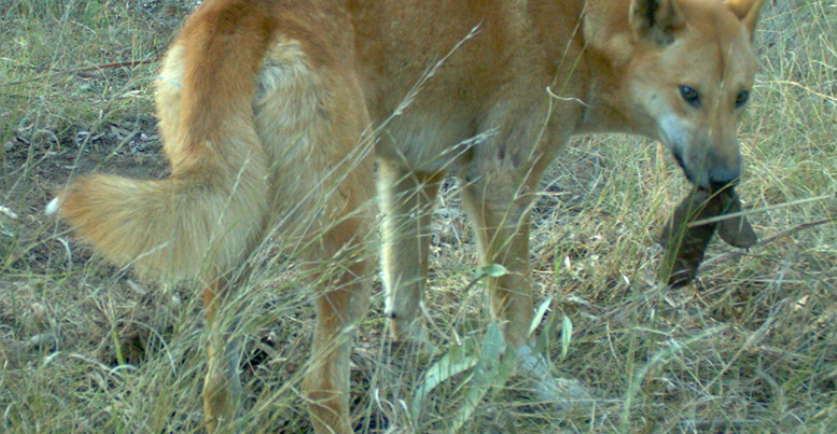
dingo with bait

08 October 2019

Honourable Lily D’Ambrosio MP
Minister for Energy, Environment and Climate Change
Level 16, 8 Nicholson Street, East Melbourne, VIC 3002

lily.dambrosio@parliament.vic.gov.au

cc:

The Hon Jaclyn Symes, Minister for Agriculture, Victoria

(jaclyn.symes@parliament.vic.gov.au)

Dr Sally Box, Threatened Species Commissioner

(ThreatenedSpeciesCommissioner@environment.gov.au)

The Hon Sussan Ley MP, Minister for Environment, Australia

(Farrer@aph.gov.au)

RE: RENEWAL OF AERIAL BAITING EXEMPTION IN VICTORIA FOR WILD DOG CONTROL USING 1080

Dear Minister,

The undersigned welcome the opportunity to comment on the proposed renewal of special permission from the Commonwealth under Sections 18 and 18A of the Environment Protection and Biodiversity Conservation Act 1999 (Commonwealth) to undertake aerial 1080 baiting in six Victorian locations for the management of ‘wild dogs’. This raises serious concerns for two species listed as threatened and protected in Victoria: (1) dingoes and (2) spot-tailed quolls (Dasyurus maculatus).

First, we must clarify that the terminology ‘wild dog’ is not appropriate when discussing wild canids in Australia. One of the main discussion points at the recent Royal Zoological Society of NSW symposium ‘Dingo Dilemma: Cull, Contain or Conserve’ was that the continued use of the terminology ‘wild dog’ is not justified because wild canids in Australia are predominantly dingoes and dingo hybrids, and not, in fact, feral domestic dogs. In Victoria, Stephens et al. (2015) observed that only 5 out of 623 wild canids (0.008%) sampled were feral domestic dogs with no evidence of dingo ancestry. This same study determined that 17.2% of wild canids in Victoria were pure or likely pure dingoes and 64.4% were hybrids with greater than 60% dingo ancestry. Additionally, comparative studies by Jones (1988, 1990 and 2009) observed that dingoes maintained a strong phenotypic identity in the Victorian highlands over time, and perceptively ‘wild dog’ like animals were more dingo than domestic dog.

As prominent researchers in predator ecology, biology, archaeology, cultural heritage, social science, humanities, animal behaviour and genetics, we emphasise the importance of dingoes in Australian, and particularly Victorian, ecosystems. Dingoes are the sole non-human, land-based, top predator on the Australian mainland. Their importance to the ecological health and resilience of Australian ecosystems cannot be overstated, from regulating wild herbivore abundance (e.g., various kangaroo species), to reducing the impacts of feral mesopredators (cats, foxes) on native marsupials (Johnson & VanDerWal 2009; Wallach et al. 2010; Letnic et al. 20122013; Newsome et al. 2015; Morris & Letnic 2017). Their iconic status is important to First Nations people and to the cultural heritage of all Australians. Read the rest of this entry »
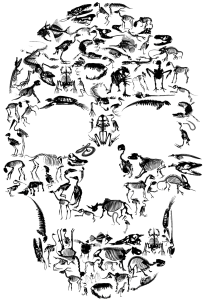


The Great Dying

30 09 2019

Here’s a presentation I gave earlier in the year for the Flinders University BRAVE Research and Innovation series:

There is No Plan(et) B — What you can do about Earth’s extinction emergency

Earth is currently experiencing a mass extinction brought about by, … well, … us. Species are being lost at a rate similar to when the dinosaurs disappeared. But this time, it’s not due to a massive asteroid hitting the Earth; species are being removed from the planet now because of human consumption of natural resources. Is a societal collapse imminent, and do we need to prepare for a post-collapse society rather than attempt to avoid one? Or, can we limit the severity and onset of a collapse by introducing a few changes such as removing political donations, becoming vegetarians, or by reducing the number of children one has?

Read the rest of this entry »


Penguins cheated by ecosystem change

13 03 2018

Jorge Drexler sings “… I was committed not to see what I saw, but sometimes life is more complex than what it looks like …”*. This excerpt by the Oscar-winning Uruguayan singer seems to foretell the theme of this blog: how the ecological complexity of marine ecosystems can elicit false signals to their predators. Indeed, the fidelity of marine predators to certain feeding areas can turn demographically detrimental to themselves when the amount of available food shrinks. A study of jackass penguins illustrates the phenomenon in a context of overfishing and ocean warming.

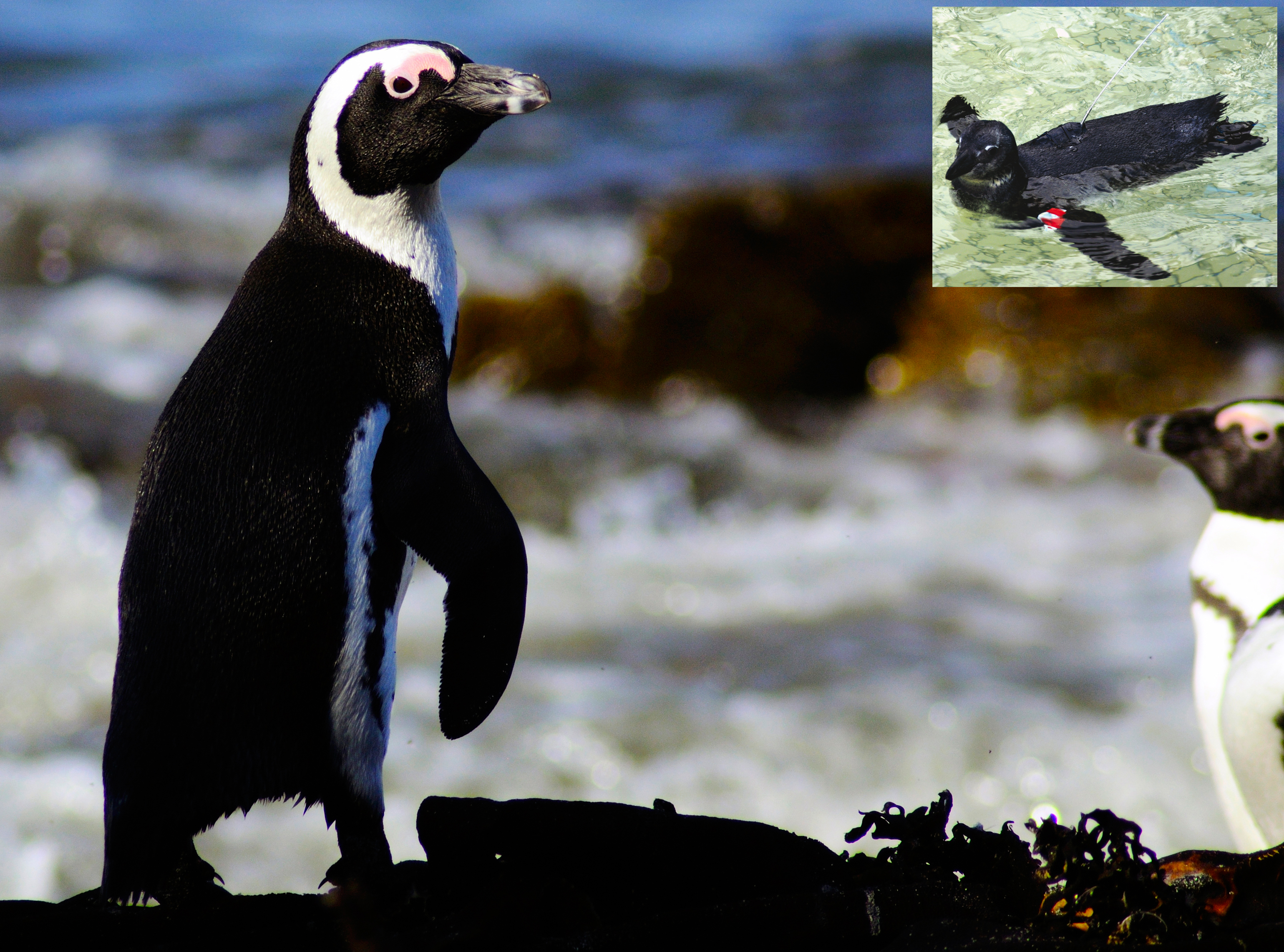
CB_JackassPenguinsEcologicalTrapPhoto

Adult of jackass penguin (Spheniscus demersus) from Robben Island (South Africa) — in the inset, one of the first juveniles released with a satellite transmitter on its back. The species is ‘Endangered’ under IUCN’s criteria (28), following a recent halving of the total population currently estimated at ~ 80,000 adults. Jackass penguins are the only penguins living in Africa, and owe their common name to their vocalisations (you can hear their braying sounds here); adults are ~ 50 cm tall and weigh ~ 3 kg. Photos courtesy of Richard Sherley.

Surface temperature, dissolved oxygen, acidity and primary productivity are, by and large, the top four environmental factors driving the functionality of marine ecosystems (1). Growing scientific evidence supports the idea that anthropogenic warming of the atmosphere and the oceans correlates with this quartet (2). For instance, marine primary productivity is enhanced by increased temperatures (3), but a warmer sea surface intensifies stratification, i.e., stacked layers of seawater with contrasting physical and chemical properties.

In coastal areas experiencing ‘upwelling’ (where winds displace surface water, allowing deep water laden with nutrients to reach the euphotic zone where plankton communities feast), stratification weakens upwelling currents and, in turn, limits the growth of plankton (4) that fuels the entire trophic web, including our fisheries. The study of these complex trophic cascades is particularly cumbersome from the perspective of large marine predators because of their capacity to move long distances, from hundreds to thousands of kilometres (5), with strong implications for their conservation (6).

With those caveats in mind, Richard Sherley and colleagues satellite-tracked the movement of 54 post-fledged, juvenile jackass penguins (Spheniscus demersus) for 2-3 years (7). All individuals had been hatched in eight colonies (accounting for 80% of the global population), and were equipped with platform terminal transmitters. Jackass penguins currently nest in 28 island and mainland locations between South Africa and Namibia. Juveniles swim up to 2000 km in search of food and, when approaching adulthood, return to their native colonies where they reproduce and reside for the remainder of their lives (watch individuals swimming here).

The natural history of this species is linked to the Southern Hemisphere’s trade winds (‘alisios’ for Spanish speakers), which blow from the southeast to the tropics. In the South Atlantic, trade winds sustain the Benguela Current, the waters of which surface from some 300 m of depth and fertilise the marine ecosystems stretching from the Western coasts of South Africa to Angola (8). Read the rest of this entry »


Our global system-of-systems

28 02 2018

Complex-systems

I’ve just read an excellent paper that succinctly, eloquently, and wisely summarised the current predicament of our highly interconnected, global, complex adaptive system (i.e., our environment).

If you are new to the discussions around state shifts, hysteresis, tipping points, and system collapse, there might be a lot in the new paper by Philip Garnett of the University of York that you could find intimidating (and not just because of the complexity of the concepts he discusses). If you are more up-to-date on these discussions, I highly recommend reading this paper for distilling some of the more pertinent questions.

The essence of the paper is that our global environment (Earth) is one giant, complex system made up of interacting sub-systems. We can think of these as a giant, interconnected network of nodes and connections (often called ‘edges’) between them. If you do ecological network theory, then you know what I’m talking about.

What’s particularly fascinating to me is that Philip Garnett is not an environmental scientist; in fact, he’s a a lecturer in Operations Management and Business Analytics (although he does have a background in genetics and biology) who specialises in complex systems theory. In fact, much of his paper uses socio-economic examples of system complexity and collapse, yet the applications to environmentalism in general, and to ecological integrity in particular, are spot on.

Read the rest of this entry »


Microclimates: thermal shields against global warming for small herps

22 11 2017

Thermal microhabitats are often uncoupled from above-ground air temperatures. A study focused on small frogs and lizards from the Philippines demonstrates that the structural complexity of tropical forests hosts a diversity of microhabitats that can reduce the exposure of many cold-blooded animals to anthropogenic climate warming.

Luzon forest frogs

Reproductive pair of the Luzon forest frogs Platymantis luzonensis (upper left), a IUCN near-threatened species restricted to < 5000 km2 of habitat. Lower left: the yellow-stripped slender tree lizard Lipinia pulchella, a IUCN least-concerned species. Both species have body lengths < 6 cm, and are native to the tropical forests of the Philippines. Right panels, top to bottom: four microhabitats monitored by Scheffers et al. (2), namely ground vegetation, bird’s nest ferns, phytotelmata, and fallen leaves above ground level. Photos courtesy of Becca Brunner (Platymantis), Gernot Kunz (Lipinia), Stephen Zozaya (ground vegetation) and Brett Scheffers (remaining habitats).

If you have ever entered a cave or an old church, you will be familiar with its coolness even in the dog days of summer. At much finer scales, from centimetres to millimetres, this ‘cooling effect’ occurs in complex ecosystems such as those embodied by tropical forests. The fact is that the life cycle of many plant and animal species depends on the network of microhabitats (e.g., small crevices, burrows, holes) interwoven by vegetation structures, such as the leaves and roots of an orchid epiphyte hanging from a tree branch or the umbrella of leaves and branches of a thick bush.

Much modern biogeographical research addressing the effects of climate change on biodiversity is based on macroclimatic data of temperature and precipitation. Such approaches mostly ignore that microhabitats can warm up or cool down in a fashion different from that of local or regional climates, and so determine how species, particularly ectotherms, thermoregulate (1). To illustrate this phenomenon, Brett Scheffers et al. (2) measured the upper thermal limits (typically known as ‘critical thermal maxima’ or CTmax) of 15 species of frogs and lizards native to the tropical forest of Mount Banahaw, an active volcano on Luzon (The Philippines). The > 7000 islands of this archipelago harbour > 300 species of amphibians and reptiles (see video here), with > 100 occurring in Luzon (3).

Read the rest of this entry »


To feed or to perish in an iceless world

1 02 2017

cb_climatechange2_polarbears_photo2

Emaciated female polar bear on drift ice in Hinlopen Strait (Svalbard, Norway), in July 2015 – courtesy of Kerstin Langenberger (www.arctic-dreams.com)

Evolution has designed polar bears to move, hunt and reproduce on a frozen and dynamic habitat that wanes and grows in thickness seasonally. But the modification of the annual cycle of Arctic ice due to global warming is triggering a trophic cascade, which already links polar bears to marine birds.

Popular and epicurean gastronomy claims that the best recipes should use seasonal veggies and fruits. Once upon a time, when there were no greenhouses, international trade routes, or as much frozen and canned food, our grandparents enjoyed what was available at the time. So in some years we had plenty of cherries, while during others we might have feasted on plums. Read the rest of this entry »


Transition from the Anthropocene to the Minicene

24 09 2016

Going, going ...

Going, going … © CJA Bradshaw

I’ve just returned from a life-changing trip to South Africa, not just because it was my first time to the continent, but also because it has redefined my perspective on the megafauna extinctions of the late Quaternary. I was there primarily to attend the University of Pretoria’s Mammal Research Institute 50thAnniversary Celebration conference.

As I reported in my last post, the poaching rates in one of the larger, best-funded national parks in southern Africa (the Kruger) are inconceivably high, such that for at least the two species of rhino there (black and white), their future persistence probability is dwindling with each passing week. African elephants are probably not far behind.

As one who has studied the megafauna extinctions in the Holarctic, Australia and South America over the last 50,000 years, the trip to Kruger was like stepping back into the Pleistocene. I’ve always dreamed of walking up to a grazing herd of mammoths, woolly rhinos or Diprotodon, but of course, that’s impossible. What is entirely possible though is driving up to a herd of 6-tonne elephants and watching them behave naturally. In the Kruger anyway, you become almost blasé about seeing yet another group of these impressive beasts as you try to get that rare glimpse of a leopard, wild dogs or sable antelope (missed the two former, but saw the latter). Read the rest of this entry »


Biowealth

24 02 2016

frogWhile I’ve blogged about this before in general terms (here and here), I thought it wise to reproduce the (open-access) chapter of the same name published in late 2013 in the unfortunately rather obscure book The Curious Country produced by the Office of the Chief Scientist of Australia. I think it deserves a little more limelight.

As I stepped off the helicopter’s pontoon and into the swamp’s chest-deep, tepid and opaque water, I experienced for the first time what it must feel like to be some other life form’s dinner. As the helicopter flittered away, the last vestiges of that protective blanket of human technological innovation flew away with it.

Two other similarly susceptible, hairless, clawless and fangless Homo sapiens and I were now in the middle of one of the Northern Territory’s largest swamps at the height of the crocodile-nesting season. We were there to collect crocodile eggs for a local crocodile farm that, ironically, has assisted the amazing recovery of the species since its near-extinction in the 1960s. Removing the commercial incentive to hunt wild crocodiles by flooding the international market with scar-free, farmed skins gave the dwindling population a chance to recover.

redwoodConservation scientists like me rejoice at these rare recoveries, while many of our fellow humans ponder why we want to encourage the proliferation of animals that can easily kill and eat us. The problem is, once people put a value on a species, it is usually consigned to one of two states. It either flourishes as do domestic crops, dogs, cats and livestock, or dwindles towards or to extinction. Consider bison, passenger pigeons, crocodiles and caviar sturgeon.

As a conservation scientist, it’s my job not only to document these declines, but to find ways to prevent them. Through careful measurement and experiments, we provide evidence to support smart policy decisions on land and in the sea. We advise on the best way to protect species in reserves, inform hunters and fishers on how to avoid over-harvesting, and demonstrate the ways in which humans benefit from maintaining healthy ecosystems. Read the rest of this entry »


What’s in a name? The dingo’s sorry saga

30 01 2015

bad dingoThe more I delve into the science of predator management, the more I realise that the science itself takes a distant back seat to the politics. It would be naïve to think that the management of dingoes in Australia is any more politically charged than elsewhere, but once you start scratching beneath the surface, you quickly realise that there’s something rotten in Dubbo.

My latest contribution to this saga is a co-authored paper led by Dale Nimmo of Deakin University (along with Simon Watson of La Trobe and Dave Forsyth of Arthur Rylah) that came out just the other day. It was a response to a rather dismissive paper by Matt Hayward and Nicky Marlow claiming that all the accumulated evidence demonstrating that dingoes benefit native biodiversity was somehow incorrect.

Their two arguments were that: (1) dingoes don’t eradicate the main culprits of biodiversity decline in Australia (cats & foxes), so they cannot benefit native species; (2) proxy indices of relative dingo abundance are flawed and not related to actual abundance, so all the previous experiments and surveys are wrong.

Some strong accusations, for sure. Unfortunately, they hold no water at all. Read the rest of this entry »


Don’t blame it on the dingo

21 08 2013

dingo angelOur postdoc, Tom Prowse, has just had one of the slickest set of reviews I’ve ever seen, followed by a quick acceptance of what I think is a pretty sexy paper. Earlier this year his paper in Journal of Animal Ecology showed that thylacine (the badly named ‘Tasmanian tiger‘) was most likely not the victim of some unobserved mystery disease, but instead succumbed to what many large predators have/will: human beings. His latest effort now online in Ecology shows that the thylacine and devil extinctions on the Australian mainland were similarly the result of humans and not the scapegoat dingo. But I’ll let him explain:

‘Regime shifts’ can occur in ecosystems when sometimes even a single component is added or changed. Such additions, of say a new predator, or changes such as a rise in temperature, can fundamentally alter core ecosystem functions and processes, causing the ecosystem to switch to some alternative stable state.

Some of the most striking examples of ecological regime shifts are the mass extinctions of large mammals (‘megafauna’) during human prehistory. In Australia, human arrival and subsequent hunting pressure is implicated in the rapid extinction of about 50 mammal species by around 45 thousand years ago. The ensuing alternative stable state was comprised of a reduced diversity of predators, dominated by humans and two native marsupial predators ‑ the thylacine (also known as the marsupial ‘tiger’ or ‘wolf’) and the devil (which is now restricted to Tasmania and threatened by a debilitating, infectious cancer).

Both thylacines and devils lasted on mainland Australia for over 40 thousand years following the arrival of humans. However, a second regime shift resulted in the extinction of both these predators by about 3 thousand years ago, which was coincidentally just after dingoes were introduced to Australia. Dingoes are descended from early domestic dogs and were introduced to northern Australia from Asia by ancient traders approximately 4 thousand years ago. Today, they are Australia’s only top predator remaining, other than invasive European foxes and feral cats. Since the earliest days of European settlement, dingoes have been persecuted because they prey on livestock. During the 1880s, 5614 km of ‘dingo fence’ was constructed to protect south-east Australia’s grazing rangelands from dingo incursions. The fence is maintained to this day, and dingoes are poisoned and shot both inside and outside this barrier, despite mounting evidence that these predators play a key role in maintaining native ecosystems, largely by suppressing invasive predators.

Perhaps because the public perception of dingoes as ‘sheep-killers’ is so firmly entrenched, it has been commonly assumed that dingoes killed off the thylacines and devils on mainland Australia. People who support this view also point out that thylacines and devils persisted on the island of Tasmania, which was never colonised by dingoes (although thylacines went extinct there too in the early 1900s). To date, most discussion of the mainland thylacine and devil extinctions has focused on the possibility that dingoes disrupted the system by ‘exploitation competition’ (eating the same prey), ‘interference competition’ (wasting the native predators’ precious munching time), as well as ‘direct predation’ (dingoes actually eating devils and thylacines). Read the rest of this entry »