Guilty until proven innocent

18 07 2013

precautionary principleThe precautionary principle – the idea that one should adopt an approach that minimises risk – is so ingrained in the mind of the conservation scientist that we often forget what it really means, or the reality of its implementation in management and policy. Indeed, it has been written about extensively in the peer-reviewed conservation literature for over 20 years at least (some examples here, here, here and here).
From a purely probabilistic viewpoint, the concept is flawlessly logical in most conservation questions. For example, if a particular by-catch of a threatened species is predicted [from a model] to result in a long-term rate of instantaneous population change (r) of -0.02 to 0.01 [uniform distribution], then even though that interval envelops r = 0, one can see that reducing the harvest rate a little more until the lower bound is greater than zero is a good idea to avoid potentially pushing down the population even more. In this way, our modelling results would recommend a policy that formally incorporates the uncertainty of our predictions without actually trying to make our classically black-and-white laws try to legislate uncertainty directly. Read the rest of this entry »


Relaxed laws imperil Australian wildlife

28 06 2013
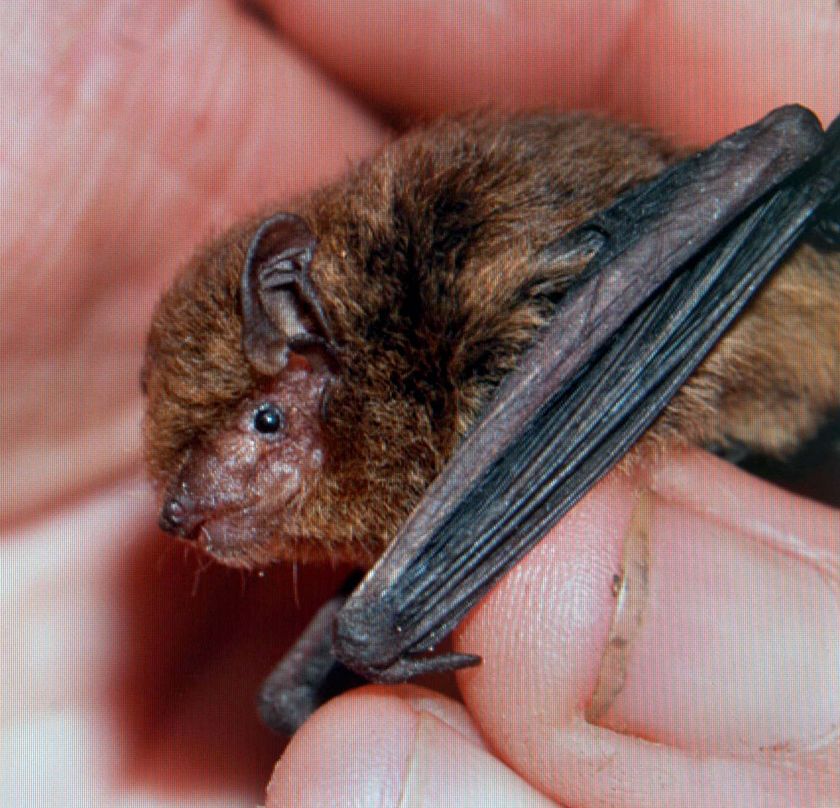
Christmas Island pipistrelle bat (Pipistrellus murrayi). © M. Schultz

Christmas Island pipistrelle bat (Pipistrellus murrayi). © M. Schultz

On the continuing theme of the demise of laws designed to protect Australian biodiversity (see here, here and here), I’m reproducing our latest Nature Correspondence on the issue. I know this might be slightly dodgy to do so, but given that it’s only a Correspondence, I don’t think I’ll get in too much trouble. Besides, it’s too important an issue to hide away behind paywalls.

Policy and legislative changes by Australia’s state governments are eroding the vital protection of the country’s unique biodiversity.

Reserves are being opened up to ecologically disruptive activities, such as grazing by domestic livestock, logging, mining, recreational hunting and fishing, and commercial development. Protected habitats on private and leasehold land are imperilled too. Queensland and Victoria, for example, are relaxing hard-won laws that limit vegetation clearance on private land, further accelerating the loss of regional biodiversity.

Collectively, these actions increase the pressure on biodiversity conservation in protected areas, many of which are already showing biodiversity loss (for example, the Kakadu National Park in northern Australia). Ecological connectivity is being lost, which will hamper the dispersal of species and their ability to respond to climate-change effects. Read the rest of this entry »


Australia’s national parks aren’t ‘national’ at all

14 06 2013

Yarra-Ranges-National-Park-AustraliaFollowing our The Conversation article a few weeks ago about the rapid demise of national parks in Australia, a few of us (me, Euan Ritchie & Emma Johnston) wrote a follow-up piece on the Australia’s national park misnomer (published simultaneously on The Conversation).

Australia boasts over 500 national parks covering 28 million hectares of land, or about 3.6% of Australia. You could be forgiven for thinking we’re doing well in the biodiversity-conservation game.

But did you know that of those more than 500 national parks, only six are managed by the Commonwealth Government? For marine parks, it’s a little more: 61 of the 130-plus are managed primarily by the Commonwealth. This means that the majority of our important biodiversity refuges are managed exclusively by state and territory governments. In other words, our national parks aren’t “national” at all.

In a world of perfect governance, this wouldn’t matter. But we’re seeing the rapid “relaxation” of laws designed to protect our “national” and marine parks by many state governments. Would making all of them truly national do more to conserve biodiversity?

One silly decision resulting in a major ecosystem disturbance in a national park can take decades if not hundreds of years to heal. Ecosystems are complex interactions of millions of species that take a long time to evolve – they cannot be easily repaired once the damage is done.

Almost overnight, Queensland, New South Wales and Victoria have rolled back nearly two centuries of park protection. What’s surprising here is that many of our conservation gains in the last few decades (for example, the Natural Heritage Trust, the National Reserve System, the Environment Protection and Biodiversity Conservation Act and a national marine reserve network) originated from Coalition policies. Read the rest of this entry »


Our national parks must be more than playgrounds or paddocks

24 05 2013

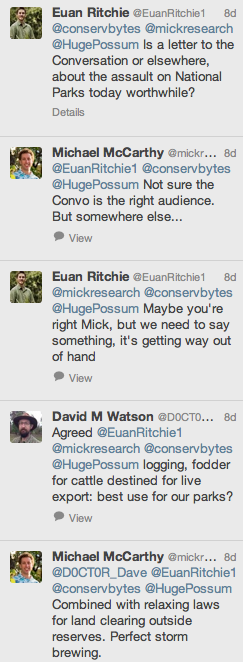
Convo TweetsIt’s interesting when a semi-random tweet by a colleague ends up mobilising a small army of scientists to get pissed off enough to co-write an article. Euan Ritchie of Deakin University started it off, and quickly recruited me, Mick McCarthy, David Watson, Ian Lunt, Hugh Possingham, Bill Laurance and Emma Johnston to put together the article. It’s a hugely important topic, so I hope it generates a lot of discussion and finally, some bloody action to stop the rapid destruction of this country’s national parks system.

Note: Published simultaneously on The Conversation.

It’s make or break time for Australia’s national parks.

National parks on land and in the ocean are dying a death of a thousand cuts, in the form of bullets, hooks, hotels, logging concessions and grazing licences. It’s been an extraordinary last few months, with various governments in eastern states proposing new uses for these critically important areas.

Australia’s first “National Park”, established in 1879, was akin to a glorified country club. Now called the “Royal National Park” on the outskirts of Sydney, it was created as a recreational escape for Sydney-siders, with ornamental plantations, a zoo, race courses, artillery ranges, livestock paddocks, deer farms, logging leases and mines.

Australians since realised that national parks should focus on protecting the species and natural landscapes they contain. However, we are now in danger of regressing to the misguided ideals of the 19th Century.

Parks under attack

In Victoria, new rules will allow developers to build hotels and other ventures in national parks. In New South Wales, legislation has been introduced to allow recreational shooting in national parks, and there is pressure to log these areas too. Read the rest of this entry »


A carbon economy can help save our species too

20 05 2013

money treeWe sent out this media release the other day, but it had pretty poor pick-up (are people sick of the carbon price wars?). Anyway, I thought it prudent to reprint here on CB.com.

Will Australia’s biodiversity benefit from the new carbon economy designed to reduce greenhouse gas emissions? Or will bio-‘perversities’ win the day?

“Cautious optimism” was the conclusion of Professor Corey Bradshaw, Director of Ecological Modelling at the University of Adelaide’s Environment Institute. He is lead author of a new paper published in the journal of Biological Conservation which reviewed the likely consequences of a carbon economy on conservation of Australian biodiversity.

“In most circumstances these two very important goals for Australia’s future – greenhouse gas emissions reduction and biodiversity conservation – are not mutually exclusive and could even boost each other,” Professor Bradshaw says.

“There are, however, many potential negative biodiversity outcomes if land management is not done with biodiversity in mind from the outset.”

The paper was contributed to by 30 Australian scientists from different backgrounds. They reviewed six areas where Australia’s Carbon Farming Initiative could have the greatest impact on biodiversity: environmental plantings; policies and practices to deal with native regrowth; fire management; agricultural practices; and feral animal control.

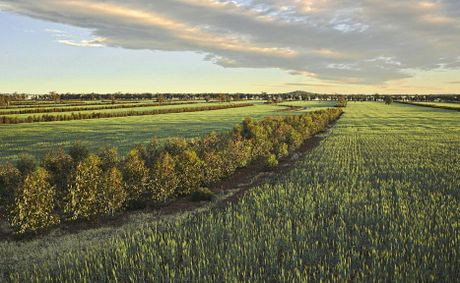
“The largest biodiversity ‘bang for our buck’ is likely to come from tree plantings,” says Professor Bradshaw. “But there are some potential and frightening ‘bioperversities’ as well. For example, we need to be careful not to plant just the fastest-growing, simplest and non-native species only to ‘farm’ carbon.

“Carbon plantings will only have real biodiversity value if they comprise appropriate native tree species and provide suitable habitats and resources for valued fauna. Such plantings could however risk severely altering local hydrology and reducing water availability.”

Professor Bradshaw says carefully managing regrowth of once-cleared areas could also produce a large carbon-sequestration and biodiversity benefit simultaneously. And carbon price-based modifications to agriculture that would benefit biodiversity included reductions in tillage frequency, livestock densities and fertiliser use, and retention and regeneration of native shrubs. Read the rest of this entry »


Let the planting begin

3 04 2013
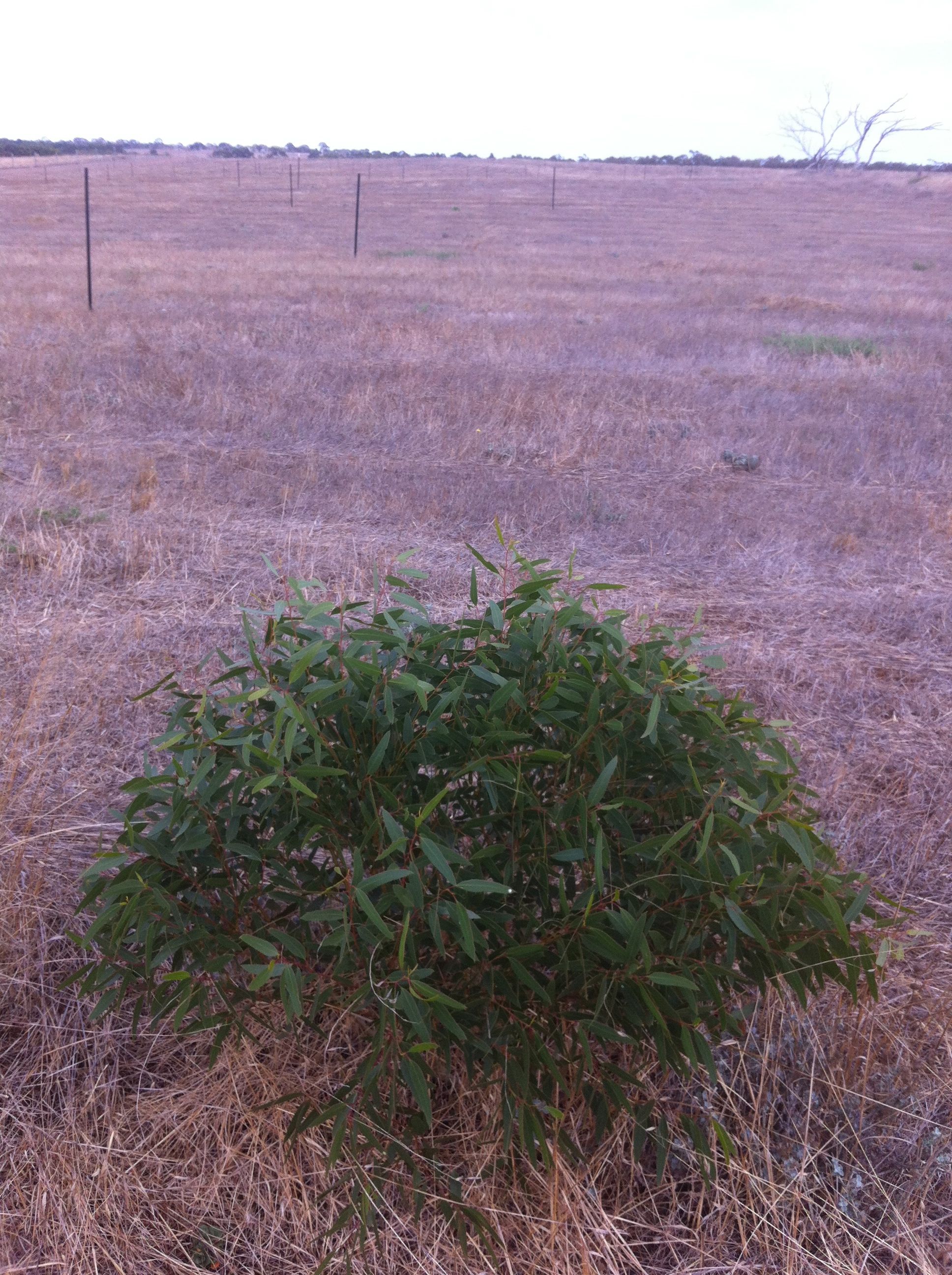
A tough little Eucalyptus porosa - one day soon this entire ex-paddock will be filled with carbon-guzzling natives.

A tough little Eucalyptus porosa – one day soon this entire ex-paddock will be filled with carbon-guzzling natives. Note the plot markers in the background.

I had a great morning today checking out the progress of our carbon-biodiversity planting experiment out at Monarto Zoo. What a fantastic effort! Briony Horner and her team have made some amazing progress.

If you haven’t read about what we’re up to, here’s a brief re-cap:

Late last year we were awarded an Australian Research Council (ARC) Linkage Project grant in which we proposed to examine experimentally the cost-benefit trade-off between biodiversity and carbon using a replicated planting regime. The approach is quite simple, but it will take many years to pay off. What we are asking is: how many different species and in what densities are required to restore a native woodland from an over-grazed paddock that provide the biggest long-term biodiversity and carbon benefits simultaneously for the lowest costs?

Read the rest of this entry »


Want to work with us?

22 03 2013
© Beboy-Fotolia

© Beboy-Fotolia

Today we announced a HEAP of positions in our Global Ecology Lab for hot-shot, up-and-coming ecologists. If you think you’ve got what it takes, I encourage you to apply. The positions are all financed by the Australian Research Council from grants that Barry Brook, Phill Cassey, Damien Fordham and I have all been awarded in the last few years. We decided to do a bulk advertisement so that we maximise the opportunity for good science talent out there.

We’re looking for bright, mathematically adept people in palaeo-ecology, wildlife population modelling, disease modelling, climate change modelling and species distribution modelling.

The positions are self explanatory, but if you want more information, just follow the links and contacts given below. For my own selfish interests, I provide a little more detail for two of the positions for which I’m directly responsible – but please have a look at the lot.

Good luck!

CJA Bradshaw

Job Reference Number: 17986 & 17987

The world-leading Global Ecology Group within the School of Earth and Environmental Sciences currently has multiple academic opportunities. For these two positions, we are seeking a Postdoctoral Research Associate and a Research Associate to work in palaeo-ecological modelling. Read the rest of this entry »


Brave new green world: biodiversity’s response to Australia’s carbon economy

12 03 2013

carbon farming 2I’ve had a busy weekend entertaining visiting colleagues and participating in WOMADelaide‘s first-ever ‘The Planet Talks‘. If you haven’t heard of WOMADelaide, you’re truly missing out in one of the best music festivals going (and this is from a decidedly non-festival-going sort). Planet Talks this year was a bit of an experiment after the only partially successful Earth Station festival held last year (it was well-attended, but apparently wasn’t as financially successful as they had hoped). So this year they mixed a bit of science with a bit of music – hence ‘Planet Talks’. Paul Ehrlich was one of the star attractions, and I had the honour of going onstage with him yesterday to discuss a little bit about human population growth and sustainability. It was also great to see Robyn Williams again. All the Talks were packed out – indeed, I was surprised they were so popular, especially in the 39-degree heat. Rob Brookman, WOMADelaide’s founder and principal organiser, told me afterward that they’d definitely be doing it again.

But my post really isn’t about WOMADelaide or The Planet Talks (even though I got the bonus of meeting one of my favourite latin bands, Novalima, creators of one of my favourite songs). It’s instead about a paper I heralded last year that’s finally been accepted.

In early 2012 at the Terrestrial Ecosystem Research Network (TERN) symposium in Adelaide, the Australian Centre for Ecological Analysis and Synthesis (ACEAS) put on what they called the ‘Grand Challenges’ workshop. I really didn’t get the joke at the time, but apparently the ‘grand challenge’ was locking 30 scientists with completely different backgrounds in a room for two days to see if they could do anything other than argue and bullshit. Well, we rose to that challenge and produced something that I think is rather useful.

I therefore proudly introduce the paper entitled Brave new green world: consequences of a carbon economy for the conservation of Australian biodiversity just accepted in Biological Conservation. The online version isn’t quite ready yet (should be in the next few weeks), but you are welcome to request a preprint from me now. If you attended (the surprisingly excellent) TERN symposium in Canberra last month, you might have seen me give a brief synopsis of our results.

The paper is a rather  in-depth review of how we, 30 fire, animal, plant, soil, landscape, agricultural and freshwater biologists, believe Australia’s new carbon-influenced economy (i.e., carbon price) will impact the country’s biodiversity. Read the rest of this entry »


Hot topics in ecology

5 03 2013

HotTopic copyJust a short one today to highlight a new1 endeavour by the Ecological Society of Australia.

Ecological societies around the world (e.g., Ecological Society of Australia, British Ecological Society, Ecological Society of AmericaCzech Society for Ecology, Société française d’Écologie, etc. – see a fairly comprehensive list of ecological societies around the world here) are certainly worthwhile from an academic standpoint. I’m a member of at least three of them, and over the years I’ve found them to be a great way to meet colleagues to discuss various aspects of our work. The conferences are usually a lot of fun (although I’ve generally found the Ecological Society of America conferences are too huge and unwieldy to be terribly beneficial), the talks are usually pretty good, and the social programmes tend to demonstrate just how human we scientists can be (I’ll let you read into that what you want).

An outsider could easily argue, however, that most ecological societies are archaic bastions of a former time when ecology was more a theoretical endeavour for academic circles, with little of practical use in today’s society. I’d agree that many components of these societies still hold onto elements of this sentiment, but it’s fast becoming clear that ecological societies can play an immensely important role in shaping their countries’ environmental policy. Read the rest of this entry »


Science immortalised in cartoon

1 02 2013

Well, this is a first for me (us).

I’ve never had a paper of ours turned into a cartoon. The illustrious and brilliant ‘First Dog on the Moon‘ (a.k.a. Andrew Marlton) who is chief cartoonist for Australia’s irreverent ‘Crikey‘ online news magazine just parodied our Journal of Animal Ecology paper No need for disease: testing extinction hypotheses for the thylacine using multispecies metamodels that I wrote about a last month here on ConservationBytes.com.

Needless to say, I’m chuffed as a chuffed thing.

Enjoy!

Stripey


Scaring our children with the future

21 01 2013

frightened childI’ve written before about how we should all be substantially more concerned about the future than what we as a society appear to be. Climate disruption is society’s enemy number one, especially considering that:

  1. all this unprecedented warming is happening on a template of highly degraded land- and seascapes. Extinction synergies (more extinctions than would otherwise be predicted by the simple sum of the different pressures) mean that climate change exacerbates the extinctions to which we are already committed;
  2. we show no sign of slowing emissions rates, partly because of the world’s ridiculous refusal to embrace the only known energy technology that can safely meet emissions-reduction requirements: nuclear power;
  3. there are 7 billion hungry, greedy humans on planet Earth, and that number is growing;
  4. scientific evidence denial, plutocracy and theocracy are all on the rise, meaning that logical, evidence-based decision making is being progressively tossed out the window.

That’s probably the most succinct way that I know of describing the mess we are in, which is why I tend to be more of a pragmatic pessimist when it comes to the future. I’ve discussed before how this outlook makes getting on with my job even more important – if I can’t reduce the rate of destruction and give my family a slightly better future in spite of this reality, at least I will damn well die trying. Read the rest of this entry »


No need for disease

7 01 2013

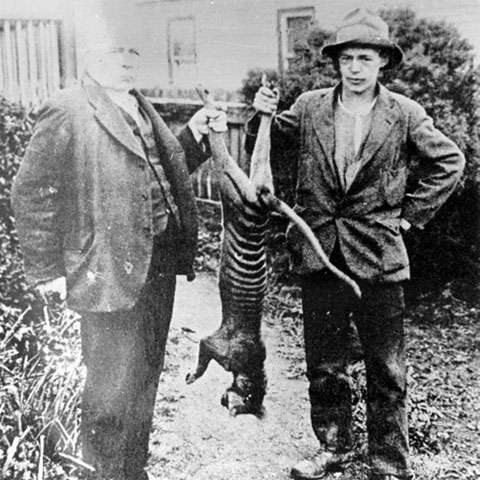
dead or alive thylacineIt’s human nature to abhor admitting an error, and I’d wager that it’s even harder for the average person (psycho- and sociopaths perhaps excepted) to admit being a bastard responsible for the demise of someone, or something else. Examples abound. Think of much of society’s unwillingness to accept responsibility for global climate disruption (how could my trips to work and occasional holiday flight be killing people on the other side of the planet?). Or, how about fishers refusing to believe that they could be responsible for reductions in fish stocks? After all, killing fish couldn’t possibly …er, kill fish? Another one is that bastion of reverse racism maintaining that ancient or traditionally living peoples (‘noble savages’) could never have wiped out other species.

If you’re a rational person driven by evidence rather than hearsay, vested interest or faith, then the above examples probably sound ridiculous. But rest assured, millions of people adhere to these points of view because of the phenomenon mentioned in the first sentence above. With this background then, I introduce a paper that’s almost available online (i.e., we have the DOI, but the online version is yet to appear). Produced by our extremely clever post-doc, Tom Prowse, the paper is entitled: No need for disease: testing extinction hypotheses for the thylacine using multispecies metamodels, and will soon appear in Journal of Animal Ecology.

Of course, I am biased being a co-author, but I think this paper really demonstrates the amazing power of retrospective multi-species systems modelling to provide insight into phenomena that are impossible to test empirically – i.e., questions of prehistoric (and in some cases, even data-poor historic) ecological change. The megafauna die-off controversy is one we’ve covered before here on ConservationBytes.com, and this is a related issue with respect to a charismatic extinction in Australia’s recent history – the loss of the Tasmanian thylacine (‘tiger’, ‘wolf’ or whatever inappropriate eutherian epithet one unfortunately chooses to apply). Read the rest of this entry »


The biggest go first

11 12 2012
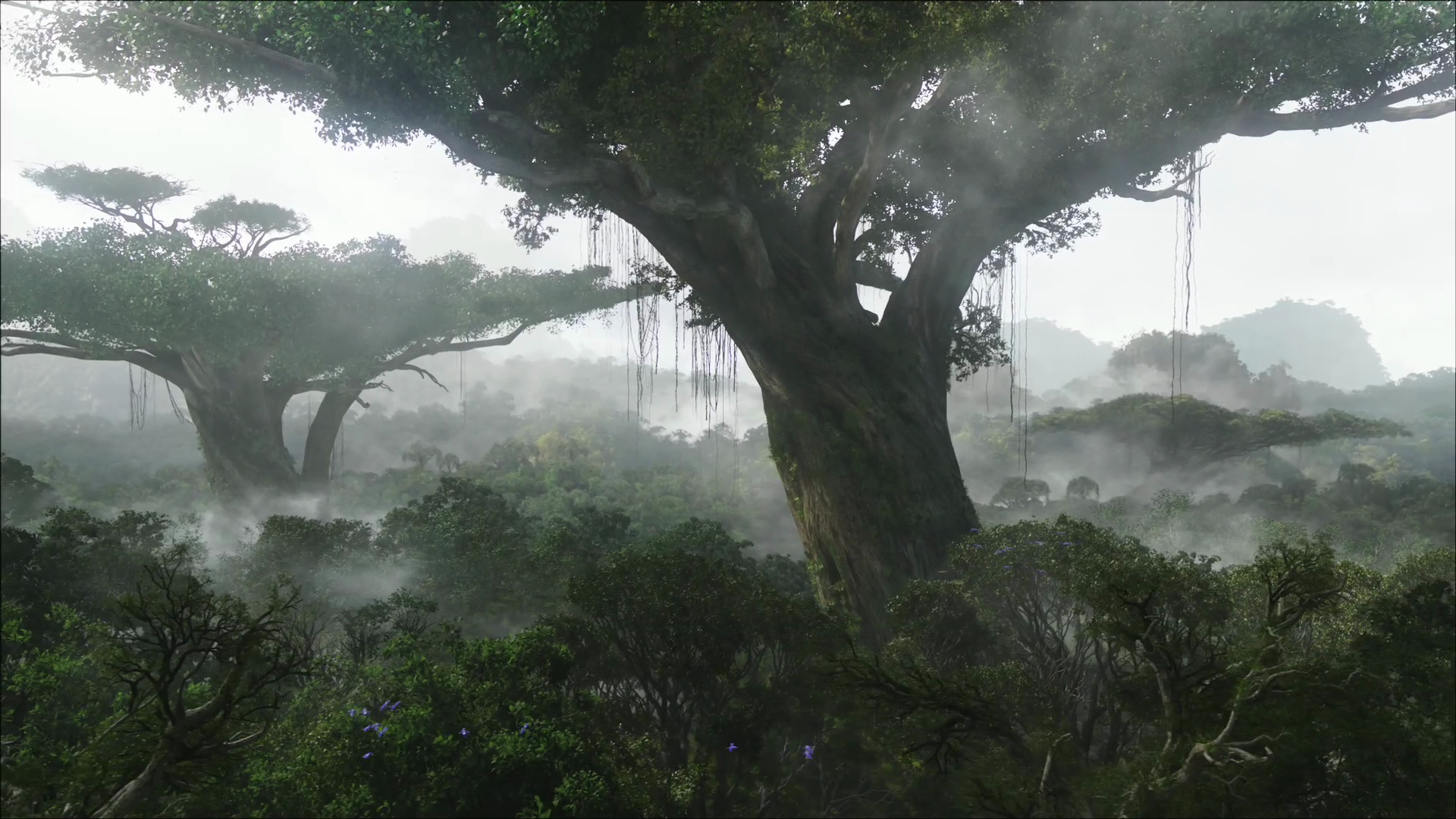
© James Cameron

© James Cameron

The saying “it isn’t rocket science” is a common cliché in English to state, rather sarcastically, that something isn’t that difficult (with the implication that the person complaining about it, well, shouldn’t). But I really think we should change the saying to “it isn’t ecology”, for ecology is perhaps one of the most complex disciplines in science (whereas rocket science is just ‘complicated’). One of our main goals is to predict how ecosystems will respond to change, yet what we’re trying to simplify when predicting is the interactions of millions of species and individuals, all responding to each other and to their outside environment. It becomes quickly evident that we’re dealing with a system of chaos. Rocket science is following recipes in comparison.

Because of this complexity, ecology is a discipline plagued by a lack of generalities. Few, if any, ecological laws exist. However, we do have an abundance of rules of thumb that mostly apply in most systems. I’ve written about a few of them here on ConservationBytes.com, such as the effect of habitat patch size on species diversity, the importance of predators for maintaining ecosystem stability, and that low genetic diversity doesn’t exactly help your chances of persisting. Another big one is, of course, that in an era of rapid change, big things tend to (but not always – there’s that lovely complexity again) drop off the perch before smaller things do.

The prevailing wisdom is that big species have slower life history rates (reproduction, age at first breeding, growth, etc.), and so cannot replace themselves fast enough when the pace of their environment’s change is too high. Small, rapidly reproducing species, on the other hand, can compensate for higher mortality rates and hold on (better) through the disturbance. Read the rest of this entry »


Wise guys of deforestation

17 10 2012

Through fraudulent permits and similar tactics, organized crime profits significantly from illegal logging. jcoterhals

By Bill Laurance, James Cook University

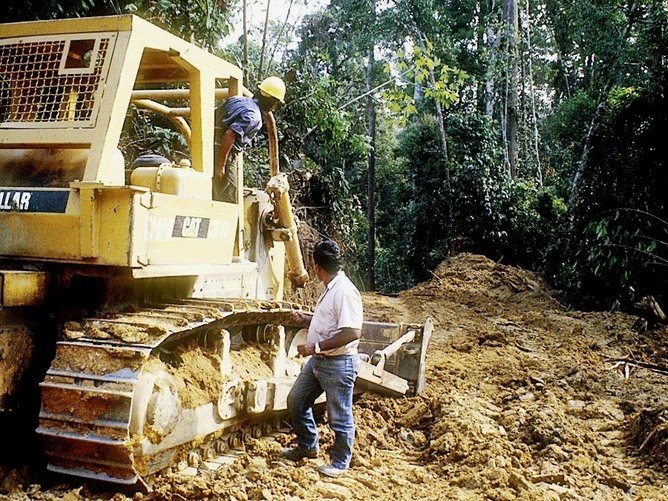
Illegal logging is booming, as criminal organisations tighten their grip on this profitable global industry. Hence, it comes just in the nick of time that Australia, after years of debate, is on the verge of passing an anti-logging bill.

Illegal logging is an international scourge, and increasingly an organised criminal activity. It robs developing nations of vital revenues while promoting corruption and murder. It takes a terrible toll on the environment, promoting deforestation, loss of biodiversity and harmful carbon emissions at alarming rates.

Moreover, the flood of illegal timber makes it much harder for legitimate timber producers. The vast majority of those in Australia and New Zealand have difficulty competing in domestic and international markets. That’s one reason that many major Aussie retail chains and brands, such as Bunnings, Ikea-Australia, Timber Queensland, and Kimberly-Clark, are supporting the anti-illegal logging bill.

Illegal logging denies governments of developing nations revenue worldwide. Bill Laurance.

Illegal logging thrives because it’s lucrative. A new report by Interpol and the United Nations Environment Programme, “Green Carbon, Black Trade”, estimates the economic value of illegal logging and wood processing to range from $30 billion to $100 billion annually. That’s a whopping figure — constituting some 10-30% of the global trade in wood products.

Illegal logging plagues some of the world’s poorest peoples, many of whom live in tropical timber-producing countries. According to a 2011 study by the World Bank, two-thirds of the world’s top tropical timber-producing nations are losing at least half of their timber to illegal loggers. In some developing countries the figure approaches 90%.

Many nations export large quantities of timber or wood products into Australia. These include Indonesia, Papua New Guinea and the Solomon Islands, all of which are suffering heavily from illegal logging. Many Chinese-made wood and paper imports also come from illegal timber. Indonesian President Susilo Bambang Yudhoyono has been pleading with timber-importing nations like Australia to help it combat illegal logging, which costs the nation billions of dollars annually in lost revenues.

The new Interpol report shows just how devious illegal loggers are becoming. It details more than 30 different ways in which organised criminal gangs stiff governments of revenues and launder their ill-gotten gains.

The variety of tactics used is dizzying. These tactics include falsifying logging permits and using bribery to obtain illegal logging permits, logging outside of timber concessions, hacking government websites to forge transportation permits, and laundering illegal timber by mixing it in with legal timber supplies.

The good news however, is that improving enforcement is slowly making things tougher for illegal loggers.

Accustomed to dealing with criminal enterprises that transcend international borders, Interpol is bringing a new level of sophistication to the war on illegal logging. This is timely because most current efforts to fight illegal logging – such as the European Union’s Forest Law and various timber eco-certification schemes – just aren’t designed to combat organised crime, corruption and money laundering.

The Interpol report urges a multi-pronged approach to fight illegal loggers. A key element of this is anti-logging legislation that makes it harder for timber-consuming nations and their companies to import ill-gotten timber and wood products. Read the rest of this entry »


No-extinction targets are destined to fail

21 09 2012

I’ve been meaning to write about this for a while, and now finally I have been given the opportunity to put my ideas ‘down on paper’ (seems like a bit of an old-fashioned expression these days). Now this post might strike some as overly parochial because it concerns the state in which I live, but the concept applies to every jurisdiction that passes laws designed to protect biodiversity. So please look beyond my navel and place the example within your own specific context.

As CB readers will appreciate, I am firmly in support of the application of conservation triage – that is, the intelligent, objective and realistic way of attributing finite resources to minimise extinctions for the greatest number of (‘important’) species. Note that deciding which species are ‘important’ is the only fly in the unguent here, with ‘importance’ being defined inter alia as having a large range (to encompass many other species simultaneously), having an important ecological function or ecosystem service, representing rare genotypes, or being iconic (such that people become interested in investing to offset extinction.

But without getting into the specifics of triage per se, a related issue is how we set environmental policy targets. While it’s a lovely, utopian pipe dream that somehow our consumptive 7-billion-and-growing human population will somehow retract its massive ecological footprint and be able to save all species from extinction, we all know that this is irrevocably  fantastical.

So when legislation is passed that is clearly unattainable, why do we accept it as realistic? My case in point is South Australia’s ‘No Species Loss Strategy‘ (you can download the entire 7.3 Mb document here) that aims to

“…lose no more species in South Australia, whether they be on land, in rivers, creeks, lakes and estuaries or in the sea.”

When I first learned of the Strategy, I instantly thought to myself that while the aims are laudable, and many of the actions proposed are good ones, the entire policy is rendered toothless by the small issue of being impossible. Read the rest of this entry »


You’re not even remotely concerned enough

31 08 2012

I’ve just returned from a 6-week trip to the United States and I am now dealing with the intensity of things left undone for so long [sigh]. But that trip was interesting for many reasons. First, and as I’ve already posted, I finished a book with Paul Ehrlich that will be out sometime early in 2013 (but I won’t deal with that here). I also attended an interesting, if slightly confusing, conference on ecosystem services. And finally, I had the pleasure of meeting Tony Barnosky in person, and we decided that we should definitely collaborate on a few things.

Another thing that struck me – and this happens no matter how often I visit the U.S., is just how completely insane that country’s politics are. The extremist, libertarian, plutotheocratic bullshit spewed by the far right to the detriment of the very people who support them is enough to make you vomit. And this startling and thoroughly backward world-view is now starting to penetrate more and more into Australian society and politics. From an environmental perspective, it’s a continuation of a downhill slide that started with Reagan’s destruction of environmentalism in the U.S., and Joh Bjelke-Petersen‘s war on the environment in Australia, and will only continue to get worse.

Of course, the main victim of reason in all these polemic politics is that we are doing next to nothing to mitigate horrendous climate disruption. Only yesterday, George Monbiot was lamenting (nay, pleading) that our governments are doing practically nil to avoid what can only be described as the greatest threat to our way of life since the World War II – in fact, the War and its associated holocaust is small bikkies compared to what awaits us.

And this is the most stressing part – even people who choose to use their brains and accept that we have an immense, global problem on our hands generally are not even remotely concerned enough. Read the rest of this entry »


Restoring doomed fish

24 08 2012

I get called a doomsday merchant a lot, mainly because there’s not a lot of good news out there when it comes to biodiversity these days. However, now and again there is a success story worth shouting from the rooftops. This latest post comes from my PhD student, Jarod Lyon (also of the Arthur Rylah Institute in Victoria), who is working on restoring native freshwater fish in Australia’s largest river system – the Murray-Darling. The M-D also happens to be in a lot of trouble because of poor water management and years of neglect. However, some clever research and restoration proves that we can bring biodiversity back from the brink if done right. Jarod has posted here on Conservation Bytes before describing his work, and this latest post provides some detail on one species in particular.

Trout cod Maccullochella macquariensis were once considered to be widespread in the southern tributaries of the Murray-Darling Basin. However over the past fifty years, their distribution and abundance have declined dramatically, due to a number of disturbances including habitat loss, altered flow and temperature patterns, in-stream sedimentation, population fragmentation due to in-stream barriers and over fishing. Trout cod are listed nationally as endangered under the Environment Protection and Biodiversity Conservation Act (EPBC Act 1999) and listed under the Victorian Flora and Fauna Guarantee Act (FFG Act 1988). Trout cod are often accidentally caught when fishing for Murray cod. However, it is illegal to take a trout cod while angling.

Trout cod were historically abundant in the lower Ovens River system in South-Eastern Australia, however were locally extinct by the 1980s. In an attempt to re-introduce a viable population in the Ovens River, hatchery-reared juvenile trout cod were stocked in the Ovens River system for ten years starting in 1997. Our recent manuscript published in Marine and Freshwater Research assesses the success of this stocking regime (particularly in relation to recovery plan objectives) through a variety of techniques, including fish surveys and analysis of gonads, otoliths and genetic structure of the population.

We found that the Ovens River now holds a naturally self-sustaining population of trout cod – that is, the progeny of stocked fishes are now breeding.  Given that most threatened species re-introduction programs worldwide fail, this is somewhat of a good-news story for management of rare animals. In particular, we found that the length of the stocking program was a major factor in its success, as the long time period overcame the years where the survival of the stocked fingerlings was low. Interestingly, most fish to recruit to an adult size were stocked in 2003 or 2004 – meaning if this had been a five-year program, it would most likely have failed. Read the rest of this entry »


Degraded States of Ausmerica

20 08 2012

You might remember that I’ve been in California for several weeks now. The principal reason for my visit was to finish a book that Paul Ehrlich and I started last year. So, without the major distractions of everyday university life, I’ve spent much of my time lately at Stanford University in a little office next to Paul’s trying to finish (I also attended a conference in Portland, Oregon).

Yesterday, we wrote the last few paragraphs. A giant gorilla has now lumbered its way off my back.

So. What is the book about, you might ask? I can’t give away too many details, but I will give a few teasers. The book is called, at least for now, ‘Oz & US’, which is a bit of a play of words. In the book we contrast the environmental histories, current state of affairs, and likely futures of our respective nations. It’s written in a popular style so that non-specialists can learn a little something about how bad the environment has become in our two countries.

At first glance, one might wonder why we chose to contrast the U.S. and Australia – they are quite different beasts, indeed. Their histories are immensely different, from the aboriginal populations, through to European colonisation (timing and drivers), biological (including agricultural) productivities, carrying capacities, population sizes and politics. But these differences belie too many convergences in the environmental states of each nation – we now both have increasingly degraded environments, we have both pushed the boundaries of our carrying capacities, and our environmental politics are in a shambles. In other words, despite having started with completely different conditions, our toll on nature’s life-support systems is now remarkably similar.

And anyone who knows Paul and me will appreciate that the book is completely irreverent. We have taken off the gloves in preparation for a bare-knuckle fight with the plutocrats and theocrats now threatening the lives of our grandchildren. We pull no punches here. Read the rest of this entry »


Global Ecology postgraduate opportunities

12 08 2012

I should have published these ages ago, but like many things I have should have done earlier, I didn’t.

I also apologise for a bit of silence over the past week. After coming back from the ESP Conference in Portland, I’m now back at Stanford University working with Paul Ehrlich trying to finish our book (no sneak peaks yet, I’m afraid). I have to report that we’ve completed about about 75 % it, and I’m starting to feel like the end is in sight. We hope to have it published early in 2013.

So here they are – the latest 9 PhD offerings from us at the Global Ecology Laboratory. If you want to get more information, contact the first person listed as the first supervisor at the end of each project’s description.

1. Optimal survey and harvest models for South Australian macropods (I’ve advertised this before, but so far, no takers):

The South Australia Department of Environment, Water and Natural Resources (DEWNR) is custodian of a long-term macropod database derived from the State’s management of the commercial kangaroo harvest industry. The dataset entails aerial survey data for most of the State from 1978 to present, annual population estimates, quotas and harvests for three species: red kangaroo (Macropus rufus), western grey kangaroo (Macropus fuliginosus), and the euro (Macropus robustus erubescens).

DEWNR wishes to improve the efficiency of surveys and increase the precision of population estimates, as well as provide a more quantitative basis for setting harvest quotas.

We envisage that the PhD candidate will design and construct population models:

  • to predict population size/densities with associated uncertainty, linking fluctuations to environmental variability (including future climate change projections)
  • to evaluate the efficiency of spatially explicit aerial surveys
  • to estimate demographic parameters (e.g., survival rate) from life tables and
  • to estimate spatially explicit sustainable harvest quotas

 Supervisors: me, A/Prof. Phill Cassey, Dr Damien Fordham, Dr Brad Page (DEWNR), Professor Michelle Waycott (DEWNR).

2. Correcting for the Signor-Lipps effect

The ‘Signor-Lipps effect’ in palaeontology is the notion that the last organism of a given species will never be recorded as a fossil given the incomplete nature of the fossil record (the mirror problem is the ‘Jaanusson effect’, where the first occurrence is delayed past the true time of origination). This problem makes inference about the timing and speed of mass extinctions (and evolutionary diversification events) elusive. The problem is further complicated by the concept known as the ‘pull of the recent’, which states that the more time since an event occurred, the greater the probability that evidence of that event will have disappeared (e.g., erased by erosion, hidden by deep burial, etc.).

In a deep-time context, these problems confound the patterns of mass extinctions – i.e., the abruptness of extinction and the dynamics of recovery and speciation. This PhD project will apply a simulation approach to marine fossil time series (for genera and families, and some individual species) covering the Phanerozoic Aeon, as well as other taxa straddling the K-T boundary (Cretaceous mass extinction). The project will seek to correct for taphonomic biases and assess the degree to which extinction events for different major taxa were synchronous.

The results will also have implications for the famous Sepkoski curve, which describes the apparent logistic increase in marine species diversity over geological time with an approximate ‘carrying capacity’ reached during the Cenozoic. Despite recent demonstration that this increase is partially a taphonomic artefact, a far greater development and validation/sensitivity analysis of underlying statistical models is needed to resolve the true patterns of extinction and speciation over this period.

The approach will be to develop a series of models describing the interaction of the processes of speciation, local extinction and taphonomic ‘erasure’ (pull of the recent) to simulate how these processes interact to create the appearance of growth in numbers of taxa over time (Sepkoski curve) and the abruptness of mass extinction events. The candidate will estimate key parameters in the model to test whether the taphonomic effect is strong enough to be the sole explanation of the apparent temporal increase in species diversity, or whether true diversification accounts for this.

Supervisors: me, Prof. Barry Brook

3. Genotypic relationships of Australian rabbit populations and consequences for disease dynamics

Historical evidence suggests that there were multiple introduction events of European rabbits into Australia. In non-animal model weed systems it is clear that biocontrol efficacy is strongly influenced by the degree of genetic diversity and number of breed variants in the population.

The PhD candidate will build phylogenetic relationships for Australian rabbit populations and develop landscape genetic models for exploring the influence of myxomatosis and rabbit haemorrhagic disease virus (RHDV) on rabbit vital rates (survival, reproduction and dispersal) at regional and local scales. Multi-model synthesis will be used to quantify the relative roles of environment (including climate) and genotype on disease prevalence and virulence in rabbit populations.

Supervisors: A/Prof Phill Cassey, Dr Damien Fordham, Prof Barry Brook Read the rest of this entry »


Experiments in carbon-biodiversity trade-offs

19 07 2012

Last month I covered a topic that is not only becoming the latest fashion-trend in conservation, it is also where much of the research funding is going. Whether or not this is the best use of limited research resources is largely irrelevant – as I always preach to fledgling grant writers: “Write about what the funding agency wants to fund, not what you want to do”. Cynical, I know, but it is oh-so-true.

The topic in question is how we as conservation biologists ensure that the new carbon economy drives positive change for biodiversity, rather than the converse. Hell knows we really can’t afford for land-use change to get any worse for biodiversity; worldwide we are on trajectory for a mass extinction within our lifetime, so anything that potentially makes it worse should be squashed completely.

But it seems that land- and seascape changes that might arise from trading carbon (including carbon pricing) are on a knife-edge as far as biodiversity is concerned. I described this dilemma in my previous post, and I am happy to say that the manuscript arising is almost complete. Briefly, if we as a society decide to try to reduce greenhouse gas emissions and capture as much carbon as possible by altering land-use practices, then it is likely that our forests will become vast monocultures incapable of sustaining much biodiversity at all. In other words, there’s a balance to be struck between what is good for carbon sequestration and what is good for biodiversity. While not always mutually exclusive, neither are they mutually attainable goals. Read the rest of this entry »