Threats to biodiversity insurance from protected areas

26 07 2012

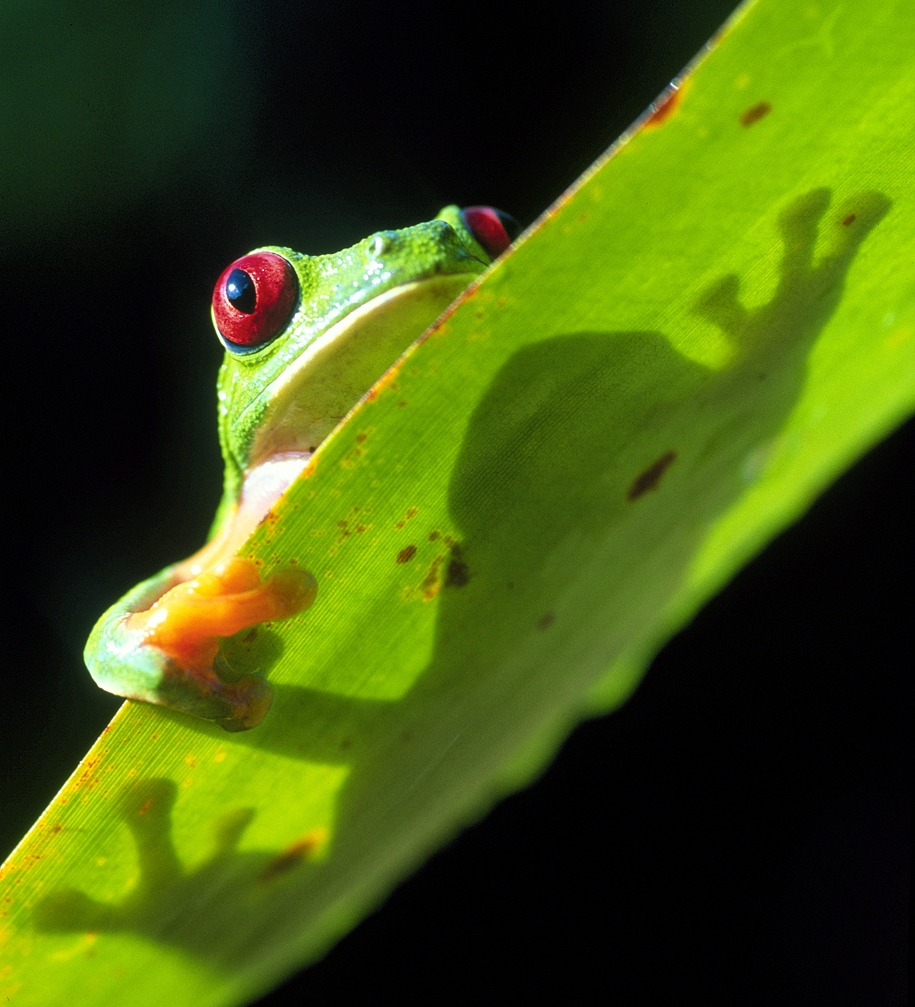
A red-eyed tree frog (Agalychnis callidryas) from Barro Colorado Island in Panama. This small island, just 1500 ha (3700 acres) in area, is one of the tropical protected areas evaluated in this study (photo © Christian Ziegler <zieglerphoto@yahoo.co>, Smithsonian Tropical Research Institute). Note: It is prohibited for any third party or agency to use or license this image; any use other then described above shall be subject to usage fees as determined solely by the photographer.

Much of conservation science boils down to good decision making: when, where and how we ‘set aside’ terrestrial or marine areas for specific protection against the ravages of human endeavour. This is the basis for the entire sub-discipline of conservation planning and prioritisation, and features prominantly in most aspects of applied conservation and restoration.

In other words, we do all this science to determine where we should emplace protected areas, lobby for getting more land and sea set aside so that we have ‘representative’ amounts (i.e., to prevent extinctions), and argue over the best way to manage these areas once established.

But what if this pinnacle of conservation achievement is itself under threat? What if many of our protected areas are struggling to insure biodiversity against human consumption? Well, it’d be a scary prospect, to say the least.

Think of it this way. We buy insurance policies to buffer our investments against tragedy; this applies to everything from our houses, worldly possessions, cars, livestock, health, to forest carbon stores. We buy the policies to give us peace of mind that in the event of a disaster, we’ll be bailed out of the mess with a much-needed cash injection. But what if following the disaster we learn that the policy is no good? What if there isn’t enough pay-out to fix the mess?

In biodiversity conservation, our ‘insurance’ is largely provided by protected areas. We believe that come what may, at least in these (relatively) rare places, biodiversity will persist despite our relentless consumerism.

Unfortunately, what we believe isn’t necessarily true.

Today I’m both proud and alarmed to present our latest research on the performance of tropical protected areas around the world. Published online in Nature this morning (evening, for you Europeans) is the 216-author (yes, that is correct – 216 of us) paper entitled “Averting biodiversity collapse in tropical forest protected areas” led by Bill Laurance. Read the rest of this entry »


Biodiversity conservation and behaviour change

23 07 2012

I have been asked by Diogo Veríssimo, a PhD student at the Durrell Institute of Conservation and Ecology (DICE) based at the University of Kent, to post a call for papers for a special issue of Conservation Evidence (details below). I’ve bumped into Diogo at a few conferences, and learnt a few weeks ago that he won the IUCN/Thomson Reuters Environmental Award for his essay entitled Greening the crisis: turning trouble into opportunity. Well done, Diogo.

Dear Colleagues,

I am inviting you to submit case-studies on behaviour change and biodiversity and conservation for a special issue in the journal Conservation Evidence, an online and open-access scientific journal that focuses on project-level conservation interventions with the aim of sharing lessons learned. The aim of this special issue is to document specific conservation interventions that delivered changes in behaviours relevant to the management and conservation of biodiversity and in this way share lessons learned.

Interventions that have not been successful are especially of interest as these allow for an understanding and discussion of what does not work and why. All case studies need to include an evaluation of the impacts of the intervention and are written by, or in partnership with, those who did the conservation work. Read the rest of this entry »


Experiments in carbon-biodiversity trade-offs

19 07 2012

Last month I covered a topic that is not only becoming the latest fashion-trend in conservation, it is also where much of the research funding is going. Whether or not this is the best use of limited research resources is largely irrelevant – as I always preach to fledgling grant writers: “Write about what the funding agency wants to fund, not what you want to do”. Cynical, I know, but it is oh-so-true.

The topic in question is how we as conservation biologists ensure that the new carbon economy drives positive change for biodiversity, rather than the converse. Hell knows we really can’t afford for land-use change to get any worse for biodiversity; worldwide we are on trajectory for a mass extinction within our lifetime, so anything that potentially makes it worse should be squashed completely.

But it seems that land- and seascape changes that might arise from trading carbon (including carbon pricing) are on a knife-edge as far as biodiversity is concerned. I described this dilemma in my previous post, and I am happy to say that the manuscript arising is almost complete. Briefly, if we as a society decide to try to reduce greenhouse gas emissions and capture as much carbon as possible by altering land-use practices, then it is likely that our forests will become vast monocultures incapable of sustaining much biodiversity at all. In other words, there’s a balance to be struck between what is good for carbon sequestration and what is good for biodiversity. While not always mutually exclusive, neither are they mutually attainable goals. Read the rest of this entry »


Empty seas coming to a shore near you

12 07 2012

Last week I had the pleasure of entertaining some old friends and colleagues for a writing workshop in Adelaide (don’t worry – they all came from southern Australia locations, so no massive carbon footprints for overseas travel). I’m happy to report it was a productive (and epicurean) week, but that’s not really the point of today’s post.

One of those participants was long-time colleague, Dr. Rik Buckworth. Rik and I first met in Darwin back in the early 2000s when he was lead fisheries scientist for Northern Territory Fisheries; this collaboration and friendship blossomed into an ARC Linkage Project (with Dr. Mark Meekan of AIMS) on shark fisheries (see some of the scientific outputs from that here, here, here and here). Rik has since moved to CSIRO in Brisbane, but keeps a hand in NT fisheries’ affairs. Incidentally, Rik trained under one of the most well-known fisheries modellers in the world – Carl Walters – when he did his PhD at the University of British Columbia back in the early 1990s.

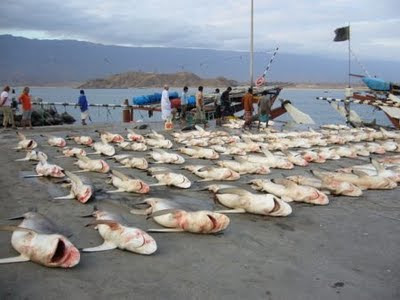
During our workshop, Rik pointed out a paper he had co-authored back in 2009 in Reviews in Fish Biology and Fisheries that had completely escaped my attention – it’s a frightening and apocalyptic view of the Australasian marine tropics that seems to confirm our predictions about northern Australia’s marine future. Just take a look at the following two figures from their paper (Elasmobranchs in southern Indonesian fisheries: the fisheries, the status of the stocks and management options): Read the rest of this entry »


Ghost extinctions

5 07 2012

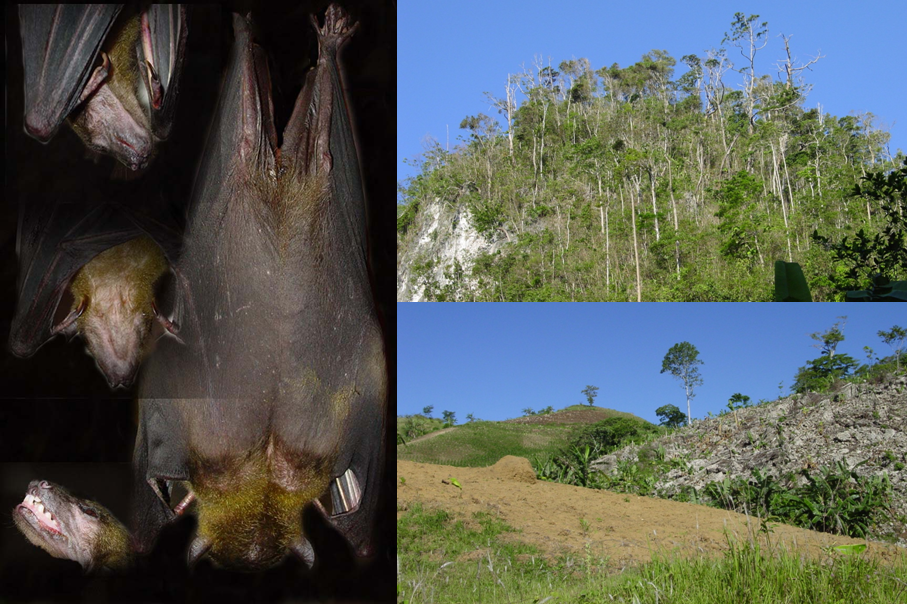
The Philippine bare-backed fruit bat (Dobsonia chapmani; body size = < 220 mm, < 150 g; IUCN status: ‘Critically Endangered A2cd’) is endemic to lowland rain forests [top habitat image] from Negros and Cebu islands. This species of flying fox had been missing from the 1970s and was declared extinct in 2002 (34). In May 2003, five specimens [one shown in the picture above] were trapped in night nets in the Calatong forest (Negros Island), a ~ 1,000-ha fragment of secondary rain forest and agricultural lands [bottom habitat image] (35). The species is reliant on fruit-bearing vegetation and caves for feeding and roosting, respectively. As with many other Philippine bats, it suffers from habitat degradation and hunting. The family Pteropodidae comprises > 150 species. Despite their Draculian look, they all feed on fruits and nectar, and act as important plant pollinators (36), as well as disease vectors such as Ebola virus (37). Flying foxes are distributed in the tropics and subtropics from the Eastern Mediterranean, through the Arabian Peninsula, Asia, Australia, and many islands of the Indian Ocean. Photos courtesy of Ely L. Alcala.

Jared Diamond (1) coined the expression ‘evil quartet’ for the four main human causes of species extinctions: habitat loss/fragmentation, overkill, introduced species and extinction chains [with climate change and extinction synergies (2), the updated expression would be ‘evil sextet”]. However, one third of ‘extinct’ mammal species has been ‘found’ again. Recent studies reveal that the probability of rediscovery depends on the cause of extinction.

Arriving in a city to search for an old friend, I would first look in the suburb where he lived, the pub where we enjoyed a drink and some music, or the park where we used to play football. But if my friend was an outlaw, or had recently gone through a traumatic experience, my chances of finding him at his favourite spots would shrink.

If, instead of a friend, we are searching for the last survivors of an extinct-declared species, surveys also tend to take place in the habitat in which the species was previously found. Such a strategy rests on the classical hypothesis that, given the spatial distribution of a species, its gradual decline must occur from the periphery to the core of its distribution (‘range collapse’) where, in theory, the habitat should be of better quality and the number of individuals higher (3). In contrast, recent work supports that the trajectory of demise of threatened vertebrates progresses from the core to the periphery (‘range eclipse’) (4), because many perturbations make their way as a progressive wave, e.g, fire, logging or urbanisation.

Diana Fisher (5) supports the ‘range eclipse’ hypothesis for ‘extinct’ mammals which have been rediscovered. She quantifies that 60% of the new records are made from peripheral habitats, mainly when the principal cause of extirpation is habitat loss. Not only that, on average species are rediscovered at altitudes 35 % higher than historical records, and only in 5 % of the cases at the locality where it had been last seen.

Read the rest of this entry »


Conservation and Ecology Impact Factors 2011

29 06 2012

Here we go – another year, another set of citations, and another journal ranking by ISI Web of Knowledge Journal Citation Reports. Love them or loathe them, Impact Factors (IF) are immensely important for dictating publication trends. No, a high Impact Factor doesn’t mean your paper will receive hundreds of citations, but the two are correlated.

I’ve previously listed the 2008, 2009 and 2010 IF for major conservation and ecology journals – now here are the 2011 IF fresh off the press (so to speak). I’ve included the 2010 alongside to see how journals have improved or worsened (but take note – journals increase their IF on average anyway merely by the fact that publication frequency is increasing, so small jumps aren’t necessarily meaningful).

Read the rest of this entry »


Who’s responsible for climate change? Not ecologists, right?

19 06 2012

It’s sometimes difficult to take a long, hard look in the mirror and admit one’s failings. Today’s post is a thought-provoking challenge to all ecologists (indeed, all scientists) who gaily flit all over the known universe in the name of science. I’m certainly in one of the upper guilt echelons on this issue – and while I tell myself each January that “this year I’ll fly much less frequently”, I usually end up breaking my resolution by month’s end.

In some defence of my sins, I have to state that while I should always endeavour to fly less, I am convinced that strategic, well-planned (and usually small) meetings are some of the best ways to advance scientific ideas. As CB readers might know, I am particularly impressed with the results of dedicated workshops in this regard.

I also think that even if all aeroplanes suddenly fell from the sky and one could no longer enjoy that transcontinental G & T, we’d still be in a terribly climate-change mess – we need BIG solutions beyond simple consumption reduction.

Now I’m just making excuses. Thanks again to Alejandro Frid for providing this challenge to me and our colleagues.

Recently I asked a math savvy graduate student at Simon Fraser University, in Western Canada, to proofread an equation. ‘No problem’, she replied, ‘but could you wait a few days? I am about to fly to Korea for a conference but I will return shortly.’

Hmmmm? So this is what the system promotes: gallivanting halfway around the world and back within a week, burning extraordinary amounts of fossil fuels, all in the name of scientific career advancement. Who are the climate change culprits? Not us ecologists, right?

Of course I am being unfair to Ms. Maths Savvy. Most of us are equally guilty of boarding that big ol’ jet airliner in the name of scientific meetings or the pursuit of ecological knowledge in far off study sites. Yet the inconvenient truth, according to a recent editorial in Nature Climate Change1, is that “international air travel accounts for about 5% of global warming”. Flying all over the world in the name of ecology and conservation therefore implies that we believe that (i) there are no alternative means to accomplish the same goal with far less emissions, and (ii) that the benefits of our work outweigh the atmospheric impacts of flying. Think again.

For insight into these issues, I interviewed Kevin Anderson, deputy director of the Tyndall Centre for Climate Change Research at the University of Manchester and arguably the climate conscience of scientists. I was attracted to Anderson’s perspective because of its blunt honesty. He calls air travel “…the most emission profligate activity per hour”2 and has little patience for the irony that “international climate jamborees”, otherwise known as climate science meetings, have contributed far more to increasing carbon emissions than to any meaningful action on climate change. His recent commentary in Nature3 makes it amply clear that buying carbon offsets when flying may ease our perceived guilt but not emission rates. Read the rest of this entry »


The invader’s double edge

15 06 2012

The Ogasawara Archipelago (Bonin Islands,) encompasses several tens of small islands ~ 1000 km from mainland Japan. In 2011, UNESCO declared this archipelago a World Heritage Site. Some regard them as the “Galapagos of the Orient”, owing to their biological singularity, e.g., endemism rates of ~ 50 % of > 500 species of plants, or ~ 90 % of > 100 species of terrestrial snails. Photos show patches of native scrub (left) and introduced sheoak forest (right), close-ups of the two study species Ogasawarana discrepans (left) and O. optima (right), and empty shells with (top right, bottom) and without (top left) rat scars (Courtesy of Satoshi Chiba).

Another great post by Salvador Herrando-Pérez that challenges our views on invasive species (some would do well to heed his words when it comes to species like dingos). I mentioned in his last post that he had just recently submitted his PhD thesis, and now I’m proud to say that it has been examined with no recommended changes required. What a truly rare accolade. Congratulations, Salva.

A blunt instrument of ecological restoration is the elimination of introduced species. However, when introduced species become custodians of native wildlife, a dilemma emerges between re-establishing historical ecosystem conditions or instead, accepting foreign species for the benefits they might also bring.

Right after birth, we all enter a culture where what is ‘good’ or ‘bad’ has already been determined. Later on, if those values remain unchallenged, individuals assume them to be true and act accordingly (which is neither ‘good’ nor ‘bad’ necessarily… it is just so). Science is therefore the only recourse humans have to check such values by  reducing the subjectivity of our judgements about why natural phenomena occur.

But scientists also work in a context of ‘pre-established truths’ (because, believe it or not, most of us are human too). The late Larry Slobodkin referred to our professional biases as ‘reifications’; i.e.,

“…reification consists of accepting a designation as if it has empirical meaning when, in fact, its existence has either never been tested or it has been found empty” (1).

Slobodkin underlined invasive species as an icon of reification. Indeed, people (with and without a scientific background) tend to demonise species that are not native and extremely abundant – experts even debate whether this is another sort of xenophobia (2). Thus, zebra mussels (Dreissena polymorpha), cane toads (Rhinella marinus) or caulerpa algae (Caulerpa taxifolia) are commonly referred to as ‘alien’, ‘invasive’ or ‘noxious’. Technically, we now call them ‘biological pollution’ (3). Such epithets are loaded with moral and pejorative connotations to qualify organisms that affect the range of facets of human well-being (aesthetics, economy, ethics, health). Read the rest of this entry »


Costs and benefits of a carbon economy for conservation

12 06 2012

I’ve had the good fortune of being involved now in a several endeavours funded by the Australian Centre for Ecological Analysis and Synthesis (ACEAS); two of those were workshops targeting specific questions regarding estimating modern extinction rates and examining the effects of genetic bottlenecks on Australian biota. The third was a bit different, to say the least – it was a little along the lines of ‘build it, and they will come‘. In other words, what happens when you bung 40 loosely associated researchers in a room for two days? Does anything of substance result, or does it degenerate into a mere talk-fest. I’m happy to say the former. The details of the ACEAS ‘Grand Workshop‘ are now being finalised in a paper that should be submitted by the end of the month. The ACEAS report is reproduced below.

The Grand ACEAS Workshop was something of an experiment: what will happen when we bring 30 of Australia’s top scientists working on land management issues into the same room?

The Grand Workshop participants came from academia, research institutions and the government, and had all received ACEAS funding for working groups. David Keith, Ted Lefroy, Jasmyn Lynch, Wayne Meyer and Dick Williams were amongst the attendees of the two-day workshop.

And when this group of people came together wanting to analyse and synthesise ecological data, great things happened.

“We decided to focus on how carbon pricing legislation will affect land use change and how will that spill over into biodiversity persistence”, said Professor Corey Bradshaw, Director of Ecological Modelling at The University of Adelaide, who led the synthesis activity at the Grand ACEAS Workshop.

“Will carbon pricing lead to good outcomes for biodiversity, or negative ones, or will it have no bearing whatsoever?”

The workshop participants broke into five groups to discuss how the carbon tax legislation will change land use when it is introduced in July 2012, and the potential impact on biodiversity.

Some of the questions asked included:

  • Is it enough simply to allow plants to re-grow to be eligible for carbon credits?
  • How will an increase in forestry plantations impact biodiversity, water catchments and fire regimes?
  • Will there be more kangaroo grazing to reduce methane emissions and erosion, replacing hard-hoofed livestock?
  • Can you receive carbon credits for shooting large feral animals like goats, camels, deer and boars?

The groups found many opportunities for positive biodiversity outcomes with the carbon sequestration activities encouraged by carbon pricing, but there are also many potential ‘bio-perversities’. Read the rest of this entry »


Get boreal

7 06 2012

I’ve been a little quiet this last week because I’ve had to travel to the other side of the planet for what turned out to be a very interesting and scientifically lucrative workshop. After travelling 31 hours from Adelaide to Umeå in northern Sweden, I wondered to myself if it was going to be worth it for a 2.5-day workshop on a little island (Norrbyskär) in the Baltic Sea (which, as it turned out, didn’t have internet access).

The answer is a categorical ‘yes’!

Many of you know that I’ve dabbled in boreal forest conservation in the past, but I could never claim any real expertise in the area. Hence it came as something of a shock when Jon Moen of Umeå University asked me to attend a specialist workshop focused loosely on making the plight and importance of the boreal forest more widely acknowledged. I dragged my feet initially, but Jon convinced me that I could add something to the mix.

It was a small workshop, but well-represented by all boreal countries save Norway (i.e., we had Russians, Swedes, Finns, Canadians and Americans – this Australian was indeed the odd one out). We also had a wide array of expertise, from carbon accountants, political scientists, political economists, native cultures experts, ecologists to foresters. Our mandate – justify why we should pay more attention to this globally important region.

Just how important is the boreal forest? We managed to unearth some little-appreciated facts: Read the rest of this entry »


It couldn’t have been us!

29 05 2012

A few months ago I asked Chris Johnson of the University of Tasmania to put together a post on his recent Science paper regarding Australian megafaunal extinctions. It seems that it stirred, yet again, some controversy among those who refuse to accept (mainly archaeologists) that humans could have had anything to do with pre-European extinctions. Indeed, how could humans possibly have anything to do with extinctions?!

Like Corey, I am mainly interested in current environmental problems. But now and then I wade into the debate over the extinction of Australia’s Pleistocene megafauna [editor’s note: Chris literally wrote the book on Australian mammal extinctions over the last 50,000 years], those huge animals that wandered over the Australian landscape until about 40,000 years ago.

This is an endlessly fascinating topic. The creatures were wonderful and bizarre – it’s great fun doing work that lets you think about marsupial lions, giant kangaroos, geese bigger than emus, echidnas the size of wombats, and the rest. The cause of their extinction is perhaps the biggest mystery, and the most vexed controversy, in the environmental history of Australia. And for reasons that I will explain in a minute, solving this mystery is profoundly important for our understanding of contemporary Australian ecology.

The latest bit of work on this is a paper that a group of us (including Corey’s close colleague, Barry Brook) published in Science. You can see it here (if you don’t have access to Science, email me for a copy). So far, research on this problem has concentrated on dating fossils to find out when megafauna species went extinct. Several recent studies have found evidence for extinction between 40,000 and 50,000 years ago, which is about when people first came to Australia. But the conclusion that people caused a mass extinction of megafauna has been strenuously criticised, because so far it is based on only a few species with good collections of dates. The critics argue that other species disappeared before humans arrived, maybe in an extended series of extinctions caused by something else, like a deteriorating climate.

This argument over fossils will be with us for a long time. Because finding and dating fossils is such hard, slow work, the fossil record will inevitably give a seriously incomplete picture of what happened. One way around this problem would be to analyse the fossil record using mathematical approaches that take into account the problem of incomplete sampling. Corey is lead author of a recent paper that introduced a great new set of tools for this, and we are part of a group that is currently assembling a complete database of all recent dates on Australian fossils so that we can analyse them using these tools. Stay tuned for the result. Read the rest of this entry »


Ghosts of bottlenecks past

25 05 2012

© D. Bathory

I’ve just spent the last week at beautiful Linnaeus Estate on the northern NSW coast for my third Australian Centre for Ecological Analysis and Synthesis (ACEAS) (see previous post about my last ACEAS workshop).

This workshop is a little different to my last one, and I’m merely a participant (not the organiser) this time. Our task was to examine the mounting evidence that many Australian species appear to show a rather shallow genetic pool from a (or several) major past bottlenecks.

What’s a ‘bottleneck’? In reference to the form after which it was named, a genetic bottleneck is the genetic diversity aftermath after a population declines to a small size and then later expands. The history of this reduction and subsequent expansion is written in the DNA, because inevitably gene ‘types’ are lost as most individuals shuffle off this mortal coil. In a way, it’s like losing a large population of people who all speak different languages – inevitably, you’d lose entire languages and the recovering population would grow out of a reduced ‘pool’ of languages, resulting in fewer overall surviving languages.

Our workshop focus started, as many scientific endeavours do, rather serendipitously. Several years ago, Jeremy Austin noticed that devils who had died out on the mainland several thousand years ago had a very low genetic diversity, as do modern-day devils surviving in Tasmania. He thought it was odd because they should have had more on the mainland given that was their principal distribution prior to Europeans arriving. He mentioned this in passing to Steve Donnellan one day and Steve announced that he had seem the same pattern in echidnas. Now, echidnas cover most of Australia’s surface, so that was equally odd. Then they decided to look at another widespread species – tiger snakes, emus, etc. – and found in many of them, the same patterns were there. Read the rest of this entry »


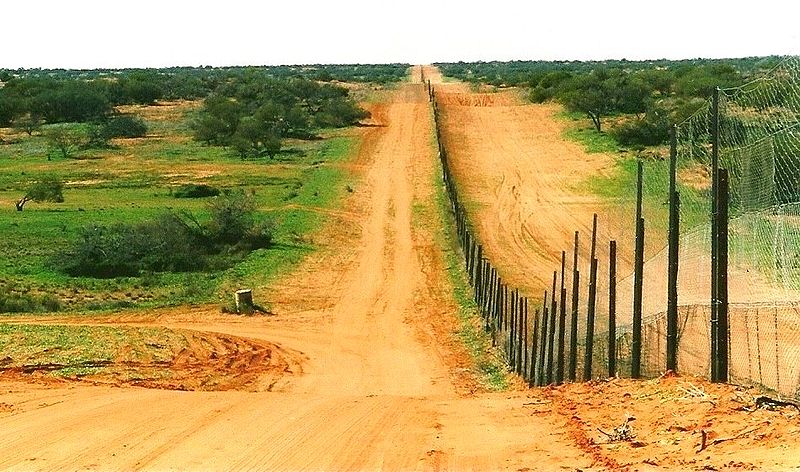
Can Australia afford the dingo fence?

18 05 2012

I wrote this last night with Euan Ritchie of Deakin University in response to some pretty shoddy journalism that misrepresented my comments (and Euan’s work). Our article appeared first in The Conversation this morning (see original article).

We feel we have to set the record straight after some of our (Bradshaw’s) comments were taken grossly out of context, or not considered at all (Ritchie’s). A bubbling kerfuffle in the media over the last week compels us to establish some facts about dingoes in Australia, and more importantly, about how we as a nation choose to manage them.

A small article in the News Ltd. Adelaide Advertiser appeared on 11 May in which one of us (Bradshaw) was quoted as advocating the removal of the dingo fence because it was not “cost effective” (sic). Despite nearly 20 minutes on the telephone explaining to the paper the complexities of feral animal management, the role of dingoes in suppressing feral predators, and the “costs” associated with biodiversity enhancement and feral control, there wasn’t a single mention of any of this background or justification.

Another News Ltd. article denouncing Ritchie’s work on the role of predators in Australian ecosystems appeared in The Weekly Times the day before, to which Ritchie responded in full.

So it’s damage control, and mainly because we want to state categorically that our opinion is ours alone, and not that of our respective universities, schools, institutes or even Biosecurity SA (which some have claimed or insinuated, falsely, that we represent). Biosecurity SA is responsible for, inter alia, the dingo fence in South Australia. Although our opinions differ on its role, we are deeply impressed, grateful and supportive of their work in defending us from biological problems. Read the rest of this entry »



No more ecology

9 05 2012

To all ecology people who read this blog (students, post-docs, academics), this is an intriguing, provocative and slightly worrying title. As ecology has matured into a full-fledged, hard-core, mathematical science on par with physics, chemistry and genetics (and is arguably today one of the most important sciences given how badly we’ve trashed our own home), its sophistication now threatens to render many of the traditional aspects of ecology redundant.

Let me explain.

As a person who cut his teeth in field ecology (with all the associated dirt, dangers, bites, stings, discomfort, thrills, headaches and disasters), I’ve had my fair share of fun and excitement collecting ecological data. There’s something quaintly Victorian (no, I am not referring to the state next door) about the romantic and obsessive naturalist collecting data to the exclusion of nearly all other aspects of civilised life; the intrepid adventurer in some of us takes over (likely influenced by the likes of David Attenborough) and we convince ourselves that our quest for the lonely datum will heal all of the Earth’s ailments.

Bollocks.

As I’ve matured in ecology and embraced its mathematical complexity and beauty, the recurring dilemma is that there are never enough data to answer the really big questions. We have sampled only a fraction of extant species, we know embarrassingly little about how ecosystems respond to disturbance, and we know next to nothing about the complexities of ecosystem services. And let’s not forget our infancy in understanding the synergies of extinctions in the past and projections into the future. Multiply this uncertainty by several orders of magnitude for ocean ecosystems.

Read the rest of this entry »


Sharks: the world’s custodians of fisheries

5 05 2012

Today’s post comes from Salvador Herrando-Pérez (who, incidentally, recently submitted his excellent PhD thesis).

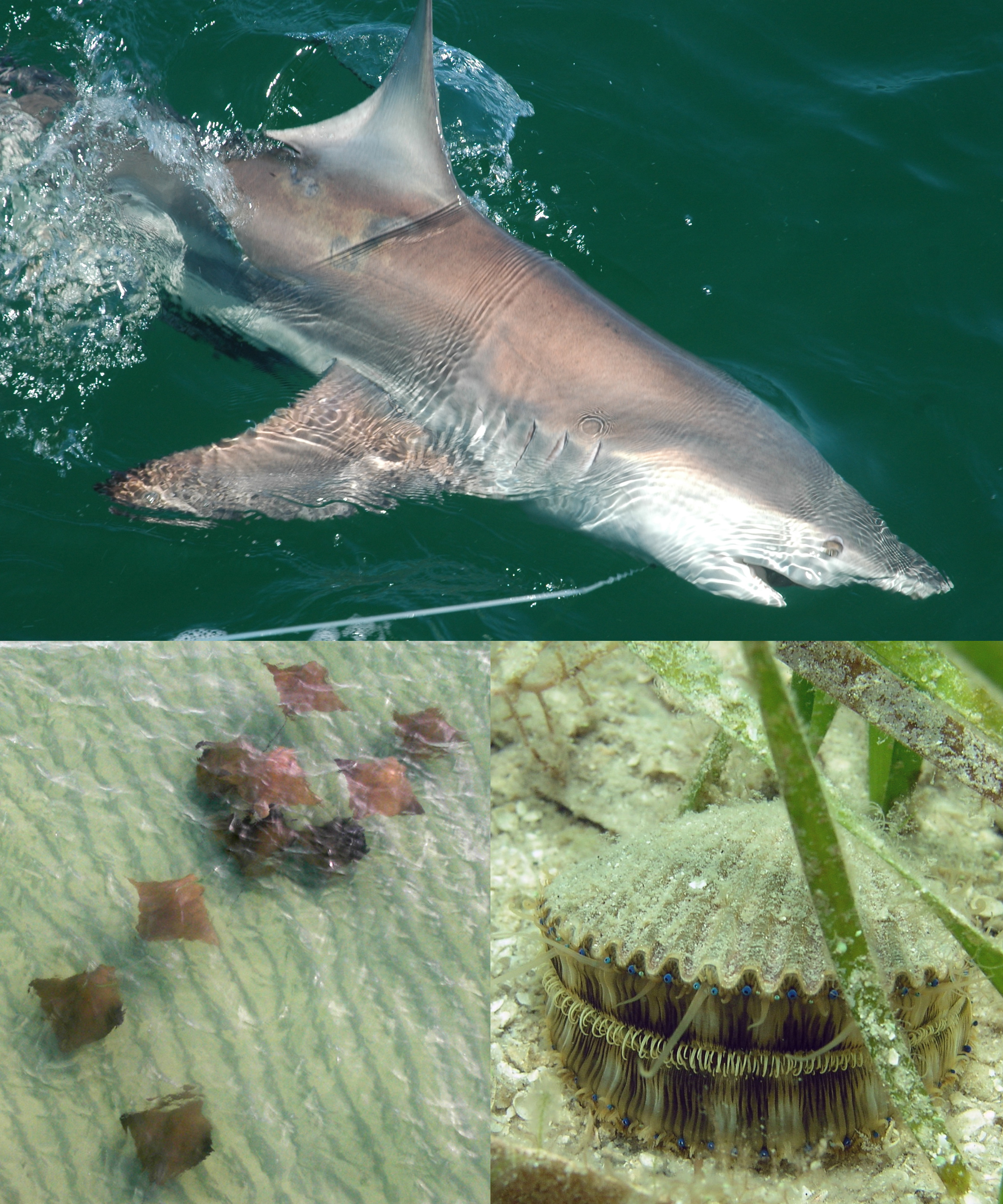
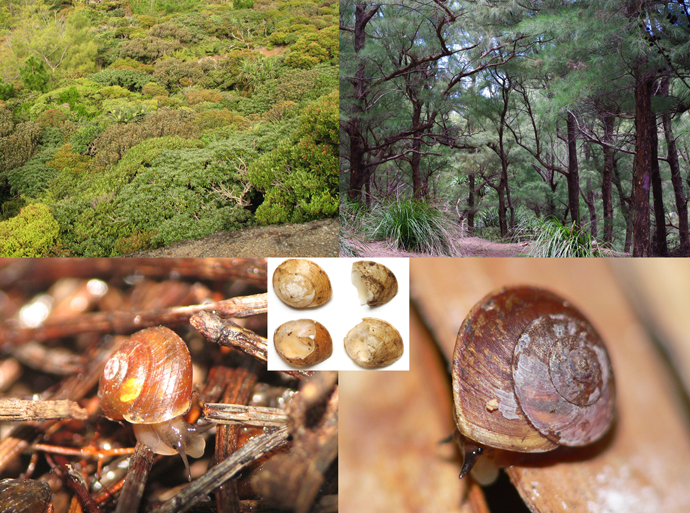
Three species co-occurring in the Gulf of Mexico and involved in the trophic cascade examined by Myers et al. (8). [1] Black-tips (Carcharhinus limbatus) are pelagic sharks in warm and tropical waters worldwide; they reach < 3 m in length, 125 kg in weight, with a maximum longevity in the wild of ~ 12 years; a viviparous species, with females delivering up to 10 offspring per parturition. [2] The cownose ray (Rhinoptera bonasus) is a tropical species from the western Atlantic (USA to Brazil); up to 2 m wide, 50 kg in weight, and 18 years of age; gregarious, migratory and viviparous, with one single offspring per litter. [3] The bay scallop (Agropecten irradians) is a protandric (hermaphrodite) mollusc, with sperm being released a few days before the (> 1 million) eggs; commonly associated with seagrasses in the north-western Atlantic; shells can reach up to 10 cm and individuals live for < 2 years. In the photos, a black-tip angled in a bottom long-line off Alabama (USA), a school of cownose rays swimming along Fort Walton Beach (Florida, USA), and a bay scallop among fronds of turtle grass (Thalassia testudinum) off Hernando County (Florida, USA). Photos by Marcus Drymon, Dorothy Birch and Janessa Cobb, respectively.

The hips of John Travolta, the sword of Luke Skywalker, and the teeth of Jaws marked an era. I still get goose pimples with the movie soundtrack (bass, tuba, orchestra… silence) solemnizing each of the big shark’s attacks. The media and cinema have created the myth of man’s worst friend. This partly explains why shark fishing does not trigger the same societal rejection as the hunting of other colossuses such as whales or elephants. Some authors contend that we currently live in the sixth massive extinction event of planet Earth (1) 75 % of which is strongly driven by one species, humans, and characterized by the systematic disappearance of mega-animals in general (e.g., mammoths, Steller’s seacow), and predators in particular, e.g., sharks (2, 3).

The selective extirpation of apex predators, recently coined as ‘trophic downgrading’, is transforming habitat structure and species composition of many ecosystems worldwide (4). In the marine realm, over the last half a century, the main target of the world’s fisheries has turned from (oft-large body-sized) piscivorous to planctivorous fish and invertebrates, indicating that fishery fleets are exploiting a trophic level down to collapse, then harvesting the next lower trophic level (5-7).

Myers et al. (8) illustrate the problem with the fisheries of apex-predator sharks in the northeastern coast of the USA. Those Atlantic waters are rife with many species of shark (> 2 m), whose main prey are smaller chondrichthyans (skates, rays, catsharks, sharks), which in turn prey on bottom fishes and bivalves. Myers et al. (8) found that, over the last three decades, the abundance of seven species of large sharks declined by ~ 90 %, coinciding with the crash of a centenary fishery of bay scallops (Agropecten irradians). Conversely, the abundance of 12 smaller chondrichthyes increased dramatically over the same period of time. In particular, the cownose ray (Rhinoptera bonasus), the principal predator of bay scallops, might today exceed > 40 million individuals in some bays, and consume up to ~ 840,000 tonnes of scallops annually. The obvious hypothesis is that the reduction of apex sharks triggers the boom of small chondrichthyans, hence leading to the break-down of scallop stocks. Read the rest of this entry »



If a tree falls… preventing deforestation with insurance

3 05 2012

As CB readers will know, I’ve reported a few times on our iREDD idea, and it got a little pick-up overseas. Here’s a great article by Rachel Nuwer covering the concept, published in Ecoimagination.com.

Almost everything we own – our houses and cars and our very health – is insured. It works on a simple principal: the higher the risk, the higher the premium. It’s an age-old concept that ecological modelers have decided to apply to a new area: forest preservation.

A new proposal, published in the journal Conservation Letters, would create forest insurance to make the U.N. forest preservation program Reduced Emissions from Deforestation and forest Degradation, or REDD, more effective. REDD is generally supposed to function by paying developing countries to protect their forests in exchange for carbon pollution credits. Currently the program has 42 partner countries across the globe. The program is crucial to the fight against climate change since deforestation and forest degradation accounts for about 20 percent of global greenhouse gas emissions and threatens biodiversity.

“REDD is a fantastic idea,” said Corey Bradshaw, director of ecological modeling at the University of Adelaide and co-author of the study. “You get a carbon advantage and biodiversity doesn’t get wiped out at the same time, it seems perfect.”

But it has a few major flaws that the insurance scheme, called iREDD, seeks to remedy.

REDD only works if the parties are honest and stick to the agreement. Bradshaw doesn’t have much faith that will happen. “If there’s a way to cheat, people will cheat. That’s the nature of all life, not just humans, but we excel at it,” he said. If, for example, a country is paid to conserve one forest but moves its deforestation efforts to an adjacent forest in order to get both money and timber, in terms of carbon offsets, that transaction was a failure. This phenomenon is called “leakage.”

Carbon-capture also only works if it’s maintained indefinitely. If a country accepts money for ten years and then cuts its forest the day after the agreement expires, then all of that conservation was for naught. This issue is called “permanence,” usually translated into an arbitrarily defined period of time set by countries in terms of decades or centuries. Read the rest of this entry »


We only have decades…

26 04 2012

… not centuries.

Here’s a little video production The Environment Institute put together that explains some of our lab‘s work and future directions.


CJA Bradshaw


To corridor, or not to corridor: size is the question

24 04 2012

I’ve just read a really interesting post by David Pannell from the University of Western Australia discussing the benefits (or lack thereof) of wildlife ‘corridors’. I’d like to elaborate on a few key issues, and introduce the most important aspect that really hasn’t been mentioned.

Some of you might be aware that the Australian Commonwealth Government has just released its Draft National Wildlife Corridors Plan for public comment, but many of you might not really know what a ‘corridor’ constitutes.

Wildlife or biodiversity ‘corridors’ have been around for a long time, at least in terms of proposals. The idea is fairly simple to conceive, but very difficult to implement in practice.

At least for as long as I’ve been in the conservation biology biz, ‘corridors’ have been proffered as one really good way to make broad-scale landscape restoration plausible and effective for (mainly) forest-dwelling species which have copped the worst of deforestation trends around Australia and the world. The idea is that because of intense habitat fragmentation, isolated patches of primary (or at least, reasonably intact secondary) forest can be linked by planting some sort of long corridor of similar habitat between them. Then, all the little creatures can merrily make their way back and forth between the patches, thus rescuing each other from extinction via migration. Read the rest of this entry »


The wounded soldiers of biodiversity

10 04 2012

Here’s another great post from Salvador Herrando-Pérez. It is interesting that he’s chosen an example species that was once (a long, long time ago in a galaxy far, far away) of great interest to me (caribou – see ancient papers a, b, c, d). But that is another story. Take it away, Salva.


Figure 1. Caribou (reindeer) are ungulates weighing up to ~ 100 kg. They live in tundra and taiga in Finland, Greenland, Finland, Norway, Mongolia, Russia, Canada and USA (extinct in Sweden). The species is globally stable (‘Least Concern’, IUCN Red List), but the subspecies of woodland caribou (Rangifer tarandus caribou) is threatened in North America. Schneider and colleagues’ 7 study encompasses ~ 3,000 individuals in 12 herds (75 to 450 individuals per herd), occupying ~ 100.000 km2 of conifer forest and peatland (3,000 to 19,000 km2 per herd). Two ecotypes are recognized regionally22, namely migratory mountain herds (mostly from mountains and foothills in west-central Alberta), and non-migratory boreal herds (mostly from peatlands in central and northern Alberta). The photo shows a group of caribous grazing on subalpine vegetation from Tonquin Valley, Jasper National Park (Alberta, Canada). Photo courtesy of Saakje Hazenberg.

As conservation biology keeps incorporating management and economical principles from other disciplines, it stumbles with paradoxes such that investing on the most threatened components of biodiversity might in turn jeopardize the entire assets of biodiversity.

At the end of 2011, newspapers and TVs echoed an IUCN report cataloguing as ‘extinct’ or ‘near extinct’ several subspecies of rhinos in Asia and Africa. To many, such news might have invoked the topic: “how badly governments do to protect the environment”. However if, to avoid those extinctions, politicians had to deviate funds from other activities, what thoughts would come to the mind of workers whose salaries had to be frozen, school directors whose classroom-roof leakages could not be repaired (e.g., last winter at my niece’s school in Spain), colonels whose last acquisition of ultramodern tanks had to be delayed, or our city council’s department who had to cancel Sting’s next performance.

Thus, there are three unquestionable facts regarding species conservation:

  1. the protection of species costs money;
  2. governments and environmental organisations have limited budgets for a range of activities they deem necessary; and
  3. our way of conserving nature is failing because, despite increasing public/private support and awareness, the rate of destruction of biodiversity is not decelerating1,2.

One of the modern debates among conservationists pivots around how to use resources efficiently3-6. Schneider and colleagues7 have dealt with this question for woodland caribou (Rangifer tarandus) in Canada. A total of 18 populations of this ungulate persist in the Canadian province of Alberta, all undergoing demographic declines due to mining extractions (oil, gas and bitumen), logging and wolf predation. The species is listed as ‘threatened’ regionally and nationally. The Alberta Caribou Recovery Plan (2004-2014) is attempting to protect all herds. Under such a framework, Schneider et al.7 predicted that woodland caribou would be regionally extirpated in less than a century.

Furthermore, they estimated the costs of making each herd viable (Fig. 1), with a triple revelation. To save all herds from extinction would need ~ CA$150,000 million (beyond the available budget). The most threatened herds are among the most expensive to protect (within present management approach). Some herds would be secured through modest investment for two decades. Overall, their study suggests that Alberta’s woodland caribou would be eligible for triage, i.e., at the subpopulation level8. Read the rest of this entry »


Tentacles of destruction

5 04 2012

This last post before Easter is something I’ve thought more and more about over the last few years. I wouldn’t have given it much time in the past, but I’m now convinced roads are one of the humanity’s most destructive devices. Let me explain.

Before I had a good grasp of extinction dynamics, I wouldn’t have attributed much import to the role of roads in conservation. I mean, really, a little road here and there (ok, even a major motorway) couldn’t possibly be a problem? It’s mostly habitat destruction itself, right?

Not exactly. With our work on extinction synergies, I eventually came to realise that roads are some of the first portals to the devastation to come. Read the rest of this entry »