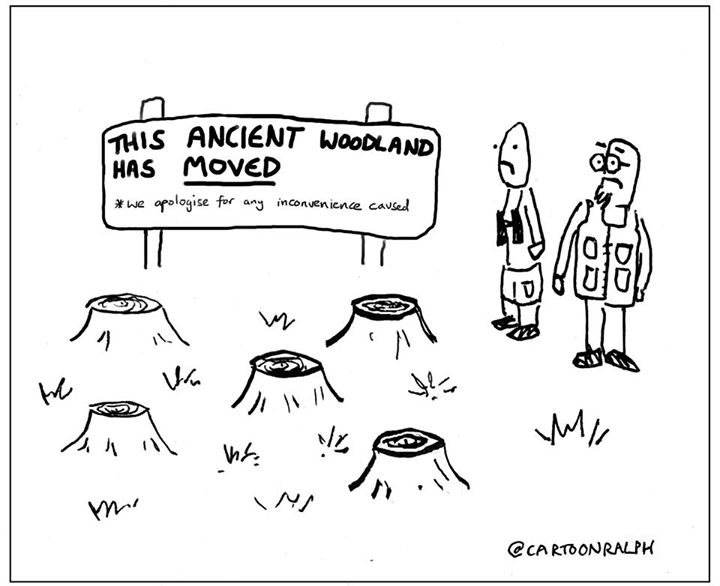
Biodiversity offsetting is off-putting

5 11 2018

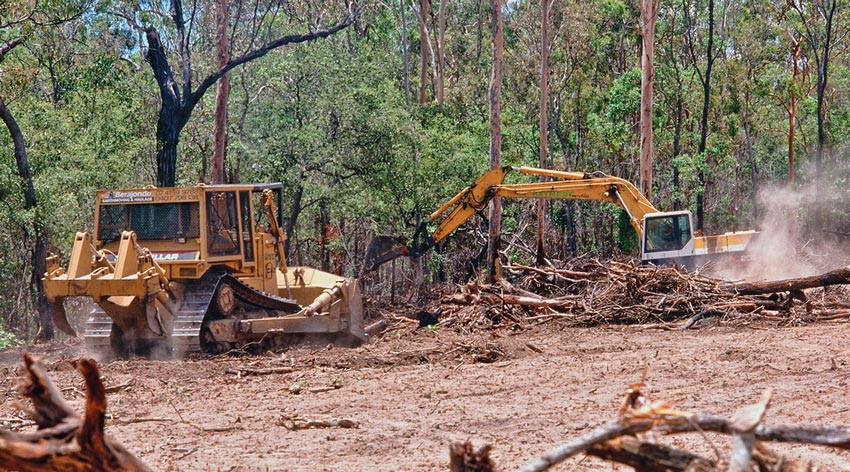
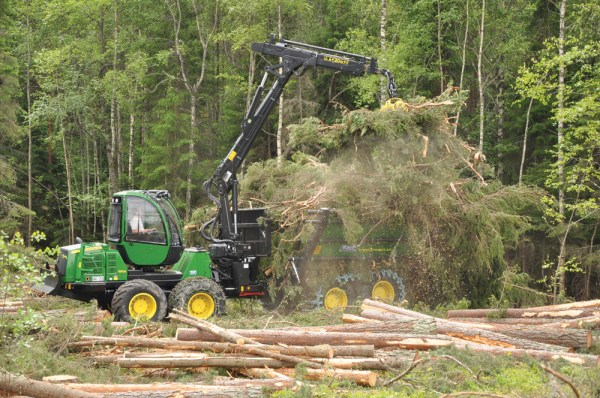
Ancient-woodland-has-movedBiodiversity offsets are becoming more popular in Australia and elsewhere as a means to raise money for conservation and restoration while simultaneously promoting economic development (1). However, there are many perverse consequences for biodiversity if they are not set up carefully (1-3).

Biodiversity ‘offsets’ are intended to work in a similar way to carbon offsets1, in that the destruction of a part of an ecosystem (e.g., a native forest or grassland, or a wetland) can be offset by paying to fund the restoration of another, similar ecosystem elsewhere. As such, approval to clear native vegetation usually comes with financial and other conditions.

But there are several problems with biodiversity offsetting, including the inconvenient fact that creating an equivalent ecosystem somewhere takes substantially longer than it does to destroy one somewhere else (e.g., 4). While carbon emitted in one place is essentially the same as that sequestered elsewhere, a forest can take hundreds of years to develop the same biodiversity values and ecological functions it had prior to destruction. Read the rest of this entry »


Save a jaguar by eating less meat

8 10 2018
Kaayana

My encounter with Kaayana in Kaa-Iya National Park in the Bolivian Chaco. Her cub was around but cannot be seen in the photo

I was trapped. Or so I thought.

The jaguar came towards me on the dirt road, calmly but attentively in the dusky light, her nearly full grown cub behind her. Nervous and with only a torch as defence, I held the light high above my head as she approached, trying to look taller. But she was merely curious; and, after 20 minutes, they left. I walked home in the thickening darkness, amazed at having come so close to South America’s top predator. We later named this mother jaguar ‘Kaayana’, because she lives inside Kaa-Iya National Park in the Bolivian Chaco. My fascination with jaguars has only grown since then, but the chances of encountering this incredible animal in the wild have shrunk even since that night.

A few years after that encounter, I’m back to study jaguars in the same forest, only now at the scale of the whole South American Gran Chaco. Jaguars are the third largest cats in the world and the top predators across Latin America. This means that they are essential for keeping ecosystems healthy. However, they are disappearing rapidly in parts of their range.

Understanding how and where the jaguar’s main threats — habitat destruction and hunting — affect them is fundamental to set appropriate strategies to save them. These threats are not only damaging on their own, but they sometimes act simultaneously in an area, potentially having impacts that are larger than their simple sum. For instance, a new road doesn’t only promote deforestation, it also increases hunters’ ability to get into previously inaccessible forests. Similarly, when the forest is cut for cattle ranching, ranchers often kill jaguars for fears of stock loss.

Kaayana & kittens

Kaayana was seen years later by Daniel Alarcón, who took much better photos of her and her new cubs

However, the interactions between these threats are still not fully understood. In our new study, just published in the journal Diversity and Distributions, we developed a new framework to quantify how and where habitat destruction and hunting risk acted together over three decades, at the expense of highly suitable jaguar habitat in the Gran Chaco. We also analyzed how well the different Chaco countries — Bolivia, Paraguay and Argentina — and their protected areas maintained key jaguar habitat. Read the rest of this entry »


South Australia’s broken biodiversity legislation

24 09 2018

It might come as a bit of shock to some who might give more than a shit about our State’s environmental integrity that there is no dedicated legislation to protect biodiversity in South Australia today.

What? Well, ok, we do have the Native Vegetation Act that is supposed to restrict the clearing of existing native vegetation (of which there is precious little left), and the National Parks and Wildlife Act 1972 to legislate protected areas and species endangerment. We also have the Wilderness Protection Act 1992 that addresses wilderness protection and land restoration, and the Natural Resource Management Act 2004 that is designed to promote sustainable and integrated management of the State’s natural resources. Finally, the South Australia Environment Protection Authority operates under various acts1 to limit environmental damage.

However, South Australia has no act specifically focussed on biodiversity conservation, and the legislation that does exist does not even consider invertebrates (like insects) as animals — because most animals are in fact invertebrates, this means that most of South Australia’s species are ineligible for official threat listing, even if they have a high risk of extinction.

If you recall, I reported in July this year that in 2017 we had a Parliamentary Inquiry into Biodiversity2, which concluded that existing environmental legislation in South Australia “… lacks cohesion and consistency, particularly regarding enforcement and compliance provisions”.

In my judgement, therefore, an entirely new, biodiversity-focussed act would add legislative teeth to biodiversity conservation in South Australia. As it turns out, that very same Parliamentary Inquiry into Biodiversity I mentioned above recommended3 the creation of a Biodiversity Expert Panel to reform the legislative framework of environmental protection. Thus, the new Government of South Australia has the perfect opportunity to do so under their proposed changes to natural resource management legislation. Following these calls for reform and the new direction of Nature of SA, there is a real opportunity here for statutory reform that includes integrated biodiversity legislation analogous to the New South Wales Biodiversity Conservation Act 2016.

Read the rest of this entry »


The European Union just made bioenergy worse for biodiversity

21 08 2018

bioenergy2While some complain that the European Union (EU) is an enormous, cumbersome beast (just ask the self-harming Brexiteers), it generally has some rather laudable legislative checks and balances for nature conservation. While far from perfect, the rules applying to all Member States have arguably improved the state of both European environments, and those from which Europeans source their materials.

But legislation gets updated from time to time, and not always in the ways that benefit biodiversity (and therefore, us) the most. This is exactly what’s just happened with the new EU Renewable Energy Directive (RED) released in June this year.

Now, this is the point where most readers’ eyes glaze over. EU policy discussions are exceedingly dry and boring (I’ve dabbled a bit in this arena before, and struggled to stay awake myself). But I’ll try to lighten your required concentration load somewhat by being as brief and explanatory as possible, but please stay with me — this shit is important.

In fact, it’s so important that I joined forces with some German colleagues with particular expertise in greenhouse-gas accounting and EU policy — Klaus Hennenberg and Hannes Böttcher1 of Öko-Institut (Institute of Applied Ecology) in Darmstadt — to publish an article available today in Nature Ecology and Evolution.

bioenergy4So back to the RED legislation. The original ‘RED 2009‘ covered reductions of greenhouse-gas emissions and the mitigation of negative impacts on areas of high biodiversity value, such as primary forests, protected areas, and highly biodiverse grasslands, and for areas of high carbon stock like wetlands, forests, and peatlands.

But RED 2009 was far from what we might call ‘ambitious’, because globally mandatory criteria on water, soil and social aspects for agriculture and forestry production were excluded to avoid conflicts with rules of the World Trade Organization.

Nor did RED 2009 apply to all bioenergy types, and only included biofuels used in transport, including gaseous and solid fuels, and bioliquids used for electricity, heating, and cooling. But RED 2009 requirements also applied to all raw materials sourced from agriculture and forestry, especially as forest biomass is explicitly mentioned as a raw material for the production of advanced biofuels in the RED 2009 extension from 2015.

Thus, one could conceivably call RED 2009 criteria ‘minimum safeguards’.

But as of June this year, the EU accepted a 2016 proposal to recast RED 2009 into what is now called ‘RED II’. While the revisions might look good on paper by setting new incentives in transport (advanced biofuels) and in heating and cooling that will likely increase the use of biomass sourced from forests, and by extending the directive on solid and gaseous biomass, the amendments unfortunately take some huge leaps backwards in terms of sustainability requirements.

These include the following stuff-ups: Read the rest of this entry »


Primate woes where the oil palm grows

16 08 2018

gorilla

A new article just published in PNAS reveals how future expansion of the palm-oil industry could have terrible consequences for African primates.

Researchers from the European Commission’s Joint Research Centre, CIRAD, Liverpool John Moores University, and ETH Zurich searched for “areas of compromise” combining high oil palm suitability with low primate vulnerability, as possible locations where to accommodate new oil-palm plantations while reducing detrimental effects on primate populations.

Results show that there is small room for compromise. In fact, potential areas of compromise are rare across the whole African continent, covering a total extent of 0.13 Mha of land highly suited to oil palm cultivation where primate vulnerability is low, rising to just 3.3 Mha if all land with at least minimum suitability to grow oil palm is taken into account.

Palm oil production is steadily rising, and expected to accelerate in response to growing world’s population, with future demand driven not only by the food industry, but also by the biofuel market. Read the rest of this entry »


Some scary stats about agriculture and biodiversity

20 07 2018

84438Last week we had the pleasure of welcoming the eminent sustainability scientist, Professor Andrew Balmford of the University of Cambridge, to our humble Ecology and Evolution Seminar Series here at Flinders University. While we couldn’t record the seminar he gave because of some of the unpublished and non-proprietary nature of some of his slides, I thought it would be interesting, useful, and thought-provoking to summarise some of the information he gave.

Andrew started off by telling us some of the environmental implications of farming worldwide. Today, existing agriculture covers more than half of ‘useable’ land (i.e., excluding unproductive deserts, etc.), and it has doubled nitrogen fixation rates from a pre-industrial baseline. Globally, agriculture is responsible for between 19 and 35% of all greenhouse gas emissions, and it has caused approximately 40% increase in observed sea-level rise (1961-2003). Not surprisingly, agriculture already occupies the regions of highest biodiversity globally, and is subsequently the greatest source of threat to species.

Read the rest of this entry »


Biodiversity is everyone’s responsibility

13 07 2018

Workspace: Team Of Diverse Workers Put Hands TogetherI’m not sure if many South Australians are aware of this, but the Parliamentary Inquiry into Biodiversity by the Environment, Resources and Development Committee presented a report to the 53rd Parliament of South Australia in March 2017. I thought it worthwhile reproducing their executive summary here on CB.com (I’ve highlighted the text that I deem to be rather insightful and simultaneously damning from our own elected government representatives):

This report summarises the findings and recommendations of the South Australian Parliament’s Environment, Resources and Development Committee’s inquiry into biodiversity in South Australia. Specifically, the inquiry investigated the regulatory and policy framework to determine whether it appropriately supports terrestrial and marine ecological processes, biodiversity values and abates species extinction.

The Committee found that in spite of the efforts of the State and Federal governments, industry and private landholders in South Australia, the condition of biodiversity in the State continues to decline. Species extinctions have occurred in the past and a further “extinction debt” still exists. There is no reason to believe that this trend will improve without a change to the way we approach biodiversity conservation.

A key theme to emerge from the Inquiry is that biodiversity conservation needs to be everyone’s responsibility; State and Federal government, industry, the broader community, and private landholders.

This also means that biodiversity conservation needs to occur across both public and private land, with actions coordinated at a landscape scale.

Making biodiversity conservation everyone’s responsibility requires a range of measures, including legislative reform, improved management of threats and greater involvement of the community. The provision of greater resources would yield faster results.

This report has focused on several key themes that emerged from submissions to the Inquiry.

Regulating for better biodiversity – South Australia’s legislative framework

South Australia’s current legislative framework does not provide for optimum biodiversity outcomes.

Three key issues contribute to this –

  • an out-of-date suite of environmental legislation that lacks cohesion and consistency, particularly regarding enforcement and compliance provisions;
  • inadequate and incomplete processes for identifying and protecting at-risk elements that need special measures (e.g. for protection of specific threatened species and ecological communities); and
  • inadequate consideration of biodiversity conservation in legislation that regulates human activities. In particular, there is a lack of cohesion between the environmental legislative and policy framework and land use planning, assessment and approval.
  • Statutory fragmentation of biodiversity considerations – that is, consideration of different aspects of biodiversity under different pieces of legislation – results in lack of cohesion and consistency, duplication and inefficiency, and makes it difficult to implement a landscape approach or to identify strategic opportunities and risks.

Taken as a whole, current enforcement provisions do not provide for effective and proportionate compliance action. Enforcement and compliance provisions across the relevant legislation are uneven in their approach. For example, penalties appear to be disproportionate and not risk-based (although there are some exceptions). Modern enforcement tools such as compliance orders, civil remedies and alternative penalties (such as administrative penalties, payment of damages including exemplary damages, remediation orders etc) are not included in all relevant legislation. There is some duplication in offences and inconsistency in the types of sanctions and penalty ranges.

There is an urgent need to amend the legislative framework to support any attempt to improve biodiversity outcomes.

The best approach will be based on clear, shared responsibility for biodiversity outcomes, supported by individual accountability. However, such a change will require policy development and drive.

To ensure forward momentum and improvements in the short term while developing the policy settings to support such a step-change, a staged approach could be implemented. There are various ways this could be achieved.

The Committee suggests a 3-stage approach to reforming the legislative framework. The Committee recommends the creation of a Biodiversity Expert Panel that is responsible for advancing this 3-stage approach.

  1. The first stage will involve amendments to improve operation and effectiveness of the regulatory regime within current policy settings, acknowledging that as a result of Stage 3, provisions may be altered or moved into different pieces of legislation. Amendments generally would be to the existing ‘environmental’ Acts, and primarily to the National Parks and Wildlife Act 1972 and Native Vegetation Act 1991. They would include many of the specific areas for amendment identified in EDO submissions (2011 & 2015) as well as in the SA Government submission, for example, beginning with amendments to improve current environmental legislation.
  2. Stage 2 would progress to amendments to improve integration between Acts and improve support for landholders and community participation.
  3. Stage 3 would implement a system whereby all resource use and management would be managed by one piece of legislation, with protection of biodiversity and sustainable development at its core. Provisions for protected area management, and for the scientific work involved in identifying threatened species and communities, may be contained in separate legislation.

Threats, ecological resilience and restoration

The State’s native biodiversity is facing myriad of current threats, including habitat loss and fragmentation (due to development and changing land-use), pest plants and animals, and control burn regimes. There is a need for more stringent vegetation protection, better informed and enacted control and management strategies of known pest plants and animals, and a revision of burning regimes.

Future threats to the State’s biodiversity will be largely driven by climate change impacts and the interaction with existing major threats (e.g. urbanisation and changing land use). Adequately preparing for and managing such future threats will require knowledge of projected changes and pro-active preparation for such changes.

Working with the community

Involvement of the community is an essential part of any biodiversity conservation strategy for the State. It is a foundation stone for moving to a point where biodiversity conservation is everyone’s business.

Community engagement will become increasingly important for biodiversity conservation, especially given the growing role of volunteers to support works on public land as well as the voluntary conservation efforts of private landholders. The expanding role of volunteers reenforces that biodiversity conservation is everyone’s business.

South Australia’s approach to biodiversity conversation on private land needs to be reinvigorated.

Cross cutting themes

There were several cross cutting themes identified in submissions to the Inquiry. There was broad recognition of the strong cultural and historic significance of elements of biodiversity to Aboriginal people, and that this is often poorly understood outside those communities. Continuing to identify ways for Aboriginal people to contribute to land and water management in South Australia remains a priority.

With respect to knowledge generation, critical knowledge gaps exist that need to be filled and existing knowledge is not being adequately understood, communicated or applied. From a resourcing perspective, there is concern that insufficient funds are being allocated to biodiversity conservation, which is affecting work on public and private lands.

The management of over-abundant species in South Australia remains a challenge, noting the recent impacts of long-nose fur seals in the Lower Lakes and Coorong, and ongoing concerns regarding the impact of animals such as little corellas and some species of kangaroos on negative vegetation.


A life of fragmentation

9 05 2018

LauranceWhat do you say to a man whose list of conservation awards reads like a Star Wars film intro, who has introduced terms like the ‘hyperdynamism hypothesis’ to the field of ecology, and whose organisation reaches over one million people each week with updates of the scientific kind?

Interview with Bill Laurance by Joel Howland (originally published in Conjour)


Well, I started by asking what it is that leads him to love the natural world to the extent he does. His answer was disarmingly simple.

“I grew up in the country, on an Oregon cattle ranch, and I think my love of nature just evolved naturally from that. When I was a young kid my dad and I did some fishing and ‘rock-hounding’— searching for rare stones and fossils. As an adolescent and teen I loved heading off into a forest or wilderness, rifle in hand – back in those days you could do that – to see whatever I could find. I watched red foxes hunting, eagles mating, and even heard a mountain lion scream. I got to be a pretty good duck and game-bird hunter.”

He’s quick to point out, however, he realised his taste for guns was not so developed as his love of nature.

“I gave up my rifles for a camera, and enjoyed that even more. I really got into photography for a while. Nature has always just calmed and fascinated me —I guess that’s partly why I became a conservationist.”

Who is Bill Laurance?

William F. Laurance is one of the leading ecology and conservation scientists globally, publishing dozens of papers in journals like Nature and Science, and rewriting the way scientists in the field research the complex interactions between flora and fauna — particularly in rainforests like the Amazon.

He is a Distinguished Research Professor at James Cook University in Australia, a Fellow of the Australian Academy of Science and the American Association for the Advancement of Science, and has received an Australian Laureate Fellowship from the Australian Research Council.

All this for a man from western USA who dreamed of running a zoo. Instead, he has travelled a path of intricate and game-changing research, trailblazing awareness campaigns and inspirational writings that have driven the way many see the environment over the past few decades.

Despite this profile, Laurance gave some time to tell Conjour about his life, his passion and his aims. I asked him what — considering his impressive CV — the future holds.

His response seems a real insight to the man. Read the rest of this entry »


Drivers of protected-area effectiveness in Africa

31 01 2018

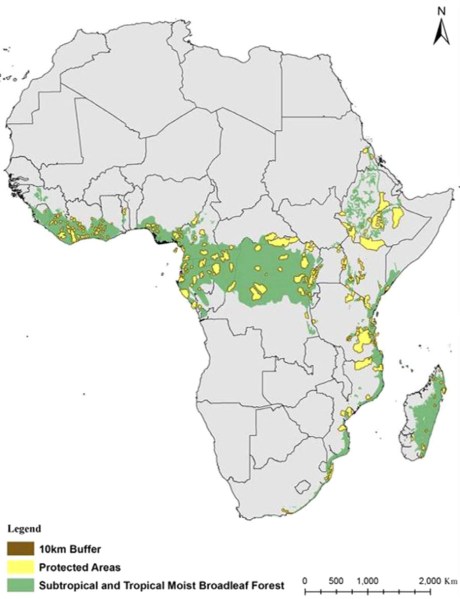
Bowker_et_al-2017-Conservation_Biology. Fig. 1

Subtropical and
Tropical Moist Broadleaf Forest of
Africa with 224 parks surrounded
by a 10-km buffer area. ©
2016 Society for Conservation Biology.

I’ve just read an interesting paper published in late 2016 in Conservation Biology that had so far escaped my attention. But given my interest in African conservation recently (and some interesting research results on the determinants of environmental performance for that region should be coming soon out of our lab), the work caught my eye.

The paper by Bowker and colleagues asked a question that has been asked previously regarding the ‘effectiveness’ of protected areas — do they succeed in limiting forest loss? While forest loss itself is not necessarily indicative of biodiversity erosion in any given area (for that, you need measures of species trends, etc.), it is arguably one of the most important drivers of species loss today.

The first set out to differentiate ‘effective’ from ‘ineffective’ protected areas, which was a simple binary variable related to whether there was less deforestation inside the protected area relative to comparable points outside (effective), or greater than or equal to deforestation outside (ineffective). The authors then related this binary response to a series of biophysical and social indicators. Read the rest of this entry »


Influential conservation ecology papers of 2017

27 12 2017

Gannet Shallow Diving 03
As I have done for the last four years (20162015, 2014, 2013), here’s another retrospective list of the top 20 influential conservation papers of 2017 as assessed by experts in F1000 Prime.

Read the rest of this entry »


Giving a monkey’s about primate conservation

12 12 2017

Urban monkey living (Macaque, Gibraltar) small

Concrete jungle. A Barbary macaque sits in a human-dominated landscape in Gibraltar. Photo: Silviu Petrovan

Saving primates is a complicated business. Primates are intelligent, social animals that have complex needs. They come into conflict with humans when they raid rubbish bins and crops, chew power cables, and in some cases become aggressive towards people.

Humans, however, have the upper hand. While 60% of non-human primate species are threatened, humans grow in numbers and power, building roads through forests, hunting and trapping primates, and replacing their habitat with farms and houses.

To help primatologists choose the most effective conservation approaches to resolve these problems, researchers in the Conservation Evidence project teamed up with primate researchers to produce a global database on the effectiveness of primate conservation solutions. This free database, which can also be downloaded as a single pdf, summarizes the evidence for 162 conservation interventions — actions that conservationists might take to conserve primates. The data come from searches of over 170 conservation journals and newsletters, and each study is summarized in a single paragraph in plain English, making it possible for conservationists without access to scientific journals to read the key findings.

Front cover primate synopsisSo what works in primate conservation? Well, the picture is rarely straightforward — partly due to the lack of data — but there are some interesting trends. Reducing hunting is one area where there seem to be a range of potentially effective approaches. Community control of patrolling, banning hunting and removing snares was effective in the three studies in which it was tested, all in African countries.

Further emphasizing the importance of involving local communities, implementing no-hunting community policies or traditional hunting bans also appeared helpful in boosting primate numbers. In other places, a more traditional approach of using rangers to protect primates has proved a winning strategy. Training rangers, providing them with arms, and increasing ranger patrols all worked to protect primates from poachers. Identifying the circumstances in which community led approaches or ranger patrols work will be key to implementing the most appropriate response to each conservation challenge. Read the rest of this entry »


Four decades of fragmentation

27 09 2017

fragmented

I’ve recently read perhaps the most comprehensive treatise of forest fragmentation research ever compiled, and I personally view this rather readable and succinct review by Bill Laurance and colleagues as something every ecology and conservation student should read.

The ‘Biological Dynamics of Forest Fragments Project‘ (BDFFP) is unquestionably one of the most important landscape-scale experiments ever conceived and implemented, now having run 38 years since its inception in 1979. Indeed, it was way ahead of its time.

Experimental studies in ecology are comparatively rare, namely because it is difficult, expensive, and challenging in the extreme to manipulate entire ecosystems to test specific hypotheses relating to the response of biodiversity to environmental change. Thus, we ecologists tend to rely more on mensurative designs that use existing variation in the landscape (or over time) to infer mechanisms of community change. Of course, such experiments have to be large to be meaningful, which is one reason why the 1000 km2 BDFFP has been so successful as the gold standard for determining the effects of forest fragmentation on biodiversity.

And successful it has been. A quick search for ‘BDFFP’ in the Web of Knowledge database identifies > 40 peer-reviewed articles and a slew of books and book chapters arising from the project, some of which are highly cited classics in conservation ecology (e.g., doi:10.1046/j.1523-1739.2002.01025.x cited > 900 times; doi:10.1073/pnas.2336195100 cited > 200 times; doi:10.1016/j.biocon.2010.09.021 cited > 400 times; and doi:10.1111/j.1461-0248.2009.01294.x cited nearly 600 times). In fact, if we are to claim any ecological ‘laws’ at all, our understanding of fragmentation on biodiversity could be labelled as one of the few, thanks principally to the BDFFP. Read the rest of this entry »


Paying to stop degrading

28 07 2017

green baby bathwaterWe conservationists don’t get a lot of good news these days, and even when we do, I am reminded of the (slightly modified) expression: one step forward, but ten steps backward. It’s enough to lead to depression.

Still, we soldier on, and now there are more and more philosophically positive events and venues for ‘optimistic’ conservation stories. Indeed, some of them have even appeared here on ConservationBytes.com (mainly from Claire Wordley‘s excellent string of posts from Conservation Evidence — see here, here, here, here), as well as the much-publicised Conservation Optimism Summit and its American version, Earth Optimism.

A decade or so ago, payment for ecosystem services was all the rage. The idea was simple — pay people to conserve forests and other intact habitats instead of cutting them down for timber or to grow food. However, as the years passed, these types of programmes — which were often funded (or intended to be funded) through carbon-sequestration schemes) — showed little capacity to prevent deforestation at a landscape scale. Many people have therefore binned the entire idea as a result. Read the rest of this entry »


Human population growth, refugees & environmental degradation

7 07 2017

refugeesThe global human population is now over 7.5 billion, and increasing by about 90 million each year. This means that we are predicted to exceed 9 billion people by 2050, with no peak in site this century and a world population of up to 12 billion by 2100. These staggering numbers are the result of being within the exponential phase of population growth since last century, such that some 14% of all human beings that have ever lived on the planet are still alive today. That is taking into account about the past 200,000 years, or 10,000 generations.
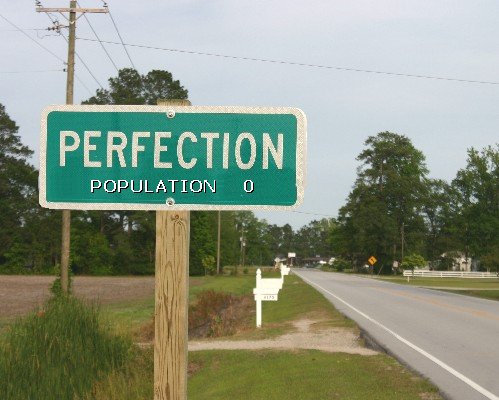
Of course just like the Earth’s resources, human beings are not distributed equally around the globe, nor are the population trends consistent among regions or nations. In fact, developing nations are contributing to the bulk of the global annual increase (around 89 million per year), whereas developed nations are contributing a growth of only about 1 million each year. Another demonstration of the disparity in human population distributon is that about half of all human beings live in just seven countries (China, India, USA, Indonesia, Brazil, Pakistan, Nigeria, and Bangladesh), representing just one quarter of the world’s total land area. Read the rest of this entry »


Not 100% renewable, but 0% carbon

5 04 2017

635906686103388841-366754148_perfection1Anyone familiar with this blog and our work on energy issues will not be surprised by my sincere support of nuclear power as the only realistic solution to climate change in the electricity (and possibly transport and industrial heat) arena. I’ve laid my cards on the table in the peer-reviewed literature (e.g., see here, here, here, here, here & here) and the standard media, and I’ve even joined the board of a new environmental NGO that supports nuclear.
And there is hope, despite the ever-increasing human population, rising consumerism, dwindling resources, and the ubiquity of ideologically driven and ethically compromised politicians. I am hopeful for several reasons, including rising safety and reliability standards of modern nuclear technology, the continued momentum of building new fission reactors in many countries, and even the beginnings of real conversations about nuclear power (or at least, the first steps toward this) in countries where nuclear energy is currently banned (e.g., Australia). I’m also heartened by the fact that nearly every conservation scientists with whom I speak is generally supportive, or at least non-resistant, to the idea of nuclear power as part of the climate change solution. An open letter by our colleagues attests to this. In fact, every day that passes brings new evidence that we cannot ignore this solution any longer.

Even despite the evidence in support of implementing a strong nuclear component into climate change-mitigation strategies, one of the most frequent arguments for not doing so is that society can achieve all of its energy needs and simultaneously combat climate change by constructing 100% renewable-energy pathways. While it is an easy mantra to repeat because it feels right intrinsically to nearly everyone with an environmental conscience, as a scientist I also had to ask if such a monumental task is even technically feasible. Read the rest of this entry »


Boreal forest on the edge of a climate-change tipping point

15 11 2016

As some know, I dabble a bit in the carbon affairs of the boreal zone, and so when writer Christine Ottery interviewed me about the topic, I felt compelled to reproduce her article here (originally published on EnergyDesk).

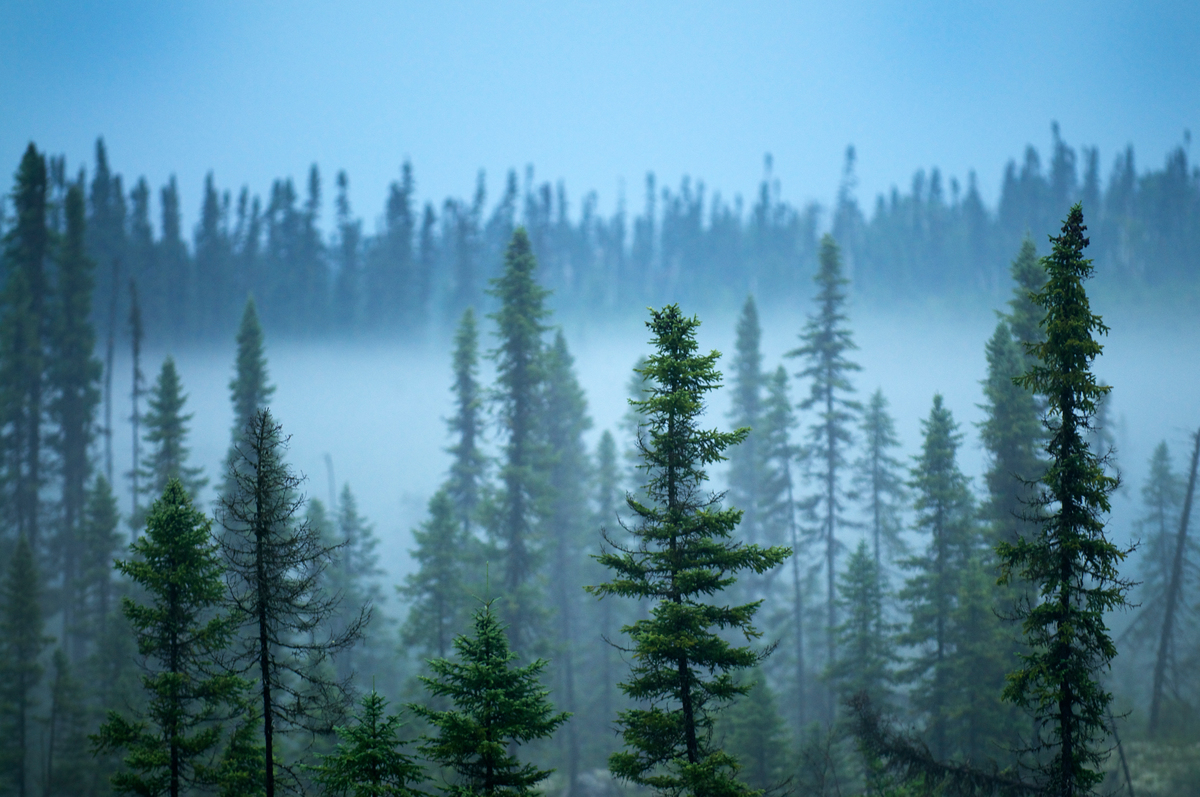
A view of the Waswanipi-Broadback Forest in the Abitibi region of Northern Quebec, one of the last remaining intact Boreal Forests in the province (source: EnergyDesk).

A view of the Waswanipi-Broadback forest in the Abitibi region of northern Quebec, one of the last remaining intact boreal forests in the Canadian province (source: EnergyDesk).

The boreal forest encircles the Earth around and just below the Arctic Circle like a big carbon-storing hug. It can mostly be found covering large swathes of Russia, Canada and Alaska, and some Scandinavian countries.

In fact, the boreal – sometimes called by its Russian name ‘taiga’ or ‘Great Northern Forest’ – is perhaps the biggest terrestrial carbon store in the world.

So it’s important to protect in a world where we’re aiming for 1.5 or – at worst – under two degrees celsius of global warming.

“Our capacity to limit average global warming to less than 2 degrees is already highly improbable, so every possible mechanism to reduce emissions must be employed as early as possible. Maintaining and recovering our forests is part of that solution,” Professor Corey Bradshaw, a leading researcher into boreal forests based at the University of Adelaide, told Energydesk.

It’s not that tropical rainforests aren’t important, but recent research led by Bradshaw published in Global and Planetary Change shows that that there is more carbon held in the boreal forests than previously realised.

But there’s a problem. Read the rest of this entry »


Inexorable rise of human population pressures in Africa

31 08 2016

© Nick Brandt

© Nick Brandt

I’ve been a bit mad preparing for an upcoming conference, so I haven’t had a lot of time lately to blog about interesting developments in the conservation world. However, it struck me today that my preparations provide ideal material for a post about the future of Africa’s biodiversity.

I’ve been lucky enough to be invited to the University of Pretoria Mammal Research Unit‘s 50th Anniversary Celebration conference to be held from 12-16 September this year in Kruger National Park. Not only will this be my first time to Africa (I know — it has taken me far too long), the conference will itself be in one of the world’s best-known protected areas.

While decidedly fortunate to be invited, I am a bit intimidated by the line-up of big brains that will be attending, and of the fact that I know next to bugger all about African mammals (in a conservation science sense, of course). Still, apparently my insight as an outsider and ‘global’ thinker might be useful, so I’ve been hard at it the last few weeks planning my talk and doing some rather interesting analyses. I want to share some of these with you now beforehand, although I won’t likely give away the big prize until after I return to Australia.

I’ve been asked to talk about human population pressures on (southern) African mammal species, which might seem simple enough until you start to delve into the complexities of just how human populations affect wildlife. It’s simply from the perspective that human changes to the environment (e.g., deforestation, agricultural expansion, hunting, climate change, etc.) do cause species to dwindle and become extinct faster than they otherwise would (hence the entire field of conservation science). However, it’s another thing entirely to attempt to predict what might happen decades or centuries down the track. Read the rest of this entry »


Keeping India’s forests

9 08 2016

I’ve just returned from a short trip to the National Centre for Biological Sciences (NCBS) in Bangalore, Karnataka, one of India’s elite biological research institutes.

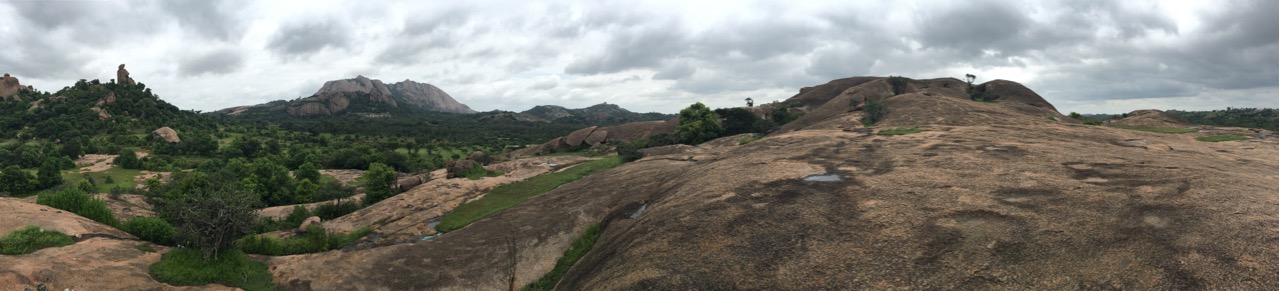
Panorama of a forested landscape (Savandurga monolith in the background) just south of Bangalore, Karnataka (photo: CJA Bradshaw)

Panorama of a forested landscape (Savandurga monolith in the background) just south of Bangalore, Karnataka (photo: CJA Bradshaw)

I was invited to give a series of seminars (you can see the titles here), and hopefully establish some new collaborations. My wonderful hosts, Deepa Agashe & Jayashree Ratnam, made sure I was busy meeting nearly everyone I could in ecology and evolution, and I’m happy to say that collaborations have begun. I also think NCBS will be a wonderful conduit for future students coming to Australia.

It was my first time visiting India1, and I admit that I had many preconceptions about the country that were probably unfounded. Don’t get me wrong — many of them were spot on, such as the glorious food (I particularly liked the southern India cuisine of dhosa, iddly & the various fruit-flavoured semolina concoctions), the insanity of urban traffic, the juxtaposition of extreme wealth and extreme poverty, and the politeness of Indian society (Indians have to be some of the politest people on the planet).

But where I probably was most at fault of making incorrect assumptions was regarding the state of India’s natural ecosystems, and in particular its native forests and grasslands. Read the rest of this entry »


More things stay the same, more we retrogress

20 07 2016

obrazek_1idiommmmsmmWithin six months of Abbott and the Coalition seizing power in the 2013 Australian election, decades—if not centuries—of environmental damage and retrograde policies unfolded. But this was no run-of-the-mill incompetence and neglect by government—this was an all-out attack on anything with the merest whiff of environmental protection. The travesty is well-documented, from infamously axing both the carbon-pricing scheme and climate commission, eradicating Labor’s 80% emissions-reduction target by 2050, diluting the Renewable Energy Target, refusing to commit to enforcing the Illegal Logging Prohibition Act (fortunately, this is now law), defunding the only independent legal entity available to limit environmentally destructive development (Environmental Defenders Office), to even attempting to remove the rights of environmental groups to challenge development proposals (thankfully, that failed).

The Coalition’s backward and ineffectual climate change-mitigation policies alone are evidence enough for long-term damage, but their war on the environment in general means that even the future election of a more environmentally responsible government will not undo the damage quickly, if at all. As a result of these and other nearsighted policies, Australia remains one of the highest per-capita greenhouse-gas emitters on the planet, has one of the highest per-capita water uses of any nation, leads the world in mammal extinctions, continues to deforest its already forest-poor landscape, and is a society utterly unprepared to deal with the future challenges of a degraded planet.
Read the rest of this entry »


Seeing the wood for the trees

11 07 2016

The Forest Synopsis: Photo of the Anamalai Tiger Reserve, India, by Claire Wordley

The Forest Synopsis: Photo of the Anamalai Tiger Reserve, India, by Claire Wordley

From the towering kapoks of South America to the sprawling banyans of South Asia, from misty cloud forests to ice-covered pines, forests are some of the most diverse and important ecosystems on Earth. However, as conservationists and foresters try to manage, conserve and restore forests across the world, they often rely on scanty and scattered information to inform their decisions, or indeed, no information at all. This could all change.

This week sees the launch of the Forest Synopsis from Conservation Evidence, a free resource collating global scientific evidence on a wide range of conservation-related actions. These aim to include all interventions that conservationists and foresters are likely to use, such as changing fire regimes, legally protecting forests or encouraging seed-dispersing birds into degraded forests.

Making conservation work

“We hear a lot about how important it is to do evidence-based conservation”, says Professor Bill Sutherland at the University of Cambridge, UK, “but in reality getting a handle on what works is not easy. That’s why we set up Conservation Evidence, to break down the barriers between conservationists and the scientific evidence that they need to do their jobs.” Read the rest of this entry »