Hot topics in ecology

5 03 2013

HotTopic copyJust a short one today to highlight a new1 endeavour by the Ecological Society of Australia.

Ecological societies around the world (e.g., Ecological Society of Australia, British Ecological Society, Ecological Society of AmericaCzech Society for Ecology, Société française d’Écologie, etc. – see a fairly comprehensive list of ecological societies around the world here) are certainly worthwhile from an academic standpoint. I’m a member of at least three of them, and over the years I’ve found them to be a great way to meet colleagues to discuss various aspects of our work. The conferences are usually a lot of fun (although I’ve generally found the Ecological Society of America conferences are too huge and unwieldy to be terribly beneficial), the talks are usually pretty good, and the social programmes tend to demonstrate just how human we scientists can be (I’ll let you read into that what you want).

An outsider could easily argue, however, that most ecological societies are archaic bastions of a former time when ecology was more a theoretical endeavour for academic circles, with little of practical use in today’s society. I’d agree that many components of these societies still hold onto elements of this sentiment, but it’s fast becoming clear that ecological societies can play an immensely important role in shaping their countries’ environmental policy. Read the rest of this entry »


The biggest go first

11 12 2012
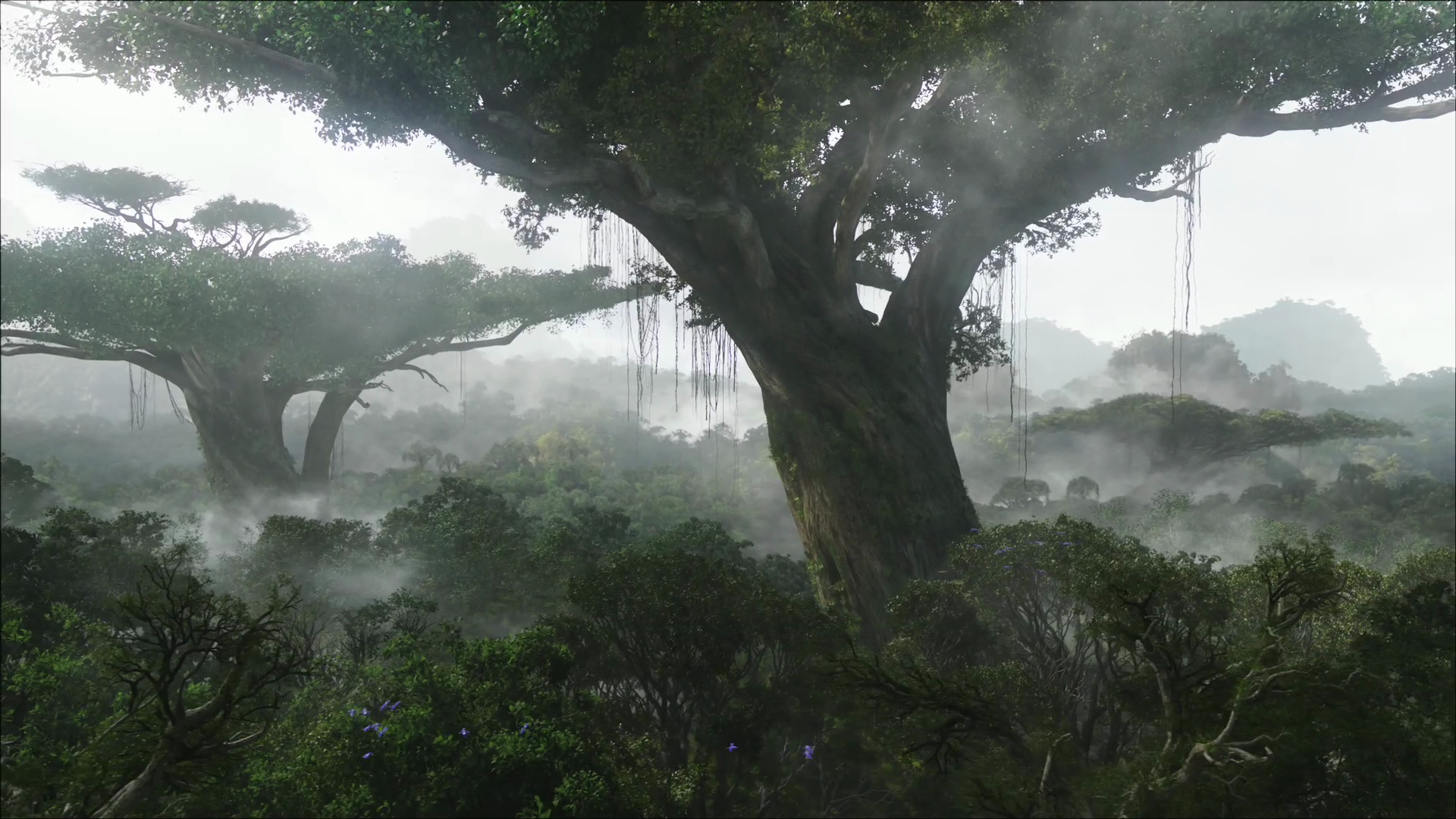
© James Cameron

© James Cameron

The saying “it isn’t rocket science” is a common cliché in English to state, rather sarcastically, that something isn’t that difficult (with the implication that the person complaining about it, well, shouldn’t). But I really think we should change the saying to “it isn’t ecology”, for ecology is perhaps one of the most complex disciplines in science (whereas rocket science is just ‘complicated’). One of our main goals is to predict how ecosystems will respond to change, yet what we’re trying to simplify when predicting is the interactions of millions of species and individuals, all responding to each other and to their outside environment. It becomes quickly evident that we’re dealing with a system of chaos. Rocket science is following recipes in comparison.

Because of this complexity, ecology is a discipline plagued by a lack of generalities. Few, if any, ecological laws exist. However, we do have an abundance of rules of thumb that mostly apply in most systems. I’ve written about a few of them here on ConservationBytes.com, such as the effect of habitat patch size on species diversity, the importance of predators for maintaining ecosystem stability, and that low genetic diversity doesn’t exactly help your chances of persisting. Another big one is, of course, that in an era of rapid change, big things tend to (but not always – there’s that lovely complexity again) drop off the perch before smaller things do.

The prevailing wisdom is that big species have slower life history rates (reproduction, age at first breeding, growth, etc.), and so cannot replace themselves fast enough when the pace of their environment’s change is too high. Small, rapidly reproducing species, on the other hand, can compensate for higher mortality rates and hold on (better) through the disturbance. Read the rest of this entry »


Arguing for scientific socialism in ecology funding

26 06 2012

What makes an ecologist ‘successful’? How do you measure ‘success’? We’d all like to believe that success is measured by our results’ transformation of ecological theory and practice – in a conservation sense, this would ultimately mean our work’s ability to prevent (or at least, slow down) extinctions.

Alas, we’re not that good at quantifying such successes, and if you use the global metric of species threats, deforestation, pollution, invasive species and habitat degradation, we’ve failed utterly.

So instead, we measure scientific ‘success’ via peer-reviewed publications, and the citations (essentially, scientific cross-referencing) that arise from these. These are blunt instruments, to be sure, but they are really the only real metrics we have. If you’re not being cited, no one is reading your work; and if no one is reading you’re work, your cleverness goes unnoticed and you help nothing and no one.

A paper I just read in the latest issue of Oikos goes some way to examine what makes a ‘successful’ ecologist (i.e., in terms of publications, citations and funding), and there are some very interesting results. Read the rest of this entry »


Sharks: the world’s custodians of fisheries

5 05 2012

Today’s post comes from Salvador Herrando-Pérez (who, incidentally, recently submitted his excellent PhD thesis).

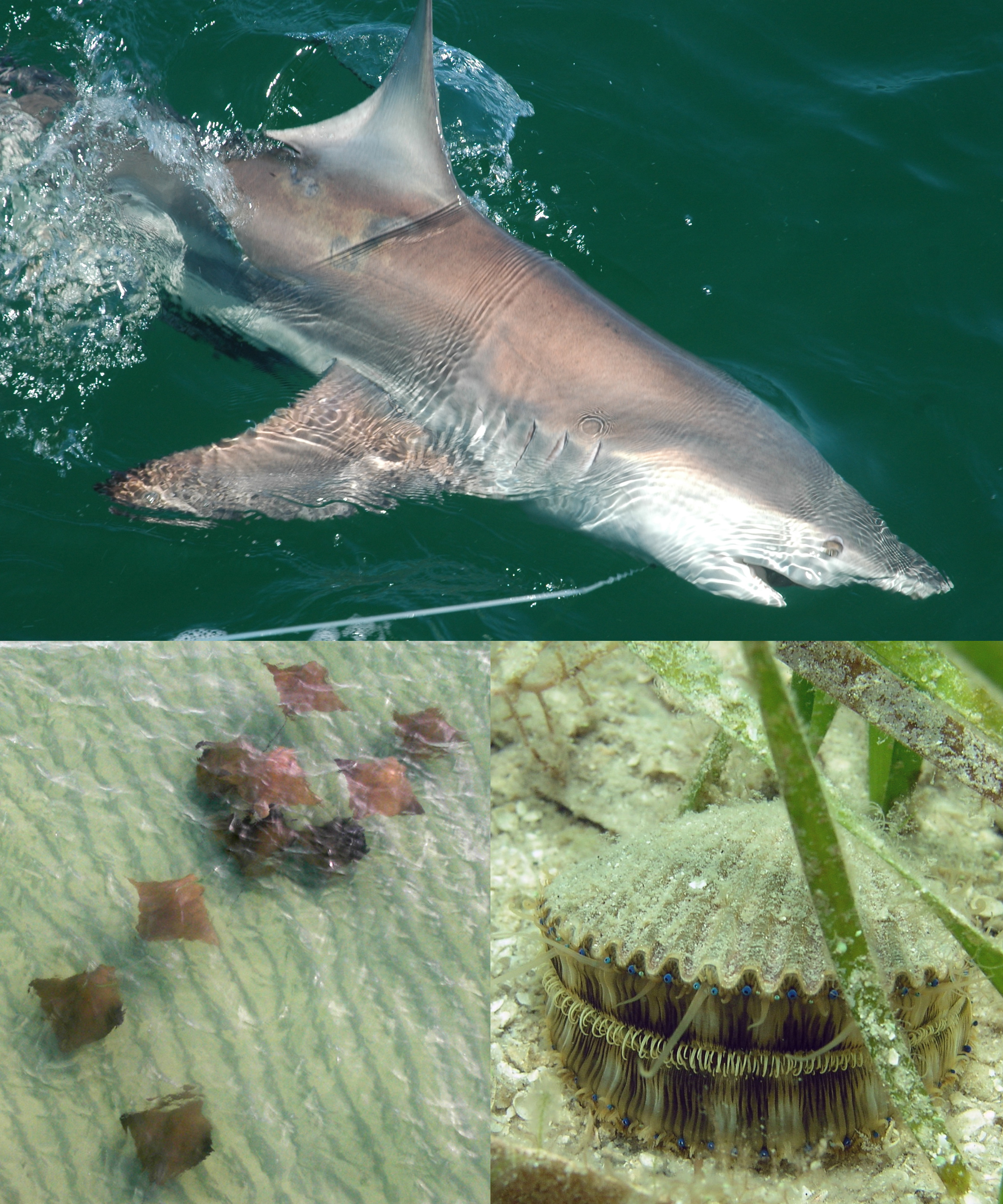
Three species co-occurring in the Gulf of Mexico and involved in the trophic cascade examined by Myers et al. (8). [1] Black-tips (Carcharhinus limbatus) are pelagic sharks in warm and tropical waters worldwide; they reach < 3 m in length, 125 kg in weight, with a maximum longevity in the wild of ~ 12 years; a viviparous species, with females delivering up to 10 offspring per parturition. [2] The cownose ray (Rhinoptera bonasus) is a tropical species from the western Atlantic (USA to Brazil); up to 2 m wide, 50 kg in weight, and 18 years of age; gregarious, migratory and viviparous, with one single offspring per litter. [3] The bay scallop (Agropecten irradians) is a protandric (hermaphrodite) mollusc, with sperm being released a few days before the (> 1 million) eggs; commonly associated with seagrasses in the north-western Atlantic; shells can reach up to 10 cm and individuals live for < 2 years. In the photos, a black-tip angled in a bottom long-line off Alabama (USA), a school of cownose rays swimming along Fort Walton Beach (Florida, USA), and a bay scallop among fronds of turtle grass (Thalassia testudinum) off Hernando County (Florida, USA). Photos by Marcus Drymon, Dorothy Birch and Janessa Cobb, respectively.

The hips of John Travolta, the sword of Luke Skywalker, and the teeth of Jaws marked an era. I still get goose pimples with the movie soundtrack (bass, tuba, orchestra… silence) solemnizing each of the big shark’s attacks. The media and cinema have created the myth of man’s worst friend. This partly explains why shark fishing does not trigger the same societal rejection as the hunting of other colossuses such as whales or elephants. Some authors contend that we currently live in the sixth massive extinction event of planet Earth (1) 75 % of which is strongly driven by one species, humans, and characterized by the systematic disappearance of mega-animals in general (e.g., mammoths, Steller’s seacow), and predators in particular, e.g., sharks (2, 3).

The selective extirpation of apex predators, recently coined as ‘trophic downgrading’, is transforming habitat structure and species composition of many ecosystems worldwide (4). In the marine realm, over the last half a century, the main target of the world’s fisheries has turned from (oft-large body-sized) piscivorous to planctivorous fish and invertebrates, indicating that fishery fleets are exploiting a trophic level down to collapse, then harvesting the next lower trophic level (5-7).

Myers et al. (8) illustrate the problem with the fisheries of apex-predator sharks in the northeastern coast of the USA. Those Atlantic waters are rife with many species of shark (> 2 m), whose main prey are smaller chondrichthyans (skates, rays, catsharks, sharks), which in turn prey on bottom fishes and bivalves. Myers et al. (8) found that, over the last three decades, the abundance of seven species of large sharks declined by ~ 90 %, coinciding with the crash of a centenary fishery of bay scallops (Agropecten irradians). Conversely, the abundance of 12 smaller chondrichthyes increased dramatically over the same period of time. In particular, the cownose ray (Rhinoptera bonasus), the principal predator of bay scallops, might today exceed > 40 million individuals in some bays, and consume up to ~ 840,000 tonnes of scallops annually. The obvious hypothesis is that the reduction of apex sharks triggers the boom of small chondrichthyans, hence leading to the break-down of scallop stocks. Read the rest of this entry »


More is better

18 01 2012

In one of those rare moments of perusing the latest ecological literature, I stumbled across an absolute gem, and one that has huge conservation implications. Now, I’m really no expert in this particular area of ecology, but I dare say the paper I’m about to introduce should have been published in Nature or Science (I suspect it was submitted to at least one of these journals first). It was still published in an extremely high-impact journal in ecology though – the Journal of Ecology produced by the British Ecological Society (and one in which I too have had the honour of publishing an article).

Before I get into specifics, I have to say that one thing we conservation biologists tend to bang on about is that MORE SPECIES = BETTER, regardless of the ecosystem in question. We tend to value species richness as the gold standard of ecosystem ‘health’ and ‘resilience’, whether or not there is strong empirical evidence in support. It’s as if the more-is-better mantra strikes an intuitive chord and must, by all that’s ecologically right in the world, be true.

Of course, measuring what is ‘better’ is a difficult task, especially when we are talking about complex ecosystems comprising thousands, if not millions, of species. Does ‘better’ refer to the most temporally stable, the most genetically diverse, the most resilient to perturbation, or the provider of the greatest number of functions and hence, ecosystem services?

It’s up to you, but all these things tend to be difficult to measure for a large number of species and over time scales of sufficient duration to measure change. So the default for plants (i.e., the structural framework of almost all ecosystems) I guess has come down to a simpler measure of success – ‘productivity’. This essentially means how much biomass is produced per unit area/volume per time step. It’s not a great metric, but it’s probably one of the more readily quantifiable indices.

Enter the so-called ‘diversity-productivity relationship’, or ‘DPR’, which predicts that higher plant species diversity should engender higher net productivity (otherwise known as the ‘net biodiversity effect’). Read the rest of this entry »


Where the sick buffalo roam

28 10 2011

It’s been some time coming, but today I’m proud to announce a new paper of ours that has just come out in Journal of Applied Ecology. While not strictly a conservation paper, it does provide some novel tools for modelling populations of threatened species in ways not available before.

The Genesis

A few years ago, a few of us (Bob LacyPhil Miller and JP Pollak of Vortex fame, Barry Brook, and a few others) got together in a little room at the Brookfield Zoo in the suburban sprawl of Chicago to have a crack at some new modelling approaches the Vortex crew had recently designed. The original results were pleasing, so we had a follow-up meeting last year (thanks to a few generous Zoo benefactors) and added a few post-docs and students to the mix (Damien FordhamClive McMahon, Tom Prowse, Mike Watts, Michelle Verant). The great population modeller Resit Akçakaya also came along to assist and talk about linkages with RAMAS.

Out of that particular meeting a series of projects was spawned, and one of those has now been published online: Novel coupling of individual-based epidemiological and demographic models predicts realistic dynamics of tuberculosis in alien buffalo.

The Coupling

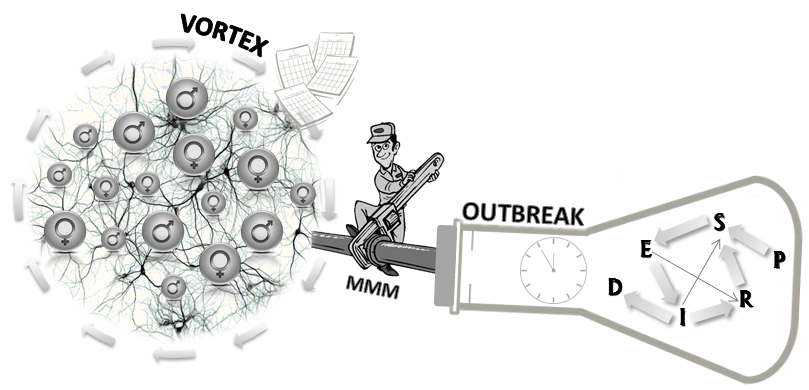
So what’s so novel about modelling disease in buffalo, and why would one care? Well, here’s the interesting part. The buffalo-tuberculosis example was a great way to examine just how well a new suite of models – and their command-centre module – predicted disease dynamics in a wild population. The individual-based population modelling software Vortex has been around for some time, and is now particularly powerful for predicting the extinction risk of small populations; the newest addition to the Vortex family, called Outbreak, is also an individual-based epidemiological model that allows a population of individuals exposed to a pathogen to progress over time (e.g., from susceptible, exposed, infectious, recovered/dead). Read the rest of this entry »


Life, death and Linneaus

9 07 2011

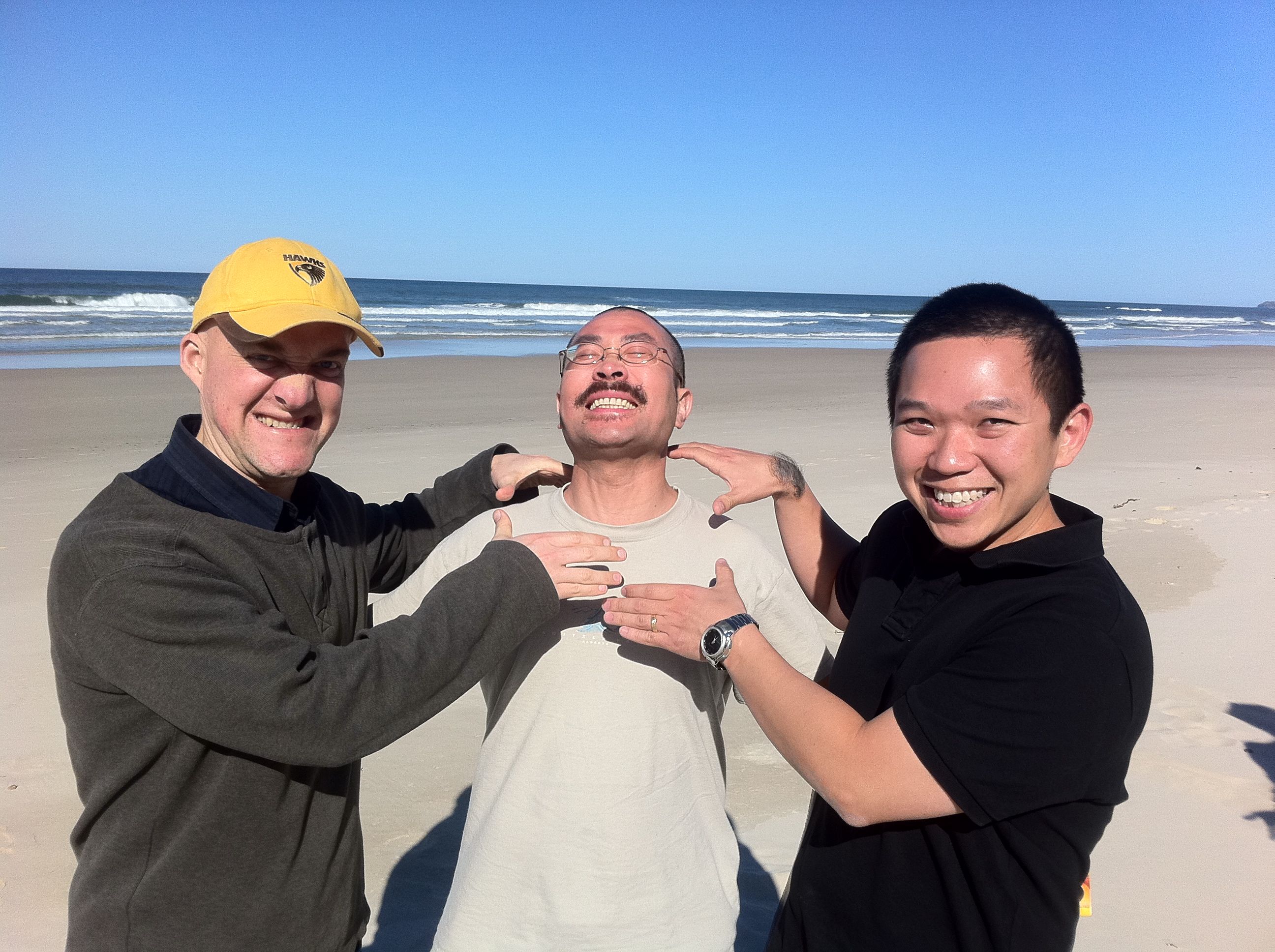
Barry Brook (left) and Lian Pin Koh (right) attacking Fangliang He (centre). © CJA Bradshaw

I’m sitting in the Brisbane airport contemplating how best to describe the last week. If you’ve been following my tweets, you’ll know that I’ve been sequestered in a room with 8 other academics trying to figure out the best ways to estimate the severity of the Anthropocene extinction crisis. Seems like a pretty straight forward task. We know biodiversity in general isn’t doing so well thanks to the 7 billion Homo sapiens on the planet (hence, the Anthropo prefix) – the question though is: how bad?

I blogged back in March that a group of us were awarded a fully funded series of workshops to address that question by the Australian Centre for Ecological Synthesis and Analysis (a Terrestrial Ecosystem Research Network facility based at the University of Queensland), and so I am essentially updating you on the progress of the first workshop.

Before I summarise our achievements (and achieve, we did), I just want to describe the venue. Instead of our standard, boring, windowless room in some non-descript building on campus, ACEAS Director, Associate Professor Alison Specht, had the brilliant idea of putting us out away from it all on a beautiful nature-conservation estate on the north coast of New South Wales.

What a beautiful place – Linneaus Estate is a 111-ha property just a few kilometres north of Lennox Head (about 30 minutes by car south of Byron Bay) whose mission is to provide a sustainable living area (for a very lucky few) while protecting and restoring some pretty amazing coastal habitat along an otherwise well-developed bit of Australian coastline. And yes, it’s named after Carl Linnaeus. Read the rest of this entry »


生态学 = ‘Ecology’ in China

13 05 2011

I’m just heading home after a very inspiring workshop organised by Fangliang He at Sun Yat-sen University in Guangzhou, China (I’m writing this from the Qantas Club in the Hong Kong airport).

Before I proceed to regale you with the salient details of the ‘International Symposium for Biodiversity and Theoretical Ecology‘, I am compelled to state publicly that I offer my sincerest condolences to Fangliang and his family; unfortunately Fangliang’s brother passed away while we were at the workshop and so Fangliang wasn’t able to spend much time reaping the fruits of his organisational labour. If you know Fangliang, please send him a supporting email.

That sad note aside, I am delighted to say that the workshop was compelling, challenging and also rather fortuitous. I was one of many overseas invitees, and I must say that I was at times overwhelmed by the size of the brains they managed to pack into the auditorium. Many colleagues I didn’t know attended, and I hope that many will become collaborators. The international invitees were: Read the rest of this entry »


How fast are we losing species anyway?

28 03 2011

© W. Laurance

I’ve indicated over the last few weeks on Twitter that a group of us were recently awarded funding from the Australian Centre for Ecological Synthesis and Analysis – ACEAS – (much like the US version of the same thing – NCEAS) to run a series of analytical workshops to estimate, with a little more precision and less bias than has been done previously, the extinction rates of today’s biota relative to deep-time extinctions.

So what’s the issue? The Earth’s impressive diversity of life has experienced at least five mass extinction events over geological time. Species’ extinctions have kept pace with evolution, with more than 99 % of all species that have ever existed now gone (Bradshaw & Brook 2009). Despite general consensus that biodiversity has entered the sixth mass extinction event because of human-driven degradation of the planet, estimated extinction rates remain highly imprecise (from 100s to 10000s times background rates). This arises partly because the total number of species is unknown for many groups, and most extinctions go unnoticed.

So how are we going to improve on our highly imprecise estimates? One way is to look at the species-area relationship (SAR), which to estimate extinction requires one to extrapolate back to the origin in taxon- and region-specific SARs (e.g., with a time series of deforestation, one can estimate how many species would have been lost if we know how species diversity changes in relation to habitat area). Read the rest of this entry »


When weeds are wanted

31 01 2011

And in keeping with the topic of bees

© Flowergardengirl

I’ve just read a very, very cool paper in Ecology Letters about something I’ve wanted to do myself for some time. It’s a fairly specific piece of work, so it could easily be reproduced elsewhere with different species. My point though is that a hell of a lot more of these types of studies are required.

The study by Carvalheiro and colleagues entitled Natural and within-farmland biodiversity enhances crop productivity examined the role of weedy (ruderal) vegetation in supporting pollinator communities. Using sunflowers as a model crop, they showed rather convincingly how native vegetation patches interspersed amongst crop species can enhance a host of crop production measures, even when larger areas of natural habitats were far away from the crops themselves.

Based on a series of plot experiments, they tested four main hypotheses:

  1. The distance to natural habitat affects pollination visitor abundance and diversity.
  2. Plots surrounding or interspersed with ruderal vegetation affect pollinator abundance and diversity.
  3. The diversity of pollinators visiting sunflowers affects honeybee (the principal pollinators) behaviour.
  4. The diversity of pollinators affects sunflower production.

Read the rest of this entry »


Want a cool conservation job in beautiful southern Australia?

14 12 2010

I was asked to post this cool-sounding job on ConservationBytes.com – relevant punters welcome to respond.

Australian Wildlife Conservancy (AWC) is a non‐profit organisation dedicated to the conservation of Australia’s threatened wildlife and their habitats. AWC now owns and manages more land than any other private conservation organisation in Australia ‐  21 properties, covering more than 2.6 million hectares ‐ protecting more than 1,200 fauna species through active land management informed by strategic scientific research.

AWC is seeking an experienced and committed ecologist who will be pivotal in the development and implementation of the conservation and science program throughout south‐eastern Australia. The position will be based at Scotia Wildlife Sanctuary (where on‐site accommodation will be provided), but will include work at other AWC sanctuaries, especially Kalamurina (Lake Eyre), Buckaringa (Flinders Ranges), Yookamurra (Riverlands), Dakalanta (Eyre Peninsula), Bowra (Mulga Lands) and North Head (Sydney) sanctuaries.

Scotia is a large property (65,000 ha) that lies on the NSW‐SA border between Wentworth and Broken Hill, and includes Australia’s largest area free of foxes, cats and rabbits (8,000 ha) and where seven regionally extinct species have been reintroduced (bilby, boodie, woylie, bridled nailtail wallaby, numbat, greater stick‐nest rat, mala and black‐eared miner). In addition, the property has outstanding conservation values because it protects habitats, in good condition, that have been extensively cleared in western NSW.

Read the rest of this entry »


History and future (of Australian ecology and society)

11 12 2010

I’ve just returned from a week-long conference in Canberra where the Ecological Society of Australia (of which I am a relatively new member) has just completed its impressive 50th anniversary conference. It was a long, but good week.

It’s almost a bit embarrassing that I’ve never attended an ESA1 conference before, but I think I waited for the right one. However, the main reason I attended was that I was fortunate to have received the ESA’s 3rd Australian Ecology Research Award (AERA), and the kick-back was a fully funded trip. My only reciprocation was to give a 40-minute plenary lecture – a small price to pay.

I entitled my talk ‘Heads in the desert sand: why Australians should wake up to the biodiversity crisis’, and I received a lot of good feedback. I talked about the global and Australian trends of biodiversity loss and associated ecosystem services, focussing the middle section on some of our work on feral animal ecology (see example). I then gave my views on the seriousness of our current situation and why some of the fastest losses of sensitive ecosystem services are happening right here, right now. I finished off with a section on how I think Australian ecologists could get more relevant and active in terms of research uptake by policy makers. I hope that the talk will be podcastable soon, so stay tuned.

But that was just ‘my’ bit. This post is more about a quick summary of the highlights and my overall impressions.

Read the rest of this entry »


The Amazing Paul (Mc)Ehrlich

15 11 2010

© CJA Bradshaw

A few years ago when I first wrote about Paul Ehrlich in our book, Tropical Conservation Biology, I quickly became impressed. His track record is, without any exaggeration, truly awe-inspiring. With over 1000 articles published and almost 50 books, the man has been a scientific writing machine for his entire career. He’s also highly influential in the socio-political sphere, and counts among his close friends some of the most politically and scientifically powerful people on the planet. In a word, he’s easily among the world’s greatest living scientists.

Remember, this was my opinion all before I actually met the man. Travelling through central California last year, I was lucky enough to be invited by Paul’s close colleague, Gretchen Daily, to give a talk at their Stanford University lab. It was fortunate that Paul was about at the time and not off promoting his new book or traipsing through the mountains of Colorado chasing butterflies.

We hit it off immediately and it seemed became mates within the space of a few hours. I learnt then that he and his equally famous wife, Anne, were regular visitors to Australia and that he had a particular love affair going with many Australian wines. I invited him to come to Adelaide the following year, he agreed (and importantly, so did the director of the Environment Institute, Mike Young), and it came to pass. Read the rest of this entry »


Connectivity paradigm in extinction biology

6 10 2009

networkI’m going to do a double review here of two papers currently online in Proceedings of the Royal Society B: Biological Sciences. I’m lumping them together because they both more or less challenge the pervasive conservation/restoration paradigm that connectivity is the key to reducing extinction risk. It’s just interesting (and slightly amusing) that the two were published in the same journal and at about the same time, but by two different groups.

From our own work looking at the correlates of extinction risk (measured mainly by proxy as threat risk), the range of a population (i.e., the amount of area and number of habitats it covers) is the principal determinant of risk – the smaller your range, the greater your chance of shuffling off this mortal coil (see also here). This is, of course, because a large range usually means that you have some phenotypic plasticity in your habitat requirements, you can probably disperse well, and your not going to succumb to localised ‘catastrophes’ as often. It also probably means (but not always) that your population size increases as your range size increases; as we all know, populations must be beyond their minimum viable population size to have a good chance of persisting random demographic and environmental vagaries.

Well, the two papers in question, ‘Both population size and patch quality affect local extinctions and colonizations‘ by Franzén & Nilssen and ‘Environment, but not migration rate, influences extinction risk in experimental metapopulations‘ by Griffen & Drake, show that connectivity (i.e., the probability that populations are connected via migration) are probably the least important components in the extinction-persistence game.

Using a solitary bee (Andrena hattorfiana) metapopulation in Sweden, Franzén & Nilssen show that population size and food patch quality (measured by number of pollen-producing plants) were directly (but independently) correlated with extinction risk. Bigger populations in stable, high-quality patches persisted more readily. However, connectivity between patches was uncorrelated with risk.

Griffen & Drake took quite a different approach and stacked experimental aquaria full of daphnia (Daphnia magna) on top of one another to influence the amount of light (and hence, amount of food from algal growth) to which the populations had access (it’s interesting to note here that this was unplanned in the experiment – the different algal growth rates related to the changing exposure to light was a serendipitous discovery that allowed them to test the ‘food’ hypothesis!). They also controlled the migration rate between populations by varying the size of holes connecting the aquaria. In short, they found that environmentally influenced (i.e., food-influenced) variation was far more important at dictating population size and fluctuation than migration, showing again that conditions promoting large population size and reducing temporal variability are essential for reducing extinction risk.

So what’s the upshot for conservation? Well, many depressed populations are thought to be recoverable by making existing and fragmented habitat patches more connected via ‘corridors’ of suitable habitat. The research highlighted here suggests that more emphasis should be placed instead on building up existing population sizes and ensuring food availability is relatively constant instead of worrying about how many trickling migrants might be moving back and forth. This essentially means that a few skinny corridors connecting population fragments will probably be insufficient to save our imperilled species.

CJA Bradshaw

Add to FacebookAdd to NewsvineAdd to DiggAdd to Del.icio.usAdd to StumbleuponAdd to RedditAdd to BlinklistAdd to Ma.gnoliaAdd to TechnoratiAdd to Furl

ResearchBlogging.org

This post was chosen as an Editor's Selection for ResearchBlogging.org

Franzen, M., & Nilsson, S. (2009). Both population size and patch quality affect local extinctions and colonizations Proceedings of the Royal Society B: Biological Sciences DOI: 10.1098/rspb.2009.1584

Griffen, B., & Drake, J. (2009). Environment, but not migration rate, influences extinction risk in experimental metapopulations Proceedings of the Royal Society B: Biological Sciences DOI: 10.1098/rspb.2009.1153


New Impact Factors for conservation journals

23 06 2009

For those of you who follow the ISI Impact Factors for journals (the ratio of the number of total citations i+3 for the papers published in years i and i+1 divided by the total number of citable papers published in years i and i+1), you might know that the 2008 IFs have just been published. Now, whether you put stock or not in these is somewhat irrelevant – enough people do to make it relevant to who publishes what where, and who cites or does not cite scientific papers. It’s also in our scientific culture – pretty much everyone in a field will have a rough idea of the range of IFs their specific discipline’s journals span, and so it acts as a kind of target for varying qualities of science. Far from perfect, but it’s what we have to deal with.

So, I thought I’d publish the 2008 Impact Factors for the journals listed on this site’s Journals page and compare them to the 2007 values:

and for some more general journals that occasionally publish conservation papers:

Almost across the board, conservation journals have seen an increase in their Impact Factors. There are many other good conservation papers published in other journals, but this list probably represents the main outlets. I hope we continue to focus more on conservation outcomes rather than scientific kudos per se, although I’m certainly cognisant of the hand that feeds. Good luck with your publishing.

CJA Bradshaw

Add to FacebookAdd to NewsvineAdd to DiggAdd to Del.icio.usAdd to StumbleuponAdd to RedditAdd to BlinklistAdd to Ma.gnoliaAdd to TechnoratiAdd to Furl


Official Environment Institute video

11 06 2009

I’ve written about The University of Adelaide‘s new Environment Institute not too long ago (see post here), and now we’ve had the official launch. The people behind scenes have put together a great introductory video that we all witnessed for the first time last week. Happy to share it with ConservationBytes.com readers here.

Vodpod videos no longer available.

A couple of other excellent parts of this evening include the venerable Robyn Williams‘ speech (listen here), and our Director’s, Professor Mike Young, encouraging kick off (listen here).

I’ve very proud to be a part of this exciting initiative.

CJA Bradshaw


Climate change’s ugly cousin – biodiversity loss

17 05 2009

uglybaby…nobody puts a value on pollination; national accounts do not reflect the value of ecosystem services that stop soil erosion or provide watershed protection.

Barry Gardiner, Labour MP for Brent North (UK), Co-chairman, Global Legislators Organisation‘s International Commission on Land Use Change and Ecosystems

Last week I read with great interest the BBC’s Green Room opinion article by Barry Gardiner, Labour MP in the UK, about how the biodiversity crisis takes very much the back seat to climate change in world media, politics and international agreements.

He couldn’t be more spot-on.

I must stipulate right up front that this post is neither a whinge, rant nor lament; my goal is to highlight what I’ve noticed about the world’s general perception of climate change and biodiversity crisis issues over the last few years, and over the last year in particular since ConservationBytes.com was born.

Case in point: my good friend and colleague, Professor Barry Brook, started his blog BraveNewClimate.com a little over a month (August 2008) after I managed to get ConservationBytes.com up and running (July 2008). His blog tackles issues regarding the science of climate change, and Barry has been very successful at empirically, methodically and patiently tearing down the paper walls of the climate change denialists. A quick glance at the number views of BraveNewClimate.com since inception reveals about an order of magnitude more than for ConservationBytes.com (i.e., ~195000 versus 20000, respectively), and Barry has accumulated a total of around 4500 comments compared to just 231 for ConservationBytes.com. The difference is striking.

Now, I don’t begrudge for one moment this disparity – quite the contrary – I am thrilled that Barry has managed to influence so many people and topple so effectively the faecal spires erected by the myriad self-proclaimed ‘experts’ on climate change (an infamous line to whom I have no idea to attribute states that “opinions are like arseholes – everyone’s got one”). Barry is, via BraveNewClimate.com, doing the world an immense service. What I do find intriguing is that in many ways, the biodiversity crisis is a much, much worse problem that is and will continue to degrade human life for millennia to come. Yet as Barry Gardiner observed, the UK papers mentioned biodiversity only 115 times over the last 3 months compared to 1382 times for climate change – again, that order-of-magnitude disparity.

There is no biodiversity equivalent of the Intergovernmental Panel on Climate Change (although there are a few international organisations tackling the extinction crisis such as the United Nation’s Environment Program, the Millennium Ecosystem Assessment and the International Union for Conservation of Nature), we still have little capacity or idea how to incorporate the trillions of dollars worth of ecosystem services supplied every year to us free of charge, and we have nothing at all equivalent to the Kyoto Protocol for biodiversity preservation. Yet, conservation biologists have for decades demonstrated how human disease prevalence, reduction in pollination, increasing floods, reduced freshwater availability, carbon emissions, loss of fish supplies, weed establishment and spread, etc. are all exacerbated by biodiversity loss. Climate change, as serious and potentially apocalyptic as it is, can be viewed as just another stressor in a system stressed to its limits.

Of course, the lack of ‘interest’ may not be as bleak as indicated by web traffic; I believe the science underpinning our assessment of biodiversity loss is fairly well-accepted by people who care to look into these things, and the evidence spans the gambit of biological diversity and ecosystems. In short, it’s much less controversial a topic than climate change, so it attracts a lot less vitriol and spawns fewer polemics. That said, it is a self-destructive ambivalence that will eventually come to bite humanity on the bum in the most serious of ways, and I truly believe that we’re not far off from major world conflicts over the dwindling pool of resources (food, water, raw materials) we are so effectively destroying. We would be wise to take heed of the warnings.

CJA Bradshaw

Add to FacebookAdd to NewsvineAdd to DiggAdd to Del.icio.usAdd to StumbleuponAdd to RedditAdd to BlinklistAdd to Ma.gnoliaAdd to TechnoratiAdd to Furl


Classics: Ecological Triage

27 03 2009

It is a truism that when times are tough, only the strongest pull through. This isn’t a happy concept, but in our age of burgeoning biodiversity loss (and economic belt-tightening), we have to make some difficult decisions.In this regard, I suggest Brian Walker’s1992 paper Biodiveristy and ecological redundancy makes the Classics list.

Ecological triage is, of course, taken from the medical term triage used in emergency or wartime situations. Ecological triage refers to the the conservation prioritisation of species that provide unique or necessary functions to ecosystems, and the abandonment of those that do not have unique ecosystem roles or that face almost certain extinction given they fall well below their minimum viable population size (Walker 1992). Financial resources such as investment in recovery programmes, purchase of remaining habitats for preservation, habitat restoration, etc. are allocated accordingly; the species that contribute the most to ecosystem function and have the highest probability of persisting are earmarked for conservation and others are left to their own devices (Hobbs & Kristjanson 2003).

This emotionally empty and accounting-type conservation can be controversial because public favourites like pandas, kakapo and some dolphin species just don’t make the list in many circumstances. As I’ve stated before, it makes no long-term conservation or economic sense to waste money on the doomed and ecologically redundant. Many in the conservation business apply ecological triage without being fully aware of it. Finite pools of money (generally the paltry left-overs from some green-guilty corporation or under-funded government initiative) for conservation mean that we have to set priorities – this is an entire discipline in its own right in conservation biology. Reserve design is just one example of this sacrifice-the-doomed-for-the good-of-the-ecosystem approach.

Walker (1992) advocated that we should endeavour to maintain ecosystem function first, and recommended that we abandon programmes to restore functionally ‘redundant’ species (i.e., some species are more ecologically important than others, e.g., pollinators, prey). But how do you make the choice? The wrong selection might mean an extinction cascade (Noss 1990; Walker 1992) whereby tightly linked species (e.g., parasites-hosts, pollinators-plants, predators-prey) will necessarily go extinct if one partner in the mutualism disappears (see Koh et al. 2004 on co-extinctions). Ecological redundancy is a terribly difficult thing to determine, especially given that we still understand relatively little about how complex ecological systems really work (Marris 2007).

The more common (and easier, if not theoretically weaker) approach is to prioritise areas and not species (e.g., biodiversity hotspots), but even the criteria used for area prioritisation can be somewhat arbitrary and may not necessarily guarantee the most important functional groups are maintained (Orme et al. 2005; Brooks et al. 2006). There are many different ways of establishing ‘priority’, and it depends partially on your predilections.

More recent mathematical approaches such as cost-benefit analyses (Possingham et al. 2002; Murdoch et al. 2007) advocate conservation like a CEO would run a profitable business. In this case the ‘currency’ is biodiversity, and so a fixed financial investment must maximise long-term biodiversity gains (Possingham et al. 2002). This essentially estimates the potential biodiversity saved per dollar invested, and allocates funds accordingly (Wilson et al. 2007). Where the costs outweigh the benefits, conservationists move on to more beneficial goals. Perhaps the biggest drawback with this approach is that it’s particularly data-hungry. When ecosystems are poorly measured, then the investment curve is unlikely to be very realistic.

CJA Bradshaw

Add to FacebookAdd to NewsvineAdd to DiggAdd to Del.icio.usAdd to StumbleuponAdd to RedditAdd to BlinklistAdd to Ma.gnoliaAdd to TechnoratiAdd to Furl

(Many thanks to Lochran Traill and Barry Brook for co-developing these ideas with me)


Destroyed or Destroyer?

23 03 2009

Last year our group published a paper in Journal of Ecology that examined, for the first time, the life history correlates of a species’ likelihood to become invasive or threatened.

The paper is entitled Threat or invasive status in legumes is related to opposite extremes of the same ecological and life-history attributes and was highlighted by the Editor of the journal.

The urgency and scale of the global biodiversity crisis requires being able to predict a species’ likelihood of going extinct or becoming invasive. Why? Well, without good predictive tools about a species’ fate, we can’t really prepare for conservation actions (in the case of species more likely to go extinct) or eradication (in the case of vigorous invasive species).

We considered the problem of threat and invasiveness in unison based on analysis of one of the largest-ever databases (8906 species) compiled for a single plant family (Fabaceae = Leguminosae). We chose this family because it is one of the most speciose (i.e., third highest number of species) in the Plant kingdom, its found throughout all continents and terrestrial biomes except Antarctica, its species range in size from dwarf herbs to large tropical trees, and its life history, form and functional diversity makes it one of the most important plant groups for humans in terms of food production, fodder, medicines, timber and other commercial products. Choosing only one family within which to examine cross-species trends also makes the problem of shared evolutionary histories less problematic from the perspective of confounded correlations.

We found that tall, annual, range-restricted species with tree-like growth forms, inhabiting closed-forest and lowland sites are more likely to be threatened. Conversely, climbing and herbaceous species that naturally span multiple floristic kingdoms and habitat types are more likely to become invasive.

Our results support the idea that species’ life history and ecological traits correlate with a fate response to anthropogenic global change. In other words, species do demonstrate particular susceptibility to either fate based on their evolved traits, and that traits generally correlated with invasiveness are also those that correlate with a reduced probability of becoming threatened.

Conservation managers can therefore benefit from these insights by being able to rank certain plant species according to their risk of becoming threatened. When land-use changes are imminent, poorly documented species can essentially be ranked according to those traits that predispose them to respond negatively to habitat modification. Here, species inventories combined with known or expected life history information (e.g., from related species) can identify which species may require particular conservation attention. The same approach can be used to rank introduced plant species for their probability of spreading beyond the point of introduction and threatening native ecosystems, and to prioritise management interventions.

I hope more taxa are examined with such scrutiny so that we can have ready-to-go formulae for predicting a wider array of potential fates.

CJA Bradshaw

Add to FacebookAdd to NewsvineAdd to DiggAdd to Del.icio.usAdd to StumbleuponAdd to RedditAdd to BlinklistAdd to Ma.gnoliaAdd to TechnoratiAdd to Furl


Get serious about understanding biodiversity

3 03 2009

Sometimes I realise I live inside something of a bubble where most of my immediate human contacts have a higher-than-average comprehension of basic life science (after all, I work at a university). I often find myself surprised when I overhear so-called ‘lay’ people discussing whether or not penguins are fish, or that environmental awareness is just a pre-occupation of deluded greenies with nothing better to do.

If only it were so innocuous.

I found a great little article in the Canberra Times that laments the populace’s general ignorance of natural and environmental sciences. In my view, we must be as ecologically literate as we are in economics, maths and literature (and as the rapidly changing climate stresses even our most resilient resources and systems, I argue it will become THE most important thing to teach the young).

I’ve reproduced the Canberra Times article by Rossyln Beeby below:

“You don’t have to look, you don’t have to see, you can feel it in your olfactory,” sang Loudon Wainwright in a chirpy song about skunk roadkill back in the 1970s.

Likewise, it could be argued that if, as claimed, 5000 eastern grey kangaroos have died of starvation “in one season” at a Federal department of defence training site in Canberra, our noses would know about it. Do the maths. Even if 5000 kangaroos had died in one year, that’s roughly 14 animals a day, building to 98 carcasses a week. There would be, as one kangaroo ecologist dryly observed, “a murder of crows” descending on the site. If we interpret “one season” as three months, the carcass count would be over 1600 a month – which would amount to a serious health hazard for any troops using the training site as well as a unique waste disposal problem. Let’s be blunt here, as well as a murder of crows, the decaying corpses would also attract a buzz of blowflies and a heave of maggots.

Can this estimate be accurate? Or does it simply reveal the usual flaw in using walked ground surveys, or line transects, to estimate kangaroo numbers? This accuracy of this method, and the correction factors required, have been debated since the mid-1980s. These issues were the subject of a paper published in the “Australian Zoologist” almost a decade ago, which argues a case for aerial surveys to gain a better estimate of kangaroo numbers.

And are kangaroos starving at the site? If such large numbers are dying over such a short period, then are we in fact looking at a fatal virus – similar to outbreaks recently reported in northern NSW – which attacks the brain and eyes of kangaroos. Or a macropod alphaherpes virus – similar to that now attacking the immune system of koalas – which was identified in nasal swabs taken from eastern grey kangaroos that died in captivity in Queensland. Has someone done the necessary pathology?

Research in universities across Australia is revealing that macropod biology – that’s the biology of more than 50 species of creatures that are usually lumped, by the unobservant, into the generic category of “kangaroo” – is far more complex than previously thought. Recent developments include the revelation that climate change is affecting the breeding patterns of red kangaroos. Heat stress is killing young animals, because they need to work harder – an increased rate of shallow panting and bigger breaths – to cool their bodies. The late Alan Newsome, a senior CSIRO researcher, also did pioneering research that found high temperatures reduced the fertility of male red kangaroos. Has anyone looked at the impact of temperature extremes on mortality rates in eastern greys? Is there a link between drought and increased gut parasite burdens?

Wildlife ecology should not be the domain of popular myth, casual speculation or media manipulation. It is a serious science, requiring mathematically based field work, an understanding of environmental complexities and a formidable intellect. At its best, it’s an enthralling, exhilarating science that’s right up there with the best of astronomy and quantum physics. It’s not about patting critters and taking a stroll through the bush.

As a nation, our politicians are mostly woefully uninformed about our biodiversity, and as a recent Australian Audit office report pointed out, our policy makers often are not fully across the complexities of environmental issues. Does anyone remember that episode of “The West Wing” (it’s in the second series) where the White House deputy chief of staff (Josh Lyman) and the communications director (the usually erudite Toby Ziegler) are describing one of America’s 12 subspecies of lynx as “a kind of possum'” when briefing the president on an emerging environmental issue? There’s also an episode where Josh (a character with a formidable knowledge of political systems) is struggling to establish the difference between a panda and a koala.

Given Australia’s vulnerability to climate change, we can’t afford this kind of muddle-headed confusion among our environmental policy makers.