Game bird madness

4 11 2015

Gamecart_largeI just returned to Paris after a brief visit to the University of Aberdeen over the weekend. My hosts, Xavier Lambin and Beth Scott, were not only marvellously welcoming, I also learned a lot about the travesty that is game bird management in the United Kingdom, and especially in Scotland.

As you might already know, the Great Britons are a little cuckoo for birds — I’d even wager that the country produces more twitchers than any other country on Earth. The plus side is that there are few national taxa better censused and studied that British birds, because so many non-scientists get into the spirit of data collection. Hell, I’ve even had a play with some of their datasets.

The other side of this bird madness is not so good — I’m talking about the massive biomass of game birds reared, released and shot every year in the United Kingdom. It’s not the hunting per se with which I take issue, it’s the insane manipulation of an entire ecosystem for the benefit of a few species. Read the rest of this entry »


Australia’s perfect storm of negligence

17 03 2015

If, for the purposes of some sick and twisted thought experiment, you were to design policies that would ensure the long-term failure of a wealthy, developed nation, you wouldn’t have to look farther than Australia’s current recipe for future disaster. I’m not trying to be provocative, but the warning signs are too bold and flashy to ignore. Let’s just run through some of the main ones:

1. As the lambasted and thoroughly flawed 2015 Intergenerational Report clearly demonstrates, our current government has no idea about the future threats of climate change. Dragged kicking and screaming into only a symbolic recognition of some ‘distant and currently irrelevant problem’, the Abbott-oir and his intergenerational criminals are well known for killing the carbon-pricing scheme, dismantling the Department of Climate Change, pulling out of major international talks on climate-change mitigation and installing a half-arsed, ineffective policy that will do nothing to stem our emissions. Combine that with comments like “coal is good for humanity“, and it’s easy to see how our current leaders have little idea about the future mess they’re creating.

2. Not content just to kick the shit out of any meaningful climate action, our government has also turned its back on any renewable energy target, and facilitated the fossil-fuel barons to dig more coal out of the ground. While South Australia’s Royal Commission on the nuclear fuel cycle is a welcome candle in the climate change-mitigation darkness here, it is far from becoming a national priority any time soon.

3. As has been well documented, the Abbott-oir ship of fools has also done whatever it can to turn back decades of environmental protections in less than six months of taking office. Everything from opening up national parks for exploitation, failing to protect marine sanctuaries, limiting environmental checks to promoting logging in World Heritage Areas, there is little room for hope that our crumbling environmental system will improve at all in the near to long term. Read the rest of this entry »


Avoiding genetic rescue not justified on genetic grounds

12 03 2015
Genetics to the rescue!

Genetics to the rescue!

I had the pleasure today of reading a new paper by one of the greatest living conservation geneticists, Dick Frankham. As some of CB readers might remember, I’ve also published some papers with Dick over the last few years, with the most recent challenging the very basis for the IUCN Red List category thresholds (i.e., in general, they’re too small).

Dick’s latest paper in Molecular Ecology is a meta-analysis designed to test whether there are any genetic grounds for NOT attempting genetic rescue for inbreeding-depressed populations. I suppose a few definitions are in order here. Genetic rescue is the process, either natural or facilitated, where inbred populations (i.e., in a conservation sense, those comprising too many individuals bonking their close relatives because the population in question is small) receive genes from another population such that their overall genetic diversity increases. In the context of conservation genetics, ‘inbreeding depression‘ simply means reduced biological fitness (fertility, survival, longevity, etc.) resulting from parents being too closely related.

Seems like an important thing to avoid, so why not attempt to facilitate gene flow among populations such that those with inbreeding depression can be ‘rescued’? In applied conservation, there are many reasons given for not attempting genetic rescue: Read the rest of this entry »


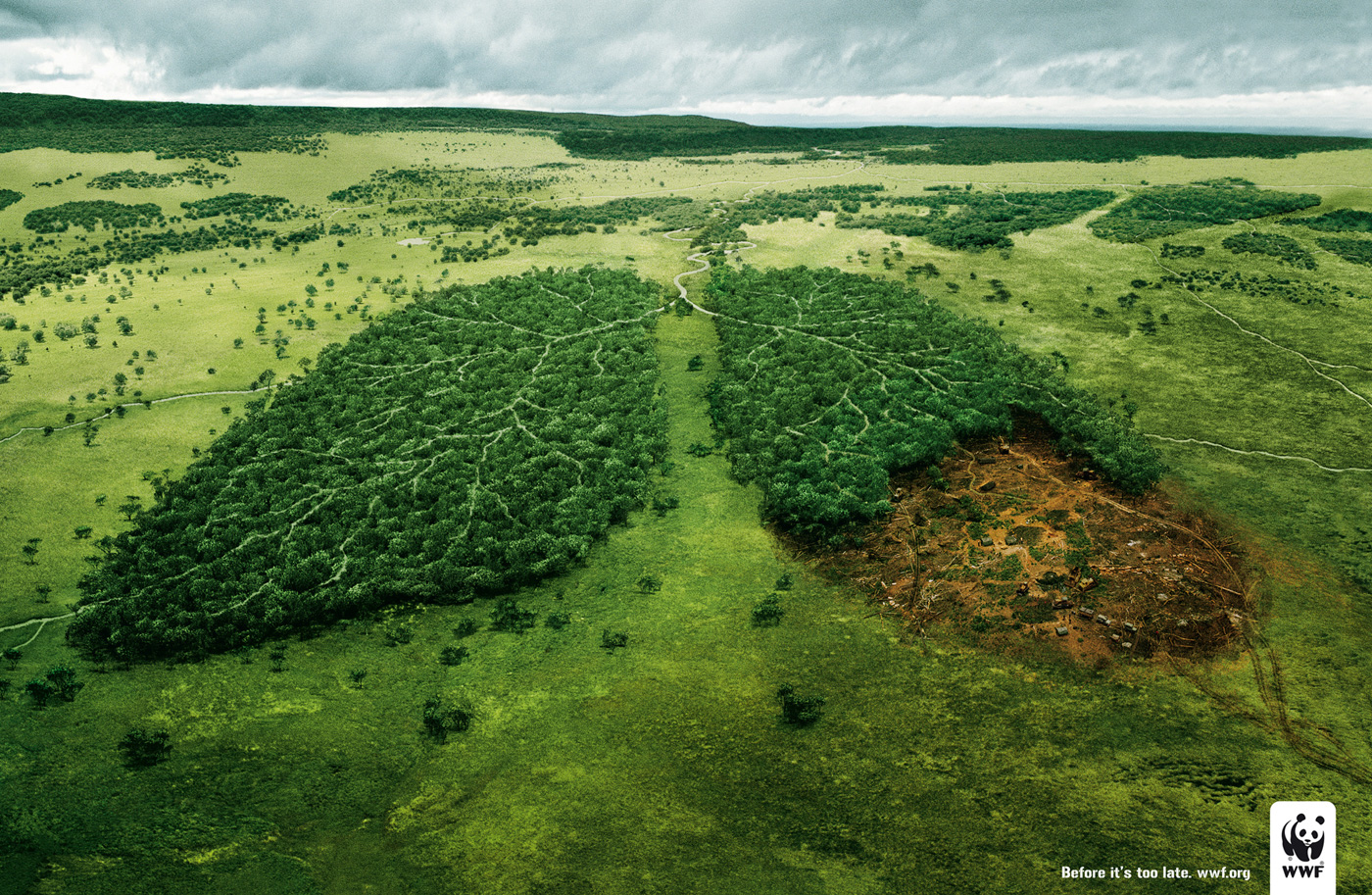
Earth’s second lung has emphysema

19 02 2015
© WWF

© WWF

Many consider forests as the ‘lungs’ of the planet – the idea that trees and other plants take up carbon and produce oxygen (the carbon and oxygen cycles). If we are to be fair though, the oceans store about 93% of the Earth’s carbon pool (excluding the lithosphere and fossil fuels) and oceanic phytoplankton produces between 50 and 80% of the oxygen in the atmosphere. For comparison, the terrestrial biosphere – including forests – stores only about 5% of the Earth’s carbon, and produces most of the remainder of atmospheric oxygen.

So there’s no denying that the biggest player in these cycles is the ocean, but that’s not the topic of today’s post. Instead, I’m going to focus on the terrestrial biosphere, and in particular, the carbon storage and flux of forests.

Now it’s pretty well established that tropical forests are major players in the terrestrial carbon cycle, with the most accepted estimates of about 55% the terrestrial carbon stock stored therein. The extensive boreal forest, covering most of the northern half of North America, most of Scandinavia and a huge chunk of Russia, comes in globally at about 33%, and temperate forests store most of the remainder.

That is, until now. Read the rest of this entry »


What’s in a name? The dingo’s sorry saga

30 01 2015

bad dingoThe more I delve into the science of predator management, the more I realise that the science itself takes a distant back seat to the politics. It would be naïve to think that the management of dingoes in Australia is any more politically charged than elsewhere, but once you start scratching beneath the surface, you quickly realise that there’s something rotten in Dubbo.

My latest contribution to this saga is a co-authored paper led by Dale Nimmo of Deakin University (along with Simon Watson of La Trobe and Dave Forsyth of Arthur Rylah) that came out just the other day. It was a response to a rather dismissive paper by Matt Hayward and Nicky Marlow claiming that all the accumulated evidence demonstrating that dingoes benefit native biodiversity was somehow incorrect.

Their two arguments were that: (1) dingoes don’t eradicate the main culprits of biodiversity decline in Australia (cats & foxes), so they cannot benefit native species; (2) proxy indices of relative dingo abundance are flawed and not related to actual abundance, so all the previous experiments and surveys are wrong.

Some strong accusations, for sure. Unfortunately, they hold no water at all. Read the rest of this entry »


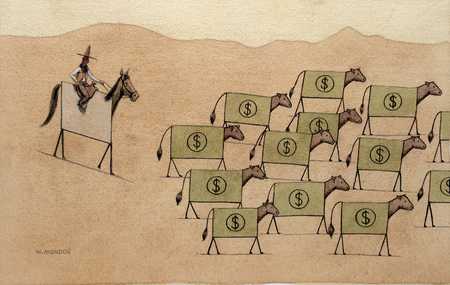
Using ecological theory to make more money

1 12 2014

huge.9.46974Let’s face it: Australia doesn’t have the best international reputation for good ecological management. We’ve been particularly loathsome in our protection of forests, we have an appalling record of mammal extinctions, we’re degenerate water wasters and carbon emitters, our country is overrun with feral animals and weeds, and we have a long-term love affair with archaic, deadly, cruel, counter-productive and xenophobic predator management. To top it all off, we have a government hell-bent on screwing our already screwed environment even more.

Still, we soldier on and try to fix the damages already done or convince people that archaic policies should be scrapped and redrawn. One such policy that I’ve written about extensively is the idiocy and cruelty of the dingo fence.

The ecological evidence that dingoes are good for Australian wildlife and that they pose less threat to livestock than purported by some evidence-less graziers is becoming too big to ignore any longer. Poisoning and fencing are not only counter-productive, they are cruel, ineffective and costly.

So just when ecologists thought that dingoes couldn’t get any cooler, out comes our latest paper demonstrating that letting dingoes do their thing results in a net profit for cattle graziers.

Come again? Read the rest of this entry »


InvaCost – estimating the economic damage of invasive insects

7 11 2014

insectinvasionThis is a blosh (rehash of someone else’s blog post) of Franck Courchamp‘s posts on an exciting new initiative of which I am excited to be a part. Incidentally, Franck’s spending the week here in Adelaide.

Don’t forgot to vote for the project to receive 50 000 € public-communication grant!

Climate change will make winters milder and habitats climatically more suitable year-round for cold-blooded animals like insects, but there are many questions remaining regarding whether such insects will be able to invade other regions as the climate shifts. There are many nasty bugs out there.

For example, the Asian predatory wasp is an invasive hornet in Europe that butchers pollinating insects, especially bees, thereby affecting the production of many wild and cultivated plants. I hope that we all remember what Einstein said about pollinators:

If bees were to disappear, humans will disappear within a few years.

(we all should remember that because it’s one of the few things he said that most of us understood). The highly invasive red fire ant is feared for its impacts on biodiversity, agriculture and cattle breeding, and the thousands of anaphylactic shocks inflicted to people by painful stings every year (with hundreds of deaths). Between the USA and Australia, over US$10 billion is spent yearly on the control of this insect alone. Tiger mosquitoes are vectors of pathogens that cause dengue fever, chikungunya virus and of about 30 other viruses. We could go on.

Most of these nasty creatures are now unable to colonise northern regions of Europe or America, or southern regions of Australia, for example, because they cannot survive cold temperatures. But how will this change? Where, when and which species will invade with rising temperatures? What will be the costs in terms of species loss? In terms of agricultural or forestry loss? In terms of diseases to cattle, domestic animals and humans? What will be the death toll if insects that are vectors of malaria can establish in new, highly populated areas?

We’ve proposed to study these and others from a list of 20 of the worst invasive insect species worldwide, and we got selected (i.e., financed!) by the Fondation BNP Paribas. In addition, the Fondation BNP Paribas has selected five scientific programmes on climate change and will give 50,000 € (that’s US$62,000) to the one selected by the public, for a communication project on their scientific programme. This is why we need you to vote for our project: InvaCost. Read the rest of this entry »


It’s not all about cats

20 10 2014

Snake+OilIf you follow any of the environment news in Australia, you will most certainly have seen a lot about feral cats in the last few weeks. I’ve come across dozens of articles in the last week alone talking about the horrendous toll feral cats have had on Australian wildlife since European arrival. In principle, this is a good thing because finally Australians are groggily waking to the fact that our house moggies and their descendants have royally buggered our biodiversity. As a result, we have the highest mammal extinction rate of any country.

But I argue that the newfound enthusiasm for killing anything feline is being peddled mainly as a distraction from bigger environmental issues and to camouflage the complete incompetence of the current government and their all-out war on the environment.

Call me cynical, but when I read headlines like “Australia aims to end extinction of native wildlife by 2020” and Environment Minister Hunt’s recent speech that he has “… set a goal of ending the loss of mammal species by 2020“, I get more than just a little sick to the stomach.

What a preposterous load of shite. Moreover, what a blatant wool-pulling-over-the-eyes public stunt. Read the rest of this entry »


Farewell to an environmental hero: Tony McMichael

26 09 2014

120927: ANU Reporter Magazine Portraits. PIcture by Belinda PrattenI had some sad news today – a visionary in human health and environmental integrity, Professor Tony McMichael, passed away last night from advanced influenza complications. Many people in the conservation field might not have heard of Tony, but rest assured he was one of the foremost thinkers and visionaries in the relationship between environment and human health.

I first met Tony on a World Health Organization-sponsored trip to China in 2008, where I was the ‘token’ ecologist on a panel of experts examining the nexus between environment, agriculture and the infectious diseases of poverty. Tony’s intellect and experience were daunting, to say the least, but a man who had served on several IPCC panels and countless international specialist committees was approachable and always listened. I was impressed and humbled from the outset.

A powerhouse in the general and multidisciplinary approach to the drivers of declining human health, Tony researched everything from classic human epidemiology to the sociological aspects of declining human health in the face of climate disruption. A little home-grown pride was present too in the fact that Tony did his medical degree at the University of Adelaide where I am now based.

If you are not familiar with Tony’s work and have even the slightest interest in the human-environment relationship, I encourage you to read his classic and innovative works. Read the rest of this entry »


Tropical forest resilience depends on past disturbance frequency

16 07 2014

I’ve recently come across an interesting study that perfectly marries palaeo-ecological data with modern conservation philosophy. It’s not often that such a prehistorical perspective dating at least to the Last Glacial Maximum has been used so effectively to inform future conservation outlooks. I’m particularly interested in this sort of approach considering my own palaeo dabblings of late.

Published in Nature Communications this May, Lydia Cole and colleagues’ paper Recovery and resilience of tropical forests after disturbance is a meta-analysis of 71 studies covering nearly 300 disturbance events in tropical forests over the last 20,000 years or so. Using fossil pollen records as an index of vegetation change, they demonstrated the (somewhat intuitive) main result that the time to recovery following a disturbance generally decreases as the past disturbance frequency increased.

This appears to be a vindication of the idea that a system’s adaptive strategies evolve as a product of the local disturbance regime. More importantly, they found that recovery was faster following ‘large infrequent events’, which are natural perturbations such as cyclones and major fires. While most past disturbances were caused by humans clearing forest, the fact that tropical forest systems were most resilient to ‘natural’ events means that if we can’t stop human disturbances, at least we can attempt to emulate natural processes to maximise the rebound potential. Much like many modern forestry operations try to emulate natural disturbances to limit their damage, we should at least manage our impacts by understanding so-called ‘natural’ regimes as much as possible. Read the rest of this entry »


Biodiversity Hotspots have nearly burnt out

10 07 2014

dying embersI recently came across a really important paper that might have flown under the radar for many people. For this reason, I’m highlighting it here and will soon write up a F1000 Recommendation. This is news that needs to be heard, understood and appreciated by conservation scientists and environmental policy makers everywhere.

Sean Sloan and colleagues (including conservation guru, Bill Laurance) have just published a paper entitled Remaining natural vegetation in the global biodiversity hotspots in Biological Conservation, and it we are presented with some rather depressing and utterly sobering data.

Unless you’ve been living under a rock for the past 20 years, you’ll have at least heard of the global Biodiversity Hotspots (you can even download GIS layers for them here). From an initial 10, to 25, they increased penultimately to 34; most recently with the addition of the Forests of East Australia, we now have 35 Biodiversity Hotspots across the globe. The idea behind these is to focus conservation attention, investment and intervention in the areas with the most unique species assemblages that are simultaneously experiencing the most human-caused disturbances.

Indeed, today’s 35 Biodiversity Hotspots include 77 % of all mammal, bird, reptile and amphibian species (holy shit!). They also harbour about half of all plant species, and 42 % of endemic (not found anywhere else) terrestrial vertebrates. They also have the dubious honour of hosting 75 % of all endangered terrestrial vertebrates (holy, holy shit!). Interestingly, it’s not just amazing biological diversity that typifies the Hotspots – human cultural diversity is also high within them, with about half of the world’s indigenous languages found therein.

Of course, to qualify as a Biodiversity Hotspot, an area needs to be under threat – and under threat they area. There are now over 2 billion people living within Biodiversity Hotspots, so it comes as no surprise that about 85 % of their area is modified by humans in some way.

A key component of the original delimitation of the Hotspots was the amount of ‘natural intact vegetation’ (mainly undisturbed by humans) within an area. While revolutionary 30 years ago, these estimates were based to a large extent on expert opinions, undocumented assessments and poor satellite data. Other independent estimates have been applied to the Hotspots to estimate their natural intact vegetation, but these have rarely been made specifically for Hotspots, and they have tended to discount non-forest or open-forest vegetation formations (e.g., savannas & shrublands).

So with horribly out-of-date vegetation assessments fraught with error and uncertainty, Sloan and colleagues set out to estimate what’s really going on vegetation-wise in the world’s 35 Biodiversity Hotspots. What they found is frightening, to say the least.

Read the rest of this entry »


Western Australia’s moronic shark cull

4 07 2014

another stupid politicianA major media release today coordinated by Jessica Meeuwig in Western Australia makes the (obvious) point that there’s no biological justification to cull sharks.

301 Australian and International Scientists experts have today provided their submission to the Western Australia Environmental Protection Authority (EPA), rejecting the scientific grounds for the proposed three-year drum-line programme.

Coordinating scientist, Professor Jessica Meeuwig from the University of Western Australia said:

“To have over 300 researchers, including some of the world’s top shark specialists and marine ecologists, all strongly agreeing that there is no scientific basis for the lethal drum-line programme, tells you how unjustified the government’s proposal is. If the EPA and the Federal Minister for the Environment are using science for decisions, the drum-line proposal should not be approved.”

The experts agree that the proposal presents no evidence that the lethal drum-line programme, as implemented, will improve ocean safety. It ignores evidence from other hook-based programs in Hawaii and Queensland that have been shown to be ineffective in reducing shark attacks on humans.

Dr. Christopher Neff from the University of Sydney stated:

“There is no evidence that drum lines reduce shark bites. The Western Australia EPA now faces a question of science versus politics with global implications because it is considering establishing a new international norm that would allow for the killing of protected white sharks.”

The drum lines are ineffective and indiscriminate, with 78% of the sharks captured not considered ‘threatening’ to humans. Yet, scientifically supported, non-lethal alternatives such as the South African ‘Shark Spotter’ and Brazil’s ‘Tag and Remove’ programmes are not adequately assessed as viable options for Western Australia. Read the rest of this entry »


New Threatened Species Commissioner lacks teeth

2 07 2014

This is not Gregory Andrews

Published today on ABC Environment.

Greg Hunt, the Coalition Government’s Minister for the Environment, today announced what appears to be one of the only environmental promises kept from their election campaign in 2013: to appoint a Threatened Species Commissioner.

The appointment is unprecedented for Australia – we have never had anything remotely like it in the past. However, I am also confident that this novelty will turn out to be one of the position’s only positives.

My scepticism is not based on my personal political or philosophical perspectives; rather, it arises from Coalition Government’s other unprecedented policies to destroy Australia’s environment. No other government in the last 50 years has mounted such a breath-taking War on the Environment. In the nine month’s since the Abbott Government took control, there has been a litany of backward and dangerous policies, from the well-known axing of the Climate Commission and their push to dump of 3 million tonnes of dredge on the World Heritage Great Barrier Reef, to their lesser-publicised proposals to remove the non-profit tax status of green organisations and kill the Environmental Defenders Office. The Government’s list of destructive, right-wing, anti-environmental policies is growing weekly, with no signs of abatement.

With this background, it should come as no surprise that considerable cynicism is emerging following the Minister’s announcement. Fears that another powerless pawn of the current government appear to have been realised with the appointment of Gregory Andrews as the Commissioner. Mr Andrews is a public servant (ironically from the now-defunct Department of Department of Climate Change and Energy Efficiency) and former diplomat who has some minor infamy regarding contentious comments he made in 2006 when acting as a senior bureaucrat in Mal Brough’s Department of Indigenous Affairs. Apart from Mr Gregory’s general lack of specific expertise in species recovery, the choice appears to be neutral at best.

More importantly, the major limitation of the Commissioner to realise real benefits for Australian biodiversity is the position’s total lack of political power. Greg Hunt himself confirmed that Mr Andrews will not be able to affect government policy other than ‘encourage’ cooperation between states and environmental groups. The position also comes with a (undisclosed) funding guarantee of only one year, which makes it sound more like an experiment in public relations than effective environmental policy. Read the rest of this entry »


50/500 or 100/1000 debate not about time frame

26 06 2014

Not enough individualsAs you might recall, Dick Frankham, Barry Brook and I recently wrote a review in Biological Conservation challenging the status quo regarding the famous 50/500 ‘rule’ in conservation management (effective population size [Ne] = 50 to avoid inbreeding depression in the short-term, and Ne = 500 to retain the ability to evolve in perpetuity). Well, it inevitably led to some comments arising in the same journal, but we were only permitted by Biological Conservation to respond to one of them. In our opinion, the other comment was just as problematic, and only further muddied the waters, so it too required a response. In a first for me, we have therefore decided to publish our response on the arXiv pre-print server as well as here on ConservationBytes.com.

50/500 or 100/1000 debate is not about the time frame – Reply to Rosenfeld

cite as: Frankham, R, Bradshaw CJA, Brook BW. 2014. 50/500 or 100/1000 debate is not about the time frame – Reply to Rosenfeld. arXiv: 1406.6424 [q-bio.PE] 25 June 2014.

The Letter from Rosenfeld (2014) in response to Jamieson and Allendorf (2012) and Frankham et al. (2014) and related papers is misleading in places and requires clarification and correction, as follows: Read the rest of this entry »


A convenient truth: global push for carbon-based conservation

19 05 2014

Eucalyptus viminalis (Manna Gum) - leaf, adultI’ve just written an article for the Australian River Restoration Centre‘s RipRap magazine, and they have given me permission to reproduce it here.

The brave, new green world of the carbon economy hasn’t exactly taken off as desired. Perhaps it’s because it wasn’t really planned from the outset, or maybe it is still too abstract for most people to accept, digest and incorporate into their daily lives. An emergent property of society’s generally slow awakening to the challenge of climate disruption, is that it will be a long time before we accept its full suite of incarnations.

The infant carbon economy is, however, well and truly alive and kicking, so it is important to try and plan for its growing influence on our decision making. Bumps in the road aside, the carbon economy has mostly been a blessing (actual and potential) for biodiversity conservation projects the world over.

In principle, the aim of the carbon economy is rather straight-forward: charge people a certain amount for each unit of carbon dioxide equivalents they release, and then use that money to develop approaches that further increase carbon sequestration or limit emissions. It’s a ‘build-it-and-they-will-come’ framework, where increasing financial impetus to restrict emissions is enhanced by society’s evolution towards better approaches and technology.

The operational side of the carbon economy is unfortunately much more muddled, with vested interests and political gaming weakening its implementation. Nonetheless, we persevere. Read the rest of this entry »


Ecological processes depend on …

14 05 2014
© Cagan Sekercioglu

© Cagan Sekercioglu

I have been known to say (ok – I say it all the time) that ecologists should never equivocate when speaking to the public. Whether it’s in a media release, blog post, television presentation or newspaper article, just stick to ‘yes’ or ‘no’. In other words, don’t qualify your answer with some horrid statistical statement (i.e., in 95% of cases …) or say something like “… but it really depends on …”. People don’t understand uncertainty – to most people, ‘uncertainty’ means “I don’t know” or worse, “I made it all up”.

But that’s only in the movies.

In real ‘ecological’ life, things are vastly different. It’s never as straightforward as ‘yes’ or ‘no’, because ecology is complex. There are times that I forget this important aspect when testing a new hypothesis with what seem like unequivocal data, but then reality always hits.

Our latest paper is the epitome of this emergent complexity from what started out as a fairly simple question using some amazing data. What makes birds change their range1? We looked at this question from a slightly different angle than had been done before because we had access to climate data, life-history data and most importantly, actual range change data. It’s that latter titbit that is typically missing from studies aiming to understand what drives species toward a particular fate; whether it’s a species distribution model predicting the future habitat suitability of some species as a function of climate change, or the past dynamics of some species related to its life history pace, most often the combined dynamics are missing. Read the rest of this entry »


South Australia’s tattered environmental remains

16 04 2014
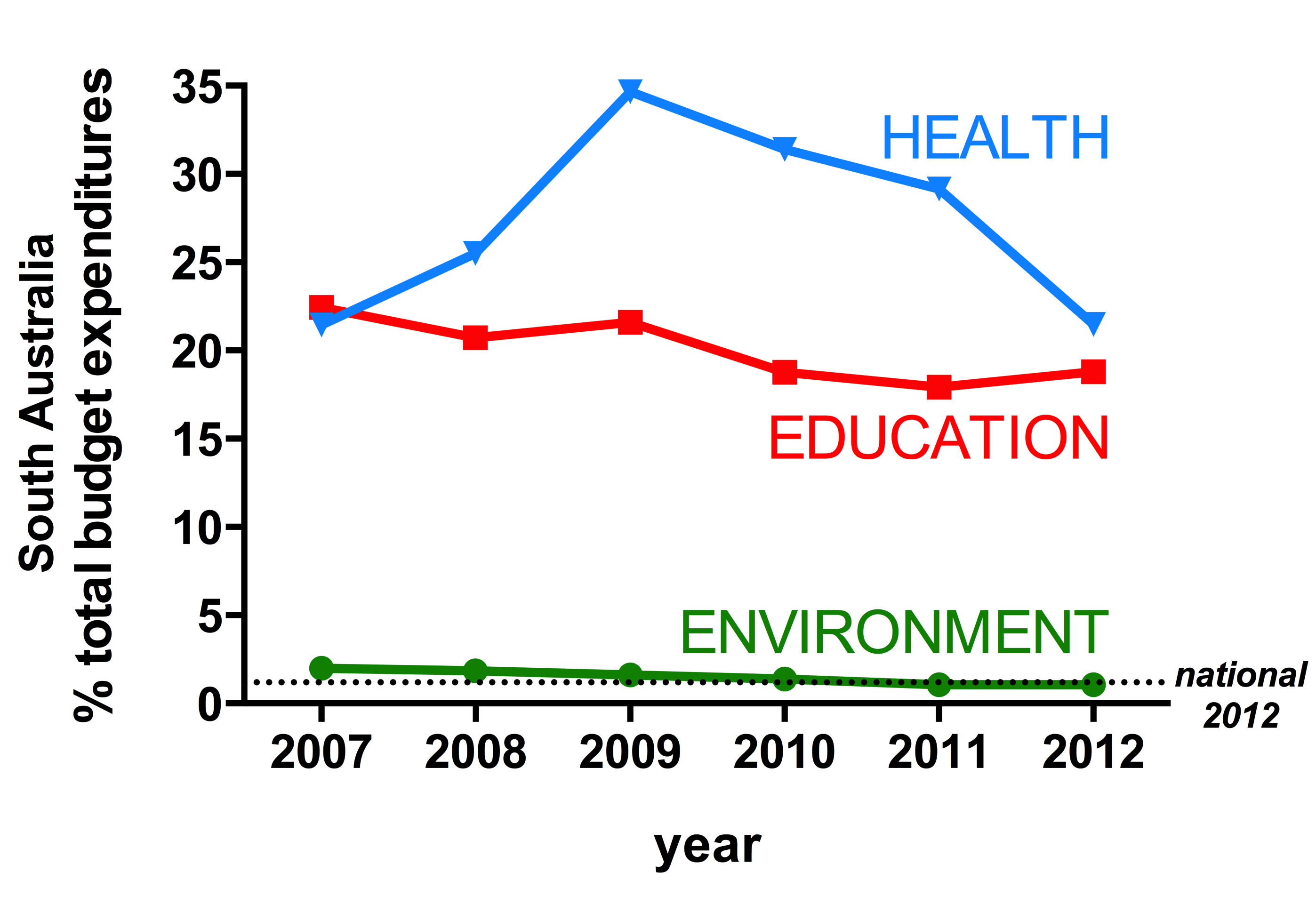
State budget percentage expenditures for health, education and environment

South Australia State budget percentage expenditures for health, education and environment

Yesterday I gave the second keynote address at the South Australia Natural Resource Management (NRM) Science Conference at the University of Adelaide (see also a brief synopsis of Day 1 here). Unfortunately, I’m missing today’s talks because of an acute case of man cold, but at least I can stay at home and work while sipping cups of hot tea.

Many people came up afterwards and congratulated me for “being brave enough to tell the truth”, which both encouraged and distressed me – I am encouraged by the positive feedback, but distressed by the lack of action on the part of our natural resource management leaders.

The simple truth is that South Australia’s biodiversity and ecosystems are in shambles, yet few seem to appreciate this.

So for the benefit of those who couldn’t attend, I’ve uploaded the podcast of my slideshow for general viewing here. I’ve also highlighted some key points from the talk below: Read the rest of this entry »


Eye on the taiga

24 03 2014

boreal damageDun! Dun, dun, dun! Dun, dun, dun! Dun, dun, daaaaah!

I’ve waited nearly two years to do that, with possibly our best title yet for a peer-reviewed paper: Eye on the taiga: removing global policy impediments to safeguard the boreal forest (recently published online in Conservation Letters).

Of course, the paper has nothing to do with cheesy Eighties music, underdog boxers or even tigers, but it does highlight an important oversight in world carbon politics. The boreal forest (also known as taiga from the Russian) spans much of the land mass of the Northern Hemisphere and represents approximately one quarter of the entire planet’s forests. As a result, this massive forest contains more than 35% of all terrestrially bound carbon (below and above ground). One doesn’t require much more information to come to the conclusion that this massive second lung of the planet (considering the Amazon the first lung) is a vital component of the world’s carbon cycle, and temperate biodiversity.

The boreal forest has been largely expanding since the retreat of the glaciers following the Last Glacial Maximum about 20,000 years ago, which means that its slow progression northward has produced a net carbon sink (i.e., it takes up more atmospheric carbon that it releases from decomposition). However, recent evidence suggests that due to a combination of increased deforestation, fire from both human encroachment and climate change, mass outbreaks of tree-killing insects and permafrost melting, the boreal forest is tipping towards becoming a net carbon source (i.e., emitting more carbon into the atmosphere than it takes up from photosynthesis). This is not a good thing for the world’s carbon cycle, because it means yet another positive feedback that will exacerbate the rapid warming of the planet. Read the rest of this entry »


We’re sorry, but 50/500 is still too few

28 01 2014

too fewSome of you who are familiar with my colleagues’ and my work will know that we have been investigating the minimum viable population size concept for years (see references at the end of this post). Little did I know when I started this line of scientific inquiry that it would end up creating more than a few adversaries.

It might be a philosophical perspective that people adopt when refusing to believe that there is any such thing as a ‘minimum’ number of individuals in a population required to guarantee a high (i.e., almost assured) probability of persistence. I’m not sure. For whatever reason though, there have been some fierce opponents to the concept, or any application of it.

Yet a sizeable chunk of quantitative conservation ecology develops – in various forms – population viability analyses to estimate the probability that a population (or entire species) will go extinct. When the probability is unacceptably high, then various management approaches can be employed (and modelled) to improve the population’s fate. The flip side of such an analysis is, of course, seeing at what population size the probability of extinction becomes negligible.

‘Negligible’ is a subjective term in itself, just like the word ‘very‘ can mean different things to different people. This is why we looked into standardising the criteria for ‘negligible’ for minimum viable population sizes, almost exactly what the near universally accepted IUCN Red List attempts to do with its various (categorical) extinction risk categories.

But most reasonable people are likely to agree that < 1 % chance of going extinct over many generations (40, in the case of our suggestion) is an acceptable target. I’d feel pretty safe personally if my own family’s probability of surviving was > 99 % over the next 40 generations.

Some people, however, baulk at the notion of making generalisations in ecology (funny – I was always under the impression that was exactly what we were supposed to be doing as scientists – finding how things worked in most situations, such that the mechanisms become clearer and clearer – call me a dreamer).

So when we were attacked in several high-profile journals, it came as something of a surprise. The latest lashing came in the form of a Trends in Ecology and Evolution article. We wrote a (necessarily short) response to that article, identifying its inaccuracies and contradictions, but we were unable to expand completely on the inadequacies of that article. However, I’m happy to say that now we have, and we have expanded our commentary on that paper into a broader review. Read the rest of this entry »


Terrestrial biodiversity’s only chance is avoided deforestation

24 01 2014

farming forestsToday I was shocked, stunned and pleasantly (for a change) surprised. Australia has its first ‘avoided deforestation’ carbon farming project.

It is understandable that this sort of news doesn’t make the Jane & Joe Bloggs of the world stand up and cheer, but it should make conservation biologists jump for bloody joy.

So why exactly am I so excited about the setting aside of a mere 9000 ha (90 km2, or 10 × 9 km) of semi-arid scrub in western New South Wales? It’s simple – nothing can replace the biodiversity or carbon value of primary forest. In other words, forest restoration – while laudable and needed – can never achieve what existing forest already does. We know now from various parts of the world that biodiversity is nearly always much higher in primary forest, and that the carbon structure of the forest (especially below-ground carbon) can take centuries to recover.

Another problem with restoration – and if you’ve ever been involved in any tree planting yourself, you’ll know what I mean – is that it’s incredibly expensive, time-consuming and slow. Wouldn’t it make more financial sense just to save forests instead of trying to rebuild them?

Of course it is, so the logical conclusion from a conservation perspective is to save primary forest first, then worry about restoration next. The problem is, there are few, if any, financial incentives for keeping forests standing in the private sector. The stumbling rise of the carbon economy is a potential resolution to this problem, although neither the Kyoto Protocol nor most national carbon-trading schemes adequately account for the carbon value of existing forests.

Up until today, even Australia didn’t have any examples.

Read the rest of this entry »