Unlikely the biodiversity crisis will improve any time soon

6 02 2020

hopelessAround a fortnight ago I wrote a hastily penned post about the precarious state of biodiversity — it turned out to be one of the most-read posts in ConservationBytes‘ history (nearly 22,000 views in less than two weeks).

Now, let’s examine whether this dreadful history is likely to get any better any time soon.

Even if extinction rates decline substantially over the next century, I argue that we are committed to an intensifying biodiversity extinction crisis. The aggregate footprint from the growing human population notwithstanding, we can expect decades, if not centuries, of continued extinctions from lag effects alone (extinction debts arising from previous environmental damage engendering extinctions in the future)1.

Global vegetation cover and production are also likely to decline even in the absence of continued habitat clearing — the potential benefit of higher CO2 concentrations for plant photosynthesis is more than offset by lower availability of water in the soil, heat stress, and the frequency of disturbances such as droughts2. Higher frequencies and intensities of disturbance events like catastrophic bushfire will also exacerbate extinction rates3.

However, perhaps the least-appreciated element of potential extinctions arising from climate change is that they are vastly underestimated when only considering a species’ thermal tolerance4. In fact, climate disruption-driven extinction rates could be up to ten times higher than currently predicted4 when extinction cascades are taken into account5. Read the rest of this entry »


Heat tolerance highly variable among populations and species

14 01 2020

Many ecological studies have examined the tolerance of terrestrial wildlife to high and low air temperatures over global scales (e.g., 1, 2, 3). This topic has been boosted in the last two decades by ongoing and predicted impacts of climate change on biodiversity (see summary of 2019 United Nation’s report here and here).

However, it is unfortunate that for most species, studies have measured thermal tolerance from a single location or population. Researchers interested in global patterns of thermal stress collect those measurements from the literature for hundreds to thousands of species [recently compiled in the GlobTherm database] (4), and are therefore often restricted to analysing one value of thermal tolerance per species.

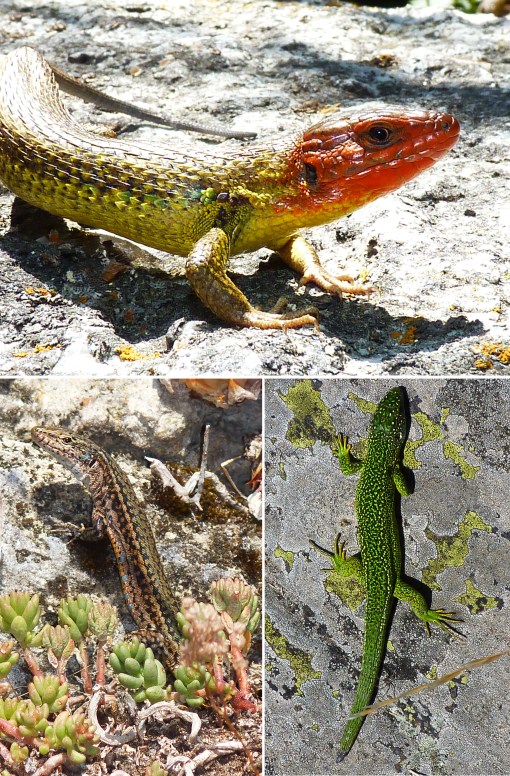
CB_FunctionalEcology_jan2020_Photo

Three of the 15 species of Iberian lacertids sampled in our study of thermal tolerance (9), including the populations of Algerian psammodromus (Psammodromus algirus), Geniez’s wall lizard (Podarcis virescens) and Western green lizard (Lacerta bilineata) sampled in Navacerrada (Madrid), Fuertescusa (Cuenca) and Moncayo (Soria), respectively. Photos by S. Herrando-Pérez

Using this approach, ecologists have concluded that cold tolerance is far more variable than heat tolerance across species from the tropics to the boreal zone (5-8). Consequently, tolerance to heat stress might be a species trait with limited potential to change in response to global warming compared to cold tolerance (5). Read the rest of this entry »


Cartoon guide to biodiversity loss LVIII

4 01 2020

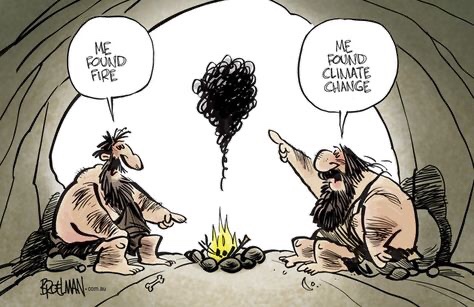
The first set of six biodiversity cartoons for 2020. This special, Australia-is-burning-down-themed set is dedicated to Scott Morrison and his ilk. See full stock of previous ‘Cartoon guide to biodiversity loss’ compendia here.


Read the rest of this entry »


Influential conservation ecology papers of 2019

24 12 2019

Bradshaw-Waves breaking on rocks Macquarie Island
As I’ve done for the last six years, I am publishing a retrospective list of the ‘top’ 20 influential papers of 2019 as assessed by experts in F1000 Prime (in no particular order). See previous years’ lists here: 20182017, 20162015, 2014, and 2013.

Read the rest of this entry »


Did people or climate kill off the megafauna? Actually, it was both

10 12 2019

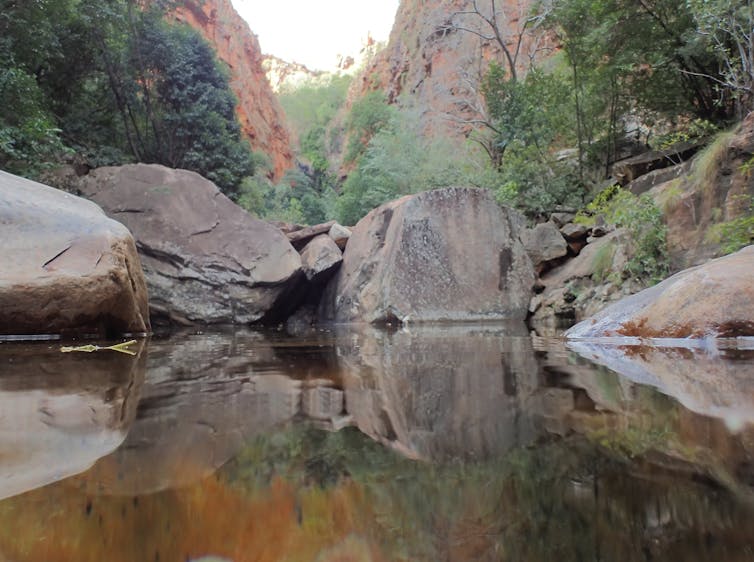
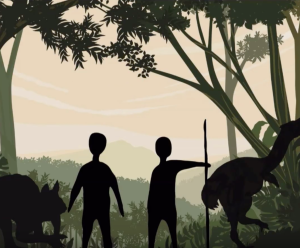
When freshwater dried up, so did many megafauna species.
Centre of Excellence for Australian Biodiversity and Heritage, Author provided

This article is republished from The Conversation under a Creative Commons license. Read the original article.

Earth is now firmly in the grips of its sixth “mass extinction event”, and it’s mainly our fault. But the modern era is definitely not the first time humans have been implicated in the extinction of a wide range of species.

In fact, starting about 60,000 years ago, many of the world’s largest animals disappeared forever. These “megafauna” were first lost in Sahul, the supercontinent formed by Australia and New Guinea during periods of low sea level.

The causes of these extinctions have been debated for decades. Possible culprits include climate change, hunting or habitat modification by the ancestors of Aboriginal people, or a combination of the two.


Read more: What is a ‘mass extinction’ and are we in one now?


The main way to investigate this question is to build timelines of major events: when species went extinct, when people arrived, and when the climate changed. This approach relies on using dated fossils from extinct species to estimate when they went extinct, and archaeological evidence to determine when people arrived.


Read more: An incredible journey: the first people to arrive in Australia came in large numbers, and on purpose


Comparing these timelines allows us to deduce the likely windows of coexistence between megafauna and people.

We can also compare this window of coexistence to long-term models of climate variation, to see whether the extinctions coincided with or shortly followed abrupt climate shifts.

Data drought

One problem with this approach is the scarcity of reliable data due to the extreme rarity of a dead animal being fossilised, and the low probability of archaeological evidence being preserved in Australia’s harsh conditions. Read the rest of this entry »


Adult disguises

2 12 2019

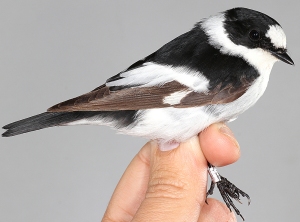
Skilled ornithologists can tell the age of a bird by the look of its feathers. But many species are advancing the moult of their first adult plumage in response to global warming, and the youngsters look more similar to the adults now than two centuries ago.

R Graphics Output

The clothes don’t make the (wo)man, but how we dress sends out a lot of information about our tastes, emotional state, or financial situation. In nature, where species have evolved to exploit all kinds of physical and chemical cues, visual communication determines a wealth of feeding and reproductive strategies (1).

Birds are familiar to all of us by the beauty and variety of their plumages (see extreme examples commented by David Attenborough here, here and here), which bird fans use to tell juveniles from males, males from females and breeders from migrants. In evolutionary time, birds have gradually moved away from tree-bark browns and tree-leaf greens and, due to functional requirements, modern feathers only span about one third of the colours these animals can perceive (2). They obtain yellows, oranges, and reds from carotenoid-containing food, dark colours from melanin pigment of own synthesis, and the so-called structural colours depend on how light reflects on the barbs of the feathers (2).

Plumage, across its entire range of designs, is a factor crucial to the life history of our feathery friends and, consequently, to evaluate how and how much anthropogenic climate change is impacting them (3).

Plumage and temperature

We know that mammals and birds are modifying their fur and feathers to optimise camouflage against landscapes with more or less snow (4), but less-known are the implications of climate change for feather moulting. Read the rest of this entry »


Climate change and humans together pushed Australia’s biggest beasts to extinction

25 11 2019

people-megafaunaOver the last 60,000 years, many of the world’s largest species disappeared forever. Some of the largest that we generally call ‘megafauna’ were first lost in Sahul — the super-continent formed by the connection of Australia and New Guinea during periods of low sea level. The causes of these extinctions have been heavily debated for decades within the scientific community.

Three potential drivers of these extinctions have been suggested. The first is climate change that assumes an increase in arid conditions that eventually became lethal to megafauna. The second proposed mechanism is that the early ancestors of Aboriginal people who either hunted megafauna species to extinction, or modified ecosystems to put the largest species at a disadvantage. The third and most nuanced proposed driver of extinction is the combination of the first two.

The primary scientific tools we scientists use to determine which of these proposed causes of extinction have the most support are dated fossil records from the extinct species themselves, as well as archaeological evidence from early Aboriginal people. Traditionally, the main way we use these data is to construct a timeline of when the last fossil of a species was preserved, and compare this to evidence indicating when people arrived. We can also reconstruct climate patterns back tens of thousands of years using models similar to the ones used today to predict future climates. Based on the comparison of all of these different timelines, we conclude that abrupt climate changes in the past were influential if they occurred at or immediately before a recorded extinction event. On the other hand, if megafauna extinctions occur immediately after humans are thought to have arrived, we attribute more weight to human arrival as a driver.

Read the rest of this entry »


What is a ‘mass extinction’ and are we in one now?

13 11 2019

(reproduced from The Conversation)

For more than 3.5 billion years, living organisms have thrived, multiplied and diversified to occupy every ecosystem on Earth. The flip side to this explosion of new species is that species extinctions have also always been part of the evolutionary life cycle.

But these two processes are not always in step. When the loss of species rapidly outpaces the formation of new species, this balance can be tipped enough to elicit what are known as “mass extinction” events.


Read more: Climate change is killing off Earth’s little creatures


A mass extinction is usually defined as a loss of about three quarters of all species in existence across the entire Earth over a “short” geological period of time. Given the vast amount of time since life first evolved on the planet, “short” is defined as anything less than 2.8 million years.

Since at least the Cambrian period that began around 540 million years ago when the diversity of life first exploded into a vast array of forms, only five extinction events have definitively met these mass-extinction criteria.

These so-called “Big Five” have become part of the scientific benchmark to determine whether human beings have today created the conditions for a sixth mass extinction.

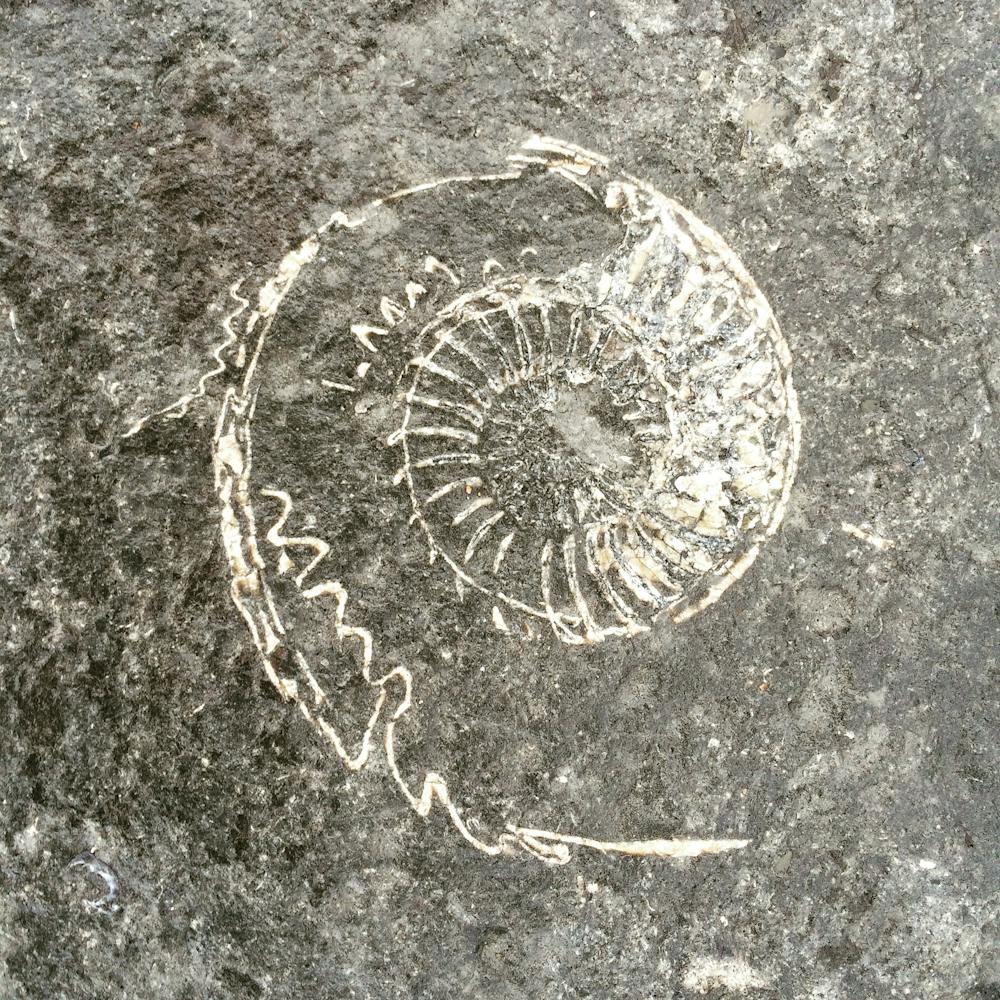
An ammonite fossil found on the Jurassic Coast in Devon. The fossil record can help us estimate prehistoric extinction rates. Corey Bradshaw, Author provided

Read the rest of this entry »


The politics of environmental destruction

22 10 2019

C_SE 409521698 Paul Ehrlich Lecture Event - Eventbrite2

You’d think I’d get tired of this, wouldn’t you? Alas, the fight does wear me down, but I must persist.

My good friend and colleague, the legendary Professor Paul Ehrlich of Stanford University, as well as his equally legendary wife, Anne, will be joining us in Adelaide for a brief visit during their annual southern migration.

Apart from just catching up over a few good bottles of wine (oh, do those two enjoy fine wines!), we have the immense privilege of having Paul appear at two events while he’s in town.

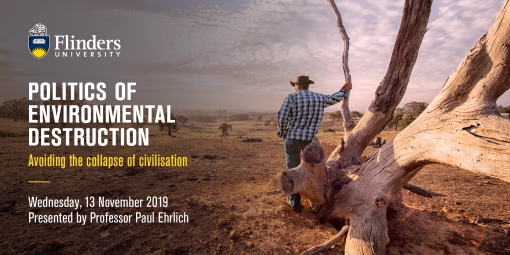
I’m really only going to be talking about the second of the two events (the first is a Science Meets Parliament gig with me and many others at the South Australia Parliament on 12 November): a grand, public lecture and Q&A session held at Flinders University on Wednesday, 13 November.

Haven’t heard of Paul? Where have you been hiding? If by some miracle you haven’t, here’s a brief bio:

Paul Ehrlich is Bing Professor of Population Studies Emeritus, President of the Center for Conservation Biology, Department of Biology, Stanford University and Adjunct Professor, University of Technology, Sydney. He does research in population biology (includes ecology, evolutionary biology, behavior, and human ecology and cultural evolution). Ehrlich has carried out field, laboratory and theoretical research on a wide array of problems ranging from the dynamics and genetics of insect populations, studies of the ecological and evolutionary interactions of plants and herbivores, and the behavioral ecology of birds and reef fishes, to experimental studies of the effects of crowding on human beings and studies of cultural evolution, especially the evolution of norms. He is President of the Millennium Alliance for Humanity and the Biosphere and is author and coauthor of more than 1100 scientific papers and articles in the popular press and over 40 books. He is best known to his efforts to alert the public to the many intertwined drivers that are pushing humanity toward a collapse of civilization – especially overpopulation, overconsumption by the rich, and lack of economic, racial, and gender equity. Ehrlich is a Fellow of the American Academy of Arts and Sciences, the American Entomological Society and the Beijer Institute of Ecological Economics, and a member of the United States National Academy of Sciences and the American Philosophical Society.  He is a Foreign Member of the Royal Society, an Honorary Member of the British Ecological Society and an Honorary Fellow of the Royal Entomological Society.  Among his many other honours are the Royal Swedish Academy of Sciences, Crafoord Prize in Population Biology and the Conservation of Biological Diversity (an explicit replacement for the Nobel Prize); a MacArthur Prize Fellowship; the Volvo Environment Prize; UNEP Sasakawa Environment Prize; the Heinz Award for the Environment; the Tyler Prize for Environmental Achievement; the Heineken Prize for Environmental Sciences; the Blue Planet Prize;  the Eminent Ecologist award of the Ecological Society of America, the Margalef Prize in Ecology and Environmental Sciences, and the BBVA Frontiers of Knowledge Award in Ecology and Conservation Biology. Prof Ehrlich has appeared as a guest on more than 1000 TV and radio programs; he also was a correspondent for NBC News. He has given many hundreds of public lectures in the past 50 years.

I hope your jaw just dropped.

Read the rest of this entry »



Environmental damage kills children

1 10 2019

Yes, childrenairpollutionit’s a provocative title, I agree. But then again, it’s true.

But I don’t just mean in the most obvious ways. We already have good data showing that lack of access to clean water and sanitation kills children (especially in developing nations), that air pollution is a nasty killer of young children in particular, and now even climate change is starting to take its toll.

These aspects of child health aren’t very controversial, but when we talk about the larger suite of indicators of environmental ‘damage’, such as deforestation rates, species extinctions, and the overall reduction of ecosystem services, the empirical links to human health, and to children in particular, are far rarer.

This is why I’m proud to report the publication today of a paper on which I and team of wonderful collaborators (Sally Otto, Zia Mehrabi, Alicia Annamalay, Sam Heft-Neal, Zach Wagner, and Peter Le Souëf) have worked for several years.

I won’t lie — the path to publishing this paper was long and hard, I think mainly because it traversed so many different disciplines. But we persevered and today published the paper entitled ‘Testing the socioeconomic and environmental determinants of better child-health outcomes in Africa: a cross-sectional study among nations* in the journal BMJ Open.

Read the rest of this entry »


The Great Dying

30 09 2019

Here’s a presentation I gave earlier in the year for the Flinders University BRAVE Research and Innovation series:

There is No Plan(et) B — What you can do about Earth’s extinction emergency

Earth is currently experiencing a mass extinction brought about by, … well, … us. Species are being lost at a rate similar to when the dinosaurs disappeared. But this time, it’s not due to a massive asteroid hitting the Earth; species are being removed from the planet now because of human consumption of natural resources. Is a societal collapse imminent, and do we need to prepare for a post-collapse society rather than attempt to avoid one? Or, can we limit the severity and onset of a collapse by introducing a few changes such as removing political donations, becoming vegetarians, or by reducing the number of children one has?

Read the rest of this entry »


Nothing like a good forest

31 07 2019

Our history and culture are intimately tied to the planet’s forests and the services they provide to all living beings. In modern times, forests also help combat the impacts of anthropogenic climate change, not only by acting as powerful sinks of the carbon excess resulting from our greenhouse-gas emissions, but also as thermal shields we and many other species can benefit from.

55_ForestBufferingPhotoPortadaQuercusCoverProposed2

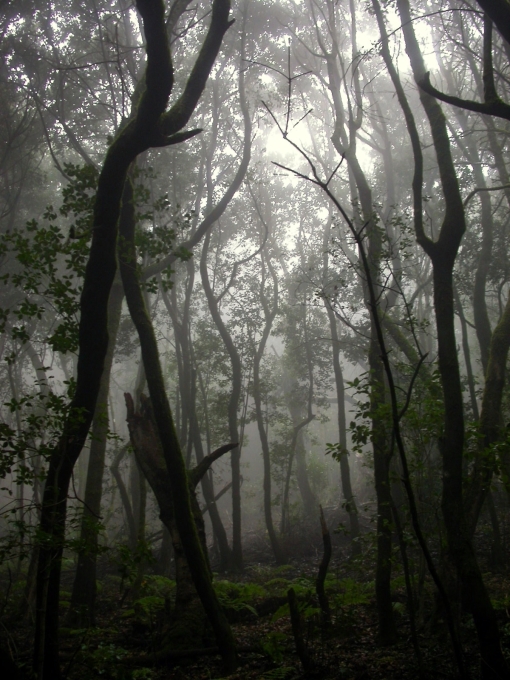
Understory of the laurel forest in Garajonay National Park (La Gomera, Canary Islands) – also part of the World Network of Biosphere Reserves since 2012. The fog, combined with the cloud belt blowing from the Atlantic Ocean against the mountains (Garajonay is the highest peak at 1500 m), creates a mesic microclimate crucial for plant endemism. Forest canopies reinforce humidity and buffer temperature variation for many species. Photo: Paco Rodríguez.

If we were to choose a house to live, most would likely opt for one with water and electricity supply, noiseless nights, nearby leisure and shopping, and easy communication by public transport. Lacking only one of those aspects could be off-putting.

In truth, those who have the privilege of living in a stable household value it by the full set of available commodities. Similarly, the value of an ecosystem rests on its entire repertoire of ecological functions (1). And this is particularly so for forest ecosystems.

The ecological value of a forest relies on the collection of its native characteristics (2): how many autochthonous and mature trees it can host, how much photosynthesis it fuels, how many pollinisers it feeds, how much soil and water it creates and retains, and many more (3). Read the rest of this entry »


“Overabundant” wildlife usually isn’t

12 07 2019

koalacrosshairsLate last year (10 December) I was invited to front up to the ‘Overabundant and Pest Species Inquiry’ at the South Australian Parliament to give evidence regarding so-called ‘overabundant’ and ‘pest’ species.
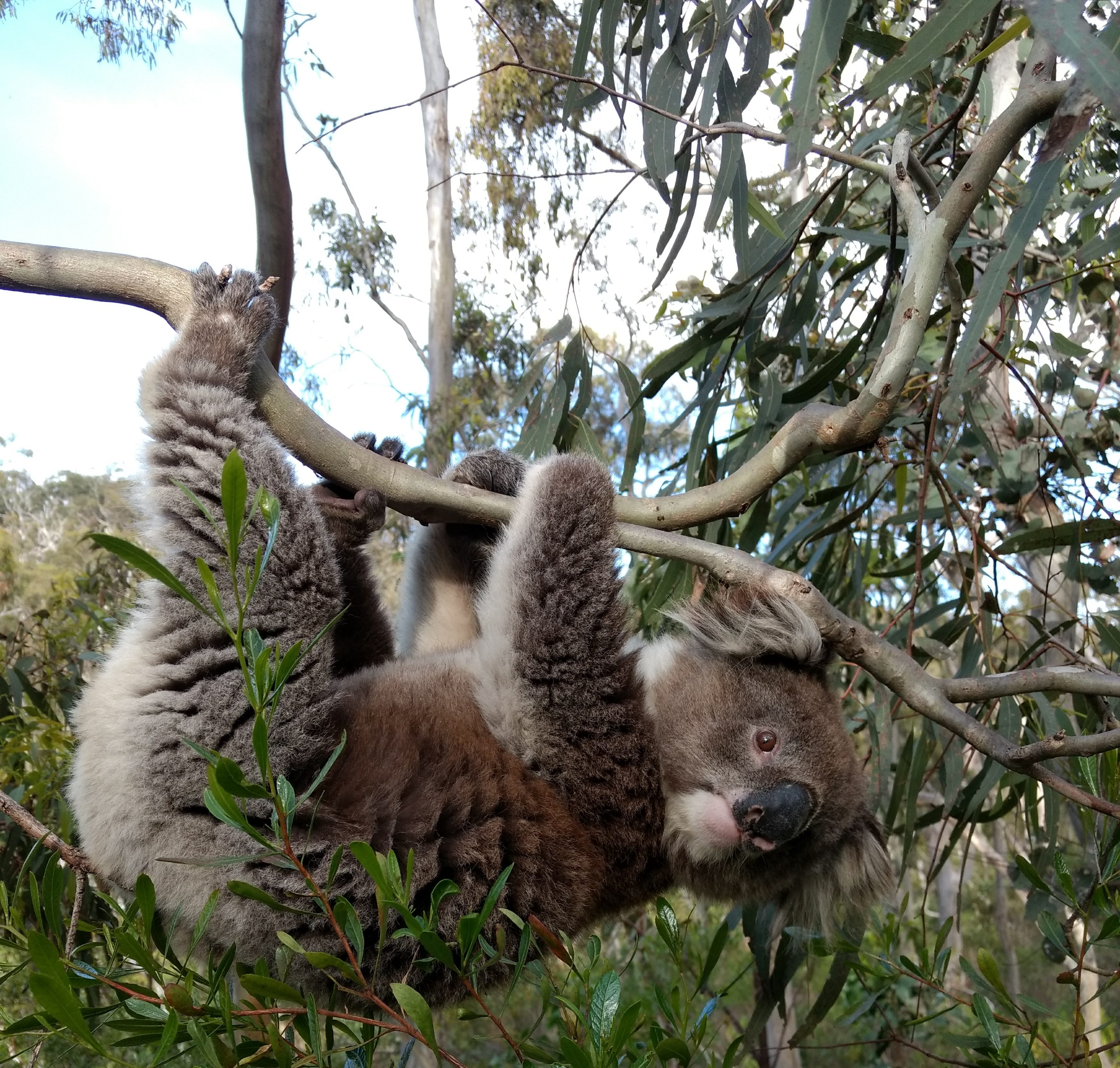
There were the usual five to six Ministers and various aides on the Natural Resources Committee (warning here: the SA Parliament website is one of the most confusing, archaic, badly organised, and generally shitty government sites I’ve yet to visit, so things require a bit of nuanced searching) to whom I addressed on issues ranging from kangaroos, to dingoes, to koalas, to corellas. The other submissions I listened to that day were (mostly) in favour of not taking drastic measures for most of the human-wildlife conflicts that were being investigated.

Forward seven months and the Natural Resources Committee has been reported to have requested the SA Minister for Environment to allow mass culling of any species (wildlife or feral) that they deem to be ‘overabundant’ or a ‘pest’.

So, the first problem is terminological in nature. If you try to wade through the subjectivity, bullshit, vested interests, and general ignorance, you’ll quickly realise that there is no working definition or accepted meaning for the words ‘overabundant’ or ‘pest’ in any legislation. Basically, it comes down to a handful of lobbyists and other squeaky wheels defining anything they deem to be a nuisance as ‘overabundant’, irrespective of its threat status, ecological role, or purported impacts. It is, therefore, entirely subjective, and boils down to this: “If I don’t like it, it’s an overabundant pest”. Read the rest of this entry »


First Australians arrived in large groups using complex technologies

18 06 2019

file-20190325-36276-12v4jq2

One of the most ancient peopling events of the great diaspora of anatomically modern humans out of Africa more than 50,000 years ago — human arrival in the great continent of Sahul (New Guinea, mainland Australia & Tasmania joined during periods of low sea level) — remains mysterious. The entry routes taken, whether migration was directed or accidental, and just how many people were needed to ensure population viability are shrouded by the mists of time. This prompted us to build stochastic, age-structured human population-dynamics models incorporating hunter-gatherer demographic rates and palaeoecological reconstructions of environmental carrying capacity to predict the founding population necessary to survive the initial peopling of late-Pleistocene Sahul.

As ecological modellers, we are often asked by other scientists to attempt to render the highly complex mechanisms of entire ecosystems tractable for virtual manipulation and hypothesis testing through the inevitable simplification that is ‘a model’. When we work with scientists studying long-since-disappeared ecosystems, the challenges multiply.

Add some multidisciplinary data and concepts into the mix, and the complexity can quickly escalate.

We do have, however, some powerful tools in our modelling toolbox, so as the Modelling Node for the Australian Research Council Centre of Excellence for Australian Biodiversity and Heritage (CABAH), our role is to link disparate fields like palaeontology, archaeology, geochronology, climatology, and genetics together with mathematical ‘glue’ to answer the big questions regarding Australia’s ancient past.

This is how we tackled one of these big questions: just how did the first anatomically modern Homo sapiens make it to the continent and survive?

At that time, Australia was part of the giant continent of Sahul that connected New Guinea, mainland Australia, and Tasmania at times of lower sea level. In fact, throughout most of last ~ 126,000 years (late Pleistocene and much of the Holocene), Sahul was the dominant landmass in the region (see this handy online tool for how the coastline of Sahul changed over this period).

Read the rest of this entry »


Koala extinctions past, present, and future

12 06 2019
Koala

Photo by John Llewelyn

Koalas are one of the most recognised symbols of Australian wildlife. But the tree-living marsupial koala is not doing well throughout much of its range in eastern Australia. Ranging as far north as Cairns in Queensland, to as far west as Kangaroo Island in South Australia, the koala’s biggest threats today are undeniably deforestation, road kill, dog attacks, disease, and climate change.

With increasing drought, heatwaves, and fire intensity and frequency arising from the climate emergency, it is likely that koala populations and habitats will continue to decline throughout most of their current range.

But what was the distribution of koalas before humans arrived in Australia? Were they always a zoological feature of only the eastern regions?

The answer is a resounding ‘no’ — the fossil record reveal a much more complicated story.

Read the rest of this entry »


Academics and Indigenous groups unite to stand up for the natural world

26 04 2019
rainforest

Rain forest gives way to pastures in the Brazilian Amazon in Mato Grosso. Photo by Thiago Foresti.

More than 600 scientists from every country in the EU and 300 Brazilian Indigenous groups have come together for the first time. This is because we see a window of opportunity in the ongoing trade negotiations between the EU and Brazil. In a Letter published in Science today, we are asking the EU to stand up for Brazilian Indigenous rights and the natural world. Strong action from the EU is particularly important given Brazil’s recent attempts to dismantle environmental legislation and ‘develop the unproductive Amazon’.

It’s worth clarifying — this isn’t about the EU trying to control Brazil — it’s about making sure our imports aren’t driving violence and deforestation. Foreign white people trying to ‘protect nature’ abroad have a dark and shameful past, where actions done in the name of conservation have led to the eviction of millions of Indigenous people. This has predominantly been to create (what we in the world of conservation would call) ‘protected areas’. The harsh reality is that most protected areas either are or have been ancestral lands of Indigenous people who are closely linked to their land and depend on it for their survival. Clearly, conservationists need to support Indigenous people. This new partnership between European scientists and Brazilian Indigenous groups is doing just that.

Brazil

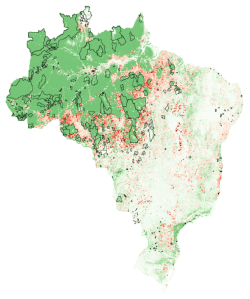
Brazil’s forest loss 2001-2013 shown in red. Indigenous lands outlined. By Mike Clark; data from GlobalForestWatch.org

In Brazil, many Indigenous groups still have a right to their land. This land is predominantly found in the Amazon rainforest, where close to a million Indigenous people live and depend on a healthy forest. Indigenous people are some of the best protectors of this vast forest, and are crucial to a future of long-term successful conservation. But Brazilian Indigenous groups and local communities are increasingly under attack. Violence on deforestation frontiers in Brazil has spiked this month, with at least 9 people found dead. The future is particularly scary for Indigenous people when there are quotes such as this from the man who is currently the President It’s a shame that the Brazilian cavalry hasn’t been as efficient as the Americans, who exterminated the Indians.

On top of human rights and environmental concerns, there is a strong profit driven case for halting deforestation. For example, ongoing deforestation in the Amazon risks flipping large parts of the rainforest to savanna – posing a serious risk to agricultural productivity, food security, local livelihoods, and the Brazilian economy. Zero-deforestation doesn’t harm agri-business, it allows for its longevity. Read the rest of this entry »


How to improve (South Australia’s) biodiversity prospects

9 04 2019
Fig2

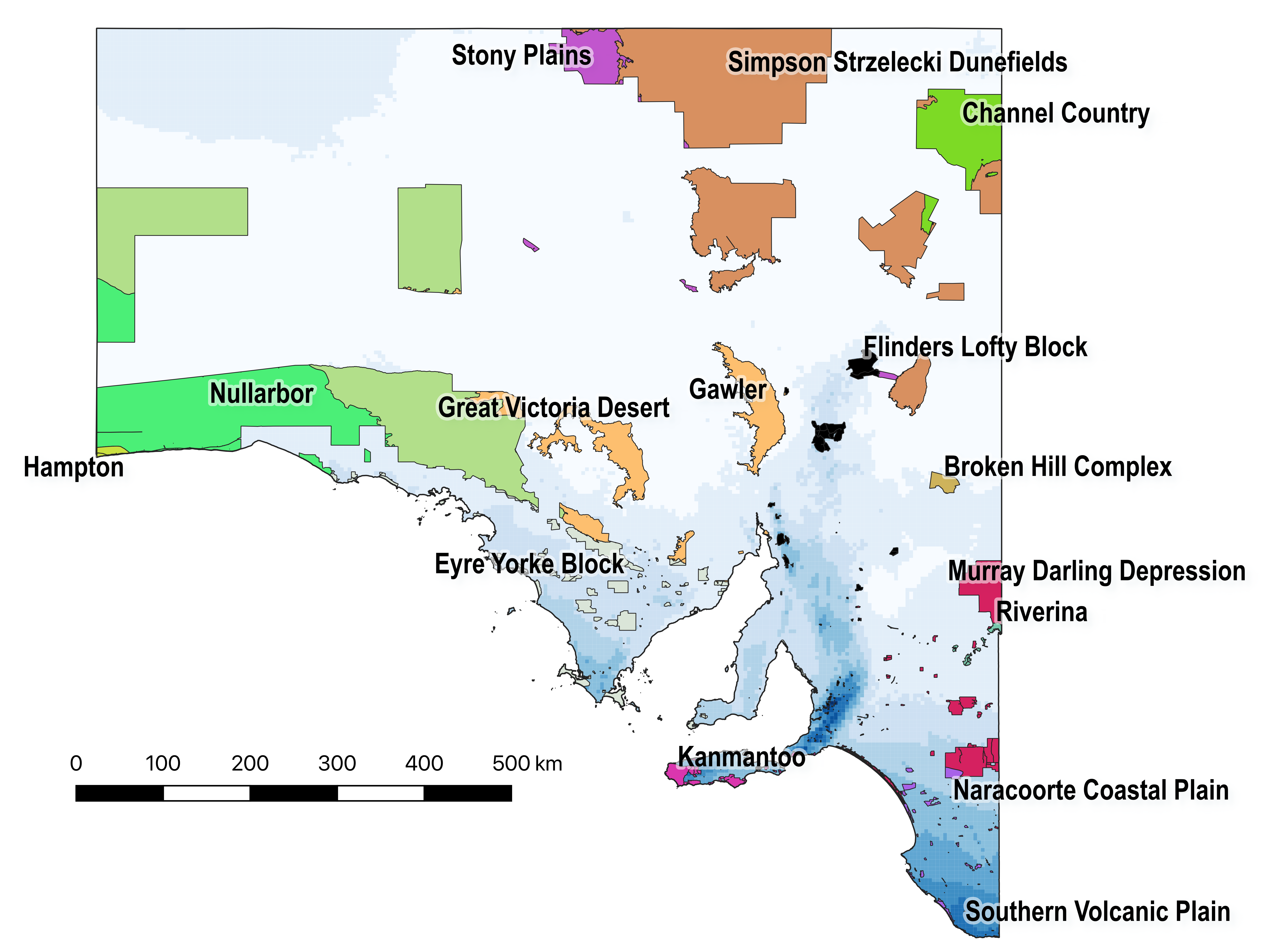
Figure 2 (from the article). Overlaying the South Australia’s Protected Areas boundary data with the Interim Biogeographic Regionalisation for Australia layer indicates that 73.2% of the total protected area (excluding Indigenous Protected Areas) in South Australia lies in the arid biogeographic regions of Great Victoria Desert (21.1%), Channel Country (15.2%), Simpson Strzelecki Dunefields (14.0%), Nullarbor (9.8%), Stony Plains (6.6%), Gawler (6.0%), and Hampton (0.5%). The total biogeographic-region area covered by the remaining Conservation Reserves amounts to 26.2%. Background blue shading indicates relative average annual rainfall.

If you read CB.com regularly, you’ll know that late last year I blogged about the South Australia 2108 State of the Environment Report for which I was commissioned to write an ‘overview‘ of the State’s terrestrial biodiversity.

At the time I whinged that not many people seemed to take notice (something I should be used to by now in the age of extremism and not giving a tinker’s about the future health of the planet — but I digress), but it seems that quietly, quietly, at least people with some policy influence here are starting to listen.

Not satisfied with merely having my report sit on the virtual shelves at the SA Environment Protection Authority, I decided that I should probably flesh out the report and turn it into a full, peer-reviewed article.

Well, I’ve just done that, with the article now published online in Rethinking Ecology as a Perspective paper.

The paper is chock-a-block with all the same sorts of points I covered last year, but there’s a lot more, and it’s also a lot better referenced and logically sequenced.

Read the rest of this entry »


Action, not just science

25 02 2019

raised fistsIt has taken me a long time to decide to do this, but with role models like Claire Wordley, Alejandro Frid, and James Hansen out there, I couldn’t really find any more excuses.

Yes, I’ve been a strong advocate for action on biodiversity, environment and climate-change issues for a long time, and I’ve even had a few political wins in that regard with my writing and representation. I’ve even called out more than once for universities to embrace divestment from fossil fuels (to my knowledge, even my own university still has not).

While I still think these avenues are important, my ongoing observation is that things are getting worse politically, not better. That means that the normal armchair advocacy embraced by even the most outspoken academics is probably not going to be enough to elicit real political change that we — no, the planet — desperately needs.

Extinction-Rebellion-South-Australia2It is for this reason that I’ve joined the Extinction Rebellion (South Australia Chapter), especially after my friend and colleague, Dr Claire Wordley of the University of Cambridge, joined the UK Rebellion and wrote about her experiences on this very blog. That, coupled with my ongoing and mounting concern for the future Earth my daughter will inherit, requires me to take to the streets. Read the rest of this entry »


Thirsty forests

1 02 2019

Climate change is one ingredient of a cocktail of factors driving the ongoing destruction of pristine forests on Earth. We here highlight the main physiological challenges trees must face to deal with increasing drought and heat.

Forests experiencing embolism after a hot drought. The upper-left pic shows Scots (Pinus sylvestris) and black (P. nigra) pines in Montaña de Salvador (Espuñola, Barcelona, Spain) during a hot Autumn in 2015 favouring a massive infestation by pine processionary caterpillars (Thaumetopoea pityocampa) and tree mortality the following year (Lluís Brotons/CSIC in InForest-CREAF-CTFC). To the right, an individual holm oak (Quercus ilex) bearing necrotic branches in Plasencia (Extremadura, Spain) during extreme climates from 2016 to 2017, impacting more than a third of the local oak forests (Alicia Forner/CSIC). The lower-left pic shows widespread die-off of trembling aspen (Populus tremuloides) from ‘Aspen Parkland’ (Saskatchewan, Canada) in 2004 following extreme climates in western North America from 2001 to 2002 (Mike Michaelian/Canadian Forest Service). To the right, several dead aspens near Mancos (Colorado, USA) where the same events hit forests up to one-century old (William Anderegg).

A common scene when we return from a long trip overseas is to find our indoor plants wilting if no one has watered them in our absence. But … what does a thirsty plant experience internally?

Like animals, plants have their own circulatory system and a kind of plant blood known as sap. Unlike the phloem (peripheral tissue underneath the bark of trunks and branches, and made up of arteries layered by live cells that transport sap laden with the products of photosynthesis, along with hormones and minerals — see videos here and here), the xylem is a network of conduits flanked by dead cells that transport water from the roots to the leaves through the core of the trunk of a tree (see animation here). They are like the pipes of a building within which small pressure differences make water move from a collective reservoir to every neighbours’ kitchen tap.

Water relations in tree physiology have been subject to a wealth of research in the last half a decade due to the ongoing die-off of trees in all continents in response to episodes of drought associated with temperature extremes, which are gradually becoming more frequent and lasting longer at a planetary scale (1). 

Embolised trees

During a hot drought, trees must cope with a sequence of two major physiological challenges (2, 3, 4). More heat and less internal water increase sap tension within the xylem and force trees to close their stomata (5). Stomata are small holes scattered over the green parts of a plant through which gas and water exchanges take place. Closing stomata means that a tree is able to reduce water losses by transpiration by two to three orders of magnitude. However, this happens at the expense of halting photosynthesis, because the main photosynthetic substrate, carbon dioxide (CO2), uses the same path as water vapour to enter and leave the tissues of a tree.

If drought and heat persist, sap tension reaches a threshold leading to cavitation or formation of air bubbles (6). Those bubbles block the conduits of the xylem such that a severe cavitation will ultimately cause overall hydraulic failure. Under those conditions, the sap does not flow, many parts of the tree dry out gradually, structural tissues loose turgor and functionality, and their cells end up dying. Thus, the aerial photographs showing a leafy blanket of forest canopies profusely coloured with greys and yellows are in fact capturing a Dantesque situation: trees in photosynthetic arrest suffering from embolism (the plant counterpart of a blood clot leading to brain, heart or pulmonary infarction), which affects the peripheral parts of the trees in the first place (forest dieback).

Read the rest of this entry »


We need a Revegetation Council

14 01 2019
planting trees

As I have discussed before, the greatest threatening process to biodiversity in South Australia today is past and ongoing clearing of native vegetation. So, arresting further vegetation clearing, and restoring previously cleared land to functional native-vegetation communities are easily the highest priorities across the entire State.

Despite some valiant attempts across South Australia to revegetate previously cleared areas1, the haphazard approach to reforestation in South Australia means that we are unlikely to be maximising ecological function and providing the best habitats for native biodiversity. Several improvements in this regard can be made:

(i) Establish a State Register of past, ongoing, and planned revegetation projects, including data on the proponents, area revegetated, species planted, number of individuals planted for each species, monitoring in place (e.g., plant survival, other species using the restored habitat, etc.), and costs (actual or projected). Such a State Register would allow for a more regional coordination of future revegetation projects to suggest potentially more ecologically useful approaches. This could include identifying the most locally suitable species to plant, maximising the area of existing native habitat or restored fragments by planting adjacent to these, joining isolated islands of habitat to increase connectivity, or even to create more efficient projects by combining otherwise independent proponents (e.g., adjacent landholders).

(ii) Establish a State Revegetation Council that uses data from the Register to prioritise projects, enhance collaboration, and suggest improvements in design and placement according to the principles mentioned above. The Council could also help to coordinate monitoring of progress and ecological outcomes at the landscape scale. A similar State Register for Wetland Restoration and a relevant Council could be established in a similar manner, emphasising the conservation and restoration of smaller wetlands with more unique, endemic plant species. Likewise, both Councils could ideally assist in coordinating non-profit and private organisations in terms of their revegetation priorities, as well as coordinate with conservation covenants(see below) for private landholders.

Read the rest of this entry »