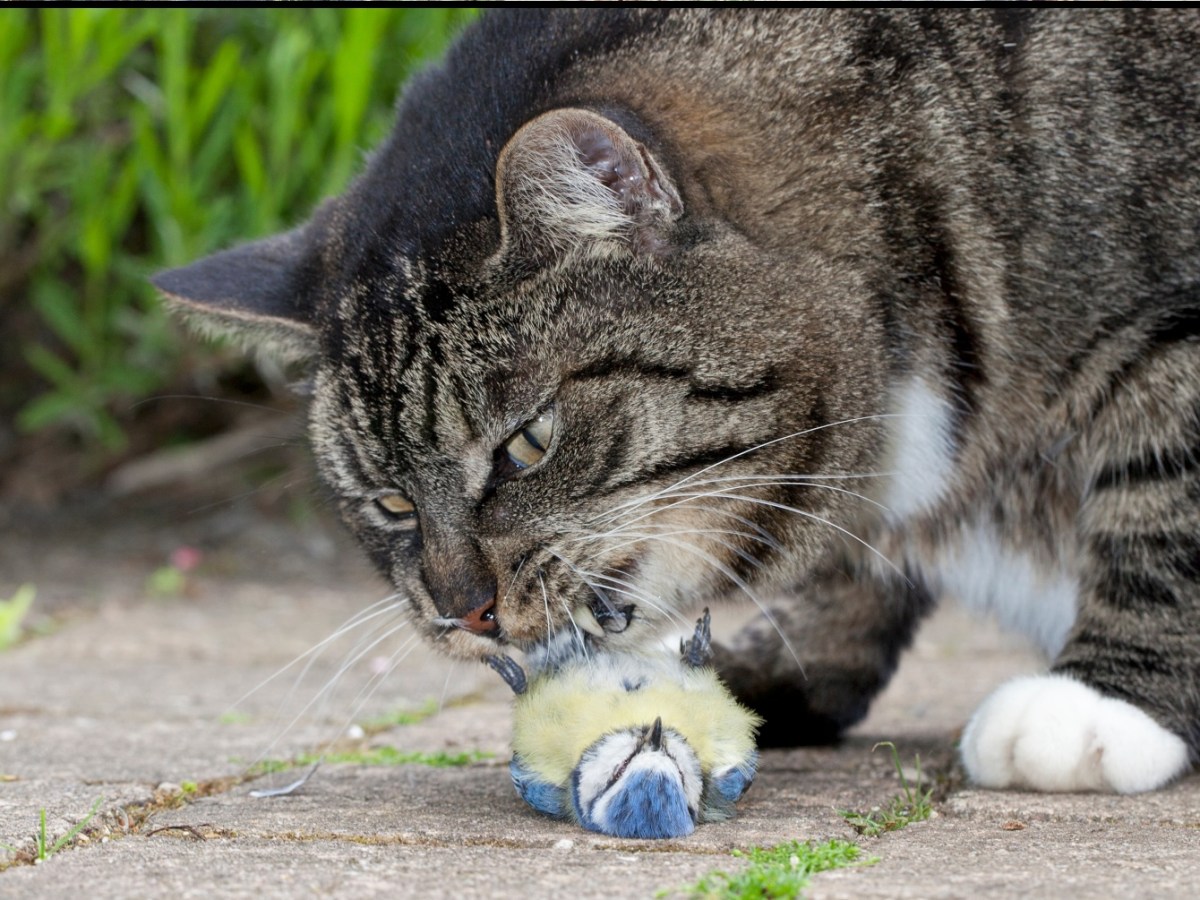
Those of us living with cats share our homes with an ancestral predator, one adapted for hunting and the frequent, exclusive consumption of meat. These instincts become fully activated outside the domestic environment, where cats pose a global threat to wildlife.
Pets are family. We celebrate their arrival with the same joy as a grand homecoming, and their absence leaves a grief as deep as losing a loved one. In bonding with cats and dogs, we often attribute human abilities and emotions to them.
But beyond this affection, domestic animals still carry the instincts and genetic legacy of their wild ancestors(1, 2). My cats — Caruso, Muesli, and Plata — have been calm and loving, but they have always enjoyed a real hunt (3). When a moth comes in through a window, they seem possessed: their mouths chitter and make clicking sounds, they leap from one piece of furniture to another, and their heads snap sharply between the insect’s position and other points in the room, calculating the best spot from which to pounce on their prey. That is why when they become feral, cats and dogs integrate into food chains like any other species: they compete for ecosystem resources, hunt and are hunted, and hybridise and exchange diseases with other carnivores (4, 5).
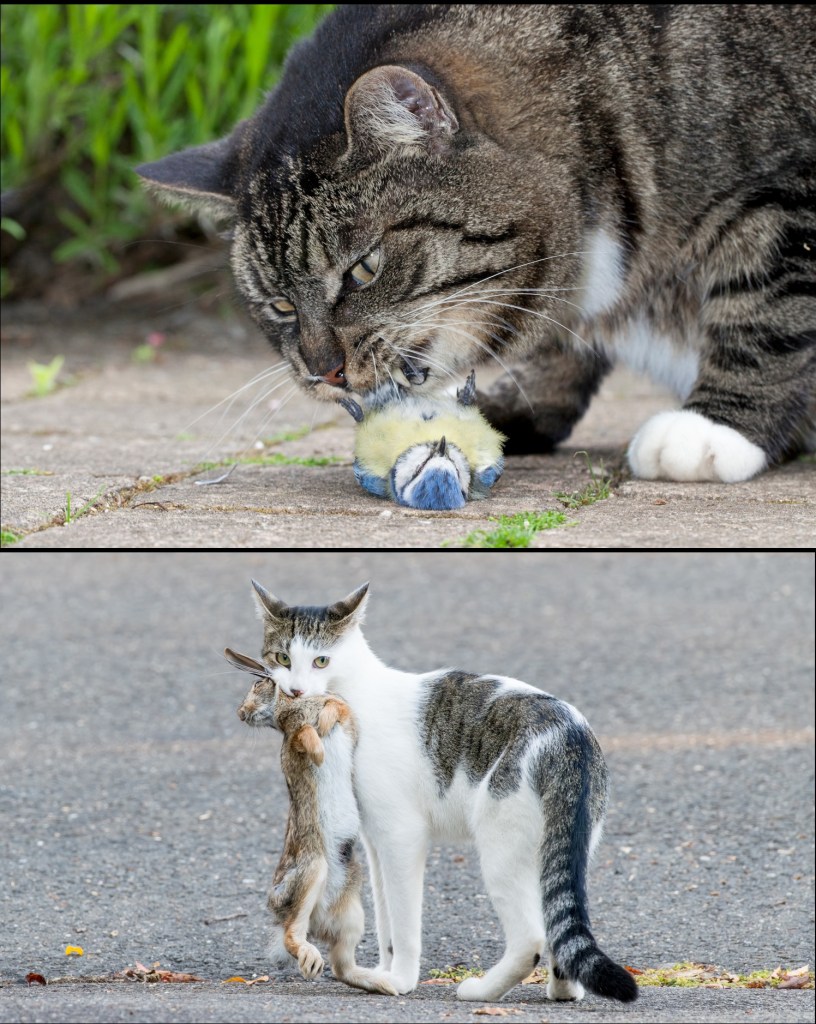
Top: cat eating an Eurasian blue tit (Cyanistes caeruleus), a common visitor to home gardens in Nijmegen (Netherlands). Bottom, domestic cat after hunting an Eastern cottontail rabbit (Sylvilagus floridanus) in a residential neighbourhood of Stratford (Connecticut, USA). Photos courtesy of Jelger Herder (Nijmegen) and Scott Kruitbosch (Stratford). Scott is a photographer and conservationist. Near sunset on 30/09/2020, while intently observing local wildlife, he witnessed a neighbourhood cat sneak up from behind on a cottontail feeding in open grass and grab it. For years, Scott has had extremely negative interactions, both in person and online, with local residents over these issues. These exchanges have revealed that many people show little concern for wildlife or for the dangers their outdoor cats face, and believe that their cats would not, or could not, harm wildlife.
Domestic cats are highly skilled hunters, and their predatory interactions with a wide range of prey are widely documented in social media and documentaries. Some examples include cats catching: bats and birds on the wing, butterflies, chipmunks, dragons, fishes, grasshoppers, frogs, lizards, mice, owls, rabbits, seagulls, snakes, squirrels, and wallabies. See an award-winning photo depicting wildlife with fatal injuries caused by cats recorded in 2019 at a single animal hospital in the USA, and a video showing domestic cats mimicking bird calls and some cat owners explaining that their pets reject commercial cat food after experiencing the thrill of hunting real prey. The documentary Secret Life of Cats contextualises the ecological challenges posed by free-roaming cats.
In boreal forests, many hares adopt white winter coats before the snow arrives. In a snowless landscape, these white hares lack camouflage against predators. However, their early moult from brown into white fur can increase their survival and offers an advantage as the snow season becomes progressively shorter with climate change.
Throughout the year, we wear different clothing to protect ourselves from the cold or heat and for aesthetic reasons depending on the occasion. Likewise, many animals change the colour, thickness and structure of their fur and feathers in tune with the seasons.
Snowshoe hare (Lepus americanus) in a snowy (Kluane Lake/Yukon, Canada) and snowless habitat (Seely Lake/Montana, USA). This mammal moults its coat as colder temperatures, shorter days, and snowfall arrive. In the genetic populations of the temperate forests of the Rocky Mountains and the boreal forests spanning the North American continent, hares that moult from brown to white are abundant (20). However, in coastal areas, and in the third genetic population in the North Pacific, snowfall is brief and less intense, resulting in fewer white individuals. This is due to hybridisation with the black-tailed jackrabbit (Lepus californicus) over 3,000 years ago (17). The hare’s coat has an outer layer, where the longer fur gives each individual its colour, and an inner layer of short fur (19). In winter, the outer layer becomes thicker and denser, while the inner layer maintains a consistent thickness but increases in density. By biomass, the snowshoe hare is the primary herbivore in the North American boreal forest and distinguishes the trophic relationships between continents (21). In Europe, much of the boreal understory remains under snow, providing food for rodents with four-year abundance cycles controlled by small generalist predators (mustelids). In North America, the boreal understory grows above the snow and provides food for hares. In this region, snowshoe hare populations follow 10-year abundance cycles regulated by specialist predators (those that feed almost exclusively on hares), primarily the Canada lynx (Lynx canadensis) (6). Photos courtesy of Alice Kenney and Charles Krebs (Yukon) [see their ecological monitoring program here] and Marketa Zimova (Montana).
However, as the climate changes, springs arrive earlier, winters are delayed, and the frequency and intensity of precipitation have become highly variable. All of this makes it harder for species to adjust their wardrobe to temperature changes (1).
In this context, body colour is a critical factor for birds and mammals that undergo an annual moult (2). In 21 species from the cold latitudes of the Northern Hemisphere, some individuals are brown in summer, but turn white in winter, while others remain brown year round (3). This phenomenon includes weasels, rodents, ptarmigans, foxes, rabbits and hares.
Imagine growing up beside the eastern Mediterranean Sea 14,000 years ago. You’re an accomplished sailor of the small watercraft you and your fellow villagers make, and you live off both the sea and the land.
But times have been difficult — there just isn’t the same amount of game or fish around as when you were a child. Maybe it’s time to look elsewhere for food.
Now imagine going farther than ever before in your little boat, accompanied maybe by a few others, when suddenly you spot something on the horizon. Is that an island?
The western coast of Cyprus. CJA Bradshaw / Flinders University
When you beach your boat to have a look around, you can’t believe what you’re seeing — tiny boar-sized hippos and horse-sized elephants that look like babies to your eyes. There are so many of them, and you’re hungry after the long journey.
The diminutive beasts don’t seem to show any fear. You easily kill a few and preserve the meat as best you can for the long journey back.
When you get home, you are excited to let everyone in the village know what you’ve found. Soon enough, you organise a major expedition back to the island.
Of course, we’ll never know if this kind of scenario took place, but it’s a plausible story of how and when the first humans managed to get to Cyprus. It also illustrates how they might have quickly brought about the demise of the tiny hippopotamusPhanourios minor, as well as the dwarf elephantPalaeoloxodon cypriotes.
The way that eels migrate along rivers and seas is mesmerising. There has been scientific agreement since the turn of the 20th Century that the Sargasso Sea is the breeding home to the sole European species. But it has taken more than two centuries since Carl Linnaeus gave this snake-shaped fish its scientific name before an adult was discovered in the area where they mate and spawn.
Even among nomadic people, the average human walks no more than a few dozen kilometres in a single trip. In comparison, the animal kingdom is rife with migratory species that traverse continents, oceans, and even the entire planet (1).
The European eel (Anguilla anguilla) is an outstanding example. Adults migrate up to 5000 km from the rivers and coastal wetlands of Europe and northern Africa to reproduce, lay their eggs, and die in the Sargasso Sea — an algae-covered sea delimited by oceanic currents in the North Atlantic.
The European eel (Anguilla Anguilla) is an omnivorous fish that migrates from European and North African rivers to the Sargasso Sea to mate and die (18). Each individual experiences 4 distinct developmental phases, which look so different that they have been described as three distinct species (19): A planktonic, leaf-like larva (ilecocephalus phase) emerges from each egg and takes up to 3 years to cross the Atlantic. Off the Afro-European coasts, the larva transforms into a semi-transparent tiny eel (iiglass phase) that enters wetlands and estuaries, and travels up the rivers as it gains weight and pigment (iiiyellow phase). They remain there for up to 20 years, rarely growing larger than 1 m in length and 4 kg in weight (females are larger than males) — see underwater footage here and here. Sexual maturity ultimately begins to adjust to the migration to the sea: a darker, saltier, and deeper environment than the river. Their back and belly turn bronze and silver (ivsilver phase), respectively, the eyes increase in size and the number of photoreceptors multiplies (function = submarine vision), the stomach shrinks and loses its digestive function, the walls of the swim bladder thicken (function = floating in the water column), and the fat content of tissues increases by up to 30% of body weight (function = fuel for transoceanic travelling). And finally, the reproductive system will gradually develop while eels navigate to the Sargasso Sea — a trip during which they fast. Photos courtesy of Sune Riis Sørensen (2-day embryo raised at www.eel-hatch.dk and leptocephalus from the Sargasso Sea) and Lluís Zamora (Ter River, Girona, Spain: glass eels in Torroella de Montgrí, 70 cm yellow female in Bonmatí, and 40 cm silver male showing eye enlargement in Bescanó). Eggs and sperm are only known from in vitro fertilisation in laboratories and fish farms (20).
As larvae emerge, they drift with the prevailing marine currents over the Atlantic to the European and African coasts (2). The location of the breeding area was unveiled in the early 20th Century as a result of the observation that the size of the larvae caught in research surveys gradually decreased from Afro-European land towards the Sargasso Sea (3, 4). Adult eels had been tracked by telemetry in their migration route converging on the Azores Archipelago (5), but none had been recorded beyond until recently.
Crossing the Atlantic
To complete this piece of the puzzle, Rosalind Wright and collaborators placed transmitters in 21 silver females and released them in the Azores (6). These individuals travelled between 300 and 2300 km, averaging 7 km each day. Five arrived in the Sargasso Sea, and one of them, after a swim of 243 days (from November 2019 to July 2020), reached what for many years had been the hypothetical core of the breeding area (3, 4). It is the first direct record of a European eel ending its reproductive journey.
Eels use the magnetic fields in their way back to the Sargasso Sea and rely on an internal compass that records the route they made as larvae (7). The speed of navigation recorded by Wright is slower than in many long-distance migratory vertebrates like birds, yet it is consistent across the 16 known eel species (8).
Telemetry (6) and fisheries (14) of European eel (Anguilla anguilla). Eel silhouettes indicate the release point of 21 silver females in Azores in 2018 (orange) and 2019 (yellow), the circles show the position where their transmitters stopped sending signals, and the grey background darkens with water depth. The diagrams display the distance travelled and the speed per eel, where the circle with bold border represents the female that reached the centre of the hypothetical spawning area in the Sargasso Sea (dashed lines in the map) (3). Blue, green and pink symbols indicate the final location of eels equipped with teletransmitters in previous studies, finding no individual giving location signals beyond the Azores Archipelago (6). The barplot shows commercial catches (1978-2021) of yellow+silver eels in those European countries with historical landings exceeding 30,000 t (no data available for France prior to 1986), plus Spain (6120 t from 1951) — excluding recreational fishery and farming which, in 2020, totalled 300 and 4600 t, respectively (14). Red circles represent glass-eel catches added up for France (> 90% of all-country landings), Great Britain, Portugal, and Spain. Catches have kept declining since the 1980s. One kg of glass eels contains some 3000 individuals, so the glass-eel fishery has a far greater impact on stocks than the adult fishery.
Wright claimed that, instead of swiftly migrating for early spawning, eels engage in a protracted migration at depth. This behaviour serves to conserve their energy and minimises the risk of dying (6). The delay also allows them to reach full reproductive potential since, during migration, eels stop eating and mobilise all their resources to swim and reproduce (9).
Other studies have revealed that adults move in deep waters in daylight but in shallow waters at night, and that some individuals are faster than others (3 to 47 km per day) (5). Considering that (i) this fish departs Europe and Africa between August and December and (ii) spawning occurs in the Sargasso Sea from December to May, it is unknown whether different individuals might breed 1 or 2 years after they begin their oceanic migration.
Management as complex as life itself
The European eel started showing the first signs of decline at the end of the 19th Century (10, 11). In 2008, the species was listed as Critically Endangered by the IUCN, and its conservation status has since remained in that category — worse than that of the giant panda (Ailuropoda melanoleuca) or the Iberian lynx (Lynx pardinus).
What was the Medieval warm period? What caused it, and did carbon dioxide play a role?
We are living in a world that is getting warmer year by year, threatening our environment and way of life.
But what if these climate conditions were not exceptional? What if it had already happened in the past when human influences were not part of the picture?
The often mentioned Medieval warm period seems to fit the bill. This evokes the idea that if natural global warming and all its effects occurred in the past without humans causing them, then perhaps we are not responsible for this one. And it does not really matter because if we survived one in the past, then we can surely survive one now.
This Medieval period of warming, also known as the Medieval climate anomaly, was associated with an unusual temperature rise roughly between 750 and 1350 AD (the European Middle Ages). The available evidence suggests that at times, some regions experienced temperatures exceeding those recorded during the period between 1960 and 1990. Read the rest of this entry »
In some African countries, lion trophy hunting is legal. Riaan van den Berg
In sub-Saharan Africa, almost 1,400,000 km² of land spread across many countries — from Kenya to South Africa — is dedicated to “trophy” (recreational) hunting. This type of hunting can occur on communal, private, and state lands.
The hunters – mainly foreign “tourists” from North America and Europe – target a wide variety of species, including lions, leopards, antelopes, buffalo, elephants, zebras, hippopotamus and giraffes.
Debates centred on the role of recreational hunting in supporting nature conservation and local people’s livelihoods are among the most polarising in conservation today.
On one hand, people argue that recreational hunting generates funding that can support livelihoods and nature conservation. It’s estimated to generate US$200 million annually in sub-Saharan Africa, although others dispute the magnitude of this contribution.
On the other hand, hunting is heavily criticised on ethical and moral grounds and as a potential threat to some species.
Evidence for taking a particular side in the debate is still unfortunately thin. In our recently published research, we reviewed the large body of scientific literature on recreational hunting from around the world, which meant we read and analysed more than 1000 peer-reviewed papers.
In the first of two consecutive interviews with climate-change experts, authors, editors and readers of the Spanish magazine Quercus have a chat with Ken Caldeira, a global-ecology researcher at the Carnegie Institution for Science (Washington, USA). His responses attest that the climate system is complex, and that we need to be practical in dealing with the planet’s ongoing climate emergency.
PhD in atmospheric sciences and professor at Stanford University (USA), Ken Caldeira has pioneered the study of ocean acidification and its impact on coral reefs (1) and geoengineering solutions to mitigate anthropogenic climate change by extracting carbon from the atmosphere and reflecting solar radiation (2, 3). He has also been part of the Intergovernmental Panel on Climate change (IPCC) and assessed zero-emissions scenarios (4, 5). To the right, Ken manoeuvers a drone while collecting aerial data from the Great Barrier Reef in Australia (6). Source.
SARS-Covid-19 is impacting the world. In our home country, Spain, scientists argue that (i) previous budget cuts in public health have weakened our capacity to tackle the pandemic (7), and (ii) the expert panels providing advice to our government should be independent of political agendas in their membership and decisions (8). Nevertheless, the Spanish national and regional governments’ data lack the periodicity, coherence, and detail to harness an effective medical response (9). Sometimes it feels as if politics partly operate by neglecting the science needed to tackle challenges such as the covid pandemic or climate change.
Having said that, even if a country has cultivated and invested in the best science possible, people have difficulties coming to terms with the idea that scientists work with probabilities of alternative scenarios. As much as there are different ways of managing a pandemic, scientists differ about how to mitigate the ecological, economic, and health impacts of a high-carbon society.
Thus, a more and more common approach is to make collective assessments (elicitations) by weighing different points of view across experts — for instance, to establish links between climate change and armed conflict (10) or to evaluate the role of nuclear energy as we transition to a low-carbon energy-production model (11). The overarching goal is to quantify consensus based on different (evidence-based) opinions.
The questions we here ask Ken Caldeira could well have different answers if asked of other experts. Still, as Ken points out, it is urgent that (of the many options available) we use the immense and certainty-proof knowledge we have already about climate change to take actions that work.
Interview done 23 January 2020
We italicise each question and the name of the person asking the question and cite one to three relevant publications per question. For expanding on Ken Caldeira’s views on climate change, see a sample of his public talks here and here and newspaper articles here and here.
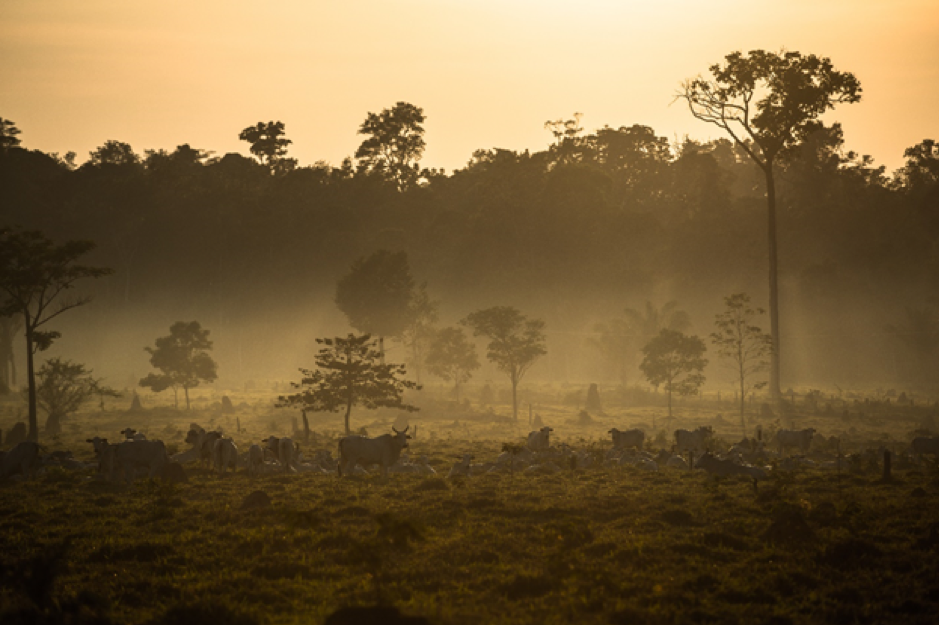
Rain forest gives way to pastures in the Brazilian Amazon in Mato Grosso. Photo by Thiago Foresti.
More than 600 scientists from every country in the EU and 300 Brazilian Indigenous groups have come together for the first time. This is because we see a window of opportunity in the ongoing trade negotiations between the EU and Brazil. In a Letter published in Science today, we are asking the EU to stand up for Brazilian Indigenous rights and the natural world. Strong action from the EU is particularly important given Brazil’s recent attempts to dismantle environmental legislation and ‘develop the unproductive Amazon’.
It’s worth clarifying — this isn’t about the EU trying to control Brazil — it’s about making sure our imports aren’t driving violence and deforestation. Foreign white people trying to ‘protect nature’ abroad have a dark and shameful past, where actions done in the name of conservation have led to the eviction of millions of Indigenous people. This has predominantly been to create (what we in the world of conservation would call) ‘protected areas’. The harsh reality is that most protected areas either are or have been ancestral lands of Indigenous people who are closely linked to their land and depend on it for their survival. Clearly, conservationists need to support Indigenous people. This new partnership between European scientists and Brazilian Indigenous groups is doing just that.
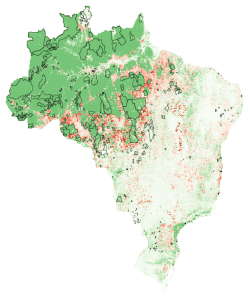
Brazil’s forest loss 2001-2013 shown in red. Indigenous lands outlined. By Mike Clark; data from GlobalForestWatch.org
In Brazil, many Indigenous groups still have a right to their land. This land is predominantly found in the Amazon rainforest, where close to a million Indigenous people live and depend on a healthy forest. Indigenous people are some of the best protectors of this vast forest, and are crucial to a future of long-term successful conservation. But Brazilian Indigenous groups and local communities are increasingly under attack. Violence on deforestation frontiers in Brazil has spiked this month, with at least 9 people found dead. The future is particularly scary for Indigenous people when there are quotes such as this from the man who is currently the President “It’s a shame that the Brazilian cavalry hasn’t been as efficient as the Americans, who exterminated the Indians.”
On top of human rights and environmental concerns, there is a strong profit driven case for halting deforestation. For example, ongoing deforestation in the Amazon risks flipping large parts of the rainforest to savanna – posing a serious risk to agricultural productivity, food security, local livelihoods, and the Brazilian economy. Zero-deforestation doesn’t harm agri-business, it allows for its longevity.Read the rest of this entry »
While some complain that the European Union (EU) is an enormous, cumbersome beast (just ask the self-harming Brexiteers), it generally has some rather laudable legislative checks and balances for nature conservation. While far from perfect, the rules applying to all Member States have arguably improved the state of both European environments, and those from which Europeans source their materials.
But legislation gets updated from time to time, and not always in the ways that benefit biodiversity (and therefore, us) the most. This is exactly what’s just happened with the new EU Renewable Energy Directive (RED) released in June this year.
Now, this is the point where most readers’ eyes glaze over. EU policy discussions are exceedingly dry and boring (I’ve dabbled a bit in this arena before, and struggled to stay awake myself). But I’ll try to lighten your required concentration load somewhat by being as brief and explanatory as possible, but please stay with me — this shit is important.
In fact, it’s so important that I joined forces with some German colleagues with particular expertise in greenhouse-gas accounting and EU policy — Klaus Hennenberg and Hannes Böttcher1 of Öko-Institut (Institute of Applied Ecology) in Darmstadt — to publish an article available today in Nature Ecology and Evolution.
So back to the RED legislation. The original ‘RED 2009‘ covered reductions of greenhouse-gas emissions and the mitigation of negative impacts on areas of high biodiversity value, such as primary forests, protected areas, and highly biodiverse grasslands, and for areas of high carbon stock like wetlands, forests, and peatlands.
But RED 2009 was far from what we might call ‘ambitious’, because globally mandatory criteria on water, soil and social aspects for agriculture and forestry production were excluded to avoid conflicts with rules of the World Trade Organization.
Nor did RED 2009 apply to all bioenergy types, and only included biofuels used in transport, including gaseous and solid fuels, and bioliquids used for electricity, heating, and cooling. But RED 2009 requirements also applied to all raw materials sourced from agriculture and forestry, especially as forest biomass is explicitly mentioned as a raw material for the production of advanced biofuels in the RED 2009 extension from 2015.
Thus, one could conceivably call RED 2009 criteria ‘minimum safeguards’.
But as of June this year, the EU accepted a 2016 proposal to recast RED 2009 into what is now called ‘RED II’. While the revisions might look good on paper by setting new incentives in transport (advanced biofuels) and in heating and cooling that will likely increase the use of biomass sourced from forests, and by extending the directive on solid and gaseous biomass, the amendments unfortunately take some huge leaps backwards in terms of sustainability requirements.
Did ice ages cause the Pleistocene megafauna to go extinct? Contrary to popular opinion, no, they didn’t. But climate change did have something to do with them, only it was global warming events instead.
Just out today in Science, our long-time-coming (9 years in total if you count the time from the original idea to today) paper ‘Abrupt warmings drove Late Pleistocene Holarctic megafaunal turnover‘ demonstrates for the first time that abrupt warming periods over the last 60,000 years were at least partially responsible for the collapse of the megafauna in Eurasia and North America.
You might recall that I’ve been a bit sceptical of claims that climate changes had much to do with megafauna extinctions during the Late Pleistocene and early Holocene, mainly because of the overwhelming evidence that humans had a big part to play in their demise (surprise, surprise). What I’ve rejected though isn’t so much that climate had nothing to do with the extinctions; rather, I took issue with claims that climate change was the dominant driver. I’ve also had problems with blanket claims that it was ‘always this’ or ‘always that’, when the complexity of biogeography and community dynamics means that it was most assuredly more complicated than most people think.
I’m happy to say that our latest paper indeed demonstrates the complexity of megafauna extinctions, and that it took a heap of fairly complex datasets and analyses to demonstrate. Not only were the data varied – the combination of scientists involved was just as eclectic, with ancient DNA specialists, palaeo-climatologists and ecological modellers (including yours truly) assembled to make sense of the complicated story that the data ultimately revealed. Read the rest of this entry »
This is a blosh (rehash of someone else’s blog post) of Franck Courchamp‘s posts on an exciting new initiative of which I am excited to be a part. Incidentally, Franck’s spending the week here in Adelaide.
Don’t forgot to vote for the project to receive 50 000 € public-communication grant!
—
Climate change will make winters milder and habitats climatically more suitable year-round for cold-blooded animals like insects, but there are many questions remaining regarding whether such insects will be able to invade other regions as the climate shifts. There are many nasty bugs out there.
For example, the Asian predatory wasp is an invasive hornet in Europe that butchers pollinating insects, especially bees, thereby affecting the production of many wild and cultivated plants. I hope that we all remember what Einstein said about pollinators:
If bees were to disappear, humans will disappear within a few years.
(we all should remember that because it’s one of the few things he said that most of us understood). The highly invasive red fire ant is feared for its impacts on biodiversity, agriculture and cattle breeding, and the thousands of anaphylactic shocks inflicted to people by painful stings every year (with hundreds of deaths). Between the USA and Australia, over US$10 billion is spent yearly on the control of this insect alone. Tiger mosquitoes are vectors of pathogens that cause dengue fever, chikungunya virus and of about 30 other viruses. We could go on.
Most of these nasty creatures are now unable to colonise northern regions of Europe or America, or southern regions of Australia, for example, because they cannot survive cold temperatures. But how will this change? Where, when and which species will invade with rising temperatures? What will be the costs in terms of species loss? In terms of agricultural or forestry loss? In terms of diseases to cattle, domestic animals and humans? What will be the death toll if insects that are vectors of malaria can establish in new, highly populated areas?
We’ve proposed to study these and others from a list of 20 of the worst invasive insect species worldwide, and we got selected (i.e., financed!) by the Fondation BNP Paribas. In addition, the Fondation BNP Paribas has selected five scientific programmes on climate change and will give 50,000 € (that’s US$62,000) to the one selected by the public, for a communication project on their scientific programme. This is why we need you to vote for our project: InvaCost. Read the rest of this entry »
I have been known to say (ok – I say it all the time) that ecologists should never equivocate when speaking to the public. Whether it’s in a media release, blog post, television presentation or newspaper article, just stick to ‘yes’ or ‘no’. In other words, don’t qualify your answer with some horrid statistical statement (i.e., in 95% of cases …) or say something like “… but it really depends on …”. People don’t understand uncertainty – to most people, ‘uncertainty’ means “I don’t know” or worse, “I made it all up”.
But that’s only in the movies.
In real ‘ecological’ life, things are vastly different. It’s never as straightforward as ‘yes’ or ‘no’, because ecology is complex. There are times that I forget this important aspect when testing a new hypothesis with what seem like unequivocal data, but then reality always hits.
Our latest paper is the epitome of this emergent complexity from what started out as a fairly simple question using some amazing data. What makes birds change their range1? We looked at this question from a slightly different angle than had been done before because we had access to climate data, life-history data and most importantly, actual range change data. It’s that latter titbit that is typically missing from studies aiming to understand what drives species toward a particular fate; whether it’s a species distribution model predicting the future habitat suitability of some species as a function of climate change, or the past dynamics of some species related to its life history pace, most often the combined dynamics are missing. Read the rest of this entry »
I’ve been a little quiet this last week because I’ve had to travel to the other side of the planet for what turned out to be a very interesting and scientifically lucrative workshop. After travelling 31 hours from Adelaide to Umeå in northern Sweden, I wondered to myself if it was going to be worth it for a 2.5-day workshop on a little island (Norrbyskär) in the Baltic Sea (which, as it turned out, didn’t have internet access).
The answer is a categorical ‘yes’!
Many of you know that I’ve dabbled in boreal forest conservation in the past, but I could never claim any real expertise in the area. Hence it came as something of a shock when Jon Moen of Umeå University asked me to attend a specialist workshop focused loosely on making the plight and importance of the boreal forest more widely acknowledged. I dragged my feet initially, but Jon convinced me that I could add something to the mix.
It was a small workshop, but well-represented by all boreal countries save Norway (i.e., we had Russians, Swedes, Finns, Canadians and Americans – this Australian was indeed the odd one out). We also had a wide array of expertise, from carbon accountants, political scientists, political economists, native cultures experts, ecologists to foresters. Our mandate – justify why we should pay more attention to this globally important region.
Just how important is the boreal forest? We managed to unearth some little-appreciated facts: Read the rest of this entry »
The Coalition of Financially Challenged Countries with Lots of Trees, known as ‘CoFCCLoT’, representing most of the world’s remaining tropical forests, is asking wealthy nations to share global responsibilities and reforest their land for the common good of stabilizing climate and protecting biodiversity.
“We are willing to play our part, but we require a level playing field in which we all commit to equal sacrifices,” a coalition spokeswoman says. “Returning forest cover in the G8 countries and the European Union back to historic coverage will benefit all of us in the long-term.”
Seventy-five per cent of Europe was once forested. Now it is 45 per cent. Some countries such as Ireland saw forest cover reduced to near zero. Most forest cover in the developed world is now often planted with stands of alien trees, turning them into deserts for biodiversity. Remaining natural forests are often highly fragmented and have few native species. Read the rest of this entry »
In the 1960s, Rachel Carsonpreoccupied (to put it mildly) the political and economic powers of the United States with the publication of her book, Silent Spring, an overwhelming essay highlighting the environmental impacts caused by the pesticide industry. Half a century later, the metaphor of that book – a spring devoid of bird song – stands in force as farmland birds keep declining worldwide at the mercy of agricultural practices insensitive to the ecosystem services biodiversity procures. The problem has been best studied in Europe where non-government organisations, such as the British Trust for Ornithology or the Sociedad Española de Ornitología, have been monitoring bird populations for decades, and the European Union has sumptuously financed research and management actions.
Sparrows are the commonest among common birds. Worldwide we see them wherever humans live, travel and take leisure, from mountains and beaches to stadiums and underground trains. These feathery dwarfs snick even through security checks and sliding doors at airports and shopping malls, and it is no one’s surprise to be overflown by one of them carrying a chip from the leftovers of a nearby food court. However, the deterioration of their populations has sown alarm among European politicians, society, and the scientific community. Read the rest of this entry »
I’m covering a quick little review of a paper just published online in Fish and Fisheries about the two chances Europe has of meeting its legal obligations of rebuilding its North East Atlantic fish stocks by 2015 (i.e., Buckley’s and none).
Using fish stock assessment data and several criteria (3 methods for estimating maximum sustainable yield [MSY], 3 methods for estimating fishing mortality [Fmsy] & 2 methods for estimating spawning biomass [Bmsy]), they conclude that 49 (91 %) of the examined European stocks will fail to meet the goal under a ‘business as usual’ scenario.
The upshot is that European fisheries authorities have been and continue to set their total allowable catches (TACs) too high. We’ve seen this before with Atlantic bluefin tuna and the International Conspiracy to Catch All Tunas. Seems like most populations of exploited fishes are in fact in the same boat (quite literally!).
It’s amazing, really, the lack of ‘political will’ in fisheries – driving your source of income into oblivion doesn’t seem to register in the short-sighted vision of those earning their associated living or those supposedly looking out for their long-term interests.
Froese, R., & Proelß, A. (2010). Rebuilding fish stocks no later than 2015: will Europe meet the deadline? Fish and Fisheries DOI: 10.1111/j.1467-2979.2009.00349.x
Pitcher, T., Kalikoski, D., Pramod, G., & Short, K. (2009). Not honouring the code Nature, 457 (7230), 658-659 DOI: 10.1038/457658a
Those of us living with cats share our homes with an ancestral predator, one adapted for hunting and the frequent, exclusive consumption of meat. These instincts become fully activated outside the domestic environment, where cats pose a global threat to wildlife. Pets are family. We celebrate their arrival with the same joy as a grand…
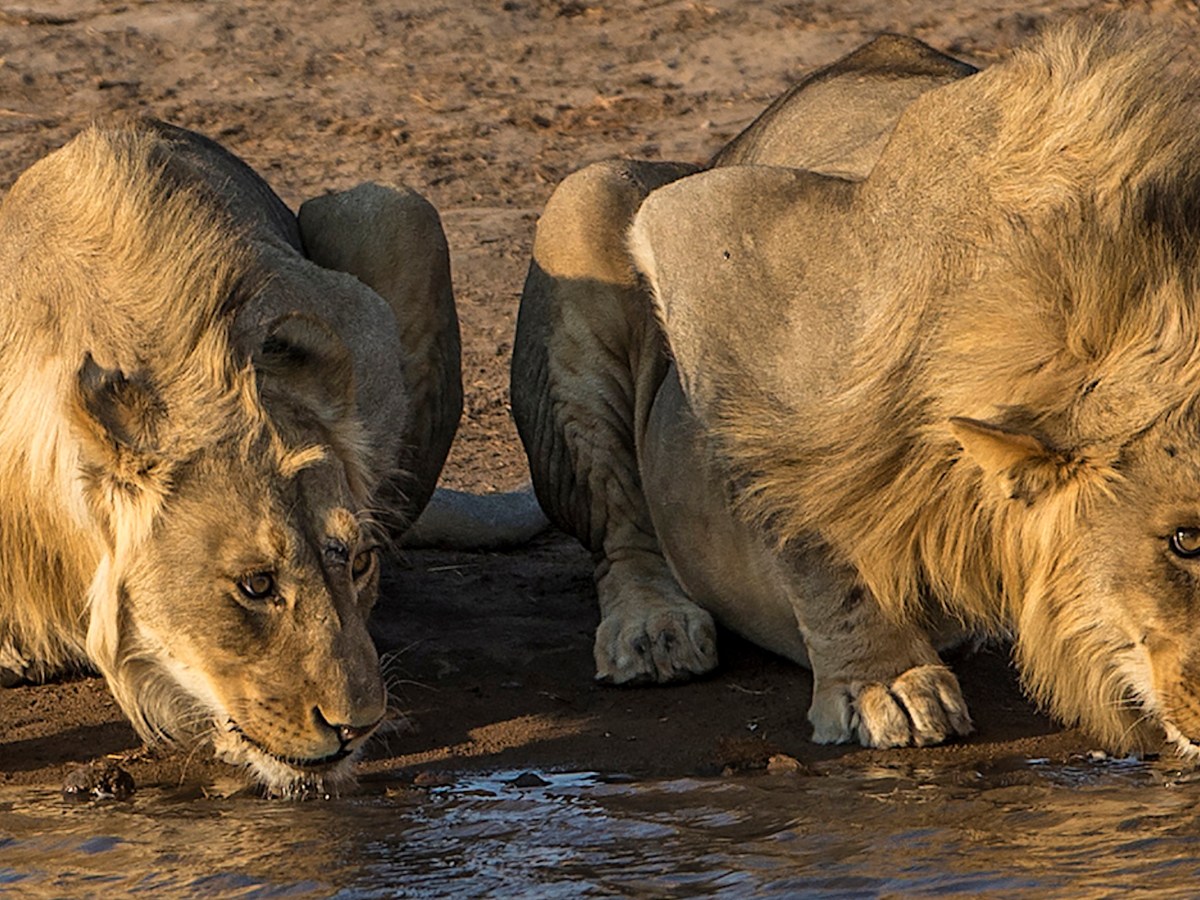
Many animals avoid contact with people. In protected areas of the African savanna, mammals flee more intensely upon hearing human conversations than when they hear lions or sounds associated with hunting. This fear of humans affects how species use and move in their habitat. Throughout our lives, we interact with hundreds of wildlife species without…
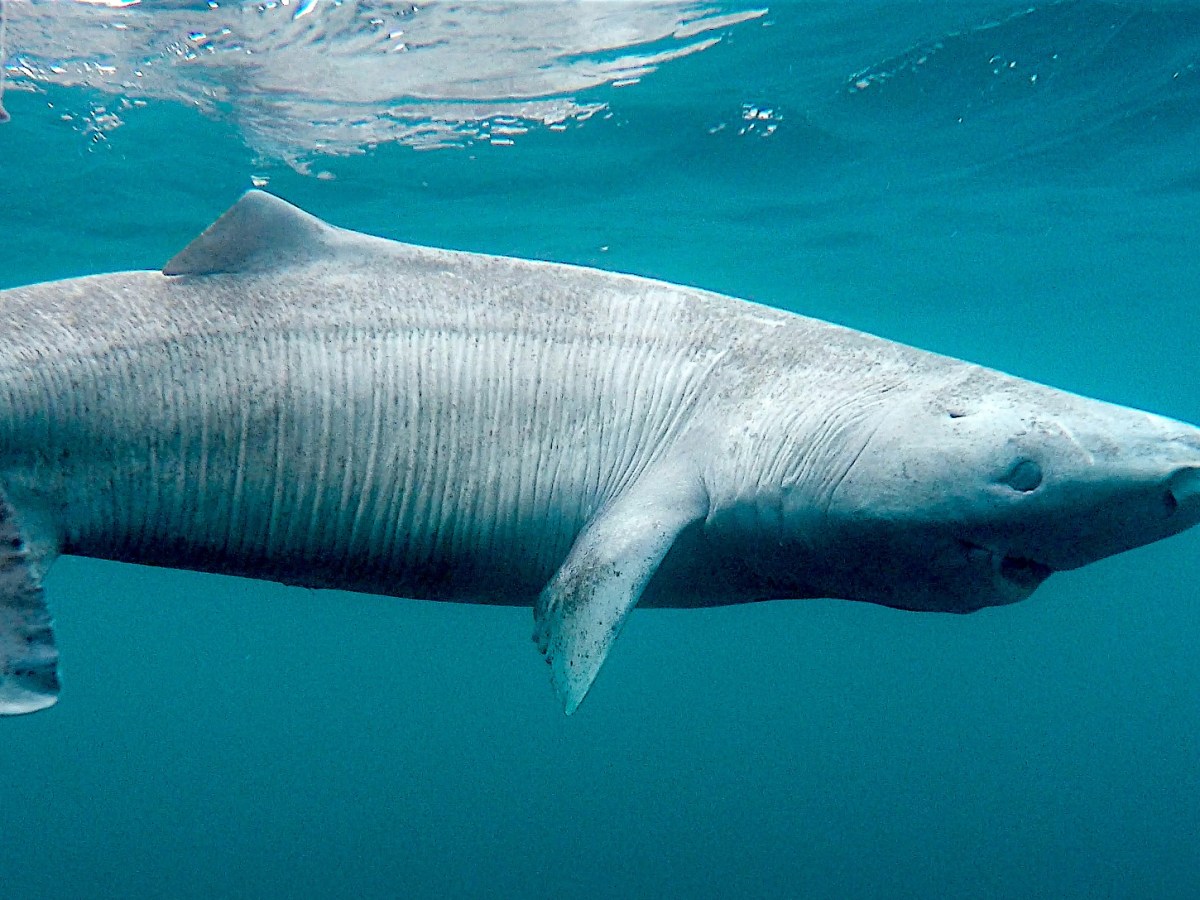
Deep-sea sharks include some of the longest-lived vertebrates known. The record holder is the Greenland shark, with a recently estimated maximum age of nearly 400 years. Their slow life cycle makes them vulnerable to fisheries. Humans rarely live longer than 100 years. But many other animals and plants can live for several centuries or even millennia, particularly…




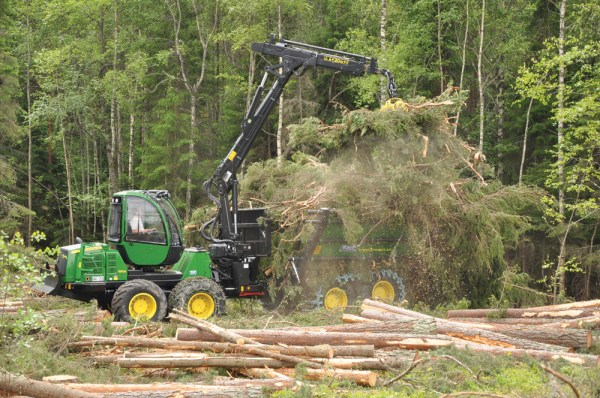 While some complain that the European Union (EU) is an enormous, cumbersome beast (just ask the self-harming Brexiteers), it generally has some rather laudable legislative checks and balances for nature conservation. While far from perfect, the rules applying to all Member States have arguably improved the state of both European environments, and those from which Europeans source their materials.
 So back to the RED legislation. The original ‘







 ConservationBytes.com
