Amphibian conservation in a managed world

1 04 2020
FrogBlog2

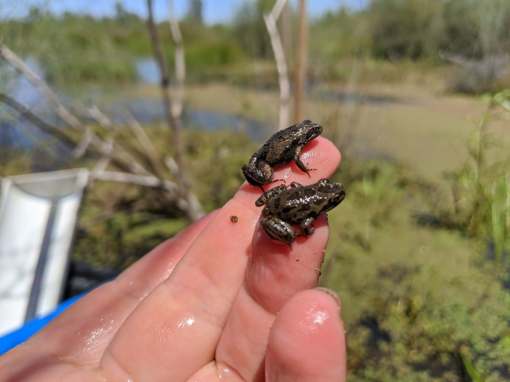
Crinia parinsignifera (top) and Limnodynastes tasmaniensis (bottom). Photo: Kate Mason

The amphibian class is diverse, and ranges from worm-like caecilians to tiny frogs that live their entire lives within bromeliads high in the rainforest canopy. Regardless of form or habit, all share the dubious honour of being cited as the world’s most endangered vertebrate taxon, and 41% of the species assessed are threatened with extinction. Rapidly changing climates will further exacerbate this situation as amphibians are expected to be more strongly affected than other vertebrates like birds or mammals.

This peril stems from a physiological dependence on freshwater.

Amphibians breathe (in part) through their skin, so they maintain moist skin surfaces. This sliminess means that most amphibians quickly dry out in dry conditions. Additionally, most amphibian eggs and larvae are fully aquatic. One of the greatest risks to populations are pools that dry too quickly for larval development, which leads to complete reproductive failure.

This need for freshwater all too often places them in direct competition with humans.

To keep pace with population growth, humans have engineered a landscape where the location, and persistence of water is tightly controlled. In seeking water availability for farming and amenity, we all too often remove essential habitats for amphibians and other freshwater fauna.

To protect amphibians from decline and extinction, land managers may need to apply innovative techniques to support vulnerable species. With amphibians’ strong dependence on freshwater, this support can be delivered by intelligently manipulating where and when freshwater appears in the landscape, with an eye to maintaining habitats for breeding, movement and refuge. A range of innovative approaches have been attempted to date, but they are typically developed in isolation and their existence is known only to a cloistered few. A collation of the approaches and their successes (and failures) has not occurred.

In our latest paper, we used a systematic review to classify water-manipulation techniques and to evaluate the support for these approaches. Read the rest of this entry »


How I feel now about climate change

10 03 2020
bleak-2-david-vogler

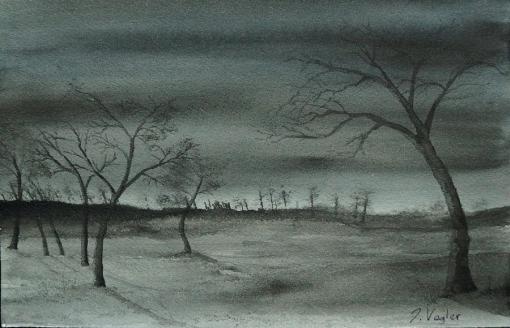
‘Bleak No. 2’ by David Vogler

Five years ago I was asked by a researcher at the Australia National University, Joe Duggan, how I ‘felt’ about climate change.

This was part of an original initiative that put a human face on the scientists working on elements of one of society’s greatest existential threats.

Thus, Is This How You Feel? became a massive success in terms of bringing to the world the idea that scientists are also deeply affected by what they see happening around them.

Five years later, Joe asked me and all the other scientists who participated to provide an update on how we feel.

Here’s what I wrote: Read the rest of this entry »


In pursuit of an ecological resilience in the Anthropocene

3 03 2020

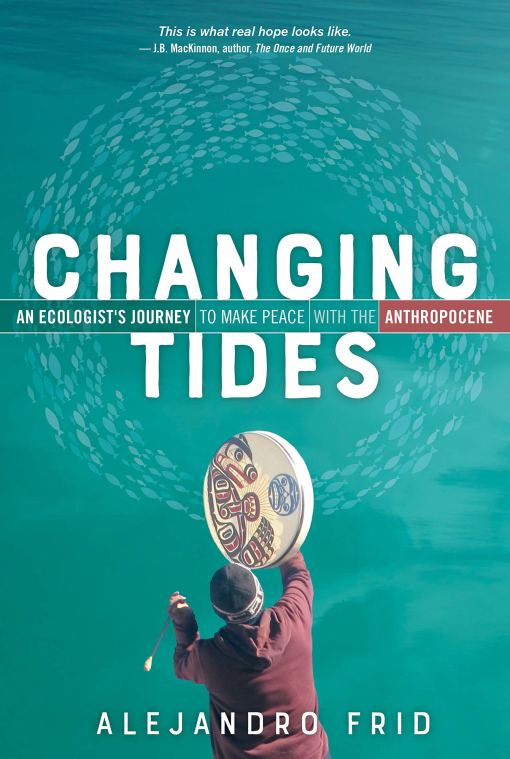
Changing TidesAn excerpt from Alejandro Frid‘s new book, Changing Tides: An Ecologist’s Journey to Make Peace with the Anthropocene (published first in Sierra, with photos courtesy of New Society Publishers)

The birth of my daughter, in 2004, thrust upon me a dual task: to be scientifically realistic about all the difficult changes that are here to stay, while staying humanly optimistic about the better things that we still have.

By the time my daughter turned eleven, I had jettisoned my nos­talgia for the Earth I was born into in the mid-196os—a planet that, of course, was an ecological shadow of Earth 100 years before, which in turn was an ecological shadow of an earlier Earth. The pragmatist in me had embraced the Anthropocene, in which humans dominate all biophysical processes, and I ended up feeling genuinely good about some of the possible futures in which my daughter’s generation might grow old.

It was a choice to engage in a tough situation. An acknowledgement of rapid and uninvited change. A reaffirmed commitment to everything I have learned, and continue to learn, as an ecologist working with Indigenous people on marine conservation. Fundamental to this perspective is the notion of resilience: the ability of someone or something—a culture, an ecosystem, an economy, a person—to absorb shocks yet still maintain their essence.

But what is essence? Read the rest of this entry »


Cartoon guide to biodiversity loss LIX

24 02 2020

The second set of six biodiversity cartoons for 2020. See full stock of previous ‘Cartoon guide to biodiversity loss’ compendia here.


Read the rest of this entry »


Unlikely the biodiversity crisis will improve any time soon

6 02 2020

hopelessAround a fortnight ago I wrote a hastily penned post about the precarious state of biodiversity — it turned out to be one of the most-read posts in ConservationBytes‘ history (nearly 22,000 views in less than two weeks).
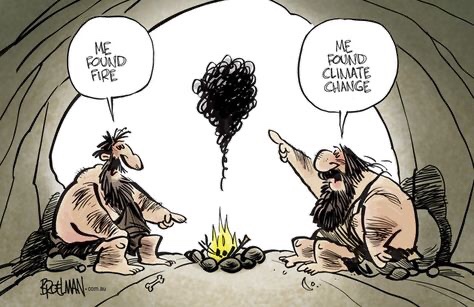
Now, let’s examine whether this dreadful history is likely to get any better any time soon.

Even if extinction rates decline substantially over the next century, I argue that we are committed to an intensifying biodiversity extinction crisis. The aggregate footprint from the growing human population notwithstanding, we can expect decades, if not centuries, of continued extinctions from lag effects alone (extinction debts arising from previous environmental damage engendering extinctions in the future)1.

Global vegetation cover and production are also likely to decline even in the absence of continued habitat clearing — the potential benefit of higher CO2 concentrations for plant photosynthesis is more than offset by lower availability of water in the soil, heat stress, and the frequency of disturbances such as droughts2. Higher frequencies and intensities of disturbance events like catastrophic bushfire will also exacerbate extinction rates3.

However, perhaps the least-appreciated element of potential extinctions arising from climate change is that they are vastly underestimated when only considering a species’ thermal tolerance4. In fact, climate disruption-driven extinction rates could be up to ten times higher than currently predicted4 when extinction cascades are taken into account5. Read the rest of this entry »


Cartoon guide to biodiversity loss LVIII

4 01 2020

The first set of six biodiversity cartoons for 2020. This special, Australia-is-burning-down-themed set is dedicated to Scott Morrison and his ilk. See full stock of previous ‘Cartoon guide to biodiversity loss’ compendia here.


Read the rest of this entry »


Influential conservation ecology papers of 2019

24 12 2019

Bradshaw-Waves breaking on rocks Macquarie Island
As I’ve done for the last six years, I am publishing a retrospective list of the ‘top’ 20 influential papers of 2019 as assessed by experts in F1000 Prime (in no particular order). See previous years’ lists here: 20182017, 20162015, 2014, and 2013.

Read the rest of this entry »


Cartoon guide to biodiversity loss LVII

6 11 2019

The sixth set of six biodiversity cartoons for 2019. See full stock of previous ‘Cartoon guide to biodiversity loss’ compendia here.


Read the rest of this entry »


The politics of environmental destruction

22 10 2019

C_SE 409521698 Paul Ehrlich Lecture Event - Eventbrite2

You’d think I’d get tired of this, wouldn’t you? Alas, the fight does wear me down, but I must persist.

My good friend and colleague, the legendary Professor Paul Ehrlich of Stanford University, as well as his equally legendary wife, Anne, will be joining us in Adelaide for a brief visit during their annual southern migration.

Apart from just catching up over a few good bottles of wine (oh, do those two enjoy fine wines!), we have the immense privilege of having Paul appear at two events while he’s in town.

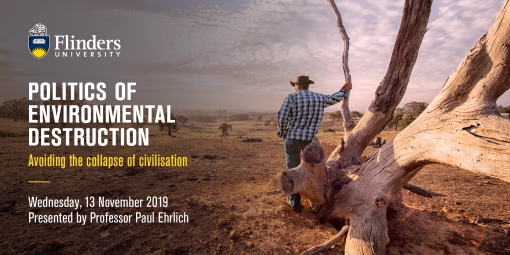
I’m really only going to be talking about the second of the two events (the first is a Science Meets Parliament gig with me and many others at the South Australia Parliament on 12 November): a grand, public lecture and Q&A session held at Flinders University on Wednesday, 13 November.

Haven’t heard of Paul? Where have you been hiding? If by some miracle you haven’t, here’s a brief bio:

Paul Ehrlich is Bing Professor of Population Studies Emeritus, President of the Center for Conservation Biology, Department of Biology, Stanford University and Adjunct Professor, University of Technology, Sydney. He does research in population biology (includes ecology, evolutionary biology, behavior, and human ecology and cultural evolution). Ehrlich has carried out field, laboratory and theoretical research on a wide array of problems ranging from the dynamics and genetics of insect populations, studies of the ecological and evolutionary interactions of plants and herbivores, and the behavioral ecology of birds and reef fishes, to experimental studies of the effects of crowding on human beings and studies of cultural evolution, especially the evolution of norms. He is President of the Millennium Alliance for Humanity and the Biosphere and is author and coauthor of more than 1100 scientific papers and articles in the popular press and over 40 books. He is best known to his efforts to alert the public to the many intertwined drivers that are pushing humanity toward a collapse of civilization – especially overpopulation, overconsumption by the rich, and lack of economic, racial, and gender equity. Ehrlich is a Fellow of the American Academy of Arts and Sciences, the American Entomological Society and the Beijer Institute of Ecological Economics, and a member of the United States National Academy of Sciences and the American Philosophical Society.  He is a Foreign Member of the Royal Society, an Honorary Member of the British Ecological Society and an Honorary Fellow of the Royal Entomological Society.  Among his many other honours are the Royal Swedish Academy of Sciences, Crafoord Prize in Population Biology and the Conservation of Biological Diversity (an explicit replacement for the Nobel Prize); a MacArthur Prize Fellowship; the Volvo Environment Prize; UNEP Sasakawa Environment Prize; the Heinz Award for the Environment; the Tyler Prize for Environmental Achievement; the Heineken Prize for Environmental Sciences; the Blue Planet Prize;  the Eminent Ecologist award of the Ecological Society of America, the Margalef Prize in Ecology and Environmental Sciences, and the BBVA Frontiers of Knowledge Award in Ecology and Conservation Biology. Prof Ehrlich has appeared as a guest on more than 1000 TV and radio programs; he also was a correspondent for NBC News. He has given many hundreds of public lectures in the past 50 years.

I hope your jaw just dropped.

Read the rest of this entry »


Victoria, please don’t aerial-bait dingoes

10 10 2019

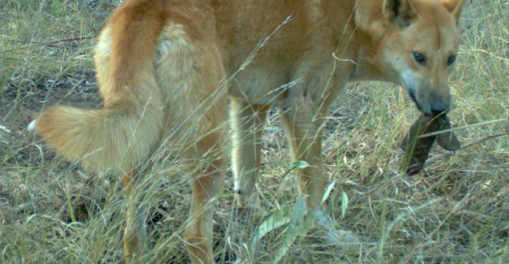
Here’s a submission to Victoria’s proposed renewal of special permission from the Commonwealth to poison dingoes:

dingo with bait

08 October 2019

Honourable Lily D’Ambrosio MP
Minister for Energy, Environment and Climate Change
Level 16, 8 Nicholson Street, East Melbourne, VIC 3002

lily.dambrosio@parliament.vic.gov.au

cc:

The Hon Jaclyn Symes, Minister for Agriculture, Victoria

(jaclyn.symes@parliament.vic.gov.au)

Dr Sally Box, Threatened Species Commissioner

(ThreatenedSpeciesCommissioner@environment.gov.au)

The Hon Sussan Ley MP, Minister for Environment, Australia

(Farrer@aph.gov.au)

RE: RENEWAL OF AERIAL BAITING EXEMPTION IN VICTORIA FOR WILD DOG CONTROL USING 1080

Dear Minister,

The undersigned welcome the opportunity to comment on the proposed renewal of special permission from the Commonwealth under Sections 18 and 18A of the Environment Protection and Biodiversity Conservation Act 1999 (Commonwealth) to undertake aerial 1080 baiting in six Victorian locations for the management of ‘wild dogs’. This raises serious concerns for two species listed as threatened and protected in Victoria: (1) dingoes and (2) spot-tailed quolls (Dasyurus maculatus).

First, we must clarify that the terminology ‘wild dog’ is not appropriate when discussing wild canids in Australia. One of the main discussion points at the recent Royal Zoological Society of NSW symposium ‘Dingo Dilemma: Cull, Contain or Conserve’ was that the continued use of the terminology ‘wild dog’ is not justified because wild canids in Australia are predominantly dingoes and dingo hybrids, and not, in fact, feral domestic dogs. In Victoria, Stephens et al. (2015) observed that only 5 out of 623 wild canids (0.008%) sampled were feral domestic dogs with no evidence of dingo ancestry. This same study determined that 17.2% of wild canids in Victoria were pure or likely pure dingoes and 64.4% were hybrids with greater than 60% dingo ancestry. Additionally, comparative studies by Jones (1988, 1990 and 2009) observed that dingoes maintained a strong phenotypic identity in the Victorian highlands over time, and perceptively ‘wild dog’ like animals were more dingo than domestic dog.

As prominent researchers in predator ecology, biology, archaeology, cultural heritage, social science, humanities, animal behaviour and genetics, we emphasise the importance of dingoes in Australian, and particularly Victorian, ecosystems. Dingoes are the sole non-human, land-based, top predator on the Australian mainland. Their importance to the ecological health and resilience of Australian ecosystems cannot be overstated, from regulating wild herbivore abundance (e.g., various kangaroo species), to reducing the impacts of feral mesopredators (cats, foxes) on native marsupials (Johnson & VanDerWal 2009; Wallach et al. 2010; Letnic et al. 20122013; Newsome et al. 2015; Morris & Letnic 2017). Their iconic status is important to First Nations people and to the cultural heritage of all Australians. Read the rest of this entry »


The Great Dying

30 09 2019

Here’s a presentation I gave earlier in the year for the Flinders University BRAVE Research and Innovation series:

There is No Plan(et) B — What you can do about Earth’s extinction emergency

Earth is currently experiencing a mass extinction brought about by, … well, … us. Species are being lost at a rate similar to when the dinosaurs disappeared. But this time, it’s not due to a massive asteroid hitting the Earth; species are being removed from the planet now because of human consumption of natural resources. Is a societal collapse imminent, and do we need to prepare for a post-collapse society rather than attempt to avoid one? Or, can we limit the severity and onset of a collapse by introducing a few changes such as removing political donations, becoming vegetarians, or by reducing the number of children one has?

Read the rest of this entry »


Cartoon guide to biodiversity loss LVI

4 09 2019

The fifth set of six biodiversity cartoons for 2019. See full stock of previous ‘Cartoon guide to biodiversity loss’ compendia here.


Read the rest of this entry »


The (not-so) funny question of whether scientists should be political leaders

15 08 2019

67401945_2509778735770137_9029097557816508416_n

At the risk of precociously setting fire to my powder keg, I thought it would be interesting to discuss the very real question of whether there should be more scientists in politics.

The reason I’m contemplating this particular question is because I’ve been forced to. Perhaps contrary to better judgement, I’ve agreed to take part in a the SciFight Science Comedy Debate in Adelaide on 31 August. Organised by scientist-comedian Alanta Colley, the event will pitch two scientist-comedian teams against each other to argue either in the affirmative or negative regarding this — scientists should rule the world.

Of course, the primary goal of the evening is to make people laugh (which still has me wondering whether I was a worthy choice for the role — thank Cthulu there will be some actual, live comedians there too).

But there’s a serious side to this question that I don’t think has any simple answers. Read the rest of this entry »


“Overabundant” wildlife usually isn’t

12 07 2019

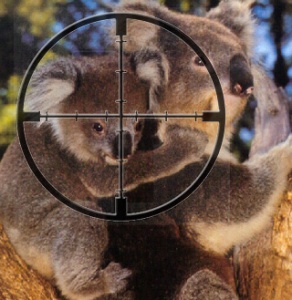
koalacrosshairsLate last year (10 December) I was invited to front up to the ‘Overabundant and Pest Species Inquiry’ at the South Australian Parliament to give evidence regarding so-called ‘overabundant’ and ‘pest’ species.
There were the usual five to six Ministers and various aides on the Natural Resources Committee (warning here: the SA Parliament website is one of the most confusing, archaic, badly organised, and generally shitty government sites I’ve yet to visit, so things require a bit of nuanced searching) to whom I addressed on issues ranging from kangaroos, to dingoes, to koalas, to corellas. The other submissions I listened to that day were (mostly) in favour of not taking drastic measures for most of the human-wildlife conflicts that were being investigated.

Forward seven months and the Natural Resources Committee has been reported to have requested the SA Minister for Environment to allow mass culling of any species (wildlife or feral) that they deem to be ‘overabundant’ or a ‘pest’.

So, the first problem is terminological in nature. If you try to wade through the subjectivity, bullshit, vested interests, and general ignorance, you’ll quickly realise that there is no working definition or accepted meaning for the words ‘overabundant’ or ‘pest’ in any legislation. Basically, it comes down to a handful of lobbyists and other squeaky wheels defining anything they deem to be a nuisance as ‘overabundant’, irrespective of its threat status, ecological role, or purported impacts. It is, therefore, entirely subjective, and boils down to this: “If I don’t like it, it’s an overabundant pest”. Read the rest of this entry »


Cartoon guide to biodiversity loss LV

4 07 2019

The fourth set of six biodiversity cartoons for 2019. See full stock of previous ‘Cartoon guide to biodiversity loss’ compendia here.


Read the rest of this entry »


Increasing human population density drives environmental degradation in Africa

26 06 2019


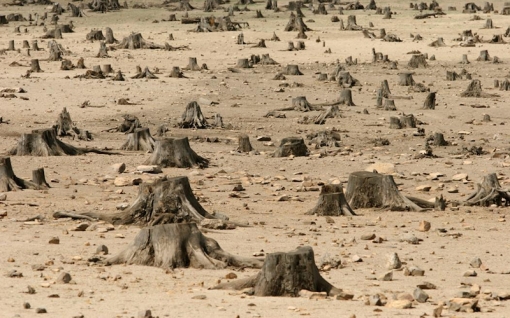
stumps

Almost a decade ago, I (co-) wrote a paper examining the socio-economic correlates of gross, national-scale indices of environmental performance among the world’s nations. It turned out to be rather popular, and has so far garnered over 180 citations and been cited in three major policy documents.

In addition to the more pedestrian ranking itself, we also tested which of three main socio-economic indicators best explained variation in the environmental rank — a country’s gross ‘wealth’ indicator (gross national income) turned out to explain the most, and there was no evidence to support a non-linear relationship between environmental performance and per capita wealth (the so-called environmental Kuznets curve).

Well, that was then, and this is now. Something that always bothered me about that bit of research was that in some respects, it probably unfairly disadvantaged certain countries that were in more recent phases of the ‘development’ pathway, such that environmental damage long since done in major development pulses many decades or even centuries prior to today (e.g., in much of Europe) probably meant that certain countries got a bit of an unfair advantage. In fact, the more recently developed nations probably copped a lower ranking simply because their damage was fresher

While I defend the overall conclusions of that paper, my intentions have always been since then to improve on the approach. That desire finally got the better of me, and so I (some might say unwisely) decided to focus on a particular region of the planet where some of the biggest biodiversity crunches will happen over the next few decades — Africa.

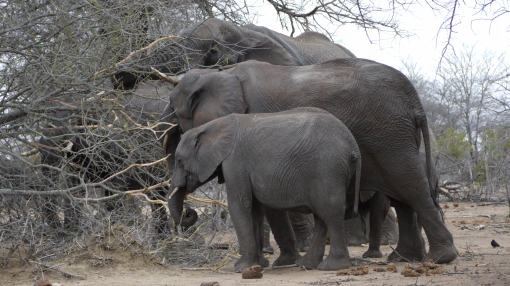
Africa is an important region to re-examine these national-scale relationships for many reasons. The first is that it’s really the only place left on the planet where there’s a semi-intact megafauna assemblage. Yes, the great Late Pleistocene megafauna extinction event did hit Africa too, but compared to all other continents, it got through that period relatively unscathed. So now we (still) have elephants, rhinos, giraffes, hippos, etc. It’s a pretty bloody special place from that perspective alone.

P1080625

Elephants in the Kruger National Park, South Africa (photo: CJA Bradshaw)

Then there’s the sheer size of the continent. Unfortunately, most mercator projections of the Earth show a rather quaint continent nuzzled comfortably in the middle of the map, when in reality, it’s a real whopper. If you don’t believe me, go to truesize.com and drag any country of interest over the African continent (it turns out that its can more or less fit all of China, Australia, USA, and India within its greater borders).

Third, most countries in Africa (barring a few rare exceptions), are still in the so-called ‘development’ phase, although some are much farther along the economic road than others. For this reason, an African nation-to-nation comparison is probably a lot fairer than comparing, say, Bolivia to Germany, or Mongolia to Canada.

Read the rest of this entry »


Cartoon guide to biodiversity loss LIV

17 05 2019

The third set of six biodiversity cartoons for 2019. See full stock of previous ‘Cartoon guide to biodiversity loss’ compendia here.


Read the rest of this entry »


Academics and Indigenous groups unite to stand up for the natural world

26 04 2019
rainforest

Rain forest gives way to pastures in the Brazilian Amazon in Mato Grosso. Photo by Thiago Foresti.

More than 600 scientists from every country in the EU and 300 Brazilian Indigenous groups have come together for the first time. This is because we see a window of opportunity in the ongoing trade negotiations between the EU and Brazil. In a Letter published in Science today, we are asking the EU to stand up for Brazilian Indigenous rights and the natural world. Strong action from the EU is particularly important given Brazil’s recent attempts to dismantle environmental legislation and ‘develop the unproductive Amazon’.

It’s worth clarifying — this isn’t about the EU trying to control Brazil — it’s about making sure our imports aren’t driving violence and deforestation. Foreign white people trying to ‘protect nature’ abroad have a dark and shameful past, where actions done in the name of conservation have led to the eviction of millions of Indigenous people. This has predominantly been to create (what we in the world of conservation would call) ‘protected areas’. The harsh reality is that most protected areas either are or have been ancestral lands of Indigenous people who are closely linked to their land and depend on it for their survival. Clearly, conservationists need to support Indigenous people. This new partnership between European scientists and Brazilian Indigenous groups is doing just that.

Brazil

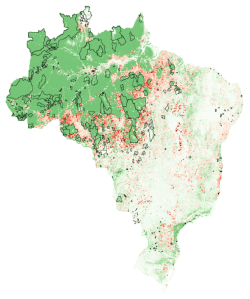
Brazil’s forest loss 2001-2013 shown in red. Indigenous lands outlined. By Mike Clark; data from GlobalForestWatch.org

In Brazil, many Indigenous groups still have a right to their land. This land is predominantly found in the Amazon rainforest, where close to a million Indigenous people live and depend on a healthy forest. Indigenous people are some of the best protectors of this vast forest, and are crucial to a future of long-term successful conservation. But Brazilian Indigenous groups and local communities are increasingly under attack. Violence on deforestation frontiers in Brazil has spiked this month, with at least 9 people found dead. The future is particularly scary for Indigenous people when there are quotes such as this from the man who is currently the President It’s a shame that the Brazilian cavalry hasn’t been as efficient as the Americans, who exterminated the Indians.

On top of human rights and environmental concerns, there is a strong profit driven case for halting deforestation. For example, ongoing deforestation in the Amazon risks flipping large parts of the rainforest to savanna – posing a serious risk to agricultural productivity, food security, local livelihoods, and the Brazilian economy. Zero-deforestation doesn’t harm agri-business, it allows for its longevity. Read the rest of this entry »


How to improve (South Australia’s) biodiversity prospects

9 04 2019
Fig2

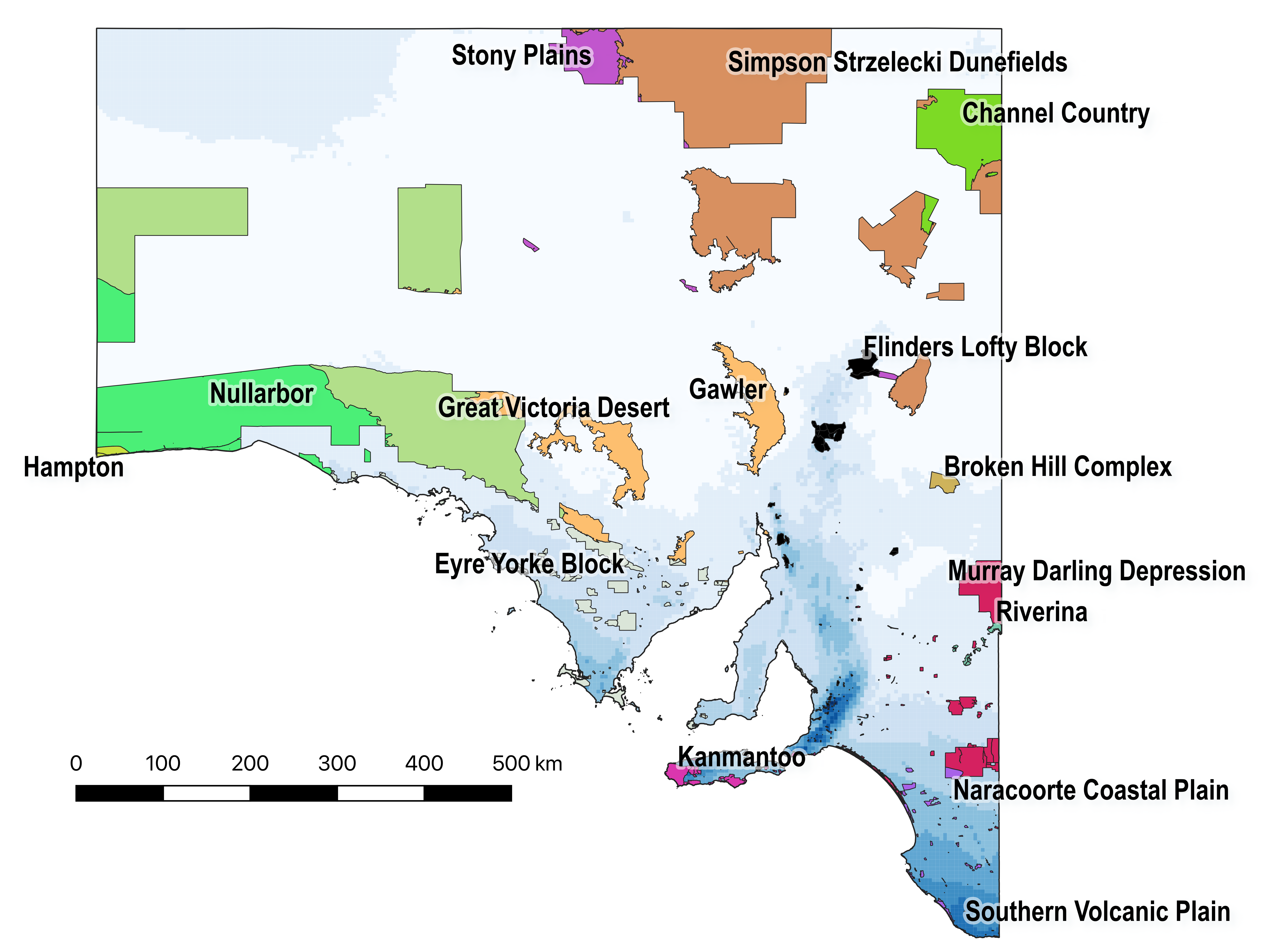
Figure 2 (from the article). Overlaying the South Australia’s Protected Areas boundary data with the Interim Biogeographic Regionalisation for Australia layer indicates that 73.2% of the total protected area (excluding Indigenous Protected Areas) in South Australia lies in the arid biogeographic regions of Great Victoria Desert (21.1%), Channel Country (15.2%), Simpson Strzelecki Dunefields (14.0%), Nullarbor (9.8%), Stony Plains (6.6%), Gawler (6.0%), and Hampton (0.5%). The total biogeographic-region area covered by the remaining Conservation Reserves amounts to 26.2%. Background blue shading indicates relative average annual rainfall.

If you read CB.com regularly, you’ll know that late last year I blogged about the South Australia 2108 State of the Environment Report for which I was commissioned to write an ‘overview‘ of the State’s terrestrial biodiversity.

At the time I whinged that not many people seemed to take notice (something I should be used to by now in the age of extremism and not giving a tinker’s about the future health of the planet — but I digress), but it seems that quietly, quietly, at least people with some policy influence here are starting to listen.

Not satisfied with merely having my report sit on the virtual shelves at the SA Environment Protection Authority, I decided that I should probably flesh out the report and turn it into a full, peer-reviewed article.

Well, I’ve just done that, with the article now published online in Rethinking Ecology as a Perspective paper.

The paper is chock-a-block with all the same sorts of points I covered last year, but there’s a lot more, and it’s also a lot better referenced and logically sequenced.

Read the rest of this entry »


Cartoon guide to biodiversity loss LIII

25 03 2019

The second set of six biodiversity cartoons for 2019. See full stock of previous ‘Cartoon guide to biodiversity loss’ compendia here.


Read the rest of this entry »