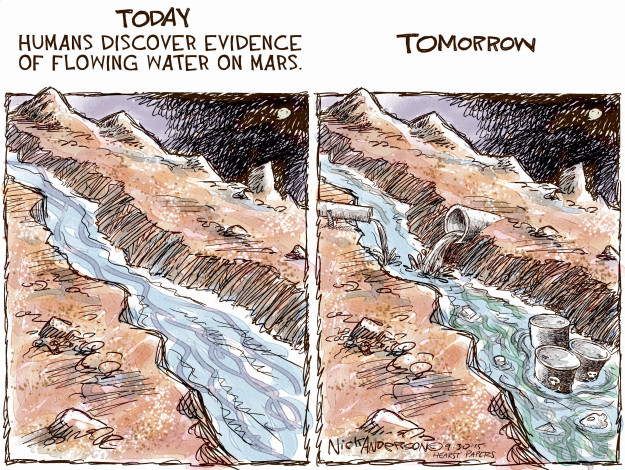
The second set of six biodiversity cartoons for 2019. See full stock of previous ‘Cartoon guide to biodiversity loss’ compendia here.
—
The second set of six biodiversity cartoons for 2019. See full stock of previous ‘Cartoon guide to biodiversity loss’ compendia here.
—
This week sees the launch of an updated bat synopsis from Conservation Evidence, adding new studies that have come out since the first synopsis was published in 2013.
The synopsis collects and summarises studies that test conservation actions such as ‘provide bat boxes for roosting bats’, and organises the studies by the action that they test. This focus on solutions makes it a handy point of reference for conservationists wishing to see what might work — and what is unlikely to work — to conserve bats.

Bechstein’s bat (Myotis bechsteinii) — photo credit Claire Wordley
Free to read or download from Conservation Evidence, the update represents a major addition to the original, containing 173 studies to the original 101. Studies are included if they tested an action that could be put in place for conservation, and measured an outcome for bats. As well as adding studies published from 2013 on, the update adds studies originally published in Spanish or Portuguese, and it is hoped that more languages will be added in future editions. Read the rest of this entry »
 It has taken me a long time to decide to do this, but with role models like Claire Wordley, Alejandro Frid, and James Hansen out there, I couldn’t really find any more excuses.
Yes, I’ve been a strong advocate for action on biodiversity, environment and climate-change issues for a long time, and I’ve even had a few political wins in that regard with my writing and representation. I’ve even called out more than once for universities to embrace divestment from fossil fuels (to my knowledge, even my own university still has not).
While I still think these avenues are important, my ongoing observation is that things are getting worse politically, not better. That means that the normal armchair advocacy embraced by even the most outspoken academics is probably not going to be enough to elicit real political change that we — no, the planet — desperately needs.
 It is for this reason that I’ve joined the Extinction Rebellion (South Australia Chapter), especially after my friend and colleague, Dr Claire Wordley of the University of Cambridge, joined the UK Rebellion and wrote about her experiences on this very blog. That, coupled with my ongoing and mounting concern for the future Earth my daughter will inherit, requires me to take to the streets. Read the rest of this entry »
The island of Mauritius is known, particularly in conservation circles, for the ill-fated extinction of the dodo, but also for its many conservation success stories. These include the recovery of emblematic birds such as the Mauritius kestrel (Falco punctatus) and the pink pigeon (Nesoenas mayeri) that narrowly avoided extinction several decades ago.

Behind this veil of achievements, however, local political realities are increasingly making the protection and management of Mauritian biodiversity more complex and challenging as new conservation issues emerge.
In the midst of the third government-led mass cull of the Endangered Mauritian flying fox (Pteropus niger) in 2018, a paper published in the Journal for Nature Conservation shed light on the events that led to the government’s choice to do the first two mass culls of the Mauritian flying fox in 2015 and 2016. Documentation of human-wildlife conflict in Mauritius is relatively new, as noted by the authors, but provides a unique case study.
Given that the mass-culling opted for did not increase fruit growers’ profits (in fact, fruit production dropped substantially after the mass-culls) and that the flying fox, a keystone species for the native biodiversity, became more threatened with extinction following the mass culls, it appears that Mauritius provides a rare opportunity to study what precisely should be avoided when trying to resolve such a HWC [Human-wildlife conflict],
Florens & Bader (2019)
Indeed, to mitigate rising conflicts between fruit farmers and the Mauritian flying fox, the Mauritian government opted in 2006 to cull this threatened species (only six individuals were culled at the time). Despite disputes over the population size of the Mauritian flying fox and the extent of damage it caused to commercial fruit growers, as well as scientific arguments against the cull, culling continues to be the preferred approach.
This focus on culling as a solution contributed to a legal amendment in October 2015 that now facilitates the population control of any species of wildlife, irrespective of its origin and its conservation status. The Native Terrestrial Biodiversity and National Parks Bill was passed on 20 October 2015, just two weeks after the government announced its plan to cull 18,000 threatened native bats.
Read the rest of this entry »
As I have discussed before, the greatest threatening process to biodiversity in South Australia today is past and ongoing clearing of native vegetation. So, arresting further vegetation clearing, and restoring previously cleared land to functional native-vegetation communities are easily the highest priorities across the entire State.
Despite some valiant attempts across South Australia to revegetate previously cleared areas1, the haphazard approach to reforestation in South Australia means that we are unlikely to be maximising ecological function and providing the best habitats for native biodiversity. Several improvements in this regard can be made:
(i) Establish a State Register of past, ongoing, and planned revegetation projects, including data on the proponents, area revegetated, species planted, number of individuals planted for each species, monitoring in place (e.g., plant survival, other species using the restored habitat, etc.), and costs (actual or projected). Such a State Register would allow for a more regional coordination of future revegetation projects to suggest potentially more ecologically useful approaches. This could include identifying the most locally suitable species to plant, maximising the area of existing native habitat or restored fragments by planting adjacent to these, joining isolated islands of habitat to increase connectivity, or even to create more efficient projects by combining otherwise independent proponents (e.g., adjacent landholders).
(ii) Establish a State Revegetation Council that uses data from the Register to prioritise projects, enhance collaboration, and suggest improvements in design and placement according to the principles mentioned above. The Council could also help to coordinate monitoring of progress and ecological outcomes at the landscape scale. A similar State Register for Wetland Restoration and a relevant Council could be established in a similar manner, emphasising the conservation and restoration of smaller wetlands with more unique, endemic plant species. Likewise, both Councils could ideally assist in coordinating non-profit and private organisations in terms of their revegetation priorities, as well as coordinate with conservation covenants(see below) for private landholders.
Read the rest of this entry »The first set of six biodiversity cartoons for 2019 to usher in the New Year. See full stock of previous ‘Cartoon guide to biodiversity loss’ compendia here.
—

For the last five years I’ve published a retrospective list of the ‘top’ 20 influential papers of the year as assessed by experts in F1000 Prime — so, I’m doing so again for 2018 (interesting side note: six of the twenty papers highlighted here for 2018 appear in Science magazine). See previous years’ posts here: 2017, 2016, 2015, 2014, and 2013.

My mate Dr Brad Page — Principal Biosecurity Officer (Pest Animals) at Biosecurity SA — asked me to post the following jobs he’s advertising for pest-animal control. Now, I’m near-completely opposed to ‘wild dog’ (i.e., dingo) control in Australia, but I’ve agreed to post the third position as well, despite my ecological misgivings. Brad has a different perspective.
—
We have exciting opportunities for three new pest animal control coordinators, who will be working to support and reinvigorate control of deer, rabbits, and ‘wild dogs’.
All three coordinators will be part of our Biosecurity SA Division within PIRSA. These new positions will report to our Principal Biosecurity Officer, Pest Animals.
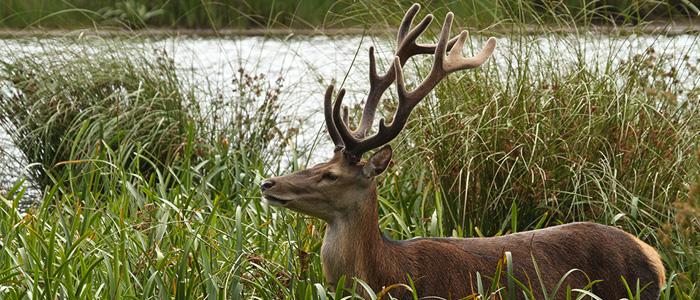
The Deer Control Coordinator and the Rabbit Control Coordinator will provide tailored professional support to natural resource management (NRM) staff and community groups doing control programs. These coordinators will aim to increase the impact of deer and rabbit control programs to support primary producers and biodiversity managers. The position will connect and empower existing community and industry groups, maximising impacts of their efforts to control feral deer and rabbits in agricultural landscapes. Read the rest of this entry »

My entry badge today to the South Australian Parliament (sorry for the shitty reproduction, but it’s a shitty photo of a shitty photo)
I’ve often commented on it over the years, as well as written about it both in my latest book, as well as featured it here on CB.com, that little of the conservation science we do appears to reach the people making all the decisions. This is, of course, a massive problem because so much policy that affects biodiversity is not evidence-based, nor do we seem to be getting any better at telling them how buggered our natural world is.
Even the Extinction Rebellion, or school kids screaming in the streets about lack of climate-change policies appears unable to budge the entrenched, so what hope do we lonely little scientists have of getting in a Minister’s ear? It’s enough to make one depressed.
 So, we go through the motions; we design ideal reserves with the aid of our computers, we tell people how much to fish, we tell them why feral species are bad, etc., etc., and then we publish our findings and walk away. We might do a little more and shout our messages loudly from the media rooftops, or submit comments to proposed policies, or even draft open letters or petitions. Yet no matter how hard we seem to try, our messages of urgency and despair largely fall on deaf ears.
It’s enough to make you reconsider and not bothering at all.
But! Despite my obviously jaded perspective, two things have happened to me recently that attest to how a little perseverance, sticking to your guns, and staying on message can reach the ears of the powerful. My examples are minuscule in the grand scheme of things, nor will they necessarily translate into anything really positive on the ground; yet, they give me a modicum of hope that we can make a positive difference.
The first event happened a few weeks ago after we did a press release about our paper on co-extinction cascades published in Scientific Reports. Yes, it got into a few big newspapers and radio, but I thought it wouldn’t do much more than peak the punters’ interest for the typical 24-hour news cycle. However, after the initial media interest died down, I received an e-mail from one of my university’s media officers saying that the we had been cited in The Senate (one of the two houses in the Australian Parliament)! An excerpt of the transcript is shown below (you can read the whole thing — if you could be bothered — here): Read the rest of this entry »
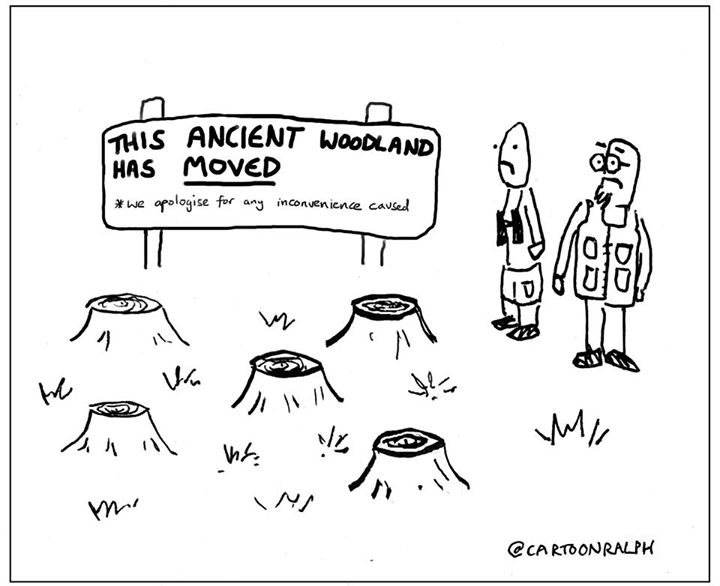 Biodiversity offsets are becoming more popular in Australia and elsewhere as a means to raise money for conservation and restoration while simultaneously promoting economic development (1). However, there are many perverse consequences for biodiversity if they are not set up carefully (1-3).
Biodiversity ‘offsets’ are intended to work in a similar way to carbon offsets1, in that the destruction of a part of an ecosystem (e.g., a native forest or grassland, or a wetland) can be offset by paying to fund the restoration of another, similar ecosystem elsewhere. As such, approval to clear native vegetation usually comes with financial and other conditions.
But there are several problems with biodiversity offsetting, including the inconvenient fact that creating an equivalent ecosystem somewhere takes substantially longer than it does to destroy one somewhere else (e.g., 4). While carbon emitted in one place is essentially the same as that sequestered elsewhere, a forest can take hundreds of years to develop the same biodiversity values and ecological functions it had prior to destruction. Read the rest of this entry »
Variability in heat tolerance among populations modifies the climate-driven periods of diurnal activity expected for ectotherm species. We illustrate this phenomenon for Iberian lizards in a paper we have just published in the Journal of Animal Ecology (blog post reproduced with permission by the Journal; see related blog).
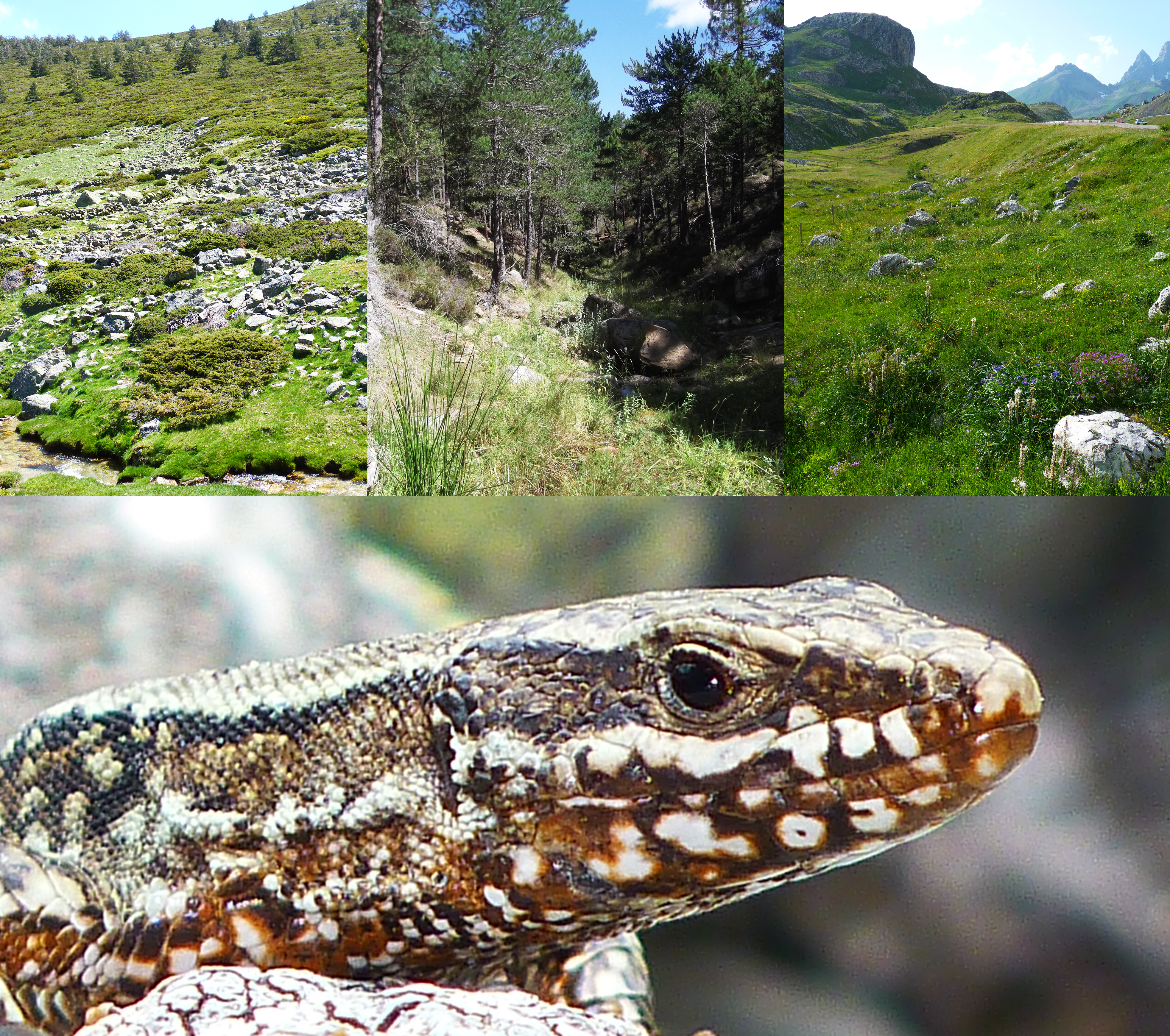
Iberia is a wonderful natural laboratory, with a complex blend of flat/hilly, open/woody and coastal/continental terrain, swept by climatic gradients of temperature and moisture. In 2013, I launched a BES-supported project about the thermal ecology of Iberian lizards and managed to drive over much of the Iberian Peninsula in fairly little time. Not being a reptile specialist myself, I was confronted by the consistent observation that lizard populations occupied very different habitats across the known distribution of each of the ~ 25 known Iberian species belonging to the family Lacertidae.
For instance, the common wall lizard (Podarcis muralis) likes water, rocks and mountains, but you can find this pencil-long reptile at the top of a summit, along the slopes or riversides of shallow and deep ravines, on little stones barely surfacing above peatland grasslands, or among the bricks of buildings. These animals must experience different local climates conditional on where they live, and adapt their thermal physiology accordingly.
Having then started a postdoc in Miguel Araújo’s lab — a world-class site for global change ecology and ‘big’ biodiversity patterns — I reviewed a sizeable body of literature looking into large-scale gradients of thermal tolerance. Most of those papers had collated (mostly) one estimate of tolerance from each of tens to thousands of species, then mapped them against regional and global metrics of climate change through sophisticated mathematical frameworks. But these studies rarely accounted for population-level thermal tolerance.
Read the rest of this entry »The six set of six biodiversity cartoons for 2018. See full stock of previous ‘Cartoon guide to biodiversity loss’ compendia here.
—

My encounter with Kaayana in Kaa-Iya National Park in the Bolivian Chaco. Her cub was around but cannot be seen in the photo
I was trapped. Or so I thought.
The jaguar came towards me on the dirt road, calmly but attentively in the dusky light, her nearly full grown cub behind her. Nervous and with only a torch as defence, I held the light high above my head as she approached, trying to look taller. But she was merely curious; and, after 20 minutes, they left. I walked home in the thickening darkness, amazed at having come so close to South America’s top predator. We later named this mother jaguar ‘Kaayana’, because she lives inside Kaa-Iya National Park in the Bolivian Chaco. My fascination with jaguars has only grown since then, but the chances of encountering this incredible animal in the wild have shrunk even since that night.
A few years after that encounter, I’m back to study jaguars in the same forest, only now at the scale of the whole South American Gran Chaco. Jaguars are the third largest cats in the world and the top predators across Latin America. This means that they are essential for keeping ecosystems healthy. However, they are disappearing rapidly in parts of their range.
Understanding how and where the jaguar’s main threats — habitat destruction and hunting — affect them is fundamental to set appropriate strategies to save them. These threats are not only damaging on their own, but they sometimes act simultaneously in an area, potentially having impacts that are larger than their simple sum. For instance, a new road doesn’t only promote deforestation, it also increases hunters’ ability to get into previously inaccessible forests. Similarly, when the forest is cut for cattle ranching, ranchers often kill jaguars for fears of stock loss.

Kaayana was seen years later by Daniel Alarcón, who took much better photos of her and her new cubs
However, the interactions between these threats are still not fully understood. In our new study, just published in the journal Diversity and Distributions, we developed a new framework to quantify how and where habitat destruction and hunting risk acted together over three decades, at the expense of highly suitable jaguar habitat in the Gran Chaco. We also analyzed how well the different Chaco countries — Bolivia, Paraguay and Argentina — and their protected areas maintained key jaguar habitat. Read the rest of this entry »
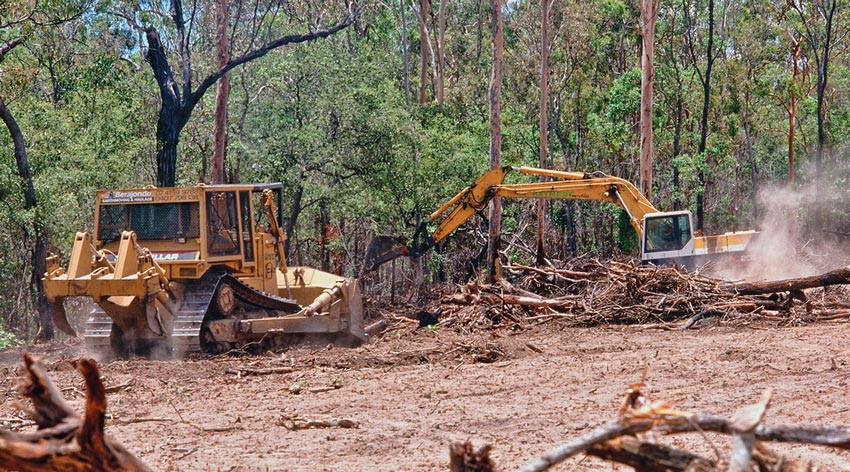
It might come as a bit of shock to some who might give more than a shit about our State’s environmental integrity that there is no dedicated legislation to protect biodiversity in South Australia today.
What? Well, ok, we do have the Native Vegetation Act that is supposed to restrict the clearing of existing native vegetation (of which there is precious little left), and the National Parks and Wildlife Act 1972 to legislate protected areas and species endangerment. We also have the Wilderness Protection Act 1992 that addresses wilderness protection and land restoration, and the Natural Resource Management Act 2004 that is designed to promote sustainable and integrated management of the State’s natural resources. Finally, the South Australia Environment Protection Authority operates under various acts1 to limit environmental damage.
However, South Australia has no act specifically focussed on biodiversity conservation, and the legislation that does exist does not even consider invertebrates (like insects) as animals — because most animals are in fact invertebrates, this means that most of South Australia’s species are ineligible for official threat listing, even if they have a high risk of extinction.
If you recall, I reported in July this year that in 2017 we had a Parliamentary Inquiry into Biodiversity2, which concluded that existing environmental legislation in South Australia “… lacks cohesion and consistency, particularly regarding enforcement and compliance provisions”.
In my judgement, therefore, an entirely new, biodiversity-focussed act would add legislative teeth to biodiversity conservation in South Australia. As it turns out, that very same Parliamentary Inquiry into Biodiversity I mentioned above recommended3 the creation of a Biodiversity Expert Panel to reform the legislative framework of environmental protection. Thus, the new Government of South Australia has the perfect opportunity to do so under their proposed changes to natural resource management legislation. Following these calls for reform and the new direction of Nature of SA, there is a real opportunity here for statutory reform that includes integrated biodiversity legislation analogous to the New South Wales Biodiversity Conservation Act 2016.
Read the rest of this entry »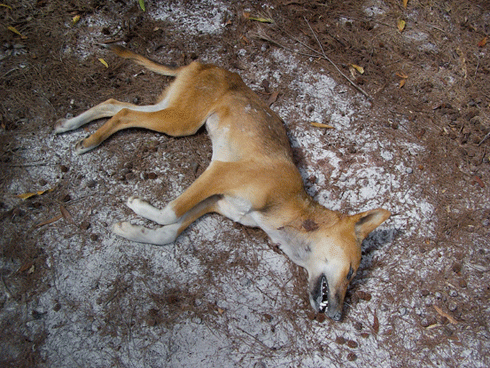 So, a few of us have just submitted a letter contesting the Western Australia Government’s recent decision to delist dingoes as ‘fauna’ (I know — what the hell else could they be?). The letter was organised brilliantly by Dr Kylie Cairns (University of New South Wales), and she and the rest of the signatories have agreed to reproduce the letter in full here on ConservationBytes.com. If you feel so compelled, please voice your distaste of this decision officially by contacting the Minister (details below).
Honourable Stephen Dawson MLC
Minister for Environment; Disability Services
Address: 12th Floor, Dumas House
2 Havelock Street, WEST PERTH WA 6005
(minister.dawson@dpc.wa.gov.au)
cc: Department of Biodiversity, Conservation and Attractions (biodiversity@dbca.wa.gov.au)
cc: Brendan Dooley (brendan.dooley@dpc.wa.gov.au)
Dear Minister,
The undersigned welcome the opportunity to comment on and recommend alteration of the proposed section (9)(2) order of the Biodiversity Conservation Act 2016 (BC Act) that changes the listing of the dingo from “fauna” to “non-fauna” in Western Australia. Removing the “fauna” status from dingoes has serious consequences for the management and conservation of this species and other native biota it benefits. Currently, dingoes are classed as A7, or fauna that requires a management policy. The proposed section (9)(2) order will move dingoes (as “non-fauna”) to the A5 class, meaning that dingoes must be (lethally) controlled and there will be no obligation for the Department of Biodiversity, Conservation and Attractions to have an appropriate management policy (or approval).
Currently, under the Wildlife Conservation Act 1950 (WC Act) the dingo is considered “unprotected” fauna allowing management under a Department of Biodiversity, Conservation and Attractions management policy. A section (9)(2) order demoting dingoes to “non-fauna” will remove the need for Department of Biodiversity, Conservation and Attractions management policy and instead mandate the lethal control of dingoes throughout Western Australia.
As prominent researchers in top predator ecology, biology, cultural value and genetics, we emphasise the importance of dingoes within Australian, and particularly Western Australia’s ecosystems. Dingoes are indisputably native based on the legislative definition of “any animal present in Australia prior to 1400 AD” from the BC Act. Dingoes have been present in Australia for at least 5000 years. On the Australian mainland they are now the sole non-human land-based top predator. Their importance to the ecological health and resilience of Australian ecosystems cannot be overstated. Read the rest of this entry »
 The South Australian State Budget was released yesterday, and as has been the trend for the last ten years or so, the numbers are not good for the State’s environment.
While it has been reported that the budget includes the loss of 115 full-time staff from the Department of Environment and Water, the overall cuts run much deeper. They also herald a new era of not giving a tinker’s cuss for the sorry state of our environment.
I took the liberty of amassing the budget data with respect to environmental spending in this State since 2002-2003 (the earliest year I could find budget papers), and now I’ve just added the 2018-2019 data.
If I’ve selected the appropriate amounts, — side note: someone desperately needs to teach these budget bean-counters how to standardise, report, itemise, and organise data much, much better than they do (my first-year students could do a better job drunk and blindfolded) — then this is what environmental spending (including environment, biodiversity, water, and the Environment Protection Authority) has looked like since 2002: Read the rest of this entry »
 While some complain that the European Union (EU) is an enormous, cumbersome beast (just ask the self-harming Brexiteers), it generally has some rather laudable legislative checks and balances for nature conservation. While far from perfect, the rules applying to all Member States have arguably improved the state of both European environments, and those from which Europeans source their materials.
But legislation gets updated from time to time, and not always in the ways that benefit biodiversity (and therefore, us) the most. This is exactly what’s just happened with the new EU Renewable Energy Directive (RED) released in June this year.
Now, this is the point where most readers’ eyes glaze over. EU policy discussions are exceedingly dry and boring (I’ve dabbled a bit in this arena before, and struggled to stay awake myself). But I’ll try to lighten your required concentration load somewhat by being as brief and explanatory as possible, but please stay with me — this shit is important.
In fact, it’s so important that I joined forces with some German colleagues with particular expertise in greenhouse-gas accounting and EU policy — Klaus Hennenberg and Hannes Böttcher1 of Öko-Institut (Institute of Applied Ecology) in Darmstadt — to publish an article available today in Nature Ecology and Evolution.
 So back to the RED legislation. The original ‘RED 2009‘ covered reductions of greenhouse-gas emissions and the mitigation of negative impacts on areas of high biodiversity value, such as primary forests, protected areas, and highly biodiverse grasslands, and for areas of high carbon stock like wetlands, forests, and peatlands.
But RED 2009 was far from what we might call ‘ambitious’, because globally mandatory criteria on water, soil and social aspects for agriculture and forestry production were excluded to avoid conflicts with rules of the World Trade Organization.
Nor did RED 2009 apply to all bioenergy types, and only included biofuels used in transport, including gaseous and solid fuels, and bioliquids used for electricity, heating, and cooling. But RED 2009 requirements also applied to all raw materials sourced from agriculture and forestry, especially as forest biomass is explicitly mentioned as a raw material for the production of advanced biofuels in the RED 2009 extension from 2015.
Thus, one could conceivably call RED 2009 criteria ‘minimum safeguards’.
But as of June this year, the EU accepted a 2016 proposal to recast RED 2009 into what is now called ‘RED II’. While the revisions might look good on paper by setting new incentives in transport (advanced biofuels) and in heating and cooling that will likely increase the use of biomass sourced from forests, and by extending the directive on solid and gaseous biomass, the amendments unfortunately take some huge leaps backwards in terms of sustainability requirements.
These include the following stuff-ups: Read the rest of this entry »

A new article just published in PNAS reveals how future expansion of the palm-oil industry could have terrible consequences for African primates.
Researchers from the European Commission’s Joint Research Centre, CIRAD, Liverpool John Moores University, and ETH Zurich searched for “areas of compromise” combining high oil palm suitability with low primate vulnerability, as possible locations where to accommodate new oil-palm plantations while reducing detrimental effects on primate populations.
Results show that there is small room for compromise. In fact, potential areas of compromise are rare across the whole African continent, covering a total extent of 0.13 Mha of land highly suited to oil palm cultivation where primate vulnerability is low, rising to just 3.3 Mha if all land with at least minimum suitability to grow oil palm is taken into account.
Palm oil production is steadily rising, and expected to accelerate in response to growing world’s population, with future demand driven not only by the food industry, but also by the biofuel market. Read the rest of this entry »
The fifth set of six biodiversity cartoons for 2018. See full stock of previous ‘Cartoon guide to biodiversity loss’ compendia here.
—
 Last week we had the pleasure of welcoming the eminent sustainability scientist, Professor Andrew Balmford of the University of Cambridge, to our humble Ecology and Evolution Seminar Series here at Flinders University. While we couldn’t record the seminar he gave because of some of the unpublished and non-proprietary nature of some of his slides, I thought it would be interesting, useful, and thought-provoking to summarise some of the information he gave.
Andrew started off by telling us some of the environmental implications of farming worldwide. Today, existing agriculture covers more than half of ‘useable’ land (i.e., excluding unproductive deserts, etc.), and it has doubled nitrogen fixation rates from a pre-industrial baseline. Globally, agriculture is responsible for between 19 and 35% of all greenhouse gas emissions, and it has caused approximately 40% increase in observed sea-level rise (1961-2003). Not surprisingly, agriculture already occupies the regions of highest biodiversity globally, and is subsequently the greatest source of threat to species.


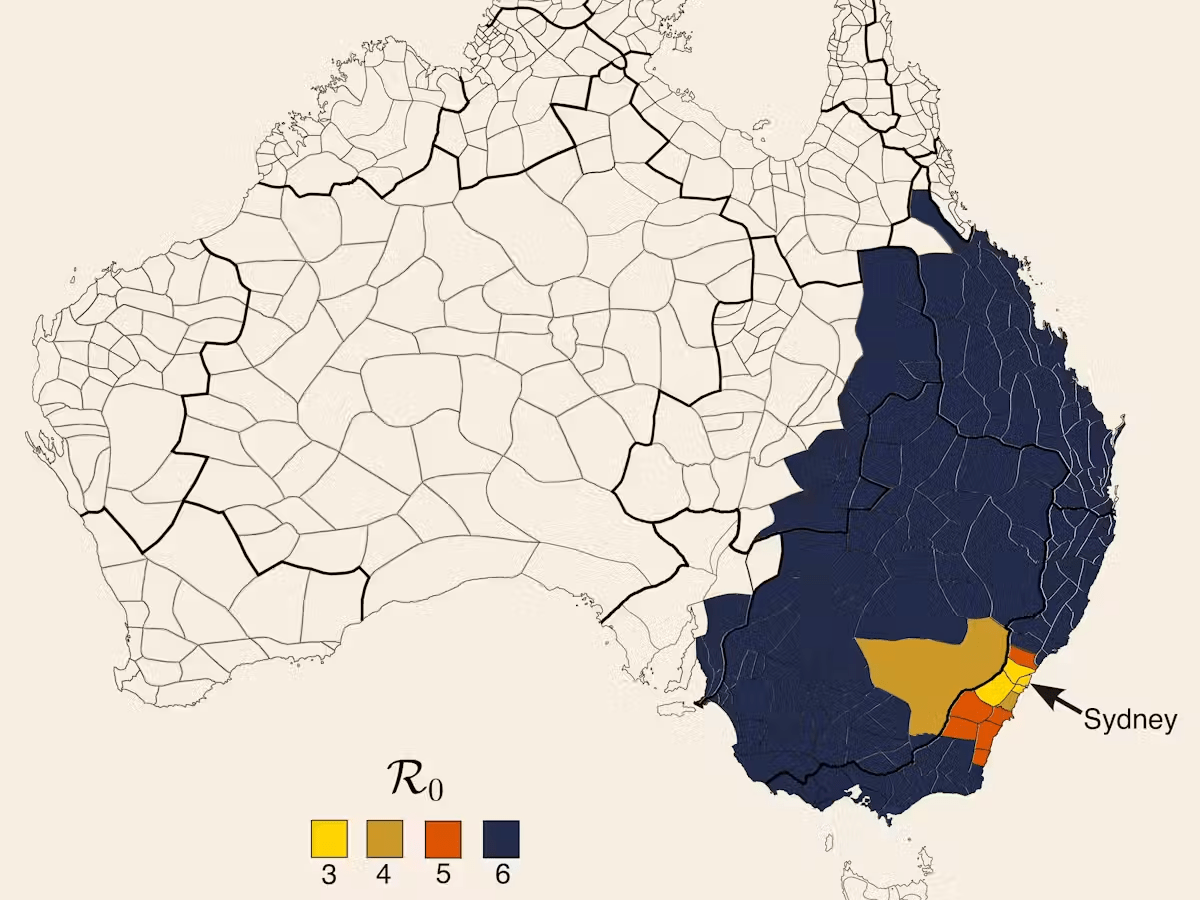
Hulton Archive / Getty Images We warn readers that the content of this study is confronting and may be distressing. In April 1789, the first smallpox epidemic among Aboriginal people in the Sydney region began, just 16 months after Europeans arrived on the First Fleet. Little is known of the true scale of the epidemic,…

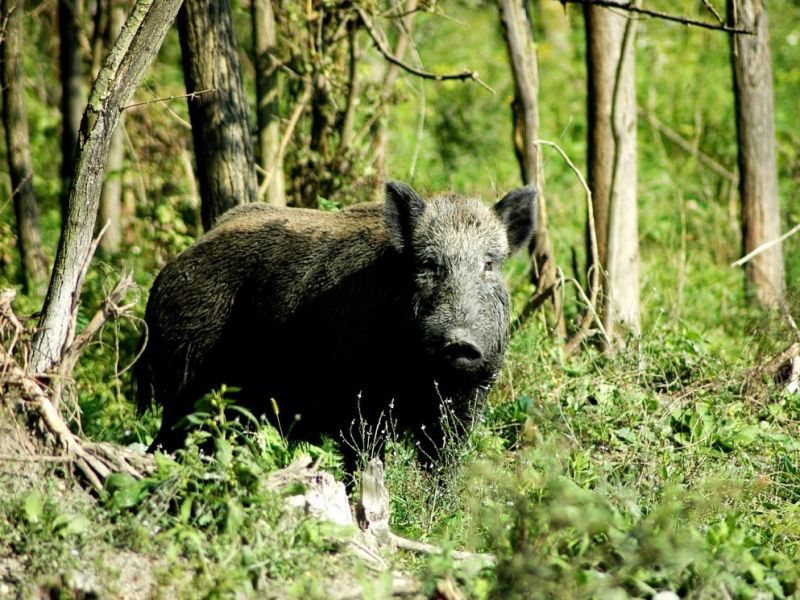
Just over two years ago I reported the ‘likely’ eradication of feral pigs from Australia’s third-largest (4,405 km2) island — Kangaroo Island. I indicated ‘likely’ because the program still required the proof-of-eradication phase to be completed before an official declaration could be made. Yesterday I had the immense honour to take part in the official…
Have you ever done any research that relied to any degree on Indigenous Knowledges? How did you cite those Knowledges, if at all? It’s probably time we rethink how we engage with Indigenous Knowledge systems. In a new article published in BioScience, we — a large group of Indigenous and non-Indigenous scholars in Australia —…