The (new) birds and the bees

20 01 2025

‘Nuff said


Assessing the massive costs of biological invasions to Australia and the world

6 09 2023

A global database set up by scientists to assemble data on the economic cost of biological invasions in support of effective government management strategies has grown to include all known invasive species.

Now involving 145 researchers from 44 countries — the current version of InvaCost has 13,553 entries in 22 languages and enables scientists to develop a clear picture about the major threats globally of invasive species to ecosystems, biodiversity, and human well-being.

Biological invasions are caused by species introduced on purpose or accidentally by humans to areas outside of their natural ranges. From cats and weeds, to crop pests and diseases, invasive species are a worldwide scourge. 

Invasive species have cost over US$2 trillion globally since the 1970s by damaging goods and services, and through the costs of managing them, and these economic costs are only increasing.

A new synthesis published in the journal BioScience documents the progress of the InvaCost endeavour. The study provides a timeline of the state of invasion costs, starting with prior flaws and shortcomings in the scientific literature, then how InvaCost has helped to alleviate and address these issues, and what the future potentially holds for research and policymakers.  

Read the rest of this entry »


Open Letter: Public policy in South Australia regarding dingoes

28 08 2023

08 August 2023

The Honourable Dr Susan Close MP, Deputy Premier and Minister for Climate, Environment and Water, South Australia

The Honourable Claire Scriven MLC, Minister for Primary Industries and Regional Development, South Australia

Dear Ministers,

In light of new genetic research on the identity of ‘wild dogs’ and dingoes across Australia, the undersigned wish to express concern with current South Australia Government policy regarding the management and conservation of dingoes. Advanced DNA research on dingoes has demonstrated that dingo-dog hybridisation is much less common than thought, that most DNA tested dingoes had little domestic dog ancestry and that previous DNA testing incorrectly identified many dingoes as hybrids (Cairns et al. 2023). We have serious concerns about the threat current South Australian public policy poses to the survival of the ‘Big Desert’ dingo population found in Ngarkat Conservation Park and surrounding areas.

We urge the South Australian Government to:

  • Revoke the requirement that all landholders follow minimum baiting standards, including organic producers or those not experiencing stock predation. Specifically
    1. Dingoes in Ngarkat Conservation park (Region 4) should not be destroyed or subjected to ground baiting and trapping every 3 months. The Ngarkat dingo population is a unique and isolated lineage of dingo that is threatened by inbreeding and low genetic diversity. Dingoes are a native species and all native species should be protected inside national parks and conservation areas.
    2. Landholders should not be required to carry out ground baiting on land if there is no livestock predation occurring. Furthermore, landholders should be supported to adopt non-lethal tools and strategies to mitigate the risk of livestock predation including the use of livestock guardian animals, which are generally incompatible with ground and aerial 1080 baiting.
  • Revoke permission for aerial baiting of dingoes (incorrectly called “wild dogs”) in all Natural Resource Management regions – including within national parks. Native animals should be protected in national parks and conservation areas.
  • Cease the use of inappropriate and misleading language to label dingoes as “wild dogs”. Continued use of the term “wild dogs” is not culturally respectful to First Nations peoples and is not evidence-based.
  • Proactively engage with First Nations peoples regarding the management of culturally significant species like dingoes. For example, the Wotjobaluk nation should be included in consultation regarding the management of dingoes in Ngarkat Conservation Park.

Changes in South Australia public policy are justified based on genetic research by Cairns et al. (2023) that overturns previous misconceptions about the genetic status of dingoes. It demonstrates:

  1. Most “wild dogs” DNA tested in arid and remote parts of Australia were dingoes with no evidence of dog ancestry. There is strong evidence that dingo-dog hybridisation is uncommon, with firstcross dingo-dog hybrids and feral dogs rarely being observed in the wild. In Ngarkat Conservation park none of DNA tested animals had evidence of domestic dog ancestry, all were ‘pure’ dingoes.
  2. Previous DNA testing methods misidentified pure dingoes as being mixed. All previous genetic surveys of wild dingo populations used a limited 23-marker DNA test. This is the method currently used by NSW Department of Primary Industries, which DNA tests samples from NSW Local Land Services, National Parks and Wildlife Service, and other state government agencies. Comparisons of DNA testing methods find that the 23-marker DNA test frequently misidentified animals as dingo-dog hybrids. Existing knowledge of dingo ancestry across South Australia, particularly from Ngarkat Conservation park is incorrect; policy needs to be based on updated genetic surveys.
  3. There are multiple dingo populations in Australia. High-density genomic data identified more than four wild dingo populations in Australia. In South Australia there are at least two dingo populations present: West and Big Desert. The West dingo population was observed in northern South Australia, but also extends south of the dingo fence. The Big Desert population extends from Ngarkat Conservation park in South Australia into the Big Desert and Wyperfield region of Victoria.
  4. The Ngarkat Dingo population is threatened by low genetic variability. Preliminary evidence from high density genomic testing of dingoes in Ngarkat Conservation park and extending into western Victoria found evidence of limited genetic variability which is a serious conservation concern. Dingoes in Ngarkat and western Victoria had extremely low genetic variability and no evidence of gene flow with other dingo populations, demonstrating their effective isolation. This evidence suggests that the Ngarkat (and western Victorian) dingo population is threatened by inbreeding and genetic isolation. Continued culling of the Ngarkat dingo population will exacerbate the low genetic variability and threatens the persistence of this population.

Read the rest of this entry »


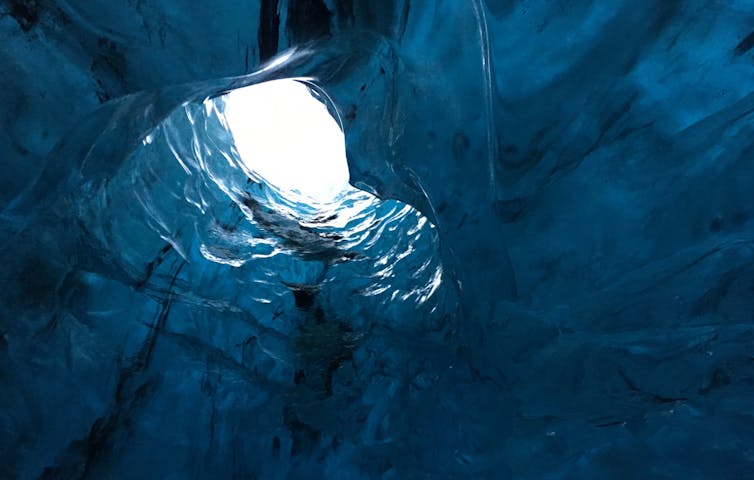
Ancient pathogens released from melting ice could wreak havoc on the world

28 07 2023

Shutterstock


Science fiction is rife with fanciful tales of deadly organisms emerging from the ice and wreaking havoc on unsuspecting human victims.

From shape-shifting aliens in Antarctica, to super-parasites emerging from a thawing woolly mammoth in Siberia, to exposed permafrost in Greenland causing a viral pandemic – the concept is marvellous plot fodder.

But just how far-fetched is it? Could pathogens that were once common on Earth – but frozen for millennia in glaciers, ice caps and permafrost – emerge from the melting ice to lay waste to modern ecosystems? The potential is, in fact, quite real.

Dangers lying in wait

In 2003, bacteria were revived from samples taken from the bottom of an ice core drilled into an ice cap on the Qinghai-Tibetan plateau. The ice at that depth was more than 750,000 years old.

In 2014, a giant “zombie” Pithovirus sibericum virus was revived from 30,000-year-old Siberian permafrost.

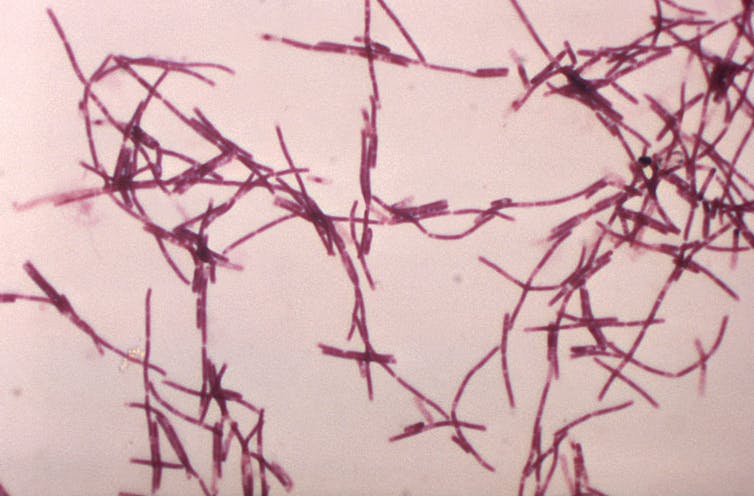
And in 2016, an outbreak of anthrax (a disease caused by the bacterium Bacillus anthracis) in western Siberia was attributed to the rapid thawing of B. anthracis spores in permafrost. It killed thousands of reindeer and affected dozens of people.

Bacillus anthracis is a soil bacterium that causes anthrax.
William A. Clark/USCDCP

More recently, scientists found remarkable genetic compatibility between viruses isolated from lake sediments in the high Arctic and potential living hosts.

Earth’s climate is warming at a spectacular rate, and up to four times faster in colder regions such as the Arctic. Estimates suggest we can expect four sextillion (4,000,000,000,000,000,000,000) microorganisms to be released from ice melt each year. This is about the same as the estimated number of stars in the universe.

However, despite the unfathomably large number of microorganisms being released from melting ice (including pathogens that can potentially infect modern species), no one has been able to estimate the risk this poses to modern ecosystems.

In a new study published today in the journal PLOS Computational Biology, we calculated the ecological risks posed by the release of unpredictable ancient viruses.

Read the rest of this entry »


Intricate dance of nature — predicting extinction risks in terrestrial ecosystems

30 06 2023

Have you ever watched a nature documentary and marvelled at the intricate dance of life unfolding on screen? From the smallest insect to the largest predator, every creature plays a role in the grand performance of our planet’s biosphere. But what happens when one of these performers disappears? 

In this post, we delve into our recent article Estimating co-extinction risks in terrestrial ecosystems just published in Global Change Biology, in which we discuss the cascading effects of species loss and the risks of ‘co-extinction’.

But what does ‘co-extinction’ really mean?

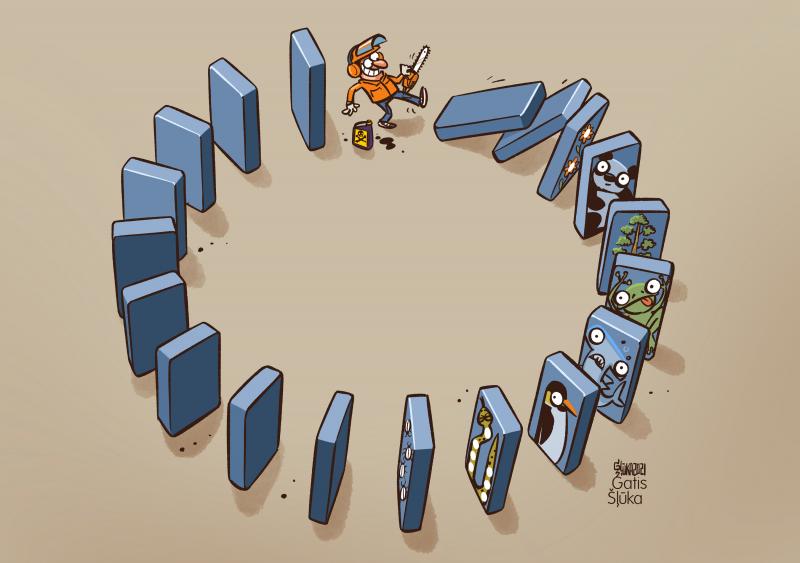
Imagine an ecosystem as a giant web of interconnected species. Each thread represents a relationship between two species — for example, a bird that eats a certain type of insect, or a plant that relies on a specific species of bee for pollination. Now, what happens if one of these species in the pair disappears? The thread breaks and the remaining species loses an interaction. This could potentially lead to its co-extinction, which is essentially the domino effect of multiple species losses in an ecosystem. 

A famous example of this effect can be seen with the invasion of the cane toad (Rhinella marina) across mainland Australia, which have caused trophic cascades and species compositional changes in these communities. 

The direct extinction of one species, caused by effects such as global warming for example, has the potential to cause other species also to become extinct indirectly. 

Read the rest of this entry »


What we know we don’t know about animal tolerances to high temperatures

30 01 2023

Each organism has a limit of tolerance to cold and hot temperatures. So, the closer it lives to those limits, the higher the chances of experiencing thermal stress and potentially dying. In our recent paper, we revise gaps in the knowledge of tolerance to high temperatures in cold-blooded animals (ectotherms), a diverse group mostly including amphibians and reptiles (> 16,000 species), fish (> 34,000 species), and invertebrates (> 1,200,000 species).

As a scientist, little is more self-realising than to write and publish a conceptual paper that frames the findings of your own previous applied-research papers. This is the case with an opinion piece we have just published in Basic and Applied Ecology1 — 10 years, 4 research papers2-5 [see related blog posts here, here, here and here], and 1 popular-science article6 after I joined the Department of Biogeography and Global Change (Spanish National Research Council) to study the thermal physiology of Iberian lizards under the supervision of Miguel Araújo and David Vieites.

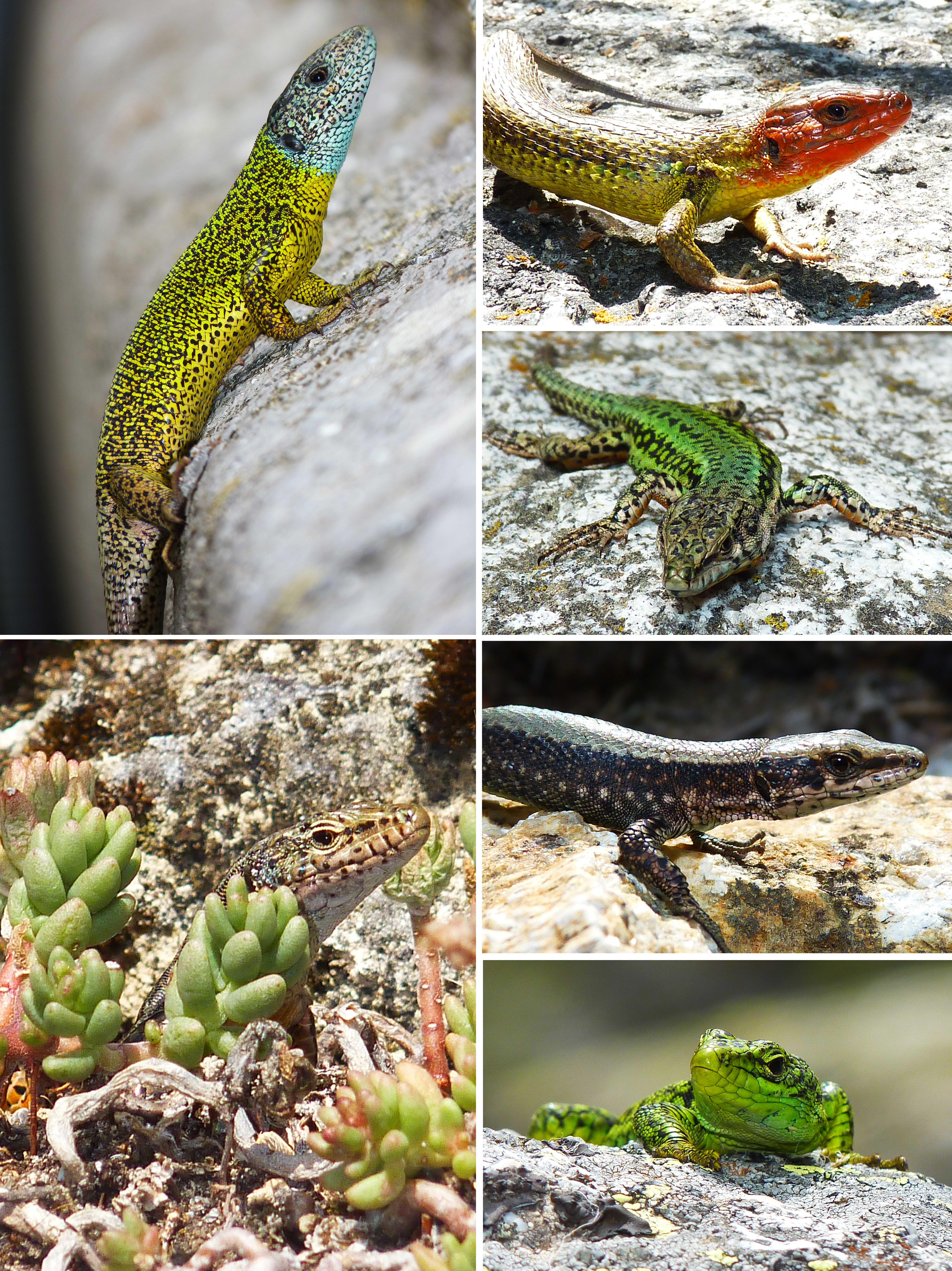
Iberian lizards for which heat tolerance is known (varying from 40 to 45 °C)
 
[left, top to bottom] Iberian emerald lizard (Lacerta schreiberi, from Alameda del Valle/Madrid) and Geniez’s wall lizard (Podarcis virescens, Fuertescusa/Cuenca), and [right, top to bottom] Algerian sand racer (Psammodromus algirus, Navacerrada/Madrid), Andalusian wall lizard (Podarcis vaucheri, La Barrosa/Cádiz), Valverde’s lizard (Algyroides marchi, Riópar/Albacete), and Cyren’s rock lizard (Iberolacerta cyreni, Valdesquí/Madrid). Heat-tolerance data deposited here and used to evaluate instraspecific variation of heat tolerance3,4. Photos: Salvador Herrando-Pérez.

In our new paper, we examine how much we know and what areas of research require further development to advance our understanding of how and why the tolerance of ectotherm fauna to high environmental temperature (‘heat tolerance’ hereafter) varies within and across the Earth’s biomes. We focus on data gaps using the global database GlobTherm as a reference template (see Box 1 below).

Our three main tenets

1. Population versus species data: Most large-scale ecophysiological research is based on modelling one measurement of heat tolerance per species (typically representing one population and/or physiological assay) over hundreds to thousands of species covering broad geographical, phylogenetic, and climatic gradients.

But there is ample evidence that heat tolerance changes a lot among populations occupying different areas of the distribution of a species, and such variation must be taken into account to improve our predictions of how species might respond to environmental change and face extinction.

Read the rest of this entry »


Tenure-Track Professorship in Conservation and Development

26 01 2023

The Faculty for Mathematics and Natural Sciences of Humboldt-Universität zu Berlin (HU Berlin), Geography Department, has an open position for a tenure-track professorship in Conservation and Development.

Starting as soon as possible. This is a Junior Professorship (W1 level, 100%) with a tenure track to a permanent professorship (W2 level, 100%). To verify whether the individual performance meets the requirements for permanent employment, an evaluation process will be opened not later than four years of the Junior Professorship. Tenure track professors at the HU Berlin are expected to do research and teaching, as well as to be active in university administration, in the promotion of young scientists, and in acquiring leadership and management skills. The concrete requirements out of the framework catalogue will be specified in the course of the appointment process.

We seek candidates with an outstanding research record in biodiversity conservation and sustainable development, with experience in working in the Global South. Successful candidates are rooted in conservation science and must have a doctoral degree in conservation science, development geography, environmental science, political ecology or related fields. We expect a demonstrated ability to work interdisciplinary, across the social and natural sciences to understand conservation challenges and and develop solutions.

We seek individuals with the vision, leadership and enthusiasm to build an internationally recognised research program. We expect collaboration with other research groups at the department, at HU Berlin and beyond, and a commitment to promoting a positive, diverse, and inclusive institutional culture. Experience in translating conservation science into action and/or work at the science/policy interface are beneficial.

We offer a tenure-track position in an international, young and vibrant department with an excellent scientific and education track record. The successful candidate will join an interdisciplinary group of faculty focused on human-environment relations, global change, and sustainability.

The salary will be according to W1 level, and after successful tenure evaluation W2 level. Employment at HU Berlin offers all benefits of the German public service system, including health insurance, an attractive pension plan, and social benefits.

Read the rest of this entry »


Interrupted flows in the Murray River endanger frogs

17 01 2023

Flooding in the Murray-Darling Basin is creating ideal breeding conditions for many native species that have evolved to take advantage of temporary flood conditions. Led by PhD candidate Rupert Mathwin, our team developed virtual models of the Murray River to reveal a crucial link between natural flooding and the extinction risk of endangered southern bell frogs (Litoria raniformis; also known as growling grass frogs).

Southern bell frogs are one of Australia’s 100 Priority Threatened Species. This endangered frog breeds during spring and summer when water levels increase in their wetlands. However, the natural flooding patterns in Australia’s largest river system have been negatively impacted by expansive river regulation that some years, sees up to 60% of river water extracted for human use.

Our latest paper describes how we built computer simulations of Murray-Darling Basin wetlands filled with simulated southern bell frogs. By changing the simulation from natural to regulated conditions, we showed that modern conditions dramatically increase the extinction risk of these beloved frogs.

The data clearly indicate that successive dry years raise the probability of local extinction, and these effects are strongest in smaller wetlands. Larger wetlands and those with more frequent inundation are less prone to these effects, although they are not immune to them entirely. The models present a warning — we have greatly modified the way the river behaves, and the modern river cannot support the long-term survival of southern bell frogs.’

Read the rest of this entry »


Children born today will see literally thousands of animals disappear in their lifetime, as global food webs collapse

17 12 2022
Frida Lannerstrom/Unsplash, CC BY

Corey J. A. Bradshaw, Flinders University and Giovanni Strona, University of Helsinki

Climate change is one of the main drivers of species loss globally. We know more plants and animals will die as heatwaves, bushfires, droughts and other natural disasters worsen.

But to date, science has vastly underestimated the true toll climate change and habitat destruction will have on biodiversity. That’s because it has largely neglected to consider the extent of “co-extinctions”: when species go extinct because other species on which they depend die out.

Our new research shows 10% of land animals could disappear from particular geographic areas by 2050, and almost 30% by 2100. This is more than double previous predictions. It means children born today who live to their 70s will witness literally thousands of animals disappear in their lifetime, from lizards and frogs to iconic mammals such as elephants and koalas.

But if we manage to dramatically reduce carbon emissions globally, we could save thousands of species from local extinction this century alone.

Ravages of drought will only worsen in coming decades.
CJA Bradshaw

An extinction crisis unfolding

Every species depends on others in some way. So when a species dies out, the repercussions can ripple through an ecosystem.

For example, consider what happens when a species goes extinct due to a disturbance such as habitat loss. This is known as a “primary” extinction. It can then mean a predator loses its prey, a parasite loses its host or a flowering plant loses its pollinators.

A real-life example of a co-extinction that could occur soon is the potential loss of the critically endangered mountain pygmy possum (Burramys parvus) in Australia. Drought, habitat loss, and other pressures have caused the rapid decline of its primary prey, the bogong moth (Agrotis infusa).

Read the rest of this entry »


Cartoon guide to biodiversity loss LXXIV

5 09 2022

Welcome to the fourth set of 7 cartoons for 2022. See full stock of previous ‘Cartoon guide to biodiversity loss’ compendia here.


Read the rest of this entry »


Should we bring back the thylacine? We asked 5 experts

17 08 2022
Tasmanian Museum and Art Gallery

Signe Dean, The Conversation

In a newly announced partnership with Texas biotech company Colossal Biosciences, Australian researchers are hoping their dream to bring back the extinct thylacine is a “giant leap” closer to fruition.

Scientists at University of Melbourne’s TIGRR Lab (Thylacine Integrated Genetic Restoration Research) believe the new partnership, which brings Colossal’s expertise in CRISPR gene editing on board, could result in the first baby thylacine within a decade.

The genetic engineering firm made headlines in 2021 with the announcement of an ambitious plan to bring back something akin to the woolly mammoth, by producing elephant-mammoth hybrids or “mammophants”.

But de-extinction, as this type of research is known, is a highly controversial field. It’s often criticised for attempts at “playing God” or drawing attention away from the conservation of living species. So, should we bring back the thylacine? We asked five experts.

Read the rest of this entry »


Cartoon guide to biodiversity loss LXXIII

15 07 2022

Welcome to the fourth set of 6 cartoons for 2022. See full stock of previous ‘Cartoon guide to biodiversity loss’ compendia here.


Read the rest of this entry »


Cartoon guide to biodiversity loss LXXII

30 05 2022

Welcome to the third set of 6 cartoons for 2022. See full stock of previous ‘Cartoon guide to biodiversity loss’ compendia here.


Read the rest of this entry »


Can we resurrect the thylacine? Maybe, but it won’t help the global extinction crisis

9 03 2022

NFSA

(published first on The Conversation)

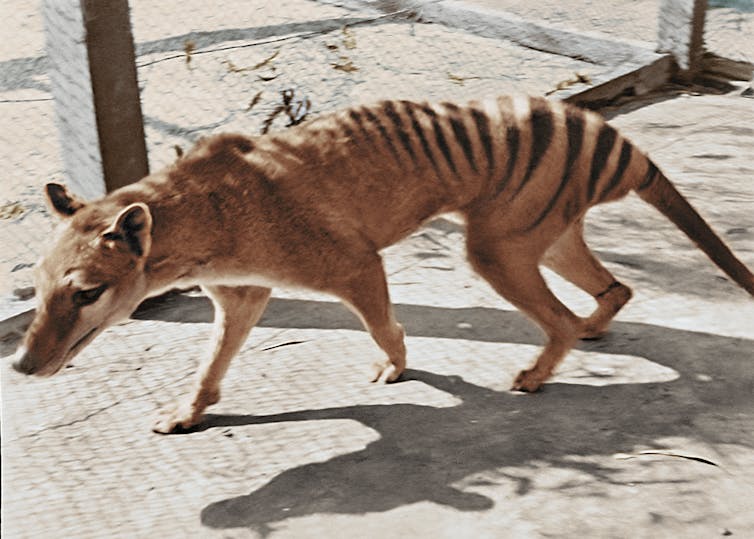
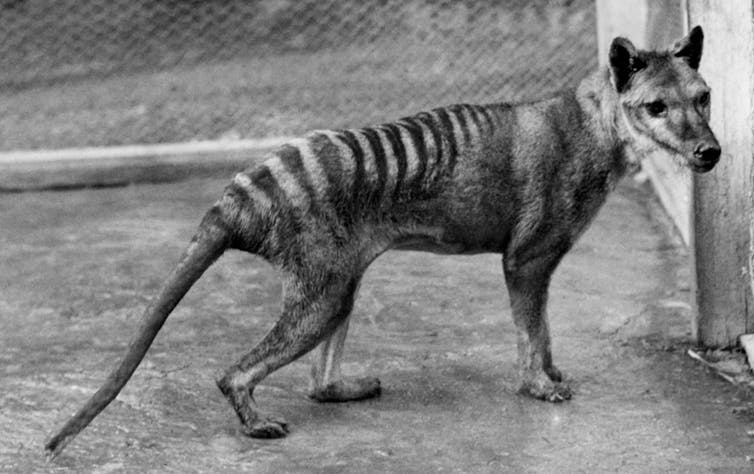
Last week, researchers at the University of Melbourne announced that thylacines or Tasmanian tigers, the Australian marsupial predators extinct since the 1930s, could one day be ushered back to life.

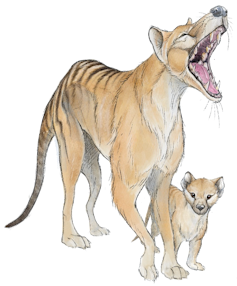
The thylacine (Thylacinus cynocephalus), also known as the ‘Tasmanian tiger’ (it was neither Tasmanian, because it was once common in mainland Australia, nor was it related to the tiger), went extinct in Tasmania in the 1930s from persecution by farmers and habitat loss. Art by Eleanor (Nellie) Pease, University of Queensland.
Centre of Excellence for Australian Biodiversity and Heritage

The main reason for the optimism was the receipt of a A$5 million philanthropic donation to the research team behind the endeavour.

Advances in mapping the genome of the thylacine and its living relative the numbat have made the prospect of re-animating the species seem real. As an ecologist, I would personally relish the opportunity to see a living specimen.

The announcement led to some overhyped headlines about the imminent resurrection of the species. But the idea of “de-extinction” faces a variety of technical, ethical and ecological challenges. Critics (like myself) argue it diverts attention and resources from the urgent and achievable task of preventing still-living species from becoming extinct.

The rebirth of the bucardo

The idea of de-extinction goes back at least to the the creation of the San Diego Frozen Zoo in the early 1970s. This project aimed to freeze blood, DNA, tissue, cells, eggs and sperm from exotic and endangered species in the hope of one day recreating them.

The notion gained broad public attention with the first of the Jurassic Park films in 1993. The famous cloning of Dolly the sheep reported in 1996 created a sense that the necessary know-how wasn’t too far off.

The next technological leap came in 2008, with the cloning of a dead mouse that had been frozen at –20℃ for 16 years. If frozen individuals could be cloned, re-animation of a whole species seemed possible.

After this achievement, de-extinction began to look like a potential way to tackle the modern global extinction crisis.

Read the rest of this entry »


Cartoon guide to biodiversity loss LXX

16 02 2022

Here is the first set of biodiversity cartoons for 2022. See full stock of previous ‘Cartoon guide to biodiversity loss’ compendia here.


Read the rest of this entry »


Influential conservation papers of 2021

5 01 2022

Following my annual tradition, I present the retrospective list of the ‘top’ 20 influential papers of 2021 as assessed by experts in Faculty Opinions (formerly known as F1000). These are in no particular order. See previous years’ lists here: 2020, 201920182017201620152014, and 2013.


Amazonia as a carbon source linked to deforestation and climate change — “… confirms what the sparse forest inventory has suggested, that climate change and land-use change is driving Amazonian ecosystems toward carbon sinks. … the research team provides a robust estimate of the carbon dynamics of one of the world’s most important ecosystems and provides insights into the role of land use change and potentials for mitigating direct carbon losses in the future.

Organic and conservation agriculture promote ecosystem multifunctionality — “… a very clear insight into the trade-offs between the different ecosystem services and indicate that yield and product quality are lower in organic systems compared to conventional systems, yet organic systems have higher economic performance due to higher product prices and subsidies.

Biodiversity of coral reef cryptobiota shuffles but does not decline under the combined stressors of ocean warming and acidification — “… even with similar richness, community function is very likely to be perturbed by ocean warming/acidification with unpredictable impacts on economically important species such as fish and corals.

Local conditions magnify coral loss after marine heatwaves — “… show that climate-induced coral loss is greater in areas with elevated seaweed abundance and elevated sea urchin densities, both of which commonly result from local overfishing … effective local management can synergize with global efforts to mitigate climate change and help coral reefs survive the Anthropocene.

Large ecosystem-scale effects of restoration fail to mitigate impacts of land-use legacies in longleaf pine savannas — “… while restoration can have major benefits in longleaf savannas, land-use legacies have clear effects on many aspects of the ecosystem.

Read the rest of this entry »


Cartoon guide to biodiversity loss LXIX

23 12 2021

Here is the final set of biodiversity cartoons for 2021, with some à propos seasonal content. See full stock of previous ‘Cartoon guide to biodiversity loss’ compendia here.


Read the rest of this entry »



Cartoon guide to biodiversity loss LXVIII

19 10 2021

Here is the fifth set of biodiversity cartoons for 2021. See full stock of previous ‘Cartoon guide to biodiversity loss’ compendia here.


Read the rest of this entry »


Video explainer — nasty alien species in Australia

15 09 2021

You know you’ve made it to the big time in Australia when Behind The News does a story on your research. Practically every kid in Australia watches the show at some point during their school years.

Although this was produced last month, I thought I’d post the entire 4-minute video here for your viewing pleasure.

When you popularise your research story for kids, it really gets the message across well.

Thank you, Natasha and BTN for this opportunity.


A domesticated planet

15 06 2021

The abundance of wild animals is regressing speedily as the number of domesticated animals and persons keeps escalating. Such demographic contrast signals that we urgently need to modify our model of subsistence and our interaction with Mother Nature.


If we had to choose between a biodiverse landscape and one hosting a monoculture of pine trees with ruminating cattle, many would take the first option. Biodiversity has an aesthetic value to humans, and also gives us free services like pollination, climate regulation, freshwater depuration or soil formation (1, 2). That is why the mounting rates of biodiversity loss have propelled a multi-angled debate about whether the Earth is experiencing the sixth mass extinction (3, 4) and how biodiversity should be managed to secure our access to ecosystem services (5, 6).

Think individuals, not species

A different way of approaching the biodiversity crisis consists of examining trends in the number of wild animals, with not so much emphasis on the variety of species. Thus, the Living Planet Report 2020, published by the World Wildlife Fund, has compiled thousands of scientific studies about > 21,000 populations of wild vertebrates studied over time (> 4,000 species represented) and concluded that, on average, the number of individuals per population has diminished by 70% since the 1970s (7).

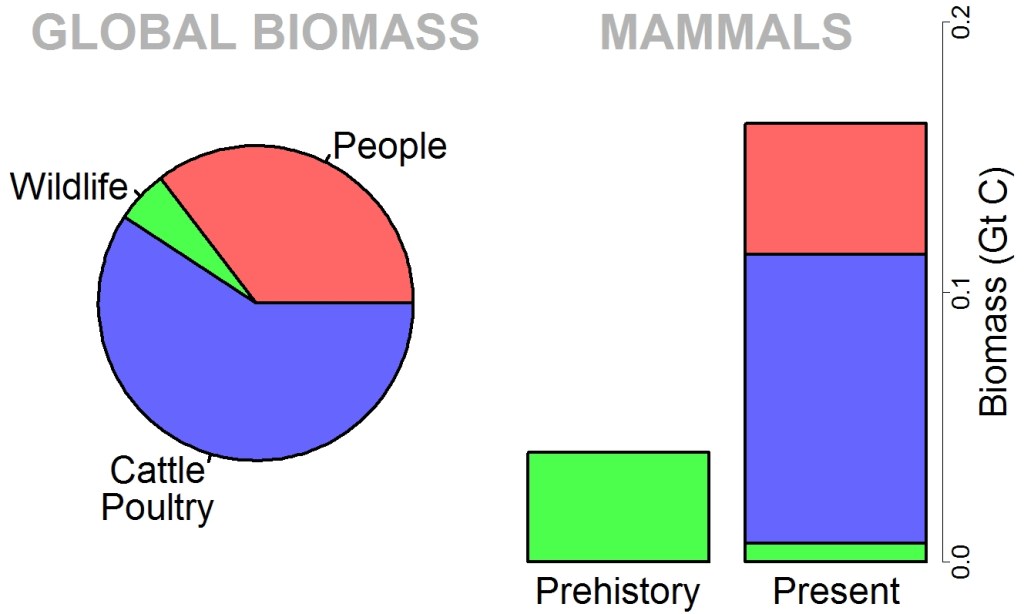
Biomass (birds and mammals) in Planet Earth measured in Giga-tonnes of Carbon (Gt C) (8) for people (red), domesticated animals (blue) and wildlife (green). The pie chart compares those three groups in modern times, and the barplot reports values for mammals from prehistory (~100.000 years ago) to now. Overpopulation of humans and domesticated animals currently outnumbers the biomass of wildlife.

On the other hand, Yinon Bar-On et al. (8) quantified that the biomass of humans and our domesticated mammals currently multiplies the biomass of wild mammals by a factor of 10, and there are 3 kg of humans and poultry for every kg of wild birds (see video featuring this study).

Not only that, during the last 100,000 years through which anatomically modern humans have thrived from a handful of bands of African hunter-gatherers to complex societies living in metropolis, the cattle industry has ended up quadrupling the global biomass of mammals (8).

Read the rest of this entry »