Humans 1, Environment 0

27 09 2010

© flickr.com/photos/singapore2010

While travelling to our Supercharge Your Science workshop in Cairns and Townsville last week (which, by the way, went off really well and the punters gave us the thumbs up – stay tuned for more Supercharge activities at a university near you…), I stumbled across an article in the Sydney Morning Herald about the state of Australia.

That Commonwealth purveyor of numbers, the Australian Bureau of Statistics (ABS), put together a nice little summary of various measures of wealth, health, politics and environment and their trends over the last decade. The resulting Measures of Australia’s Progress is an interesting read indeed. I felt the simple newspaper article didn’t do the environmental components justice, so I summarise the salient points below and give you my tuppence as well. Read the rest of this entry »


Supercharge your science: Blogito ergo sum

22 09 2010

Alas, I didn’t make up that wonderful expression (can anyone tell me who did?), but it was a very appropriate title for the presentation I gave today at the Supercharge Your Science workshop held at the JCU Cairns campus. For those of you who have never read any Descartes (I will forgive you – boring as philosophy gets), it comes from his well-known Cogito ergo sum (I think therefore I am/exist) statement. Someone cleverly adapted it to blogging.

So this post really just focuses on my component of the 5-presentation workshop extravaganza. Bill Laurance gave his two popular Interacting with the media and How to write a paper presentations (podcasted here), Mike Seyfang gave a great look at the current and future applications of social media to science, Jennifer Lappin showed how her organisation, the ARC Centre of Excellence for Coral Reef Studies, really blitzed the world with top-notch media engagement, and I gave my advice on science blogging (why, what, how, do, don’t, where). The full webinar is reproduced below via Slideshare.

Where taking the show on the road and will be giving the workshop again in Townsville on Friday. I dare say too that we’ll be giving it at many other venues in Australia and perhaps overseas over the coming months. The interest seems massive.

Don’t forget to follow and engage using the associated Twitter hashtag #4ss.

CJA Bradshaw


Global erosion of ecosystem services

14 09 2010

A few months ago I was asked to give a lecture about erosion of ecosystem services to students in the University of Adelaide‘s Issues in Sustainable Environments unit. I gave that lecture last week and just uploaded a slidecast of the presentation (with audio) today.

I’ve reproduced the lecture here for your viewing pleasure. I hope you find the 45-minute presentation useful. Note that the first few minutes cover me referring to the Biodiversity film short that I posted not too long ago.

CJA Bradshaw


Student opportunities with Australian Wildlife Conservancy

8 09 2010

A colleague of mine, Dr. Matt Hayward of the Australian Wildlife Conservancy (AWC), asked me to circulate some Honours, MSc and PhD student project opportunities. I thought this would be best done by publishing the call as a blog post.

The AWC is a non-government, non-profit organisation dedicated to the conservation of Australia’s wildlife and their habitats. AWC’s south-east region has a team of 7 ecologists who work closely with the land managers to carry out AWC’s Conservation and Science Program. The Science Program includes strategic research designed to help us manage threatened species more effectively. Several of these research projects are suitable for Honours, Masters or PhD projects.

This prospectus provides an outline of the student projects that are currently on offer in the south-east region. The majority of the projects are based on one sanctuary, although some aspects of the research may be done on other AWC sanctuaries and/or government conservation areas.

AWC will partially support these projects with equipment, staff time and expertise, and accommodation. In some cases, AWC may also provide some vehicle use and office facilities onsite at The Scotia Field Research Centre. We anticipate these projects will be collaborative efforts with input from students, academics and AWC staff, with appropriate acknowledgement for all involved. These projects are offered on a first in, first approved basis and have been offered to multiple universities.

More details on the sanctuaries and AWC are available here. If you are keen do one of these projects, please contact Matt Hayward and we will then formulate a research proposal and research agreement. Eight project descriptions follow. Read the rest of this entry »


Put the bite back into biodiversity conservation

2 07 2010

Today’s guest post is by Dr. Euan Ritchie, formerly of James Cook University, but who is now firmly entrenched at Deakin University in Victoria as a new Lecturer in ecology. Euan’s exciting research over the course of his memorable PhD (under the tutelage of renowned ecologist-guru, Professor Chris Johnson) has produced some whoppingly high-impact research. This latest instalment highlights a series of related papers he and his colleagues have just produced. We’re fortunate he agreed to give us his thoughts. Interestingly, the topic was just highlighted in the last issue of NatureDon’t damage dingos.

Corey has invited me to report on a recent paper published in Ecology Letters and another related study in PloS One, which together show how a better understanding of dingoes and their social structure and associated behaviour can help us to maintain or improve the health of our terrestrial ecosystems. This work, led by PhD student Arian Wallach (University of Adelaide), and involving collaborations with John Read (University of Adelaide), Adam O’Neill (C&A Environmental Services) and Christopher Johnson and me (James Cook University), offers some of the strongest evidence yet of the key roles top predators play in maintaining the balance.

Invasive species, along with habitat loss and the impacts of climate change, are among the greatest threats to the continued survival of many species. Because of this, millions of dollars and time is spent each year to control their populations. The impacts of invasive species in Australia are sadly all too obvious, with nearly half of the world’s mammal extinctions in the last 200 years occurring in Australia, with the prime suspects being the introduced domestic cat and red fox. However, despite massive, costly and ongoing attempts to control fox and cat populations successfully, we continue to witness the decline of many of our native species. Why? We would argue that the problem is that for too long much of our conservation and management efforts have been focused on treating symptoms and not the cause, which is the loss of ecosystem resilience (the natural ability of ecosystems to withstand change).

Read the rest of this entry »


Faraway fettered fish fluctuate frequently

27 06 2010

Hello! I am Little Fish

Swimming in the Sea.

I have lots of fishy friends.

Come along with me.

(apologies to Lucy Cousins and Walker Books)

I have to thank my 3-year old daughter and one of her favourite books for that intro. Now to the serious stuff.

I am very proud to announce a new Report in Ecology we’ve just had published online early about a new way of looking at the stability of coral reef fish populations. Driven by one of the hottest young up-and-coming researchers in coral reef ecology, Dr. Camille Mellin (employed through the CERF Marine Biodiversity Hub and co-supervised by me at the University of Adelaide and Julian Caley and Mark Meekan of the Australian Institute of Marine Science), this paper adds a new tool in the design of marine protected areas.

Entitled Reef size and isolation determine the temporal stability of coral reef fish populations, the paper applies a well-known, but little-used mathematical relationship between the logarithms of population abundance and its variance (spatial or temporal) – Taylor’s power law.

Taylor’s power law is pretty straightforward itself – as you raise the abundance of a population by 1 unit on the logarithmic scale, you can expect its associated variance (think variance over time in a fluctuating population to make it easier) to rise by 2 logarithmic units (thus, the slope = 2). Why does this happen? Because a log-log (power) relationship between a vector and its square (remember: variance = standard deviation2) will give a multiplier of 2 (i.e., if xy2, then log10x ~ 2log10y).

Well, thanks for the maths lesson, but what’s the application? It turns out that deviations from the mathematical expectation of a power-law slope = 2 reveal some very interesting ecological dynamics. Famously, Kilpatrick & Ives published a Letter in Nature in 2003 (Species interactions can explain Taylor’s power law for ecological time series) trying to explain why so many real populations have Taylor’s power law slopes < 2. As it turns out, the amount of competition occurring between species reduces the expected fluctuations for a given population size because of a kind of suppression by predators and competitors. Cool.

But that application was more a community-based examination and still largely theoretical. We decided to turn the power law a little on its ear and apply it to a different question – conservation biogeography. Read the rest of this entry »


Interview with a social (conservation) scientist

22 06 2010

I was contacted recently by Josh Cinner, a self-titled ‘social’ scientist (now working at the Centre of Excellence for Coral Reef Studies) who has published rather a lot in the conservation literature. He was recently highlighted in the journal Science for his work, and he thought CB readers would enjoy the coverage. He stated to me:

“…as a social scientist, I have spent the past decade or so working with ecologists and managers trying to integrate social science better in conservation. There are often calls for the importance of integrating social science in conservation and I thought your blog readers might appreciate some high-level recognition of the importance of this. Additionally, as far as I can tell, this is the first of these profiles that has focused on someone working in conservation.”

So, while fully crediting the source of this article and its author, Helen Fields, here is the entire text reproduced for your reading pleasure.

In the late 1980s, things were not going well for the coral reefs at Jamaica’s Montego Bay Marine Park. Overfishing had taken out a lot of the fish that eat algae, and algae were taking over the reef. “It was a classic case of ecosystem decline,” human geographer Joshua Cinner says. He arrived in Jamaica in 1996 as a Peace Corps volunteer after graduating from the University of Colorado, Boulder, with a double major in environmental conservation and geography. He was particularly interested in parks and preserves.

He’d landed in the middle of a war. Lobbying by tour operators and others got spearfishing, one of the main culprits in overfishing, banned in the park. The ban did not go over well with local people. “All the park equipment got vandalized. We had park rangers get threatened; their families got threatened at spear point,” Cinner says. Spearfishing equipment is cheap and you don’t need a boat; men who do it are generally poor and are fishing as a last resort. “The cultural lens through which the fishermen viewed this issue was of struggle in a post-slavery society, of the rich, predominantly white expatriates making a law that oppressed the poorest of the poor locals to benefit the wealthy.”

The conflict got Cinner thinking about how conservation really works. “It wasn’t really about the ecology,” he says. “Making conservation work in Jamaica had a lot to do with understanding the local culture and people.” It also opened his eyes to the role oceans play. “The ocean is often viewed as an open-access resource. That extra layer of complexity interested me,” he says. “Land can often be private property,” but “the ocean is typically viewed as free for anyone to fish in, for anyone to swim in and use.” Read the rest of this entry »


Biodiversity SNAFU in Australia’s Jewel

16 06 2010

I’ve covered this sad state of affairs and one of Australia’s more notable biodiversity embarrassments over the last year (see Shocking continued loss of Australian mammals and Can we solve Australia’s mammal extinction crisis?), and now the most empirical demonstration of this is now published.

The biodiversity guru of Australia’s tropical north, John Woinarksi, has just published the definitive demonstration of the magnitude of mammal declines in Kakadu National Park (Australia’s largest national park, World Heritage Area, emblem of ‘co-management’ and supposed biodiversity and cultural jewel in Australia’s conservation crown). According to Woinarski and colleagues, most of those qualifiers are rubbish.

The paper published in Wildlife Research is entitled Monitoring indicates rapid and severe decline of native small mammals in Kakadu National Park, northern Australia and it concludes:

The native mammal fauna of Kakadu National Park is in rapid and severe decline. The cause(s) of this decline are not entirely clear, and may vary among species. The most plausible causes are too frequent fire, predation by feral cats and invasion by cane toads (affecting particularly one native mammal species).

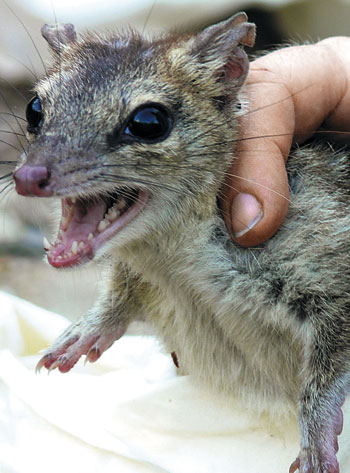
I’ve done quite a bit of work in Kakadu myself, and the one thing that hits you every time you travel through it is the lack of visible wildlife. Sure, you’ll see horses, pigs and buffalo, as well as cane toads and cats, but getting a glimpse of anything native, from Conilurus to Varanus, and you’d consider yourself extremely lucky.

We’ve written a lot about the feral animal problem in Kakadu and even developed software tools to assist in density-reduction programmes. It doesn’t appear that anyone is listening.

Another gob-smacking vista you’ll get when travelling through Kakadu any time from April to December is that it’s either been burnt, actively burning or targeted for burning. They burn the shit out of the place every year. No wonder the native mammals are having such a hard time.

Combine all this with the dysfunctional management arrangement, and you cease to have a National Park. Kakadu is now a lifeless shell that does precious little for conservation of biodiversity (and 3 of the 5 criteria it had to satisfy to become a World Heritage Area are specifically related to natural resource ‘values’). I say, delist Kakadu now and let’s stop fooling ourselves.

Ok, back from the rant. Woinarski and others superimposed a mammal monitoring programme over top a fire-regime experiment for vegetation. Although they couldn’t sample every plot every season, they staggered the sampling to cover the area as best they could over the 13 years of monitoring (1996-2009). What they observed was staggering. Read the rest of this entry »


PhD scholarships in marine plant ecology and conservation

12 05 2010

Two new APAI (Australian Postgraduate Award – Industry) PhD scholarships are available at the University of Adelaide, both in marine ecology and conservation.

Molecular Systematics and Ecology of Marine Macroalgae

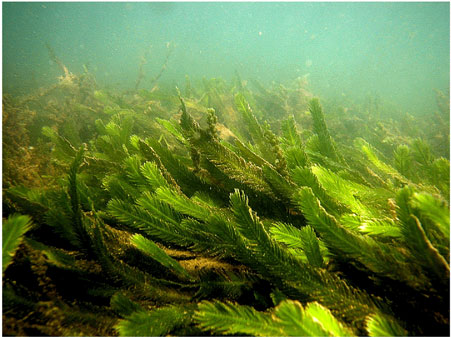
Dr. Frederico Gurgel at the University of Adelaide is seeking 2 PhD students interested in working on several aspects of the marine green macroalgal genus Caulerpa. Honour students are also welcome to apply. APAI PhD scholarships are the best-paid scholarships from the Australian Research Council (fees + AU$26,000 p.a. for 3 yrs). Possible co-advisors: Prof. Corey Bradshaw (University of Adelaide/South Australian Research and Development Institute – SARDI), Dr. Jason Tanner (SARDI), and Dr. Marty Deveney (SARDI). External collaborators: Dr. Peter Grewe (CSIRO Marine), Dr. John Runcie (University of Sydney). Starting date: any time.

Integrative approach to the study of Caulerpa taxifolia in Australia: Ecological, Physiology, Phylogeography and DNA barcoding

The students will perform comparative ecological and physiological assays among Australian native and invasive strains of C. taxifolia (and related species) to study their response (e.g., growth, reproduction, photosynthesis, gene expression) to distinct abiotic factors and global climate change scenarios (e.g., pCO2, pH, temperature, light, salinity, nutrients). Students will perform a multi-marker comparative phylogeographic study among 14 invasive (NSW and SA) and 4 native (QLD, NT, WA) populations to determine the origin of introduced populations in temperate Australia. Students will build a dual-marker DNA barcode database of all species of Caulerpa in Australia as a tool to identify morphologically compromised specimens. Additionally, they will perform a molecular-assisted evolutionary (phylogenetic) study of the genus and develop demographic models to predict the fate of Caulerpa populations under different abiotic scenarios. The students will have the option to choose the components of the project they desire.

Desirable skills: 4WD and manual driving, snorkelling, SCUBA diving certification (open water minimum), molecular biology experience.

For more information please contact Dr. Fred Gurgel (e-mail or telephone: +61 8 8222 9291).

Add to FacebookAdd to DiggAdd to Del.icio.usAdd to StumbleuponAdd to RedditAdd to BlinklistAdd to TwitterAdd to TechnoratiAdd to Yahoo BuzzAdd to Newsvine


Who are the world’s biggest environmental reprobates?

5 05 2010

Everyone is a at least a little competitive, and when it comes to international relations, there could be no higher incentive for trying to do better than your neighbours than a bit of nationalism (just think of the Olympics).

We rank the world’s countries for pretty much everything, relative wealth, health, governance quality and even happiness. There are also many, many different types of ‘environmental’ indices ranking countries. Some attempt to get at that nebulous concept of ‘sustainability’, some incorporate human health indices, and other are just plain black box (see Böhringer et al. 2007 for a review).

With that in mind, we have just published a robust (i.e., to missing data, choices for thresholds, etc.), readily quantifiable (data available for most countries) and objective (no arbitrary weighting systems) index of a country’s relative environmental impact that focuses ONLY on environment (i.e., not human health or economic indicators) – something no other metric does. We also looked at indices relative to opportunity – that is, looking at how much each country has degraded relative to what it had to start with.

We used the following metrics to create a combined environmental impact rank: natural forest loss, habitat conversion, fisheries and other marine captures, fertiliser use, water pollution, carbon emissions from land-use change and threatened species.

The paper, entitled Evaluating the relative environmental impact of countries was just published in the open-access journal PLoS One with my colleagues Navjot Sodhi of the National University of Singapore (NUS) and Xingli Giam, formerly of NUS but now at Princeton University in the USA.

So who were the worst? Relative to resource availability (i.e,. how much forest area, coastline, water, arable land, species, etc. each country has), the proportional environmental impact ranked (from worst) the following ten countries:

  1. Singapore
  2. Korea
  3. Qatar
  4. Kuwait
  5. Japan
  6. Thailand
  7. Bahrain
  8. Malaysia
  9. Philippines
  10. Netherlands

When considering just the absolute impact (i.e., not controlling for resource availability), the worst ten were:

  1. Brazil
  2. USA
  3. China
  4. Indonesia
  5. Japan
  6. Mexico
  7. India
  8. Russia
  9. Australia
  10. Peru

Interestingly (and quite unexpectedly), the authors’ home countries (Singapore, Australia, USA) were in either the worst ten proportional or absolute ranks. Embarrassing, really (for a full list of all countries, see supporting information). Read the rest of this entry »


Global rates of forest loss – everyone’s a bastard

29 04 2010

© A. Hesse

I’ve written rather a lot about rates of forest loss around the world, including accumulated estimates of tropical forest loss and increasing fragmentation/loss in the boreal forest (see Bradshaw et al. 2009 Front Ecol Evol & Bradshaw et al. 2009 Trends Ecol Evol). For the tropics in particular, we used the index that an area of rain forest about the size of Bangladesh (> 15 million hectares) was disappearing each year, and in Russia alone, annual decline in forest area averaged 1.1 million hectares between 1988 and 1993. Mind boggling, really.

But some of these estimates were a bit old, relied on some imprecise satellite data, and didn’t differentiate forest types well. In addition, many have questioned whether the rates are continuing and which countries are being naughty or nice with respect to forest conservation.

It was great therefore when I came across a new paper in PNAS by Hansen & colleagues entitled Quantification of global gross forest cover loss because it answered many of the latter questions.

Part of the problem in assessing worldwide forest cover loss in the past was the expense of satellite imagery, access problems, data storage and processing issues. Happily, new satellite streams and easing of access has rectified many of these limitations. Hansen & colleagues took advantage of data from the MODIS sensor to create a stratification for forest cover loss. They then used the Landsat ETM+ sensor as the primary data for quantifying gross forest cover loss for the entire planet from 2000 to 2005. They defined ‘forest cover’ as “… 25% or greater canopy closure at the Landsat pixel scale (30-m × 30-m spatial resolution) for trees > 5 m in height”.

For your reading pleasure (and conservation horror), the salient features were: Read the rest of this entry »


Conservation jobs at the University of Adelaide

13 04 2010

I’m posting the advertisements for two new conservation jobs in the Global Ecology Group at the University of Adelaide.

This Australian Research Council-funded Discovery Project seeks to determine whether functional forms of spatially explicit population dynamics are generalisable across taxa with similar attributes and range limiting factors. By considering the effects of multiple interacting factors (biotic and abiotic) on the demographic determinants of species’ habitat suitability and geographic distributional limits, the research will provide a foundation on which to develop adaptive conservation strategies in response to the anticipated impacts of global change; examine the complexities and potentially irreducible uncertainties in forecasting and managing biodiversity; and identify limitations associated with different modelling approaches. Read the rest of this entry »


Classics: Mesopredator Release

17 03 2010

© J. Short

Although popularised by Crooks & Soulé (1999), Soulé et al. (1988) first gave us the term that described how entire ecosystems can become unbalanced by a reduction of a higher trophic-level predator exerting so-called ‘top-down’ control on the abundance of species occupying lower trophic levels.

The idea had theoretical support in ecology (Wright et al. 1994; Litvaitis & Villafuerte 1996), but it was not until Soulé and colleagues described how the decline of dominant predators combines with habitat fragmentation to release top-down pressure on smaller predators, thereby increasing predation rates on prey lower down the trophic web.

Crooks & Soulé (1999) described an example where the decline in coyotes (Canis latrans) in combination with urbanisation-driven habitat fragmentation led to an increase in cat (Felis catus) densities and the subsequent decline in scrub-breeding birds. More recent examples attest to the importance of the mesopredator release phenomenon: Myers et al. (2007) described how the decline in large coastal shark species has allowed mesopredator cownose rays (Rhinoptera bonasus) to increase, leading to a reduction in commercially important shellfish densities; and Johnson et al. (2007) showed how dingoes (Canis lupus dingo) in Australia suppress populations of exotic predators such as cats and foxes, leading to more locally abundant populations of native marsupials (see previous post).

Conservation biologists have benefited from this knowledge because we’ve realised that top-order predators affect far more than their immediate prey. These examples really hit home how a fully functional community is required for ecosystem stability, so we should strive to preserve complete complements of communities, not just our favourite species.

CJA Bradshaw

Add to FacebookAdd to DiggAdd to Del.icio.usAdd to StumbleuponAdd to RedditAdd to BlinklistAdd to TwitterAdd to TechnoratiAdd to Yahoo BuzzAdd to Newsvine


Bill Laurance coming to Adelaide

13 03 2010

We’ve got a real treat for biodiversity buffs scheduled for the end of March. Eminent (Distinguished, Famous, Respected… the list goes on) Professor William (Bill) Laurance is briefly leaving his tropical world and coming south to the temperate climes of Adelaide to regale us with his fascinating biodiversity research career.

Bill is a leading conservation biologist who has worked internationally on many high-profile threats to tropical forests—in the Amazon, Central America, Africa, and Australasia. A highly prolific scientist, to date he has published five books and over 300 scientific articles. Bill has recently commenced a position as Distinguished Research Professor at James Cook University and is involved with the Smithsonian Tropical Research Institute in Panama. He also happens to be the bloke that blew the lid open on the devastating effects of tropical fragmentation in the Amazon with some of the best long-term experiments ever done in conservation biology.

I’m personally very pleased for several reasons: (1) Although I have never met Bill in person yet, I’ve recently co-authored two papers with him (Wash and spin cycle threats to tropical biodiversity and Improving the performance of the Roundtable on Sustainable Palm Oil for nature conservation) and I’m keen to meet the man behind the pen; (2) we have had many email discussions (some of them rather heated!), so I’m keen to flesh some of these out over a nice glass of South Australian Shiraz; (3) he’s been a keen supporter of my work for years, and has given me many opportunities to get my research noticed; and (4) it’s high time to met one of ConservationBytes.com Conservation Scholars.

Bill has recently shifted shop from Panama (Smithsonian Tropical Research Institute) to Australia’s own James Cook University, and so we at the Environment Institute thought we should take advantage of his geographical disorientation and bring him down south for a while. But he’s going to have to sing for his supper, so he’s kindly agreed to give three talks in 3 days from 29-31 March 2010.

His first talk (on Monday 29 March) will be an in-house Environment Institute seminar, but the second two will be public events that I urge anyone remotely interested in biodiversity conservation research to attend. In fact, his Tuesday 30 March presentation (18.00-20.00 Napier G03, University of Adelaide) is even more generic than that, and word on the street is it is highly entertaining and extremely well attended wherever Bill’s is gracious enough to give it:

Amplify Your Voice: Keys to Having a Prolific Scientific Career (and Bill would know).

This will include (1) How to be more prolific: strategies for writing and publishing scientific papers and (2) Further ways to maximise your scientific impact – interacting with the popular media and how to promote yourself. Each topic will run for 50 minutes and will include 10 minutes for audience questions. A tea and coffee break will be held between sessions. Book here.

His second public talk on Wednesday 31 March (18.00-19.30 Napier 102, University of Adelaide) will be:

Diagnosis Critical | The lungs of our Planet

Here he will be discussing how the forests of our world are in crisis. Our drive for continued economic growth has had devastating consequences for the world’s ecosystems that provide critical human services. Our forests are a haven for countless plant and animal species that form the basis of ecological services, these services are the biological mechanisms that make the world our home. Book here.

So, if you have a couple of free nights at the end of the month and are in Adelaide, I strongly recommend you come out and see Bill do his thing.

CJA Bradshaw

Add to FacebookAdd to DiggAdd to Del.icio.usAdd to StumbleuponAdd to RedditAdd to BlinklistAdd to TwitterAdd to TechnoratiAdd to Yahoo BuzzAdd to Newsvine


Vodcast on killing for conservation

24 02 2010

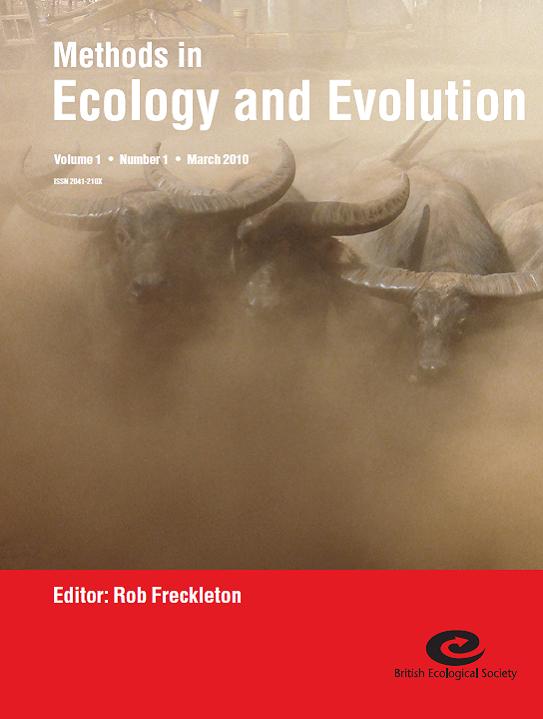
The inaugural issue of Methods in Ecology and Evolution came out today (see first issue editorial) and I am very pleased not only that our paper (Spatially explicit spreadsheet modelling for optimizing the efficiency of reducing invasive animal density) made it into the the paper line-up (see previous ConservationBytes.com post on the paper here), we also managed to score the journal’s cover image (buffalo image shown right: Asian swamp buffalo Bubalus bubalis introduced to Australia in the early 19th Century now populate much of the tropical north and cause severe environmental disturbances to savanna and wetland ecosystems. Despite a broad-scale cull of hundreds of thousands of free-ranging buffalo occurring in the 1980s and 1990s to eradicate brucellosis and tuberculosis, the population is recovering and continuing to threaten protected areas such as Kakadu National Park. A small wild harvest of several thousand buffalo occurs each year in Arnhem Land where mustering is aided by helicopters and on-ground vehicles. The buffalo pictured are housed in temporary holding pens and then shipped for live export. Photo credit: Jesse Northfield).

I also had the opportunity to chat with Journal Coordinator, Graziella Iossa, via Skype about the paper, and they have put up a YouTube vodcast of the interview itself. You can also check it out here.

Summary: Corey Bradshaw answers what is the main idea behind his work with co-authors, “Spatially explicit spreadsheet modelling for optimising the efficiency of reducing invasive animal density”. Further, he explains how their model advances methodology in ecology and evolution and finally shows how it could be applied by wildlife manager and practitioners with basic knowledge of computer models. Their Excel-spreadsheet ‘Spatio-Temporal Animal Reduction’ (S.T.A.R.) model is designed specifically to optimise the culling strategies for feral pigs, buffalo and horses in Kakadu National Park (northern Australia), but Corey explains how their aim was to make it easy enough for anyone to use and modify it so that it could be applied to any invasive species anywhere.

Congratulations to Editor-in-Chief Rob Freckleton, Graziella and the Associate Editors for a great first issue. Other titles include:

Keep them coming!

CJA Bradshaw

Add to FacebookAdd to DiggAdd to Del.icio.usAdd to StumbleuponAdd to RedditAdd to BlinklistAdd to TwitterAdd to TechnoratiAdd to Yahoo BuzzAdd to Newsvine


ERA rankings for Conservation and Ecology journals

11 02 2010

The much-touted Excellence in Research for Australia (ERA) initiative was established in 2008 to “…assesses research quality within Australia’s higher education institutions using a combination of indicators and expert review by committees comprising experienced, internationally-recognised experts”. Following on the heels of the United Kingdom’s Research Assessment Exercise (RAE) and Australia’s previous attempt at such a ranking (the now-defunct Research Quality Framework), we will now have a system that ranks research performance and universities in this country. Overall I think it’s a good thing so that the dead-wood can lift their game or go home, but no ranking system is perfect. Some well-deserving people will be left out in the cold.

Opinions aside, I thought it would be useful to provide the ERA journal ranking categories in conservation and ecology for my readers, particularly for those in Australia. See also my Journals page for conservation journals, their impact factors and links. The ERA has ranked 20,712 unique peer-reviewed journals, with each given a single quality rating (or is not ranked). The ERA is careful to say that “A journal’s quality rating represents the overall quality of the journal. This is defined in terms of how it compares with other journals and should not be confused with its relevance or importance to a particular discipline.”.

They provide four tiers of quality rating:

  • A* =  Typically one of the best in its field or subfield in which to publish and would typically cover the entire field/subfield. Virtually all papers they publish will be of a very high quality. These are journals where most of the work is important (it will really shape the field) and where researchers boast about getting accepted. Acceptance rates would typically be low and the editorial board would be dominated by field leaders, including many from top institutions.
  • A =  The majority of papers in a Tier A journal will be of very high quality. Publishing in an A journal would enhance the author’s standing, showing they have real engagement with the global research community and that they have something to say about problems of some significance. Typical signs of an A journal are lowish acceptance rates and an editorial board which includes a reasonable fraction of well known researchers from top institutions.
  • B = Tier B covers journals with a solid, though not outstanding, reputation. Generally, in a Tier B journal, one would expect only a few papers of very high quality. They are often important outlets for the work of PhD students and early career researchers. Typical examples would be regional journals with high acceptance rates, and editorial boards that have few leading researchers from top international institutions.
  • C =  Tier C includes quality, peer reviewed, journals that do not meet the criteria of the higher tiers.

If you’re an Australian conservation ecologist, then you’d be wise to target the higher-end journals for publication over the next few years (it will affect your rank).

So, here goes:

Conservation Journals

Ecology Journals (in addition to those listed above; only A* and A)

  • A*: Annual Review of Ecology, Evolution and Systematics, Biological Reviews, Ecological Monographs, Ecology, Ecology Letters, Environment International, Fish and Fisheries, Global Ecology and Biogeography, Philosophical Transactions of the Royal Society of London: Biological Sciences, PLoS Biology, Proceedings of the Royal Society of London: Biological Sciences, The American Naturalist, The Quarterly Review of Biology
  • A: Agriculture, Ecosystems and Environment, Animal Behaviour, American Journal of Primatology, Auk, Behavioral Ecology, Behavioral Ecology and Sociobiology, BioEssays, Biology Letters, Bioscience, BMC Biology, Canadian Journal of Fisheries and Aquatic Sciences, Coral Reefs, Diversity and Distributions, Ecography, Ecological Applications, Fisheries, Freshwater Biology, Functional Ecology, International Journal of Primatology, Journal of Applied Ecology, Journal of Animal Ecology, Journal of Avian Biology, Journal of Biogeography, Journal of Ecology, Journal of Experimental Biology, Journal of Fish Biology, Journal of Mammalogy, Journal of the North American Benthological Society, Journal of Zoology, Molecular Ecology, Oecologia, Oikos, Physiological and Biochemical Zoology, Perspectives in Plant Ecology, Evolution and Systematics, Reviews in Fisheries Science, Wildlife Monographs, Zoological Journal of the Linnean Society

I’m sure I’ve missed a few, but that’ll cover most of the relevant journals. For the full, tortuous list of journals in Excel format, click here. Happy publishing!

CJA Bradshaw

Add to FacebookAdd to DiggAdd to Del.icio.usAdd to StumbleuponAdd to RedditAdd to BlinklistAdd to TwitterAdd to TechnoratiAdd to Yahoo BuzzAdd to Newsvine


Computer-assisted killing for conservation

12 01 2010

Many non-Australians might not know it, but Australia is overrun with feral vertebrates (not to mention weeds and invertebrates). We have millions of pigs, dogs, camels, goats, buffalo, deer, rabbits, cats, foxes and toads (to name a few). In a continent that separated from Gondwana about 80 million years ago, this allowed a fairly unique biota to evolve, such that when Aboriginals and later, Europeans, started introducing all these non-native species, it quickly became an ecological disaster. One of my first posts here on ConservationBytes.com was in fact about feral animals. Since then, I’ve written quite a bit on invasive species, especially with respect to mammal declines (see Few people, many threats – Australia’s biodiversity shame, Shocking continued loss of Australian mammals, Can we solve Australia’s mammal extinction crisis?).

So you can imagine that we do try to find the best ways to reduce the damage these species cause; unfortunately, we tend to waste a lot of money because density reduction culling programmes aren’t usually done with much forethought, organisation or associated research. A case in point – swamp buffalo were killed in vast numbers in northern Australia in the 1980s and 1990s, but now they’re back with a vengeance.

Enter S.T.A.R. – the clumsily named ‘Spatio-Temporal Animal Reduction’ [model] that we’ve just published in Methods in Ecology and Evolution (title: Spatially explicit spreadsheet modelling for optimising the efficiency of reducing invasive animal density by CR McMahon and colleagues).

This little Excel-based spreadsheet model is designed specifically to optimise the culling strategies for feral pigs, buffalo and horses in Kakadu National Park (northern Australia), but our aim was to make it easy enough to use and modify so that it could be applied to any invasive species anywhere (ok, admittedly it would work best for macro-vertebrates).

The application works on a grid of habitat types, each with their own carrying capacities for each species. We then assume some fairly basic density-feedback population models and allow animals to move among cells. We then hit them virtually with a proportional culling rate (which includes a hunting-efficiency feedback), and estimate the costs associated with each level of kill. The final outputs give density maps and graphs of the population trajectory.

We’ve added a lot of little features to maximise flexibility, including adjusting carrying capacities, movement rates, operating costs and overheads, and proportional harvest rates. The user can also get some basic sensitivity analyses done, or do district-specific culls. Finally, we’ve included three optimisation routines that estimate the best allocation of killing effort, for both maximising density reduction or working to a specific budget, and within a spatial or non-spatial context.

Our hope is that wildlife managers responsible for safeguarding the biodiversity of places like Kakadu National Park actually use this tool to maximise their efficiency. Kakadu has a particularly nasty set of invasive species, so it’s important those in charge get it right. So far, they haven’t been doing too well.

You can download the Excel program itself here (click here for the raw VBA code), and the User Manual is available here. Happy virtual killing!

CJA Bradshaw

P.S. If you’re concerned about animal welfare issues associated with all this, I invite you to read one of our recent papers on the subject: Convergence of culture, ecology and ethics: management of feral swamp buffalo in northern Australia.

Add to FacebookAdd to NewsvineAdd to DiggAdd to Del.icio.usAdd to StumbleuponAdd to RedditAdd to BlinklistAdd to Ma.gnoliaAdd to TechnoratiAdd to Furl

ResearchBlogging.orgC.R. McMahon, B.W. Brook,, N. Collier, & C.J.A. Bradshaw (2010). Spatially explicit spreadsheet modelling for optimising the efficiency of reducing invasive animal density Methods in Ecology and Evolution : 10.1111/j.2041-210X.2009.00002.x

Albrecht, G., McMahon, C., Bowman, D., & Bradshaw, C. (2009). Convergence of Culture, Ecology, and Ethics: Management of Feral Swamp Buffalo in Northern Australia Journal of Agricultural and Environmental Ethics, 22 (4), 361-378 DOI: 10.1007/s10806-009-9158-5

Bradshaw, C., Field, I., Bowman, D., Haynes, C., & Brook, B. (2007). Current and future threats from non-indigenous animal species in northern Australia: a spotlight on World Heritage Area Kakadu National Park Wildlife Research, 34 (6) DOI: 10.1071/WR06056


How to restore a tropical rain forest

6 11 2009

thiakiHere’s a little story for you about how a casual chat over a glass of wine (or many) can lead to great scientific endeavours.

A few years ago I was sitting in the living room of my good friends Noel Preece and Penny van Oosterzee in Darwin chatting about life, the universe, and everything. They rather casually mentioned that they would be selling their environmental consulting company and their house and moving to the Queensland rain forest. Ok – sounded like a pretty hippy thing to do when you’re thinking about ‘retiring’ (only from the normal grindstone, at least). But it wasn’t about the easy life away from it all (ok, partially, perhaps) – they wanted to do something with their reasonably large (181 ha), partially deforested (51-ha paddock) property investment. By ‘something’, I mean science.

So they asked me – how would we go about getting money to investigate the best way to reforest a tropical rain forest? I had no idea. As it turns out, no one really knows how to restore rain forests properly. Sure, planting trees happens a lot, but the random, willy-nilly, unquantified ways in which it is done means that no one can tell you what the biggest biodiversity bang for your buck is, or even if it can compete on the carbon sequestration front.

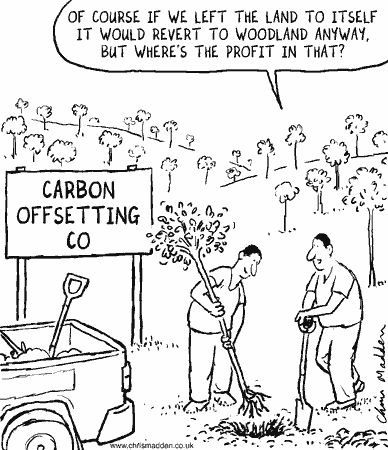
Why carbon sequestration? Well, in case you’ve had your head up your bum for the last decade, one of the major carbon mitigating schemes going is the offset idea – for every tonne of carbon you emit as a consumer, you (or more commonly, someone else you pay) plant a certain number of trees (because trees need carbon to grow and so suck it out of the atmosphere). Nice idea, but if you deforest native ecosystems just to bash up quick-growing monoculture plantations of (usually) exotic species with little benefit to native biota, biodiversity continues to spiral down the extinction vortex. So, there has to be a happy medium, and there has to be a way to measure it.

So I said to Penny and Noel “Why don’t we bash together a proposal and get some experts in the field involved and submit it to the Australian Research Council (ARC) for funding?” They thought that was a smashing idea, and so we did.

Fast forward a few years and … success! The Thiaki Project was born (‘Thiaki’ is the name of the Creek flowing through the property north of Atherton – seems to be of Greek origin). We were extremely lucky to find a new recruit to the University of Queensland, Dr. Margie Mayfield (who worked previously with Paul Ehrlich), who was not only an expert in the area of tropical reforestation for biodiversity, she also had the time and energy to lead the project. We garnered several other academic and industry partners and came up with a pretty sexy experiment that is just now getting underway thanks to good old Mr. ARC.

The project is fairly ambitious, even though the experiments per se are fairly straight forward. We’re using a randomised block design where we are testing 3 tree diversity treatments (monoculture, 1 species each from 6 families, and 5 species each from those same 6 families) and two planting densities (high and low). The major objective is to see what combination of planting density and native tree species provides the most habitat for the most species. We’re starting small, looking mainly at various insects as they start to use the newly planted blocks, but might expand the assessments (before planting and after) to reptiles, amphibians and possibly birds later on.

But we’re not stopping there – we were fortunate enough to get get a clever soil scientist, Dr. David Chittleborough of the University of Adelaide, involved so we could map the change in soil carbon during the experiment. Our major challenge is to find the right combination of tree species and planting techniques that restore native biodiversity the most effectively, all the while maximising carbon sequestration from the growing forest. And of course, we’re trying to do this as most cost-effectively as we can – measuring the relative costs will give landowners contemplating reforestation the scale of expenditures expected.

I’m pretty proud of what Margie, Noel, Penny and the rest of the team have accomplished so far, and what’s planned. Certainly the really exciting results are years away yet, but stay tuned – Thiaki could become the model for tropical reforestation worldwide. Follow the Thiaki Project website for regular updates.

I’d also love to recreate the Thiaki Project in southern Australia because as it turns out, no one knows how to maximise biodiversity and carbon sequestration for the lowest cost in temperate reforestation projects either. All we need is a few hundred hectares of deforested land (shouldn’t be hard to find), about $1 million to start, and a bit of time. Any takers?

CJA Bradshaw

Add to FacebookAdd to NewsvineAdd to DiggAdd to Del.icio.usAdd to StumbleuponAdd to RedditAdd to BlinklistAdd to Ma.gnoliaAdd to TechnoratiAdd to Furl

carbon offset

© C. Madden


Protecting Australian wilderness

1 10 2009

Today I highlight a new paper just out online in Diversity and Distributions by James Watson and colleagues: Wilderness and future conservation priorities in Australia. It’s certainly one for the Potential list.

KNP

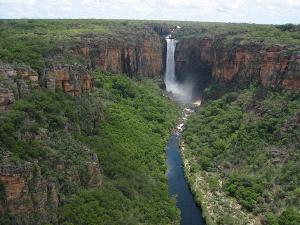
Jim Jim Falls, Kakadu National Park

Australia has a pretty bad biodiversity conservation track record – we have some of the worst mammal extinction trends in the world, and we’ve lost at least 50 % of our forested area since European colonisation. Despite our relatively large system of parks and reserves, things aren’t going to well (even in the parks!).

Our rapidly expanding influence means that we have to start protecting larger and larger areas if we want to have any chance of slowing the modern extinction crisis. This means we have to go beyond dedicated biodiversity reserves and sequester more ‘wilderness’ (defined as “…large areas that have experienced minimal habitat loss“). Watson and colleagues therefore used Australia as a good example to determine the extent to which the national protected area network captures ‘wilderness’, and how Australia’s planned expansion of the reserve system will include ‘wilderness’ in the future.

Although there wasn’t much planning involved initially, Australia (like many other countries) started to take biodiversity conservation seriously in the mid-1990s, such that now we have about 11 % of our 7.7 million km2 land area within a National Reserve System. Planning didn’t feature heavily in the early years, but it has been embraced now by nearly all planning bodies within government.

© Wiley-Blackwell

© Wiley-Blackwell

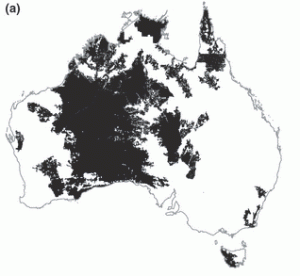
Using estimates of the total wilderness area in Australia (Fig. a), Watson and colleagues determined how much was included in the Reserve System (Fig. b), and how this value changed between 2000 and 2006.

Of the 2.93 million km2 of wilderness (38 % of land area, mostly in northern and western Australia), only 14 % was protected in 2000. This value increased marginally to 19 % by 2006 as the size of the Reserve System itself increased by 37 % (i.e., from 652597 to 895326 km2).

Bottom line – our growth in reserve area didn’t really capture the necessary wilderness; instead, gains were made in areas largely modified by humans. Even where wilderness has been captured, it’s predominately in ‘multiple use’ regions (incorporating mining, forestry and grazing, for example).

This isn’t a bad thing really – by focussing on areas of high biodiversity value that are under relatively high threat embraces the biodiversity hotspot approach to conservation and emphasises restoration. This is, of course, needed. But not incorporating a wider component of the habitats within wilderness could bias conservation toward range-restricted species.

© Wiley-Blackwell

© Wiley-Blackwell

Watson and colleagues therefore make a number of recommendations:

  1. We should strive to quantify and map spatially the  important ecological and evolutionary processes that drive the distribution and abundance of biodiversity so they can be explicitly incorporated into reserve area prioritisations.
  2. We should focus on predicting the magnitude and distribution of future threats and incorporate them into the spatial prioritisation framework.
  3. We should incorporate realistic constraints (e.g., financial costs) into prioritisation.
  4. We need to map and analyse a range of social and economic factors that define opportunities for conservation in conjunction with information on conservation values, threats and costs.

The bottom line is that we need to find a better balance between planning that protects threatened species and ecosystems in already highly fragmented (threatened) landscapes, and planning that protects large areas of wilderness that still contains most of its conservation values (wilderness). We’re getting there, but slowly, and hopefully in time to save our remaining threatened species from extinction.

CJA Bradshaw

Add to FacebookAdd to NewsvineAdd to DiggAdd to Del.icio.usAdd to StumbleuponAdd to RedditAdd to BlinklistAdd to Ma.gnoliaAdd to TechnoratiAdd to Furl

ResearchBlogging.org

Watson, J., Fuller, R., Watson, A., Mackey, B., Wilson, K., Grantham, H., Turner, M., Klein, C., Carwardine, J., Joseph, L., & Possingham, H. (2009). Wilderness and future conservation priorities in Australia Diversity and Distributions DOI: 10.1111/j.1472-4642.2009.00601.x


Coming to grips with the buffalo problem

7 09 2009

Clive McMahon (left) & colleaguesA good friend and colleague of mine, Dr. Clive McMahon, is visiting Adelaide for the next few weeks from Darwin. We’re attacking a few overdue manuscripts and sampling a few of Adelaide’s better drops of value-added grape juice, so I asked him to do a guest post on ConservationBytes.com about his work. So here it is, something perhaps even few Australians know much about, let alone overseas folks. If you can recall that very strange scene in the film Crocodile Dundee where the old croc hunter casts a gestured spell over a horned beast, then you’ll probably appreciate this post.

Yes, there are plenty of them in northern Australia

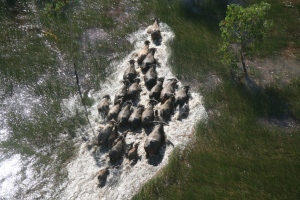
Invasive and feral species can be important drivers of biodiversity loss. Australia, like many other isolated islands has developed an ancient, unique and diverse ecosystem. This unique ecosystem has been under extreme pressure ever since humans arrived around 40000-60000 years ago. One of the more damaging and economically important introduced species in Australia is the Asian swamp buffalo (Bubalus bubalis). Ironically, swamp buffalo are listed as Endangered by the IUCN, and current estimates suggest that there are probably less than 4000 in their native habitats in Asia.
© B. Salu, Kakadu National Park

© B. Salau, Kakadu National Park

The first 16 buffalo were introduced to Australia in 1826 on Melville Island, and then to the mainland at Cobourg Peninsula a year later from Kupang (now West Timor, Indonesia). Another 18 buffalo were obtained from Kisar Island (northeast of modern Timor-Leste) and introduced to the Cobourg. In 1843, another 49 were introduced. When the first Cobourg settlement was abandoned in 1849, all the buffalo were released, and the population spread rapidly throughout the Northern Territory. Over the next 65 years, numbers and distribution increased to an estimated 350000 in the 1960s and 1970s and densities exceeded 25 km-2 in ‘prime’ habitat. However, the population was severely reduced during the 1980s and 1990s in parts of its range under the Brucellosis-Tuberculosis Eradication Campaign (BTEC). Although largely successful in eradicating buffalo from pastoral lands in the short term, there was no ongoing broad-scale management of numbers and the present-day population of free-ranging buffalo has recovered to former densities in some areas.
© C. Speed

© C. Speed

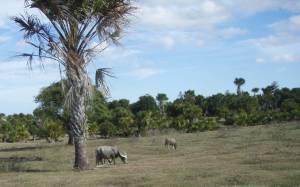
Buffalo were then and still are major problem in Australia due mainly to the environmental damage they cause, such as saltwater intrusion of wetlands and trampling of sensitive habitats, their potential threat to Australia’s livestock industry as hosts for disease, and the danger they pose to human safety. Given these ecological, economic and social impacts, there is an urgent need to manage buffalo numbers.

An important step to inform management of introduced and invasive species is to determine the history of introduction and quantify the rate of spread from introduction sites. Contemporary genetic techniques in conjunction with demographic and life history information are useful tools for understanding the dynamics, population structure, biology and colonisation dynamics of plants and animals, including invasive species such as buffalo.

We are currently in the final stages of providing the first detailed analysis of the buffalo population structure (demographic and genetic) to (1) establish the rate and most probable history of spread using detailed genetic information sampled from 8 sub-populations, (2) quantify the genetic distance and mixing rates between populations and (3) describe the age structure and therefore the demographic performance of this very successful invasive species.

Firstly to get an idea of genetic structure and relatedness, we collected a total of 430 small skin biopsies from buffalo across the Northern Territory, representing eight geographically distinct populations. To determine what has made the buffalo such a successful invader it is important to know the survival and breeding performance; we also constructed seven life tables based on culled samples at different densities and in different environments to work out what are the critical components of the population – i.e., where management intervention would be most successful.

As expected from a bottlenecked population, genetic variation is low compared to the that found in swamp buffalo from India and South East Asia. Despite this reduced genetic variation, the Australian population has thrived and spread outwards from introduction sites and into culled sites at high rates over the last 160 years (covering ~ 224 000 km2 in that time).
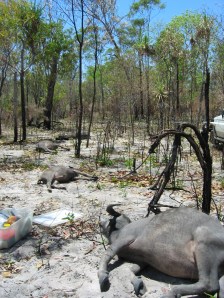
Although buffalo in Australia experienced two major periods of population reduction since their introduction, a small proportion (estimated at ~ 20 %) escaped the BTEC reduction in the eastern part of its north Australian range. BTEC did not operate with uniformity across the entire range of buffalo, concentrating its destocking efforts in a general area from the western coast of the Northern Territory to west of the Mann River in Arnhem Land, and south roughly to Kakadu National Park’s southern border. Coincidently and not surprisingly, it is in this area that we observe most migration activity.

The subpopulation structure detected here suggests that each population, while connected over generational time scales, generally remains in its immediate vicinity over the course of management-tractable periods. Therefore, management aimed at protecting Australia’s lucrative livestock industry trading under Australia’s disease-free status will benefit directly from this knowledge. For example, the localised introduction and subsequent rapid detection of disease could be efficiently managed from local culls because short-term movements of long-distance are less likely. Our results showcase how management of animals for disease control can be effectively informed via genetic studies and so avoid the need for expensive broad-scale intervention.

Our analyses of the age structure of buffalo reveals that buffalo have the capacity to recover swiftly after control because of high survival and fertility rates. Survival in the juvenile age classes was consistently the most important modifier of population growth. In populations where juvenile animals are harvested annually, fertility determined rebound potential. Thus, management aimed at long-term control of densities should focus primarily on the sustained culling of adult females and their offspring.

Given that numbers of buffalo are increasing and that buffalo are extremely well-adapted to the monsoonal tropics (unlike cattle, buffalo can maintain body condition and positive growth during times of food shortages), they are vulnerable to extended periods of harsh conditions. Climate change predictions herald increasing rainfall in the region, thereby potentially reducing the pressure on juvenile survival. As such, buffalo population growth could conceivably increase, making future management much more difficult. In essence, we need a large, evidence-based density reduction programme in place soon to prevent the worst ecological damage to Australia’s sensitive and unique ecosystems.

Check back here for announcements of upcoming publications arising from our work.

Clive McMahon & CJA Bradshaw

Add to FacebookAdd to NewsvineAdd to DiggAdd to Del.icio.usAdd to StumbleuponAdd to RedditAdd to BlinklistAdd to Ma.gnoliaAdd to TechnoratiAdd to Furl