The dingo is a true-blue, native Australian species

7 03 2019

dingo(reproduced from The Conversation)

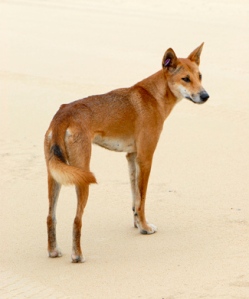
Of all Australia’s wildlife, one stands out as having an identity crisis: the dingo. But our recent article in the journal Zootaxa argues that dingoes should be regarded as a bona fidespecies on multiple fronts.

This isn’t just an issue of semantics. How someone refers to dingoes may reflect their values and interests, as much as the science.

How scientists refer to dingoes in print reflects their background and place of employment, and the Western Australian government recently made a controversial attempt to classify the dingo as “non-native fauna”.

How we define species – called taxonomy – affects our attitudes, and long-term goals for their conservation.

What is a dog?

Over many years, dingoes have been called many scientific names: Canis lupus dingo (a subspecies of the wolf), Canis familiaris (a domestic dog), and Canis dingo (its own species within the genus Canis). But these names have been applied inconsistently in both academic literature and government policy.

This inconsistency partially reflects the global arguments regarding the naming of canids. For those who adhere to the traditional “biological” species concept (in which a “species” is a group of organisms that can interbreed), one might consider the dingo (and all other canids that can interbreed, like wolves, coyotes, and black-backed jackals) to be part of a single, highly variable and widely distributed species.

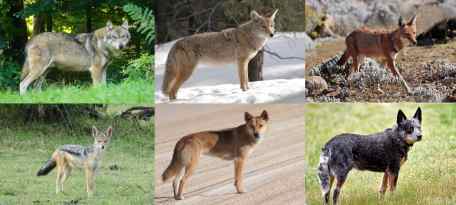
Members of the Canis genus: wolf (Canis lupus), coyote (Canis latrans), Ethiopian wolf (Canis simensis), black-backed jackal (Canis mesomelas), dingo (Canis dingo), and a representative of the domestic dog (Canis familiaris).

Read the rest of this entry »


We need a Revegetation Council

14 01 2019
planting trees

As I have discussed before, the greatest threatening process to biodiversity in South Australia today is past and ongoing clearing of native vegetation. So, arresting further vegetation clearing, and restoring previously cleared land to functional native-vegetation communities are easily the highest priorities across the entire State.

Despite some valiant attempts across South Australia to revegetate previously cleared areas1, the haphazard approach to reforestation in South Australia means that we are unlikely to be maximising ecological function and providing the best habitats for native biodiversity. Several improvements in this regard can be made:

(i) Establish a State Register of past, ongoing, and planned revegetation projects, including data on the proponents, area revegetated, species planted, number of individuals planted for each species, monitoring in place (e.g., plant survival, other species using the restored habitat, etc.), and costs (actual or projected). Such a State Register would allow for a more regional coordination of future revegetation projects to suggest potentially more ecologically useful approaches. This could include identifying the most locally suitable species to plant, maximising the area of existing native habitat or restored fragments by planting adjacent to these, joining isolated islands of habitat to increase connectivity, or even to create more efficient projects by combining otherwise independent proponents (e.g., adjacent landholders).

(ii) Establish a State Revegetation Council that uses data from the Register to prioritise projects, enhance collaboration, and suggest improvements in design and placement according to the principles mentioned above. The Council could also help to coordinate monitoring of progress and ecological outcomes at the landscape scale. A similar State Register for Wetland Restoration and a relevant Council could be established in a similar manner, emphasising the conservation and restoration of smaller wetlands with more unique, endemic plant species. Likewise, both Councils could ideally assist in coordinating non-profit and private organisations in terms of their revegetation priorities, as well as coordinate with conservation covenants(see below) for private landholders.

Read the rest of this entry »


Influential conservation ecology papers of 2018

17 12 2018

e35f9ddeada029a053a15cd023abadf5
For the last five years I’ve published a retrospective list of the ‘top’ 20 influential papers of the year as assessed by experts in F1000 Prime — so, I’m doing so again for 2018 (interesting side note: six of the twenty papers highlighted here for 2018 appear in Science magazine). See previous years’ posts here: 2017, 20162015, 2014, and 2013.

Read the rest of this entry »


Fancy a job in biosecurity controlling pest species?

13 12 2018

Rabbits-Western-NSW

My mate Dr Brad Page — Principal Biosecurity Officer (Pest Animals) at Biosecurity SA — asked me to post the following jobs he’s advertising for pest-animal control. Now, I’m near-completely opposed to ‘wild dog’ (i.e., dingo) control in Australia, but I’ve agreed to post the third position as well, despite my ecological misgivings. Brad has a different perspective.

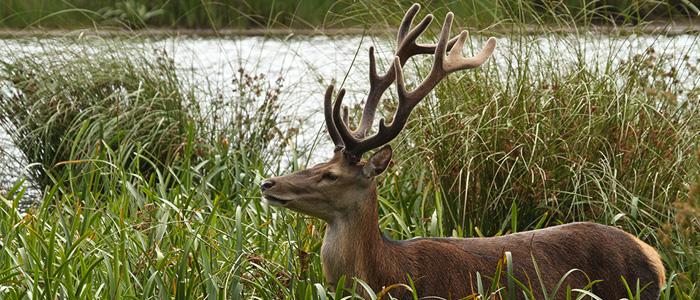
We have exciting opportunities for three new pest animal control coordinators, who will be working to support and reinvigorate control of deer, rabbits, and ‘wild dogs’.

All three coordinators will be part of our Biosecurity SA Division within PIRSA. These new positions will report to our Principal Biosecurity Officer, Pest Animals.

cnt-deer

Deer and Rabbit Control Coordinators (two positions)

The Deer Control Coordinator and the Rabbit Control Coordinator will provide tailored professional support to natural resource management (NRM) staff and community groups doing control programs. These coordinators will aim to increase the impact of deer and rabbit control programs to support primary producers and biodiversity managers. The position will connect and empower existing community and industry groups, maximising impacts of their efforts to control feral deer and rabbits in agricultural landscapes. Read the rest of this entry »


Perseverance eventually gets the policy makers’ attention

10 12 2018

IMG_2819

My entry badge today to the South Australian Parliament (sorry for the shitty reproduction, but it’s a shitty photo of a shitty photo)

I’ve often commented on it over the years, as well as written about it both in my latest book, as well as featured it here on CB.com, that little of the conservation science we do appears to reach the people making all the decisions. This is, of course, a massive problem because so much policy that affects biodiversity is not evidence-based, nor do we seem to be getting any better at telling them how buggered our natural world is.

Even the Extinction Rebellion, or school kids screaming in the streets about lack of climate-change policies appears unable to budge the entrenched, so what hope do we lonely little scientists have of getting in a Minister’s ear? It’s enough to make one depressed.

look-at-me-girlSo, we go through the motions; we design ideal reserves with the aid of our computers, we tell people how much to fish, we tell them why feral species are bad, etc., etc., and then we publish our findings and walk away. We might do a little more and shout our messages loudly from the media rooftops, or submit comments to proposed policies, or even draft open letters or petitions. Yet no matter how hard we seem to try, our messages of urgency and despair largely fall on deaf ears.

It’s enough to make you reconsider and not bothering at all.

But! Despite my obviously jaded perspective, two things have happened to me recently that attest to how a little perseverance, sticking to your guns, and staying on message can reach the ears of the powerful. My examples are minuscule in the grand scheme of things, nor will they necessarily translate into anything really positive on the ground; yet, they give me a modicum of hope that we can make a positive difference.

The first event happened a few weeks ago after we did a press release about our paper on co-extinction cascades published in Scientific Reports. Yes, it got into a few big newspapers and radio, but I thought it wouldn’t do much more than peak the punters’ interest for the typical 24-hour news cycle. However, after the initial media interest died down, I received an e-mail from one of my university’s media officers saying that the we had been cited in The Senate (one of the two houses in the Australian Parliament)! An excerpt of the transcript is shown below (you can read the whole thing — if you could be bothered — here): Read the rest of this entry »


Better Prospects for the Future of South Australia’s Biodiversity

21 11 2018

eucalypt

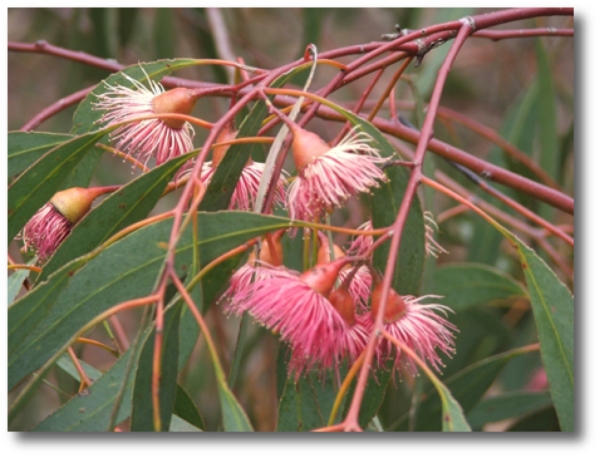
A major environmental event quietly slipped through the major news outlets in South Australia this week without much of a mention at all. Yet, I argue it’s one of the most important collective assessments of the state of South Australia’s environment to date. 

Yes, it’s been exactly five years since the last State of the Environment Report released by the South Australia Environment Protection Authority (EPA), and on Monday this week they released the 2018 Report. What’s perhaps even sadder than the poor performance of our state’s environmental performance is that it barely got a mention, nor does seem to have been noticed by many South Australians at all. I suppose I shouldn’t be surprised, when major protests like the UK’s Extinction Rebellion movement hardly got a mention at all last week, it’s no wonder that the release of the Report fails to raise the interest of average citizens in South Australia.

Full disclosure here — I contributed to this year’s State of the Environment Report as one of several independent ‘experts’ commenting on particular aspects of our environment. Yes, this year’s report has made a major leap in this regard by not merely reporting the trends of various indicators (and with rather unconvincing conclusions in many cases because of a lack of monitoring data), but by also including independent overviews of Aquatic Ecosystems, Biodiversity, and Coastal Protection. I was the one asked to write the Biodiversity Issues paper.

While you can download the full report here, I thought it best to summarise the key findings in this blog post (supporting references can be found in the report itself):

Read the rest of this entry »


Sex on the beach

2 10 2018
Female green turtles (Chelonia mydas) spawning (top) and diving (bottom) on Raine Island (Great Barrier Reef, Queensland, Australia) — photos courtesy of Ian Bell. This species is ‘Endangered’ globally since 1982, mainly from egg harvesting (poaching conflict in Mexico for olive ridley Lepidochelys olivacea featured by National Geographic’s video here), despite the success of conservation projects (39). Green turtles inhabit tropical and subtropical seas in all oceans. Adults can grow > 150 kg and live for up to ~ 75 years. Right after birth, juveniles venture into the open sea to recruit ultimately in coastal areas until sexual maturity. They then make their first reproductive migration, often over 1000s of km (see footage of a real dive of a camera-equipped green turtle), to reach their native sandy beaches where pregnant females will lay their eggs. Each female can deposit more than one hundred eggs in her nest, and in several clutches in the same season because they can store the sperm from multiple mating events.

When sex is determined by the thermal environment, males or females might predominate under sustained climatic conditions. A study about marine turtles from the Great Barrier Reef illustrates how feminisation of a population can be partitioned geographically when different reproductive colonies are exposed to contrasting temperatures.

Fortunately, most people in Western societies already perceive that we live in a complex blend of sexual identities, far beyond the kind of genitals we are born with. Those identities start to establish themselves in the embryo before the sixth week of pregnancy. In the commonest scenario, for a human foetus XY with one maternal chromosome (X) and one paternal (Y) chromosome, the activation of the Sry gen (unique to Y) will trigger the differentiation of testicles and, via hormonal pathways, the full set of male characteristics (1).

Absence of that gene in an XX embryo will normally lead to a woman. However, in just one of many exceptions to the rule, Sry-expression failure in XY individuals can result in sterile men or ambiguous genitals — along a full gradient of intermediate sexes and, potentially, gender identities. A 2015 Nature ‘News’ feature echoes two extraordinary cases: (i) a father of four children found to bear a womb during an hernia operation, and (ii) a pregnant mother found to host both XX and XY cells during a genetic test – with her clinical geneticist stating “… that’s the kind of science-fiction material for someone who just came in for an amniocentesis” (2). These real-life stories simply reflect that sex determination is a complex phenomenon.

Three ways of doing it

In nature, there are three main strategies of sex determination (3) — see scheme here: Read the rest of this entry »


South Australia’s broken biodiversity legislation

24 09 2018

It might come as a bit of shock to some who might give more than a shit about our State’s environmental integrity that there is no dedicated legislation to protect biodiversity in South Australia today.

What? Well, ok, we do have the Native Vegetation Act that is supposed to restrict the clearing of existing native vegetation (of which there is precious little left), and the National Parks and Wildlife Act 1972 to legislate protected areas and species endangerment. We also have the Wilderness Protection Act 1992 that addresses wilderness protection and land restoration, and the Natural Resource Management Act 2004 that is designed to promote sustainable and integrated management of the State’s natural resources. Finally, the South Australia Environment Protection Authority operates under various acts1 to limit environmental damage.

However, South Australia has no act specifically focussed on biodiversity conservation, and the legislation that does exist does not even consider invertebrates (like insects) as animals — because most animals are in fact invertebrates, this means that most of South Australia’s species are ineligible for official threat listing, even if they have a high risk of extinction.

If you recall, I reported in July this year that in 2017 we had a Parliamentary Inquiry into Biodiversity2, which concluded that existing environmental legislation in South Australia “… lacks cohesion and consistency, particularly regarding enforcement and compliance provisions”.

In my judgement, therefore, an entirely new, biodiversity-focussed act would add legislative teeth to biodiversity conservation in South Australia. As it turns out, that very same Parliamentary Inquiry into Biodiversity I mentioned above recommended3 the creation of a Biodiversity Expert Panel to reform the legislative framework of environmental protection. Thus, the new Government of South Australia has the perfect opportunity to do so under their proposed changes to natural resource management legislation. Following these calls for reform and the new direction of Nature of SA, there is a real opportunity here for statutory reform that includes integrated biodiversity legislation analogous to the New South Wales Biodiversity Conservation Act 2016.

Read the rest of this entry »


Minister, why is the dingo no longer ‘fauna’?

7 09 2018

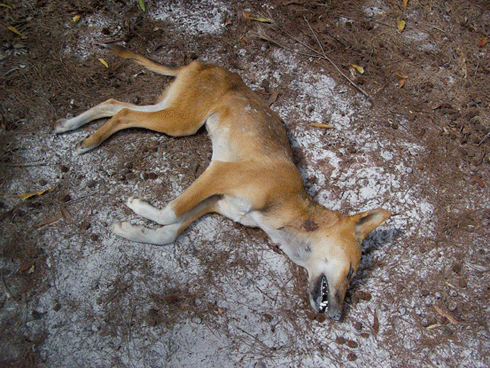
dead dingoSo, a few of us have just submitted a letter contesting the Western Australia Government’s recent decision to delist dingoes as ‘fauna’ (I know — what the hell else could they be?). The letter was organised brilliantly by Dr Kylie Cairns (University of New South Wales), and she and the rest of the signatories have agreed to reproduce the letter in full here on ConservationBytes.com. If you feel so compelled, please voice your distaste of this decision officially by contacting the Minister (details below).

CJA Bradshaw

Honourable Stephen Dawson MLC
Minister for Environment; Disability Services
Address: 12th Floor, Dumas House
2 Havelock Street, WEST PERTH WA 6005
(minister.dawson@dpc.wa.gov.au)

cc: Department of Biodiversity, Conservation and Attractions (biodiversity@dbca.wa.gov.au)
cc: Brendan Dooley (brendan.dooley@dpc.wa.gov.au)

Dear Minister,

The undersigned welcome the opportunity to comment on and recommend alteration of the proposed section (9)(2) order of the Biodiversity Conservation Act 2016 (BC Act) that changes the listing of the dingo from “fauna” to “non-fauna” in Western Australia. Removing the “fauna” status from dingoes has serious consequences for the management and conservation of this species and other native biota it benefits. Currently, dingoes are classed as A7, or fauna that requires a management policy. The proposed section (9)(2) order will move dingoes (as “non-fauna”) to the A5 class, meaning that dingoes must be (lethally) controlled and there will be no obligation for the Department of Biodiversity, Conservation and Attractions to have an appropriate management policy (or approval).

Currently, under the Wildlife Conservation Act 1950 (WC Act) the dingo is considered “unprotected” fauna allowing management under a Department of Biodiversity, Conservation and Attractions management policy. A section (9)(2) order demoting dingoes to “non-fauna” will remove the need for Department of Biodiversity, Conservation and Attractions management policy and instead mandate the lethal control of dingoes throughout Western Australia.

As prominent researchers in top predator ecology, biology, cultural value and genetics, we emphasise the importance of dingoes within Australian, and particularly Western Australia’s ecosystems. Dingoes are indisputably native based on the legislative definition of “any animal present in Australia prior to 1400 AD” from the BC Act. Dingoes have been present in Australia for at least 5000 years. On the Australian mainland they are now the sole non-human land-based top predator. Their importance to the ecological health and resilience of Australian ecosystems cannot be overstated. Read the rest of this entry »


South Australia doesn’t value its environment

5 09 2018

how we treat our environmentThe South Australian State Budget was released yesterday, and as has been the trend for the last ten years or so, the numbers are not good for the State’s environment.

While it has been reported that the budget includes the loss of 115 full-time staff from the Department of Environment and Water, the overall cuts run much deeper. They also herald a new era of not giving a tinker’s cuss for the sorry state of our environment.

I took the liberty of amassing the budget data with respect to environmental spending in this State since 2002-2003 (the earliest year I could find budget papers), and now I’ve just added the 2018-2019 data.

If I’ve selected the appropriate amounts, — side note: someone desperately needs to teach these budget bean-counters how to standardise, report, itemise, and organise data much, much better than they do (my first-year students could do a better job drunk and blindfolded) — then this is what environmental spending (including environment, biodiversity, water, and the Environment Protection Authority) has looked like since 2002: Read the rest of this entry »


Biodiversity is everyone’s responsibility

13 07 2018

Workspace: Team Of Diverse Workers Put Hands TogetherI’m not sure if many South Australians are aware of this, but the Parliamentary Inquiry into Biodiversity by the Environment, Resources and Development Committee presented a report to the 53rd Parliament of South Australia in March 2017. I thought it worthwhile reproducing their executive summary here on CB.com (I’ve highlighted the text that I deem to be rather insightful and simultaneously damning from our own elected government representatives):

This report summarises the findings and recommendations of the South Australian Parliament’s Environment, Resources and Development Committee’s inquiry into biodiversity in South Australia. Specifically, the inquiry investigated the regulatory and policy framework to determine whether it appropriately supports terrestrial and marine ecological processes, biodiversity values and abates species extinction.

The Committee found that in spite of the efforts of the State and Federal governments, industry and private landholders in South Australia, the condition of biodiversity in the State continues to decline. Species extinctions have occurred in the past and a further “extinction debt” still exists. There is no reason to believe that this trend will improve without a change to the way we approach biodiversity conservation.

A key theme to emerge from the Inquiry is that biodiversity conservation needs to be everyone’s responsibility; State and Federal government, industry, the broader community, and private landholders.

This also means that biodiversity conservation needs to occur across both public and private land, with actions coordinated at a landscape scale.

Making biodiversity conservation everyone’s responsibility requires a range of measures, including legislative reform, improved management of threats and greater involvement of the community. The provision of greater resources would yield faster results.

This report has focused on several key themes that emerged from submissions to the Inquiry.

Regulating for better biodiversity – South Australia’s legislative framework

South Australia’s current legislative framework does not provide for optimum biodiversity outcomes.

Three key issues contribute to this –

  • an out-of-date suite of environmental legislation that lacks cohesion and consistency, particularly regarding enforcement and compliance provisions;
  • inadequate and incomplete processes for identifying and protecting at-risk elements that need special measures (e.g. for protection of specific threatened species and ecological communities); and
  • inadequate consideration of biodiversity conservation in legislation that regulates human activities. In particular, there is a lack of cohesion between the environmental legislative and policy framework and land use planning, assessment and approval.
  • Statutory fragmentation of biodiversity considerations – that is, consideration of different aspects of biodiversity under different pieces of legislation – results in lack of cohesion and consistency, duplication and inefficiency, and makes it difficult to implement a landscape approach or to identify strategic opportunities and risks.

Taken as a whole, current enforcement provisions do not provide for effective and proportionate compliance action. Enforcement and compliance provisions across the relevant legislation are uneven in their approach. For example, penalties appear to be disproportionate and not risk-based (although there are some exceptions). Modern enforcement tools such as compliance orders, civil remedies and alternative penalties (such as administrative penalties, payment of damages including exemplary damages, remediation orders etc) are not included in all relevant legislation. There is some duplication in offences and inconsistency in the types of sanctions and penalty ranges.

There is an urgent need to amend the legislative framework to support any attempt to improve biodiversity outcomes.

The best approach will be based on clear, shared responsibility for biodiversity outcomes, supported by individual accountability. However, such a change will require policy development and drive.

To ensure forward momentum and improvements in the short term while developing the policy settings to support such a step-change, a staged approach could be implemented. There are various ways this could be achieved.

The Committee suggests a 3-stage approach to reforming the legislative framework. The Committee recommends the creation of a Biodiversity Expert Panel that is responsible for advancing this 3-stage approach.

  1. The first stage will involve amendments to improve operation and effectiveness of the regulatory regime within current policy settings, acknowledging that as a result of Stage 3, provisions may be altered or moved into different pieces of legislation. Amendments generally would be to the existing ‘environmental’ Acts, and primarily to the National Parks and Wildlife Act 1972 and Native Vegetation Act 1991. They would include many of the specific areas for amendment identified in EDO submissions (2011 & 2015) as well as in the SA Government submission, for example, beginning with amendments to improve current environmental legislation.
  2. Stage 2 would progress to amendments to improve integration between Acts and improve support for landholders and community participation.
  3. Stage 3 would implement a system whereby all resource use and management would be managed by one piece of legislation, with protection of biodiversity and sustainable development at its core. Provisions for protected area management, and for the scientific work involved in identifying threatened species and communities, may be contained in separate legislation.

Threats, ecological resilience and restoration

The State’s native biodiversity is facing myriad of current threats, including habitat loss and fragmentation (due to development and changing land-use), pest plants and animals, and control burn regimes. There is a need for more stringent vegetation protection, better informed and enacted control and management strategies of known pest plants and animals, and a revision of burning regimes.

Future threats to the State’s biodiversity will be largely driven by climate change impacts and the interaction with existing major threats (e.g. urbanisation and changing land use). Adequately preparing for and managing such future threats will require knowledge of projected changes and pro-active preparation for such changes.

Working with the community

Involvement of the community is an essential part of any biodiversity conservation strategy for the State. It is a foundation stone for moving to a point where biodiversity conservation is everyone’s business.

Community engagement will become increasingly important for biodiversity conservation, especially given the growing role of volunteers to support works on public land as well as the voluntary conservation efforts of private landholders. The expanding role of volunteers reenforces that biodiversity conservation is everyone’s business.

South Australia’s approach to biodiversity conversation on private land needs to be reinvigorated.

Cross cutting themes

There were several cross cutting themes identified in submissions to the Inquiry. There was broad recognition of the strong cultural and historic significance of elements of biodiversity to Aboriginal people, and that this is often poorly understood outside those communities. Continuing to identify ways for Aboriginal people to contribute to land and water management in South Australia remains a priority.

With respect to knowledge generation, critical knowledge gaps exist that need to be filled and existing knowledge is not being adequately understood, communicated or applied. From a resourcing perspective, there is concern that insufficient funds are being allocated to biodiversity conservation, which is affecting work on public and private lands.

The management of over-abundant species in South Australia remains a challenge, noting the recent impacts of long-nose fur seals in the Lower Lakes and Coorong, and ongoing concerns regarding the impact of animals such as little corellas and some species of kangaroos on negative vegetation.


Personal deterrents can reduce the risk of shark bites

19 06 2018

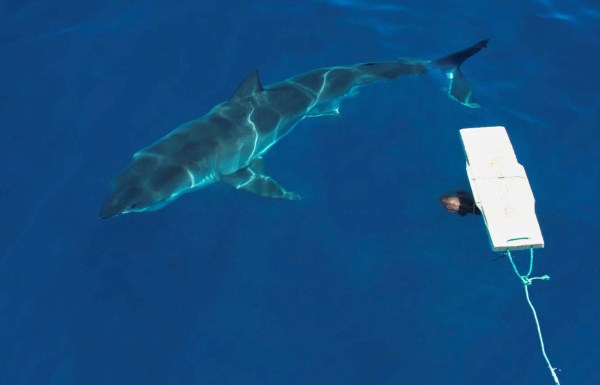
Shak deterrent testing

Photo: Charlie Huveneers

A little over a week ago, shark ecologist, Charlie Huveneers, and I attempted to write an article in The Conversation about a report we co-wrote regarding the effectiveness of personal shark-deterrent devices (see below for more on the report itself). It’s a great little story, with both immediate policy implications for human safety and great, big potential improvements to shark conservation in general (i.e., if sharks kill fewer people, then perhaps governments would be less inclined to invokes stupid laws to kill sharks). Indeed, sharks aren’t doing very well around the world, mainly because of over-harvest and persecution from unfounded fear.

Anyway, all was going swimmingly until our editor at The Conversation suddenly decided that they wouldn’t publish the piece based on the following funding disclaimer that we had submitted with the article:

This project was funded by the New South Wales Department of Primary Industries Shark Management Strategy Competitive Annual Grants Program, the Government of South Australia, Ocean Guardian Pty Ltd, and the Neiser Foundation. We openly and transparently declare that Ocean Guardian contributed financially to the study, but that Ocean Guardian was not involved in the study design or implementation, nor did they have access to the data post-collection. Nor did Ocean Guardian provide input into data analysis, interpretation, writing of the report, or the conclusions drawn. The study design followed a protocol developed for a previous study, which was not funded by Ocean Guardian. In summary, Ocean Guardian had no opportunity to influence any aspect of the study or its conclusions, apart from providing some financial support to realise the field project (e.g., boat hire, equipment purchase, etc.) in the same manner as the other funding agencies. The South Australian cage-diving industry provided logistical support during the testing of the deterrents.

The long and short of The Conversation‘s negative decision was that one of the companies contributed financially to project. However, as we stated above, they had absolutely no influence in the subsequent experimental design, data collection, analysis, interpretation or report writing.

While normally I’m a big fan of The Conversation, I really think they dropped the ball with this one. Their decision was illogical and unsupported for five main reasons:

  1. There were many funding partners involved, and the Ocean Freedom contribution was in no way the major or even majority share of funding.
  2. Other companies with devices tested could have contributed, but only Ocean Freedom offered.
  3. The study was commissioned by a state government agency (New South Wales Department of Primary Industries), which is not a commercial entity.
  4. As stated in our disclosure, there was no opportunity for manipulating experimental design, data ownership, or post-collection analysis or writing that could have influenced the results, by any funders or contributors.
  5. The disclosure is open, honest, comprehensive and in every way truthful.

So, I’m more than just a little disappointed — and my opinion of the organisation has dropped considerably. That, with the constant barrage of donation requests they send makes me think twice about their journalistic integrity. I challenge others to think carefully before giving them any money.

Regardless, let’s move on to the article itself (which I can publish freely here without the Draconian oversight of The Conversation):

Many things might explain why the number of shark bites appear to be increasing. However, the infrequent occurrence of such events makes it nearly impossible to determine why. Recently, an atypically high rate of shark bites occurred in Western Australia in 2010-2011 and on the north coast of New South Wales in 2015-2016. These highly publicised events — often sensationalised in both traditional and social media — have pressured governments to implement new measures to reduce the risk of shark bites.

The rising pressure to do something to reduce shark bites has prompted the recent development or commercial release of many new personal shark deterrents. Yet, most of these devices lack any rigorous scientific assessment of their effectiveness, meaning that some manufacturers have made unfounded claims about how much their devices dissuade sharks from attacking humans.

However, if a particular type of commercially available shark deterrent happens to be less effective (or completely ineffective) as advertised, it can give users a false sense of security, potentially encouraging some to put themselves at greater risk than is necessary. For example, some surfers and spearfishers probably ignore other mitigation measures, such as beach closures, because they ‘feel safe’ when wearing these products.

Read the rest of this entry »


Greater death rates for invasive rabbits from interacting diseases

30 05 2018

When it comes to death rates for invasive European rabbits (Oryctolagus cuniculus) in Australia, it appears that 1 + 1 = 2.1.

Pt tagged rab with RHD+myxo 1 10-08

Tagged European rabbit kitten infected with myxoma virus, but that died from rabbit haemorrhagic virus disease (RHDV). Photo by David Peacock, Biosecurity South Australia.

“Canberra, we have a problem” — Sure, it’s an old problem and much less of one than it used to be back in the 1950s, but invasive rabbits are nonetheless an ecological, conservation, and financial catastrophe across Australia.

relative rabbit abundance South Australia

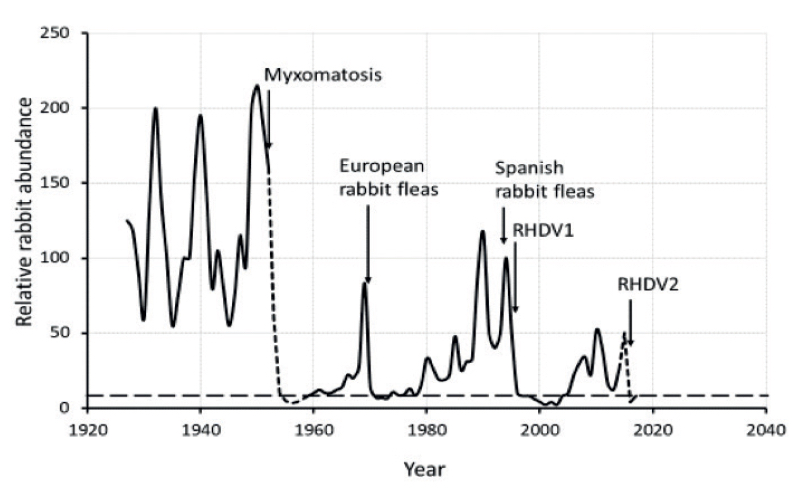
Semi-schematic diagram, redrawn using data from Saunders and others and extended to include the recent spread of RHDV2, showing changes in rabbit abundance in relation to the introduction of biological control agents into north-eastern South Australia. Dotted lines indicate uncertainty due to lack of continuous annual data. The broken line indicates a level of about 0.5 rabbits ha-1, below which rabbits must be held to ensure recovery of native pastures and shrubs (from B. Cooke 2018 Vet Rec doi:10.1136/vr.k2105)

Rabbits used to reach plague numbers in much of agricultural and outback Australia, but the introduction and clever manipulation of two rather effective rabbit-specific viruses and insect vectors — first, myxoma virus in 1950, European rabbit fleas in the 1960s to help spread the virus, then Spanish rabbit fleas in the 1990s to increase spread into arid areas, and then rabbit haemorrhagic disease virus (RHDV) in 1995 — have been effective in dropping rabbit abundances by an estimated 75-80% in South Australia alone since the 1950s.

Read the rest of this entry »


A life of fragmentation

9 05 2018

LauranceWhat do you say to a man whose list of conservation awards reads like a Star Wars film intro, who has introduced terms like the ‘hyperdynamism hypothesis’ to the field of ecology, and whose organisation reaches over one million people each week with updates of the scientific kind?
Interview with Bill Laurance by Joel Howland (originally published in Conjour)


Well, I started by asking what it is that leads him to love the natural world to the extent he does. His answer was disarmingly simple.

“I grew up in the country, on an Oregon cattle ranch, and I think my love of nature just evolved naturally from that. When I was a young kid my dad and I did some fishing and ‘rock-hounding’— searching for rare stones and fossils. As an adolescent and teen I loved heading off into a forest or wilderness, rifle in hand – back in those days you could do that – to see whatever I could find. I watched red foxes hunting, eagles mating, and even heard a mountain lion scream. I got to be a pretty good duck and game-bird hunter.”

He’s quick to point out, however, he realised his taste for guns was not so developed as his love of nature.

“I gave up my rifles for a camera, and enjoyed that even more. I really got into photography for a while. Nature has always just calmed and fascinated me —I guess that’s partly why I became a conservationist.”

Who is Bill Laurance?

William F. Laurance is one of the leading ecology and conservation scientists globally, publishing dozens of papers in journals like Nature and Science, and rewriting the way scientists in the field research the complex interactions between flora and fauna — particularly in rainforests like the Amazon.

He is a Distinguished Research Professor at James Cook University in Australia, a Fellow of the Australian Academy of Science and the American Association for the Advancement of Science, and has received an Australian Laureate Fellowship from the Australian Research Council.

All this for a man from western USA who dreamed of running a zoo. Instead, he has travelled a path of intricate and game-changing research, trailblazing awareness campaigns and inspirational writings that have driven the way many see the environment over the past few decades.

Despite this profile, Laurance gave some time to tell Conjour about his life, his passion and his aims. I asked him what — considering his impressive CV — the future holds.

His response seems a real insight to the man. Read the rest of this entry »


Predicting sustainable shark harvests when stock assessments are lacking

26 03 2018

srb 1

© Andrew Fox

I love it when a good collaboration bears fruit, and our latest paper is a good demonstration of that principle.

It all started a few years ago with an ARC Linkage Project grant we received to examine how the whaler shark fishing industry in Australia might manage its stocks better.

As I’m sure many are aware, sharks around the world aren’t doing terribly well (surprise, surprise — yet another taxon suffering at the hands of humankind). And while some populations (‘stocks’, in the dissociative parlance of the fishing industry) are doing better than others, and some countries have a better track record in managing these stocks than others, the overall outlook is grim.

One of the main reasons sharks tend to fair worse than bony fishes (teleosts) for the same fishing effort is their ‘slow’ life histories. It doesn’t take an advanced quantitative ecology degree to understand that growing slowly, breeding late, and producing few offspring is a good indication that a species can’t handle too much killing before populations start to dwindle. As is the case for most large shark species, I tend to think of them in a life-history sense as similar to large terrestrial mammals.

Now, you’d figure that a taxon with intrinsic susceptibility to fishing would have heaps of good data with which managers could monitor catches and quotas so that declines could be avoided. However, the reality is generally the inverse, with many populations having poor information regarding vital rates (e.g., survival, fertility), age structure, density feedback characteristics, and even simple estimates of abundance. Without such key information, management tends to be ad hoc and often not very effective. Read the rest of this entry »


Bring it back

13 02 2018

fynbos

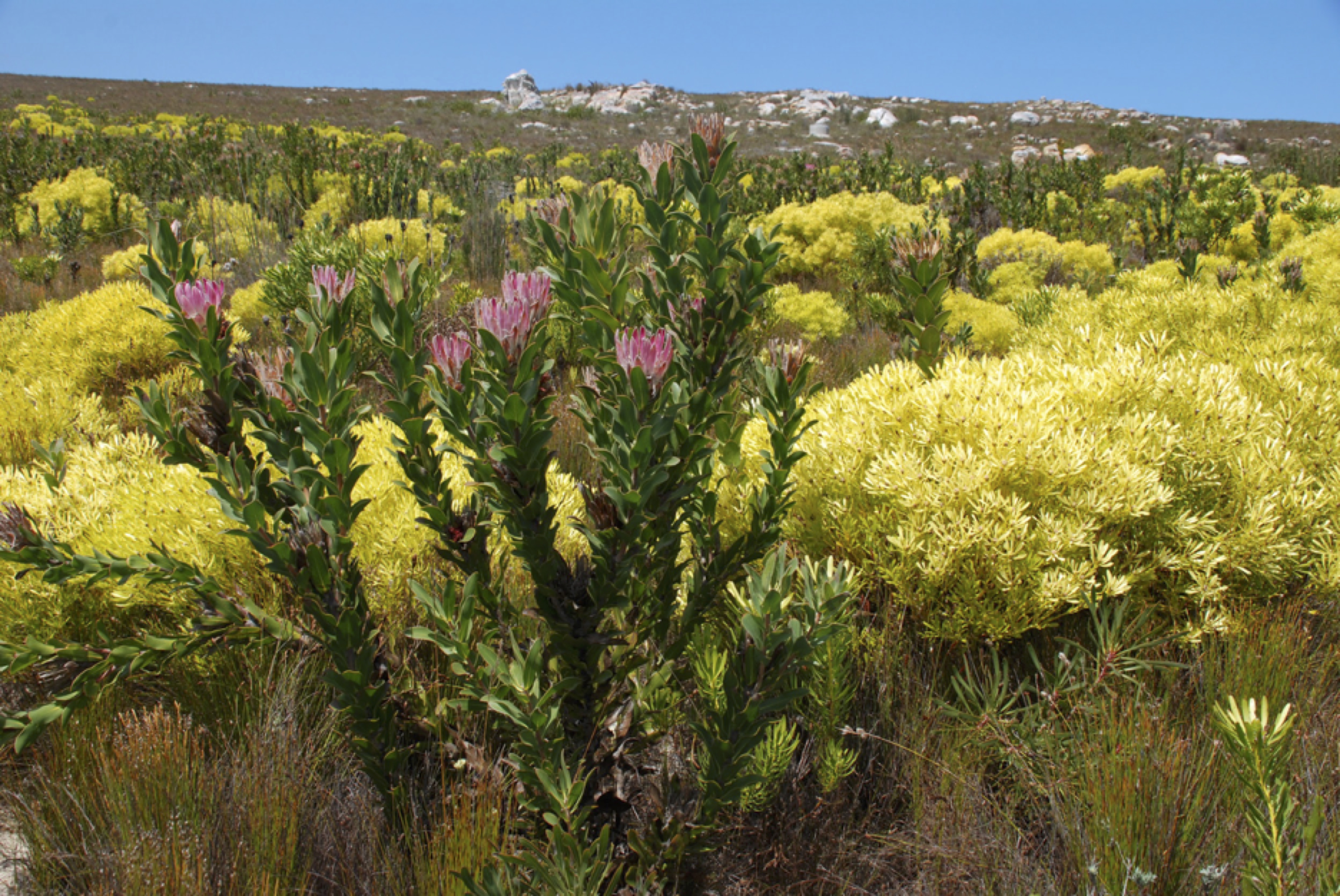
Protea compacta in fynbos, a form of shrubland at Soetanysberg, South Africa. Photo: Brian van Wilgen

Restoration of lost habitats and ecosystems hits all the right notes — conservation optimism, a can-do attitude, and the excitement of seeing biologically impoverished areas teem with life once more.

The Strategic Plan of the Convention on Biological Diversity includes a target to restore at least 15% of degraded ecosystems. This is being enthusiastically taken up in many places, including through initiatives such as the Bonn Challenge, a global aspiration to restore 350 million hectares of deforested and degraded land by 2030. This is in recognition of the importance of healthy ecosystems in not just conserving biodiversity, but also in combating climate change. Peatlands and forests lock away carbon, while grassland diversity stabilises ecosystem productivity during extreme weather events. So how can we make sure that these restoration efforts are as effective as possible? Read the rest of this entry »


Cartoon guide to biodiversity loss XLVI

25 01 2018

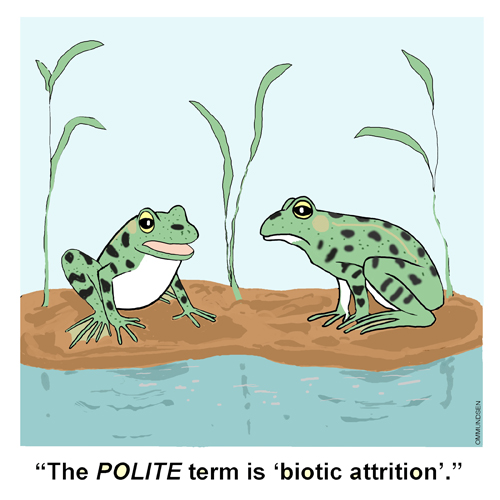
The first set of biodiversity cartoons for 2018. See full stock of previous ‘Cartoon guide to biodiversity loss’ compendia here.

Read the rest of this entry »


When devils and thylacines went extinct

17 01 2018

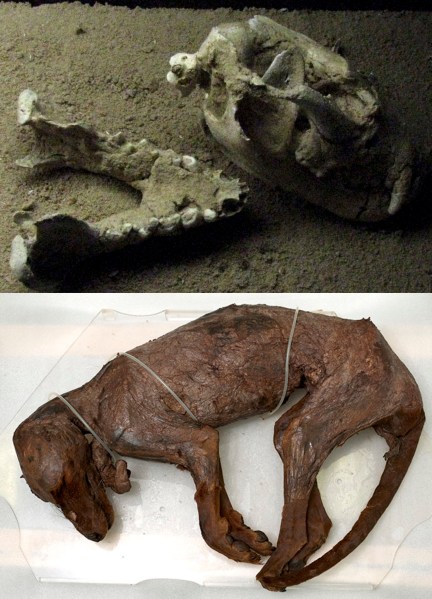
devil-thylacine-extinctWe’ve just published an analysis of new radiocarbon dates showing that thylacines (Tasmanian ‘tigers’, Thylacinus cynocephalus) and Tasmanian devils (Sarcophilus harrisi) went extinct on the Australian mainland at the same time — some 3200 years ago.

For many years, we’ve been uncertain about when thylacines and devils went extinct in mainland Australia (of course, devils are still in Tasmania, and thylacines went extinct there in the 1930s) — a recent age for the devil extinction (500 years before present) has recently been shown to be unreliable. The next youngest reliable devil fossil is 25000 years old.

So, knowing when both species went extinct is essential to be able to determine the drivers of these extinctions, and why they survived in Tasmania. If the two extinctions on the mainland happened at the same time, this would support the hypothesis that a common driver (or set of drivers) caused both species to go extinct. Read the rest of this entry »


Cartoon guide to biodiversity loss XLV

6 12 2017

The last set of biodiversity cartoons for 2017. See full stock of previous ‘Cartoon guide to biodiversity loss’ compendia here.

Read the rest of this entry »


Cartoon guide to biodiversity loss XLIV

9 10 2017

Here’s another set of biodiversity cartoons to make you giggle, groan, and contemplate the Anthropocene extinction crisis. See full stock of previous ‘Cartoon guide to biodiversity loss’ compendia here.

Read the rest of this entry »