Here’s another set of biodiversity cartoons to make you giggle, groan, and contemplate the Anthropocene extinction crisis. See full stock of previous ‘Cartoon guide to biodiversity loss’ compendia here.
—

Here’s another set of biodiversity cartoons to make you giggle, groan, and contemplate the Anthropocene extinction crisis. See full stock of previous ‘Cartoon guide to biodiversity loss’ compendia here.
—
—
With the official start of the new ARC Centre of Excellence for Australian Biodiversity and Heritage (CABAH) in July, I am pleased to announce two new CABAH-funded postdoctoral positions (a.k.a. Research Associates) in my global ecology lab at Flinders University in Adelaide (Flinders Modelling Node).
One of these positions is a little different, and represents something of an experiment. The Research Associate in Palaeo-Vegetation Modelling is being restricted to women candidates; in other words, we’re only accepting applications from women for this one. In a quest to improve the gender balance in my lab and in universities in general, this is a step in the right direction.
The project itself is not overly prescribed, but we would like something along the following lines of inquiry: Read the rest of this entry »
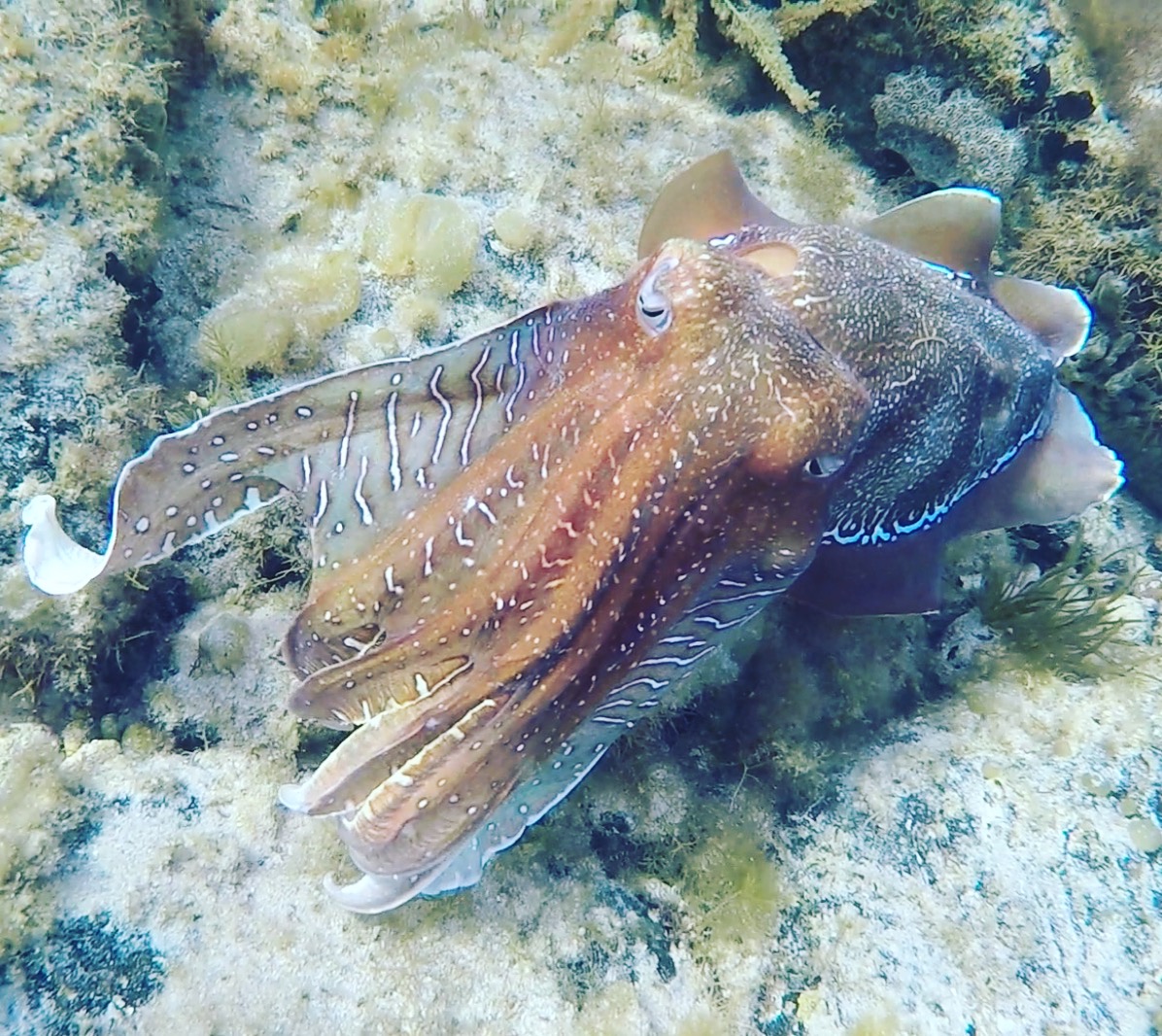
© CJA Bradshaw
While I’m in transit (yet a-bloody-gain) to Helsinki, I wanted to take this opportunity to reflect on one of the most inspiring eco-tourism experiences I recently had in South Australia.
If you are South Australian and have even the slightest interest in wildlife, you will have of course at least heard of the awe-inspiring mass breeding aggregation of giant cuttlefish (Sepia apama) that occur in May-July every year in upper Spencer Gulf near the small town of Whyalla. If you have been lucky enough to go there and see these amazing creatures themselves, then you know exactly what I’m talking about. And if you haven’t yet been there, take it from me that it is so very much worth it to attempt the voyage.
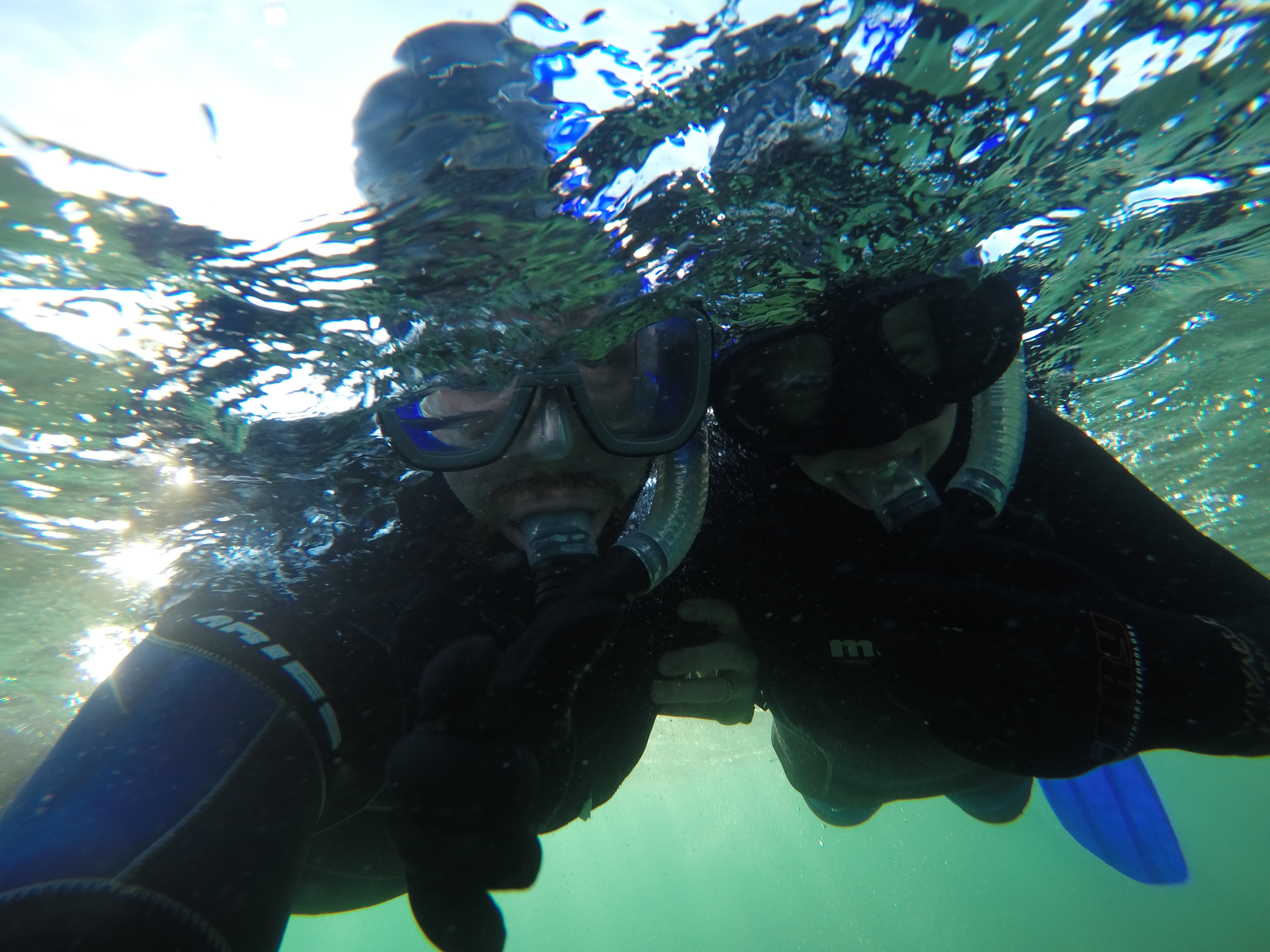
Father-daughter giant-cuttlefish-snorkelling selfie. © CJA Bradshaw
Despite having lived in South Australia for nearly a decade now, I only got my chance to see these wonderful creatures when a father at my daughter’s school organised a school trip. After driving for five hours from Adelaide to Whyalla, we hired our snorkelling gear and got into the water the very next morning. Read the rest of this entry »
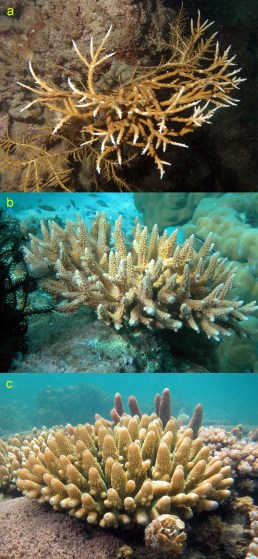
Three of the coral species studied by Muir (2): (a) Acropora pichoni: Pohnpei Island, Pacific Ocean — deep-water species/IUCN ‘Near threatened’; (b) Acropora divaricate: Maldives, Indian ocean — mid-water species/IUCN ‘Near threatened’; and (c) Acropora gemmifera: Orpheus Island, Australia — shallow-water species/IUCN ‘Least Concern’. The IUCN states that the 3 species are vulnerable to climate change (acidification, temperature extremes) and demographic booms of the invading predator, the crown-of-thorns starfish Acanthaster planci. Photos courtesy of Paul Muir.
Global warming of the atmosphere and the oceans is modifying the distribution of many plants and animals. However, marine species are bound to face non-thermal barriers that might preclude their dispersal over wide stretches of the sea. Sunlight is one of those invisible obstacles for corals from the Indian and Pacific Oceans.
If we were offered a sumptuous job overseas, our professional success in an unknown place could be limited by factors like cultural or linguistic differences that have nothing to do with our work experience or expertise. If we translate this situation into biodiversity terms, one of the best-documented effects of global warming is the gradual dispersal of species tracking their native temperatures from the tropics to the poles (1). However, as dispersal progresses, many species encounter environmental barriers that are not physical (e.g., a high mountain or a wide river), and whose magnitude could be unrelated to ambient temperatures. Such invisible obstacles can prevent the establishment of pioneer populations away from the source.
Corals are ideal organisms to study this phenomenon because their life cycle is tightly geared to multiple environmental drivers (see ReefBase: Global Information System for Coral Reefs). Indeed, the growth of a coral’s exoskeleton relies on symbiotic zooxanthellae (see video and presentation), a kind of microscopic algae (Dinoflagellata) whose photosynthetic activity is regulated by sea temperature, photoperiod and dissolved calcium in the form of aragonite, among other factors.
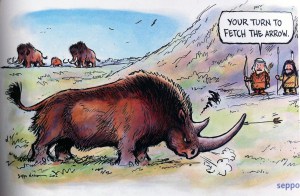
© seppo.net
I have another postdoctoral fellowship to advertise! All the details you need for applying are below.
—
KEY PURPOSE
Scientific data such as fossil and archaeological records used as proxy to reconstruct past environments and biological communities (including humans) are sparse, often ambiguous or contradictory when establishing any consensus on timing or routes of initial human arrival and subsequent spread, the timing or extent of major changes in climate and other environmental perturbations, or the timing or regional pattern of biological extinctions.
The Research Fellow (Palaeo-Ecological Modelling) will assist in addressing these problems by developing state-of-the-art analytical and simulation tools to infer regional pattern of both the timing of human colonisation and megafauna extinction based on incomplete and sparse dataset, and investigating past environmental changes and human responses to identify their underlying causes and consequences on Australia’s landscapes, biodiversity and cultural history.
ORGANISATIONAL ENVIRONMENT
The position will be based in the School of Biological Sciences in the Faculty of Science & Engineering at Flinders University. Flinders University boasts a world-class Palaeontology Research Group (PRG) and the new Global Ecology Research Laboratory that have close association with the research-intensive South Australian Museum. These research groups contribute to building a dynamic research environment that explores the continuum of environmental and evolutionary research from the ancient to modern molecular ecology and phylogeography. The School of Biological Sciences is an integrated community researching and teaching biology, and has a long history of science innovation. The appointee will join an interdisciplinary school of approximately 45 academic staff. The teaching and research activities of the School are supported by a range of technical and administrative infrastructure services.
KEY RESPONSIBILITIES
The key responsibilities and selection criteria identified for this position should be read in conjunction with the Flinders University Academic Profiles for the relevant academic classification (scroll down to Academic Profiles).
The Research Fellow (Palaeo-Ecological Modelling) will work under the direction of the Project Chief Investigator, and will be required to: Read the rest of this entry »
 Last year I wrote what has become a highly viewed post here at ConservationBytes.com about the plight of the world’s freshwater biodiversity. In a word, it’s ‘buggered’.
But there are steps we can take to avoid losing even more of that precious freshwater biodiversity. The first, of course, is to stop sucking all the water out of our streams and wetlands. With a global population of 7.5 billion people and climbing, the competition for freshwater will usually mean that non-human life forms lose that race. However, the more people (and those making the decisions, in particular) realise that intact wetlands do us more good as wetlands rather than carparks, housing developments, or farmland (via freshwater filtering, species protection, carbon storage, etc.), the more we have a chance to save them.
My former MSc student, the very clever David Deane1, has been working tirelessly to examine different scenarios of wetland plant biodiversity change in South Australia, and is now the proud lead author of a corker of a new paper in Biological Conservation. Having already published one paper about how wetland plant biodiversity patterns are driven by rare terrestrial plants, his latest is a very important contribution about how to manage our precious wetlands. Read the rest of this entry »

Hydra. Seba Albertus (1734-1765). Image from Wellsome Trust
A contribution by Claire Wordley of Conservation Evidence.
—
The Australian swamp stonecrop (Crassula helmsii) is a small, unassuming looking plant with incredible resilience. It can survive both baking heat and freezing cold; it can live underwater, on the water’s surface and on land; it can survive being dried out, bleached and sprayed with hot foam; and it can regenerate from tiny fragments. Unfortunately, in the UK and elsewhere in Europe it is an invasive species, choking the oxygen from ponds and shading out other plants with knock-on effects for entire freshwater ecosystems.
Swamp stonecrop, also known as New Zealand pigmyweed, was first introduced to the UK from Tasmania in 1911 and sold in garden centres from 1927 as an ornamental pond oxygenator. Shockingly, despite being documented as an invasive plant in New Forest ponds as early as 1976, its sale in the UK was only banned in 2014. Crassula appears to be spread mostly by people, whether deliberately or accidentally; it appears to be concentrated around car parks, residential areas and areas where equipment such as fishing gear is likely to have come from an infected site. Nearly 20% of 700 UK waterbodies surveyed contained the weed. Since every 10% increase in Crassula corresponds to a 5% decrease in native vegetation, and negative effects of Crassula invasion have been documented for zooplankton, macro-invertebrates and fish, with possible negative impacts on amphibians as well, control and ideally eradication is clearly needed. But what works to destroy this superweed?
Killing the hydra
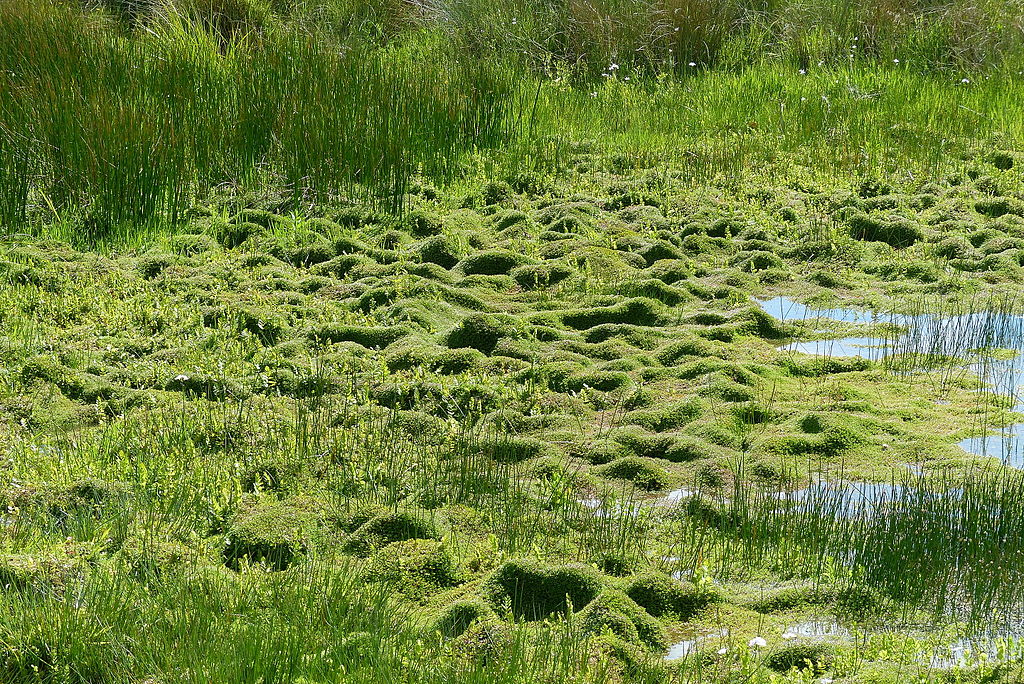
Crassula helmsii (photo by Benjamin Blondel)
Like the seven-headed hydra of legend, Crassula helmsii seems able to regenerate after even harsh treatment and being shattered into tiny pieces. Documenting clearly what works to control this beast – and what does not – is critical. This work has recently been completed by Conservation Evidence at the University of Cambridge, as part of an ongoing series on controlling freshwater invasives. The team has worked to collect all the evidence on different ways of killing Crassula, and experts have scored these for their effectiveness (or otherwise).
One of the most effective ways to knock back Crassula appears to be applying herbicides, particularly glyphosate and diquat or diquat alginate. While each of these performed well to reduce Crassula in many trials – and the use of glyphosate and diquat together led to a 98% reduction in one trial – there are concerns that while the medicine could cure the disease, it could kill the patient. One study in the New Forest noted that native plant cover fell in the treatment sites at a greater rate than in the control sites, and glyphosate appears to be toxic to amphibians. There might also be adverse effects on some bird species, although this could be due more to habitat-level changes than direct toxicity, because other birds appeared to benefit from wetlands being sprayed with glyphosate. Read the rest of this entry »
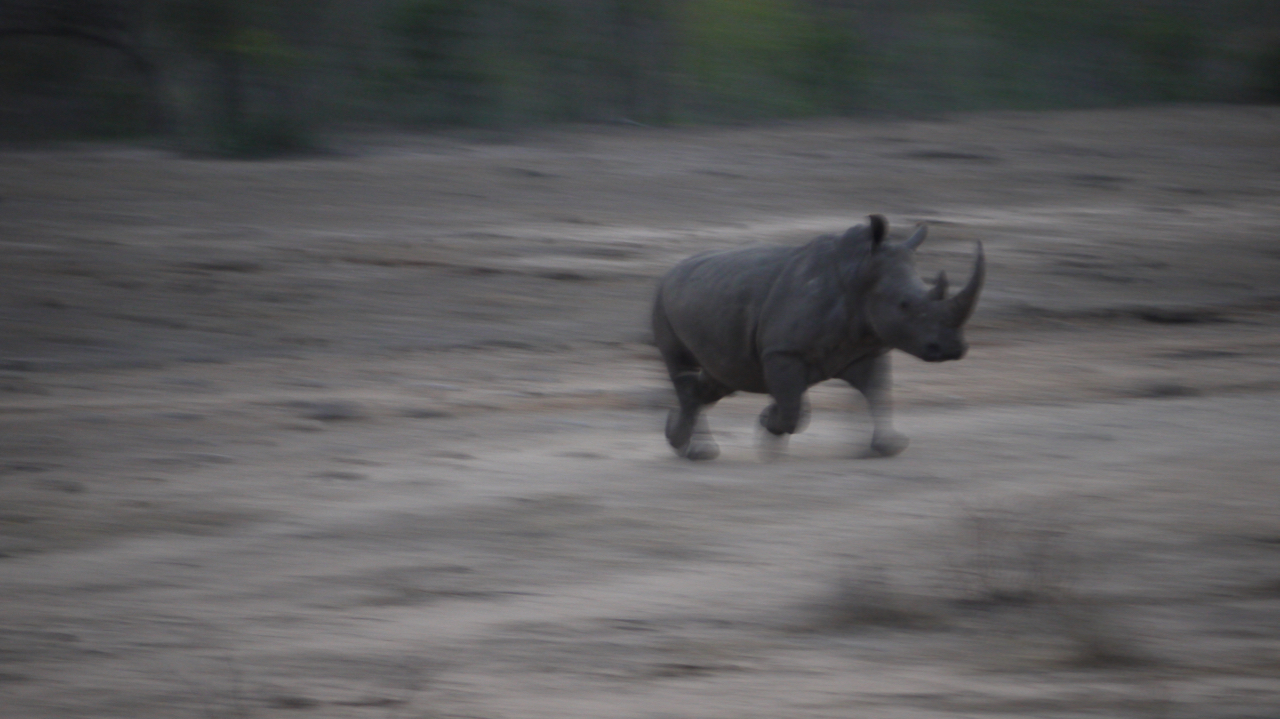
Going, going … © CJA Bradshaw
I’ve just returned from a life-changing trip to South Africa, not just because it was my first time to the continent, but also because it has redefined my perspective on the megafauna extinctions of the late Quaternary. I was there primarily to attend the University of Pretoria’s Mammal Research Institute 50thAnniversary Celebration conference.
As I reported in my last post, the poaching rates in one of the larger, best-funded national parks in southern Africa (the Kruger) are inconceivably high, such that for at least the two species of rhino there (black and white), their future persistence probability is dwindling with each passing week. African elephants are probably not far behind.
As one who has studied the megafauna extinctions in the Holarctic, Australia and South America over the last 50,000 years, the trip to Kruger was like stepping back into the Pleistocene. I’ve always dreamed of walking up to a grazing herd of mammoths, woolly rhinos or Diprotodon, but of course, that’s impossible. What is entirely possible though is driving up to a herd of 6-tonne elephants and watching them behave naturally. In the Kruger anyway, you become almost blasé about seeing yet another group of these impressive beasts as you try to get that rare glimpse of a leopard, wild dogs or sable antelope (missed the two former, but saw the latter). Read the rest of this entry »
 Within six months of Abbott and the Coalition seizing power in the 2013 Australian election, decades—if not centuries—of environmental damage and retrograde policies unfolded. But this was no run-of-the-mill incompetence and neglect by government—this was an all-out attack on anything with the merest whiff of environmental protection. The travesty is well-documented, from infamously axing both the carbon-pricing scheme and climate commission, eradicating Labor’s 80% emissions-reduction target by 2050, diluting the Renewable Energy Target, refusing to commit to enforcing the Illegal Logging Prohibition Act (fortunately, this is now law), defunding the only independent legal entity available to limit environmentally destructive development (Environmental Defenders Office), to even attempting to remove the rights of environmental groups to challenge development proposals (thankfully, that failed).
The Coalition’s backward and ineffectual climate change-mitigation policies alone are evidence enough for long-term damage, but their war on the environment in general means that even the future election of a more environmentally responsible government will not undo the damage quickly, if at all. As a result of these and other nearsighted policies, Australia remains one of the highest per-capita greenhouse-gas emitters on the planet, has one of the highest per-capita water uses of any nation, leads the world in mammal extinctions, continues to deforest its already forest-poor landscape, and is a society utterly unprepared to deal with the future challenges of a degraded planet.
Read the rest of this entry »

source: http://goo.gl/do6Q85
As many of you know, I have held the ‘Sir Hubert Wilkins Chair of Climate Change’ at the University of Adelaide since January 2015. My colleague and friend, Barry Brook, was the foundation Chair-holder from 2006-2014.
Initially set up by Government of South Australia to “… advise government, industry, and the community on how to tackle climate change …”, it now is only a titular position based at the University. While I certainly try to live up to the aims of the Chair, it’s even more difficult to live up to the namesake himself — Sir George Hubert Wilkins.
Given I’ve held the position now for over a year and half, I’ve had plenty of time to read about this legendary South Australian (I do choose my words carefully here). Despite most Australians having never heard of the man, it is my opinion that he should be as well known in this country as other whitefella explorers such as Douglas Mawson, Matthew Flinders, Robert Burke, William Wills, and Charles Sturt.
Sadly, he is not well-known, for a litany of possible reasons ranging from spending so much time out of Australia, never having a formal qualification in many of the skills in which he excelled (e.g., geography, meteorology, aviation, engineering, cinematography, biology, etc.), disrespect from other contemporary Australian explorers, and some rather bizarre behaviour later in his career. The list of this man’s achievements is staggering, as was his ability to thumb his nose at death (who, I might add, tried her hardest to escort him off this mortal coil many times well before a heart attack claimed him at the age of 70).
Many books have been written about Wilkins, but as I slowly make my way through some of the better-written tomes, one unsung aspect of his career has struck a deep chord within me — it turns out that Wilkins was also a extremely concerned biodiversity conservationist. Read the rest of this entry »
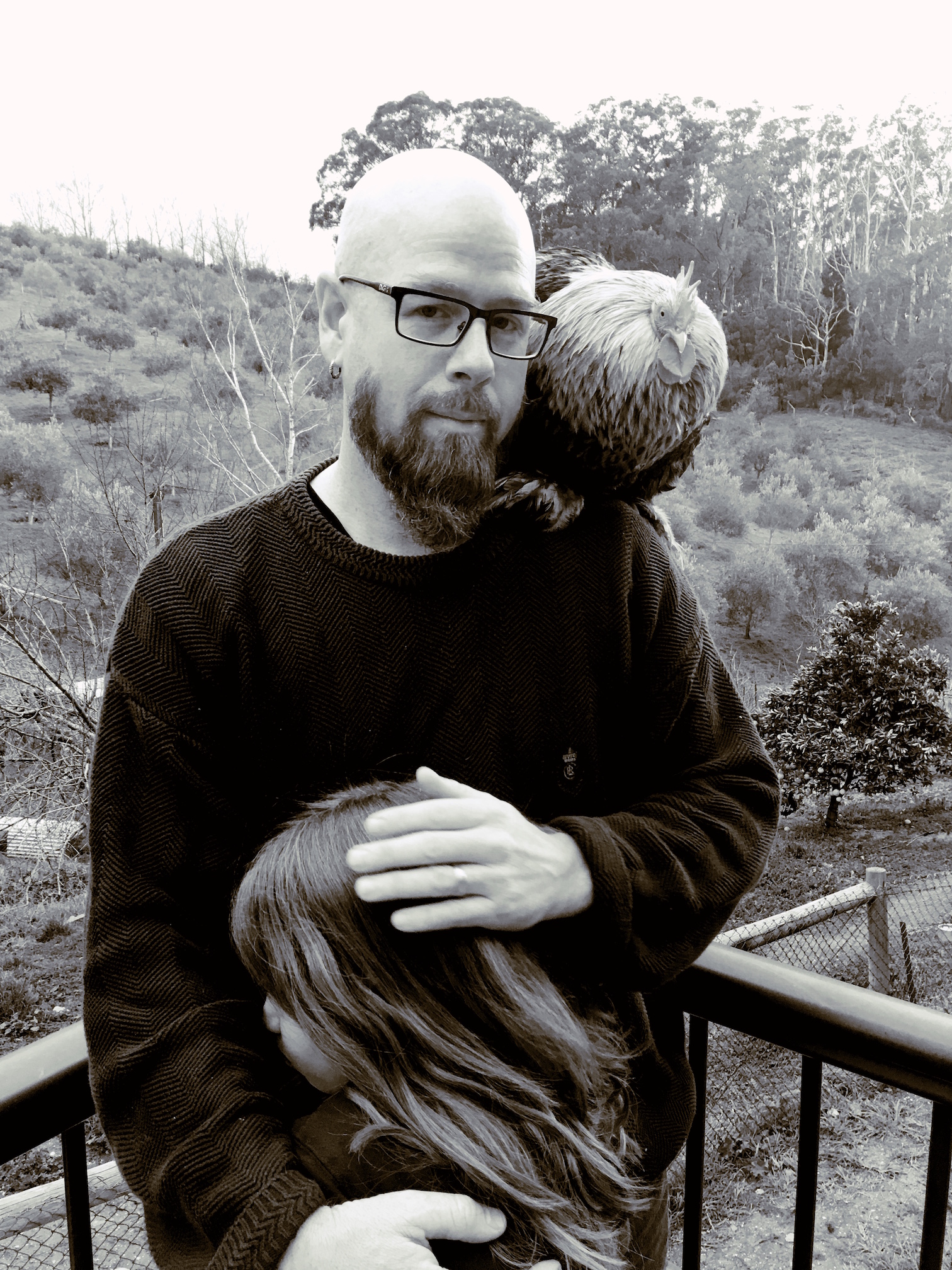 Originally published in the Otago Daily Times by Tom McKinlay
—
If we don’t act soon, the world we leave our children will be in a sorry state indeed, leading Australian scientist Prof Corey Bradshaw tells Tom McKinlay.
Prof Corey Bradshaw’s 9-year-old daughter lives what sounds an idyllic existence. On their small farm outside Adelaide in South Australia, she has her chickens and her dogs and her cats, her goats and her sheep.
She’s an only child, but is not short of attention from adults and reads voraciously.
She has big plans; there are at least 25 careers she likes the look of, that she’ll undertake simultaneously: farmer, wildlife rescuer, self-sufficient bush dweller – feeding herself by shooting arrows at fish – scientist and more.
She is optimistic about the future. As she should be. A 9-year-old girl living in Australia in 2016 should regard the sky as no limit at all.
All this I learn from her father, ecologist Prof Bradshaw, who talks of his daughter with an enthusiasm unbounded.
It is fair to assume she has picked up some of her interest in the natural world from him.
He holds the Sir Hubert Wilkins Chair of Climate Change in the School of Biological Sciences at the University of Adelaide.
And the ecologist, conservation biologist and systems modeller – with a University of Otago degree – has shared a great deal of his work with his daughter.
“She’s very much a farm kid, but because of who I am she gets to hear a lot about animal and plant systems around the world, and she’s travelled a lot with me and she’s a complete fanatic of David Attenborough,” the professor says.
So far, still so idyllic. But Prof Bradshaw’s work means he is at the forefront of alerting the world to what is not right with it.
Pollution, climate change, habitat loss, extinction.
His daughter has travelled with him to see species that might not be with us by the time she grows up.
“She’s hyper-aware of extinctions, in particular, and how climate change is contributing to that,” Prof Bradshaw says.
“I don’t pull any punches with her.”
In fact, he made her cry when she was 5 explaining climate change. She hasn’t needed to travel to know the pot is on the boil. Fires have forced the family to flee its South Australian property several times, not just at the height of summer.
One of the worst fires in the region struck in May a couple of years back.
“We were on the doorstep of winter and we had one of our worst fires in 20 years.”
So even without a scientist in the family, there are certain unavoidable truths for a child growing up in 21st-century Australia.
Prof Bradshaw is coming to Dunedin next month as part of the New Zealand International Science Festival to talk on climate change, looking at it from his daughter’s perspective. Read the rest of this entry »

After dipping my foot into the murky waters of human population demography a few years ago, I’m a little surprised that I find myself here again. But this time I’m not examining what the future of the global human population might be and what it could mean for our environment; instead, I’m focussing on Australia’s population future and its implications for our greenhouse-gas emissions trajectories.
Just published in Asia and the Pacific Policy Forum1, my paper with long-time co-author Barry Brook is entitled Implications of Australia’s population policy for future greenhouse gas emissions targets. It deals with the sticky question of just how many people Australia can ‘afford’ to house. By ‘afford’ I mean several things, but most specifically in the context of this paper is by how much we need to reduce our per capita emissions to achieve future reduction targets under various immigration-rate scenarios.
In many ways Australia’s population is typical of other developed nations in that its intrinsic fertility (1.78 children/woman) is below replacement (which is itself ~ 2.1 children/female). Yet Australia’s population grew nearly twice (1.88×) as large from 1971 to 2014. It doesn’t take a genius to figure out that most of our population growth is due to net immigration.
In fact, between 2006 and 2014, Australia welcomed a net of 215,000 new people per year (this means that of all the permanent immigrants and emigrants, a ‘net’ of approximately 215,000 stayed each year), which represents about 1% of our total population size (that latter most likely just ticked over 24 million). Read the rest of this entry »
 I’ve just read a well-planned and lateral-thinking paper in Nature Communications that I think readers of CB.com ought to appreciate. The study is a simulation of a complex ecosystem service that would be nigh impossible to examine experimentally. Being a self-diagnosed fanatic of simulation studies for just such purposes, I took particular delight in the results.
In many ways, the results of the paper by Osuri and colleagues are intuitive, but that should never be a reason to avoid empirical demonstration of a suspected phenomenon because intuition rarely equals fact. The idea itself is straightforward, but takes more than a few logical steps to describe: Read the rest of this entry »
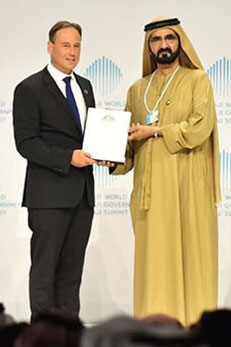
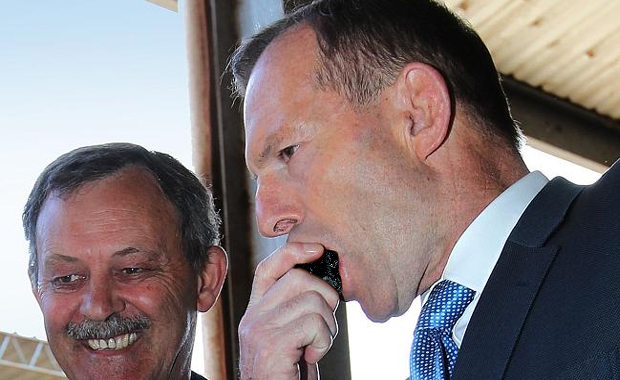
Our Most-Bestest Minister Ever (i.e., the bloke on the left; interestingly, the bloke on the right leads one of the few countries in the world with a higher per capita emissions rate than Australia)
Australia has an appalling environmental record — hell, I have even written an entire book on our sorry state of environmental affairs. Of course, environmental damage is a slow accumulation of bad political decisions, neglect, corruption, greed and society’s general I-couldn’t-give-a-shit attitude, but the record of our recent government demonstrates not just classic political buffoonery and neglect, but an outright attack on the environment.
So it was impossible to restrain a disgusted guffaw when, in February this year, our ‘Environment’ Minister won the coveted ‘Best Minister’ in the World award at the World Government Summit in Dubai by Sheikh Mohammed Bin Rashid Al Maktoum, Vice President and Prime Minister of the United Arab Emirates and Ruler of Dubai.
Deserved ridicule aside, I was asked recently by The Conversation to contribute to a special report examining the profile performance of cabinet and shadow cabinet ministers, which is not only a responsibility I take seriously, but an honour to be able to provide a serious and objective appraisal of our Most-Bestest Minister Ever. My contribution dealt specifically with the environmental portfolio, so I appraised both the sitting Minister and the Shadow Minister. Judge for yourself based on their performances. Read the rest of this entry »
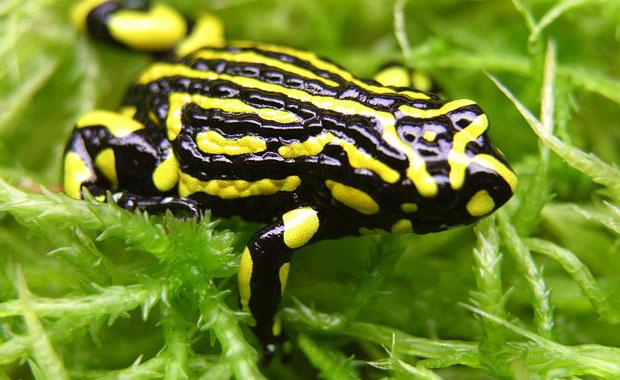 While I’ve blogged about this before in general terms (here and here), I thought it wise to reproduce the (open-access) chapter of the same name published in late 2013 in the unfortunately rather obscure book The Curious Country produced by the Office of the Chief Scientist of Australia. I think it deserves a little more limelight.
—
As I stepped off the helicopter’s pontoon and into the swamp’s chest-deep, tepid and opaque water, I experienced for the first time what it must feel like to be some other life form’s dinner. As the helicopter flittered away, the last vestiges of that protective blanket of human technological innovation flew away with it.
Two other similarly susceptible, hairless, clawless and fangless Homo sapiens and I were now in the middle of one of the Northern Territory’s largest swamps at the height of the crocodile-nesting season. We were there to collect crocodile eggs for a local crocodile farm that, ironically, has assisted the amazing recovery of the species since its near-extinction in the 1960s. Removing the commercial incentive to hunt wild crocodiles by flooding the international market with scar-free, farmed skins gave the dwindling population a chance to recover.
 Conservation scientists like me rejoice at these rare recoveries, while many of our fellow humans ponder why we want to encourage the proliferation of animals that can easily kill and eat us. The problem is, once people put a value on a species, it is usually consigned to one of two states. It either flourishes as do domestic crops, dogs, cats and livestock, or dwindles towards or to extinction. Consider bison, passenger pigeons, crocodiles and caviar sturgeon.
As a conservation scientist, it’s my job not only to document these declines, but to find ways to prevent them. Through careful measurement and experiments, we provide evidence to support smart policy decisions on land and in the sea. We advise on the best way to protect species in reserves, inform hunters and fishers on how to avoid over-harvesting, and demonstrate the ways in which humans benefit from maintaining healthy ecosystems. Read the rest of this entry »
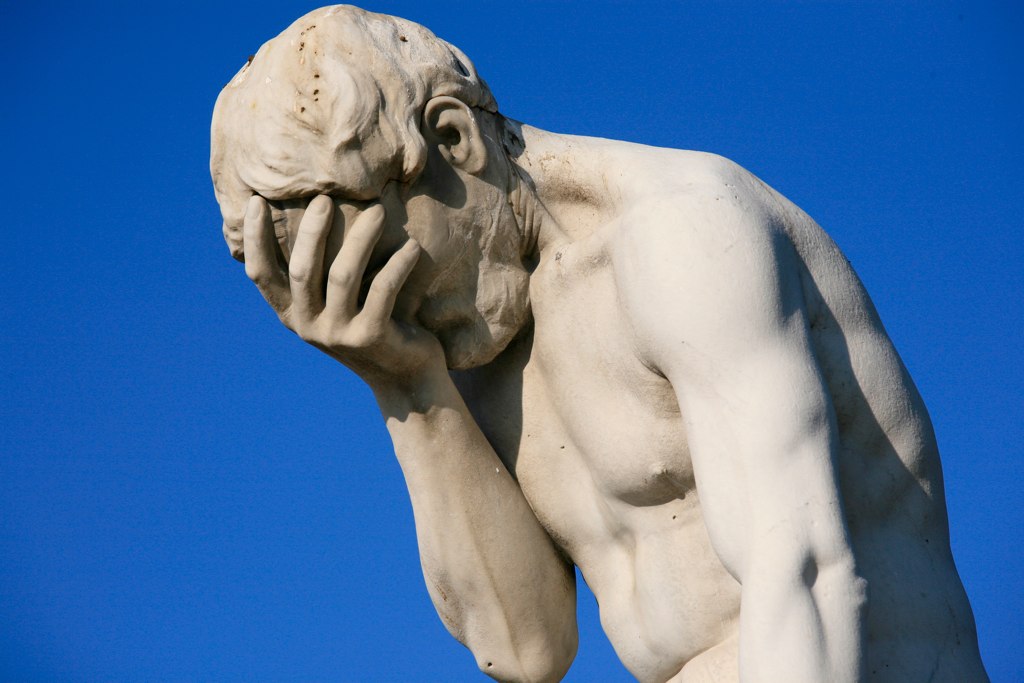 In addition to the surpassing coolness of reconstructing long-gone ecosystems, my new-found enthusiasm for palaeo-ecology has another advantage — most of the species under investigation are already extinct.
That might not sound like an ‘advantage’, but let’s face it, modern conservation ecology can be bloody depressing, so much so that one sometimes wonders if it’s worth it. It is, of course, but there’s something marvellously relieving about studying extinct systems for the simple reason that there are no political repercussions. No self-serving, plutotheocratic politician can bugger up these systems any more. That’s a refreshing change from the doom and gloom of modern environmental science!
But it’s not all sweetness and light, of course; there are still people involved, and people sometimes make bad decisions in an attempt to modify the facts to suit their creed. The problem is when these people are the actual scientists involved in the generation of the ‘facts’.
As I alluded to a few weeks ago with the publication of our paper in Nature Communications describing the lack of evidence for a climate effect on the continental-scale extinctions of Australia’s megafauna, we have a follow-up paper that has just been published online in Proceedings of the Royal Society B — What caused extinction of the Pleistocene megafauna of Sahul? led by Chris Johnson of the University of Tasmania.
After our paper published earlier this month, this title might seem a bit rhetorical, so I want to highlight some of the reasons why we wrote the review. Read the rest of this entry »
 Last July I wrote about a Science paper of ours demonstrating that there was a climate-change signal in the overall extinction pattern of megafauna across the Northern Hemisphere between about 50,000 and 10,000 years ago. In that case, it didn’t have anything to do with ice ages (sorry, Blue Sky Studios); rather, it was abrupt warming periods that exacerbated the extinction pulse instigated by human hunting.
Contrary to some appallingly researched media reports, we never claimed that these extinctions arose only from warming, because the evidence is more than clear that humans were the dominant drivers across North America, Europe and northern Asia; we simply demonstrated that warming periods had a role to play too.
A cursory glance at the title of this post without appreciating the complexity of how extinctions happen might lead you to think that we’re all over the shop with the role of climate change. Nothing could be farther from the truth.
Instead, we report what the evidence actually says, instead of making up stories to suit our preconceptions.
So it is with great pleasure that I report our new paper just out in Nature Communications, led by my affable French postdoc, Dr Frédérik Saltré: Climate change not to blame for late Quaternary megafauna extinctions in Australia.
Of course, it was a huge collaborative effort by a crack team of ecologists, palaeontologists, geochronologists, paleo-climatologists, archaeologists and geneticists. Only by combining the efforts of this diverse and transdisciplinary team could we have hoped to achieve what we did. Read the rest of this entry »
Six more biodiversity cartoons to hold you over until I get back from Germany next week (see full stock of previous ‘Cartoon guide to biodiversity loss’ compendia here).
—

Six more biodiversity cartoons — this time, from France. They’re in French to pay hommage to my hosts (and acknowledge their fanaticism for les bandes dessinées), but don’t worry, I’ve provided full translation (see full stock of previous ‘Cartoon guide to biodiversity loss’ compendia here).
—

“Biodiversity: More and more species threatened. The good news for you is that you’re not endangered. The bad news is that neither are we.” © Roulies
Mmmmm! I love coal!
An article originally posted on ALERT by April Reside (with permission to reproduce).
—
The Conservative Tony Abbott government in Australia is proposing alarming changes to Australia’s Environmental Protection and Biodiversity Conservation (EPBC) Act 1999 — a remarkable move that would prevent environment groups from challenging many damaging development projects.
This has all come to a head over the Carmichael Coal Mine — a plan to build a massive mine in central Queensland in order to export 60 million of tonnes of coal to India each year.
Coal, of course, is the dirtiest of all fossil fuels, and India’s plan to burn it by the shipload for electricity is bad news for the planet.
The Abbott government is in a tizzy after after a community organization, the Mackay Conservation Group, challenged the approval of the Carmichael Mine in Australia’s Federal Court.
The community group says Environment Minister Greg Hunt didn’t properly consider the impact the mine would have on two threatened species, the yakka skink and ornamental snake.
The mine site also sustains the largest population of the southern subspecies of the black-throated Finch, which is endangered.
The implications of the mega-mine go well beyond a few imperilled species. If the mine goes ahead, it will be one of the biggest in the world — and the emissions from burning its mountains of coal would cancel out all gains made from Australia’s current emissions-reduction strategy.
On top of the frightening precedent it would set, the Abbott government appears to be double-dealing. Read the rest of this entry »


Those of us living with cats share our homes with an ancestral predator, one adapted for hunting and the frequent, exclusive consumption of meat. These instincts become fully activated outside the domestic environment, where cats pose a global threat to wildlife. Pets are family. We celebrate their arrival with the same joy as a grand…

Many animals avoid contact with people. In protected areas of the African savanna, mammals flee more intensely upon hearing human conversations than when they hear lions or sounds associated with hunting. This fear of humans affects how species use and move in their habitat. Throughout our lives, we interact with hundreds of wildlife species without…
Deep-sea sharks include some of the longest-lived vertebrates known. The record holder is the Greenland shark, with a recently estimated maximum age of nearly 400 years. Their slow life cycle makes them vulnerable to fisheries. Humans rarely live longer than 100 years. But many other animals and plants can live for several centuries or even millennia, particularly…




 ConservationBytes.com
