InvaCost – estimating the economic damage of invasive insects

7 11 2014

insectinvasionThis is a blosh (rehash of someone else’s blog post) of Franck Courchamp‘s posts on an exciting new initiative of which I am excited to be a part. Incidentally, Franck’s spending the week here in Adelaide.

Don’t forgot to vote for the project to receive 50 000 € public-communication grant!

Climate change will make winters milder and habitats climatically more suitable year-round for cold-blooded animals like insects, but there are many questions remaining regarding whether such insects will be able to invade other regions as the climate shifts. There are many nasty bugs out there.

For example, the Asian predatory wasp is an invasive hornet in Europe that butchers pollinating insects, especially bees, thereby affecting the production of many wild and cultivated plants. I hope that we all remember what Einstein said about pollinators:

If bees were to disappear, humans will disappear within a few years.

(we all should remember that because it’s one of the few things he said that most of us understood). The highly invasive red fire ant is feared for its impacts on biodiversity, agriculture and cattle breeding, and the thousands of anaphylactic shocks inflicted to people by painful stings every year (with hundreds of deaths). Between the USA and Australia, over US$10 billion is spent yearly on the control of this insect alone. Tiger mosquitoes are vectors of pathogens that cause dengue fever, chikungunya virus and of about 30 other viruses. We could go on.

Most of these nasty creatures are now unable to colonise northern regions of Europe or America, or southern regions of Australia, for example, because they cannot survive cold temperatures. But how will this change? Where, when and which species will invade with rising temperatures? What will be the costs in terms of species loss? In terms of agricultural or forestry loss? In terms of diseases to cattle, domestic animals and humans? What will be the death toll if insects that are vectors of malaria can establish in new, highly populated areas?

We’ve proposed to study these and others from a list of 20 of the worst invasive insect species worldwide, and we got selected (i.e., financed!) by the Fondation BNP Paribas. In addition, the Fondation BNP Paribas has selected five scientific programmes on climate change and will give 50,000 € (that’s US$62,000) to the one selected by the public, for a communication project on their scientific programme. This is why we need you to vote for our project: InvaCost. Read the rest of this entry »


Cartoon guide to biodiversity loss XXVI

4 11 2014

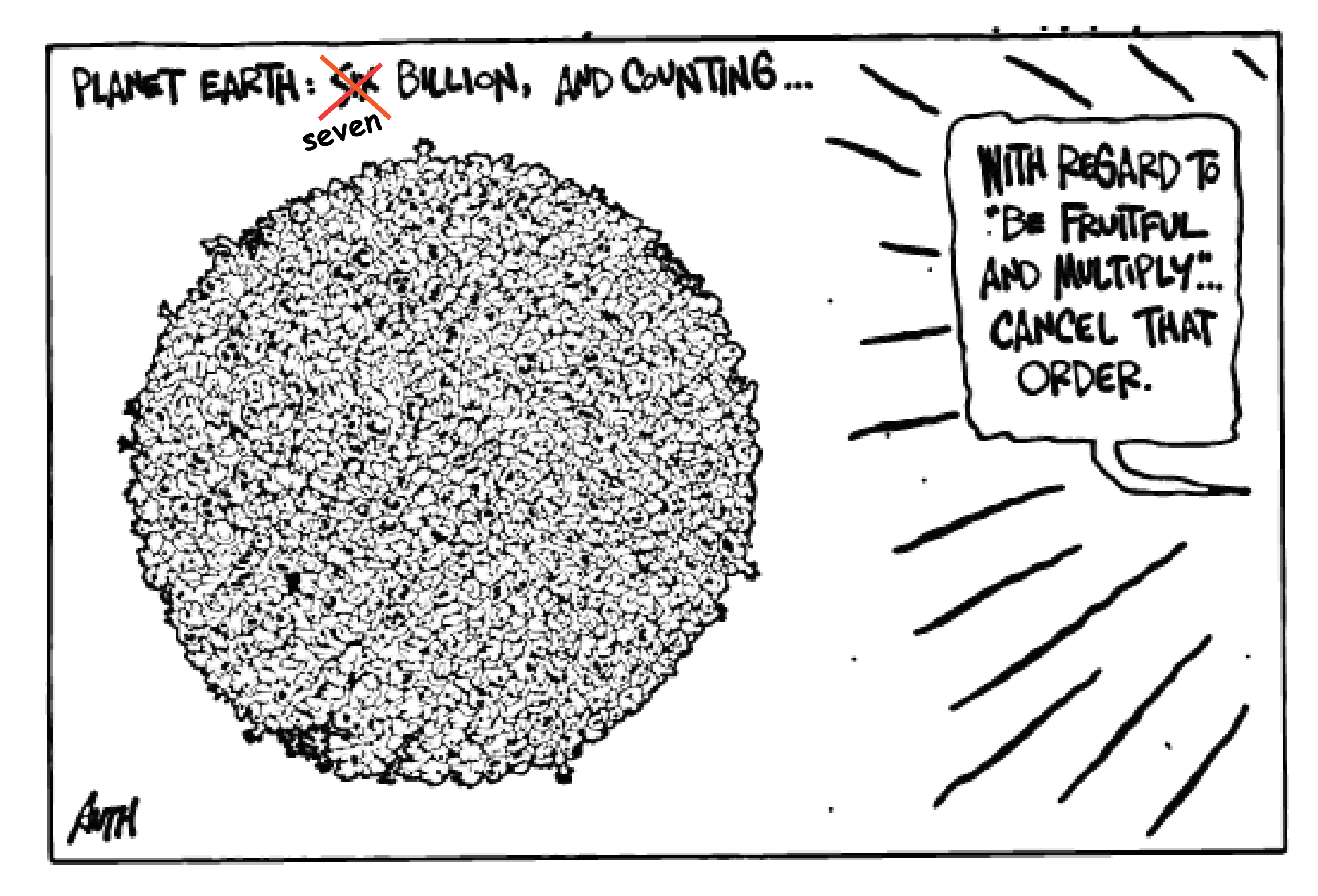
Here are 8 more biodiversity cartoons (with a human population focus, given recent events) for your conservation-humour fix (see full stock of previous ‘Cartoon guide to biodiversity loss’ compendia here).

Read the rest of this entry »


Human population size: speeding cars can’t stop quickly

28 10 2014

Stop breeding cartoon-Steve Bell 1994Here at ConservationBytes.com, I write about pretty much anything that has anything remotely to do with biodiversity’s prospects. Whether it is something to do with ancient processes, community dynamics or the wider effects of human endeavour, anything is fair game. It’s a little strange then that despite cutting my teeth in population biology, I have never before tackled human demography. Well as of today, I have.

The press embargo has just lifted on our (Barry Brook and my) new paper in PNAS where we examine various future scenarios of the human population trajectory over the coming century. Why is this important? Simple – I’ve argued before that we could essentially stop all conservation research tomorrow and still know enough to deal with most biodiversity problems. If we could only get a handle on the socio-economic components of the threats, then we might be able to make some real progress. In other words, we need to find out how to manage humans much more than we need to know about the particulars of subtle and complex ecological processes to do the most benefit for biodiversity. Ecologists tend to navel-gaze in this arena far too much.

So I called my own bluff and turned my attention to humans. Our question was simple – how quickly could the human population be reduced to a more ‘sustainable’ size (i.e., something substantially smaller than now)? The main reason we posed that simple, yet deceptively loaded question was that both of us have at various times been faced with the question by someone in the audience that we were “ignoring the elephant in the room” of human over-population.

Read the rest of this entry »


It’s not all about cats

20 10 2014

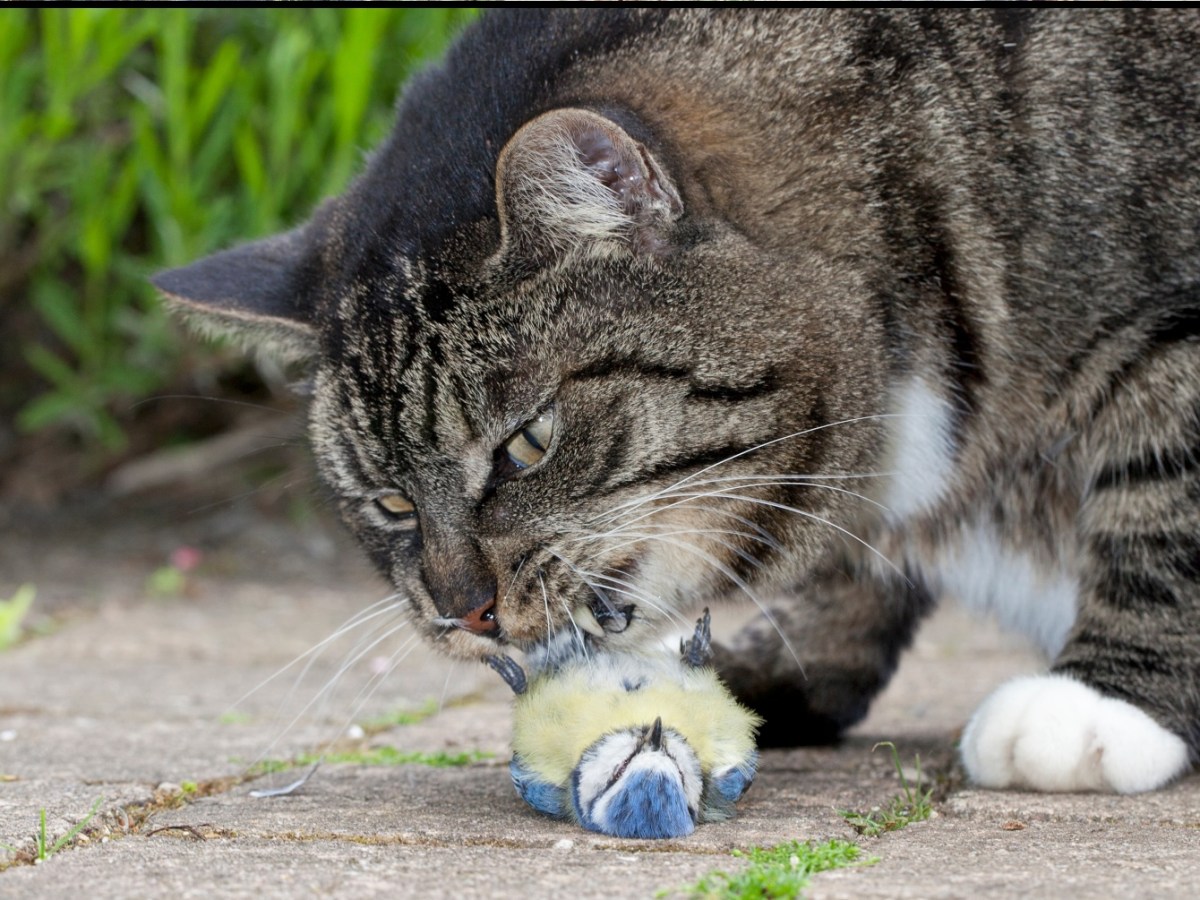
Snake+OilIf you follow any of the environment news in Australia, you will most certainly have seen a lot about feral cats in the last few weeks. I’ve come across dozens of articles in the last week alone talking about the horrendous toll feral cats have had on Australian wildlife since European arrival. In principle, this is a good thing because finally Australians are groggily waking to the fact that our house moggies and their descendants have royally buggered our biodiversity. As a result, we have the highest mammal extinction rate of any country.
But I argue that the newfound enthusiasm for killing anything feline is being peddled mainly as a distraction from bigger environmental issues and to camouflage the complete incompetence of the current government and their all-out war on the environment.

Call me cynical, but when I read headlines like “Australia aims to end extinction of native wildlife by 2020” and Environment Minister Hunt’s recent speech that he has “… set a goal of ending the loss of mammal species by 2020“, I get more than just a little sick to the stomach.

What a preposterous load of shite. Moreover, what a blatant wool-pulling-over-the-eyes public stunt. Read the rest of this entry »


Australia should have a more vibrant ecological culture

13 10 2014
Another great social event bringing ecologists together

Another great social event bringing ecologists together

I’ve always had the gut feeling that Australia punched above its weight when it comes to ecology and conservation. For years I’ve been confidently bragging to whomever might listen (mostly at conference pub sessions) that Australians have a vibrant academic and professional community of ecologists who are internationally renowned and respected. However, my bragging was entirely anecdotal and I always qualified the boast with the caveat that I hadn’t actually looked at the numbers.

Well, I finally did look at the numbers – at least superficially. It seems that for the most part, my assertion was true. I will qualify the following results with another caveat – I’ve only looked at the smallest of samples to generate this rank, so take it with a few grains of salt. Looking at the 200 most-cited ecologists in Google Scholar (with some licence as to who qualifies as an ‘ecologist’ – for example, I ditched a few medicos), I calculated the number of ecologists in that range per 100,000 people for each country. Of course, even the country of designation is somewhat fluid and imprecise – I did not know where most had received the bulk of their training and in which country they had spent most of their time, so the numbers are (again) only indicative. Excluding countries with only one highly cited ecologist in the top 200, the sorted list comes out as: Read the rest of this entry »


How I feel about climate change

7 10 2014

pissed offAngry. Furious. Livid. And a just little bit sad.

Well, I’m not pissed off with ‘climate change’ per se – that would be ridiculous. I am extremely pissed off with those who are doing their damnedest to prevent society from doing anything meaningful about it.

The reason I’m thinking and writing about this at the moment is because last week I was approached by Joe Duggan of The Australian National University who has put together a rather clever and engaging website. The point of the website is simple – demonstrate to people that those studying climate-change science are human beings with feelings; we are not autistic, empirical automatons that conspire to ruin your day. We measure, we model and we analyse, but we’re also very much affected personally by what we observe every day in our careers.

So I grabbed a pen (not something I do very often, and my finger joints complained bitterly as a result) and hand-wrote the following letter. You might be take aback a little by my sentiment, but I assure you it’s an honest representation of my emotional state at the moment:

Dear Joe,

My overwhelming emotion is anger; anger that is fuelled not so much by ignorance, but by greed and profiteering at the expense of future generations. I am not referring to some vague, existential bonding to the future human race; rather, I am speaking as a father of a seven year-old girl who loves animals and nature in general. As a biologist, I see irrefutable evidence every day that human-driven climate disruption will turn out to be one of the main drivers of the Anthropocene mass extinction event now well under way.

Read the rest of this entry »


How to review a scientific paper

30 09 2014

F6a00d834521baf69e200e55471d80f8833-800wiollowing one of the most popular posts on ConservationBytes.com, as well as in response to several requests, I’ve decided to provide a few pointers for early-career scientists for reviewing manuscripts submitted to peer-reviewed journals.

Apart from publishing your first peer-reviewed paper – whether it’s in Nature or Corey’s Journal of Bullshit – receiving that first request to review a manuscript is one of the best indications that you’ve finally ‘made it’ as a recognised scientist. Finally, someone is acknowledging that you are an expert and that your opinions and critiques are important. You deserve to feel proud when this happens.

Of course, reviewing is the backbone of the scientific process, because it is the main component of science’s pursuit of objectivity (i.e., subjectivity reduction). No other human endeavour can claim likewise.

It is therefore essential to take the reviewing process seriously, even if you do so only from the entirely selfish perspective that if you do not, no one will seriously review your own work. It is therefore much more than an altruistic effort to advance human knowledge – it is at the very least a survival mechanism. Sooner or later if you get a reputation for providing bad reviews, or refuse to do them, your own publication track record will suffer as a result.

Just like there are probably as many different (successful) ways to write a scientific paper as there are journals, most people develop their own approaches for reviewing their colleagues’ work. But just as it’s my opinion that many journal editors do an awful job of editing, I know that many reviewers do rather a shit job at their assigned tasks. This perspective comes from many years as an author, a reviewer, an editor and a mentor.

So take my advice as you will – hopefully some of it will prove useful when you review manuscripts. Read the rest of this entry »


Farewell to an environmental hero: Tony McMichael

26 09 2014

120927: ANU Reporter Magazine Portraits. PIcture by Belinda PrattenI had some sad news today – a visionary in human health and environmental integrity, Professor Tony McMichael, passed away last night from advanced influenza complications. Many people in the conservation field might not have heard of Tony, but rest assured he was one of the foremost thinkers and visionaries in the relationship between environment and human health.

I first met Tony on a World Health Organization-sponsored trip to China in 2008, where I was the ‘token’ ecologist on a panel of experts examining the nexus between environment, agriculture and the infectious diseases of poverty. Tony’s intellect and experience were daunting, to say the least, but a man who had served on several IPCC panels and countless international specialist committees was approachable and always listened. I was impressed and humbled from the outset.

A powerhouse in the general and multidisciplinary approach to the drivers of declining human health, Tony researched everything from classic human epidemiology to the sociological aspects of declining human health in the face of climate disruption. A little home-grown pride was present too in the fact that Tony did his medical degree at the University of Adelaide where I am now based.

If you are not familiar with Tony’s work and have even the slightest interest in the human-environment relationship, I encourage you to read his classic and innovative works. Read the rest of this entry »


We treat our wildlife like vermin

24 09 2014
Just a little of the dog fence's carnage and cruelty at work.

Just a little of the dog fence’s carnage and cruelty at work.

I’ve pointed out in several posts on ConservationBytes.com just how badly Australia is doing in the environmental stakes, with massive deforestation continuing since colonial times, feral predators and herbivores blanketing the continent, inadequate protected areas, piss-weak policies and a government at war with its own environment. Despite a few recent wins in marine conservation, Australia has a dreadful track record.

Now in another monumental demonstration of stupidity, corruption and colonial-era attitudes toward native wildlife, Western Australia has outdone itself by sneaking through legislation to extend its so-called ‘Barrier Fence’ in an effort to isolate its marginal farmland from dingoes, emus and other ‘nuisance’ species.

As I and several others have pointed out before, the mere existence of the record-breaking dingo fence is not only counter-productive, it is expensive and utterly archaic. It should be torn down entirely.

Instead, the Western Australian government wants to extend the national fence, and they’ve approved the plan it without going through any of the appropriate checks in the system. Its environmental impacts have not been adequately assessed, nor has the public been given the opportunity to oppose the plans. In my view, the people responsible for this act should go to gaol.

In a recent paper led by Keith Bradby entitled Ecological connectivity or Barrier Fence? Critical choices on the agricultural margins of Western Australia, we show how the Western Australia state government has not followed any of its own environmental legislation and rushed through these idiotic proposals. If you do not subscribe to Ecological Management and Restoration, you can obtain a copy of the paper by e-mailing Keith or me. Read the rest of this entry »


Demonising the hellbender

19 09 2014
Not 'Hellraiser', FFS - 'hellbender'

Not ‘Hellraiser’, FFS – ‘hellbender’

Here’s one by my new PhD student, Leah Collett:

I have never heard of the hellbender before. “Brilliant name”, I thought. Then I saw it mentioned again a few days later, in company with honey badgers and blue-footed boobies, in a recent article on why we need to see nature as useless in order to ‘save’ it.

So what is it? The hellbender is a species of salamander found in eastern North America, the only species of its genus it turns out, and one of only three left in its family (Cryptobranchidae – ‘hidden gills’). It is assessed as Near Threatened with possible extinction in the near future by the IUCN Red List. Along with the, sadly all too often, habitat degradation it is suffering due to it being highly sensitive to environmental change, it is still believed to be poisonous and that it will kill other fish and their eggs with this poison. In this day and age, some people will kill these salamanders when they come across them when they are out fishing, due to inaccurate held beliefs. I think I found it more incredible that this still occurs in a country where people have quick access to research and information denouncing such a myth.

This wonderful document on the biology and ecology of the hellbenders includes a section titled ‘Man and Hellbenders’ and highlights the likely culprit for starting the ‘hellbenders are poisonous – kill them all’ campaign:

“Dr N. Bayard Green (1971) related how a former editor of the Pocahontas Times (Pocahontas, West Virginia) in 1926 continually tried to vilify the hellbender as a destroyer of game fish and their eggs. Throughout West Virginia many sportsmen’s groups attempted to eradicate many of the so-called enemies of fish and game.”

(I could not read the original paper of Dr Green’s, although it might be available in the collections section). Read the rest of this entry »


Evidence-based conservation advocacy can work

15 09 2014
Colin 'Captain Hook' Barnett

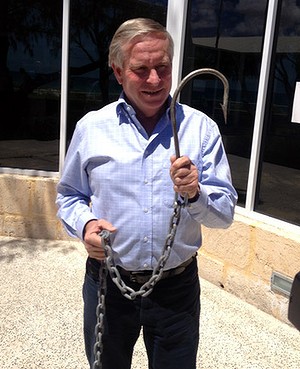
Colin ‘Captain Hook’ Barnett

Just before knock-off time last Friday, I received some inspiring news. It’s not often in conservation science that the news is good, so even small wins are deliciously welcome.

Unless you’ve been out bush for the last few days or completely ignored the news services, you would have heard that Western Australia has decided not to go ahead with its moronic shark-culling programme. It all came down to the Western Australia Environmental Protection Authority‘s recommendation to the state government that it should not proceed with the cull because of ‘uncertainties’ in its effectiveness and impacts. While the government could conceivably ignore this recommendation and go ahead with the cull anyway, the right-wing Premier of Western Australia, Colin ‘Captain Hook’ Barnett, stated that while he was “disappointed”, the government was unlikely to appeal the decision, at least this year.

Putting the obvious commentary on his response aside for the moment, this is a rare example where overwhelming evidence actually persuaded a semi-autonomous government agency from going ahead with clearly stupid environmental policies. I can claim a small part in this endeavour, having co-written the synopsis of the scientific consensus statement and co-signed the submission to the Environmental Protection Authority. However, it was mainly down to the hard work and dedication of Professor Jessica Meeuwig of the University of Western Australia that the Western Australia government had little choice to but to heed our condemnation. Without her, I can pretty much guarantee that the shark slaughter would be continuing this year.

As they say in France, “chapeau” to Jessica. Read the rest of this entry »


Cartoon guide to biodiversity loss XXV

8 09 2014

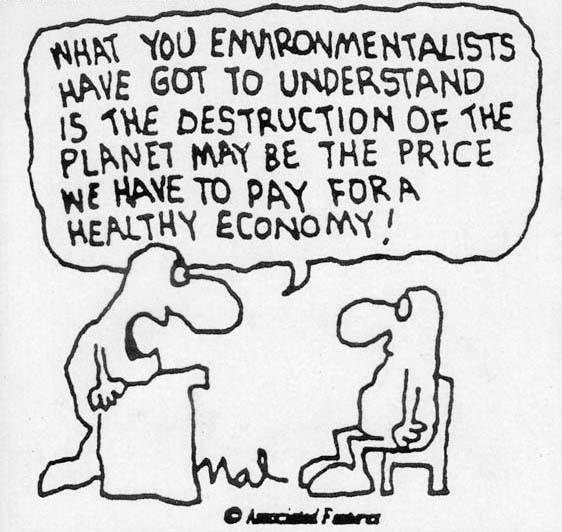
Here are 6 more biodiversity cartoons for your conservation-humour fix (see full stock of previous ‘Cartoon guide to biodiversity loss’ compendia here).

Read the rest of this entry »


High-altitude ecology

28 08 2014
A constant hazard in the Tibetan Plateau - yakjam

A constant hazard in the Tibetan Plateau – yakjam

I’ve been out of the social-media loop for a few weeks, hence the abnormally long interval since my last post. As you might recall, I’ve been travelling overseas and most recently blogged from Monterey, California where I was attending a symposium on invasion genetics.

The next phase of my travels couldn’t have been more different.

The reason I couldn’t access the blog was because I was well behind the Great Firewall of China. I was, in fact, in the Tibetan region of Gansu and Sichuan Provinces in western China for most of the last 10 days. While I’ve travelled to China many times before, this was by far the most evocative, interesting and unique experience I’ve ever had in this country. Reflecting on the past 10 days while waiting in Hong Kong for my flight back to Australia, I am still reeling a little from what I saw.

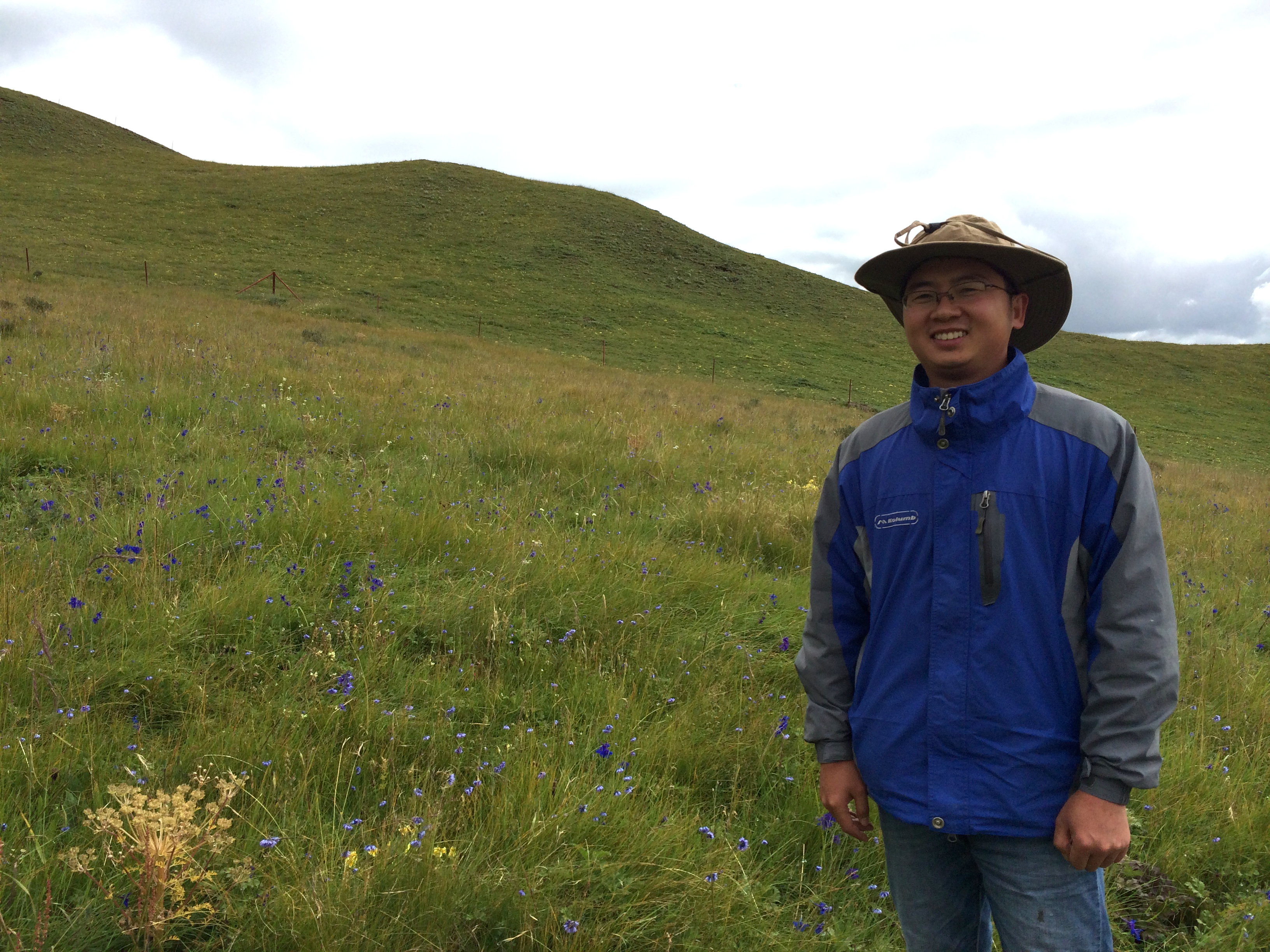
Top bloke: Jiajia Liu of Fudan University

Top bloke: Jiajia Liu of Fudan University

What the hell was I doing at 3500-4000 m elevation on the Tibetan Plateau? Good question. I have been most fortunate to be included in a crack team of Chinese ecologists who have designed and implemented a most impressive set of experiments in plant community ecology. The team, led by Professor Shurong Zhou and Dr. Jiajia Lui of Fudan University, has been working relentlessly to put together some of the sexiest plant ecology experiments going in China.

Having now so far published two papers from the some of the experiments (see here and here), my Chinese colleagues thought it was high time I visited the famous site. Situated at 3500 m in the Tibetan region of Gansu Province in western China, the Lanzhou University research station Azi Shi Yan Zhan is about a 20-hectare area of meadow fenced off from the grazing of the ubiquitous domestic yaks herded by the local Tibetans. If that sounds pretty exotic, let me assure you that it is. Read the rest of this entry »


World Heritage Species

17 08 2014

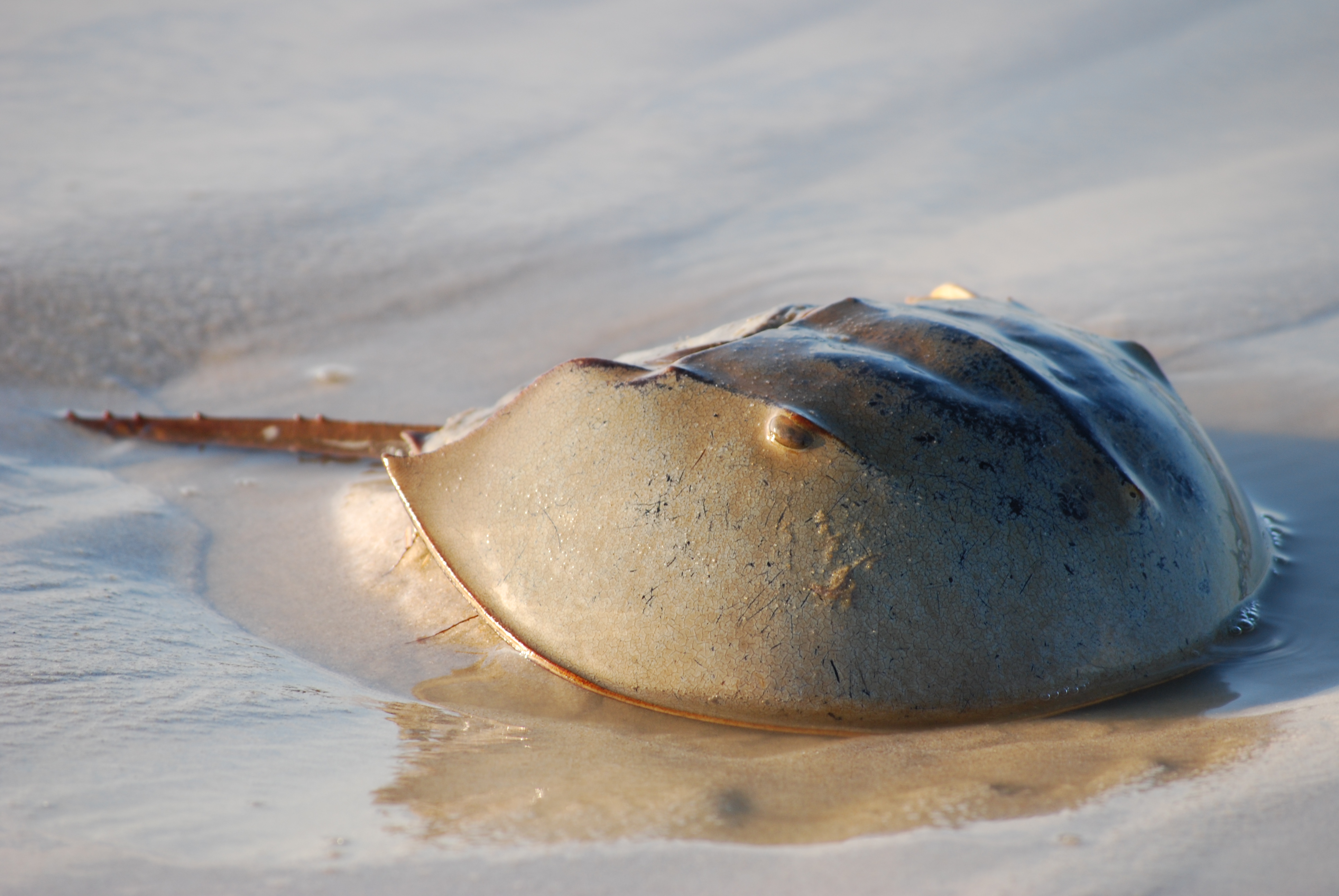
horseshoe crabHaving just attended the Baker & Stebbins Legacy Symposium on Invasion Genetics in Pacific Grove, California, I have had a rare bit of leisure time between my book-writing commitments and operating in conference mode. It’s summer here in California, so I’ve taken the opportunity to read a bit of The New Yorker in my accommodation. It is indeed a pleasure to have these micro-moments of ‘leisure’ reading. As it turns out though, work subjects are never far from my mind as I do this.

So it interested me greatly when I read another fantastic article in the ‘Yorker about horseshoe crabs, and their precarious state despite having survived half a billion years on this planet. While I was generally interested in the science, biomedical applications, conservation and systematics of the species, what really caught my eye was the proposal to list them as a ‘World Heritage Species’.

A what? Never heard of that classification, you say? Neither had I. Not to worry though – it doesn’t exist yet. Read the rest of this entry »


We generally ignore the big issues

11 08 2014

I’ve had a good week at Stanford University with Paul Ehrlich where we’ve been putting the final touches1 on our book. It’s been taking a while to put together, but we’re both pretty happy with the result, which should be published by The University of Chicago Press within the first quarter of 2015.

It has indeed been a pleasure and a privilege to work with one of the greatest thinkers of our age, and let me tell you that at 82, he’s still a force with which to be reckoned. While I won’t divulge much of our discussions here given they’ll appear soon-ish in the book, I did want to raise one subject that I think we all need to think about a little more.

The issue is what we, as ecologists (I’m including conservation scientists here), choose to study and contemplate in our professional life.

I’m just as guilty as most of the rest of you, but I argue that our discipline is caught in a rut of irrelevancy on the grander scale. We spend a lot of time refining the basics of what we essentially already know pretty well. While there will be an eternity of processes to understand, species to describe, and relationships to measure, can our discipline really afford to avoid the biggest issues while biodiversity (and our society included) are flushed down the drain?

Read the rest of this entry »


A fairer way to rank conservation and ecology journals in 2014

1 08 2014

Normally I just report the Thomson-Reuters ISI Web of Knowledge Impact Factors for conservation-orientated journals each year, with some commentary on the rankings of other journals that also publish conservation-related material from time to time (see my lists of the 2008200920102011 and 2012 Impact Factor rankings).

This year, however, I’m doing something different given the growing negativity towards Thomson-Reuters’ secretive behaviour (which they’ve promised this year to rectify by being more transparent) and the generally poor indication of quality that the Impact Factor represents. Although the 2013 Impact Factors have just been released (very late this year, for some reason), I’m going to compare them to the increasingly reputable Google Scholar Journal Metrics, which intuitively make more sense to me, are transparent and turn a little of the rankings dogma on its ear.

In addition to providing both the Google metric as well as the Impact Factor rankings, I’ve come up with a composite (average) rank from the two systems. I think ranks are potentially more useful than raw corrected citation metrics because you must first explicitly set your set of journals to compare. I also go one step further and modify the average ranking with a penalty term that is essentially the addition of the coefficient of variation of rank disparity between the two systems.

Read on for the results.

Read the rest of this entry »


Time to put significance out of its misery

28 07 2014

If you’ve been following this blog for a while, you’ll be no stranger to my views on what I believe is one of the most abused, and therefore now meaningless, words in scientific writing: ‘significance’ and her adjective sister, ‘significant’. I hold that it should be stricken entirely from the language of science writing.

Most science writing has become burdened with archaic language that perhaps at one time meant something, but now given the ubiquity of certain terms in most walks of life and their subsequent misapplication, many terms no longer have a precise meaning. Given that good scientific writing must ideally strive to employ the language of precision, transparency and simplicity, now-useless terminology should be completely expunged from our vocabulary.

‘Significance’ is just such a term.

Most interviews on radio or television, most lectures by politicians or business leaders, and nearly all presentations by academics at meetings of learned societies invoke ‘significant’ merely to add emphasis to the discourse. Usually it involves some sort of comparison – a ‘significant’ decline, a ‘significant’ change or a ‘significant’ number relative to some other number in the past or in some other place, and so on. Rarely is the word quantified: how much has the trend declined, how much did it change and how many is that ‘number’? What is ‘significant’ to a mouse is rather unimportant to an elephant, so most uses are as entirely subjective qualifiers employed to add some sort of ‘expert’ emphasis to the phenomenon under discussion. To most, ‘significant’ just sounds more authoritative, educated and erudite than ‘a lot’ or ‘big’. This is, of course, complete rubbish because it is the practice of using big words to hide the fact that the speaker isn’t quite as clever as he thinks he is.

While I could occasionally forgive non-scientists for not quantifying their use of ‘significance’ because they haven’t necessarily been trained to do so, I utterly condemn scientists who use the word that way. We are specifically trained to quantify, so throwing ‘significant’ around without a very clear quantification (it changed by x amount, it declined by 50 % in two years, etc.) runs counter to the very essence of our discipline. To make matters worse, you can often hear a vocal emphasis placed on the word when uttered, along with a patronising hand gesture, to make that subjectivity even more obvious.

If you are a scientist reading this, then you are surely waiting for my rationale as to why we should also ignore the word’s statistical meaning. While I’ve explained this before, it bears repeating. Read the rest of this entry »


Another 589 scientists speak out against Abbott’s war on the environment

22 07 2014

ATBC_logo_largeI’m currently in Cairns at the Association for Tropical Biology and Conservation‘s Annual Conference where scientists from all over the world have amassed for get the latest on tropical ecology and conservation. Unfortunately, all of them have arrived in an Australia different to the one they knew or admired from afar. The environmental devastation unleashed by the stupid policies of the Abbottoir government has attracted the attention and ire of some of the world’s top scientists. This is what they have to say about it (with a little help from me):

ASSOCIATION FOR TROPICAL BIOLOGY AND CONSERVATION

RESOLUTION IN SUPPORT OF STRONGER LAWS FOR CLIMATE-CHANGE MITIGATION AND ENVIRONMENTAL PROTECTION IN AUSTRALIA

Australia has many trees, amphibians, and reptiles that are unique, being found nowhere else on Earth. Northern Australia contains a disproportionate amount of this biodiversity which occurs in little developed areas, parks and reserves, indigenous titled lands, and community-managed lands.

Whilst Australia’s achievements in protecting some of its remaining native forests, wildlife and wilderness are applauded, some 6 million hectares of forest have been lost since 2000. Existing forest protection will be undermined by weak climate change legislation, and poorly regulated agricultural and urban development.

The Association for Tropical Biology and Conservation (ATBC), the world’s largest organisation dedicated to the study and conservation of tropical ecosystems, is concerned about recent changes in Australia’s environmental regulations, reduced funding for scientific and environmental research, and support for governmental and civil society organisations concerned with the environment. Read the rest of this entry »


Tropical forest resilience depends on past disturbance frequency

16 07 2014

I’ve recently come across an interesting study that perfectly marries palaeo-ecological data with modern conservation philosophy. It’s not often that such a prehistorical perspective dating at least to the Last Glacial Maximum has been used so effectively to inform future conservation outlooks. I’m particularly interested in this sort of approach considering my own palaeo dabblings of late.

Published in Nature Communications this May, Lydia Cole and colleagues’ paper Recovery and resilience of tropical forests after disturbance is a meta-analysis of 71 studies covering nearly 300 disturbance events in tropical forests over the last 20,000 years or so. Using fossil pollen records as an index of vegetation change, they demonstrated the (somewhat intuitive) main result that the time to recovery following a disturbance generally decreases as the past disturbance frequency increased.

This appears to be a vindication of the idea that a system’s adaptive strategies evolve as a product of the local disturbance regime. More importantly, they found that recovery was faster following ‘large infrequent events’, which are natural perturbations such as cyclones and major fires. While most past disturbances were caused by humans clearing forest, the fact that tropical forest systems were most resilient to ‘natural’ events means that if we can’t stop human disturbances, at least we can attempt to emulate natural processes to maximise the rebound potential. Much like many modern forestry operations try to emulate natural disturbances to limit their damage, we should at least manage our impacts by understanding so-called ‘natural’ regimes as much as possible. Read the rest of this entry »


Biodiversity Hotspots have nearly burnt out

10 07 2014

dying embersI recently came across a really important paper that might have flown under the radar for many people. For this reason, I’m highlighting it here and will soon write up a F1000 Recommendation. This is news that needs to be heard, understood and appreciated by conservation scientists and environmental policy makers everywhere.

Sean Sloan and colleagues (including conservation guru, Bill Laurance) have just published a paper entitled Remaining natural vegetation in the global biodiversity hotspots in Biological Conservation, and it we are presented with some rather depressing and utterly sobering data.

Unless you’ve been living under a rock for the past 20 years, you’ll have at least heard of the global Biodiversity Hotspots (you can even download GIS layers for them here). From an initial 10, to 25, they increased penultimately to 34; most recently with the addition of the Forests of East Australia, we now have 35 Biodiversity Hotspots across the globe. The idea behind these is to focus conservation attention, investment and intervention in the areas with the most unique species assemblages that are simultaneously experiencing the most human-caused disturbances.

Indeed, today’s 35 Biodiversity Hotspots include 77 % of all mammal, bird, reptile and amphibian species (holy shit!). They also harbour about half of all plant species, and 42 % of endemic (not found anywhere else) terrestrial vertebrates. They also have the dubious honour of hosting 75 % of all endangered terrestrial vertebrates (holy, holy shit!). Interestingly, it’s not just amazing biological diversity that typifies the Hotspots – human cultural diversity is also high within them, with about half of the world’s indigenous languages found therein.

Of course, to qualify as a Biodiversity Hotspot, an area needs to be under threat – and under threat they area. There are now over 2 billion people living within Biodiversity Hotspots, so it comes as no surprise that about 85 % of their area is modified by humans in some way.

A key component of the original delimitation of the Hotspots was the amount of ‘natural intact vegetation’ (mainly undisturbed by humans) within an area. While revolutionary 30 years ago, these estimates were based to a large extent on expert opinions, undocumented assessments and poor satellite data. Other independent estimates have been applied to the Hotspots to estimate their natural intact vegetation, but these have rarely been made specifically for Hotspots, and they have tended to discount non-forest or open-forest vegetation formations (e.g., savannas & shrublands).

So with horribly out-of-date vegetation assessments fraught with error and uncertainty, Sloan and colleagues set out to estimate what’s really going on vegetation-wise in the world’s 35 Biodiversity Hotspots. What they found is frightening, to say the least.

Read the rest of this entry »