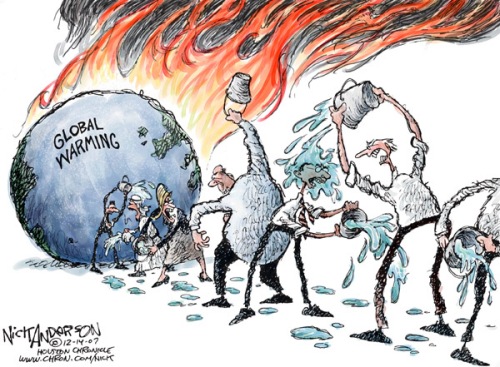
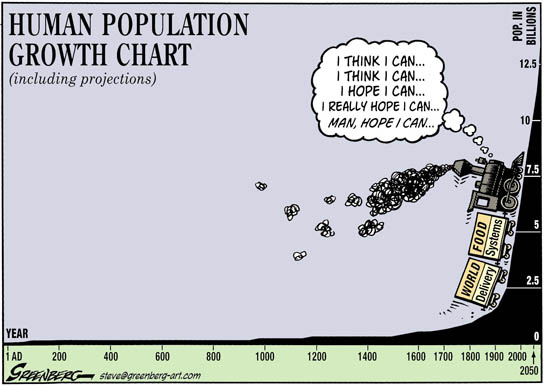
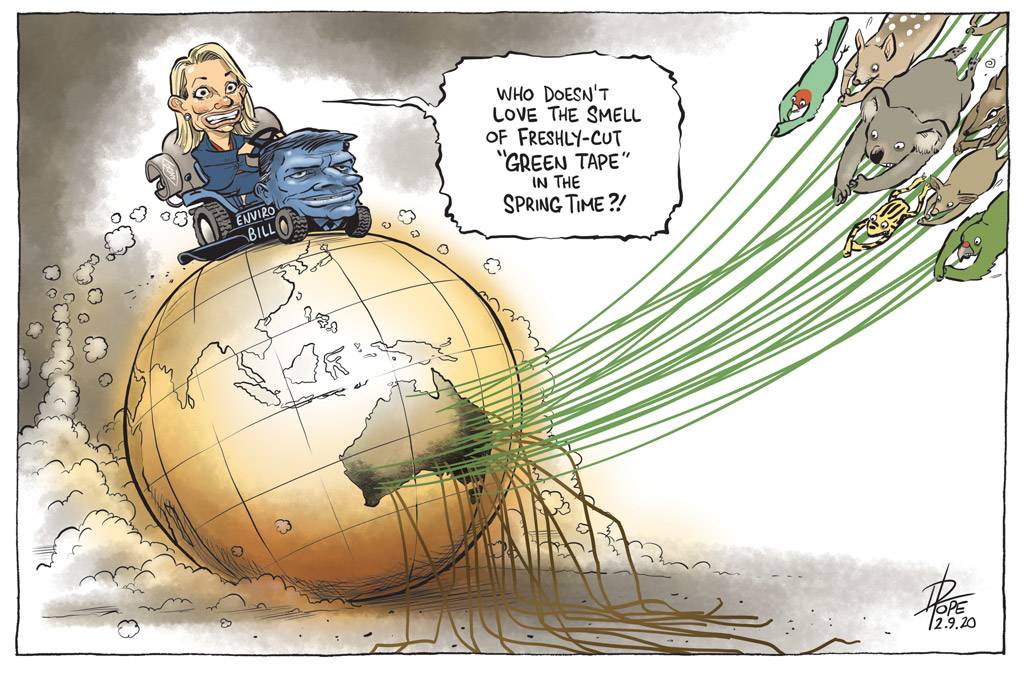
As the pandemic rages globally, and the fragility of the American political system goes on full display, I give you the first set of biodiversity cartoons for 2021. See full stock of previous ‘Cartoon guide to biodiversity loss’ compendia here.

As the pandemic rages globally, and the fragility of the American political system goes on full display, I give you the first set of biodiversity cartoons for 2021. See full stock of previous ‘Cartoon guide to biodiversity loss’ compendia here.

If you follow my blog regularly, you’ll know that around the middle of each year I publish a list of journals in conservation and ecology ranked according to a multi-index algorithm we developed back in 2016. The rank I release coincides with the release of the Web of Knowledge Impact Factors, various Scopus indices, and the Google Scholar journal ranks.

The reasons we developed a multi-index rank are many (summarised here), but they essentially boil down to the following rationale:
(i) No single existing index is without its own faults; (ii) ranks are only really meaningful when expressed on a relative scale; and (iii) different disciplines have wildly different index values, so generally disciplines aren’t easily compared.
That’s why I made the R code available to anyone wishing to reproduce their own ranked sample of journals. However, given that implementing the R code takes a bit of know-how, I decided to apply my new-found addiction to R Shiny to create (yet another) app.
Welcome to the JournalRankShiny app.
This new app takes a pre-defined list of journals and the required indices, and does the resampled ranking for you based on a few input parameters that you can set. It also provides a few nice graphs for the ranks (and their uncertainties), as well as a plot showing the relationship between the resulting ranks and the journal’s Impact Factor (for comparison).
Read the rest of this entry »Following my late-December tradition, I present — in no particular order — a retrospective list of the ‘top’ 20 influential papers of 2020 as assessed by experts in Faculty Opinions (formerly known as F1000). See previous years’ lists here: 2019, 2018, 2017, 2016, 2015, 2014, and 2013.

Life in fluctuating environments — “… it tackles a fundamental problem of bio-ecology (how living beings cope with the fluctuations of the environment) with a narrative that does not make use of the cumbersome formulas and complicated graphs that so often decorate articles of this kind. Instead, the narrative and the illustrations are user-friendly and easy to understand, while being highly informative.“
Forest carbon sink neutralized by pervasive growth-lifespan trade-offs — “… deals with a key process in the global carbon cycle: whether climate change (CC) is enhancing the natural sink capacity of ecosystems or not.“
Bending the curve of terrestrial biodiversity needs an integrated strategy — “… explores different scenarios about the consequences of habitat conversion on terrestrial biodiversity.“
Rebuilding marine life — “The logic is: leave nature alone, and it will come back. Not necessarily as it was before, but it will come back.“

Towards a taxonomically unbiased European Union biodiversity strategy for 2030 — “… states that the emperor has no clothes, providing an estimate of the money dedicated to biodiversity conservation (a lot of money) and then stating that the bulk of biodiversity remains unstudied and unprotected, while efforts are biased towards just a few “popular” species.“
Read the rest of this entry »Originally published on the GEL.blog
Blistering heat, pouring rain, finding volunteers, submitting field-trip forms, forgetting equipment, data sheets blowing away in the wind — a field-based research project is hard at the best of times. Add white sharks into the mix and you start to question whether this project is even possible. These were some of my realisations when I started my Honours year studying shark deterrents.
A specific memory from my first field expedition was setting off on a six-day boat trip with the comfortable sight of land getting smaller and smaller, in an already rough ocean, to find one of the most feared fish in the sea, the white shark. I was intimidated, but also excited.
Over the next few days reality set in and I experienced the true challenges of working in the field. When there were no sharks around, I had to concentrate on the bait line for hours in anticipation of a sudden ambush. When there were sharks around, it was all systems go and there was no room for error — not with a fish of this size. It didn’t matter how tired or seasick I was, the data had to be collected.

When I found out that I had been offered a field-based PhD extending my shark-deterrent research from my Honours, other than being over-the-moon, I knew I had a big few years ahead of me. I immediately began preparing mentally for the challenges that came along with my field-based research. Particularly the long periods of time I knew I would spend away from home and my family.
Read the rest of this entry »Yes, yes. I know. Another R Shiny app.
However, this time I’ve strayed from my recent bibliometric musings and developed something that’s more compatible with the core of my main research and interests.

Welcome to LeslieMatrixShiny!
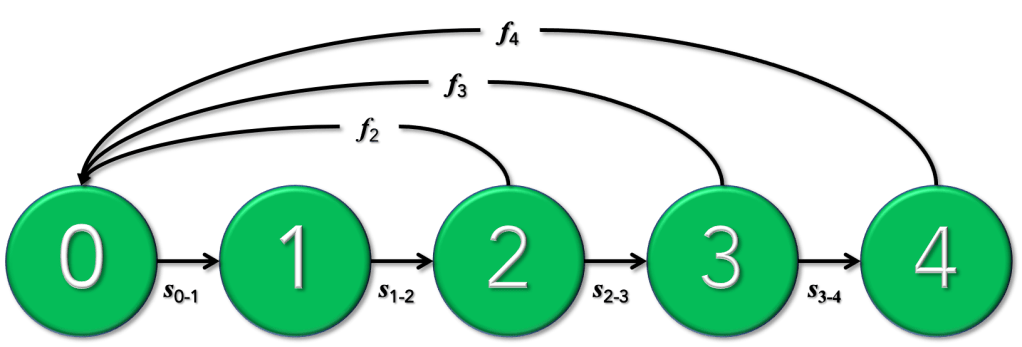
Over the years I’ve taught many students the basics of population modelling, with the cohort-based approaches dominating the curriculum. Of these, the simpler ‘Leslie’ (age-classified) matrix models are both the easiest to understand and for which data can often be obtained without too many dramas.

But unless you’re willing to sit down and learn the code, they can be daunting to the novice.
Sure, there are plenty of software alternatives out there, such as Bob Lacy‘s Vortex (a free individual-based model available for PCs only), Resit Akçakaya & co’s RAMAS Metapop ($; PC only), Stéphane Legendre‘s Unified Life Models (ULM; open-source; all platforms), and Charles Todd‘s Essential (open-source; PC only) to name a few. If you’re already an avid R user and already into population modelling, you might be familiar with the population-modelling packages popdemo, OptiPopd, or sPop. I’m sure there are still other good resources out there of which I’m not aware.
But, even to install the relevant software or invoke particular packages in R takes a bit of time and learning. It’s probably safe to assume that many people find the prospect daunting.
It’s for this reason that I turned my newly acquired R Shiny skills to matrix population models so that even complete coding novices can run their own stochastic population models.
I call the app LeslieMatrixShiny.
Read the rest of this entry »In the first of two consecutive interviews with climate-change experts, authors, editors and readers of the Spanish magazine Quercus have a chat with Ken Caldeira, a global-ecology researcher at the Carnegie Institution for Science (Washington, USA). His responses attest that the climate system is complex, and that we need to be practical in dealing with the planet’s ongoing climate emergency.
SARS-Covid-19 is impacting the world. In our home country, Spain, scientists argue that (i) previous budget cuts in public health have weakened our capacity to tackle the pandemic (7), and (ii) the expert panels providing advice to our government should be independent of political agendas in their membership and decisions (8). Nevertheless, the Spanish national and regional governments’ data lack the periodicity, coherence, and detail to harness an effective medical response (9). Sometimes it feels as if politics partly operate by neglecting the science needed to tackle challenges such as the covid pandemic or climate change.
Having said that, even if a country has cultivated and invested in the best science possible, people have difficulties coming to terms with the idea that scientists work with probabilities of alternative scenarios. As much as there are different ways of managing a pandemic, scientists differ about how to mitigate the ecological, economic, and health impacts of a high-carbon society.
Thus, a more and more common approach is to make collective assessments (elicitations) by weighing different points of view across experts — for instance, to establish links between climate change and armed conflict (10) or to evaluate the role of nuclear energy as we transition to a low-carbon energy-production model (11). The overarching goal is to quantify consensus based on different (evidence-based) opinions.
The questions we here ask Ken Caldeira could well have different answers if asked of other experts. Still, as Ken points out, it is urgent that (of the many options available) we use the immense and certainty-proof knowledge we have already about climate change to take actions that work.
Interview done 23 January 2020
We italicise each question and the name of the person asking the question and cite one to three relevant publications per question. For expanding on Ken Caldeira’s views on climate change, see a sample of his public talks here and here and newspaper articles here and here.

Last week I reported that I had finally delved into the world of R Shiny to create an app that calculates relative citation-based ranks for researchers.
I’m almost slightly embarrassed to say that Shiny was so addictive that I ended up making another app.
This new app takes any list of user-supplied digital object identifiers (doi) and fetches their Altmetric data for you.
Why might you be interested in a paper’s Altmetric data? Citations are only one measure of an article’s impact on the research community, whereas Altmetrics tend to indicate the penetration of the article’s findings to a much broader audience.
Altmetric is probably the leading way to gauge the ‘impact’ (attention) an article has commanded across all online sources, including news articles, tweets, Facebook entries, blogs, Wikipedia mentions and others.
And for those of us interested in influencing policy with our work, Altmetrics also collate citations arising from policy documents.
Read the rest of this entry »Back in April I blogged about an idea I had to provide a more discipline-, gender-, and career stage-balanced way of ranking researchers using citation data.
Most of you are of course aware of the ubiquitous h-index, and its experience-corrected variant, the m-quotient (h-index ÷ years publishing), but I expect that you haven’t heard of the battery of other citation-based indices on offer that attempt to correct various flaws in the h-index. While many of them are major improvements, almost no one uses them.
Why aren’t they used? Most likely because they aren’t easy to calculate, or require trawling through both open-access and/or subscription-based databases to get the information necessary to calculate them.
Hence, the h-index still rules, despite its many flaws, like under-emphasising a researcher’s entire body of work, gender biases, and weighting towards people who have been at it longer. The h-index is also provided free of charge by Google Scholar, so it’s the easiest metric to default to.
So, how does one correct for at least some of these biases while still being able to calculate an index quickly? I think we have the answer.
Since that blog post back in April, a team of seven scientists and I from eight different science disciplines (archaeology, chemistry, ecology, evolution & development, geology, microbiology, ophthalmology, and palaeontology) refined the technique I reported back then, and have submitted a paper describing how what we call the ‘ε-index’ (epsilon index) performs.
Read the rest of this entry »Have a job interview coming up and have been invited to give a seminar to the committee/school/department/institute?
Here are some handy tips for giving the best interview-tailored seminar (modified excerpt from The Effective Scientist)
If you have not yet had the opportunity to be grilled (interviewed) for a new job, you might not appreciate the importance of giving the best seminar of your life to increase your chances of getting the job you want. Normally in most academic settings, a group of the most qualified candidates for an advertised position will be invited to give a seminar to the main group (department, school, or centre) for whom they could be eventually working if successful.

While all of the standard advice applies to this type of seminar too, there are some specific issues that the candidate must also ideally take into consideration. Unfortunately, many of these seminars are just awful, serving only to bathe the aspirants in an unflattering spotlight of incompetence.
Read the rest of this entry »The sixth set of biodiversity cartoons for 2020. See full stock of previous ‘Cartoon guide to biodiversity loss’ compendia here.
—

The goal of developing an alien-species warning system is to remove the species locally and to allow others enough time to take actions that prevent further spread.
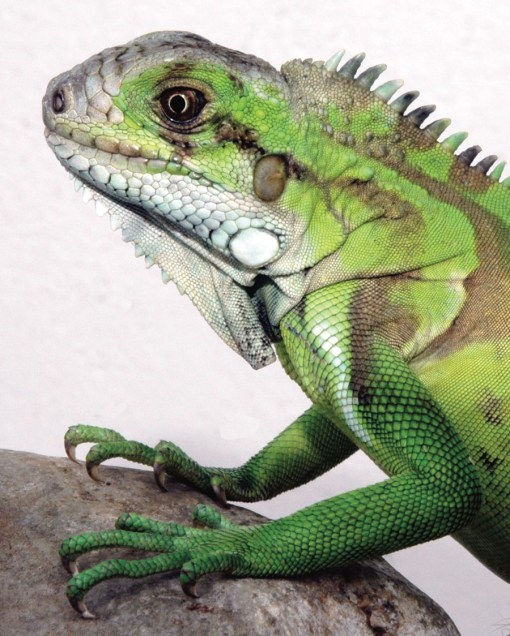
For the green iguana (Iguana iguana) however, its > 50-year spread around the globe continues as we show in our latest study by using citizen-science data. We demonstrate how pet owners and recreational parks have facilitated the green iguana’s spread to mainland Asia, and project its potential future Asian range in the absence of immediate actions.
Do you know how best to deal with an invasive species? Avoid them in the first place.
There is broad agreement among scientists and conservation practitioners that the first line of defense against invasive species is prevention. Once established, invasive species can cause agricultural damage, compete with native species for space, become predators, or carry with them and introduce new diseases. We’ve seen this time and again, with some infamous examples including zebra mussels in the Great Lakes of North America (1), cane toads in Australia (2), and Asian tiger mosquitoes around the world (3).
To stop the list of invasive species from growing, it is important to detect spreading and newly arriving species early, ideally before they become established. Early detection is especially evident for green iguanas, given their high rates of population growth (females can lay up to 70 eggs), although detectability can be particularly challenging in forested spaces.

Last week I mentioned that the new journal Frontiers in Conservation Science is now open for business. As promised, I wrote a short article outlining our vision for the Global Biodiversity Threats section of the journal. It’s open-access, of course, so I’m also copying here on ConservationBytes.com.
Most conservation research and its applications tend to happen most frequently at reasonably fine spatial and temporal scales — for example, mesocosm experiments, single-species population viability analyses, recovery plans, patch-level restoration approaches, site-specific biodiversity surveys, et cetera. Yet, at the other end of the scale spectrum, there have been many overviews of biodiversity loss and degradation, accompanied by the development of multinational policy recommendations to encourage more sustainable decision making at lower levels of sovereign governance (e.g., national, subnational).
Yet truly global research in conservation science is fact comparatively rare, as poignantly demonstrated by the debates surrounding the evidence for and measurement of planetary tipping points (Barnosky et al., 2012; Brook et al., 2013; Lenton, 2013). Apart from the planetary scale of human-driven disruption to Earth’s climate system (Lenton, 2011), both scientific evidence and policy levers tend to be applied most often at finer, more tractable research and administrative scales. But as the massive ecological footprint of humanity has grown exponentially over the last century (footprintnetwork.org), robust, truly global-scale evidence of our damage to the biosphere is now starting to emerge (Díaz et al., 2019). Consequently, our responses to these planet-wide phenomena must also become more global in scope.
Conservation scientists are adept at chronicling patterns and trends — from the thousands of vertebrate surveys indicating an average reduction of 68% in the numbers of individuals in populations since the 1970s (WWF, 2020), to global estimates of modern extinction rates (Ceballos and Ehrlich, 2002; Pimm et al., 2014; Ceballos et al., 2015; Ceballos et al., 2017), future models of co-extinction cascades (Strona and Bradshaw, 2018), the negative consequences of invasive species across the planet (Simberloff et al., 2013; Diagne et al., 2020), discussions surrounding the evidence for the collapse of insect populations (Goulson, 2019; Komonen et al., 2019; Sánchez-Bayo and Wyckhuys, 2019; Cardoso et al., 2020; Crossley et al., 2020), the threats to soil biodiversity (Orgiazzi et al., 2016), and the ubiquity of plastic pollution (Beaumont et al., 2019) and other toxic substances (Cribb, 2014), to name only some of the major themes in global conservation.
Read the rest of this entry »
Several months ago, Daniel Blumstein of UCLA approached me with an offer — fancy leading a Special Section in a new Frontiers journal dedicated to conservation science?
I admit that my gut reaction was a visceral ‘no’, both in terms of the extra time it would require, as well as my autonomous reflex of ‘not another journal, please‘.
I had, for example, spent a good deal of blood, sweat, and tears helping to launch Conservation Letters when I acted as Senior Editor for the first 3.5 years of its existence (I can’t believe that it has been nearly a decade since I left the journal). While certainly an educational and reputational boost, I can’t claim that the experience was always a pleasant one — as has been said many times before, the fastest way to make enemies is to become an editor.
But then Dan explained what he had in mind for Frontiers in Conservation Science, and the more I spoke with him, the more I started to think that it wasn’t a bad idea after all for me to join.
(originally published on The Conversation)
How much climate variability have humans dealt with since we evolved and since we started settling (Neolithic times)? How important was migration to human survival during these periods?
The climate always fluctuates as variation in the Sun’s heat reaching Earth drives glacial-interglacial cycles. Over the past 420,000 years there have been at least four major transitions between ice ages and relatively warmer interglacial periods.
Modern humans emigrated from Africa to populate the rest of the globe between 120,000 and 80,000 years ago, which means our species has had to adapt to many massive climate transitions.
The Last Interglacial 129,000–116,000 years ago was a period of intense global warming (from around 2 ℃ higher than today to as much as 11 ℃ higher in the Arctic), leading to a large reduction of the Arctic, Greenland and Antarctic ice sheets, and a 6–9 m rise in sea level.
The Last Glacial Maximum from 26,500–19,000 years ago coincided with a large drop in atmospheric CO₂ and a 4.3 ℃ cooling globally.
Read more: Climate explained: will the tropics eventually become uninhabitable?
Low temperatures turned much of the world’s water into ice and expanded glaciers.
Read the rest of this entry »The COVID-19 pandemic has finally woken a few people up in this country. The closure of our automotive industry, the volatility of the mining sector, the deteriorating relations with our largest trading partner (China) — all these have seem to have acted like smelling salts for our semi-conscious leaders.

Australia has an abysmal manufacturing capacity, and I know that trying to fix this is very much on the table now at the highest levels. Australia is for the most part a 7.7 million km2 ‘mine’ to the world — we of course dig up our minerals and ship them overseas, and we export shit-tonnes of coal.
But much of our agricultural produce goes overseas too, including the very poorly valued live-export industry that takes the little water and minerals already in Australian soils and turns them inefficiently into livestock that is then sold overseas whole and living. Even putting aside the woeful animal-welfare issues this entails, it’s not much of a value-add and really a poor business model.
Read the rest of this entry »The fifth set of biodiversity cartoons for 2020. See full stock of previous ‘Cartoon guide to biodiversity loss’ compendia here.
—
In our latest study, we examine the downstream effects of publicising an elevated species description for a reptile that is highly prized in the international commercial wildlife trade.

We describe how iguanas from an insular population of the common green iguana (Iguana iguana) entered commercial trade shortly after an announcement was made indicating that the population would be described as a new species.
The international commercial wildlife trade presents a known risk factor for wild populations of threatened species. One organisation in particular regulates the international trade in species — the Convention on International Trade in Endangered Species of Wild Fauna and Flora (CITES).
Although most people probably know about the illegal practices involving iconic elephants and rhinos, reptiles are also targeted and traded. For example, after its discovery and description in 2016, and even though locality data were safeguarded, China’s endemic Mountain spiny crocodile newt (Echinotriton maxiquadratus) quickly entered the trade. This put conservation pressure on this small-range species (1, 2). Therefore, CITES signatory countries placed this species on its Appendix II in 2019, which lists animals and plants in need of protection.
Read the rest of this entry »In our new study, we curated > 39,000 amphibian mitochondrial DNA (mtDNA) sequences from GenBank, identified > 2,000 sequencing and taxonomic errors, and published the quality-checked records as a curated dataset with an automated workflow in R. High-quality genetic data should help quantify and protect the diversity of the most threatened vertebrate group on Earth.

Upper left: species of Boophis from Andasibe, Madagascar. Upper right: Dendropsophus anceps from State of Rio de Janeiro, Brazil. Lower left; Dendropsophus bipunctatus from State of Rio de Janeiro, Brazil. Lower right: Bufo bufo from Gelderland, The Netherlands. All images from the author.
Scientists from a broad range of biological disciplines use genetic information like DNA sequences to test ecological and evolutionary hypotheses. Critically, genetics are today essential for naming species and therefore quantifying biodiversity, as well as determining where species live and how many individuals of a species occur in the wild.
Researchers are routinely asked, and more recently frequently required, by scientific journals to submit their DNA sequences to GenBank (among other public repositories of genetic data) as a requirement for publishing a paper. Although GenBank provides some quality controls (e.g., to filter sequences with bacterial contaminants and those from other kingdoms), authors are responsible for the quality of their genetic data and have full freedom to assign these to species in the taxonomy database of GenBank. Notably, once sequences have been deposited in GenBank, records are rarely updated in light of identified errors often resulting from taxonomic progress.
Two important notions emerge from the former status quo: Read the rest of this entry »
Climate change implies change in temperature and water, and both factors shape species’ tolerances to thermal stress. In our latest article, we show that lack of drinking water maximises differences in tolerance to high temperatures among populations of Iberian lizard species.

Climate change is a multidimensional phenomenon comprising temporal and spatial shifts in both temperature and precipitation (1). How we perceive climate change depends on whether we measure it as shift in (i) mean conditions (e.g., the mean air temperature or rainfall over a decade within a given territory), (ii) magnitude or frequency of extreme conditions (e.g., the frequency of floods or tornados or the number of days with temperatures or rainfall above or below a given threshold), or (iii) speed at which mean or extreme conditions change in space and/or time.
In aquatic ecosystems, climate change further alters water acidity, oxygen dissolution and melting of ice. However, many people, including some scientists, tend to equate climate change erroneously with increased mean temperatures. Psychologists have made the semantic point that the use of the expressions climate change and global warming as synonyms can give mixed messages to politicians, and society in general, about how serious and complex the climate emergency we are facing really is (2, 3) — see NASA’s simple-worded account on the subject here.
In our latest article (4), we reviewed the ecological literature to determine to what extent ecologists investigating the tolerance of terrestrial animals to high temperatures have looked at thermal effects over water effects. It turns out, they were five times more likely to examine temperature over water.

Frequency of correlations between climate (air temperature versus precipitation) and tolerance to high temperature of terrestrial fauna in 64 papers published in the ecological literature (thickest link = 36, thinnest link = 2) following a systematic literature review in Scopus (4).
This is counterintuitive. Just imagine you have been walking under the sun for several hours on one of those dog days of summer, and you are offered to choose between a sunshade or a bottle of water. I’d bet you’d choose the bottle of water.
Both anthropogenic climate change and the coronavirus pandemic entail serious health risks. Why then do climatologists lack the public credibility and political repercussions that doctors have? Preventing the aggravation of the climate emergency is possible if we react to it in the same way we are reacting to the pandemic, essentially, following the advice of the scientific community.
We have as much uncertainty regarding the coronavirus COVID-19 that causes acute respiratory failure (SARS-CoV-2) as we do about human-made greenhouse gases causing climate change.
Both problems are currently costing (and will cost) trillions to national economies. But the main difference between the two when it comes to public perception is not economic but temporal. The virus has changed our lives in days to months whereas climate change is taking years to decades to do so. This short-termism about how we respond to the pace of an emergency has been sculped in our genes by evolution (1) and contaminates politics.
Early this year, after deriding the onset of the pandemic, many climate change-denialist leaders (the obvious picks are Trump, Bolsonaro, and Johnson [note that Johnson modified his public views on climate change when becoming UK foreign secretary in 2016]) had to swallow their own words and honour their political profession when human corpses started to pile up in their hospitals. Read the rest of this entry »