My interview with Conservation Careers

10 04 2018

IMage-2

The online job-search engine and careers magazine for conservation professionals — Conservation Careers — recently published an interview with me written by Mark Thomas. Mark said that he didn’t mind if I republished the article here.

As we walk through life we sometimes don’t know where our current path will take us. Will it be meaningful, and what steps could we take? Seeking out and talking to people who have walked far ahead of us in a line of work that we are interested in could help shape the next steps we take, and help us not make the same mistakes that could have cost us precious time.

A phrase that I love is “standing on the shoulders of giants” and this conversation has really inspired me — I hope it will do for you as well.


Corey Bradshaw is the Matthew Flinders Fellow in Global Ecology at Flinders University, and author to over 260 hundred peer-reviewed articles. His research is mainly in the area of global-change ecology, and his blog ConservationBytes critiques the science of conservation and has over 11,000 followers. He has written books, and his most recent one ‘The Effective Scientist’ will be published in March (more on this later).

What got you interested in ecology and conservation?

As a child I grew up in British Columbia, Canada, my father was a fur trapper, and we hunted everything we ate (we ate a lot of black bear). My father had lots of dead things around the house and he prepared the skins for the fur market. It was a very consumptive and decidedly non-conservation upbringing.

Ironically, I learnt early in life that some of the biggest impediments to deforestation through logging was the trapping industry, because when you cut down trees nothing that is furry likes to live there. In their own consumptive ways, the hunters were vocal and acted to protect more species possibly than what some dedicated NGOs were able to.

So, at the time, I never fully appreciated it, but not having much exposure to all things urban and the great wide world, and by spending a lot of time out in the bush, I ended up appreciating the conservation of wild things even within that consumptive mind-set. Read the rest of this entry »


Bring it back

13 02 2018
fynbos

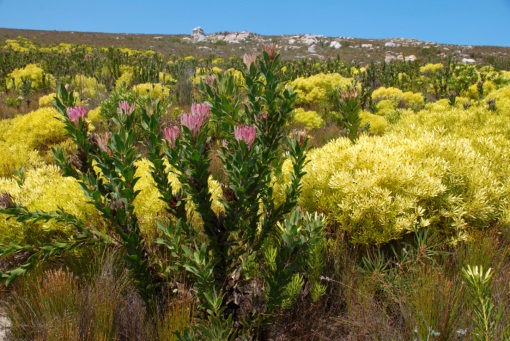
Protea compacta in fynbos, a form of shrubland at Soetanysberg, South Africa. Photo: Brian van Wilgen

Restoration of lost habitats and ecosystems hits all the right notes — conservation optimism, a can-do attitude, and the excitement of seeing biologically impoverished areas teem with life once more.

The Strategic Plan of the Convention on Biological Diversity includes a target to restore at least 15% of degraded ecosystems. This is being enthusiastically taken up in many places, including through initiatives such as the Bonn Challenge, a global aspiration to restore 350 million hectares of deforested and degraded land by 2030. This is in recognition of the importance of healthy ecosystems in not just conserving biodiversity, but also in combating climate change. Peatlands and forests lock away carbon, while grassland diversity stabilises ecosystem productivity during extreme weather events. So how can we make sure that these restoration efforts are as effective as possible? Read the rest of this entry »


Drivers of protected-area effectiveness in Africa

31 01 2018
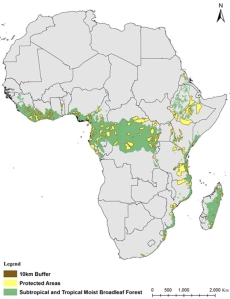
Bowker_et_al-2017-Conservation_Biology. Fig. 1

Subtropical and
Tropical Moist Broadleaf Forest of
Africa with 224 parks surrounded
by a 10-km buffer area. ©
2016 Society for Conservation Biology.

I’ve just read an interesting paper published in late 2016 in Conservation Biology that had so far escaped my attention. But given my interest in African conservation recently (and some interesting research results on the determinants of environmental performance for that region should be coming soon out of our lab), the work caught my eye.

The paper by Bowker and colleagues asked a question that has been asked previously regarding the ‘effectiveness’ of protected areas — do they succeed in limiting forest loss? While forest loss itself is not necessarily indicative of biodiversity erosion in any given area (for that, you need measures of species trends, etc.), it is arguably one of the most important drivers of species loss today.

The first set out to differentiate ‘effective’ from ‘ineffective’ protected areas, which was a simple binary variable related to whether there was less deforestation inside the protected area relative to comparable points outside (effective), or greater than or equal to deforestation outside (ineffective). The authors then related this binary response to a series of biophysical and social indicators. Read the rest of this entry »


Which countries protect the most of their land?

1 09 2017

forestOne potentially useful metric to measure how different nations value their biodiversity is just how much of a country’s land its government sets aside to protect its natural heritage and resources. While this might not necessarily cover all the aspects of ‘environment’ we need to explore, we know from previous research that the more emphasis a country places on protecting its biodiversity, the more it actually achieves this goal. This might sound intuitive, but there is no shortage of what have become known as ‘paper parks’ around the world, which are essentially only protected in principle, but not in practice.
For example, if a national park or some other type of protected area is not respected by the locals (who might rightly or wrongly perceive them as a limitation of their ‘rights’ of exploitation), or is pilfered by corrupt government officials in cahoots with extractive industries like logging or mining, then the park does not do well in protecting the species it was designed to safeguard. So, even though the proportion of area protected within a country is not a perfect reflection of its environmental performance, it tends to indicate to what extent its government, and therefore, its people, are committed to saving its natural heritage.

Read the rest of this entry »


World of urban rangers

2 08 2017

Bridging the gap between an urban population and the wildlife we love.IOE_crowdfunding1_web_16-9-with-logo-C

The world continues to urbanise. According to the Population Reference Bureau, the developed nations of the world are 74% urban, and it is expected that by 2050, 70% of the entire world will be ‘urban’. Besides all the other consequences, people’s connection to nature will become more and more distant. With more people living in concrete jungles, a faster pace of life and a barrage of things competing for their attention, we cannot expect that nature, wildlife protection, ocean sustainability, et cetera will be high on the list of their priorities. Other than when the most sensational of news stories are released, how many of them will even think about wildlife, let alone take any personal steps that would make a difference to its survival?

If these are the people who define consumer behaviour and impact policy decisions, they are the ones who will also unwittingly drive the wildlife-conservation agenda. The conservation sector must therefore make a more concerted effort to connect with city dwellers and to do so, understand the motivations and desires of the greater public.

The good news is that despite the grander evidence against it, people do love animals. As children, we are surrounded by animals. Many of our favourite books, movies, clothes, and toys are associated with animals. Even as adults, 163 million of us have watched a video of a panda clinging to its caretaker, 100 million of us went to see Jungle Book, and 700 million more of us visited zoos last year. Marketers play into our love of animals and use the sympathetic or iconic nature of animals on a massive scale in advertising and branding.

If you threw practicality out the window, the most impactful thing you could do to convert that love of animals into a love of conservation would be to airlift those hundreds of millions of people into the Amazon, Serengeti, or Alaskan wilderness for a week. While the experience wouldn’t make all of them conservationists, it would certainly change the way they thought about the importance of nature.

Given this impossibility, the next best thing is to bring nature to them and entice them to explore more within their own means. Shows like BBC Planet Earth or Wild Kratts do a fantastic job of revealing the awesomeness of nature in a way that most everyone appreciates.

But TV shows are still a passive experience where the viewer takes in what he/she is being shown.

Our work at Internet of Elephants is to supplement this type of programming with games about wildlife that can actively be played every day. Our goal is to get people to think about wildlife for five minutes every day and convert the urban world into wildlife addicts. Read the rest of this entry »


World’s greatest conservation tragedy you’ve probably never heard of

13 10 2016

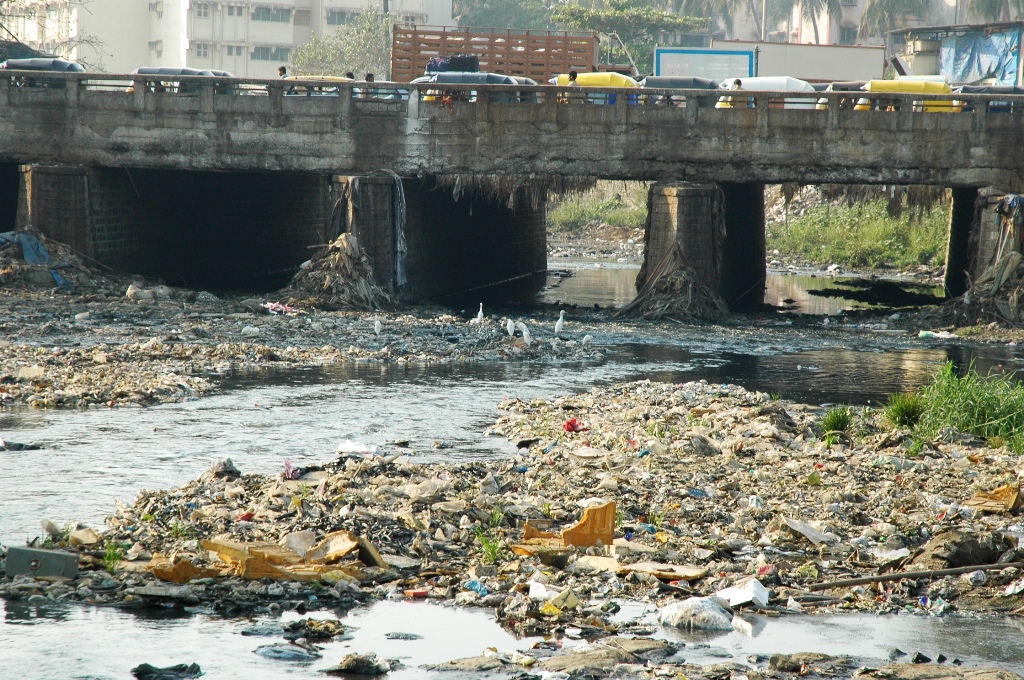
oshiwara_riverI admit that I might be stepping out on a bit of a dodgy limb by claiming ‘greatest’ in the title. That’s a big call, and possibly a rather subjective one at that. Regardless, I think it is one of the great conservation tragedies of the Anthropocene, and few people outside of a very specific discipline of conservation ecology seem to be talking about it.

I’m referring to freshwater biodiversity.

I’m no freshwater biodiversity specialist, but I have dabbled from time to time, and my recent readings all suggest that a major crisis is unfolding just beneath our noses. Unfortunately, most people don’t seem to give a rat’s shit about it.

Sure, we can get people riled by rhino and elephant poaching, trophy hunting, coral reefs dying and tropical deforestation, but few really seem to appreciate that the stakes are arguably higher in most freshwater systems. Read the rest of this entry »


Inexorable rise of human population pressures in Africa

31 08 2016
© Nick Brandt

© Nick Brandt

I’ve been a bit mad preparing for an upcoming conference, so I haven’t had a lot of time lately to blog about interesting developments in the conservation world. However, it struck me today that my preparations provide ideal material for a post about the future of Africa’s biodiversity.

I’ve been lucky enough to be invited to the University of Pretoria Mammal Research Unit‘s 50th Anniversary Celebration conference to be held from 12-16 September this year in Kruger National Park. Not only will this be my first time to Africa (I know — it has taken me far too long), the conference will itself be in one of the world’s best-known protected areas.

While decidedly fortunate to be invited, I am a bit intimidated by the line-up of big brains that will be attending, and of the fact that I know next to bugger all about African mammals (in a conservation science sense, of course). Still, apparently my insight as an outsider and ‘global’ thinker might be useful, so I’ve been hard at it the last few weeks planning my talk and doing some rather interesting analyses. I want to share some of these with you now beforehand, although I won’t likely give away the big prize until after I return to Australia.

I’ve been asked to talk about human population pressures on (southern) African mammal species, which might seem simple enough until you start to delve into the complexities of just how human populations affect wildlife. It’s simply from the perspective that human changes to the environment (e.g., deforestation, agricultural expansion, hunting, climate change, etc.) do cause species to dwindle and become extinct faster than they otherwise would (hence the entire field of conservation science). However, it’s another thing entirely to attempt to predict what might happen decades or centuries down the track. Read the rest of this entry »


Keeping India’s forests

9 08 2016

I’ve just returned from a short trip to the National Centre for Biological Sciences (NCBS) in Bangalore, Karnataka, one of India’s elite biological research institutes.

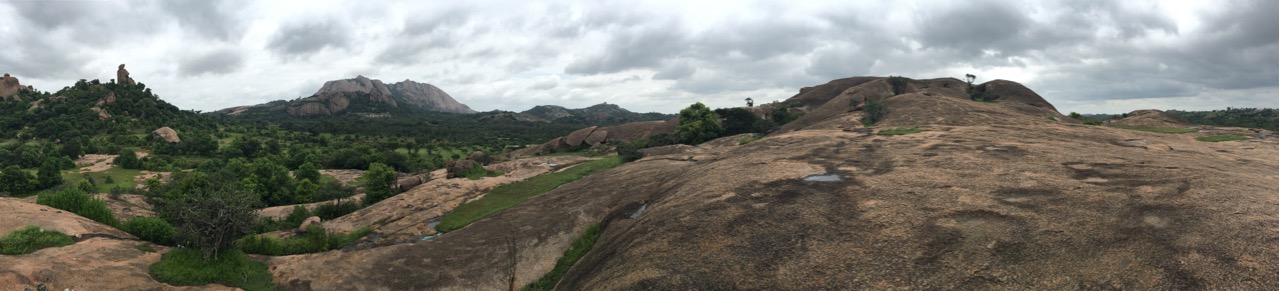
Panorama of a forested landscape (Savandurga monolith in the background) just south of Bangalore, Karnataka (photo: CJA Bradshaw)

Panorama of a forested landscape (Savandurga monolith in the background) just south of Bangalore, Karnataka (photo: CJA Bradshaw)

I was invited to give a series of seminars (you can see the titles here), and hopefully establish some new collaborations. My wonderful hosts, Deepa Agashe & Jayashree Ratnam, made sure I was busy meeting nearly everyone I could in ecology and evolution, and I’m happy to say that collaborations have begun. I also think NCBS will be a wonderful conduit for future students coming to Australia.

It was my first time visiting India1, and I admit that I had many preconceptions about the country that were probably unfounded. Don’t get me wrong — many of them were spot on, such as the glorious food (I particularly liked the southern India cuisine of dhosa, iddly & the various fruit-flavoured semolina concoctions), the insanity of urban traffic, the juxtaposition of extreme wealth and extreme poverty, and the politeness of Indian society (Indians have to be some of the politest people on the planet).

But where I probably was most at fault of making incorrect assumptions was regarding the state of India’s natural ecosystems, and in particular its native forests and grasslands. Read the rest of this entry »


Seeing the wood for the trees

11 07 2016
The Forest Synopsis: Photo of the Anamalai Tiger Reserve, India, by Claire Wordley

The Forest Synopsis: Photo of the Anamalai Tiger Reserve, India, by Claire Wordley

From the towering kapoks of South America to the sprawling banyans of South Asia, from misty cloud forests to ice-covered pines, forests are some of the most diverse and important ecosystems on Earth. However, as conservationists and foresters try to manage, conserve and restore forests across the world, they often rely on scanty and scattered information to inform their decisions, or indeed, no information at all. This could all change.

This week sees the launch of the Forest Synopsis from Conservation Evidence, a free resource collating global scientific evidence on a wide range of conservation-related actions. These aim to include all interventions that conservationists and foresters are likely to use, such as changing fire regimes, legally protecting forests or encouraging seed-dispersing birds into degraded forests.

Making conservation work

“We hear a lot about how important it is to do evidence-based conservation”, says Professor Bill Sutherland at the University of Cambridge, UK, “but in reality getting a handle on what works is not easy. That’s why we set up Conservation Evidence, to break down the barriers between conservationists and the scientific evidence that they need to do their jobs.” Read the rest of this entry »


George Hubert Wilkins — Australia’s first whitefella conservationist?

6 07 2016

As many of you know, I have held the ‘Sir Hubert Wilkins Chair of Climate Change’ at the University of Adelaide since January 2015. My colleague and friend, Barry Brook, was the foundation Chair-holder from 2006-2014.

Initially set up by Government of South Australia to “… advise government, industry, and the community on how to tackle climate change …”, it now is only a titular position based at the University. While I certainly try to live up to the aims of the Chair, it’s even more difficult to live up to the namesake himself — Sir George Hubert Wilkins.

Given I’ve held the position now for over a year and half, I’ve had plenty of time to read about this legendary South Australian (I do choose my words carefully here). Despite most Australians having never heard of the man, it is my opinion that he should be as well known in this country as other whitefella explorers such as Douglas Mawson, Matthew Flinders, Robert Burke, William Wills, and Charles Sturt.

Sadly, he is not well-known, for a litany of possible reasons ranging from spending so much time out of Australia, never having a formal qualification in many of the skills in which he excelled (e.g., geography, meteorology, aviation, engineering, cinematography, biology, etc.), disrespect from other contemporary Australian explorers, and some rather bizarre behaviour later in his career. The list of this man’s achievements is staggering, as was his ability to thumb his nose at death (who, I might add, tried her hardest to escort him off this mortal coil many times well before a heart attack claimed him at the age of 70).

Many books have been written about Wilkins, but as I slowly make my way through some of the better-written tomes, one unsung aspect of his career has struck a deep chord within me — it turns out that Wilkins was also a extremely concerned biodiversity conservationist. Read the rest of this entry »


Outright bans of trophy hunting could do more harm than good

5 01 2016

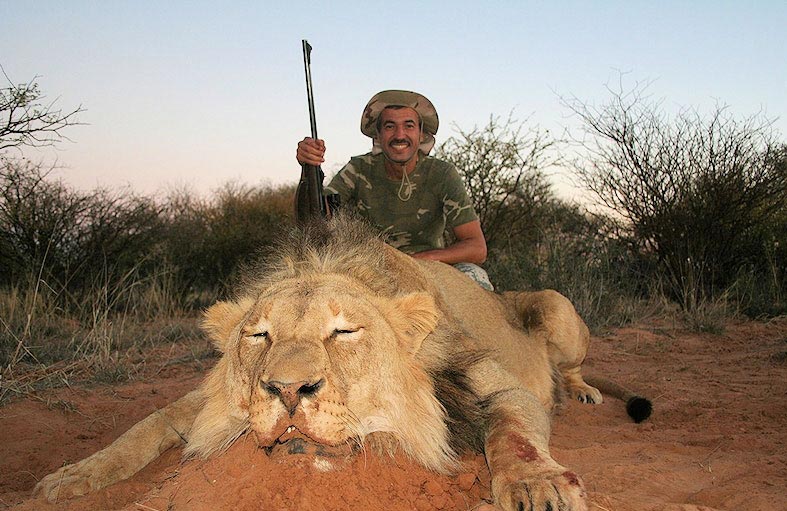
In July 2015 an American dentist shot and killed a male lion called ‘Cecil’ with a hunting bow and arrow, an act that sparked a storm of social media outrage. Cecil was a favourite of tourists visiting Hwange National Park in Zimbabwe, and so the allegation that he was lured out of the Park to neighbouring farmland added considerable fuel to the flames of condemnation. Several other aspects of the hunt, such as baiting close to national park boundaries, were allegedly done illegally and against the spirit and ethical norms of a managed trophy hunt.

In May 2015, a Texan legally shot a critically endangered black rhino in Namibia, which also generated considerable online ire. The backlash ensued even though the male rhino was considered ‘surplus’ to Namibia’s black rhino populations, and the US$350,000 generated from the managed hunt was to be re-invested in conservation. Together, these two incidents have triggered vociferous appeals to ban trophy hunting throughout Africa.

These highly politicized events are but a small component of a large industry in Africa worth > US$215 million per year that ‘sells’ iconic animals to (mainly foreign) hunters as a means of generating otherwise scarce funds. While to most people this might seem like an abhorrent way to generate money, we argue in a new paper that sustainable-use activities, such as trophy hunting, can be an important tool in the conservationist’s toolbox. Conserving biodiversity can be expensive, so generating money is a central preoccupation of many environmental NGOs, conservation-minded individuals, government agencies and scientists. Making money for conservation in Africa is even more challenging, and so we argue that trophy hunting should and could fill some of that gap. Read the rest of this entry »


When science is ignored: Mauritius starts culling 18,000 threatened fruit bats

8 11 2015

JS7D2844aRrHere’s a depressing emergency post by Fabiola Monty.

I started working on this article to discuss how useful science is being ignored in Mauritius.

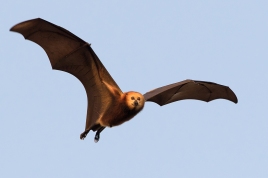
The Mauritian government has decided to implement a fruit bat cull as an ‘urgent response’ to the claims of huge economic losses by fruit farmers, a decision not supported by scientific evidence. We have now received confirmation in Mauritius through a local press communiqué that on 7 November 2015, The Mauritian Ministry of Agro Industry and Food Security in collaboration with the local Police Department and Special Mobile Force will start the culling of 18,000 bats in their natural habitats “with a view to reducing the extent of damages caused to fruits by bats”.

Tackling human-wildlife conflicts can indeed be challenging, but can the culling of 18,000 endemic Mauritian flying fox (Pteropus niger) resolve ‘human-wildlife conflict’ in the land of the dodo? In the case of Mauritius, scientific evidence not only demonstrates that the situation has been exaggerated, but that there are alternatives to bat culling that have been completely brushed aside by policy makers.

JS7D3726aRrAre the Mauritius fruit bats agricultural pests?
While fruit bats are being labelled as serious pests, scientific evidence shows instead that their impacts have been exaggerated. A recent (2014) study indicates that bats damage only 3-11% of fruit production, with birds also contributing to 1-8% of fruit loss. Rats are also probable contributors to fruit damage, but the extent remains unquantified. Interestingly, more fruits are lost (13-20%) because they are not collected in time and are left to over-ripen.

While the results of the study were communicated to legislators a few months before they made the decision to cull, it is clear that these were ignored in favour of preconceived assumptions.

Are there too many fruit bats? Read the rest of this entry »


Killing the Koala and Poisoning the Prairie

19 10 2015

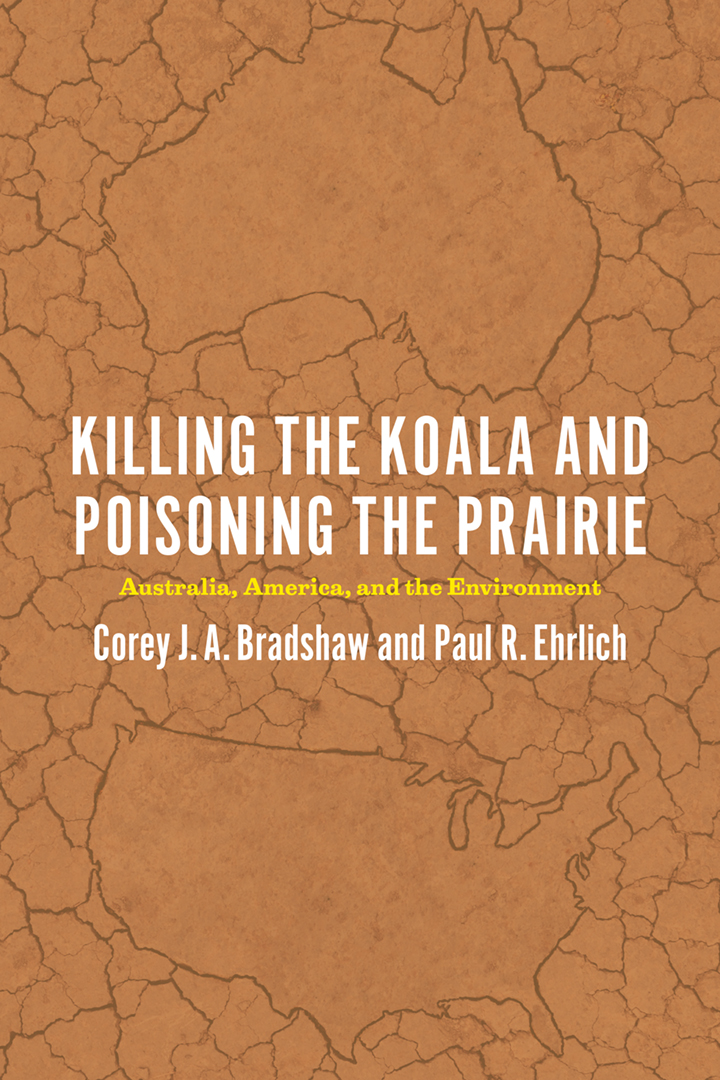
Cover-Bradshaw&Ehrlich-final

Man and the environment are meant for each other” — Tony Abbott, former Prime Minister of Australia (2014)

I know the human being and the fish can co-exist peacefully” — George W. Bush, former President of the USA (2000)

It. Has. Finally. Been. Published.

Yes, my new book with Paul Ehrlich, published by University of Chicago Press, is now available to purchase in book shops and online distributors around the world. The blog post today is a little explanatory synopsis of why we wrote the book and what it contains, but of course the real ‘meat’ is in the book. I hope you enjoy it.

In Australia, you can purchase the hard copy through Footprint Books, and the Kindle version at Amazon Australia. I also suggest that Australians might find the best deals through Booko. Electronic versions are also available through Kobo and Google Play. In the US you can order directly from University of Chicago Press, Amazon, Barnes & Noble, and many other book sellers. In the UK and Europe, the book is available from your country’s Amazon distributor. I imagine many chain and independent book sellers will be carrying the book by now, or will be soon.

My deepest thanks to all those who made it possible.

Our chance meeting in 2009 at Stanford University turned out to be auspicious, not least of which because of the publication this week of our co-authored book, Killing the Koala and Poisoning the Prairie. Australia, America and the Environment by University of Chicago Press. As a mid-career ecologist (Bradshaw) based at the University of Adelaide, it was indeed an honour to meet one of the most famous scientists (Ehrlich) in my field. With a list of books and hundreds of scientific papers under his belt, Ehrlich has been tackling major environmental issues since the 1960s. Ehrlich also has a long-time interest in Australia, having visited nearly every year during the last four decades and experienced more of the country than most Australians. Together we have observed firsthand the similarities and differences of Australia and the US, and the eyes we see through are trained as those of environmental scientists and evolutionary biologists.

So why write a book about the environmental tragedies currently unfolding in two completely different countries at opposite ends of the Earth? As it turns out, Australia and the US have much more in common environmentally than one might think, and not necessarily in a good way. Despite our vastly different floras and faunas, population densities, histories of human colonisation and soil productivities, there is an almost spooky similarity in the environmental and political problems both our countries are now experiencing. As such, we have a lot to learn about avoiding each other’s mistakes.

Ausmerica

Australia and the contiguous US are roughly equivalent in land area, both cultures are derived originally and principally from what is now the United Kingdom, and both are examples of super-consuming, super-wasting, wealthy, literate countries. Both countries also have environmental footprints that exceed most other countries on Earth, with some of the world’s highest per capita rates of greenhouse-gas emissions, water consumption, species extinctions and deforestation.  Read the rest of this entry »


Challenging the traditional conference model

28 08 2015

keeping-the-audience-awakeAn interesting take on conference culture by Diogo Veríssimo (mastermind behind I Fucking Love Biodiversity).

Just a few weeks back, more than 2000 conservationists got together in Montpellier, France, for the 27th International Congress on Conservation Biology (ICCB). I have been attending these conferences since 2008, and once again had a blast. Yet as I went through the usual talks, posters, work meetings, and this and that social, I could not help but feel that the traditional conference model was hindering, not helping me, maximise my benefits.

In my experience of conservation conferences, the content is largely delivered via a one-way channel, and attendees listen passively until the chance for a question or two comes up at the end. If time allows, that is, and it rarely does. Given the huge costs (and the footprint) of these events, how can we maximise the outcomes of these meetings?

Let’s look first at what is currently the backbone of most conferences anywhere: the oral presentation. Currently, the gold standard for the vast majority of ICCB presenters is the 15-min presentation, and those who are denied that chance often say they have been “downgraded”. I find this unfortunate.

My biggest criticisms of our current approach to content management during a conference is that it leaves the discussion to happen informally and without the benefit of the collective knowledge that comes together at these meetings. Many conservationists are keen to avoid long-winded lectures in their classrooms, but when we come together, those concerns seem to go out the window. The Q&A after a talk should be the most important part of a session for either the presenter (expert feedback can save a lot of time and resources) and the audience (who otherwise cannot focus on what they think is important).

Giving sessions enough Q&A time, which I argue would have to be as long as the time given to presentations, would imply having fewer presentations — unless we have shorter presentations. The ICCB already has the speed presentation, a format that lasts just 5 minutes. Why not make that the default? Yes, presenting your content effectively in 5 minutes is an acquired skill, but not much different in kind from writing an abstract to a paper. Having presented in both traditional and speed format, I am convinced presentations strongly suffer from the law of diminishing returns, meaning the difference from the audience point of view ends up being small. This is particularly true if fewer talks means more time for the audience to interact and ask about the things in which they are interested, rather than what the presenter thinks they should learn. Read the rest of this entry »


All (fisheries) models are wrong, but some are useful (to indigenous people)

1 08 2015

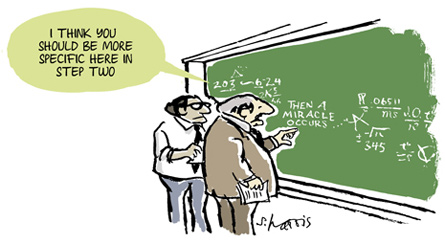
miracle_cartoonAnother post from Alejandro Frid. (Note: title modified from George Box‘s most excellent quote).

As an ecologist working for indigenous people of coastal British Columbia, western Canada, I live at the interface of two worlds. On the one hand, I know that computer models can be important management tools. On the other hand, my job constantly reminds me that whether a model actually improves fishery management depends, fundamentally, on the worldview that shapes the model’s objectives. To explore why, I will first review some general concepts about what models can and cannot do. After that, I will summarize a recent model of herring populations and then pull it all together in a way that matters to indigenous people who rely on marine resources for cultural integrity and food security.

Models do a great job of distilling the essence of how an ecosystem might respond to external forces—such as fisheries—but only under the specific conditions that the modeller assumes to be true in the ‘world’ of the model. Sometimes these assumptions are well-grounded in reality. Sometimes they are blatant but necessary simplifications. Otherwise, it would be difficult to ask questions about how major forces for which we have no historical precedent—such as the combined effects of industrial fisheries, ocean acidification and climate change—might be altering the ocean. For instance, due to our greenhouse gas emissions, the ocean is warming and contains less dissolved oxygen. These stressful conditions hamper the capacity of fish to grow, and appear to be on their way to shrinking the body sizes of entire fish communities1. If you want even to begin to comprehend what the ocean will look like in the long term due to these effects of climate change, it makes sense to assume, in the ‘world’ of your model, that fishing does not exist, even though you know it does. Of course, you would then acknowledge that climate change probably exacerbates the effects of fisheries, which highlights that you still have to examine the combination of these effects. And that is exactly what an excellent team of modellers did1. Read the rest of this entry »


Avoiding genetic rescue not justified on genetic grounds

12 03 2015
Genetics to the rescue!

Genetics to the rescue!

I had the pleasure today of reading a new paper by one of the greatest living conservation geneticists, Dick Frankham. As some of CB readers might remember, I’ve also published some papers with Dick over the last few years, with the most recent challenging the very basis for the IUCN Red List category thresholds (i.e., in general, they’re too small).

Dick’s latest paper in Molecular Ecology is a meta-analysis designed to test whether there are any genetic grounds for NOT attempting genetic rescue for inbreeding-depressed populations. I suppose a few definitions are in order here. Genetic rescue is the process, either natural or facilitated, where inbred populations (i.e., in a conservation sense, those comprising too many individuals bonking their close relatives because the population in question is small) receive genes from another population such that their overall genetic diversity increases. In the context of conservation genetics, ‘inbreeding depression‘ simply means reduced biological fitness (fertility, survival, longevity, etc.) resulting from parents being too closely related.

Seems like an important thing to avoid, so why not attempt to facilitate gene flow among populations such that those with inbreeding depression can be ‘rescued’? In applied conservation, there are many reasons given for not attempting genetic rescue: Read the rest of this entry »


Bill Laurance wins ‘Outstanding Contributions to Conservation’ prize

16 02 2015

ZSL-standard-blackWilliam Laurance, a distinguished research professor at James Cook University in Cairns, has received the most esteemed prize awarded by the renowned Zoological Society of London.

The Society voted unanimously to honour Laurance with its 2015 “Award for Outstanding Contributions to Conservation”, for his longstanding work to save wildlife species and habitats, especially in the world’s imperilled tropical forests.

Laurance was cited as “a leading scientist, a science communicator and an advocate for conservation policy.”

The recognition was immediately applauded by several of Laurance’s colleagues.

“Bill’s passion for conservation is matched only by his hard work, his vision and communication skills,” said professor Thomas Lovejoy, a leading U.S. scientist and former environmental advisor to three US presidents.

“His scientific contributions have been both prescient and catalytic. He is one of the great conservation figures of his time,” said Lovejoy.

Professor Corey Bradshaw of the University of Adelaide added, “Bill is undoubtedly one of the most influential biodiversity scientists of our era.” Read the rest of this entry »


World Heritage Species

17 08 2014

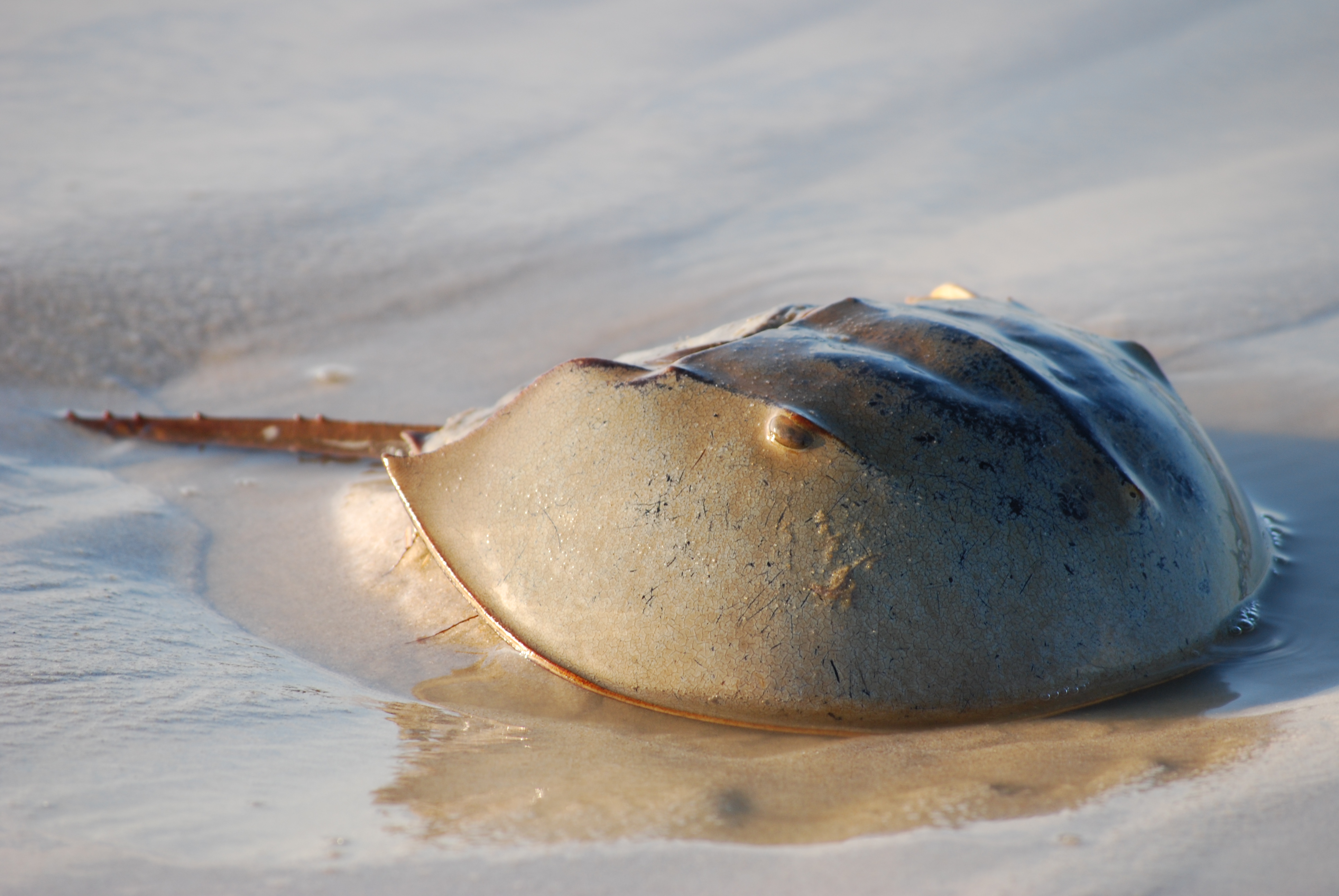
horseshoe crabHaving just attended the Baker & Stebbins Legacy Symposium on Invasion Genetics in Pacific Grove, California, I have had a rare bit of leisure time between my book-writing commitments and operating in conference mode. It’s summer here in California, so I’ve taken the opportunity to read a bit of The New Yorker in my accommodation. It is indeed a pleasure to have these micro-moments of ‘leisure’ reading. As it turns out though, work subjects are never far from my mind as I do this.

So it interested me greatly when I read another fantastic article in the ‘Yorker about horseshoe crabs, and their precarious state despite having survived half a billion years on this planet. While I was generally interested in the science, biomedical applications, conservation and systematics of the species, what really caught my eye was the proposal to list them as a ‘World Heritage Species’.

A what? Never heard of that classification, you say? Neither had I. Not to worry though – it doesn’t exist yet. Read the rest of this entry »


A fairer way to rank conservation and ecology journals in 2014

1 08 2014

Normally I just report the Thomson-Reuters ISI Web of Knowledge Impact Factors for conservation-orientated journals each year, with some commentary on the rankings of other journals that also publish conservation-related material from time to time (see my lists of the 2008200920102011 and 2012 Impact Factor rankings).

This year, however, I’m doing something different given the growing negativity towards Thomson-Reuters’ secretive behaviour (which they’ve promised this year to rectify by being more transparent) and the generally poor indication of quality that the Impact Factor represents. Although the 2013 Impact Factors have just been released (very late this year, for some reason), I’m going to compare them to the increasingly reputable Google Scholar Journal Metrics, which intuitively make more sense to me, are transparent and turn a little of the rankings dogma on its ear.

In addition to providing both the Google metric as well as the Impact Factor rankings, I’ve come up with a composite (average) rank from the two systems. I think ranks are potentially more useful than raw corrected citation metrics because you must first explicitly set your set of journals to compare. I also go one step further and modify the average ranking with a penalty term that is essentially the addition of the coefficient of variation of rank disparity between the two systems.

Read on for the results.

Read the rest of this entry »


Biodiversity Hotspots have nearly burnt out

10 07 2014

dying embersI recently came across a really important paper that might have flown under the radar for many people. For this reason, I’m highlighting it here and will soon write up a F1000 Recommendation. This is news that needs to be heard, understood and appreciated by conservation scientists and environmental policy makers everywhere.

Sean Sloan and colleagues (including conservation guru, Bill Laurance) have just published a paper entitled Remaining natural vegetation in the global biodiversity hotspots in Biological Conservation, and it we are presented with some rather depressing and utterly sobering data.

Unless you’ve been living under a rock for the past 20 years, you’ll have at least heard of the global Biodiversity Hotspots (you can even download GIS layers for them here). From an initial 10, to 25, they increased penultimately to 34; most recently with the addition of the Forests of East Australia, we now have 35 Biodiversity Hotspots across the globe. The idea behind these is to focus conservation attention, investment and intervention in the areas with the most unique species assemblages that are simultaneously experiencing the most human-caused disturbances.

Indeed, today’s 35 Biodiversity Hotspots include 77 % of all mammal, bird, reptile and amphibian species (holy shit!). They also harbour about half of all plant species, and 42 % of endemic (not found anywhere else) terrestrial vertebrates. They also have the dubious honour of hosting 75 % of all endangered terrestrial vertebrates (holy, holy shit!). Interestingly, it’s not just amazing biological diversity that typifies the Hotspots – human cultural diversity is also high within them, with about half of the world’s indigenous languages found therein.

Of course, to qualify as a Biodiversity Hotspot, an area needs to be under threat – and under threat they area. There are now over 2 billion people living within Biodiversity Hotspots, so it comes as no surprise that about 85 % of their area is modified by humans in some way.

A key component of the original delimitation of the Hotspots was the amount of ‘natural intact vegetation’ (mainly undisturbed by humans) within an area. While revolutionary 30 years ago, these estimates were based to a large extent on expert opinions, undocumented assessments and poor satellite data. Other independent estimates have been applied to the Hotspots to estimate their natural intact vegetation, but these have rarely been made specifically for Hotspots, and they have tended to discount non-forest or open-forest vegetation formations (e.g., savannas & shrublands).

So with horribly out-of-date vegetation assessments fraught with error and uncertainty, Sloan and colleagues set out to estimate what’s really going on vegetation-wise in the world’s 35 Biodiversity Hotspots. What they found is frightening, to say the least.

Read the rest of this entry »