Trump’s asinine war on climate science is pushing us into a dystopian future

28 02 2025
Toa55, Shutterstock

Corey J. A. Bradshaw, Flinders University

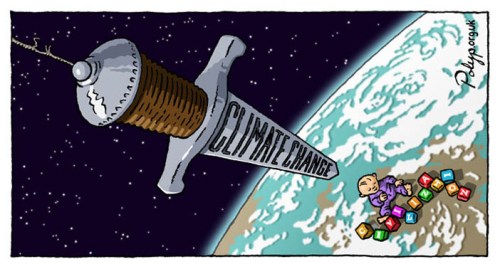
US President Donald Trump’s latest war on the climate includes withdrawing support for any research that mentions the word.

He has also launched a purge on government websites hosting climate data, in an apparent attempt to make the evidence disappear.

Yes, it’s bad, especially for US-based scientists. It also affects scientists in Australia and the rest of the world. But there are ways to get around the problem. There might even be a silver lining to this dark cloud.

Trump cannot stop global climate action, although he might slow it. Nor can he hide the truth by restricting access to data. Climate research will continue despite Trump’s best efforts to hamstring scientists and research institutions.

No strength in ignorance

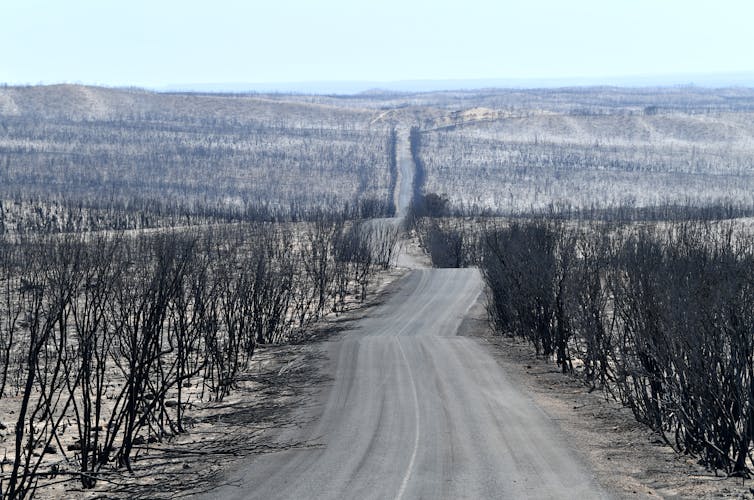
Last year was the warmest on record, a fact that yet again confirms our worst-case predictions. The world has already surpassed the (arbitrary) 1.5°C threshold increase relative to pre-industrial temperatures — a threshold that only a few years ago we didn’t think we would cross until 2030 at the earliest.

We’re now on track to be living in a world that’s 3°C hotter or more by the end of the century.

This is despite more than 30 years of global commitments that have largely failed to bend the warming trend.

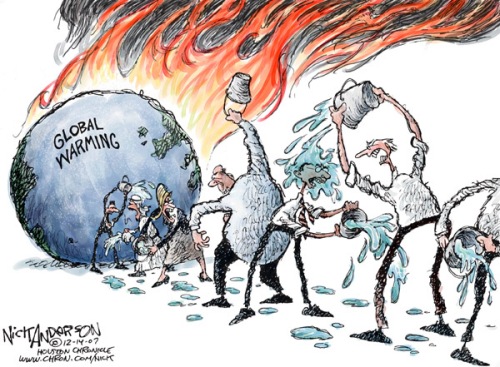
But ignoring climate change won’t make it go away. Like the Ministry of Truth in George Orwell’s classic dystopian novel, 1984, Trump seems to believe “ignorance is strength”. He’s trying to erase facts about the climate crisis, perhaps to keep people ignorant and subdued.

What this means for Australian climate science

Many Australian scientists (including me) collaborate regularly with US colleagues, share funding, and publish results together. Knowledge sharing and open-access data are the foundation of advances in science, so Trump’s assault will inevitably slow progress here.

For example, Australian and US scientists regularly collaborate in big-ticket research and policy development related to climate change, such as the Intergovernmental Panel on Climate Change’s Physical Science Basis reports. But even with fewer US scientists in the mix, the research and reporting will continue.

Students involved in climate research will also be negatively affected, with fewer opportunities for scholarships and exchanges between our two countries.

It’s worth remembering the US is not the only country with global data sets that measure the magnitude of the climate calamity. Australia’s own Bureau of Meteorology, CSIRO, Terrestrial Ecosystem Research Network, Integrated Marine Observing System, and Geoscience Australia are just some of examples of Commonwealth government-backed data custodians that are immune to the US purge.

Other reputable climate-data repositories around the world include the European Union’s Climate Data Store, the University of East Anglia’s Climate Research Unit, the Netherlands Meteorological Institute’s Climate Explorer, and the independent WorldClim, to name a few.

While restricting access to US-based websites is inconvenient, we can readily get around the problem. Many of my colleagues have also been downloading data prior to the purge mandate to maintain access.

Consequences for the US

Over the past month I have been inundated with horror stories from many US-based colleagues in academia and the public service, who have lost their jobs and/or research funding. In addition to these very real personal tragedies, the bigger picture is even bleaker.

The loss of scientific and technical expertise these mass sackings entail weakens the capability of the US workforce to discover and develop solutions to climate change. Just when we need good scientific and engineering innovations more than ever, a massive capacity is being erased before our eyes.

Trump’s fear and hatred of all things “climate” also foreshadows even more greenhouse gas emissions from the US. He has issued various strong-arm orders to “unleash American energy” by fast-tracking fossil-fuel exploitation, blocking offshore wind-power development, and revoking targets for electric vehicles, for example.

More emissions mean more climate change, especially when you’re already one of the biggest contributors to the global problem. The US is the second-highest greenhouse emitter in the world, behind only China.

Trump claims his actions will improve economic prosperity. The reality is they will instead retard the green manufacturing boom. Curtailing anything with even the faintest whiff of “climate” will in fact reduce economic prosperity and increase unemployment.

Costs to the rest of the world

On his first day as president, Trump withdrew the US from the Paris climate agreement. This effectively removes his country from all binding limits on actions that contribute to climate change.

Weakening international treaties is a two-edged sword, because it not only lets the US off the leash, it also potentially discourages other nations from acting responsibly. Analogous to the “unresponsive bystander effect”, many nations may now be more hesitant to commit to reductions because one of the biggest emitters refuses to do anything about it.

Trump has also slashed US international aid, which will slow climate action in countries that need the most assistance.

Overall, faster rates of warming will inevitably put more strain on natural resources and agricultural production. This could increase the probability of international warfare over water, food and other essential natural resources. Because autocratic countries cope worse with food shortages than democratic ones, climate emergencies will penalise nations led by despots more heavily.

A person holding up a sign mocking President Trump during a climate protest at the White House in Washington D.C.
No-one can escape the reality of climate change.
Eli Wilson, Shutterstock

Finding a silver lining

Trump’s foolhardy anti-climate campaign is enough to make many people despair. But there are a few faint glimmers of hope on the horizon.

As the US shirks its domestic and international responsibilities, other countries might resolve to do more. Not relying on the US could force capacity-building elsewhere. Some even suggest without the US at the table slowing progress, stronger climate action might result.

Americans have their own daunting fight on their hands. But the rest of the world will have to take up the slack if we have any chance of limiting the health, wealth, equality, human rights and biodiversity calamities now unfolding because of climate change.The Conversation

Corey J. A. Bradshaw, Matthew Flinders Professor of Global Ecology and Node Leader in the ARC Centre of Excellence for Indigenous and Environmental Histories and Futures, Flinders University

This article is republished from The Conversation under a Creative Commons license. Read the original article.





Human impact, extinctions, and the biodiversity crisis

22 08 2024

Human overpopulation is often depicted in the media in one of two ways: as either a catastrophic disaster or an overly-exaggerated concern. Yet the data understood by scientists and researchers is clear. So what is the actual state of our overshoot, and, despite our growing numbers, are we already seeing the signs that the sixth mass extinction is underway?

In a recent episode of The Great Simplification podcast, Nate Hagens was joined by global ecologist Corey Bradshaw to discuss his recent research on the rapid decline in biodiversity, how population and demographics will change in the coming decades, and what both of these will mean for complex global economies currently reliant on a stable environment.

Read the rest of this entry »


Indigenous fire management began more than 11,000 years ago: new research

12 03 2024

Wildfire burns between 3.94 million and 5.19 million square kilometres of land every year worldwide. If that area were a single country, it would be the seventh largest in the world.

In Australia, most fire occurs in the vast tropical savannas of the country’s north. In new research published in Nature Geoscience, we show Indigenous management of fire in these regions began at least 11,000 years ago – and possibly as long as 40,000 years ago.

Fire and humans

In most parts of the planet, fire has always affected the carbon cycle, the distribution of plants, how ecosystems function, and biodiversity patterns more generally.

But climate change and other effects of human activity are making wildfires more common and more severe in many regions, often with catastrophic results. In Australia, fires have caused major economic, environmental and personal losses, most recently in the south of the country.

One likely reason for the increase of catastrophic fires in Australia is the end of Indigenous fire management after Europeans arrived. This change has caused a decline in biodiversity and the buildup of burnable material, or “fuel load”.

Read the rest of this entry »


Rextinct: a new tool to estimate when a species went extinct

18 12 2023

If several fossils of an extinct population or species are dated, we can estimate how long ago the extinction event took place. In our new paper, we describe CRIWM, a new method to estimate extinction time using times series of fossils whose ages have been measured by radiocarbon dating. And yes, there’s an R package — Rextinct — to go with that!

While the Earth seems to gather all the conditions for life to thrive, over 99.9% of all species that ever lived are extinct today. From a distance, pristine landscapes might look similar today and millennia ago: blue seas with rocky and sandy coasts and grasslands and mountain ranges watered by rivers and lakes and covered in grass, bush and trees.

But zooming in, the picture is quite different because species identities have never stopped changing — with ‘old’ species being slowly replaced by ‘new’ ones. Fortunately, much like the collection of books in the library summarises the history of literature, the fossilised remnants of extinct organisms represent an archive of the kinds of creatures that have ever lived. This fossil record can be used to determine when and why species disappear. In that context, measuring the age of fossils is a useful task for studying the history of biodiversity and its connections to the planet’s present.

In our new paper published in the journal Quaternary Geochronology (1), we describe CRIWM (calibration-resampled inverse-weighted McInerny), a statistical method to estimate extinction time using times series of fossils that have been dated using radiocarbon dating.

Why radiocarbon dating? Easy. It is the most accurate and precise chronometric method to date fossils younger than 50,000 to 55,000 years old (2, 3). This period covers the Holocene (last 11,700 years or so), and the last stretch of the late Pleistocene (~ 130,000 years ago to the Holocene), a crucial window of time witnessing the demise of Quaternary megafauna at a planetary scale (4) (see videos herehere and here), and the global spread of anatomically modern humans (us) ‘out of Africa’ (see here and here).

Why do we need a statistical method? Fossilisation (the process of body remains being preserved in the rock record) is rare and finding a fossil is so improbable that we need maths to control for the incompleteness of the fossil record and how this fossil record relates to the period of survival of an extinct species.

A brief introduction to radiocarbon dating

First, let’s revise the basics of radiocarbon dating (also explained here and here). This chronometric technique measures the age of carbon-rich organic materials — from shells and bones to the plant and animal components used to write an ancient Koran, make a wine vintage and paint La Mona Lisa and Neanderthal caves

Read the rest of this entry »


Best and worst countries by different environmental indicators

15 06 2022

I’ll preface this post with a caveat — the data herein are a few years old (certainly pre-COVID), so things have likely changed a bit. Still, I think the main message holds.


Many years ago, I compiled seven different national-level measures of environmental degradation to show that countries with the largest human populations, and hence, the largest economies, had done the most environmental damage — not only to their own resources, but to the world’s in general.

That last observation is important because there are really two main ways to quantify a country’s environmental performance. First, there is its relative environmental damage, which essentially means what proportion of its own resources a country has pilfered or damaged. This type of measure standardises the metrics to account for the different areas of countries (e.g., Russia versus Singapore) and how much of, say, forests, they had to start with, and what proportion of them they have thus far destroyed.

Looking at it this way, small countries with few large-scale industries came out in the lead as the least-damaged environmentally — the least environmentally damaged country according this metric is Cape Verde (followed by Central African Republic, Swaziland, Niger, and Djibouti).

However, another way to look at it is how much of the overall contribution to the world’s environmental damage each country is responsible, which of course implies that the countries with the highest amounts of resources damaged in absolute terms (i.e., the biggest, most populous ones) disproportionately contribute more to global environmental damage.

Using this absolute metric, the countries with the greatest overall damage are Brazil (largely due to the destruction of the Amazon and its other forests), the USA (for its greenhouse-gas emissions and conversion of its prairies to farmland), and China (for its water pollution, deforestation, and carbon emissions). On the flip side, this means that the smallest countries with the fewest people are ranked ‘better’ because of their lower absolute contribution to the world’s total environmental damage.

Looking more closely at how countries do relative to each other using different and more specific measures of environmental performance, the best-known and most-reported metric is the ecological footprint. This measures the ecological ‘assets’ that any particular population of people requires to produce the natural resources it consumes and to absorb its wastes.

Read the rest of this entry »


Cartoon guide to biodiversity loss LXXI

11 04 2022

Now that the Australian election has been called for next month, here are a few cartoon reminders of the state of environmental politics in this country (hint: they’re abysmal). I’ve surpassed my normal 6 cartoons/post here in this second set for 2022 because, well, our lives depend on the outcome of 21 May. See full stock of previous ‘Cartoon guide to biodiversity loss’ compendia here.


Read the rest of this entry »


A cascade of otters

4 04 2022

Carnivores are essential components of trophic webs, and ecosystem functions crumble with their loss. Novel data show the connection between calcareous reefs and sea otters under climate change.


Trophic cascade on the Aleutian Islands (Alaska, USA) linking sea otters (Enhydra lutris) with sea urchins (Strongylocentrotus polyacanthus) and calcareous reefs (Clathromorphum nereostratum). With males weighting up to 50 kg, sea otters have been IUCN-catalogued as Endangered since 2000. The top photo shows a male in a typical, belly-up floating position. The bottom photo shows live (pinkish) and dead (whitish) tissue on the reef surface as a result of grazing of sea urchins at a depth of 10 m. Sea otters are mesopredators, typically foraging on small prey like sea urchins, but their historical decline due to overhunting unleashed the proliferation of the echinoderms. At the same time, acidification and sea-water warming have softened the skeleton of the reefs, allowing for deeper grazing by sea urchins that eliminate the growth layer of living tissue that give the reefs their pinkish hue. Large extents of dead reefs stop fixing the excess in carbonic acid, whose carbon atoms sea water sequesters from the atmosphere enriched in carbon by our burning of fossil fuels. Photos courtesy of Joe Tomoleoni taken in Moss Landing – California, USA (otter), and on the Near Islands – Aleutian Archipelago, Alaska (reef).

For most, the decisions made by people we have never met affect our daily lives. Other species experience the same phenomenon because they are linked to one another through a trophic cascade.

A trophic cascade occurs when a predator limits the abundance or behaviour of its prey, in turn affecting the survival of a third species in lower trophic levels that have nothing directly to do with the predator in question (1).

Sea otters (Enhydra lutris) represent a text-book example of a trophic cascade. These mustelids (see video footage here and here) hunt and control the populations of sea urchins (Strongylocentrotus polyacanthus), hence favouring kelp forests  — the fronds of which are eaten by the sea urchins.

Removing the predator from the equation should lead to more sea urchins and less kelp, and this chain of events is exactly what happened along the coasts of the North Pacific (2, 3). The historical distribution of sea otters once ranged from Japan to Baja California through the Aleutian Islands (see NASA’s photo from space, and documentary on the island of Unimak), a sub-Arctic, arc-shaped archipelago including > 300 islands between Alaska (USA) and the Kamchatka Peninsula (Russia), extending ~ 2000 kilometres, and having a land area of ~ 18,000 km2.

But the fur trade during the 18th and 19th centuries brought the species to the brink of extinction, down to < 2000 surviving individuals (4). Without otters, sea urchins boomed and deforested kelp ecosystems during the 20th Century (5). Now we also know that this trophic cascade has climate-related implications in other parts of the marine ecosystem.

Underwater bites

Doug Rasher and collaborators have studied the phenomenon on the Aleutian Islands (6). The seabed of this archipelago is a mix of sandy beds, kelp forests, and calcareous reefs made up of calcium and magnesium carbonates fixed by the red algae Clathromorphum nereostratum. These reefs have grown at a rate of 3 cm annually for centuries as the fine film of living tissue covering the reef takes the carbonates from the seawater (7).

Read the rest of this entry »


The sixth mass extinction is happening now, and it doesn’t look good for us

2 03 2022

Mounting evidence is pointing to the world having entered a sixth mass extinction. If the current rate of extinction continues we could lose most species by 2200. The implication for human health and wellbeing is dire, but not inevitable.
In the timeline of fossil evidence going right back to the first inkling of any life on Earth — over 3.5 billion years ago — almost 99 percent of all species that have ever existed are now extinct. That means that as species evolve over time — a process known as ‘speciation’ — they replace other species that go extinct.

Extinctions and speciations do not happen at uniform rates through time; instead, they tend to occur in large pulses interspersed by long periods of relative stability. These extinction pulses are what scientists refer to as mass extinction events.

The Cambrian explosion was a burst of speciation some 540 million years ago. Since then, at least five mass extinction events have been identified in the fossil record (and probably scores of smaller ones). Arguably the most infamous of these was when a giant asteroid smashed into Earth about 66 million years ago in what is now the Gulf of Mexico. The collision vapourised species immediately within the blast zone. Later, species were killed off by climate change arising from pulverised particulates suspended in the atmosphere, as well as intense volcano activity stimulated by the buckling of the Earth’s crust from the asteroid’s impact. Together, about 76 percent of all species around at the time went extinct, of which the disappearance of the dinosaurs is most well-known. But dinosaurs didn’t disappear altogether — the survivors just evolved into birds.

Read the rest of this entry »


Cartoon guide to biodiversity loss LXX

16 02 2022

Here is the first set of biodiversity cartoons for 2022. See full stock of previous ‘Cartoon guide to biodiversity loss’ compendia here.


Read the rest of this entry »


Influential conservation papers of 2021

5 01 2022

Following my annual tradition, I present the retrospective list of the ‘top’ 20 influential papers of 2021 as assessed by experts in Faculty Opinions (formerly known as F1000). These are in no particular order. See previous years’ lists here: 2020, 201920182017201620152014, and 2013.


Amazonia as a carbon source linked to deforestation and climate change — “… confirms what the sparse forest inventory has suggested, that climate change and land-use change is driving Amazonian ecosystems toward carbon sinks. … the research team provides a robust estimate of the carbon dynamics of one of the world’s most important ecosystems and provides insights into the role of land use change and potentials for mitigating direct carbon losses in the future.

Organic and conservation agriculture promote ecosystem multifunctionality — “… a very clear insight into the trade-offs between the different ecosystem services and indicate that yield and product quality are lower in organic systems compared to conventional systems, yet organic systems have higher economic performance due to higher product prices and subsidies.

Biodiversity of coral reef cryptobiota shuffles but does not decline under the combined stressors of ocean warming and acidification — “… even with similar richness, community function is very likely to be perturbed by ocean warming/acidification with unpredictable impacts on economically important species such as fish and corals.

Local conditions magnify coral loss after marine heatwaves — “… show that climate-induced coral loss is greater in areas with elevated seaweed abundance and elevated sea urchin densities, both of which commonly result from local overfishing … effective local management can synergize with global efforts to mitigate climate change and help coral reefs survive the Anthropocene.

Large ecosystem-scale effects of restoration fail to mitigate impacts of land-use legacies in longleaf pine savannas — “… while restoration can have major benefits in longleaf savannas, land-use legacies have clear effects on many aspects of the ecosystem.

Read the rest of this entry »


Cartoon guide to biodiversity loss LXVIII

19 10 2021

Here is the fifth set of biodiversity cartoons for 2021. See full stock of previous ‘Cartoon guide to biodiversity loss’ compendia here.


Read the rest of this entry »


Avoiding a ghastly future — The Science Show

1 10 2021

Just thought I’d share the audio of an interview I did with the famous Robyn Williams of ABC Radio National‘s The Science Show.

I’d be surprised if any Australians with even a passing interest in science could claim not to have listened to the Science Show before, and I suspect a fair mob of people overseas would be in the same boat.

It was a real privilege to talk with Robyn about our work on the ghastly future, and as always, the production value is outstanding.

Thank you, Robyn and the ABC.

Listen below, or link to the interview directly.


Climate change will also make us more stupid

31 08 2021

Most people are at least vaguely aware that climate change isn’t good for us.

Let’s consider the obvious direct health effects, like heat exhaustion and stroke, dehydration, increased inhalation of particulate matter from bushfires and other pollutant sources, greater expression of allergies, higher incidence of cardiovascular and respiratory diseases, greater injury rates, and higher probability of disease transmission from flooding events (see review here).

Let’s not forget the rising incidence of mental illness either.

Then there are the climatic events that increase the probability of dying violently like in a bushfire or a flood, getting caned in a major storm by debris, personal injury from storm surges exacerbated by rising sea levels, or dying slowly due to undernutrition from crop failures.

Some of the more indirect, yet just-as-insidious repercussions are those climate-driven events that worsen all of the above, such as increasing poverty, rising violent interactions (both individual-level and full-on warfare), loss of healthcare capability (less infrastructure, fewer doctors), and increased likelihood of becoming a refugee.


So, when someone says increased warming at the pace we’re witnessing now isn’t a problem, tell them they’re full of shit.

But wait! There’s more!

Yes, climate change will also make us more stupid. Perhaps one of the lesser-appreciated byproducts of an increasingly warmer world driven by rising greenhouse-gas concentrations is the direct effects of carbon dioxide on a variety of physiological functions.

Read the rest of this entry »


Is the IPCC finally catching up with the true severity of climate change?

24 06 2021

I’m not in any way formally involved in either the IPCC or IPBES, although I’ve been involved indirectly in analysing many elements of both the language of the reports and the science underlying their predictions.


Today, The Guardian reported that a leaked copy of an IPCC report scheduled for release soon indicated that, well, the climate-change situation is in fact worse than has been previously reported in IPCC documents.

If you’re a biologist, climatologist, or otherwise-informed person, this won’t come as much of a surprise. Why? Well, the latest report finally recognises that the biosphere is not just some big balloon that slowly inflates or deflates with the whims of long-term climate variation. Instead, climate records over millions of years show that the global climate can and often does shift rapidly between different states.

This is the concept of ‘tipping points’.

Read the rest of this entry »


No, you can’t argue the Medieval warm period is evidence that today’s climate change isn’t all that bad

23 04 2021
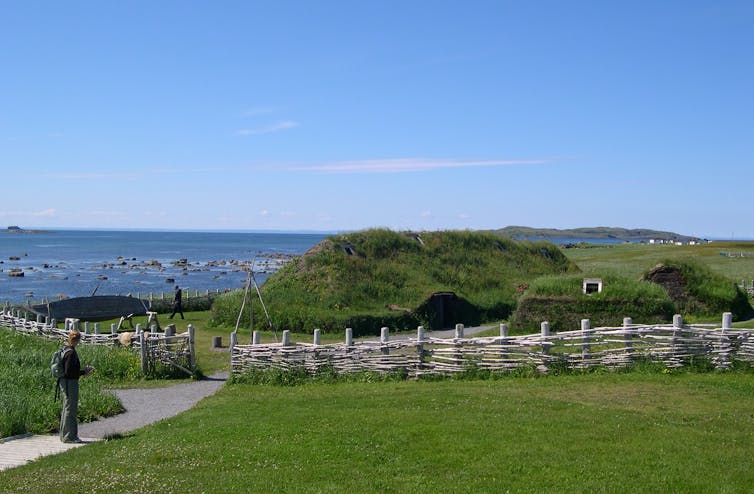
As this reconstructed village shows, Vikings made it as far as Newfoundland during the Medieval warm period. Wikimedia/Dylan Kereluk, CC BY-SA


Frédérik Saltré, Flinders University and Corey J. A. Bradshaw, Flinders University


What was the Medieval warm period? What caused it, and did carbon dioxide play a role?

We are living in a world that is getting warmer year by year, threatening our environment and way of life.

But what if these climate conditions were not exceptional? What if it had already happened in the past when human influences were not part of the picture?

The often mentioned Medieval warm period seems to fit the bill. This evokes the idea that if natural global warming and all its effects occurred in the past without humans causing them, then perhaps we are not responsible for this one. And it does not really matter because if we survived one in the past, then we can surely survive one now.

But it’s just not that simple.


Read more: 2,000 years of records show it’s getting hotter, faster


The Medieval climate anomaly

This Medieval period of warming, also known as the Medieval climate anomaly, was associated with an unusual temperature rise roughly between 750 and 1350 AD (the European Middle Ages). The available evidence suggests that at times, some regions experienced temperatures exceeding those recorded during the period between 1960 and 1990. Read the rest of this entry »


Cartoon guide to biodiversity loss LXV

10 03 2021

Here is the second set of biodiversity cartoons for 2021. See full stock of previous ‘Cartoon guide to biodiversity loss’ compendia here.


Read the rest of this entry »


Ancient bones — how old?

22 01 2021

Radiocarbon (14C) dating was developed by Nobel-Prize winning chemist Willard Libby, and has become the predominant method to build chronologies of ancient populations and species using the Quaternary fossil record. I have just published a research paper about 14C dating of fossil bone reviewing the four standard chemical pretreatments of bone collagen to avoid sample contamination and generate accurate fossil ages: gelatinization, ultrafiltration, XAD purification and hydroxyproline isolation. Hydroxyproline isolation is perceived as the most accurate pretreatment in a questionnaire survey completed by 132 experts from 25 countries, but remains costly, time-consuming and not widely available. I argue that (1) innovation is urgently required to develop affordable analytical chemistry to date low-mass samples of collagen amino acids, (2) those developments should be overseen by a certification agency, and (3) 14C users should be more conceptually involved in how (much) 14C chemistry determines dating accuracy. Across the board, scientific controversies like the timing of Quaternary extinctions need not be fuelled by inaccurate chronological data.


Megafauna bones from the Quaternary fossil record. Top: excavation of a partial skeleton of a short-faced kangaroo Procoptodon browneorum at Tight Entrance Cave (Western Australia) [1]: these bones are close to the limit of radiocarbon (14C) dating in a geological context 43000 to 49000 years old. Middle: metacarpal of the extinct horse Hippidion cf. devillei from Casa del Diablo (Peru) 14C dated at 11980 ± 100 years before present (BP) (CAMS-175039) following XAD purification of collagen gelatin [2]. Bottom: collection of skeletal remains of (mostly) red deer Cervus elaphus from El Cierro Cave (Spain) 14C dated at 15520 ± 75 years BP on ultrafiltered gelatin (OxA-27869 and OxA-27870 average) [3].


Scientists have widely been interested in the present and future state of biodiversity. Ecologists (the main audience of this blog) have also looked into the past with pioneering investigations addressing the composition of ancient forests and the origins of agriculture in layers of fossil pollen accumulated in lake sediments [4]. But it took us decades to see the fossil record as a useful tool (combining biological, geochemical and molecular techniques) to answer basic ecological questions. Some of those questions are critical for conserving today’s biodiversity [5, 6]: for example, when did human impacts on ecosystems become global or what extinct species have best tolerated past environmental change and what that means to modern species? [7].

The study of (pre)historic biological events relies one way or another on our ability to time when a certain animal, human, or plant occurred and what environmental conditions they experienced, and relies on concepts borrowed from archaeology (past human activity), palaeontology (fossils), palaeocology (species responses to past environments), and geochronology (age of fossils and/or their geological context). Among the range of chronological methods available to date biological and cultural samples [8], radiocarbon (14C) dating has become the most important for dating bones aged modern to late Quaternary (last ~ 50,000 years). Hereafter, ‘bone’ comprises antler, bone, ivory and teeth. 14C dating of bones is appealing at least for four reasons: 

Read the rest of this entry »


Worried about Earth’s future? Well, the outlook is worse than even scientists can grasp

14 01 2021

Daniel Mariuz/AAP

Corey J. A. Bradshaw, Flinders University; Daniel T. Blumstein, University of California, Los Angeles, and Paul Ehrlich, Stanford University

Anyone with even a passing interest in the global environment knows all is not well. But just how bad is the situation? Our new paper shows the outlook for life on Earth is more dire than is generally understood.

The research published today reviews more than 150 studies to produce a stark summary of the state of the natural world. We outline the likely future trends in biodiversity decline, mass extinction, climate disruption and planetary toxification. We clarify the gravity of the human predicament and provide a timely snapshot of the crises that must be addressed now.

The problems, all tied to human consumption and population growth, will almost certainly worsen over coming decades. The damage will be felt for centuries and threatens the survival of all species, including our own.

Our paper was authored by 17 leading scientists, including those from Flinders University, Stanford University and the University of California, Los Angeles. Our message might not be popular, and indeed is frightening. But scientists must be candid and accurate if humanity is to understand the enormity of the challenges we face.

Girl in breathing mask attached ot plant in container

Humanity must come to terms with the future we and future generations face. Shutterstock

Getting to grips with the problem

First, we reviewed the extent to which experts grasp the scale of the threats to the biosphere and its lifeforms, including humanity. Alarmingly, the research shows future environmental conditions will be far more dangerous than experts currently believe. Read the rest of this entry »


Time for a ‘cold shower’ about our ability to avoid a ghastly future

13 01 2021

I wish it need not have happened in my time,” said Frodo. “So do I,’ said Gandalf, “and so do all who live to see such times. But that is not for them to decide. All we have to decide is what to do with the time that is given us.”

Frodo Baggins and Gandalf, The Fellowship of the Ring

Today, 16 high-profile scientists and I published what I describe as a ‘cold shower’ about society’s capacity to avoid a ghastly future of warfare, disease, inequality, persecution, extinction, and suffering.

And it goes way beyond just the plight of biodiversity.

No one who knows me well would mistake me for an optimist, try as I might to use my colleagues’ and my research for good. Instead, I like to describe myself as a ‘realist’. However, this latest paper has made even my gloomier past outputs look downright hopeful.

And before being accused of sensationalism, let me make one thing abundantly clear — I sincerely hope that what we describe in this paper does not come to pass. Not even I am that masochistic.

I am also supportive of every attempt to make the world a better place, to sing about our successes, regroup effectively from our failures, and maintain hope in spite of evidence to the contrary.

But failing to acknowledge the magnitude and the gravity of the problems facing us is not just naïve, it is positively dangerous and potentially fatal.

It is this reason alone that prompted us to write our new paper “Underestimating the challenges of
avoiding a ghastly future
” just published in the new journal, Frontiers in Conservation Science.

Read the rest of this entry »


Cartoon guide to biodiversity loss LXIV

7 01 2021

As the pandemic rages globally, and the fragility of the American political system goes on full display, I give you the first set of biodiversity cartoons for 2021. See full stock of previous ‘Cartoon guide to biodiversity loss’ compendia here.


Read the rest of this entry »