Biowealth

24 02 2016

frogWhile I’ve blogged about this before in general terms (here and here), I thought it wise to reproduce the (open-access) chapter of the same name published in late 2013 in the unfortunately rather obscure book The Curious Country produced by the Office of the Chief Scientist of Australia. I think it deserves a little more limelight.

As I stepped off the helicopter’s pontoon and into the swamp’s chest-deep, tepid and opaque water, I experienced for the first time what it must feel like to be some other life form’s dinner. As the helicopter flittered away, the last vestiges of that protective blanket of human technological innovation flew away with it.

Two other similarly susceptible, hairless, clawless and fangless Homo sapiens and I were now in the middle of one of the Northern Territory’s largest swamps at the height of the crocodile-nesting season. We were there to collect crocodile eggs for a local crocodile farm that, ironically, has assisted the amazing recovery of the species since its near-extinction in the 1960s. Removing the commercial incentive to hunt wild crocodiles by flooding the international market with scar-free, farmed skins gave the dwindling population a chance to recover.

redwoodConservation scientists like me rejoice at these rare recoveries, while many of our fellow humans ponder why we want to encourage the proliferation of animals that can easily kill and eat us. The problem is, once people put a value on a species, it is usually consigned to one of two states. It either flourishes as do domestic crops, dogs, cats and livestock, or dwindles towards or to extinction. Consider bison, passenger pigeons, crocodiles and caviar sturgeon.

As a conservation scientist, it’s my job not only to document these declines, but to find ways to prevent them. Through careful measurement and experiments, we provide evidence to support smart policy decisions on land and in the sea. We advise on the best way to protect species in reserves, inform hunters and fishers on how to avoid over-harvesting, and demonstrate the ways in which humans benefit from maintaining healthy ecosystems. Read the rest of this entry »


It’s not always best to be the big fish

3 02 2016

obrien_fish_2Loosely following the theme of last week’s post, it’s now fairly well established that humans tend to pick on the big species first.

From fewer big trees, declines of big carnivores, elephant & rhino poaching, to fishing down the web, big species tend to cop it hardest when it comes to human-caused ecological disturbance.

While there are a lot of different combinations of traits that make some species more vulnerable to extinction than others (see examples for legumes, amphibians, sharks & teleosts, and mammals), one of the main ones is species size.

Generally speaking, larger species tend to produce fewer offspring and breed later in life than smaller species. This means that despite larger species tending to live longer than their smaller counterparts, their ‘slow’ reproductive output means that they are generally more susceptible to rapid environmental change (mainly via human intervention). In other words, their capacity for self-replacement is often too low to counteract the offtake from direct exploitation or habitat loss.

Despite a reasonable scientific understanding of this extinction-risk principle, the degree to which human disturbance affects species’ distributions is much less well quantified, and this is especially true for marine species.

I’m proud to announce another fascinating paper led by my postdoc, Camille Mellin, that has just come out online in Nature CommunicationsHumans and seasonal climate variability threaten large-bodied coral reef fish with small ranges.

With the world’s largest combined dataset of coral reef fish surveys for the entire Indo-Pacific (including the coral reef fish biodiversity hotspot — the Coral Triangle), we examined which conditions best described the distribution of fishes over a range of body sizes. Read the rest of this entry »


Getting your conservation science to the right people

22 01 2016

argument-cartoon-yellingA perennial lament of nearly every conservation scientist — at least at some point (often later in one’s career) — is that the years of blood, sweat and tears spent to obtain those precious results count for nought in terms of improving real biodiversity conservation.

Conservation scientists often claim, especially in the first and last paragraphs of their papers and research proposals, that by collecting such-and-such data and doing such-and-such analyses they will transform how we manage landscapes and species to the overall betterment of biodiversity. Unfortunately, most of these claims are hollow (or just plain bullshit) because the results are either: (i) never read by people who actually make conservation decisions, (ii) not understood by them even if they read the work, or (iii) never implemented because they are too vague or too unrealistic to translate into a tangible, positive shift in policy.

A depressing state of being, I know.

This isn’t any sort of novel revelation, for we’ve been discussing the divide between policy makers and scientists for donkey’s years. Regardless, the whinges can be summarised succinctly: Read the rest of this entry »


When science is ignored: Mauritius starts culling 18,000 threatened fruit bats

8 11 2015

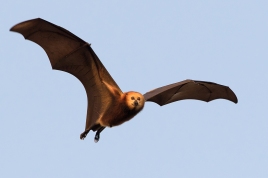
JS7D2844aRrHere’s a depressing emergency post by Fabiola Monty.

I started working on this article to discuss how useful science is being ignored in Mauritius.

The Mauritian government has decided to implement a fruit bat cull as an ‘urgent response’ to the claims of huge economic losses by fruit farmers, a decision not supported by scientific evidence. We have now received confirmation in Mauritius through a local press communiqué that on 7 November 2015, The Mauritian Ministry of Agro Industry and Food Security in collaboration with the local Police Department and Special Mobile Force will start the culling of 18,000 bats in their natural habitats “with a view to reducing the extent of damages caused to fruits by bats”.

Tackling human-wildlife conflicts can indeed be challenging, but can the culling of 18,000 endemic Mauritian flying fox (Pteropus niger) resolve ‘human-wildlife conflict’ in the land of the dodo? In the case of Mauritius, scientific evidence not only demonstrates that the situation has been exaggerated, but that there are alternatives to bat culling that have been completely brushed aside by policy makers.

JS7D3726aRrAre the Mauritius fruit bats agricultural pests?

While fruit bats are being labelled as serious pests, scientific evidence shows instead that their impacts have been exaggerated. A recent (2014) study indicates that bats damage only 3-11% of fruit production, with birds also contributing to 1-8% of fruit loss. Rats are also probable contributors to fruit damage, but the extent remains unquantified. Interestingly, more fruits are lost (13-20%) because they are not collected in time and are left to over-ripen.

While the results of the study were communicated to legislators a few months before they made the decision to cull, it is clear that these were ignored in favour of preconceived assumptions.

Are there too many fruit bats? Read the rest of this entry »


National commitment to conservation brings biodiversity benefits

16 06 2015

united-nations-dayWhat makes some conservation endeavours successful where so many fail to protect biodiversity? Or, how long is a piece of string?

Yes, it’s a difficult question because it’s not just about the biology – such as resilience and area relationships – in fact, it’s probably more about the socio-economic setting that will ultimately dictate how the biodiversity in any particular area fares in response to disturbance.

In the case of protected areas (that I’ll just refer to as ‘reserves’ for the remainder of this post), there’s been a lot of work done about the things that make them ‘work’ (or not) in terms of biodiversity preservation. Yes, we can measure investment, how much the community supports and is involved with the reserve, how much emphasis is put on enforcement, the types of management done within (and outside) of the reserves, et ceteraet cetera. All of these things can (and have to some extent) been correlated with indices of the fate of the biodiversity within reserves, such as rates and patterns of deforestation, the amount of illegal hunting, and the survival probability of particular taxa.

But the problem with these indices is that there are just indices – they probably do not encapsulate the overall ‘health’ of the biodiversity within a reserve (be that trends in the overall abundance of organisms, the resilience of the community as a whole to future disturbances, or the combined phylogenetic diversity of the ecosystem). This is because there are few long-term monitoring programmes of sufficient taxonomic and temporal breadth to summarise these components of complex ecosystems (i.e., ecology is complex). It’s no real surprise, and even though we should put a lot more emphasis on targeted, efficient, long-term biodiversity monitoring inside and outside of all major biodiversity reserves, the cold, hard truth of it is that we’ll never manage to get the required systems in place. Humanity just doesn’t value it enough. Read the rest of this entry »


Help Hawaii’s hyper-threatened birds

6 01 2015
Puaiohi or small Kaua'i thrush. Photo by Lucas Behnke

Puaiohi or small Kaua’i thrush. Photo by Lucas Behnke

You wouldn’t want to be a bird in Hawaii. There are more avian species threatened with extinction there than anywhere else in the USA. After humans arrived, some 70+ species have become extinct, and 31 are listed as threatened with extinction. In addition, 43% of 157 species are not native; among land birds, 69% are introduced species.

My friend, Cali Crampton asked me to promote their new crowdfunding project to reduce the threat of feral rats on Hawaiian birds. Please help if you can.

The Kaua‘i Forest Bird Recovery Project, a collaborative project of the Hawaii Department of Land and Natural Resources, Division of Forestry and Wildlife, the University of Hawaii Pacific Cooperative Studies Unit, and Garden Island Research and Development, has announced the launch of a crowdfunding and outreach campaign to generate support for protecting the native birds of Kaua’i by controlling rats with humane, self-resetting rat traps.

The campaign, named “Birds, not Rats!” runs through to 31 January 2015, with goals of increasing awareness of the threats that rats pose to birds and native ecosystems, and raising at least $10,000 for rat control through many small, individual donations.

Hawai’i is at the epicentre of the current global extinction crisis. Of the original 130+ native Hawaiian bird species, many have been lost forever, and only 11 are not yet endangered. Today, Kaua’i is home to eight native forest bird species, three of which are federally listed as endangered: the puaiohi or small Kaua’i thrush, the akeke’e or Kaua’i akepa, and the akikiki or Kaua’i creeper. Populations of these birds have plummeted as much as 90% in the last five years; the akikiki and the puaiohi now number fewer than 500 individuals, and the akeke’e numbers fewer than 1000 individuals. The Kaua’i Forest Bird Recovery Project’s goal is to reverse these declines. Read the rest of this entry »


An Open Letter to Environmentalists on Nuclear Energy

15 12 2014

nuclear biodiversityProfessor Barry W. Brook, Chair of Environmental Sustainability, University of Tasmania, Australia. barry.brook@utas.edu.au

Professor Corey J.A. Bradshaw, Sir Hubert Wilkins Chair of Climate Change, The Environment Institute, The University of Adelaide, Australia. corey.bradshaw@adelaide.edu.au

An Open Letter to Environmentalists:

As conservation scientists concerned with global depletion of biodiversity and the degradation of the human life-support system this entails, we, the co-signed, support the broad conclusions drawn in the article Key role for nuclear energy in global biodiversity conservation published in Conservation Biology (Brook & Bradshaw 2014).

Brook and Bradshaw argue that the full gamut of electricity-generation sources—including nuclear power—must be deployed to replace the burning of fossil fuels, if we are to have any chance of mitigating severe climate change. They provide strong evidence for the need to accept a substantial role for advanced nuclear power systems with complete fuel recycling—as part of a range of sustainable energy technologies that also includes appropriate use of renewables, energy storage and energy efficiency. This multi-pronged strategy for sustainable energy could also be more cost-effective and spare more land for biodiversity, as well as reduce non-carbon pollution (aerosols, heavy metals).

Given the historical antagonism towards nuclear energy amongst the environmental community, we accept that this stands as a controversial position. However, much as leading climate scientists have recently advocated the development of safe, next-generation nuclear energy systems to combat global climate change (Caldeira et al. 2013), we entreat the conservation and environmental community to weigh up the pros and cons of different energy sources using objective evidence and pragmatic trade-offs, rather than simply relying on idealistic perceptions of what is ‘green’.

Although renewable energy sources like wind and solar will likely make increasing contributions to future energy production, these technology options face real-world problems of scalability, cost, material and land use, meaning that it is too risky to rely on them as the only alternatives to fossil fuels. Nuclear power—being by far the most compact and energy-dense of sources—could also make a major, and perhaps leading, contribution. As scientists, we declare that an evidence-based approach to future energy production is an essential component of securing biodiversity’s future and cannot be ignored. It is time that conservationists make their voices heard in this policy arena.

Signatories (in alphabetical order)

  1. Professor Andrew Balmford, Professor of Conservation Science, Department of Zoology, University of Cambridge, United Kingdom. apb12@cam.ac.uk
  2. Professor Andrew J. Beattie, Emeritus, Department of Biological Sciences, Macquarie University, Australia. abeattie@bio.mq.edu.au
  3. Assistant Professor David P. Bickford, Department of Biological Sciences, National University of Singapore, Singapore. dbsbdp@nus.edu.sg
  4. Professor Tim M. Blackburn, Professor of Invasion Biology, Department of Genetics, Evolution and Environment, Centre for Biodiversity and Environment Research, University College London, United Kingdom. t.blackburn@ucl.ac.uk
  5. Professor Daniel T. Blumstein, Chair, Department of Ecology and Evolutionary Biology, University of California Los Angeles, USA. marmots@ucla.edu
  6. Professor Luigi Boitani, Dipartimento di Biologia, e Biotecnologie Charles Darwin, Sapienza Università di Roma, Italy. luigi.boitani@uniroma1.it
  7. Professor Mark S. Boyce, Professor and Alberta Conservation Association Chair in Fisheries and Wildlife, Department of Biological Sciences, University of Alberta, Canada. boyce@ualberta.ca
  8. Professor David M.J.S. Bowman, Professor of Environmental Change Biology, School of Biological Sciences, University of Tasmania, Australia. david.bowman@utas.edu.au
  9. Professor Scott P. Carroll, Institute for Contemporary Evolution and Department of Entomology and Nematology, University of California Davis, USA. spcarroll@ucdavis.edu
  10. Associate Professor Phillip Cassey, School of Earth and Environmental Sciences, The University of Adelaide, Australia.
  11. Professor F. Stuart Chapin III, Professor Emeritus of Ecology, Department of Biology and Wildlife, Institute of Arctic Biology, University of Alaska Fairbanks, USA. terry.chapin@alaska.edu
  12. Professor David Choquenot, Director, Institute for Applied Ecology, University of Canberra, Australia. david.choquenot@canberra.edu.au
  13. Dr Ben Collen, Centre for Biodiversity and Environment Research, University College London, United Kingdom. b.collen@ucl.ac.uk
  14. Professor Richard T. Corlett, Director, Centre for Integrative Conservation, Xishuangbanna Tropical Botanical Garden, Chinese Academy of Sciences, China. corlett@xtbg.org.cn
  15. Dr Franck Courchamp, Director of Research, Laboratoire Ecologie, Systématique et Evolution – UMR CNRS, Member of the European Academy of Sciences, Université Paris-Sud, France. franck.courchamp@u-psud.fr
  16. Professor Chris B. Daniels, Director, Barbara Hardy Institute, University of South Australia, Australia. chris.daniels@unisa.edu.au
  17. Professor Chris Dickman, Professor of Ecology, School of Biological Sciences, The University of Sydney, Australia. chris.dickman@sydney.edu.au
  18. Associate Professor Don Driscoll, College of Medicine, Biology and Environment, The Australian National University, Australia. don.driscoll@anu.edu.au
  19. Professor David Dudgeon, Chair Professor of Ecology and Biodiversity, School of Biological Sciences, The University of Hong Kong, Hong Kong SAR, China. ddudgeon@hku.hk
  20. Associate Professor Erle C. Ellis, Geography and Environmental Systems, University of Maryland, USA. ece@umbc.edu
  21. Dr Damien A. Fordham, School of Earth and Environmental Sciences, The University of Adelaide, Australia. damien.fordham@adelaide.edu.au
  22. Dr Eddie Game, Senior Scientist, The Nature Conservancy Worldwide Office, Australia. egame@tnc.org
  23. Professor Kevin J. Gaston, Professor of Biodiversity and Conservation, Director, Environment and Sustainability Institute, University of Exeter, United Kingdom. k.j.gaston@exeter.ac.uk
  24. Professor Dr Jaboury Ghazoul, Professor of Ecosystem Management, ETH Zürich, Institute for Terrestrial Ecosystems, Switzerland. jaboury.ghazoul@env.ethz.ch
  25. Professor Robert G. Harcourt, Department of Biological Sciences, Macquarie University, Australia. robert.harcourt@mq.edu.au
  26. Professor Susan P. Harrison, Department of Environmental Science and Policy, University of California Davis, USA. spharrison@ucdavis.edu
  27. Professor Fangliang He, Canada Research Chair in Biodiversity and Landscape Modelling, Department of Renewable Resources, University of Alberta, Canada and State Key Laboratory of Biocontrol and School of Life Sciences, Sun-yat Sen University, Guangzhou, China. fhe@ualberta.ca
  28. Professor Mark A. Hindell, Institute for Marine and Antarctic Studies, University of Tasmania, Australia. mark.hindell@utas.edu.au
  29. Professor Richard J. Hobbs, School of Plant Biology, The University of Western Australia, Australia. richard.hobbs@uwa.edu.au
  30. Professor Ove Hoegh-Guldberg, Professor and Director, Global Change Institute, The University of Queensland, Australia. oveh@uq.edu.au
  31. Professor Marcel Holyoak, Department of Environmental Science and Policy, University of California, Davis, USA. maholyoak@ucdavis.edu
  32. Professor Lesley Hughes, Distinguished Professor, Department of Biological Sciences, Macquarie University, Australia. lesley.hughes@mq.edu.au
  33. Professor Christopher N. Johnson, Department of Zoology, University of Tasmania, Australia. c.n.johnson@utas.edu.au
  34. Dr Julia P.G. Jones, Senior Lecturer in Conservation Biology, School of Environment, Natural Resources and Geography, Bangor University, United Kingdom. julia.jones@bangor.ac.uk
  35. Professor Kate E. Jones, Biodiversity Modelling Research Group, University College London, United Kingdom. kate.e.jones@ucl.ac.uk
  36. Dr Menna E. Jones, Department of Zoology, University of Tasmania, Australia. menna.jones@utas.edu.au
  37. Dr Lucas Joppa, Conservation Biologist, United Kingdom. lujoppa@microsoft.com
  38. Associate Professor Lian Pin Koh, School of Earth and Environmental Sciences, The University of Adelaide, Australia. lianpin.koh@adelaide.edu.au
  39. Professor Charles J. Krebs, Emeritus, Department of Zoology, University of British Columbia, Canada. krebs@zoology.ubc.ca
  40. Dr Robert C. Lacy, Conservation Biologist, USA. rlacy@ix.netcom.com
  41. Associate Professor Susan Laurance, Centre for Tropical Biodiversity and Climate Change, Centre for Tropical Environmental and Sustainability Studies, James Cook University, Australia. susan.laurance@jcu.edu.au
  42. Professor William F. Laurance, Distinguished Research Professor and Australian Laureate, Prince Bernhard Chair in International Nature Conservation, Centre for Tropical Environmental and Sustainability Science and School of Marine and Tropical Biology, James Cook University, Australia. bill.laurance@jcu.edu.au
  43. Professor Peter Ng Kee Lin, Department of Biological Sciences, National University of Singapore, Singapore. dbsngkl@nus.edu.sg
  44. Professor Thomas E. Lovejoy, Senior Fellow at the United Nations Foundation and University Professor in the Environmental Science and Policy department, George Mason University, USA. tlovejoy@unfoundation.org
  45. Dr Antony J Lynam, Global Conservation Programs, Wildlife Conservation Society, USA. tlynam@wcs.org
  46. Professor Anson W. Mackay, Department of Geography, University College London, United Kingdom. ans.mackay@ucl.ac.uk
  47. Professor Helene D. Marsh, College of Marine and Environmental Sciences, Centre for Tropical Water and Aquatic Ecosystem Research, James Cook University, Australia. helene.marsh@jcu.edu.au
  48. Professor Michelle Marvier, Department of Environmental Studies and Sciences, Santa Clara University, USA. mmarvier@scu.edu
  49. Professor Lord Robert M. May of Oxford OM AC Kt FRS, Department of Zoology, University of Oxford, United Kingdom. robert.may@zoo.ox.ac.uk
  50. Dr Margaret M. Mayfield, Director, The Ecology Centre, School of Biological Sciences, The University of Queensland, Australia. m.mayfield@uq.edu.au
  51. Dr Clive R. McMahon, Sydney Institute of Marine Science and Institute for Marine and Antarctic Studies, University of Tasmania, Australia. clive.mcmahon@utas.edu.au
  52. Dr Mark Meekan, Marine Biologist, Australia. m.meekan@aims.gov.au
  53. Dr Erik Meijaard, Borneo Futures Project, People and Nature Consulting, Denpasar, Bali, Indonesia. emeijaard@gmail.com
  54. Professor L. Scott Mills, Chancellor’s Faculty Excellence Program in Global Environmental Change, North Carolina State University, USA. lsmills@ncsu.edu
  55. Professor Atte Moilanen, Research Director, Conservation Decision Analysis, University of Helsinki, Finland. atte.moilanen@helsinki.fi
  56. Professor Craig Moritz, Research School of Biology, The Australian National University, Australia. craig.moritz@anu.edu.au
  57. Dr Robin Naidoo, Adjunct Professor, Institute for Resources, Environment, and Sustainability University of British Columbia, Canada. robin.naidoo@wwfus.org
  58. Professor Reed F. Noss, Provost’s Distinguished Research Professor, University of Central Florida, USA. reed.noss@ucf.edu
  59. Associate Professor Julian D. Olden, Freshwater Ecology and Conservation Lab, School of Aquatic and Fishery Sciences, University of Washington, USA. olden@uw.edu
  60. Professor Maharaj Pandit, Professor and Head, Department of Environmental Studies, University of Delhi, India. mkpandit@cismhe.org
  61. Professor Kenneth H. Pollock, Professor of Applied Ecology, Biomathematics and Statistics, Department of Applied Ecology, North Carolina State University, USA. pollock@ncsu.edu
  62. Professor Hugh P. Possingham, School of Biological Science and School of Maths and Physics, The University of Queensland, Australia. h.possingham@uq.edu.au
  63. Professor Peter H. Raven, George Engelmann Professor of Botany Emeritus, President Emeritus, Missouri Botanical Garden, Washington University in St. Louis, USA. peter.raven@mobot.org
  64. Professor David M. Richardson, Distinguished Professor and Director of the Centre for Invasion Biology, Department of Botany and Zoology, Stellenbosch University, South Africa. rich@sun.ac.za
  65. Dr Euan G. Ritchie, Senior Lecturer, Centre for Integrative Ecology, School of Life and Environmental Sciences, Deakin University, Australia. e.ritchie@deakin.edu.au
  66. Professor Terry L. Root, Senior Fellow, Stanford Woods Institute for the Environment, Stanford University, USA. troot@stanford.edu
  67. Dr Çağan H. Şekercioğlu, Assistant Professor, Biology, University of Utah, USA and Doçent 2010, Biology/Ecology, Inter-university Council (UAK) of Turkey. c.s@utah.edu
  68. Associate Professor Douglas Sheil, Department of Ecology and Natural Resource Management, Norwegian University of Life Sciences, Norway. douglas.sheil@nmbu.no
  69. Professor Richard Shine AM FAA, Professor in Evolutionary Biology, School of Biological Sciences, The University of Sydney, Australia. rick.shine@sydney.edu.au
  70. Professor William J. Sutherland, Miriam Rothschild Professor of Conservation Biology, Department of Zoology, University of Cambridge, United Kingdom. w.sutherland@zoo.cam.ac.uk
  71. Professor Chris D. Thomas, FRS, Department of Biology, University of York, United Kingdom. chris.thomas@york.ac.uk
  72. Professor Ross M. Thompson, Chair of Water Science, Institute of Applied Ecology, University of Canberra, Australia. ross.thompson@canberra.edu.au
  73. Professor Ian G. Warkentin, Environmental Science, Memorial University of Newfoundland, Canada. ian.warkentin@grenfell.mun.ca
  74. Professor Stephen E. Williams, Centre for Tropical Biodiversity and Climate Change, School of Marine and Tropical Biology, James Cook University, Australia. stephen.williams@jcu.edu.au
  75. Professor Kirk O. Winemiller, Department of Wildlife and Fisheries Sciences and Interdisciplinary Program in Ecology and Evolutionary Biology, Texas A&M University, USA. k-winemiller@tamu.edu

Note: Affiliations of signatories are for identification purposes, and do not imply that their organizations have necessarily endorsed this letter.

References

Brook, B. W., and C. J. A. Bradshaw. 2014. Key role for nuclear energy in global biodiversity conservation. Conservation Biology doi:10.1111/cobi.12433.

Caldeira, K., K., Emmanuel, J. Hansen, and T. Wigley. 2013. An Open Letter to those influencing environmental policy but opposed to nuclear power. CNN. http://edition.cnn.com/2013/11/03/world/nuclear-energy-climate-change-scientists-letter/index.html. (Accessed 14 March 2014).


Psychological toll of being a sustainability scientist

8 12 2014

depressed scientistLike many academics, I’m more or less convinced that I am somewhere on the mild end of the autism spectrum. No, I haven’t been diagnosed and I doubt very much that my slight ‘autistic’ tendencies have altered my social capacity, despite my wife claiming that I have only two emotions – angry or happy. Nor have they engendered any sort of idiot savant mathematical capability.

But I’m reasonably comfortable with mathematics, I can do a single task for hours once it consumes my attention, and I’m excited about discovering how things work. And I love to code. Rather than academics having a higher innate likelihood of being ‘autistic’, I just think the job attracts such personalities.

In the past few years though, my psychological state is probably less dictated by the hard-wiring of my ‘autidemic’ mind and more and more influenced by the constant battery of negative information my brain receives.

Read the rest of this entry »


It’s not all about cats

20 10 2014

Snake+OilIf you follow any of the environment news in Australia, you will most certainly have seen a lot about feral cats in the last few weeks. I’ve come across dozens of articles in the last week alone talking about the horrendous toll feral cats have had on Australian wildlife since European arrival. In principle, this is a good thing because finally Australians are groggily waking to the fact that our house moggies and their descendants have royally buggered our biodiversity. As a result, we have the highest mammal extinction rate of any country.

But I argue that the newfound enthusiasm for killing anything feline is being peddled mainly as a distraction from bigger environmental issues and to camouflage the complete incompetence of the current government and their all-out war on the environment.

Call me cynical, but when I read headlines like “Australia aims to end extinction of native wildlife by 2020” and Environment Minister Hunt’s recent speech that he has “… set a goal of ending the loss of mammal species by 2020“, I get more than just a little sick to the stomach.

What a preposterous load of shite. Moreover, what a blatant wool-pulling-over-the-eyes public stunt. Read the rest of this entry »


Australia should have a more vibrant ecological culture

13 10 2014
Another great social event bringing ecologists together

Another great social event bringing ecologists together

I’ve always had the gut feeling that Australia punched above its weight when it comes to ecology and conservation. For years I’ve been confidently bragging to whomever might listen (mostly at conference pub sessions) that Australians have a vibrant academic and professional community of ecologists who are internationally renowned and respected. However, my bragging was entirely anecdotal and I always qualified the boast with the caveat that I hadn’t actually looked at the numbers.

Well, I finally did look at the numbers – at least superficially. It seems that for the most part, my assertion was true. I will qualify the following results with another caveat – I’ve only looked at the smallest of samples to generate this rank, so take it with a few grains of salt. Looking at the 200 most-cited ecologists in Google Scholar (with some licence as to who qualifies as an ‘ecologist’ – for example, I ditched a few medicos), I calculated the number of ecologists in that range per 100,000 people for each country. Of course, even the country of designation is somewhat fluid and imprecise – I did not know where most had received the bulk of their training and in which country they had spent most of their time, so the numbers are (again) only indicative. Excluding countries with only one highly cited ecologist in the top 200, the sorted list comes out as: Read the rest of this entry »


We generally ignore the big issues

11 08 2014

I’ve had a good week at Stanford University with Paul Ehrlich where we’ve been putting the final touches1 on our book. It’s been taking a while to put together, but we’re both pretty happy with the result, which should be published by The University of Chicago Press within the first quarter of 2015.

It has indeed been a pleasure and a privilege to work with one of the greatest thinkers of our age, and let me tell you that at 82, he’s still a force with which to be reckoned. While I won’t divulge much of our discussions here given they’ll appear soon-ish in the book, I did want to raise one subject that I think we all need to think about a little more.

The issue is what we, as ecologists (I’m including conservation scientists here), choose to study and contemplate in our professional life.

I’m just as guilty as most of the rest of you, but I argue that our discipline is caught in a rut of irrelevancy on the grander scale. We spend a lot of time refining the basics of what we essentially already know pretty well. While there will be an eternity of processes to understand, species to describe, and relationships to measure, can our discipline really afford to avoid the biggest issues while biodiversity (and our society included) are flushed down the drain?

Read the rest of this entry »


Biodiversity Hotspots have nearly burnt out

10 07 2014

dying embersI recently came across a really important paper that might have flown under the radar for many people. For this reason, I’m highlighting it here and will soon write up a F1000 Recommendation. This is news that needs to be heard, understood and appreciated by conservation scientists and environmental policy makers everywhere.

Sean Sloan and colleagues (including conservation guru, Bill Laurance) have just published a paper entitled Remaining natural vegetation in the global biodiversity hotspots in Biological Conservation, and it we are presented with some rather depressing and utterly sobering data.

Unless you’ve been living under a rock for the past 20 years, you’ll have at least heard of the global Biodiversity Hotspots (you can even download GIS layers for them here). From an initial 10, to 25, they increased penultimately to 34; most recently with the addition of the Forests of East Australia, we now have 35 Biodiversity Hotspots across the globe. The idea behind these is to focus conservation attention, investment and intervention in the areas with the most unique species assemblages that are simultaneously experiencing the most human-caused disturbances.

Indeed, today’s 35 Biodiversity Hotspots include 77 % of all mammal, bird, reptile and amphibian species (holy shit!). They also harbour about half of all plant species, and 42 % of endemic (not found anywhere else) terrestrial vertebrates. They also have the dubious honour of hosting 75 % of all endangered terrestrial vertebrates (holy, holy shit!). Interestingly, it’s not just amazing biological diversity that typifies the Hotspots – human cultural diversity is also high within them, with about half of the world’s indigenous languages found therein.

Of course, to qualify as a Biodiversity Hotspot, an area needs to be under threat – and under threat they area. There are now over 2 billion people living within Biodiversity Hotspots, so it comes as no surprise that about 85 % of their area is modified by humans in some way.

A key component of the original delimitation of the Hotspots was the amount of ‘natural intact vegetation’ (mainly undisturbed by humans) within an area. While revolutionary 30 years ago, these estimates were based to a large extent on expert opinions, undocumented assessments and poor satellite data. Other independent estimates have been applied to the Hotspots to estimate their natural intact vegetation, but these have rarely been made specifically for Hotspots, and they have tended to discount non-forest or open-forest vegetation formations (e.g., savannas & shrublands).

So with horribly out-of-date vegetation assessments fraught with error and uncertainty, Sloan and colleagues set out to estimate what’s really going on vegetation-wise in the world’s 35 Biodiversity Hotspots. What they found is frightening, to say the least.

Read the rest of this entry »


50/500 or 100/1000 debate not about time frame

26 06 2014

Not enough individualsAs you might recall, Dick Frankham, Barry Brook and I recently wrote a review in Biological Conservation challenging the status quo regarding the famous 50/500 ‘rule’ in conservation management (effective population size [Ne] = 50 to avoid inbreeding depression in the short-term, and Ne = 500 to retain the ability to evolve in perpetuity). Well, it inevitably led to some comments arising in the same journal, but we were only permitted by Biological Conservation to respond to one of them. In our opinion, the other comment was just as problematic, and only further muddied the waters, so it too required a response. In a first for me, we have therefore decided to publish our response on the arXiv pre-print server as well as here on ConservationBytes.com.

50/500 or 100/1000 debate is not about the time frame – Reply to Rosenfeld

cite as: Frankham, R, Bradshaw CJA, Brook BW. 2014. 50/500 or 100/1000 debate is not about the time frame – Reply to Rosenfeld. arXiv: 1406.6424 [q-bio.PE] 25 June 2014.

The Letter from Rosenfeld (2014) in response to Jamieson and Allendorf (2012) and Frankham et al. (2014) and related papers is misleading in places and requires clarification and correction, as follows: Read the rest of this entry »


A convenient truth: global push for carbon-based conservation

19 05 2014

Eucalyptus viminalis (Manna Gum) - leaf, adultI’ve just written an article for the Australian River Restoration Centre‘s RipRap magazine, and they have given me permission to reproduce it here.

The brave, new green world of the carbon economy hasn’t exactly taken off as desired. Perhaps it’s because it wasn’t really planned from the outset, or maybe it is still too abstract for most people to accept, digest and incorporate into their daily lives. An emergent property of society’s generally slow awakening to the challenge of climate disruption, is that it will be a long time before we accept its full suite of incarnations.

The infant carbon economy is, however, well and truly alive and kicking, so it is important to try and plan for its growing influence on our decision making. Bumps in the road aside, the carbon economy has mostly been a blessing (actual and potential) for biodiversity conservation projects the world over.

In principle, the aim of the carbon economy is rather straight-forward: charge people a certain amount for each unit of carbon dioxide equivalents they release, and then use that money to develop approaches that further increase carbon sequestration or limit emissions. It’s a ‘build-it-and-they-will-come’ framework, where increasing financial impetus to restrict emissions is enhanced by society’s evolution towards better approaches and technology.

The operational side of the carbon economy is unfortunately much more muddled, with vested interests and political gaming weakening its implementation. Nonetheless, we persevere. Read the rest of this entry »


Upcoming conservation, ecology and modelling conferences

7 03 2014

IMG_34271Our lab just put together a handy list of upcoming ecology, conservation and modelling conferences around the world in 2014. Others might also find it useful. Some of the abstract submission deadlines have already passed, but it still might be useful to know what’s on the immediate horizon if attendance only is an option.

Conference Dates Venue Call for Abstracts Deadline
Queensland Ornithological Conference 31 May Brisbane, Australia Open 10 Mar
Spatial Ecology and Conservation 17 Jun Birmingham, UK Closed 21 Feb
Asia-Pacific Coral Reef Symposium 23 Jun Taiwan Closed 5 Feb
International Statistical Ecology Conference 1 Jul Montpellier, France Closed 13 Jan
International Institute of Fisheries Economics & Trade 2014 7 Jul Brisbane Closed 31 Jan
World Conference on Natural Resource Modeling 8 Jul Vilnius, Lithuania Open 31 Mar
Society for Conservation Biology Oceania Section 9 Jul Suva, Fiji Open 7 Mar Read the rest of this entry »


Biodiversity needs more than just unwanted leftovers

28 02 2014

calm oceanThe real measure of conservation progress, on land or in the sea, is how much biodiversity we save from threatening processes.

A new paper co-authored by Memorial University’s Dr Rodolphe Devillers and an international group of researchers argues that established global marine protected areas are too often a case of all show with no substance and do not adequately protect the most vulnerable areas of the world’s oceans.

“There is a big pressure internationally to expand global MPA coverage from around 3 % of the oceans to 10 %, resulting in a race from countries to protect large and often unused portions of their territorial waters for a minimal political cost,” said Mr. Devillers. “Marine protected areas are the cornerstone of marine conservation, but we are asking whether picking low-hanging fruit really makes a difference in the long-term, or if smaller areas currently under threat should be protected before, or at the same time as, those larger areas that are relatively inaccessible and therefore less used by people.

“We need to stop measuring conservation success in terms of square kilometres,” he added. “The real measure of conservation progress, on land or in the sea, is how much biodiversity we save from threatening processes. Metrics such as square kilometres or percentages of jurisdictions are notoriously unreliable in telling us about the true purpose of protected areas.” Read the rest of this entry »


Incentivise to keep primary forests intact

7 02 2014

The Amazon rainforest. Photo by Rhett A. Butler

I know – ‘incentivise’ is one of those terrible wank words of business speak. But to be heard by the economically driven, one must learn their guttural and insensitive language. I digress …

Today’s post is merely a repost of an interview I did for the new Mongabay.com series ‘Next Big Idea in Forest Conservation‘. I’m honoured to have been selected for an interview along with the likes of Bill Laurance and Stuart Pimm.

Consider this my conservation selfie.

An Interview with Corey Bradshaw

Mongabay.com: What is your background?

Corey Bradshaw: I have a rather eclectic background in conservation ecology. I grew up in the wilds of western Canada, the son of a trapper. My childhood experiences initially gave me a primarily consumptive view of the environment from trapping, fishing and hunting, but I learned that without intact environmental functions, these precious resources quickly degrade or disappear. This ironic appreciation of natural processes would later lead me into academia and the pursuit of reducing the rate of the extinction crisis.

I completed my first degrees in ecology in Montréal and the University of Alberta, followed by a PhD in New Zealand at the University of Otago. After deciding to pursue the rest of my career in the Southern Hemisphere, I completed my postdoctoral fellowship at the University of Tasmania. Multiple field seasons in the subantarctic and Antarctica probably assisted in a giving me a burgeoning desire to change gears, so I left for the tropics of northern Australia to begin a position at Charles Darwin University. Being introduced there to conservation greats like Navjot Sodhi (sadly, now deceased), Barry Brook and David Bowman turned my research interests on their ear. I quickly became enamoured with quantitative conservation ecology, applying my skills in mathematics to the plight of the world’s ecosystems. Nowhere did the problems seem more intractable than in the tropics.

I am now based at the University of Adelaide (since 2008) and have a vibrant research lab where we apply our quantitative skills to everything from conservation ecology, climate change, energy provision, human population trends, ecosystem services, sustainable agriculture, human health, palaeoecology, carbon-based conservation initiatives and restoration techniques.

Mongabay.com: How long have you worked in tropical forest conservation and in what geographies? What is the focus of your work? Read the rest of this entry »


We’re sorry, but 50/500 is still too few

28 01 2014

too fewSome of you who are familiar with my colleagues’ and my work will know that we have been investigating the minimum viable population size concept for years (see references at the end of this post). Little did I know when I started this line of scientific inquiry that it would end up creating more than a few adversaries.

It might be a philosophical perspective that people adopt when refusing to believe that there is any such thing as a ‘minimum’ number of individuals in a population required to guarantee a high (i.e., almost assured) probability of persistence. I’m not sure. For whatever reason though, there have been some fierce opponents to the concept, or any application of it.

Yet a sizeable chunk of quantitative conservation ecology develops – in various forms – population viability analyses to estimate the probability that a population (or entire species) will go extinct. When the probability is unacceptably high, then various management approaches can be employed (and modelled) to improve the population’s fate. The flip side of such an analysis is, of course, seeing at what population size the probability of extinction becomes negligible.

‘Negligible’ is a subjective term in itself, just like the word ‘very‘ can mean different things to different people. This is why we looked into standardising the criteria for ‘negligible’ for minimum viable population sizes, almost exactly what the near universally accepted IUCN Red List attempts to do with its various (categorical) extinction risk categories.

But most reasonable people are likely to agree that < 1 % chance of going extinct over many generations (40, in the case of our suggestion) is an acceptable target. I’d feel pretty safe personally if my own family’s probability of surviving was > 99 % over the next 40 generations.

Some people, however, baulk at the notion of making generalisations in ecology (funny – I was always under the impression that was exactly what we were supposed to be doing as scientists – finding how things worked in most situations, such that the mechanisms become clearer and clearer – call me a dreamer).

So when we were attacked in several high-profile journals, it came as something of a surprise. The latest lashing came in the form of a Trends in Ecology and Evolution article. We wrote a (necessarily short) response to that article, identifying its inaccuracies and contradictions, but we were unable to expand completely on the inadequacies of that article. However, I’m happy to say that now we have, and we have expanded our commentary on that paper into a broader review. Read the rest of this entry »


Essential role of carnivores on the wane

10 01 2014
© Luca Galuzzi www.galuzzi.it

© Luca Galuzzi http://www.galuzzi.it

This interesting review has just come out in Science, and because I was given a heads-up about it, I decided to do a F1000 recommendation. That’s more or less what follows, with some additional thoughts.

Ripple and colleagues can perhaps be excused for stating what might appear to many ‘in the biz’ to be blatantly obvious, but their in-depth review of the status of the world’s carnivores is a comprehensive overview of this essential guild’s worldwide plight. It not only represents an excellent teaching tool, the review elegantly summarises the current status of these essential ecosystem engineers.

The world’s 245 terrestrial carnivores might seem to be ecologically redundant to the informed given their natural rarity, low densities and cryptic behaviour, but nothing could be farther from the truth. Ecologists have only within the last decade or so revealed the essential ecosystem functions of these species (see former posts on CB.com here, here and here). The review focuses on the largest and most well-studied species, but the trends likely apply across most of the order. Read the rest of this entry »


Hate journal impact factors? Try Google rankings instead

18 11 2013

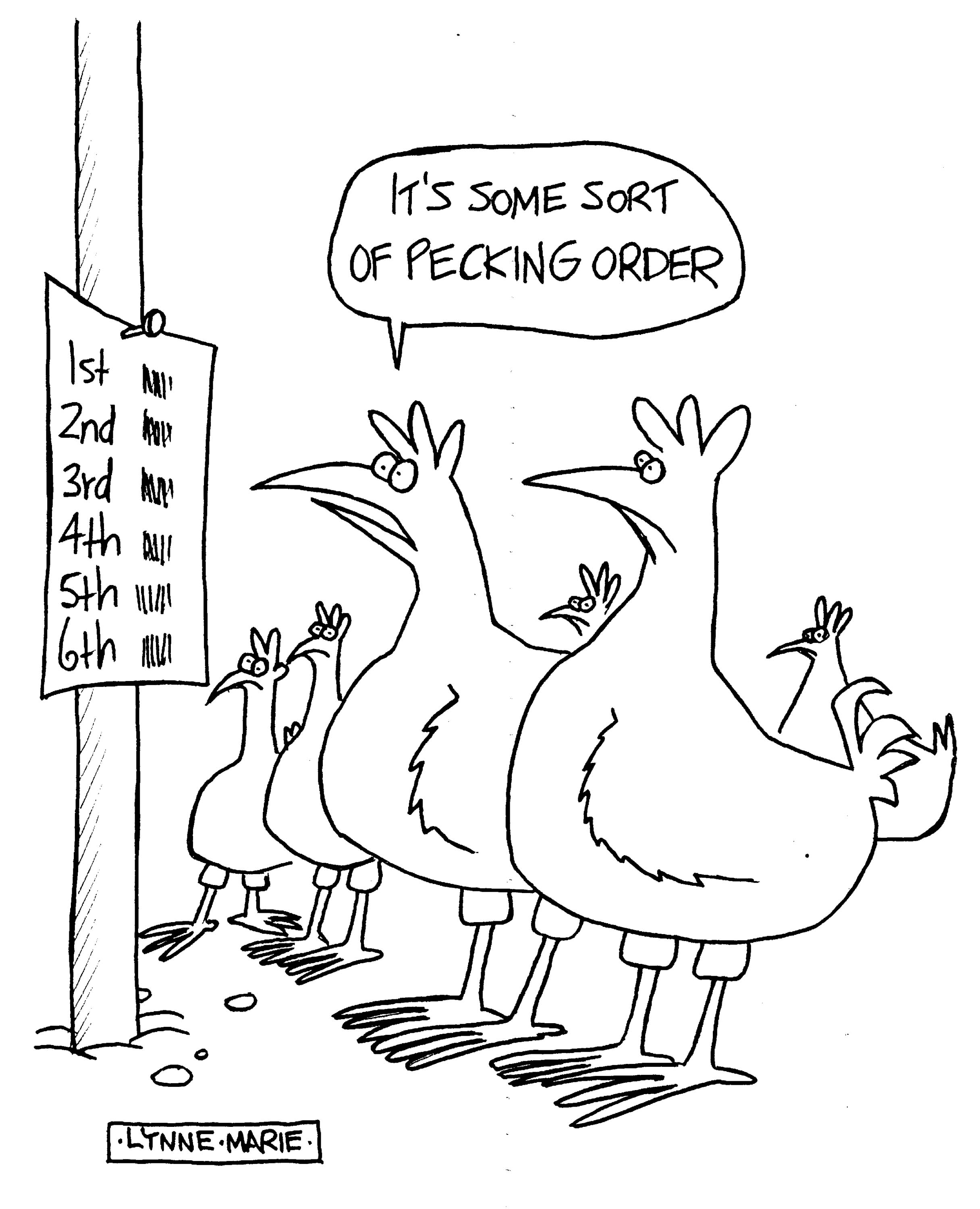
pecking orderA lot of people hate journal impact factors (IF). The hatred arises for many reasons, some of which are logical. For example, Thomson Reuters ISI Web of Knowledge® keeps the process fairly opaque, so it’s sometimes difficult to tell if journals are fairly ranked. Others hate IF because it does not adequately rank papers within or among sub disciplines. Still others hate the idea that citations should have anything to do with science quality (debatable, in my view). Whatever your reason though, IF are more or less here to stay.

Yes, individual scientists shouldn’t be ranked based only on the IF of the journals in which they publish; there are decent alternatives such as the h-index (which can grow even after you die), or even better, the m-index (or m-quotient; think of the latter as a rate of citation accumulation). Others would rather ditch the whole citation thing altogether and measure some element of ‘impact’, although that elusive little beast has yet to be captured and applied objectively.

So just in case you haven’t already seen it, Google has recently put its journal-ranking hat in the ring with its journal metrics. Having firmly wrested the cumbersome (and expensive) personal citation accumulators from ISI and Scopus (for example) with their very popular (and free!) Google Scholar (which, as I’ve said before, all researchers should set-up and make available), they now seem poised to do the same for journal rankings.

So for your viewing and arguing pleasure, here are the ‘top’ 20 journals in Biodiversity and Conservation Biology according to Google’s h5-index (the h-index for articles published in that journal in the last 5 complete years; it is the largest number h such that h articles published in 2008-2012 have at least h citations each):

Read the rest of this entry »