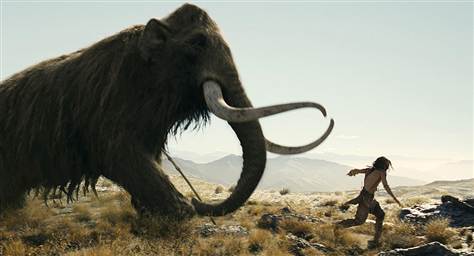
Ice Age? No. Abrupt warmings and hunting together polished off Holarctic megafauna

24 07 2015
Oh shit oh shit oh shit ...

Oh shit oh shit oh shit …

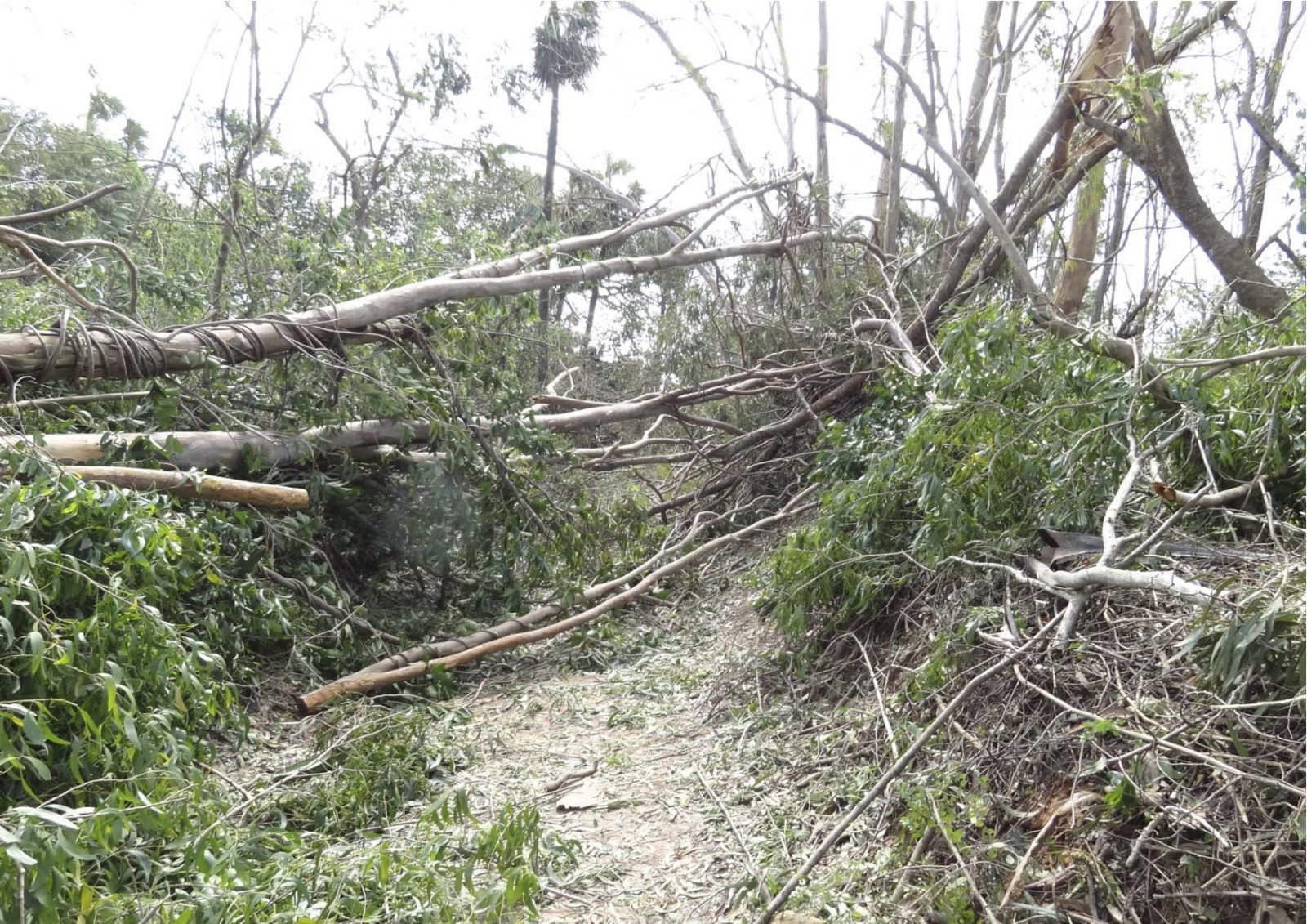
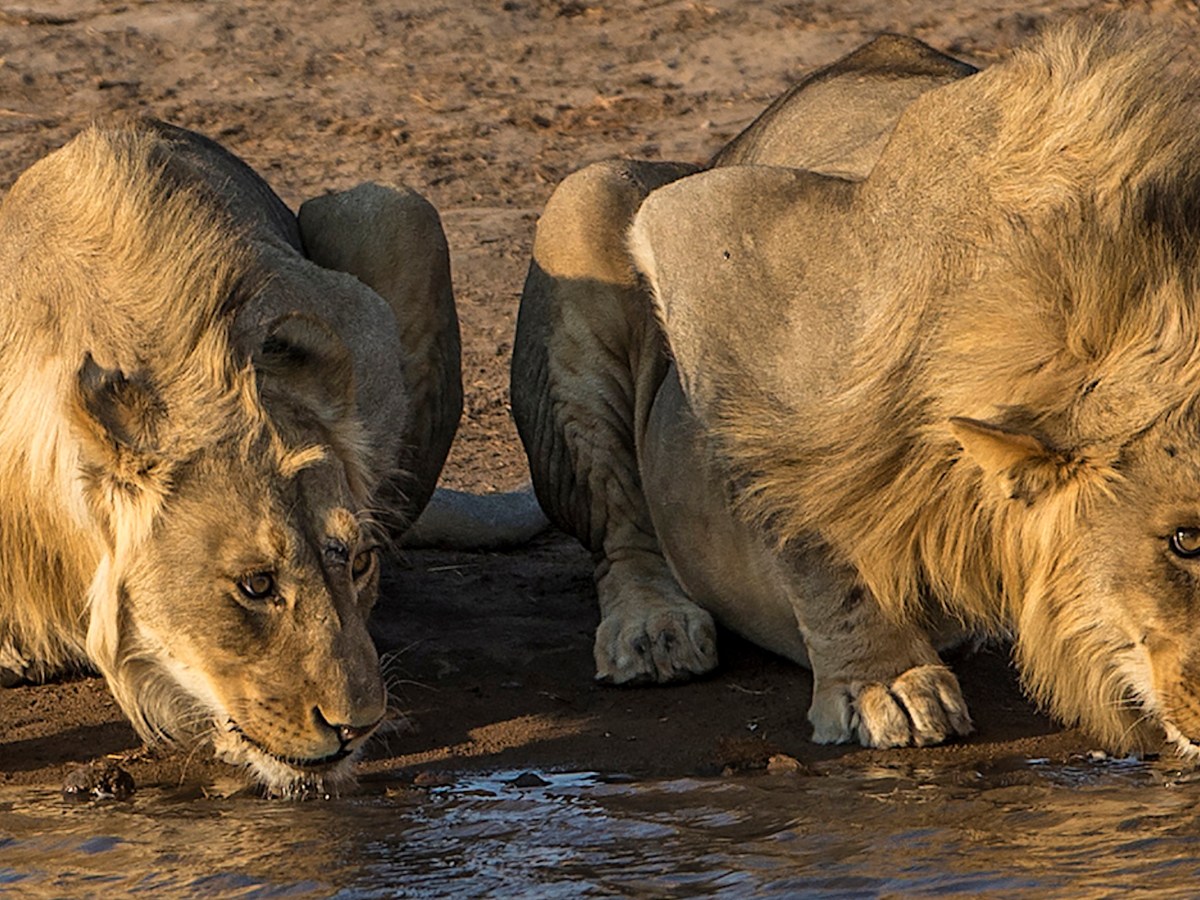
Did ice ages cause the Pleistocene megafauna to go extinct? Contrary to popular opinion, no, they didn’t. But climate change did have something to do with them, only it was global warming events instead.

Just out today in Science, our long-time-coming (9 years in total if you count the time from the original idea to today) paper ‘Abrupt warmings drove Late Pleistocene Holarctic megafaunal turnover‘ demonstrates for the first time that abrupt warming periods over the last 60,000 years were at least partially responsible for the collapse of the megafauna in Eurasia and North America.

You might recall that I’ve been a bit sceptical of claims that climate changes had much to do with megafauna extinctions during the Late Pleistocene and early Holocene, mainly because of the overwhelming evidence that humans had a big part to play in their demise (surprise, surprise). What I’ve rejected though isn’t so much that climate had nothing to do with the extinctions; rather, I took issue with claims that climate change was the dominant driver. I’ve also had problems with blanket claims that it was ‘always this’ or ‘always that’, when the complexity of biogeography and community dynamics means that it was most assuredly more complicated than most people think.

I’m happy to say that our latest paper indeed demonstrates the complexity of megafauna extinctions, and that it took a heap of fairly complex datasets and analyses to demonstrate. Not only were the data varied – the combination of scientists involved was just as eclectic, with ancient DNA specialists, palaeo-climatologists and ecological modellers (including yours truly) assembled to make sense of the complicated story that the data ultimately revealed. Read the rest of this entry »



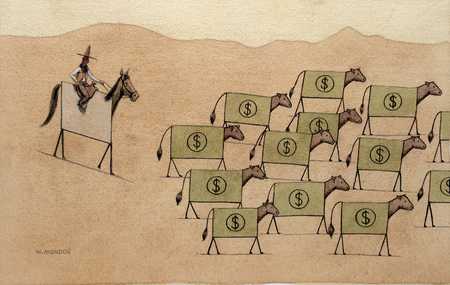


Australians: out-of-touch, urban squanderers

23 03 2015

There’s a romantic myth surrounding Australia that is pervasive both overseas and within the national psyche: this sun-scorched continent home to stoic bushmen1 that eek out a frugal, yet satisfying existence in this harsh rural land. Unfortunately that ideal is anathema to almost every Australian alive today.

While some elements of that myth do have a basis in reality – it is indeed a hot, dry, mostly inhospitable place if you count the entire land area (all 7.69 million square kilometres of it), and it does have the dubious honour of being the driest inhabited continent on Earth – most Australians live nowhere near the dry interior or the bush.

Despite our remarkably low average population density (a mere 3.09 people per square kilometre), Australia is in fact one of the most urbanised nations on the planet, with nearly 90% of its citizenry living within a major urban centre. As a result, our largely urban/suburban, latte-sipping, supermarket-shopping population has little, if any, connection to the vast landscape that surrounds its comfortable, built-up environs. There should be little wonder then that Australians are so disconnected from their own ecology, and little surprise that our elected officials (who, after all, represent the values of the majority of the citizens they purport to represent), are doing nothing to slow the rapid flushing of our environment down the toilet. Indeed, the current government is in fact actively encouraging the pace of that destruction. Read the rest of this entry »


The Abbott-oir survives another day to wreak more environmental havoc

9 02 2015

The Great Red UnderpantsTone Abbott-oir, easily the most environmentally destructive Prime Minister this country has seen in the modern era, has survived the party room spill for a leadership change. Although 39% of his own Fiberal Party MPs voted to dump him, he remains standing (limping) – for now.

I’ve seen rather a lot lately in the Australian media about the impending spill vote, and the potential political repercussions of a change (or not), but there’s been nearly no mention of what it all means for the continually degrading Australian environment.

As is typical in Australian politics, the environment takes a very distant back seat to the those oh-so-important societal issues like knighthoods, paid parental leave and where to put the next road in Melbourne, so I certainly wasn’t hopeful that a leadership change (or not) would have any positive environmental outcomes. This particular latte-snorting, quinoa-flavoured-pinot-grigio-in-the-artisanal-underpants-pouring, erect-nipple-paper-rubbing environmental scientist has nothing at all to celebrate, even if the no-confidence in The Great Red Underpants is potentially a positive sign. Read the rest of this entry »


Psychological toll of being a sustainability scientist

8 12 2014

depressed scientistLike many academics, I’m more or less convinced that I am somewhere on the mild end of the autism spectrum. No, I haven’t been diagnosed and I doubt very much that my slight ‘autistic’ tendencies have altered my social capacity, despite my wife claiming that I have only two emotions – angry or happy. Nor have they engendered any sort of idiot savant mathematical capability.

But I’m reasonably comfortable with mathematics, I can do a single task for hours once it consumes my attention, and I’m excited about discovering how things work. And I love to code. Rather than academics having a higher innate likelihood of being ‘autistic’, I just think the job attracts such personalities.

In the past few years though, my psychological state is probably less dictated by the hard-wiring of my ‘autidemic’ mind and more and more influenced by the constant battery of negative information my brain receives.

Read the rest of this entry »



Using ecological theory to make more money

1 12 2014

huge.9.46974Let’s face it: Australia doesn’t have the best international reputation for good ecological management. We’ve been particularly loathsome in our protection of forests, we have an appalling record of mammal extinctions, we’re degenerate water wasters and carbon emitters, our country is overrun with feral animals and weeds, and we have a long-term love affair with archaic, deadly, cruel, counter-productive and xenophobic predator management. To top it all off, we have a government hell-bent on screwing our already screwed environment even more.

Still, we soldier on and try to fix the damages already done or convince people that archaic policies should be scrapped and redrawn. One such policy that I’ve written about extensively is the idiocy and cruelty of the dingo fence.

The ecological evidence that dingoes are good for Australian wildlife and that they pose less threat to livestock than purported by some evidence-less graziers is becoming too big to ignore any longer. Poisoning and fencing are not only counter-productive, they are cruel, ineffective and costly.

So just when ecologists thought that dingoes couldn’t get any cooler, out comes our latest paper demonstrating that letting dingoes do their thing results in a net profit for cattle graziers.

Come again? Read the rest of this entry »


InvaCost – estimating the economic damage of invasive insects

7 11 2014

insectinvasionThis is a blosh (rehash of someone else’s blog post) of Franck Courchamp‘s posts on an exciting new initiative of which I am excited to be a part. Incidentally, Franck’s spending the week here in Adelaide.

Don’t forgot to vote for the project to receive 50 000 € public-communication grant!

Climate change will make winters milder and habitats climatically more suitable year-round for cold-blooded animals like insects, but there are many questions remaining regarding whether such insects will be able to invade other regions as the climate shifts. There are many nasty bugs out there.

For example, the Asian predatory wasp is an invasive hornet in Europe that butchers pollinating insects, especially bees, thereby affecting the production of many wild and cultivated plants. I hope that we all remember what Einstein said about pollinators:

If bees were to disappear, humans will disappear within a few years.

(we all should remember that because it’s one of the few things he said that most of us understood). The highly invasive red fire ant is feared for its impacts on biodiversity, agriculture and cattle breeding, and the thousands of anaphylactic shocks inflicted to people by painful stings every year (with hundreds of deaths). Between the USA and Australia, over US$10 billion is spent yearly on the control of this insect alone. Tiger mosquitoes are vectors of pathogens that cause dengue fever, chikungunya virus and of about 30 other viruses. We could go on.

Most of these nasty creatures are now unable to colonise northern regions of Europe or America, or southern regions of Australia, for example, because they cannot survive cold temperatures. But how will this change? Where, when and which species will invade with rising temperatures? What will be the costs in terms of species loss? In terms of agricultural or forestry loss? In terms of diseases to cattle, domestic animals and humans? What will be the death toll if insects that are vectors of malaria can establish in new, highly populated areas?

We’ve proposed to study these and others from a list of 20 of the worst invasive insect species worldwide, and we got selected (i.e., financed!) by the Fondation BNP Paribas. In addition, the Fondation BNP Paribas has selected five scientific programmes on climate change and will give 50,000 € (that’s US$62,000) to the one selected by the public, for a communication project on their scientific programme. This is why we need you to vote for our project: InvaCost. Read the rest of this entry »



Australia should have a more vibrant ecological culture

13 10 2014
Another great social event bringing ecologists together

Another great social event bringing ecologists together

I’ve always had the gut feeling that Australia punched above its weight when it comes to ecology and conservation. For years I’ve been confidently bragging to whomever might listen (mostly at conference pub sessions) that Australians have a vibrant academic and professional community of ecologists who are internationally renowned and respected. However, my bragging was entirely anecdotal and I always qualified the boast with the caveat that I hadn’t actually looked at the numbers.

Well, I finally did look at the numbers – at least superficially. It seems that for the most part, my assertion was true. I will qualify the following results with another caveat – I’ve only looked at the smallest of samples to generate this rank, so take it with a few grains of salt. Looking at the 200 most-cited ecologists in Google Scholar (with some licence as to who qualifies as an ‘ecologist’ – for example, I ditched a few medicos), I calculated the number of ecologists in that range per 100,000 people for each country. Of course, even the country of designation is somewhat fluid and imprecise – I did not know where most had received the bulk of their training and in which country they had spent most of their time, so the numbers are (again) only indicative. Excluding countries with only one highly cited ecologist in the top 200, the sorted list comes out as: Read the rest of this entry »


Tropical forest resilience depends on past disturbance frequency

16 07 2014

I’ve recently come across an interesting study that perfectly marries palaeo-ecological data with modern conservation philosophy. It’s not often that such a prehistorical perspective dating at least to the Last Glacial Maximum has been used so effectively to inform future conservation outlooks. I’m particularly interested in this sort of approach considering my own palaeo dabblings of late.

Published in Nature Communications this May, Lydia Cole and colleagues’ paper Recovery and resilience of tropical forests after disturbance is a meta-analysis of 71 studies covering nearly 300 disturbance events in tropical forests over the last 20,000 years or so. Using fossil pollen records as an index of vegetation change, they demonstrated the (somewhat intuitive) main result that the time to recovery following a disturbance generally decreases as the past disturbance frequency increased.

This appears to be a vindication of the idea that a system’s adaptive strategies evolve as a product of the local disturbance regime. More importantly, they found that recovery was faster following ‘large infrequent events’, which are natural perturbations such as cyclones and major fires. While most past disturbances were caused by humans clearing forest, the fact that tropical forest systems were most resilient to ‘natural’ events means that if we can’t stop human disturbances, at least we can attempt to emulate natural processes to maximise the rebound potential. Much like many modern forestry operations try to emulate natural disturbances to limit their damage, we should at least manage our impacts by understanding so-called ‘natural’ regimes as much as possible. Read the rest of this entry »


New Threatened Species Commissioner lacks teeth

2 07 2014

This is not Gregory Andrews

Published today on ABC Environment.

Greg Hunt, the Coalition Government’s Minister for the Environment, today announced what appears to be one of the only environmental promises kept from their election campaign in 2013: to appoint a Threatened Species Commissioner.

The appointment is unprecedented for Australia – we have never had anything remotely like it in the past. However, I am also confident that this novelty will turn out to be one of the position’s only positives.

My scepticism is not based on my personal political or philosophical perspectives; rather, it arises from Coalition Government’s other unprecedented policies to destroy Australia’s environment. No other government in the last 50 years has mounted such a breath-taking War on the Environment. In the nine month’s since the Abbott Government took control, there has been a litany of backward and dangerous policies, from the well-known axing of the Climate Commission and their push to dump of 3 million tonnes of dredge on the World Heritage Great Barrier Reef, to their lesser-publicised proposals to remove the non-profit tax status of green organisations and kill the Environmental Defenders Office. The Government’s list of destructive, right-wing, anti-environmental policies is growing weekly, with no signs of abatement.

With this background, it should come as no surprise that considerable cynicism is emerging following the Minister’s announcement. Fears that another powerless pawn of the current government appear to have been realised with the appointment of Gregory Andrews as the Commissioner. Mr Andrews is a public servant (ironically from the now-defunct Department of Department of Climate Change and Energy Efficiency) and former diplomat who has some minor infamy regarding contentious comments he made in 2006 when acting as a senior bureaucrat in Mal Brough’s Department of Indigenous Affairs. Apart from Mr Gregory’s general lack of specific expertise in species recovery, the choice appears to be neutral at best.

More importantly, the major limitation of the Commissioner to realise real benefits for Australian biodiversity is the position’s total lack of political power. Greg Hunt himself confirmed that Mr Andrews will not be able to affect government policy other than ‘encourage’ cooperation between states and environmental groups. The position also comes with a (undisclosed) funding guarantee of only one year, which makes it sound more like an experiment in public relations than effective environmental policy. Read the rest of this entry »


A convenient truth: global push for carbon-based conservation

19 05 2014

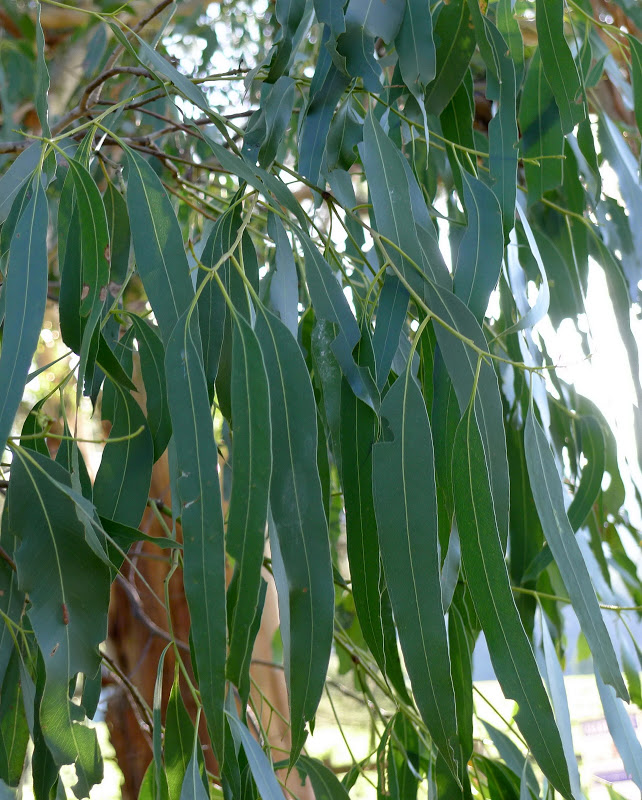
Eucalyptus viminalis (Manna Gum) - leaf, adultI’ve just written an article for the Australian River Restoration Centre‘s RipRap magazine, and they have given me permission to reproduce it here.

The brave, new green world of the carbon economy hasn’t exactly taken off as desired. Perhaps it’s because it wasn’t really planned from the outset, or maybe it is still too abstract for most people to accept, digest and incorporate into their daily lives. An emergent property of society’s generally slow awakening to the challenge of climate disruption, is that it will be a long time before we accept its full suite of incarnations.

The infant carbon economy is, however, well and truly alive and kicking, so it is important to try and plan for its growing influence on our decision making. Bumps in the road aside, the carbon economy has mostly been a blessing (actual and potential) for biodiversity conservation projects the world over.

In principle, the aim of the carbon economy is rather straight-forward: charge people a certain amount for each unit of carbon dioxide equivalents they release, and then use that money to develop approaches that further increase carbon sequestration or limit emissions. It’s a ‘build-it-and-they-will-come’ framework, where increasing financial impetus to restrict emissions is enhanced by society’s evolution towards better approaches and technology.

The operational side of the carbon economy is unfortunately much more muddled, with vested interests and political gaming weakening its implementation. Nonetheless, we persevere. Read the rest of this entry »



Ecological processes depend on …

14 05 2014
© Cagan Sekercioglu

© Cagan Sekercioglu

I have been known to say (ok – I say it all the time) that ecologists should never equivocate when speaking to the public. Whether it’s in a media release, blog post, television presentation or newspaper article, just stick to ‘yes’ or ‘no’. In other words, don’t qualify your answer with some horrid statistical statement (i.e., in 95% of cases …) or say something like “… but it really depends on …”. People don’t understand uncertainty – to most people, ‘uncertainty’ means “I don’t know” or worse, “I made it all up”.

But that’s only in the movies.

In real ‘ecological’ life, things are vastly different. It’s never as straightforward as ‘yes’ or ‘no’, because ecology is complex. There are times that I forget this important aspect when testing a new hypothesis with what seem like unequivocal data, but then reality always hits.

Our latest paper is the epitome of this emergent complexity from what started out as a fairly simple question using some amazing data. What makes birds change their range1? We looked at this question from a slightly different angle than had been done before because we had access to climate data, life-history data and most importantly, actual range change data. It’s that latter titbit that is typically missing from studies aiming to understand what drives species toward a particular fate; whether it’s a species distribution model predicting the future habitat suitability of some species as a function of climate change, or the past dynamics of some species related to its life history pace, most often the combined dynamics are missing. Read the rest of this entry »


Putting the ‘science’ in citizen science

30 04 2014
How to tell if a koala has been in your garden. © Great Koala Count

How to tell if a koala has been in your garden. © Great Koala Count

When I was in Finland last year, I had the pleasure of meeting Tomas Roslin and hearing him describe his Finland-wide citizen-science project on dung beetles. What impressed me most was that it completely flipped my general opinion about citizen science and showed me that the process can be useful.

I’m not trying to sound arrogant or scientifically elitist here – I’m merely stating that it was my opinion that most citizen-science endeavours fail to provide truly novel, useful and rigorous data for scientific hypothesis testing. Well, I must admit that I still believe that ‘most’ citizen-science data meet that description (although there are exceptions – see here for an example), but Tomas’ success showed me just how good they can be.

So what’s the problem with citizen science? Nothing, in principle; in fact, it’s a great idea. Convince keen amateur naturalists over a wide area to observe (as objectively) as possible some ecological phenomenon or function, record the data, and submit it to a scientist to test some brilliant hypothesis. If it works, chances are the data are of much broader coverage and more intensively sampled than could ever be done (or afforded) by a single scientific team alone. So why don’t we do this all the time?

If you’re a scientist, I don’t need to tell you how difficult it is to design a good experimental sampling regime, how even more difficult it is to ensure objectivity and precision when sampling, and the fastidiousness with which the data must be recorded and organised digitally for final analysis. And that’s just for trained scientists! Imagine an army of well-intentioned, but largely inexperienced samplers, you can quickly visualise how the errors might accumulate exponentially in a dataset so that it eventually becomes too unreliable for any real scientific application.

So for these reasons, I’ve been largely reluctant to engage with large-scale citizen-science endeavours. However, I’m proud to say that I have now published my first paper based entirely on citizen science data! Call me a hypocrite (or a slow learner). Read the rest of this entry »


Upcoming conservation, ecology and modelling conferences

7 03 2014

IMG_34271Our lab just put together a handy list of upcoming ecology, conservation and modelling conferences around the world in 2014. Others might also find it useful. Some of the abstract submission deadlines have already passed, but it still might be useful to know what’s on the immediate horizon if attendance only is an option.

Conference Dates Venue Call for Abstracts Deadline
Queensland Ornithological Conference 31 May Brisbane, Australia Open 10 Mar
Spatial Ecology and Conservation 17 Jun Birmingham, UK Closed 21 Feb
Asia-Pacific Coral Reef Symposium 23 Jun Taiwan Closed 5 Feb
International Statistical Ecology Conference 1 Jul Montpellier, France Closed 13 Jan
International Institute of Fisheries Economics & Trade 2014 7 Jul Brisbane Closed 31 Jan
World Conference on Natural Resource Modeling 8 Jul Vilnius, Lithuania Open 31 Mar
Society for Conservation Biology Oceania Section 9 Jul Suva, Fiji Open 7 Mar Read the rest of this entry »


You know it’s hot when it’s too hot to ….

16 01 2014
© T. Brandon

© T. Brandon

My post’s title might be a good candidate title for a punk song in the 2030s (maybe by a re-incarnation of the Dead Kennedys).

I am currently sitting under my solar-powered ceiling fan as Adelaide is declared the world’s hottest city (and not in the funky, cultural, fun way), and I can’t help but contemplate climate change models predicting the fate of biodiversity over the coming decades. Because it’s far, far too hot to work outside, I’m perusing the latest interesting articles on the subject and I came across this recent little gem.

Also recommended on F1000Prime by Ary Hoffman, the paper, Using physiology to predict the responses of ants to climatic warming, by Sarah Diamond and colleagues touches on many aspects of climate predictions that need to be considered. I summarise these briefly here.

While no physiologist, I have dabbled in the past, although up until quite recently I didn’t see that physiology per se had much to do with conservation. It turns out that climate change has spawned an entire sub-discipline called ‘conservation physiology‘, which focuses inter alia on how species can/will/might respond and adapt to a warmer, climatically disrupted world.

What struck me about Diamond & colleagues’ paper was that yet again, it’s not as simple as heat-stressing a species experimentally and making a prediction on its future distribution (ecology is complex). No, the complexity comes in various forms that makes each species a little different from each other. Using North American ant species subjected to various warming scenarios in large (5 m) enclosures, they found the following: Read the rest of this entry »


Essential role of carnivores on the wane

10 01 2014
© Luca Galuzzi www.galuzzi.it

© Luca Galuzzi http://www.galuzzi.it

This interesting review has just come out in Science, and because I was given a heads-up about it, I decided to do a F1000 recommendation. That’s more or less what follows, with some additional thoughts.

Ripple and colleagues can perhaps be excused for stating what might appear to many ‘in the biz’ to be blatantly obvious, but their in-depth review of the status of the world’s carnivores is a comprehensive overview of this essential guild’s worldwide plight. It not only represents an excellent teaching tool, the review elegantly summarises the current status of these essential ecosystem engineers.

The world’s 245 terrestrial carnivores might seem to be ecologically redundant to the informed given their natural rarity, low densities and cryptic behaviour, but nothing could be farther from the truth. Ecologists have only within the last decade or so revealed the essential ecosystem functions of these species (see former posts on CB.com here, here and here). The review focuses on the largest and most well-studied species, but the trends likely apply across most of the order. Read the rest of this entry »


More species = more resilience

8 01 2014

reef fishWhile still ostensibly ‘on leave’ (side note: Does any scientist really ever take a proper holiday? Perhaps a subject for a future blog post), I cannot resist the temptation to blog about our lab’s latest paper that just came online today. In particular, I am particularly proud of Dr Camille Mellin, lead author of the study and all-round kick-arse quantitative ecologist, who has outdone herself on this one.

Today’s subject is one I’ve touched on before, but to my knowledge, the relationship between ‘diversity’ (simply put, ‘more species’) and ecosystem resilience (i.e., resisting extinction) has never been demonstrated so elegantly. Not only is the study elegant (admission: I am a co-author and therefore my opinion is likely to be biased toward the positive), it demonstrates the biodiversity-stability hypothesis in a natural setting (not experimental) over a range of thousands of kilometres. Finally, there’s an interesting little twist at the end demonstrating yet again that ecology is more complex than rocket science.

Despite a legacy of debate, the so-called diversity-stability hypothesis is now a widely used rule of thumb, and its even implicit in most conservation planning tools (i.e., set aside areas with more species because we assume more is better). Why should ‘more’ be ‘better’? Well, when a lot of species are interacting and competing in an ecosystem, the ‘average’ interactions that any one species experiences are likely to be weaker than in a simpler, less diverse system. When there are a lot of different niches occupied by different species, we also expect different responses to environmental fluctuations among the community, meaning that some species inherently do better than others depending on the specific disturbance. Species-rich systems also tend to have more of what we call ‘functional redundancy‘, meaning that if one species providing an essential ecosystem function (e.g., like predation) goes extinct, there’s another, similar species ready to take its place. Read the rest of this entry »


King for a day – what conservation policies would you make?

29 11 2013

CrownI have been thinking a lot lately about poor governance and bad choices when it comes to biodiversity conservation policy. Perhaps its all that latent anger arising from blinkered, backward policies recently implemented by conservative state and national governments in Australia and elsewhere that leads me to contemplate: What would I do if I had the power to change policy?

While I am certain I have neither the experience or complete knowledge to balance national budgets, ensure prosperity and maintain the health of an entire country, I do have some ideas about what we’re doing wrong conservation-wise, and how we could potentially fix things. This is not meant to be an exhaustive list – it is more a discussion point where people can suggest their own ideas.

So here are 16 things I’d change or implement (mainly in Australia) if I were king for a day:

Read the rest of this entry »


Ecologists: join F1000Research’s open science ecosystem

8 08 2013

f1000researchlogoThe people at the new open-access journal F1000Research (a Faculty of 1000 publication) have asked me to help them announce their new deal for ecologists – no processing fees until 2014! Might have to give it a go myself…

F1000Research covers all areas of life sciences, but we know that different fields each have their own unique characteristics, and some features of our journal are of particular interest to certain disciplines.

For the coming months, one area we’ll be focussing on is ecology. To encourage ecologists to try F1000Research, we’re waiving the article processing charge for all first submissions of an ecology paper until 2014. (Use code ECOL15 when submitting).

F1000Research is an ideal venue for publishing an ecology paper. Research, which includes full datasets, is openly available and its speed of publication and transparency in reviews makes it a refreshing alternative to traditional publishing.” Gary Luck, Institute for Land, Water and Society, Charles Sturt University, Australia

Three good reasons to send your ecology papers to F1000Research:

1.     Quickly reach a wide audience

All articles are fully open access and include all data, and with our post-publication peer review model, your article can be online within a week (find out more about our speedy publication process). Read the rest of this entry »


Ecology: the most important science of our times

12 07 2013

rocket-scienceThe title of this post is deliberately intended to be provocative, but stay with me – I do have an important point to make.

I’m sure most every scientist in almost any discipline feels that her or his particular knowledge quest is “the most important”. Admittedly, there are some branches of science that are more applied than others – I have yet to be convinced, for example, that string theory has an immediate human application, whereas medical science certainly does provide answers to useful questions regarding human health. But the passion for one’s own particular science discipline likely engenders a sort of tunnel vision about its intrinsic importance.

So it comes down to how one defines ‘important’. I’m not advocating in any way that application or practicality should be the only yardstick to ascertain importance. I think superficially impractical, ‘blue-skies’ theoretical endeavours are essential precursors to all so-called applied sciences. I’ll even go so far as to say that there is fundamentally no such thing as a completely unapplied science discipline or question. As I’ve said many times before, ‘science’ is a brick wall of evidence, where individual studies increase the strength of the wall to a point where we can call it a ‘theory’. Occasionally a study comes along and smashes the wall (paradigm shift), at which point we begin to build a new one. Read the rest of this entry »


Brave new green world: biodiversity’s response to Australia’s carbon economy

12 03 2013

carbon farming 2I’ve had a busy weekend entertaining visiting colleagues and participating in WOMADelaide‘s first-ever ‘The Planet Talks‘. If you haven’t heard of WOMADelaide, you’re truly missing out in one of the best music festivals going (and this is from a decidedly non-festival-going sort). Planet Talks this year was a bit of an experiment after the only partially successful Earth Station festival held last year (it was well-attended, but apparently wasn’t as financially successful as they had hoped). So this year they mixed a bit of science with a bit of music – hence ‘Planet Talks’. Paul Ehrlich was one of the star attractions, and I had the honour of going onstage with him yesterday to discuss a little bit about human population growth and sustainability. It was also great to see Robyn Williams again. All the Talks were packed out – indeed, I was surprised they were so popular, especially in the 39-degree heat. Rob Brookman, WOMADelaide’s founder and principal organiser, told me afterward that they’d definitely be doing it again.

But my post really isn’t about WOMADelaide or The Planet Talks (even though I got the bonus of meeting one of my favourite latin bands, Novalima, creators of one of my favourite songs). It’s instead about a paper I heralded last year that’s finally been accepted.

In early 2012 at the Terrestrial Ecosystem Research Network (TERN) symposium in Adelaide, the Australian Centre for Ecological Analysis and Synthesis (ACEAS) put on what they called the ‘Grand Challenges’ workshop. I really didn’t get the joke at the time, but apparently the ‘grand challenge’ was locking 30 scientists with completely different backgrounds in a room for two days to see if they could do anything other than argue and bullshit. Well, we rose to that challenge and produced something that I think is rather useful.

I therefore proudly introduce the paper entitled Brave new green world: consequences of a carbon economy for the conservation of Australian biodiversity just accepted in Biological Conservation. The online version isn’t quite ready yet (should be in the next few weeks), but you are welcome to request a preprint from me now. If you attended (the surprisingly excellent) TERN symposium in Canberra last month, you might have seen me give a brief synopsis of our results.

The paper is a rather  in-depth review of how we, 30 fire, animal, plant, soil, landscape, agricultural and freshwater biologists, believe Australia’s new carbon-influenced economy (i.e., carbon price) will impact the country’s biodiversity. Read the rest of this entry »