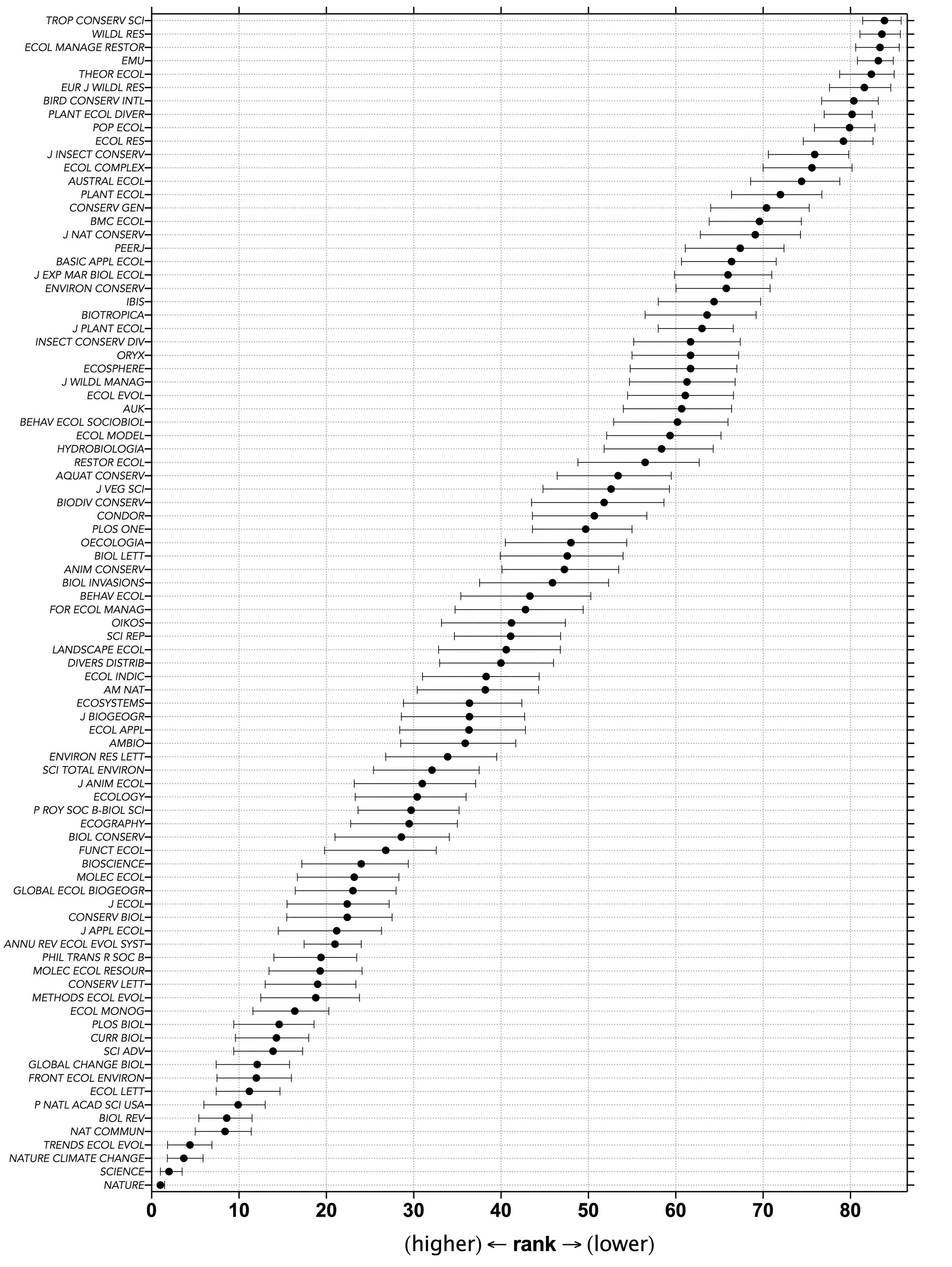
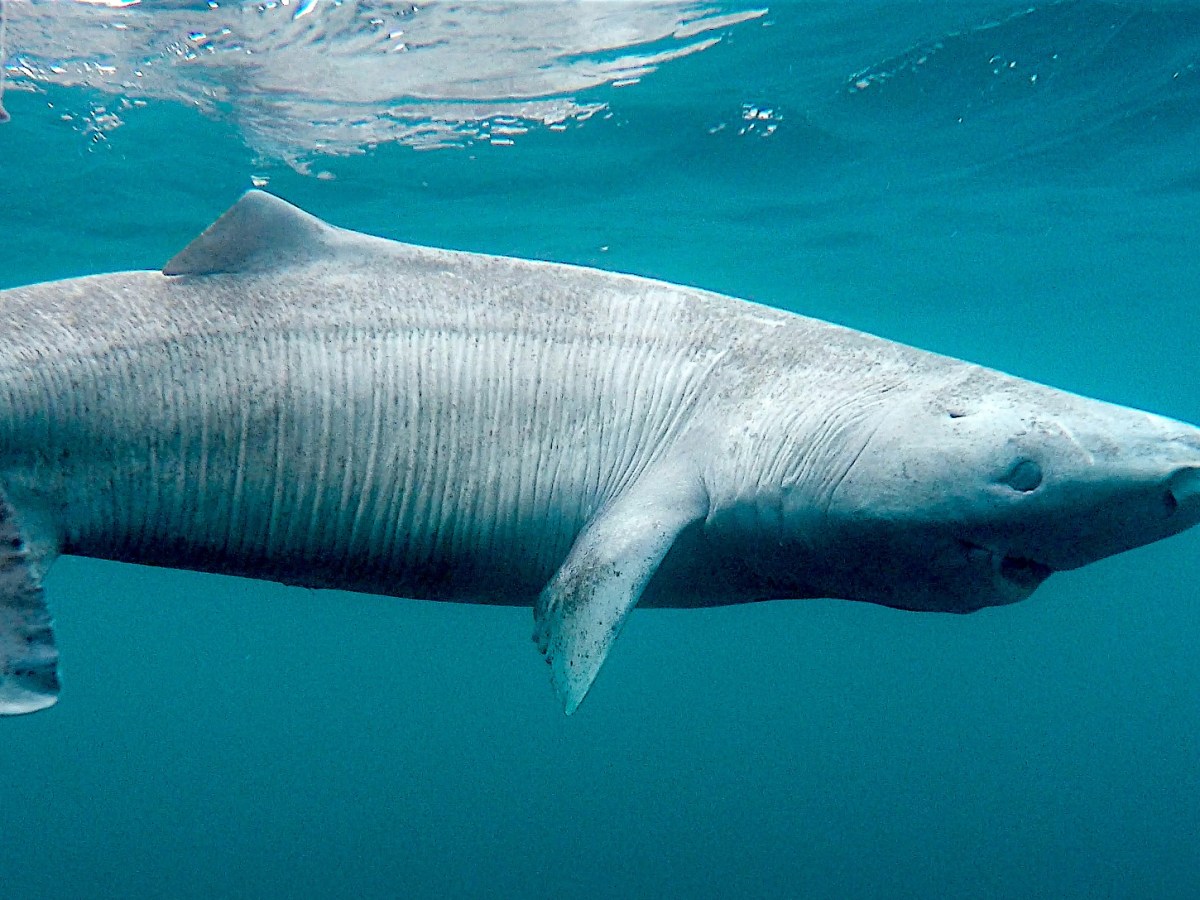
Deep-sea sharks include some of the longest-lived vertebrates known. The record holder is the Greenland shark, with a recently estimated maximum age of nearly 400 years. Their slow life cycle makes them vulnerable to fisheries.
In the Arctic, there are whales that have survived since the time of Napoleon’s Empire; in the Atlantic, there are molluscs that were contemporary with Christopher Columbus’ voyages; and in Antarctica, there are sponges born before the Holocene when humans were still an insignificant species of hunter-gatherers (see video on lifespan variation in wildlife).
Long-lived species grow slowly and reproduce at later ages (1, 2). As a result, these animals require a long time to form abundant populations and to recover from fishing-related mortality.
Among cartilaginous fish (chimaeras, rays, sharks, and skates), the risk of extinction due to overfishing is twice as high for deep-sea species compared to coastal species, because the former have longer and slower life cycles (3).
Coral reefs are much more than just a pretty place to visit. They are among the world’s richest ecosystems, hosting about a third of all marine species.
These reefs also directly benefit more than a billion people, providing livelihoods and food security, as well as protection from storms and coastal erosion.
Without coral reefs, the world would be a much poorer place. So when corals die or become damaged, many people try to restore them. But the enormity of the task is growing as the climate keeps warming.
In our new research, we examined the full extent of existing coral restoration projects worldwide. We looked at what drives their success or failure, and how much it would actually cost to restore what’s already been lost. Restoring the reefs we’ve already lost around the world could cost up to A$26 trillion.
Bleached Acropora corals in the Maldives.Davide Seveso/University of Milan
When sea temperatures climb above the seasonal average for sustained periods, corals can become bleached. They lose colour as they expel their symbiotic algae when stressed, revealing the white skeleton underneath. Severe bleaching can kill coral.
The internet has become an informational telescope to study what happens nearly everywhere the planet. Using internet observations, it has been recently documented that terrestrial hermit crabs use plastic waste as shelter along tropical coasts.
Before the internet irrupted, I was living in Spain and frequently travelled from my hometown to universities in Valencia and Barcelona to access scientific journals. Back then, these journals were only available in print or on compact discs. Today, I can do the same thing from home with an internet connection.
The emergence of public internet since the 1990s has globalised information and represents a data source for many areas of science (1, 2). When applied to nature, the term iEcology (internet Ecology) refers to the use of online documentation to study the natural history of plants and animals, their distributions, and the effects of humans on them (3). In fact, the internet highlights and promotes certain research topics. For example, bird species that are more frequently mentioned on social networks tend to be described taxonomically earlier, and are also the ones that interact most (positively or negatively) with human activity (4).
In search of the phenomenon
By exploring internet platforms Alamy, Flickr, Google, YouTube, and iNaturalist, Zuzanna Jagiello and her collaborators collected nearly 30 thousand photographs of hermit crabs to study the use of rubbish by these crustaceans (5). Hermit crabs are known for their peculiar habit of using empty snail shells to house their unprotected abdomens, carrying them around like someone travelling with their house on their back (6) — David Attenborough narrates here a funny swapping of shells among crabs of different size. The researchers aimed to assess the extent of the phenomenon of hermit crabs replacing natural shells with artificial materials as mobile homes (see video capturing the scene).
The way that eels migrate along rivers and seas is mesmerising. There has been scientific agreement since the turn of the 20th Century that the Sargasso Sea is the breeding home to the sole European species. But it has taken more than two centuries since Carl Linnaeus gave this snake-shaped fish its scientific name before an adult was discovered in the area where they mate and spawn.
Even among nomadic people, the average human walks no more than a few dozen kilometres in a single trip. In comparison, the animal kingdom is rife with migratory species that traverse continents, oceans, and even the entire planet (1).
The European eel (Anguilla anguilla) is an outstanding example. Adults migrate up to 5000 km from the rivers and coastal wetlands of Europe and northern Africa to reproduce, lay their eggs, and die in the Sargasso Sea — an algae-covered sea delimited by oceanic currents in the North Atlantic.
The European eel (Anguilla Anguilla) is an omnivorous fish that migrates from European and North African rivers to the Sargasso Sea to mate and die (18). Each individual experiences 4 distinct developmental phases, which look so different that they have been described as three distinct species (19): A planktonic, leaf-like larva (ilecocephalus phase) emerges from each egg and takes up to 3 years to cross the Atlantic. Off the Afro-European coasts, the larva transforms into a semi-transparent tiny eel (iiglass phase) that enters wetlands and estuaries, and travels up the rivers as it gains weight and pigment (iiiyellow phase). They remain there for up to 20 years, rarely growing larger than 1 m in length and 4 kg in weight (females are larger than males) — see underwater footage here and here. Sexual maturity ultimately begins to adjust to the migration to the sea: a darker, saltier, and deeper environment than the river. Their back and belly turn bronze and silver (ivsilver phase), respectively, the eyes increase in size and the number of photoreceptors multiplies (function = submarine vision), the stomach shrinks and loses its digestive function, the walls of the swim bladder thicken (function = floating in the water column), and the fat content of tissues increases by up to 30% of body weight (function = fuel for transoceanic travelling). And finally, the reproductive system will gradually develop while eels navigate to the Sargasso Sea — a trip during which they fast. Photos courtesy of Sune Riis Sørensen (2-day embryo raised at www.eel-hatch.dk and leptocephalus from the Sargasso Sea) and Lluís Zamora (Ter River, Girona, Spain: glass eels in Torroella de Montgrí, 70 cm yellow female in Bonmatí, and 40 cm silver male showing eye enlargement in Bescanó). Eggs and sperm are only known from in vitro fertilisation in laboratories and fish farms (20).
As larvae emerge, they drift with the prevailing marine currents over the Atlantic to the European and African coasts (2). The location of the breeding area was unveiled in the early 20th Century as a result of the observation that the size of the larvae caught in research surveys gradually decreased from Afro-European land towards the Sargasso Sea (3, 4). Adult eels had been tracked by telemetry in their migration route converging on the Azores Archipelago (5), but none had been recorded beyond until recently.
Crossing the Atlantic
To complete this piece of the puzzle, Rosalind Wright and collaborators placed transmitters in 21 silver females and released them in the Azores (6). These individuals travelled between 300 and 2300 km, averaging 7 km each day. Five arrived in the Sargasso Sea, and one of them, after a swim of 243 days (from November 2019 to July 2020), reached what for many years had been the hypothetical core of the breeding area (3, 4). It is the first direct record of a European eel ending its reproductive journey.
Eels use the magnetic fields in their way back to the Sargasso Sea and rely on an internal compass that records the route they made as larvae (7). The speed of navigation recorded by Wright is slower than in many long-distance migratory vertebrates like birds, yet it is consistent across the 16 known eel species (8).
Telemetry (6) and fisheries (14) of European eel (Anguilla anguilla). Eel silhouettes indicate the release point of 21 silver females in Azores in 2018 (orange) and 2019 (yellow), the circles show the position where their transmitters stopped sending signals, and the grey background darkens with water depth. The diagrams display the distance travelled and the speed per eel, where the circle with bold border represents the female that reached the centre of the hypothetical spawning area in the Sargasso Sea (dashed lines in the map) (3). Blue, green and pink symbols indicate the final location of eels equipped with teletransmitters in previous studies, finding no individual giving location signals beyond the Azores Archipelago (6). The barplot shows commercial catches (1978-2021) of yellow+silver eels in those European countries with historical landings exceeding 30,000 t (no data available for France prior to 1986), plus Spain (6120 t from 1951) — excluding recreational fishery and farming which, in 2020, totalled 300 and 4600 t, respectively (14). Red circles represent glass-eel catches added up for France (> 90% of all-country landings), Great Britain, Portugal, and Spain. Catches have kept declining since the 1980s. One kg of glass eels contains some 3000 individuals, so the glass-eel fishery has a far greater impact on stocks than the adult fishery.
Wright claimed that, instead of swiftly migrating for early spawning, eels engage in a protracted migration at depth. This behaviour serves to conserve their energy and minimises the risk of dying (6). The delay also allows them to reach full reproductive potential since, during migration, eels stop eating and mobilise all their resources to swim and reproduce (9).
Other studies have revealed that adults move in deep waters in daylight but in shallow waters at night, and that some individuals are faster than others (3 to 47 km per day) (5). Considering that (i) this fish departs Europe and Africa between August and December and (ii) spawning occurs in the Sargasso Sea from December to May, it is unknown whether different individuals might breed 1 or 2 years after they begin their oceanic migration.
Management as complex as life itself
The European eel started showing the first signs of decline at the end of the 19th Century (10, 11). In 2008, the species was listed as Critically Endangered by the IUCN, and its conservation status has since remained in that category — worse than that of the giant panda (Ailuropoda melanoleuca) or the Iberian lynx (Lynx pardinus).
Following my annual tradition, I present the retrospective list of the ‘top’ 20 influential papers of 2022 as assessed by experts in Faculty Opinions(formerly known as F1000). These are in no particular order. See previous years’ lists here: 2021, 2020, 2019, 2018, 2017, 2016, 2015, 2014, and 2013.
Now that Clarivate, Google, and Scopus have recently published their respective journal citation scores for 2021, I can now present — for the 14th year running on ConvervationBytes.com — the 2021 conservation/ecology/sustainability journal ranks based on my journal-ranking method.
Like last year, I’ve added a few journals. I’ve also included in the ranking the Journal Citation Indicator (JCI) in addition to the Journal Impact Factor and Immediacy Index from Clarivate ISI, and the CiteScore (CS) in addition to the Source-Normalised Impact Per Paper (SNIP) and SCImago Journal Rank (SJR) from Scopus.
I therefore present the new 2021 ranks for: (i) 106 ecology, conservation and multidisciplinary journals, (ii) 27 open-access (i.e., you have to pay) journals from the previous category, (iii) 64 ‘ecology’ journals, (iv) 32 ‘conservation’ journals, (v) 43 ‘sustainability’ journals (with general and energy-focussed journals included), and (vi) 21 ‘marine & freshwater’ journals.
Remember not to take much notice if a journal boasts about how its Impact Factor has increased this year, because these tend to increase over time anyway What’s important is a journal’s relative (to other journals) rank.
Carnivores are essential components of trophic webs, and ecosystem functions crumble with their loss. Novel data show the connection between calcareous reefs and sea otters under climate change.
Trophic cascade on the Aleutian Islands (Alaska, USA) linking sea otters (Enhydra lutris) with sea urchins (Strongylocentrotus polyacanthus) and calcareous reefs (Clathromorphum nereostratum). With males weighting up to 50 kg, sea otters have been IUCN-catalogued as Endangered since 2000. The top photo shows a male in a typical, belly-up floating position. The bottom photo shows live (pinkish) and dead (whitish) tissue on the reef surface as a result of grazing of sea urchins at a depth of 10 m. Sea otters are mesopredators, typically foraging on small prey like sea urchins, but their historical decline due to overhunting unleashed the proliferation of the echinoderms. At the same time, acidification and sea-water warming have softened the skeleton of the reefs, allowing for deeper grazing by sea urchins that eliminate the growth layer of living tissue that give the reefs their pinkish hue. Large extents of dead reefs stop fixing the excess in carbonic acid, whose carbon atoms sea water sequesters from the atmosphere enriched in carbon by our burning of fossil fuels. Photos courtesy of Joe Tomoleoni taken in Moss Landing – California, USA (otter), and on the Near Islands – Aleutian Archipelago, Alaska (reef).
For most, the decisions made by people we have never met affect our daily lives. Other species experience the same phenomenon because they are linked to one another through a trophic cascade.
A trophic cascade occurs when a predator limits the abundance or behaviour of its prey, in turn affecting the survival of a third species in lower trophic levels that have nothing directly to do with the predator in question (1).
Sea otters (Enhydra lutris) represent a text-book example of a trophic cascade. These mustelids (see video footage here and here) hunt and control the populations of sea urchins (Strongylocentrotus polyacanthus), hence favouring kelp forests — the fronds of which are eaten by the sea urchins.
Removing the predator from the equation should lead to more sea urchins and less kelp, and this chain of events is exactly what happened along the coasts of the North Pacific (2, 3). The historical distribution of sea otters once ranged from Japan to Baja California through the Aleutian Islands (see NASA’s photo from space, and documentary on the island of Unimak), a sub-Arctic, arc-shaped archipelago including > 300 islands between Alaska (USA) and the Kamchatka Peninsula (Russia), extending ~ 2000 kilometres, and having a land area of ~ 18,000 km2.
But the fur trade during the 18th and 19th centuries brought the species to the brink of extinction, down to < 2000 surviving individuals (4). Without otters, sea urchins boomed and deforested kelp ecosystems during the 20th Century (5). Now we also know that this trophic cascade has climate-related implications in other parts of the marine ecosystem.
Underwater bites
Doug Rasher and collaborators have studied the phenomenon on the Aleutian Islands (6). The seabed of this archipelago is a mix of sandy beds, kelp forests, and calcareous reefs made up of calcium and magnesium carbonates fixed by the red algae Clathromorphum nereostratum. These reefs have grown at a rate of 3 cm annually for centuries as the fine film of living tissue covering the reef takes the carbonates from the seawater (7).
The intensity of threats to biodiversity from human endeavour becomes weaker as the distance to them increases.
As you move away from the big city to enjoy the countryside, you’ll notice the obvious increase in biodiversity. Even the data strongly support this otherwise subjective perception — there is a positive correlation between the degree we destroy habitat, harvest species, and pollute the environment, and the distance from big cities.
Remote locations are therefore usually considered safe havens and potential reservoirs for biodiversity. But our new study published recently in Nature Communications shows how this obvious pattern depicts only half of the story, and that global conservation management and actions might benefit from learning more about the missing part.
Communities are not just lists of individual species. Instead, they consist of complex networks of ecological interactions linking interdependent species. The structure of such networks is a fundamental determinant of biodiversity emergence and maintenance. However, it also plays an essential role in the processes of biodiversity loss. The decline or disappearance of some species might have detrimental —often fatal — effects on their associates. For example, a parasite cannot survive without its hosts, as much as a predator will starve without prey, or a plant will not reproduce without pollinators.
Events where a species disappears following the loss of other species on which it depends are known as co-extinctions, and they are now recognised as a primary driver of the ongoing global biodiversity crisis. The potential risk stemming from ecological dependencies is a major concern for all ecological systems.
It is possible to cultivate corals in the sea like growing a nursery of trees to restore a burned forest. Cultivated corals grow faster than wild corals and can be outplanted to increase the healthy area of damaged reefs. Incorporated in projects of citizen science and ecotourism, this activity promotes environmental awareness about coral reefs, the marine ecosystem that is both the most biodiverse and the most threatened by global change.
When I finished by undergraduate studies in the 1980s, I met several top Spanish marine biologists to prospect my first job ever in academia. In all one-to-one interviews I had, I was asked what my interests were. And when I described that I wanted to study ways of modifying impacted marine ecosystems to restore their biodiversity, a well-known professor judged that my proposition was an inviable form of jardinería marina (marine gardening) ― those words made me feel embarrassed and have remained vivid in my professional imagination since. Neither the expert nor the young researcher knew at the time that we were actually talking about ecological restoration, a discipline that was being formalised exactly then by botanists in their pledge to recover pre-European conditions for North American grasslands (1).
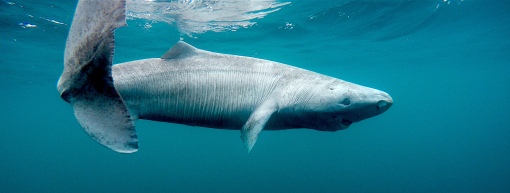
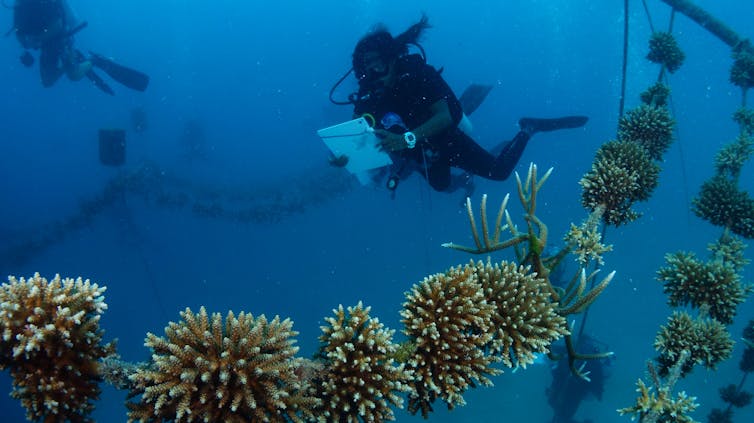
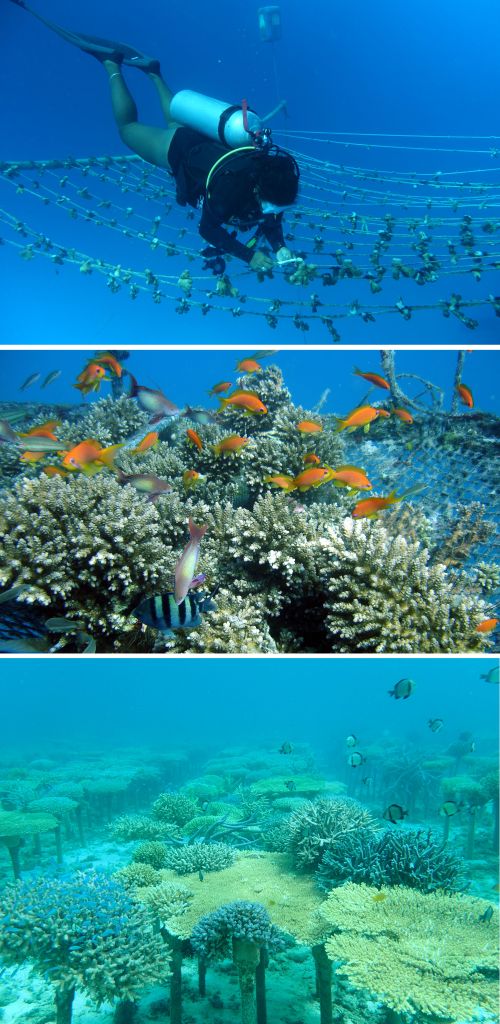
Aspects of coral gardening. The photos show (top) a diver scraping off (with the aid of a toothbrush) algae, sponges and parasites that compete for light and nutrients with the coral fragments under cultivation along suspended ropes (Cousin Island, Seychelles), (middle) coral outplantings in the Gulf of Eliat (Red Sea) hosting a diverse community of fish that clean off the biofouling for free (21), and (bottom) a donor colony farmed off Onna (Okinawa, Japan) (12). Photos courtesy of Luca Saponari (Cousin), Buki Rinkevich (Eliat) and Yoshimi Higa / Onna Village Fishery Cooperative.
Today, the term coral gardening encompasses the suite of methods to cultivate corals (tiny colonial jellyfish with an external skeleton and a carnivorous diet) and to outplant them into the wild to boost the growth of coral reefs following perturbations (2). In the face of the decline of coral reefs globally, due to the combination of climate change, pollution, and overfishing (3), this type of mariculture has gathered momentum in the last three decades and is currently being applied to more than 100 coral species in all the main reefs of our seas and oceans (4-6).
This is the 13th year in a row that I’ve generated journal ranks based on the journal-ranking method we published several years ago.
There are few differences in how I calculated this year’s ranks, as well as some relevant updates:
As always, I’ve added a few new journals (either those who have only recently been scored with the component metrics, or ones I’ve just missed before);
I’ve included the new ‘Journal Citation Indicator’ (JCI) in addition to the Journal Impact Factor and Immediacy Index from Clarivate ISI. JCI “… a field-normalised metric, represents the average category-normalised citation impact for papers published in the prior three-year period.”. In other words, it’s supposed to correct for field-specific citation trends;
While this isn’t my change, the Clarivate metrics are now calculated based on when an article is first published online, rather than just in an issue. You would have thought that this should have been the case for many years, but they’ve only just done it;
I’ve also added the ‘CiteScore’ (CS) in addition to the Source-Normalised Impact Per Paper (SNIP) and SCImago Journal Rank (SJR) from Scopus. CS is “the number of citations, received in that year and previous 3 years, for documents published in the journal during that period (four years), divided by the total number of published documents … in the journal during the same four-year period”;
Finally, you can access the raw data for 2020 (I’ve done the hard work for you) and use my RShiny app to derive your own samples of journal ranks (also see the relevant blog post). You can add new journal as well to the list if my sample isn’t comprehensive enough for you.
Since the Google Scholar metrics were just released today, I present the new 2020 ranks for: (i) 101 ecology, conservation and multidisciplinary journals, and a subset of (ii) 61 ‘ecology’ journals, (iii) 29 ‘conservation’ journals, (iv) 41 ‘sustainability’ journals (with general and energy-focussed journals included), and (v) 20 ‘marine & freshwater’ journals.
One final observation. I’ve noted that several journals are boasting about how their Impact Factors have increased this year, when they fail to mention that this is the norm across most journals. As you’ll see below, relative ranks don’t actually change that much for most journals. In fact, this is a redacted email I received from a journal that I will not identify here:
We’re pleased to let you know that the new Impact Factor for [JOURNAL NAME] marks a remarkable increase, as it now stands at X.XXX, compared to last year’s X.XXX. And what is even more important: [JOURNAL NAME] increased its rank in the relevant disciplines: [DISCIPLINE NAME].
Although the Impact Factor may not be the perfect indicator of success, it remains the most widely recognised one at journal level. Therefore, we’re excited to share this achievement with you, as it wouldn’t have been possible, had it not been for all of your contributions and support as authors, reviewers, editors and readers. A huge ‘THANK YOU’ goes to all of you!
When snorkelling in a reef, it’s natural to think of coral colonies as a colourful scenography where fish act in a play. But what would happen to the fish if the stage went suddenly empty, as in Peter Brook’s 1971 Midsummer Night’s Dream? Would the fish still be there acting their roles without a backdrop?
This question is not novel in coral-reef science. Ecologists have often compared reef fish diversity and biomass in selected localities before and after severe events of coral mortality. Even a temporary disappearance of corals might have substantial effects on fish communities, sometimes resulting in a local disappearance of more than half of local fish species.
Considering the multiple, complex ways fish interact with — and depend on — corals, this might appear as an obvious outcome. Still, such complexity of interactions makes it difficult to predict how the loss of corals might affect fish diversity in specific contexts, let alone at the global scale.
Focusing on species-specific fish-coral associations reveals an inconsistent picture with local-scale empirical observations. When looking at the fraction of local fish diversity that strictly depends on corals for food and other more generic habitat requirements (such as shelter and reproduction), the global picture suggests that most fish diversity in reef locality might persist in the absence of corals.
The mismatch between this result and the empirical evidence of a stronger coral dependence suggests the existence of many hidden ecological paths connecting fish to corals, and that those paths might entrap many fish species for which the association to corals is not apparent.
Easy. Don’t go swimming/surfing/snorkelling/diving in the ocean.
“Oh, shit”
Sure, that’s true, but if you’re like many Australians, the sea is not just a beautiful thing to look at from the window, it’s a way of life. Trying telling a surfer not to surf, or a diver not to dive. Good luck with that.
It turns out that many of the deterrents we tested failed to show any reduction in the probability of a shark biting, with only one type of electronic deterrent showing any effect at all (~ 60% reduction).
Great. But what might that mean in terms of how many people could be saved by wearing such electronic deterrents? While the probability of being bitten by a shark is low globally, even in Australia (despite public perceptions), we wondered if the number of lives saved and injuries avoided was substantial.
In a new paper just published today in Royal Society Open Science, we attempted to answer that question.
To predict how many people could avoid shark bites if they were using properly donned electronic deterrents that demonstrate some capacity to dissuade sharks from biting, we examined the century-scale time series of shark bites on humans in Australia. This database — the ‘Australian Shark Attack File‘ — is one of the most comprehensive databases of its kind.
Following my late-December tradition, I present — in no particular order — a retrospective list of the ‘top’ 20 influential papers of 2020 as assessed by experts in Faculty Opinions(formerly known as F1000). See previous years’ lists here: 2019, 2018, 2017, 2016, 2015, 2014, and 2013.
Blistering heat, pouring rain, finding volunteers, submitting field-trip forms, forgetting equipment, data sheets blowing away in the wind — a field-based research project is hard at the best of times. Add white sharks into the mix and you start to question whether this project is even possible. These were some of my realisations when I started my Honours year studying shark deterrents.
A specific memory from my first field expedition was setting off on a six-day boat trip with the comfortable sight of land getting smaller and smaller, in an already rough ocean, to find one of the most feared fish in the sea, the white shark. I was intimidated, but also excited.
Over the next few days reality set in and I experienced the true challenges of working in the field. When there were no sharks around, I had to concentrate on the bait line for hours in anticipation of a sudden ambush. When there were sharks around, it was all systems go and there was no room for error — not with a fish of this size. It didn’t matter how tired or seasick I was, the data had to be collected.
When I found out that I had been offered a field-based PhD extending my shark-deterrent research from my Honours, other than being over-the-moon, I knew I had a big few years ahead of me. I immediately began preparing mentally for the challenges that came along with my field-based research. Particularly the long periods of time I knew I would spend away from home and my family.
For the last 12 years and running, I’ve been generating journal ranks based on the journal-ranking method we published several years ago. Since the Google journal h-indices were just released, here are the new 2019 ranks for: (i) 99 ecology, conservation and multidisciplinary journals, and a subset of (ii) 61 ‘ecology’ journals, (iii) 27 ‘conservation’ journals, (iv) 41 ‘sustainability’ journals (with general and energy-focussed journals included), and (v) 20 ‘marine & freshwater’ journals.
Ecologists often rely on measuring certain elements of a species’ characteristics, behaviour, or morphology to determine if these — what we call ‘traits’ — give them certain capacities to exploit their natural environments. While sometimes a bit arbitrarily defined, the traits that can be measured are many indeed, and sometimes they reveal rather interesting elements of a species’ resilience in the face of environmental change.
As we know, climate change is changing the way species are distributed around the planet, for the main (and highly simplified) reason that the environments in which they’ve evolved and to which they have adapted are changing.
In the simplest case, a warming climate means that there is a higher and higher chance you’ll experience temperatures that really don’t suit you that well (think of a koala or a flying fox baking in a tree when the thermometer reads +45° in the shade). Just like you seeking those nice, air-conditioned spaces on a scorcher of a day, species like to move to where conditions are more acceptable to their particular physiologies and behaviours.
Ecologists use life-history traits to predict which species have the highest probability of moving to new areas in response to climate change. Most studies into this phenomenon have largely ignored that range shifts in fact occur in sequential stages: (1) the species arrives in a new place for the first time, (2) its population increases in size (and extent), and (3) it can continue to persist in the new spot. Read the rest of this entry »
As I’ve done for the last six years, I am publishing a retrospective list of the ‘top’ 20 influential papers of 2019 as assessed by experts in F1000 Prime (in no particular order). See previous years’ lists here: 2018, 2017, 2016, 2015, 2014, and 2013.
For the last five years I’ve published a retrospective list of the ‘top’ 20 influential papers of the year as assessed by experts in F1000 Prime — so, I’m doing so again for 2018 (interesting side note: six of the twenty papers highlighted here for 2018 appear in Science magazine). See previous years’ posts here: 2017, 2016, 2015, 2014, and 2013.
Female green turtles (Chelonia mydas) spawning (top) and diving (bottom) on Raine Island (Great Barrier Reef, Queensland, Australia) — photos courtesy of Ian Bell. This species is ‘Endangered’ globally since 1982, mainly from egg harvesting (poaching conflict in Mexico for olive ridleyLepidochelys olivacea featured by National Geographic’s video here), despite the success of conservation projects (39). Green turtles inhabit tropical and subtropical seas in all oceans. Adults can grow > 150 kg and live for up to ~ 75 years. Right after birth, juveniles venture into the open sea to recruit ultimately in coastal areas until sexual maturity. They then make their first reproductive migration, often over 1000s of km (see footage of a real dive of a camera-equipped green turtle), to reach their native sandy beaches where pregnant females will lay their eggs. Each female can deposit more than one hundred eggs in her nest, and in several clutches in the same season because they can store the sperm from multiple mating events.
When sex is determined by the thermal environment, males or females might predominate under sustained climatic conditions. A study about marine turtles from the Great Barrier Reef illustrates how feminisation of a population can be partitioned geographically when different reproductive colonies are exposed to contrasting temperatures.
Fortunately, most people in Western societies already perceive that we live in a complex blend of sexual identities, far beyond the kind of genitals we are born with. Those identities start to establish themselves in the embryo before the sixth week of pregnancy. In the commonest scenario, for a human foetusXY with one maternal chromosome (X) and one paternal (Y) chromosome, the activation of the Sry gen (unique to Y) will trigger the differentiation of testicles and, via hormonal pathways, the full set of male characteristics (1).
Absence of that gene in an XX embryo will normally lead to a woman. However, in just one of many exceptions to the rule, Sry-expression failure in XY individuals can result in sterile men or ambiguous genitals — along a full gradient of intermediate sexes and, potentially, gender identities. A 2015 Nature ‘News’ feature echoes two extraordinary cases: (i) a father of four children found to bear a womb during an hernia operation, and (ii) a pregnant mother found to host both XX and XY cells during a genetic test – with her clinical geneticist stating “… that’s the kind of science-fiction material for someone who just came in for an amniocentesis” (2). These real-life stories simply reflect that sex determination is a complex phenomenon.
A little over a week ago, shark ecologist, Charlie Huveneers, and I attempted to write an article in The Conversation about a report we co-wrote regarding the effectiveness of personal shark-deterrent devices (see below for more on the report itself). It’s a great little story, with both immediate policy implications for human safety and great, big potential improvements to shark conservation in general (i.e., if sharks kill fewer people, then perhaps governments would be less inclined to invokes stupid laws to kill sharks). Indeed, sharks aren’t doing very well around the world, mainly because of over-harvest and persecution from unfounded fear.
Anyway, all was going swimmingly until our editor at The Conversation suddenly decided that they wouldn’t publish the piece based on the following funding disclaimer that we had submitted with the article:
This project was funded by the New South Wales Department of Primary Industries Shark Management Strategy Competitive Annual Grants Program, the Government of South Australia, Ocean Guardian Pty Ltd, and the Neiser Foundation. We openly and transparently declare that Ocean Guardian contributed financially to the study, but that Ocean Guardian was not involved in the study design or implementation, nor did they have access to the data post-collection. Nor did Ocean Guardian provide input into data analysis, interpretation, writing of the report, or the conclusions drawn. The study design followed a protocol developed for a previous study, which was not funded by Ocean Guardian. In summary, Ocean Guardian had no opportunity to influence any aspect of the study or its conclusions, apart from providing some financial support to realise the field project (e.g., boat hire, equipment purchase, etc.) in the same manner as the other funding agencies. The South Australian cage-diving industry provided logistical support during the testing of the deterrents.
The long and short of The Conversation‘s negative decision was that one of the companies contributed financially to project. However, as we stated above, they had absolutely no influence in the subsequent experimental design, data collection, analysis, interpretation or report writing.
While normally I’m a big fan of The Conversation, I really think they dropped the ball with this one. Their decision was illogical and unsupported for five main reasons:
There were many funding partners involved, and the Ocean Freedom contribution was in no way the major or even majority share of funding.
Other companies with devices tested could have contributed, but only Ocean Freedom offered.
As stated in our disclosure, there was no opportunity for manipulating experimental design, data ownership, or post-collection analysis or writing that could have influenced the results, by any funders or contributors.
The disclosure is open, honest, comprehensive and in every way truthful.
So, I’m more than just a little disappointed — and my opinion of the organisation has dropped considerably. That, with the constant barrage of donation requests they send makes me think twice about their journalistic integrity. I challenge others to think carefully before giving them any money.
Regardless, let’s move on to the article itself (which I can publish freely here without the Draconian oversight of The Conversation):
—
Many things might explain why the number of shark bites appear to be increasing. However, the infrequent occurrence of such events makes it nearly impossible to determine why. Recently, an atypically high rate of shark bites occurred in Western Australia in 2010-2011 and on the north coast of New South Wales in 2015-2016. These highly publicised events — often sensationalised in both traditional and social media — have pressured governments to implement new measures to reduce the risk of shark bites.
The rising pressure to do something to reduce shark bites has prompted the recent development or commercial release of many new personal shark deterrents. Yet, most of these devices lack any rigorous scientific assessment of their effectiveness, meaning that some manufacturers have made unfounded claims about how much their devices dissuade sharks from attacking humans.
However, if a particular type of commercially available shark deterrent happens to be less effective (or completely ineffective) as advertised, it can give users a false sense of security, potentially encouraging some to put themselves at greater risk than is necessary. For example, some surfers and spearfishers probably ignore other mitigation measures, such as beach closures, because they ‘feel safe’ when wearing these products.
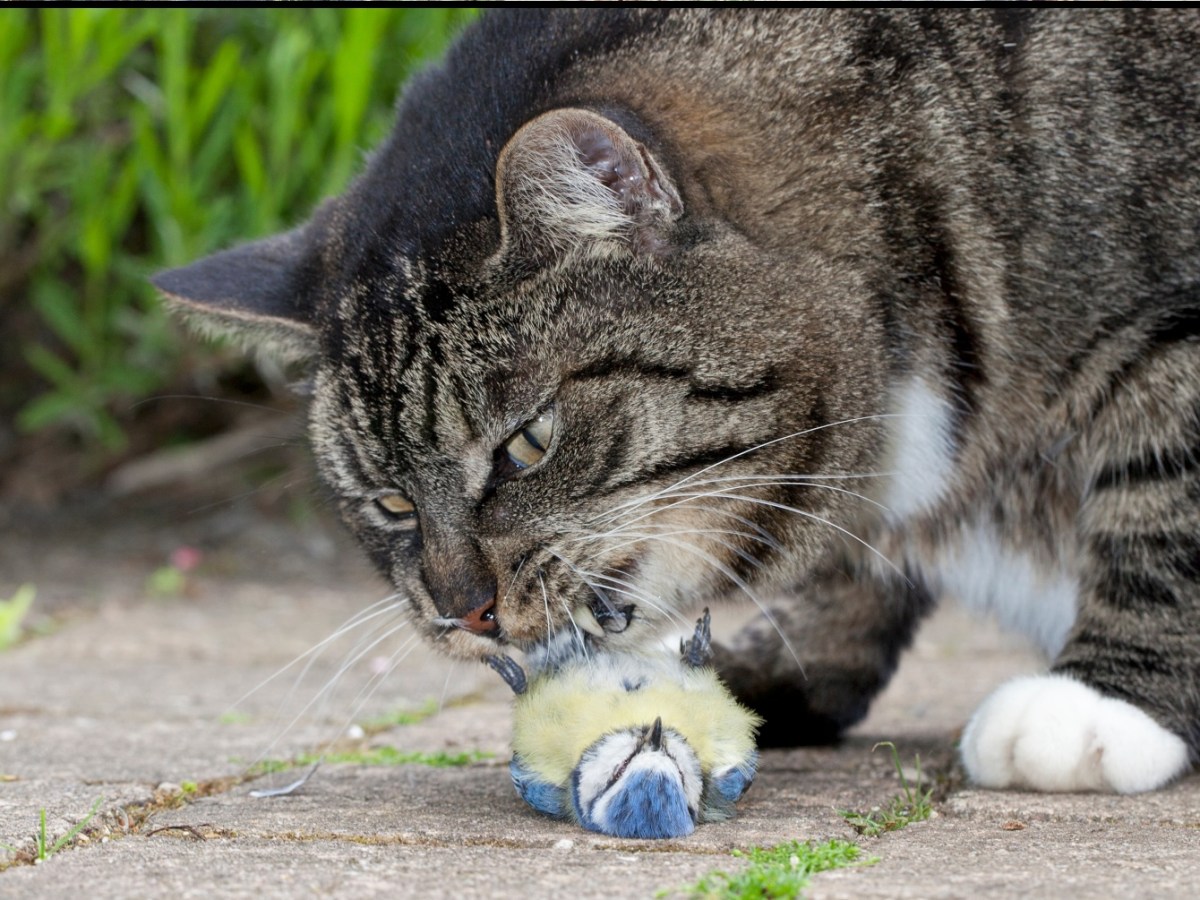
Those of us living with cats share our homes with an ancestral predator, one adapted for hunting and the frequent, exclusive consumption of meat. These instincts become fully activated outside the domestic environment, where cats pose a global threat to wildlife. Pets are family. We celebrate their arrival with the same joy as a grand…
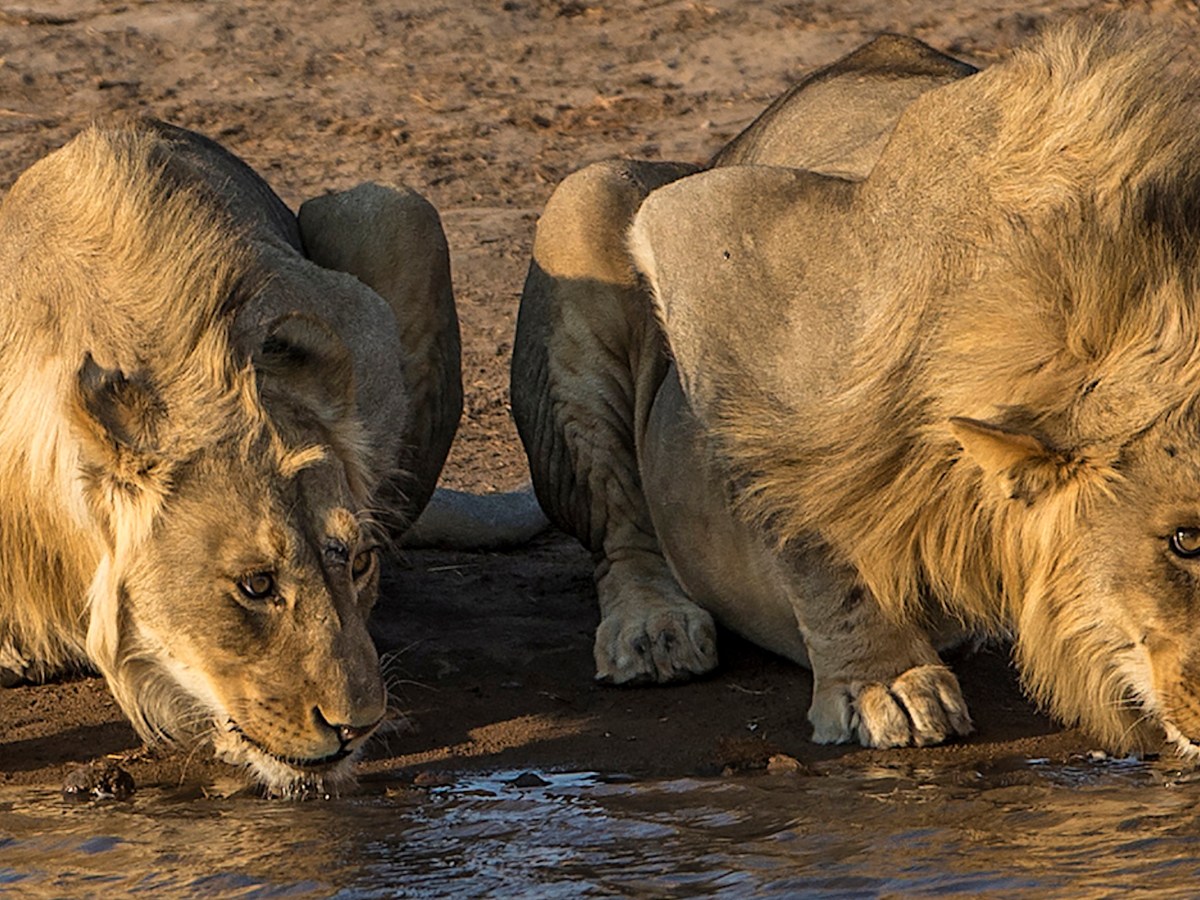
Many animals avoid contact with people. In protected areas of the African savanna, mammals flee more intensely upon hearing human conversations than when they hear lions or sounds associated with hunting. This fear of humans affects how species use and move in their habitat. Throughout our lives, we interact with hundreds of wildlife species without…
Deep-sea sharks include some of the longest-lived vertebrates known. The record holder is the Greenland shark, with a recently estimated maximum age of nearly 400 years. Their slow life cycle makes them vulnerable to fisheries. Humans rarely live longer than 100 years. But many other animals and plants can live for several centuries or even millennia, particularly…







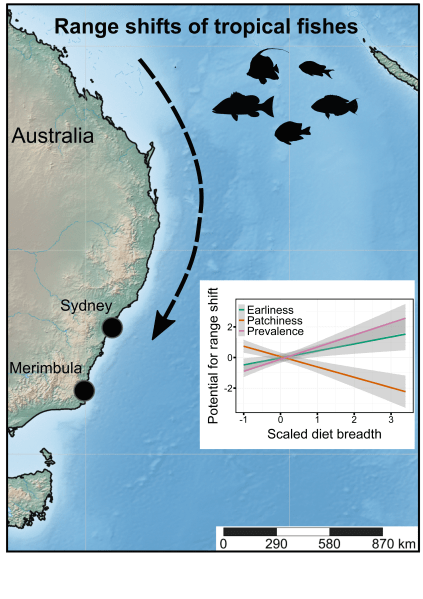 Ecologists often rely on measuring certain elements of a species’ characteristics, behaviour, or morphology to determine if these — what we call ‘traits’ — give them certain capacities to exploit their natural environments. While sometimes a bit arbitrarily defined, the traits that can be measured are many indeed, and sometimes they reveal rather interesting elements of a species’ resilience in the face of environmental change.




 ConservationBytes.com