Not all wetlands are created equal

13 02 2017

little-guyLast year I wrote what has become a highly viewed post here at ConservationBytes.com about the plight of the world’s freshwater biodiversity. In a word, it’s ‘buggered’.

But there are steps we can take to avoid losing even more of that precious freshwater biodiversity. The first, of course, is to stop sucking all the water out of our streams and wetlands. With a global population of 7.5 billion people and climbing, the competition for freshwater will usually mean that non-human life forms lose that race. However, the more people (and those making the decisions, in particular) realise that intact wetlands do us more good as wetlands rather than carparks, housing developments, or farmland (via freshwater filtering, species protection, carbon storage, etc.), the more we have a chance to save them.

My former MSc student, the very clever David Deane1, has been working tirelessly to examine different scenarios of wetland plant biodiversity change in South Australia, and is now the proud lead author of a corker of a new paper in Biological Conservation. Having already published one paper about how wetland plant biodiversity patterns are driven by rare terrestrial plants, his latest is a very important contribution about how to manage our precious wetlands. Read the rest of this entry »


Boreal forest on the edge of a climate-change tipping point

15 11 2016

As some know, I dabble a bit in the carbon affairs of the boreal zone, and so when writer Christine Ottery interviewed me about the topic, I felt compelled to reproduce her article here (originally published on EnergyDesk).

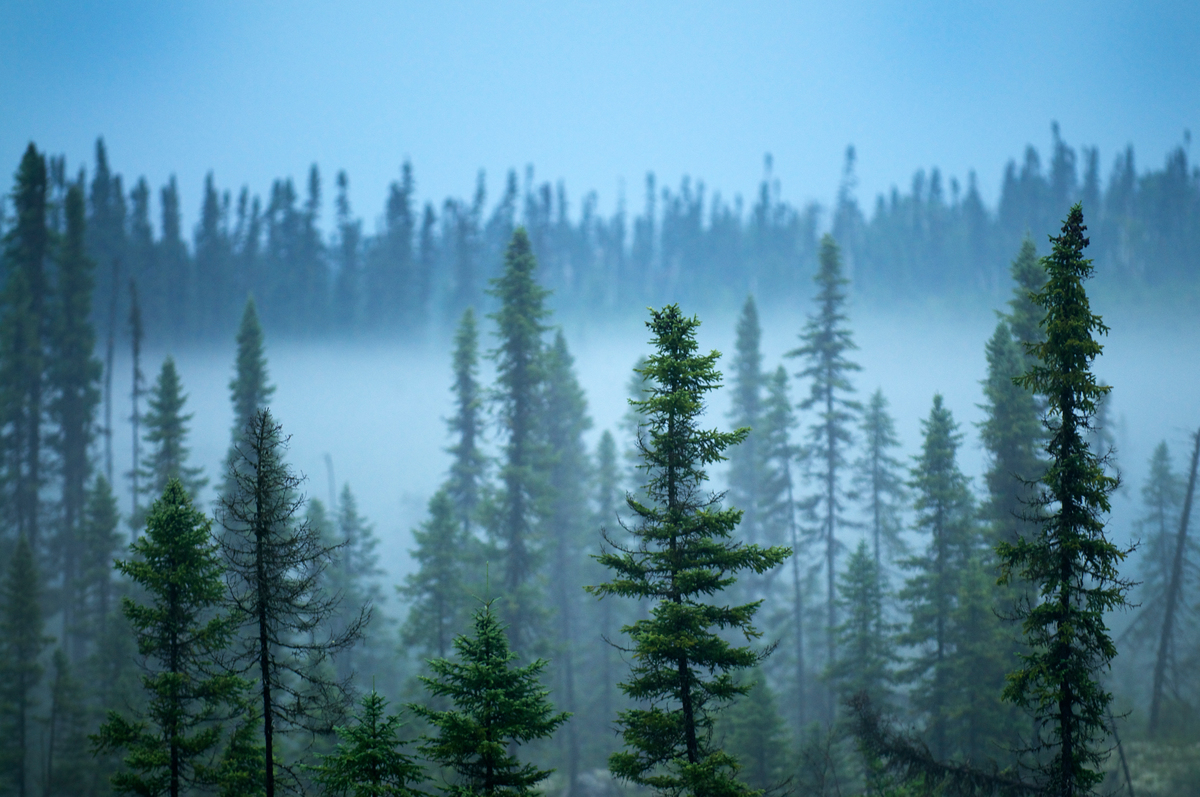
A view of the Waswanipi-Broadback Forest in the Abitibi region of Northern Quebec, one of the last remaining intact Boreal Forests in the province (source: EnergyDesk).

A view of the Waswanipi-Broadback forest in the Abitibi region of northern Quebec, one of the last remaining intact boreal forests in the Canadian province (source: EnergyDesk).

The boreal forest encircles the Earth around and just below the Arctic Circle like a big carbon-storing hug. It can mostly be found covering large swathes of Russia, Canada and Alaska, and some Scandinavian countries.

In fact, the boreal – sometimes called by its Russian name ‘taiga’ or ‘Great Northern Forest’ – is perhaps the biggest terrestrial carbon store in the world.

So it’s important to protect in a world where we’re aiming for 1.5 or – at worst – under two degrees celsius of global warming.

“Our capacity to limit average global warming to less than 2 degrees is already highly improbable, so every possible mechanism to reduce emissions must be employed as early as possible. Maintaining and recovering our forests is part of that solution,” Professor Corey Bradshaw, a leading researcher into boreal forests based at the University of Adelaide, told Energydesk.

It’s not that tropical rainforests aren’t important, but recent research led by Bradshaw published in Global and Planetary Change shows that that there is more carbon held in the boreal forests than previously realised.

But there’s a problem. Read the rest of this entry »


Transition from the Anthropocene to the Minicene

24 09 2016
Going, going ...

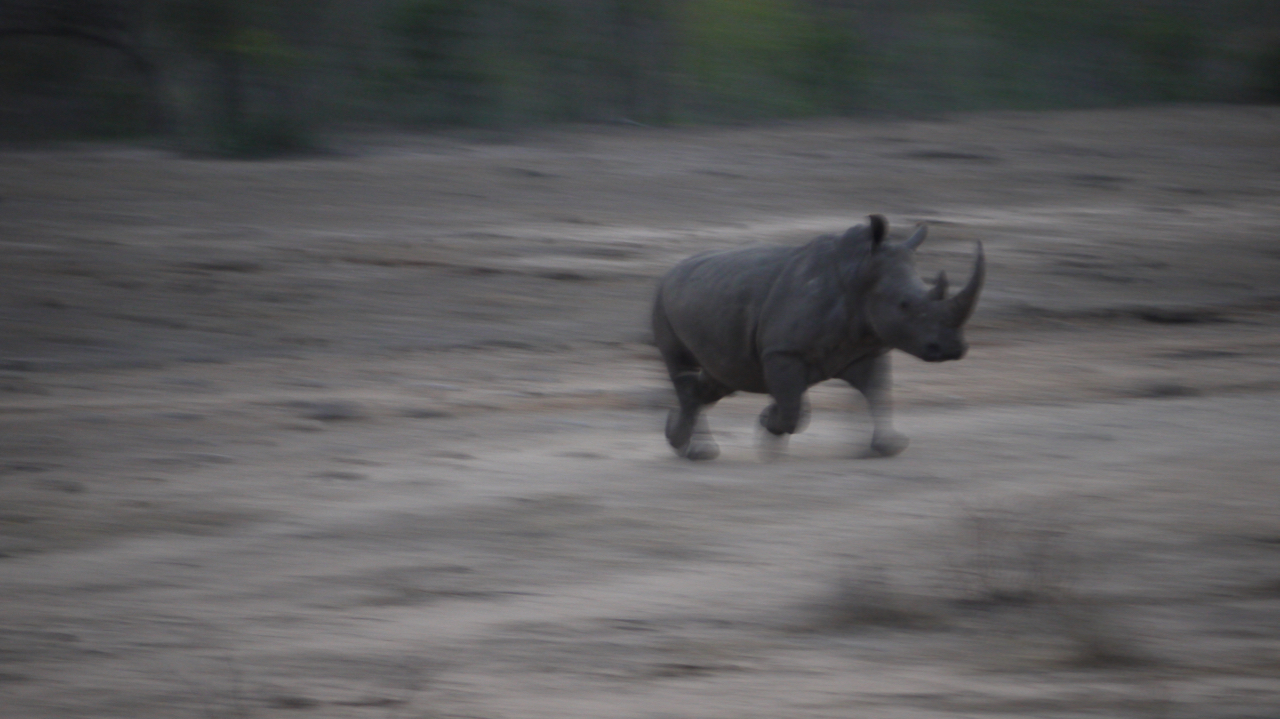
Going, going … © CJA Bradshaw

I’ve just returned from a life-changing trip to South Africa, not just because it was my first time to the continent, but also because it has redefined my perspective on the megafauna extinctions of the late Quaternary. I was there primarily to attend the University of Pretoria’s Mammal Research Institute 50thAnniversary Celebration conference.

As I reported in my last post, the poaching rates in one of the larger, best-funded national parks in southern Africa (the Kruger) are inconceivably high, such that for at least the two species of rhino there (black and white), their future persistence probability is dwindling with each passing week. African elephants are probably not far behind.

As one who has studied the megafauna extinctions in the Holarctic, Australia and South America over the last 50,000 years, the trip to Kruger was like stepping back into the Pleistocene. I’ve always dreamed of walking up to a grazing herd of mammoths, woolly rhinos or Diprotodon, but of course, that’s impossible. What is entirely possible though is driving up to a herd of 6-tonne elephants and watching them behave naturally. In the Kruger anyway, you become almost blasé about seeing yet another group of these impressive beasts as you try to get that rare glimpse of a leopard, wild dogs or sable antelope (missed the two former, but saw the latter). Read the rest of this entry »


Inexorable rise of human population pressures in Africa

31 08 2016
© Nick Brandt

© Nick Brandt

I’ve been a bit mad preparing for an upcoming conference, so I haven’t had a lot of time lately to blog about interesting developments in the conservation world. However, it struck me today that my preparations provide ideal material for a post about the future of Africa’s biodiversity.

I’ve been lucky enough to be invited to the University of Pretoria Mammal Research Unit‘s 50th Anniversary Celebration conference to be held from 12-16 September this year in Kruger National Park. Not only will this be my first time to Africa (I know — it has taken me far too long), the conference will itself be in one of the world’s best-known protected areas.

While decidedly fortunate to be invited, I am a bit intimidated by the line-up of big brains that will be attending, and of the fact that I know next to bugger all about African mammals (in a conservation science sense, of course). Still, apparently my insight as an outsider and ‘global’ thinker might be useful, so I’ve been hard at it the last few weeks planning my talk and doing some rather interesting analyses. I want to share some of these with you now beforehand, although I won’t likely give away the big prize until after I return to Australia.

I’ve been asked to talk about human population pressures on (southern) African mammal species, which might seem simple enough until you start to delve into the complexities of just how human populations affect wildlife. It’s simply from the perspective that human changes to the environment (e.g., deforestation, agricultural expansion, hunting, climate change, etc.) do cause species to dwindle and become extinct faster than they otherwise would (hence the entire field of conservation science). However, it’s another thing entirely to attempt to predict what might happen decades or centuries down the track. Read the rest of this entry »


Keeping India’s forests

9 08 2016

I’ve just returned from a short trip to the National Centre for Biological Sciences (NCBS) in Bangalore, Karnataka, one of India’s elite biological research institutes.

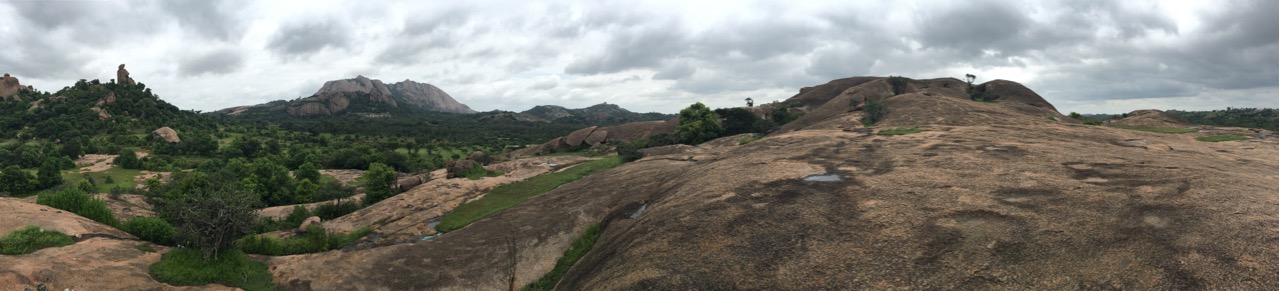
Panorama of a forested landscape (Savandurga monolith in the background) just south of Bangalore, Karnataka (photo: CJA Bradshaw)

Panorama of a forested landscape (Savandurga monolith in the background) just south of Bangalore, Karnataka (photo: CJA Bradshaw)

I was invited to give a series of seminars (you can see the titles here), and hopefully establish some new collaborations. My wonderful hosts, Deepa Agashe & Jayashree Ratnam, made sure I was busy meeting nearly everyone I could in ecology and evolution, and I’m happy to say that collaborations have begun. I also think NCBS will be a wonderful conduit for future students coming to Australia.

It was my first time visiting India1, and I admit that I had many preconceptions about the country that were probably unfounded. Don’t get me wrong — many of them were spot on, such as the glorious food (I particularly liked the southern India cuisine of dhosa, iddly & the various fruit-flavoured semolina concoctions), the insanity of urban traffic, the juxtaposition of extreme wealth and extreme poverty, and the politeness of Indian society (Indians have to be some of the politest people on the planet).

But where I probably was most at fault of making incorrect assumptions was regarding the state of India’s natural ecosystems, and in particular its native forests and grasslands. Read the rest of this entry »


Seeing the wood for the trees

11 07 2016
The Forest Synopsis: Photo of the Anamalai Tiger Reserve, India, by Claire Wordley

The Forest Synopsis: Photo of the Anamalai Tiger Reserve, India, by Claire Wordley

From the towering kapoks of South America to the sprawling banyans of South Asia, from misty cloud forests to ice-covered pines, forests are some of the most diverse and important ecosystems on Earth. However, as conservationists and foresters try to manage, conserve and restore forests across the world, they often rely on scanty and scattered information to inform their decisions, or indeed, no information at all. This could all change.

This week sees the launch of the Forest Synopsis from Conservation Evidence, a free resource collating global scientific evidence on a wide range of conservation-related actions. These aim to include all interventions that conservationists and foresters are likely to use, such as changing fire regimes, legally protecting forests or encouraging seed-dispersing birds into degraded forests.

Making conservation work

“We hear a lot about how important it is to do evidence-based conservation”, says Professor Bill Sutherland at the University of Cambridge, UK, “but in reality getting a handle on what works is not easy. That’s why we set up Conservation Evidence, to break down the barriers between conservationists and the scientific evidence that they need to do their jobs.” Read the rest of this entry »


George Hubert Wilkins — Australia’s first whitefella conservationist?

6 07 2016

As many of you know, I have held the ‘Sir Hubert Wilkins Chair of Climate Change’ at the University of Adelaide since January 2015. My colleague and friend, Barry Brook, was the foundation Chair-holder from 2006-2014.

Initially set up by Government of South Australia to “… advise government, industry, and the community on how to tackle climate change …”, it now is only a titular position based at the University. While I certainly try to live up to the aims of the Chair, it’s even more difficult to live up to the namesake himself — Sir George Hubert Wilkins.

Given I’ve held the position now for over a year and half, I’ve had plenty of time to read about this legendary South Australian (I do choose my words carefully here). Despite most Australians having never heard of the man, it is my opinion that he should be as well known in this country as other whitefella explorers such as Douglas Mawson, Matthew Flinders, Robert Burke, William Wills, and Charles Sturt.

Sadly, he is not well-known, for a litany of possible reasons ranging from spending so much time out of Australia, never having a formal qualification in many of the skills in which he excelled (e.g., geography, meteorology, aviation, engineering, cinematography, biology, etc.), disrespect from other contemporary Australian explorers, and some rather bizarre behaviour later in his career. The list of this man’s achievements is staggering, as was his ability to thumb his nose at death (who, I might add, tried her hardest to escort him off this mortal coil many times well before a heart attack claimed him at the age of 70).

Many books have been written about Wilkins, but as I slowly make my way through some of the better-written tomes, one unsung aspect of his career has struck a deep chord within me — it turns out that Wilkins was also a extremely concerned biodiversity conservationist. Read the rest of this entry »


Buying time

27 06 2016

farmOriginally published in the Otago Daily Times by Tom McKinlay

If we don’t act soon, the world we leave our children will be in a sorry state indeed, leading Australian scientist Prof Corey Bradshaw tells Tom McKinlay.

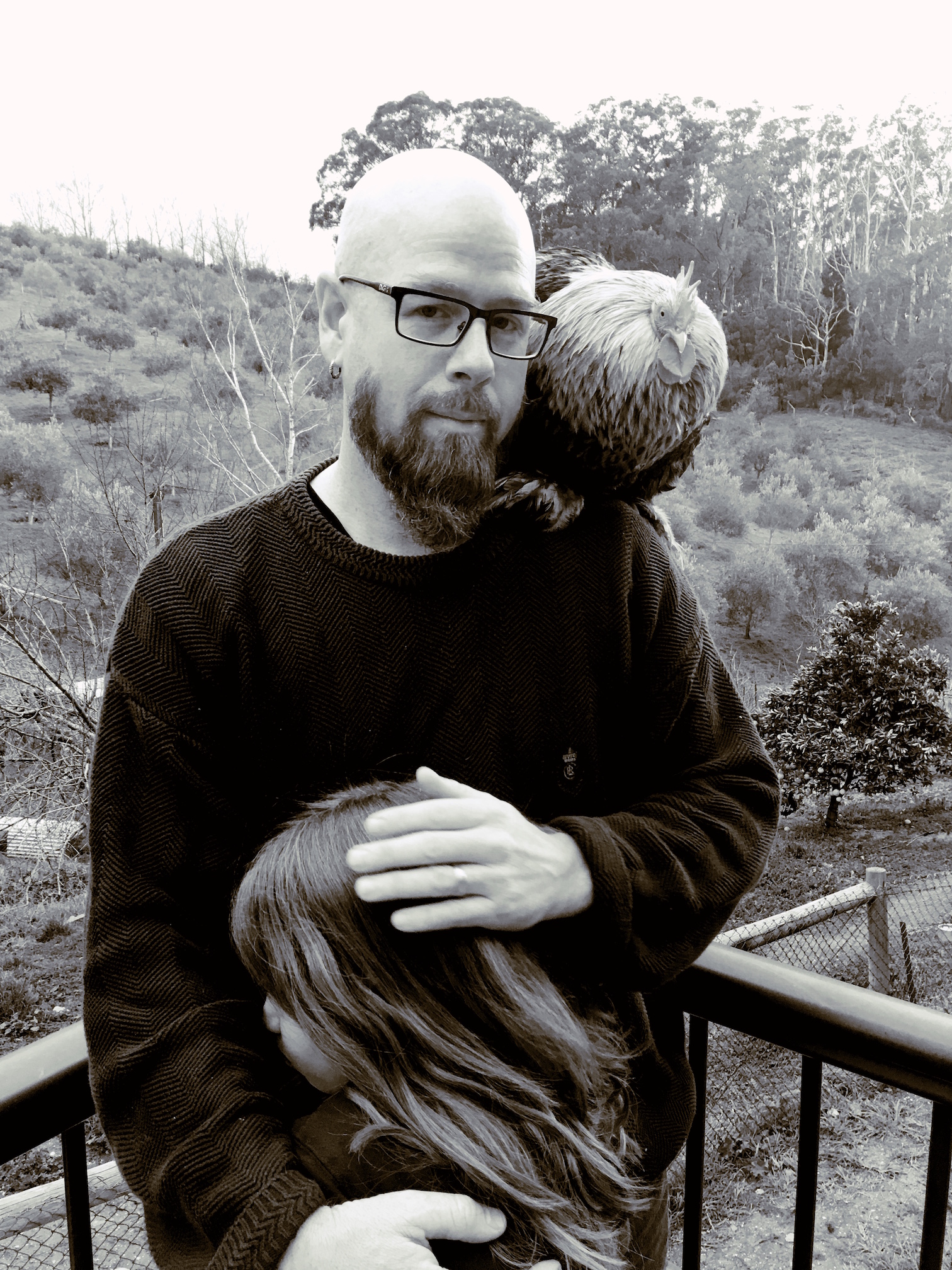
Prof Corey Bradshaw’s 9-year-old daughter lives what sounds an idyllic existence. On their small farm outside Adelaide in South Australia, she has her chickens and her dogs and her cats, her goats and her sheep.

She’s an only child, but is not short of attention from adults and reads voraciously.

She has big plans; there are at least 25 careers she likes the look of, that she’ll undertake simultaneously: farmer, wildlife rescuer, self-sufficient bush dweller – feeding herself by shooting arrows at fish – scientist and more.

She is optimistic about the future. As she should be. A 9-year-old girl living in Australia in 2016 should regard the sky as no limit at all.

All this I learn from her father, ecologist Prof Bradshaw, who talks of his daughter with an enthusiasm unbounded.

It is fair to assume she has picked up some of her interest in the natural world from him.

He holds the Sir Hubert Wilkins Chair of Climate Change in the School of Biological Sciences at the University of Adelaide.

And the ecologist, conservation biologist and systems modeller – with a University of Otago degree – has shared a great deal of his work with his daughter.

“She’s very much a farm kid, but because of who I am she gets to hear a lot about animal and plant systems around the world, and she’s travelled a lot with me and she’s a complete fanatic of David Attenborough,” the professor says.

So far, still so idyllic. But Prof Bradshaw’s work means he is at the forefront of alerting the world to what is not right with it.

Pollution, climate change, habitat loss, extinction.

His daughter has travelled with him to see species that might not be with us by the time she grows up.

“She’s hyper-aware of extinctions, in particular, and how climate change is contributing to that,” Prof Bradshaw says.

“I don’t pull any punches with her.”

In fact, he made her cry when she was 5 explaining climate change. She hasn’t needed to travel to know the pot is on the boil. Fires have forced the family to flee its South Australian property several times, not just at the height of summer.

One of the worst fires in the region struck in May a couple of years back.

“We were on the doorstep of winter and we had one of our worst fires in 20 years.”

So even without a scientist in the family, there are certain unavoidable truths for a child growing up in 21st-century Australia.

Prof Bradshaw is coming to Dunedin next month as part of the New Zealand International Science Festival to talk on climate change, looking at it from his daughter’s perspective. Read the rest of this entry »



Species-area & species-accumulation curves not the same

30 05 2016

IBI’ve just read an elegant little study that has identified the main determinants of differences in the slope of species-area curves and species-accumulation curves.

That’s a bit of a mouthful for the uninitiated, so if you don’t know much about species-area theory, let me give you a bit of background for why this is an important new discovery.

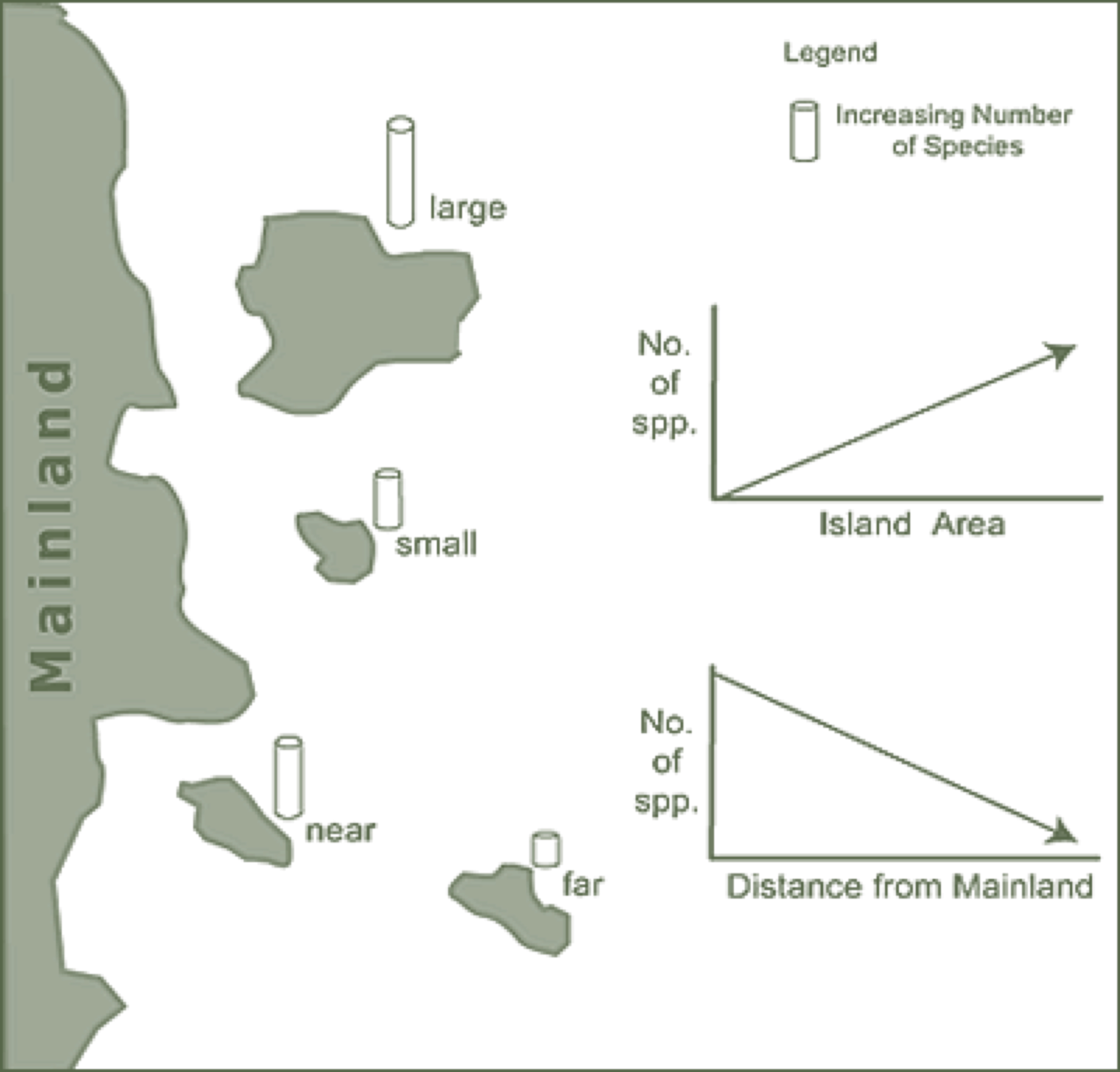
Perhaps one of the only ‘laws’ in ecology comes from the observation that as you sample from larger and larger areas of any habitat type, the number of species tends to increase. This of course originates from MacArthur & Wilson’s classic book, The Theory of Island Biography (1967), and while simple in basic concept, it has since developed into a multi-headed Hydra of methods, analysis, theory and jargon.

One of the most controversial aspects of generic species-area relationships is the effect of different sampling regimes, a problem I’ve blogged about before. Whether you are sampling once-contiguous forest of habitat patches in a ‘matrix’ of degraded landscape, a wetland complex, a coral reef, or an archipelago of true oceanic islands, the ‘ideal’ models and the interpretation thereof will likely differ, and in sometimes rather important ways from a predictive and/or applied perspective. Read the rest of this entry »


Australia pisses away the little water it has

9 05 2016

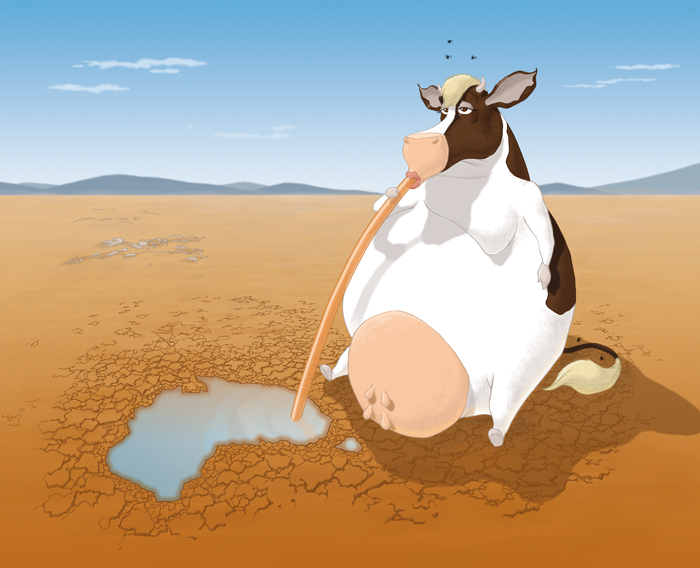
cow_drinking_australia_dryWater, water nowhere, with little left to drink.

Australians are superlative natural resource wasters, but living in the driest inhabited continent on the planet, you’d think we’d be precious about our water use.

You’d be wrong.

On the contrary, Australia has a huge water footprint (defined as “the total volume of freshwater that is used to produce the goods and services consumed by the people of the nation”). For internal domestic use (i.e., not including agricultural and industrial uses, or water imported directly or within other goods), Australians use about 341000 litres per person per year (data from 1997–2001), which is six times the global average of 57000 litres per person per year (1).

Agricultural production is one of the chief consumers of freshwater around the world. For example, the global average virtual water content of rice (paddy) is 2.29 million litres/tonne produced, and for wheat it is 1.33 litres/tonne. Growing crops for biofuel in particular has a huge water footprint — depending on the crop in question, it takes an average of 1400–20000 litres of water to produce just one litre of biofuel (2). If an agricultural product comes from livestock — say, meat, leather, or wool — the water content is typically much higher because of the feed required to keep the animal alive. For example, it takes about three years to raise beef cattle to slaughtering age, with an average of 200 kg of boneless beef produced per animal. This requires about 1,300 kg of grains, 7200 kg of pasture or hay, and 31000 litres of water for drinking and cleaning. This means that the total amount of water required to produce 1 kg of beef is about 15340 litres (1). For Australia, which has over 20 million or so cattle at any one moment, the water footprint alone should at least be cause for concern the next time you tuck into a steak dinner. Read the rest of this entry »


One-two carbon punch of defaunation

30 04 2016

1-2 punchI’ve just read a well-planned and lateral-thinking paper in Nature Communications that I think readers of CB.com ought to appreciate. The study is a simulation of a complex ecosystem service that would be nigh impossible to examine experimentally. Being a self-diagnosed fanatic of simulation studies for just such purposes, I took particular delight in the results.

In many ways, the results of the paper by Osuri and colleagues are intuitive, but that should never be a reason to avoid empirical demonstration of a suspected phenomenon because intuition rarely equals fact. The idea itself is straightforward, but takes more than a few logical steps to describe: Read the rest of this entry »


Most-Bestest Environment Minister in the World, Ever

4 04 2016
Our Most-Bestest Minister Ever

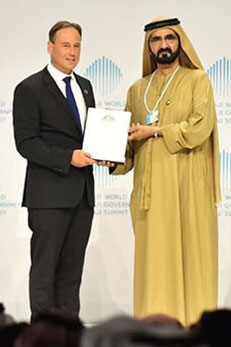
Our Most-Bestest Minister Ever (i.e., the bloke on the left; interestingly, the bloke on the right leads one of the few countries in the world with a higher per capita emissions rate than Australia)

Australia has an appalling environmental record — hell, I have even written an entire book on our sorry state of environmental affairs. Of course, environmental damage is a slow accumulation of bad political decisions, neglect, corruption, greed and society’s general I-couldn’t-give-a-shit attitude, but the record of our recent government demonstrates not just classic political buffoonery and neglect, but an outright attack on the environment.

So it was impossible to restrain a disgusted guffaw when, in February this year, our ‘Environment’ Minister won the coveted ‘Best Minister’ in the World award at the World Government Summit in Dubai by Sheikh Mohammed Bin Rashid Al Maktoum, Vice President and Prime Minister of the United Arab Emirates and Ruler of Dubai.

Deserved ridicule aside, I was asked recently by The Conversation to contribute to a special report examining the profile performance of cabinet and shadow cabinet ministers, which is not only a responsibility I take seriously, but an honour to be able to provide a serious and objective appraisal of our Most-Bestest Minister Ever. My contribution dealt specifically with the environmental portfolio, so I appraised both the sitting Minister and the Shadow Minister. Judge for yourself based on their performances. Read the rest of this entry »


Biowealth

24 02 2016

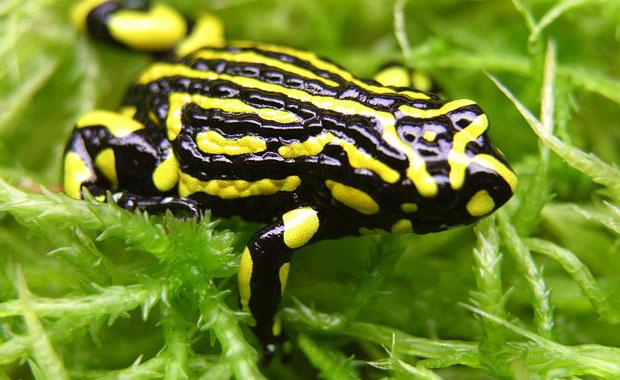
frogWhile I’ve blogged about this before in general terms (here and here), I thought it wise to reproduce the (open-access) chapter of the same name published in late 2013 in the unfortunately rather obscure book The Curious Country produced by the Office of the Chief Scientist of Australia. I think it deserves a little more limelight.

As I stepped off the helicopter’s pontoon and into the swamp’s chest-deep, tepid and opaque water, I experienced for the first time what it must feel like to be some other life form’s dinner. As the helicopter flittered away, the last vestiges of that protective blanket of human technological innovation flew away with it.

Two other similarly susceptible, hairless, clawless and fangless Homo sapiens and I were now in the middle of one of the Northern Territory’s largest swamps at the height of the crocodile-nesting season. We were there to collect crocodile eggs for a local crocodile farm that, ironically, has assisted the amazing recovery of the species since its near-extinction in the 1960s. Removing the commercial incentive to hunt wild crocodiles by flooding the international market with scar-free, farmed skins gave the dwindling population a chance to recover.

redwoodConservation scientists like me rejoice at these rare recoveries, while many of our fellow humans ponder why we want to encourage the proliferation of animals that can easily kill and eat us. The problem is, once people put a value on a species, it is usually consigned to one of two states. It either flourishes as do domestic crops, dogs, cats and livestock, or dwindles towards or to extinction. Consider bison, passenger pigeons, crocodiles and caviar sturgeon.

As a conservation scientist, it’s my job not only to document these declines, but to find ways to prevent them. Through careful measurement and experiments, we provide evidence to support smart policy decisions on land and in the sea. We advise on the best way to protect species in reserves, inform hunters and fishers on how to avoid over-harvesting, and demonstrate the ways in which humans benefit from maintaining healthy ecosystems. Read the rest of this entry »


It’s not always best to be the big fish

3 02 2016

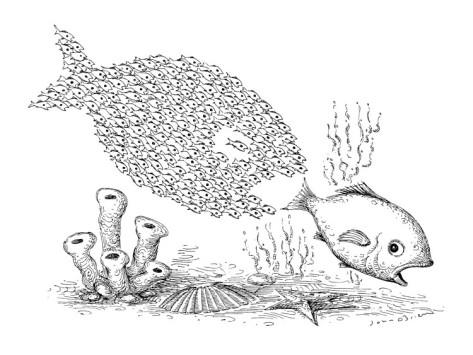
obrien_fish_2Loosely following the theme of last week’s post, it’s now fairly well established that humans tend to pick on the big species first.

From fewer big trees, declines of big carnivores, elephant & rhino poaching, to fishing down the web, big species tend to cop it hardest when it comes to human-caused ecological disturbance.

While there are a lot of different combinations of traits that make some species more vulnerable to extinction than others (see examples for legumes, amphibians, sharks & teleosts, and mammals), one of the main ones is species size.

Generally speaking, larger species tend to produce fewer offspring and breed later in life than smaller species. This means that despite larger species tending to live longer than their smaller counterparts, their ‘slow’ reproductive output means that they are generally more susceptible to rapid environmental change (mainly via human intervention). In other words, their capacity for self-replacement is often too low to counteract the offtake from direct exploitation or habitat loss.

Despite a reasonable scientific understanding of this extinction-risk principle, the degree to which human disturbance affects species’ distributions is much less well quantified, and this is especially true for marine species.

I’m proud to announce another fascinating paper led by my postdoc, Camille Mellin, that has just come out online in Nature CommunicationsHumans and seasonal climate variability threaten large-bodied coral reef fish with small ranges.

With the world’s largest combined dataset of coral reef fish surveys for the entire Indo-Pacific (including the coral reef fish biodiversity hotspot — the Coral Triangle), we examined which conditions best described the distribution of fishes over a range of body sizes. Read the rest of this entry »


Getting your conservation science to the right people

22 01 2016

argument-cartoon-yellingA perennial lament of nearly every conservation scientist — at least at some point (often later in one’s career) — is that the years of blood, sweat and tears spent to obtain those precious results count for nought in terms of improving real biodiversity conservation.

Conservation scientists often claim, especially in the first and last paragraphs of their papers and research proposals, that by collecting such-and-such data and doing such-and-such analyses they will transform how we manage landscapes and species to the overall betterment of biodiversity. Unfortunately, most of these claims are hollow (or just plain bullshit) because the results are either: (i) never read by people who actually make conservation decisions, (ii) not understood by them even if they read the work, or (iii) never implemented because they are too vague or too unrealistic to translate into a tangible, positive shift in policy.

A depressing state of being, I know.

This isn’t any sort of novel revelation, for we’ve been discussing the divide between policy makers and scientists for donkey’s years. Regardless, the whinges can be summarised succinctly: Read the rest of this entry »


Outright bans of trophy hunting could do more harm than good

5 01 2016

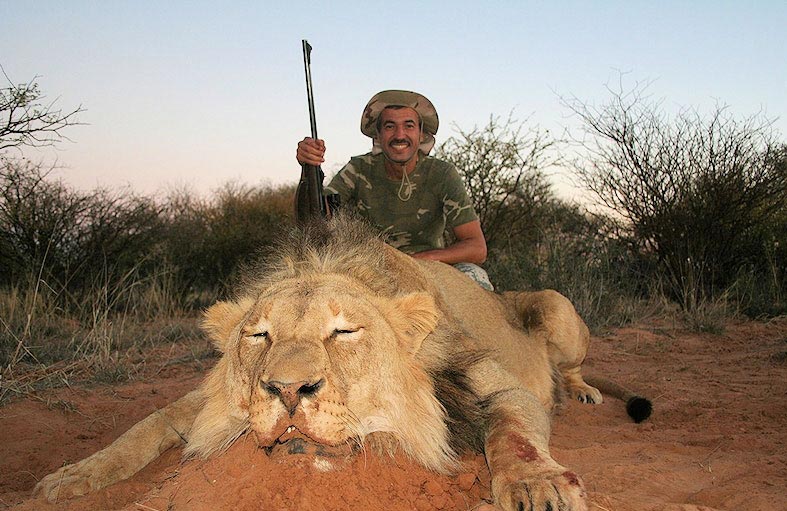
In July 2015 an American dentist shot and killed a male lion called ‘Cecil’ with a hunting bow and arrow, an act that sparked a storm of social media outrage. Cecil was a favourite of tourists visiting Hwange National Park in Zimbabwe, and so the allegation that he was lured out of the Park to neighbouring farmland added considerable fuel to the flames of condemnation. Several other aspects of the hunt, such as baiting close to national park boundaries, were allegedly done illegally and against the spirit and ethical norms of a managed trophy hunt.

In May 2015, a Texan legally shot a critically endangered black rhino in Namibia, which also generated considerable online ire. The backlash ensued even though the male rhino was considered ‘surplus’ to Namibia’s black rhino populations, and the US$350,000 generated from the managed hunt was to be re-invested in conservation. Together, these two incidents have triggered vociferous appeals to ban trophy hunting throughout Africa.

These highly politicized events are but a small component of a large industry in Africa worth > US$215 million per year that ‘sells’ iconic animals to (mainly foreign) hunters as a means of generating otherwise scarce funds. While to most people this might seem like an abhorrent way to generate money, we argue in a new paper that sustainable-use activities, such as trophy hunting, can be an important tool in the conservationist’s toolbox. Conserving biodiversity can be expensive, so generating money is a central preoccupation of many environmental NGOs, conservation-minded individuals, government agencies and scientists. Making money for conservation in Africa is even more challenging, and so we argue that trophy hunting should and could fill some of that gap. Read the rest of this entry »


Bee informed: Quick pollination facts about our most important pollinators

27 11 2015

if we die

If bees were to disappear, humans will disappear within a few years.

Albert Einstein

I find it interesting that so much is said about bees (including here on this blog), yet many of the ‘facts’ that one hears mentioned in any variety of news sources, public presentations and even scientific articles aren’t very well sourced and at times highly suspect.

For your fact-finding benefit then, I present to you some of the established facts about bees: Read the rest of this entry »


How things have (not) changed

13 04 2015

The other night I had the pleasure of dining with the former Australian Democrats leader and senator, Dr John Coulter, at the home of Dr Paul Willis (Director of the Royal Institution of Australia). It was an enlightening evening.

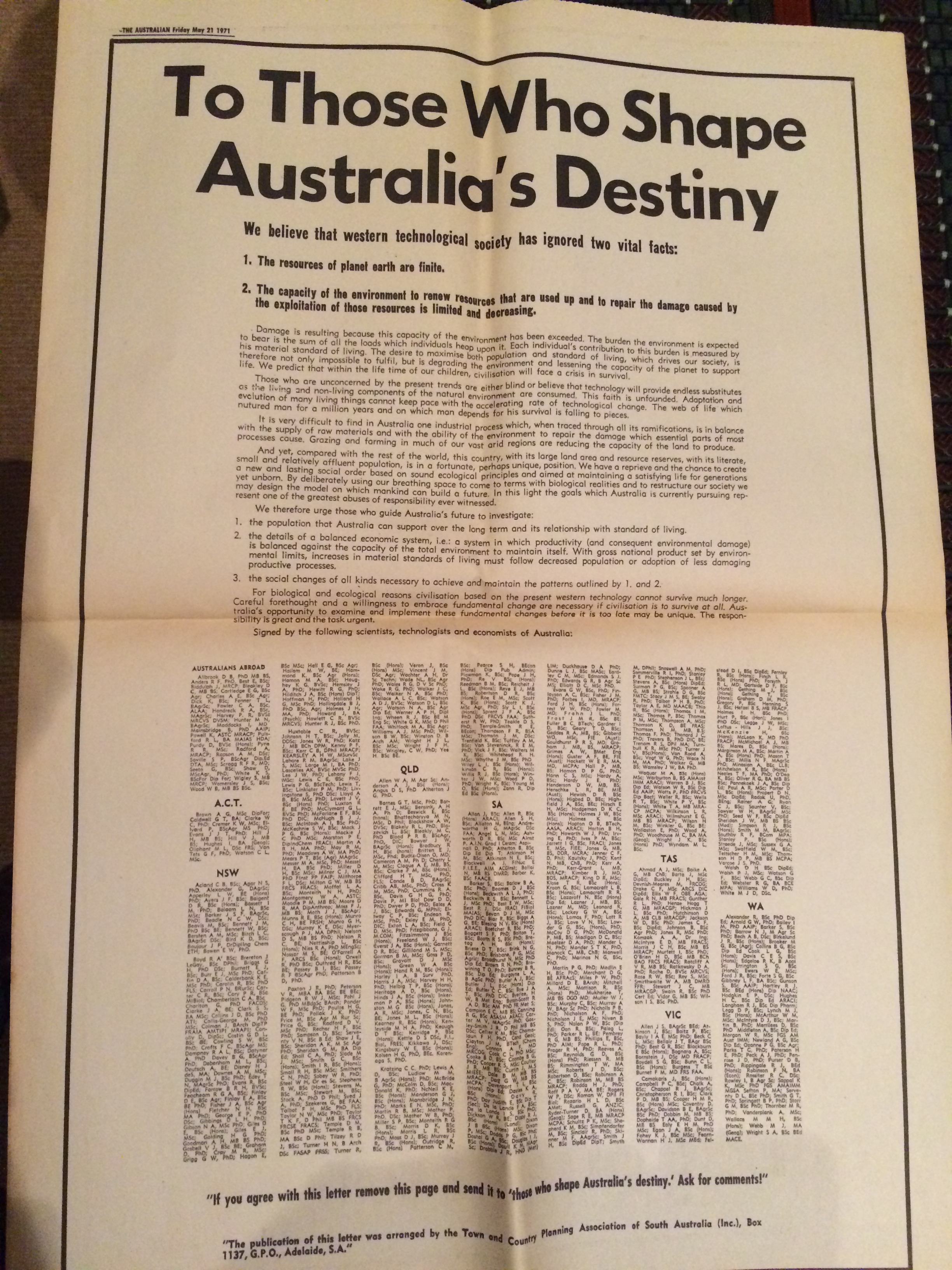
While we discussed many things, the 84 year-old Dr Coulter showed me a rather amazing advert that he and several hundred other scientists, technologists and economists constructed to alert the leaders of Australia that it was heading down the wrong path. It was amazing for three reasons: (i) it was written in 1971, (ii) it was published in The Australian, and (iii) it could have, with a few modifications, been written for today’s Australia.

If you’re an Australian and have even a modicum of environmental understanding, you’ll know that The Australian is a Murdochian rag infamous for its war on science and reason. Even I have had a run-in with its outdated, consumerist and blinkered editorial board. You certainly wouldn’t find an article like Dr Coulter’s in today’s Australian.

More importantly, this 44 year-old article has a lot today that is still relevant. While the language is a little outdated (and sexist), the grammar could use a few updates, and there are some predictions that clearly never came true, it’s telling that scientists and others have been worrying about the same things for quite some time.

In reading the article (reproduced below), one could challenge the authors for being naïve about how society can survive and even prosper despite a declining ecological life-support system. As I once queried Paul Ehrlich about some of his particularly doomerist predictions from over 50 years ago, he politely pointed out that much of what he predicted did, in fact, come true. There are over 1 billion people today that are starving, and another billion or so that are malnourished; combined, this is greater than the entire world population when Paul was born.

So while we might have delayed the crises, we certainly haven’t averted them. Technology does potentially play a positive role, but it can also increase our short-term carrying capacity and buffer the system against shocks. We then tend to ignore the indirect causes of failures like wars, famines and political instability because we do not recognise the real drivers: resource scarcity and ecosystem malfunction.

Australia has yet to learn its lesson.

To Those Who Shape Australia’s Destiny

We believe that western technological society has ignored two vital facts: Read the rest of this entry »


Australia’s perfect storm of negligence

17 03 2015

If, for the purposes of some sick and twisted thought experiment, you were to design policies that would ensure the long-term failure of a wealthy, developed nation, you wouldn’t have to look farther than Australia’s current recipe for future disaster. I’m not trying to be provocative, but the warning signs are too bold and flashy to ignore. Let’s just run through some of the main ones:

1. As the lambasted and thoroughly flawed 2015 Intergenerational Report clearly demonstrates, our current government has no idea about the future threats of climate change. Dragged kicking and screaming into only a symbolic recognition of some ‘distant and currently irrelevant problem’, the Abbott-oir and his intergenerational criminals are well known for killing the carbon-pricing scheme, dismantling the Department of Climate Change, pulling out of major international talks on climate-change mitigation and installing a half-arsed, ineffective policy that will do nothing to stem our emissions. Combine that with comments like “coal is good for humanity“, and it’s easy to see how our current leaders have little idea about the future mess they’re creating.

2. Not content just to kick the shit out of any meaningful climate action, our government has also turned its back on any renewable energy target, and facilitated the fossil-fuel barons to dig more coal out of the ground. While South Australia’s Royal Commission on the nuclear fuel cycle is a welcome candle in the climate change-mitigation darkness here, it is far from becoming a national priority any time soon.

3. As has been well documented, the Abbott-oir ship of fools has also done whatever it can to turn back decades of environmental protections in less than six months of taking office. Everything from opening up national parks for exploitation, failing to protect marine sanctuaries, limiting environmental checks to promoting logging in World Heritage Areas, there is little room for hope that our crumbling environmental system will improve at all in the near to long term. Read the rest of this entry »


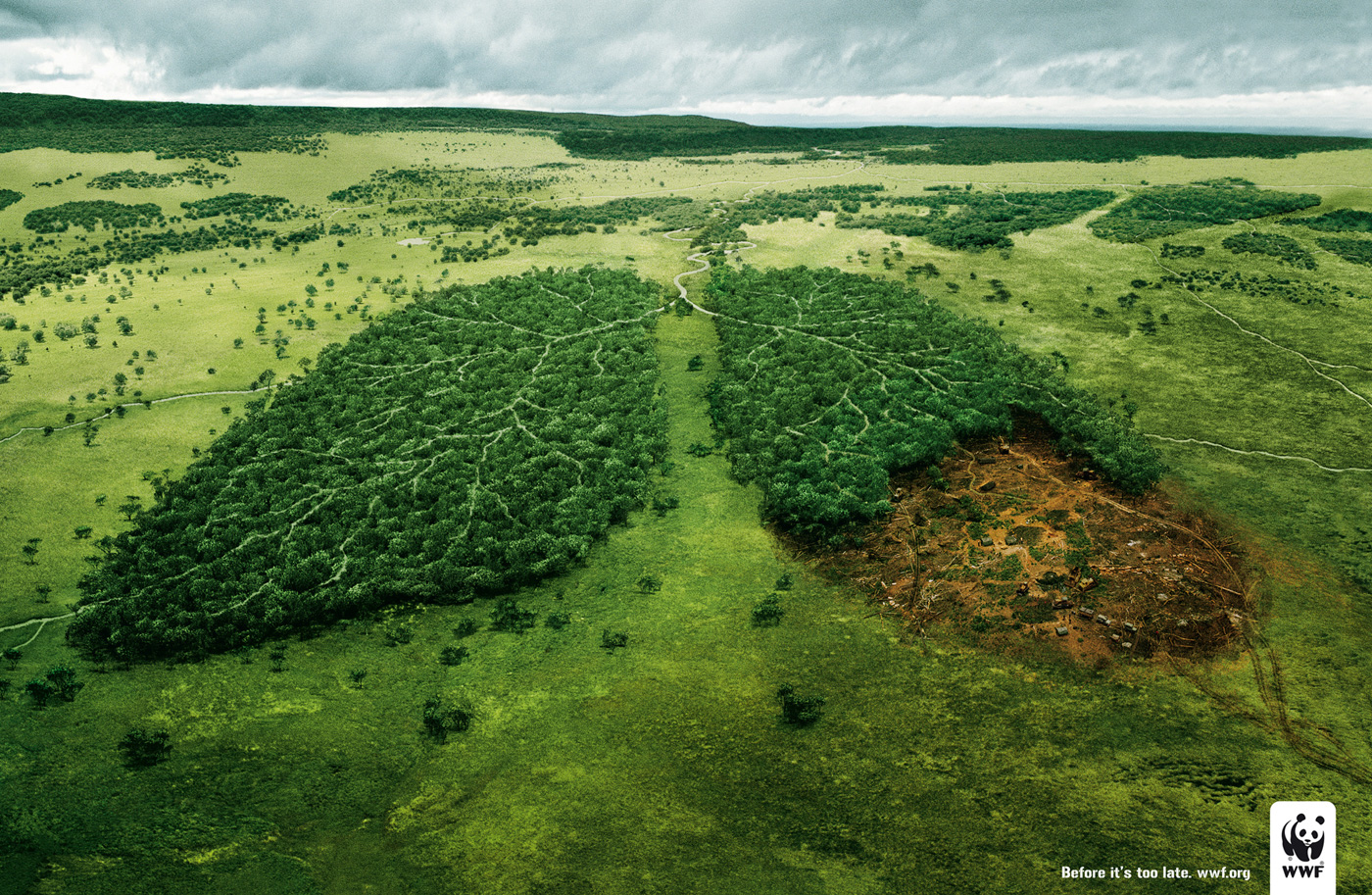
Earth’s second lung has emphysema

19 02 2015
© WWF

© WWF

Many consider forests as the ‘lungs’ of the planet – the idea that trees and other plants take up carbon and produce oxygen (the carbon and oxygen cycles). If we are to be fair though, the oceans store about 93% of the Earth’s carbon pool (excluding the lithosphere and fossil fuels) and oceanic phytoplankton produces between 50 and 80% of the oxygen in the atmosphere. For comparison, the terrestrial biosphere – including forests – stores only about 5% of the Earth’s carbon, and produces most of the remainder of atmospheric oxygen.

So there’s no denying that the biggest player in these cycles is the ocean, but that’s not the topic of today’s post. Instead, I’m going to focus on the terrestrial biosphere, and in particular, the carbon storage and flux of forests.

Now it’s pretty well established that tropical forests are major players in the terrestrial carbon cycle, with the most accepted estimates of about 55% the terrestrial carbon stock stored therein. The extensive boreal forest, covering most of the northern half of North America, most of Scandinavia and a huge chunk of Russia, comes in globally at about 33%, and temperate forests store most of the remainder.

That is, until now. Read the rest of this entry »