iEcology identifies extent of synthetic polymer habitats

22 01 2025

The internet has become an informational telescope to study what happens nearly everywhere the planet. Using internet observations, it has been recently documented that terrestrial hermit crabs use plastic waste as shelter along tropical coasts.

Before the internet irrupted, I was living in Spain and frequently travelled from my hometown to universities in Valencia and Barcelona to access scientific journals. Back then, these journals were only available in print or on compact discs. Today, I can do the same thing from home with an internet connection.

 The emergence of public internet since the 1990s has globalised information and represents a data source for many areas of science (1, 2). When applied to nature, the term iEcology (internet Ecology) refers to the use of online documentation to study the natural history of plants and animals, their distributions, and the effects of humans on them (3). In fact, the internet highlights and promotes certain research topics. For example, bird species that are more frequently mentioned on social networks tend to be described taxonomically earlier, and are also the ones that interact most (positively or negatively) with human activity (4).

In search of the phenomenon

By exploring internet platforms AlamyFlickrGoogleYouTube, and iNaturalist, Zuzanna Jagiello and her collaborators collected nearly 30 thousand photographs of hermit crabs to study the use of rubbish by these crustaceans (5). Hermit crabs are known for their peculiar habit of using empty snail shells to house their unprotected abdomens, carrying them around like someone travelling with their house on their back (6) — David Attenborough narrates here a funny swapping of shells among crabs of different size. The researchers aimed to assess the extent of the phenomenon of hermit crabs replacing natural shells with artificial materials as mobile homes (see video capturing the scene).

Read the rest of this entry »


Cartoon guide to biodiversity loss LXXIV

5 09 2022

Welcome to the fourth set of 7 cartoons for 2022. See full stock of previous ‘Cartoon guide to biodiversity loss’ compendia here.


Read the rest of this entry »


Cartoon guide to biodiversity loss LXXIII

15 07 2022

Welcome to the fourth set of 6 cartoons for 2022. See full stock of previous ‘Cartoon guide to biodiversity loss’ compendia here.


Read the rest of this entry »


Cartoon guide to biodiversity loss LXXII

30 05 2022

Welcome to the third set of 6 cartoons for 2022. See full stock of previous ‘Cartoon guide to biodiversity loss’ compendia here.


Read the rest of this entry »


Avoiding a ghastly future — The Science Show

1 10 2021

Just thought I’d share the audio of an interview I did with the famous Robyn Williams of ABC Radio National‘s The Science Show.

I’d be surprised if any Australians with even a passing interest in science could claim not to have listened to the Science Show before, and I suspect a fair mob of people overseas would be in the same boat.

It was a real privilege to talk with Robyn about our work on the ghastly future, and as always, the production value is outstanding.

Thank you, Robyn and the ABC.

Listen below, or link to the interview directly.


A perfect storm of global ineptitude

18 03 2021

Given the ‘success’ (i.e., a lot of people seem to be reading it) of our recent Ghastly Future paper, I thought it would be interesting to go back and have a look at what we wrote in our 2015 book Killing the Koala on the subject. I think you’ll find that if anything we were probably overly optimistic.

An updated digest of that material follows.


When your accountant tells you to reduce expenditure, you do it or risk bankruptcy; when your electrician tells you the wiring in your house is dodgy, you replace it or risk your family dying in an avoidable fire; when your doctor tells you your cholesterol is too high, you cut back fat intake (and/or take cholesterol-reducing drugs) or risk a heart attack.

Yet few with any real political or financial power heed the warnings of environmental scientists. It is not just a few of us either — globally, ecologists, conservation biologists and environmental scientists are united in telling the world (for decades now) that growth in population and consumption cannot go on forever. They have been united in telling us if we do not clean up our planet, our life-support systems could ultimately fail.

There are now nearly eight billion people on Earth, and median projections suggest that the population will grow to ten billion or more by the end of the century. Some analyses indicate that with present technologies, Earth could only sustainably support indefinitely some 5 billion people under best-case scenarios, but assuming similar proportions of poverty and suffering as we have today. Others imply that 5 billion could be many too many.

As a result, humanity is entering that near-perfect storm of problems driven by overpopulation, overconsumption, gross inequalities, and the use of needlessly environmentally damaging technologies. The problems include the intertwined dilemmas of loss of the biodiversity that runs human life-support systems, climate disruption, energy shortages, global toxification, alteration of critical biogeochemical cycles, shortages of water, soil, mineral resources and farmland, and increasing probability of vast epidemics (as COVID-19 poignantly exemplifies).

Read the rest of this entry »


Amphibian conservation in a managed world

1 04 2020

FrogBlog2

Crinia parinsignifera (top) and Limnodynastes tasmaniensis (bottom). Photo: Kate Mason

The amphibian class is diverse, and ranges from worm-like caecilians to tiny frogs that live their entire lives within bromeliads high in the rainforest canopy. Regardless of form or habit, all share the dubious honour of being cited as the world’s most endangered vertebrate taxon, and 41% of the species assessed are threatened with extinction. Rapidly changing climates will further exacerbate this situation as amphibians are expected to be more strongly affected than other vertebrates like birds or mammals.

This peril stems from a physiological dependence on freshwater.

Amphibians breathe (in part) through their skin, so they maintain moist skin surfaces. This sliminess means that most amphibians quickly dry out in dry conditions. Additionally, most amphibian eggs and larvae are fully aquatic. One of the greatest risks to populations are pools that dry too quickly for larval development, which leads to complete reproductive failure.

This need for freshwater all too often places them in direct competition with humans.

To keep pace with population growth, humans have engineered a landscape where the location, and persistence of water is tightly controlled. In seeking water availability for farming and amenity, we all too often remove essential habitats for amphibians and other freshwater fauna.

To protect amphibians from decline and extinction, land managers may need to apply innovative techniques to support vulnerable species. With amphibians’ strong dependence on freshwater, this support can be delivered by intelligently manipulating where and when freshwater appears in the landscape, with an eye to maintaining habitats for breeding, movement and refuge. A range of innovative approaches have been attempted to date, but they are typically developed in isolation and their existence is known only to a cloistered few. A collation of the approaches and their successes (and failures) has not occurred.

In our latest paper, we used a systematic review to classify water-manipulation techniques and to evaluate the support for these approaches. Read the rest of this entry »


Influential conservation ecology papers of 2019

24 12 2019

Bradshaw-Waves breaking on rocks Macquarie Island
As I’ve done for the last six years, I am publishing a retrospective list of the ‘top’ 20 influential papers of 2019 as assessed by experts in F1000 Prime (in no particular order). See previous years’ lists here: 20182017, 20162015, 2014, and 2013.

Read the rest of this entry »


The politics of environmental destruction

22 10 2019

C_SE 409521698 Paul Ehrlich Lecture Event - Eventbrite2

You’d think I’d get tired of this, wouldn’t you? Alas, the fight does wear me down, but I must persist.

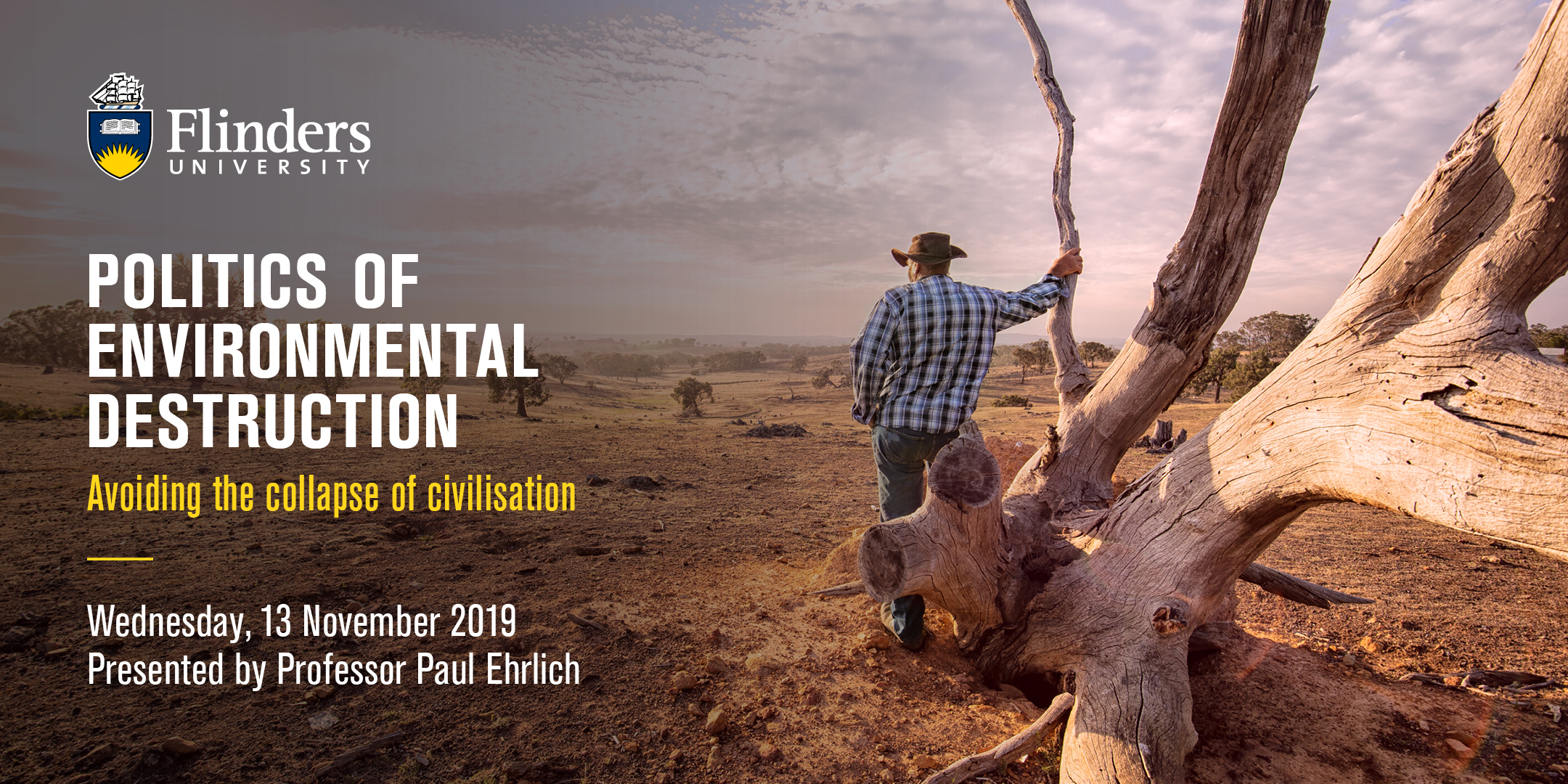
My good friend and colleague, the legendary Professor Paul Ehrlich of Stanford University, as well as his equally legendary wife, Anne, will be joining us in Adelaide for a brief visit during their annual southern migration.

Apart from just catching up over a few good bottles of wine (oh, do those two enjoy fine wines!), we have the immense privilege of having Paul appear at two events while he’s in town.

I’m really only going to be talking about the second of the two events (the first is a Science Meets Parliament gig with me and many others at the South Australia Parliament on 12 November): a grand, public lecture and Q&A session held at Flinders University on Wednesday, 13 November.

Haven’t heard of Paul? Where have you been hiding? If by some miracle you haven’t, here’s a brief bio:

Paul Ehrlich is Bing Professor of Population Studies Emeritus, President of the Center for Conservation Biology, Department of Biology, Stanford University and Adjunct Professor, University of Technology, Sydney. He does research in population biology (includes ecology, evolutionary biology, behavior, and human ecology and cultural evolution). Ehrlich has carried out field, laboratory and theoretical research on a wide array of problems ranging from the dynamics and genetics of insect populations, studies of the ecological and evolutionary interactions of plants and herbivores, and the behavioral ecology of birds and reef fishes, to experimental studies of the effects of crowding on human beings and studies of cultural evolution, especially the evolution of norms. He is President of the Millennium Alliance for Humanity and the Biosphere and is author and coauthor of more than 1100 scientific papers and articles in the popular press and over 40 books. He is best known to his efforts to alert the public to the many intertwined drivers that are pushing humanity toward a collapse of civilization – especially overpopulation, overconsumption by the rich, and lack of economic, racial, and gender equity. Ehrlich is a Fellow of the American Academy of Arts and Sciences, the American Entomological Society and the Beijer Institute of Ecological Economics, and a member of the United States National Academy of Sciences and the American Philosophical Society.  He is a Foreign Member of the Royal Society, an Honorary Member of the British Ecological Society and an Honorary Fellow of the Royal Entomological Society.  Among his many other honours are the Royal Swedish Academy of Sciences, Crafoord Prize in Population Biology and the Conservation of Biological Diversity (an explicit replacement for the Nobel Prize); a MacArthur Prize Fellowship; the Volvo Environment Prize; UNEP Sasakawa Environment Prize; the Heinz Award for the Environment; the Tyler Prize for Environmental Achievement; the Heineken Prize for Environmental Sciences; the Blue Planet Prize;  the Eminent Ecologist award of the Ecological Society of America, the Margalef Prize in Ecology and Environmental Sciences, and the BBVA Frontiers of Knowledge Award in Ecology and Conservation Biology. Prof Ehrlich has appeared as a guest on more than 1000 TV and radio programs; he also was a correspondent for NBC News. He has given many hundreds of public lectures in the past 50 years.

I hope your jaw just dropped.

Read the rest of this entry »


Environmental damage kills children

1 10 2019

Yes, childrenairpollutionit’s a provocative title, I agree. But then again, it’s true.

But I don’t just mean in the most obvious ways. We already have good data showing that lack of access to clean water and sanitation kills children (especially in developing nations), that air pollution is a nasty killer of young children in particular, and now even climate change is starting to take its toll.

These aspects of child health aren’t very controversial, but when we talk about the larger suite of indicators of environmental ‘damage’, such as deforestation rates, species extinctions, and the overall reduction of ecosystem services, the empirical links to human health, and to children in particular, are far rarer.

This is why I’m proud to report the publication today of a paper on which I and team of wonderful collaborators (Sally Otto, Zia Mehrabi, Alicia Annamalay, Sam Heft-Neal, Zach Wagner, and Peter Le Souëf) have worked for several years.

I won’t lie — the path to publishing this paper was long and hard, I think mainly because it traversed so many different disciplines. But we persevered and today published the paper entitled ‘Testing the socioeconomic and environmental determinants of better child-health outcomes in Africa: a cross-sectional study among nations* in the journal BMJ Open.

Read the rest of this entry »


The Great Dying

30 09 2019

Here’s a presentation I gave earlier in the year for the Flinders University BRAVE Research and Innovation series:

There is No Plan(et) B — What you can do about Earth’s extinction emergency

Earth is currently experiencing a mass extinction brought about by, … well, … us. Species are being lost at a rate similar to when the dinosaurs disappeared. But this time, it’s not due to a massive asteroid hitting the Earth; species are being removed from the planet now because of human consumption of natural resources. Is a societal collapse imminent, and do we need to prepare for a post-collapse society rather than attempt to avoid one? Or, can we limit the severity and onset of a collapse by introducing a few changes such as removing political donations, becoming vegetarians, or by reducing the number of children one has?

Read the rest of this entry »


Influential conservation ecology papers of 2018

17 12 2018

e35f9ddeada029a053a15cd023abadf5
For the last five years I’ve published a retrospective list of the ‘top’ 20 influential papers of the year as assessed by experts in F1000 Prime — so, I’m doing so again for 2018 (interesting side note: six of the twenty papers highlighted here for 2018 appear in Science magazine). See previous years’ posts here: 2017, 20162015, 2014, and 2013.

Read the rest of this entry »


Offshore Energy & Marine Spatial Planning

22 02 2018

FishingOffshoreWind

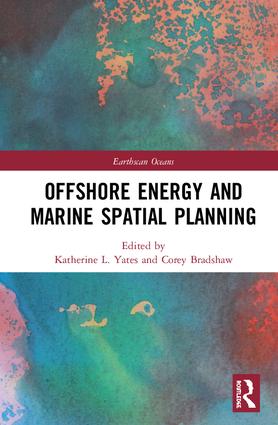
I have the pleasure (and relief) of announcing a new book that’s nearly ready to buy, and I think many readers of CB.com might be interested in what it describes. I know it might be a bit premature to announce it, but given that we’ve just finished the last few details (e.g., and index) and the book is ready to pre-order online, I don’t think it’s too precocious to advertise now.

9781138954533-2

A little history is in order. The brilliant and hard-working Katherine Yates (now at the University of Salford in Manchester, UK) approached me back in 2014 to assist her with co-editing the volume that she wanted to propose for the Routledge Earthscan Ocean series. I admit that I reluctantly agreed at the time, knowing full well what was in store (anyone who has already edited a book will know what I mean). Being an active researcher in energy and biodiversity (perhaps not so much on the ‘planning’ side per se) certainly helped in my decision.

And yes, there were ups and downs, and sometimes it was a helluva lot of work, but Katherine certainly made my life easier, and she has finally driven the whole thing to completion. She deserves most of the credit.

Read the rest of this entry »


An Open Letter to Environmentalists on Nuclear Energy

15 12 2014

nuclear biodiversityProfessor Barry W. Brook, Chair of Environmental Sustainability, University of Tasmania, Australia. barry.brook@utas.edu.au

Professor Corey J.A. Bradshaw, Sir Hubert Wilkins Chair of Climate Change, The Environment Institute, The University of Adelaide, Australia. corey.bradshaw@adelaide.edu.au

An Open Letter to Environmentalists:

As conservation scientists concerned with global depletion of biodiversity and the degradation of the human life-support system this entails, we, the co-signed, support the broad conclusions drawn in the article Key role for nuclear energy in global biodiversity conservation published in Conservation Biology (Brook & Bradshaw 2014).

Brook and Bradshaw argue that the full gamut of electricity-generation sources—including nuclear power—must be deployed to replace the burning of fossil fuels, if we are to have any chance of mitigating severe climate change. They provide strong evidence for the need to accept a substantial role for advanced nuclear power systems with complete fuel recycling—as part of a range of sustainable energy technologies that also includes appropriate use of renewables, energy storage and energy efficiency. This multi-pronged strategy for sustainable energy could also be more cost-effective and spare more land for biodiversity, as well as reduce non-carbon pollution (aerosols, heavy metals).

Given the historical antagonism towards nuclear energy amongst the environmental community, we accept that this stands as a controversial position. However, much as leading climate scientists have recently advocated the development of safe, next-generation nuclear energy systems to combat global climate change (Caldeira et al. 2013), we entreat the conservation and environmental community to weigh up the pros and cons of different energy sources using objective evidence and pragmatic trade-offs, rather than simply relying on idealistic perceptions of what is ‘green’.

Although renewable energy sources like wind and solar will likely make increasing contributions to future energy production, these technology options face real-world problems of scalability, cost, material and land use, meaning that it is too risky to rely on them as the only alternatives to fossil fuels. Nuclear power—being by far the most compact and energy-dense of sources—could also make a major, and perhaps leading, contribution. As scientists, we declare that an evidence-based approach to future energy production is an essential component of securing biodiversity’s future and cannot be ignored. It is time that conservationists make their voices heard in this policy arena.

Signatories (in alphabetical order)

  1. Professor Andrew Balmford, Professor of Conservation Science, Department of Zoology, University of Cambridge, United Kingdom. apb12@cam.ac.uk
  2. Professor Andrew J. Beattie, Emeritus, Department of Biological Sciences, Macquarie University, Australia. abeattie@bio.mq.edu.au
  3. Assistant Professor David P. Bickford, Department of Biological Sciences, National University of Singapore, Singapore. dbsbdp@nus.edu.sg
  4. Professor Tim M. Blackburn, Professor of Invasion Biology, Department of Genetics, Evolution and Environment, Centre for Biodiversity and Environment Research, University College London, United Kingdom. t.blackburn@ucl.ac.uk
  5. Professor Daniel T. Blumstein, Chair, Department of Ecology and Evolutionary Biology, University of California Los Angeles, USA. marmots@ucla.edu
  6. Professor Luigi Boitani, Dipartimento di Biologia, e Biotecnologie Charles Darwin, Sapienza Università di Roma, Italy. luigi.boitani@uniroma1.it
  7. Professor Mark S. Boyce, Professor and Alberta Conservation Association Chair in Fisheries and Wildlife, Department of Biological Sciences, University of Alberta, Canada. boyce@ualberta.ca
  8. Professor David M.J.S. Bowman, Professor of Environmental Change Biology, School of Biological Sciences, University of Tasmania, Australia. david.bowman@utas.edu.au
  9. Professor Scott P. Carroll, Institute for Contemporary Evolution and Department of Entomology and Nematology, University of California Davis, USA. spcarroll@ucdavis.edu
  10. Associate Professor Phillip Cassey, School of Earth and Environmental Sciences, The University of Adelaide, Australia.
  11. Professor F. Stuart Chapin III, Professor Emeritus of Ecology, Department of Biology and Wildlife, Institute of Arctic Biology, University of Alaska Fairbanks, USA. terry.chapin@alaska.edu
  12. Professor David Choquenot, Director, Institute for Applied Ecology, University of Canberra, Australia. david.choquenot@canberra.edu.au
  13. Dr Ben Collen, Centre for Biodiversity and Environment Research, University College London, United Kingdom. b.collen@ucl.ac.uk
  14. Professor Richard T. Corlett, Director, Centre for Integrative Conservation, Xishuangbanna Tropical Botanical Garden, Chinese Academy of Sciences, China. corlett@xtbg.org.cn
  15. Dr Franck Courchamp, Director of Research, Laboratoire Ecologie, Systématique et Evolution – UMR CNRS, Member of the European Academy of Sciences, Université Paris-Sud, France. franck.courchamp@u-psud.fr
  16. Professor Chris B. Daniels, Director, Barbara Hardy Institute, University of South Australia, Australia. chris.daniels@unisa.edu.au
  17. Professor Chris Dickman, Professor of Ecology, School of Biological Sciences, The University of Sydney, Australia. chris.dickman@sydney.edu.au
  18. Associate Professor Don Driscoll, College of Medicine, Biology and Environment, The Australian National University, Australia. don.driscoll@anu.edu.au
  19. Professor David Dudgeon, Chair Professor of Ecology and Biodiversity, School of Biological Sciences, The University of Hong Kong, Hong Kong SAR, China. ddudgeon@hku.hk
  20. Associate Professor Erle C. Ellis, Geography and Environmental Systems, University of Maryland, USA. ece@umbc.edu
  21. Dr Damien A. Fordham, School of Earth and Environmental Sciences, The University of Adelaide, Australia. damien.fordham@adelaide.edu.au
  22. Dr Eddie Game, Senior Scientist, The Nature Conservancy Worldwide Office, Australia. egame@tnc.org
  23. Professor Kevin J. Gaston, Professor of Biodiversity and Conservation, Director, Environment and Sustainability Institute, University of Exeter, United Kingdom. k.j.gaston@exeter.ac.uk
  24. Professor Dr Jaboury Ghazoul, Professor of Ecosystem Management, ETH Zürich, Institute for Terrestrial Ecosystems, Switzerland. jaboury.ghazoul@env.ethz.ch
  25. Professor Robert G. Harcourt, Department of Biological Sciences, Macquarie University, Australia. robert.harcourt@mq.edu.au
  26. Professor Susan P. Harrison, Department of Environmental Science and Policy, University of California Davis, USA. spharrison@ucdavis.edu
  27. Professor Fangliang He, Canada Research Chair in Biodiversity and Landscape Modelling, Department of Renewable Resources, University of Alberta, Canada and State Key Laboratory of Biocontrol and School of Life Sciences, Sun-yat Sen University, Guangzhou, China. fhe@ualberta.ca
  28. Professor Mark A. Hindell, Institute for Marine and Antarctic Studies, University of Tasmania, Australia. mark.hindell@utas.edu.au
  29. Professor Richard J. Hobbs, School of Plant Biology, The University of Western Australia, Australia. richard.hobbs@uwa.edu.au
  30. Professor Ove Hoegh-Guldberg, Professor and Director, Global Change Institute, The University of Queensland, Australia. oveh@uq.edu.au
  31. Professor Marcel Holyoak, Department of Environmental Science and Policy, University of California, Davis, USA. maholyoak@ucdavis.edu
  32. Professor Lesley Hughes, Distinguished Professor, Department of Biological Sciences, Macquarie University, Australia. lesley.hughes@mq.edu.au
  33. Professor Christopher N. Johnson, Department of Zoology, University of Tasmania, Australia. c.n.johnson@utas.edu.au
  34. Dr Julia P.G. Jones, Senior Lecturer in Conservation Biology, School of Environment, Natural Resources and Geography, Bangor University, United Kingdom. julia.jones@bangor.ac.uk
  35. Professor Kate E. Jones, Biodiversity Modelling Research Group, University College London, United Kingdom. kate.e.jones@ucl.ac.uk
  36. Dr Menna E. Jones, Department of Zoology, University of Tasmania, Australia. menna.jones@utas.edu.au
  37. Dr Lucas Joppa, Conservation Biologist, United Kingdom. lujoppa@microsoft.com
  38. Associate Professor Lian Pin Koh, School of Earth and Environmental Sciences, The University of Adelaide, Australia. lianpin.koh@adelaide.edu.au
  39. Professor Charles J. Krebs, Emeritus, Department of Zoology, University of British Columbia, Canada. krebs@zoology.ubc.ca
  40. Dr Robert C. Lacy, Conservation Biologist, USA. rlacy@ix.netcom.com
  41. Associate Professor Susan Laurance, Centre for Tropical Biodiversity and Climate Change, Centre for Tropical Environmental and Sustainability Studies, James Cook University, Australia. susan.laurance@jcu.edu.au
  42. Professor William F. Laurance, Distinguished Research Professor and Australian Laureate, Prince Bernhard Chair in International Nature Conservation, Centre for Tropical Environmental and Sustainability Science and School of Marine and Tropical Biology, James Cook University, Australia. bill.laurance@jcu.edu.au
  43. Professor Peter Ng Kee Lin, Department of Biological Sciences, National University of Singapore, Singapore. dbsngkl@nus.edu.sg
  44. Professor Thomas E. Lovejoy, Senior Fellow at the United Nations Foundation and University Professor in the Environmental Science and Policy department, George Mason University, USA. tlovejoy@unfoundation.org
  45. Dr Antony J Lynam, Global Conservation Programs, Wildlife Conservation Society, USA. tlynam@wcs.org
  46. Professor Anson W. Mackay, Department of Geography, University College London, United Kingdom. ans.mackay@ucl.ac.uk
  47. Professor Helene D. Marsh, College of Marine and Environmental Sciences, Centre for Tropical Water and Aquatic Ecosystem Research, James Cook University, Australia. helene.marsh@jcu.edu.au
  48. Professor Michelle Marvier, Department of Environmental Studies and Sciences, Santa Clara University, USA. mmarvier@scu.edu
  49. Professor Lord Robert M. May of Oxford OM AC Kt FRS, Department of Zoology, University of Oxford, United Kingdom. robert.may@zoo.ox.ac.uk
  50. Dr Margaret M. Mayfield, Director, The Ecology Centre, School of Biological Sciences, The University of Queensland, Australia. m.mayfield@uq.edu.au
  51. Dr Clive R. McMahon, Sydney Institute of Marine Science and Institute for Marine and Antarctic Studies, University of Tasmania, Australia. clive.mcmahon@utas.edu.au
  52. Dr Mark Meekan, Marine Biologist, Australia. m.meekan@aims.gov.au
  53. Dr Erik Meijaard, Borneo Futures Project, People and Nature Consulting, Denpasar, Bali, Indonesia. emeijaard@gmail.com
  54. Professor L. Scott Mills, Chancellor’s Faculty Excellence Program in Global Environmental Change, North Carolina State University, USA. lsmills@ncsu.edu
  55. Professor Atte Moilanen, Research Director, Conservation Decision Analysis, University of Helsinki, Finland. atte.moilanen@helsinki.fi
  56. Professor Craig Moritz, Research School of Biology, The Australian National University, Australia. craig.moritz@anu.edu.au
  57. Dr Robin Naidoo, Adjunct Professor, Institute for Resources, Environment, and Sustainability University of British Columbia, Canada. robin.naidoo@wwfus.org
  58. Professor Reed F. Noss, Provost’s Distinguished Research Professor, University of Central Florida, USA. reed.noss@ucf.edu
  59. Associate Professor Julian D. Olden, Freshwater Ecology and Conservation Lab, School of Aquatic and Fishery Sciences, University of Washington, USA. olden@uw.edu
  60. Professor Maharaj Pandit, Professor and Head, Department of Environmental Studies, University of Delhi, India. mkpandit@cismhe.org
  61. Professor Kenneth H. Pollock, Professor of Applied Ecology, Biomathematics and Statistics, Department of Applied Ecology, North Carolina State University, USA. pollock@ncsu.edu
  62. Professor Hugh P. Possingham, School of Biological Science and School of Maths and Physics, The University of Queensland, Australia. h.possingham@uq.edu.au
  63. Professor Peter H. Raven, George Engelmann Professor of Botany Emeritus, President Emeritus, Missouri Botanical Garden, Washington University in St. Louis, USA. peter.raven@mobot.org
  64. Professor David M. Richardson, Distinguished Professor and Director of the Centre for Invasion Biology, Department of Botany and Zoology, Stellenbosch University, South Africa. rich@sun.ac.za
  65. Dr Euan G. Ritchie, Senior Lecturer, Centre for Integrative Ecology, School of Life and Environmental Sciences, Deakin University, Australia. e.ritchie@deakin.edu.au
  66. Professor Terry L. Root, Senior Fellow, Stanford Woods Institute for the Environment, Stanford University, USA. troot@stanford.edu
  67. Dr Çağan H. Şekercioğlu, Assistant Professor, Biology, University of Utah, USA and Doçent 2010, Biology/Ecology, Inter-university Council (UAK) of Turkey. c.s@utah.edu
  68. Associate Professor Douglas Sheil, Department of Ecology and Natural Resource Management, Norwegian University of Life Sciences, Norway. douglas.sheil@nmbu.no
  69. Professor Richard Shine AM FAA, Professor in Evolutionary Biology, School of Biological Sciences, The University of Sydney, Australia. rick.shine@sydney.edu.au
  70. Professor William J. Sutherland, Miriam Rothschild Professor of Conservation Biology, Department of Zoology, University of Cambridge, United Kingdom. w.sutherland@zoo.cam.ac.uk
  71. Professor Chris D. Thomas, FRS, Department of Biology, University of York, United Kingdom. chris.thomas@york.ac.uk
  72. Professor Ross M. Thompson, Chair of Water Science, Institute of Applied Ecology, University of Canberra, Australia. ross.thompson@canberra.edu.au
  73. Professor Ian G. Warkentin, Environmental Science, Memorial University of Newfoundland, Canada. ian.warkentin@grenfell.mun.ca
  74. Professor Stephen E. Williams, Centre for Tropical Biodiversity and Climate Change, School of Marine and Tropical Biology, James Cook University, Australia. stephen.williams@jcu.edu.au
  75. Professor Kirk O. Winemiller, Department of Wildlife and Fisheries Sciences and Interdisciplinary Program in Ecology and Evolutionary Biology, Texas A&M University, USA. k-winemiller@tamu.edu

Note: Affiliations of signatories are for identification purposes, and do not imply that their organizations have necessarily endorsed this letter.

References

Brook, B. W., and C. J. A. Bradshaw. 2014. Key role for nuclear energy in global biodiversity conservation. Conservation Biology doi:10.1111/cobi.12433.

Caldeira, K., K., Emmanuel, J. Hansen, and T. Wigley. 2013. An Open Letter to those influencing environmental policy but opposed to nuclear power. CNN. http://edition.cnn.com/2013/11/03/world/nuclear-energy-climate-change-scientists-letter/index.html. (Accessed 14 March 2014).


Psychological toll of being a sustainability scientist

8 12 2014

depressed scientistLike many academics, I’m more or less convinced that I am somewhere on the mild end of the autism spectrum. No, I haven’t been diagnosed and I doubt very much that my slight ‘autistic’ tendencies have altered my social capacity, despite my wife claiming that I have only two emotions – angry or happy. Nor have they engendered any sort of idiot savant mathematical capability.

But I’m reasonably comfortable with mathematics, I can do a single task for hours once it consumes my attention, and I’m excited about discovering how things work. And I love to code. Rather than academics having a higher innate likelihood of being ‘autistic’, I just think the job attracts such personalities.

In the past few years though, my psychological state is probably less dictated by the hard-wiring of my ‘autidemic’ mind and more and more influenced by the constant battery of negative information my brain receives.

Read the rest of this entry »


Why engaging in civil disobedience was my obligation as a scientist, parent and citizen

25 11 2014

prisonerAnother engaging post from Alejandro Frid, Canadian ecologist and modern moral compass. I also recommend that you check out his new book ‘Storms and Stillness: An ecologist’s search for optimism through letters to his young daughter‘. See Alejandro’s previous posts on ConservationBytes.com herehere, hereherehere and here.

Harper’s conservative government is working hard to turn Canada into a Petrostate. Their tactics include blatant inaction on climate change, dismantling environmental legislation, stripping government scientists from their ability to communicate research findings to the tax-paying public, and spying on citizens who, like me, dissent.

Consistent with these tactics, Harper tasked the National Energy Board (NEB) with examining whether building new pipelines that enable increased exploitation of bitumen from the Alberta tar sands is in the best interest of Canadians. Proposed infrastructure under current NEB “scrutiny” include the Trans Mountain pipeline by Houston-based Kinder Morgan, which would increase the capacity to transport tar sands bitumen to an export port in Vancouver, and the Northern Gateway pipeline, which would transport bitumen to the export port of Kitimat. The NEB has approved Northern Gateway and appears to be well on its way to doing the same for Trans Mountain.

The NEB, of course, is a blatant sham, a smokescreen, a club that exists solely to advance the interests of fossil fuel corporations. This assessment is consistent with the conclusion of Marc Eliesen, an industry insider who publically resigned as intervenor in the NEB Trans Mountain hearings, stating in the Globe and Mail that, “To me this is a farce: There is no way you can test the evidence if they won’t answer the basic questions. Unfortunately, this board is not objective. This board is biased.”

While the above quote speaks volumes, for many of us the real clincher is this. The NEB process considers only local impacts—oil spills and the like—while ignoring climate change. This is the equivalent of banning discourse on respiratory disease and asking, “Is it in the best interest of Canadians for the cigarette industry to market their product for toddlers, or would the plastic wrapping of cigarette cartons pose a choking hazard to that age group?” Read the rest of this entry »


If biodiversity is so important, why is Europe not languishing?

17 03 2014

collapseI don’t often respond to many comments on this blog unless they are really, really good questions (and if I think I have the answers). Even rarer is devoting an entire post to answering a question. The other day, I received a real cracker, and so I think it deserves a highlighted response.

Two days ago, a certain ‘P. Basu’ asked this in response to my last blog post (Lose biodiversity and you’ll get sick):

I am an Indian who lived in Germany for quite a long period. Now, if I am not grossly mistaken, once upon a time Germany and other west european countries had large tracts of “real” forests with bears, wolves, foxes and other animals (both carnivore and herbivore). Bear has completely disappeared from these countries with the advent of industrialization. A few wolves have been kept in more or less artificially created forests. Foxes, deer and hares, fortunately, do still exist. My question is, how come these countries are still so well off – not only from the point of view of economy but also from the angle of public health despite the loss of large tracts of natural forests? Or is it that modern science and a health conscious society can compensate the loss of biodiversity.

“Well”, I thought to myself, “Bloody good question”.

I have come across this genre of question before, but usually under more hostile circumstances when an overtly right-wing respondent (hell, let’s call a spade a spade – a ‘completely selfish arsehole’) has challenged me on the ‘value of nature’ logic (I’m not for a moment suggesting that P. Basu is this sort of person; on the contrary, he politely asked an extremely important question that requires an answer). The comeback generally goes something like this: “If biodiversity is so important, why aren’t super-developed countries wallowing in economic and social ruin because they’ve degraded their own life-support systems? Clearly you must be wrong, Sir.”

There have been discussions in the ecological and sustainability literature that have attempted to answer this, but I’ll give it a shot here for the benefit of CB.com readers. Read the rest of this entry »


Medieval Canada threatens global biodiversity

25 11 2013

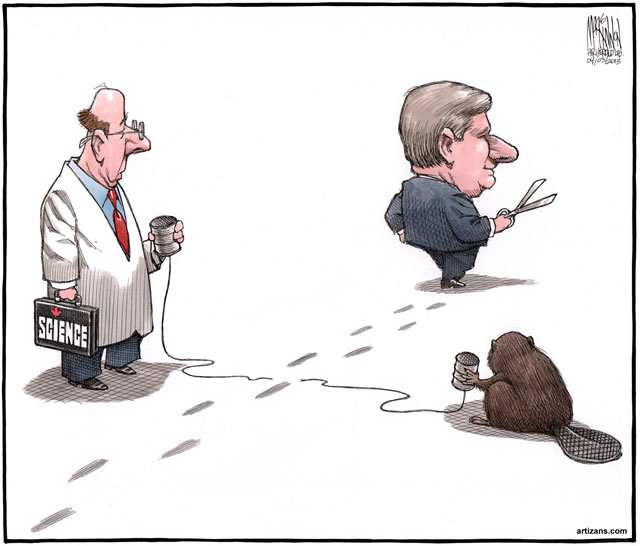
harper_scienceArtists, poets and musicians make us feel, viscerally, how people destroy what they do not understand. Logic and observation led E. O. Wilson to conclude: ‘If people don’t know, they don’t care. If they don’t care, they don’t act.’

Whether you feel it in one of Drew Dillinger’s poems1 or visualise it from the sinuous beauty of mathematical equations, the song remains the same. Scientists are critical to the present and future of the biosphere and humanity, but if — and only if — we are free to communicate our findings to the voting public.

Galileo did not have that right. Scientists in totalitarian regimes of today still lack it. And now, incredibly, some of Canada’s top scientists have lost that right2,3,4.

That is not the Canada I immigrated into. Rewind the tape to 1983. I am a young immigrant, ecstatic that my family has gained entry into the country. We all have mixed feelings; we love our home country of Mexico and are sad to leave it, yet we look forward to being part of Canada’s open-minded and science-loving spirit. The tape runs forward and not all turns out to be as advertised. Still, for the next 23 years Canada remains a damn good place, ruled by governments that, imperfect as they might have been, were not obsessed with burying science.

Fast forward the tape to 2006. Stephen Harper’s newly elected and still ruling Conservative Government hits the ground pounding punches in all directions. Almost immediately, the Conservatives begin to implement one of their many Machiavellian tactics that aim to turn Canada into a petro-state6,7: downgrade science as irrelevant to evidence-based decision making. Ever since, Canadian federal scientists have seen their programs slashed or buried. Those who manage to hang on to their jobs are strictly forbidden to speak about their findings to the media or the public8,9,10,11.

Read the rest of this entry »


The economy worse off since 1978

3 07 2013

eat money

Can’t eat money

I was only a little tacker in 1978, and as any little tacker, I was blissfully unaware that I had just lived through a world-changing event. Just like that blissfully ignorant child, most people have no idea how important that year was.

It was around that year that humanity exceeded the planet’s capacity to sustain itself in perpetuity1. As I’ve just discovered today, it was also the same year that the per-capita Genuine Progress Indicator (GPI) peaked.

Now for a little detour and disclaimer before I explain all that. I’m not an economist, but I have a dabbled with the odd economic concept and bolted-on economic sub-routine in a few models I’ve written. Some would argue that conservation (i.e., the quest and methods needed to conserve biowealth) is almost entirely an economic pursuit, for economics is the discipline that attempts to explain (and modify) human behaviour. I tend to agree insofar as we now know enough on the biological side regarding how species become threatened and go extinct, and what kind of things we need to do to avoid losing more of the life-support system provided by biodiversity. Being completely practical about it, one could even argue that the biology part of conservation biology is complete – we should all now re-train as economists. While that notion probably represents a little hyperbole, it does demonstrate that economics is an essential endeavour in the fight to conserve our home.

Almost everyone has heard of ‘GDP’ – the Gross Domestic Product – as an indicator of economic ‘performance’, although most people have little idea what it actually measures (I’m including businesspeople and politicians here). GDP is merely the sum of marketed economic activity, which is only one small facet of the economy. For example, growing a tomato and preparing a salad for your family with it is not included, yet buying a frozen meal in the supermarket is. Even an oil spill increases GDP via increased expenditures associated with clean-up and remediation, when clearly it is not a ‘good’ thing for the economy on the whole because of the lost opportunities it causes in other sectors. Read the rest of this entry »


Every extra human means fewer animals

8 02 2010

© The Sun

As promised some time ago when I blogged about the imminent release of the book Conservation Biology for All (edited by Navjot Sodhi and Paul Ehrlich), I am now posting a few titbits from the book.

Today’s post is a blurb from Paul Ehrlich on the human population problem for conservation of biodiversity.

The size of the human population is approaching 7 billion people, and its most fundamental connection with conservation is simple: people compete with other animals., which unlike green plants cannot make their own food. At present Homo sapiens uses, coopts, or destroys close to half of all the food available to the rest of the animal kingdom. That means that, in essence, every human being added to the population means fewer individuals can be supported in the remaining fauna.

But human population growth does much more than simply cause a proportional decline in animal biodiversity – since as you know, we degrade nature in many ways besides competing with animals for food. Each additional person will have a disproportionate negative impact on biodiversity in general. The first farmers started farming the richest soils they could find and utilised the richest and most accessible resources first (Ehrlich & Ehrlich 2005). Now much of the soil that people first farmed has been eroded away or paved over, and agriculturalists increasingly are forced to turn to marginal land to grow more food.

Equally, deeper and poorer ore deposits must be mined and smelted today, water and petroleum must come from lower quality resources, deeper wells, or (for oil) from deep beneath the ocean and must be transported over longer distances, all at ever-greater environmental cost [my addition – this is exactly why we need to embrace the cheap, safe and carbon-free energy provided by nuclear energy].

The tasks of conservation biologists are made more difficult by human population growth, as is readily seen in the I=PAT equation (Holdren & Ehrlich 1974; Ehrlich & Ehrlich 1981). Impact (I) on biodiversity is not only a result of population size (P), but of that size multiplied by affluence (A) measured as per capita consumption, and that product multiplied by another factor (T), which summarises the technologies  and socio-political-economic arrangements to service that consumption. More people surrounding a rainforest reserve in a poor nation often means more individuals invading the reserve to gather firewood or bush meat. More poeple in a rich country may mean more off-road vehicles (ORVs) assulting the biota – especially if the ORV manufacturers are politically powerful and can succesfully fight bans on their use. As poor countries’ populations grow and segments of them become more affluent, demand rises for meat and automobiles, with domesticated animals competing with or devouring native biota, cars causing all sorts of assults on biodiversity, and both adding to climate disruption. Globally, as a growing population demands greater quantities of plastics, industrial chemicals, pesticides, fertilisers, cosmetics, and medicines, the toxification of the planet escalates, bringing frightening problems for organisms ranging from polar bears to frogs (to say nothing of people!).

In sum, population growth (along with escalating consumption and the use of environmentally malign technologies) is a major driver of the ongoing destruction of populations, species, and communities that is a salient feature of the Anthropocene. Humanity , as the dominant animal (Ehrlich & Ehrlich 2008), simply out competes other animals for the planet’s productivity, and often both plants and animals for its freshwater. While dealing with more limited problems, it therefore behoves every conservation biologist to put part of her time into restraining those drivers, including working to humanely lower [sic] birth rates until population growth stops and begins a slow decline twoard a sustainable size (Daily et al. 1994).

Incidentally, Paul Ehrlich is travelling to Adelaide this year (November 2010) for some high-profile talks and meetings. Stay tuned for coverage of the events.

CJA Bradshaw

Add to FacebookAdd to DiggAdd to Del.icio.usAdd to StumbleuponAdd to RedditAdd to BlinklistAdd to TwitterAdd to TechnoratiAdd to Yahoo BuzzAdd to Newsvine