Transition from the Anthropocene to the Minicene

24 09 2016
Going, going ...

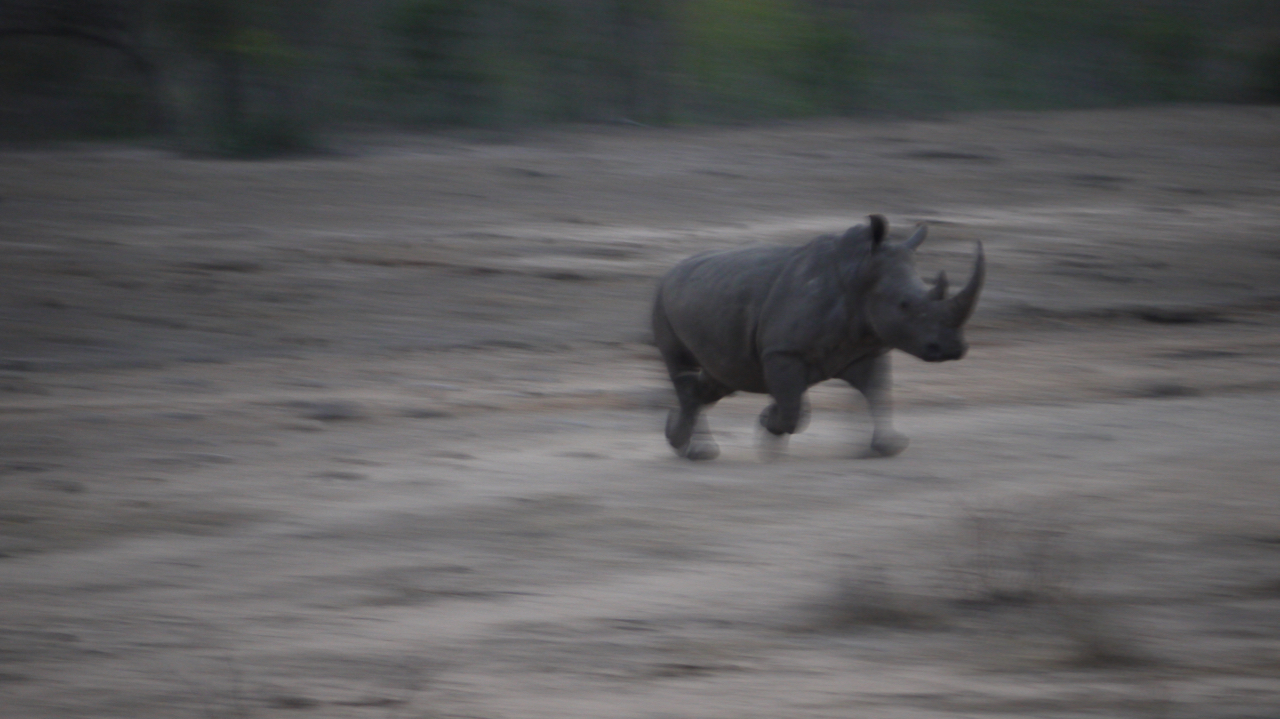
Going, going … © CJA Bradshaw

I’ve just returned from a life-changing trip to South Africa, not just because it was my first time to the continent, but also because it has redefined my perspective on the megafauna extinctions of the late Quaternary. I was there primarily to attend the University of Pretoria’s Mammal Research Institute 50thAnniversary Celebration conference.

As I reported in my last post, the poaching rates in one of the larger, best-funded national parks in southern Africa (the Kruger) are inconceivably high, such that for at least the two species of rhino there (black and white), their future persistence probability is dwindling with each passing week. African elephants are probably not far behind.

As one who has studied the megafauna extinctions in the Holarctic, Australia and South America over the last 50,000 years, the trip to Kruger was like stepping back into the Pleistocene. I’ve always dreamed of walking up to a grazing herd of mammoths, woolly rhinos or Diprotodon, but of course, that’s impossible. What is entirely possible though is driving up to a herd of 6-tonne elephants and watching them behave naturally. In the Kruger anyway, you become almost blasé about seeing yet another group of these impressive beasts as you try to get that rare glimpse of a leopard, wild dogs or sable antelope (missed the two former, but saw the latter). Read the rest of this entry »


More things stay the same, more we retrogress

20 07 2016

obrazek_1idiommmmsmmWithin six months of Abbott and the Coalition seizing power in the 2013 Australian election, decades—if not centuries—of environmental damage and retrograde policies unfolded. But this was no run-of-the-mill incompetence and neglect by government—this was an all-out attack on anything with the merest whiff of environmental protection. The travesty is well-documented, from infamously axing both the carbon-pricing scheme and climate commission, eradicating Labor’s 80% emissions-reduction target by 2050, diluting the Renewable Energy Target, refusing to commit to enforcing the Illegal Logging Prohibition Act (fortunately, this is now law), defunding the only independent legal entity available to limit environmentally destructive development (Environmental Defenders Office), to even attempting to remove the rights of environmental groups to challenge development proposals (thankfully, that failed).

The Coalition’s backward and ineffectual climate change-mitigation policies alone are evidence enough for long-term damage, but their war on the environment in general means that even the future election of a more environmentally responsible government will not undo the damage quickly, if at all. As a result of these and other nearsighted policies, Australia remains one of the highest per-capita greenhouse-gas emitters on the planet, has one of the highest per-capita water uses of any nation, leads the world in mammal extinctions, continues to deforest its already forest-poor landscape, and is a society utterly unprepared to deal with the future challenges of a degraded planet.
Read the rest of this entry »


Seeing the wood for the trees

11 07 2016
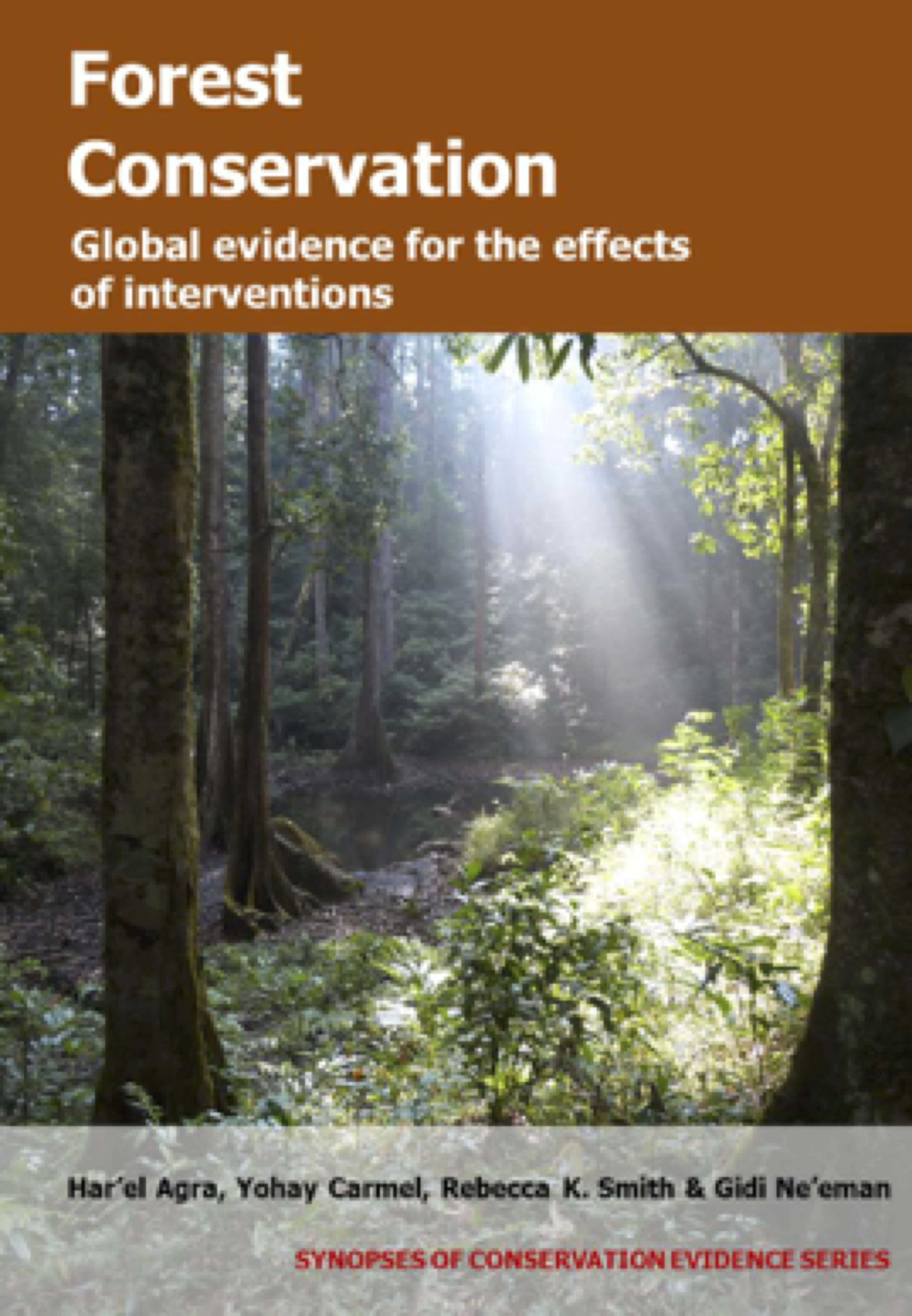
The Forest Synopsis: Photo of the Anamalai Tiger Reserve, India, by Claire Wordley

The Forest Synopsis: Photo of the Anamalai Tiger Reserve, India, by Claire Wordley

From the towering kapoks of South America to the sprawling banyans of South Asia, from misty cloud forests to ice-covered pines, forests are some of the most diverse and important ecosystems on Earth. However, as conservationists and foresters try to manage, conserve and restore forests across the world, they often rely on scanty and scattered information to inform their decisions, or indeed, no information at all. This could all change.

This week sees the launch of the Forest Synopsis from Conservation Evidence, a free resource collating global scientific evidence on a wide range of conservation-related actions. These aim to include all interventions that conservationists and foresters are likely to use, such as changing fire regimes, legally protecting forests or encouraging seed-dispersing birds into degraded forests.

Making conservation work

“We hear a lot about how important it is to do evidence-based conservation”, says Professor Bill Sutherland at the University of Cambridge, UK, “but in reality getting a handle on what works is not easy. That’s why we set up Conservation Evidence, to break down the barriers between conservationists and the scientific evidence that they need to do their jobs.” Read the rest of this entry »


Shadow of ignorance veiling society despite more science communication

19 04 2016

imagesI’ve been thinking about this post for a while, but it wasn’t until having some long, deep chats today with staff and students at Simon Fraser University‘s Department of Biological Sciences (with a particular hat-tip to the lovely Nick Dulvy, Isabelle Côté & John Reynolds) that the full idea began to take shape in my brain. It seems my presentation was a two-way street: I think I taught a few people some things, and they taught me something back. Nice.

There’s no question at all that science communication has never before been so widespread and of such high quality. More and more scientists and science students are now blogging, tweeting and generally engaging the world about their science findings. There is also an increasing number of professional science communication associations out there, and a growing population of professional science communicators. It is possibly the best time in history to be involved in the generation and/or communication of scientific results.

Why then is the public appreciation, acceptance and understanding of science declining? It really doesn’t make much sense if you merely consider that there has never been more good science ‘out there’ in the media — both social and traditional. For the source literature itself, there has never before been as many scientific journals, articles and even scientists writing. Read the rest of this entry »


Biowealth

24 02 2016

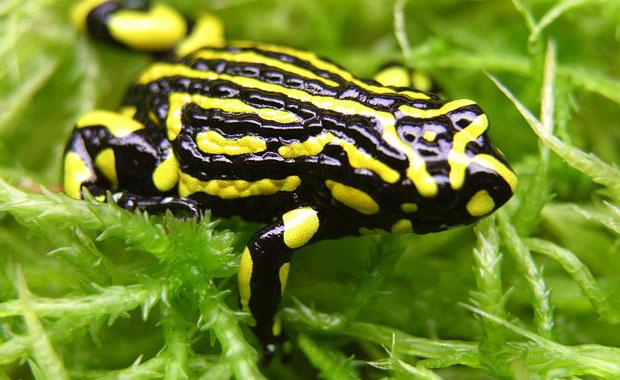
frogWhile I’ve blogged about this before in general terms (here and here), I thought it wise to reproduce the (open-access) chapter of the same name published in late 2013 in the unfortunately rather obscure book The Curious Country produced by the Office of the Chief Scientist of Australia. I think it deserves a little more limelight.

As I stepped off the helicopter’s pontoon and into the swamp’s chest-deep, tepid and opaque water, I experienced for the first time what it must feel like to be some other life form’s dinner. As the helicopter flittered away, the last vestiges of that protective blanket of human technological innovation flew away with it.

Two other similarly susceptible, hairless, clawless and fangless Homo sapiens and I were now in the middle of one of the Northern Territory’s largest swamps at the height of the crocodile-nesting season. We were there to collect crocodile eggs for a local crocodile farm that, ironically, has assisted the amazing recovery of the species since its near-extinction in the 1960s. Removing the commercial incentive to hunt wild crocodiles by flooding the international market with scar-free, farmed skins gave the dwindling population a chance to recover.

redwoodConservation scientists like me rejoice at these rare recoveries, while many of our fellow humans ponder why we want to encourage the proliferation of animals that can easily kill and eat us. The problem is, once people put a value on a species, it is usually consigned to one of two states. It either flourishes as do domestic crops, dogs, cats and livestock, or dwindles towards or to extinction. Consider bison, passenger pigeons, crocodiles and caviar sturgeon.

As a conservation scientist, it’s my job not only to document these declines, but to find ways to prevent them. Through careful measurement and experiments, we provide evidence to support smart policy decisions on land and in the sea. We advise on the best way to protect species in reserves, inform hunters and fishers on how to avoid over-harvesting, and demonstrate the ways in which humans benefit from maintaining healthy ecosystems. Read the rest of this entry »


What’s in a name? The dingo’s sorry saga

30 01 2015

bad dingoThe more I delve into the science of predator management, the more I realise that the science itself takes a distant back seat to the politics. It would be naïve to think that the management of dingoes in Australia is any more politically charged than elsewhere, but once you start scratching beneath the surface, you quickly realise that there’s something rotten in Dubbo.

My latest contribution to this saga is a co-authored paper led by Dale Nimmo of Deakin University (along with Simon Watson of La Trobe and Dave Forsyth of Arthur Rylah) that came out just the other day. It was a response to a rather dismissive paper by Matt Hayward and Nicky Marlow claiming that all the accumulated evidence demonstrating that dingoes benefit native biodiversity was somehow incorrect.

Their two arguments were that: (1) dingoes don’t eradicate the main culprits of biodiversity decline in Australia (cats & foxes), so they cannot benefit native species; (2) proxy indices of relative dingo abundance are flawed and not related to actual abundance, so all the previous experiments and surveys are wrong.

Some strong accusations, for sure. Unfortunately, they hold no water at all. Read the rest of this entry »


Write English well? Help get published someone who doesn’t

27 01 2015

imagesI’ve written before about how sometimes I can feel a little exasperated by what seems to be a constant barrage of bad English from some of my co-authors. No, I’m not focussing solely on students, or even native English speakers for that matter. In fact, one of the best (English) science writers with whom I’ve had the pleasure of working is a Spaniard (he also happens to write particularly well in Castellano). He was also fairly high up on the command-of-English ladder when he started out as my PhD student. So. There.

In other words, just because you grew up speaking the Queen’s doesn’t automatically guarantee that you’ll bust a phrase as easily as Shakespeare, Tolkien, Gould or Flannery; in fact, it might put you at a decided disadvantage compared to your English-as-a-second- (-third-, -fourth-, -fifth- …) language peers because they avoided learning all those terrible habits you picked up as you grunted your way through adolescence. Being forced to learn the grammar of another language often tends to make you grasp that of your mother tongue a little better.

So regardless of your background, if you’ve managed to beat the odds and know in your heart that you are in fact a good writer of science in English (you know who you are), I think you have a moral duty to help out those who still struggle with it. I’m not referring necessarily to the inevitable corrections you’ll make to your co-authors’ prose when drafting manuscripts1. I am instead talking about going out of your way to help someone who really, really needs it. Read the rest of this entry »


Psychological toll of being a sustainability scientist

8 12 2014

depressed scientistLike many academics, I’m more or less convinced that I am somewhere on the mild end of the autism spectrum. No, I haven’t been diagnosed and I doubt very much that my slight ‘autistic’ tendencies have altered my social capacity, despite my wife claiming that I have only two emotions – angry or happy. Nor have they engendered any sort of idiot savant mathematical capability.

But I’m reasonably comfortable with mathematics, I can do a single task for hours once it consumes my attention, and I’m excited about discovering how things work. And I love to code. Rather than academics having a higher innate likelihood of being ‘autistic’, I just think the job attracts such personalities.

In the past few years though, my psychological state is probably less dictated by the hard-wiring of my ‘autidemic’ mind and more and more influenced by the constant battery of negative information my brain receives.

Read the rest of this entry »


Give some flair to your scientific presentation

18 11 2014

Smoko3

As the desert spring came to the great Centre Red,
Scores of sandalled folk from tin birds descend-ed.
Alice Town had been invaded,
Bearded alike and unshorn-legged.
 
They sat and stared at words and the odd trend.
Billies boiled to get them through to day’s end
They swapped bush stories that made good sense,
Trying to understand Aussie environments.
 
One bloke‘s tales caught the punters’ attention,
So this bush poet deserves special mention.
To standard rules he would not kowtow,
So his special science verse I present to you now.

If none of that made any sense, then let me help you out. At the last Ecological Society of Australia meeting in Alice Springs, I witnessed a rather unique way to give a scientific presentation – via bush poetry. Dr. Dale Nimmo of Deakin University was particularly engaging, and he agreed to have his presentation poem reproduced here. Who said scientists were boring? Honourable mention too to Simon Watson for another audience-engaging, bush-poetry seminar (but I don’t have that to reproduce here). There also might be a slidecast of Dale’s presentation coming soon. For now, please enjoy the poetic delivery of science in text.

The Old Grey Box of Heathcote Town

Dale Nimmo

Down around old Heathcote town, just east of Bendigo,
A big old grey box tree casts an eye.
The sallee fills the understory bright as sunlights glow,
As the silvereyes and thornbills flitter by.
 
This landscape, bruised and battered from 200 years of change,
Holds the secrets of a time lost somehow.
One of Jaara land, where lowan dug and dingoes howled,
The latter two, here, just distant memories now.
 
The gold rush came like bushfire, ring barked trees fell like boughs
Of the red gums scattered on the old flood plains,
That made way for sheep and cattle, while, fighting a losing battle,
rufous bettongs were never seen again.
 
When a man of English gentry, Professor Bennett was his name,
Found the woodlands to his aristocratic tastes.
Many days he’d venture in, binoculars under his chin,
He never let a single bird call go to waste.
 
While at the old St Arnaud Inn, over a couple pints of gin,
Bennet and a bloke called Radford got to talking.
Stealing horses was his game, but he’d give it all away,
To join Bennett in woodlands, bird walking

Read the rest of this entry »


InvaCost – estimating the economic damage of invasive insects

7 11 2014

insectinvasionThis is a blosh (rehash of someone else’s blog post) of Franck Courchamp‘s posts on an exciting new initiative of which I am excited to be a part. Incidentally, Franck’s spending the week here in Adelaide.

Don’t forgot to vote for the project to receive 50 000 € public-communication grant!

Climate change will make winters milder and habitats climatically more suitable year-round for cold-blooded animals like insects, but there are many questions remaining regarding whether such insects will be able to invade other regions as the climate shifts. There are many nasty bugs out there.

For example, the Asian predatory wasp is an invasive hornet in Europe that butchers pollinating insects, especially bees, thereby affecting the production of many wild and cultivated plants. I hope that we all remember what Einstein said about pollinators:

If bees were to disappear, humans will disappear within a few years.

(we all should remember that because it’s one of the few things he said that most of us understood). The highly invasive red fire ant is feared for its impacts on biodiversity, agriculture and cattle breeding, and the thousands of anaphylactic shocks inflicted to people by painful stings every year (with hundreds of deaths). Between the USA and Australia, over US$10 billion is spent yearly on the control of this insect alone. Tiger mosquitoes are vectors of pathogens that cause dengue fever, chikungunya virus and of about 30 other viruses. We could go on.

Most of these nasty creatures are now unable to colonise northern regions of Europe or America, or southern regions of Australia, for example, because they cannot survive cold temperatures. But how will this change? Where, when and which species will invade with rising temperatures? What will be the costs in terms of species loss? In terms of agricultural or forestry loss? In terms of diseases to cattle, domestic animals and humans? What will be the death toll if insects that are vectors of malaria can establish in new, highly populated areas?

We’ve proposed to study these and others from a list of 20 of the worst invasive insect species worldwide, and we got selected (i.e., financed!) by the Fondation BNP Paribas. In addition, the Fondation BNP Paribas has selected five scientific programmes on climate change and will give 50,000 € (that’s US$62,000) to the one selected by the public, for a communication project on their scientific programme. This is why we need you to vote for our project: InvaCost. Read the rest of this entry »


It’s not all about cats

20 10 2014

Snake+OilIf you follow any of the environment news in Australia, you will most certainly have seen a lot about feral cats in the last few weeks. I’ve come across dozens of articles in the last week alone talking about the horrendous toll feral cats have had on Australian wildlife since European arrival. In principle, this is a good thing because finally Australians are groggily waking to the fact that our house moggies and their descendants have royally buggered our biodiversity. As a result, we have the highest mammal extinction rate of any country.

But I argue that the newfound enthusiasm for killing anything feline is being peddled mainly as a distraction from bigger environmental issues and to camouflage the complete incompetence of the current government and their all-out war on the environment.

Call me cynical, but when I read headlines like “Australia aims to end extinction of native wildlife by 2020” and Environment Minister Hunt’s recent speech that he has “… set a goal of ending the loss of mammal species by 2020“, I get more than just a little sick to the stomach.

What a preposterous load of shite. Moreover, what a blatant wool-pulling-over-the-eyes public stunt. Read the rest of this entry »


High-altitude ecology

28 08 2014
A constant hazard in the Tibetan Plateau - yakjam

A constant hazard in the Tibetan Plateau – yakjam

I’ve been out of the social-media loop for a few weeks, hence the abnormally long interval since my last post. As you might recall, I’ve been travelling overseas and most recently blogged from Monterey, California where I was attending a symposium on invasion genetics.

The next phase of my travels couldn’t have been more different.

The reason I couldn’t access the blog was because I was well behind the Great Firewall of China. I was, in fact, in the Tibetan region of Gansu and Sichuan Provinces in western China for most of the last 10 days. While I’ve travelled to China many times before, this was by far the most evocative, interesting and unique experience I’ve ever had in this country. Reflecting on the past 10 days while waiting in Hong Kong for my flight back to Australia, I am still reeling a little from what I saw.

Top bloke: Jiajia Liu of Fudan University

Top bloke: Jiajia Liu of Fudan University

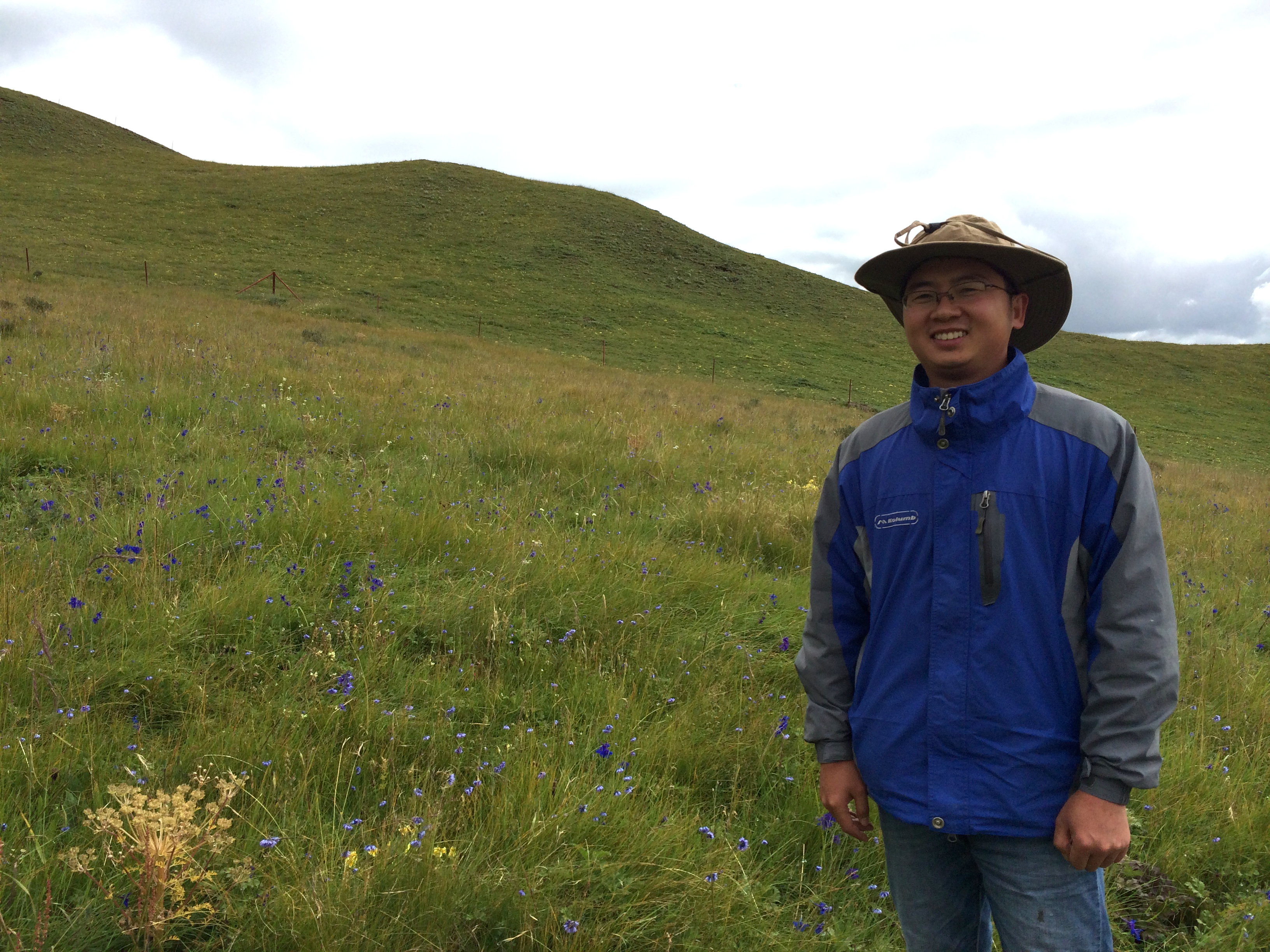
What the hell was I doing at 3500-4000 m elevation on the Tibetan Plateau? Good question. I have been most fortunate to be included in a crack team of Chinese ecologists who have designed and implemented a most impressive set of experiments in plant community ecology. The team, led by Professor Shurong Zhou and Dr. Jiajia Lui of Fudan University, has been working relentlessly to put together some of the sexiest plant ecology experiments going in China.

Having now so far published two papers from the some of the experiments (see here and here), my Chinese colleagues thought it was high time I visited the famous site. Situated at 3500 m in the Tibetan region of Gansu Province in western China, the Lanzhou University research station Azi Shi Yan Zhan is about a 20-hectare area of meadow fenced off from the grazing of the ubiquitous domestic yaks herded by the local Tibetans. If that sounds pretty exotic, let me assure you that it is. Read the rest of this entry »


We generally ignore the big issues

11 08 2014

I’ve had a good week at Stanford University with Paul Ehrlich where we’ve been putting the final touches1 on our book. It’s been taking a while to put together, but we’re both pretty happy with the result, which should be published by The University of Chicago Press within the first quarter of 2015.

It has indeed been a pleasure and a privilege to work with one of the greatest thinkers of our age, and let me tell you that at 82, he’s still a force with which to be reckoned. While I won’t divulge much of our discussions here given they’ll appear soon-ish in the book, I did want to raise one subject that I think we all need to think about a little more.

The issue is what we, as ecologists (I’m including conservation scientists here), choose to study and contemplate in our professional life.

I’m just as guilty as most of the rest of you, but I argue that our discipline is caught in a rut of irrelevancy on the grander scale. We spend a lot of time refining the basics of what we essentially already know pretty well. While there will be an eternity of processes to understand, species to describe, and relationships to measure, can our discipline really afford to avoid the biggest issues while biodiversity (and our society included) are flushed down the drain?

Read the rest of this entry »


Tropical forest resilience depends on past disturbance frequency

16 07 2014

I’ve recently come across an interesting study that perfectly marries palaeo-ecological data with modern conservation philosophy. It’s not often that such a prehistorical perspective dating at least to the Last Glacial Maximum has been used so effectively to inform future conservation outlooks. I’m particularly interested in this sort of approach considering my own palaeo dabblings of late.

Published in Nature Communications this May, Lydia Cole and colleagues’ paper Recovery and resilience of tropical forests after disturbance is a meta-analysis of 71 studies covering nearly 300 disturbance events in tropical forests over the last 20,000 years or so. Using fossil pollen records as an index of vegetation change, they demonstrated the (somewhat intuitive) main result that the time to recovery following a disturbance generally decreases as the past disturbance frequency increased.

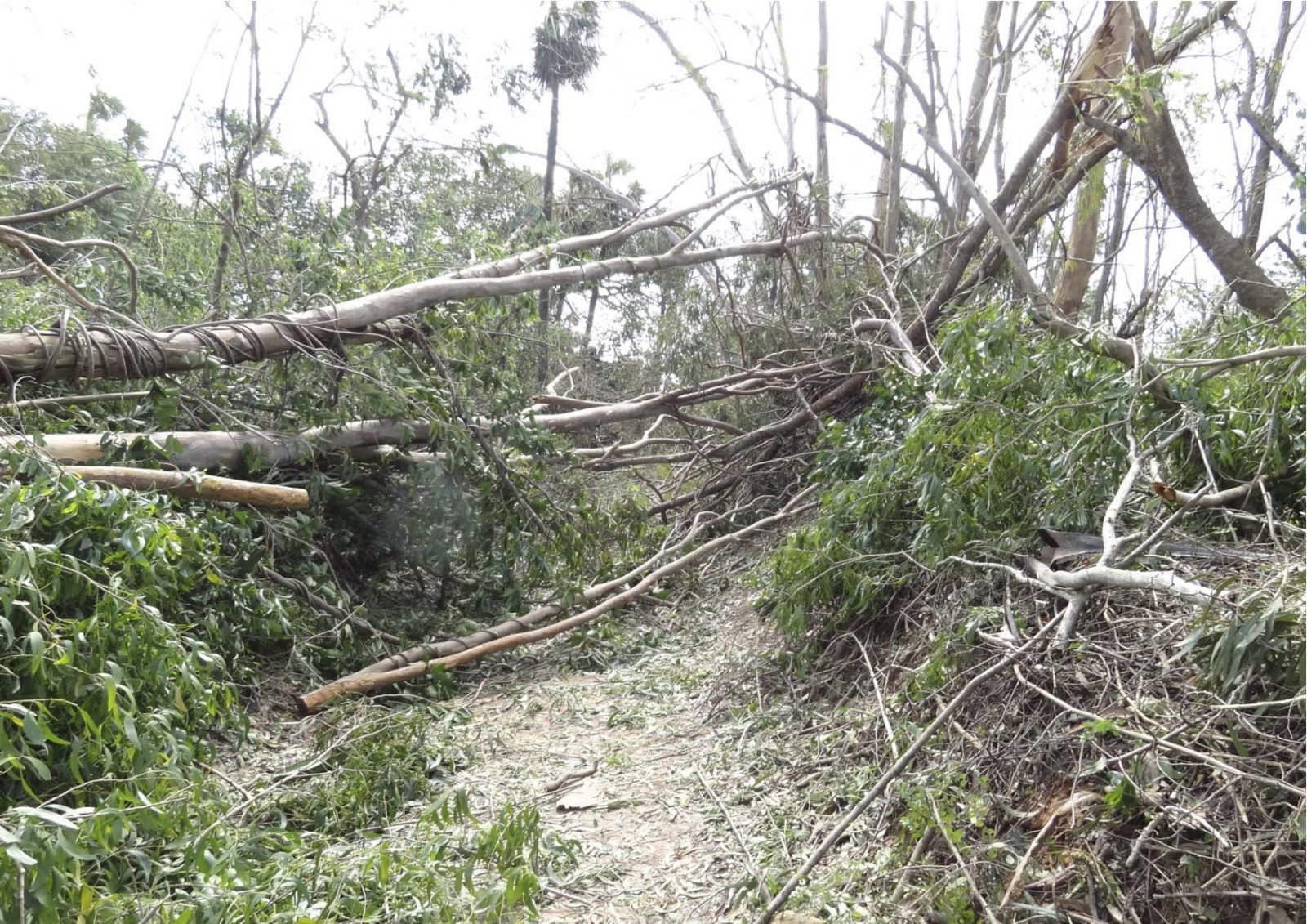
This appears to be a vindication of the idea that a system’s adaptive strategies evolve as a product of the local disturbance regime. More importantly, they found that recovery was faster following ‘large infrequent events’, which are natural perturbations such as cyclones and major fires. While most past disturbances were caused by humans clearing forest, the fact that tropical forest systems were most resilient to ‘natural’ events means that if we can’t stop human disturbances, at least we can attempt to emulate natural processes to maximise the rebound potential. Much like many modern forestry operations try to emulate natural disturbances to limit their damage, we should at least manage our impacts by understanding so-called ‘natural’ regimes as much as possible. Read the rest of this entry »


Be a good reviewer, but be a better editor

6 06 2014
© evileditor.blogspot.com.au

© evileditor.blogspot.com.au

Perhaps it’s just that I’ve been at this for a while, or maybe it’s a real trend. Regardless, many of my colleagues and I are now of the opinion that the quality of editing in scientific journals is on the downhill slide.

Yes – we (scientists) all complain about negative decisions from journals to which we’ve submitted our work. Being rejected is part of the process. Aiming high is necessary for academic success, but when a negative decision is made on the basis of (often one) appalling review, it’s a little harder to swallow.

I suppose I can accept the inevitability of declining review quality for the simple reason that there are now SO MANY papers to review that finding willing volunteers is difficult. This means that there will always be people who only glance cursorily at the paper, miss the detail and recommend rejection based on their own misunderstanding or bias. It’s far easier to skim a paper and try to find a reason to reject than actually putting in the time to appraise the work critically and fairly.

This means that the traditional model of basing the decision to accept or reject a manuscript on only two reviews is fraught because the probability of receiving poor reviews is rising. For example, a certain undisclosed journal of unquestionably high quality for which I edit does not accept anything less than six recommendations for reviewers per manuscript, and none that I’m aware of is accepted or rejected based on only two reviews. But I think this is the exception rather than the rule – there are simply too many journals now of low to medium quality to be able to get that many reviewers to agree to review.

I won’t spend too much time trying to encourage you to do the best job you can when reviewing – that should go without saying. Remember what goes around comes around. If you are a shit reviewer, you will receive shit reviews. Read the rest of this entry »


School finishers and undergraduates ill-prepared for research careers

22 05 2014

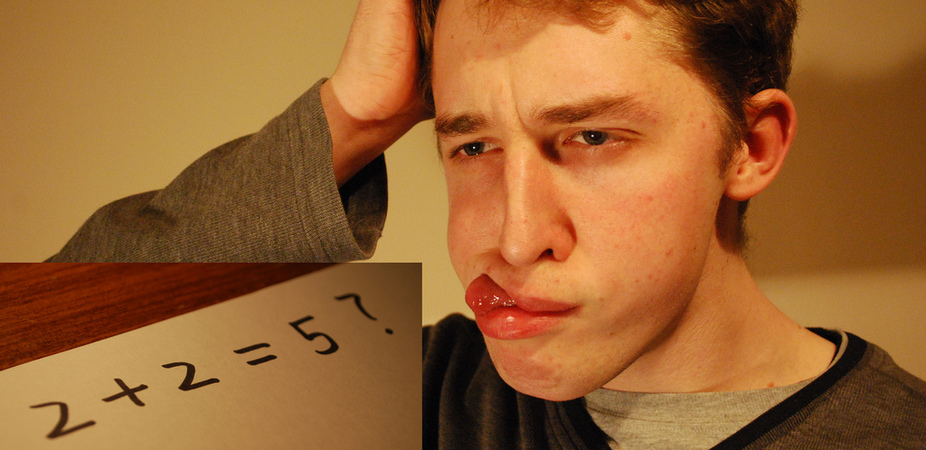
bad mathsHaving been for years now at the pointy end of the educational pathway training the next generation of scientists, I’d like to share some of my observations regarding how well we’re doing. At least in Australia, my realistic assessment of science education is: not well at all.

I’ve been thinking about this for some time, but only now decided to put my thoughts into words as the train wreck of our current government lurches toward a future guaranteeing an even stupider society. Charging postgraduate students to do PhDs for the first time, encouraging a US-style system of wealth-based educational privilege, slashing education budgets and de-investing in science while promoting the belief in invisible spaghetti monsters from space, are all the latest in the Fiberal future nightmare that will change our motto to “Australia – the stupid country”.

As you can appreciate, I’m not filled with a lot of hope that the worrying trends I’ve observed over the past 10 years or so are going to get any better any time soon. To be fair though, the problems go beyond the latest stupidities of the Fiberal government.

My realisation that there was a problem has crystallised only recently as I began to notice that most of my lab members were not Australian. In fact, the percentage of Australian PhD students and post-doctoral fellows in the lab usually hovers around 20%. Another sign of a problem was that even when we advertised for several well-paid postdoctoral positions, not a single Australian made the interview list (in fact, few Australians applied at all). I’ve also talked to many of my colleagues around Australia in the field of quantitative ecology, and many lament the same general trend.

Is it just poor mathematical training? Yes and no. Australian universities have generally lowered their entry-level requirements for basic maths, thereby perpetuating the already poor skill base of school leavers. Why? Bums (that pay) on seats. This means that people like me struggle to find Australian candidates that can do the quantitative research we need done. We are therefore forced to look overseas. Read the rest of this entry »


Putting the ‘science’ in citizen science

30 04 2014
How to tell if a koala has been in your garden. © Great Koala Count

How to tell if a koala has been in your garden. © Great Koala Count

When I was in Finland last year, I had the pleasure of meeting Tomas Roslin and hearing him describe his Finland-wide citizen-science project on dung beetles. What impressed me most was that it completely flipped my general opinion about citizen science and showed me that the process can be useful.

I’m not trying to sound arrogant or scientifically elitist here – I’m merely stating that it was my opinion that most citizen-science endeavours fail to provide truly novel, useful and rigorous data for scientific hypothesis testing. Well, I must admit that I still believe that ‘most’ citizen-science data meet that description (although there are exceptions – see here for an example), but Tomas’ success showed me just how good they can be.

So what’s the problem with citizen science? Nothing, in principle; in fact, it’s a great idea. Convince keen amateur naturalists over a wide area to observe (as objectively) as possible some ecological phenomenon or function, record the data, and submit it to a scientist to test some brilliant hypothesis. If it works, chances are the data are of much broader coverage and more intensively sampled than could ever be done (or afforded) by a single scientific team alone. So why don’t we do this all the time?

If you’re a scientist, I don’t need to tell you how difficult it is to design a good experimental sampling regime, how even more difficult it is to ensure objectivity and precision when sampling, and the fastidiousness with which the data must be recorded and organised digitally for final analysis. And that’s just for trained scientists! Imagine an army of well-intentioned, but largely inexperienced samplers, you can quickly visualise how the errors might accumulate exponentially in a dataset so that it eventually becomes too unreliable for any real scientific application.

So for these reasons, I’ve been largely reluctant to engage with large-scale citizen-science endeavours. However, I’m proud to say that I have now published my first paper based entirely on citizen science data! Call me a hypocrite (or a slow learner). Read the rest of this entry »


Alliance of Leading Environmental Researchers and Thinkers

11 03 2014

ALERTIf you’ve been following this blog or my Twitter feed over the last few weeks, you’ve surely noticed a few references to A.L.E.R.T. – the Alliance of Leading Environmental Researchers and Thinkers. You might also have asked yourself, what exactly is ALERT, and is it something I should pay attention to?

Today’s post attempts to explain this new organisation, and hopefully convince you that the answer to the second question is ‘yes’.

Several months ago, a slightly cryptic e-mail from eminent conservation biologist, Bill Laurance, arrived in my inbox. It asked – what do you think of this logo (see associated image)? A few e-mails later and a couple of minor tweaks, and we ended up with what I thought was a pretty cool logo for this new ‘ALERT’ thing. It wasn’t until quite some time later that I finally understood what Bill was attempting to create.

Is ALERT a news aggregator, a blog, an advocacy group, a science-communication resource or a science-policy interface? Why, yes it is!

Read the rest of this entry »


Biowealth: all creatures great and small

4 12 2013

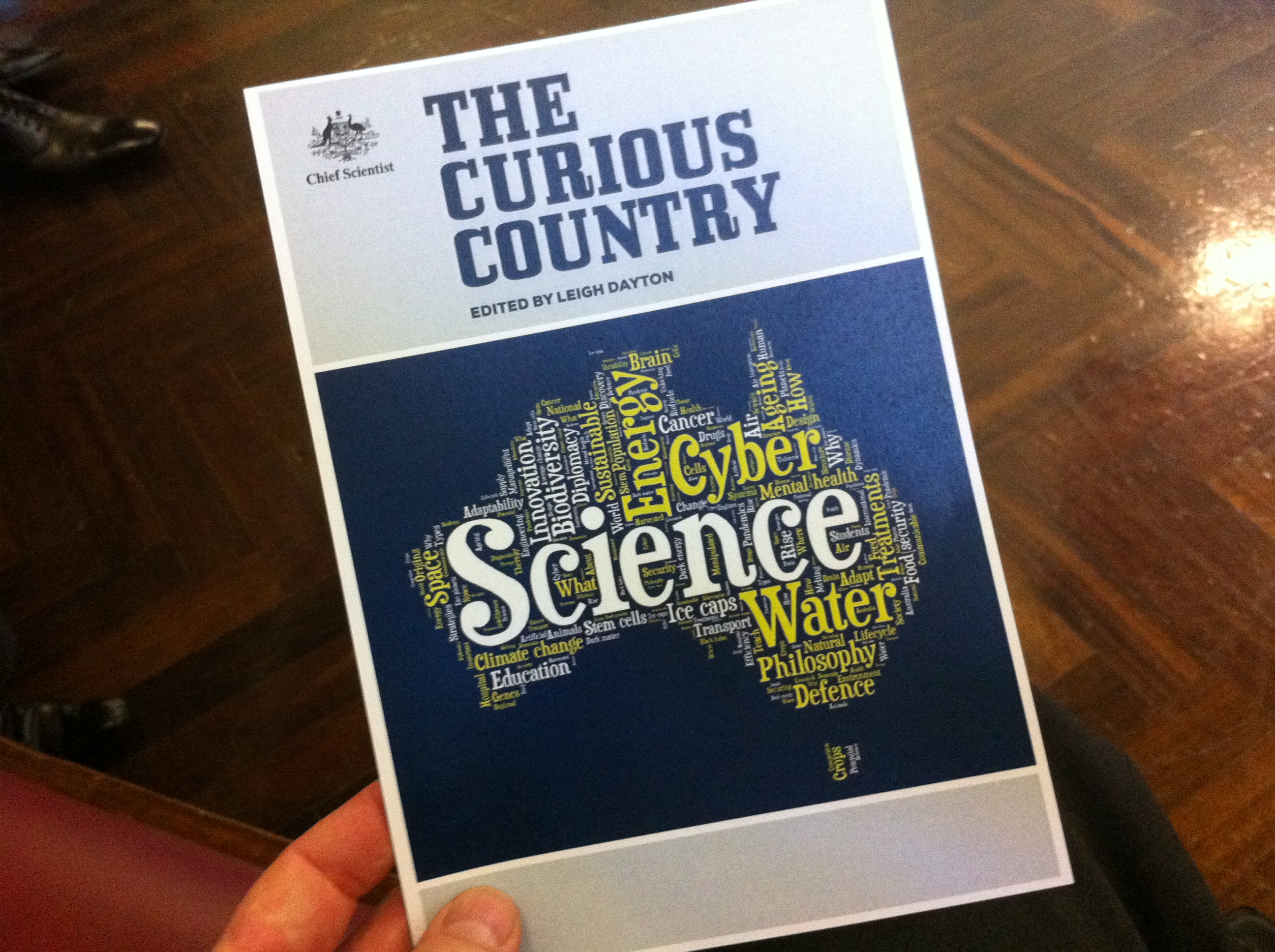
Curious Country flyer“So consider the crocodiles, sharks and snakes, the small and the squirmy, the smelly, slimy and scaly. Consider the fanged and the hairy, the ugly and the cute alike. The more we degrade this astonishing diversity of evolved life and all its interactions on our only home, the more we expose ourselves to the ravages of a universe that is inherently hostile to life.”

excerpt from ‘Biowealth: all creatures great and small’ The Curious Country (C.J.A. Bradshaw 2013).

I’ve spent the last few days on the east coast with my science partner-in-crime, Barry Brook, and one of our newest research associates (Marta Rodrigues-Rey Gomez). We first flew into Sydney at sparrow’s on Monday, then drove a hire car down to The ‘Gong to follow up on some Australian megafauna databasing & writing with Bert Roberts & Zenobia Jacobs. On Tuesday morning we then flitted over to Canberra where we had the opportunity to attend the official launch of a new book that Barry and I had co-authored.

The book, The Curious Country, is an interesting experiment in science communication and teaching dreamed up by Australia’s Chief Scientist, Professor Ian Chubb. Realising that the average Aussie has quite a few questions about ‘how stuff works’, but has little idea how to answer those questions, Ian engaged former Quantum star and science editor, Leigh Dayton, to put together a short, punchy, topical and easily understood book about why science is good for the country.

Yes, intuitive for most of you out there reading this, but science appreciation isn’t always as high as it should be amongst the so-called ‘general public’. Ian thought this might be one way to get more people engaged.

When honoured with the request to write an interesting chapter on biodiversity for the book, I naturally accepted. It turns out Barry was asked to do one on energy provision at the same time (but we didn’t know we had both been asked at the time). Our former lab head, Professor David Bowman, was also asked to write a chapter about fire risk, so it was like a mini-reunion yesterday for the three of us.

Read the rest of this entry »


King for a day – what conservation policies would you make?

29 11 2013

CrownI have been thinking a lot lately about poor governance and bad choices when it comes to biodiversity conservation policy. Perhaps its all that latent anger arising from blinkered, backward policies recently implemented by conservative state and national governments in Australia and elsewhere that leads me to contemplate: What would I do if I had the power to change policy?

While I am certain I have neither the experience or complete knowledge to balance national budgets, ensure prosperity and maintain the health of an entire country, I do have some ideas about what we’re doing wrong conservation-wise, and how we could potentially fix things. This is not meant to be an exhaustive list – it is more a discussion point where people can suggest their own ideas.

So here are 16 things I’d change or implement (mainly in Australia) if I were king for a day:

Read the rest of this entry »