A carbon economy can help save our species too

20 05 2013

money treeWe sent out this media release the other day, but it had pretty poor pick-up (are people sick of the carbon price wars?). Anyway, I thought it prudent to reprint here on CB.com.

Will Australia’s biodiversity benefit from the new carbon economy designed to reduce greenhouse gas emissions? Or will bio-‘perversities’ win the day?

“Cautious optimism” was the conclusion of Professor Corey Bradshaw, Director of Ecological Modelling at the University of Adelaide’s Environment Institute. He is lead author of a new paper published in the journal of Biological Conservation which reviewed the likely consequences of a carbon economy on conservation of Australian biodiversity.

“In most circumstances these two very important goals for Australia’s future – greenhouse gas emissions reduction and biodiversity conservation – are not mutually exclusive and could even boost each other,” Professor Bradshaw says.

“There are, however, many potential negative biodiversity outcomes if land management is not done with biodiversity in mind from the outset.”

The paper was contributed to by 30 Australian scientists from different backgrounds. They reviewed six areas where Australia’s Carbon Farming Initiative could have the greatest impact on biodiversity: environmental plantings; policies and practices to deal with native regrowth; fire management; agricultural practices; and feral animal control.

“The largest biodiversity ‘bang for our buck’ is likely to come from tree plantings,” says Professor Bradshaw. “But there are some potential and frightening ‘bioperversities’ as well. For example, we need to be careful not to plant just the fastest-growing, simplest and non-native species only to ‘farm’ carbon.

“Carbon plantings will only have real biodiversity value if they comprise appropriate native tree species and provide suitable habitats and resources for valued fauna. Such plantings could however risk severely altering local hydrology and reducing water availability.”

Professor Bradshaw says carefully managing regrowth of once-cleared areas could also produce a large carbon-sequestration and biodiversity benefit simultaneously. And carbon price-based modifications to agriculture that would benefit biodiversity included reductions in tillage frequency, livestock densities and fertiliser use, and retention and regeneration of native shrubs. Read the rest of this entry »


Learning from danger

13 05 2013
Guanaco fleeing
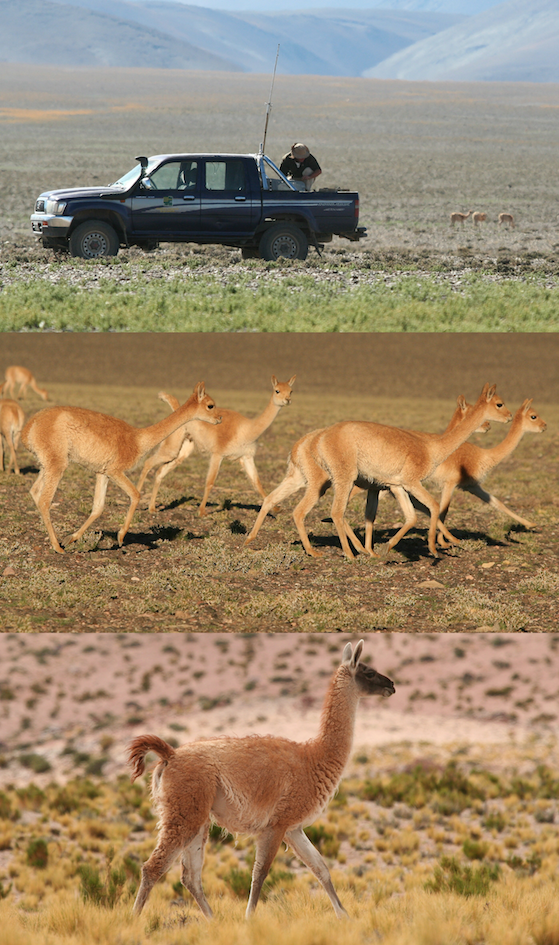
Study vehicle, a group of vicuñas and a guanaco in San Guillermo National Park (San Juan, Argentina) [courtesy of Marco Escudero]. Guanacos and vicuñas are native to South America, and are the ancestors of domesticated llamas and alpacas – which are exploited for their meat, milk and wool. Both species form monotypic genera. They have discontinuous distributions in Argentina, Bolivia, Chile and Peru, with introduced populations in Paraguay (guanaco) and Ecuador (vicuña). Population estimates are > 500,000 (guanaco) and > 300,000 (vicuña), the latter restricted to high-altitude ecosystems. They are ‘Least Concern’ for the IUCN but, given their low population growth rates (fertility = 1 offspring/female/yr), guanacos and vicuñas are targeted by conservation programs in all their native countries.

Many of us might have stumbled twice on the same stone, yet learnt to be wary of future situations of similar risk. Likewise, wild animals can be predisposed to flee when faced with already known predators (or threats in general). The type and magnitude of their evasive response depends on predator distance, speed and body size (1). Regardless, prey need to assess predation risk in a matter of seconds (or even shorter than that), i.e., balancing the benefits and costs of fleeing.

The benefits all boil down to survival, but the costs might include moving away from offspring, loss of access to fresh and abundant food, or spending precious metabolic energy (2). The methods ecologists use to study animal flight behaviour in the wild are rife with nuisances (3), yet they represent a tool for quantifying wildlife stress resulting from a variety of human activities.

Equipped with our modern technological kit (weapons, vehicles, GPS, etc.), humans behave like genuine predators and can trigger the range of flight behaviours displayed by their potential prey. In that context, Emiliano Donadio and Steve Burskirk (4) studied flight behaviour of guanacos (Lama guanicoe) and vicuñas (Vicugna vicugna) in the Argentinean open plains (‘llanos’). They monitored 2 protected areas under weak surveillance and subject to illegal hunting: the Laguna Brava Provincial Reserve and the San Guillermo Biosphere Reserve (treatment = H); and one area free of hunting and only exposed to guided visits with strict entry/exit times: the San Guillermo National Park (treatment = NH). The ecologists did 3 transects per study area. When they encountered a group of camelids, they classified three types of flight behaviour (alert without fleeing, walking away, galloping away), and measured flight time (between vehicle detection and initiation of flight behaviour) and flight distance (between the vehicle and the individuals when initiating flight behaviour). Read the rest of this entry »


Take credit for your work

6 05 2013

passive voice ninjaIf science is the best way to reduce subjectivity when asking a question of how something works, then an inherently essential aspect of this is getting your message across to as many people and as clearly as possible. And as CB readers will know, I’m all about ‘getting the message out’.

As such, when asked by a stranger about what I do, I often respond ‘writer’, because perhaps next to maths, I spend most of my time writing. I tend to argue that without good oral and (especially) written communication skills, even the most brilliant scientist is functionally useless to the rest of society.

So being a writer means that focussing on what some would describe as mundane – spelling, grammar, writing style and clarity – is an essential preoccupation. I’ve written about grammatical and style issues before (see here and here), and in the spirit of providing tips to young scientists out there, here’s another suggestion.

Please, please, please use your own voice.

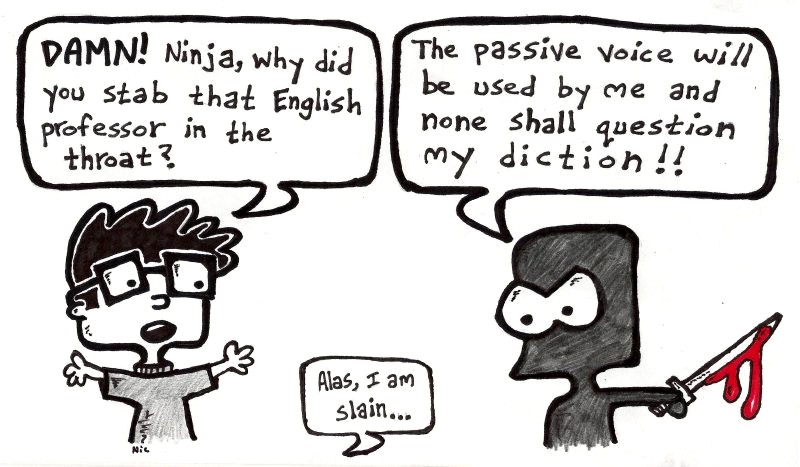
I’m talking about that archaic style of zombie writing that has plagued scientific writing since its inception – the passive voice.

Read the rest of this entry »



Seven signs your country has an environmental problem

29 04 2013

1. It’s almost always hazy – and not just in the cities. The particulate matter pollution makes even sunny days appear like it’s about to rain. To add insult to injury, almost every advertisement with anything to do with ‘outside’ pictures a pristinely blue sky and copious sunshine, without the hint of grey. When stepping off the aeroplane, the distinct taste of tar hits the back of your throat.

2. You can’t drink the water from the tap – not anywhere. In fact, you can’t even brush your teeth with it or risk getting some nasty intestinal parasite.

3. You can’t plant trees fast enough because the frequency of landslips kills hundreds of people yearly.

4. While catching a taxi from the airport, the driver plays a continuous loop of birds singing, because most residents never hear those sounds.

5. You have an economy in over-drive, and yet you still think of yourself as ‘developing’.

6. Emerging infectious disease jumping from livestock to humans is now a near-regular occurrence, with new and weird diseases that threaten to become human pandemics and mutating with alarming speed popping up everywhere. Read the rest of this entry »


Touchy-feely ecologists

18 04 2013

happy scientistOne of the many reasons I started this blog nearly five years ago was to engage both minds and hearts that my (and my colleagues’) scientific journal papers were failing to do. Of course we have emotional attachment to our areas of expertise (I’ve never met a good scientist who wasn’t passionate about what they studied) – but as Alejandro Frid encourages – we just have to transmit that emotional component better to our fellow human beings.

The title is not a joke about sensitive, New Age guys. I am quite serious about it. Though no academic superstar, I have been publishing in ecological and conservation journals for almost twenty years. I love the discipline. I’d hate to see it fail.

What I am talking about is this: ecologists read and write about ‘extinction’, ‘over-exploitation’, ‘climate change’ and so forth as a matter of routine. Yet at the same time, science journals are full of examples of how resources can be used more sustainably, of human behaviours that reduce the greenhouse gases that alter the climate and acidify the oceans, and of alternative economic models that value a healthy biosphere. So why do consumer apathy and political inertia still run the same old show?

I know, I know. Social scientists are working hard on this question (check out, for instance, just about any issue of Nature Climate Change). But what matters is not the rigorous answer that they might produce (we already know that it is 42 – Douglas Adams couldn’t be wrong); it is instead that most non-scientists probably don’t even care about the question. Read the rest of this entry »


Help us restore a forest

12 04 2013

plantingI’m not usually one to promote conservation volunteer opportunities, but this is a little different. First, I’m involved in this one, and second, it’s very near to my home. As you might know, the Mount Lofty Ranges area has had about 90 % of its forests destroyed since European settlement, with a corresponding loss of ecosystem services. We need smart restoration on massive scale, and Monarto is one place where we can develop the best practices to achieve this goal. We really do need some help here, so I encourage anyone in the Adelaide area with an interest in evidence-based forest restoration to lend us a hand.

The Monarto Restoration Project will provide an internationally recognised opportunity to experience and engage with wild Australia as it was.

Our aim is restore and expand habitats at Monarto to represent what used to exist in the region before clearing for agriculture and the introduction of pest species. Monarto used to be teeming with wildlife. The remnant vegetation at Monarto is unique as it is located at the cross-over of two vegetation communities (the Mt Lofty Ranges and Murray Mallee). This means it provides important habitat for a range of threatened bird and plant species. However, there are still a number of species in danger of being lost from the area, so we need to focus on restoring habitat to support them too.

We provide an opportunity to see the bush in a way that is no longer possible in most parts of Australia. We hope to help you see what we have lost and encourage you to participate in conservation. It gives us the opportunity to include everyone in on-ground conservation work and pass on skills that can be applied beyond a day or this project. With your help we can reduce the impacts of pest species on the property and re-introduce some of the native species that are now locally extinct. Read the rest of this entry »


Software tools for conservation biologists

8 04 2013

computer-programmingGiven the popularity of certain prescriptive posts on ConservationBytes.com, I thought it prudent to compile a list of software that my lab and I have found particularly useful over the years. This list is not meant to be comprehensive, but it will give you a taste for what’s out there. I don’t list the plethora of conservation genetics software that is available (generally given my lack of experience with it), but if this is your chosen area, I’d suggest starting with Dick Frankham‘s excellent book, An Introduction to Conservation Genetics.

1. R: If you haven’t yet loaded the open-source R programming language on your machine, do it now. It is the single-most-useful bit of statistical and programming software available to anyone anywhere in the sciences. Don’t worry if you’re not a fully fledged programmer – there are now enough people using and developing sophisticated ‘libraries’ (packages of functions) that there’s pretty much an application for everything these days. We tend to use R to the exclusion of almost any other statistical software because it makes you learn the technique rather than just blindly pressing the ‘go’ button. You could also stop right here – with R, you can do pretty much everything else that the software listed below does; however, you have to be an exceedingly clever programmer and have a lot of spare time. R can also sometimes get bogged down with too much filled RAM, in which case other, compiled languages such as PYTHON and C# are useful.

2. VORTEX/OUTBREAK/META-MODEL MANAGER, etc.: This suite of individual-based projection software was designed by Bob Lacy & Phil Miller initially to determine the viability of small (usually captive) populations. The original VORTEX has grown into a multi-purpose, powerful and sophisticated population viability analysis package that now links to its cousin applications like OUTBREAK (the only off-the-shelf epidemiological software in existence) via the ‘command centre’ META-MODEL MANAGER (see an examples here and here from our lab). There are other add-ons that make almost any population projection and hindcasting application possible. And it’s all free! (warning: currently unavailable for Mac, although I’ve been pestering Bob to do a Mac version).

3. RAMAS: RAMAS is the go-to application for spatial population modelling. Developed by the extremely clever Resit Akçakaya, this is one of the only tools that incorporates spatial meta-population aspects with formal, cohort-based demographic models. It’s also very useful in a climate-change context when you have projections of changing habitat suitability as the base layer onto which meta-population dynamics can be modelled. It’s not free, but it’s worth purchasing. Read the rest of this entry »


Let the planting begin

3 04 2013
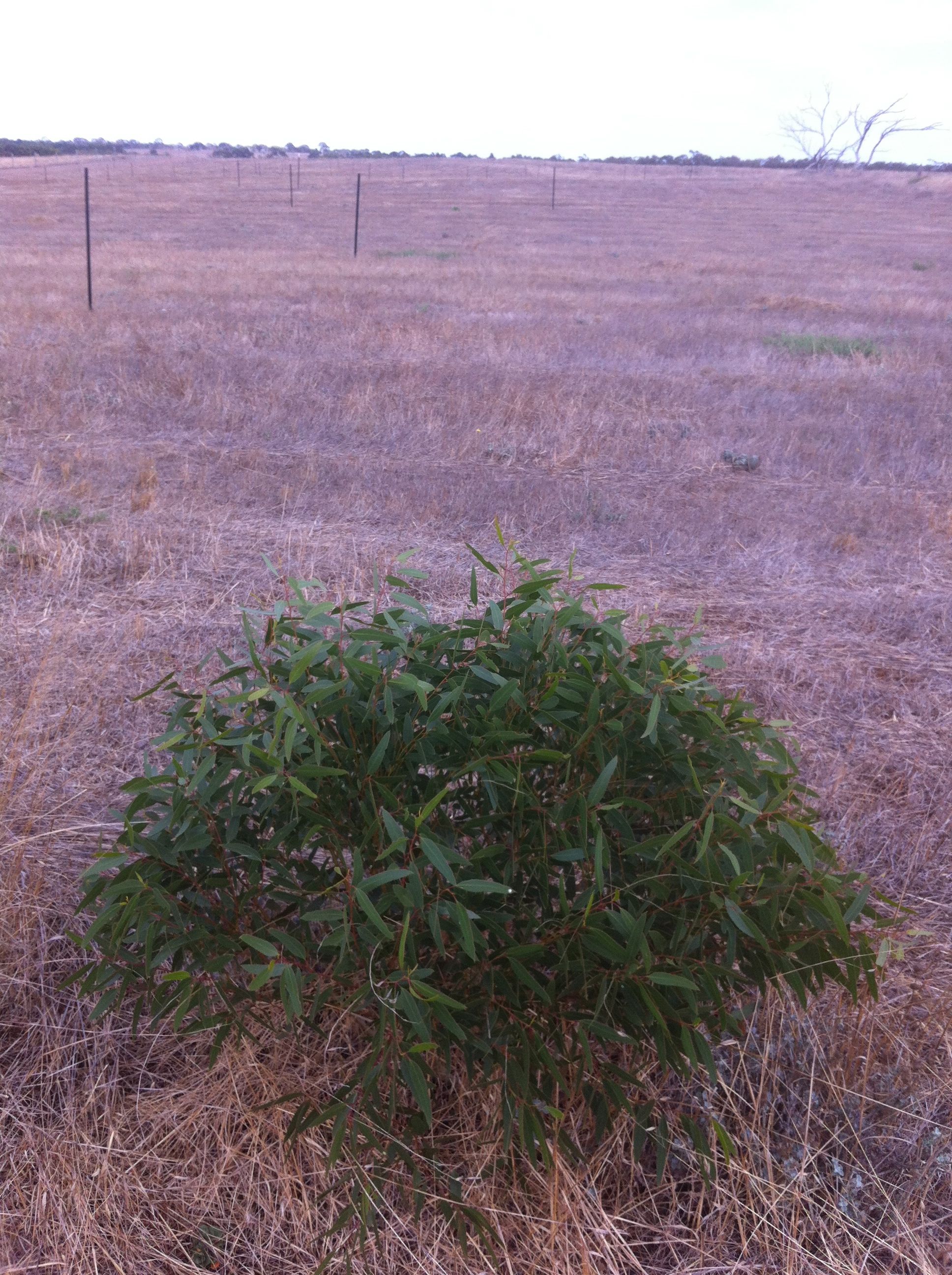
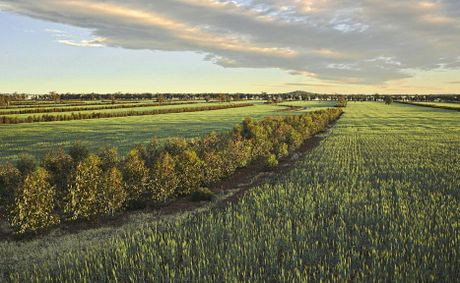
A tough little Eucalyptus porosa - one day soon this entire ex-paddock will be filled with carbon-guzzling natives.

A tough little Eucalyptus porosa – one day soon this entire ex-paddock will be filled with carbon-guzzling natives. Note the plot markers in the background.

I had a great morning today checking out the progress of our carbon-biodiversity planting experiment out at Monarto Zoo. What a fantastic effort! Briony Horner and her team have made some amazing progress.

If you haven’t read about what we’re up to, here’s a brief re-cap:

Late last year we were awarded an Australian Research Council (ARC) Linkage Project grant in which we proposed to examine experimentally the cost-benefit trade-off between biodiversity and carbon using a replicated planting regime. The approach is quite simple, but it will take many years to pay off. What we are asking is: how many different species and in what densities are required to restore a native woodland from an over-grazed paddock that provide the biggest long-term biodiversity and carbon benefits simultaneously for the lowest costs?

Read the rest of this entry »


Want to work with us?

22 03 2013
© Beboy-Fotolia

© Beboy-Fotolia

Today we announced a HEAP of positions in our Global Ecology Lab for hot-shot, up-and-coming ecologists. If you think you’ve got what it takes, I encourage you to apply. The positions are all financed by the Australian Research Council from grants that Barry Brook, Phill Cassey, Damien Fordham and I have all been awarded in the last few years. We decided to do a bulk advertisement so that we maximise the opportunity for good science talent out there.

We’re looking for bright, mathematically adept people in palaeo-ecology, wildlife population modelling, disease modelling, climate change modelling and species distribution modelling.

The positions are self explanatory, but if you want more information, just follow the links and contacts given below. For my own selfish interests, I provide a little more detail for two of the positions for which I’m directly responsible – but please have a look at the lot.

Good luck!

CJA Bradshaw

Job Reference Number: 17986 & 17987

The world-leading Global Ecology Group within the School of Earth and Environmental Sciences currently has multiple academic opportunities. For these two positions, we are seeking a Postdoctoral Research Associate and a Research Associate to work in palaeo-ecological modelling. Read the rest of this entry »



Food for sex

18 03 2013
Quercus_KakFeed Photo
Kakapo are unique among the ~ 400 parrot species (Psittaciformes) for being flightless, nocturnal and extremely long-lived (up to 100 years!). Additionally, they are herbivorous (seeds, fruits, polen, plants), males can weigh up to 2-4 kg (40% heavier than females), and females lay their eggs on the ground or cavities – i.e., 3 eggs in a single clutch annually, although 2 clutches might occur if the nest fails at the beginning of the reproductive season or if the eggs are taken for artificial incubation.Native to New Zealand, kakapo once inhabited the subalpine fringes of forest and scrub. Polynesians (1000 years ago) and Europeans (mostly in the XIX Century) arrived in the archipelago accompanied by dogs, cats, rats and mustelids that cornered kakapo populations in the Fiordland region (south-west of the South Island) where it was declared extinct in 1989. In 1977, a population of some 200 individuals was found on Stewart Island – this population was already in decline to the claws and jaws of feral cats. By the 1980s, the failure of captive breeding programs prompted the transfer of 60 individuals from Steward to carnivore-free islands. The global (known) population ‘rocketed’ from 50 individuals in 1999 to 126 in the 2012 censuses and, consequently, the kakapo’s IUCN status changed in 2000 from ‘Extinct in the Wild’ to ‘Critically Endangered’. Under the management of the Kakapo Recovery Programme, kakapo are now present on the islands of CodfishAnchor and Little Barrier.

Inbreeding, system shocks caused by fire or cyclones (for example), or demographic stochasticity (by which two or more outcomes are possible) such as how many males and females will be born in a single year, are all factors that threaten the persistence of small and fragmented populations. They can, however, be reverted by conservation actions.

If you have ever taken dancing classes, you will be familiar with the scarcity of male partners and how this can jeopardize group learning. When reproduction, rather than salsa pirouettes, is at stake, a biased sex ratio can compromise the persistence of species. For instance, when females are unable to find males (or vice versa), fertility rates can collapse as a result – a well-known cause of an Allee effect (1). Curiously, natural selection can promote such bias by favouring a species’ investment in litters dominated by one of the two genders. The evolutionary formulation of such scenario is that females can adjust the sex ratio of their offspring depending on the amount of available resources (2) – see contrasting cross-taxa studies on this subject (3-5). Thus, when resources abound (e.g., food), mothers can afford the offspring’s gender requiring more resources to reach adulthood or once adulthood is reached, is less likely to reproduce successfully (6). This predisposition to one gender or another can be key to the conservation of endangered species (7).

The kakapo case

At the end of the 1990s, the New Zealand Department of Conservation placed dispensers of supplementary food in the territories of some kakapo (a rather enormous, flightless parrot Strigops habroptilus) to encourage their reproduction. Back then, only 60 individuals were left of the entire species . Unfortunately, those females with access to the supplemental food conceived 67% of male chicks (so exacerbating the fact that kakapo populations are naturally male-biased), while those females without extra feeding had 71% of female chicks (8). Something wasn’t working. Read the rest of this entry »


De-extinction is about as sensible as de-death

15 03 2013

Published simultaneously in The Conversation.


On Friday, March 15 in Washington DC, National Geographic and TEDx are hosting a day-long conference on species-revival science and ethics. In other words, they will be debating whether we can, and should, attempt to bring extinct animals back to life – a concept some call “de-extinction”.

The debate has an interesting line-up of ecologists, geneticists, palaeontologists (including Australia’s own Mike Archer), developmental biologists, journalists, lawyers, ethicists and even artists. I have no doubt it will be very entertaining.

But let’s not mistake entertainment for reality. It disappoints me, a conservation scientist, that this tired fantasy still manages to generate serious interest. I have little doubt what the ecologists at the debate will conclude.

Once again, it’s important to discuss the principal flaws in such proposals.

Put aside for the moment the astounding inefficiency, the lack of success to date and the welfare issues of bringing something into existence only to suffer a short and likely painful life. The principal reason we should not even consider the technology from a conservation perspective is that it does not address the real problem – mainly, the reason for extinction in the first place.

Even if we could solve all the other problems, if there is no place to put these new individuals, the effort and money expended is a complete waste. Habitat loss is the principal driver of species extinction and endangerment. If we don’t stop and reverse this now, all other avenues are effectively closed. Cloning will not create new forests or coral reefs, for example. Read the rest of this entry »



Brave new green world: biodiversity’s response to Australia’s carbon economy

12 03 2013

carbon farming 2I’ve had a busy weekend entertaining visiting colleagues and participating in WOMADelaide‘s first-ever ‘The Planet Talks‘. If you haven’t heard of WOMADelaide, you’re truly missing out in one of the best music festivals going (and this is from a decidedly non-festival-going sort). Planet Talks this year was a bit of an experiment after the only partially successful Earth Station festival held last year (it was well-attended, but apparently wasn’t as financially successful as they had hoped). So this year they mixed a bit of science with a bit of music – hence ‘Planet Talks’. Paul Ehrlich was one of the star attractions, and I had the honour of going onstage with him yesterday to discuss a little bit about human population growth and sustainability. It was also great to see Robyn Williams again. All the Talks were packed out – indeed, I was surprised they were so popular, especially in the 39-degree heat. Rob Brookman, WOMADelaide’s founder and principal organiser, told me afterward that they’d definitely be doing it again.

But my post really isn’t about WOMADelaide or The Planet Talks (even though I got the bonus of meeting one of my favourite latin bands, Novalima, creators of one of my favourite songs). It’s instead about a paper I heralded last year that’s finally been accepted.

In early 2012 at the Terrestrial Ecosystem Research Network (TERN) symposium in Adelaide, the Australian Centre for Ecological Analysis and Synthesis (ACEAS) put on what they called the ‘Grand Challenges’ workshop. I really didn’t get the joke at the time, but apparently the ‘grand challenge’ was locking 30 scientists with completely different backgrounds in a room for two days to see if they could do anything other than argue and bullshit. Well, we rose to that challenge and produced something that I think is rather useful.

I therefore proudly introduce the paper entitled Brave new green world: consequences of a carbon economy for the conservation of Australian biodiversity just accepted in Biological Conservation. The online version isn’t quite ready yet (should be in the next few weeks), but you are welcome to request a preprint from me now. If you attended (the surprisingly excellent) TERN symposium in Canberra last month, you might have seen me give a brief synopsis of our results.

The paper is a rather  in-depth review of how we, 30 fire, animal, plant, soil, landscape, agricultural and freshwater biologists, believe Australia’s new carbon-influenced economy (i.e., carbon price) will impact the country’s biodiversity. Read the rest of this entry »


Hot topics in ecology

5 03 2013

HotTopic copyJust a short one today to highlight a new1 endeavour by the Ecological Society of Australia.

Ecological societies around the world (e.g., Ecological Society of Australia, British Ecological Society, Ecological Society of AmericaCzech Society for Ecology, Société française d’Écologie, etc. – see a fairly comprehensive list of ecological societies around the world here) are certainly worthwhile from an academic standpoint. I’m a member of at least three of them, and over the years I’ve found them to be a great way to meet colleagues to discuss various aspects of our work. The conferences are usually a lot of fun (although I’ve generally found the Ecological Society of America conferences are too huge and unwieldy to be terribly beneficial), the talks are usually pretty good, and the social programmes tend to demonstrate just how human we scientists can be (I’ll let you read into that what you want).

An outsider could easily argue, however, that most ecological societies are archaic bastions of a former time when ecology was more a theoretical endeavour for academic circles, with little of practical use in today’s society. I’d agree that many components of these societies still hold onto elements of this sentiment, but it’s fast becoming clear that ecological societies can play an immensely important role in shaping their countries’ environmental policy. Read the rest of this entry »


Crying ‘wolf’ overlooks the foxes: challenging ‘planetary tipping points’

28 02 2013

tipping pointToday, a paper by my colleague, Barry Brook, appeared online in Trends in Ecology and Evolution. It’s bound to turn a few heads.

Let’s not get distracted by the title of the post, or the potential for a false controversy. It’s important to be clear that the planet is indeed ill, and it’s largely due to us. Species are going extinct faster than the would have otherwise. The planet’s climate system is being severely disrupted, so is the carbon cycle. Ecosystem services are on the decline.

But – and it’s a big ‘but’ – we have to be wary of claiming the end of the world as we know it or people will shut down and continue blindly with their growth and consumption obsession. We as scientists also have to be extremely careful not to pull concepts and numbers out of our bums without empirical support.

Specifically, I’m referring to the latest ‘craze’ in environmental science writing – the idea of ‘planetary tipping points‘ and the related ‘planetary boundaries‘. It’s really the stuff of Hollywood disaster blockbusters – the world suddenly shifts into a new ‘state’ where some major aspect of how the world functions does an immediate about-face. Read the rest of this entry »


Cartoon guide to biodiversity loss XVIII

13 02 2013

Here’s the latest 6 biodiversity cartoons for your simultaneous viewing pleasure and pain (see full stock of previous ‘Cartoon guide to biodiversity loss’ compendia here).

Read the rest of this entry »


Whither goest the biggest fish?

7 02 2013
© W Osborn (AIMS)

© W Osborn (AIMS)

Well, since my own institute beat me to the punch on announcing our latest whale shark paper (really, far too keen, ladies & gents), I thought I’d better follow up with a post of my own.

We’ve mentioned our previous whale shark research before (see here and here for previous posts, and see the end of this post for a full list of our whale shark publications), but this is a lovely extension of that work by my recently completed PhD student, Ana Sequeira.

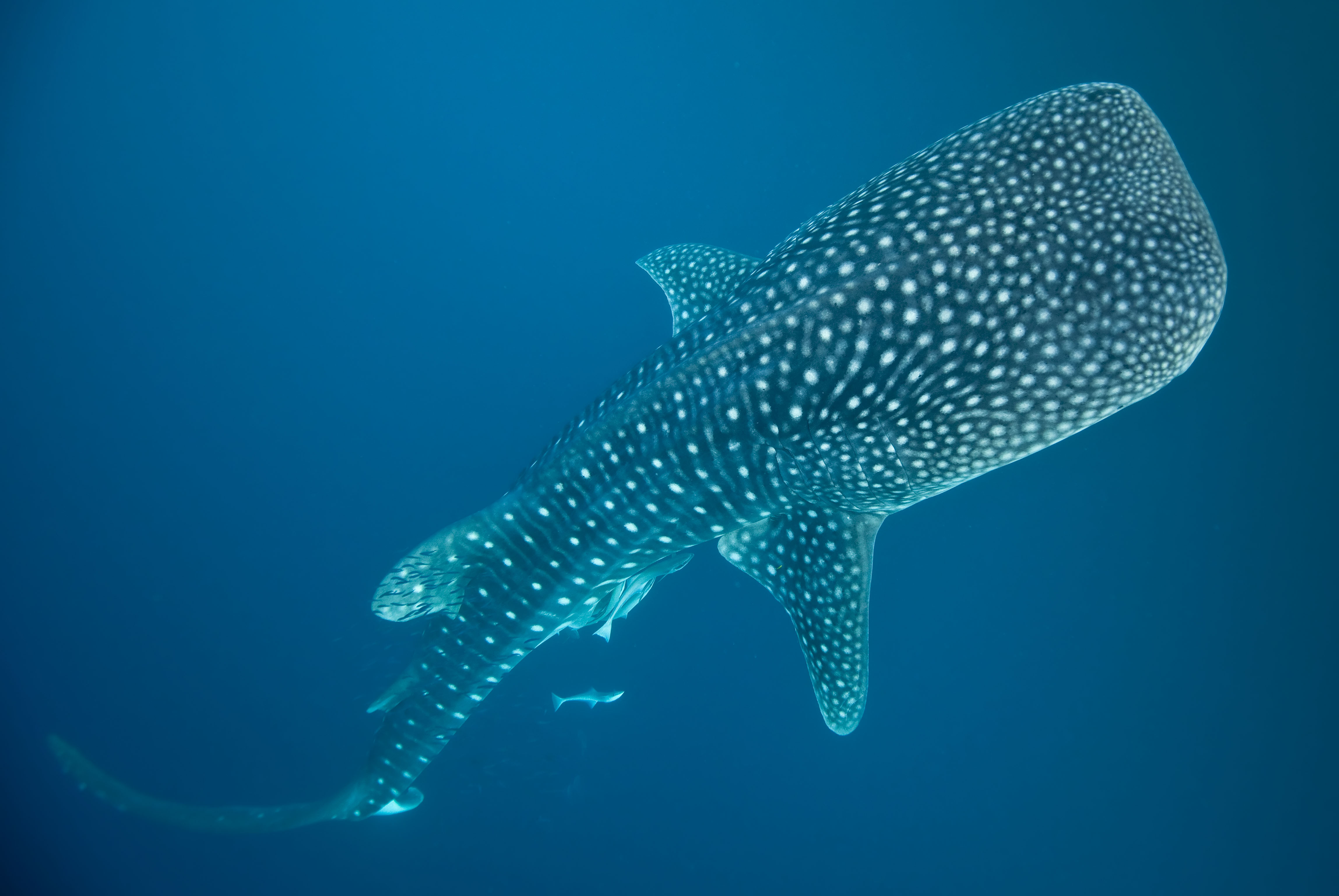
Her latest contribution, Inferred global connectivity of whale shark Rhincodon typus populations just published online in Journal of Fish Biology, describes what a lot of whale shark punters & researchers alike have suspected for a long time – global connectivity of all the oceans’ whale shark populations. The problem hasn’t been a lack of ‘evidence’ for this per se; there is now sufficient evidence from genetic studies that at least on the generational scale (a single generation could be up to 37 years long), populations among the major ocean basins are connected via migration (Castro et al. 2007Schmidt et al. 2009). The problem instead is that no one has ever observed a shark voyage between ocean basins, nor has anyone really suggested how and over what time scales this (must) happen.

Until now, that is. Read the rest of this entry »


Energy policy – substance wins over style

4 02 2013

happy nuclearThere’s a gradual, but rising tide of rational, enviro-progressive scientists out there who are committed to solving some of the world’s biggest problems. Many of these problems involve touchy subjects, including ways to reduce poverty while improving or maintaining high standards of living elsewhere, the means for ‘sustainable’ electricity generation, and how to limit the human population’s over-consumption and over-production.

Inevitably, however, many well-intentioned, but grossly misinformed environmentalists (‘enviro-conservatives’?) object to technical solutions based on emotional or ideological grounds alone. As self-professed enviro-progressives (but also scientists who base decisions on evidence, logic and balancing trade-offs as part of our everyday work), we hope to reduce this backlash by providing the data and analyses needed to make the best and most coherent decisions about our future.

On 14 September 2012, Japan’s government announced a nuclear-free policy to phase out its nuclear power generation by 2040. Of course, electricity demand would have to be supplied by both renewable energy and fossil fuels to respond the public unwillingness for nuclear power.

But is this most environmentally sound, safest and economically rational aim? In a new paper we’ve just had published in the peer-reviewed journal Energy Policy, we set out to test Japan’s intentions the best way we know – using empirical data and robust scenario modelling.

Before the March 2011 earthquake and tsunami, Japan produced 25% of its total electricity consumption from nuclear power, 63% from fossil fuels (mostly coal and liquefied natural gas), and 10% from renewables (including hydro). Originally, the Japanese government had planned to increase nuclear power up to 45% of supply, and include new renewables builds, to combine to make major cuts in greenhouse gas emissions by 2030 and meet or exceed their Kyoto targets. However, the original plan could reduce emissions by the energy sector from 1122 Mt CO2e in 2010 to < 720 Mt CO2e by 2030 (< 70% of 1990 emission levels). Read the rest of this entry »


Science immortalised in cartoon

1 02 2013

Well, this is a first for me (us).

I’ve never had a paper of ours turned into a cartoon. The illustrious and brilliant ‘First Dog on the Moon‘ (a.k.a. Andrew Marlton) who is chief cartoonist for Australia’s irreverent ‘Crikey‘ online news magazine just parodied our Journal of Animal Ecology paper No need for disease: testing extinction hypotheses for the thylacine using multispecies metamodels that I wrote about a last month here on ConservationBytes.com.

Needless to say, I’m chuffed as a chuffed thing.

Enjoy!

Stripey


Why every scientist needs an online profile

31 01 2013
hide

Don’t be guilty of this.

It astounds me every time I hear about a scientist who is reluctant to place her or his track record on the internet. Now, I may be a little over-the-top when it comes to my own web-presence (some have labelled me a ‘media tart’, but I don’t mind), but I am convinced that without a strong, regularly updated web presence, you’re doing yourself a horrible disservice.

Let’s go through the regularly raised objections that some academics make for avoiding the investment in a strong web presence:

  1. My employer will get angry
  2. My track record isn’t good enough (i.e., I’m embarrassed)
  3. What I do is no one else’s business
  4. I couldn’t be bothered; it’s too much work
  5. No one reads it anyway

While there might be some truth to items 1 & 2 (although the justification is weak or often plainly untrue), the last three are pure bullshit.

Let’s start by analysing the bullshit (rolls up sleeves, starts digging…).

Read the rest of this entry »


Having more tree species makes us wealthier

28 01 2013

money treeAs more and more empirical evidence pours in from all corners of the globe, we can only draw one conclusion about the crude measure of species richness (i.e., number of species) – having more species around makes us richer.

And I’m not talking about the esoteric or ‘spiritual’ richness that the hippies dribble about around the campfire after a few dozen cones pulled off the bong (I’ll let the confused among you try to work the meaning of that one out by yourselves), I’m talking about real money (incorporated into my concept of ‘biowealth‘).

The idea that ‘more is better’ in terms of the number of species has traditionally found some (at times, conflicting) empirical support in the plant ecology literature, the latest evidence about which I wrote last year. This, the so-called ‘diversity-productivity’ relationship (DPR), demonstrates that as a forest or grass ecosystem gains more species, its average or total biomass production increases.

Read the rest of this entry »