MPs’ ignorance puts national parks in peril

30 08 2013

greedyLed by Bill Laurance, our latest opinion editorial in the Higher Education supplement. Interestingly, it has already spawned a bilious and spittle-flecked response by Queensland’s Acting National Parks Minister, Tim Mander. Given the evidence, who’s side do you take? I’m happy that at least one of the worst culprit state governments is at least now paying some attention to the issue.

LAST week the world was appalled when Ecuador decided to open up one of its iconic national parks for petroleum development, with Leonardo di Caprio being among the chorus of dissenting voices. Yet the world should be even more disappointed in Australia, a far wealthier nation whose parks could be facing even worse threats.

Why is Australia going down this reckless path? It’s all down to the state governments – especially in Victoria, Queensland and NSW.

For the conservative politicians currently holding sway in these States, it seems it’s time to generate some quick cash while cutting park budgets – and never mind the impact on Australia’s imperilled ecosystems and biodiversity.

In Victoria, for instance, land developers are now being allowed to build hotels and other ventures in national parks. In NSW, recreational shooting and possibly logging will be allowed in parks if new legislation is passed. In NSW’s marine parks, bans on shore-based recreational fishing are being lifted [see previous post here].

Other parks in NSW and Queensland are being opened up to livestock grazing. In Morrinya National Park in Queensland, a strip of forest 20 km long was recently cleared for fencing, with new stock-watering tanks being established throughout the park. Read the rest of this entry »


DNA barcoding plants with citizen science

28 08 2013

hikingI was contacted recently by Oscar Jaslowski of Microryza (a web platform that allows scientists to post research  ideas and collect contributions from web visitors) about a project getting underway in Alaska by Ellen Jorgensen of Genspace. He suggested it might make a good post for ConservationBytes.com, and I agreed. Thanks for the contribution, Ellen & Oscar.

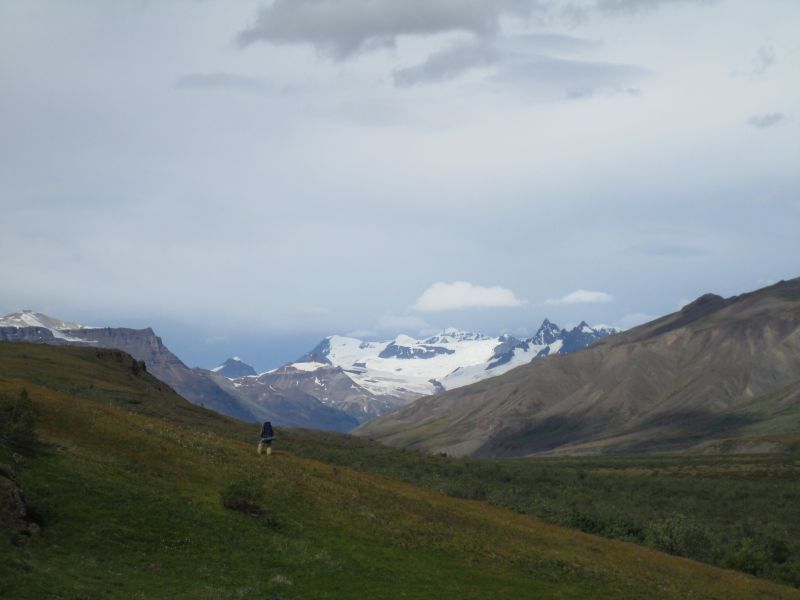
There’s nothing so final as watching the bush pilot take off in his tiny plane, leaving you stranded in the Alaskan backcountry. We had plenty of food for a three-day expedition, but no satellite phone or any other way to contact anyone. In Alaska, the phrase ‘primordial indifference’ pretty much sums up your relationship with the vast, glacier-carved landscape. Mother Nature does not care if an ant like you lives or dies.

Our destination, the Skolai Valley, is located about 480 km (300 miles) east of Anchorage, in the heart of Wrangell-St. Elias National Park. At a whopping 5.3 million hectares (13 million acres), it is the largest national park in the United States, and probably one of the least-visited. Much of its forbidding territory is snow-covered and similar to the Himalayas. In fact, the size of the massive ice fall that towers over the town of McCarthy, the origin of our flight, is exceeded only by one near Mt. Everest. But winding through the glaciers and snowfields are alpine valleys that are a backpacker’s dream. And Genspace, the nonprofit science-based organisation that I direct, was lucky enough to have received funding in 2012 to launch this expedition to Skolai.

Our  mission: to barcode wild Alaskan plant life. Two of us headed down into the river valley and the other two climbed up to the level of the mountain pass to survey more alpine vegetation. We were carrying portable plant presses – normally something too bulky for backpacking, but necessary for this trip. Read the rest of this entry »


Biogeography comes of age

22 08 2013

penguin biogeographyThis week has been all about biogeography for me. While I wouldn’t call myself a ‘biogeographer’, I certainly do apply a lot of the discipline’s techniques.

This week I’m attending the 2013 Association of Ecology’s (INTECOL) and British Ecological Society’s joint Congress of Ecology in London, and I have purposefully sought out more of the biogeographical talks than pretty much anything else because the speakers were engaging and the topics fascinating. As it happens, even my own presentation had a strong biogeographical flavour this year.

Although the species-area relationship (SAR) is only one small aspect of biogeography, I’ve been slightly amazed that after more than 50 years since MacArthur & Wilson’s famous book, our discipline is still obsessed with SAR.

I’ve blogged about SAR issues before – what makes it so engaging and controversial is that SAR is the principal tool to estimate overall extinction rates, even though it is perhaps one of the bluntest tools in the ecological toolbox. I suppose its popularity stems from its superficial simplicity – as the area of an (classically oceanic) island increases, so too does the total number of species it can hold. The controversies surrounding such as basic relationship centre on describing the rate of that species richness increase with area – in other words, just how nonlinear the SAR itself is.

Even a cursory understanding of maths reveals the importance of estimating this curve correctly. As the area of an ‘island’ (habitat fragment) decreases due to human disturbance, estimating how many species end up going extinct as a result depends entirely on the shape of the SAR. Get the SAR wrong, and you can over- or under-estimate the extinction rate. This was the crux of the palaver over Fangliang He (not attending INTECOL) & Stephen Hubbell’s (attending INTECOL) paper in Nature in 2011.

The first real engagement of SAR happened with John Harte’s maximum entropy talk in the process macroecology session on Tuesday. What was notable to me was his adamant claim that the power-law form of SAR should never be used, despite its commonness in the literature. I took this with a grain of salt because I know all about how messy area-richness data can be, and why one needs to consider alternate models (see an example here). But then yesterday I listened to one of the greats of biogeography – Robert Whittaker – who said pretty much the complete opposite of Harte’s contention. Whittaker showed results from one of his papers last year that the power law was in fact the most commonly supported SAR among many datasets (granted, there was substantial variability in overall model performance). My conclusion remains firm – make sure you use multiple models for each individual dataset and try to infer the SAR from model-averaging. Read the rest of this entry »


Don’t blame it on the dingo

21 08 2013

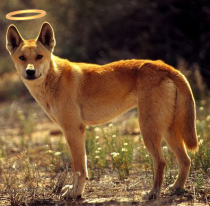
dingo angelOur postdoc, Tom Prowse, has just had one of the slickest set of reviews I’ve ever seen, followed by a quick acceptance of what I think is a pretty sexy paper. Earlier this year his paper in Journal of Animal Ecology showed that thylacine (the badly named ‘Tasmanian tiger‘) was most likely not the victim of some unobserved mystery disease, but instead succumbed to what many large predators have/will: human beings. His latest effort now online in Ecology shows that the thylacine and devil extinctions on the Australian mainland were similarly the result of humans and not the scapegoat dingo. But I’ll let him explain:

‘Regime shifts’ can occur in ecosystems when sometimes even a single component is added or changed. Such additions, of say a new predator, or changes such as a rise in temperature, can fundamentally alter core ecosystem functions and processes, causing the ecosystem to switch to some alternative stable state.

Some of the most striking examples of ecological regime shifts are the mass extinctions of large mammals (‘megafauna’) during human prehistory. In Australia, human arrival and subsequent hunting pressure is implicated in the rapid extinction of about 50 mammal species by around 45 thousand years ago. The ensuing alternative stable state was comprised of a reduced diversity of predators, dominated by humans and two native marsupial predators ‑ the thylacine (also known as the marsupial ‘tiger’ or ‘wolf’) and the devil (which is now restricted to Tasmania and threatened by a debilitating, infectious cancer).

Both thylacines and devils lasted on mainland Australia for over 40 thousand years following the arrival of humans. However, a second regime shift resulted in the extinction of both these predators by about 3 thousand years ago, which was coincidentally just after dingoes were introduced to Australia. Dingoes are descended from early domestic dogs and were introduced to northern Australia from Asia by ancient traders approximately 4 thousand years ago. Today, they are Australia’s only top predator remaining, other than invasive European foxes and feral cats. Since the earliest days of European settlement, dingoes have been persecuted because they prey on livestock. During the 1880s, 5614 km of ‘dingo fence’ was constructed to protect south-east Australia’s grazing rangelands from dingo incursions. The fence is maintained to this day, and dingoes are poisoned and shot both inside and outside this barrier, despite mounting evidence that these predators play a key role in maintaining native ecosystems, largely by suppressing invasive predators.

Perhaps because the public perception of dingoes as ‘sheep-killers’ is so firmly entrenched, it has been commonly assumed that dingoes killed off the thylacines and devils on mainland Australia. People who support this view also point out that thylacines and devils persisted on the island of Tasmania, which was never colonised by dingoes (although thylacines went extinct there too in the early 1900s). To date, most discussion of the mainland thylacine and devil extinctions has focused on the possibility that dingoes disrupted the system by ‘exploitation competition’ (eating the same prey), ‘interference competition’ (wasting the native predators’ precious munching time), as well as ‘direct predation’ (dingoes actually eating devils and thylacines). Read the rest of this entry »


Cartoon guide to biodiversity loss XX

20 08 2013

I can’t believe I’ve now done twenty of these – another 6 biodiversity cartoons while I’m travelling (see full stock of previous ‘Cartoon guide to biodiversity loss’ compendia here).

Read the rest of this entry »


Ecologists: join F1000Research’s open science ecosystem

8 08 2013

f1000researchlogoThe people at the new open-access journal F1000Research (a Faculty of 1000 publication) have asked me to help them announce their new deal for ecologists – no processing fees until 2014! Might have to give it a go myself…

F1000Research covers all areas of life sciences, but we know that different fields each have their own unique characteristics, and some features of our journal are of particular interest to certain disciplines.

For the coming months, one area we’ll be focussing on is ecology. To encourage ecologists to try F1000Research, we’re waiving the article processing charge for all first submissions of an ecology paper until 2014. (Use code ECOL15 when submitting).

F1000Research is an ideal venue for publishing an ecology paper. Research, which includes full datasets, is openly available and its speed of publication and transparency in reviews makes it a refreshing alternative to traditional publishing.” Gary Luck, Institute for Land, Water and Society, Charles Sturt University, Australia

Three good reasons to send your ecology papers to F1000Research:

1.     Quickly reach a wide audience

All articles are fully open access and include all data, and with our post-publication peer review model, your article can be online within a week (find out more about our speedy publication process). Read the rest of this entry »


Shrinking global range projected for the world’s largest fish

7 08 2013
© W. Osborn (AIMS)

© W. Osborn (AIMS)

My recently finished PhD student, Ana Sequeira, has not only just had a superb paper just accepted in Global Change Biology, she’s recently been offered (and accepted) a postdoctoral position based at the University of Western Australia‘s Oceans Institute (in partnership with AIMS and CSIRO). As any supervisor, I’m certainly pleased when a student completes her PhD, but my pride as an academic papa truly soars when she gets her first job. Well done, Ana. This post by Ana is about her latest paper.

Following our previous whale shark work (see herehereherehere, here, here and here), especially the recent review where we inferred global connectivity and suggest possible pathways for their migration, we have now gone a step further and modelled the habitat suitability for the species at at global scale. This paper sets a nice scene regarding current habitat suitability, which also demonstrates the potential connectivity pathways we hypothesised previously. But the paper goes much further; we extend our predictions to a future scenario for 2070 when water temperatures are expected to increase on average by 2 °C.

Sequeira et al_GCB_Figure 3

Global predictions of current seasonal habitat suitability for whale sharks. Black triangles indicate known aggregation locations. Solid line delineates areas where habitat suitability > 0.1 was predicted.

Regarding the current range of whale sharks (i.e., its currently suitable habitat), we already know that whale sharks span latitudes between about 35 º North to South. We also know that this geographical range has been exceeded on several occasions. What we did not know was whether conditions were suitable enough for whale sharks to cross from the Indian Ocean to the Atlantic Ocean – in other words, whether they could travel between ocean basins south of South Africa. Our global model results demonstrate that suitable habitat in this region does exist at least during the summer, thus supporting our hypotheses regarding global connectivity!

It’s true that the extensive dataset we used (30 years’ worth of whale shark sightings collected by tuna purse seiners in the three major oceans – data provided by the IRD, IOTC and SPC) has many caveats (as do all opportunistically collected data), but we went to great trouble to deal with them in this paper (you can request a copy here or access it directly here). And the overall result: the current global habitat suitability for whale sharks does agree well with current locations of whale shark occurrence, with the exception of the Eastern Pacific for where we did not have enough data to validate. Read the rest of this entry »


Fast-lane mesopredators

29 07 2013

Another post from Alejandro Frid (a modified excerpt from a chapter of his forthcoming book).

I fall in love easy. Must be my Latino upbringing. Whatever it is, I have no choice on the matter. So for five years and counting, I have been passionate about lingcod (Ophiodon elongatus) and rockfish (Sebastes spp.), upper- and mid-level predatory fishes on rocky reefs of the Northeast Pacific.

Lingcod are beautiful and fierce. Rockfish are cosmic. Both taste mighty good and—surprise, surprise—have been overfished to smithereens throughout much of their range. Howe Sound, my field site near Vancouver, British Columbia, is no exception, although new protective legislation might be starting to give them some slack.

Our dive surveys1 and earlier studies, in combination, have pieced together a story of ecosystem change. In the Howe Sound of today, lingcod rarely exceed body lengths of 80 cm. But up to 30 years ago, when overfishing had yet to inflict the full extent of its current damage, lingcod with lengths of 90 to 100 cm had been common in the area. There is nothing unique about this; most fisheries target the biggest individuals, ultimately reducing maximum body size within each species of predatory fish.

As predators shrink, the vibrant tension of predation risk slips away. The mechanism of change has a lot to do with mouth size. Predatory fishes swallow prey whole, usually head or tail first, so it is impossible for them to eat prey bigger than the width and height of their open jaws. And bigger fishes have bigger jaws, which makes them capable not only of consuming larger prey, but also of scaring bigger prey into using antipredator behaviours, such as hiding in rocky crevices. As predators shrink, big prey enter a size refuge and only small prey remain at risk, which can alter trophic cascades and other indirect species interactions. Read the rest of this entry »


Saving world’s most threatened cat requires climate adaptation

23 07 2013
© CSIC Andalusia Audiovisual Bank/H. Garrido

© CSIC Andalusia Audiovisual Bank/H. Garrido

The Iberian lynx is the world’s most threatened cat, with recent counts estimating only 250 individuals surviving in the wild. Recent declines of Iberian lynx have been associated with sharp regional reductions in the abundance of its main prey, the European rabbit, caused mainly by myxomatosis virus and rabbit haemorrhagic disease. At present, only two Iberian lynx populations persist in the wild compared with nine in the 1990s.

Over €90 million has been spent since 1994 to mitigate the extinction risk of this charismatic animal, mainly through habitat management, reduction of human-caused mortality and, more recently, translocation. Although lynx abundance might have increased in the last ten years in response to intensive management, a new study published in Nature Climate Change warns that the ongoing conservation strategies could buy just a few decades before the species goes extinct.

The study led by Damien Fordham from The Environment Institute (The University of Adelaide) and Miguel Araújo from the Integrative Biogeography and Global Change Group (Spanish Research Council) shows that climate change could lead to a rapid and severe decrease in lynx abundance in coming decades, and probably result in its extinction in the wild within 50 years. Current management efforts could be futile if they do not take into account the combined effects of climate change, land use and prey abundance on population dynamics of the Iberian Lynx.

Read the rest of this entry »


Guilty until proven innocent

18 07 2013

precautionary principleThe precautionary principle – the idea that one should adopt an approach that minimises risk – is so ingrained in the mind of the conservation scientist that we often forget what it really means, or the reality of its implementation in management and policy. Indeed, it has been written about extensively in the peer-reviewed conservation literature for over 20 years at least (some examples here, here, here and here).

From a purely probabilistic viewpoint, the concept is flawlessly logical in most conservation questions. For example, if a particular by-catch of a threatened species is predicted [from a model] to result in a long-term rate of instantaneous population change (r) of -0.02 to 0.01 [uniform distribution], then even though that interval envelops r = 0, one can see that reducing the harvest rate a little more until the lower bound is greater than zero is a good idea to avoid potentially pushing down the population even more. In this way, our modelling results would recommend a policy that formally incorporates the uncertainty of our predictions without actually trying to make our classically black-and-white laws try to legislate uncertainty directly. Read the rest of this entry »


Ecology: the most important science of our times

12 07 2013

rocket-scienceThe title of this post is deliberately intended to be provocative, but stay with me – I do have an important point to make.

I’m sure most every scientist in almost any discipline feels that her or his particular knowledge quest is “the most important”. Admittedly, there are some branches of science that are more applied than others – I have yet to be convinced, for example, that string theory has an immediate human application, whereas medical science certainly does provide answers to useful questions regarding human health. But the passion for one’s own particular science discipline likely engenders a sort of tunnel vision about its intrinsic importance.

So it comes down to how one defines ‘important’. I’m not advocating in any way that application or practicality should be the only yardstick to ascertain importance. I think superficially impractical, ‘blue-skies’ theoretical endeavours are essential precursors to all so-called applied sciences. I’ll even go so far as to say that there is fundamentally no such thing as a completely unapplied science discipline or question. As I’ve said many times before, ‘science’ is a brick wall of evidence, where individual studies increase the strength of the wall to a point where we can call it a ‘theory’. Occasionally a study comes along and smashes the wall (paradigm shift), at which point we begin to build a new one. Read the rest of this entry »


The economy worse off since 1978

3 07 2013
eat money

Can’t eat money

I was only a little tacker in 1978, and as any little tacker, I was blissfully unaware that I had just lived through a world-changing event. Just like that blissfully ignorant child, most people have no idea how important that year was.

It was around that year that humanity exceeded the planet’s capacity to sustain itself in perpetuity1. As I’ve just discovered today, it was also the same year that the per-capita Genuine Progress Indicator (GPI) peaked.

Now for a little detour and disclaimer before I explain all that. I’m not an economist, but I have a dabbled with the odd economic concept and bolted-on economic sub-routine in a few models I’ve written. Some would argue that conservation (i.e., the quest and methods needed to conserve biowealth) is almost entirely an economic pursuit, for economics is the discipline that attempts to explain (and modify) human behaviour. I tend to agree insofar as we now know enough on the biological side regarding how species become threatened and go extinct, and what kind of things we need to do to avoid losing more of the life-support system provided by biodiversity. Being completely practical about it, one could even argue that the biology part of conservation biology is complete – we should all now re-train as economists. While that notion probably represents a little hyperbole, it does demonstrate that economics is an essential endeavour in the fight to conserve our home.

Almost everyone has heard of ‘GDP’ – the Gross Domestic Product – as an indicator of economic ‘performance’, although most people have little idea what it actually measures (I’m including businesspeople and politicians here). GDP is merely the sum of marketed economic activity, which is only one small facet of the economy. For example, growing a tomato and preparing a salad for your family with it is not included, yet buying a frozen meal in the supermarket is. Even an oil spill increases GDP via increased expenditures associated with clean-up and remediation, when clearly it is not a ‘good’ thing for the economy on the whole because of the lost opportunities it causes in other sectors. Read the rest of this entry »


Relaxed laws imperil Australian wildlife

28 06 2013
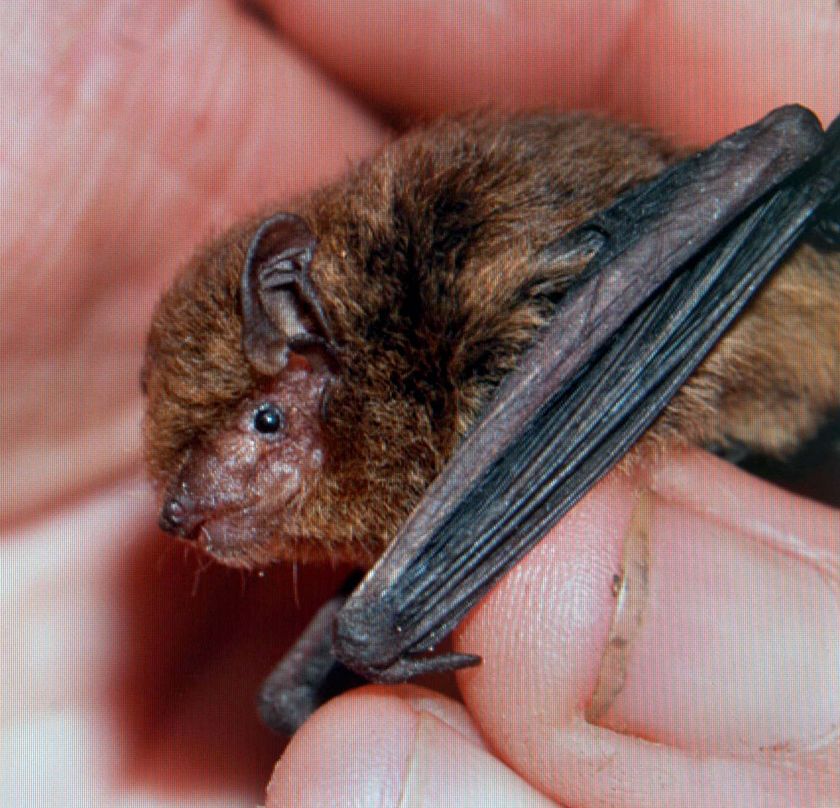
Christmas Island pipistrelle bat (Pipistrellus murrayi). © M. Schultz

Christmas Island pipistrelle bat (Pipistrellus murrayi). © M. Schultz

On the continuing theme of the demise of laws designed to protect Australian biodiversity (see here, here and here), I’m reproducing our latest Nature Correspondence on the issue. I know this might be slightly dodgy to do so, but given that it’s only a Correspondence, I don’t think I’ll get in too much trouble. Besides, it’s too important an issue to hide away behind paywalls.

Policy and legislative changes by Australia’s state governments are eroding the vital protection of the country’s unique biodiversity.

Reserves are being opened up to ecologically disruptive activities, such as grazing by domestic livestock, logging, mining, recreational hunting and fishing, and commercial development. Protected habitats on private and leasehold land are imperilled too. Queensland and Victoria, for example, are relaxing hard-won laws that limit vegetation clearance on private land, further accelerating the loss of regional biodiversity.

Collectively, these actions increase the pressure on biodiversity conservation in protected areas, many of which are already showing biodiversity loss (for example, the Kakadu National Park in northern Australia). Ecological connectivity is being lost, which will hamper the dispersal of species and their ability to respond to climate-change effects. Read the rest of this entry »


Conservation and ecology journal Impact Factors 2012

20 06 2013

smack2It’s the time of year that scientists love to hate – the latest (2012) journal ranking have been released by ISI Web of Knowledge. Many people despise this system, despite its major role in driving publishing trends.

I’ve previously listed the 2008, 2009, 2010 and 2011 IF for major conservation and ecology journals. As before, I’ve included the previous year’s IF alongside the latest values to see how journals have improved or worsened (but take note – journals increase their IF on average anyway merely by the fact that publication frequency is increasing, so small jumps aren’t necessarily meaningful; I suspect that declines are therefore more telling).

Read the rest of this entry »


I fucking love biodiversity

18 06 2013
© G. Gallice

© G. Gallice

A corker of an idea, and post, from Diogo Veríssimo.

I don’t like biodiversity. I like beef lasagna, I like the British museum and I like everything Jules Verne ever wrote. When it comes to biodiversity, it’s different. I think about it all the time, try to be close to it and suffer emotional distress when I think of it going irretrievably away. This is LOVE.

Understanding how to get this passion across effectively has always been one of my main goals. That is why my research has focused on the links between marketing and conservation. But recently I started feeling a bit more empowered to take this mission seriously, and all thanks to the Facebook page I fucking love Science. This page became an internet sensation amassing more than 5 million fans and engaging frequently over 4 million users in any given week. Forget the New York Times and National Geographic, this is the real deal.

So I wondered, why can’t I do the same for biodiversity? The idea lingered in my head until I read a recent paper by McCallum and Bury on Google search patterns, which shows how even during the United Nations Decade on Biodiversity we are failing to mainstream biodiversity and its associated issues. If fact, people seem to be less interested. Whatever we are doing is clearly not working. So why not give this concept a try? And so I fucking love Biodiversity (IFLB) was born.

Read the rest of this entry »


Australia’s national parks aren’t ‘national’ at all

14 06 2013

Yarra-Ranges-National-Park-AustraliaFollowing our The Conversation article a few weeks ago about the rapid demise of national parks in Australia, a few of us (me, Euan Ritchie & Emma Johnston) wrote a follow-up piece on the Australia’s national park misnomer (published simultaneously on The Conversation).

Australia boasts over 500 national parks covering 28 million hectares of land, or about 3.6% of Australia. You could be forgiven for thinking we’re doing well in the biodiversity-conservation game.

But did you know that of those more than 500 national parks, only six are managed by the Commonwealth Government? For marine parks, it’s a little more: 61 of the 130-plus are managed primarily by the Commonwealth. This means that the majority of our important biodiversity refuges are managed exclusively by state and territory governments. In other words, our national parks aren’t “national” at all.

In a world of perfect governance, this wouldn’t matter. But we’re seeing the rapid “relaxation” of laws designed to protect our “national” and marine parks by many state governments. Would making all of them truly national do more to conserve biodiversity?

One silly decision resulting in a major ecosystem disturbance in a national park can take decades if not hundreds of years to heal. Ecosystems are complex interactions of millions of species that take a long time to evolve – they cannot be easily repaired once the damage is done.

Almost overnight, Queensland, New South Wales and Victoria have rolled back nearly two centuries of park protection. What’s surprising here is that many of our conservation gains in the last few decades (for example, the Natural Heritage Trust, the National Reserve System, the Environment Protection and Biodiversity Conservation Act and a national marine reserve network) originated from Coalition policies. Read the rest of this entry »


Learning how to fail

6 06 2013

On the way to work yesterday I was listening to ABC Radio National‘s Life Matters program hosted by Natasha Mitchell about how school children are now apparently being given so much positive praise and encouragement that they can no longer handle failure. Poor, wee dears. Maybe that’s why we have such a high attrition rate once they get up to postgraduate level, because that’s when they REALLY experience failure.

Jokes and whinges aside, there is a hard truth in that message that applies to all scientists, and especially the early-career ones. I’m talking about having your paper rejected from a journal.

Even the terms we use to describe the peer-review gauntlet appear designed to instil fear and inadequacy: reject or accept. I don’t know how many times I’ve seen a PhD student’s face figuratively melt off the skull as they shuffle into my office to show me the journal’s rejection letter (now just usually forwarded in an email accompanied by implied stooped shoulders – is there an emoticon for that?). As I’ve mentioned before, we scientists can be real bastards to each other, and it comes out in spades during peer review.

While neophytes tend to take these hits the hardest, I want to impart a little wisdom from some of my very well-established and successful colleagues. Rejection should be viewed as an asset, not a mark of failure. Let me explain. Read the rest of this entry »


Cartoon guide to biodiversity loss XIX

3 06 2013

Here are 6 more biodiversity cartoons illustrating through humour the sad state of the natural world (see full stock of previous ‘Cartoon guide to biodiversity loss’ compendia here).

Read the rest of this entry »


Conservation hypocrisy

28 05 2013
telegraph.co.uk

telegraph.co.uk

Another soul-searching post from Alejandro Frid.

Confession time. This is going to be delicate, and might even ruffle some big feathers. Still, all of us need to talk about it. In fact, I want to trigger a wide conversation on the flaws and merits of what I did.

Back in March of this year I saw a posting for a job with the Smithsonian Conservation Biology Institute (SCBI) seeking a ‘conservation biologist to provide expert advice in the design and implementation of a Biodiversity Monitoring and Assessment Program (BMAP) in northern British Columbia, Canada’. The job sounded cool and important. I was suited for it, knew northern British Columbia well, and loved the idea of working there.

But there was a catch. The job was focused on the local impacts of fossil fuel infrastructure while dissociating itself from the climate impacts of burning that fuel, and involved collaborating with the fossil fuel company. According to the posting, this was not a new thing for the Smithsonian:

Guided by the principles of the Convention on Biological Diversity, SCBI works with a selected group of oil and gas companies since 1996 to develop models designed to achieve conservation and sustainable development objectives while also protecting and conserving biodiversity, and maintaining vital ecosystem services that benefit both humans and wildlife.

Given that climate change already is diminishing global biodiversity and hampering the ecosystem services on which we all depend, the logic seemed inconsistent to me. But there was little time to ponder it. The application deadline had just passed and my soft-money position with the Vancouver Aquarium Marine Science Centre was fizzling out. So I applied, hastily, figuring that I would deal with the issue later, if they ever got back to me. Read the rest of this entry »


Our national parks must be more than playgrounds or paddocks

24 05 2013

Convo TweetsIt’s interesting when a semi-random tweet by a colleague ends up mobilising a small army of scientists to get pissed off enough to co-write an article. Euan Ritchie of Deakin University started it off, and quickly recruited me, Mick McCarthy, David Watson, Ian Lunt, Hugh Possingham, Bill Laurance and Emma Johnston to put together the article. It’s a hugely important topic, so I hope it generates a lot of discussion and finally, some bloody action to stop the rapid destruction of this country’s national parks system.

Note: Published simultaneously on The Conversation.

It’s make or break time for Australia’s national parks.

National parks on land and in the ocean are dying a death of a thousand cuts, in the form of bullets, hooks, hotels, logging concessions and grazing licences. It’s been an extraordinary last few months, with various governments in eastern states proposing new uses for these critically important areas.

Australia’s first “National Park”, established in 1879, was akin to a glorified country club. Now called the “Royal National Park” on the outskirts of Sydney, it was created as a recreational escape for Sydney-siders, with ornamental plantations, a zoo, race courses, artillery ranges, livestock paddocks, deer farms, logging leases and mines.

Australians since realised that national parks should focus on protecting the species and natural landscapes they contain. However, we are now in danger of regressing to the misguided ideals of the 19th Century.

Parks under attack

In Victoria, new rules will allow developers to build hotels and other ventures in national parks. In New South Wales, legislation has been introduced to allow recreational shooting in national parks, and there is pressure to log these areas too. Read the rest of this entry »