The dingo is a true-blue, native Australian species

7 03 2019

dingo(reproduced from The Conversation)

Of all Australia’s wildlife, one stands out as having an identity crisis: the dingo. But our recent article in the journal Zootaxa argues that dingoes should be regarded as a bona fidespecies on multiple fronts.

This isn’t just an issue of semantics. How someone refers to dingoes may reflect their values and interests, as much as the science.

How scientists refer to dingoes in print reflects their background and place of employment, and the Western Australian government recently made a controversial attempt to classify the dingo as “non-native fauna”.

How we define species – called taxonomy – affects our attitudes, and long-term goals for their conservation.

What is a dog?

Over many years, dingoes have been called many scientific names: Canis lupus dingo (a subspecies of the wolf), Canis familiaris (a domestic dog), and Canis dingo (its own species within the genus Canis). But these names have been applied inconsistently in both academic literature and government policy.

This inconsistency partially reflects the global arguments regarding the naming of canids. For those who adhere to the traditional “biological” species concept (in which a “species” is a group of organisms that can interbreed), one might consider the dingo (and all other canids that can interbreed, like wolves, coyotes, and black-backed jackals) to be part of a single, highly variable and widely distributed species.

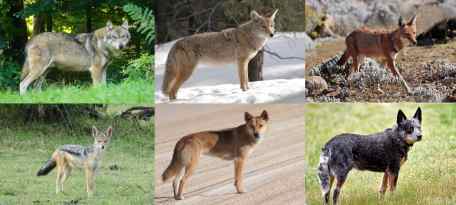
Members of the Canis genus: wolf (Canis lupus), coyote (Canis latrans), Ethiopian wolf (Canis simensis), black-backed jackal (Canis mesomelas), dingo (Canis dingo), and a representative of the domestic dog (Canis familiaris).

Read the rest of this entry »


Action, not just science

25 02 2019

raised fistsIt has taken me a long time to decide to do this, but with role models like Claire Wordley, Alejandro Frid, and James Hansen out there, I couldn’t really find any more excuses.

Yes, I’ve been a strong advocate for action on biodiversity, environment and climate-change issues for a long time, and I’ve even had a few political wins in that regard with my writing and representation. I’ve even called out more than once for universities to embrace divestment from fossil fuels (to my knowledge, even my own university still has not).

While I still think these avenues are important, my ongoing observation is that things are getting worse politically, not better. That means that the normal armchair advocacy embraced by even the most outspoken academics is probably not going to be enough to elicit real political change that we — no, the planet — desperately needs.

Extinction-Rebellion-South-Australia2It is for this reason that I’ve joined the Extinction Rebellion (South Australia Chapter), especially after my friend and colleague, Dr Claire Wordley of the University of Cambridge, joined the UK Rebellion and wrote about her experiences on this very blog. That, coupled with my ongoing and mounting concern for the future Earth my daughter will inherit, requires me to take to the streets. Read the rest of this entry »


Good English and the scientific career: hurdles for non-native English speakers

13 02 2019

New post from Frédérik Saltré originally presented on the GE.blog.


It’s no secret that to be successful in academia, it’s not enough just to be a good scientist — being able to formulate and test hypotheses. You also need to be able to communicate that science effectively.

This implies a good command of the English language for anyone who wants a career in science. Mastering English (or not) will directly affect your work opportunities such as publishing, establishing networks at conferences, taking leadership of working groups, contributing to lab meetings (there is nothing worse than feeling left out of a conversation because of language limitations), and so forth.

But when it comes to language skills, not everyone is created equal because those skills mostly depend on a person’s background (e.g., learning English as a child or later in life), cultural reluctance, fear of making mistakes, lack of confidence, or simply brain design — this last component might offend some, but it appears that some people just happen to have the specific neuronal pathways to learn languages better than others. Whatever the reason, the process of becoming a good scientist is made more difficult if you happen not to have that specific set of neuronal pathways, even though not being a native English speaker does not prevent from being academically successful.

Read the rest of this entry »


Politics matter: undoing conservation progress in the land of the dodo

4 02 2019

The island of Mauritius is known, particularly in conservation circles, for the ill-fated extinction of the dodo, but also for its many conservation success stories. These include the recovery of emblematic birds such as the Mauritius kestrel (Falco punctatus) and the pink pigeon (Nesoenas mayeri) that narrowly avoided extinction several decades ago. 

Mauritius (greater Mascarene) flying fox Pteropus niger

Behind this veil of achievements, however, local political realities are increasingly making the protection and management of Mauritian biodiversity more complex and challenging as new conservation issues emerge.

Emergence of human-wildlife conflict

In the midst of the third government-led mass cull of the Endangered Mauritian flying fox (Pteropus niger) in 2018, a paper published in the Journal for Nature Conservation shed light on the events that led to the government’s choice to do the first two mass culls of the Mauritian flying fox in 2015 and 2016. Documentation of human-wildlife conflict in Mauritius is relatively new, as noted by the authors, but provides a unique case study.

Given that the mass-culling opted for did not increase fruit growers’ profits (in fact, fruit production dropped substantially after the mass-culls) and that the flying fox, a keystone species for the native biodiversity, became more threatened with extinction following the mass culls, it appears that Mauritius provides a rare opportunity to study what precisely should be avoided when trying to resolve such a HWC [Human-wildlife conflict],

Florens & Bader (2019)

Indeed, to mitigate rising conflicts between fruit farmers and the Mauritian flying fox, the Mauritian government opted in 2006 to cull this threatened species (only six individuals were culled at the time). Despite disputes over the population size of the Mauritian flying fox and the extent of damage it caused to commercial fruit growers, as well as scientific arguments against the cull, culling continues to be the preferred approach. 

The law that kills threatened wildlife 

This focus on culling as a solution contributed to a legal amendment in October 2015 that now facilitates the population control of any species of wildlife, irrespective of its origin and its conservation status. The Native Terrestrial Biodiversity and National Parks Bill was passed on 20 October 2015, just two weeks after the government announced its plan to cull 18,000 threatened native bats.

Read the rest of this entry »


Thirsty forests

1 02 2019

Climate change is one ingredient of a cocktail of factors driving the ongoing destruction of pristine forests on Earth. We here highlight the main physiological challenges trees must face to deal with increasing drought and heat.

Forests experiencing embolism after a hot drought. The upper-left pic shows Scots (Pinus sylvestris) and black (P. nigra) pines in Montaña de Salvador (Espuñola, Barcelona, Spain) during a hot Autumn in 2015 favouring a massive infestation by pine processionary caterpillars (Thaumetopoea pityocampa) and tree mortality the following year (Lluís Brotons/CSIC in InForest-CREAF-CTFC). To the right, an individual holm oak (Quercus ilex) bearing necrotic branches in Plasencia (Extremadura, Spain) during extreme climates from 2016 to 2017, impacting more than a third of the local oak forests (Alicia Forner/CSIC). The lower-left pic shows widespread die-off of trembling aspen (Populus tremuloides) from ‘Aspen Parkland’ (Saskatchewan, Canada) in 2004 following extreme climates in western North America from 2001 to 2002 (Mike Michaelian/Canadian Forest Service). To the right, several dead aspens near Mancos (Colorado, USA) where the same events hit forests up to one-century old (William Anderegg).

A common scene when we return from a long trip overseas is to find our indoor plants wilting if no one has watered them in our absence. But … what does a thirsty plant experience internally?

Like animals, plants have their own circulatory system and a kind of plant blood known as sap. Unlike the phloem (peripheral tissue underneath the bark of trunks and branches, and made up of arteries layered by live cells that transport sap laden with the products of photosynthesis, along with hormones and minerals — see videos here and here), the xylem is a network of conduits flanked by dead cells that transport water from the roots to the leaves through the core of the trunk of a tree (see animation here). They are like the pipes of a building within which small pressure differences make water move from a collective reservoir to every neighbours’ kitchen tap.

Water relations in tree physiology have been subject to a wealth of research in the last half a decade due to the ongoing die-off of trees in all continents in response to episodes of drought associated with temperature extremes, which are gradually becoming more frequent and lasting longer at a planetary scale (1). 

Embolised trees

During a hot drought, trees must cope with a sequence of two major physiological challenges (2, 3, 4). More heat and less internal water increase sap tension within the xylem and force trees to close their stomata (5). Stomata are small holes scattered over the green parts of a plant through which gas and water exchanges take place. Closing stomata means that a tree is able to reduce water losses by transpiration by two to three orders of magnitude. However, this happens at the expense of halting photosynthesis, because the main photosynthetic substrate, carbon dioxide (CO2), uses the same path as water vapour to enter and leave the tissues of a tree.

If drought and heat persist, sap tension reaches a threshold leading to cavitation or formation of air bubbles (6). Those bubbles block the conduits of the xylem such that a severe cavitation will ultimately cause overall hydraulic failure. Under those conditions, the sap does not flow, many parts of the tree dry out gradually, structural tissues loose turgor and functionality, and their cells end up dying. Thus, the aerial photographs showing a leafy blanket of forest canopies profusely coloured with greys and yellows are in fact capturing a Dantesque situation: trees in photosynthetic arrest suffering from embolism (the plant counterpart of a blood clot leading to brain, heart or pulmonary infarction), which affects the peripheral parts of the trees in the first place (forest dieback).

Read the rest of this entry »


Higher diversity begets more ecosystem services

25 01 2019
© CJA Bradshaw

Back in 2013, an interesting paper by a group of mainly Swedish ecologists (including one of my former collaborators, Professor Jon Moen of Umeå University) showed how increasing tree species diversity in boreal forests generally increased biomass production. While this is really not news to ecologists in general — for we now have an abundance of data showing that more species diversity leads to higher ecosystem productivity — it certainly didn’t please many foresters whose job it is generally to make trees grow faster so that companies can harvest more timber or pulp.

Well, Jon kindly just emailed me the group’s latest contribution to the puzzle, but this time they looked at several different ‘ecosystem services’ that (mainly boreal) forests provide — things like berry production, topsoil carbon storage, game (hunted mammals) production, the species richness of understory species, and the amount of dead wood — and found that not only does diversity matter, but also the relative abundance of each tree species in the forest mix.

Read the rest of this entry »


We need a Revegetation Council

14 01 2019
planting trees

As I have discussed before, the greatest threatening process to biodiversity in South Australia today is past and ongoing clearing of native vegetation. So, arresting further vegetation clearing, and restoring previously cleared land to functional native-vegetation communities are easily the highest priorities across the entire State.

Despite some valiant attempts across South Australia to revegetate previously cleared areas1, the haphazard approach to reforestation in South Australia means that we are unlikely to be maximising ecological function and providing the best habitats for native biodiversity. Several improvements in this regard can be made:

(i) Establish a State Register of past, ongoing, and planned revegetation projects, including data on the proponents, area revegetated, species planted, number of individuals planted for each species, monitoring in place (e.g., plant survival, other species using the restored habitat, etc.), and costs (actual or projected). Such a State Register would allow for a more regional coordination of future revegetation projects to suggest potentially more ecologically useful approaches. This could include identifying the most locally suitable species to plant, maximising the area of existing native habitat or restored fragments by planting adjacent to these, joining isolated islands of habitat to increase connectivity, or even to create more efficient projects by combining otherwise independent proponents (e.g., adjacent landholders).

(ii) Establish a State Revegetation Council that uses data from the Register to prioritise projects, enhance collaboration, and suggest improvements in design and placement according to the principles mentioned above. The Council could also help to coordinate monitoring of progress and ecological outcomes at the landscape scale. A similar State Register for Wetland Restoration and a relevant Council could be established in a similar manner, emphasising the conservation and restoration of smaller wetlands with more unique, endemic plant species. Likewise, both Councils could ideally assist in coordinating non-profit and private organisations in terms of their revegetation priorities, as well as coordinate with conservation covenants(see below) for private landholders.

Read the rest of this entry »


Cartoon guide to biodiversity loss LII

2 01 2019

The first set of six biodiversity cartoons for 2019 to usher in the New Year. See full stock of previous ‘Cartoon guide to biodiversity loss’ compendia here.


Read the rest of this entry »


Influential conservation ecology papers of 2018

17 12 2018

e35f9ddeada029a053a15cd023abadf5
For the last five years I’ve published a retrospective list of the ‘top’ 20 influential papers of the year as assessed by experts in F1000 Prime — so, I’m doing so again for 2018 (interesting side note: six of the twenty papers highlighted here for 2018 appear in Science magazine). See previous years’ posts here: 2017, 20162015, 2014, and 2013.

Read the rest of this entry »


Fancy a job in biosecurity controlling pest species?

13 12 2018

Rabbits-Western-NSW

My mate Dr Brad Page — Principal Biosecurity Officer (Pest Animals) at Biosecurity SA — asked me to post the following jobs he’s advertising for pest-animal control. Now, I’m near-completely opposed to ‘wild dog’ (i.e., dingo) control in Australia, but I’ve agreed to post the third position as well, despite my ecological misgivings. Brad has a different perspective.

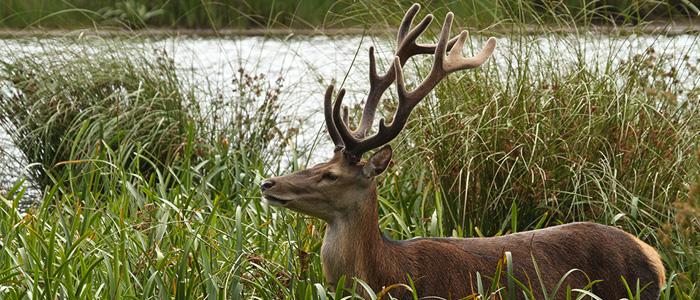
We have exciting opportunities for three new pest animal control coordinators, who will be working to support and reinvigorate control of deer, rabbits, and ‘wild dogs’.

All three coordinators will be part of our Biosecurity SA Division within PIRSA. These new positions will report to our Principal Biosecurity Officer, Pest Animals.

cnt-deer

Deer and Rabbit Control Coordinators (two positions)

The Deer Control Coordinator and the Rabbit Control Coordinator will provide tailored professional support to natural resource management (NRM) staff and community groups doing control programs. These coordinators will aim to increase the impact of deer and rabbit control programs to support primary producers and biodiversity managers. The position will connect and empower existing community and industry groups, maximising impacts of their efforts to control feral deer and rabbits in agricultural landscapes. Read the rest of this entry »


Perseverance eventually gets the policy makers’ attention

10 12 2018

IMG_2819

My entry badge today to the South Australian Parliament (sorry for the shitty reproduction, but it’s a shitty photo of a shitty photo)

I’ve often commented on it over the years, as well as written about it both in my latest book, as well as featured it here on CB.com, that little of the conservation science we do appears to reach the people making all the decisions. This is, of course, a massive problem because so much policy that affects biodiversity is not evidence-based, nor do we seem to be getting any better at telling them how buggered our natural world is.

Even the Extinction Rebellion, or school kids screaming in the streets about lack of climate-change policies appears unable to budge the entrenched, so what hope do we lonely little scientists have of getting in a Minister’s ear? It’s enough to make one depressed.

look-at-me-girlSo, we go through the motions; we design ideal reserves with the aid of our computers, we tell people how much to fish, we tell them why feral species are bad, etc., etc., and then we publish our findings and walk away. We might do a little more and shout our messages loudly from the media rooftops, or submit comments to proposed policies, or even draft open letters or petitions. Yet no matter how hard we seem to try, our messages of urgency and despair largely fall on deaf ears.

It’s enough to make you reconsider and not bothering at all.

But! Despite my obviously jaded perspective, two things have happened to me recently that attest to how a little perseverance, sticking to your guns, and staying on message can reach the ears of the powerful. My examples are minuscule in the grand scheme of things, nor will they necessarily translate into anything really positive on the ground; yet, they give me a modicum of hope that we can make a positive difference.

The first event happened a few weeks ago after we did a press release about our paper on co-extinction cascades published in Scientific Reports. Yes, it got into a few big newspapers and radio, but I thought it wouldn’t do much more than peak the punters’ interest for the typical 24-hour news cycle. However, after the initial media interest died down, I received an e-mail from one of my university’s media officers saying that the we had been cited in The Senate (one of the two houses in the Australian Parliament)! An excerpt of the transcript is shown below (you can read the whole thing — if you could be bothered — here): Read the rest of this entry »


With a Rebel Yell, Scientists Cry ‘No, no, more!’

29 11 2018

Adrenaline makes experiences hyper-real. Everything seems to move in slow motion, apart from my heart, which is so loud that I am sure people can hear it even over the traffic.

It’s 11:03 on a sunny November morning in central London. As the green man starts to shine, I walk into the middle of the road and sit down. On either side of me, people do the same. There can only be about 50 of us sitting on this pedestrian crossing, and I murmur ‘are we enough?’

‘Look behind you,’ says a new friend.

I turn. Blackfriar’s Bridge, usually covered in cars and buses, is filling with people. Citizens walking into the road and staying there, unfurling colourful flags with hourglass symbols on them. The police film us, standing close, but make no move to arrest anyone. Later, we discover that at least some of them encourage our disobedience.

Messages start coming in — 6,000 people are here, and we’ve blocked five bridges in central London with Extinction Rebellion, protesting for action to stop climate change and species extinctions. I’m a scientist participating in my first ever civil disobedience, and for me, this changes everything.

ER1

Left to right: protestors include kids, company directors, and extinct species.

What makes a Cambridge academic — and thousands of other people — decide that sitting in a road is their best chance of being heard? In short, nothing else has got us the emissions cuts we need. The declaration that global warming is real and that greenhouse-gas emissions need to be cut came in 1988, when I was a year old. Since then, scientists have continued to be honest brokers, monitoring greenhouse gases, running models, presenting the facts to governments and to the people. And emissions have continued to climb. The 2018 IPCC report that shocked many of us into action told us we have 12 years to almost halve emissions, or face conditions incompatible with civilisation. How did we end up here? Read the rest of this entry »


Global warming causes the worst kind of extinction domino effect

25 11 2018

Dominos_Rough1-500x303Just under two weeks ago, Giovanni Strona and I published a paper in Scientific Reports on measuring the co-extinction effect from climate change. What we found even made me — an acknowledged pessimist — stumble in shock and incredulity.

But a bit of back story is necessary before I launch into describing what we discovered.

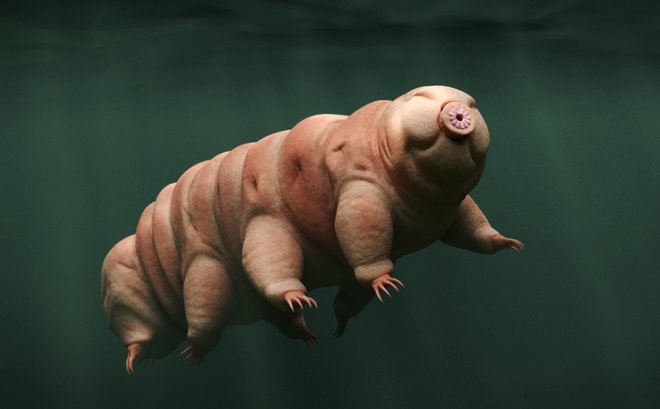
Last year, some Oxbridge astrophysicists (David Sloan and colleagues) published a rather sensational paper in Scientific Reports claiming that life on Earth would likely survive in the face of cataclysmic astrophysical events, such as asteroid impacts, supernovae, or gamma-ray bursts. This rather extraordinary conclusion was based primarily on the remarkable physiological adaptations and tolerances to extreme conditions displayed by tardigrades— those gloriously cute, but tiny (most are around 0.5 mm long as adults) ‘water bears’ or ‘moss piglets’ — could you get any cuter names?

aHR0cDovL3d3dy5saXZlc2NpZW5jZS5jb20vaW1hZ2VzL2kvMDAwLzA5OC81NzMvb3JpZ2luYWwvc3dpbW1pbmctdGFyZGlncmFkZS5qcGc=

Found almost everywhere and always (the first fossils of them date back to the early Cambrian over half a billion years ago), these wonderful little creatures are some of the toughest metazoans (multicellular animals) on the planet. Only a few types of extremophile bacteria are tougher.

So, boil, fry or freeze the Earth, and you’ll still have tardigrades around, concluded Sloan and colleagues.

When Giovanni first read this, and then passed the paper along to me for comment, our knee-jerk reaction as ecologists was a resounding ‘bullshit!’. Even neophyte ecologists know intuitively that because species are all interconnected in vast networks linked by trophic (who eats whom), competitive, and other ecological functions (known collectively as ‘multiplex networks’), they cannot be singled out using mere thermal tolerances to predict the probability of annihilation. Read the rest of this entry »


Better Prospects for the Future of South Australia’s Biodiversity

21 11 2018

eucalypt

A major environmental event quietly slipped through the major news outlets in South Australia this week without much of a mention at all. Yet, I argue it’s one of the most important collective assessments of the state of South Australia’s environment to date. 

Yes, it’s been exactly five years since the last State of the Environment Report released by the South Australia Environment Protection Authority (EPA), and on Monday this week they released the 2018 Report. What’s perhaps even sadder than the poor performance of our state’s environmental performance is that it barely got a mention, nor does seem to have been noticed by many South Australians at all. I suppose I shouldn’t be surprised, when major protests like the UK’s Extinction Rebellion movement hardly got a mention at all last week, it’s no wonder that the release of the Report fails to raise the interest of average citizens in South Australia.

Full disclosure here — I contributed to this year’s State of the Environment Report as one of several independent ‘experts’ commenting on particular aspects of our environment. Yes, this year’s report has made a major leap in this regard by not merely reporting the trends of various indicators (and with rather unconvincing conclusions in many cases because of a lack of monitoring data), but by also including independent overviews of Aquatic Ecosystems, Biodiversity, and Coastal Protection. I was the one asked to write the Biodiversity Issues paper.

While you can download the full report here, I thought it best to summarise the key findings in this blog post (supporting references can be found in the report itself):

Read the rest of this entry »


Why a (young) scientist should blog

12 11 2018

I started to blog in the middle of my PhD, exactly on 17 February 2011 — as a scientist I remember my first blog like a soccer-loving kid might remember his/her first soccer ball. Postgraduates from ACAD have recently asked me to give a talk about my blogging experience, and I couldn’t resist turning my talk into a blog.

Salvador Herrando-Pérez

CB_ScientificBlogging_nov2018

The cover of the February (polar bears) and December (water flea) 2017 issues of the Spanish magazine Quercus featured two of my popular-science articles. Founded in 1981, and with a current print run of some 15,000 copies monthly, Quercus has pioneered the dissemination of ecological and environmental science with a conservation edge in Spain and survived the digitalisation age, which has recently deserved the prestigious 2018 BBVA prize for Biodiversity Conservation. My liaison with the magazine already spans seven years with 49 articles published in three theme series (conservation biology: 2011-2012; animal behaviour: 2013; and climate change: active since January 2017 in collaboration with my colleague David Vieites).

I write in blogs, but I am not a blogger in the sense of owning and managing a blog. More exactly, I write about science using a language that should be understandable by an audience of scientists and, primarily, non-scientists. The best English expression I have found to qualify such activity is ‘popular science’ (I use it interchangeably with ‘blog’ hereafter). And blogs are just one platform (internet) to publish popular science.

In fact, I publish popular science on a regular basis here in ConservationBytes, and in Quercus: a printed Spanish-language magazine about ecology and biodiversity. My articles in those outlets typically synthesise the findings, and expand the background and implications, of high-profile research papers from the primary literature. Sometimes, I also write blogs to maximise the audience of my own publications (e.g., here and here), or to discuss a topic of general interest (e.g., numerical literacy). I have listed all my blogs on ConservationBytes at the end of the text.

Frankly, I had never stopped to think why I started and why I keep writing popular science. So after a bit of brainstorming, I have come up with five personal motivations which will probably resonate with those of other scientists entering the Blogosphere (1) — see here Corey’s take on the virtues of blogging.

Self-promotion

When you are in the early stage of your research career, letting your peers know that you exist is essential, unless one already publishes hot papers that everybody reads and cites, and/or you have already amassed quite a reputation in the scientific community (not my case). Let’s be clear: my blogs are bound to be read by more people than my research papers, because blogs magnify the chances of being detected by search engines (2), and because the size of the scientific community is dwarfed by the size of the internet community. Doubtless, self-promotion drew me into popular science in the first place, when I was just a PhD student — ahead of me lay some five to ten years over which I would have to compete hard for funding and publication space with a respectable crowd of other researchers, let alone to create new partnerships with colleagues in and out of my area of expertise. So, blogging initially meant like saying ‘hey! I am here, I am doing science’.

Funding/Outreach

Read the rest of this entry »


Biodiversity offsetting is off-putting

5 11 2018

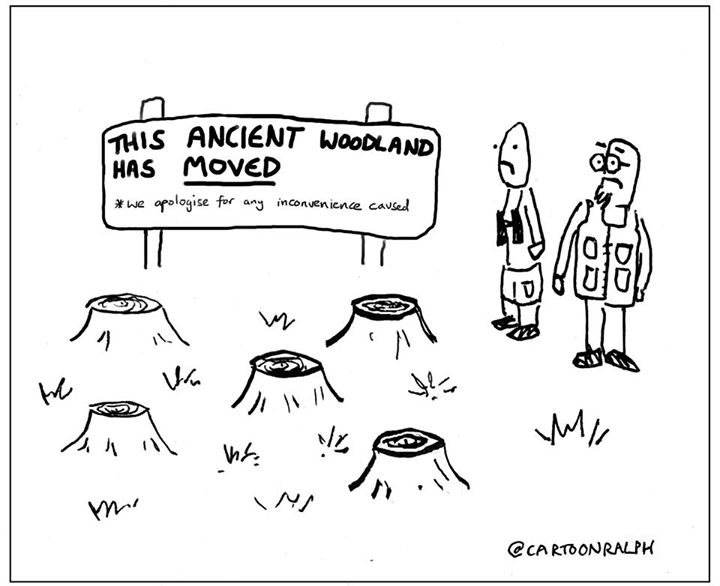
Ancient-woodland-has-movedBiodiversity offsets are becoming more popular in Australia and elsewhere as a means to raise money for conservation and restoration while simultaneously promoting economic development (1). However, there are many perverse consequences for biodiversity if they are not set up carefully (1-3).

Biodiversity ‘offsets’ are intended to work in a similar way to carbon offsets1, in that the destruction of a part of an ecosystem (e.g., a native forest or grassland, or a wetland) can be offset by paying to fund the restoration of another, similar ecosystem elsewhere. As such, approval to clear native vegetation usually comes with financial and other conditions.

But there are several problems with biodiversity offsetting, including the inconvenient fact that creating an equivalent ecosystem somewhere takes substantially longer than it does to destroy one somewhere else (e.g., 4). While carbon emitted in one place is essentially the same as that sequestered elsewhere, a forest can take hundreds of years to develop the same biodiversity values and ecological functions it had prior to destruction. Read the rest of this entry »


Ecophysiological feedbacks under climate change

29 10 2018

Variability in heat tolerance among populations modifies the climate-driven periods of diurnal activity expected for ectotherm species. We illustrate this phenomenon for Iberian lizards in a paper we have just published in the Journal of Animal Ecology (blog post reproduced with permission by the Journal; see related blog).

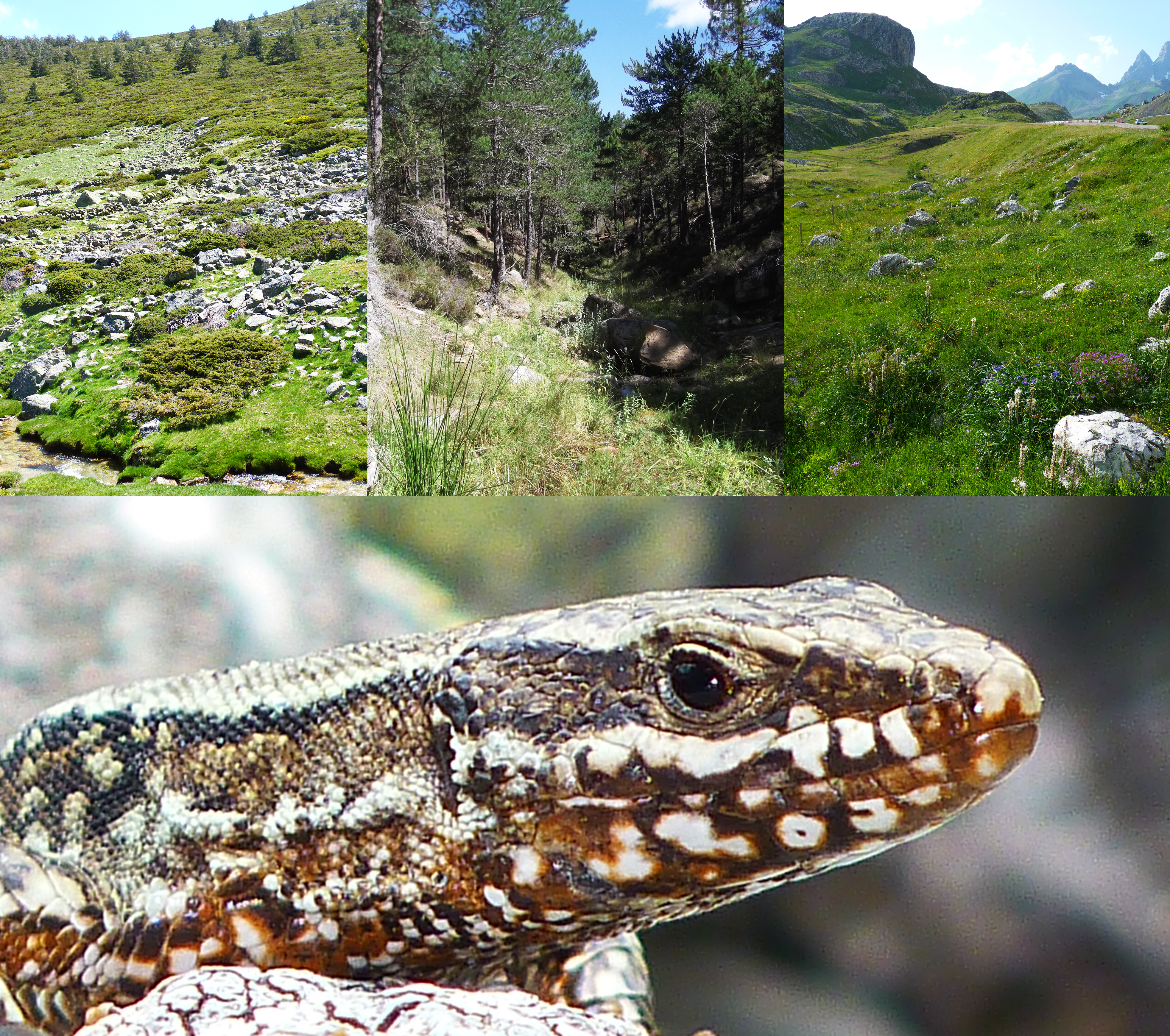
Common wall lizard (Podarcis muralis, male) and three localities where the species is abundant in Spain, left to right including Valdesquí/Madrid (Central System), Peñagolosa/Castellón (Iberian System) and El Portalet/Huesca (The Pyrenees).

Iberia is a wonderful natural laboratory, with a complex blend of flat/hilly, open/woody and coastal/continental terrain, swept by climatic gradients of temperature and moisture. In 2013, I launched a BES-supported project about the thermal ecology of Iberian lizards and managed to drive over much of the Iberian Peninsula in fairly little time. Not being a reptile specialist myself, I was confronted by the consistent observation that lizard populations occupied very different habitats across the known distribution of each of the ~ 25 known Iberian species belonging to the family Lacertidae.

For instance, the common wall lizard (Podarcis muralis) likes water, rocks and mountains, but you can find this pencil-long reptile at the top of a summit, along the slopes or riversides of shallow and deep ravines, on little stones barely surfacing above peatland grasslands, or among the bricks of buildings. These animals must experience different local climates conditional on where they live, and adapt their thermal physiology accordingly.

Having then started a postdoc in Miguel Araújo’s lab — a world-class site for global change ecology and ‘big’ biodiversity patterns — I reviewed a sizeable body of literature looking into large-scale gradients of thermal tolerance. Most of those papers had collated (mostly) one estimate of tolerance from each of tens to thousands of species, then mapped them against regional and global metrics of climate change through sophisticated mathematical frameworks. But these studies rarely accounted for population-level thermal tolerance.

Read the rest of this entry »


Cartoon guide to biodiversity loss LI

23 10 2018

The six set of six biodiversity cartoons for 2018. See full stock of previous ‘Cartoon guide to biodiversity loss’ compendia here.


Read the rest of this entry »


Save a jaguar by eating less meat

8 10 2018

Kaayana

My encounter with Kaayana in Kaa-Iya National Park in the Bolivian Chaco. Her cub was around but cannot be seen in the photo

I was trapped. Or so I thought.

The jaguar came towards me on the dirt road, calmly but attentively in the dusky light, her nearly full grown cub behind her. Nervous and with only a torch as defence, I held the light high above my head as she approached, trying to look taller. But she was merely curious; and, after 20 minutes, they left. I walked home in the thickening darkness, amazed at having come so close to South America’s top predator. We later named this mother jaguar ‘Kaayana’, because she lives inside Kaa-Iya National Park in the Bolivian Chaco. My fascination with jaguars has only grown since then, but the chances of encountering this incredible animal in the wild have shrunk even since that night.

A few years after that encounter, I’m back to study jaguars in the same forest, only now at the scale of the whole South American Gran Chaco. Jaguars are the third largest cats in the world and the top predators across Latin America. This means that they are essential for keeping ecosystems healthy. However, they are disappearing rapidly in parts of their range.

Understanding how and where the jaguar’s main threats — habitat destruction and hunting — affect them is fundamental to set appropriate strategies to save them. These threats are not only damaging on their own, but they sometimes act simultaneously in an area, potentially having impacts that are larger than their simple sum. For instance, a new road doesn’t only promote deforestation, it also increases hunters’ ability to get into previously inaccessible forests. Similarly, when the forest is cut for cattle ranching, ranchers often kill jaguars for fears of stock loss.

Kaayana & kittens

Kaayana was seen years later by Daniel Alarcón, who took much better photos of her and her new cubs

However, the interactions between these threats are still not fully understood. In our new study, just published in the journal Diversity and Distributions, we developed a new framework to quantify how and where habitat destruction and hunting risk acted together over three decades, at the expense of highly suitable jaguar habitat in the Gran Chaco. We also analyzed how well the different Chaco countries — Bolivia, Paraguay and Argentina — and their protected areas maintained key jaguar habitat. Read the rest of this entry »


Sex on the beach

2 10 2018
Female green turtles (Chelonia mydas) spawning (top) and diving (bottom) on Raine Island (Great Barrier Reef, Queensland, Australia) — photos courtesy of Ian Bell. This species is ‘Endangered’ globally since 1982, mainly from egg harvesting (poaching conflict in Mexico for olive ridley Lepidochelys olivacea featured by National Geographic’s video here), despite the success of conservation projects (39). Green turtles inhabit tropical and subtropical seas in all oceans. Adults can grow > 150 kg and live for up to ~ 75 years. Right after birth, juveniles venture into the open sea to recruit ultimately in coastal areas until sexual maturity. They then make their first reproductive migration, often over 1000s of km (see footage of a real dive of a camera-equipped green turtle), to reach their native sandy beaches where pregnant females will lay their eggs. Each female can deposit more than one hundred eggs in her nest, and in several clutches in the same season because they can store the sperm from multiple mating events.

When sex is determined by the thermal environment, males or females might predominate under sustained climatic conditions. A study about marine turtles from the Great Barrier Reef illustrates how feminisation of a population can be partitioned geographically when different reproductive colonies are exposed to contrasting temperatures.

Fortunately, most people in Western societies already perceive that we live in a complex blend of sexual identities, far beyond the kind of genitals we are born with. Those identities start to establish themselves in the embryo before the sixth week of pregnancy. In the commonest scenario, for a human foetus XY with one maternal chromosome (X) and one paternal (Y) chromosome, the activation of the Sry gen (unique to Y) will trigger the differentiation of testicles and, via hormonal pathways, the full set of male characteristics (1).

Absence of that gene in an XX embryo will normally lead to a woman. However, in just one of many exceptions to the rule, Sry-expression failure in XY individuals can result in sterile men or ambiguous genitals — along a full gradient of intermediate sexes and, potentially, gender identities. A 2015 Nature ‘News’ feature echoes two extraordinary cases: (i) a father of four children found to bear a womb during an hernia operation, and (ii) a pregnant mother found to host both XX and XY cells during a genetic test – with her clinical geneticist stating “… that’s the kind of science-fiction material for someone who just came in for an amniocentesis” (2). These real-life stories simply reflect that sex determination is a complex phenomenon.

Three ways of doing it

In nature, there are three main strategies of sex determination (3) — see scheme here: Read the rest of this entry »