Biowealth: all creatures great and small

4 12 2013

Curious Country flyer“So consider the crocodiles, sharks and snakes, the small and the squirmy, the smelly, slimy and scaly. Consider the fanged and the hairy, the ugly and the cute alike. The more we degrade this astonishing diversity of evolved life and all its interactions on our only home, the more we expose ourselves to the ravages of a universe that is inherently hostile to life.”
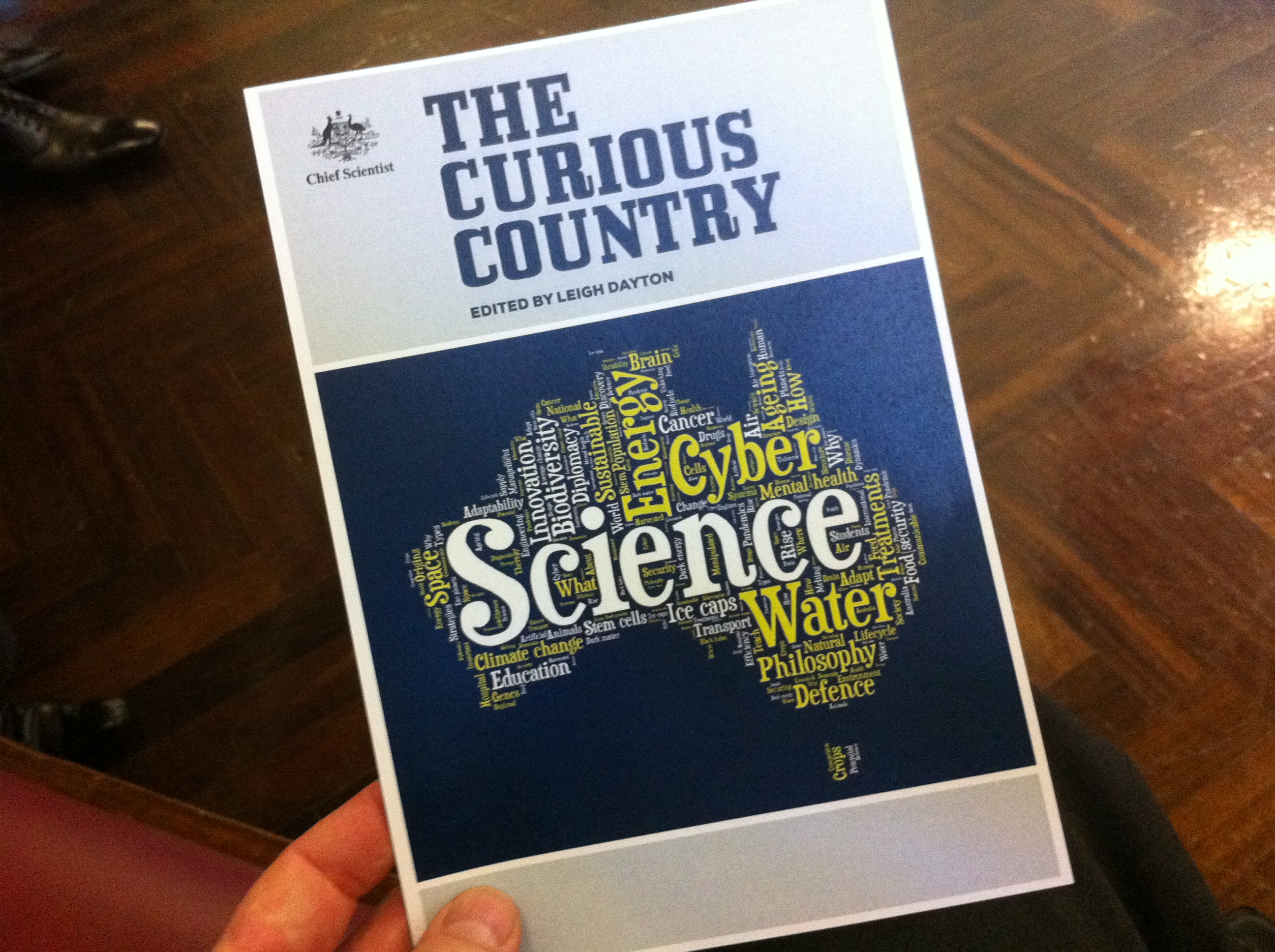
excerpt from ‘Biowealth: all creatures great and small’ The Curious Country (C.J.A. Bradshaw 2013).

I’ve spent the last few days on the east coast with my science partner-in-crime, Barry Brook, and one of our newest research associates (Marta Rodrigues-Rey Gomez). We first flew into Sydney at sparrow’s on Monday, then drove a hire car down to The ‘Gong to follow up on some Australian megafauna databasing & writing with Bert Roberts & Zenobia Jacobs. On Tuesday morning we then flitted over to Canberra where we had the opportunity to attend the official launch of a new book that Barry and I had co-authored.

The book, The Curious Country, is an interesting experiment in science communication and teaching dreamed up by Australia’s Chief Scientist, Professor Ian Chubb. Realising that the average Aussie has quite a few questions about ‘how stuff works’, but has little idea how to answer those questions, Ian engaged former Quantum star and science editor, Leigh Dayton, to put together a short, punchy, topical and easily understood book about why science is good for the country.

Yes, intuitive for most of you out there reading this, but science appreciation isn’t always as high as it should be amongst the so-called ‘general public’. Ian thought this might be one way to get more people engaged.

When honoured with the request to write an interesting chapter on biodiversity for the book, I naturally accepted. It turns out Barry was asked to do one on energy provision at the same time (but we didn’t know we had both been asked at the time). Our former lab head, Professor David Bowman, was also asked to write a chapter about fire risk, so it was like a mini-reunion yesterday for the three of us.


Read the rest of this entry »


King for a day – what conservation policies would you make?

29 11 2013

CrownI have been thinking a lot lately about poor governance and bad choices when it comes to biodiversity conservation policy. Perhaps its all that latent anger arising from blinkered, backward policies recently implemented by conservative state and national governments in Australia and elsewhere that leads me to contemplate: What would I do if I had the power to change policy?

While I am certain I have neither the experience or complete knowledge to balance national budgets, ensure prosperity and maintain the health of an entire country, I do have some ideas about what we’re doing wrong conservation-wise, and how we could potentially fix things. This is not meant to be an exhaustive list – it is more a discussion point where people can suggest their own ideas.

So here are 16 things I’d change or implement (mainly in Australia) if I were king for a day:

Read the rest of this entry »


Medieval Canada threatens global biodiversity

25 11 2013

harper_scienceArtists, poets and musicians make us feel, viscerally, how people destroy what they do not understand. Logic and observation led E. O. Wilson to conclude: ‘If people don’t know, they don’t care. If they don’t care, they don’t act.’

Whether you feel it in one of Drew Dillinger’s poems1 or visualise it from the sinuous beauty of mathematical equations, the song remains the same. Scientists are critical to the present and future of the biosphere and humanity, but if — and only if — we are free to communicate our findings to the voting public.

Galileo did not have that right. Scientists in totalitarian regimes of today still lack it. And now, incredibly, some of Canada’s top scientists have lost that right2,3,4.

That is not the Canada I immigrated into. Rewind the tape to 1983. I am a young immigrant, ecstatic that my family has gained entry into the country. We all have mixed feelings; we love our home country of Mexico and are sad to leave it, yet we look forward to being part of Canada’s open-minded and science-loving spirit. The tape runs forward and not all turns out to be as advertised. Still, for the next 23 years Canada remains a damn good place, ruled by governments that, imperfect as they might have been, were not obsessed with burying science.

Fast forward the tape to 2006. Stephen Harper’s newly elected and still ruling Conservative Government hits the ground pounding punches in all directions. Almost immediately, the Conservatives begin to implement one of their many Machiavellian tactics that aim to turn Canada into a petro-state6,7: downgrade science as irrelevant to evidence-based decision making. Ever since, Canadian federal scientists have seen their programs slashed or buried. Those who manage to hang on to their jobs are strictly forbidden to speak about their findings to the media or the public8,9,10,11.

Read the rest of this entry »


Hate journal impact factors? Try Google rankings instead

18 11 2013

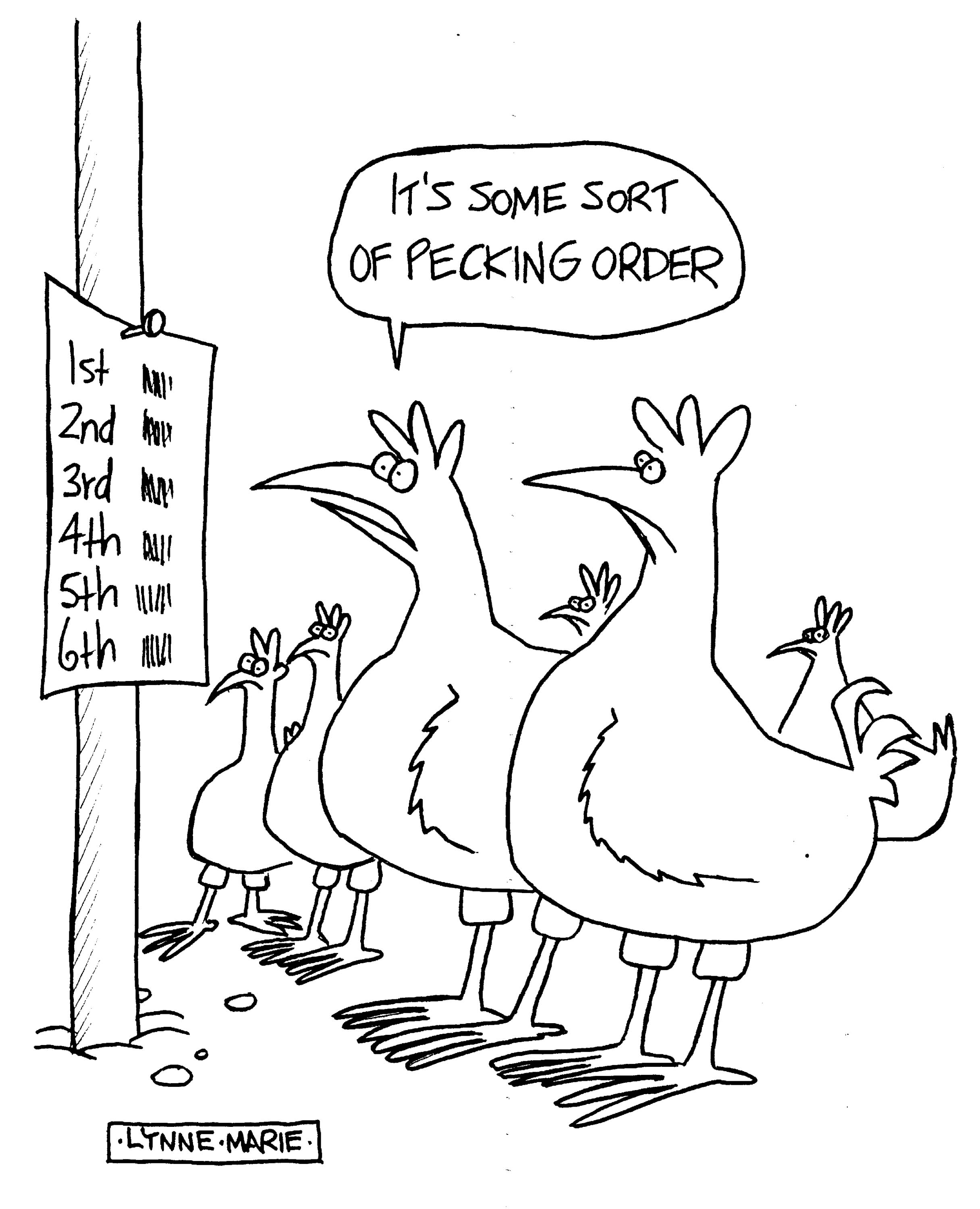
pecking orderA lot of people hate journal impact factors (IF). The hatred arises for many reasons, some of which are logical. For example, Thomson Reuters ISI Web of Knowledge® keeps the process fairly opaque, so it’s sometimes difficult to tell if journals are fairly ranked. Others hate IF because it does not adequately rank papers within or among sub disciplines. Still others hate the idea that citations should have anything to do with science quality (debatable, in my view). Whatever your reason though, IF are more or less here to stay.

Yes, individual scientists shouldn’t be ranked based only on the IF of the journals in which they publish; there are decent alternatives such as the h-index (which can grow even after you die), or even better, the m-index (or m-quotient; think of the latter as a rate of citation accumulation). Others would rather ditch the whole citation thing altogether and measure some element of ‘impact’, although that elusive little beast has yet to be captured and applied objectively.

So just in case you haven’t already seen it, Google has recently put its journal-ranking hat in the ring with its journal metrics. Having firmly wrested the cumbersome (and expensive) personal citation accumulators from ISI and Scopus (for example) with their very popular (and free!) Google Scholar (which, as I’ve said before, all researchers should set-up and make available), they now seem poised to do the same for journal rankings.

So for your viewing and arguing pleasure, here are the ‘top’ 20 journals in Biodiversity and Conservation Biology according to Google’s h5-index (the h-index for articles published in that journal in the last 5 complete years; it is the largest number h such that h articles published in 2008-2012 have at least h citations each):

Read the rest of this entry »


Cleaning up the rubbish: Australian megafauna extinctions

15 11 2013

diprotodonA few weeks ago I wrote a post about how to run the perfect scientific workshop, which most of you thought was a good set of tips (bizarrely, one person was quite upset with the message; I saved him the embarrassment of looking stupid online and refrained from publishing his comment).

As I mentioned at the end of post, the stimulus for the topic was a particularly wonderful workshop 12 of us attended at beautiful Linnaeus Estate on the northern coast of New South Wales (see Point 5 in the ‘workshop tips’ post).

But why did a group of ecological modellers (me, Barry Brook, Salvador Herrando-Pérez, Fréd Saltré, Chris Johnson, Nick Beeton), geneticists, palaeontologists (Gav Prideaux), fossil dating specialists (Dizzy Gillespie, Bert Roberts, Zenobia Jacobs) and palaeo-climatologists (Michael Bird, Chris Turney [in absentia]) get together in the first place? Hint: it wasn’t just the for the beautiful beach and good wine.

I hate to say it – mainly because it deserves as little attention as possible – but the main reason is that we needed to clean up a bit of rubbish. The rubbish in question being the latest bit of excrescence growing on that accumulating heap produced by a certain team of palaeontologists promulgating their ‘it’s all about the climate or nothing’ broken record.

Read the rest of this entry »


Quantity, but not quality – slow recovery of disturbed tropical forests

8 11 2013

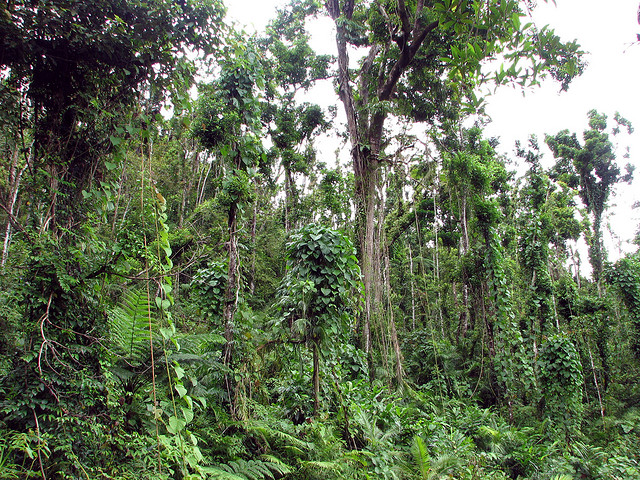
tropical regrowthIt is a sobering statistic that most of the world’s tropical forests are not ‘primary’ – that is, those that have not suffered some alteration or disturbance from humans (previously logged, cleared for agriculture, burned, etc.).

Today I highlight a really cool paper that confirms this, plus adds some juicy (and disturbing – pun intended – detail). The paper by Phil Martin and colleagues just published in Proceedings of the Royal Society B came to my attention through various channels – not least of which was their citation of one of our previous papers ;-), as well as a blog post by Phil himself. I was so impressed with it that I made my first Faculty of 1000 Prime recommendation1 of the paper (which should appear shortly).

As we did in 2011 (to which Phil refers as our “soon-to-be-classic work” – thanks!), Martin and colleagues amassed a stunning number of papers investigating the species composition of disturbed and primary forests from around the tropics. Using meta-analysis, they matched disturbed and undisturbed sites, recording the following statistics: Read the rest of this entry »


Translocations: keep it in the family

31 10 2013
CB_Translocations_Photo
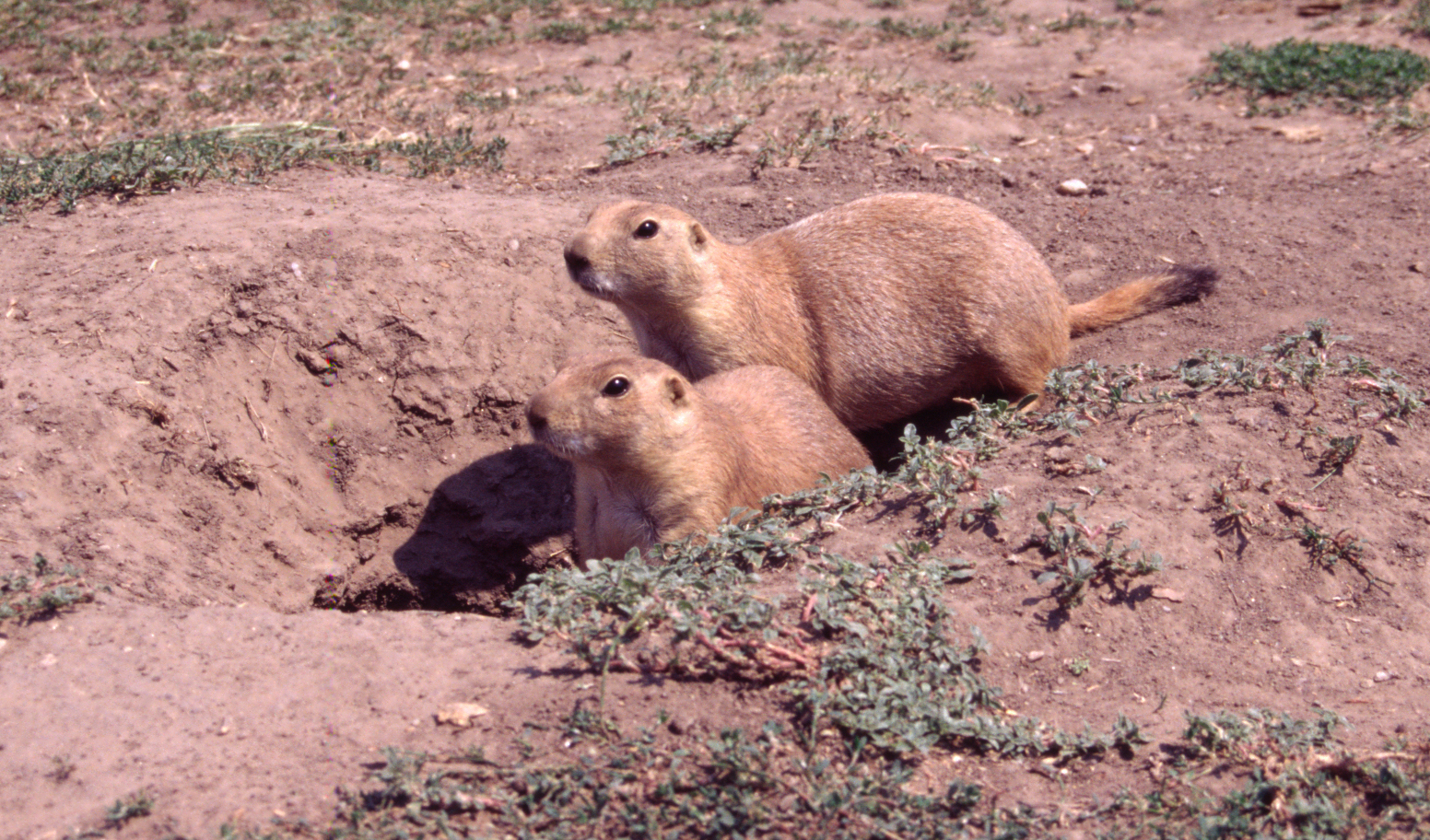
Prairie dogs (Cynomys spp.) comprise 5 species native to North American grasslands. Rather than a ‘dog’ (‘perrito’ or ‘little dog’ in Spanish), this animal is a squirrel (Sciuridae) adapted to ground life. In particular, black-tailed prairie dogs (C. ludovicianus) inhabit the plains between the Frenchman River in Canada and the Mexican stretches of the Sonoran and Chihuahuan deserts. Individuals have a maximum length of 40 cm and weigh up to 2 kg. The global population is currently estimated at some 18 million individuals over an area that has waned by 90% relative to historical ranges. The species is IUCN ‘Least Concern’ and shows a global ‘decreasing’ trend as a result of ongoing habitat loss and fragmentation due to urban development and farming, and susceptibility to Yersinia pestis – a bacteria that causes plague in prairie dogs and other mammals including humans.Colonies, known as ‘coteries’ (from French), are made of several family clans that live in contiguous territories. Clans include one or two males, and several females and juveniles [7]. Females show strong philopatry, while males are the ones that colonise new territories, or mingle with existing clans. Such dispersion pattern, along with daughters deliberately avoiding incest, minimises inbreeding [8]. Burrows consist of >10-m tunnels in which temperatures remain between 5 and 25 ºC irrespective of above-ground temperatures. Prairie dogs are genuine landscape architects with their network of burrows largely increasing edaphic, botanic and zoological diversity [9]. The pic shows two black prairie dogs in Wind Cave National Park (South Dakota, USA) (courtesy of Lisa Savage).

If you have lived in different suburbs, cities or even countries, you will be well aware that changing residence feels very different whether you do it on your own or with someone else. In the latter case, you might have to share tasks, and key decisions have to be made on the basis of everybody’s needs. The situation is analogous when managers decide to move a group of animals or plants from one place to another – so-called translocation.

Translocations involve human-assisted movements of organisms into an area (i) that holds an existing population of the same species (re-stocking), or (ii) where the species has been extirpated (re-introduction) or (iii) is outside its historical distribution (introduction) [1] – this terminology follows 1993 IUCN’s Criteria [1, 3], but is unstable, e.g., see [2]. The rationale behind translocations has obvious merits (e.g., to promote population growth following overharvesting, attenuate human-predator conflicts, rescue endangered species) [2]. However, translocations are complex and have a long record of failed attempts in the history of conservation biology, so the resulting waste of resources has prompted a recent re-appraisal of methods [1-3].

Debra Shier investigated the nuisances of a translocation of a social species such as the black-tailed prairie dog (Cynomys ludovicianus) [4]. Shier tagged, sexed and determined (via capture-recapture and field observations) membership to identified family clans in 973 individuals from Vermejo Park (New Mexico, USA). She then introduced clans to ten dog-free sites with soil quality and vegetation cover akin to the historical distribution of the species. In five of those sites, Shier translocated family clans (4 to 7 individuals per clan) and in the other five sites she freed clans made up of members being picked up randomly (1 male, 2 females, 2 juveniles). During a period of 9-10 months after translocation, Shier monitored the behaviour of females and ultimately re-captured all introduced individuals. She found that 50% of the dogs had survived translocation, and assumed that the remainder had died since individuals rarely disperse more than three km from their natal area, and aerial surveys spotted no dogs in a four-km perimeter around the point of release.

Read the rest of this entry »


Making the scientific workshop work

28 10 2013
I don't mean this

I don’t mean this

I’ve been a little delayed in blogging this month, but for a very good reason – I’ve just experienced one of the best workshops of my career. I’d like to share a little of that perfect science recipe with you now.

I’ve said it before, but it can stand being repeated: done right, workshops can be some of the most efficient structures for doing big science.

First, let me define ‘workshop’ for those of you who might have only a vague notion of what it entails. To me, a workshop is a small group of like-minded scientists – all of whom possess different skills and specialities – who are brought together to achieve one goal. That goal is writing the superlative manuscript for publication.

So I don’t mean just a bog-standard chin-wag infected with motherhoods and diatribes. Workshops are not mini-conferences; neither are they soap boxes. It is my personal view that nothing can waste a scientist’s precious time more than an ill-planned and aimless workshop.

But with a little planning and some key ingredients that I’ll list shortly, you can turn a moderately good idea into something that can potentially shake the foundations of an entire discipline. So what are these secret ingredients? Read the rest of this entry »


Making science matter

14 10 2013
© XKCD

© XKCD

I’ve been home from my last overseas trip now for nearly two weeks, but despite not feeling caught up, it’s high time I report what I was up to.

Some of you who follow my Twitter feed or who saw a CB post about cartoonist Seppo Leinonen know that I was visiting the University of Helsinki to participate in a three-day short course for PhD students entitled ‘Making Science Matter‘. I was so impressed with how well Mar Cabeza and Tomas Roslin put together the course, that I thought I’d share the format with CB readers (just in case any of you out there can be convinced to design a similar course at your university).

I think it’s important first to discuss the philosophy of the course and what it hoped to provide those early-career researchers.

Most science PhD students will tell you once they’ve completed their degree that they feel completely unprepared to launch themselves into the extra-curricular world of communicating their science beyond the ‘traditional’ (peer-reviewed journals) outlets. Swamped with learning how to write concisely and clearly, getting up to speed with the entire body of theory on which their projects are based, mastering advanced modelling and statistical approaches and learning how to apply efficient computer code, it’s no wonder that many students find precious little time for anything else (including families, good food and proper hygiene).

Once they do land that precious post-doctoral fellowship though, they are immediately expected to interact professionally with the media, embrace social media and give fantastic public lectures to engage the uninformed. Right. Read the rest of this entry »


Greenies can be pro-nuclear

7 10 2013

happy-nuclear-powerPublished today on The Conversation by Ben Heard & me.

The IPCC fifth climate change report lays out a carbon budget that we must follow if we’re to keep the world under a temperature rise of 2C over pre-industrial levels – the widely accepted level above which lies catastrophic climate change. According to the report, we can “spend” 1,000 gigatonnes (Gt) CO2 in total. We’ve already spent more than half, and at the current rates we are on track to blow the other half in 30 years.

Not only is human society at risk from this unprecedented rate of warming, the ecosystems on which all life is based are also seriously under threat.

So it’s a timely moment to look at how we could avoid burning through our carbon budget, including controversial options such as nuclear energy.

This week marks the beginning of the Australian tour of a new documentary, Pandora’s Promise. The film aims to dispel myths and spark a debate about whether you can be simultaneously “pro-nuclear” and an environmentalist.

Renewable failure

Even with the best of intentions to reduce the magnitude of future climate disruption, decades of focus on carbon pricing and the promotion of renewable energy sources cannot hide our failure to provide scalable, large, reliable sources of clean (low or emissions-free) energy.

Today, wind turbines and solar panels combined deliver only around 3% of total electricity consumption in Australia, with coal providing 70 %, and gas another 20 %. The contribution of renewable energy has decreased over time – in 1960 renewable energy contributed 19% (largely thanks to hydropower) and coal 76 %. Total renewable energy contribution today, including hydro, has shrunk to 9%.

This is thanks, in substantial part, to the mismatch between dispersed, intermittent wind and solar technologies and the large, continuous fossil fuels we need to replace.

These sobering statistics are in no way an argument to abandon renewables, but they are evidence of a serious failure to date and point to near-certain failure in future. Passing the blame to media, fossil fuel interests or other favoured scapegoats makes us feel good and is no doubt deserved. But we must also cease avoiding uncomfortable truths about the inadequacy of the solutions we have advocated to date. Read the rest of this entry »


Cartoon guide to biodiversity loss XXI

4 10 2013

Interim post following some mind- and body-stressing international travel. I present another 6 biodiversity cartoons (see full stock of previous ‘Cartoon guide to biodiversity loss’ compendia here).

Read the rest of this entry »


Too small to avoid catastrophic biodiversity meltdown

27 09 2013
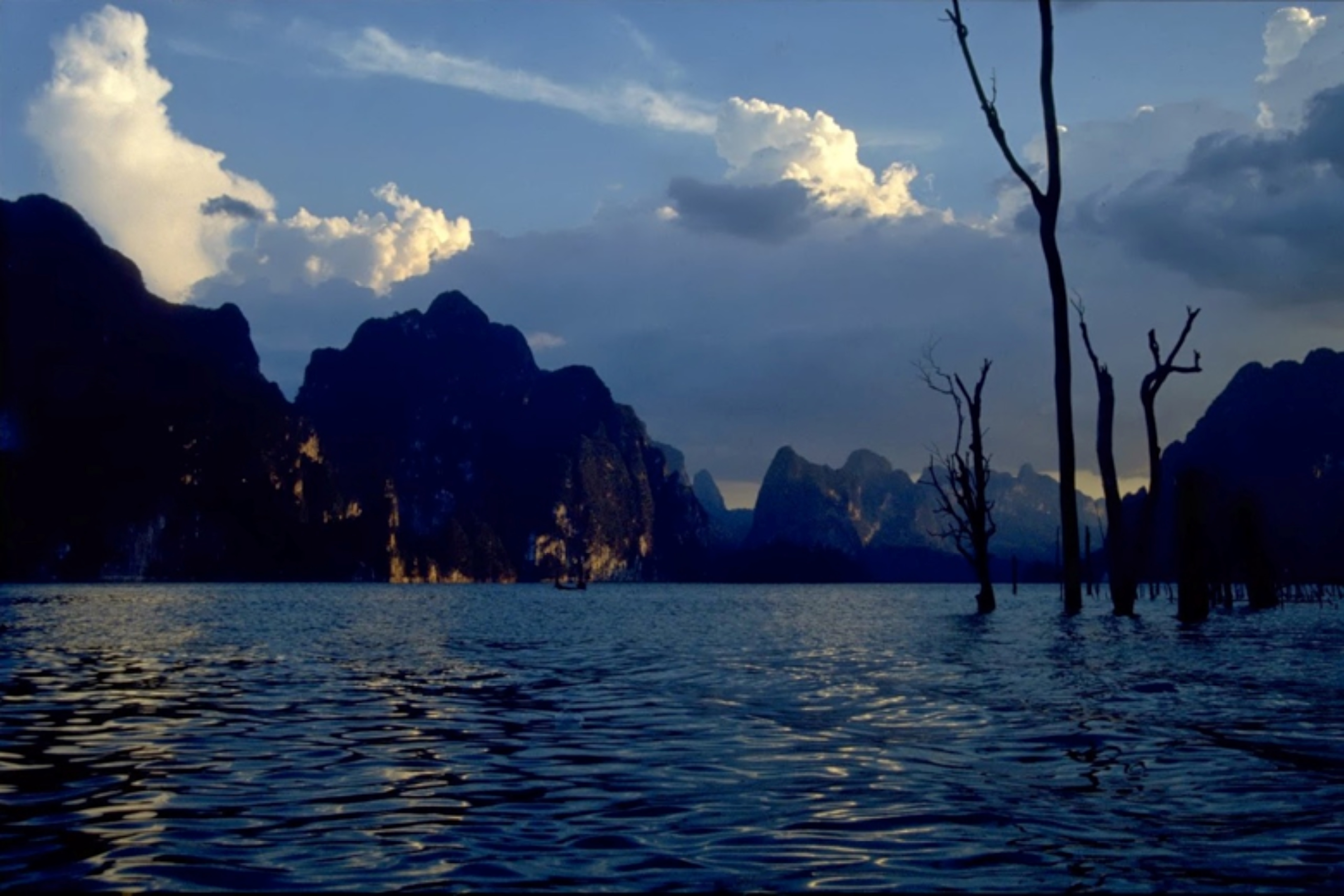
Chiew Larn

Chiew Larn Reservoir is surrounded by Khlong Saeng Wildlife Sanctuary and Khao Sok National Park, which together make up part of the largest block of rainforest habitat in southern Thailand (> 3500 km2). Photo: Antony Lynam

One of the perennial and probably most controversial topics in conservation ecology is when is something “too small’. By ‘something’ I mean many things, including population abundance and patch size. We’ve certainly written about the former on many occasions (see here, here, here and here for our work on minimum viable population size), with the associated controversy it elicited.

Now I (sadly) report on the tragedy of the second issue – when is a habitat fragment too small to be of much good to biodiversity?

Published today in the journal Science, Luke Gibson (of No substitute for primary forest fame) and a group of us report disturbing results about the ecological meltdown that has occurred on islands created when the Chiew Larn Reservoir of southern Thailand was flooded nearly 30 years ago by a hydroelectric dam.

As is the case in many parts of the world (e.g., Three Gorges Dam, China), hydroelectric dams can cause major ecological problems merely by flooding vast areas. In the case of Charn Liew, co-author Tony Lynam of Wildlife Conservation Society passed along to me a bit of poignant and emotive history about the local struggle to prevent the disaster.

“As the waters behind the dam were rising in 1987, Seub Nakasathien, the Superintendent of the Khlong Saeng Wildlife Sanctuary, his staff and conservationist friends, mounted an operation to capture and release animals that were caught in the flood waters.

It turned out to be distressing experience for all involved as you can see from the clips here, with the rescuers having only nets and longtail boats, and many animals dying. Ultimately most of the larger mammals disappeared quickly from the islands, leaving just the smaller fauna.

Later Seub moved to Huai Kha Khaeng Wildlife Sanctuary and fought an unsuccessful battle with poachers and loggers, which ended in him taking his own life in despair in 1990. A sad story, and his friend, a famous folk singer called Aed Carabao, wrote a song about Seub, the music of which plays in the video. Read the rest of this entry »


Science immortalised in cartoon Version 2.0

24 09 2013

© Seppo Leinonen

I’m in the middle of participating in a short-course on science communication based at the University of Helsinki‘s Lammi Biological Station (about 1.5 hours north of Helsinki by car). Organised by two fantastic people, Mar Cabeza and Tomas Roslin, it’s an eclectic mix of instruction for (mainly) PhD students on how to promote yourself and your science in print, in media, in illustration, in citizen science and for policy makers.

While we aren’t yet finished, I wanted to report that I had the immense pleasure of finally meeting the immeasurably talented environmental cartoonist, Seppo Leinonen. Not only is he an extremely talented artist and a dedicated environmentalist, he’s just a top bloke.

If you haven’t checked out Seppo.net and his cartoons yet, you should.

This is just a brief post to spruik his fine work, and show off his parting cartoon gift to me: Read the rest of this entry »


Early to press is best for success

19 09 2013

publishingThis paper is bound to piss off a few people. So be it. This is what we found, regardless of what you want to believe.

Led by the extremely prolific Bill Laurance, we have just published a paper (online early) that looks at the correlates of publication success for biologists.

I have to preface the main message with a little philosophical discussion of that loaded word – ‘success’. What do we mean by scientific ‘success’? There are several bucket loads of studies that have attempted to get at this question, and several more that have lamented the current system that emphasises publication, publication, publication. Some have even argued that the obsession of ever-more-frequent publication has harmed scientific advancement because of our preoccupation with superficial metrics at the expense of in-depth scientific enquiry.

Well, one can argue these points of view, and empirically support the position that publication frequency is a poor metric. I tend to agree. At the same time, I am not aware of a single scientist known for her or his important scientific contributions that doesn’t have a prolific publication output. No, publishing shitloads of papers won’t win you the Nobel Prize, but if you don’t publish, you won’t win either.

So, publication frequency is certainly correlated with success, even if it’s not the perfect indicator. But my post today isn’t really about that issue. If you accept that writing papers is part of a scientist’s job, then read on. If you don’t, well …

So today I report the result of our study published online in BioScience, Predicting publication success for biologists. We asked the question: what makes someone publish more than someone else? Read the rest of this entry »


Conservation: So easy a child could do it

13 09 2013

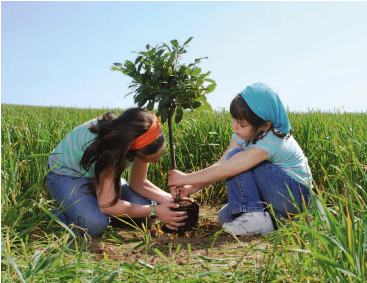
child's playI don’t like to talk about my family online. Call me paranoid, but there are a lot of crazy people out there who don’t like what scientists like me are saying (bugger the evidence). Yes, like many climate scientists, I’ve also been threatened. That’s why my personal life remains anonymous except for a select group of people.

But I’ve mentioned my daughter before on this blog, and despite a few people insinuating that I am a bad parent because of what I said, I am happy that I made the point that climate change is a scary concept of which our children must at least be cognisant.

My daughter’s story today is a little less confronting, but equally enlightening. It’s also a little embarrassing as a scientist who has dedicated my entire research career to the discipline of conservation biology.

As a normal six year-old without the ability to refrain from talking – even for a moment – I hear a lot of stories. Many of them are of course fantastical and ridiculous, but those are just part of a healthy, imaginative childhood (I am proud to say though that she is quite clear about the non-existence of fictitious entities like faeries, easter bunnies and gods).

Every once in a while, however, there are snippets of wisdom that ooze out from the cracks in the dross. In the last few months, my daughter has independently and with no prompting from me come up with two pillars of conservation science: (i) protected areas and (ii) biodiversity corridors. Read the rest of this entry »


How to make the most of a conference

5 09 2013

conferenceHaving just attended two major international conferences back-to-back (ICCB 2013 in Baltimore, USA and INTECOL 2013 in London, UK), I thought it might be a good idea to proffer some advice for those who are relatively new to the conference carousel. Having attended some larger number raised to the power of another conferences since I started this science gig, I think I’ve figured out a few definitely do-s, and positively don’t-s.

Some might argue that the scientific conference is a thing of the past. Now with super-fast internet, Twitter, open-access, Skype and video conference calls, why would we need to travel half way around the planet to sit day after day in some stuffy room to listen to some boring snippets of half-finished research? Why indeed would I get jet-lagged, spend a sizeable chunk of my research grant and emit a bucket-load of carbon just to listen to some boring old farts tell me the same thing they’ve been doing for the last 20 years?

If that were all conferences were about, I would never attend another for the rest of my career. Thankfully, that’s not why we go.

Yes, it’s easy to go online these days and see what your colleagues are up to (and if they don’t have a good online profile, they almost don’t exist these days). It’s also easier and easier to download important papers from almost anyone and in almost any journal. So clearly conferences are not primarily about finding out what research is being done; in fact, I argue that that’s not their role at all.

The most important aspect of a conference are the social events. Yes, the social events.

That might sound like a joke, but I’m dreadfully serious. Read the rest of this entry »


MPs’ ignorance puts national parks in peril

30 08 2013

greedyLed by Bill Laurance, our latest opinion editorial in the Higher Education supplement. Interestingly, it has already spawned a bilious and spittle-flecked response by Queensland’s Acting National Parks Minister, Tim Mander. Given the evidence, who’s side do you take? I’m happy that at least one of the worst culprit state governments is at least now paying some attention to the issue.

LAST week the world was appalled when Ecuador decided to open up one of its iconic national parks for petroleum development, with Leonardo di Caprio being among the chorus of dissenting voices. Yet the world should be even more disappointed in Australia, a far wealthier nation whose parks could be facing even worse threats.

Why is Australia going down this reckless path? It’s all down to the state governments – especially in Victoria, Queensland and NSW.

For the conservative politicians currently holding sway in these States, it seems it’s time to generate some quick cash while cutting park budgets – and never mind the impact on Australia’s imperilled ecosystems and biodiversity.

In Victoria, for instance, land developers are now being allowed to build hotels and other ventures in national parks. In NSW, recreational shooting and possibly logging will be allowed in parks if new legislation is passed. In NSW’s marine parks, bans on shore-based recreational fishing are being lifted [see previous post here].

Other parks in NSW and Queensland are being opened up to livestock grazing. In Morrinya National Park in Queensland, a strip of forest 20 km long was recently cleared for fencing, with new stock-watering tanks being established throughout the park. Read the rest of this entry »


DNA barcoding plants with citizen science

28 08 2013

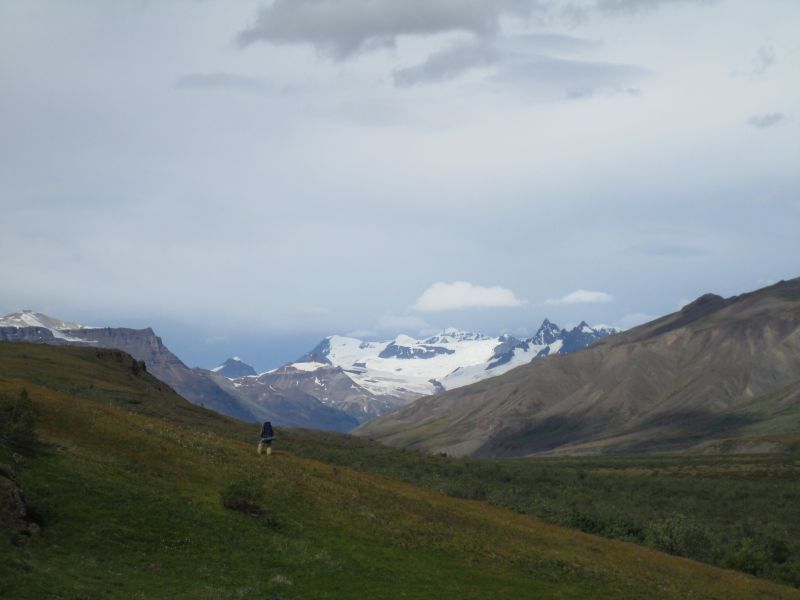
hikingI was contacted recently by Oscar Jaslowski of Microryza (a web platform that allows scientists to post research  ideas and collect contributions from web visitors) about a project getting underway in Alaska by Ellen Jorgensen of Genspace. He suggested it might make a good post for ConservationBytes.com, and I agreed. Thanks for the contribution, Ellen & Oscar.

There’s nothing so final as watching the bush pilot take off in his tiny plane, leaving you stranded in the Alaskan backcountry. We had plenty of food for a three-day expedition, but no satellite phone or any other way to contact anyone. In Alaska, the phrase ‘primordial indifference’ pretty much sums up your relationship with the vast, glacier-carved landscape. Mother Nature does not care if an ant like you lives or dies.

Our destination, the Skolai Valley, is located about 480 km (300 miles) east of Anchorage, in the heart of Wrangell-St. Elias National Park. At a whopping 5.3 million hectares (13 million acres), it is the largest national park in the United States, and probably one of the least-visited. Much of its forbidding territory is snow-covered and similar to the Himalayas. In fact, the size of the massive ice fall that towers over the town of McCarthy, the origin of our flight, is exceeded only by one near Mt. Everest. But winding through the glaciers and snowfields are alpine valleys that are a backpacker’s dream. And Genspace, the nonprofit science-based organisation that I direct, was lucky enough to have received funding in 2012 to launch this expedition to Skolai.

Our  mission: to barcode wild Alaskan plant life. Two of us headed down into the river valley and the other two climbed up to the level of the mountain pass to survey more alpine vegetation. We were carrying portable plant presses – normally something too bulky for backpacking, but necessary for this trip. Read the rest of this entry »


Biogeography comes of age

22 08 2013

penguin biogeographyThis week has been all about biogeography for me. While I wouldn’t call myself a ‘biogeographer’, I certainly do apply a lot of the discipline’s techniques.

This week I’m attending the 2013 Association of Ecology’s (INTECOL) and British Ecological Society’s joint Congress of Ecology in London, and I have purposefully sought out more of the biogeographical talks than pretty much anything else because the speakers were engaging and the topics fascinating. As it happens, even my own presentation had a strong biogeographical flavour this year.

Although the species-area relationship (SAR) is only one small aspect of biogeography, I’ve been slightly amazed that after more than 50 years since MacArthur & Wilson’s famous book, our discipline is still obsessed with SAR.

I’ve blogged about SAR issues before – what makes it so engaging and controversial is that SAR is the principal tool to estimate overall extinction rates, even though it is perhaps one of the bluntest tools in the ecological toolbox. I suppose its popularity stems from its superficial simplicity – as the area of an (classically oceanic) island increases, so too does the total number of species it can hold. The controversies surrounding such as basic relationship centre on describing the rate of that species richness increase with area – in other words, just how nonlinear the SAR itself is.

Even a cursory understanding of maths reveals the importance of estimating this curve correctly. As the area of an ‘island’ (habitat fragment) decreases due to human disturbance, estimating how many species end up going extinct as a result depends entirely on the shape of the SAR. Get the SAR wrong, and you can over- or under-estimate the extinction rate. This was the crux of the palaver over Fangliang He (not attending INTECOL) & Stephen Hubbell’s (attending INTECOL) paper in Nature in 2011.

The first real engagement of SAR happened with John Harte’s maximum entropy talk in the process macroecology session on Tuesday. What was notable to me was his adamant claim that the power-law form of SAR should never be used, despite its commonness in the literature. I took this with a grain of salt because I know all about how messy area-richness data can be, and why one needs to consider alternate models (see an example here). But then yesterday I listened to one of the greats of biogeography – Robert Whittaker – who said pretty much the complete opposite of Harte’s contention. Whittaker showed results from one of his papers last year that the power law was in fact the most commonly supported SAR among many datasets (granted, there was substantial variability in overall model performance). My conclusion remains firm – make sure you use multiple models for each individual dataset and try to infer the SAR from model-averaging. Read the rest of this entry »


Don’t blame it on the dingo

21 08 2013

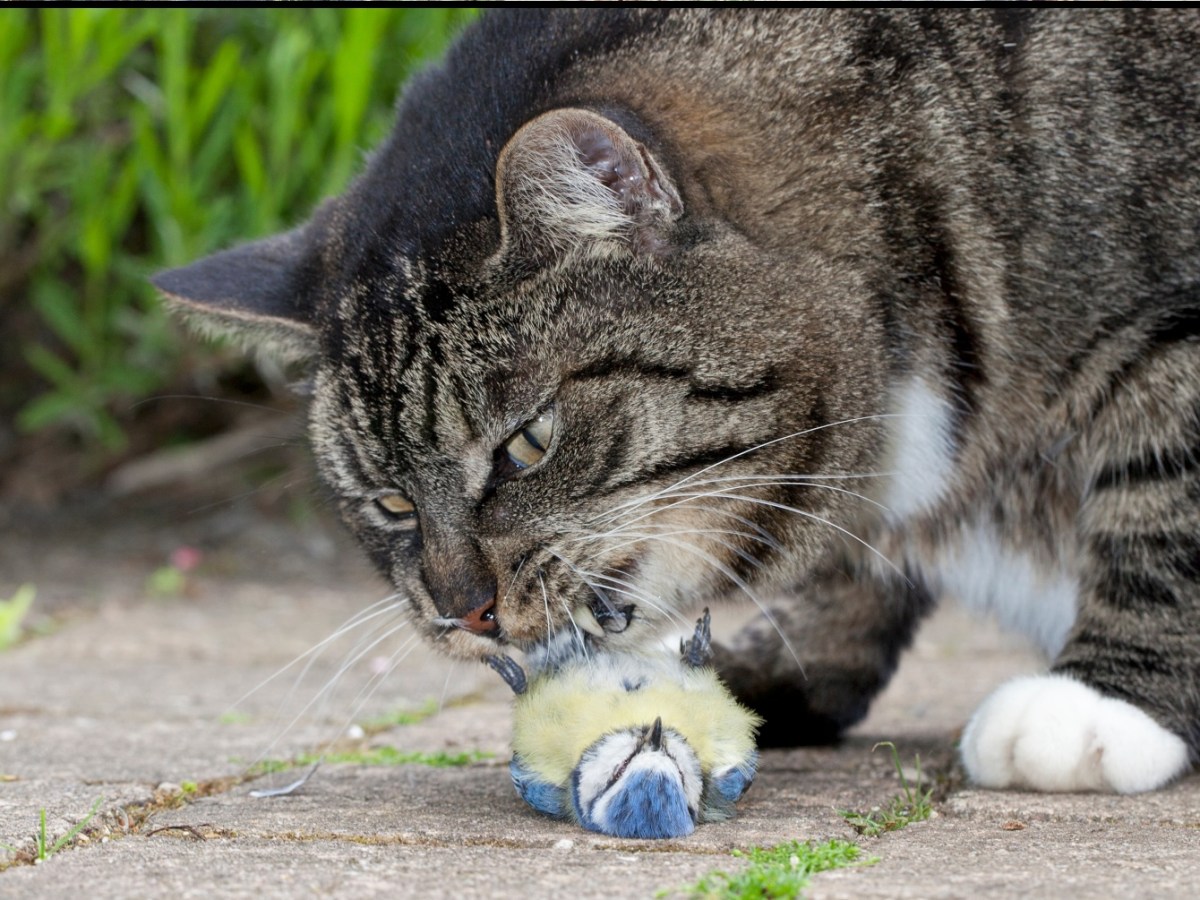
dingo angelOur postdoc, Tom Prowse, has just had one of the slickest set of reviews I’ve ever seen, followed by a quick acceptance of what I think is a pretty sexy paper. Earlier this year his paper in Journal of Animal Ecology showed that thylacine (the badly named ‘Tasmanian tiger‘) was most likely not the victim of some unobserved mystery disease, but instead succumbed to what many large predators have/will: human beings. His latest effort now online in Ecology shows that the thylacine and devil extinctions on the Australian mainland were similarly the result of humans and not the scapegoat dingo. But I’ll let him explain:

‘Regime shifts’ can occur in ecosystems when sometimes even a single component is added or changed. Such additions, of say a new predator, or changes such as a rise in temperature, can fundamentally alter core ecosystem functions and processes, causing the ecosystem to switch to some alternative stable state.

Some of the most striking examples of ecological regime shifts are the mass extinctions of large mammals (‘megafauna’) during human prehistory. In Australia, human arrival and subsequent hunting pressure is implicated in the rapid extinction of about 50 mammal species by around 45 thousand years ago. The ensuing alternative stable state was comprised of a reduced diversity of predators, dominated by humans and two native marsupial predators ‑ the thylacine (also known as the marsupial ‘tiger’ or ‘wolf’) and the devil (which is now restricted to Tasmania and threatened by a debilitating, infectious cancer).

Both thylacines and devils lasted on mainland Australia for over 40 thousand years following the arrival of humans. However, a second regime shift resulted in the extinction of both these predators by about 3 thousand years ago, which was coincidentally just after dingoes were introduced to Australia. Dingoes are descended from early domestic dogs and were introduced to northern Australia from Asia by ancient traders approximately 4 thousand years ago. Today, they are Australia’s only top predator remaining, other than invasive European foxes and feral cats. Since the earliest days of European settlement, dingoes have been persecuted because they prey on livestock. During the 1880s, 5614 km of ‘dingo fence’ was constructed to protect south-east Australia’s grazing rangelands from dingo incursions. The fence is maintained to this day, and dingoes are poisoned and shot both inside and outside this barrier, despite mounting evidence that these predators play a key role in maintaining native ecosystems, largely by suppressing invasive predators.

Perhaps because the public perception of dingoes as ‘sheep-killers’ is so firmly entrenched, it has been commonly assumed that dingoes killed off the thylacines and devils on mainland Australia. People who support this view also point out that thylacines and devils persisted on the island of Tasmania, which was never colonised by dingoes (although thylacines went extinct there too in the early 1900s). To date, most discussion of the mainland thylacine and devil extinctions has focused on the possibility that dingoes disrupted the system by ‘exploitation competition’ (eating the same prey), ‘interference competition’ (wasting the native predators’ precious munching time), as well as ‘direct predation’ (dingoes actually eating devils and thylacines). Read the rest of this entry »