Influential conservation ecology papers of 2018

17 12 2018

e35f9ddeada029a053a15cd023abadf5
For the last five years I’ve published a retrospective list of the ‘top’ 20 influential papers of the year as assessed by experts in F1000 Prime — so, I’m doing so again for 2018 (interesting side note: six of the twenty papers highlighted here for 2018 appear in Science magazine). See previous years’ posts here: 2017, 20162015, 2014, and 2013.

Read the rest of this entry »


Save a jaguar by eating less meat

8 10 2018
Kaayana

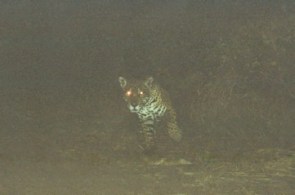
My encounter with Kaayana in Kaa-Iya National Park in the Bolivian Chaco. Her cub was around but cannot be seen in the photo

I was trapped. Or so I thought.

The jaguar came towards me on the dirt road, calmly but attentively in the dusky light, her nearly full grown cub behind her. Nervous and with only a torch as defence, I held the light high above my head as she approached, trying to look taller. But she was merely curious; and, after 20 minutes, they left. I walked home in the thickening darkness, amazed at having come so close to South America’s top predator. We later named this mother jaguar ‘Kaayana’, because she lives inside Kaa-Iya National Park in the Bolivian Chaco. My fascination with jaguars has only grown since then, but the chances of encountering this incredible animal in the wild have shrunk even since that night.

A few years after that encounter, I’m back to study jaguars in the same forest, only now at the scale of the whole South American Gran Chaco. Jaguars are the third largest cats in the world and the top predators across Latin America. This means that they are essential for keeping ecosystems healthy. However, they are disappearing rapidly in parts of their range.

Understanding how and where the jaguar’s main threats — habitat destruction and hunting — affect them is fundamental to set appropriate strategies to save them. These threats are not only damaging on their own, but they sometimes act simultaneously in an area, potentially having impacts that are larger than their simple sum. For instance, a new road doesn’t only promote deforestation, it also increases hunters’ ability to get into previously inaccessible forests. Similarly, when the forest is cut for cattle ranching, ranchers often kill jaguars for fears of stock loss.

Kaayana & kittens

Kaayana was seen years later by Daniel Alarcón, who took much better photos of her and her new cubs

However, the interactions between these threats are still not fully understood. In our new study, just published in the journal Diversity and Distributions, we developed a new framework to quantify how and where habitat destruction and hunting risk acted together over three decades, at the expense of highly suitable jaguar habitat in the Gran Chaco. We also analyzed how well the different Chaco countries — Bolivia, Paraguay and Argentina — and their protected areas maintained key jaguar habitat. Read the rest of this entry »


Primate woes where the oil palm grows

16 08 2018

gorilla

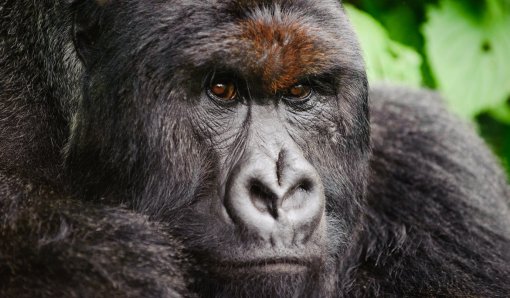
A new article just published in PNAS reveals how future expansion of the palm-oil industry could have terrible consequences for African primates.

Researchers from the European Commission’s Joint Research Centre, CIRAD, Liverpool John Moores University, and ETH Zurich searched for “areas of compromise” combining high oil palm suitability with low primate vulnerability, as possible locations where to accommodate new oil-palm plantations while reducing detrimental effects on primate populations.

Results show that there is small room for compromise. In fact, potential areas of compromise are rare across the whole African continent, covering a total extent of 0.13 Mha of land highly suited to oil palm cultivation where primate vulnerability is low, rising to just 3.3 Mha if all land with at least minimum suitability to grow oil palm is taken into account.

Palm oil production is steadily rising, and expected to accelerate in response to growing world’s population, with future demand driven not only by the food industry, but also by the biofuel market. Read the rest of this entry »


Some scary stats about agriculture and biodiversity

20 07 2018

84438Last week we had the pleasure of welcoming the eminent sustainability scientist, Professor Andrew Balmford of the University of Cambridge, to our humble Ecology and Evolution Seminar Series here at Flinders University. While we couldn’t record the seminar he gave because of some of the unpublished and non-proprietary nature of some of his slides, I thought it would be interesting, useful, and thought-provoking to summarise some of the information he gave.
Andrew started off by telling us some of the environmental implications of farming worldwide. Today, existing agriculture covers more than half of ‘useable’ land (i.e., excluding unproductive deserts, etc.), and it has doubled nitrogen fixation rates from a pre-industrial baseline. Globally, agriculture is responsible for between 19 and 35% of all greenhouse gas emissions, and it has caused approximately 40% increase in observed sea-level rise (1961-2003). Not surprisingly, agriculture already occupies the regions of highest biodiversity globally, and is subsequently the greatest source of threat to species.

Read the rest of this entry »


How to feed the world without costing the Earth

5 07 2018

image_normalI’m excited to announce the upcoming public lecture by world-renowned sustainability scientist, Professor Andrew Balmford, at Flinders University on 17 July 2018.
Andrew is Professor of Conservation Science and a Royal Society Wolfson Research Merit Award holder at the Department of Zoology, University of Cambridge, and is on sabbatical at University of Tasmania until December 2018. His main research interests are exploring how conservation might best be reconciled with land-demanding activities such as farming, quantifying the costs and benefits of effective conservation, and examining what works in conservation. In his book Wild Hope (Chicago University Press), he argues that cautious optimism is essential in tackling environmental challenges. Andrew helped establish the Student Conference on Conservation Science, and Earth Optimism.

EcolEvolFlindersLogoProfessor Balmford will be presenting his seminar “How to feed the world without costing the Earth” (hosted by the Ecology & Evolution Research Group) at the Bedford Park Campus of Flinders University in South Lecture Theatre 1, from 12:00-13:00 on 17 July 2018. All are welcome.

Abstract: Globally, agriculture is the greatest threat to biodiversity and a major contributor to anthropogenic greenhouse gas emissions. How we choose to deal with rising human food demand will to a large degree determine the state of biodiversity and the wider environment in the 21st century. Read the rest of this entry »


Penguins cheated by ecosystem change

13 03 2018

Jorge Drexler sings “… I was committed not to see what I saw, but sometimes life is more complex than what it looks like …”*. This excerpt by the Oscar-winning Uruguayan singer seems to foretell the theme of this blog: how the ecological complexity of marine ecosystems can elicit false signals to their predators. Indeed, the fidelity of marine predators to certain feeding areas can turn demographically detrimental to themselves when the amount of available food shrinks. A study of jackass penguins illustrates the phenomenon in a context of overfishing and ocean warming.

CB_JackassPenguinsEcologicalTrapPhoto

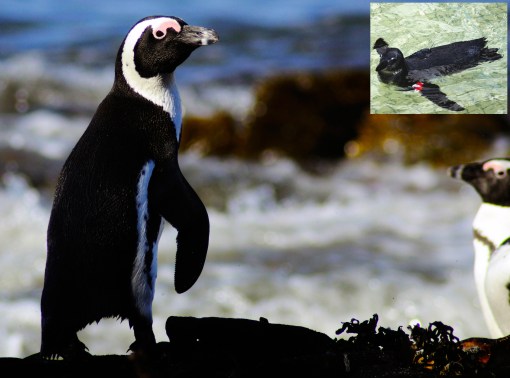
Adult of jackass penguin (Spheniscus demersus) from Robben Island (South Africa) — in the inset, one of the first juveniles released with a satellite transmitter on its back. The species is ‘Endangered’ under IUCN’s criteria (28), following a recent halving of the total population currently estimated at ~ 80,000 adults. Jackass penguins are the only penguins living in Africa, and owe their common name to their vocalisations (you can hear their braying sounds here); adults are ~ 50 cm tall and weigh ~ 3 kg. Photos courtesy of Richard Sherley.

Surface temperature, dissolved oxygen, acidity and primary productivity are, by and large, the top four environmental factors driving the functionality of marine ecosystems (1). Growing scientific evidence supports the idea that anthropogenic warming of the atmosphere and the oceans correlates with this quartet (2). For instance, marine primary productivity is enhanced by increased temperatures (3), but a warmer sea surface intensifies stratification, i.e., stacked layers of seawater with contrasting physical and chemical properties.

In coastal areas experiencing ‘upwelling’ (where winds displace surface water, allowing deep water laden with nutrients to reach the euphotic zone where plankton communities feast), stratification weakens upwelling currents and, in turn, limits the growth of plankton (4) that fuels the entire trophic web, including our fisheries. The study of these complex trophic cascades is particularly cumbersome from the perspective of large marine predators because of their capacity to move long distances, from hundreds to thousands of kilometres (5), with strong implications for their conservation (6).

With those caveats in mind, Richard Sherley and colleagues satellite-tracked the movement of 54 post-fledged, juvenile jackass penguins (Spheniscus demersus) for 2-3 years (7). All individuals had been hatched in eight colonies (accounting for 80% of the global population), and were equipped with platform terminal transmitters. Jackass penguins currently nest in 28 island and mainland locations between South Africa and Namibia. Juveniles swim up to 2000 km in search of food and, when approaching adulthood, return to their native colonies where they reproduce and reside for the remainder of their lives (watch individuals swimming here).

The natural history of this species is linked to the Southern Hemisphere’s trade winds (‘alisios’ for Spanish speakers), which blow from the southeast to the tropics. In the South Atlantic, trade winds sustain the Benguela Current, the waters of which surface from some 300 m of depth and fertilise the marine ecosystems stretching from the Western coasts of South Africa to Angola (8). Read the rest of this entry »


Offshore Energy & Marine Spatial Planning

22 02 2018

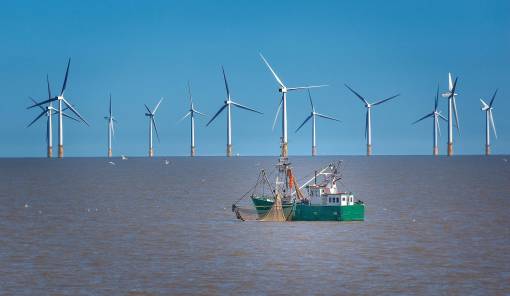
FishingOffshoreWind

I have the pleasure (and relief) of announcing a new book that’s nearly ready to buy, and I think many readers of CB.com might be interested in what it describes. I know it might be a bit premature to announce it, but given that we’ve just finished the last few details (e.g., and index) and the book is ready to pre-order online, I don’t think it’s too precocious to advertise now.

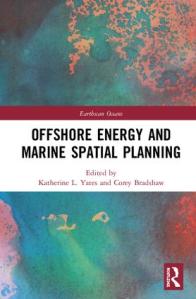
9781138954533-2

A little history is in order. The brilliant and hard-working Katherine Yates (now at the University of Salford in Manchester, UK) approached me back in 2014 to assist her with co-editing the volume that she wanted to propose for the Routledge Earthscan Ocean series. I admit that I reluctantly agreed at the time, knowing full well what was in store (anyone who has already edited a book will know what I mean). Being an active researcher in energy and biodiversity (perhaps not so much on the ‘planning’ side per se) certainly helped in my decision.

And yes, there were ups and downs, and sometimes it was a helluva lot of work, but Katherine certainly made my life easier, and she has finally driven the whole thing to completion. She deserves most of the credit.

Read the rest of this entry »


Human population growth, refugees & environmental degradation

7 07 2017

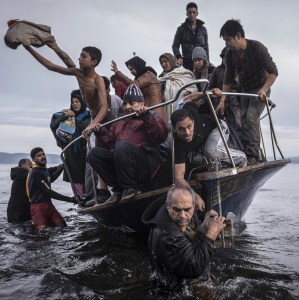
refugeesThe global human population is now over 7.5 billion, and increasing by about 90 million each year. This means that we are predicted to exceed 9 billion people by 2050, with no peak in site this century and a world population of up to 12 billion by 2100. These staggering numbers are the result of being within the exponential phase of population growth since last century, such that some 14% of all human beings that have ever lived on the planet are still alive today. That is taking into account about the past 200,000 years, or 10,000 generations.
Of course just like the Earth’s resources, human beings are not distributed equally around the globe, nor are the population trends consistent among regions or nations. In fact, developing nations are contributing to the bulk of the global annual increase (around 89 million per year), whereas developed nations are contributing a growth of only about 1 million each year. Another demonstration of the disparity in human population distributon is that about half of all human beings live in just seven countries (China, India, USA, Indonesia, Brazil, Pakistan, Nigeria, and Bangladesh), representing just one quarter of the world’s total land area. Read the rest of this entry »


To feed or to perish in an iceless world

1 02 2017
cb_climatechange2_polarbears_photo2

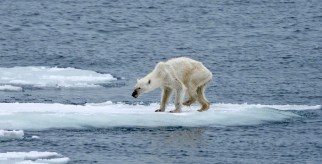
Emaciated female polar bear on drift ice in Hinlopen Strait (Svalbard, Norway), in July 2015 – courtesy of Kerstin Langenberger (www.arctic-dreams.com)

Evolution has designed polar bears to move, hunt and reproduce on a frozen and dynamic habitat that wanes and grows in thickness seasonally. But the modification of the annual cycle of Arctic ice due to global warming is triggering a trophic cascade, which already links polar bears to marine birds.

Popular and epicurean gastronomy claims that the best recipes should use seasonal veggies and fruits. Once upon a time, when there were no greenhouses, international trade routes, or as much frozen and canned food, our grandparents enjoyed what was available at the time. So in some years we had plenty of cherries, while during others we might have feasted on plums. Read the rest of this entry »


Buying time

27 06 2016

farmOriginally published in the Otago Daily Times by Tom McKinlay

If we don’t act soon, the world we leave our children will be in a sorry state indeed, leading Australian scientist Prof Corey Bradshaw tells Tom McKinlay.

Prof Corey Bradshaw’s 9-year-old daughter lives what sounds an idyllic existence. On their small farm outside Adelaide in South Australia, she has her chickens and her dogs and her cats, her goats and her sheep.

She’s an only child, but is not short of attention from adults and reads voraciously.

She has big plans; there are at least 25 careers she likes the look of, that she’ll undertake simultaneously: farmer, wildlife rescuer, self-sufficient bush dweller – feeding herself by shooting arrows at fish – scientist and more.

She is optimistic about the future. As she should be. A 9-year-old girl living in Australia in 2016 should regard the sky as no limit at all.

All this I learn from her father, ecologist Prof Bradshaw, who talks of his daughter with an enthusiasm unbounded.

It is fair to assume she has picked up some of her interest in the natural world from him.

He holds the Sir Hubert Wilkins Chair of Climate Change in the School of Biological Sciences at the University of Adelaide.

And the ecologist, conservation biologist and systems modeller – with a University of Otago degree – has shared a great deal of his work with his daughter.

“She’s very much a farm kid, but because of who I am she gets to hear a lot about animal and plant systems around the world, and she’s travelled a lot with me and she’s a complete fanatic of David Attenborough,” the professor says.

So far, still so idyllic. But Prof Bradshaw’s work means he is at the forefront of alerting the world to what is not right with it.

Pollution, climate change, habitat loss, extinction.

His daughter has travelled with him to see species that might not be with us by the time she grows up.

“She’s hyper-aware of extinctions, in particular, and how climate change is contributing to that,” Prof Bradshaw says.

“I don’t pull any punches with her.”

In fact, he made her cry when she was 5 explaining climate change. She hasn’t needed to travel to know the pot is on the boil. Fires have forced the family to flee its South Australian property several times, not just at the height of summer.

One of the worst fires in the region struck in May a couple of years back.

“We were on the doorstep of winter and we had one of our worst fires in 20 years.”

So even without a scientist in the family, there are certain unavoidable truths for a child growing up in 21st-century Australia.

Prof Bradshaw is coming to Dunedin next month as part of the New Zealand International Science Festival to talk on climate change, looking at it from his daughter’s perspective. Read the rest of this entry »


Australia pisses away the little water it has

9 05 2016

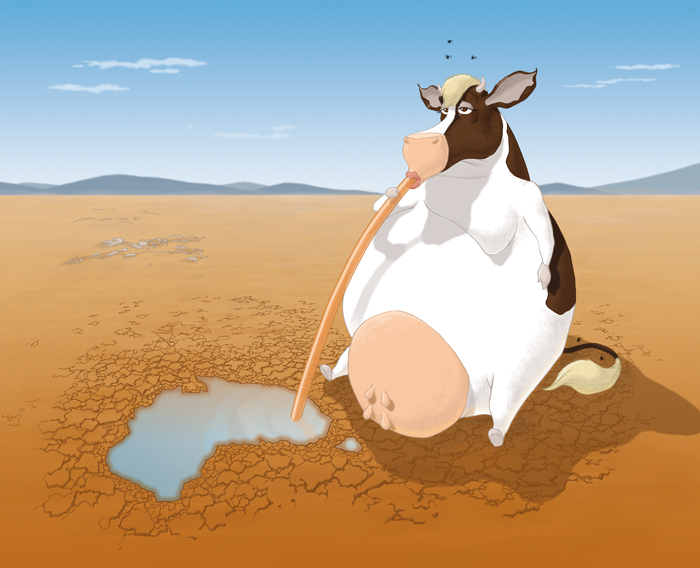
cow_drinking_australia_dryWater, water nowhere, with little left to drink.

Australians are superlative natural resource wasters, but living in the driest inhabited continent on the planet, you’d think we’d be precious about our water use.

You’d be wrong.

On the contrary, Australia has a huge water footprint (defined as “the total volume of freshwater that is used to produce the goods and services consumed by the people of the nation”). For internal domestic use (i.e., not including agricultural and industrial uses, or water imported directly or within other goods), Australians use about 341000 litres per person per year (data from 1997–2001), which is six times the global average of 57000 litres per person per year (1).

Agricultural production is one of the chief consumers of freshwater around the world. For example, the global average virtual water content of rice (paddy) is 2.29 million litres/tonne produced, and for wheat it is 1.33 litres/tonne. Growing crops for biofuel in particular has a huge water footprint — depending on the crop in question, it takes an average of 1400–20000 litres of water to produce just one litre of biofuel (2). If an agricultural product comes from livestock — say, meat, leather, or wool — the water content is typically much higher because of the feed required to keep the animal alive. For example, it takes about three years to raise beef cattle to slaughtering age, with an average of 200 kg of boneless beef produced per animal. This requires about 1,300 kg of grains, 7200 kg of pasture or hay, and 31000 litres of water for drinking and cleaning. This means that the total amount of water required to produce 1 kg of beef is about 15340 litres (1). For Australia, which has over 20 million or so cattle at any one moment, the water footprint alone should at least be cause for concern the next time you tuck into a steak dinner. Read the rest of this entry »


Biowealth

24 02 2016

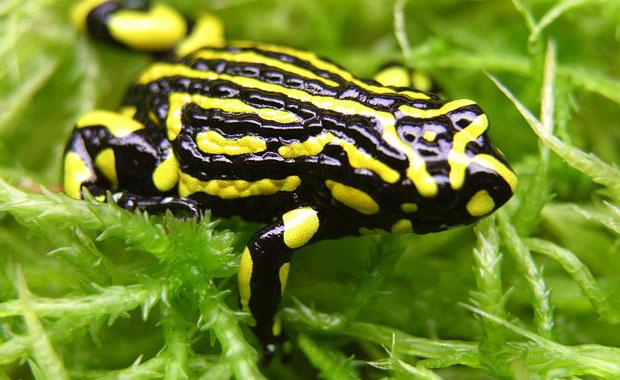
frogWhile I’ve blogged about this before in general terms (here and here), I thought it wise to reproduce the (open-access) chapter of the same name published in late 2013 in the unfortunately rather obscure book The Curious Country produced by the Office of the Chief Scientist of Australia. I think it deserves a little more limelight.

As I stepped off the helicopter’s pontoon and into the swamp’s chest-deep, tepid and opaque water, I experienced for the first time what it must feel like to be some other life form’s dinner. As the helicopter flittered away, the last vestiges of that protective blanket of human technological innovation flew away with it.

Two other similarly susceptible, hairless, clawless and fangless Homo sapiens and I were now in the middle of one of the Northern Territory’s largest swamps at the height of the crocodile-nesting season. We were there to collect crocodile eggs for a local crocodile farm that, ironically, has assisted the amazing recovery of the species since its near-extinction in the 1960s. Removing the commercial incentive to hunt wild crocodiles by flooding the international market with scar-free, farmed skins gave the dwindling population a chance to recover.

redwoodConservation scientists like me rejoice at these rare recoveries, while many of our fellow humans ponder why we want to encourage the proliferation of animals that can easily kill and eat us. The problem is, once people put a value on a species, it is usually consigned to one of two states. It either flourishes as do domestic crops, dogs, cats and livestock, or dwindles towards or to extinction. Consider bison, passenger pigeons, crocodiles and caviar sturgeon.

As a conservation scientist, it’s my job not only to document these declines, but to find ways to prevent them. Through careful measurement and experiments, we provide evidence to support smart policy decisions on land and in the sea. We advise on the best way to protect species in reserves, inform hunters and fishers on how to avoid over-harvesting, and demonstrate the ways in which humans benefit from maintaining healthy ecosystems. Read the rest of this entry »


Bee informed: Quick pollination facts about our most important pollinators

27 11 2015

if we die

If bees were to disappear, humans will disappear within a few years.

Albert Einstein

I find it interesting that so much is said about bees (including here on this blog), yet many of the ‘facts’ that one hears mentioned in any variety of news sources, public presentations and even scientific articles aren’t very well sourced and at times highly suspect.

For your fact-finding benefit then, I present to you some of the established facts about bees: Read the rest of this entry »


Australians: out-of-touch, urban squanderers

23 03 2015

There’s a romantic myth surrounding Australia that is pervasive both overseas and within the national psyche: this sun-scorched continent home to stoic bushmen1 that eek out a frugal, yet satisfying existence in this harsh rural land. Unfortunately that ideal is anathema to almost every Australian alive today.

While some elements of that myth do have a basis in reality – it is indeed a hot, dry, mostly inhospitable place if you count the entire land area (all 7.69 million square kilometres of it), and it does have the dubious honour of being the driest inhabited continent on Earth – most Australians live nowhere near the dry interior or the bush.

Despite our remarkably low average population density (a mere 3.09 people per square kilometre), Australia is in fact one of the most urbanised nations on the planet, with nearly 90% of its citizenry living within a major urban centre. As a result, our largely urban/suburban, latte-sipping, supermarket-shopping population has little, if any, connection to the vast landscape that surrounds its comfortable, built-up environs. There should be little wonder then that Australians are so disconnected from their own ecology, and little surprise that our elected officials (who, after all, represent the values of the majority of the citizens they purport to represent), are doing nothing to slow the rapid flushing of our environment down the toilet. Indeed, the current government is in fact actively encouraging the pace of that destruction. Read the rest of this entry »


Using ecological theory to make more money

1 12 2014

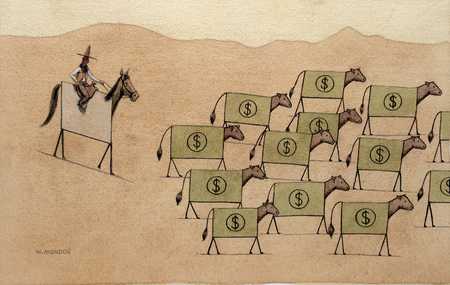
huge.9.46974Let’s face it: Australia doesn’t have the best international reputation for good ecological management. We’ve been particularly loathsome in our protection of forests, we have an appalling record of mammal extinctions, we’re degenerate water wasters and carbon emitters, our country is overrun with feral animals and weeds, and we have a long-term love affair with archaic, deadly, cruel, counter-productive and xenophobic predator management. To top it all off, we have a government hell-bent on screwing our already screwed environment even more.

Still, we soldier on and try to fix the damages already done or convince people that archaic policies should be scrapped and redrawn. One such policy that I’ve written about extensively is the idiocy and cruelty of the dingo fence.

The ecological evidence that dingoes are good for Australian wildlife and that they pose less threat to livestock than purported by some evidence-less graziers is becoming too big to ignore any longer. Poisoning and fencing are not only counter-productive, they are cruel, ineffective and costly.

So just when ecologists thought that dingoes couldn’t get any cooler, out comes our latest paper demonstrating that letting dingoes do their thing results in a net profit for cattle graziers.

Come again? Read the rest of this entry »


InvaCost – estimating the economic damage of invasive insects

7 11 2014

insectinvasionThis is a blosh (rehash of someone else’s blog post) of Franck Courchamp‘s posts on an exciting new initiative of which I am excited to be a part. Incidentally, Franck’s spending the week here in Adelaide.

Don’t forgot to vote for the project to receive 50 000 € public-communication grant!

Climate change will make winters milder and habitats climatically more suitable year-round for cold-blooded animals like insects, but there are many questions remaining regarding whether such insects will be able to invade other regions as the climate shifts. There are many nasty bugs out there.

For example, the Asian predatory wasp is an invasive hornet in Europe that butchers pollinating insects, especially bees, thereby affecting the production of many wild and cultivated plants. I hope that we all remember what Einstein said about pollinators:

If bees were to disappear, humans will disappear within a few years.

(we all should remember that because it’s one of the few things he said that most of us understood). The highly invasive red fire ant is feared for its impacts on biodiversity, agriculture and cattle breeding, and the thousands of anaphylactic shocks inflicted to people by painful stings every year (with hundreds of deaths). Between the USA and Australia, over US$10 billion is spent yearly on the control of this insect alone. Tiger mosquitoes are vectors of pathogens that cause dengue fever, chikungunya virus and of about 30 other viruses. We could go on.

Most of these nasty creatures are now unable to colonise northern regions of Europe or America, or southern regions of Australia, for example, because they cannot survive cold temperatures. But how will this change? Where, when and which species will invade with rising temperatures? What will be the costs in terms of species loss? In terms of agricultural or forestry loss? In terms of diseases to cattle, domestic animals and humans? What will be the death toll if insects that are vectors of malaria can establish in new, highly populated areas?

We’ve proposed to study these and others from a list of 20 of the worst invasive insect species worldwide, and we got selected (i.e., financed!) by the Fondation BNP Paribas. In addition, the Fondation BNP Paribas has selected five scientific programmes on climate change and will give 50,000 € (that’s US$62,000) to the one selected by the public, for a communication project on their scientific programme. This is why we need you to vote for our project: InvaCost. Read the rest of this entry »


We generally ignore the big issues

11 08 2014

I’ve had a good week at Stanford University with Paul Ehrlich where we’ve been putting the final touches1 on our book. It’s been taking a while to put together, but we’re both pretty happy with the result, which should be published by The University of Chicago Press within the first quarter of 2015.

It has indeed been a pleasure and a privilege to work with one of the greatest thinkers of our age, and let me tell you that at 82, he’s still a force with which to be reckoned. While I won’t divulge much of our discussions here given they’ll appear soon-ish in the book, I did want to raise one subject that I think we all need to think about a little more.

The issue is what we, as ecologists (I’m including conservation scientists here), choose to study and contemplate in our professional life.

I’m just as guilty as most of the rest of you, but I argue that our discipline is caught in a rut of irrelevancy on the grander scale. We spend a lot of time refining the basics of what we essentially already know pretty well. While there will be an eternity of processes to understand, species to describe, and relationships to measure, can our discipline really afford to avoid the biggest issues while biodiversity (and our society included) are flushed down the drain?

Read the rest of this entry »


If biodiversity is so important, why is Europe not languishing?

17 03 2014

collapseI don’t often respond to many comments on this blog unless they are really, really good questions (and if I think I have the answers). Even rarer is devoting an entire post to answering a question. The other day, I received a real cracker, and so I think it deserves a highlighted response.

Two days ago, a certain ‘P. Basu’ asked this in response to my last blog post (Lose biodiversity and you’ll get sick):

I am an Indian who lived in Germany for quite a long period. Now, if I am not grossly mistaken, once upon a time Germany and other west european countries had large tracts of “real” forests with bears, wolves, foxes and other animals (both carnivore and herbivore). Bear has completely disappeared from these countries with the advent of industrialization. A few wolves have been kept in more or less artificially created forests. Foxes, deer and hares, fortunately, do still exist. My question is, how come these countries are still so well off – not only from the point of view of economy but also from the angle of public health despite the loss of large tracts of natural forests? Or is it that modern science and a health conscious society can compensate the loss of biodiversity.

“Well”, I thought to myself, “Bloody good question”.

I have come across this genre of question before, but usually under more hostile circumstances when an overtly right-wing respondent (hell, let’s call a spade a spade – a ‘completely selfish arsehole’) has challenged me on the ‘value of nature’ logic (I’m not for a moment suggesting that P. Basu is this sort of person; on the contrary, he politely asked an extremely important question that requires an answer). The comeback generally goes something like this: “If biodiversity is so important, why aren’t super-developed countries wallowing in economic and social ruin because they’ve degraded their own life-support systems? Clearly you must be wrong, Sir.”

There have been discussions in the ecological and sustainability literature that have attempted to answer this, but I’ll give it a shot here for the benefit of CB.com readers. Read the rest of this entry »


Biowealth: all creatures great and small

4 12 2013

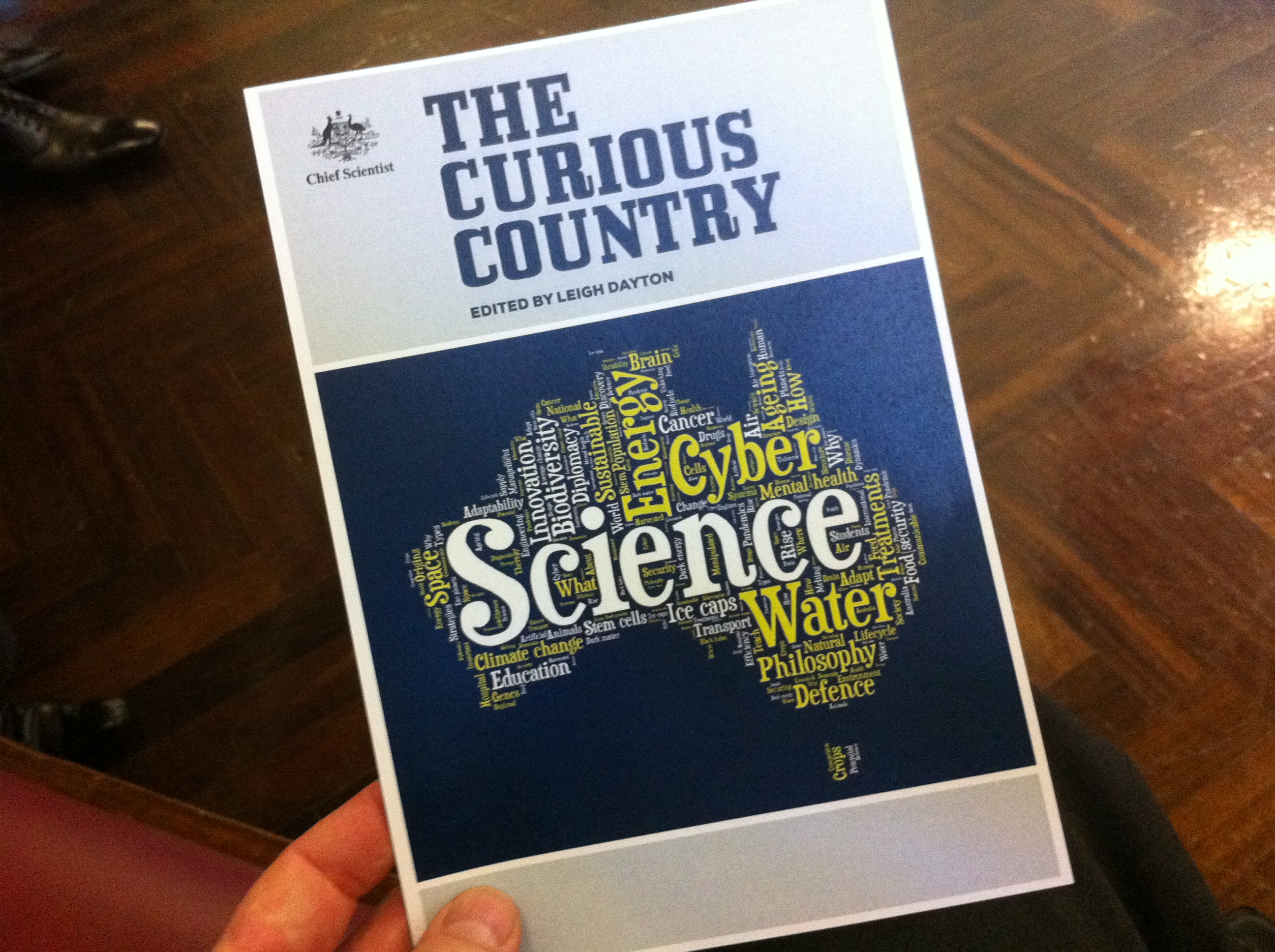
Curious Country flyer“So consider the crocodiles, sharks and snakes, the small and the squirmy, the smelly, slimy and scaly. Consider the fanged and the hairy, the ugly and the cute alike. The more we degrade this astonishing diversity of evolved life and all its interactions on our only home, the more we expose ourselves to the ravages of a universe that is inherently hostile to life.”

excerpt from ‘Biowealth: all creatures great and small’ The Curious Country (C.J.A. Bradshaw 2013).

I’ve spent the last few days on the east coast with my science partner-in-crime, Barry Brook, and one of our newest research associates (Marta Rodrigues-Rey Gomez). We first flew into Sydney at sparrow’s on Monday, then drove a hire car down to The ‘Gong to follow up on some Australian megafauna databasing & writing with Bert Roberts & Zenobia Jacobs. On Tuesday morning we then flitted over to Canberra where we had the opportunity to attend the official launch of a new book that Barry and I had co-authored.

The book, The Curious Country, is an interesting experiment in science communication and teaching dreamed up by Australia’s Chief Scientist, Professor Ian Chubb. Realising that the average Aussie has quite a few questions about ‘how stuff works’, but has little idea how to answer those questions, Ian engaged former Quantum star and science editor, Leigh Dayton, to put together a short, punchy, topical and easily understood book about why science is good for the country.

Yes, intuitive for most of you out there reading this, but science appreciation isn’t always as high as it should be amongst the so-called ‘general public’. Ian thought this might be one way to get more people engaged.

When honoured with the request to write an interesting chapter on biodiversity for the book, I naturally accepted. It turns out Barry was asked to do one on energy provision at the same time (but we didn’t know we had both been asked at the time). Our former lab head, Professor David Bowman, was also asked to write a chapter about fire risk, so it was like a mini-reunion yesterday for the three of us.

Read the rest of this entry »


Conservation: So easy a child could do it

13 09 2013

child's playI don’t like to talk about my family online. Call me paranoid, but there are a lot of crazy people out there who don’t like what scientists like me are saying (bugger the evidence). Yes, like many climate scientists, I’ve also been threatened. That’s why my personal life remains anonymous except for a select group of people.

But I’ve mentioned my daughter before on this blog, and despite a few people insinuating that I am a bad parent because of what I said, I am happy that I made the point that climate change is a scary concept of which our children must at least be cognisant.

My daughter’s story today is a little less confronting, but equally enlightening. It’s also a little embarrassing as a scientist who has dedicated my entire research career to the discipline of conservation biology.

As a normal six year-old without the ability to refrain from talking – even for a moment – I hear a lot of stories. Many of them are of course fantastical and ridiculous, but those are just part of a healthy, imaginative childhood (I am proud to say though that she is quite clear about the non-existence of fictitious entities like faeries, easter bunnies and gods).

Every once in a while, however, there are snippets of wisdom that ooze out from the cracks in the dross. In the last few months, my daughter has independently and with no prompting from me come up with two pillars of conservation science: (i) protected areas and (ii) biodiversity corridors. Read the rest of this entry »