Greater death rates for invasive rabbits from interacting diseases

30 05 2018

When it comes to death rates for invasive European rabbits (Oryctolagus cuniculus) in Australia, it appears that 1 + 1 = 2.1.

Pt tagged rab with RHD+myxo 1 10-08

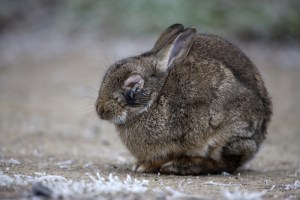
Tagged European rabbit kitten infected with myxoma virus, but that died from rabbit haemorrhagic virus disease (RHDV). Photo by David Peacock, Biosecurity South Australia.

“Canberra, we have a problem” — Sure, it’s an old problem and much less of one than it used to be back in the 1950s, but invasive rabbits are nonetheless an ecological, conservation, and financial catastrophe across Australia.

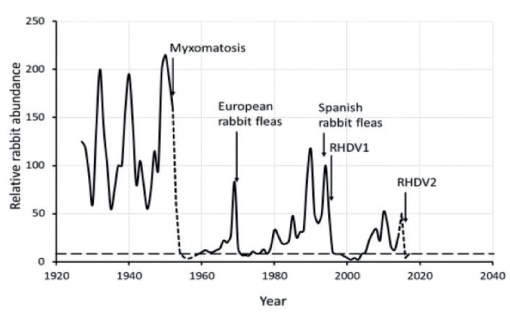
relative rabbit abundance South Australia

Semi-schematic diagram, redrawn using data from Saunders and others and extended to include the recent spread of RHDV2, showing changes in rabbit abundance in relation to the introduction of biological control agents into north-eastern South Australia. Dotted lines indicate uncertainty due to lack of continuous annual data. The broken line indicates a level of about 0.5 rabbits ha-1, below which rabbits must be held to ensure recovery of native pastures and shrubs (from B. Cooke 2018 Vet Rec doi:10.1136/vr.k2105)

Rabbits used to reach plague numbers in much of agricultural and outback Australia, but the introduction and clever manipulation of two rather effective rabbit-specific viruses and insect vectors — first, myxoma virus in 1950, European rabbit fleas in the 1960s to help spread the virus, then Spanish rabbit fleas in the 1990s to increase spread into arid areas, and then rabbit haemorrhagic disease virus (RHDV) in 1995 — have been effective in dropping rabbit abundances by an estimated 75-80% in South Australia alone since the 1950s.

Read the rest of this entry »


What Works in Conservation 2018

23 05 2018
P1230308

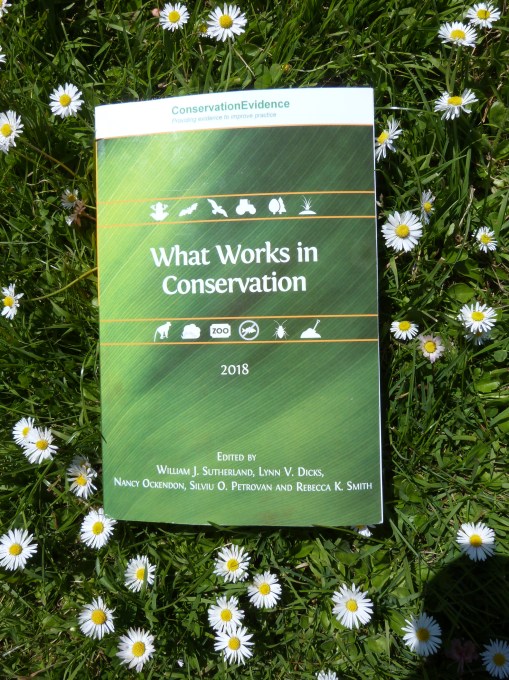
Do you have a copy of this book? If not, why not?


This book is free to download. This book contains the evidence for the effectiveness of over 1200 things you might do for conservation. If you don’t have a copy, go and download yourself a free one here, right now, before you even finish reading this article. Seriously. Go. You’ll laugh, you’ll cry, it’ll change your life.

Why you’ll laugh

OK, I may have exaggerated the laughing part. ‘What Works in Conservation 2018’ is a serious and weighty tome, 660 pages of the evidence for 1277 conservation interventions (anything you might do to conserve a species or habitat), assessed by experts and graded into colour-coded categories of effectiveness. This is pretty nerdy stuff, and probably not something you’ll lay down with on the beach or dip into as you enjoy a large glass of scotch (although I don’t know your life, maybe it is).

But that’s not really what it’s meant for. This is intended as a reference book for conservation managers and policymakers, a way to scan through your possible solutions and get a feel for those that are most likely to be effective. Once you have a few ideas in mind, you can follow the links to see the full evidence base for each study at conservationevidence.com, where over 5000 studies have been summarised into digestible paragraphs.

The book takes the form of discrete chapters on taxa, habitats or topics (such as ‘control of freshwater invasives’). Each chapter is split into IUCN threat categories such as ‘Agriculture’ or ‘Energy production and mining’. For each threat there are a series of interventions that could be used to tackle it, and for each of these interventions the evidence has been collated. Experts have then graded the body of the evidence over three rounds of Delphi scoring, looking at the effectiveness, certainty in the evidence (i.e., the quality and quantity of evidence available), and any harms to the target taxa. These scores combine to place each intervention in a category from ‘Beneficial’ to ‘Likely to be ineffective or harmful’. Read the rest of this entry »


Offshore Energy & Marine Spatial Planning

22 02 2018

FishingOffshoreWind

I have the pleasure (and relief) of announcing a new book that’s nearly ready to buy, and I think many readers of CB.com might be interested in what it describes. I know it might be a bit premature to announce it, but given that we’ve just finished the last few details (e.g., and index) and the book is ready to pre-order online, I don’t think it’s too precocious to advertise now.

9781138954533-2

A little history is in order. The brilliant and hard-working Katherine Yates (now at the University of Salford in Manchester, UK) approached me back in 2014 to assist her with co-editing the volume that she wanted to propose for the Routledge Earthscan Ocean series. I admit that I reluctantly agreed at the time, knowing full well what was in store (anyone who has already edited a book will know what I mean). Being an active researcher in energy and biodiversity (perhaps not so much on the ‘planning’ side per se) certainly helped in my decision.

And yes, there were ups and downs, and sometimes it was a helluva lot of work, but Katherine certainly made my life easier, and she has finally driven the whole thing to completion. She deserves most of the credit.

Read the rest of this entry »


Four decades of fragmentation

27 09 2017

fragmented

I’ve recently read perhaps the most comprehensive treatise of forest fragmentation research ever compiled, and I personally view this rather readable and succinct review by Bill Laurance and colleagues as something every ecology and conservation student should read.

The ‘Biological Dynamics of Forest Fragments Project‘ (BDFFP) is unquestionably one of the most important landscape-scale experiments ever conceived and implemented, now having run 38 years since its inception in 1979. Indeed, it was way ahead of its time.

Experimental studies in ecology are comparatively rare, namely because it is difficult, expensive, and challenging in the extreme to manipulate entire ecosystems to test specific hypotheses relating to the response of biodiversity to environmental change. Thus, we ecologists tend to rely more on mensurative designs that use existing variation in the landscape (or over time) to infer mechanisms of community change. Of course, such experiments have to be large to be meaningful, which is one reason why the 1000 km2 BDFFP has been so successful as the gold standard for determining the effects of forest fragmentation on biodiversity.

And successful it has been. A quick search for ‘BDFFP’ in the Web of Knowledge database identifies > 40 peer-reviewed articles and a slew of books and book chapters arising from the project, some of which are highly cited classics in conservation ecology (e.g., doi:10.1046/j.1523-1739.2002.01025.x cited > 900 times; doi:10.1073/pnas.2336195100 cited > 200 times; doi:10.1016/j.biocon.2010.09.021 cited > 400 times; and doi:10.1111/j.1461-0248.2009.01294.x cited nearly 600 times). In fact, if we are to claim any ecological ‘laws’ at all, our understanding of fragmentation on biodiversity could be labelled as one of the few, thanks principally to the BDFFP. Read the rest of this entry »


It’s not all about temperature for corals

31 05 2017

CB_ClimateChange6_Photo

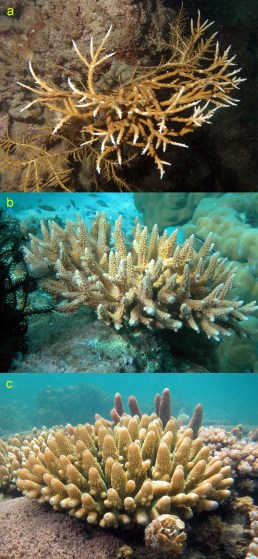
Three of the coral species studied by Muir (2): (a) Acropora pichoni: Pohnpei Island, Pacific Ocean — deep-water species/IUCN ‘Near threatened’; (b) Acropora divaricate: Maldives, Indian ocean — mid-water species/IUCN ‘Near threatened’; and (c) Acropora gemmifera: Orpheus Island, Australia — shallow-water species/IUCN ‘Least Concern’. The IUCN states that the 3 species are vulnerable to climate change (acidification, temperature extremes) and demographic booms of the invading predator, the crown-of-thorns starfish Acanthaster planci. Photos courtesy of Paul Muir.

Global warming of the atmosphere and the oceans is modifying the distribution of many plants and animals. However, marine species are bound to face non-thermal barriers that might preclude their dispersal over wide stretches of the sea. Sunlight is one of those invisible obstacles for corals from the Indian and Pacific Oceans.

If we were offered a sumptuous job overseas, our professional success in an unknown place could be limited by factors like cultural or linguistic differences that have nothing to do with our work experience or expertise. If we translate this situation into biodiversity terms, one of the best-documented effects of global warming is the gradual dispersal of species tracking their native temperatures from the tropics to the poles (1). However, as dispersal progresses, many species encounter environmental barriers that are not physical (e.g., a high mountain or a wide river), and whose magnitude could be unrelated to ambient temperatures. Such invisible obstacles can prevent the establishment of pioneer populations away from the source.

Corals are ideal organisms to study this phenomenon because their life cycle is tightly geared to multiple environmental drivers (see ReefBase: Global Information System for Coral Reefs). Indeed, the growth of a coral’s exoskeleton relies on symbiotic zooxanthellae (see video and presentation), a kind of microscopic algae (Dinoflagellata) whose photosynthetic activity is regulated by sea temperature, photoperiod and dissolved calcium in the form of aragonite, among other factors.

Read the rest of this entry »


Job: Research Associate in Eco-epidemiological modelling

3 03 2017
myxo-rabbit

European rabbit infected with myxomatosis

Earlier this week I advertised two new PhD scholarships in palaeo-ecological modelling. Now we are pleased to advertise a six-month Research Associate position in eco-epidemiological modelling.

The position will be based in the School of Biological Sciences at Flinders University. Flinders University offers a dynamic research environment that explores the continuum of environmental and evolutionary research from the ancient to modern ecology. The School of Biological Sciences is an integrated community researching and teaching biology, and has a long history of science innovation.

Project background

Since 1996, Biosecurity South Australia has been running a capture-mark-recapture study on a European rabbit (Oryctolagus cuniculus) population located at Turretfield (~ 50 km north of Adelaide). Now into the 21st year, this is one of the world’s longest studies of its kind. Approximately every 8 weeks cage traps are reset and the population trapped over five days, with the captured rabbits weighed, sexed, tagged and blood-sampled. The study was established to investigate the epidemiology and efficacy of the two imported rabbit biocontrol agents, rabbit haemorrhagic disease virus (RHDV) and myxomatosis. To date, from 119 formal trapping events and RHDV-outbreak carcass-sampling trips, > 4500 rabbits have been monitored with > 8700 cELISA RHDV antibody tests and 7500 IgG, IgM and IgA RHDV antibody tests on sera (similarly for myxomatosis), and 111 RHDV-specific polymerase chain reaction (PCR) analyses run on tissue samples of the sampled rabbits. This represents an unparalleled dataset on rabbit survival, population fluctuations and disease dynamics. Read the rest of this entry »


Boreal forest on the edge of a climate-change tipping point

15 11 2016

As some know, I dabble a bit in the carbon affairs of the boreal zone, and so when writer Christine Ottery interviewed me about the topic, I felt compelled to reproduce her article here (originally published on EnergyDesk).

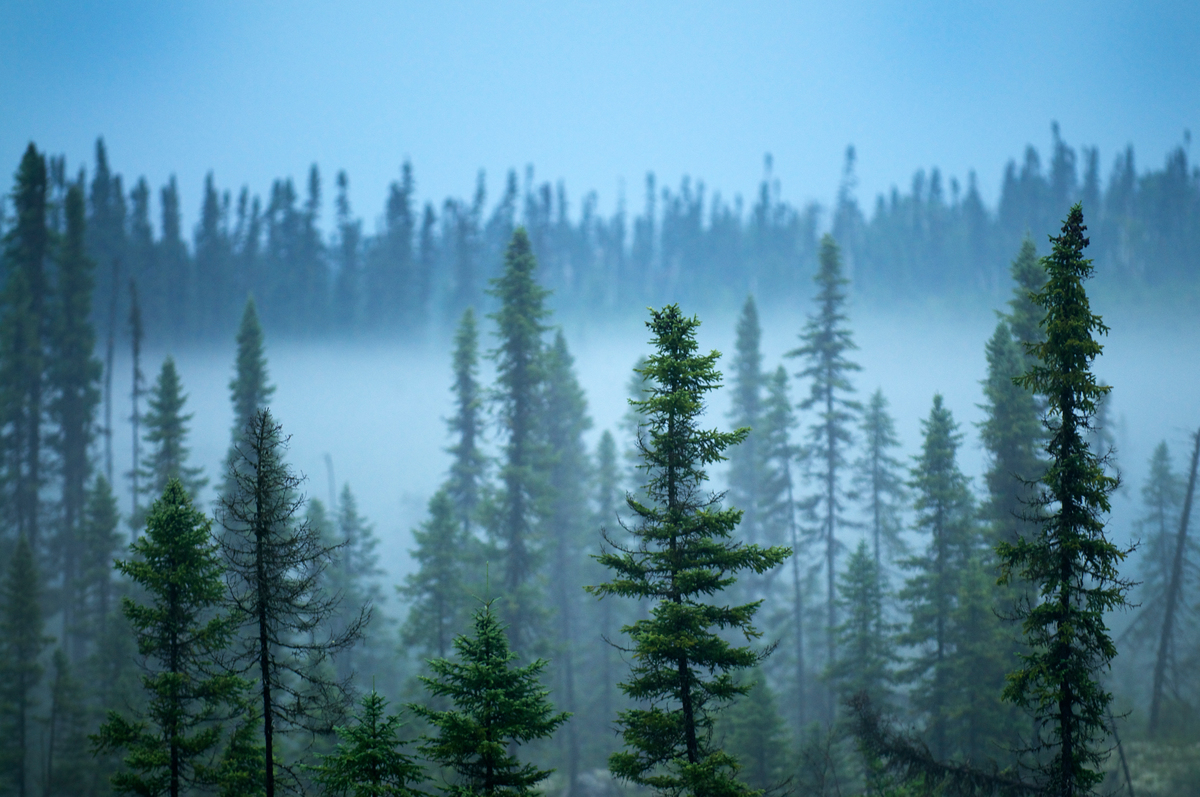
A view of the Waswanipi-Broadback Forest in the Abitibi region of Northern Quebec, one of the last remaining intact Boreal Forests in the province (source: EnergyDesk).

A view of the Waswanipi-Broadback forest in the Abitibi region of northern Quebec, one of the last remaining intact boreal forests in the Canadian province (source: EnergyDesk).

The boreal forest encircles the Earth around and just below the Arctic Circle like a big carbon-storing hug. It can mostly be found covering large swathes of Russia, Canada and Alaska, and some Scandinavian countries.

In fact, the boreal – sometimes called by its Russian name ‘taiga’ or ‘Great Northern Forest’ – is perhaps the biggest terrestrial carbon store in the world.

So it’s important to protect in a world where we’re aiming for 1.5 or – at worst – under two degrees celsius of global warming.

“Our capacity to limit average global warming to less than 2 degrees is already highly improbable, so every possible mechanism to reduce emissions must be employed as early as possible. Maintaining and recovering our forests is part of that solution,” Professor Corey Bradshaw, a leading researcher into boreal forests based at the University of Adelaide, told Energydesk.

It’s not that tropical rainforests aren’t important, but recent research led by Bradshaw published in Global and Planetary Change shows that that there is more carbon held in the boreal forests than previously realised.

But there’s a problem. Read the rest of this entry »


Massive yet grossly underestimated global costs of invasive insects

4 10 2016
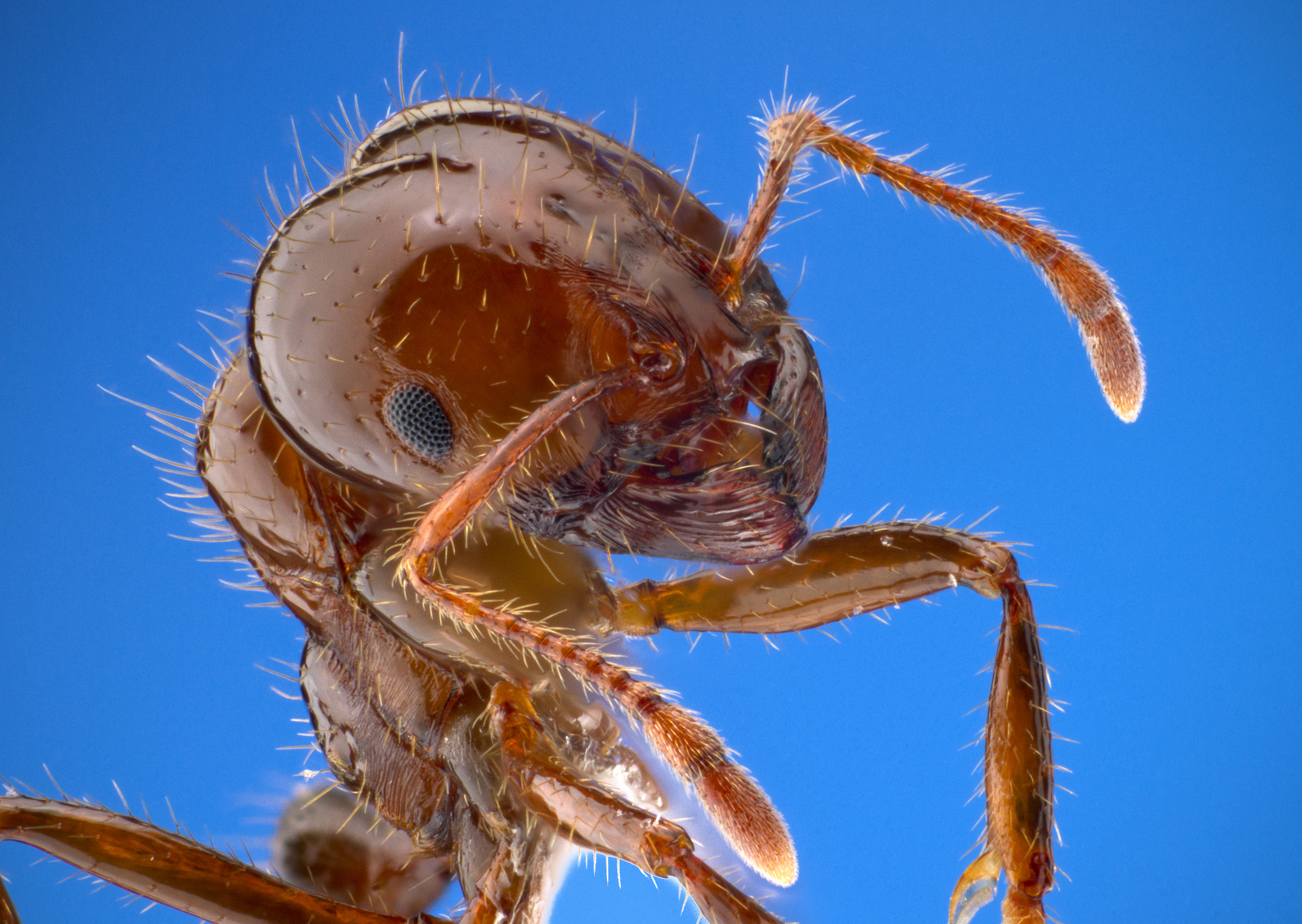
Portrait of a red imported fire ant, Solenopsis invicta. This species arrived to the southeastern United States from South America in the 1930s. Specimen from Brackenridge Field Laboratory, Austin, Texas, USA. Public domain image by Alex Wild, produced by the University of Texas "Insects Unlocked" program.

Portrait of a red imported fire ant Solenopsis invicta. This species arrived to the southeastern USA from South America in the 1930s. Specimen from Brackenridge Field Laboratory, Austin, Texas, USA. Public domain image by Alex Wild, produced by the University of Texas “Insects Unlocked” program.

As many of you already know, I spent a good deal of time in France last year basking in the hospitality of Franck Courchamp and his vibrant Systematic Ecology & Evolution lab at Université Paris-Sud. Of course, I had a wonderful time and was sad to leave in the end, but now I have some hard evidence that I wasn’t just eating cheese and visiting castles. I was actually doing some pretty cool science too.

Financed by BNP-Paribas and Agence Nationale de Recherche, the project InvaCost was designed to look at the global impact of invasive insects, including projections of range dynamics under climate change and shifting trade patterns. The first of hopefully many papers is now out.

Just published in Nature Communications, I am proud that many months of hard work by a brilliant team of ecologists, epidemiologists and economists has culminated in this article entitled Massive yet grossly underestimated costs of invasive insects, which in my opinion is  the first robust analysis of its kind. Despite some previous attempts at estimating the global costs of invasive species1-4 (which have been largely exposed as guesswork and fantasy5-10), our paper rigorously treats the economic cost estimates and categorises them into ‘reproducible’ and ‘irreproducible’ categories.

Lymantria

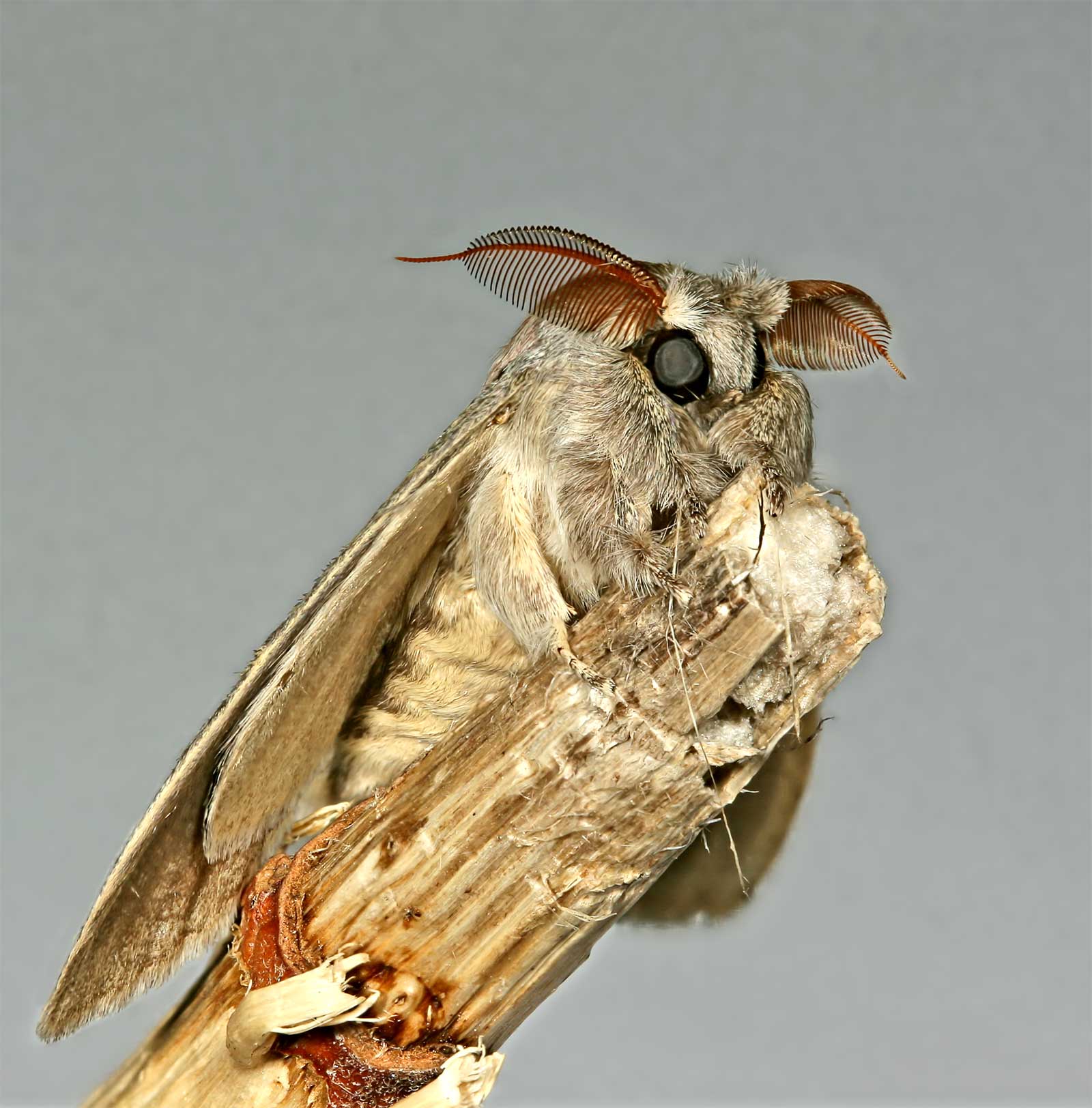
Gypsy moth (Lymantria dispar) adult. Dimitri Geystor (France)

What we found was sobering. If we look at just ‘goods and services’ affected by invasive insects, the annual global costs run at about US$70 billion. These include agricultural, forestry and infrastructure damages, as well as many of the direct costs of clean-up and eradication, and the indirect costs of prevention. When you examine that number a little more closely and only include the ‘reproducible’ studies, the total annual costs dip to about US$25 billion, meaning that almost 65% of the costs recorded are without any real empirical support. Scary, especially considering how much credence people put on previously published global ‘estimates’ (for example, see some citation statistics here).

Coptotermes_formosanus

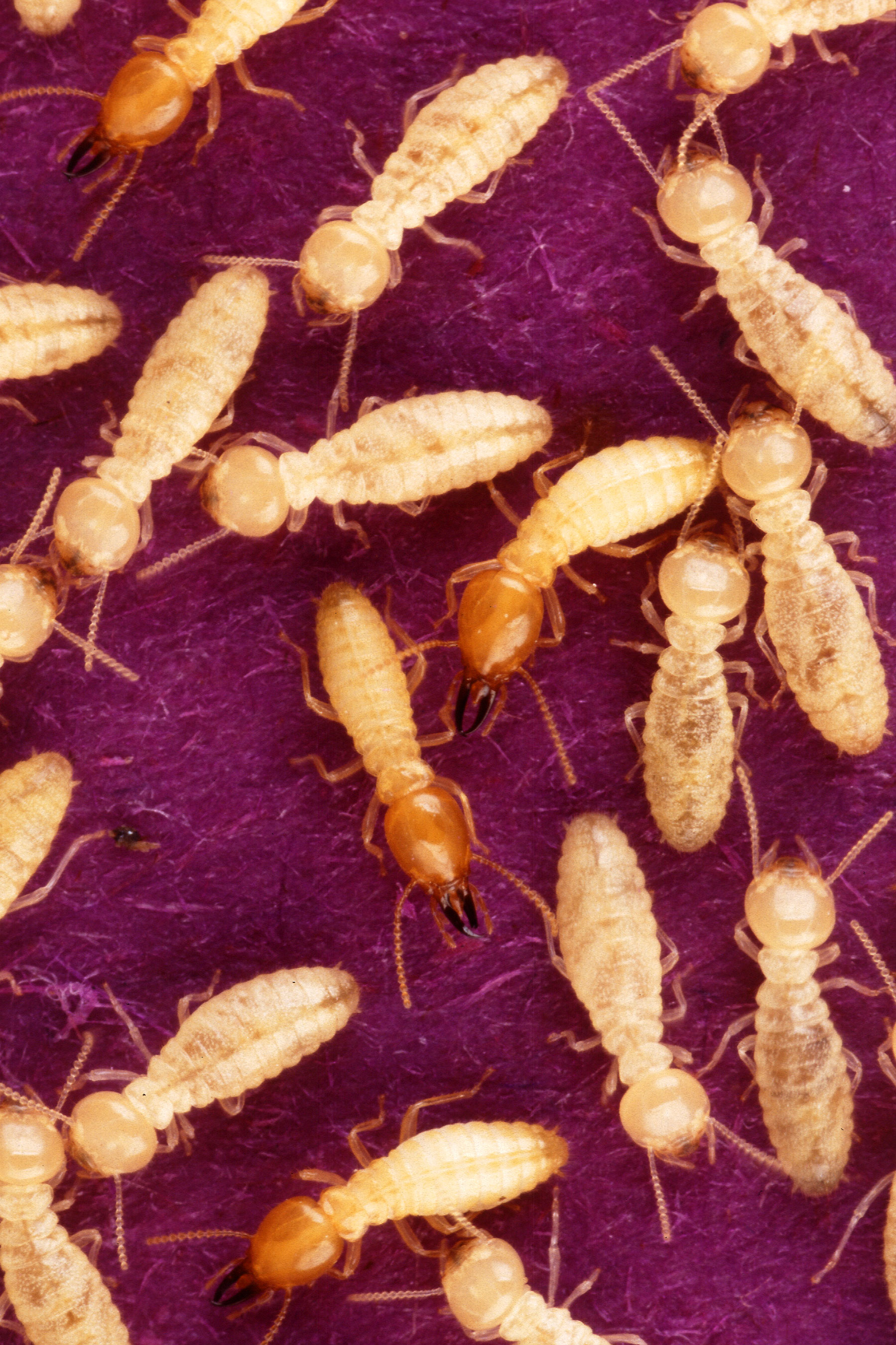
Formosan subterranean termite Coptotermes formosanus by Scott Bauer, US Department of Agriculture, Agricultural Research Service

There’s a great example to illustrate this. If you take it at face value, the most expensive invasive insect in the world is the Formosan subterranean termite Coptotermes formosanus estimated at US$30.2 billion/yr globally. However, that irreproducible estimate is based on a single non-sourced value of US$2.2 billion per year for the USA, a personal communication supporting a ratio of 1:4 of control:repair costs in a single US city (New Orleans), and an unvalidated assumption that the US costs represent 50% of the global total.

Read the rest of this entry »


Rich and stable communities most vulnerable to change

16 08 2016

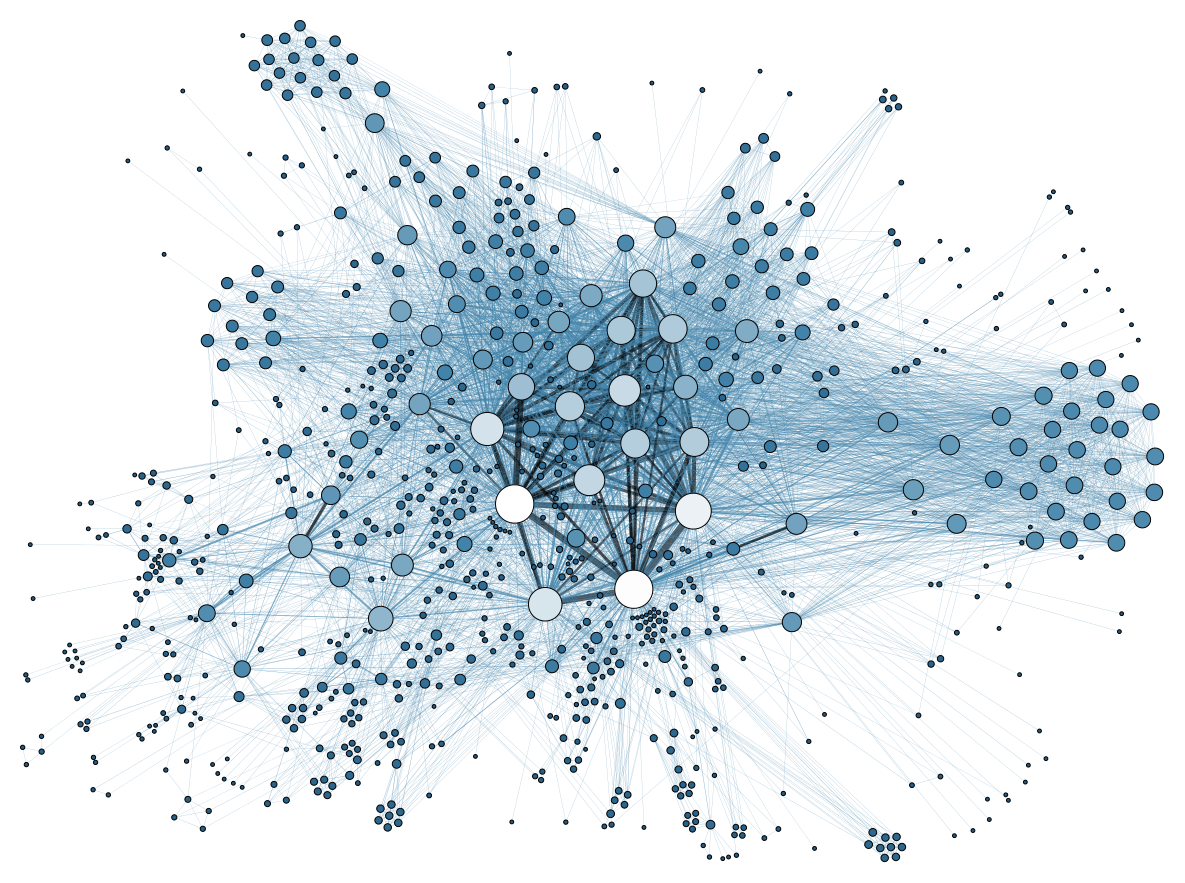
networkI’ve just read an interesting new study that was sent to me by the lead author, Giovanni Strona. Published the other day in Nature Communications, Strona & Lafferty’s article entitled Environmental change makes robust ecological networks fragile describes how ecological communities (≈ networks) become more susceptible to rapid environmental changes depending on how long they’ve had to evolve and develop under stable conditions.

Using the Avida Digital Evolution Platform (a free, open-source scientific software platform for doing virtual experiments with self-replicating and evolving computer programs), they programmed evolving host-parasite pairs in a virtual community to examine how co-extinction rate (i.e., extinctions arising in dependent species — in this case, parasites living off of hosts) varied as a function of the complexity of the interactions between species.

Starting from a single ancestor digital organism, the authors let evolve several artificial life communities for hundred thousands generation under different, stable environmental settings. Such communities included both free-living digital organisms and ‘parasite’ programs capable of stealing their hosts’ memory. Throughout generations, both hosts and parasites diversified, and their interactions became more complex. Read the rest of this entry »


Shadow of ignorance veiling society despite more science communication

19 04 2016

imagesI’ve been thinking about this post for a while, but it wasn’t until having some long, deep chats today with staff and students at Simon Fraser University‘s Department of Biological Sciences (with a particular hat-tip to the lovely Nick Dulvy, Isabelle Côté & John Reynolds) that the full idea began to take shape in my brain. It seems my presentation was a two-way street: I think I taught a few people some things, and they taught me something back. Nice.

There’s no question at all that science communication has never before been so widespread and of such high quality. More and more scientists and science students are now blogging, tweeting and generally engaging the world about their science findings. There is also an increasing number of professional science communication associations out there, and a growing population of professional science communicators. It is possibly the best time in history to be involved in the generation and/or communication of scientific results.

Why then is the public appreciation, acceptance and understanding of science declining? It really doesn’t make much sense if you merely consider that there has never been more good science ‘out there’ in the media — both social and traditional. For the source literature itself, there has never before been as many scientific journals, articles and even scientists writing. Read the rest of this entry »


Biowealth

24 02 2016

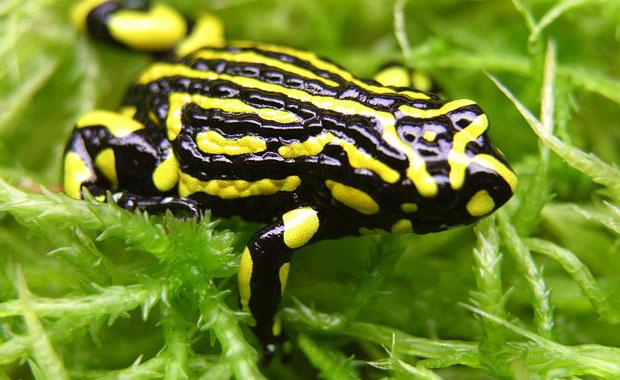
frogWhile I’ve blogged about this before in general terms (here and here), I thought it wise to reproduce the (open-access) chapter of the same name published in late 2013 in the unfortunately rather obscure book The Curious Country produced by the Office of the Chief Scientist of Australia. I think it deserves a little more limelight.

As I stepped off the helicopter’s pontoon and into the swamp’s chest-deep, tepid and opaque water, I experienced for the first time what it must feel like to be some other life form’s dinner. As the helicopter flittered away, the last vestiges of that protective blanket of human technological innovation flew away with it.

Two other similarly susceptible, hairless, clawless and fangless Homo sapiens and I were now in the middle of one of the Northern Territory’s largest swamps at the height of the crocodile-nesting season. We were there to collect crocodile eggs for a local crocodile farm that, ironically, has assisted the amazing recovery of the species since its near-extinction in the 1960s. Removing the commercial incentive to hunt wild crocodiles by flooding the international market with scar-free, farmed skins gave the dwindling population a chance to recover.

redwoodConservation scientists like me rejoice at these rare recoveries, while many of our fellow humans ponder why we want to encourage the proliferation of animals that can easily kill and eat us. The problem is, once people put a value on a species, it is usually consigned to one of two states. It either flourishes as do domestic crops, dogs, cats and livestock, or dwindles towards or to extinction. Consider bison, passenger pigeons, crocodiles and caviar sturgeon.

As a conservation scientist, it’s my job not only to document these declines, but to find ways to prevent them. Through careful measurement and experiments, we provide evidence to support smart policy decisions on land and in the sea. We advise on the best way to protect species in reserves, inform hunters and fishers on how to avoid over-harvesting, and demonstrate the ways in which humans benefit from maintaining healthy ecosystems. Read the rest of this entry »


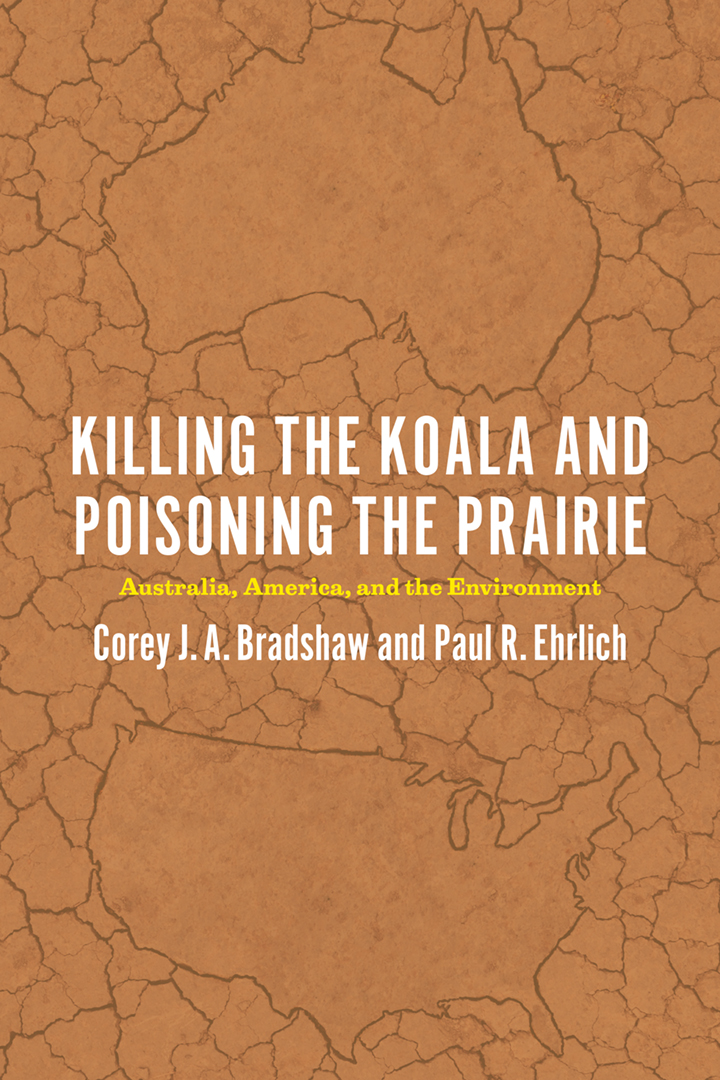
Killing the Koala and Poisoning the Prairie

19 10 2015

Cover-Bradshaw&Ehrlich-final

Man and the environment are meant for each other” — Tony Abbott, former Prime Minister of Australia (2014)

I know the human being and the fish can co-exist peacefully” — George W. Bush, former President of the USA (2000)

It. Has. Finally. Been. Published.

Yes, my new book with Paul Ehrlich, published by University of Chicago Press, is now available to purchase in book shops and online distributors around the world. The blog post today is a little explanatory synopsis of why we wrote the book and what it contains, but of course the real ‘meat’ is in the book. I hope you enjoy it.

In Australia, you can purchase the hard copy through Footprint Books, and the Kindle version at Amazon Australia. I also suggest that Australians might find the best deals through Booko. Electronic versions are also available through Kobo and Google Play. In the US you can order directly from University of Chicago Press, Amazon, Barnes & Noble, and many other book sellers. In the UK and Europe, the book is available from your country’s Amazon distributor. I imagine many chain and independent book sellers will be carrying the book by now, or will be soon.

My deepest thanks to all those who made it possible.

Our chance meeting in 2009 at Stanford University turned out to be auspicious, not least of which because of the publication this week of our co-authored book, Killing the Koala and Poisoning the Prairie. Australia, America and the Environment by University of Chicago Press. As a mid-career ecologist (Bradshaw) based at the University of Adelaide, it was indeed an honour to meet one of the most famous scientists (Ehrlich) in my field. With a list of books and hundreds of scientific papers under his belt, Ehrlich has been tackling major environmental issues since the 1960s. Ehrlich also has a long-time interest in Australia, having visited nearly every year during the last four decades and experienced more of the country than most Australians. Together we have observed firsthand the similarities and differences of Australia and the US, and the eyes we see through are trained as those of environmental scientists and evolutionary biologists.

So why write a book about the environmental tragedies currently unfolding in two completely different countries at opposite ends of the Earth? As it turns out, Australia and the US have much more in common environmentally than one might think, and not necessarily in a good way. Despite our vastly different floras and faunas, population densities, histories of human colonisation and soil productivities, there is an almost spooky similarity in the environmental and political problems both our countries are now experiencing. As such, we have a lot to learn about avoiding each other’s mistakes.

Ausmerica

Australia and the contiguous US are roughly equivalent in land area, both cultures are derived originally and principally from what is now the United Kingdom, and both are examples of super-consuming, super-wasting, wealthy, literate countries. Both countries also have environmental footprints that exceed most other countries on Earth, with some of the world’s highest per capita rates of greenhouse-gas emissions, water consumption, species extinctions and deforestation.  Read the rest of this entry »


Australians: out-of-touch, urban squanderers

23 03 2015

There’s a romantic myth surrounding Australia that is pervasive both overseas and within the national psyche: this sun-scorched continent home to stoic bushmen1 that eek out a frugal, yet satisfying existence in this harsh rural land. Unfortunately that ideal is anathema to almost every Australian alive today.

While some elements of that myth do have a basis in reality – it is indeed a hot, dry, mostly inhospitable place if you count the entire land area (all 7.69 million square kilometres of it), and it does have the dubious honour of being the driest inhabited continent on Earth – most Australians live nowhere near the dry interior or the bush.

Despite our remarkably low average population density (a mere 3.09 people per square kilometre), Australia is in fact one of the most urbanised nations on the planet, with nearly 90% of its citizenry living within a major urban centre. As a result, our largely urban/suburban, latte-sipping, supermarket-shopping population has little, if any, connection to the vast landscape that surrounds its comfortable, built-up environs. There should be little wonder then that Australians are so disconnected from their own ecology, and little surprise that our elected officials (who, after all, represent the values of the majority of the citizens they purport to represent), are doing nothing to slow the rapid flushing of our environment down the toilet. Indeed, the current government is in fact actively encouraging the pace of that destruction. Read the rest of this entry »


What’s in a name? The dingo’s sorry saga

30 01 2015

bad dingoThe more I delve into the science of predator management, the more I realise that the science itself takes a distant back seat to the politics. It would be naïve to think that the management of dingoes in Australia is any more politically charged than elsewhere, but once you start scratching beneath the surface, you quickly realise that there’s something rotten in Dubbo.

My latest contribution to this saga is a co-authored paper led by Dale Nimmo of Deakin University (along with Simon Watson of La Trobe and Dave Forsyth of Arthur Rylah) that came out just the other day. It was a response to a rather dismissive paper by Matt Hayward and Nicky Marlow claiming that all the accumulated evidence demonstrating that dingoes benefit native biodiversity was somehow incorrect.

Their two arguments were that: (1) dingoes don’t eradicate the main culprits of biodiversity decline in Australia (cats & foxes), so they cannot benefit native species; (2) proxy indices of relative dingo abundance are flawed and not related to actual abundance, so all the previous experiments and surveys are wrong.

Some strong accusations, for sure. Unfortunately, they hold no water at all. Read the rest of this entry »


Help Hawaii’s hyper-threatened birds

6 01 2015
Puaiohi or small Kaua'i thrush. Photo by Lucas Behnke

Puaiohi or small Kaua’i thrush. Photo by Lucas Behnke

You wouldn’t want to be a bird in Hawaii. There are more avian species threatened with extinction there than anywhere else in the USA. After humans arrived, some 70+ species have become extinct, and 31 are listed as threatened with extinction. In addition, 43% of 157 species are not native; among land birds, 69% are introduced species.

My friend, Cali Crampton asked me to promote their new crowdfunding project to reduce the threat of feral rats on Hawaiian birds. Please help if you can.

The Kaua‘i Forest Bird Recovery Project, a collaborative project of the Hawaii Department of Land and Natural Resources, Division of Forestry and Wildlife, the University of Hawaii Pacific Cooperative Studies Unit, and Garden Island Research and Development, has announced the launch of a crowdfunding and outreach campaign to generate support for protecting the native birds of Kaua’i by controlling rats with humane, self-resetting rat traps.

The campaign, named “Birds, not Rats!” runs through to 31 January 2015, with goals of increasing awareness of the threats that rats pose to birds and native ecosystems, and raising at least $10,000 for rat control through many small, individual donations.

Hawai’i is at the epicentre of the current global extinction crisis. Of the original 130+ native Hawaiian bird species, many have been lost forever, and only 11 are not yet endangered. Today, Kaua’i is home to eight native forest bird species, three of which are federally listed as endangered: the puaiohi or small Kaua’i thrush, the akeke’e or Kaua’i akepa, and the akikiki or Kaua’i creeper. Populations of these birds have plummeted as much as 90% in the last five years; the akikiki and the puaiohi now number fewer than 500 individuals, and the akeke’e numbers fewer than 1000 individuals. The Kaua’i Forest Bird Recovery Project’s goal is to reverse these declines. Read the rest of this entry »


InvaCost – estimating the economic damage of invasive insects

7 11 2014

insectinvasionThis is a blosh (rehash of someone else’s blog post) of Franck Courchamp‘s posts on an exciting new initiative of which I am excited to be a part. Incidentally, Franck’s spending the week here in Adelaide.

Don’t forgot to vote for the project to receive 50 000 € public-communication grant!

Climate change will make winters milder and habitats climatically more suitable year-round for cold-blooded animals like insects, but there are many questions remaining regarding whether such insects will be able to invade other regions as the climate shifts. There are many nasty bugs out there.

For example, the Asian predatory wasp is an invasive hornet in Europe that butchers pollinating insects, especially bees, thereby affecting the production of many wild and cultivated plants. I hope that we all remember what Einstein said about pollinators:

If bees were to disappear, humans will disappear within a few years.

(we all should remember that because it’s one of the few things he said that most of us understood). The highly invasive red fire ant is feared for its impacts on biodiversity, agriculture and cattle breeding, and the thousands of anaphylactic shocks inflicted to people by painful stings every year (with hundreds of deaths). Between the USA and Australia, over US$10 billion is spent yearly on the control of this insect alone. Tiger mosquitoes are vectors of pathogens that cause dengue fever, chikungunya virus and of about 30 other viruses. We could go on.

Most of these nasty creatures are now unable to colonise northern regions of Europe or America, or southern regions of Australia, for example, because they cannot survive cold temperatures. But how will this change? Where, when and which species will invade with rising temperatures? What will be the costs in terms of species loss? In terms of agricultural or forestry loss? In terms of diseases to cattle, domestic animals and humans? What will be the death toll if insects that are vectors of malaria can establish in new, highly populated areas?

We’ve proposed to study these and others from a list of 20 of the worst invasive insect species worldwide, and we got selected (i.e., financed!) by the Fondation BNP Paribas. In addition, the Fondation BNP Paribas has selected five scientific programmes on climate change and will give 50,000 € (that’s US$62,000) to the one selected by the public, for a communication project on their scientific programme. This is why we need you to vote for our project: InvaCost. Read the rest of this entry »


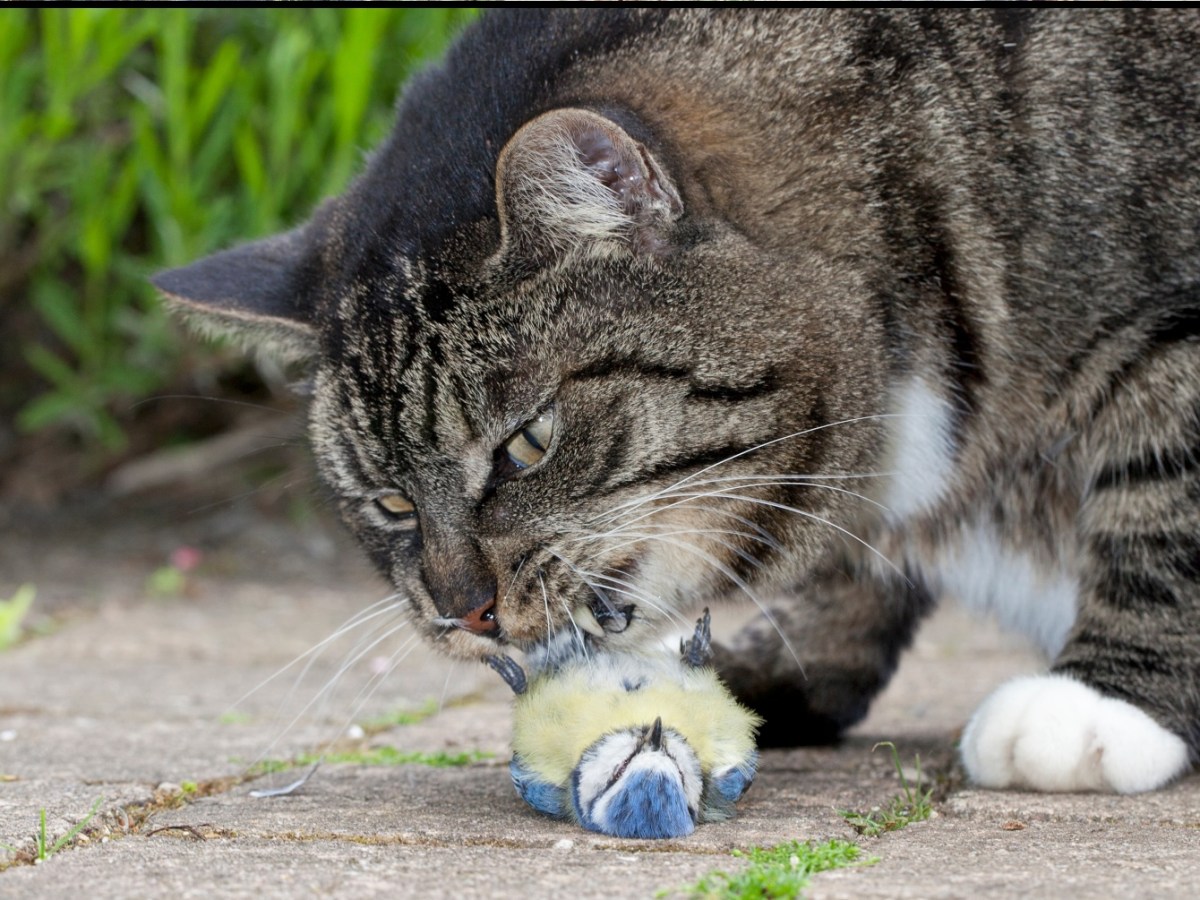
It’s not all about cats

20 10 2014

Snake+OilIf you follow any of the environment news in Australia, you will most certainly have seen a lot about feral cats in the last few weeks. I’ve come across dozens of articles in the last week alone talking about the horrendous toll feral cats have had on Australian wildlife since European arrival. In principle, this is a good thing because finally Australians are groggily waking to the fact that our house moggies and their descendants have royally buggered our biodiversity. As a result, we have the highest mammal extinction rate of any country.

But I argue that the newfound enthusiasm for killing anything feline is being peddled mainly as a distraction from bigger environmental issues and to camouflage the complete incompetence of the current government and their all-out war on the environment.

Call me cynical, but when I read headlines like “Australia aims to end extinction of native wildlife by 2020” and Environment Minister Hunt’s recent speech that he has “… set a goal of ending the loss of mammal species by 2020“, I get more than just a little sick to the stomach.

What a preposterous load of shite. Moreover, what a blatant wool-pulling-over-the-eyes public stunt. Read the rest of this entry »


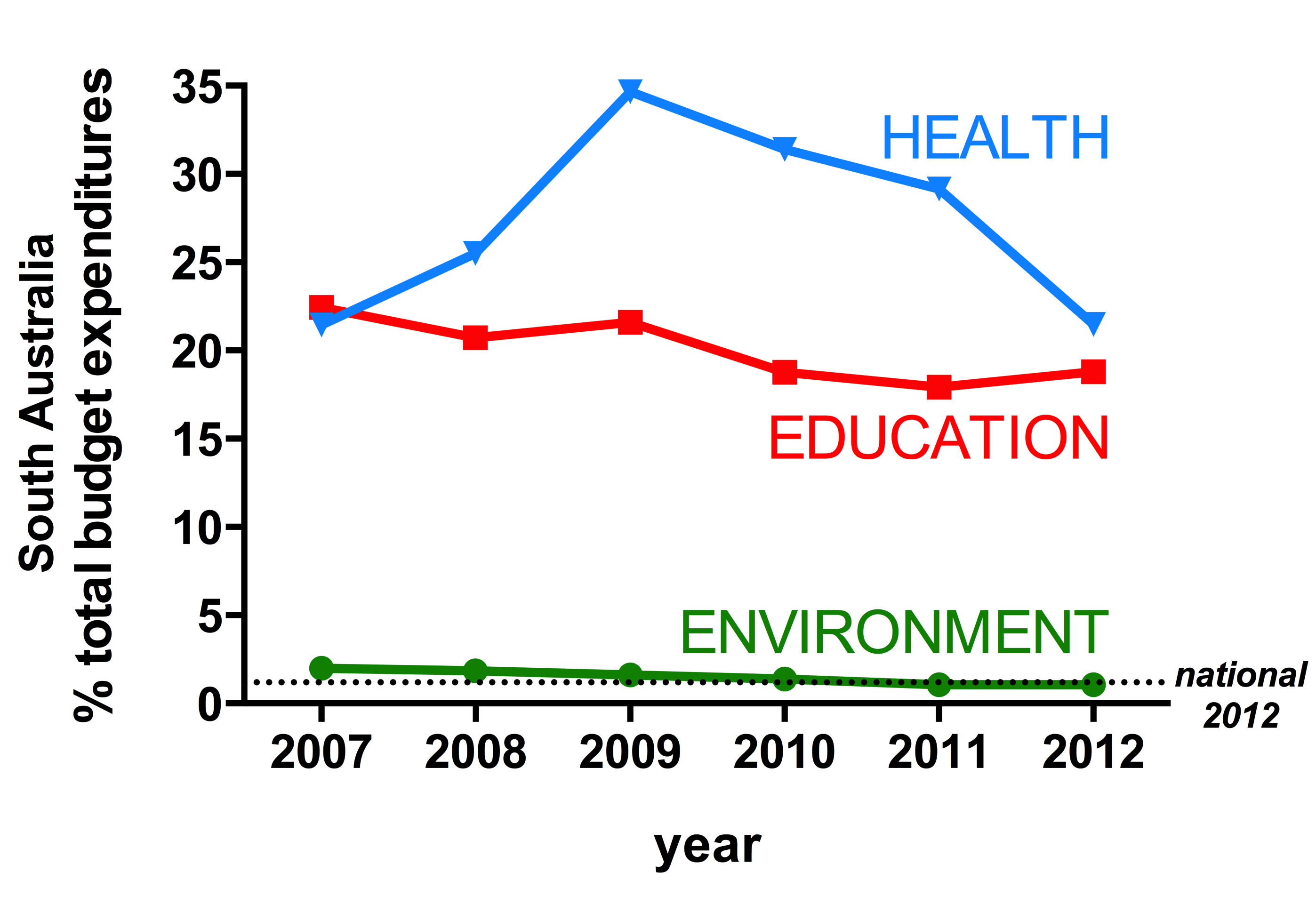
South Australia’s tattered environmental remains

16 04 2014
State budget percentage expenditures for health, education and environment

South Australia State budget percentage expenditures for health, education and environment

Yesterday I gave the second keynote address at the South Australia Natural Resource Management (NRM) Science Conference at the University of Adelaide (see also a brief synopsis of Day 1 here). Unfortunately, I’m missing today’s talks because of an acute case of man cold, but at least I can stay at home and work while sipping cups of hot tea.

Many people came up afterwards and congratulated me for “being brave enough to tell the truth”, which both encouraged and distressed me – I am encouraged by the positive feedback, but distressed by the lack of action on the part of our natural resource management leaders.

The simple truth is that South Australia’s biodiversity and ecosystems are in shambles, yet few seem to appreciate this.

So for the benefit of those who couldn’t attend, I’ve uploaded the podcast of my slideshow for general viewing here. I’ve also highlighted some key points from the talk below: Read the rest of this entry »


Essential role of carnivores on the wane

10 01 2014
© Luca Galuzzi www.galuzzi.it

© Luca Galuzzi http://www.galuzzi.it

This interesting review has just come out in Science, and because I was given a heads-up about it, I decided to do a F1000 recommendation. That’s more or less what follows, with some additional thoughts.
Ripple and colleagues can perhaps be excused for stating what might appear to many ‘in the biz’ to be blatantly obvious, but their in-depth review of the status of the world’s carnivores is a comprehensive overview of this essential guild’s worldwide plight. It not only represents an excellent teaching tool, the review elegantly summarises the current status of these essential ecosystem engineers.

The world’s 245 terrestrial carnivores might seem to be ecologically redundant to the informed given their natural rarity, low densities and cryptic behaviour, but nothing could be farther from the truth. Ecologists have only within the last decade or so revealed the essential ecosystem functions of these species (see former posts on CB.com here, here and here). The review focuses on the largest and most well-studied species, but the trends likely apply across most of the order. Read the rest of this entry »


More species = more resilience

8 01 2014

reef fishWhile still ostensibly ‘on leave’ (side note: Does any scientist really ever take a proper holiday? Perhaps a subject for a future blog post), I cannot resist the temptation to blog about our lab’s latest paper that just came online today. In particular, I am particularly proud of Dr Camille Mellin, lead author of the study and all-round kick-arse quantitative ecologist, who has outdone herself on this one.

Today’s subject is one I’ve touched on before, but to my knowledge, the relationship between ‘diversity’ (simply put, ‘more species’) and ecosystem resilience (i.e., resisting extinction) has never been demonstrated so elegantly. Not only is the study elegant (admission: I am a co-author and therefore my opinion is likely to be biased toward the positive), it demonstrates the biodiversity-stability hypothesis in a natural setting (not experimental) over a range of thousands of kilometres. Finally, there’s an interesting little twist at the end demonstrating yet again that ecology is more complex than rocket science.

Despite a legacy of debate, the so-called diversity-stability hypothesis is now a widely used rule of thumb, and its even implicit in most conservation planning tools (i.e., set aside areas with more species because we assume more is better). Why should ‘more’ be ‘better’? Well, when a lot of species are interacting and competing in an ecosystem, the ‘average’ interactions that any one species experiences are likely to be weaker than in a simpler, less diverse system. When there are a lot of different niches occupied by different species, we also expect different responses to environmental fluctuations among the community, meaning that some species inherently do better than others depending on the specific disturbance. Species-rich systems also tend to have more of what we call ‘functional redundancy‘, meaning that if one species providing an essential ecosystem function (e.g., like predation) goes extinct, there’s another, similar species ready to take its place. Read the rest of this entry »