Here is the fifth set of biodiversity cartoons for 2021. See full stock of previous ‘Cartoon guide to biodiversity loss’ compendia here.
Read the rest of this entry »
Here is the fifth set of biodiversity cartoons for 2021. See full stock of previous ‘Cartoon guide to biodiversity loss’ compendia here.
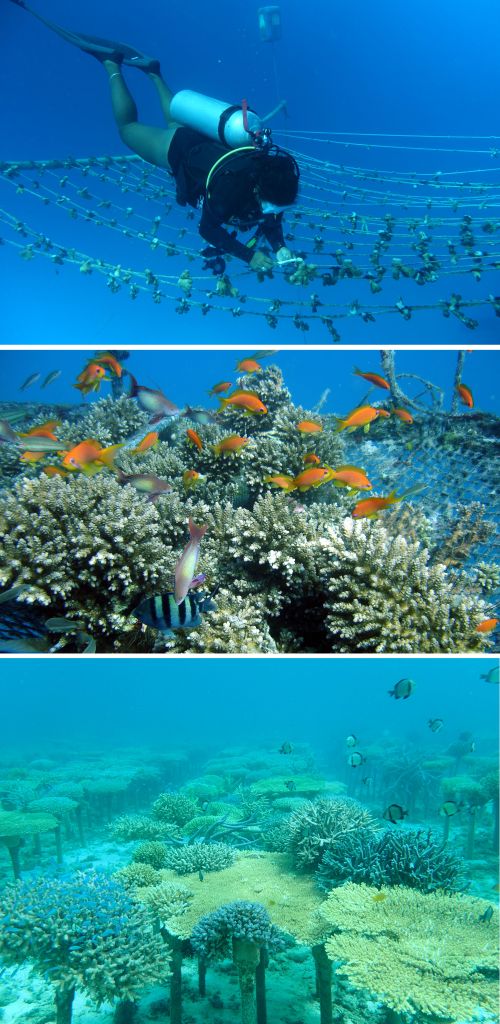
It is possible to cultivate corals in the sea like growing a nursery of trees to restore a burned forest. Cultivated corals grow faster than wild corals and can be outplanted to increase the healthy area of damaged reefs. Incorporated in projects of citizen science and ecotourism, this activity promotes environmental awareness about coral reefs, the marine ecosystem that is both the most biodiverse and the most threatened by global change.
When I finished by undergraduate studies in the 1980s, I met several top Spanish marine biologists to prospect my first job ever in academia. In all one-to-one interviews I had, I was asked what my interests were. And when I described that I wanted to study ways of modifying impacted marine ecosystems to restore their biodiversity, a well-known professor judged that my proposition was an inviable form of jardinería marina (marine gardening) ― those words made me feel embarrassed and have remained vivid in my professional imagination since. Neither the expert nor the young researcher knew at the time that we were actually talking about ecological restoration, a discipline that was being formalised exactly then by botanists in their pledge to recover pre-European conditions for North American grasslands (1).

Today, the term coral gardening encompasses the suite of methods to cultivate corals (tiny colonial jellyfish with an external skeleton and a carnivorous diet) and to outplant them into the wild to boost the growth of coral reefs following perturbations (2). In the face of the decline of coral reefs globally, due to the combination of climate change, pollution, and overfishing (3), this type of mariculture has gathered momentum in the last three decades and is currently being applied to more than 100 coral species in all the main reefs of our seas and oceans (4-6).
Read the rest of this entry »Just thought I’d share the audio of an interview I did with the famous Robyn Williams of ABC Radio National‘s The Science Show.

I’d be surprised if any Australians with even a passing interest in science could claim not to have listened to the Science Show before, and I suspect a fair mob of people overseas would be in the same boat.
It was a real privilege to talk with Robyn about our work on the ghastly future, and as always, the production value is outstanding.
Thank you, Robyn and the ABC.
Listen below, or link to the interview directly.

“Salutations! I hope you are safe and doing well,
[change font] Dear Doctor [insert name, surname, and initial]”
“We read your prestigious paper [insert TITLE here],”
(hmmm — you seem to take me for a fool, I fear)
“and we’d appreciated [sic] if you could submit your Research work”
(yep, they really must think I’m a berk)
“Your participation is extremely valuable to us,
here at Scientific Archives of Researches (or some such)”
“You may submit online, or as an attachment to this email address,”
(and I guess you’ll promise a minimal assessment sans stress?)
“In the pursuit of researches of quality best,
our open-access fees are among the most modest”
“We must be clear that this is not a scam”
(just how fucking thick do you think I am?)
“We will be waiting for your positive reply”
(this is the fifth one of these I’ve received today, sigh)
“Please let us know your acceptance to join the eminent author list,
and with any query, I will be most happy to assist”
“Sincerely, Profesor [sic] Gonar L Schlidt”
(does anyone actually fall for this shit?)
You know you’ve made it to the big time in Australia when Behind The News does a story on your research. Practically every kid in Australia watches the show at some point during their school years.
Although this was produced last month, I thought I’d post the entire 4-minute video here for your viewing pleasure.
When you popularise your research story for kids, it really gets the message across well.
Thank you, Natasha and BTN for this opportunity.
Most people are at least vaguely aware that climate change isn’t good for us.

Let’s consider the obvious direct health effects, like heat exhaustion and stroke, dehydration, increased inhalation of particulate matter from bushfires and other pollutant sources, greater expression of allergies, higher incidence of cardiovascular and respiratory diseases, greater injury rates, and higher probability of disease transmission from flooding events (see review here).
Let’s not forget the rising incidence of mental illness either.
Then there are the climatic events that increase the probability of dying violently like in a bushfire or a flood, getting caned in a major storm by debris, personal injury from storm surges exacerbated by rising sea levels, or dying slowly due to undernutrition from crop failures.
Some of the more indirect, yet just-as-insidious repercussions are those climate-driven events that worsen all of the above, such as increasing poverty, rising violent interactions (both individual-level and full-on warfare), loss of healthcare capability (less infrastructure, fewer doctors), and increased likelihood of becoming a refugee.
So, when someone says increased warming at the pace we’re witnessing now isn’t a problem, tell them they’re full of shit.
But wait! There’s more!
Yes, climate change will also make us more stupid. Perhaps one of the lesser-appreciated byproducts of an increasingly warmer world driven by rising greenhouse-gas concentrations is the direct effects of carbon dioxide on a variety of physiological functions.
Read the rest of this entry »Here is the fourth set of biodiversity cartoons for 2021. See full stock of previous ‘Cartoon guide to biodiversity loss’ compendia here.

Corey J. A. Bradshaw, Flinders University and Andrew Hoskins, CSIRO
This article is republished from The Conversation under a Creative Commons licence. Read the original article.
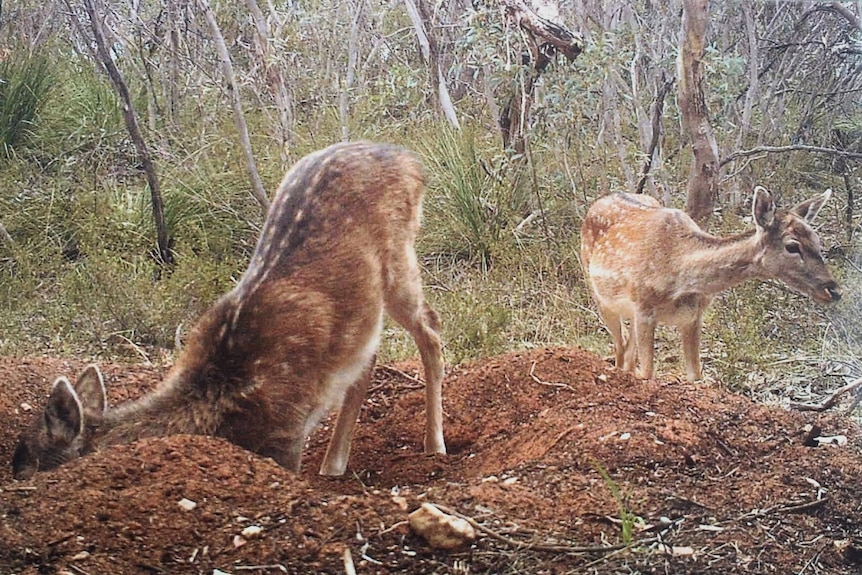
Shamefully, Australia has one of the highest extinction rates in the world.
And the number one threat to our species is invasive or “alien” plants and animals.
But invasive species don’t just cause extinctions and biodiversity loss – they also create a serious economic burden. Our research, published today, reveals invasive species have cost the Australian economy at least A$390 billion in the last 60 years alone.
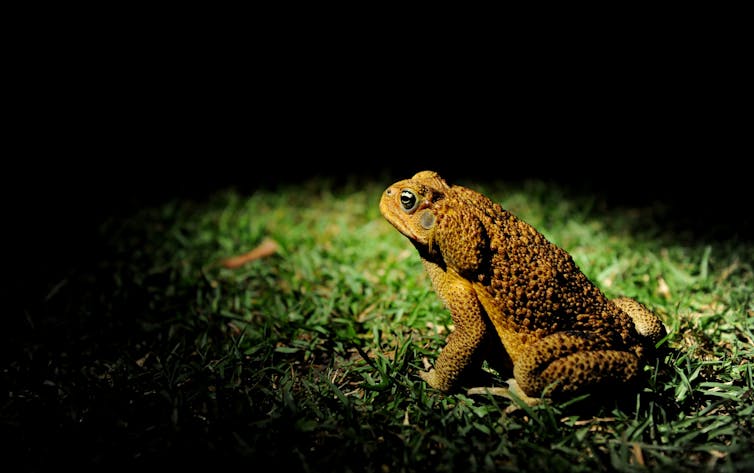
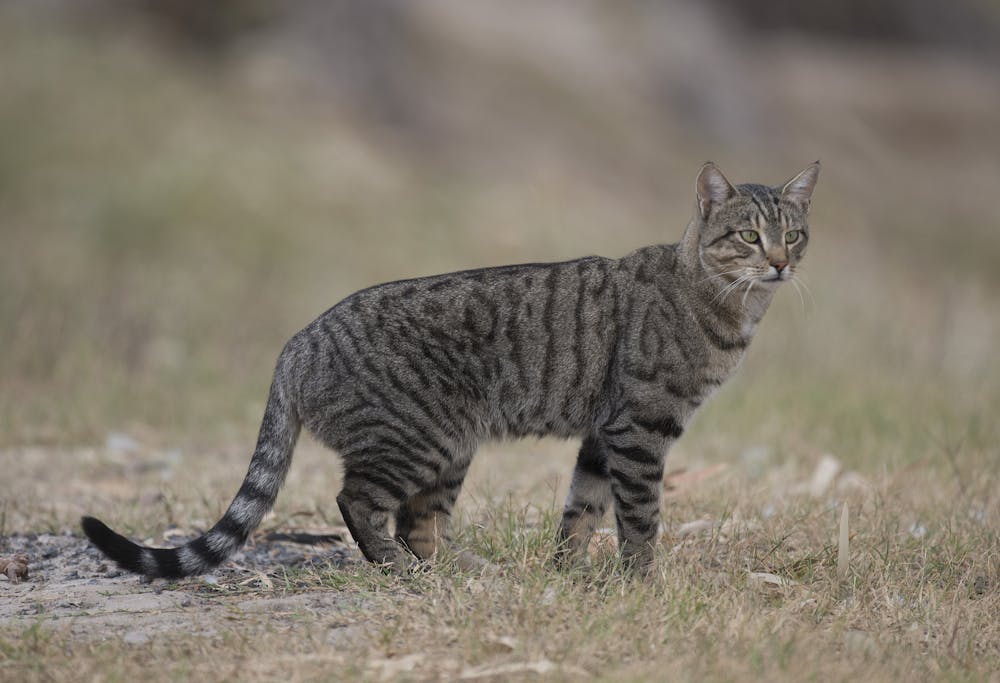
Our paper – the most detailed assessment of its type ever published in this country – also reveals feral cats are the worst invasive species in terms of total costs, followed by rabbits and fire ants.
Without urgent action, Australia will continue to lose billions of dollars every year on invasive species.
Huge economic burden
Invasive species are those not native to a particular ecosystem. They are introduced either by accident or on purpose and become pests.
Some costs involve direct damage to agriculture, such as insects or fungi destroying fruit. Other examples include measures to control invasive species like feral cats and cane toads, such as paying field staff and buying fuel, ammunition, traps and poisons.
Our previous research put the global cost of invasive species at A$1.7 trillion. But this is most certainly a gross underestimate because so many data are missing.
Read more:
Attack of the alien invaders: pest plants and animals leave a frightening $1.7 trillion bill
As a wealthy nation, Australia has accumulated more reliable cost data than most other regions. These costs have increased exponentially over time – up to sixfold each decade since the 1970s.
Read the rest of this entry »If you use genetics to differentiate populations, the new package smartsnp might be your new friend. Written in R language and available from GitHub and CRAN, this package does principal component analysis with control for genetic drift, projects ancient samples onto modern genetic space, and tests for population differences in genotypes. The package has been built to load big datasets and run complex stats in the blink of an eye, and is fully described in a paper published in Methods in Ecology and Evolution (1).

In the bioinformatics era, sequencing a genome has never been so straightforward. No surprise that > 20 petabytes of genomic data are expected to be generated every year by the end of this decade (2) — if 1 byte of information was 1 mm long, we could make 29,000 round trips to the moon with 20 petabytes. Data size in genetics keeps outpacing the computer power available to handle it at any given time (3). Many will be familiar with a computer freezing if unable to load or run an analysis on a huge dataset, and how many coffees or teas we might have drunk, or computer screens might have been broken, during the wait. The bottom line is that software advances that speed up data processing and genetic analysis are always good news.
With that idea in mind, I have just published a paper presenting the new R package smartsnp (1) to run multivariate analysis of big genotype data, with applications to studies of ancestry, evolution, forensics, lineages, and overall population genetics. I am proud to say that the development of the package has been one of the most gratifying short-term collaborations in my entire career, with my colleagues Christian Huber and Ray Tobler: a true team effort!
The package is available on GitHub and the Comprehensive R Archive Network CRAN. See downloading options here, and vignettes here with step-by-step instructions to run different functionalities of our package (summarised below).
In this blog, I use “genotype” meaning the combination of gene variants (alleles) across a predefined set of positions (loci) in the genome of a given individual of animal, human, microbe, or plant. One type of those variants is single nucleotide polymorphisms (SNP), a DNA locus at which two or more alternative nucleotides occur, sometimes conditioning protein translation or gene expression. SNPs are relatively stable over time and are routinely used to identify individuals and ancestors in humans and wildlife.
What the package does
The package smartsnp is partly based on the field-standard software EIGENSOFT (4, 5) which is only available for Unix command-line environments. In fact, our driving motivation was (i) to broaden the use of EIGENSOFT tools by making them available to the rocketing community of professionals, not only academics who employ R for their work (6), and (ii) to optimise our package to handle big datasets and complex stats efficiently. Our package mimics EIGENSOFT’s principal component analysis (SMARTPCA) (5), and also runs multivariate tests for population differences in genotypes as follows:
Read the rest of this entry »
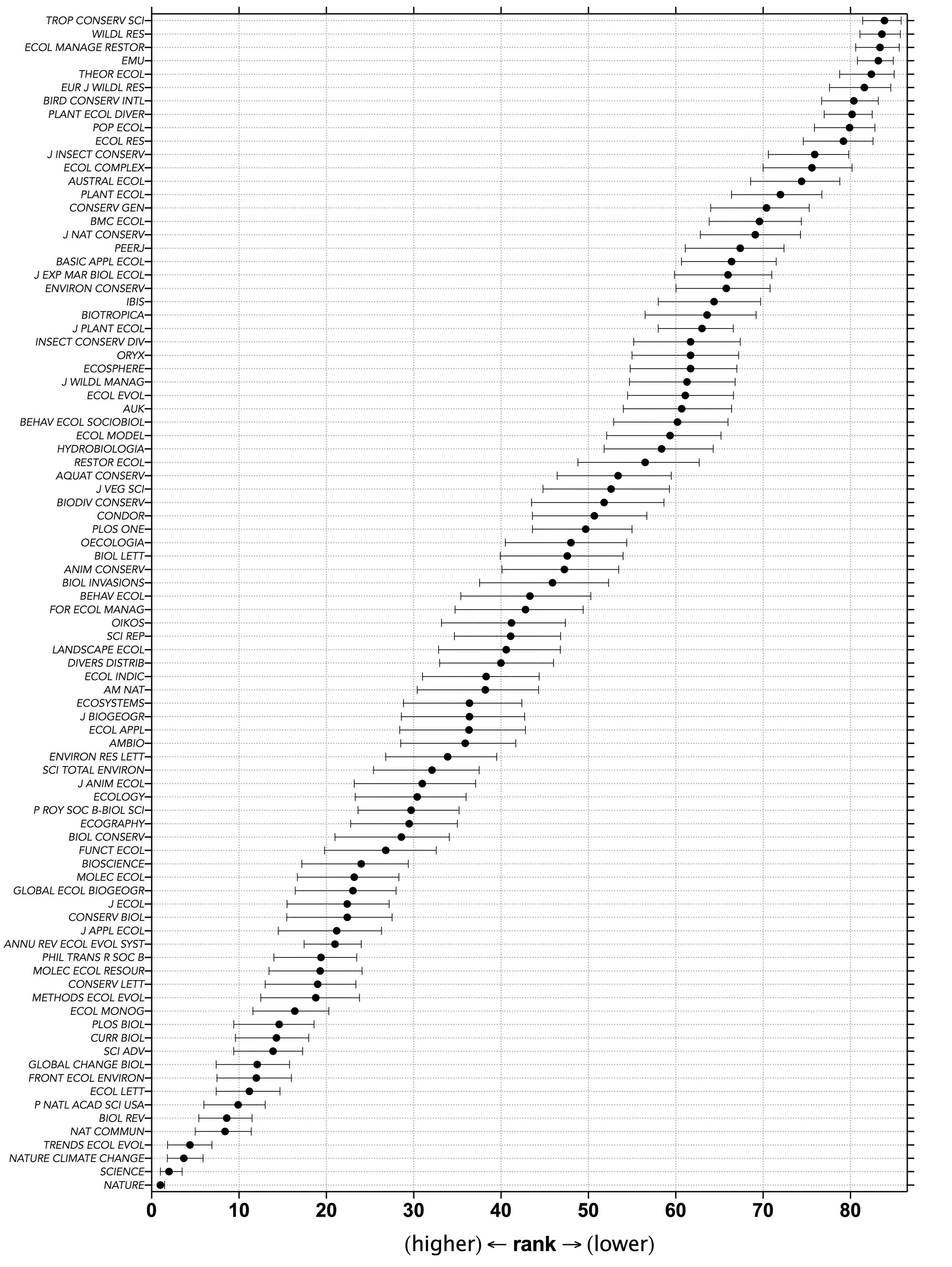
This is the 13th year in a row that I’ve generated journal ranks based on the journal-ranking method we published several years ago.
There are few differences in how I calculated this year’s ranks, as well as some relevant updates:
Since the Google Scholar metrics were just released today, I present the new 2020 ranks for: (i) 101 ecology, conservation and multidisciplinary journals, and a subset of (ii) 61 ‘ecology’ journals, (iii) 29 ‘conservation’ journals, (iv) 41 ‘sustainability’ journals (with general and energy-focussed journals included), and (v) 20 ‘marine & freshwater’ journals.
One final observation. I’ve noted that several journals are boasting about how their Impact Factors have increased this year, when they fail to mention that this is the norm across most journals. As you’ll see below, relative ranks don’t actually change that much for most journals. In fact, this is a redacted email I received from a journal that I will not identify here:
We’re pleased to let you know that the new Impact Factor for [JOURNAL NAME] marks a remarkable increase, as it now stands at X.XXX, compared to last year’s X.XXX. And what is even more important: [JOURNAL NAME] increased its rank in the relevant disciplines: [DISCIPLINE NAME].
Although the Impact Factor may not be the perfect indicator of success, it remains the most widely recognised one at journal level. Therefore, we’re excited to share this achievement with you, as it wouldn’t have been possible, had it not been for all of your contributions and support as authors, reviewers, editors and readers. A huge ‘THANK YOU’ goes to all of you!
Anyway, on to the results:
The other day I was playing around with some Bureau of Meteorology data for my little patch of the Adelaide Hills (free data — how can I resist?), when I discovered an interesting trend.
Living on a little farm with a small vineyard, I’m rather keen on understanding our local weather trends. Being a scientist, I’m also rather inclined to analyse data.
My first question was given the strong warming trend here and everywhere else, plus ample evidence of changing rainfall patterns in Australia (e.g., see here, here, here, here, here), was it drying out, getting wetter, or was the seasonal pattern of rainfall in my area changing?
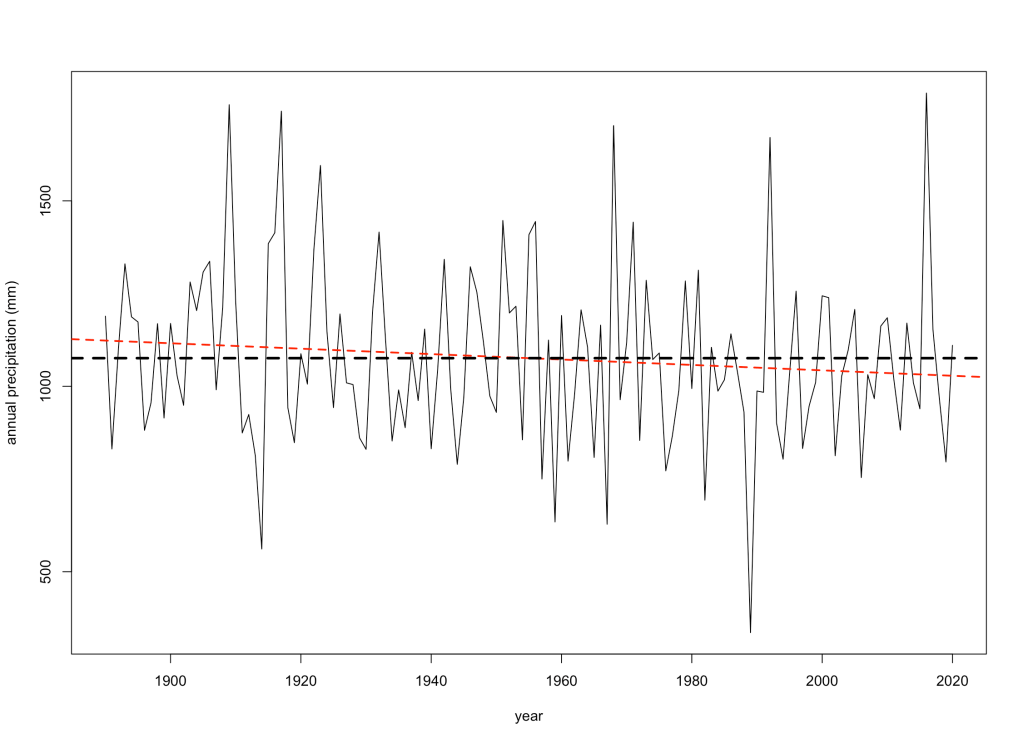
I first looked to see if there was any long-term trend in total annual rainfall over time. Luckily, the station records nearest my farm go all the way back to 1890:

While the red line might suggest a slight decrease since the late 19th Century, it’s no different to an intercept-only model (evidence ratio = 0.84) — no trend.
Here’s the R code to do that analysis (you can download the data here, or provide your own data in the same format):
## IMPORT MONTHLY PRECIPITATION DATA
dat <- read.table("monthlyprecipdata.csv", header=T, sep=",")
## CALCULATE ANNUAL VECTORS
precip.yr.sum <- xtabs(dat$Monthly.Precipitation.Total..millimetres. ~ dat$Year)
precip.yr.sum <- precip.yr.sum[-length(precip.yr.sum)]
year.vec <- as.numeric(names(precip.yr.sum))
## PLOT
plot(year.vec, as.numeric(precip.yr.sum), type="l", pch=19, xlab="year", ylab="annual precipitation (mm)")
fit.yr <- lm(precip.yr.sum ~ year.vec)
abline(fit.yr, lty=2, lwd=2, col="red")
abline(h=mean(as.numeric(precip.yr.sum)),lty=2, lwd=3)
## TEST FOR TREND
# functions
AICc <- function(...) {
models <- list(...)
num.mod <- length(models)
AICcs <- numeric(num.mod)
ns <- numeric(num.mod)
ks <- numeric(num.mod)
AICc.vec <- rep(0,num.mod)
for (i in 1:num.mod) {
if (length(models[[i]]$df.residual) == 0) n <- models[[i]]$dims$N else n <- length(models[[i]]$residuals)
if (length(models[[i]]$df.residual) == 0) k <- sum(models[[i]]$dims$ncol) else k <- (length(models[[i]]$coeff))+1
AICcs[i] <- (-2*logLik(models[[i]])) + ((2*k*n)/(n-k-1))
ns[i] <- n
ks[i] <- k
AICc.vec[i] <- AICcs[i]
}
return(AICc.vec)
}
delta.AIC <- function(x) x - min(x) ## where x is a vector of AIC
weight.AIC <- function(x) (exp(-0.5*x))/sum(exp(-0.5*x)) ## Where x is a vector of dAIC
ch.dev <- function(x) ((( as.numeric(x$null.deviance) - as.numeric(x$deviance) )/ as.numeric(x$null.deviance))*100) ## % change in deviance, where x is glm object
linreg.ER <- function(x,y) { # where x and y are vectors of the same length; calls AICc, delta.AIC, weight.AIC functions
fit.full <- lm(y ~ x); fit.null <- lm(y ~ 1)
AIC.vec <- c(AICc(fit.full),AICc(fit.null))
dAIC.vec <- delta.AIC(AIC.vec); wAIC.vec <- weight.AIC(dAIC.vec)
ER <- wAIC.vec[1]/wAIC.vec[2]
r.sq.adj <- as.numeric(summary(fit.full)[9])
return(c(ER,r.sq.adj))
}
linreg.ER(year.vec, as.numeric(precip.yr.sum))

Have you ever constructed a database and then published the findings, only to realise that after the time elapsed your database is already obsolete?
This is the reality of scientific information today. There are so many of us doing so many things that information accumulates substantially in months, if not weeks. If you’re a geneticist, this probably happens for many datasets on the order of days.
While our general databasing capacity worldwide has improved enormously over the last decade with the transition to fully online and web-capable interactivity, the world of scientific publication still generally lags behind the tech. But there is a better way to communicate dynamic, evolving database results to the public.
Enter the ‘living figure’, which is a simple-enough concept where a published figure remains dynamic as its underlying database is updated.
We have, in fact, just published such a living figure based on our paper earlier this year where we reported the global costs of invasive species.
That paper was published based on version 1 of the InvaCost database, but a mere three months after publication, InvaCost is already at version 4.
Read the rest of this entry »When snorkelling in a reef, it’s natural to think of coral colonies as a colourful scenography where fish act in a play. But what would happen to the fish if the stage went suddenly empty, as in Peter Brook’s 1971 Midsummer Night’s Dream? Would the fish still be there acting their roles without a backdrop?
This question is not novel in coral-reef science. Ecologists have often compared reef fish diversity and biomass in selected localities before and after severe events of coral mortality. Even a temporary disappearance of corals might have substantial effects on fish communities, sometimes resulting in a local disappearance of more than half of local fish species.
Considering the multiple, complex ways fish interact with — and depend on — corals, this might appear as an obvious outcome. Still, such complexity of interactions makes it difficult to predict how the loss of corals might affect fish diversity in specific contexts, let alone at the global scale.
Focusing on species-specific fish-coral associations reveals an inconsistent picture with local-scale empirical observations. When looking at the fraction of local fish diversity that strictly depends on corals for food and other more generic habitat requirements (such as shelter and reproduction), the global picture suggests that most fish diversity in reef locality might persist in the absence of corals.
The mismatch between this result and the empirical evidence of a stronger coral dependence suggests the existence of many hidden ecological paths connecting fish to corals, and that those paths might entrap many fish species for which the association to corals is not apparent.
Read the rest of this entry »I’m not in any way formally involved in either the IPCC or IPBES, although I’ve been involved indirectly in analysing many elements of both the language of the reports and the science underlying their predictions.

Today, The Guardian reported that a leaked copy of an IPCC report scheduled for release soon indicated that, well, the climate-change situation is in fact worse than has been previously reported in IPCC documents.
If you’re a biologist, climatologist, or otherwise-informed person, this won’t come as much of a surprise. Why? Well, the latest report finally recognises that the biosphere is not just some big balloon that slowly inflates or deflates with the whims of long-term climate variation. Instead, climate records over millions of years show that the global climate can and often does shift rapidly between different states.
This is the concept of ‘tipping points’.
Read the rest of this entry »The abundance of wild animals is regressing speedily as the number of domesticated animals and persons keeps escalating. Such demographic contrast signals that we urgently need to modify our model of subsistence and our interaction with Mother Nature.
If we had to choose between a biodiverse landscape and one hosting a monoculture of pine trees with ruminating cattle, many would take the first option. Biodiversity has an aesthetic value to humans, and also gives us free services like pollination, climate regulation, freshwater depuration or soil formation (1, 2). That is why the mounting rates of biodiversity loss have propelled a multi-angled debate about whether the Earth is experiencing the sixth mass extinction (3, 4) and how biodiversity should be managed to secure our access to ecosystem services (5, 6).
Think individuals, not species
A different way of approaching the biodiversity crisis consists of examining trends in the number of wild animals, with not so much emphasis on the variety of species. Thus, the Living Planet Report 2020, published by the World Wildlife Fund, has compiled thousands of scientific studies about > 21,000 populations of wild vertebrates studied over time (> 4,000 species represented) and concluded that, on average, the number of individuals per population has diminished by 70% since the 1970s (7).

On the other hand, Yinon Bar-On et al. (8) quantified that the biomass of humans and our domesticated mammals currently multiplies the biomass of wild mammals by a factor of 10, and there are 3 kg of humans and poultry for every kg of wild birds (see video featuring this study).
Not only that, during the last 100,000 years through which anatomically modern humans have thrived from a handful of bands of African hunter-gatherers to complex societies living in metropolis, the cattle industry has ended up quadrupling the global biomass of mammals (8).
Read the rest of this entry »As someone who writes a lot of models — many for applied questions in conservation management (e.g., harvest quotas, eradication targets, minimum viable population sizes, etc.), and supervises people writing even more of them, I’ve had many different experiences with their uptake and implementation by management authorities.
Some of those experiences have involved catastrophic failures to influence any management or policy. One particularly painful memory relates to a model we wrote to assist with optimising approaches to eradicate (or at least, reduce the densities of) feral animals in Kakadu National Park. We even wrote the bloody thing in Visual Basic (horrible coding language) so people could run the module in Excel. As far as I’m aware, no one ever used it.
Others have been accepted more readily, such as a shark-harvest model, which (I think, but have no evidence to support) has been used to justify fishing quotas, and one we’ve done recently for the eradication of feral pigs on Kangaroo Island (as yet unpublished) has led directly to increased funding to the agency responsible for the programme.
According to Altmetrics (and the online tool I developed to get paper-level Altmetric information quickly), only 3 of the 16 of what I’d call my most ‘applied modelling’ papers have been cited in policy documents:
Read the rest of this entry »
The very worn slur of “neo-Malthusian”
7 09 2021After the rather astounding response to our Ghastly Future paper published in January this year (> 443,000 views and counting; 61 citations and counting), we received a Commentary that was rather critical of our article.
We have finally published a Response to the Commentary, which is now available online (accepted version) in Frontiers in Conservation Science. Given that it is published under a Creative Commons Attribution License (CC BY), I can repost the Response here:
In their comment on our paper Underestimating the challenges of avoiding a ghastly future, Bluwstein et al.2 attempt to contravene our exposé of the enormous challenges facing the entire human population from a rapidly degrading global environment. While we broadly agree with the need for multi-disciplinary solutions, and we worry deeply about the inequality of those who pay the costs of biodiversity loss and ecological collapse, we feel obligated to correct misconceptions and incorrect statements that Bluwstein et al.2 made about our original article.
After incorrectly assuming that our message implied the existence of “one science” and a “united scientific community”, the final paragraph of their comment contradicts their own charge by calling for the scientific community to “… stand in solidarity”. Of course, there is no “one science” — we never made such a claim. Science is by its nature necessarily untidy because it is a bottom-up process driven by different individuals, cultures, perspectives, and goals. But it is solid at the core. Scientific confluence is reached by curiosity, rigorous testing of assumptions, and search for contradictions, leading to many — sometimes counter-intuitive or even conflicting — insights about how the world works. There is no one body of scientific knowledge, even though there is good chance that disagreements are eventually resolved by updated, better evidence, although perhaps too slowly. That was, in fact, a main message of our original article — that obligatory specialisation of disparate scientific fields, embedded within a highly unequal and complex socio-cultural-economic framework, reduces the capacity of society to appreciate, measure, and potentially counter the complexity of its interacting existential challenges. We agree that scientists play a role in political struggles, but we never claimed, as Bluwstein et al.2 contended, that such struggles can be “… reduced to science-led processes of positive change”. Indeed, this is exactly the reason our paper emphasized the political impotence surrounding the required responses. We obviously recognize the essential role social scientists play in creating solutions to avoid a ghastly future. Science can only provide the best available evidence that individuals and policymakers can elect to use to inform their decisions.
We certainly recognise that there is no single policy or polity capable of addressing compounding and mounting problems, and we agree that that there is no “universal understanding of the intertwined socio-ecological challenges we face”. Bluwstein et al.2 claimed that we had suggested scientific messaging alone can “… adequately communicate to the public how socio-ecological crises should be addressed”. We did not state or imply such ideas of unilateral scientific power anywhere in our article. Indeed, the point of framing our message as pertaining to a complex adaptive system means that we cannot, and should not, work towards a single goal. Instead, humanity will be more successful tackling challenges simultaneously and from multiple perspectives, by exploiting manifold institutions, technologies, approaches, and governances to match the complexity of the predicament we are attempting to resolve.
Read the rest of this entry »Share:
Comments : Leave a Comment »
Tags: commentary, complex adaptive system, consumption, critique, human population, Malthusian, neo-Malthusian, over-population, overshoot, Population
Categories : agriculture, anthropocene, biodiversity, climate change, demography, economics, education, Endarkenment, environmental economics, environmental policy, extinction, food, governance, human overpopulation, poverty, science, societies, sustainability