Thirsty forests

1 02 2019

Climate change is one ingredient of a cocktail of factors driving the ongoing destruction of pristine forests on Earth. We here highlight the main physiological challenges trees must face to deal with increasing drought and heat.

Forests experiencing embolism after a hot drought. The upper-left pic shows Scots (Pinus sylvestris) and black (P. nigra) pines in Montaña de Salvador (Espuñola, Barcelona, Spain) during a hot Autumn in 2015 favouring a massive infestation by pine processionary caterpillars (Thaumetopoea pityocampa) and tree mortality the following year (Lluís Brotons/CSIC in InForest-CREAF-CTFC). To the right, an individual holm oak (Quercus ilex) bearing necrotic branches in Plasencia (Extremadura, Spain) during extreme climates from 2016 to 2017, impacting more than a third of the local oak forests (Alicia Forner/CSIC). The lower-left pic shows widespread die-off of trembling aspen (Populus tremuloides) from ‘Aspen Parkland’ (Saskatchewan, Canada) in 2004 following extreme climates in western North America from 2001 to 2002 (Mike Michaelian/Canadian Forest Service). To the right, several dead aspens near Mancos (Colorado, USA) where the same events hit forests up to one-century old (William Anderegg).

A common scene when we return from a long trip overseas is to find our indoor plants wilting if no one has watered them in our absence. But … what does a thirsty plant experience internally?

Like animals, plants have their own circulatory system and a kind of plant blood known as sap. Unlike the phloem (peripheral tissue underneath the bark of trunks and branches, and made up of arteries layered by live cells that transport sap laden with the products of photosynthesis, along with hormones and minerals — see videos here and here), the xylem is a network of conduits flanked by dead cells that transport water from the roots to the leaves through the core of the trunk of a tree (see animation here). They are like the pipes of a building within which small pressure differences make water move from a collective reservoir to every neighbours’ kitchen tap.

Water relations in tree physiology have been subject to a wealth of research in the last half a decade due to the ongoing die-off of trees in all continents in response to episodes of drought associated with temperature extremes, which are gradually becoming more frequent and lasting longer at a planetary scale (1). 

Embolised trees

During a hot drought, trees must cope with a sequence of two major physiological challenges (2, 3, 4). More heat and less internal water increase sap tension within the xylem and force trees to close their stomata (5). Stomata are small holes scattered over the green parts of a plant through which gas and water exchanges take place. Closing stomata means that a tree is able to reduce water losses by transpiration by two to three orders of magnitude. However, this happens at the expense of halting photosynthesis, because the main photosynthetic substrate, carbon dioxide (CO2), uses the same path as water vapour to enter and leave the tissues of a tree.

If drought and heat persist, sap tension reaches a threshold leading to cavitation or formation of air bubbles (6). Those bubbles block the conduits of the xylem such that a severe cavitation will ultimately cause overall hydraulic failure. Under those conditions, the sap does not flow, many parts of the tree dry out gradually, structural tissues loose turgor and functionality, and their cells end up dying. Thus, the aerial photographs showing a leafy blanket of forest canopies profusely coloured with greys and yellows are in fact capturing a Dantesque situation: trees in photosynthetic arrest suffering from embolism (the plant counterpart of a blood clot leading to brain, heart or pulmonary infarction), which affects the peripheral parts of the trees in the first place (forest dieback).

Read the rest of this entry »


Influential conservation ecology papers of 2018

17 12 2018

e35f9ddeada029a053a15cd023abadf5
For the last five years I’ve published a retrospective list of the ‘top’ 20 influential papers of the year as assessed by experts in F1000 Prime — so, I’m doing so again for 2018 (interesting side note: six of the twenty papers highlighted here for 2018 appear in Science magazine). See previous years’ posts here: 2017, 20162015, 2014, and 2013.

Read the rest of this entry »


Sex on the beach

2 10 2018
Female green turtles (Chelonia mydas) spawning (top) and diving (bottom) on Raine Island (Great Barrier Reef, Queensland, Australia) — photos courtesy of Ian Bell. This species is ‘Endangered’ globally since 1982, mainly from egg harvesting (poaching conflict in Mexico for olive ridley Lepidochelys olivacea featured by National Geographic’s video here), despite the success of conservation projects (39). Green turtles inhabit tropical and subtropical seas in all oceans. Adults can grow > 150 kg and live for up to ~ 75 years. Right after birth, juveniles venture into the open sea to recruit ultimately in coastal areas until sexual maturity. They then make their first reproductive migration, often over 1000s of km (see footage of a real dive of a camera-equipped green turtle), to reach their native sandy beaches where pregnant females will lay their eggs. Each female can deposit more than one hundred eggs in her nest, and in several clutches in the same season because they can store the sperm from multiple mating events.

When sex is determined by the thermal environment, males or females might predominate under sustained climatic conditions. A study about marine turtles from the Great Barrier Reef illustrates how feminisation of a population can be partitioned geographically when different reproductive colonies are exposed to contrasting temperatures.

Fortunately, most people in Western societies already perceive that we live in a complex blend of sexual identities, far beyond the kind of genitals we are born with. Those identities start to establish themselves in the embryo before the sixth week of pregnancy. In the commonest scenario, for a human foetus XY with one maternal chromosome (X) and one paternal (Y) chromosome, the activation of the Sry gen (unique to Y) will trigger the differentiation of testicles and, via hormonal pathways, the full set of male characteristics (1).

Absence of that gene in an XX embryo will normally lead to a woman. However, in just one of many exceptions to the rule, Sry-expression failure in XY individuals can result in sterile men or ambiguous genitals — along a full gradient of intermediate sexes and, potentially, gender identities. A 2015 Nature ‘News’ feature echoes two extraordinary cases: (i) a father of four children found to bear a womb during an hernia operation, and (ii) a pregnant mother found to host both XX and XY cells during a genetic test – with her clinical geneticist stating “… that’s the kind of science-fiction material for someone who just came in for an amniocentesis” (2). These real-life stories simply reflect that sex determination is a complex phenomenon.

Three ways of doing it

In nature, there are three main strategies of sex determination (3) — see scheme here: Read the rest of this entry »


Some scary stats about agriculture and biodiversity

20 07 2018

84438Last week we had the pleasure of welcoming the eminent sustainability scientist, Professor Andrew Balmford of the University of Cambridge, to our humble Ecology and Evolution Seminar Series here at Flinders University. While we couldn’t record the seminar he gave because of some of the unpublished and non-proprietary nature of some of his slides, I thought it would be interesting, useful, and thought-provoking to summarise some of the information he gave.

Andrew started off by telling us some of the environmental implications of farming worldwide. Today, existing agriculture covers more than half of ‘useable’ land (i.e., excluding unproductive deserts, etc.), and it has doubled nitrogen fixation rates from a pre-industrial baseline. Globally, agriculture is responsible for between 19 and 35% of all greenhouse gas emissions, and it has caused approximately 40% increase in observed sea-level rise (1961-2003). Not surprisingly, agriculture already occupies the regions of highest biodiversity globally, and is subsequently the greatest source of threat to species.

Read the rest of this entry »


Biodiversity is everyone’s responsibility

13 07 2018

Workspace: Team Of Diverse Workers Put Hands TogetherI’m not sure if many South Australians are aware of this, but the Parliamentary Inquiry into Biodiversity by the Environment, Resources and Development Committee presented a report to the 53rd Parliament of South Australia in March 2017. I thought it worthwhile reproducing their executive summary here on CB.com (I’ve highlighted the text that I deem to be rather insightful and simultaneously damning from our own elected government representatives):

This report summarises the findings and recommendations of the South Australian Parliament’s Environment, Resources and Development Committee’s inquiry into biodiversity in South Australia. Specifically, the inquiry investigated the regulatory and policy framework to determine whether it appropriately supports terrestrial and marine ecological processes, biodiversity values and abates species extinction.

The Committee found that in spite of the efforts of the State and Federal governments, industry and private landholders in South Australia, the condition of biodiversity in the State continues to decline. Species extinctions have occurred in the past and a further “extinction debt” still exists. There is no reason to believe that this trend will improve without a change to the way we approach biodiversity conservation.

A key theme to emerge from the Inquiry is that biodiversity conservation needs to be everyone’s responsibility; State and Federal government, industry, the broader community, and private landholders.

This also means that biodiversity conservation needs to occur across both public and private land, with actions coordinated at a landscape scale.

Making biodiversity conservation everyone’s responsibility requires a range of measures, including legislative reform, improved management of threats and greater involvement of the community. The provision of greater resources would yield faster results.

This report has focused on several key themes that emerged from submissions to the Inquiry.

Regulating for better biodiversity – South Australia’s legislative framework

South Australia’s current legislative framework does not provide for optimum biodiversity outcomes.

Three key issues contribute to this –

  • an out-of-date suite of environmental legislation that lacks cohesion and consistency, particularly regarding enforcement and compliance provisions;
  • inadequate and incomplete processes for identifying and protecting at-risk elements that need special measures (e.g. for protection of specific threatened species and ecological communities); and
  • inadequate consideration of biodiversity conservation in legislation that regulates human activities. In particular, there is a lack of cohesion between the environmental legislative and policy framework and land use planning, assessment and approval.
  • Statutory fragmentation of biodiversity considerations – that is, consideration of different aspects of biodiversity under different pieces of legislation – results in lack of cohesion and consistency, duplication and inefficiency, and makes it difficult to implement a landscape approach or to identify strategic opportunities and risks.

Taken as a whole, current enforcement provisions do not provide for effective and proportionate compliance action. Enforcement and compliance provisions across the relevant legislation are uneven in their approach. For example, penalties appear to be disproportionate and not risk-based (although there are some exceptions). Modern enforcement tools such as compliance orders, civil remedies and alternative penalties (such as administrative penalties, payment of damages including exemplary damages, remediation orders etc) are not included in all relevant legislation. There is some duplication in offences and inconsistency in the types of sanctions and penalty ranges.

There is an urgent need to amend the legislative framework to support any attempt to improve biodiversity outcomes.

The best approach will be based on clear, shared responsibility for biodiversity outcomes, supported by individual accountability. However, such a change will require policy development and drive.

To ensure forward momentum and improvements in the short term while developing the policy settings to support such a step-change, a staged approach could be implemented. There are various ways this could be achieved.

The Committee suggests a 3-stage approach to reforming the legislative framework. The Committee recommends the creation of a Biodiversity Expert Panel that is responsible for advancing this 3-stage approach.

  1. The first stage will involve amendments to improve operation and effectiveness of the regulatory regime within current policy settings, acknowledging that as a result of Stage 3, provisions may be altered or moved into different pieces of legislation. Amendments generally would be to the existing ‘environmental’ Acts, and primarily to the National Parks and Wildlife Act 1972 and Native Vegetation Act 1991. They would include many of the specific areas for amendment identified in EDO submissions (2011 & 2015) as well as in the SA Government submission, for example, beginning with amendments to improve current environmental legislation.
  2. Stage 2 would progress to amendments to improve integration between Acts and improve support for landholders and community participation.
  3. Stage 3 would implement a system whereby all resource use and management would be managed by one piece of legislation, with protection of biodiversity and sustainable development at its core. Provisions for protected area management, and for the scientific work involved in identifying threatened species and communities, may be contained in separate legislation.

Threats, ecological resilience and restoration

The State’s native biodiversity is facing myriad of current threats, including habitat loss and fragmentation (due to development and changing land-use), pest plants and animals, and control burn regimes. There is a need for more stringent vegetation protection, better informed and enacted control and management strategies of known pest plants and animals, and a revision of burning regimes.

Future threats to the State’s biodiversity will be largely driven by climate change impacts and the interaction with existing major threats (e.g. urbanisation and changing land use). Adequately preparing for and managing such future threats will require knowledge of projected changes and pro-active preparation for such changes.

Working with the community

Involvement of the community is an essential part of any biodiversity conservation strategy for the State. It is a foundation stone for moving to a point where biodiversity conservation is everyone’s business.

Community engagement will become increasingly important for biodiversity conservation, especially given the growing role of volunteers to support works on public land as well as the voluntary conservation efforts of private landholders. The expanding role of volunteers reenforces that biodiversity conservation is everyone’s business.

South Australia’s approach to biodiversity conversation on private land needs to be reinvigorated.

Cross cutting themes

There were several cross cutting themes identified in submissions to the Inquiry. There was broad recognition of the strong cultural and historic significance of elements of biodiversity to Aboriginal people, and that this is often poorly understood outside those communities. Continuing to identify ways for Aboriginal people to contribute to land and water management in South Australia remains a priority.

With respect to knowledge generation, critical knowledge gaps exist that need to be filled and existing knowledge is not being adequately understood, communicated or applied. From a resourcing perspective, there is concern that insufficient funds are being allocated to biodiversity conservation, which is affecting work on public and private lands.

The management of over-abundant species in South Australia remains a challenge, noting the recent impacts of long-nose fur seals in the Lower Lakes and Coorong, and ongoing concerns regarding the impact of animals such as little corellas and some species of kangaroos on negative vegetation.


A life of fragmentation

9 05 2018

LauranceWhat do you say to a man whose list of conservation awards reads like a Star Wars film intro, who has introduced terms like the ‘hyperdynamism hypothesis’ to the field of ecology, and whose organisation reaches over one million people each week with updates of the scientific kind?
Interview with Bill Laurance by Joel Howland (originally published in Conjour)


Well, I started by asking what it is that leads him to love the natural world to the extent he does. His answer was disarmingly simple.

“I grew up in the country, on an Oregon cattle ranch, and I think my love of nature just evolved naturally from that. When I was a young kid my dad and I did some fishing and ‘rock-hounding’— searching for rare stones and fossils. As an adolescent and teen I loved heading off into a forest or wilderness, rifle in hand – back in those days you could do that – to see whatever I could find. I watched red foxes hunting, eagles mating, and even heard a mountain lion scream. I got to be a pretty good duck and game-bird hunter.”

He’s quick to point out, however, he realised his taste for guns was not so developed as his love of nature.

“I gave up my rifles for a camera, and enjoyed that even more. I really got into photography for a while. Nature has always just calmed and fascinated me —I guess that’s partly why I became a conservationist.”

Who is Bill Laurance?

William F. Laurance is one of the leading ecology and conservation scientists globally, publishing dozens of papers in journals like Nature and Science, and rewriting the way scientists in the field research the complex interactions between flora and fauna — particularly in rainforests like the Amazon.

He is a Distinguished Research Professor at James Cook University in Australia, a Fellow of the Australian Academy of Science and the American Association for the Advancement of Science, and has received an Australian Laureate Fellowship from the Australian Research Council.

All this for a man from western USA who dreamed of running a zoo. Instead, he has travelled a path of intricate and game-changing research, trailblazing awareness campaigns and inspirational writings that have driven the way many see the environment over the past few decades.

Despite this profile, Laurance gave some time to tell Conjour about his life, his passion and his aims. I asked him what — considering his impressive CV — the future holds.

His response seems a real insight to the man. Read the rest of this entry »


Influential conservation ecology papers of 2017

27 12 2017

Gannet Shallow Diving 03
As I have done for the last four years (20162015, 2014, 2013), here’s another retrospective list of the top 20 influential conservation papers of 2017 as assessed by experts in F1000 Prime.

Read the rest of this entry »


You know you’re screwed when the insects disappear

31 10 2017

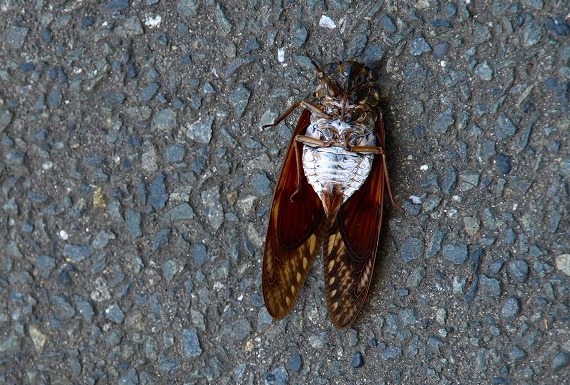
dead cicadaLast Friday, ABC 891 here in Adelaide asked me to comment on a conservation paper doing the news rounds last week. While it has been covered extensively in the media (e.g., The Guardian, CNN, and Science), I think it’s probably going to be one of those things that people unfortunately start to forget right away. But this is decidedly something that no one should be forgetting.

While you can listen to me chat about this with the lovely Sonya Feldhoff on the ABC (I start chin-wagging around the 14:30 mark), I thought it prudent to remind CB.com readers just how devastatingly important this study is.

While anyone with a modicum of conservation science under her belt will know that the Earth’s biodiversity is not doing well, the true extent of the ecological tragedy unfolding before our very eyes really came home to us back in 2014 with the publication of WWF’s Living Planet Report. According to a meta-analysis of 10,380 population trends from over 3000 species of birds, reptiles, amphibians, mammals, and fish, the report concluded that the Earth has lost over 50% of the individuals in vertebrate populations since 1970. Subsequent revisions (and more population trends from more species) place the decline at over 60% by 2020 (that’s only a little over two years away). You can also listen to me speak about this on another radio show.

If that little bit of pleasant news didn’t make the pit of your stomach gurgle and a cold sweat break out on the back of your neck, you’re probably not human. But hang on, boys and girls — it gets so much worse! The publication in PLoS One on 18 October about Germany’s insect declines might be enough to tip you over the edge and into the crevasse of mental instabilityRead the rest of this entry »


Four decades of fragmentation

27 09 2017

fragmented

I’ve recently read perhaps the most comprehensive treatise of forest fragmentation research ever compiled, and I personally view this rather readable and succinct review by Bill Laurance and colleagues as something every ecology and conservation student should read.

The ‘Biological Dynamics of Forest Fragments Project‘ (BDFFP) is unquestionably one of the most important landscape-scale experiments ever conceived and implemented, now having run 38 years since its inception in 1979. Indeed, it was way ahead of its time.

Experimental studies in ecology are comparatively rare, namely because it is difficult, expensive, and challenging in the extreme to manipulate entire ecosystems to test specific hypotheses relating to the response of biodiversity to environmental change. Thus, we ecologists tend to rely more on mensurative designs that use existing variation in the landscape (or over time) to infer mechanisms of community change. Of course, such experiments have to be large to be meaningful, which is one reason why the 1000 km2 BDFFP has been so successful as the gold standard for determining the effects of forest fragmentation on biodiversity.

And successful it has been. A quick search for ‘BDFFP’ in the Web of Knowledge database identifies > 40 peer-reviewed articles and a slew of books and book chapters arising from the project, some of which are highly cited classics in conservation ecology (e.g., doi:10.1046/j.1523-1739.2002.01025.x cited > 900 times; doi:10.1073/pnas.2336195100 cited > 200 times; doi:10.1016/j.biocon.2010.09.021 cited > 400 times; and doi:10.1111/j.1461-0248.2009.01294.x cited nearly 600 times). In fact, if we are to claim any ecological ‘laws’ at all, our understanding of fragmentation on biodiversity could be labelled as one of the few, thanks principally to the BDFFP. Read the rest of this entry »


Not 100% renewable, but 0% carbon

5 04 2017

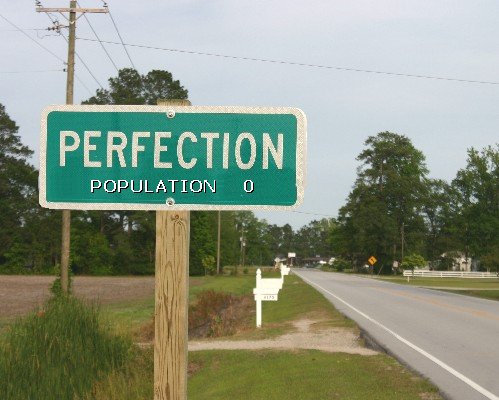
635906686103388841-366754148_perfection1Anyone familiar with this blog and our work on energy issues will not be surprised by my sincere support of nuclear power as the only realistic solution to climate change in the electricity (and possibly transport and industrial heat) arena. I’ve laid my cards on the table in the peer-reviewed literature (e.g., see here, here, here, here, here & here) and the standard media, and I’ve even joined the board of a new environmental NGO that supports nuclear.

And there is hope, despite the ever-increasing human population, rising consumerism, dwindling resources, and the ubiquity of ideologically driven and ethically compromised politicians. I am hopeful for several reasons, including rising safety and reliability standards of modern nuclear technology, the continued momentum of building new fission reactors in many countries, and even the beginnings of real conversations about nuclear power (or at least, the first steps toward this) in countries where nuclear energy is currently banned (e.g., Australia). I’m also heartened by the fact that nearly every conservation scientists with whom I speak is generally supportive, or at least non-resistant, to the idea of nuclear power as part of the climate change solution. An open letter by our colleagues attests to this. In fact, every day that passes brings new evidence that we cannot ignore this solution any longer.

Even despite the evidence in support of implementing a strong nuclear component into climate change-mitigation strategies, one of the most frequent arguments for not doing so is that society can achieve all of its energy needs and simultaneously combat climate change by constructing 100% renewable-energy pathways. While it is an easy mantra to repeat because it feels right intrinsically to nearly everyone with an environmental conscience, as a scientist I also had to ask if such a monumental task is even technically feasible. Read the rest of this entry »


Potential conservation nightmare unfolding in South Africa

31 10 2016

fees-must-fallLike most local tragedies, it seems to take some time before the news really grabs the overseas audience by the proverbial goolies. That said, I’m gobsmacked that the education tragedy unfolding in South Africa since late 2015 is only now starting to be appreciated by the rest of the academic world.

You might have seen the recent Nature post on the issue, and I do invite you to read that if all this comes as news to you. I suppose I had the ‘advantage’ of getting to know a little bit more about what is happening after talking to many South African academics in the Kruger in September. In a word, the situation is dire.

We’re probably witnessing a second Zimbabwe in action, with the near-complete meltdown of science capacity in South Africa as a now very real possibility. Whatever your take on the causes, justification, politics, racism, or other motivation underlying it all, the world’s conservation biologists should be very, very worried indeed.

Read the rest of this entry »


World’s greatest conservation tragedy you’ve probably never heard of

13 10 2016

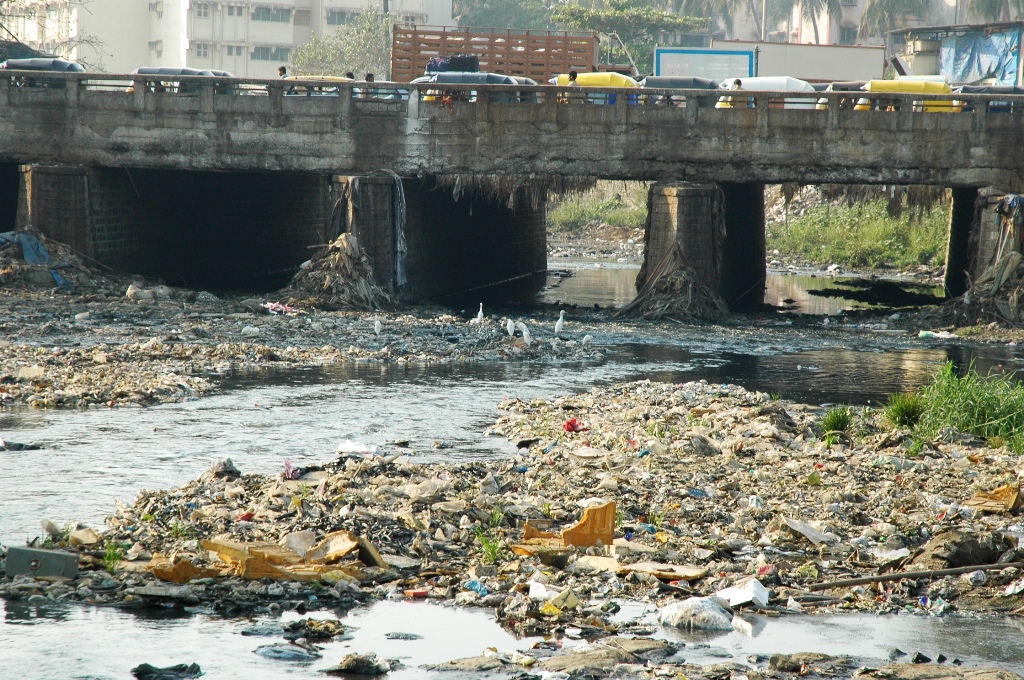
oshiwara_riverI admit that I might be stepping out on a bit of a dodgy limb by claiming ‘greatest’ in the title. That’s a big call, and possibly a rather subjective one at that. Regardless, I think it is one of the great conservation tragedies of the Anthropocene, and few people outside of a very specific discipline of conservation ecology seem to be talking about it.

I’m referring to freshwater biodiversity.

I’m no freshwater biodiversity specialist, but I have dabbled from time to time, and my recent readings all suggest that a major crisis is unfolding just beneath our noses. Unfortunately, most people don’t seem to give a rat’s shit about it.

Sure, we can get people riled by rhino and elephant poaching, trophy hunting, coral reefs dying and tropical deforestation, but few really seem to appreciate that the stakes are arguably higher in most freshwater systems. Read the rest of this entry »


Transition from the Anthropocene to the Minicene

24 09 2016

Going, going ...

Going, going … © CJA Bradshaw

I’ve just returned from a life-changing trip to South Africa, not just because it was my first time to the continent, but also because it has redefined my perspective on the megafauna extinctions of the late Quaternary. I was there primarily to attend the University of Pretoria’s Mammal Research Institute 50thAnniversary Celebration conference.

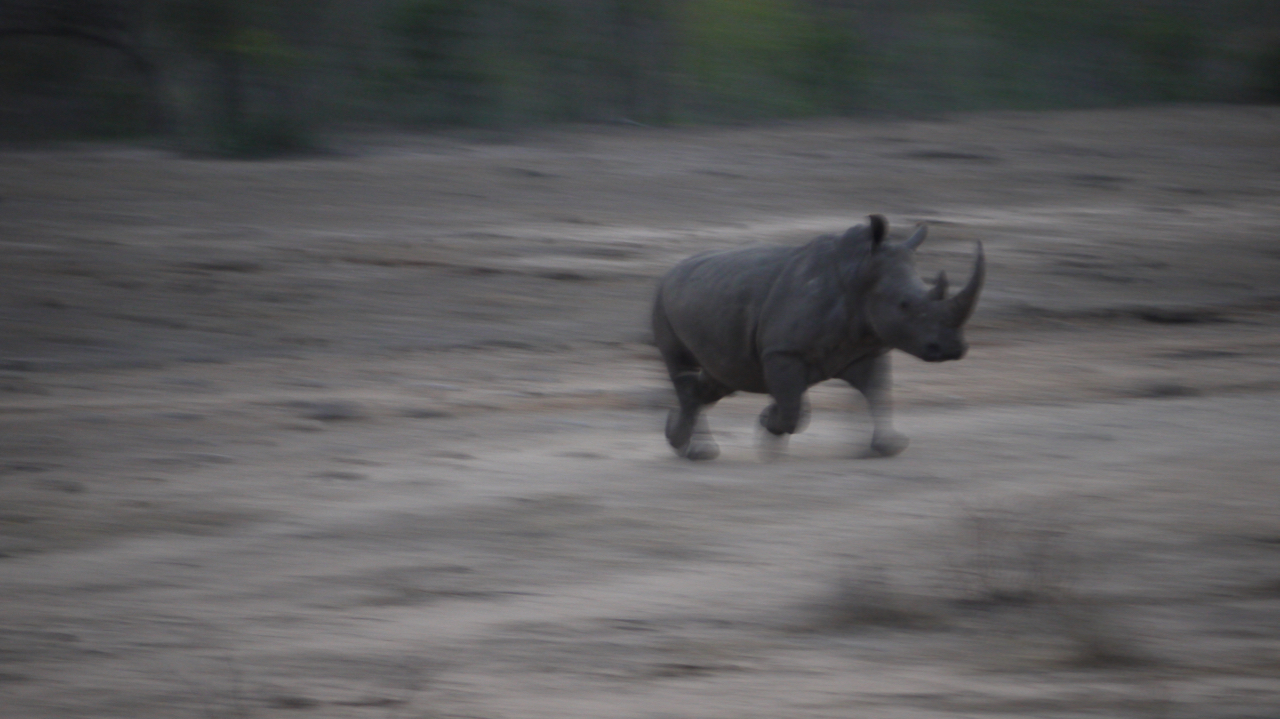
As I reported in my last post, the poaching rates in one of the larger, best-funded national parks in southern Africa (the Kruger) are inconceivably high, such that for at least the two species of rhino there (black and white), their future persistence probability is dwindling with each passing week. African elephants are probably not far behind.

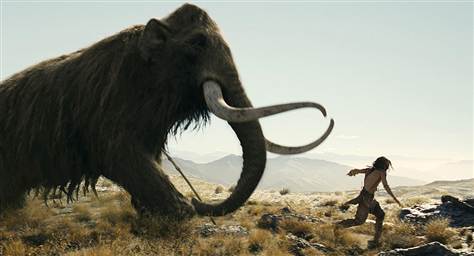
As one who has studied the megafauna extinctions in the Holarctic, Australia and South America over the last 50,000 years, the trip to Kruger was like stepping back into the Pleistocene. I’ve always dreamed of walking up to a grazing herd of mammoths, woolly rhinos or Diprotodon, but of course, that’s impossible. What is entirely possible though is driving up to a herd of 6-tonne elephants and watching them behave naturally. In the Kruger anyway, you become almost blasé about seeing yet another group of these impressive beasts as you try to get that rare glimpse of a leopard, wild dogs or sable antelope (missed the two former, but saw the latter). Read the rest of this entry »


Inexorable rise of human population pressures in Africa

31 08 2016

© Nick Brandt

© Nick Brandt

I’ve been a bit mad preparing for an upcoming conference, so I haven’t had a lot of time lately to blog about interesting developments in the conservation world. However, it struck me today that my preparations provide ideal material for a post about the future of Africa’s biodiversity.

I’ve been lucky enough to be invited to the University of Pretoria Mammal Research Unit‘s 50th Anniversary Celebration conference to be held from 12-16 September this year in Kruger National Park. Not only will this be my first time to Africa (I know — it has taken me far too long), the conference will itself be in one of the world’s best-known protected areas.

While decidedly fortunate to be invited, I am a bit intimidated by the line-up of big brains that will be attending, and of the fact that I know next to bugger all about African mammals (in a conservation science sense, of course). Still, apparently my insight as an outsider and ‘global’ thinker might be useful, so I’ve been hard at it the last few weeks planning my talk and doing some rather interesting analyses. I want to share some of these with you now beforehand, although I won’t likely give away the big prize until after I return to Australia.

I’ve been asked to talk about human population pressures on (southern) African mammal species, which might seem simple enough until you start to delve into the complexities of just how human populations affect wildlife. It’s simply from the perspective that human changes to the environment (e.g., deforestation, agricultural expansion, hunting, climate change, etc.) do cause species to dwindle and become extinct faster than they otherwise would (hence the entire field of conservation science). However, it’s another thing entirely to attempt to predict what might happen decades or centuries down the track. Read the rest of this entry »


Biowealth

24 02 2016

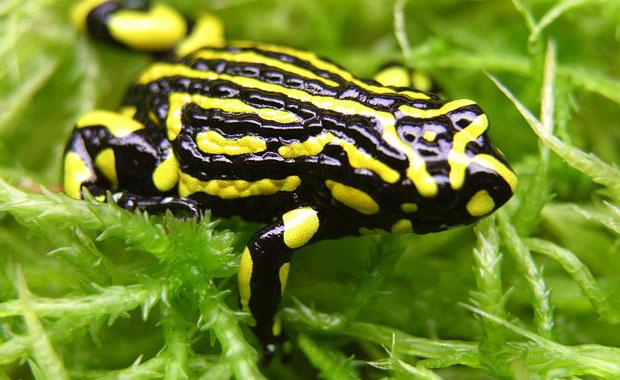
frogWhile I’ve blogged about this before in general terms (here and here), I thought it wise to reproduce the (open-access) chapter of the same name published in late 2013 in the unfortunately rather obscure book The Curious Country produced by the Office of the Chief Scientist of Australia. I think it deserves a little more limelight.

As I stepped off the helicopter’s pontoon and into the swamp’s chest-deep, tepid and opaque water, I experienced for the first time what it must feel like to be some other life form’s dinner. As the helicopter flittered away, the last vestiges of that protective blanket of human technological innovation flew away with it.

Two other similarly susceptible, hairless, clawless and fangless Homo sapiens and I were now in the middle of one of the Northern Territory’s largest swamps at the height of the crocodile-nesting season. We were there to collect crocodile eggs for a local crocodile farm that, ironically, has assisted the amazing recovery of the species since its near-extinction in the 1960s. Removing the commercial incentive to hunt wild crocodiles by flooding the international market with scar-free, farmed skins gave the dwindling population a chance to recover.

redwoodConservation scientists like me rejoice at these rare recoveries, while many of our fellow humans ponder why we want to encourage the proliferation of animals that can easily kill and eat us. The problem is, once people put a value on a species, it is usually consigned to one of two states. It either flourishes as do domestic crops, dogs, cats and livestock, or dwindles towards or to extinction. Consider bison, passenger pigeons, crocodiles and caviar sturgeon.

As a conservation scientist, it’s my job not only to document these declines, but to find ways to prevent them. Through careful measurement and experiments, we provide evidence to support smart policy decisions on land and in the sea. We advise on the best way to protect species in reserves, inform hunters and fishers on how to avoid over-harvesting, and demonstrate the ways in which humans benefit from maintaining healthy ecosystems. Read the rest of this entry »


Bad science

10 02 2016

Head in HandsIn addition to the surpassing coolness of reconstructing long-gone ecosystems, my new-found enthusiasm for palaeo-ecology has another advantage — most of the species under investigation are already extinct.

That might not sound like an ‘advantage’, but let’s face it, modern conservation ecology can be bloody depressing, so much so that one sometimes wonders if it’s worth it. It is, of course, but there’s something marvellously relieving about studying extinct systems for the simple reason that there are no political repercussions. No self-serving, plutotheocratic politician can bugger up these systems any more. That’s a refreshing change from the doom and gloom of modern environmental science!

But it’s not all sweetness and light, of course; there are still people involved, and people sometimes make bad decisions in an attempt to modify the facts to suit their creed. The problem is when these people are the actual scientists involved in the generation of the ‘facts’.

As I alluded to a few weeks ago with the publication of our paper in Nature Communications describing the lack of evidence for a climate effect on the continental-scale extinctions of Australia’s megafauna, we have a follow-up paper that has just been published online in Proceedings of the Royal Society B — What caused extinction of the Pleistocene megafauna of Sahul? led by Chris Johnson of the University of Tasmania.

After our paper published earlier this month, this title might seem a bit rhetorical, so I want to highlight some of the reasons why we wrote the review. Read the rest of this entry »


Could we colonise another planet to save this one?

27 10 2015

© Auston Habershaw

Let’s do a little thought experiment, shall we? The late, great Douglas Adams wrote about a planet (Golgafrincham) that decided to ship all its undesirables (it was not made clear to them that they were in fact considered ‘undesirable’) to another planet to cut their population by a third. As it turns out, it wasn’t such a great idea.

This idea — shipping people to another planet — is a common theme in the sci-fi genre when there is an impending disaster, such as the planet becoming unsustainable, too many humans over-consuming, or because some great natural calamity is about to occur. Many think Mars is the most likely possible place to get the first sustainable human colony going, but it’s going to be a logistical nightmare to put together even a small colony.

Could moving to a planet like Mars stem the inexorable increase in the human population and save planet Earth? Not likely, and here’s why.

Let’s throw caution to the wind and make some outlandish assumptions just to make this point even stronger.

Read the rest of this entry »


Ice Age? No. Abrupt warmings and hunting together polished off Holarctic megafauna

24 07 2015

Oh shit oh shit oh shit ...

Oh shit oh shit oh shit …

Did ice ages cause the Pleistocene megafauna to go extinct? Contrary to popular opinion, no, they didn’t. But climate change did have something to do with them, only it was global warming events instead.

Just out today in Science, our long-time-coming (9 years in total if you count the time from the original idea to today) paper ‘Abrupt warmings drove Late Pleistocene Holarctic megafaunal turnover‘ demonstrates for the first time that abrupt warming periods over the last 60,000 years were at least partially responsible for the collapse of the megafauna in Eurasia and North America.

You might recall that I’ve been a bit sceptical of claims that climate changes had much to do with megafauna extinctions during the Late Pleistocene and early Holocene, mainly because of the overwhelming evidence that humans had a big part to play in their demise (surprise, surprise). What I’ve rejected though isn’t so much that climate had nothing to do with the extinctions; rather, I took issue with claims that climate change was the dominant driver. I’ve also had problems with blanket claims that it was ‘always this’ or ‘always that’, when the complexity of biogeography and community dynamics means that it was most assuredly more complicated than most people think.

I’m happy to say that our latest paper indeed demonstrates the complexity of megafauna extinctions, and that it took a heap of fairly complex datasets and analyses to demonstrate. Not only were the data varied – the combination of scientists involved was just as eclectic, with ancient DNA specialists, palaeo-climatologists and ecological modellers (including yours truly) assembled to make sense of the complicated story that the data ultimately revealed. Read the rest of this entry »


Australia’s perfect storm of negligence

17 03 2015

If, for the purposes of some sick and twisted thought experiment, you were to design policies that would ensure the long-term failure of a wealthy, developed nation, you wouldn’t have to look farther than Australia’s current recipe for future disaster. I’m not trying to be provocative, but the warning signs are too bold and flashy to ignore. Let’s just run through some of the main ones:

1. As the lambasted and thoroughly flawed 2015 Intergenerational Report clearly demonstrates, our current government has no idea about the future threats of climate change. Dragged kicking and screaming into only a symbolic recognition of some ‘distant and currently irrelevant problem’, the Abbott-oir and his intergenerational criminals are well known for killing the carbon-pricing scheme, dismantling the Department of Climate Change, pulling out of major international talks on climate-change mitigation and installing a half-arsed, ineffective policy that will do nothing to stem our emissions. Combine that with comments like “coal is good for humanity“, and it’s easy to see how our current leaders have little idea about the future mess they’re creating.

2. Not content just to kick the shit out of any meaningful climate action, our government has also turned its back on any renewable energy target, and facilitated the fossil-fuel barons to dig more coal out of the ground. While South Australia’s Royal Commission on the nuclear fuel cycle is a welcome candle in the climate change-mitigation darkness here, it is far from becoming a national priority any time soon.

3. As has been well documented, the Abbott-oir ship of fools has also done whatever it can to turn back decades of environmental protections in less than six months of taking office. Everything from opening up national parks for exploitation, failing to protect marine sanctuaries, limiting environmental checks to promoting logging in World Heritage Areas, there is little room for hope that our crumbling environmental system will improve at all in the near to long term. Read the rest of this entry »