Why do they take so long?

4 05 2018

phd1This is probably more of an act of self-therapy on a Friday afternoon to alleviate some frustration, but it is an important issue all the same.
An Open Letter to academic publishers:

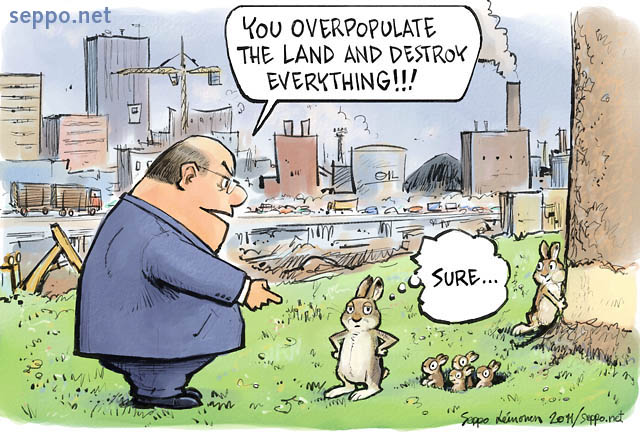
Why, oh why, do some of you take so bloody long to publish our papers online after acceptance?

I have been known to complain about how the general academic-publishing industry makes sickening amount of profit on the backs of our essentially free labour, and I suppose this is just another whinge along those lines. Should it take weeks to months to publish our papers online once they are accepted?

No. it shouldn’t.

I’m fully aware that most publishing companies these days outsource the actual publishing side of things to subcontracting agencies (and I’ve noticed more and more that these tend to be in developing nations, probably because the labour is cheaper), and that it can take someone some time to work through the backlog of Word or Latex documents and produce nice, polished PDFs. Read the rest of this entry »


Cartoon guide to biodiversity loss XLVIII

26 04 2018

The third set of six biodiversity cartoons for 2018. See full stock of previous ‘Cartoon guide to biodiversity loss’ compendia here.


Read the rest of this entry »


My interview with Conservation Careers

10 04 2018

IMage-2

The online job-search engine and careers magazine for conservation professionals — Conservation Careers — recently published an interview with me written by Mark Thomas. Mark said that he didn’t mind if I republished the article here.

As we walk through life we sometimes don’t know where our current path will take us. Will it be meaningful, and what steps could we take? Seeking out and talking to people who have walked far ahead of us in a line of work that we are interested in could help shape the next steps we take, and help us not make the same mistakes that could have cost us precious time.

A phrase that I love is “standing on the shoulders of giants” and this conversation has really inspired me — I hope it will do for you as well.

Corey Bradshaw is the Matthew Flinders Fellow in Global Ecology at Flinders University, and author to over 260 hundred peer-reviewed articles. His research is mainly in the area of global-change ecology, and his blog ConservationBytes critiques the science of conservation and has over 11,000 followers. He has written books, and his most recent one ‘The Effective Scientist’ will be published in March (more on this later).

What got you interested in ecology and conservation?

As a child I grew up in British Columbia, Canada, my father was a fur trapper, and we hunted everything we ate (we ate a lot of black bear). My father had lots of dead things around the house and he prepared the skins for the fur market. It was a very consumptive and decidedly non-conservation upbringing.

Ironically, I learnt early in life that some of the biggest impediments to deforestation through logging was the trapping industry, because when you cut down trees nothing that is furry likes to live there. In their own consumptive ways, the hunters were vocal and acted to protect more species possibly than what some dedicated NGOs were able to.

So, at the time, I never fully appreciated it, but not having much exposure to all things urban and the great wide world, and by spending a lot of time out in the bush, I ended up appreciating the conservation of wild things even within that consumptive mind-set. Read the rest of this entry »


Why populations can’t be saved by a single breeding pair

3 04 2018

620x349

© Reuters/Thomas Mukoya

I published this last week on The Conversation, and now reproducing it here for CB.com readers.


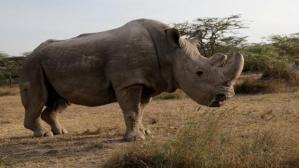
Two days ago, the last male northern white rhino (Ceratotherium simum cottoni) died. His passing leaves two surviving members of his subspecies: both females who are unable to bear calves.

Even though it might not be quite the end of the northern white rhino because of the possibility of implanting frozen embryos in their southern cousins (C. simum simum), in practical terms, it nevertheless represents the end of a long decline for the subspecies. It also raises the question: how many individuals does a species need to persist?

Fiction writers have enthusiastically embraced this question, most often in the post-apocalypse genre. It’s a notion with a long past; the Adam and Eve myth is of course based on a single breeding pair populating the entire world, as is the case described in the Ragnarok, the final battle of the gods in Norse mythology.

This idea dovetails neatly with the image of Noah’s animals marching “two by two” into the Ark. But the science of “minimum viable populations” tells us a different story.

No inbreeding, please

The global gold standard used to assess the extinction risk of any species is the International Union for the Conservation of Nature (IUCN) Red List of Threatened Species. Read the rest of this entry »


Predicting sustainable shark harvests when stock assessments are lacking

26 03 2018
srb 1

© Andrew Fox

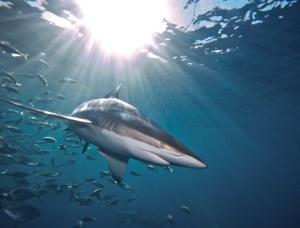
I love it when a good collaboration bears fruit, and our latest paper is a good demonstration of that principle.

It all started a few years ago with an ARC Linkage Project grant we received to examine how the whaler shark fishing industry in Australia might manage its stocks better.

As I’m sure many are aware, sharks around the world aren’t doing terribly well (surprise, surprise — yet another taxon suffering at the hands of humankind). And while some populations (‘stocks’, in the dissociative parlance of the fishing industry) are doing better than others, and some countries have a better track record in managing these stocks than others, the overall outlook is grim.

One of the main reasons sharks tend to fair worse than bony fishes (teleosts) for the same fishing effort is their ‘slow’ life histories. It doesn’t take an advanced quantitative ecology degree to understand that growing slowly, breeding late, and producing few offspring is a good indication that a species can’t handle too much killing before populations start to dwindle. As is the case for most large shark species, I tend to think of them in a life-history sense as similar to large terrestrial mammals.

Now, you’d figure that a taxon with intrinsic susceptibility to fishing would have heaps of good data with which managers could monitor catches and quotas so that declines could be avoided. However, the reality is generally the inverse, with many populations having poor information regarding vital rates (e.g., survival, fertility), age structure, density feedback characteristics, and even simple estimates of abundance. Without such key information, management tends to be ad hoc and often not very effective. Read the rest of this entry »


Cartoon guide to biodiversity loss XLVII

7 03 2018

The next set of six five biodiversity cartoons for 2018. See full stock of previous ‘Cartoon guide to biodiversity loss’ compendia here.


Read the rest of this entry »


Our global system-of-systems

28 02 2018

Complex-systems

I’ve just read an excellent paper that succinctly, eloquently, and wisely summarised the current predicament of our highly interconnected, global, complex adaptive system (i.e., our environment).

If you are new to the discussions around state shifts, hysteresis, tipping points, and system collapse, there might be a lot in the new paper by Philip Garnett of the University of York that you could find intimidating (and not just because of the complexity of the concepts he discusses). If you are more up-to-date on these discussions, I highly recommend reading this paper for distilling some of the more pertinent questions.

The essence of the paper is that our global environment (Earth) is one giant, complex system made up of interacting sub-systems. We can think of these as a giant, interconnected network of nodes and connections (often called ‘edges’) between them. If you do ecological network theory, then you know what I’m talking about.

What’s particularly fascinating to me is that Philip Garnett is not an environmental scientist; in fact, he’s a a lecturer in Operations Management and Business Analytics (although he does have a background in genetics and biology) who specialises in complex systems theory. In fact, much of his paper uses socio-economic examples of system complexity and collapse, yet the applications to environmentalism in general, and to ecological integrity in particular, are spot on.

Read the rest of this entry »


Offshore Energy & Marine Spatial Planning

22 02 2018

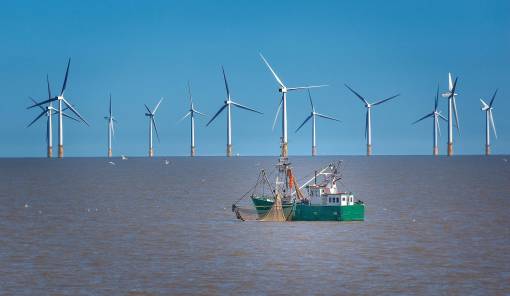
FishingOffshoreWind

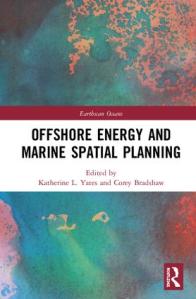
I have the pleasure (and relief) of announcing a new book that’s nearly ready to buy, and I think many readers of CB.com might be interested in what it describes. I know it might be a bit premature to announce it, but given that we’ve just finished the last few details (e.g., and index) and the book is ready to pre-order online, I don’t think it’s too precocious to advertise now.

9781138954533-2

A little history is in order. The brilliant and hard-working Katherine Yates (now at the University of Salford in Manchester, UK) approached me back in 2014 to assist her with co-editing the volume that she wanted to propose for the Routledge Earthscan Ocean series. I admit that I reluctantly agreed at the time, knowing full well what was in store (anyone who has already edited a book will know what I mean). Being an active researcher in energy and biodiversity (perhaps not so much on the ‘planning’ side per se) certainly helped in my decision.

And yes, there were ups and downs, and sometimes it was a helluva lot of work, but Katherine certainly made my life easier, and she has finally driven the whole thing to completion. She deserves most of the credit.

Read the rest of this entry »


Bring it back

13 02 2018
fynbos

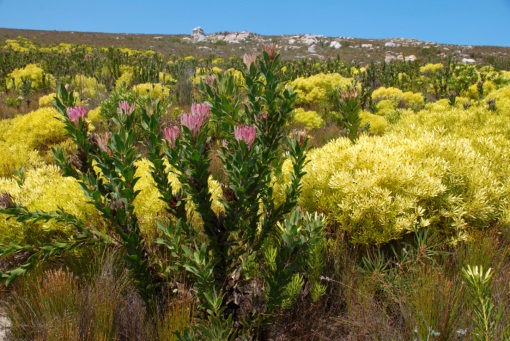
Protea compacta in fynbos, a form of shrubland at Soetanysberg, South Africa. Photo: Brian van Wilgen

Restoration of lost habitats and ecosystems hits all the right notes — conservation optimism, a can-do attitude, and the excitement of seeing biologically impoverished areas teem with life once more.

The Strategic Plan of the Convention on Biological Diversity includes a target to restore at least 15% of degraded ecosystems. This is being enthusiastically taken up in many places, including through initiatives such as the Bonn Challenge, a global aspiration to restore 350 million hectares of deforested and degraded land by 2030. This is in recognition of the importance of healthy ecosystems in not just conserving biodiversity, but also in combating climate change. Peatlands and forests lock away carbon, while grassland diversity stabilises ecosystem productivity during extreme weather events. So how can we make sure that these restoration efforts are as effective as possible? Read the rest of this entry »


Throwing the nuclear baby out with the fossil-fuel bathwater

6 02 2018

Lynas TwitterA really important paper was just published in Science Advances by Elizabeth Anderson & colleagues.

The team’s paper, Fragmentation of Andes-to-Amazon connectivity by hydropower dams, pretty much highlights what many pragmatic environmentalists have been stressing for years — so-called ‘renewable’ technology rolled out at massive scales (to the exclusion of other technologies like nuclear power) can really endanger biodiversity.

As environmental campaigner, Mark Lynas, rightly points out, renewables, with sufficient base-load back-up by technologies like nuclear, are so far ahead of other combinations (particular, regionally specific mix ratios notwithstanding) in terms of what they can potentially achieve for biodiversity, that our society’s blind push for 100% renewable (instead of 0% carbon), is doing far more environmental harm than good.

It is a case of throwing the nuclear baby out with the fossil-fuel bathwater. Read the rest of this entry »


Drivers of protected-area effectiveness in Africa

31 01 2018
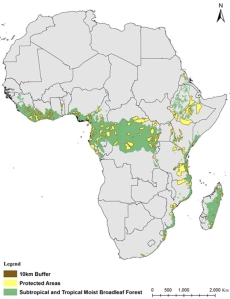
Bowker_et_al-2017-Conservation_Biology. Fig. 1

Subtropical and
Tropical Moist Broadleaf Forest of
Africa with 224 parks surrounded
by a 10-km buffer area. ©
2016 Society for Conservation Biology.

I’ve just read an interesting paper published in late 2016 in Conservation Biology that had so far escaped my attention. But given my interest in African conservation recently (and some interesting research results on the determinants of environmental performance for that region should be coming soon out of our lab), the work caught my eye.

The paper by Bowker and colleagues asked a question that has been asked previously regarding the ‘effectiveness’ of protected areas — do they succeed in limiting forest loss? While forest loss itself is not necessarily indicative of biodiversity erosion in any given area (for that, you need measures of species trends, etc.), it is arguably one of the most important drivers of species loss today.

The first set out to differentiate ‘effective’ from ‘ineffective’ protected areas, which was a simple binary variable related to whether there was less deforestation inside the protected area relative to comparable points outside (effective), or greater than or equal to deforestation outside (ineffective). The authors then related this binary response to a series of biophysical and social indicators. Read the rest of this entry »


Cartoon guide to biodiversity loss XLVI

25 01 2018

The first set of biodiversity cartoons for 2018. See full stock of previous ‘Cartoon guide to biodiversity loss’ compendia here.

Read the rest of this entry »


Influential conservation ecology papers of 2017

27 12 2017

Gannet Shallow Diving 03
As I have done for the last four years (20162015, 2014, 2013), here’s another retrospective list of the top 20 influential conservation papers of 2017 as assessed by experts in F1000 Prime.

Read the rest of this entry »


Tiny, symbiotic organisms protect corals from predation and disease

20 12 2017
hydrozoan polyp

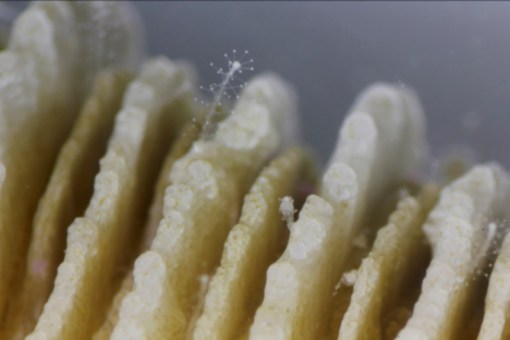
Hydrozoan polyps living on the surface of a coral (photo credit: S. Montano)

Corals could have some unexpected allies to cope with the multi-faceted threats posed by climate change.

In a new study published today in Proceedings of the Royal Society B, Montano and colleagues show how tiny hydrozoans smaller than 1 mm and commonly found in dense colonies on the surface of hard corals (see above photo) play an important ecological role.

Visually examining ~ 2500 coral colonies in both Maldivian and Saudi Arabian reefs, the scientists searched for signs of predation, temperature-induced stress, and disease. For each colony, they also recorded the presence of symbiotic hydrozoans. They demonstrated that corals living in association with hydrozoans are much less prone to be eaten by corallivorous (i.e., ‘coral-eating’) fish and gastropods than hydrozoan-free corals.

A likely explanation for this pattern could be the deterring action of hydrozoan nematocysts (cells capable of ejecting a venomous organelle, which are the same kinds found in jellyfish tentacles). An individual hydrozoan polyp of less than 1 mm clearly cannot cope with a corallivorous fish that is a billions of times larger, yet hydrozoans can grow at high densities on the surface of corals (sometimes > 50 individuals per cm2). This creates a sort of a continuous, ‘urticating‘ carpet that can discourage fish from foraging. Read the rest of this entry »


Giving a monkey’s about primate conservation

12 12 2017
Urban monkey living (Macaque, Gibraltar) small

Concrete jungle. A Barbary macaque sits in a human-dominated landscape in Gibraltar. Photo: Silviu Petrovan

Saving primates is a complicated business. Primates are intelligent, social animals that have complex needs. They come into conflict with humans when they raid rubbish bins and crops, chew power cables, and in some cases become aggressive towards people.

Humans, however, have the upper hand. While 60% of non-human primate species are threatened, humans grow in numbers and power, building roads through forests, hunting and trapping primates, and replacing their habitat with farms and houses.

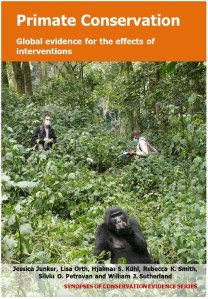
To help primatologists choose the most effective conservation approaches to resolve these problems, researchers in the Conservation Evidence project teamed up with primate researchers to produce a global database on the effectiveness of primate conservation solutions. This free database, which can also be downloaded as a single pdf, summarizes the evidence for 162 conservation interventions — actions that conservationists might take to conserve primates. The data come from searches of over 170 conservation journals and newsletters, and each study is summarized in a single paragraph in plain English, making it possible for conservationists without access to scientific journals to read the key findings.

Front cover primate synopsisSo what works in primate conservation? Well, the picture is rarely straightforward — partly due to the lack of data — but there are some interesting trends. Reducing hunting is one area where there seem to be a range of potentially effective approaches. Community control of patrolling, banning hunting and removing snares was effective in the three studies in which it was tested, all in African countries.

Further emphasizing the importance of involving local communities, implementing no-hunting community policies or traditional hunting bans also appeared helpful in boosting primate numbers. In other places, a more traditional approach of using rangers to protect primates has proved a winning strategy. Training rangers, providing them with arms, and increasing ranger patrols all worked to protect primates from poachers. Identifying the circumstances in which community led approaches or ranger patrols work will be key to implementing the most appropriate response to each conservation challenge. Read the rest of this entry »


Research in Translation

11 12 2017

Do you enjoy the challenge of communicating complex scientific ideas and conservation issues to the general public? Current Conservation is looking for submissions of reader-friendly summaries of recently published research papers in conservation science!
CC

Current Conservation is a quarterly magazine that communicates conservation science in an accessible manner to a wide audience. Our magazine combines art and science to communicate the latest in research concepts and news from both the natural and social science facets of conservation, encompassing ecology, wildlife biology, conservation biology, environmental history, anthropology and sociology, ecological economics, and related fields of research.

Your summary (~ 250-300 words) should be written in a simple jargon-free way that conveys the nuances of the paper, but at the same time is easy and fun to read. You can find some examples here.
Read the rest of this entry »


Cartoon guide to biodiversity loss XLV

6 12 2017

The last set of biodiversity cartoons for 2017. See full stock of previous ‘Cartoon guide to biodiversity loss’ compendia here.

Read the rest of this entry »


Ecologists are gender-biased

16 11 2017
sexism-image

© xkcd.com

I normally don’t do this, but this is an extra-ordinary circumstance.

As many of you are already aware, Franck Courchamp and I published a paper in Nature Ecology and Evolution on Monday that ranked high-profile ecology papers. I won’t go into any details about the list here, because you can read the paper and the associated blog posts themselves.

The publication caused a bit of a stir among ecologists, evidenced by the rather high and rising Altmetrics score for the paper (driven mainly by a Boaty McBoatface-load of tweets). I haven’t done any social-media analysis, but it appears that most of the tweets were positive, a few were negative, and a non-trivial proportion of them were highly critical of the obvious male-biased nature of the list (in terms of article authors).

On that last point, we couldn’t agree more.

Which is why we have a follow-up analysis specifically addressing this gender bias, but that’s currently in review in Nature Ecology and Evolution.

In the meantime, however, and at the suggestion of possibly one of the coolest, nicest, and most logical editors in the world, Dr Patrick Goymer (Editor-in-Chief of Nature Ecology and Evolution), I’ve just posted a pre-print of our paper entitled “Gender-biased perceptions of important ecology articles” on bioRxiv.

Read the rest of this entry »


100 papers that every ecologist should read

14 11 2017

o-SLEEP-LIBRARY-facebook

If you’re a regular reader of CB.com, you’ll be used to my year-end summaries of the influential conservation papers of that calendar year (e.g., 2016, 2015, 2014, 2013), as somewhat subjectively assessed by F1000 Prime experts. You might also recall that I wrote a post with the slightly provocative title Essential papers you’ve probably never read back in 2015 where I talked about papers that I believe at least my own students should read and appreciate by the time they’ve finished the thesis.

But this raised a much broader question — of all the thousands of papers out there that I should have read/be reading, is there a way to limit the scope and identify the really important ones with at least a hint of objectivity? And I’m certainly not referring to the essential methods papers that you have to read and understand in order to implement their recommended analysis into your own work — these are often specific to the paper you happen to be writing at the moment.

The reason this is important is that there is absolutely no way I can keep on top of my scientific reading, and not only because there are now over 1.5 million papers published across the sciences each year. If you have even the slightest interest in working across sub-disciplines or other disciplines, the challenge becomes more insurmountable. Finding the most pertinent and relevant papers to read, especially when introducing students or young researchers to the concepts, is turning into an increasingly nightmarish task. So, how do we sift through the mountain of articles out there?

It was this question that drove the genesis of our paper that came out only today in Nature Ecology and Evolution entitled ‘100 articles every ecologist should read‘. ‘Our’ in this case means me and my very good friend and brilliant colleague, Dr Franck Courchamp of Université Paris-Sud and the CNRS, with whom I spent a 6-month sabbatical back in 2015. Read the rest of this entry »


Postdoctoral Fellowship in Ecological Networks

8 11 2017

socialnetworkWell, we’ve been a bit unlucky.

We had a fantastic round of applicants for our previously advertised position in palaeo-ecological network modelling, and had offered the position to someone who had great potential.

Well, due to unforeseen circumstances (the person to whom we offered the position received another offer for a longer contract in her existing place of residence; such is life), we now have to re-advertise the position, and this one is open to both genders.

The brief overview of the position follows: Read the rest of this entry »