Why a shrinking human population is a good thing

30 06 2022

The other day I was asked to do an interview for a South Korean radio station about the declining-population “crisis”.

Therein lies the rub — there is no crisis.

While I think the interview went well (you can listen to it here), I didn’t have ample time to flesh out my arguments; I’ve decided to put them down in more detail here.

Probably the most important aspect that I didn’t even get a chance to cover is that globally, our economic system is essentially broken because we are forced to exist inside a paradigm that erroneously assumes Earth’s resources are infinite. They are not, as the global ecological footprint clearly shows.

To slow and perhaps even reverse climate change, as well as mitigate the extinction crisis underway, we are obliged to reduce consumption globally. Shrinking human populations will contribute to that goal (provided we simultaneously reduce per-capita consumption).

But that argument, no matter how defensible, is still not even remotely appreciated by most people. It is the aim of only a minority, most of whom have very little political power to engender change.

The oft-touted ‘crisis‘ of ageing populations is founded on the erroneous notion that it will lead to economic crises for the affected countries. Indeed, countries like South Korea and Japan have declining populations, others like Italy are stable and will be declining soon, and others like Australia are only growing because of net immigration.

The reason for the hyped-up panic generally comes down to the overly simplistic ‘dependency ratio‘, which has several different forms but generally compares the number of people in the labour force against those who have retired from it. The idea here is that once the number of people no longer in the labour force exceeds the number of those in the labour force, the latter can no longer support the entirety of the former.

This simplistic 1:1 relationship essentially assumes that you need one person working to support one retired person. Errrh. Right. Let’s look at this in more detail.

Read the rest of this entry »


Best and worst countries by different environmental indicators

15 06 2022

I’ll preface this post with a caveat — the data herein are a few years old (certainly pre-COVID), so things have likely changed a bit. Still, I think the main message holds.


Many years ago, I compiled seven different national-level measures of environmental degradation to show that countries with the largest human populations, and hence, the largest economies, had done the most environmental damage — not only to their own resources, but to the world’s in general.

That last observation is important because there are really two main ways to quantify a country’s environmental performance. First, there is its relative environmental damage, which essentially means what proportion of its own resources a country has pilfered or damaged. This type of measure standardises the metrics to account for the different areas of countries (e.g., Russia versus Singapore) and how much of, say, forests, they had to start with, and what proportion of them they have thus far destroyed.

Looking at it this way, small countries with few large-scale industries came out in the lead as the least-damaged environmentally — the least environmentally damaged country according this metric is Cape Verde (followed by Central African Republic, Swaziland, Niger, and Djibouti).

However, another way to look at it is how much of the overall contribution to the world’s environmental damage each country is responsible, which of course implies that the countries with the highest amounts of resources damaged in absolute terms (i.e., the biggest, most populous ones) disproportionately contribute more to global environmental damage.

Using this absolute metric, the countries with the greatest overall damage are Brazil (largely due to the destruction of the Amazon and its other forests), the USA (for its greenhouse-gas emissions and conversion of its prairies to farmland), and China (for its water pollution, deforestation, and carbon emissions). On the flip side, this means that the smallest countries with the fewest people are ranked ‘better’ because of their lower absolute contribution to the world’s total environmental damage.

Looking more closely at how countries do relative to each other using different and more specific measures of environmental performance, the best-known and most-reported metric is the ecological footprint. This measures the ecological ‘assets’ that any particular population of people requires to produce the natural resources it consumes and to absorb its wastes.

Read the rest of this entry »


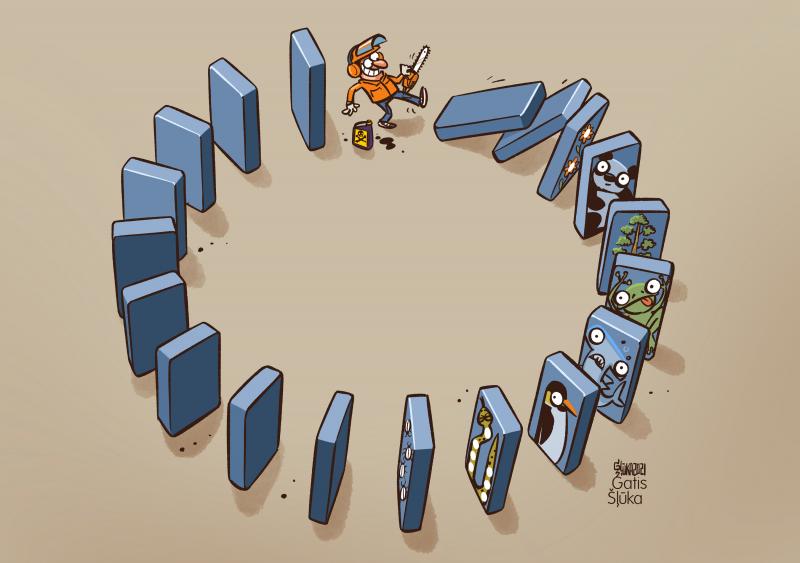
Cartoon guide to biodiversity loss LXXII

30 05 2022

Welcome to the third set of 6 cartoons for 2022. See full stock of previous ‘Cartoon guide to biodiversity loss’ compendia here.


Read the rest of this entry »


Fallacy of zero-extinction targets

20 05 2022

Nearly a decade ago (my how time flies*), I wrote a post about the guaranteed failure of government policies purporting no-extinction targets within their environmental plans. I was referring to the State of South Australia’s (then) official policy of no future extinctions.

In summary, zero- (or no-) extinction targets at best demonstrate a deep naïvety of how ecology works, and at worst, waste a lot of resources on interventions doomed to fail.

1. Extinctions happen all the time, irrespective of human activity;

2. Through past environmental degradation, we are guaranteed to see future extinctions because of extinction lags;

3. Few, if any, of the indicators of biodiversity change show improvement.

4. Climate change will also guarantee additional (perhaps even most) future extinctions irrespective of Australian policies.

I argued that no-extinction policies are therefore disingenuous to the public in the extreme because they sets false expectations, engender disillusionment after inevitable failure, and ignores the concept of triage — putting our environment-restoration resources toward the species/systems with the best chance of surviving (uniqueness notwithstanding).

Read the rest of this entry »



Cartoon guide to biodiversity loss LXXI

11 04 2022

Now that the Australian election has been called for next month, here are a few cartoon reminders of the state of environmental politics in this country (hint: they’re abysmal). I’ve surpassed my normal 6 cartoons/post here in this second set for 2022 because, well, our lives depend on the outcome of 21 May. See full stock of previous ‘Cartoon guide to biodiversity loss’ compendia here.


Read the rest of this entry »


A cascade of otters

4 04 2022

Carnivores are essential components of trophic webs, and ecosystem functions crumble with their loss. Novel data show the connection between calcareous reefs and sea otters under climate change.


Trophic cascade on the Aleutian Islands (Alaska, USA) linking sea otters (Enhydra lutris) with sea urchins (Strongylocentrotus polyacanthus) and calcareous reefs (Clathromorphum nereostratum). With males weighting up to 50 kg, sea otters have been IUCN-catalogued as Endangered since 2000. The top photo shows a male in a typical, belly-up floating position. The bottom photo shows live (pinkish) and dead (whitish) tissue on the reef surface as a result of grazing of sea urchins at a depth of 10 m. Sea otters are mesopredators, typically foraging on small prey like sea urchins, but their historical decline due to overhunting unleashed the proliferation of the echinoderms. At the same time, acidification and sea-water warming have softened the skeleton of the reefs, allowing for deeper grazing by sea urchins that eliminate the growth layer of living tissue that give the reefs their pinkish hue. Large extents of dead reefs stop fixing the excess in carbonic acid, whose carbon atoms sea water sequesters from the atmosphere enriched in carbon by our burning of fossil fuels. Photos courtesy of Joe Tomoleoni taken in Moss Landing – California, USA (otter), and on the Near Islands – Aleutian Archipelago, Alaska (reef).

For most, the decisions made by people we have never met affect our daily lives. Other species experience the same phenomenon because they are linked to one another through a trophic cascade.

A trophic cascade occurs when a predator limits the abundance or behaviour of its prey, in turn affecting the survival of a third species in lower trophic levels that have nothing directly to do with the predator in question (1).

Sea otters (Enhydra lutris) represent a text-book example of a trophic cascade. These mustelids (see video footage here and here) hunt and control the populations of sea urchins (Strongylocentrotus polyacanthus), hence favouring kelp forests  — the fronds of which are eaten by the sea urchins.

Removing the predator from the equation should lead to more sea urchins and less kelp, and this chain of events is exactly what happened along the coasts of the North Pacific (2, 3). The historical distribution of sea otters once ranged from Japan to Baja California through the Aleutian Islands (see NASA’s photo from space, and documentary on the island of Unimak), a sub-Arctic, arc-shaped archipelago including > 300 islands between Alaska (USA) and the Kamchatka Peninsula (Russia), extending ~ 2000 kilometres, and having a land area of ~ 18,000 km2.

But the fur trade during the 18th and 19th centuries brought the species to the brink of extinction, down to < 2000 surviving individuals (4). Without otters, sea urchins boomed and deforested kelp ecosystems during the 20th Century (5). Now we also know that this trophic cascade has climate-related implications in other parts of the marine ecosystem.

Underwater bites

Doug Rasher and collaborators have studied the phenomenon on the Aleutian Islands (6). The seabed of this archipelago is a mix of sandy beds, kelp forests, and calcareous reefs made up of calcium and magnesium carbonates fixed by the red algae Clathromorphum nereostratum. These reefs have grown at a rate of 3 cm annually for centuries as the fine film of living tissue covering the reef takes the carbonates from the seawater (7).

Read the rest of this entry »


Can we resurrect the thylacine? Maybe, but it won’t help the global extinction crisis

9 03 2022

NFSA

(published first on The Conversation)

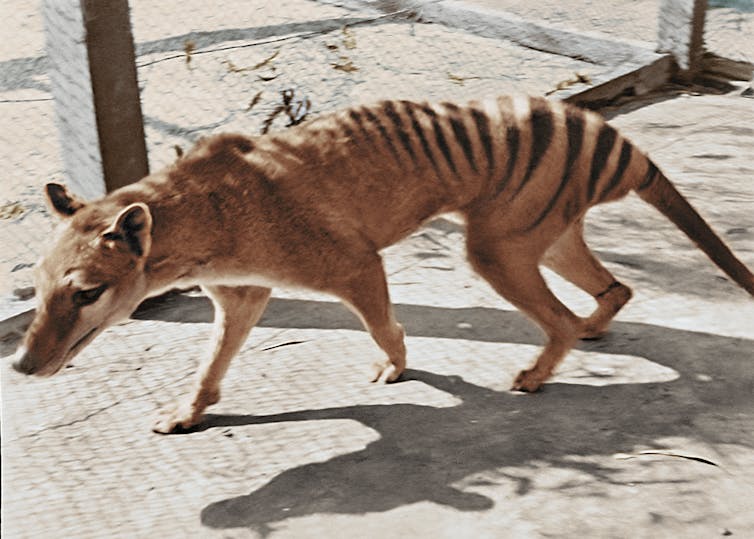
Last week, researchers at the University of Melbourne announced that thylacines or Tasmanian tigers, the Australian marsupial predators extinct since the 1930s, could one day be ushered back to life.

The thylacine (Thylacinus cynocephalus), also known as the ‘Tasmanian tiger’ (it was neither Tasmanian, because it was once common in mainland Australia, nor was it related to the tiger), went extinct in Tasmania in the 1930s from persecution by farmers and habitat loss. Art by Eleanor (Nellie) Pease, University of Queensland.
Centre of Excellence for Australian Biodiversity and Heritage

The main reason for the optimism was the receipt of a A$5 million philanthropic donation to the research team behind the endeavour.

Advances in mapping the genome of the thylacine and its living relative the numbat have made the prospect of re-animating the species seem real. As an ecologist, I would personally relish the opportunity to see a living specimen.

The announcement led to some overhyped headlines about the imminent resurrection of the species. But the idea of “de-extinction” faces a variety of technical, ethical and ecological challenges. Critics (like myself) argue it diverts attention and resources from the urgent and achievable task of preventing still-living species from becoming extinct.

The rebirth of the bucardo

The idea of de-extinction goes back at least to the the creation of the San Diego Frozen Zoo in the early 1970s. This project aimed to freeze blood, DNA, tissue, cells, eggs and sperm from exotic and endangered species in the hope of one day recreating them.

The notion gained broad public attention with the first of the Jurassic Park films in 1993. The famous cloning of Dolly the sheep reported in 1996 created a sense that the necessary know-how wasn’t too far off.

The next technological leap came in 2008, with the cloning of a dead mouse that had been frozen at –20℃ for 16 years. If frozen individuals could be cloned, re-animation of a whole species seemed possible.

After this achievement, de-extinction began to look like a potential way to tackle the modern global extinction crisis.

Read the rest of this entry »


The integrity battlefield: where science meets policy

4 03 2022

Professor Ross Thompson, University of Canberra


On the whole, I am inclined to conclude that my experience of academia and publishing my work has been largely benign. Despite having published 120-odd peer-reviewed papers, I can count the number of major disputes on one hand. Where there have been disagreements, they have centred on issues of content, and despite the odd grumble, things have rarely escalated to the ad hominem. I have certainly never experienced concerted attacks on my work.

But that changed recently. I work in water science, participating in and leading multi-disciplinary teams that do research directly relevant to water policy and management. My colleagues and I work closely with state and federal governments and are often funded by them through a variety of mechanisms. Our teams are a complex blend of scientists from universities, state and federal research agencies, and private-sector consultancies. Water is big business in Australia, and its management is particularly pertinent as the world’s driest inhabited continent struggles to come to terms with the impacts of climate change.

In the last 10 years, Australia has undergone a AU$16 billion program of water reform that has highlighted the extreme pressure on ecosystems, rural communities, and water-dependent industries. In 2019, two documentaries (Cash Splash and Pumped) broadcast by the Australian Broadcasting Corporation were highly critical of the  outcomes of water reform. A group of scientists involved in working on the Murray-Darling Basin were concerned enough about the accuracy of aspects of those stories to support Professor Rob Vertessy from the University of Melbourne in drafting an Open Letter in response. I was a co-author on that letter, and something into which I did not enter lightly. We were very concerned about being seen to advocate for any particular policy position, but were simultaneously committed to contributing to an informed public debate. A later investigation by the Australian Communications and Media Authority also highlighted concerns with the Cash Splash documentary.

Fast forward to 2021 and the publication of a paper by Colloff et al. (2021) in the Australasian Journal of Water Resources. In that paper, the authors were critical of the scientists that had contributed to the Open Letter and claimed they had been subject to “administrative capture” and “issue advocacy”. Administrative capture is defined here as:

Read the rest of this entry »


The sixth mass extinction is happening now, and it doesn’t look good for us

2 03 2022

Mounting evidence is pointing to the world having entered a sixth mass extinction. If the current rate of extinction continues we could lose most species by 2200. The implication for human health and wellbeing is dire, but not inevitable.

In the timeline of fossil evidence going right back to the first inkling of any life on Earth — over 3.5 billion years ago — almost 99 percent of all species that have ever existed are now extinct. That means that as species evolve over time — a process known as ‘speciation’ — they replace other species that go extinct.

Extinctions and speciations do not happen at uniform rates through time; instead, they tend to occur in large pulses interspersed by long periods of relative stability. These extinction pulses are what scientists refer to as mass extinction events.

The Cambrian explosion was a burst of speciation some 540 million years ago. Since then, at least five mass extinction events have been identified in the fossil record (and probably scores of smaller ones). Arguably the most infamous of these was when a giant asteroid smashed into Earth about 66 million years ago in what is now the Gulf of Mexico. The collision vapourised species immediately within the blast zone. Later, species were killed off by climate change arising from pulverised particulates suspended in the atmosphere, as well as intense volcano activity stimulated by the buckling of the Earth’s crust from the asteroid’s impact. Together, about 76 percent of all species around at the time went extinct, of which the disappearance of the dinosaurs is most well-known. But dinosaurs didn’t disappear altogether — the survivors just evolved into birds.

Read the rest of this entry »


Cartoon guide to biodiversity loss LXX

16 02 2022

Here is the first set of biodiversity cartoons for 2022. See full stock of previous ‘Cartoon guide to biodiversity loss’ compendia here.


Read the rest of this entry »


Influential conservation papers of 2021

5 01 2022

Following my annual tradition, I present the retrospective list of the ‘top’ 20 influential papers of 2021 as assessed by experts in Faculty Opinions (formerly known as F1000). These are in no particular order. See previous years’ lists here: 2020, 201920182017201620152014, and 2013.


Amazonia as a carbon source linked to deforestation and climate change — “… confirms what the sparse forest inventory has suggested, that climate change and land-use change is driving Amazonian ecosystems toward carbon sinks. … the research team provides a robust estimate of the carbon dynamics of one of the world’s most important ecosystems and provides insights into the role of land use change and potentials for mitigating direct carbon losses in the future.

Organic and conservation agriculture promote ecosystem multifunctionality — “… a very clear insight into the trade-offs between the different ecosystem services and indicate that yield and product quality are lower in organic systems compared to conventional systems, yet organic systems have higher economic performance due to higher product prices and subsidies.

Biodiversity of coral reef cryptobiota shuffles but does not decline under the combined stressors of ocean warming and acidification — “… even with similar richness, community function is very likely to be perturbed by ocean warming/acidification with unpredictable impacts on economically important species such as fish and corals.

Local conditions magnify coral loss after marine heatwaves — “… show that climate-induced coral loss is greater in areas with elevated seaweed abundance and elevated sea urchin densities, both of which commonly result from local overfishing … effective local management can synergize with global efforts to mitigate climate change and help coral reefs survive the Anthropocene.

Large ecosystem-scale effects of restoration fail to mitigate impacts of land-use legacies in longleaf pine savannas — “… while restoration can have major benefits in longleaf savannas, land-use legacies have clear effects on many aspects of the ecosystem.

Read the rest of this entry »


Cartoon guide to biodiversity loss LXIX

23 12 2021

Here is the final set of biodiversity cartoons for 2021, with some à propos seasonal content. See full stock of previous ‘Cartoon guide to biodiversity loss’ compendia here.


Read the rest of this entry »


Remote areas not necessarily safe havens for biodiversity

16 12 2021

The intensity of threats to biodiversity from human endeavour becomes weaker as the distance to them increases.


As you move away from the big city to enjoy the countryside, you’ll notice the obvious increase in biodiversity. Even the data strongly support this otherwise subjective perception — there is a positive correlation between the degree we destroy habitat, harvest species, and pollute the environment, and the distance from big cities.

Remote locations are therefore usually considered safe havens and potential reservoirs for biodiversity. But our new study published recently in Nature Communications shows how this obvious pattern depicts only half of the story, and that global conservation management and actions might benefit from learning more about the missing part.

Communities are not just lists of individual species. Instead, they consist of complex networks of ecological interactions linking interdependent species. The structure of such networks is a fundamental determinant of biodiversity emergence and maintenance. However, it also plays an essential role in the processes of biodiversity loss. The decline or disappearance of some species might have detrimental —often fatal — effects on their associates. For example, a parasite cannot survive without its hosts, as much as a predator will starve without prey, or a plant will not reproduce without pollinators.

Events where a species disappears following the loss of other species on which it depends are known as co-extinctions, and they are now recognised as a primary driver of the ongoing global biodiversity crisis. The potential risk stemming from ecological dependencies is a major concern for all ecological systems.

Read the rest of this entry »


Extinct megafauna prone to ancient hunger games

14 12 2021

I’m very chuffed today to signal the publication of what I think is one of the most important contributions to the persistent conundrum surrounding the downfall of Australia’s megafauna many tens of millennia ago.

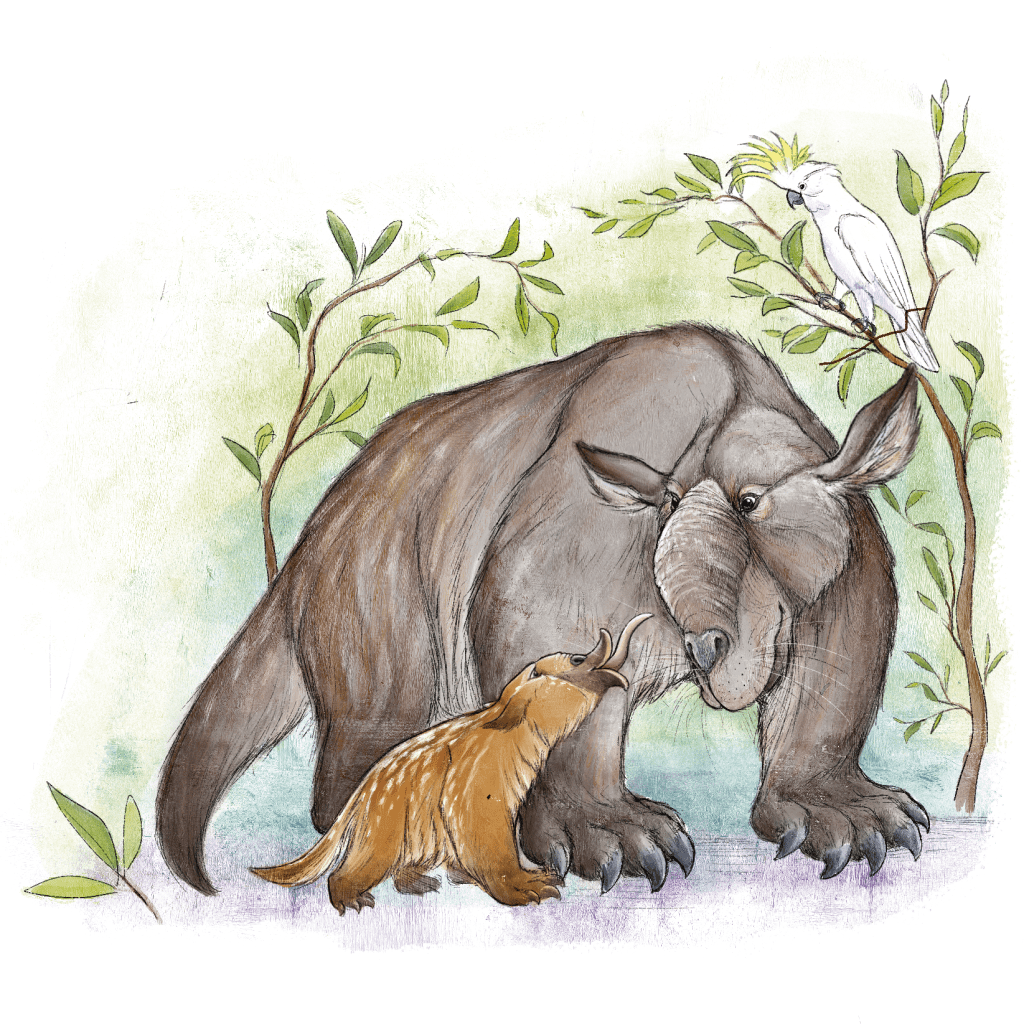
Diprotodon optimum. Artwork by palaeontologist and artist Eleanor (Nellie) Pease (commissioned by the ARC Centre of Excellence for Australian Biodiversity and Heritage)

Sure, I’m obviously biased in that assessment because it’s a paper from our lab and I’m a co-author, but if readers had any inkling of the work that went into this paper, I think they might consider adopting my position. In addition, the injection of some actual ecology into the polemic should be viewed as fresh and exciting.

Having waded into the murky waters of the ‘megafauna debate’ for about a decade now, I’ve become a little sensitive to even a whiff of binary polemic surrounding their disappearance in Australia. Acolytes of the climate-change prophet still beat their drums, screaming for the smoking gun of a spear sticking out of a Diprotodon‘s skull before they even entertain the notion that people might have had something to do with it — but we’ll probably never find one given the antiquity of the event (> 40,000 years ago). On the other side are the blitzkriegers who declaim that human hunting single-handedly wiped out the lot.

Well, as it is for nearly all extinctions, it’s actually much more complicated than that. In the case of Sahul’s megafauna disappearances, both drivers likely contributed, but the degree to which both components played a part depends on where and when you look — Fred Saltré demonstrated that elegantly a few years ago.

Palorchestes. Artwork by palaeontologist and artist Eleanor (Nellie) Pease (commissioned by the ARC Centre of Excellence for Australian Biodiversity and Heritage)

So, why does the polemic persist? In my view, it’s because we have largely depended on the crude comparison of relative dates to draw our conclusions. That is, we look to see if some climate-change proxy shifted in any notable way either before or after an inferred extinction date. If a particular study claims evidence that a shift happened before, then it concludes climate change was the sole driver. If a study presents evidence that a shift happened after, then humans did it. Biases in geochronological inference (e.g., spatial, contamination), incorrect application of climate proxies, poor taxonomic resolution, and not accounting for the Signor-Lipps effect all contribute unnecessarily to the debate because small errors or biases can flip relative chronologies on their head and push conclusions toward uncritical binary outcomes. The ‘debate’ has been almost entirely grounded on this simplistically silly notion.

This all means that the actual ecology has been either ignored or merely made up based on whichever pet notion of the day is being proffered. Sure, there are a few good ecological inferences out there from some damn good modellers and ecologists, but these have all been greatly simplified themselves. This is where our new paper finally takes the ecology part of the problem to the next level.

Led by Global Ecology and CABAH postdoctoral fellow, John Llewelyn, and guided by modelling guru Giovanni Strona at University of Helsinki, the paper Sahul’s megafauna were vulnerable to plant-community changes due to their position in the trophic network has just been published online in Ecography. Co-authors include Kathi Peters, Fred Saltré, and me from Flinders Global Ecology, Matt McDowell and Chris Johnson from UTAS, Daniel Stouffer from University of Canterbury (NZ), and Sara de Visser from University of Groningen (Netherlands).

Read the rest of this entry »


Animating models of ecological change

6 12 2021

Flinders University Global Ecology postdoc, Dr Farzin Shabani, recently created this astonishing video not only about the results of his models predicting vegetation change in northern Australia as a function of long-term (tens of thousands of years) climate change, but also on the research journey itself!

He provides a brief background to how and why he took up the challenge:


Science would be a lot harder to digest without succinct and meaningful images, graphs, and tables. So, being able to visualise both inputs and outputs of scientific models to cut through the fog of data is an essential element of all science writing and communication. Diagrams help us understand trends and patterns much more quickly than do raw data, and they assist with making comparisons.

During my academic career, I have studied many different topics, including natural hazards (susceptibility & vulnerability risks), GIS-based ensemble modelling, climate-change impacts, environmental modelling at different temporal and spatial scales, species-distribution modelling, and time-series analysis. I use a wide range of graphschartsplotsmaps and tables to transfer the key messages.

For my latest project, however, I was given the opportunity to make a short animation and visualise my results and the journey itself. I think that my animation inspires a sense of wonder, which is among the most important goals of science education. I also think that my animation draws connections to real-life problems (e.g., ecosystem changes as a product of climate change), and also develops an appreciation of the scientific process itself.

Take a look at let me know what you think!

Read the rest of this entry »


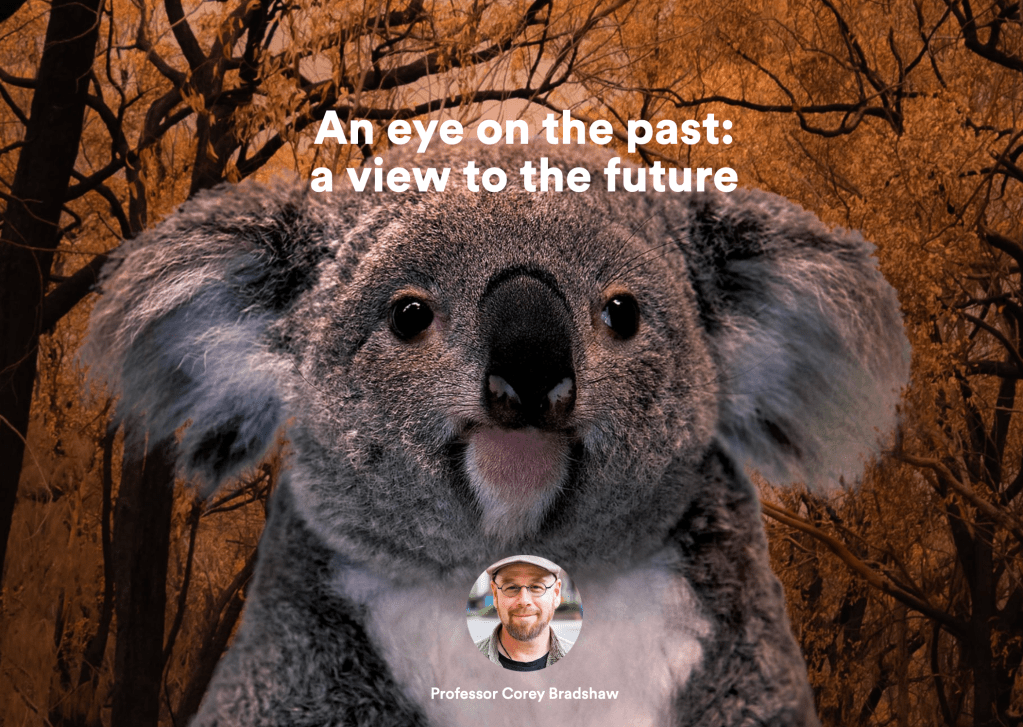
An eye on the past: a view to the future

29 11 2021

originally published in Brave Minds, Flinders University’s research-news publication (text by David Sly)

Clues to understanding human interactions with global ecosystems already exist. The challenge is to read them more accurately so we can design the best path forward for a world beset by species extinctions and the repercussions of global warming.


This is the puzzle being solved by Professor Corey Bradshaw, head of the Global Ecology Lab at Flinders University. By developing complex computer modelling and steering a vast international cohort of collaborators, he is developing research that can influence environmental policy — from reconstructing the past to revealing insights of the future.

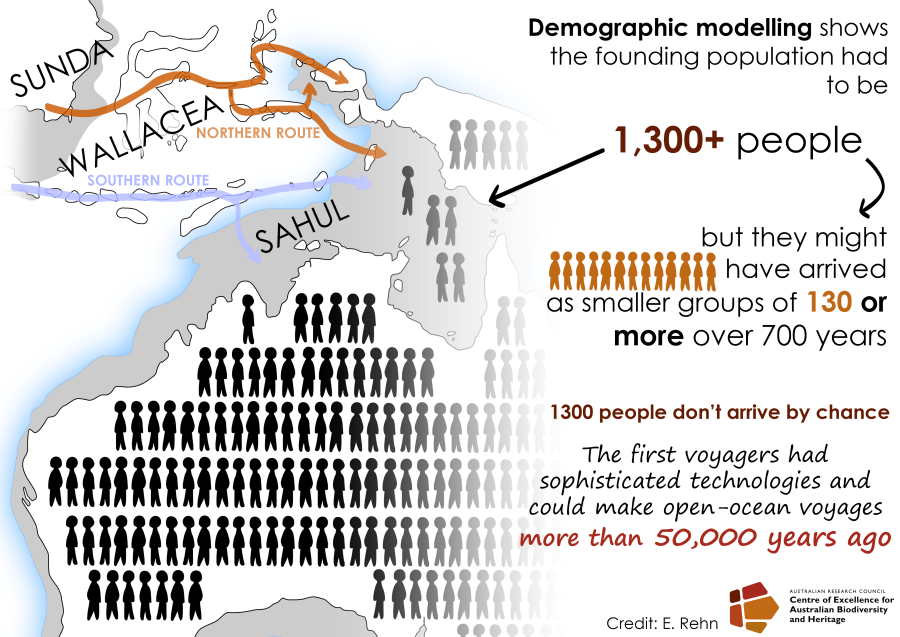
As an ecologist, he aims both to reconstruct and project how ecosystems adapt, how they are maintained, and how they change. Human intervention is pivotal to this understanding, so Professor Bradshaw casts his gaze back to when humans first entered a landscape – and this has helped construct an entirely fresh view of how Aboriginal people first came to Australia, up to 75,000 years ago.

Two recent papers he co-authored — ‘Stochastic models support rapid peopling of Late Pleistocene Sahul‘, published in Nature Communications, and ‘Landscape rules predict optimal super-highways for the first peopling of Sahul‘ published in Nature Human Behaviour — showed where, how and when Indigenous Australians first settled in Sahul, which is the combined mega-continent that joined Australia with New Guinea in the Pleistocene era, when sea levels were lower than today.

Professor Bradshaw and colleagues identified and tested more than 125 billion possible pathways using rigorous computational analysis in the largest movement-simulation project ever attempted, with the pathways compared to the oldest known archaeological sites as a means of distinguishing the most likely routes.

The study revealed that the first Indigenous people not only survived but thrived in harsh environments, providing further evidence of the capacity and resilience of the ancestors of Indigenous people, and suggests large, well-organised groups were able to navigate tough terrain.

Read the rest of this entry »


Cartoon guide to biodiversity loss LXVIII

19 10 2021

Here is the fifth set of biodiversity cartoons for 2021. See full stock of previous ‘Cartoon guide to biodiversity loss’ compendia here.


Read the rest of this entry »


Citizens meet coral gardening

12 10 2021

It is possible to cultivate corals in the sea like growing a nursery of trees to restore a burned forest. Cultivated corals grow faster than wild corals and can be outplanted to increase the healthy area of damaged reefs. Incorporated in projects of citizen science and ecotourism, this activity promotes environmental awareness about coral reefs, the marine ecosystem that is both the most biodiverse and the most threatened by global change.


When I finished by undergraduate studies in the 1980s, I met several top Spanish marine biologists to prospect my first job ever in academia. In all one-to-one interviews I had, I was asked what my interests were. And when I described that I wanted to study ways of modifying impacted marine ecosystems to restore their biodiversity, a well-known professor judged that my proposition was an inviable form of jardinería marina (marine gardening) ― those words made me feel embarrassed and have remained vivid in my professional imagination since. Neither the expert nor the young researcher knew at the time that we were actually talking about ecological restoration, a discipline that was being formalised exactly then by botanists in their pledge to recover pre-European conditions for North American grasslands (1).

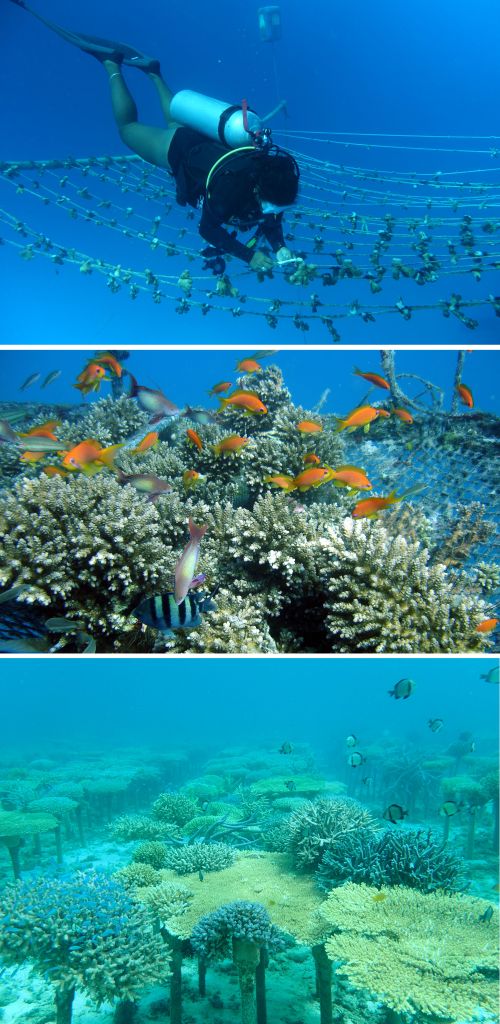
Aspects of coral gardening. The photos show (top) a diver scraping off (with the aid of a toothbrush) algae, sponges and parasites that compete for light and nutrients with the coral fragments under cultivation along suspended ropes (Cousin Island, Seychelles), (middle) coral outplantings in the Gulf of Eliat (Red Sea) hosting a diverse community of fish that clean off the biofouling for free (21), and (bottom) a donor colony farmed off Onna (Okinawa, Japan) (12). Photos courtesy of Luca Saponari (Cousin), Buki Rinkevich (Eliat) and Yoshimi Higa / Onna Village Fishery Cooperative.

Today, the term coral gardening encompasses the suite of methods to cultivate corals (tiny colonial jellyfish with an external skeleton and a carnivorous diet) and to outplant them into the wild to boost the growth of coral reefs following perturbations (2). In the face of the decline of coral reefs globally, due to the combination of climate change, pollution, and overfishing (3), this type of mariculture has gathered momentum in the last three decades and is currently being applied to more than 100 coral species in all the main reefs of our seas and oceans (4-6).

Read the rest of this entry »


Avoiding a ghastly future — The Science Show

1 10 2021

Just thought I’d share the audio of an interview I did with the famous Robyn Williams of ABC Radio National‘s The Science Show.

I’d be surprised if any Australians with even a passing interest in science could claim not to have listened to the Science Show before, and I suspect a fair mob of people overseas would be in the same boat.

It was a real privilege to talk with Robyn about our work on the ghastly future, and as always, the production value is outstanding.

Thank you, Robyn and the ABC.

Listen below, or link to the interview directly.


The very worn slur of “neo-Malthusian”

7 09 2021

After the rather astounding response to our Ghastly Future paper published in January this year (> 443,000 views and counting; 61 citations and counting), we received a Commentary that was rather critical of our article.

A Malthusian slur

We have finally published a Response to the Commentary, which is now available online (accepted version) in Frontiers in Conservation Science. Given that it is published under a Creative Commons Attribution License (CC BY), I can repost the Response here:


In their comment on our paper Underestimating the challenges of avoiding a ghastly future, Bluwstein et al.2 attempt to contravene our exposé of the enormous challenges facing the entire human population from a rapidly degrading global environment. While we broadly agree with the need for multi-disciplinary solutions, and we worry deeply about the inequality of those who pay the costs of biodiversity loss and ecological collapse, we feel obligated to correct misconceptions and incorrect statements that Bluwstein et al.2 made about our original article.

After incorrectly assuming that our message implied the existence of “one science” and a “united scientific community”, the final paragraph of their comment contradicts their own charge by calling for the scientific community to “… stand in solidarity”. Of course, there is no “one science” — we never made such a claim. Science is by its nature necessarily untidy because it is a bottom-up process driven by different individuals, cultures, perspectives, and goals. But it is solid at the core. Scientific confluence is reached by curiosity, rigorous testing of assumptions, and search for contradictions, leading to many — sometimes counter-intuitive or even conflicting — insights about how the world works. There is no one body of scientific knowledge, even though there is good chance that disagreements are eventually resolved by updated, better evidence, although perhaps too slowly. That was, in fact, a main message of our original article — that obligatory specialisation of disparate scientific fields, embedded within a highly unequal and complex socio-cultural-economic framework, reduces the capacity of society to appreciate, measure, and potentially counter the complexity of its interacting existential challenges. We agree that scientists play a role in political struggles, but we never claimed, as Bluwstein et al.2 contended, that such struggles can be “… reduced to science-led processes of positive change”. Indeed, this is exactly the reason our paper emphasized the political impotence surrounding the required responses. We obviously recognize the essential role social scientists play in creating solutions to avoid a ghastly future. Science can only provide the best available evidence that individuals and policymakers can elect to use to inform their decisions. 

We certainly recognise that there is no single policy or polity capable of addressing compounding and mounting problems, and we agree that that there is no “universal understanding of the intertwined socio-ecological challenges we face”. Bluwstein et al.2 claimed that we had suggested scientific messaging alone can “… adequately communicate to the public how socio-ecological crises should be addressed”. We did not state or imply such ideas of unilateral scientific power anywhere in our article. Indeed, the point of framing our message as pertaining to a complex adaptive system means that we cannot, and should not, work towards a single goal. Instead, humanity will be more successful tackling challenges simultaneously and from multiple perspectives, by exploiting manifold institutions, technologies, approaches, and governances to match the complexity of the predicament we are attempting to resolve.

Read the rest of this entry »