Giving a monkey’s about primate conservation

12 12 2017
Urban monkey living (Macaque, Gibraltar) small

Concrete jungle. A Barbary macaque sits in a human-dominated landscape in Gibraltar. Photo: Silviu Petrovan

Saving primates is a complicated business. Primates are intelligent, social animals that have complex needs. They come into conflict with humans when they raid rubbish bins and crops, chew power cables, and in some cases become aggressive towards people.

Humans, however, have the upper hand. While 60% of non-human primate species are threatened, humans grow in numbers and power, building roads through forests, hunting and trapping primates, and replacing their habitat with farms and houses.

To help primatologists choose the most effective conservation approaches to resolve these problems, researchers in the Conservation Evidence project teamed up with primate researchers to produce a global database on the effectiveness of primate conservation solutions. This free database, which can also be downloaded as a single pdf, summarizes the evidence for 162 conservation interventions — actions that conservationists might take to conserve primates. The data come from searches of over 170 conservation journals and newsletters, and each study is summarized in a single paragraph in plain English, making it possible for conservationists without access to scientific journals to read the key findings.

Front cover primate synopsisSo what works in primate conservation? Well, the picture is rarely straightforward — partly due to the lack of data — but there are some interesting trends. Reducing hunting is one area where there seem to be a range of potentially effective approaches. Community control of patrolling, banning hunting and removing snares was effective in the three studies in which it was tested, all in African countries.

Further emphasizing the importance of involving local communities, implementing no-hunting community policies or traditional hunting bans also appeared helpful in boosting primate numbers. In other places, a more traditional approach of using rangers to protect primates has proved a winning strategy. Training rangers, providing them with arms, and increasing ranger patrols all worked to protect primates from poachers. Identifying the circumstances in which community led approaches or ranger patrols work will be key to implementing the most appropriate response to each conservation challenge. Read the rest of this entry »


Four decades of fragmentation

27 09 2017

fragmented

I’ve recently read perhaps the most comprehensive treatise of forest fragmentation research ever compiled, and I personally view this rather readable and succinct review by Bill Laurance and colleagues as something every ecology and conservation student should read.

The ‘Biological Dynamics of Forest Fragments Project‘ (BDFFP) is unquestionably one of the most important landscape-scale experiments ever conceived and implemented, now having run 38 years since its inception in 1979. Indeed, it was way ahead of its time.

Experimental studies in ecology are comparatively rare, namely because it is difficult, expensive, and challenging in the extreme to manipulate entire ecosystems to test specific hypotheses relating to the response of biodiversity to environmental change. Thus, we ecologists tend to rely more on mensurative designs that use existing variation in the landscape (or over time) to infer mechanisms of community change. Of course, such experiments have to be large to be meaningful, which is one reason why the 1000 km2 BDFFP has been so successful as the gold standard for determining the effects of forest fragmentation on biodiversity.

And successful it has been. A quick search for ‘BDFFP’ in the Web of Knowledge database identifies > 40 peer-reviewed articles and a slew of books and book chapters arising from the project, some of which are highly cited classics in conservation ecology (e.g., doi:10.1046/j.1523-1739.2002.01025.x cited > 900 times; doi:10.1073/pnas.2336195100 cited > 200 times; doi:10.1016/j.biocon.2010.09.021 cited > 400 times; and doi:10.1111/j.1461-0248.2009.01294.x cited nearly 600 times). In fact, if we are to claim any ecological ‘laws’ at all, our understanding of fragmentation on biodiversity could be labelled as one of the few, thanks principally to the BDFFP. Read the rest of this entry »


Which countries protect the most of their land?

1 09 2017

forestOne potentially useful metric to measure how different nations value their biodiversity is just how much of a country’s land its government sets aside to protect its natural heritage and resources. While this might not necessarily cover all the aspects of ‘environment’ we need to explore, we know from previous research that the more emphasis a country places on protecting its biodiversity, the more it actually achieves this goal. This might sound intuitive, but there is no shortage of what have become known as ‘paper parks’ around the world, which are essentially only protected in principle, but not in practice.

For example, if a national park or some other type of protected area is not respected by the locals (who might rightly or wrongly perceive them as a limitation of their ‘rights’ of exploitation), or is pilfered by corrupt government officials in cahoots with extractive industries like logging or mining, then the park does not do well in protecting the species it was designed to safeguard. So, even though the proportion of area protected within a country is not a perfect reflection of its environmental performance, it tends to indicate to what extent its government, and therefore, its people, are committed to saving its natural heritage.

Read the rest of this entry »


Keeping lions from livestock — building fences can save lives

23 06 2017

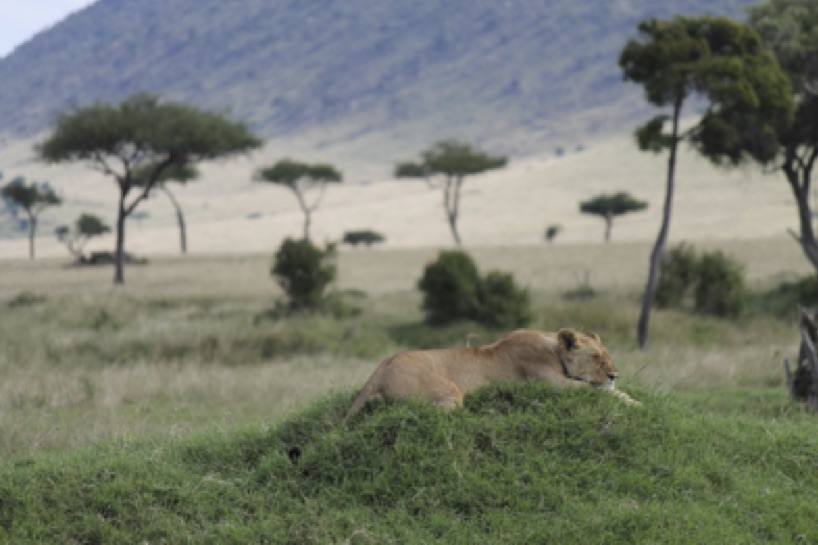
Seeing majestic lions strolling along the Maasai Mara at sunset — a dream vision for many conservationists, but a nightmare for pastoralists trying to keep their cattle safe at night. Fortunately a conservation success story from Kenya, published today in the journal Conservation Evidence, shows that predation of cattle can be reduced by almost 75% by constructing chain-link livestock fences.

The Anne K. Taylor Fund (AKTF) subsidises over 70% of the cost of building a fully fortified chain-link livestock enclosure (‘boma’) to keep cattle safe from predators at night, in the hope that this will lessen the retaliatory killings of lions by frustrated farmers. While lions, leopards and cheetahs draw in crowds of tourists who marvel at their strength and beauty, living alongside big predators can be tough. Traditionally, local people keep their animals overnight in bomas made of acacia thorns — but depredation by lions and other large carnivores cause losses of on average more than nine head of cattle per year, or US$1870 that farmers see disappear down the throat of big, hairy animals. Building a solid fortification of chain-link fence costs just $890, of which the AKTF paid $638, helping to make this an affordable option for hard-pressed locals. Read the rest of this entry »


Limited nursery replenishment in coral reefs

27 03 2017
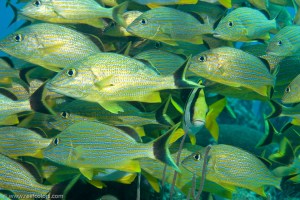
Haemulon sciurus

blue-striped grunt (Haemulon sciurus)

Coral reef fishes are wonderfully diverse in size, form, and function, as well as their need for different habitats throughout the life cycle. Some species spend all of their life in the same kind of coral habitat, while others need different places to breed and feed.

Fishes requiring different habitats as they progress through life often have what we call ‘nurseries’ in which adults lay eggs and the subsequent juveniles remain, and these places are often dominated by mangroves or seagrasses (i.e., they are not part of the coral reef).

While we’ve known for quite some time that when these nursery habitats are not around, adjacent coral reefs have few, if any, of these nursery-dependent species. What we haven’t known until now is just how far the influence of nurseries extends along a coral reef.

In other words, if a nursery is present, just how many new recruits do different areas of a reef receive from it? Read the rest of this entry »


Not all wetlands are created equal

13 02 2017

little-guyLast year I wrote what has become a highly viewed post here at ConservationBytes.com about the plight of the world’s freshwater biodiversity. In a word, it’s ‘buggered’.

But there are steps we can take to avoid losing even more of that precious freshwater biodiversity. The first, of course, is to stop sucking all the water out of our streams and wetlands. With a global population of 7.5 billion people and climbing, the competition for freshwater will usually mean that non-human life forms lose that race. However, the more people (and those making the decisions, in particular) realise that intact wetlands do us more good as wetlands rather than carparks, housing developments, or farmland (via freshwater filtering, species protection, carbon storage, etc.), the more we have a chance to save them.

My former MSc student, the very clever David Deane1, has been working tirelessly to examine different scenarios of wetland plant biodiversity change in South Australia, and is now the proud lead author of a corker of a new paper in Biological Conservation. Having already published one paper about how wetland plant biodiversity patterns are driven by rare terrestrial plants, his latest is a very important contribution about how to manage our precious wetlands. Read the rest of this entry »


The Evidence Strikes Back — What Works 2017

16 01 2017
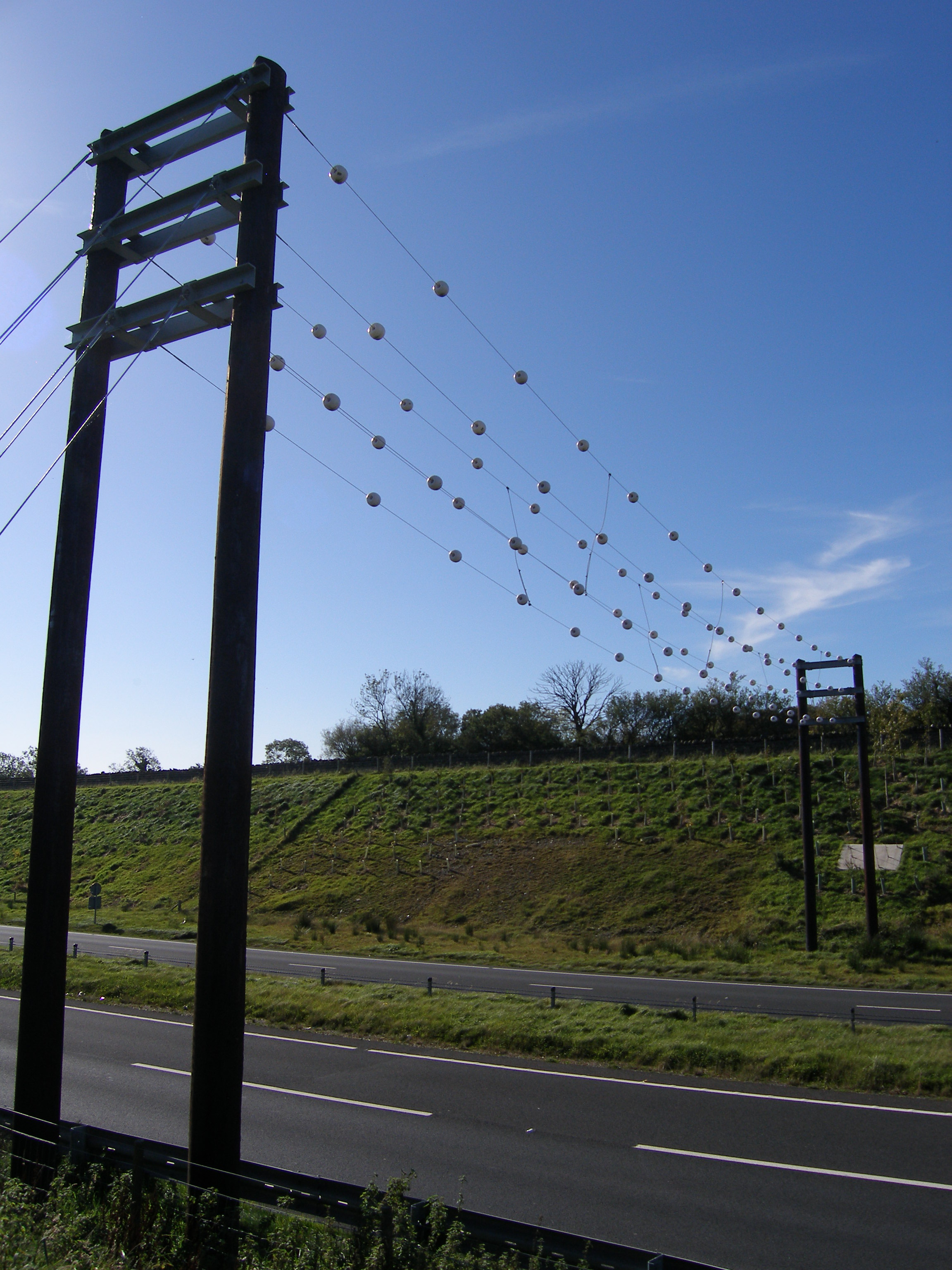
Bat gantry on the A590, Cumbria, UK. Photo credit: Anna Berthinussen

Bat gantry on the A590, Cumbria, UK. Photo credit: Anna Berthinussen

Tired of living in a world where you’re constrained by inconvenient truths, irritating evidence and incommodious facts? 2016 must have been great for you. But in conservation, the fight against the ‘post-truth’ world is getting a little extra ammunition this year, as the Conservation Evidence project launches its updated book ‘What Works in Conservation 2017’.

Conservation Evidence, as many readers of this blog will know, is the brainchild of conservation heavyweight Professor Bill Sutherland, based at Cambridge University in the UK. Like all the best ideas, the Conservation Evidence project is at once staggeringly simple and breathtakingly ambitious — to list every conservation intervention ever cooked up around the world, and see how well, in the cold light of evidence, they actually worked. The project is ongoing, with new chapters of evidence added every year grouped by taxa, habitat or topic — all available for free on www.conservationevidence.com.

What Works in Conservation’ is a book that summarises the key findings from the Conservation Evidence website, and presents them in a simple, clear format, with links to where more information can be found on each topic. Experts (some of us still listen to them, Michael) review the evidence and score every intervention for its effectiveness, the certainty of the evidence and any harmful side effects, placing each intervention into a colour coded category from ‘beneficial’ to ‘likely to be ineffective or harmful.’ The last ‘What Works’ book included chapters on birds, bats, amphibians, soil fertility, natural pest control, some aspects of freshwater invasives and farmland conservation in Europe; new for 2017 is a chapter on forests and more species added to freshwater invasives. Read the rest of this entry »


Boreal forest on the edge of a climate-change tipping point

15 11 2016

As some know, I dabble a bit in the carbon affairs of the boreal zone, and so when writer Christine Ottery interviewed me about the topic, I felt compelled to reproduce her article here (originally published on EnergyDesk).

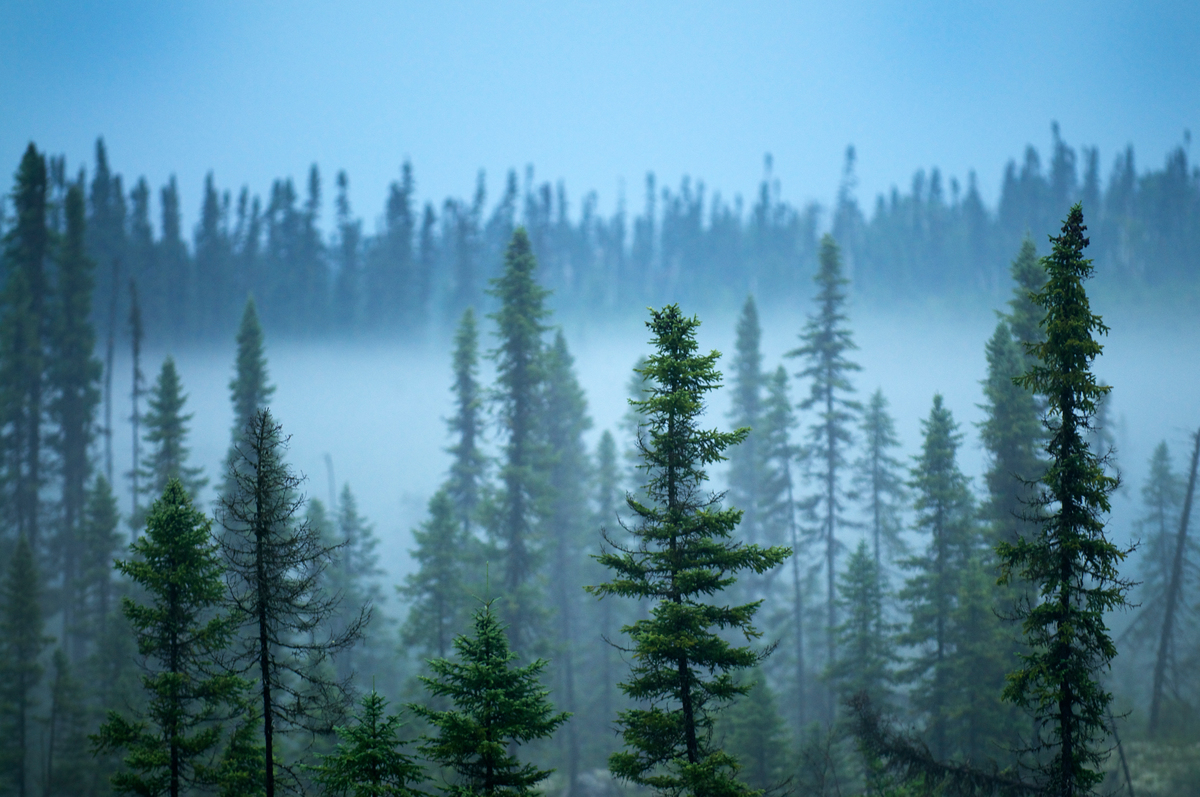
A view of the Waswanipi-Broadback Forest in the Abitibi region of Northern Quebec, one of the last remaining intact Boreal Forests in the province (source: EnergyDesk).

A view of the Waswanipi-Broadback forest in the Abitibi region of northern Quebec, one of the last remaining intact boreal forests in the Canadian province (source: EnergyDesk).

The boreal forest encircles the Earth around and just below the Arctic Circle like a big carbon-storing hug. It can mostly be found covering large swathes of Russia, Canada and Alaska, and some Scandinavian countries.

In fact, the boreal – sometimes called by its Russian name ‘taiga’ or ‘Great Northern Forest’ – is perhaps the biggest terrestrial carbon store in the world.

So it’s important to protect in a world where we’re aiming for 1.5 or – at worst – under two degrees celsius of global warming.

“Our capacity to limit average global warming to less than 2 degrees is already highly improbable, so every possible mechanism to reduce emissions must be employed as early as possible. Maintaining and recovering our forests is part of that solution,” Professor Corey Bradshaw, a leading researcher into boreal forests based at the University of Adelaide, told Energydesk.

It’s not that tropical rainforests aren’t important, but recent research led by Bradshaw published in Global and Planetary Change shows that that there is more carbon held in the boreal forests than previously realised.

But there’s a problem. Read the rest of this entry »


Potential conservation nightmare unfolding in South Africa

31 10 2016

fees-must-fallLike most local tragedies, it seems to take some time before the news really grabs the overseas audience by the proverbial goolies. That said, I’m gobsmacked that the education tragedy unfolding in South Africa since late 2015 is only now starting to be appreciated by the rest of the academic world.

You might have seen the recent Nature post on the issue, and I do invite you to read that if all this comes as news to you. I suppose I had the ‘advantage’ of getting to know a little bit more about what is happening after talking to many South African academics in the Kruger in September. In a word, the situation is dire.

We’re probably witnessing a second Zimbabwe in action, with the near-complete meltdown of science capacity in South Africa as a now very real possibility. Whatever your take on the causes, justification, politics, racism, or other motivation underlying it all, the world’s conservation biologists should be very, very worried indeed.

Read the rest of this entry »


Massive yet grossly underestimated global costs of invasive insects

4 10 2016
Portrait of a red imported fire ant, Solenopsis invicta. This species arrived to the southeastern United States from South America in the 1930s. Specimen from Brackenridge Field Laboratory, Austin, Texas, USA. Public domain image by Alex Wild, produced by the University of Texas "Insects Unlocked" program.

Portrait of a red imported fire ant Solenopsis invicta. This species arrived to the southeastern USA from South America in the 1930s. Specimen from Brackenridge Field Laboratory, Austin, Texas, USA. Public domain image by Alex Wild, produced by the University of Texas “Insects Unlocked” program.

As many of you already know, I spent a good deal of time in France last year basking in the hospitality of Franck Courchamp and his vibrant Systematic Ecology & Evolution lab at Université Paris-Sud. Of course, I had a wonderful time and was sad to leave in the end, but now I have some hard evidence that I wasn’t just eating cheese and visiting castles. I was actually doing some pretty cool science too.

Financed by BNP-Paribas and Agence Nationale de Recherche, the project InvaCost was designed to look at the global impact of invasive insects, including projections of range dynamics under climate change and shifting trade patterns. The first of hopefully many papers is now out.

Just published in Nature Communications, I am proud that many months of hard work by a brilliant team of ecologists, epidemiologists and economists has culminated in this article entitled Massive yet grossly underestimated costs of invasive insects, which in my opinion is  the first robust analysis of its kind. Despite some previous attempts at estimating the global costs of invasive species1-4 (which have been largely exposed as guesswork and fantasy5-10), our paper rigorously treats the economic cost estimates and categorises them into ‘reproducible’ and ‘irreproducible’ categories.

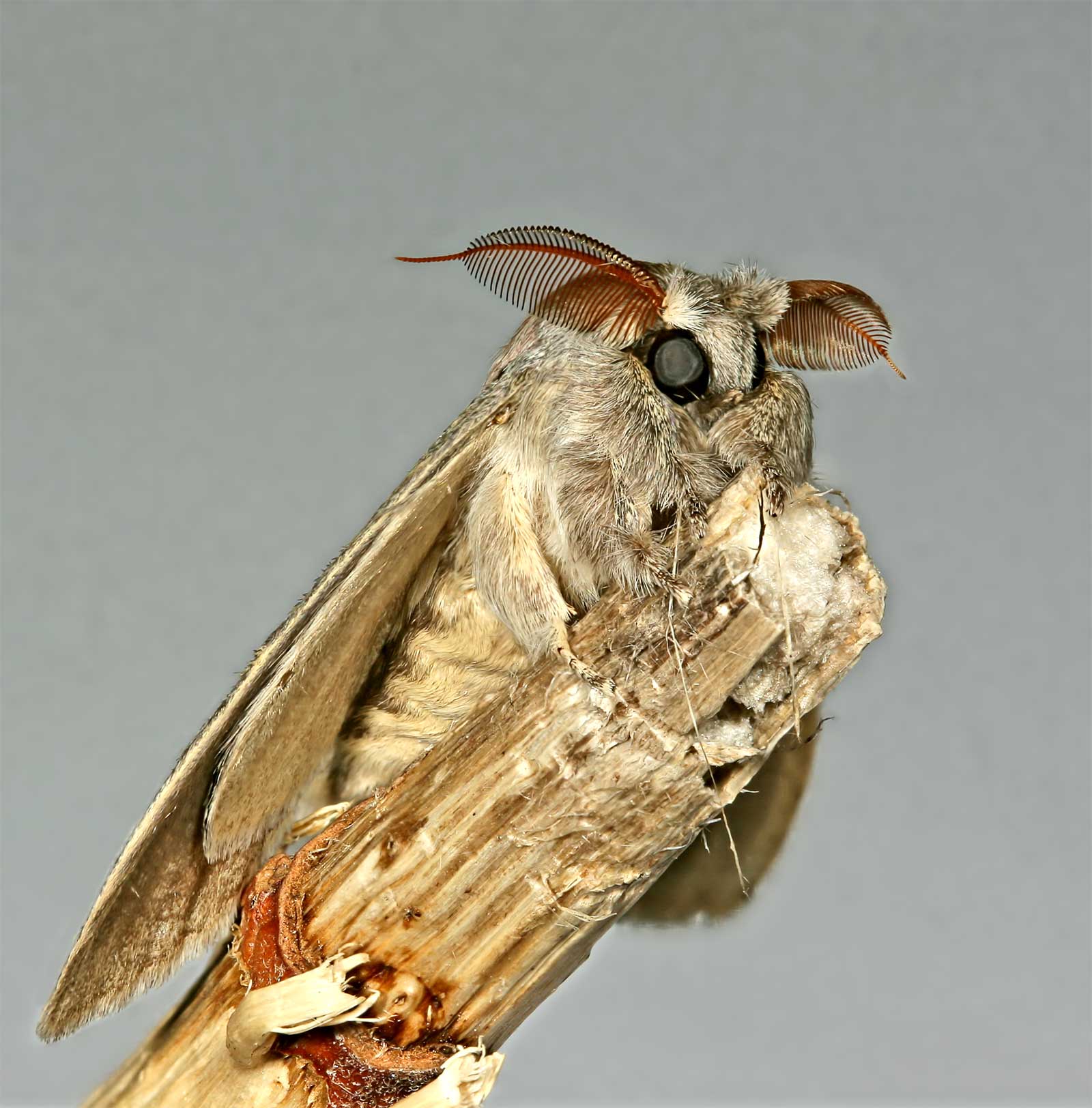
Lymantria

Gypsy moth (Lymantria dispar) adult. Dimitri Geystor (France)

What we found was sobering. If we look at just ‘goods and services’ affected by invasive insects, the annual global costs run at about US$70 billion. These include agricultural, forestry and infrastructure damages, as well as many of the direct costs of clean-up and eradication, and the indirect costs of prevention. When you examine that number a little more closely and only include the ‘reproducible’ studies, the total annual costs dip to about US$25 billion, meaning that almost 65% of the costs recorded are without any real empirical support. Scary, especially considering how much credence people put on previously published global ‘estimates’ (for example, see some citation statistics here).

Coptotermes_formosanus

Formosan subterranean termite Coptotermes formosanus by Scott Bauer, US Department of Agriculture, Agricultural Research Service

There’s a great example to illustrate this. If you take it at face value, the most expensive invasive insect in the world is the Formosan subterranean termite Coptotermes formosanus estimated at US$30.2 billion/yr globally. However, that irreproducible estimate is based on a single non-sourced value of US$2.2 billion per year for the USA, a personal communication supporting a ratio of 1:4 of control:repair costs in a single US city (New Orleans), and an unvalidated assumption that the US costs represent 50% of the global total.

Read the rest of this entry »


Transition from the Anthropocene to the Minicene

24 09 2016
Going, going ...

Going, going … © CJA Bradshaw

I’ve just returned from a life-changing trip to South Africa, not just because it was my first time to the continent, but also because it has redefined my perspective on the megafauna extinctions of the late Quaternary. I was there primarily to attend the University of Pretoria’s Mammal Research Institute 50thAnniversary Celebration conference.

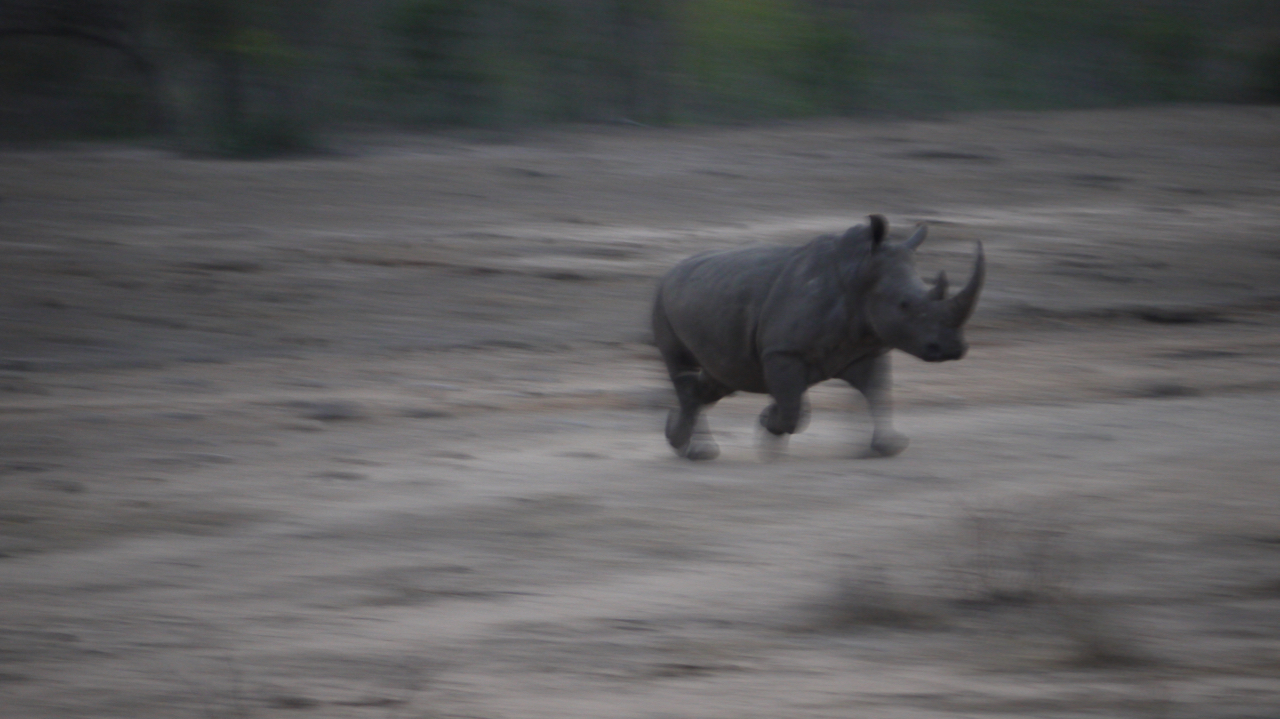
As I reported in my last post, the poaching rates in one of the larger, best-funded national parks in southern Africa (the Kruger) are inconceivably high, such that for at least the two species of rhino there (black and white), their future persistence probability is dwindling with each passing week. African elephants are probably not far behind.

As one who has studied the megafauna extinctions in the Holarctic, Australia and South America over the last 50,000 years, the trip to Kruger was like stepping back into the Pleistocene. I’ve always dreamed of walking up to a grazing herd of mammoths, woolly rhinos or Diprotodon, but of course, that’s impossible. What is entirely possible though is driving up to a herd of 6-tonne elephants and watching them behave naturally. In the Kruger anyway, you become almost blasé about seeing yet another group of these impressive beasts as you try to get that rare glimpse of a leopard, wild dogs or sable antelope (missed the two former, but saw the latter). Read the rest of this entry »


More things stay the same, more we retrogress

20 07 2016

obrazek_1idiommmmsmmWithin six months of Abbott and the Coalition seizing power in the 2013 Australian election, decades—if not centuries—of environmental damage and retrograde policies unfolded. But this was no run-of-the-mill incompetence and neglect by government—this was an all-out attack on anything with the merest whiff of environmental protection. The travesty is well-documented, from infamously axing both the carbon-pricing scheme and climate commission, eradicating Labor’s 80% emissions-reduction target by 2050, diluting the Renewable Energy Target, refusing to commit to enforcing the Illegal Logging Prohibition Act (fortunately, this is now law), defunding the only independent legal entity available to limit environmentally destructive development (Environmental Defenders Office), to even attempting to remove the rights of environmental groups to challenge development proposals (thankfully, that failed).

The Coalition’s backward and ineffectual climate change-mitigation policies alone are evidence enough for long-term damage, but their war on the environment in general means that even the future election of a more environmentally responsible government will not undo the damage quickly, if at all. As a result of these and other nearsighted policies, Australia remains one of the highest per-capita greenhouse-gas emitters on the planet, has one of the highest per-capita water uses of any nation, leads the world in mammal extinctions, continues to deforest its already forest-poor landscape, and is a society utterly unprepared to deal with the future challenges of a degraded planet.
Read the rest of this entry »


Seeing the wood for the trees

11 07 2016
The Forest Synopsis: Photo of the Anamalai Tiger Reserve, India, by Claire Wordley

The Forest Synopsis: Photo of the Anamalai Tiger Reserve, India, by Claire Wordley

From the towering kapoks of South America to the sprawling banyans of South Asia, from misty cloud forests to ice-covered pines, forests are some of the most diverse and important ecosystems on Earth. However, as conservationists and foresters try to manage, conserve and restore forests across the world, they often rely on scanty and scattered information to inform their decisions, or indeed, no information at all. This could all change.

This week sees the launch of the Forest Synopsis from Conservation Evidence, a free resource collating global scientific evidence on a wide range of conservation-related actions. These aim to include all interventions that conservationists and foresters are likely to use, such as changing fire regimes, legally protecting forests or encouraging seed-dispersing birds into degraded forests.

Making conservation work

“We hear a lot about how important it is to do evidence-based conservation”, says Professor Bill Sutherland at the University of Cambridge, UK, “but in reality getting a handle on what works is not easy. That’s why we set up Conservation Evidence, to break down the barriers between conservationists and the scientific evidence that they need to do their jobs.” Read the rest of this entry »


Shadow of ignorance veiling society despite more science communication

19 04 2016

imagesI’ve been thinking about this post for a while, but it wasn’t until having some long, deep chats today with staff and students at Simon Fraser University‘s Department of Biological Sciences (with a particular hat-tip to the lovely Nick Dulvy, Isabelle Côté & John Reynolds) that the full idea began to take shape in my brain. It seems my presentation was a two-way street: I think I taught a few people some things, and they taught me something back. Nice.

There’s no question at all that science communication has never before been so widespread and of such high quality. More and more scientists and science students are now blogging, tweeting and generally engaging the world about their science findings. There is also an increasing number of professional science communication associations out there, and a growing population of professional science communicators. It is possibly the best time in history to be involved in the generation and/or communication of scientific results.

Why then is the public appreciation, acceptance and understanding of science declining? It really doesn’t make much sense if you merely consider that there has never been more good science ‘out there’ in the media — both social and traditional. For the source literature itself, there has never before been as many scientific journals, articles and even scientists writing. Read the rest of this entry »


Sensitive numbers

22 03 2016
toondoo.com

A sensitive parameter

You couldn’t really do ecology if you didn’t know how to construct even the most basic mathematical model — even a simple regression is a model (the non-random relationship of some variable to another). The good thing about even these simple models is that it is fairly straightforward to interpret the ‘strength’ of the relationship, in other words, how much variation in one thing can be explained by variation in another. Provided the relationship is real (not random), and provided there is at least some indirect causation implied (i.e., it is not just a spurious coincidence), then there are many simple statistics that quantify this strength — in the case of our simple regression, the coefficient of determination (R2) statistic is a usually a good approximation of this.

In the case of more complex multivariate correlation models, then sometimes the coefficient of determination is insufficient, in which case you might need to rely on statistics such as the proportion of deviance explained, or the marginal and/or conditional variance explained.

When you go beyond this correlative model approach and start constructing more mechanistic models that emulate ecological phenomena from the bottom-up, things get a little more complicated when it comes to quantifying the strength of relationships. Perhaps the most well-known category of such mechanistic models is the humble population viability analysis, abbreviated to PVA§.

Let’s take the simple case of a four-parameter population model we could use to project population size over the next 10 years for an endangered species that we’re introducing to a new habitat. We’ll assume that we have the following information: the size of the founding (introduced) population (n), the juvenile survival rate (Sj, proportion juveniles surviving from birth to the first year), the adult survival rate (Sa, the annual rate of surviving adults to year 1 to maximum longevity), and the fertility rate of mature females (m, number of offspring born per female per reproductive cycle). Each one of these parameters has an associated uncertainty (ε) that combines both measurement error and environmental variation.

If we just took the mean value of each of these three demographic rates (survivals and fertility) and project a founding population of = 10 individuals for 1o years into the future, we would have a single, deterministic estimate of the average outcome of introducing 10 individuals. As we already know, however, the variability, or stochasticity, is more important than the average outcome, because uncertainty in the parameter values (ε) will mean that a non-negligible number of model iterations will result in the extinction of the introduced population. This is something that most conservationists will obviously want to minimise.

So each time we run an iteration of the model, and generally for each breeding interval (most often 1 year at a time), we choose (based on some random-sampling regime) a different value for each parameter. This will give us a distribution of outcomes after the 10-year projection. Let’s say we did 1000 iterations like this; taking the number of times that the population went extinct over these iterations would provide us with an estimate of the population’s extinction probability over that interval. Of course, we would probably also vary the size of the founding population (say, between 10 and 100), to see at what point the extinction probability became acceptably low for managers (i.e., as close to zero as possible), but not unacceptably high that it would be too laborious or expensive to introduce that many individuals. Read the rest of this entry »



It’s not always best to be the big fish

3 02 2016

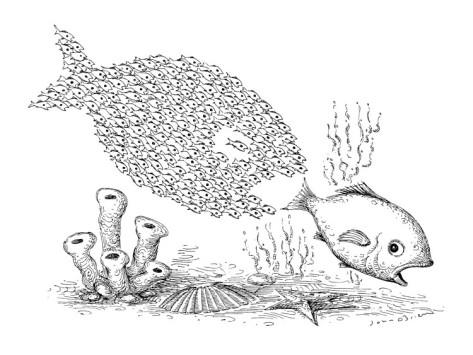
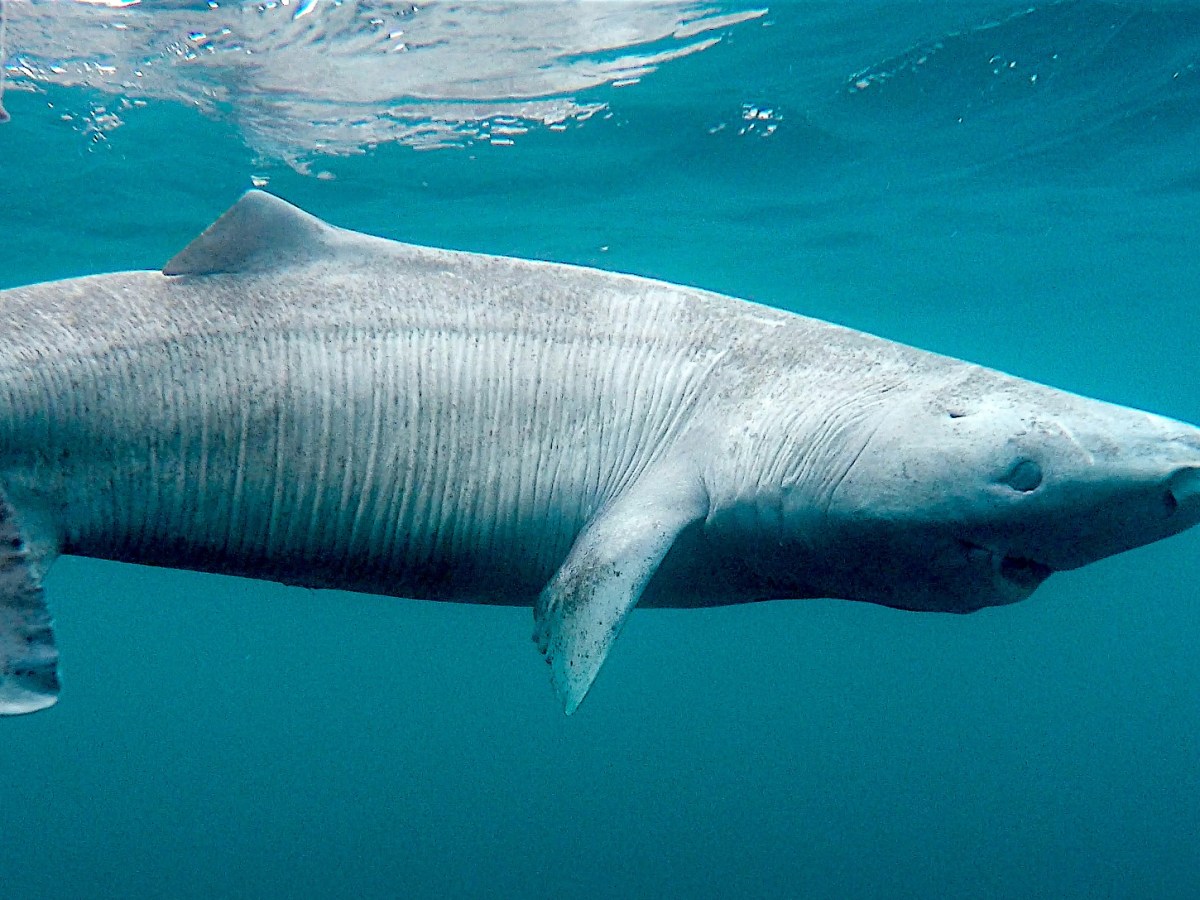
obrien_fish_2Loosely following the theme of last week’s post, it’s now fairly well established that humans tend to pick on the big species first.

From fewer big trees, declines of big carnivores, elephant & rhino poaching, to fishing down the web, big species tend to cop it hardest when it comes to human-caused ecological disturbance.

While there are a lot of different combinations of traits that make some species more vulnerable to extinction than others (see examples for legumes, amphibians, sharks & teleosts, and mammals), one of the main ones is species size.

Generally speaking, larger species tend to produce fewer offspring and breed later in life than smaller species. This means that despite larger species tending to live longer than their smaller counterparts, their ‘slow’ reproductive output means that they are generally more susceptible to rapid environmental change (mainly via human intervention). In other words, their capacity for self-replacement is often too low to counteract the offtake from direct exploitation or habitat loss.

Despite a reasonable scientific understanding of this extinction-risk principle, the degree to which human disturbance affects species’ distributions is much less well quantified, and this is especially true for marine species.

I’m proud to announce another fascinating paper led by my postdoc, Camille Mellin, that has just come out online in Nature CommunicationsHumans and seasonal climate variability threaten large-bodied coral reef fish with small ranges.

With the world’s largest combined dataset of coral reef fish surveys for the entire Indo-Pacific (including the coral reef fish biodiversity hotspot — the Coral Triangle), we examined which conditions best described the distribution of fishes over a range of body sizes. Read the rest of this entry »


Getting your conservation science to the right people

22 01 2016

argument-cartoon-yellingA perennial lament of nearly every conservation scientist — at least at some point (often later in one’s career) — is that the years of blood, sweat and tears spent to obtain those precious results count for nought in terms of improving real biodiversity conservation.

Conservation scientists often claim, especially in the first and last paragraphs of their papers and research proposals, that by collecting such-and-such data and doing such-and-such analyses they will transform how we manage landscapes and species to the overall betterment of biodiversity. Unfortunately, most of these claims are hollow (or just plain bullshit) because the results are either: (i) never read by people who actually make conservation decisions, (ii) not understood by them even if they read the work, or (iii) never implemented because they are too vague or too unrealistic to translate into a tangible, positive shift in policy.

A depressing state of being, I know.

This isn’t any sort of novel revelation, for we’ve been discussing the divide between policy makers and scientists for donkey’s years. Regardless, the whinges can be summarised succinctly: Read the rest of this entry »


Outright bans of trophy hunting could do more harm than good

5 01 2016

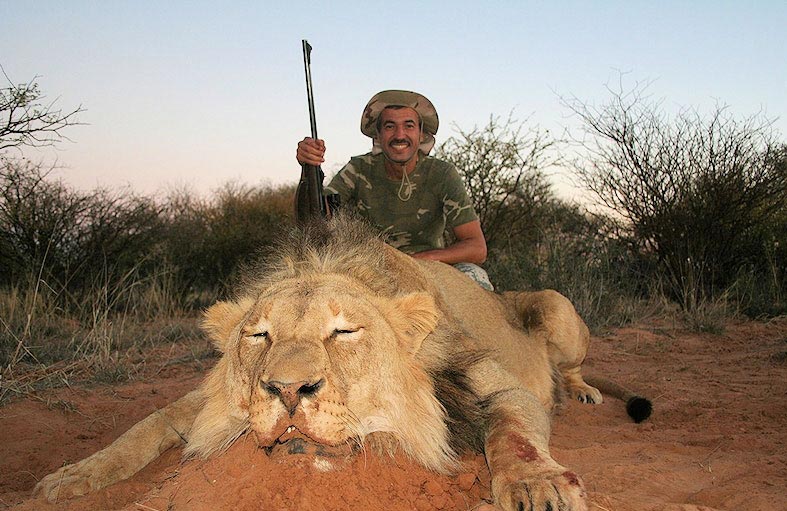
In July 2015 an American dentist shot and killed a male lion called ‘Cecil’ with a hunting bow and arrow, an act that sparked a storm of social media outrage. Cecil was a favourite of tourists visiting Hwange National Park in Zimbabwe, and so the allegation that he was lured out of the Park to neighbouring farmland added considerable fuel to the flames of condemnation. Several other aspects of the hunt, such as baiting close to national park boundaries, were allegedly done illegally and against the spirit and ethical norms of a managed trophy hunt.

In May 2015, a Texan legally shot a critically endangered black rhino in Namibia, which also generated considerable online ire. The backlash ensued even though the male rhino was considered ‘surplus’ to Namibia’s black rhino populations, and the US$350,000 generated from the managed hunt was to be re-invested in conservation. Together, these two incidents have triggered vociferous appeals to ban trophy hunting throughout Africa.

These highly politicized events are but a small component of a large industry in Africa worth > US$215 million per year that ‘sells’ iconic animals to (mainly foreign) hunters as a means of generating otherwise scarce funds. While to most people this might seem like an abhorrent way to generate money, we argue in a new paper that sustainable-use activities, such as trophy hunting, can be an important tool in the conservationist’s toolbox. Conserving biodiversity can be expensive, so generating money is a central preoccupation of many environmental NGOs, conservation-minded individuals, government agencies and scientists. Making money for conservation in Africa is even more challenging, and so we argue that trophy hunting should and could fill some of that gap. Read the rest of this entry »


Game bird madness

4 11 2015

Gamecart_largeI just returned to Paris after a brief visit to the University of Aberdeen over the weekend. My hosts, Xavier Lambin and Beth Scott, were not only marvellously welcoming, I also learned a lot about the travesty that is game bird management in the United Kingdom, and especially in Scotland.

As you might already know, the Great Britons are a little cuckoo for birds — I’d even wager that the country produces more twitchers than any other country on Earth. The plus side is that there are few national taxa better censused and studied that British birds, because so many non-scientists get into the spirit of data collection. Hell, I’ve even had a play with some of their datasets.

The other side of this bird madness is not so good — I’m talking about the massive biomass of game birds reared, released and shot every year in the United Kingdom. It’s not the hunting per se with which I take issue, it’s the insane manipulation of an entire ecosystem for the benefit of a few species. Read the rest of this entry »