You know you’re screwed when the insects disappear

31 10 2017

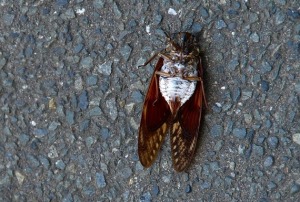
dead cicadaLast Friday, ABC 891 here in Adelaide asked me to comment on a conservation paper doing the news rounds last week. While it has been covered extensively in the media (e.g., The Guardian, CNN, and Science), I think it’s probably going to be one of those things that people unfortunately start to forget right away. But this is decidedly something that no one should be forgetting.

While you can listen to me chat about this with the lovely Sonya Feldhoff on the ABC (I start chin-wagging around the 14:30 mark), I thought it prudent to remind CB.com readers just how devastatingly important this study is.

While anyone with a modicum of conservation science under her belt will know that the Earth’s biodiversity is not doing well, the true extent of the ecological tragedy unfolding before our very eyes really came home to us back in 2014 with the publication of WWF’s Living Planet Report. According to a meta-analysis of 10,380 population trends from over 3000 species of birds, reptiles, amphibians, mammals, and fish, the report concluded that the Earth has lost over 50% of the individuals in vertebrate populations since 1970. Subsequent revisions (and more population trends from more species) place the decline at over 60% by 2020 (that’s only a little over two years away). You can also listen to me speak about this on another radio show.

If that little bit of pleasant news didn’t make the pit of your stomach gurgle and a cold sweat break out on the back of your neck, you’re probably not human. But hang on, boys and girls — it gets so much worse! The publication in PLoS One on 18 October about Germany’s insect declines might be enough to tip you over the edge and into the crevasse of mental instabilityRead the rest of this entry »


Cartoon guide to biodiversity loss XLIV

9 10 2017

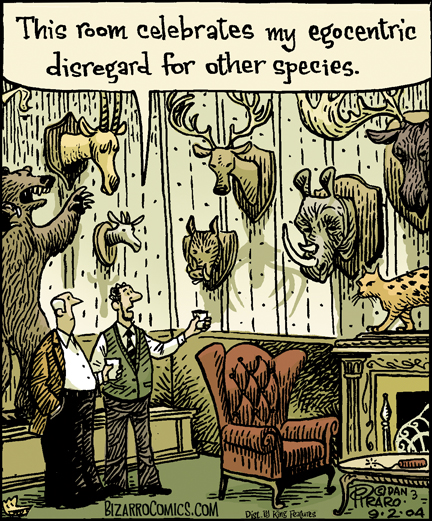
Here’s another set of biodiversity cartoons to make you giggle, groan, and contemplate the Anthropocene extinction crisis. See full stock of previous ‘Cartoon guide to biodiversity loss’ compendia here.

Read the rest of this entry »


Four decades of fragmentation

27 09 2017

fragmented

I’ve recently read perhaps the most comprehensive treatise of forest fragmentation research ever compiled, and I personally view this rather readable and succinct review by Bill Laurance and colleagues as something every ecology and conservation student should read.

The ‘Biological Dynamics of Forest Fragments Project‘ (BDFFP) is unquestionably one of the most important landscape-scale experiments ever conceived and implemented, now having run 38 years since its inception in 1979. Indeed, it was way ahead of its time.

Experimental studies in ecology are comparatively rare, namely because it is difficult, expensive, and challenging in the extreme to manipulate entire ecosystems to test specific hypotheses relating to the response of biodiversity to environmental change. Thus, we ecologists tend to rely more on mensurative designs that use existing variation in the landscape (or over time) to infer mechanisms of community change. Of course, such experiments have to be large to be meaningful, which is one reason why the 1000 km2 BDFFP has been so successful as the gold standard for determining the effects of forest fragmentation on biodiversity.

And successful it has been. A quick search for ‘BDFFP’ in the Web of Knowledge database identifies > 40 peer-reviewed articles and a slew of books and book chapters arising from the project, some of which are highly cited classics in conservation ecology (e.g., doi:10.1046/j.1523-1739.2002.01025.x cited > 900 times; doi:10.1073/pnas.2336195100 cited > 200 times; doi:10.1016/j.biocon.2010.09.021 cited > 400 times; and doi:10.1111/j.1461-0248.2009.01294.x cited nearly 600 times). In fact, if we are to claim any ecological ‘laws’ at all, our understanding of fragmentation on biodiversity could be labelled as one of the few, thanks principally to the BDFFP. Read the rest of this entry »


Less snow from climate change pushes evolution of browner birds

7 09 2017
© Bill Doherty

© Bill Doherty

Climate changes exert selective pressures on the reproduction and survival of species. A study of tawny owls from Finland finds that the proportion of two colour morphs varies in response to the gradual decline of snowfall occurring in the boreal region.

Someone born in the tropics who travels to the Antarctic or the Himalaya can, of course, stand the cold (with a little engineering help from clothing, however). The physiology of our body is flexible enough to tolerate temperatures alien to those of our home. We can acclimate and, if we are healthy, we can virtually reside anywhere in the world.

However, modern climate change is steadily altering the thermal conditions of the native habitats of many species. Like us, some can live up to as much heat or cold as their genetic heritage permits, because each species can express a range of morphological, physiological, and behavioural variation (plasticity). Others can modify their genetic make-up, giving way to novel species-specific features or genotypes (evolution).

When genetic changes are speedy, that is, within a few generations, we are witnessing ‘microevolution’ — in contrast to ‘macroevolution’ across geological time scales as originally reported by Darwin and Wallace (1). To date, the detection of microevolution in response to modern climate change remains elusive, and many studies claiming so seem to lack the appropriate data to differentiate microevolution from phenotypic plasticity (i.e., the capacity of a single genotype to exhibit variable phenotypes in different environments) (2, 3). Read the rest of this entry »


Which countries protect the most of their land?

1 09 2017

forestOne potentially useful metric to measure how different nations value their biodiversity is just how much of a country’s land its government sets aside to protect its natural heritage and resources. While this might not necessarily cover all the aspects of ‘environment’ we need to explore, we know from previous research that the more emphasis a country places on protecting its biodiversity, the more it actually achieves this goal. This might sound intuitive, but there is no shortage of what have become known as ‘paper parks’ around the world, which are essentially only protected in principle, but not in practice.

For example, if a national park or some other type of protected area is not respected by the locals (who might rightly or wrongly perceive them as a limitation of their ‘rights’ of exploitation), or is pilfered by corrupt government officials in cahoots with extractive industries like logging or mining, then the park does not do well in protecting the species it was designed to safeguard. So, even though the proportion of area protected within a country is not a perfect reflection of its environmental performance, it tends to indicate to what extent its government, and therefore, its people, are committed to saving its natural heritage.

Read the rest of this entry »


When to appeal a rejection

26 08 2017

BegA modified excerpt from my upcoming book for you to contemplate after your next rejection letter.

This is a delicate subject that requires some reflection. Early in my career, I believed the appeal process to be a waste of time. Having made one or two of them to no avail, and then having been on the receiving end of many appeals as a journal editor myself, I thought that it would be a rare occasion indeed when an appeal actually led to a reversal of the final decision.

It turns out that I was very wrong, but not in terms of simple functional probability that you might be thinking. Ironically, the harder it is to get a paper published in a journal, the higher the likelihood that an appeal following rejection will lead to a favourable outcome for the submitting authors. Let me explain. Read the rest of this entry »


Cartoon guide to biodiversity loss XLIII

12 08 2017

I’m travelling again, so here’s another set of fishy cartoons to appeal to your sense of morbid fascination with biodiversity loss in the sea. See full stock of previous ‘Cartoon guide to biodiversity loss’ compendia here.

Read the rest of this entry »


World of urban rangers

2 08 2017

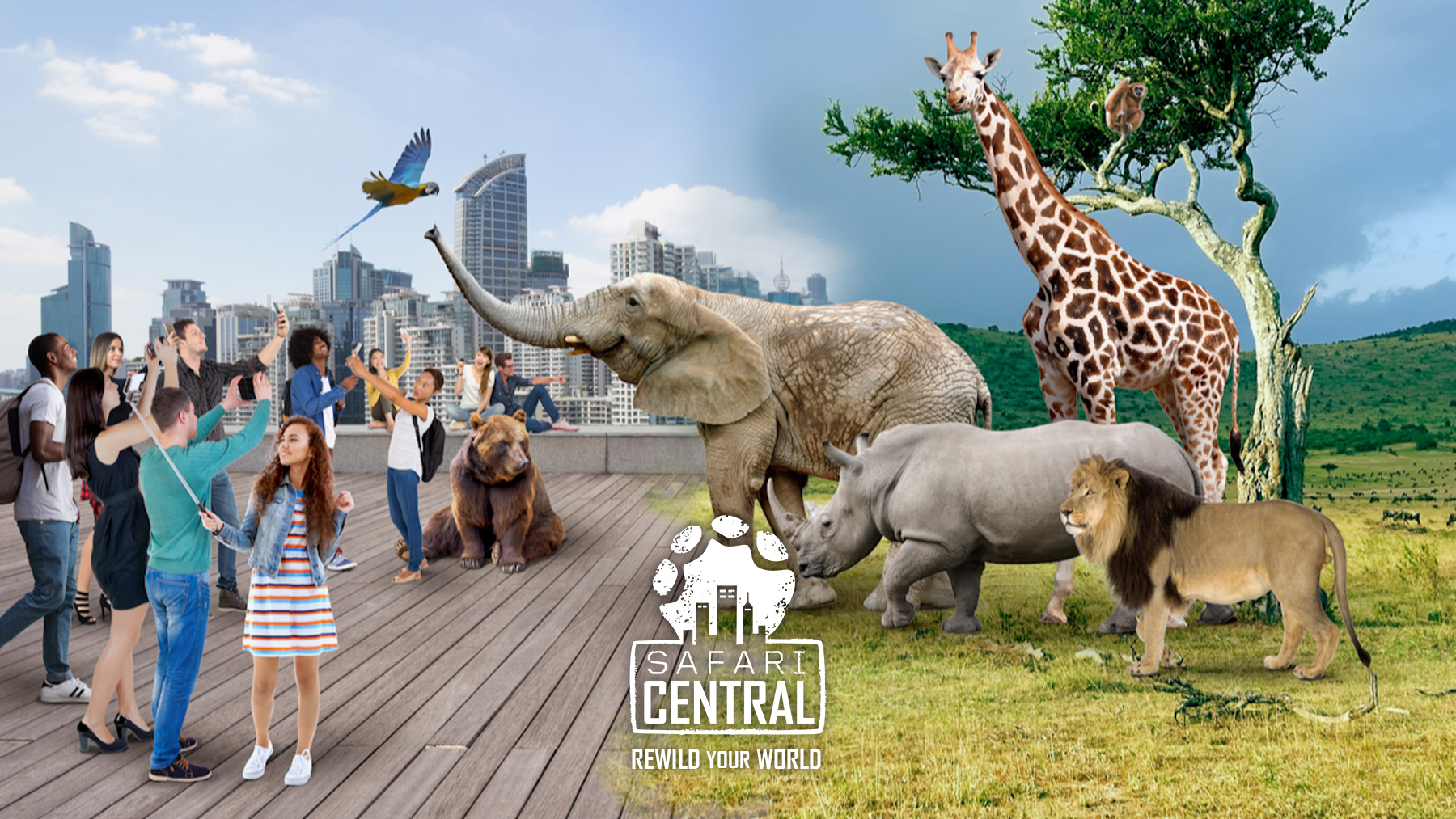
Bridging the gap between an urban population and the wildlife we love.IOE_crowdfunding1_web_16-9-with-logo-C
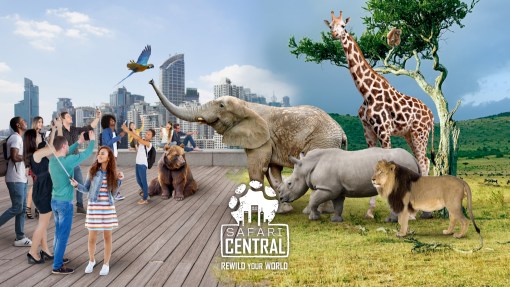
The world continues to urbanise. According to the Population Reference Bureau, the developed nations of the world are 74% urban, and it is expected that by 2050, 70% of the entire world will be ‘urban’. Besides all the other consequences, people’s connection to nature will become more and more distant. With more people living in concrete jungles, a faster pace of life and a barrage of things competing for their attention, we cannot expect that nature, wildlife protection, ocean sustainability, et cetera will be high on the list of their priorities. Other than when the most sensational of news stories are released, how many of them will even think about wildlife, let alone take any personal steps that would make a difference to its survival?

If these are the people who define consumer behaviour and impact policy decisions, they are the ones who will also unwittingly drive the wildlife-conservation agenda. The conservation sector must therefore make a more concerted effort to connect with city dwellers and to do so, understand the motivations and desires of the greater public.

The good news is that despite the grander evidence against it, people do love animals. As children, we are surrounded by animals. Many of our favourite books, movies, clothes, and toys are associated with animals. Even as adults, 163 million of us have watched a video of a panda clinging to its caretaker, 100 million of us went to see Jungle Book, and 700 million more of us visited zoos last year. Marketers play into our love of animals and use the sympathetic or iconic nature of animals on a massive scale in advertising and branding.

If you threw practicality out the window, the most impactful thing you could do to convert that love of animals into a love of conservation would be to airlift those hundreds of millions of people into the Amazon, Serengeti, or Alaskan wilderness for a week. While the experience wouldn’t make all of them conservationists, it would certainly change the way they thought about the importance of nature.

Given this impossibility, the next best thing is to bring nature to them and entice them to explore more within their own means. Shows like BBC Planet Earth or Wild Kratts do a fantastic job of revealing the awesomeness of nature in a way that most everyone appreciates.

But TV shows are still a passive experience where the viewer takes in what he/she is being shown.

Our work at Internet of Elephants is to supplement this type of programming with games about wildlife that can actively be played every day. Our goal is to get people to think about wildlife for five minutes every day and convert the urban world into wildlife addicts. Read the rest of this entry »


Paying to stop degrading

28 07 2017

green baby bathwaterWe conservationists don’t get a lot of good news these days, and even when we do, I am reminded of the (slightly modified) expression: one step forward, but ten steps backward. It’s enough to lead to depression.

Still, we soldier on, and now there are more and more philosophically positive events and venues for ‘optimistic’ conservation stories. Indeed, some of them have even appeared here on ConservationBytes.com (mainly from Claire Wordley‘s excellent string of posts from Conservation Evidence — see here, here, here, here), as well as the much-publicised Conservation Optimism Summit and its American version, Earth Optimism.

A decade or so ago, payment for ecosystem services was all the rage. The idea was simple — pay people to conserve forests and other intact habitats instead of cutting them down for timber or to grow food. However, as the years passed, these types of programmes — which were often funded (or intended to be funded) through carbon-sequestration schemes) — showed little capacity to prevent deforestation at a landscape scale. Many people have therefore binned the entire idea as a result. Read the rest of this entry »


Two new postdoctoral positions in ecological network & vegetation modelling announced

21 07 2017

19420366_123493528240028_621031473222812853_n

With the official start of the new ARC Centre of Excellence for Australian Biodiversity and Heritage (CABAH) in July, I am pleased to announce two new CABAH-funded postdoctoral positions (a.k.a. Research Associates) in my global ecology lab at Flinders University in Adelaide (Flinders Modelling Node).

One of these positions is a little different, and represents something of an experiment. The Research Associate in Palaeo-Vegetation Modelling is being restricted to women candidates; in other words, we’re only accepting applications from women for this one. In a quest to improve the gender balance in my lab and in universities in general, this is a step in the right direction.

The project itself is not overly prescribed, but we would like something along the following lines of inquiry: Read the rest of this entry »


Journal ranks 2016

14 07 2017

Many books

Last year we wrote a bibliometric paper describing a new way to rank journals, which I contend is a fairer representation of relative citation-based rankings by combining existing ones (e.g., ISI, Google Scholar and Scopus) into a composite rank. So, here are the 2016 ranks for (i) 93 ecology, conservation and multidisciplinary journals, and a subset of (ii) 46 ecology journals, (iii) 21 conservation journals, just as I have done in previous years (201520142013, 2012, 20112010, 2009, 2008).

Read the rest of this entry »


Human population growth, refugees & environmental degradation

7 07 2017

refugeesThe global human population is now over 7.5 billion, and increasing by about 90 million each year. This means that we are predicted to exceed 9 billion people by 2050, with no peak in site this century and a world population of up to 12 billion by 2100. These staggering numbers are the result of being within the exponential phase of population growth since last century, such that some 14% of all human beings that have ever lived on the planet are still alive today. That is taking into account about the past 200,000 years, or 10,000 generations.

Of course just like the Earth’s resources, human beings are not distributed equally around the globe, nor are the population trends consistent among regions or nations. In fact, developing nations are contributing to the bulk of the global annual increase (around 89 million per year), whereas developed nations are contributing a growth of only about 1 million each year. Another demonstration of the disparity in human population distributon is that about half of all human beings live in just seven countries (China, India, USA, Indonesia, Brazil, Pakistan, Nigeria, and Bangladesh), representing just one quarter of the world’s total land area. Read the rest of this entry »


How to respond to reviewers

30 06 2017

Just like there are many styles to writing scientific manuscripts, there are also many ways to respond to a set of criticisms and suggestions from reviewers. Likewise, many people and organisations have compiled lists of what to do, and what not to do, in a response to reviews of your manuscript (just type ‘response to reviewer comments’ or similar phrase into your favourite search engine and behold the reams of available advice).

what

It clearly is a personal choice, but from my own experience as an author, reviewer, editor, and the myriad suggestions available online, there are a few golden rules about how to respond:

  • After you have calmed down a little, it is essential that you remain polite throughout the process. Irrespective of how stupid, unfair, mean-spirited, or just plain lazy the reviewers might appear to you, do not stoop to their level and fire back with defensive, snarky comments. Neither must you ever blame the editor for even the worst types of reviews, because you will do yourself no favours at all by offending the main person who will decide your manuscript’s fate.

Read the rest of this entry »


Keeping lions from livestock — building fences can save lives

23 06 2017

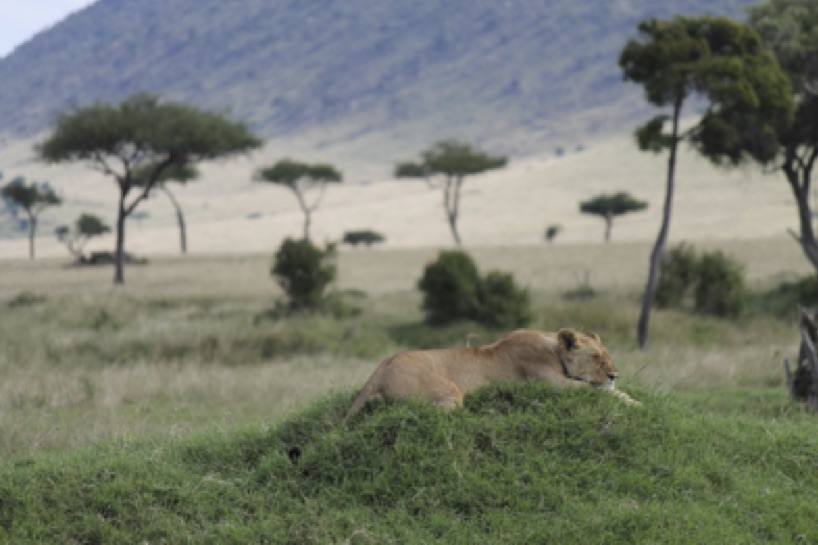
Seeing majestic lions strolling along the Maasai Mara at sunset — a dream vision for many conservationists, but a nightmare for pastoralists trying to keep their cattle safe at night. Fortunately a conservation success story from Kenya, published today in the journal Conservation Evidence, shows that predation of cattle can be reduced by almost 75% by constructing chain-link livestock fences.

The Anne K. Taylor Fund (AKTF) subsidises over 70% of the cost of building a fully fortified chain-link livestock enclosure (‘boma’) to keep cattle safe from predators at night, in the hope that this will lessen the retaliatory killings of lions by frustrated farmers. While lions, leopards and cheetahs draw in crowds of tourists who marvel at their strength and beauty, living alongside big predators can be tough. Traditionally, local people keep their animals overnight in bomas made of acacia thorns — but depredation by lions and other large carnivores cause losses of on average more than nine head of cattle per year, or US$1870 that farmers see disappear down the throat of big, hairy animals. Building a solid fortification of chain-link fence costs just $890, of which the AKTF paid $638, helping to make this an affordable option for hard-pressed locals. Read the rest of this entry »


Protecting one of the world’s marine wonders

17 06 2017
IMG_6789

© CJA Bradshaw

While I’m in transit (yet a-bloody-gain) to Helsinki, I wanted to take this opportunity to reflect on one of the most inspiring eco-tourism experiences I recently had in South Australia.

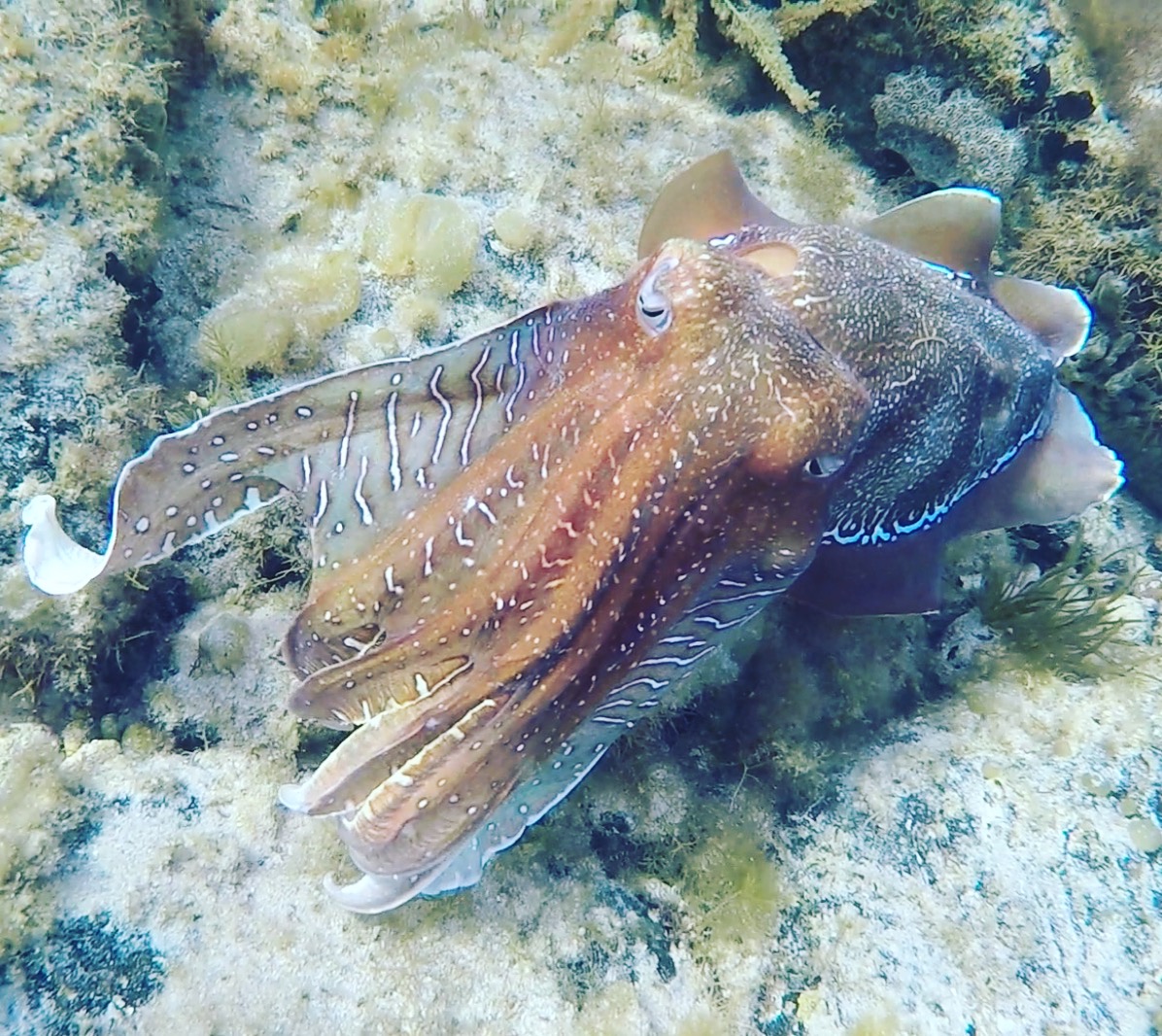
If you are South Australian and have even the slightest interest in wildlife, you will have of course at least heard of the awe-inspiring mass breeding aggregation of giant cuttlefish (Sepia apama) that occur in May-July every year in upper Spencer Gulf near the small town of Whyalla. If you have been lucky enough to go there and see these amazing creatures themselves, then you know exactly what I’m talking about. And if you haven’t yet been there, take it from me that it is so very much worth it to attempt the voyage.

DCIM100GOPROGOPR0121.

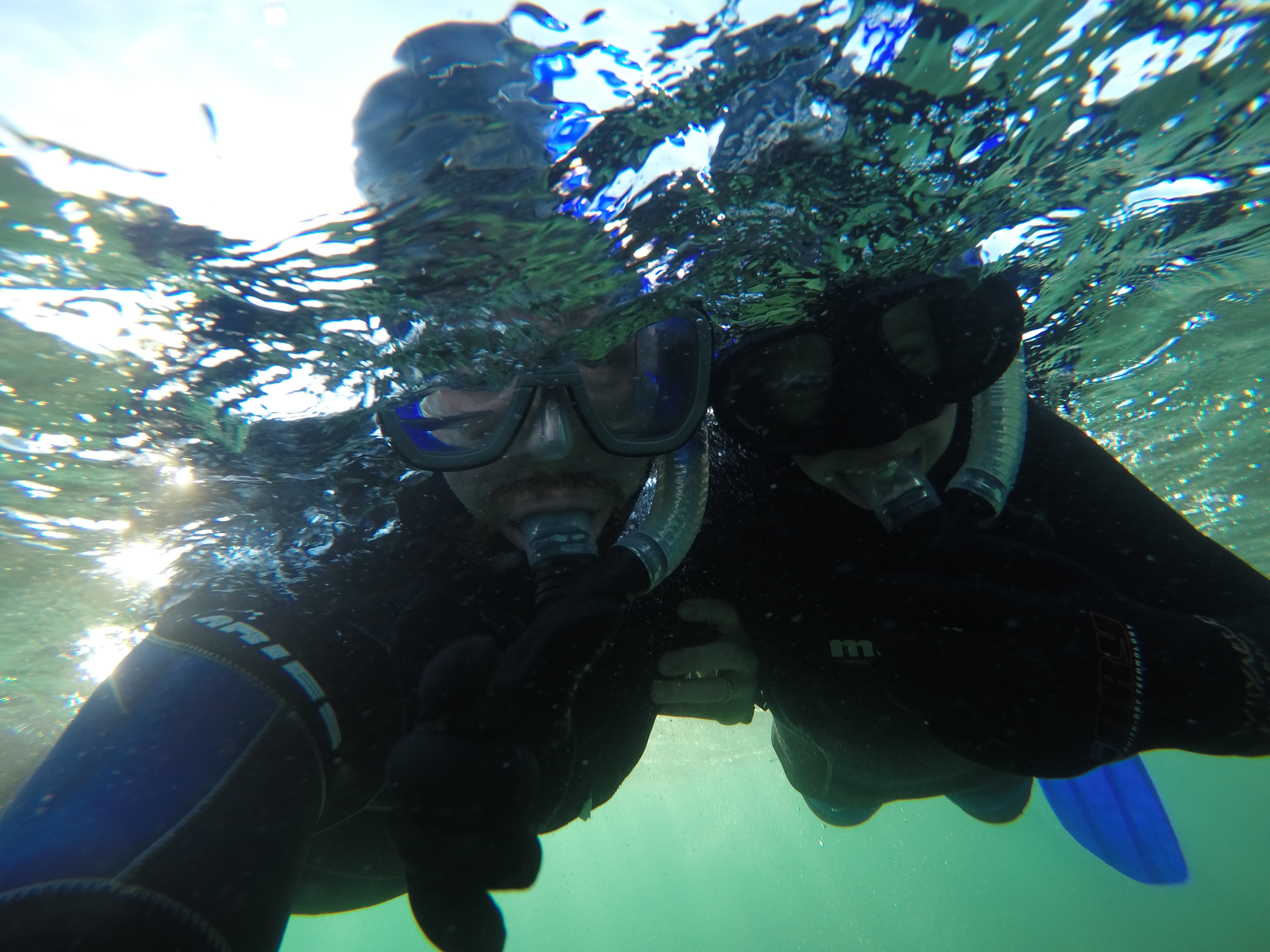
Father-daughter giant-cuttlefish-snorkelling selfie. © CJA Bradshaw

Despite having lived in South Australia for nearly a decade now, I only got my chance to see these wonderful creatures when a father at my daughter’s school organised a school trip. After driving for five hours from Adelaide to Whyalla, we hired our snorkelling gear and got into the water the very next morning. Read the rest of this entry »


Dangers of the global road-building tsunami

8 06 2017

New roads can be treacherous — even fatal — for wildlife, native forests, and the global environment.

If you don’t believe this, just watch this two-minute video, “Why Roads Are So Dangerous

New roads can also be surprisingly risky for human economies and societies, as shown in this brief video, “Why Roads are Like Pandora’s Box”.

Read the rest of this entry »


It’s not all about temperature for corals

31 05 2017

CB_ClimateChange6_Photo

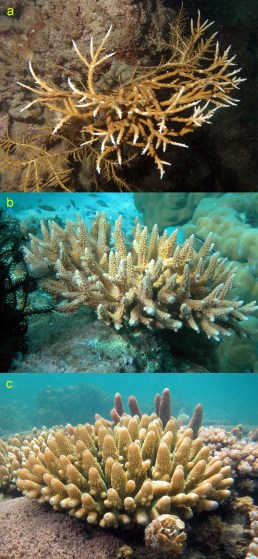
Three of the coral species studied by Muir (2): (a) Acropora pichoni: Pohnpei Island, Pacific Ocean — deep-water species/IUCN ‘Near threatened’; (b) Acropora divaricate: Maldives, Indian ocean — mid-water species/IUCN ‘Near threatened’; and (c) Acropora gemmifera: Orpheus Island, Australia — shallow-water species/IUCN ‘Least Concern’. The IUCN states that the 3 species are vulnerable to climate change (acidification, temperature extremes) and demographic booms of the invading predator, the crown-of-thorns starfish Acanthaster planci. Photos courtesy of Paul Muir.

Global warming of the atmosphere and the oceans is modifying the distribution of many plants and animals. However, marine species are bound to face non-thermal barriers that might preclude their dispersal over wide stretches of the sea. Sunlight is one of those invisible obstacles for corals from the Indian and Pacific Oceans.

If we were offered a sumptuous job overseas, our professional success in an unknown place could be limited by factors like cultural or linguistic differences that have nothing to do with our work experience or expertise. If we translate this situation into biodiversity terms, one of the best-documented effects of global warming is the gradual dispersal of species tracking their native temperatures from the tropics to the poles (1). However, as dispersal progresses, many species encounter environmental barriers that are not physical (e.g., a high mountain or a wide river), and whose magnitude could be unrelated to ambient temperatures. Such invisible obstacles can prevent the establishment of pioneer populations away from the source.

Corals are ideal organisms to study this phenomenon because their life cycle is tightly geared to multiple environmental drivers (see ReefBase: Global Information System for Coral Reefs). Indeed, the growth of a coral’s exoskeleton relies on symbiotic zooxanthellae (see video and presentation), a kind of microscopic algae (Dinoflagellata) whose photosynthetic activity is regulated by sea temperature, photoperiod and dissolved calcium in the form of aragonite, among other factors.

Read the rest of this entry »


Cartoon guide to biodiversity loss XLII

25 05 2017

My travel is finishing for now, but while in transit I’m obliged to do another instalment of biodiversity cartoons (and the second for 2017). See full stock of previous ‘Cartoon guide to biodiversity loss’ compendia here.

Read the rest of this entry »


Spring asynchrony in migratory birds

15 05 2017
CB_ClimateChange5_BirdLateMigratoryArrival_Photo

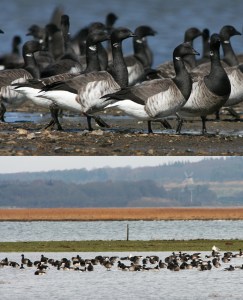
Brent geese flock in the Limfjorden (Denmark)courtesy of Kevin Clausen. The Brent goose (Branta bernicla) is a migratory goose that breeds in Arctic coasts, as well as in northern Eurasia and the Americas, starting from late May to early June. Adults are about 0.5 m long, weigh some 2 kg and live up to 30 years. Their nests are placed in the ground, where reproductive pairs incubate a single clutch (≤ 5 eggs) for a couple of months. They are herbivores, feeding on algae (mainly Zostera marina in Limfjord) and seagrass in estuaries, fjords, intertidal areas and rocky beaches during fall and winter. During summer they feed on tundra herbs, moss, lichens, as well as aquatic plants in rivers and lakes. The species is ‘Least Concern’ for the IUCN, with a global population at some 600,000 individuals.

Migratory birds synchronise their travel from non-breeding to breeding quarters with the seasonal conditions optimal for reproduction. Above all, they decide when to migrate on the basis of the climate of their wintering areas while they are there. As climate change involves earlier springs in the Arctic but not in the wintering areas, there is a lack of synchronisation that leads to a demographic decline of these birds in the polar regions where they breed.

When I think about how species respond to climate change, the song from the ClashShould I stay or should I go” comes to mind. As climate changes, species eventually have to face an ultimate choice: (i) stay and adapt to novel conditions or become locally extinct if adaptation fails, (ii) or move to other regions where climatic conditions should be more suitable. Migratory species have to face this decision every time they have to move back and forth from non-breeding to breeding grounds.

Migration is a behavioural strategy shared by different animal groups like sea turtles, mammals, amphibians, insects or birds. Species move from one area to another usually to feed and reproduce in the best climatic conditions possible. For birds, migration is a common phenomenon that typically entails large movements between breeding and wintering grounds. These vertebrates boast some of the longest migratory distances known in the animal kingdom, particularly seabirds like Artic terns, which can complete up to a round-world trip in a single migratory event between the UK and the Antarctic (1). There are several theories about the mechanisms triggering bird migration, including improving body condition and fitness through unexploited resources (2), reducing parasite load (3), minimizing predation risk (4), maximizing day-light (5), or reducing competition (6, 7). Whatever the cause, birds have to decide when the best moment to migrate is, counting only with the (usually climatic) clues they have at the departure site. Read the rest of this entry »


Cartoon guide to biodiversity loss XLI

26 04 2017

Number 41 of my semi-regular instalment of biodiversity cartoons, and the first for 2017. See full stock of previous ‘Cartoon guide to biodiversity loss’ compendia here.

Read the rest of this entry »