I used to think it was merely a post-COVID19 hiccough, but the extensive delays in receiving reviews for submitted manuscripts that I am seeing near constantly now are the symptoms of a much larger problem. That problem is, in a nutshell, how awfully journals are treating both authors and reviewers these days.
I regularly hear stories from editors handling my papers, as well as accounts from colleagues, about the ridiculous number of review requests they send with no response. It isn’t uncommon to hear that editors ask more than 50 people for a review (yes, you read that correctly), to no avail. Even when the submitting authors provide a list of potential reviewers, it doesn’t seem to help.
The ensuing delays in time to publication are really starting to hurt people, and the most common victims are early career researchers needing to build up their publication track records to secure grants and jobs. And the underhanded, dickhead tactic to reset the submission clock by calling a ‘major review’ a ‘rejection with opportunity to resubmit’ doesn’t fucking fool anyone. The ‘average time from submission to publication’ claimed by most journals is a boldface lie because of their surreptitious manipulation of handling statistics.
The most obese pachyderm in the room is, of course, the extortionary prices (and it is nothing short of extortion) charged for publishing in most academic journals these days. For example, I had to spend more than AU$17,000.00 to publish a single open-access paper in Nature Geoscience last year. That was just for one paper. Never again.
Anyone with even a vestigial understanding of economics feels utterly exploited when asked to review a paper for nothing. As far as I am aware, there isn’t a reputable journal out there that pays for peer reviews. As a whole, academics are up-to-fucking-here with this arrangement, so it should come as no surprise that editors are struggling to find reviewers.
Yes, it’s bad, especially for US-based scientists. It also affects scientists in Australia and the rest of the world. But there are ways to get around the problem. There might even be a silver lining to this dark cloud.
Trump cannot stop global climate action, although he might slow it. Nor can he hide the truth by restricting access to data. Climate research will continue despite Trump’s best efforts to hamstring scientists and research institutions.
No strength in ignorance
Last year was the warmest on record, a fact that yet again confirms our worst-case predictions. The world has already surpassed the (arbitrary) 1.5°C threshold increase relative to pre-industrial temperatures — a threshold that only a few years ago we didn’t think we would cross until 2030 at the earliest.
We’re now on track to be living in a world that’s 3°C hotter or more by the end of the century.
But ignoring climate change won’t make it go away. Like the Ministry of Truth in George Orwell’s classic dystopian novel, 1984, Trump seems to believe “ignorance is strength”. He’s trying to erase facts about the climate crisis, perhaps to keep people ignorant and subdued.
What this means for Australian climate science
Many Australian scientists (including me) collaborate regularly with US colleagues, share funding, and publish results together. Knowledge sharing and open-access data are the foundation of advances in science, so Trump’s assault will inevitably slow progress here.
For example, Australian and US scientists regularly collaborate in big-ticket research and policy development related to climate change, such as the Intergovernmental Panel on Climate Change’s Physical Science Basis reports. But even with fewer US scientists in the mix, the research and reporting will continue.
Other reputable climate-data repositories around the world include the European Union’s Climate Data Store, the University of East Anglia’s Climate Research Unit, the Netherlands Meteorological Institute’s Climate Explorer, and the independent WorldClim, to name a few.
While restricting access to US-based websites is inconvenient, we can readily get around the problem. Many of my colleagues have also been downloading data prior to the purge mandate to maintain access.
Consequences for the US
Over the past month I have been inundated with horror stories from many US-based colleagues in academia and the public service, who have lost their jobs and/or research funding. In addition to these very real personal tragedies, the bigger picture is even bleaker.
The loss of scientific and technical expertise these mass sackings entail weakens the capability of the US workforce to discover and develop solutions to climate change. Just when we need good scientific and engineering innovations more than ever, a massive capacity is being erased before our eyes.
More emissions mean more climate change, especially when you’re already one of the biggest contributors to the global problem. The US is the second-highest greenhouse emitter in the world, behind only China.
On his first day as president, Trump withdrew the US from the Paris climate agreement. This effectively removes his country from all binding limits on actions that contribute to climate change.
Weakening international treaties is a two-edged sword, because it not only lets the US off the leash, it also potentially discourages other nations from acting responsibly. Analogous to the “unresponsive bystander effect”, many nations may now be more hesitant to commit to reductions because one of the biggest emitters refuses to do anything about it.
Trump has also slashed US international aid, which will slow climate action in countries that need the most assistance.
Overall, faster rates of warming will inevitably put more strain on natural resources and agricultural production. This could increase the probability of international warfare over water, food and other essential natural resources. Because autocratic countries cope worse with food shortages than democratic ones, climate emergencies will penalise nations led by despots more heavily.
Trump’s foolhardy anti-climate campaign is enough to make many people despair. But there are a few faint glimmers of hope on the horizon.
As the US shirks its domestic and international responsibilities, other countries might resolve to do more. Not relying on the US could force capacity-building elsewhere. Some even suggest without the US at the table slowing progress, stronger climate action might result.
Americans have their own daunting fight on their hands. But the rest of the world will have to take up the slack if we have any chance of limiting the health, wealth, equality, human rights and biodiversity calamities now unfolding because of climate change.
Corey J. A. Bradshaw, Matthew Flinders Professor of Global Ecology and Node Leader in the ARC Centre of Excellence for Indigenous and Environmental Histories and Futures, Flinders University
This is a fixed-term position for up to 3 years, and we are especially targeting Indigenous candidates.
The successful candidate will use existing code and develop new approaches to analyse complex data derived from lake, lagoon, river, and wetland cores measuring various aspects of dated vegetation composition, fire regime, and climate fluctuation. Additionally, the successful candidate will design simulation models to evaluate how different proxies behave under various environmental conditions, aiding in the interpretation of outputs from time-series models.
As a position under CIEHF, the position requires co-designing projects with Indigenous Partner Organisations, as well as extensive travel to the other Nodes within CIEHF to collaborate with palaeo-ecologists, climatologists, archaeologists, and other relevant specialists.
For more information and details on the application process, visit this link.
The internet has become an informational telescope to study what happens nearly everywhere the planet. Using internet observations, it has been recently documented that terrestrial hermit crabs use plastic waste as shelter along tropical coasts.
Before the internet irrupted, I was living in Spain and frequently travelled from my hometown to universities in Valencia and Barcelona to access scientific journals. Back then, these journals were only available in print or on compact discs. Today, I can do the same thing from home with an internet connection.
The emergence of public internet since the 1990s has globalised information and represents a data source for many areas of science (1, 2). When applied to nature, the term iEcology (internet Ecology) refers to the use of online documentation to study the natural history of plants and animals, their distributions, and the effects of humans on them (3). In fact, the internet highlights and promotes certain research topics. For example, bird species that are more frequently mentioned on social networks tend to be described taxonomically earlier, and are also the ones that interact most (positively or negatively) with human activity (4).
In search of the phenomenon
By exploring internet platforms Alamy, Flickr, Google, YouTube, and iNaturalist, Zuzanna Jagiello and her collaborators collected nearly 30 thousand photographs of hermit crabs to study the use of rubbish by these crustaceans (5). Hermit crabs are known for their peculiar habit of using empty snail shells to house their unprotected abdomens, carrying them around like someone travelling with their house on their back (6) — David Attenborough narrates here a funny swapping of shells among crabs of different size. The researchers aimed to assess the extent of the phenomenon of hermit crabs replacing natural shells with artificial materials as mobile homes (see video capturing the scene).
Imagine growing up beside the eastern Mediterranean Sea 14,000 years ago. You’re an accomplished sailor of the small watercraft you and your fellow villagers make, and you live off both the sea and the land.
But times have been difficult — there just isn’t the same amount of game or fish around as when you were a child. Maybe it’s time to look elsewhere for food.
Now imagine going farther than ever before in your little boat, accompanied maybe by a few others, when suddenly you spot something on the horizon. Is that an island?
The western coast of Cyprus. CJA Bradshaw / Flinders University
When you beach your boat to have a look around, you can’t believe what you’re seeing — tiny boar-sized hippos and horse-sized elephants that look like babies to your eyes. There are so many of them, and you’re hungry after the long journey.
The diminutive beasts don’t seem to show any fear. You easily kill a few and preserve the meat as best you can for the long journey back.
When you get home, you are excited to let everyone in the village know what you’ve found. Soon enough, you organise a major expedition back to the island.
Of course, we’ll never know if this kind of scenario took place, but it’s a plausible story of how and when the first humans managed to get to Cyprus. It also illustrates how they might have quickly brought about the demise of the tiny hippopotamusPhanourios minor, as well as the dwarf elephantPalaeoloxodon cypriotes.
In light of new genetic research on the identity of ‘wild dogs’ and dingoes across Australia, the undersigned wish to express concern with current South Australia Government policy regarding the management and conservation of dingoes. Advanced DNA research on dingoes has demonstrated that dingo-dog hybridisation is much less common than thought, that most DNA tested dingoes had little domestic dog ancestry and that previous DNA testing incorrectly identified many dingoes as hybrids (Cairns et al. 2023). We have serious concerns about the threat current South Australian public policy poses to the survival of the ‘Big Desert’ dingo population found in Ngarkat Conservation Park and surrounding areas.
We urge the South Australian Government to:
Revoke the requirement that all landholders follow minimum baiting standards, including organic producers or those not experiencing stock predation. Specifically
Dingoes in Ngarkat Conservation park (Region 4) should not be destroyed or subjected to ground baiting and trapping every 3 months. The Ngarkat dingo population is a unique and isolated lineage of dingo that is threatened by inbreeding and low genetic diversity. Dingoes are a native species and all native species should be protected inside national parks and conservation areas.
Landholders should not be required to carry out ground baiting on land if there is no livestock predation occurring. Furthermore, landholders should be supported to adopt non-lethal tools and strategies to mitigate the risk of livestock predation including the use of livestock guardian animals, which are generally incompatible with ground and aerial 1080 baiting.
Revoke permission for aerial baiting of dingoes (incorrectly called “wild dogs”) in all Natural Resource Management regions – including within national parks. Native animals should be protected in national parks and conservation areas.
Cease the use of inappropriate and misleading language to label dingoes as “wild dogs”. Continued use of the term “wild dogs” is not culturally respectful to First Nations peoples and is not evidence-based.
Proactively engage with First Nations peoples regarding the management of culturally significant species like dingoes. For example, the Wotjobaluk nation should be included in consultation regarding the management of dingoes in Ngarkat Conservation Park.
Changes in South Australia public policy are justified based on genetic research by Cairns et al. (2023) that overturns previous misconceptions about the genetic status of dingoes. It demonstrates:
Most “wild dogs” DNA tested in arid and remote parts of Australia were dingoes with no evidence of dog ancestry. There is strong evidence that dingo-dog hybridisation is uncommon, with firstcross dingo-dog hybrids and feral dogs rarely being observed in the wild. In Ngarkat Conservation park none of DNA tested animals had evidence of domestic dog ancestry, all were ‘pure’ dingoes.
Previous DNA testing methods misidentified pure dingoes as being mixed. All previous genetic surveys of wild dingo populations used a limited 23-marker DNA test. This is the method currently used by NSW Department of Primary Industries, which DNA tests samples from NSW Local Land Services, National Parks and Wildlife Service, and other state government agencies. Comparisons of DNA testing methods find that the 23-marker DNA test frequently misidentified animals as dingo-dog hybrids. Existing knowledge of dingo ancestry across South Australia, particularly from Ngarkat Conservation park is incorrect; policy needs to be based on updated genetic surveys.
There are multiple dingo populations in Australia. High-density genomic data identified more than four wild dingo populations in Australia. In South Australia there are at least two dingo populations present: West and Big Desert. The West dingo population was observed in northern South Australia, but also extends south of the dingo fence. The Big Desert population extends from Ngarkat Conservation park in South Australia into the Big Desert and Wyperfield region of Victoria.
The Ngarkat Dingo population is threatened by low genetic variability. Preliminary evidence from high density genomic testing of dingoes in Ngarkat Conservation park and extending into western Victoria found evidence of limited genetic variability which is a serious conservation concern. Dingoes in Ngarkat and western Victoria had extremely low genetic variability and no evidence of gene flow with other dingo populations, demonstrating their effective isolation. This evidence suggests that the Ngarkat (and western Victorian) dingo population is threatened by inbreeding and genetic isolation. Continued culling of the Ngarkat dingo population will exacerbate the low genetic variability and threatens the persistence of this population.
We are currently seeking a Research Fellow in Eco-epidemiology/Human Ecology to join our team at Flinders University.
The successful candidate will develop spatial eco-epidemiological models for the populations of Indigenous Australians exposed to novel diseases upon contact with the first European settlers in the 18th Century. The candidate will focus on:
developing code to model how various diseases spread through and modified the demography of the Indigenous population after first contact with Europeans;
contributing to the research project by working collaboratively with the research team to deliver key project milestones;
independently contributing to ethical, high-quality, and innovative research and evaluation through activities such as scholarship, publishing in recognised, high-quality journals and assisting the preparation and submission of bids for external research funding; and
supervising of Honours and postgraduate research projects.
The ideal candidate will have advanced capacity to develop eco-epidemiological models that expand on the extensive human demographic models already developed under the auspices of the Australian Research Council Centre of Excellence for Australian Biodiversity and Heritage, of which Flinders is the Modelling Node. To be successful in this role, the candidate will demonstrate experience in coding advanced spatial models including demography, epidemiology, and ecology. The successful candidate will also demonstrate:
Each organism has a limit of tolerance to cold and hot temperatures. So, the closer it lives to those limits, the higher the chances of experiencing thermal stress and potentially dying. In our recent paper, we revise gaps in the knowledge of tolerance to high temperatures in cold-blooded animals (ectotherms), a diverse group mostly including amphibians and reptiles (> 16,000 species), fish (> 34,000 species), and invertebrates (> 1,200,000 species).
As a scientist, little is more self-realising than to write and publish a conceptual paper that frames the findings of your own previous applied-research papers. This is the case with an opinion piece we have just published in Basic and Applied Ecology1 — 10 years, 4 research papers2-5 [see related blog posts here, here, here and here], and 1 popular-science article6 after I joined the Department of Biogeography and Global Change (Spanish National Research Council) to study the thermal physiology of Iberian lizards under the supervision of Miguel Araújo and David Vieites.
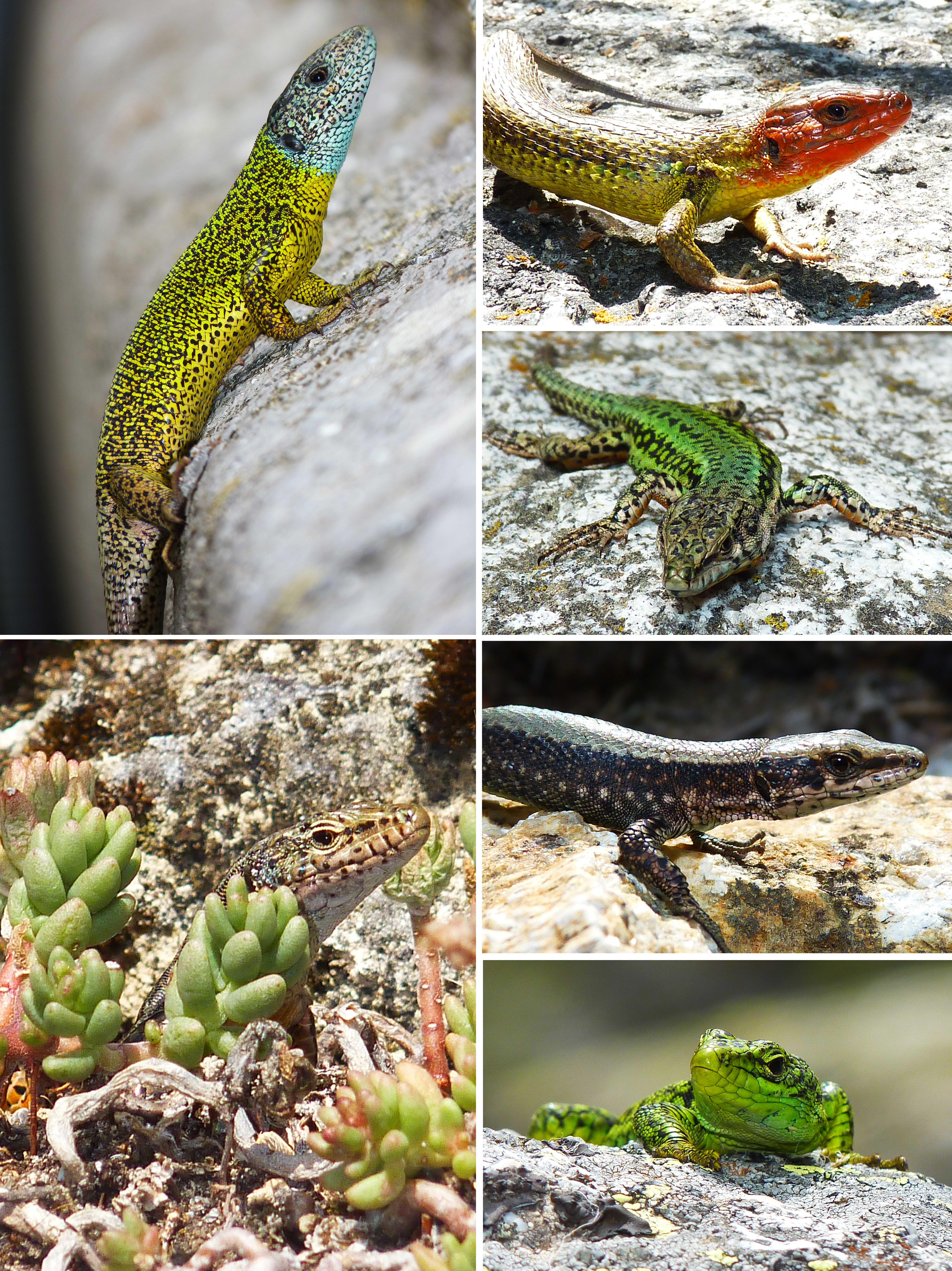
Iberian lizards for which heat tolerance is known (varying from 40 to 45 °C)
[left, top to bottom] Iberian emerald lizard (Lacerta schreiberi, from Alameda del Valle/Madrid) and Geniez’s wall lizard (Podarcis virescens, Fuertescusa/Cuenca), and [right, top to bottom] Algerian sand racer (Psammodromus algirus, Navacerrada/Madrid), Andalusian wall lizard (Podarcis vaucheri, La Barrosa/Cádiz), Valverde’s lizard (Algyroides marchi, Riópar/Albacete), and Cyren’s rock lizard (Iberolacerta cyreni, Valdesquí/Madrid). Heat-tolerance data deposited here and used to evaluate instraspecific variation of heat tolerance3,4. Photos: Salvador Herrando-Pérez.
In our new paper, we examine how much we know and what areas of research require further development to advance our understanding of how and why the tolerance of ectotherm fauna to high environmental temperature (‘heat tolerance’ hereafter) varies within and across the Earth’s biomes. We focus on data gaps using the global database GlobTherm as a reference template (see Box 1 below).
Our three main tenets
1. Population versus species data: Most large-scale ecophysiological research is based on modelling one measurement of heat tolerance per species (typically representing one population and/or physiological assay) over hundreds to thousands of species covering broad geographical, phylogenetic, and climatic gradients.
But there is ample evidence that heat tolerance changes a lot among populations occupying different areas of the distribution of a species, and such variation must be taken into account to improve our predictions of how species might respond to environmental change and face extinction.
Following my annual tradition, I present the retrospective list of the ‘top’ 20 influential papers of 2022 as assessed by experts in Faculty Opinions(formerly known as F1000). These are in no particular order. See previous years’ lists here: 2021, 2020, 2019, 2018, 2017, 2016, 2015, 2014, and 2013.
Climate change is one of the main drivers of species loss globally. We know more plants and animals will die as heatwaves, bushfires, droughts and other natural disasters worsen.
But to date, science has vastly underestimated the true toll climate change and habitat destruction will have on biodiversity. That’s because it has largely neglected to consider the extent of “co-extinctions”: when species go extinct because other species on which they depend die out.
Our new research shows 10% of land animals could disappear from particular geographic areas by 2050, and almost 30% by 2100. This is more than double previous predictions. It means children born today who live to their 70s will witness literally thousands of animals disappear in their lifetime, from lizards and frogs to iconic mammals such as elephants and koalas.
But if we manage to dramatically reduce carbon emissions globally, we could save thousands of species from local extinction this century alone.
Ravages of drought will only worsen in coming decades. CJA Bradshaw
An extinction crisis unfolding
Every species depends on others in some way. So when a species dies out, the repercussions can ripple through an ecosystem.
For example, consider what happens when a species goes extinct due to a disturbance such as habitat loss. This is known as a “primary” extinction. It can then mean a predator loses its prey, a parasite loses its host or a flowering plant loses its pollinators.
A real-life example of a co-extinction that could occur soon is the potential loss of the critically endangered mountain pygmy possum (Burramys parvus) in Australia. Drought, habitat loss, and other pressures have caused the rapid decline of its primary prey, the bogong moth (Agrotis infusa).
My definition of a ‘lab’ is simply a group of people who do the science in question — and people are a varied bunch, indeed. But I wager that most scientists would not necessarily give much dedicated thought to the diversity of the people in their lab, and instead probably focus more on obtaining the most qualified and cleverest people for the jobs that need doing.
For example, I have yet to meet an overtly racist, sexist, or homophobic scientist involved actively in research today (although unfortunately, I am sure some do still exist), so I doubt that lab heads consciously avoid certain types of people when hiring or taking on new students as they once did. The problem here is not that scientists tend to exclude certain types of people deliberately based on negative stereotypes; rather, it concerns more the subconscious biases that might lurk within, and about which unfortunately most of us are blissfully unaware. But all scientists must be aware of, and seek to address, their hidden biases.
It is time to place my cards on the table: I am a middle-aged, Caucasian, male scientist who has lived in socially inclusive and economically fortunate countries his entire life. As such, I am the quintessential golden child of scientific opportunity, and I am therefore also one of the biggest impediments to human diversity in science. I am not able to change my status per se; however, I can change how I perceive, acknowledge, and act to address my biases.
The earlier scientists recognise these challenges in their career, the more effective they will be.
I acknowledge that as a man, I am already on thin ice discussing gender inequality in science today, for it is a massive topic that many, far more qualified people are tackling. But being of the male flavour means that I have to, like an alcoholic, admit that I have a problem, and then take steps to resolve that problem. After all, privilege is generally invisible to those who have it. If you are a male scientist reading this now, then my discussion is most pertinent to you. If you are female, then perhaps you can use some of these pointers to educate your male colleagues and students.
There is now ample evidence that science as a discipline is just as biased against women as most other sectors of professional employment, even though things have improved since the bad old days of scientific old-boys’ clubs. Journals tend to appoint more men than women on their editorial boards, and that editors display what is known as homophily when selecting reviewers for manuscripts: the tendency to select reviewers of the same gender as themselves.
Likewise, experimental evidence demonstrates that scientists in general rate male-authored science writing higher than female-authored works, and that academic scientists tend to favour male applicants over females for student positions. In the United Kingdom, as I suspect is more or less the case almost everywhere else, female academics in science, engineering, and mathematics also tend to have more administrative duties, and hence, less time to do research; they also have fewer opportunities for career development and training, as well as earning a lower salary, holding fewer senior roles, and being less likely to be granted permanent positions.
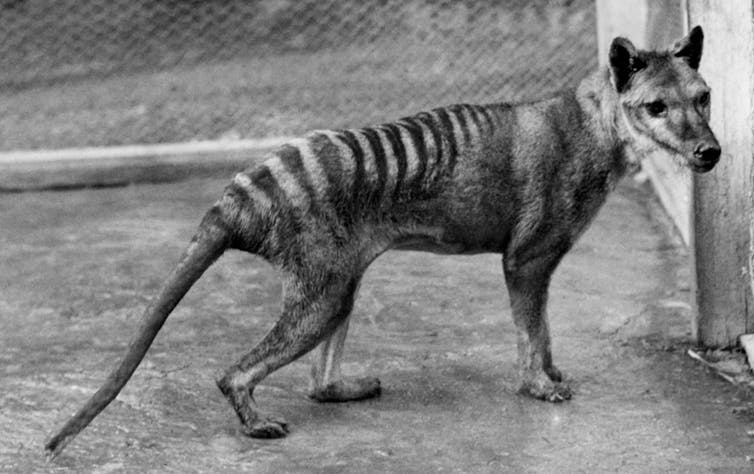
In a newly announced partnership with Texas biotech company Colossal Biosciences, Australian researchers are hoping their dream to bring back the extinct thylacine is a “giant leap” closer to fruition.
Scientists at University of Melbourne’s TIGRR Lab (Thylacine Integrated Genetic Restoration Research) believe the new partnership, which brings Colossal’s expertise in CRISPR gene editing on board, could result in the first baby thylacine within a decade.
The genetic engineering firm made headlines in 2021 with the announcement of an ambitious plan to bring back something akin to the woolly mammoth, by producing elephant-mammoth hybrids or “mammophants”.
But de-extinction, as this type of research is known, is a highly controversial field. It’s often criticised for attempts at “playing God” or drawing attention away from the conservation of living species. So, should we bring back the thylacine? We asked five experts.
As is my tendency, I like to wade carefully into other disciplines from time to time to examine what components they can bring to the conservation table. I do not profess any sort of expertise when I do so, but if I require a true expert for research purposes, then I will collaborate with said experts.
I often say to my students that in many ways, the science of sustainability and conservation is more or less resolved — what we need now is ways to manage the human side of the problems we face. The disciplines that deal with human management, such as psychology, economics, political science, and sociology, are mainly pursuits of the humanities (have I just argued myself out of a job?).
On the topic of human psychology, I think most people involved in some way with biodiversity conservation often contemplate why human societies are so self-destructive. Even in the face of logic and evidence, people deny what’s going on in front of their eyes (think anti-vaxxers, climate-change denialists, etc.), so it should be no wonder why many (most?) people deny their own existential threats. Yet, it still doesn’t seem to make much sense to us until we put the phenomenon into a psychological framework.
My apologies here to actual psychologists if I oversimplify or otherwise make mistakes, but the following explanation has done a lot for me personally in my own journey to understand this conundrum. It is also a good way to teach others about why there is so much reticence to fixing our environmental problems.
The idea is a rather simple one, but it requires a little journey to appreciate. Let’s pop back to the 1970s with the publication of Ernest Becker’s The Denial of Death, for which he won the Pulitzer Prize in 1974 (ironically, two months after his own death). In this book, Becker examined the awareness of death on human behaviour and the strategies that we have developed to mitigate our fear of it. This particular quote sums it up nicely:
This is the terror: to have emerged from nothing, to have a name, consciousness of self, deep inner feelings, and excruciating inner yearning for life and self expression — and with all this yet to die
Ernest Becker in The Denial of Death (1973)
The upshot is that we have evolved a whole raft of coping mechanisms to this personal existential dread. Some engage in overly hedonic pursuits to numb the anxiety; others try to “tranquillise themselves with the trivial”, essentially ignoring the terror, while others still manage the dread through religion and the hope of an existence beyond the mortal.
I seem to end up frequently explaining to students and colleagues that it’s a good idea to spend a good deal of time to make your scientific figures the most informative and attractive possible.
But it’s a fine balance between overly flashy and downright boring. Needless to say, empirical accuracy is paramount.
But why should you care, as long as the necessary information is transferred to the reader? The most important answer to that question is that you are trying to catch the attention of editors, reviewers, and readers alike in a highly competitive sea of information. Sure, if the work is good and the paper well-written, you’ll still garner a readership; however, if you give your readers a bit of visual pleasure in the process, they’re much more likely to (a) remember and (b) cite your paper.
I try to ask myself the following when creating a figure — without unnecessary bells and whistles, would I present this figure in a presentation to a group of colleagues? Would I present it to an audience of non-experts? Would I want this figure to appear in a news article about my work? Of course, all of these venues require differing degrees of accuracy, complexity, and aesthetics, but a good figure should ideally serve to educate across very different audiences simultaneously.
A sub-question worth asking here is whether you think a colleague would use your figure in one of their presentations. Think of the last time you made a presentation and found that perfect figure that brilliantly portrays the point you are trying to get across. That’s the kind of figure you should strive to make in your own research papers.
I therefore tend to spend quite a bit of time crafting my figures, and after years of making mistakes and getting a few things right, and retrospectively discovering which figures appear to garner more attention than others, I can offer some basic advice about the DOs and DON’Ts of figure making. Throughout the following section I provide some examples from my own papers that I think demonstrate some of the concepts.
tables vs. graphs — The very first question you should ask yourself is whether you can turn that boring and ugly table into a graph of some sort. Do you really need that table? Can you not just translate the cell entries into a bar/column/xy plot? If you can, you should. When a table cannot easily be translated into a figure, most of the time it probably belongs in the Supplementary Information anyway.
Now that Clarivate, Google, and Scopus have recently published their respective journal citation scores for 2021, I can now present — for the 14th year running on ConvervationBytes.com — the 2021 conservation/ecology/sustainability journal ranks based on my journal-ranking method.
Like last year, I’ve added a few journals. I’ve also included in the ranking the Journal Citation Indicator (JCI) in addition to the Journal Impact Factor and Immediacy Index from Clarivate ISI, and the CiteScore (CS) in addition to the Source-Normalised Impact Per Paper (SNIP) and SCImago Journal Rank (SJR) from Scopus.
I therefore present the new 2021 ranks for: (i) 106 ecology, conservation and multidisciplinary journals, (ii) 27 open-access (i.e., you have to pay) journals from the previous category, (iii) 64 ‘ecology’ journals, (iv) 32 ‘conservation’ journals, (v) 43 ‘sustainability’ journals (with general and energy-focussed journals included), and (vi) 21 ‘marine & freshwater’ journals.
Remember not to take much notice if a journal boasts about how its Impact Factor has increased this year, because these tend to increase over time anyway What’s important is a journal’s relative (to other journals) rank.
Nearly a decade ago (my how time flies*), I wrote a post about the guaranteed failure of government policies purporting no-extinction targets within their environmental plans. I was referring to the State of South Australia’s (then) official policy of no future extinctions.
In summary, zero- (or no-) extinction targets at best demonstrate a deep naïvety of how ecology works, and at worst, waste a lot of resources on interventions doomed to fail.
4. Climate change will also guarantee additional (perhaps even most) future extinctions irrespective of Australian policies.
I argued that no-extinction policies are therefore disingenuous to the public in the extreme because they sets false expectations, engender disillusionment after inevitable failure, and ignores the concept of triage — putting our environment-restoration resources toward the species/systems with the best chance of surviving (uniqueness notwithstanding).
I’ve been on the Australian Research Council (ARC) College of Experts now for a little over two and a half years. It has been a time-consuming, yet insightful experience. Without attempting to breach all the confidentiality agreements I signed when I joined up, I would like to explain a few of the internal machinations that go on behind the scenes once a grant application is submitted.
Given that academics spend A LOT of (i.e., way too much) time writing research grants, I think it’s essential to understand not only how to maximise your probability of success (see this post for some generic tips), but also how your grant is treated once you submit it. I’ve heard from colleagues (and been responsible for myself) many unhappy gripes about the ARC over time, which appear to have increased over the last five years in particular.
There are certainly some very good reasons to be upset about the research-grant environment in Australia. While I will restrict this post to issues concerning the ARC because that’s what I know best, I gather that many of the same issues plague other national agencies, such as the National Health and Medical Research Council (NHMRC). But to dispel the suspicion that the ARC is just out to make our lives hell, I’m going to provide a list of my experiences on what I think they do exceptionally well. I’m definitely not taking sides here, because after the list of pros, I’ll provide a detailed list of cons and some ways I think the ARC can move forward.
Impartiality
The ARC is very, very good at avoiding bias in the assessment process. Even if some potential bias does manage to creep in, the ARC is also extremely efficient at identifying and removing it. First, all assigned ‘carriages’ (College Experts) assigned to grants cannot work at the same institution as the applicants, they cannot have published with any of the applicants, nor can they have any other association with them. All potential conflicts of interest are declared and dealt with immediately up front.
Second, carriages cannot assign assessors with any of the aforementioned conflicts of interest given restrictions in the online applications that we use to identify and assign suitable assessors.
Third, during the actual deliberations, anyone who has any perceived conflict of interest must ‘leave the room’ (done in Zoom these days), nor can those people even see the grants under discussion for which they’ve been deemed conflicted.
Democracy
I have to admit that I’ve been involved in few processes that were more democratic than advisory panel meetings for deciding the fate of ARC grant applications. Any grant under discussion is not only pored over by the ‘detailed assessors’ (those are the comments to which you have to write a rejoinder), it is discussed in gory detail by the carriages. We not only read all of the detailed assessors’ reports and your rejoinder (after already having read the proposal itself many times), we also compare our scores among carriage members, discuss any scoring disparities, argue for or against various elements, and generally come to a consensus. For those grants under discussion, we also vote as an entire panel, with only majority ‘yes’ grants getting through.
Word of advice here — treat your rejoinder very seriously, and be succinct, polite, erudite, and topical. A good rejoinder can make or break any application.
On the whole, I am inclined to conclude that my experience of academia and publishing my work has been largely benign. Despite having published 120-odd peer-reviewed papers, I can count the number of major disputes on one hand. Where there have been disagreements, they have centred on issues of content, and despite the odd grumble, things have rarely escalated to the ad hominem. I have certainly never experienced concerted attacks on my work.
But that changed recently. I work in water science, participating in and leading multi-disciplinary teams that do research directly relevant to water policy and management. My colleagues and I work closely with state and federal governments and are often funded by them through a variety of mechanisms. Our teams are a complex blend of scientists from universities, state and federal research agencies, and private-sector consultancies. Water is big business in Australia, and its management is particularly pertinent as the world’s driest inhabited continent struggles to come to terms with the impacts of climate change.
In the last 10 years, Australia has undergone a AU$16 billion program of water reform that has highlighted the extreme pressure on ecosystems, rural communities, and water-dependent industries. In 2019, two documentaries (Cash Splash and Pumped) broadcast by the Australian Broadcasting Corporation were highly critical of the outcomes of water reform. A group of scientists involved in working on the Murray-Darling Basin were concerned enough about the accuracy of aspects of those stories to support Professor Rob Vertessy from the University of Melbourne in drafting an Open Letter in response. I was a co-author on that letter, and something into which I did not enter lightly. We were very concerned about being seen to advocate for any particular policy position, but were simultaneously committed to contributing to an informed public debate. A later investigation by the Australian Communications and Media Authority also highlighted concerns with the Cash Splash documentary.
Fast forward to 2021 and the publication of a paper by Colloff et al. (2021) in the Australasian Journal of Water Resources. In that paper, the authors were critical of the scientists that had contributed to the Open Letter and claimed they had been subject to “administrative capture” and “issue advocacy”. Administrative capture is defined here as:
If, like most people, you answered a resounding NO! to that question, there are still many good reasons to apply for a DECRA. But there are also some completely valid reasons why you might not apply, so it pays to weigh up the pros and cons if you’re thinking about it.
Let’s go through some of these points, plus tips on how to make a competitive application (I just submitted a DECRA application in the last round, so it’s all painfully fresh in my memory).
What the hell is a DECRA?
The Discovery Early Career Researcher Awards offered by the Australian Research Council are highly competitive, with success rates of between 12% (ouch!) and 20% across years (but expect especially low success rates in the next round/DECRA23, given the bumper crop of applicants).
DECRAs are restricted to researchers who are (i) less than 5-years out from their PhD conferral, and (ii) who are proposing non-medical projects.
The 5-year eligibility period is based on time spent ‘research active’, to accommodate the different career pathways people follow. This means that people who haven’t been working 100% in research since completing their PhD can tally up career interruptions (which can relate to illnesses or disability, carer responsibilities, parental leave, unemployment, and employment in non-research positions) and extend their eligibility period.
So even if you are well-over 5 years post PhD (as was the case for me), you might still be eligible to apply. If you’re considering a medical science project, then you need to check out the schemes offered by the National Health and Medical Research Council (NHMRC).
Flinders University Global Ecology postdoc, Dr Farzin Shabani, recently created this astonishing video not only about the results of his models predicting vegetation change in northern Australia as a function of long-term (tens of thousands of years) climate change, but also on the research journey itself!
He provides a brief background to how and why he took up the challenge:
Science would be a lot harder to digest without succinct and meaningful images, graphs, and tables. So, being able to visualise both inputs and outputs of scientific models to cut through the fog of data is an essential element of all science writing and communication. Diagrams help us understand trends and patterns much more quickly than do raw data, and they assist with making comparisons.
During my academic career, I have studied many different topics, including natural hazards (susceptibility & vulnerability risks), GIS-based ensemble modelling, climate-change impacts, environmental modelling at different temporal and spatial scales, species-distribution modelling, and time-series analysis. I use a wide range of graphs, charts, plots, maps and tables to transfer the key messages.
For my latest project, however, I was given the opportunity to make a short animation and visualise my results and the journey itself. I think that my animation inspires asense of wonder, which is among the most important goals of science education. I also think that my animation draws connections to real-life problems (e.g., ecosystem changes as a product of climate change), and also develops an appreciation of the scientific process itself.
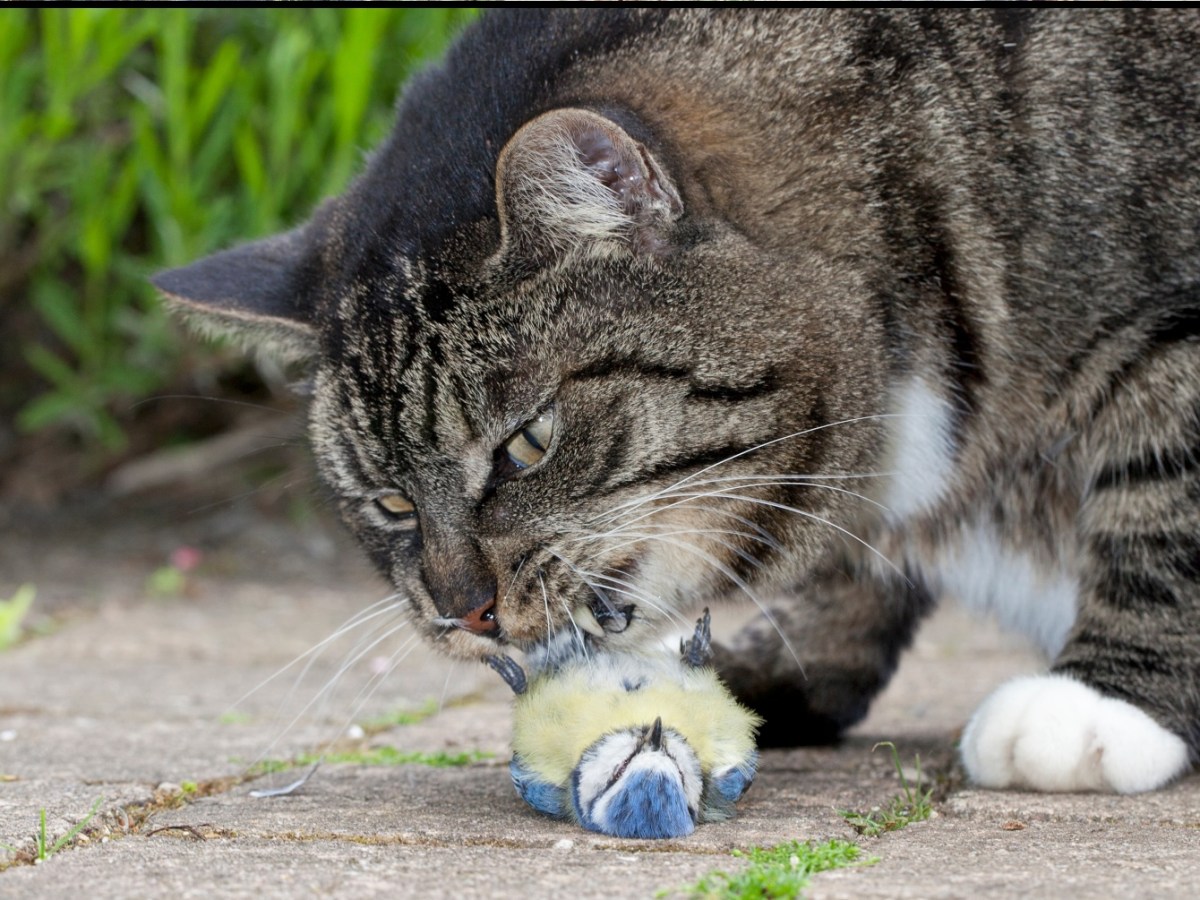
Those of us living with cats share our homes with an ancestral predator, one adapted for hunting and the frequent, exclusive consumption of meat. These instincts become fully activated outside the domestic environment, where cats pose a global threat to wildlife. Pets are family. We celebrate their arrival with the same joy as a grand…
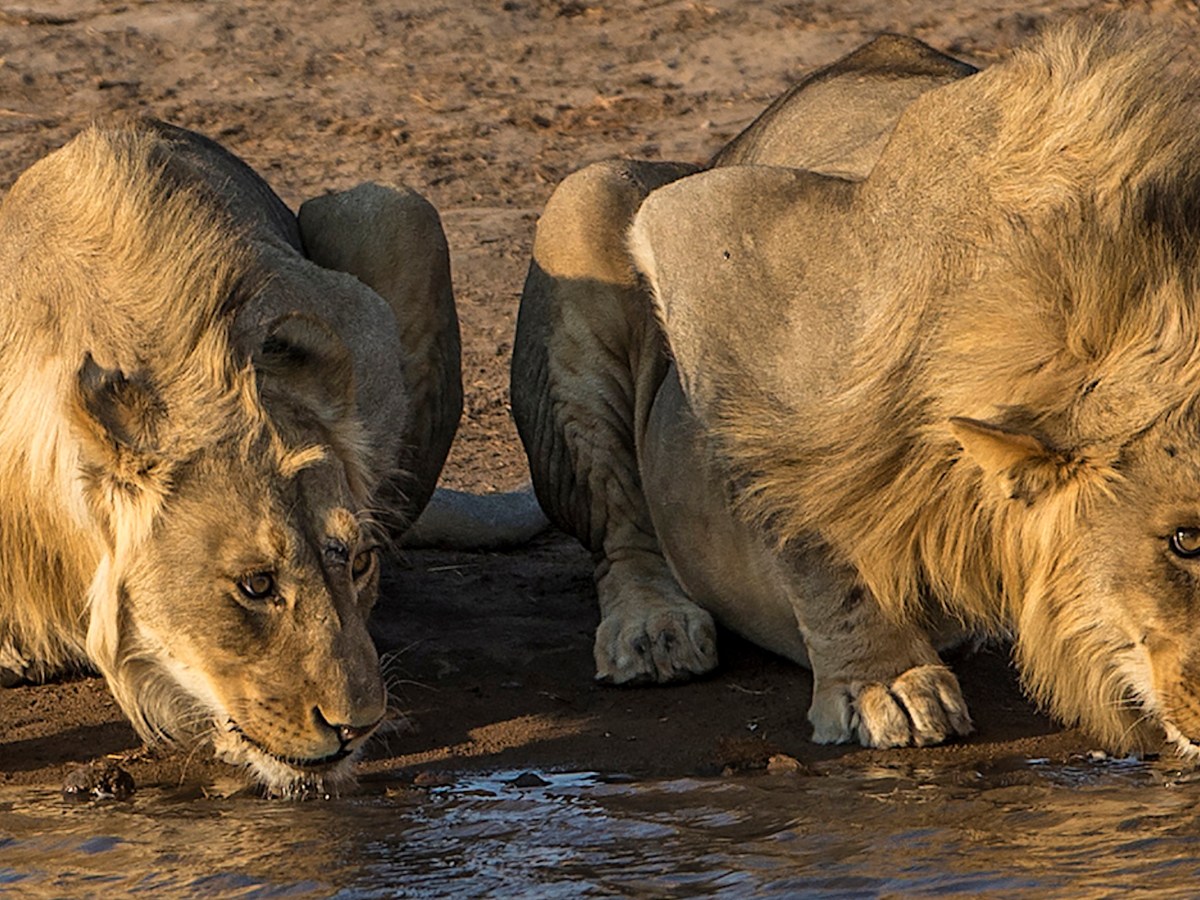
Many animals avoid contact with people. In protected areas of the African savanna, mammals flee more intensely upon hearing human conversations than when they hear lions or sounds associated with hunting. This fear of humans affects how species use and move in their habitat. Throughout our lives, we interact with hundreds of wildlife species without…
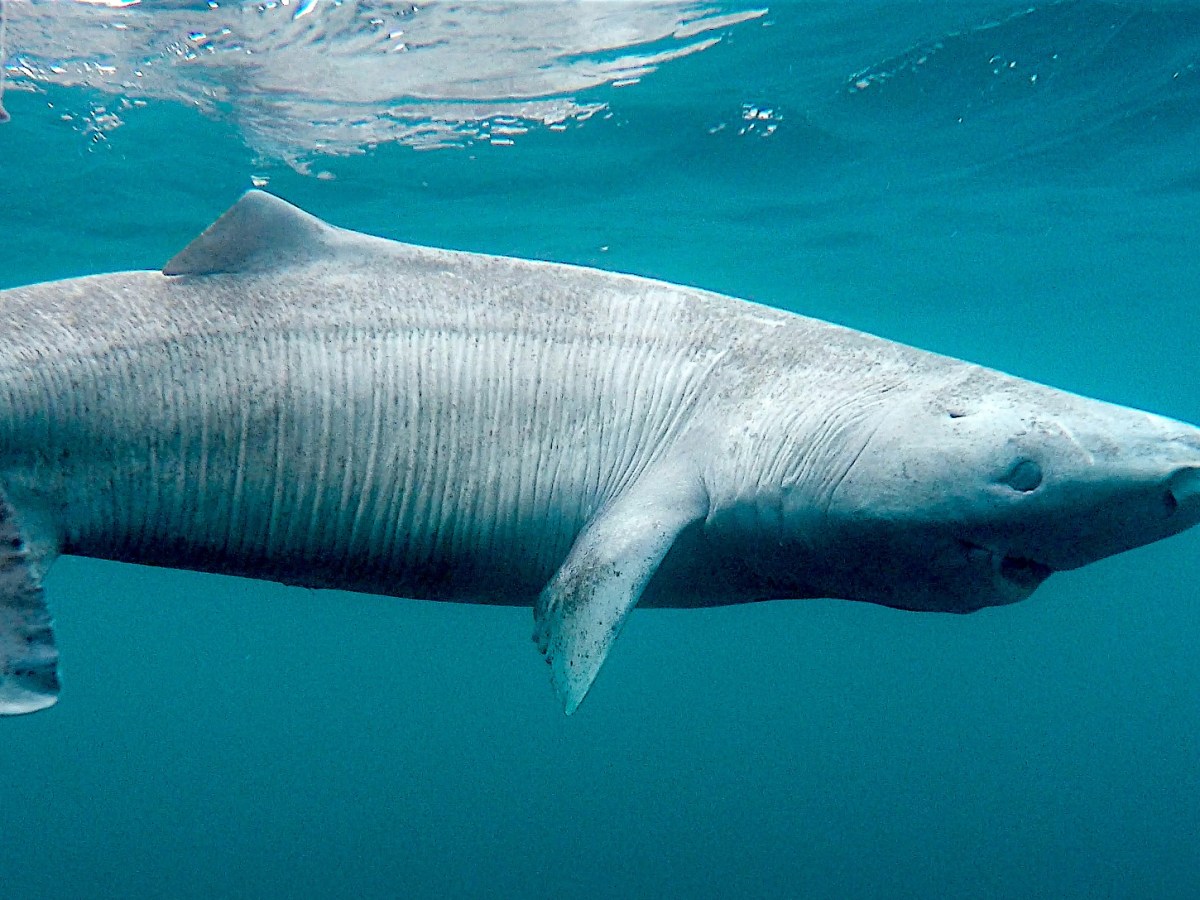
Deep-sea sharks include some of the longest-lived vertebrates known. The record holder is the Greenland shark, with a recently estimated maximum age of nearly 400 years. Their slow life cycle makes them vulnerable to fisheries. Humans rarely live longer than 100 years. But many other animals and plants can live for several centuries or even millennia, particularly…
















 ConservationBytes.com