Translocations: keep it in the family

31 10 2013
CB_Translocations_Photo
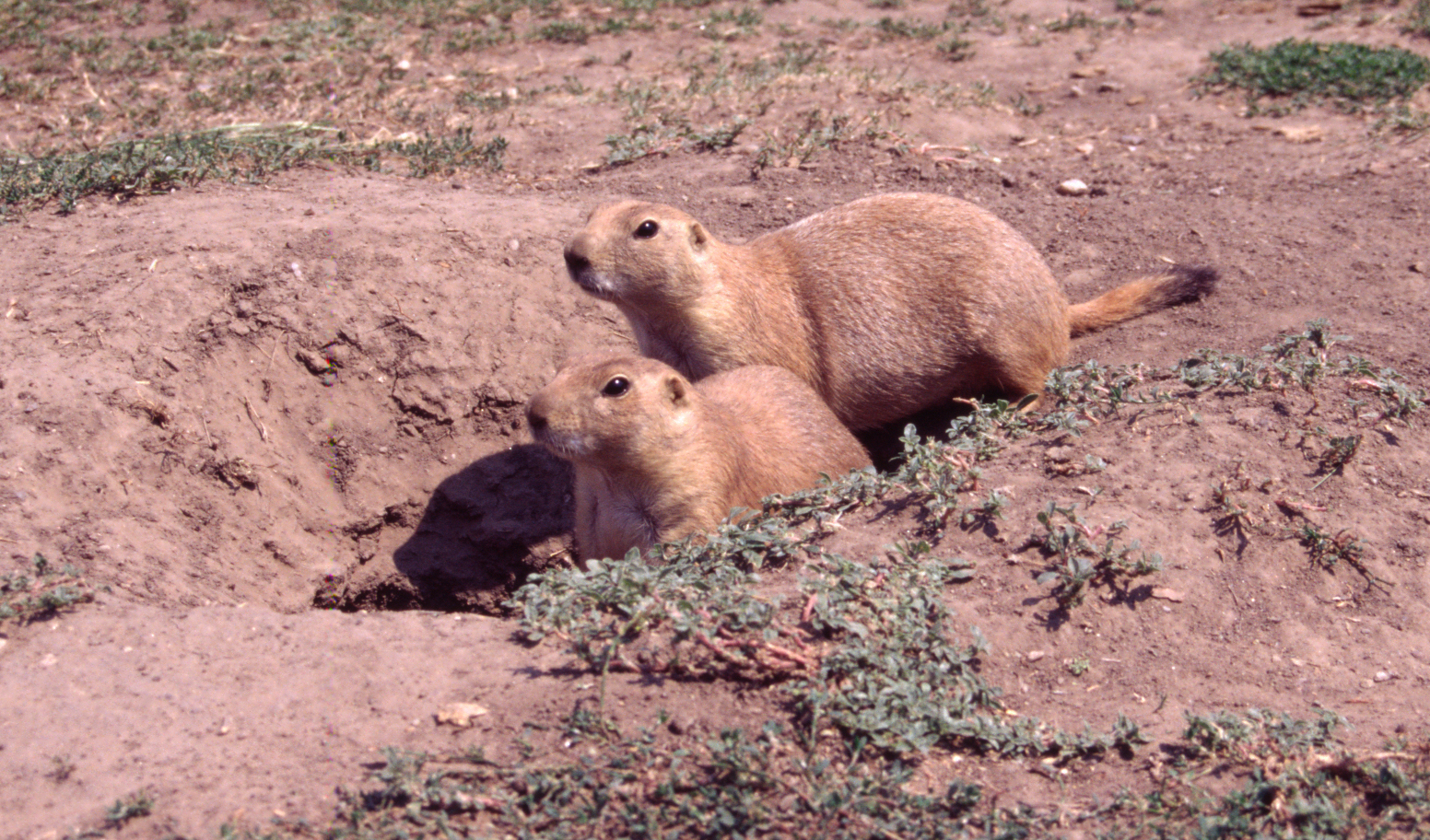
Prairie dogs (Cynomys spp.) comprise 5 species native to North American grasslands. Rather than a ‘dog’ (‘perrito’ or ‘little dog’ in Spanish), this animal is a squirrel (Sciuridae) adapted to ground life. In particular, black-tailed prairie dogs (C. ludovicianus) inhabit the plains between the Frenchman River in Canada and the Mexican stretches of the Sonoran and Chihuahuan deserts. Individuals have a maximum length of 40 cm and weigh up to 2 kg. The global population is currently estimated at some 18 million individuals over an area that has waned by 90% relative to historical ranges. The species is IUCN ‘Least Concern’ and shows a global ‘decreasing’ trend as a result of ongoing habitat loss and fragmentation due to urban development and farming, and susceptibility to Yersinia pestis – a bacteria that causes plague in prairie dogs and other mammals including humans.Colonies, known as ‘coteries’ (from French), are made of several family clans that live in contiguous territories. Clans include one or two males, and several females and juveniles [7]. Females show strong philopatry, while males are the ones that colonise new territories, or mingle with existing clans. Such dispersion pattern, along with daughters deliberately avoiding incest, minimises inbreeding [8]. Burrows consist of >10-m tunnels in which temperatures remain between 5 and 25 ºC irrespective of above-ground temperatures. Prairie dogs are genuine landscape architects with their network of burrows largely increasing edaphic, botanic and zoological diversity [9]. The pic shows two black prairie dogs in Wind Cave National Park (South Dakota, USA) (courtesy of Lisa Savage).

If you have lived in different suburbs, cities or even countries, you will be well aware that changing residence feels very different whether you do it on your own or with someone else. In the latter case, you might have to share tasks, and key decisions have to be made on the basis of everybody’s needs. The situation is analogous when managers decide to move a group of animals or plants from one place to another – so-called translocation.

Translocations involve human-assisted movements of organisms into an area (i) that holds an existing population of the same species (re-stocking), or (ii) where the species has been extirpated (re-introduction) or (iii) is outside its historical distribution (introduction) [1] – this terminology follows 1993 IUCN’s Criteria [1, 3], but is unstable, e.g., see [2]. The rationale behind translocations has obvious merits (e.g., to promote population growth following overharvesting, attenuate human-predator conflicts, rescue endangered species) [2]. However, translocations are complex and have a long record of failed attempts in the history of conservation biology, so the resulting waste of resources has prompted a recent re-appraisal of methods [1-3].

Debra Shier investigated the nuisances of a translocation of a social species such as the black-tailed prairie dog (Cynomys ludovicianus) [4]. Shier tagged, sexed and determined (via capture-recapture and field observations) membership to identified family clans in 973 individuals from Vermejo Park (New Mexico, USA). She then introduced clans to ten dog-free sites with soil quality and vegetation cover akin to the historical distribution of the species. In five of those sites, Shier translocated family clans (4 to 7 individuals per clan) and in the other five sites she freed clans made up of members being picked up randomly (1 male, 2 females, 2 juveniles). During a period of 9-10 months after translocation, Shier monitored the behaviour of females and ultimately re-captured all introduced individuals. She found that 50% of the dogs had survived translocation, and assumed that the remainder had died since individuals rarely disperse more than three km from their natal area, and aerial surveys spotted no dogs in a four-km perimeter around the point of release.
Read the rest of this entry »


Conservation: So easy a child could do it

13 09 2013

child's playI don’t like to talk about my family online. Call me paranoid, but there are a lot of crazy people out there who don’t like what scientists like me are saying (bugger the evidence). Yes, like many climate scientists, I’ve also been threatened. That’s why my personal life remains anonymous except for a select group of people.

But I’ve mentioned my daughter before on this blog, and despite a few people insinuating that I am a bad parent because of what I said, I am happy that I made the point that climate change is a scary concept of which our children must at least be cognisant.

My daughter’s story today is a little less confronting, but equally enlightening. It’s also a little embarrassing as a scientist who has dedicated my entire research career to the discipline of conservation biology.

As a normal six year-old without the ability to refrain from talking – even for a moment – I hear a lot of stories. Many of them are of course fantastical and ridiculous, but those are just part of a healthy, imaginative childhood (I am proud to say though that she is quite clear about the non-existence of fictitious entities like faeries, easter bunnies and gods).

Every once in a while, however, there are snippets of wisdom that ooze out from the cracks in the dross. In the last few months, my daughter has independently and with no prompting from me come up with two pillars of conservation science: (i) protected areas and (ii) biodiversity corridors. Read the rest of this entry »


Guilty until proven innocent

18 07 2013

precautionary principleThe precautionary principle – the idea that one should adopt an approach that minimises risk – is so ingrained in the mind of the conservation scientist that we often forget what it really means, or the reality of its implementation in management and policy. Indeed, it has been written about extensively in the peer-reviewed conservation literature for over 20 years at least (some examples here, here, here and here).

From a purely probabilistic viewpoint, the concept is flawlessly logical in most conservation questions. For example, if a particular by-catch of a threatened species is predicted [from a model] to result in a long-term rate of instantaneous population change (r) of -0.02 to 0.01 [uniform distribution], then even though that interval envelops r = 0, one can see that reducing the harvest rate a little more until the lower bound is greater than zero is a good idea to avoid potentially pushing down the population even more. In this way, our modelling results would recommend a policy that formally incorporates the uncertainty of our predictions without actually trying to make our classically black-and-white laws try to legislate uncertainty directly. Read the rest of this entry »


Ecology: the most important science of our times

12 07 2013

rocket-scienceThe title of this post is deliberately intended to be provocative, but stay with me – I do have an important point to make.

I’m sure most every scientist in almost any discipline feels that her or his particular knowledge quest is “the most important”. Admittedly, there are some branches of science that are more applied than others – I have yet to be convinced, for example, that string theory has an immediate human application, whereas medical science certainly does provide answers to useful questions regarding human health. But the passion for one’s own particular science discipline likely engenders a sort of tunnel vision about its intrinsic importance.

So it comes down to how one defines ‘important’. I’m not advocating in any way that application or practicality should be the only yardstick to ascertain importance. I think superficially impractical, ‘blue-skies’ theoretical endeavours are essential precursors to all so-called applied sciences. I’ll even go so far as to say that there is fundamentally no such thing as a completely unapplied science discipline or question. As I’ve said many times before, ‘science’ is a brick wall of evidence, where individual studies increase the strength of the wall to a point where we can call it a ‘theory’. Occasionally a study comes along and smashes the wall (paradigm shift), at which point we begin to build a new one. Read the rest of this entry »


The economy worse off since 1978

3 07 2013
eat money

Can’t eat money

I was only a little tacker in 1978, and as any little tacker, I was blissfully unaware that I had just lived through a world-changing event. Just like that blissfully ignorant child, most people have no idea how important that year was.

It was around that year that humanity exceeded the planet’s capacity to sustain itself in perpetuity1. As I’ve just discovered today, it was also the same year that the per-capita Genuine Progress Indicator (GPI) peaked.

Now for a little detour and disclaimer before I explain all that. I’m not an economist, but I have a dabbled with the odd economic concept and bolted-on economic sub-routine in a few models I’ve written. Some would argue that conservation (i.e., the quest and methods needed to conserve biowealth) is almost entirely an economic pursuit, for economics is the discipline that attempts to explain (and modify) human behaviour. I tend to agree insofar as we now know enough on the biological side regarding how species become threatened and go extinct, and what kind of things we need to do to avoid losing more of the life-support system provided by biodiversity. Being completely practical about it, one could even argue that the biology part of conservation biology is complete – we should all now re-train as economists. While that notion probably represents a little hyperbole, it does demonstrate that economics is an essential endeavour in the fight to conserve our home.

Almost everyone has heard of ‘GDP’ – the Gross Domestic Product – as an indicator of economic ‘performance’, although most people have little idea what it actually measures (I’m including businesspeople and politicians here). GDP is merely the sum of marketed economic activity, which is only one small facet of the economy. For example, growing a tomato and preparing a salad for your family with it is not included, yet buying a frozen meal in the supermarket is. Even an oil spill increases GDP via increased expenditures associated with clean-up and remediation, when clearly it is not a ‘good’ thing for the economy on the whole because of the lost opportunities it causes in other sectors. Read the rest of this entry »


Relaxed laws imperil Australian wildlife

28 06 2013
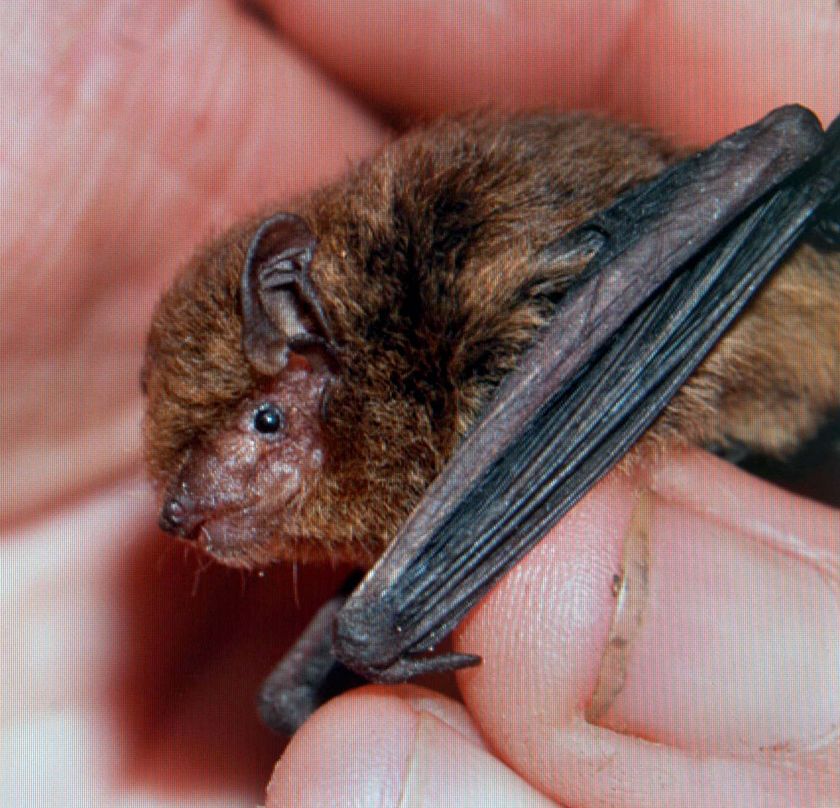
Christmas Island pipistrelle bat (Pipistrellus murrayi). © M. Schultz

Christmas Island pipistrelle bat (Pipistrellus murrayi). © M. Schultz

On the continuing theme of the demise of laws designed to protect Australian biodiversity (see here, here and here), I’m reproducing our latest Nature Correspondence on the issue. I know this might be slightly dodgy to do so, but given that it’s only a Correspondence, I don’t think I’ll get in too much trouble. Besides, it’s too important an issue to hide away behind paywalls.

Policy and legislative changes by Australia’s state governments are eroding the vital protection of the country’s unique biodiversity.

Reserves are being opened up to ecologically disruptive activities, such as grazing by domestic livestock, logging, mining, recreational hunting and fishing, and commercial development. Protected habitats on private and leasehold land are imperilled too. Queensland and Victoria, for example, are relaxing hard-won laws that limit vegetation clearance on private land, further accelerating the loss of regional biodiversity.

Collectively, these actions increase the pressure on biodiversity conservation in protected areas, many of which are already showing biodiversity loss (for example, the Kakadu National Park in northern Australia). Ecological connectivity is being lost, which will hamper the dispersal of species and their ability to respond to climate-change effects. Read the rest of this entry »


I fucking love biodiversity

18 06 2013
© G. Gallice

© G. Gallice

A corker of an idea, and post, from Diogo Veríssimo.

I don’t like biodiversity. I like beef lasagna, I like the British museum and I like everything Jules Verne ever wrote. When it comes to biodiversity, it’s different. I think about it all the time, try to be close to it and suffer emotional distress when I think of it going irretrievably away. This is LOVE.

Understanding how to get this passion across effectively has always been one of my main goals. That is why my research has focused on the links between marketing and conservation. But recently I started feeling a bit more empowered to take this mission seriously, and all thanks to the Facebook page I fucking love Science. This page became an internet sensation amassing more than 5 million fans and engaging frequently over 4 million users in any given week. Forget the New York Times and National Geographic, this is the real deal.

So I wondered, why can’t I do the same for biodiversity? The idea lingered in my head until I read a recent paper by McCallum and Bury on Google search patterns, which shows how even during the United Nations Decade on Biodiversity we are failing to mainstream biodiversity and its associated issues. If fact, people seem to be less interested. Whatever we are doing is clearly not working. So why not give this concept a try? And so I fucking love Biodiversity (IFLB) was born.

Read the rest of this entry »


Our national parks must be more than playgrounds or paddocks

24 05 2013

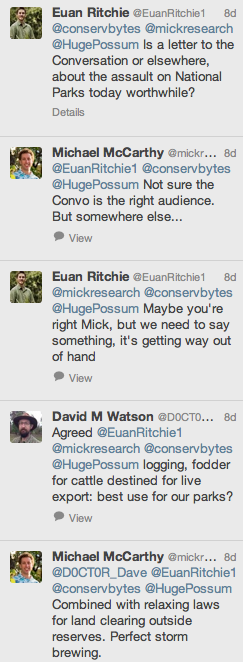
Convo TweetsIt’s interesting when a semi-random tweet by a colleague ends up mobilising a small army of scientists to get pissed off enough to co-write an article. Euan Ritchie of Deakin University started it off, and quickly recruited me, Mick McCarthy, David Watson, Ian Lunt, Hugh Possingham, Bill Laurance and Emma Johnston to put together the article. It’s a hugely important topic, so I hope it generates a lot of discussion and finally, some bloody action to stop the rapid destruction of this country’s national parks system.

Note: Published simultaneously on The Conversation.

It’s make or break time for Australia’s national parks.

National parks on land and in the ocean are dying a death of a thousand cuts, in the form of bullets, hooks, hotels, logging concessions and grazing licences. It’s been an extraordinary last few months, with various governments in eastern states proposing new uses for these critically important areas.

Australia’s first “National Park”, established in 1879, was akin to a glorified country club. Now called the “Royal National Park” on the outskirts of Sydney, it was created as a recreational escape for Sydney-siders, with ornamental plantations, a zoo, race courses, artillery ranges, livestock paddocks, deer farms, logging leases and mines.

Australians since realised that national parks should focus on protecting the species and natural landscapes they contain. However, we are now in danger of regressing to the misguided ideals of the 19th Century.

Parks under attack

In Victoria, new rules will allow developers to build hotels and other ventures in national parks. In New South Wales, legislation has been introduced to allow recreational shooting in national parks, and there is pressure to log these areas too. Read the rest of this entry »


Software tools for conservation biologists

8 04 2013

computer-programmingGiven the popularity of certain prescriptive posts on ConservationBytes.com, I thought it prudent to compile a list of software that my lab and I have found particularly useful over the years. This list is not meant to be comprehensive, but it will give you a taste for what’s out there. I don’t list the plethora of conservation genetics software that is available (generally given my lack of experience with it), but if this is your chosen area, I’d suggest starting with Dick Frankham‘s excellent book, An Introduction to Conservation Genetics.

1. R: If you haven’t yet loaded the open-source R programming language on your machine, do it now. It is the single-most-useful bit of statistical and programming software available to anyone anywhere in the sciences. Don’t worry if you’re not a fully fledged programmer – there are now enough people using and developing sophisticated ‘libraries’ (packages of functions) that there’s pretty much an application for everything these days. We tend to use R to the exclusion of almost any other statistical software because it makes you learn the technique rather than just blindly pressing the ‘go’ button. You could also stop right here – with R, you can do pretty much everything else that the software listed below does; however, you have to be an exceedingly clever programmer and have a lot of spare time. R can also sometimes get bogged down with too much filled RAM, in which case other, compiled languages such as PYTHON and C# are useful.

2. VORTEX/OUTBREAK/META-MODEL MANAGER, etc.: This suite of individual-based projection software was designed by Bob Lacy & Phil Miller initially to determine the viability of small (usually captive) populations. The original VORTEX has grown into a multi-purpose, powerful and sophisticated population viability analysis package that now links to its cousin applications like OUTBREAK (the only off-the-shelf epidemiological software in existence) via the ‘command centre’ META-MODEL MANAGER (see an examples here and here from our lab). There are other add-ons that make almost any population projection and hindcasting application possible. And it’s all free! (warning: currently unavailable for Mac, although I’ve been pestering Bob to do a Mac version).

3. RAMAS: RAMAS is the go-to application for spatial population modelling. Developed by the extremely clever Resit Akçakaya, this is one of the only tools that incorporates spatial meta-population aspects with formal, cohort-based demographic models. It’s also very useful in a climate-change context when you have projections of changing habitat suitability as the base layer onto which meta-population dynamics can be modelled. It’s not free, but it’s worth purchasing. Read the rest of this entry »


Want to work with us?

22 03 2013
© Beboy-Fotolia

© Beboy-Fotolia

Today we announced a HEAP of positions in our Global Ecology Lab for hot-shot, up-and-coming ecologists. If you think you’ve got what it takes, I encourage you to apply. The positions are all financed by the Australian Research Council from grants that Barry Brook, Phill Cassey, Damien Fordham and I have all been awarded in the last few years. We decided to do a bulk advertisement so that we maximise the opportunity for good science talent out there.

We’re looking for bright, mathematically adept people in palaeo-ecology, wildlife population modelling, disease modelling, climate change modelling and species distribution modelling.

The positions are self explanatory, but if you want more information, just follow the links and contacts given below. For my own selfish interests, I provide a little more detail for two of the positions for which I’m directly responsible – but please have a look at the lot.

Good luck!

CJA Bradshaw

Job Reference Number: 17986 & 17987

The world-leading Global Ecology Group within the School of Earth and Environmental Sciences currently has multiple academic opportunities. For these two positions, we are seeking a Postdoctoral Research Associate and a Research Associate to work in palaeo-ecological modelling. Read the rest of this entry »


Brave new green world: biodiversity’s response to Australia’s carbon economy

12 03 2013

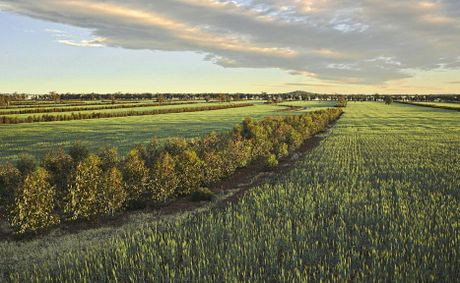
carbon farming 2I’ve had a busy weekend entertaining visiting colleagues and participating in WOMADelaide‘s first-ever ‘The Planet Talks‘. If you haven’t heard of WOMADelaide, you’re truly missing out in one of the best music festivals going (and this is from a decidedly non-festival-going sort). Planet Talks this year was a bit of an experiment after the only partially successful Earth Station festival held last year (it was well-attended, but apparently wasn’t as financially successful as they had hoped). So this year they mixed a bit of science with a bit of music – hence ‘Planet Talks’. Paul Ehrlich was one of the star attractions, and I had the honour of going onstage with him yesterday to discuss a little bit about human population growth and sustainability. It was also great to see Robyn Williams again. All the Talks were packed out – indeed, I was surprised they were so popular, especially in the 39-degree heat. Rob Brookman, WOMADelaide’s founder and principal organiser, told me afterward that they’d definitely be doing it again.

But my post really isn’t about WOMADelaide or The Planet Talks (even though I got the bonus of meeting one of my favourite latin bands, Novalima, creators of one of my favourite songs). It’s instead about a paper I heralded last year that’s finally been accepted.

In early 2012 at the Terrestrial Ecosystem Research Network (TERN) symposium in Adelaide, the Australian Centre for Ecological Analysis and Synthesis (ACEAS) put on what they called the ‘Grand Challenges’ workshop. I really didn’t get the joke at the time, but apparently the ‘grand challenge’ was locking 30 scientists with completely different backgrounds in a room for two days to see if they could do anything other than argue and bullshit. Well, we rose to that challenge and produced something that I think is rather useful.

I therefore proudly introduce the paper entitled Brave new green world: consequences of a carbon economy for the conservation of Australian biodiversity just accepted in Biological Conservation. The online version isn’t quite ready yet (should be in the next few weeks), but you are welcome to request a preprint from me now. If you attended (the surprisingly excellent) TERN symposium in Canberra last month, you might have seen me give a brief synopsis of our results.

The paper is a rather  in-depth review of how we, 30 fire, animal, plant, soil, landscape, agricultural and freshwater biologists, believe Australia’s new carbon-influenced economy (i.e., carbon price) will impact the country’s biodiversity. Read the rest of this entry »


Rocking the scientific boat

14 12 2012
© C. Simpson

© C. Simpson

One thing that has simultaneously amused, disheartened, angered and outraged me over the past decade or so is how anyone in their right mind could even suggest that scientists band together into some sort of conspiracy to dupe the masses. While this tired accusation is most commonly made about climate scientists, it applies across nearly every facet of the environmental sciences whenever someone doesn’t like what one of us says.

First, it is essential to recognise that we’re just not that organised. While I have yet to forget to wear my trousers to work (I’m inclined to think that it will happen eventually), I’m still far, far away from anything that could be described as ‘efficient’ and ‘organised’. I can barely keep it together as it is. Such is the life of the academic.

More importantly, the idea that a conspiracy could form among scientists ignores one of the most fundamental components of scientific progress – dissension. And hell, can we dissent!

Yes, the scientific approach is one where successive lines of evidence testing hypotheses are eventually amassed into a concept, then perhaps a rule of thumb. If the rule of thumb stands against the scrutiny of countless studies (i.e., ‘challenges’ in the form of poison-tipped, flaming literary arrows), then it might eventually become a ‘theory’. Some theories even make it to become the hallowed ‘law’, but that is very rare indeed. In the environmental sciences (I’m including ecology here), one could argue that there is no such thing as a ‘law’.

Well-informed non-scientists might understand, or at least, appreciate that process. But few people outside the sciences have even the remotest clue about what a real pack of bastards we can be to each other. Use any cliché or descriptor you want – it applies: dog-eat-dog, survival of the fittest, jugular-slicing ninjas, or brain-eating zombies in lab coats.

Read the rest of this entry »


Advice for getting your dream job in conservation science

4 12 2012

people management

A few weeks ago I heard from an early-career researcher in the U.S. who had some intelligent things to say about getting jobs in conservation science based on a recent Conservation Biology paper she co-wrote. Of course, for all the PhDs universities are pumping out into the workforce, there will never be enough positions in academia for them all. Thus, many find their way into non-academic positions. But – does a PhD in science prepare you well enough for the non-academic world? Apparently not.

Many post-graduate students don’t start looking at job advertisements until we are actually ready to apply for a job. How often do we gleam the list of required skills and say, “If only I had done something to acquire project management skills or fundraising skills, then I could apply for this position…”? Many of us start post-graduate degrees assuming that our disciplinary training for that higher degree will prepare us appropriately for the job market. In conservation science, however, many non-disciplinary skills (i.e., beyond those needed to be a good scientist) are required to compete successfully for non-academic positions. What are these skills?

Our recent paper in Conservation Biology (Graduate student’s guide to necessary skills for nonacademic conservation careers) sifted through U.S. job advertisements and quantified how often different skills are required across three job sectors: nonprofit, government and private. Our analysis revealed that several non-disciplinary skills are particularly critical for job applicants in conservation science. The top five non-disciplinary skills were project management, interpersonal, written communication, program leadership and networking. Approximately 75% of the average job advertisement focused on disciplinary training and these five skills. In addition, the importance of certain skills differed across the different job sectors.

Below, we outline the paper’s major findings with regard to the top five skills, differences among sectors, and advice for how to achieve appropriate training while still in university. Read the rest of this entry »


A posthumous citation tribute for Sodhi

6 11 2012

I’m sitting at a friend’s house in Sydney writing this quick entry before jumping on a plane to London. It’s been a busy few days, and will be an even busier next few weeks.

I met with Paul and Anne Ehrlich yesterday (who are visiting Australia) and we finalised the first complete draft of our book – I will keep you posted on that. In London, I will be meeting with the Journal of Animal Ecology crew on Wednesday night (I’m on the editorial board), followed by two very interesting days at the Zoological Society of London‘s Protected Areas Symposium at Regent’s Park. Then I’ll be off to the Universities of Liverpool and York for a quick lecture tour, followed by a very long trip back home. I’m already tired.

In the meantime, I thought I’d share a little bit of news about our dear and recently deceased friend and colleague, Navjot Sodhi. We’ve already written several times our personal tributes (see here, here and here) to this great mind of conservation thinking who disappeared from us far too soon, but this is a little different. Barry Brook, as is his wont to do, came up with a great idea to get Navjot up posthumously on Google Scholar.
Read the rest of this entry »


Why do conservation scientists get out of bed?

1 10 2012

1*Zd2mpLgOIbJuLg3CqH8BQwI have, on many occasions, been faced with a difficult question after giving a public lecture. The question is philosophical in nature (and I was never very good at philosophy – just ask my IB philosophy teacher), hence its unusually complicated implications. The question goes something like this:

Given what you know about the state of the world – the decline in biodiversity, ecosystem services and our own health and welfare – how do you manage to get out of bed in the morning and go to work?

Yes, I can be a little, shall we say, ‘gloomy’ when I give a public lecture; I don’t tend to hold back much when it comes to just how much we’ve f%$ked over our only home, or why we continue to shit in our own (or in many cases, someone else’s) kitchen. It’s not that I get some sick-and-twisted pleasure out of seeing people in the front row shake their heads and ‘tsk-tsk’ their way through my presentation, but I do feel that as an ‘expert’ (ascribe whatever meaning to that descriptor you choose), I have a certain duty to inform non-experts about what the data say.

And if you’ve read even a handful of the posts on this site, you’ll understand that picture I paint isn’t full of roses and children’s smiling faces. A quick list of recent posts might remind you:

And so on. I agree – pretty depressing. Read the rest of this entry »


No-extinction targets are destined to fail

21 09 2012

I’ve been meaning to write about this for a while, and now finally I have been given the opportunity to put my ideas ‘down on paper’ (seems like a bit of an old-fashioned expression these days). Now this post might strike some as overly parochial because it concerns the state in which I live, but the concept applies to every jurisdiction that passes laws designed to protect biodiversity. So please look beyond my navel and place the example within your own specific context.

As CB readers will appreciate, I am firmly in support of the application of conservation triage – that is, the intelligent, objective and realistic way of attributing finite resources to minimise extinctions for the greatest number of (‘important’) species. Note that deciding which species are ‘important’ is the only fly in the unguent here, with ‘importance’ being defined inter alia as having a large range (to encompass many other species simultaneously), having an important ecological function or ecosystem service, representing rare genotypes, or being iconic (such that people become interested in investing to offset extinction.

But without getting into the specifics of triage per se, a related issue is how we set environmental policy targets. While it’s a lovely, utopian pipe dream that somehow our consumptive 7-billion-and-growing human population will somehow retract its massive ecological footprint and be able to save all species from extinction, we all know that this is irrevocably  fantastical.

So when legislation is passed that is clearly unattainable, why do we accept it as realistic? My case in point is South Australia’s ‘No Species Loss Strategy‘ (you can download the entire 7.3 Mb document here) that aims to

“…lose no more species in South Australia, whether they be on land, in rivers, creeks, lakes and estuaries or in the sea.”

When I first learned of the Strategy, I instantly thought to myself that while the aims are laudable, and many of the actions proposed are good ones, the entire policy is rendered toothless by the small issue of being impossible. Read the rest of this entry »


Ecology is a Tower of Babel

17 09 2012

The term ‘ecology’ in 16 different languages overlaid on the oil on board ‘The Tower of Babel’ by Flemish Renaissance painter Pieter Bruegel the Elder (1563).

In his song ‘Balada de Babel’, the Spanish artist Luis Eduardo Aute sings several lyrics in unison with the same melody. The effect is a wonderful mess. This is what the scientific literature sounds like when authors generate synonymies (equivalent meaning) and polysemies (multiple meanings), or coin terms to show a point of view. In our recent paper published in Oecologia, we illustrate this problem with regard to ‘density dependence’: a key ecological concept. While the biblical reference is somewhat galling to our atheist dispositions, the analogy is certainly appropriate.

A giant shoal of herring zigzagging in response to a predator; a swarm of social bees tending the multitudinous offspring of their queen; a dense pine forest depriving its own seedlings from light; an over-harvested population of lobsters where individuals can hardly find reproductive mates; pioneering strands of a seaweed colonising a foreign sea after a transoceanic trip attached to the hulk of boat; respiratory parasites spreading in a herd of caribou; or malaria protozoans making their way between mosquitoes and humans – these are all examples of population processes that operate under a density check. The number of individuals within those groups of organisms determines their chances for reproduction, survival or dispersal, which we (ecologists) measure as ‘demographic rates’ (e.g., number of births per mother, number of deaths between consecutive years, or number of immigrants per hectare).

In ecology, the causal relationship between the size of a population and a demographic rate is known as ‘density dependence’ (DD hereafter). This relationship captures the pace at which a demographic rate changes as population size varies in time and/or space. We use DD measurements to infer the operation of social and trophic interactions (cannibalism, competition, cooperation, disease, herbivory, mutualism, parasitism, parasitoidism, predation, reproductive behaviour and the like) between individuals within a population1,2, because the intensity of these interactions varies with population size. Thus, as a population of caribou expands, respiratory parasites will have an easier job to disperse from one animal to another. As the booming parasites breed, increased infestations will kill the weakest caribou or reduce the fertility of females investing too much energy to counteract the infection (yes, immunity is energetically costly, which is why you get sick when you are run down). In turn, as the caribou population decreases, so does the population of parasites3. In cybernetics, such a toing-and-froing is known as ‘feedback’ (a system that controls itself, like a thermostat controls the temperature of a room) – a ‘density feedback’ (Figure 1) is the kind we are highlighting here. Read the rest of this entry »


Global Ecology postgraduate opportunities

12 08 2012

I should have published these ages ago, but like many things I have should have done earlier, I didn’t.

I also apologise for a bit of silence over the past week. After coming back from the ESP Conference in Portland, I’m now back at Stanford University working with Paul Ehrlich trying to finish our book (no sneak peaks yet, I’m afraid). I have to report that we’ve completed about about 75 % it, and I’m starting to feel like the end is in sight. We hope to have it published early in 2013.

So here they are – the latest 9 PhD offerings from us at the Global Ecology Laboratory. If you want to get more information, contact the first person listed as the first supervisor at the end of each project’s description.

1. Optimal survey and harvest models for South Australian macropods (I’ve advertised this before, but so far, no takers):

The South Australia Department of Environment, Water and Natural Resources (DEWNR) is custodian of a long-term macropod database derived from the State’s management of the commercial kangaroo harvest industry. The dataset entails aerial survey data for most of the State from 1978 to present, annual population estimates, quotas and harvests for three species: red kangaroo (Macropus rufus), western grey kangaroo (Macropus fuliginosus), and the euro (Macropus robustus erubescens).

DEWNR wishes to improve the efficiency of surveys and increase the precision of population estimates, as well as provide a more quantitative basis for setting harvest quotas.

We envisage that the PhD candidate will design and construct population models:

  • to predict population size/densities with associated uncertainty, linking fluctuations to environmental variability (including future climate change projections)
  • to evaluate the efficiency of spatially explicit aerial surveys
  • to estimate demographic parameters (e.g., survival rate) from life tables and
  • to estimate spatially explicit sustainable harvest quotas

 Supervisors: me, A/Prof. Phill Cassey, Dr Damien Fordham, Dr Brad Page (DEWNR), Professor Michelle Waycott (DEWNR).

2. Correcting for the Signor-Lipps effect

The ‘Signor-Lipps effect’ in palaeontology is the notion that the last organism of a given species will never be recorded as a fossil given the incomplete nature of the fossil record (the mirror problem is the ‘Jaanusson effect’, where the first occurrence is delayed past the true time of origination). This problem makes inference about the timing and speed of mass extinctions (and evolutionary diversification events) elusive. The problem is further complicated by the concept known as the ‘pull of the recent’, which states that the more time since an event occurred, the greater the probability that evidence of that event will have disappeared (e.g., erased by erosion, hidden by deep burial, etc.).

In a deep-time context, these problems confound the patterns of mass extinctions – i.e., the abruptness of extinction and the dynamics of recovery and speciation. This PhD project will apply a simulation approach to marine fossil time series (for genera and families, and some individual species) covering the Phanerozoic Aeon, as well as other taxa straddling the K-T boundary (Cretaceous mass extinction). The project will seek to correct for taphonomic biases and assess the degree to which extinction events for different major taxa were synchronous.

The results will also have implications for the famous Sepkoski curve, which describes the apparent logistic increase in marine species diversity over geological time with an approximate ‘carrying capacity’ reached during the Cenozoic. Despite recent demonstration that this increase is partially a taphonomic artefact, a far greater development and validation/sensitivity analysis of underlying statistical models is needed to resolve the true patterns of extinction and speciation over this period.

The approach will be to develop a series of models describing the interaction of the processes of speciation, local extinction and taphonomic ‘erasure’ (pull of the recent) to simulate how these processes interact to create the appearance of growth in numbers of taxa over time (Sepkoski curve) and the abruptness of mass extinction events. The candidate will estimate key parameters in the model to test whether the taphonomic effect is strong enough to be the sole explanation of the apparent temporal increase in species diversity, or whether true diversification accounts for this.

Supervisors: me, Prof. Barry Brook

3. Genotypic relationships of Australian rabbit populations and consequences for disease dynamics

Historical evidence suggests that there were multiple introduction events of European rabbits into Australia. In non-animal model weed systems it is clear that biocontrol efficacy is strongly influenced by the degree of genetic diversity and number of breed variants in the population.

The PhD candidate will build phylogenetic relationships for Australian rabbit populations and develop landscape genetic models for exploring the influence of myxomatosis and rabbit haemorrhagic disease virus (RHDV) on rabbit vital rates (survival, reproduction and dispersal) at regional and local scales. Multi-model synthesis will be used to quantify the relative roles of environment (including climate) and genotype on disease prevalence and virulence in rabbit populations.

Supervisors: A/Prof Phill Cassey, Dr Damien Fordham, Prof Barry Brook Read the rest of this entry »


Threats to biodiversity insurance from protected areas

26 07 2012

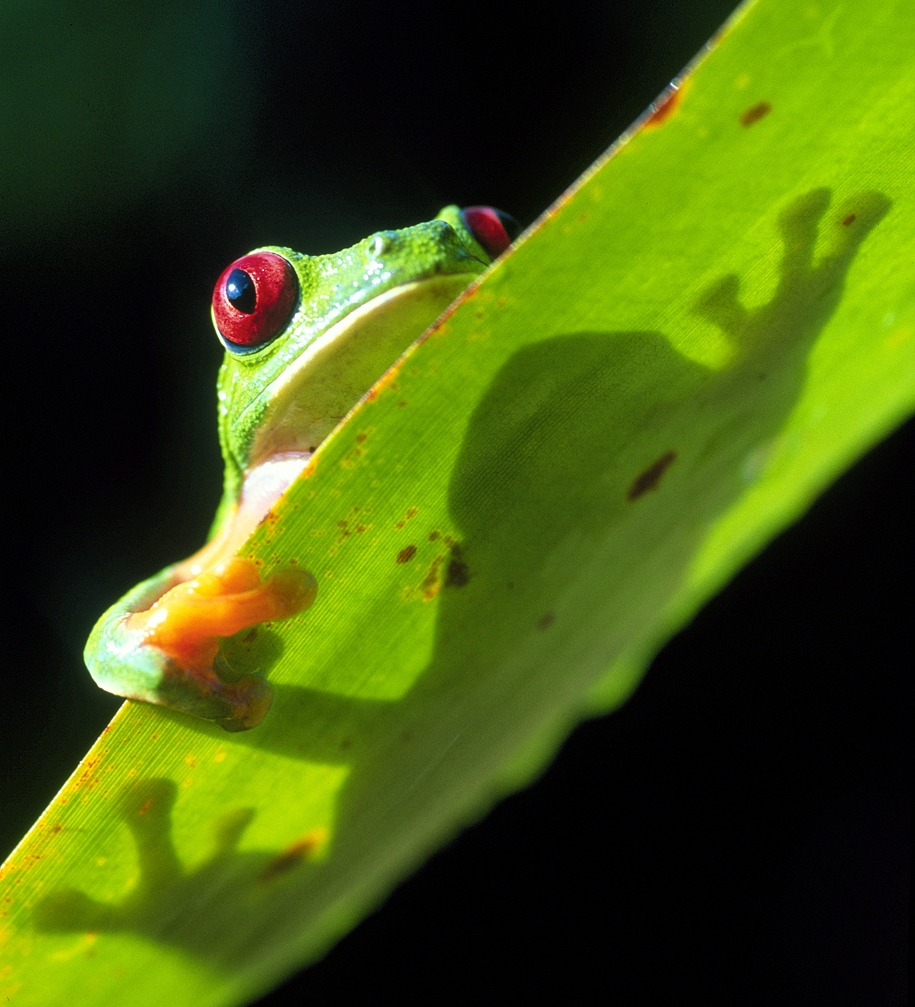
A red-eyed tree frog (Agalychnis callidryas) from Barro Colorado Island in Panama. This small island, just 1500 ha (3700 acres) in area, is one of the tropical protected areas evaluated in this study (photo © Christian Ziegler <zieglerphoto@yahoo.co>, Smithsonian Tropical Research Institute). Note: It is prohibited for any third party or agency to use or license this image; any use other then described above shall be subject to usage fees as determined solely by the photographer.

Much of conservation science boils down to good decision making: when, where and how we ‘set aside’ terrestrial or marine areas for specific protection against the ravages of human endeavour. This is the basis for the entire sub-discipline of conservation planning and prioritisation, and features prominantly in most aspects of applied conservation and restoration.

In other words, we do all this science to determine where we should emplace protected areas, lobby for getting more land and sea set aside so that we have ‘representative’ amounts (i.e., to prevent extinctions), and argue over the best way to manage these areas once established.

But what if this pinnacle of conservation achievement is itself under threat? What if many of our protected areas are struggling to insure biodiversity against human consumption? Well, it’d be a scary prospect, to say the least.

Think of it this way. We buy insurance policies to buffer our investments against tragedy; this applies to everything from our houses, worldly possessions, cars, livestock, health, to forest carbon stores. We buy the policies to give us peace of mind that in the event of a disaster, we’ll be bailed out of the mess with a much-needed cash injection. But what if following the disaster we learn that the policy is no good? What if there isn’t enough pay-out to fix the mess?

In biodiversity conservation, our ‘insurance’ is largely provided by protected areas. We believe that come what may, at least in these (relatively) rare places, biodiversity will persist despite our relentless consumerism.

Unfortunately, what we believe isn’t necessarily true.

Today I’m both proud and alarmed to present our latest research on the performance of tropical protected areas around the world. Published online in Nature this morning (evening, for you Europeans) is the 216-author (yes, that is correct – 216 of us) paper entitled “Averting biodiversity collapse in tropical forest protected areas” led by Bill Laurance. Read the rest of this entry »


Biodiversity conservation and behaviour change

23 07 2012

I have been asked by Diogo Veríssimo, a PhD student at the Durrell Institute of Conservation and Ecology (DICE) based at the University of Kent, to post a call for papers for a special issue of Conservation Evidence (details below). I’ve bumped into Diogo at a few conferences, and learnt a few weeks ago that he won the IUCN/Thomson Reuters Environmental Award for his essay entitled Greening the crisis: turning trouble into opportunity. Well done, Diogo.

Dear Colleagues,

I am inviting you to submit case-studies on behaviour change and biodiversity and conservation for a special issue in the journal Conservation Evidence, an online and open-access scientific journal that focuses on project-level conservation interventions with the aim of sharing lessons learned. The aim of this special issue is to document specific conservation interventions that delivered changes in behaviours relevant to the management and conservation of biodiversity and in this way share lessons learned.

Interventions that have not been successful are especially of interest as these allow for an understanding and discussion of what does not work and why. All case studies need to include an evaluation of the impacts of the intervention and are written by, or in partnership with, those who did the conservation work. Read the rest of this entry »